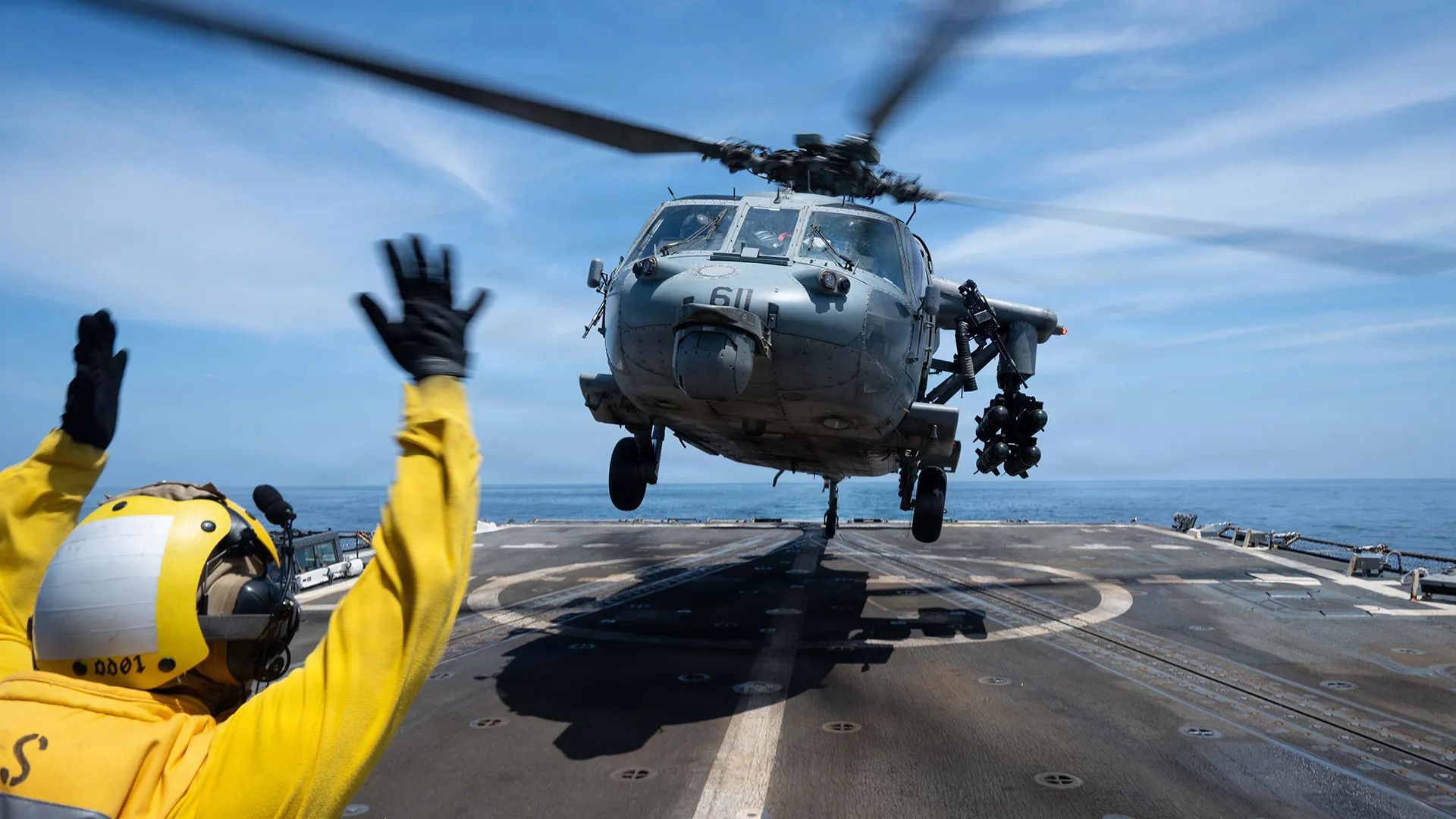
US President Donald Trump has announced ‘Project Freedom’, a naval mission to escort stranded ships through the Strait of Hormuz starting Monday, warning any interference will be met “forcefully”. The move comes amid a fragile US-Iran truce, with Tehran warning it would treat US intervention as a breach.
Weekly insights and analysis on the latest developments in military technology, strategy, and foreign policy.
The 60-day clock for President Trump to seek congressional approval for further military actions against Iran was stopped by the April 7 ceasefire, a senior White House official claimed to The War Zone Friday morning. As we previously noted, the president faced a deadline today under the War Powers Resolution of 1973 to obtain permission from Congress to continue fighting.
The White House decision comes as the now-paused war is at a stalemate, with both sides believing they can outlast the other. Meanwhile, Trump is considering options for a new round of strikes while Iranians say they have presented new plans for working toward a peace deal.
“For War Powers Resolution purposes, the hostilities that began on Saturday, February 28 have terminated,” the official told us, speaking on condition of anonymity to discuss the matter. “Both parties agreed to a two-week ceasefire on Tuesday, April 7 that has since been extended. There has been no exchange of fire between U.S. Armed Forces and Iran since Tuesday, April 7.”
The administration’s statement today follows War Secretary Pete Hegseth’s Congressional testimony yesterday that “the 60-day clock pauses or stops in a ceasefire.”
🚨🛑🚨 US Defense Secretary Pete Hegseth says a ceasefire could pause the 60-day war powers deadline, but Senator Tim Kaine argues the law may not allow it. Source::CNN news pic.twitter.com/NfzHb79NEC
Under the War Powers Resolution, the use of armed forces should be terminated within 60 days unless Congress has declared war or voted to approve a 30-day extension. Since Trump formally notified Congress about the Iran war on March 2, that deadline fell today. Even though several other presidents have simply ignored the War Powers Resolution, the Trump administration is now arguing that the measure doesn’t really apply to their operation just yet.
It remains unclear how or if Congress will react. It adjourned yesterday for a week-long recess. On Thursday, the Senate rejected the latest of many resolutions intended to halt the war, The Washington Post noted.
Republican lawmakers appear to be deferring to Trump on the issue of the War Powers Resolution. Senate Majority Leader John Thune, R-S.D., told The Associated Press on Thursday that he doesn’t plan on a vote to authorize force in Iran or otherwise weigh in.
“I’m listening carefully to what the members of our conference are saying, and at this point I don’t see that,” Thune said.
Republican Sen. Kevin Cramer of North Dakota said he’d vote for an authorization of war if Trump asked for it. But he questioned if the War Powers Act, passed during the Vietnam War era as a way for Congress to claw back its power, is even constitutional.
“Our founders created a really strong executive, like it or not like it,” Cramer said.
In a post on X, Republican Sen. Susan Collins of Maine, who joined with nearly all Democrats for the vote, said Trump’s authority as commander in chief is “not without limits.”
The 60-day deadline “is not a suggestion; it is a requirement,” she said, adding that further military action “must have a clear mission, achievable goals, and a defined strategy for bringing the conflict to a close.”
As I have said since these hostilities with Iran began, the President’s authority as Commander-in-Chief is not without limits. The Constitution gives Congress an essential role in decisions of war and peace, and the War Powers Act establishes a clear 60-day deadline for Congress…
Iran says that it has “delivered its latest proposal for negotiations based on efforts to end the war to Pakistan,” the official Iranian IRNA news outlet reported on Friday.
“Iran handed over the text to Pakistan – a mediator for negotiations with the United States – on Thursday evening,” IRNA stated, without providing any details about what it entailed.
Iranian Foreign Ministry Spokesperson Esmaeil Baqaei emphasized in a television interview “that ending the war and establishing a sustainable peace remain Tehran’s main priorities in negotiations with the United States,” according to IRNA.
However, how much the new proposals will move the needle is unclear. Trump’s major demand is that Iran give up its nuclear ambitions. Baqaei’s comments followed those yesterday by Iran’s Supreme Leader, Ayatollah Mojtaba Khamenei, that seem to be in opposition to Trump’s demand. Khamenei said that his country will protect its “nuclear and missile capabilities” as a national asset and that the only place Americans belong in the Persian Gulf is “at the bottom of its waters.”
As we noted yesterday, the injured Iranian supreme leader rarely communicates publicly and Trump claims there is a fracture in Tehran’s government, making negotiations difficult. The schism in Iranian leadership should come as no surprise. This is exactly what we predicted could happen before the war even started.
Pakistan has been serving as an intermediary between the U.S. and Iran. Talks in Islamabad on April 11 concluded without reaching an agreement to end the war.
Iran submitted a revised negotiation proposal to the United States through Pakistani mediators on Thursday, IRNA news agency reported on Friday.
Foreign ministry spokesman Esmail Baghaei earlier said Tehran seeks a durable peace in talks with Washington, even as senior clerics… pic.twitter.com/UwdvXeVDOU
— Iran International English (@IranIntl_En) May 1, 2026
While details of the new plan are unknown, CNN International Diplomatic Editor Nic Robertson said that from talking to sources, it could involve a situation where the U.S. lifts its blockade of Iranian ports at the same time Iran ends its closure of the Strait of Hormuz.
At the 11th hour in Pakistan Iran’s proposal arrives – will it go far enough for the US President – here’s what we know about it pic.twitter.com/j7r4QB5sUB
U.S. Central Command commander Adm. Brad Cooper and Joint Chiefs of Staff Chairman Gen. Dan Caine briefed President Trump Thursday night for 45 minutes “on new operational plans for potential strikes against Iran,” Axios reported on X, citing two senior American officials.
“Short and powerful” waves of strikes on Iran, likely including infrastructure targets.
“Taking over part of the Strait of Hormuz to reopen it to commercial shipping. Such an operation could include ground forces,” one source told the outlet.
A “special forces operation to secure Iran’s stockpile of highly enriched uranium.” As we have reported in the past, such an operation faces tremendous challenges and great risk for a questionable chance of success.
“President Trump has all the cards as negotiations continue, and he always has all options at his disposal to ensure that Iran can never possess a nuclear weapon,” White House deputy press secretary Anna Kelly told us Friday morning in response to our query about the briefing. CENTCOM declined comment and the Joint Chiefs have not responded to our request.
מפקד פיקוד מרכז של צבא ארה”ב האדמירל בראד קופר וראש המטות המשולבים הגנרל דן קיין תדרכו הלילה את הנשיא טראמפ במשך 45 דקות על תכניות מבצעיות חדשות לתקיפות אפשריות נגד איראן, כך לפי שני בכירים אמריקנים https://t.co/p4GOe8rdAf
Addressing one of those options listed by Axios, Iranian MP and member of the negotiation delegation Mahmoud Nabavian warned that if Iranian leaders are assassinated in any attack, leaders of Persian Gulf nations “will be killed and their palaces destroyed.”
Iranian MP and member of the negotiation delegation Mahmoud Nabavian states that if Iranian leaders are assassinated in any attack, all of the complicit despots in the Persian Gulf will be killed and their palaces destroyed. pic.twitter.com/JUioYttQtc
— Seyed Mohammad Marandi (@s_m_marandi) May 1, 2026
While Israel has managed to meet its military objectives against Iran, leaving the Islamic Republic with highly enriched uranium would be a huge mistake, a senior military official told the Israeli Ynet media outlet.
The air force established an “Iran Department,” and the goals that had been set were achieved, the anonymous official told the publication.
“Now we will see whether another ‘clarification’ is needed to make them sit down for negotiations,’” the senior military official told the outlet, adding that “without a solution to the issue of uranium enrichment and the nuclear program, it will be one major failure.”
Israel Air Force chief exits with warning: no nuclear deal with Iran would be ‘a major failure’
An Iranian official claims that last night, “small enemy drones appeared to assess the country’s air defense, and Iran’s air defense responded decisively.”
“The Islamic Republic must respond offensively to the presence of micro-drones so that the enemy does not make such a mistake again,” said Ali Khodarian, Iranian National Security Commission of the Parliament Member. He did not say whose drones flew over Iran.
JUST IN: Iranian National Security Commission of the Parliament Member, Khodarian:
“Last night, small enemy drones appeared to assess the country’s air defense, and Iran’s air defense responded decisively. The Islamic Republic must respond offensively to the presence of… pic.twitter.com/pri0iBauOd
Khodarian’s comments follow video emerging on social media last night showing Iranian air defenses firing over Tehran.
In a major sign of growing cooperation between Israel and Gulf nations spurred by the war, Israel “sent sophisticated weapons systems — including an advanced laser — to the United Arab Emirates to help defend the Gulf monarchy from a ferocious onslaught of Iranian missiles and drones,” Financial Times reported.
Israel sent the UAE a version of its Iron Beam laser defense system, FT stated, citing one person familiar with the deployment and another with knowledge of the preparations to operate the system.
As we have previously explained, Iron Beam is a trailer-mounted weapon using directed-energy to destroy targets, including rockets, mortars, and drones. Reports described the system as firing “an electric 100-150 kW solid-state laser that will be capable of intercepting rockets and missiles.”
It was first deployed by Israel earlier this year to defend against incoming Hezbollah projectiles from Lebanon.
Israel also provided UAE with its lightweight Spectro surveillance system, “which helped the Gulf nation detect incoming drones, especially Shaheds, from as far as 20km away,” the publication stated. The system “integrates a wide range of digital imaging, high-definition optical sensors and advanced lasers, providing simultaneous multi-spectral observation capabilities and enabling ultra-long-range detection,” according to the Israel manufacturer Elbit.
In addition to Iron Dome, #Israel dispatched a version of the Iron Beam laser-based air defense system to the United Arab Emirates during the recent fighting with #Iran to help protect the Gulf nation from missile and drone attacks. https://t.co/AAuUpfxyxK
A satellite image emerging on social media purports to show that Iran is continuing to load oil onto tankers at Kharg Island.
“No sign yet Tehran has run out of storage, despite baseless claims from the White House,” Javiar Blas, energy and commodities columnist at Bloomberg stated on X.
As we previously reported, Trump suggested that Iran’s oil infrastructure could “explode” in about three days because of mechanical and geologic issues exacerbated by the blockade.
Transits of the Strait of Hormuz continue to decline during the ongoing closure by Iran and U.S. blockade of Iranian ports.
As of April 30, “Hormuz crossings reduced to seven transits, split between four commercial and three non-commercial movements, with direction broadly balanced at four west-to-east versus three east-to-west,” the global trade intelligence firm Kpler stated on X. “Only two laden west-to-east crossings were recorded, under Pakistani and Comoros flags carrying [refined petroleum] and dry bulk, while higher-risk tonnage remained limited with just three shadow or sanctioned vessels observed and the rest assessed low-risk.”
No new physical attacks have been recorded since April 22, Kpler added, with permissive passages continuing.
Strait of Hormuz | Daily Vessel Crossings
As of 30 April, Hormuz crossings halved d/d to seven transits, split between four commercial and three non-commercial movements, with direction broadly balanced at four west-to-east versus three east-to-west. Only two laden west-to-east… pic.twitter.com/y5Mc39xarg
The UK Maritime Trade Operations (UKMTO) group says strait transits have fallen by more than 90%, leaving 850 merchant ships and around 20,000 sailors trapped inside the Gulf and unable to leave.
The Royal Navy maritime monitoring team has warned that shipping through the Strait of Hormuz has fallen by more than 90 per cent, with 850 merchant ships and around 20,000 sailors trapped inside the Gulf and unable to leave. Click image for more.https://t.co/XgKDZjSzql
Despite a ceasefire, Israel said it has continued attacking Hezbollah positions in southern Lebanon.
Troops from the Paratroopers Brigade, Givati Brigade, Commando Brigade, and the Fire Brigade (214), under the command of the 98th Division, have operated in recent weeks in the area of the town of Bint Jbeil to clear the area of Hezbollah infrastructure and eliminated its fighters, the IDF said on Telegram.
“During the operations, the troops dismantled more than 900 terrorist infrastructure sites, located hundreds of weapons, and eliminated more than 200 terrorists in close-quarters combat and precise airstrikes.”
“After it was identified as booby-trapped, the Israeli Air Force struck and dismantled the stadium as part of the division’s efforts to locate and dismantle infrastructure used for terrorist purposes,” IDF claimed. “The IDF will continue to operate against threats to the citizens of the State of Israel and IDF forces, in accordance with the directives of the political echelon.”
IDF Division 98 completed a large-scale clearing operation in southern Lebanon. Hundreds of Hezbollah infrastructure sites destroyed, over 200 terrorists eliminated, and massive weapons stockpiles seized.
Iran says the Strait of Hormuz will never return to the status quo that existed before the US and Israel launched their war. A draft Iranian law would permanently ban Israeli vessels and deny transit to nations deemed ‘hostile’ by their alliance with the US.
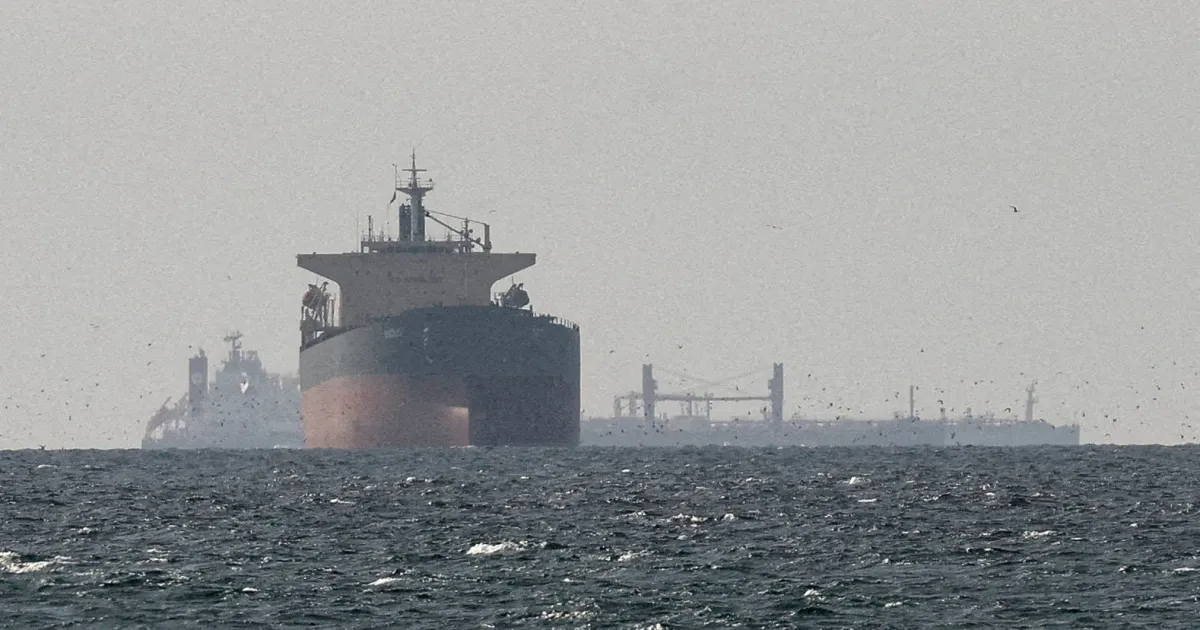
The United States on Sunday responded to Iran’s latest proposal to end the U.S.-Isreali war there, which has led to tankers like the pictured Indian-flagged carrier unable to transit the Strait of Hormuz. File Photo by Divyakant Solanki/EPA
May 3 (UPI) — Iran said on Sunday that it is reviewing the United States’ response to its most recent peace proposal, a 14-point plan that was reviewed by President Donald Trump on Saturday night.
The response was delivered to Iranian negotiators on Sunday, Iranian state media outlets PressTV and Tasnim reported, with officials clarifying some reports on the plan they said have been incorrect.
The 14-point plan is entirely focused on bringing an end to the two-month-old conflict, with no provisions about nuclear materials or other weapons, Esmaeil Baghaei, spokesperson for Iran’s foreign ministry, said in an interview.
When asked about Iran’s new plan on Saturday, Trump expressed doubt that it would meet U.S. requirements but said that he would be reviewing its exact language last night.
“The plan we have presented is centered on ending the war,” Baghaei said. “There are absolutely no details regarding the country’s nuclear issues in this proposal.”
The basics of Iran’s proposal are focused on ending hostilities and then opening a 30-day period for intense negotiation of other issues, including the withdrawal of U.S. military forces from areas around the country, lifting the U.S. naval blockade and ending the war on all fronts, including in Lebanon, Tasnim reported.
But Baghaei said that reports of a suspension of nuclear activities or U.S.-Iran cooperation on clearing mines from the Strait of Hormuz are not true.
“These are among the things that I believe are fabricated by the imagination of some media outlets,” Baghaei said. “We are not currently engaged in any negotiations over the nuclear issue and decisions about the future will be made in due course.”
Iranian officials said that the U.S. proposal had included a two-month cease-fire, which Iran countered with a 30-day period to resolve issues and to actually end the war.
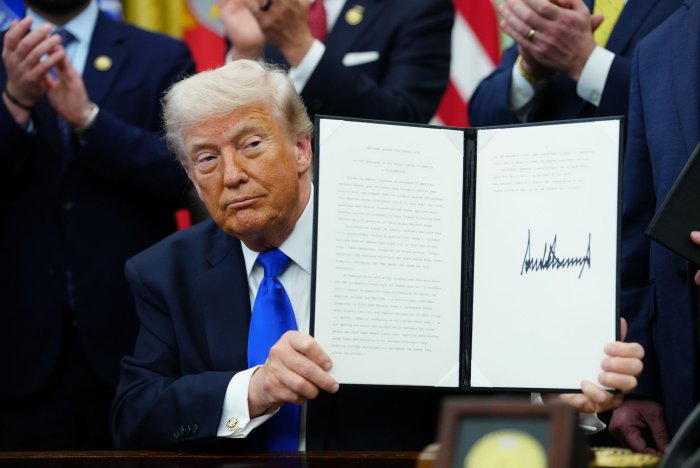
President Donald Trump signs a series of executive orders in the Oval Office of the White House on Thursday. Trump signed an order to expand workers’ access to retirement accounts. Trump also signed legislation ending a 75-day partial shutdown of the Department of Homeland Security after the House voted in favor of funding. Photo by Aaron Schwartz/UPI | License Photo
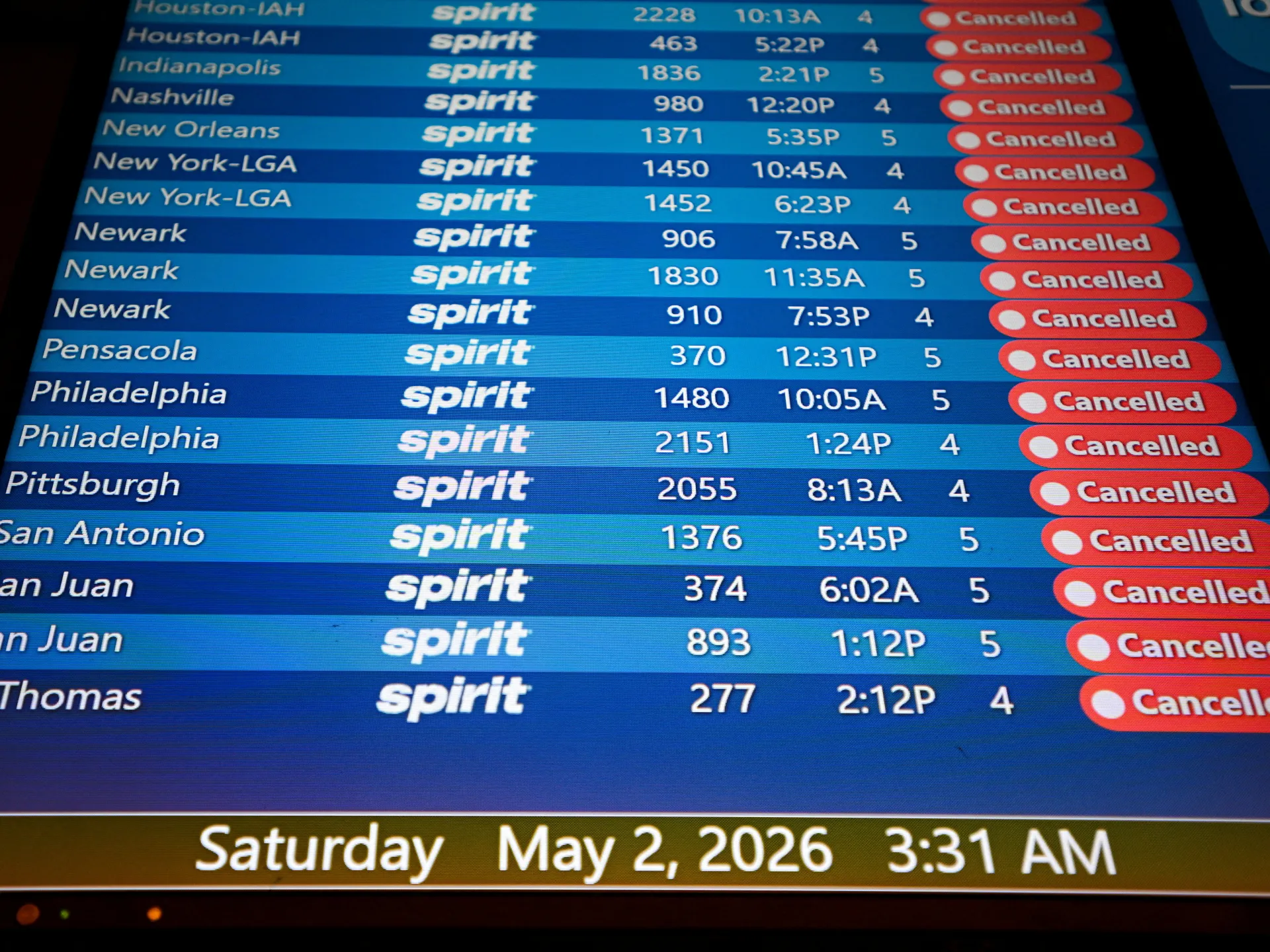
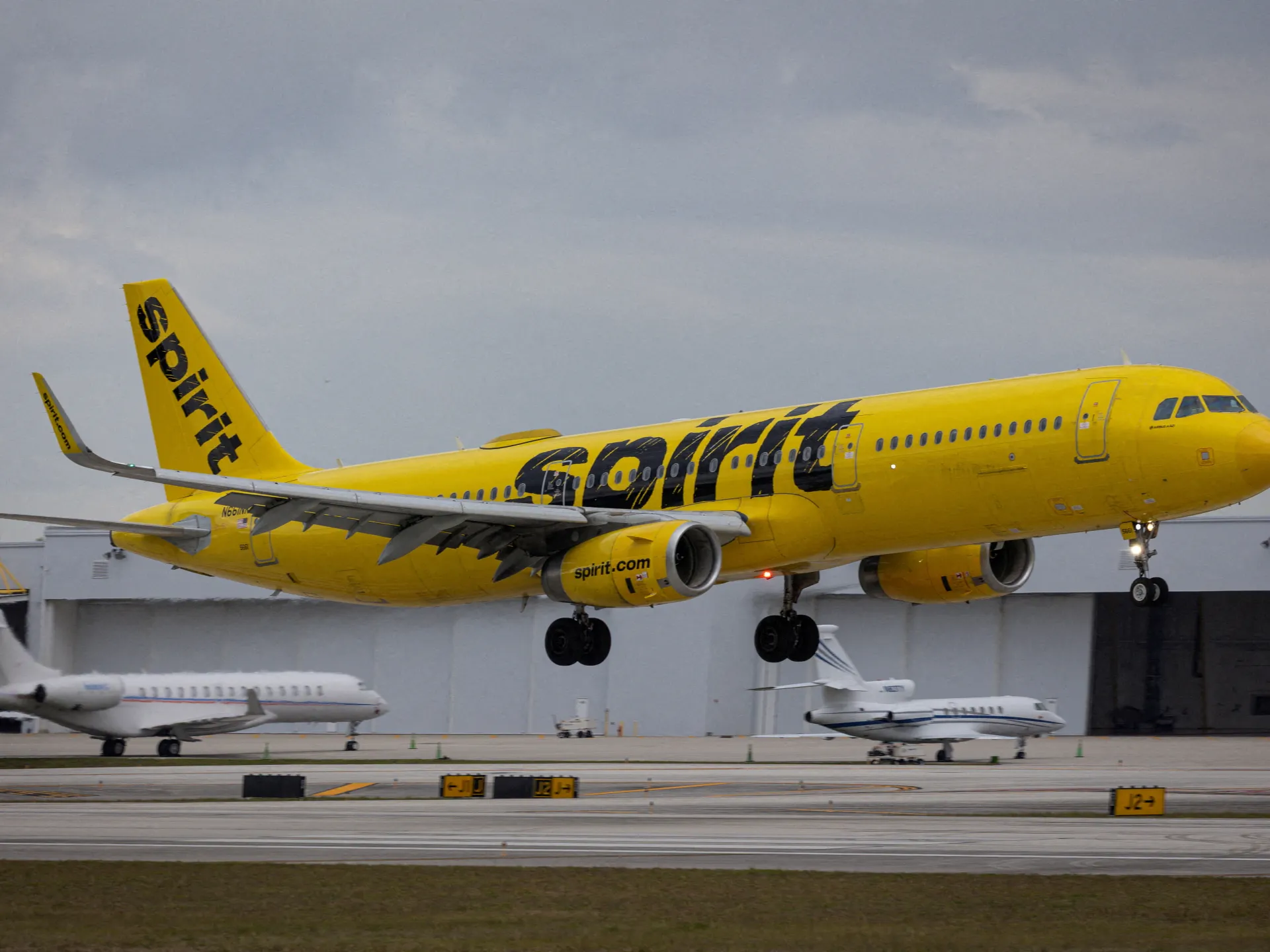
Spirit Airlines, a budget carrier in the United States, has begun winding down operations, cancelling all flights, after talks with the Trump administration to secure a $500m bailout failed. Experts say a spike in aviation fuel prices from the US-Israel war on Iran dealt the final blow to the struggling airline that pioneered the ultralow-cost carrier model.
The airline’s shutdown after 34 years has left some 17,000 staff members unemployed, many passengers stranded, and raised doubts about the future of budget air travel.
Recommended Stories
list of 3 itemsend of list
How did Spirit Airlines reach this point? Did the US-Israel war on Iran deliver the final blow?
Here’s what we know:
What has Spirit Airlines said?
On Saturday, Spirit Aviation Holdings, the airline’s parent company, said the company had started to wind down operations.
“Spirit Aviation Holdings, Inc … today regretfully announced that the Company has started an orderly wind-down of operations, effective immediately. All Spirit flights have been cancelled, and Spirit Guests should not go to the airport,” the company said in a statement on Saturday.
The statement added that, despite its efforts, “the recent material increase in oil prices and other pressures on the business have significantly impacted Spirit’s financial outlook”.
Spirit Airlines, whose airfares were lower compared with other US airlines, had 4,119 domestic flights scheduled between May 1 and May 15, offering 809,638 seats, according to the latest data from Cirium, an aviation analytics firm.
The carrier’s parent firm started as a long-haul trucking company in 1964. It shifted to aviation around 1983. The carrier rebranded from Charter One Airlines to Spirit in 1992.
How did Spirit Airlines reach this point?
The airline had been struggling financially for years and had filed for bankruptcy twice – in November 2024 and then in August 2025 – due to continued losses, high debt, and intense competition from other airlines.
According to a May 2 report by the Reuters news agency, Spirit had recently reached a deal with its lenders that would have helped it emerge from its second bankruptcy by late spring or early summer.
But the war on Iran, which led to a significant increase in aviation turbine fuel (ATF) prices, added to Spirit’s financial struggles and complicated its bankruptcy exit.
Spirit’s restructuring plan assumed ATF costs of about $2.24 a gallon in 2026 and $2.14 in 2027, but prices had climbed to about $4.51 a gallon by the end of April, leaving the carrier unable to survive without new financing.
A Spirit board meeting ended without an agreement to rescue the company, a person close to the discussions told Reuters late on Friday.
US Transportation Secretary Sean Duffy told Reuters he tried to get many airlines to buy Spirit but found no takers. “What would someone buy?” Duffy asked. “If no one else wants to buy them, why would we buy them?”
US President Donald Trump also said he had tried to bail out the airline with a $500m financing package.
“If we can help them, we will, but we have to come first,” Trump told reporters. “If we could do it, we’d do it, but only if it’s a good deal.”
However, a creditor close to the deal told Reuters, “The Trump administration made an extraordinary effort to try and save Spirit, but you can’t breathe life into a corpse. Given that, the company should make its intentions clear for the sake of its customers and employees.”
Anita Mendiratta, special adviser to the UN Tourism secretary-general, noted that while war and geopolitical instability may not have caused Spirit’s collapse, they likely delivered the final blow.
“Surging fuel costs exposed the vulnerability of airlines operating on thin margins with little room for shock absorption,” she told Al Jazeera.
“Spirit’s weaknesses were already there – it had already gone through two bankruptcy filings in the two years prior; global instability simply accelerated the inevitable. In today’s aviation market, volatility is no longer an exception; it is the operating environment,” Mendiratta said.
Are other airlines also under pressure due to the Iran war?
The war on Iran has disrupted global oil and gas prices, with Brent crude rising above $111 a barrel on Friday. The high crude oil prices have also caused ATF prices to rise, affecting budget airlines badly.
Across the globe, airlines have been increasing prices to reflect the high ATF prices, and some have also reduced their flight operations.
German airline Lufthansa said last month it cancelled 20,000 flights in a bid to protect itself from the soaring ATF costs.
On Friday, leading Indian carrier Air India said it has increased fuel surcharges on all flights, adding that it will reduce 100 flights a day across its domestic and international routes.
Mendiratta noted that the aviation industry is on alert as airlines carrying high debt, facing fuel cost volatility, labour cost pressures, fleet constraints, and sustained pricing pressure remain exposed [to the war], especially those operating through a low-cost carrier model.
“What happens next is a defining test of aviation leadership. The rapid response from rival airlines to protect stranded passengers reflects an industry that understands its most valuable asset is not aircraft or market share, it is customer trust [both traveller and cargo],” she said.
“Just as importantly, how airlines support displaced employees, reassure markets, and reinforce operational stability will shape confidence in the sector’s long-term recovery,” she added.
Iran has offered a new 14-point proposal to the United States in the latest diplomatic step to reach a permanent end to the war, which has exposed the limits of US military dominance and shaken the global economy.
Responding to the new proposal on Saturday, US President Donald Trump said he is studying it but is not sure he can make a deal with Iran, a day after he voiced frustration with a previous offer from Tehran through the mediator Pakistan.
Recommended Stories
list of 3 itemsend of list
Late on Thursday, Tehran sent the proposal to Pakistan, which got the two sides to agree on the ceasefire. According to the Iranian Tasnim news agency, the 14-point plan was formulated in response to a nine-point US plan.
But weeks since the ceasefire began on April 8, Washington and Tehran have been unable to negotiate a peace deal. Tehran wants a permanent end to the war, while Trump has insisted that Iran first end the effective blockade of the Strait of Hormuz, through which a fifth of global oil and gas exports pass. The US president has also made the issue of Iran’s nuclear capability a “red line”.
Iran’s de facto blockade of the strait came in response to the US and Israel launching attacks on the country on February 28. A naval blockade of Iranian ports by the Trump administration, despite the ceasefire deal, has heightened tensions.
The US and Iran have also been continuing to attack, capture, and intercept each other’s ships, pointing to an ongoing naval war still playing out in the Strait of Hormuz.
So what’s the new proposal, and will President Trump accept it?
Here’s what we know:
(Al Jazeera)
What is Iran’s 14-point proposal to end the war?
According to Iranian media reports, Tehran’s new proposal came in response to a Washington-backed nine-point peace proposal, which primarily sought a two-month ceasefire.
However, in its latest peace proposal, Iran said it wants to focus on ending the war instead of extending the truce and wants all issues resolved within 30 days.
The new proposal calls for guarantees against future attacks, a withdrawal of US forces from around Iran, the release of frozen Iranian assets worth billions of dollars and the lifting of sanctions, war reparations, ending all hostilities, including in Lebanon, and “a new mechanism for the Strait of Hormuz”.
Iran, which was also attacked by the US and Israel last June, wants a guarantee against future aggression. Israel has previously targeted Iranian nuclear scientists and run campaigns to sabotage its nuclear sites.
Tehran also wants its right to uranium enrichment guaranteed as a signatory to the Non-Proliferation of Nuclear Weapons (NPT), but Trump has made the nuclear issue a “red line”. Iran wants decades of sanctions, which have devastated its economy, to be lifted as part of any deal. The navigation through the strait and demands for war reparations are other sticking points in the talks.
According to a report by Iranian state broadcaster IRIB, after delivering the proposal, Deputy Foreign Minister Kazem Gharibabadi said, “Now the ball is in the United States’ court to choose the path of diplomacy or the continuation of a confrontational approach.”
Paul Musgrave, an associate professor of government at Georgetown University in Qatar, said Iran has “slightly softened” its proposal.
“The news reports on it indicate that there is a slight softening in the proposal, or rather a run-up to discussing the proposal, namely that the Iranian side may have given up its precondition that the US cease its distant blockade of Iranian traffic [in the Strait of Hormuz],” he told Al Jazeera.
“Beyond that, though, a lot of the things that are reportedly in the proposal include maintaining Iran’s sovereign ability to enrich uranium, its nuclear programme and, of course, what it delicately refers to as a ‘control mechanism’ over shipping in the Strait of Hormuz.”
Musgrave said on the two biggest issues – enrichment of uranium and transferring its highly enriched uranium – the US and Iran remain “far apart”.
“President Trump has been unyielding that Iran must surrender its nuclear capability,” he said.
Kenneth Katzman, a senior fellow at New York-based nonprofit Soufan Center, said Iran’s mistrust of Trump remains a bigger obstacle.
“The differences on the nuclear issues are actually … not that great a difference any more. It’s still substantial, but can be narrowed. The issue is that Iran really mistrusts Trump and the United States and does not want to move, really, into full discussion until this blockade is lifted,” he said.
“That’s a problem that could lead to US escalation. As Trump knows, he must break this Iranian control of the strait, so that’s where the issue is.”
Katzman said while both sides are “frustrated”, neither is likely to give up on the negotiations in the immediate future.
The MSC Francesca captured by the Islamic Revolutionary Guard Corps in the Strait of Hormuz on April 24, 2026 [Meysam Mirzadeh/Tasnim/WANA via Reuters]
How did the US respond?
Trump has said he is reviewing Iran’s proposal, but warned that Washington could resume attacks if Tehran “misbehaves”.
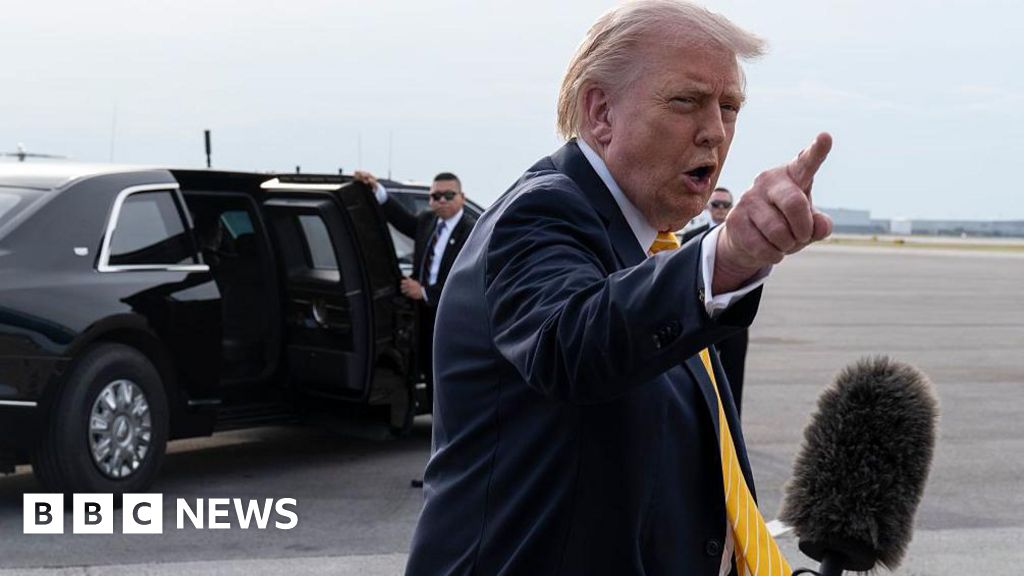
Speaking to reporters in Florida before boarding Air Force One on Saturday, Trump confirmed that he had been briefed on the “concept of the deal”.
Despite the diplomatic opening, the president struck a characteristically blunt tone regarding the possibility of renewed hostilities, which have been paused since the ceasefire.
“If they do something bad, there is a possibility it could happen,” Trump said when asked if strikes would resume.
Trump addedthat the US was “doing very well” and claimed that Iran was desperate for a settlement because the country had been “decimated” by months of conflict and a naval blockade.
Trita Parsi from the Quincy Institute for Responsible Statecraft told Al Jazeera the economic cost of the blockade on Iranian ports has exceeded what the White House anticipated and argued that the broader strategic damage to the US was probably more significant.
“Iran has been under all kinds of economic pressure and sanctions for 47 years,” Parsi told Al Jazeera. “None of them has managed to break the Iranians or force them to capitulate,” he said.
In a post on Truth Social later on Saturday, Trump said it was difficult to imagine that the Iranian proposal would be acceptable as Tehran had “not yet paid a big enough price for what they have done to Humanity, and the World, over the last 47 years”.
Trump seems to have rejectedthe new Iranian proposal “without reading it or being briefed on it”, according to Musgrave from Georgetown University.
What are the previous peace proposals to end the conflict?
Iran’s latest proposal comes amid a fragile three-week truce that came into effect on April 8 and has put a pause on the US-Israel war on Iran.
A day before the ceasefire, Iran had proposed a 10-point peace plan, which included an end to conflicts in the region, a protocol for safe passage through the Strait of Hormuz, the lifting of sanctions and reconstruction, state-run news agency IRNA reported.
Trump had said Iran’s 10-point plan was a “significant proposal” but “not good enough”.
The April 7 proposal from Iran came in response to a 15-point plan drafted by the US on March 25.
Washington’s plan included a one-month ceasefire while the two sides negotiated terms to end the war, via Pakistan.
According to Israel’s Channel 12, it also included the dismantling of Iran’s nuclear facilities in Natanz, Isfahan and Fordow, a permanent commitment from Iran to never develop nuclear weapons, the handover of Iran’s stockpile of already enriched uranium to the International Atomic Energy Agency (IAEA), a commitment from Iran to allow the United Nations watchdog to monitor all elements of the country’s remaining nuclear infrastructure, reopening of the Strait of Hormuz and end of all sanctions on Iran, alongside the ending of the UN mechanism that allows sanctions to be reimposed.
Iran, however, rejected this plan and said a temporary ceasefire would give the US and Israel time to regroup and launch further attacks and in turn proposed its 10-point plan.
What is the situation on the ground now?
Despite a ceasefire, the Islamic Revolutionary Guard Corps (IRGC) said on Saturday that it remains on “full standby” for a return to hostilities, citing the US’s lack of commitment to previous treaties.
In a post on X on Sunday, the IRGC’s intelligence unit said, “There is only one way to read this: Trump must choose between an impossible military operation or a bad deal with the Islamic Republic of Iran. The room for US decision-making has narrowed.”
The impasse is further complicated by technical obstacles to reopening the Strait of Hormuz, including the presence of Iranian sea mines. Tehran has closed the strait since the war began on February 28, upending global oil and gas prices.
To pressure Iran to open the strait, the US imposed a blockade of all Iranian ports on April 13, stoking the oil and gas crisis. On Friday, Brent crude, the international benchmark, was at $111.29 per barrel at 08:08 GMT, compared with about $65 before the war.
Tensions have been further stoked by Trump’s recent characterisation of the US naval blockade as a “very profitable business”.
“We took over the cargo. Took over the oil, a very profitable business. Who would have thought, we’re sort of like pirates, but we’re not playing games,” Trump said at an event in the US state of Florida on Saturday.
Tehran’s Ministry of Foreign Affairs seized on the remarks, labelling them a “damning admission of piracy”.
Parsi from the Quincy Institute told Al Jazeera the US naval blockade of Iran has backfired on Trump and is making the situation worse.
“The negotiations were taking place and could have continued regardless of the blockade,” he said.
“The blockade has nothing to do with the Iranians being at the table. If anything, it is blocking diplomatic progress more than anything else,” Parsi noted.
He argued that Trump had actually secured his greatest advantage through diplomacy before the blockade was imposed.
“Once he managed to get the ceasefire, the primary pressure on him, the war itself and the way it was pushing up gas prices, was lifted. Had he stayed in that scenario and used time to his advantage, he would have been in a much stronger position vis-a-vis the Iranians, because the Iranians had not managed to get the key thing they wanted: sanctions relief.”
Instead, by imposing the blockade, Trump took more oil off the market.
“Oil prices are now higher during the ceasefire than they were during the war itself. All of these economic indicators show that the blockade is making the situation worse for Trump,” Parsi said.
However, Trump has been looking at options to resolve the oil crisis, including setting up a naval coalition called the Maritime Freedom Construct (MFC) to restore freedom of navigation in the Strait of Hormuz.
According to US media reports, core functions of the naval coalition would be to share intelligence among member nations, coordinate diplomatic efforts, and enforce sanctions to manage shipping traffic through the strait.
The Strait of Hormuz, a narrow waterway once carrying roughly a fifth of the world’s oil and gas, remains effectively closed after the United States and Iran imposed competing blockades.
Naval blockades are one of the oldest weapons in warfare, requiring no ground troops or invasion, just the ability to cut off what an enemy needs to survive. These blockades have reshaped economies, societies and alliances across generations, sometimes with instant shockwaves, sometimes with effects only seen later.
Recommended Stories
list of 4 itemsend of list
From Israel’s ongoing siege of the Gaza Strip to blockades during World War I, here are some notable naval blockades in modern history:
Israel’s siege of Gaza (2007-present)
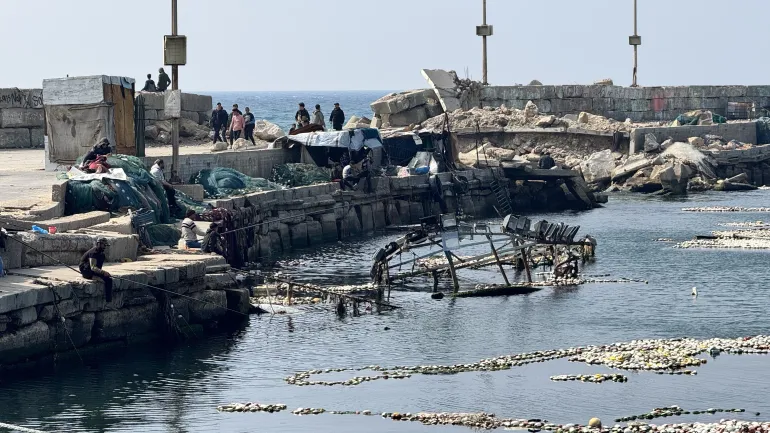
A view of the severely damaged Gaza City port as fishermen work under difficult conditions due to Israeli attacks, March 8, 2025 [Hamza ZH Qraiqea/Anadolu]
Israel’s complete land, sea and air blockade of the Gaza Strip is one of the longest sieges in modern history.
Launched in 2007, Israel has limited the entry of goods and essential supplies, causing a prolonged humanitarian and economic crisis for the Strip’s 2.3 million people, who cannot travel freely.
Before Israel’s genocidal war on Gaza began in October 2023, fishermen were restricted to 6-15 nautical miles (11-28km) from shore, well below the 20-nautical-mile (37km) zone guaranteed by the Oslo Accords.
After 2023, with Israel’s policy of starving the population, fishermen have taken extreme measures to feed their families, leading to many being killed by Israeli fire.
Since 2008, several Freedom Flotilla vessels have attempted to break the Israeli blockade. Since 2010, all flotillas attempting to break the Gaza blockade have been intercepted or attacked by Israel in international waters.
On April 30, Israel raided 22 out of the 58 vessels in the most recent Global Sumud Flotilla campaign in international waters more than 1,000km (620 miles) from Gaza.
Blockade of Biafra (1967-70)
Nigerian troops entering Port Harcourt, after routing Biafran troops during the Nigerian Civil War [File: Evening Standard/Getty Images]
During the Nigerian Civil War, which began in July 1967, the Nigerian federal government imposed a land, sea and air blockade on the secessionist Republic of Biafra shortly after it declared independence.
The blockade led to widespread starvation, widely seen as a deliberate wartime strategy, transforming a territorial conflict into a global humanitarian crisis. Death tolls vary, but it is estimated that one to two million people died, the vast majority from hunger and disease rather than direct conflict.
The nearly three-year-long blockade ended with the Biafran surrender in January 1970.
Beira Patrol blockade (1966-75):
HMS Cleopatra’s Wasp helicopter encounters an engine failure at high altitude during the blockade on the Port du Beira in 1971; the aircraft was recovered after it crash-landed [File: 50tony Wikimedia Commons]
The Beira Patrol was a nine-year-long blockade by the British navy to prevent oil from reaching Rhodesia, present-day Zimbabwe, through the Mozambican port of Beira, enforced under United Nations sanctions following Rhodesia’s unilateral declaration of independence.
The blockade largely failed its strategic goal. Rhodesia continued receiving oil via South Africa and other Mozambican ports, which the UN resolution did not authorise the British navy to intercept.
Additionally, the cost to the United Kingdom was substantial. The operation tied up 76 naval ships over nine years, with two frigates required on station at all times.
The blockade ended in July 1975, when Mozambique’s newly gained independence from Portugal allowed it to credibly commit to blocking oil transit to Rhodesia, rendering the naval patrol redundant.
Cuban Missile Crisis ‘quarantine’ (1962)
A US official shows aerial views of one of the Cuban medium-range missile bases, taken in October 1962, to the members of the UN Security Council [File: AFP]
In October 1962, the US ordered a naval “quarantine” of Cuba after US U-2 spy planes discovered Soviet nuclear missile sites under construction on the island.
The US deliberately called it a “quarantine” rather than a blockade, which would have been legally an act of war, aiming to prevent the Soviets from bringing in more military supplies and to pressure them to remove the missiles already there.
The quarantine drew a line 500 nautical miles (920km) from Cuba’s coast, with US warships authorised to stop, search, and turn back any vessel carrying offensive weapons if necessary.
The crisis brought the world to the brink of nuclear war. The then-Soviet First Secretary Nikita Khrushchev called the blockade “outright piracy” and an act of aggression, and initially ordered ships to proceed. For several days, Soviet vessels steamed towards the quarantine line as the world watched.
The most dangerous phase of the standoff lasted 13 days. An agreement was reached in which the Soviets would dismantle their offensive weapons in Cuba in exchange for a US public declaration not to invade Cuba, and a secret agreement to remove US Jupiter missiles from Turkiye.
The naval quarantine was formally ended on November 20, 1962, after all offensive missiles and bombers had been withdrawn.
Blockade of Wonsan (1951-53)
US B-26 Invaders dropped para-demolition bombs at supply warehouses and dock facilities at the Wonsan port in North Korea in 1951 [File: Wikimedia Commons]
During the Korean War, UN naval forces led by the US imposed a blockade of the North Korean port of Wonsan in February 1951, lasting nearly two and a half years.
It aimed to deny the North Korean navy access to the city, which was strategically significant for its large harbour, airfield and petroleum refinery.
The blockade was preceded by a dangerous mine-clearance operation in October 1950. North Korean forces had been well supplied by the Soviet Union and China with sea mines, and during the clearance, the sweepers USS Pledge and USS Pirate were sunk, killing 12 men and wounding dozens.
The operation successfully constrained North Korean and Chinese forces on the east coast, forcing them to divert thousands of troops and artillery pieces away from the front line. UN forces also captured several harbour islands, which strengthened the blockade’s grip on the port.
The blockade ended after 861 days with the signing of the Korean Armistice Agreement in July 1953. By that point, allied naval fire had almost levelled Wonsan.
US submarine blockade of Japan (1942-45)
The US sinking of the Japanese destroyer Yamakaze on June 25, 1942 [File: US Navy via Wikimedia Commons]
The US imposed a submarine blockade against Japan during the Pacific War.
The blockade began taking shape in 1942, combining US naval submarine attacks on merchant shipping with minelaying operations to cripple Japan’s war capabilities, disrupt shipping and cut off vital supplies such as food and fuel.
As an island nation, Japan was especially vulnerable, almost entirely dependent on imports of oil, rubber and raw materials. Its economy and military could not function without open sea lanes.
Over the course of the war, US submarines sank some 1,300 Japanese merchant ships and roughly 200 warships. By 1945, oil imports had effectively ceased.
Food imports collapsed, causing significant shortages and malnutrition across Japan by 1945, though the extent of civilian starvation is disputed.
After the US dropped atomic bombs on Hiroshima on August 6 and Nagasaki on August 9, 1945, Japan announced its surrender on August 15, bringing the blockade and the Pacific War to an end.
Blockade of eastern Mediterranean (1915-18)
World War I map shows modern Palestine and Syria, published in 1918 [File: Wikimedia Commons]
In August 1915, during World War I, the Allied forces imposed a blockade of the eastern coast of the Mediterranean to cut off military supplies and weaken the Ottoman Empire’s war effort.
The declared area ran from the intersection of the Aegean Sea and the Mediterranean Sea in the north to the Egyptian frontier in the south. The blockade was initiated by Britain and France, later assisted by Italy and other Allied powers.
The consequences were devastating. Military supplies, munitions, oil, food and medicine were all targeted. The food crisis was compounded by a locust plague in 1915 and a severe drought, contributing to severe famine across Lebanon and Greater Syria.
Reports suggest the famine led to 500,000 deaths by 1918, mostly civilians, with Mount Lebanon losing an estimated one-third of its population. Mass migration followed.
The blockade remained in place throughout the war and lifted only when Allied forces occupied Beirut and Mount Lebanon in October 1918.
Allied blockade of Germany (1914-19)
German U-35 submarine sinking the French steamer, Herault, in the Mediterranean, off Cabo San Antonio, Spain, June 23, 1916 [Courtesy of the Library of Congress]
The British navy began blockading Germany almost immediately after the outbreak of the war in August 1914.
The naval blockade extended from the English Channel to Norway, cutting off Germany from the oceans.
Britain mined international waters to prevent ships from entering the ocean, creating danger even for neutral vessels.
Germany responded by declaring the seas around the British Isles a “military area”, prompting Britain and France to ban all goods to and from Germany.
The blockade’s most devastating consequence was famine. The winter of 1916-17, known as the Turnip Winter, marked one of the harshest years in wartime Germany.
The blockade had cut off food and fertiliser imports, a failed potato harvest left little to fall back on, and a breakdown in food distribution compounded the crisis. It is estimated that between 424,000 and 763,000 civilians died from diseases related to hunger and malnutrition.
The blockade was not yet fully lifted until July 1919, after the Treaty of Versailles had been signed.
In a statement on Saturday, China’s Ministry of Commerce said the sanctions “improperly” restrict business between Chinese enterprises and third countries “in violation of international law and the basic norms governing international relations”.
The Commerce Ministry said it had issued a “prohibition order” stipulating that the sanctions “shall not be recognized, enforced, or complied with” to “safeguard national sovereignty, security, and development interests”.
“The Chinese government has consistently opposed unilateral sanctions that lack UN authorisation and basis in international law,” the ministry added.
It said the order blocked US measures against Hengli Petrochemical (Dalian) Refinery and four other so-called “teapot” refineries: Shandong Jincheng Petrochemical Group, Hebei Xinhai Chemical Group, Shouguang Luqing Petrochemical and Shandong Shengxing Chemical.
Announcing the sanctions on April 24, the US Treasury Department called Hengli “one of Tehran’s most valued customers”, saying it had generated hundreds of millions of dollars in revenue for the Iranian military through crude oil purchases.
The Trump administration imposed sanctions on the other four refineries named by the Chinese ministry, among other facilities, last year.
China gets more than half of its oil from the Middle East, much of it from Iran.
According to commodities data firm Kpler, China bought more than 80 percent of the oil Iran shipped in 2025.
China’s “teapot” refineries operate independently and are generally smaller than the facilities run by state-owned oil giants, such as Sinopec.
The facilities, which have been crucial to China’s efforts to secure its oil supplies, capitalise on heavily discounted crude sold by countries under sanctions, such as Iran, Russia and Venezuela.
Teapots account for a quarter of Chinese refinery capacity, operate with narrow and sometimes negative margins, and have been squeezed recently by tepid domestic demand.
US sanctions have created additional hurdles for refiners, including difficulties selling refined products under their correct place-of-origin markings.
Iran has sent the US a new 14-point proposal to end the war.
Published On 3 May 20263 May 2026
United States President Donald Trump says he will review the latest Iranian proposal to end the war but has expressed doubt that the new plan will lead to a deal as the two sides have escalated their rhetoric.
Tehran has sent a 14-point plan to Washington, calling for guarantees of nonaggression, sanctions relief, the lifting of a naval blockade and an end to the war “on all fronts”, including in Lebanon. This proposal seeks to postpone nuclear talks to a later stage, an issue Trump has considered a “red line”.
Recommended Stories
list of 3 itemsend of list
Despite the diplomatic opening, the US president did not rule out the possibility of renewed hostilities. “If they do something bad, there is a possibility it could happen,” Trump said.
The Iranians have also fired back with the Islamic Revolutionary Guard Corps (IRGC) saying it is on standby for a return to war.
Here is what we know as the conflict enters day 65:
(Al Jazeera)
In Iran
While Washington requested a two-month ceasefire, Tehran wants to focus on ending the war instead of extending the truce and wants all issues to be resolved within 30 days, according to Iran’s Tasnim News Agency.
The 14-point Iranian plan includes guarantees of nonaggression, the withdrawal of US forces from the vicinity of Iran, the lifting of the US naval blockade, the release of Iran’s frozen assets, the lifting of sanctions and an end to the war “on all fronts“, including in Lebanon, according to Tasnim.
The IRGC said it is on standby for a return to war with the US, saying a resumption of hostilities is “likely” as “evidence shows that [the US] is not committed to any agreements or treaties”.
Iran’s Ministry of Foreign Affairs said Trump’s description of the US capture of Iranian vessels as “piracy” is a “direct and damning admission of the criminal nature of their actions” against Tehran.
TankerTrackers.com said an Iranian supertanker has evaded the US blockade and reached the Asia Pacific while carrying more than 1.9 million barrels of crude oil valued at nearly $220m.
Diplomacy
The US has approved $8.6bn in major arms deals and military support for Qatar, Kuwait, the United Arab Emirates and Israel.
A convoy of 70 tanker trucks carrying Iraqi crude oil has crossed into Syria via the al-Yarubiyah border crossing as Baghdad seeks alternative export routes after the closure of the Strait of Hormuz.
In the US
Trump said he is studying Iran’s latest 14-point peace proposal but warned that attacks could resume if the Iranian government “misbehaves” or does “something bad”.
The US is seeking to form an international naval coalition called the Maritime Freedom Construct (MFC) to restore freedom of navigation in the Strait of Hormuz, which in effect has been blocked by Iran since the US-Israel war on the country began on February 28. According to US media, its core functions would be to share intelligence among member nations, coordinate diplomatic efforts and enforce sanctions to manage shipping through the strait.
Trump said a US troop withdrawal from Germany could far exceed 5,000 soldiers as tensions between the two allies rise over the war on Iran.
In Lebanon
At least 41 people have been killed as Israel launched 50 air strikes on southern Lebanon in 24 hours despite a ceasefire between Israel and Lebanon being in place since April 16. The death toll since the latest escalation in the war between Israel and Hezbollah began on March 2 has risen to 2,659 people.
The Israeli military issued a new warning, threatening attacks on 12 towns and villages in southern Lebanon and ordering residents to flee their homes.The towns and villages include al-Duwayr, Arab Salim, al-Sharqiya (Nabatieh), Jibshit, Braashit, Sarafand, Dounin, Briqa, Qaaqaiya al-Jisr, al-Qasiba (Nabatieh) and Kfar Sir.
Israel’s military has admitted to striking and damaging a Catholic “religious building” in southern Lebanon on Saturday as criticism grows over Israeli attacks on Christian sites.
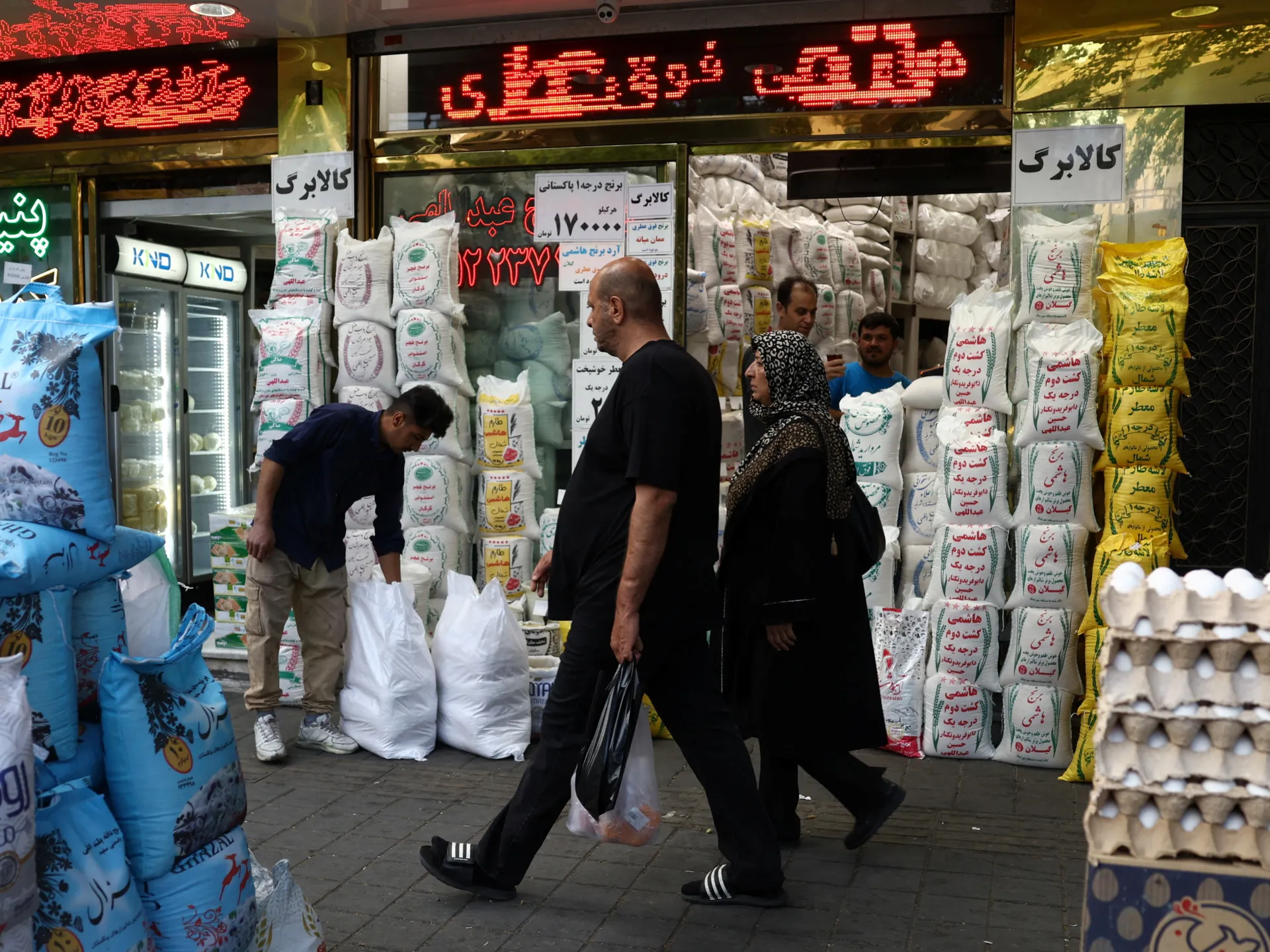
A fragile ceasefire may have paused the US-Israeli war on Iran, but the economic cost is crippling the daily lives of Iranians. The US is blockading Iranian ports, while the price of goods skyrockets and businesses struggle to keep employees.
US budget carrier Spirit Airlines shuts down after talks for a government bailout failed, leaving 17,000 workers jobless and many passengers stranded. Rising fuel prices from the US-Israel war on Iran partially blamed for Spirit’s rapid decline.








![HMS Cleopatra's Wasp helicopter, No.463, encountered an engine failure at high altitude during the blockade on the Port du Beira in 1971. A crash landing occurred at sea and the aircraft was recovered. [File image.]](https://i0.wp.com/www.aljazeera.com/wp-content/uploads/2026/05/Wasp_463_a-1777774554.jpg?w=640&ssl=1)