Top negotiator Mohammad Bagher Ghalibaf says US naval blockade of Iran’s ports is ‘a clumsy and ignorant decision’.
Published On 18 Apr 202618 Apr 2026
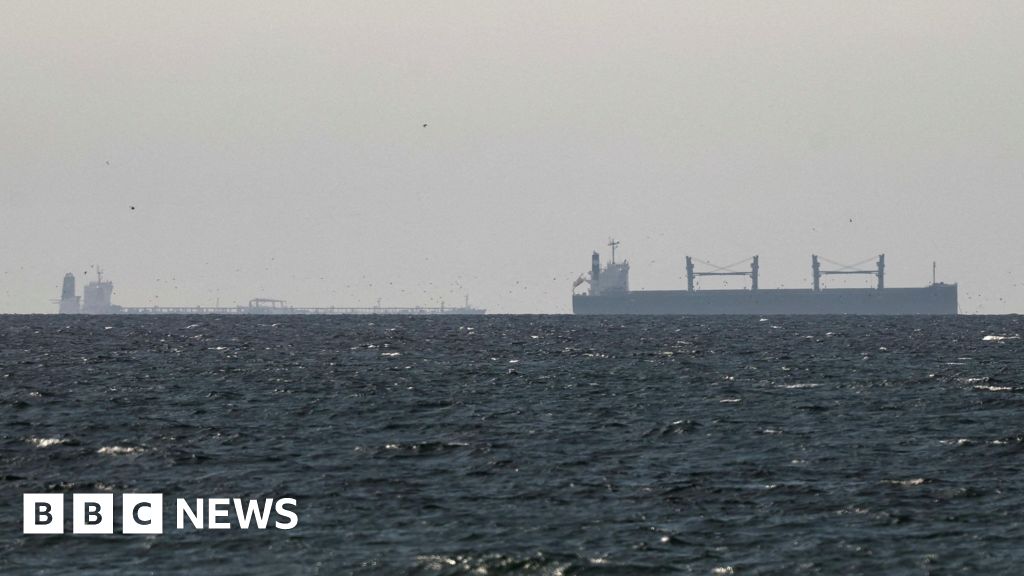
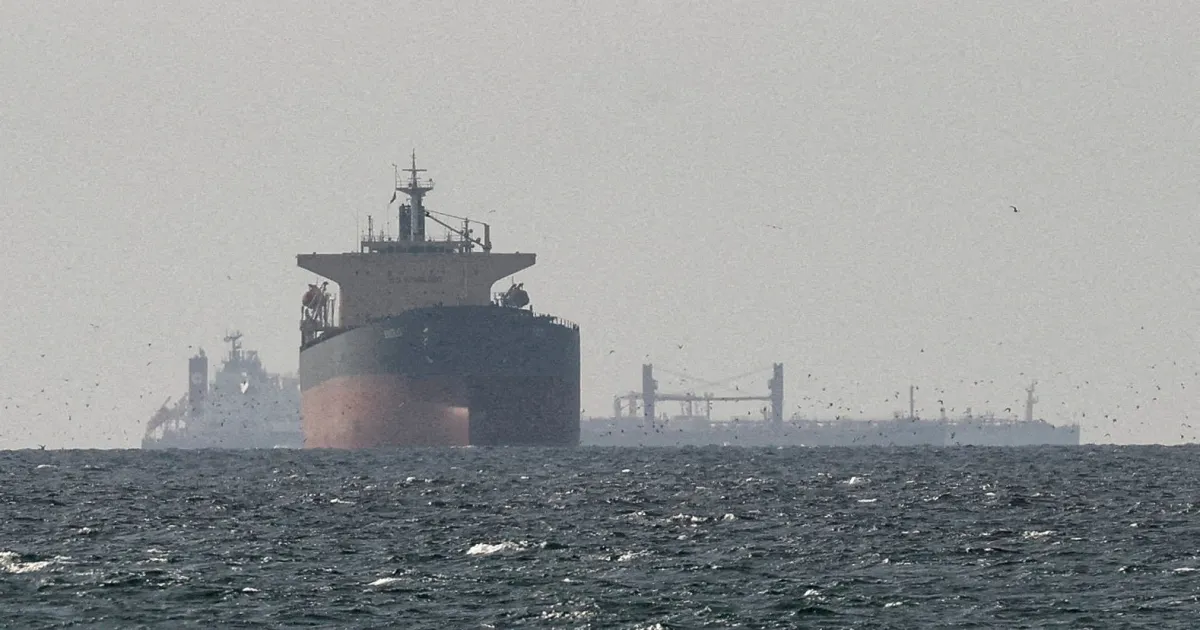
Iran’s Islamic Revolutionary Guard Corps Navy (IRGC) says the Strait of Hormuz is closed and that any ship that attempts to pass through the waterway will be targeted, a dramatic reversal less than 24 hours after the critical shipping lane was reopened.
In a statement carried by Iran’s Student News Agency, the IRGC navy said on Saturday the strait will be closed until the United States lifts its naval blockade on Iranian vessels and ports. It said the blockade was a violation of the ongoing ceasefire agreement in the US-Israel war on Iran.
Recommended Stories
list of 4 itemsend of list
“We warn that no vessel of any kind should move from its anchorage in the Persian Gulf and the Sea of Oman, and approaching the Strait of Hormuz will be considered cooperation with the enemy, and the offending vessel will be targeted,” it said.
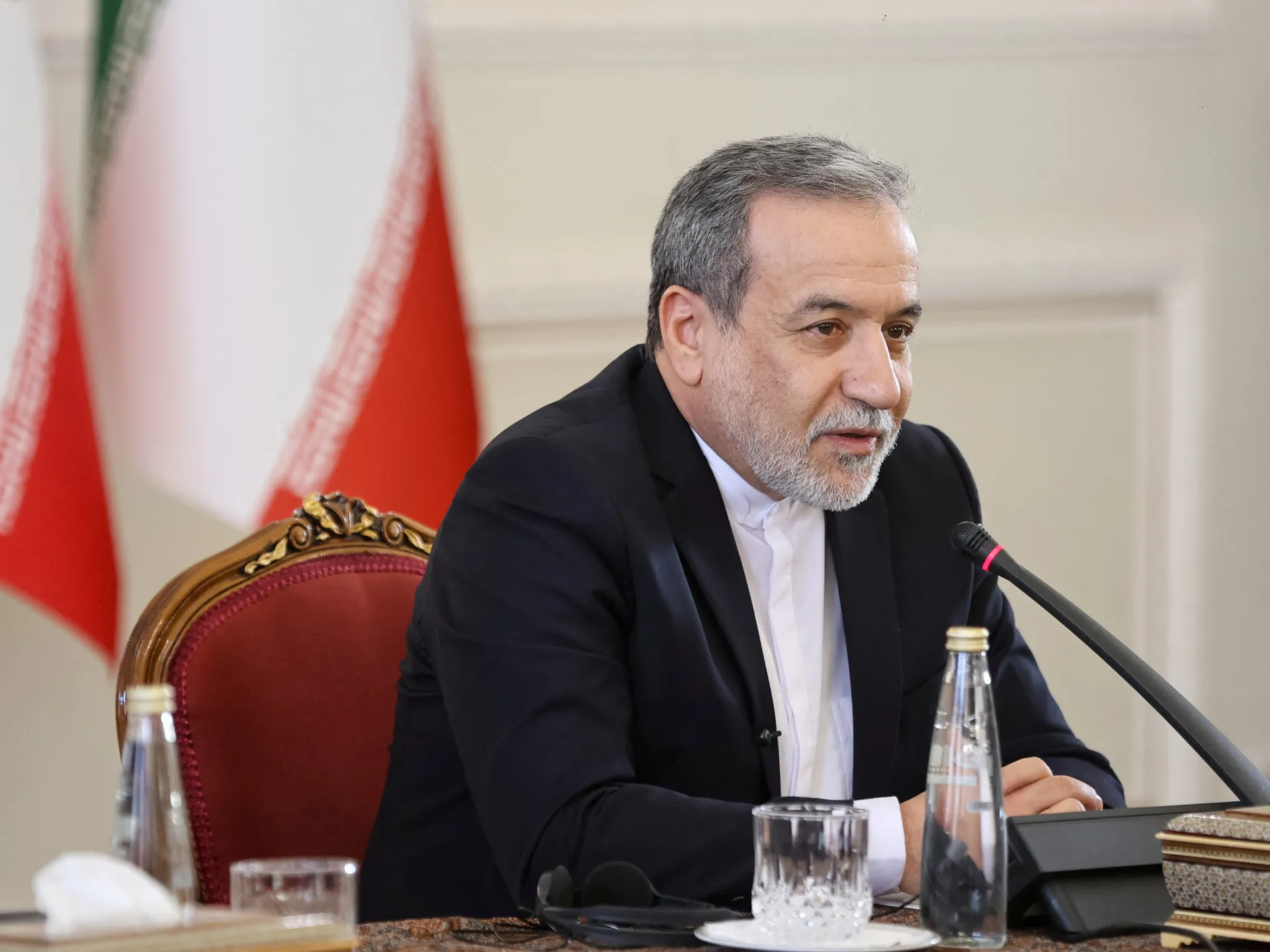
Mohammad Bagher Ghalibaf, Iran’s parliament speaker and a senior negotiator in talks between Washington and Tehran on ending the war, said in a television interview that “the Strait of Hormuz is under the control of the Islamic Republic”.
“The Americans have been declaring a blockade for several days now. This is a clumsy and ignorant decision,” he added.
The reassertion of control came just hours after Iran had briefly reopened the strait, in line with a 10-day ceasefire between Israel and Lebanon. Oil prices dropped on global markets after Iranian Foreign Minister Abbas Araghchi said on Friday that the waterway was “completely open for all commercial vessels.”
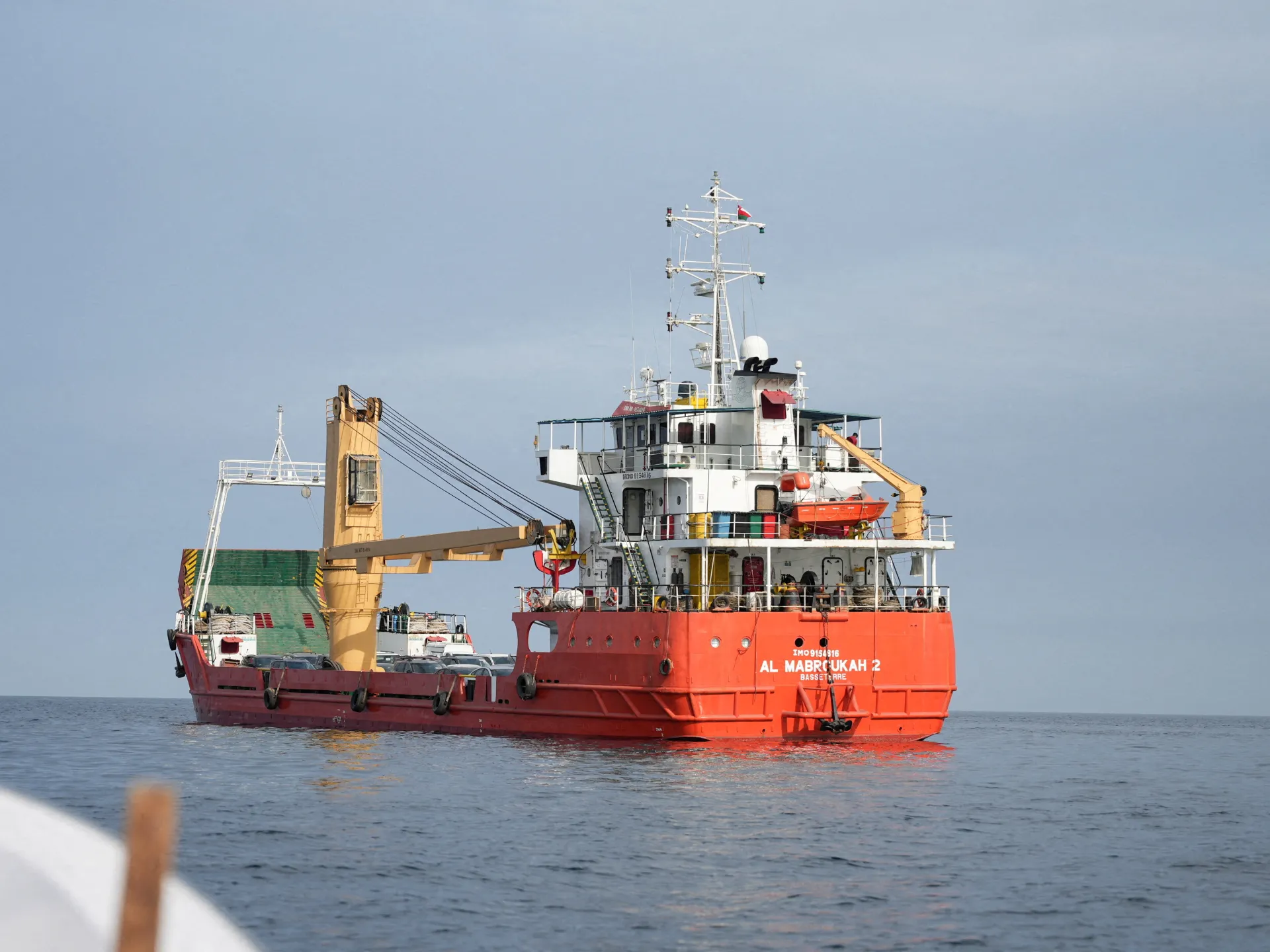
More than a dozen commercial ships passed through the waterway before the IRGC reversed course.
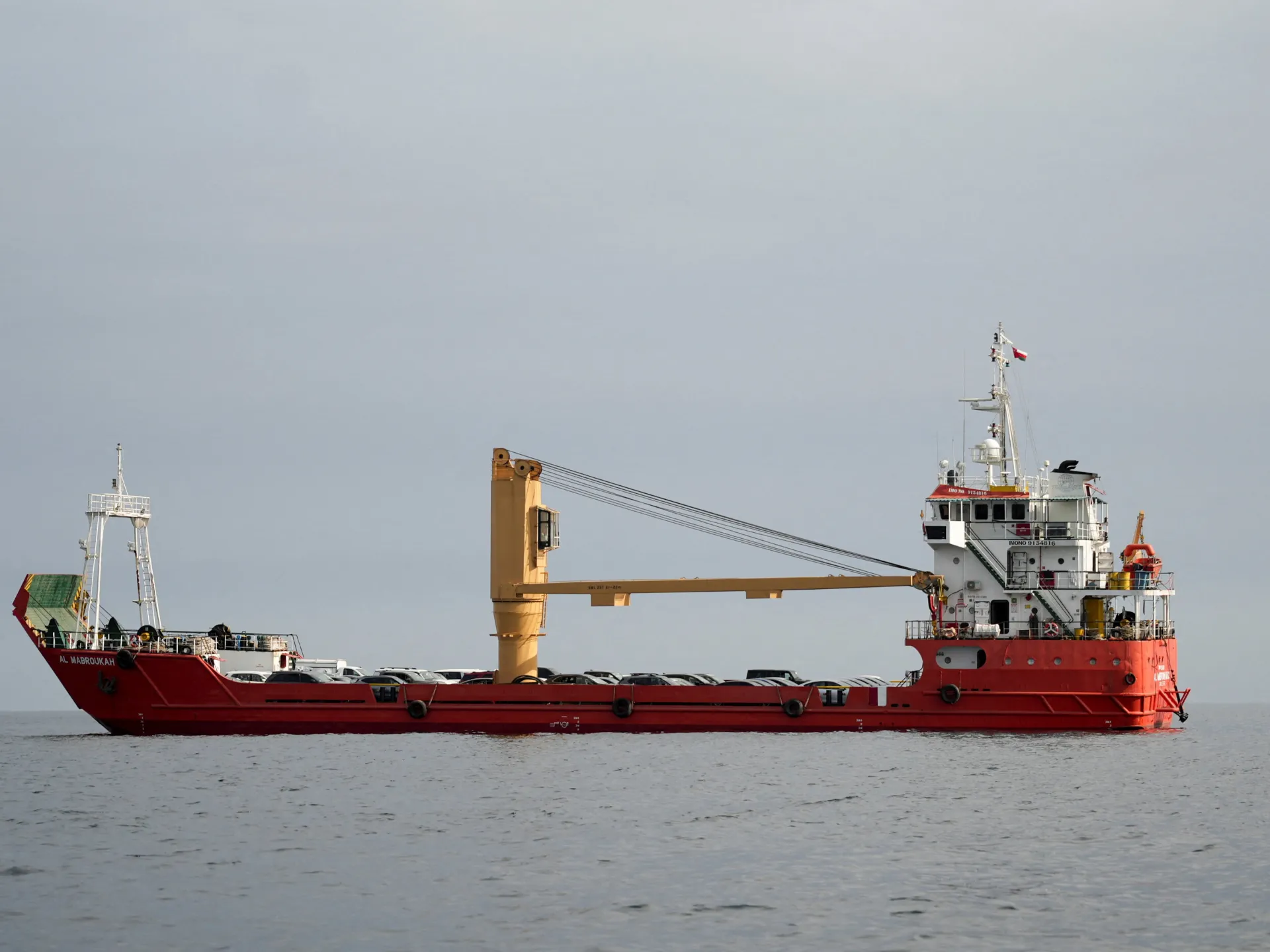
Iranian gunboats reportedly fired on two commercial ships on Saturday, according to United Kingdom Maritime Trade Operations (UKMTO). India’s Ministry of External Affairs also said that two Indian-flagged ships were involved in a “shooting incident” in the strait.
Some merchant vessels in the region received radio messages from the IRGC Navy, warning that no ships were being allowed through the strait.
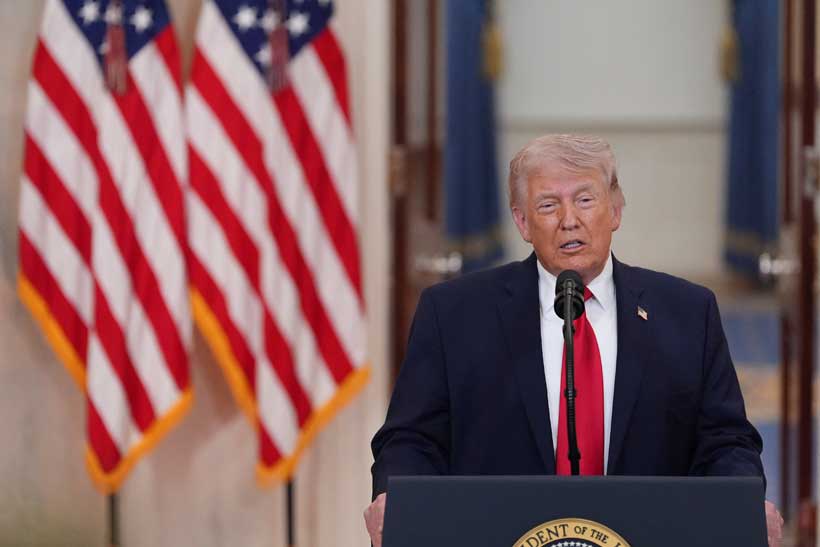
US President Donald Trump said Tehran could not blackmail Washington by closing the waterway and warned that he would put an end to the ceasefire if a deal before its expiry on Wednesday is not reached. Trump added that the naval blockade would “remain in full force”.
Iranian Supreme Leader Mojtaba Khamenei, meanwhile, said the navy was ready to inflict “new bitter defeats” on its enemies.
‘Two competing blockades’
Al Jazeera correspondent Zein Basravi said that Iran and the US are back where they were the previous day.
“Less than 24 hours ago, world leaders were praising what they thought was a breakthrough in this conflict, hoping Iran was signalling a confidence-building measure by opening the Strait of Hormuz, potentially leading to a ceasefire deal and a permanent end to the war,” he said.
“As disappointed as people may be, this isn’t entirely surprising. What we’re seeing now is a return to square one,” he added, saying there are now “two competing blockades in place”.
Al Jazeera’s Ali Hashem, reporting from Tehran, said Iran was using the strait to send a message.
“It’s clear that Iran is dealing with a situation in which they are not sure what’s on the table. So the Strait of Hormuz is once again the only space for engagement, even if it’s a negative engagement. And it’s the space where they are sending and conveying messages to the Americans, showing their leverage,” he said.
Redi Tlhabi speaks to economist Mariana Mazzucato on the Iran war’s economic fallout and who’s really paying the price.
The world is reckoning with the biggest oil supply disruption in history, one that has sent energy prices soaring, rattled stock markets and exposed the deep vulnerabilities of economies still hooked on fossil fuels. While millions face higher fuel and energy bills, top oil and gas companies are reportedly profiting about $30m per hour since the war began.
This week on UpFront, Redi Tlhabi speaks with renowned economist Mariana Mazzucato about what a genuine green industrial strategy looks like, why the World Bank has fallen short, and how her concept of the “common good economy” offers a new compass for governments navigating crises.
All this comes as the U.S. and Iran appear closer to reaching a deal to end the war, which we will discuss in greater detail later in this story. The temporary ceasefire between the two countries ends April 21.
“In line with the ceasefire in Lebanon, the passage for all commercial vessels through Strait of Hormuz is declared completely open for the remaining period of ceasefire, on the coordinated route as already announced by Ports and Maritime Organization of the Islamic Rep. of Iran,” Sayyed Abbas Araghchi, the Iranian Foreign Minister, stated on X Friday morning.
In line with the ceasefire in Lebanon, the passage for all commercial vessels through Strait of Hormuz is declared completely open for the remaining period of ceasefire, on the coordinated route as already announced by Ports and Maritime Organisation of the Islamic Rep. of Iran.
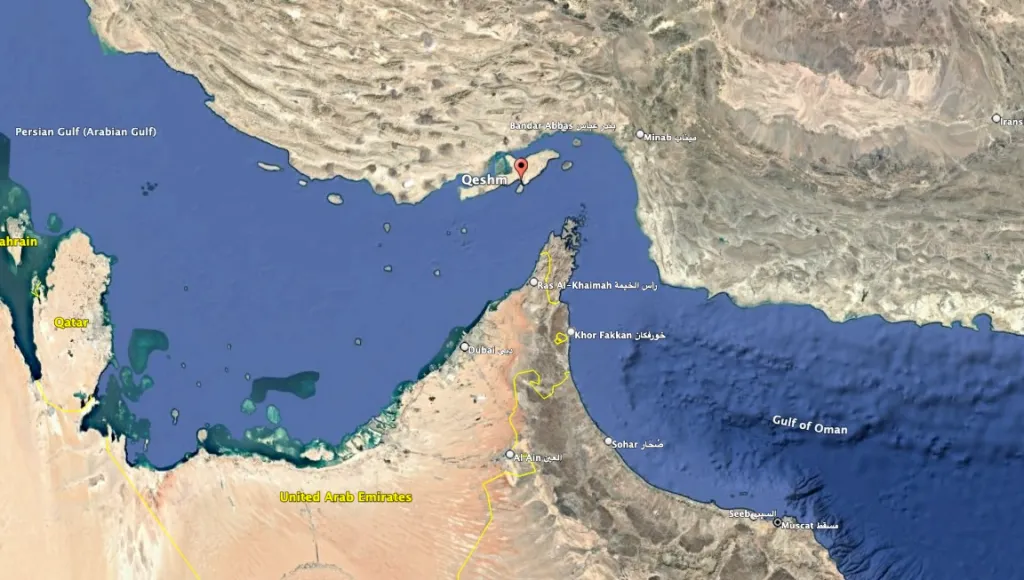
That route is a narrow five-mile stretch between the islands of Qeshem and Larak, roughly 15 miles from the Iranian shoreline.
In a post on his Truth Social site, U.S. President Donald Trump hailed the decision but said it did not change the ongoing blockade.
“THE STRAIT OF HORMUZ IS COMPLETELY OPEN AND READY FOR BUSINESS AND FULL PASSAGE, BUT THE NAVAL BLOCKADE WILL REMAIN IN FULL FORCE AND EFFECT AS IT PERTAINS TO IRAN, ONLY, UNTIL SUCH TIME AS OUR TRANSACTION WITH IRAN IS 100% COMPLETE,” Trump stated. “THIS PROCESS SHOULD GO VERY QUICKLY IN THAT MOST OF THE POINTS ARE ALREADY NEGOTIATED.”
Trump:
The Strait of Hormuz is completely open and ready for business and full passage, but the naval blockade will remain in full force and effect as it pertains to Iran only, until our transaction with Iran is 100% complete! pic.twitter.com/YMGS5BUGjD
The president added that “Iran has agreed to never close the Strait of Hormuz again. It will no longer be used as a weapon against the World!” However, there was no immediate response from Tehran.
Iran has agreed to never close the Strait of Hormuz again. It will no longer be used as a weapon against the World! President DONALD J. TRUMP
— Commentary Donald J. Trump Posts From Truth Social (@TrumpDailyPosts) April 17, 2026
Regarding any peace deals, Trump said on his Truth Social network that the “U.S.A. will get all Nuclear ‘Dust,’ created by our great B2 Bombers – No money will exchange hands in any way, shape, or form.”
This was a reference to the Operation Midnight Hammer attack on Iranian nuclear facilities last year. Iran is believed to have about 440.9 kg of uranium enriched up to 60% of the explosive uranium isotope, U-235 stored at these locations.
“This deal is in no way subject to Lebanon, either, but the USA will, separately, work with Lebanon, and deal with the Hezboolah situation in an appropriate manner. Israel will not be bombing Lebanon any longer,” Trump added.
“The U.S.A. will get all Nuclear “Dust,” created by our great B2 Bombers – No money will exchange hands in any way, shape, or form.” pic.twitter.com/vkRVe30AzT
It remains to be seen how this will play out. Iran’s state TV, citing a senior military official, highlighted that “only civilian vessels will be allowed to pass through the Strait of Hormuz via designated routes and with permission from the Islamic Revolutionary Guard Corps Navy.”
“The passage of military vessels through the strait remains prohibited,” it said.
Iran’s state TV, citing a senior military official, said “only civilian vessels will be allowed to pass through the Strait of Hormuz via designated routes and with permission from the Islamic Revolutionary Guard Corps Navy.”
— Iran International English (@IranIntl_En) April 17, 2026
Despite the closure, ships have still transited the strategic body of water through which about a fifth of the world’s oil and gas exports pass. Ship traffic through the Strait actually “increased from last month’s unusually low levels, with crossings rising and activity extending across a broader mix of vessel types and cargoes,” according to the global trade intelligence firm Kpler.
Traffic gradually returns to Hormuz
Vessel traffic through the Strait of Hormuz has increased from last month’s unusually low levels, with crossings rising and activity extending across a broader mix of vessel types and cargoes. Movements are becoming more balanced in both… pic.twitter.com/FPjw0s3N9k
There is also still the issue of mines in the section of the Strait outside the Qeshem-Larak passage. Demining is one of the issues being discussed today in an international meeting being held in Paris, a French official told us. We’ll discuss this meeting in a little more detail later in this story.
Trump, however, claimed that “Iran, with the help of the U.S.A., has removed or is removing all sea mines!”
The Strait of Hormuz and Qeshem and Larak islands. (Google Earth)
We have reached out to shippers and maritime analysis and security firms to get a clearer picture of what this decision means from their perspectives.
“This is good news,” a spokesman for Hapag-Lloyd told us. “There are still some open questions on our end, but they might be resolved within the next 24 hours. Top priority for the passage is safety and security for the seafarers, the vessel and the cargo of our customers. If all open issues are cleared (i.e. insurance coverage, clear orders of Iranian government/military about the exact sea corridor to be used and the sequence of ships leaving) we would prefer to pass the strait as soon as possible. Our crisis committee is in session and will try to resolve all open items with the relevant parties within the next 24-36 hours.”
The reopening of the Strait “marks a turn for global shipping, as it allows over 750 vessels previously trapped in the Middle East Gulf to begin clearing approximately $17 billion in stranded energy and dry bulk cargoes,” Kpler told us. “As of April 17, 2026, there are 862 vessels currently operating within the Mideast Gulf. The core of the backlog is composed of approximately 187 laden tankers carrying roughly 172 million barrels of crude and refined products, along with a specialized cluster of 15 LNG vessels that remain almost entirely stalled following the collapse of recent ceasefire talks.”
The Strait reopening and a looming new round of peace talks appears to have provided a boost to the world economy.
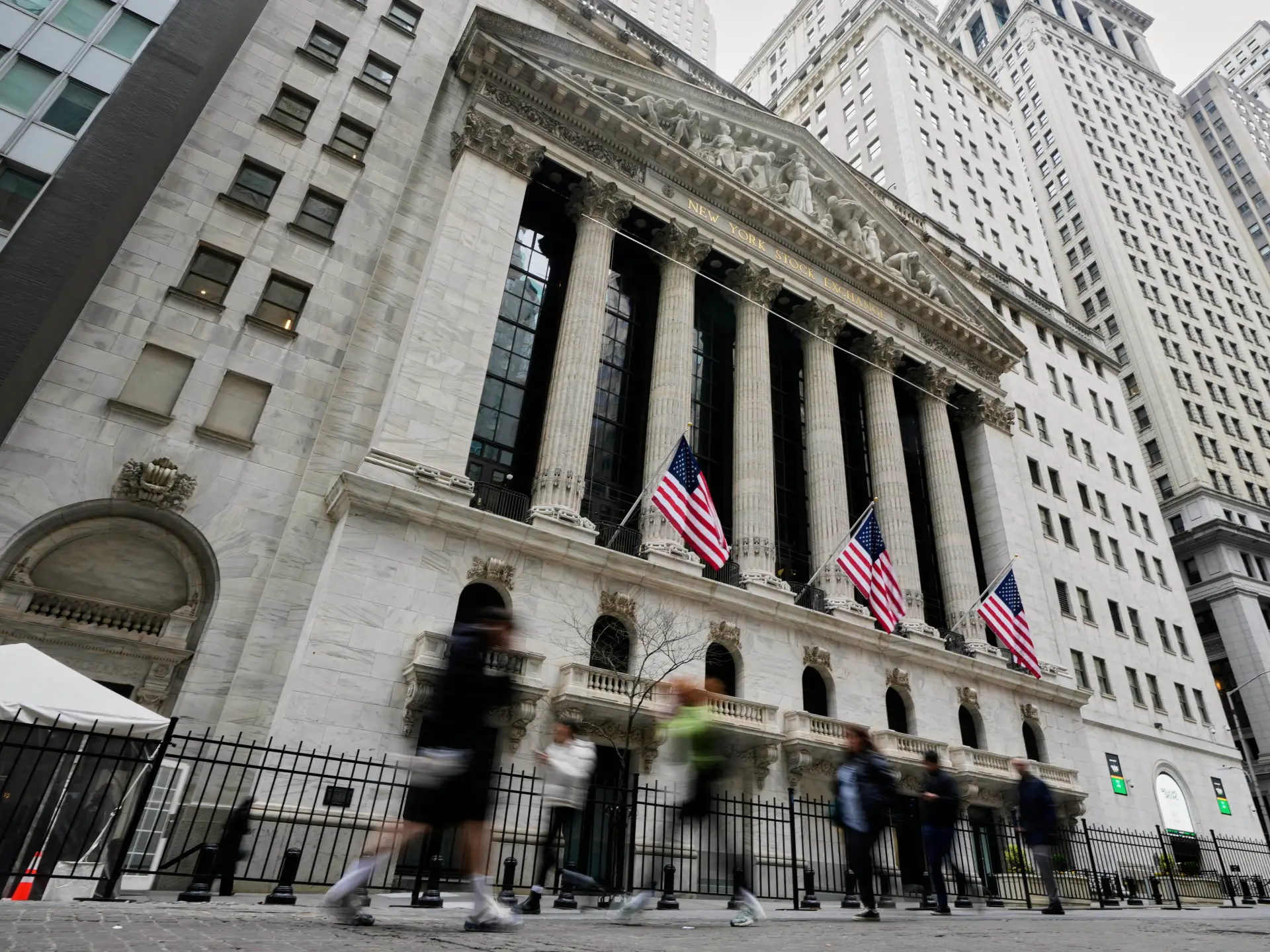
“Oil prices are falling by more than 10%, and Wall Street is rallying toward another record after Iran said the Strait of Hormuz is fully open, which would allow oil tankers to exit the Persian Gulf again and carry crude to customers worldwide,” The Associated Press reported. “The S&P 500 rallied 0.7% as U.S. stocks sprinted toward the finish of a third straight week of big gains. The Dow Jones Industrial Average rose 1%, and the Nasdaq composite added 1%.”
Stocks “have rallied more than 11% since late March on hopes that the United States and Iran can avoid a worst-case scenario for the global economy,” the wire service added.
BREAKING: President Trump and Iran’s foreign minister say the Strait of Hormuz is now fully open. Crude oil prices tumble 10% after the announcements. https://t.co/d44au7X8UP
He insisted that doing so will not involve U.S. ground troops. But when asked who would retrieve it, he would only say “our people.”
“No. No troops,” he told the network. “We’ll go down and get it with them, and then we’ll take it. We’ll be getting it together because by that time, we’ll have an agreement and there’s no need for fighting when there’s an agreement. Nice right? That’s better. We would have done it the other way if we had to.”
The president said the material would then be brought to the U.S.
“Our people, together with the Iranians, are going to work together to go get it. And then we’ll take it to the United States,” he said.
NEWS President Trump tells me:
-No ground troops will be required to remove enriched uranium from Iran
-Iran has agreed to stop backing all proxy groups like Hezbollah and Hamas
-I asked if Iran has agreed to stop enriching uranium *forever.” He said, “They’ve agreed to…
Speaking to the White House press corps, Trump addressed questions about the peace process.
“We’ll see how it all turns out, but it should be good, some very good discussions, and hopefully that subject that you like to talk about will be very good,” he said. “And we’ve done a good job, but we’ll see … the talks are going on and going over the weekend, and a lot of good things are happening that includes Lebanon.”
Asked about differences with Iran on how all this is developing, Trump said: “If there are, I’m going to straighten it out. .. don’t think there’s too many significant differences.”
As for the blockade: “When the agreement is signed, the blockade ends,” he proclaimed.
Earlier on Friday, Iranian officials said they would close the Strait again if the blockade is not lifted.
“We’ve had some very good discussions… Talks are going on. It’ll go on over the weekend — and a lot of good things are happening,” says @POTUS in Arizona.
Trump told Axios that U.S. and Iranian negotiators will probably meet this weekend, and he expects them to hammer out a final deal to end the war. The deal should come “in a day or two,” Axios reporter Barak Ravid added on X.
UPDATE: 1:28 PM EDT –
Trump told Reuters on Friday that the U.S. will work with Iran to recover its enriched uranium and bring it back to the United States.
“We’re going to get it together. We’re going to go in with Iran, at a nice leisurely pace, and go down and start excavating with big machinery… We’ll bring it back to the United States,” Trump said during a phone interview.
The United States will work with Tehran to recover its enriched uranium and bring it back to the United States, President Donald Trump told Reuters on Friday.
“We’re going to get it together. We’re going to go in with Iran, at a nice leisurely pace, and go down and… pic.twitter.com/ZfwJTFrIbr
— Iran International English (@IranIntl_En) April 17, 2026
UPDATE: 1:17 PM EDT –
Seyyed Mohammad Mehdi Tabatabaei, a spokesperson for Iran’s president, pushed back on Trump’s claim that Iran promised never to close the Strait again.
“The Twitter rhetoric and baseless statements of the enemy are aimed at stripping the Iranian nation of their sense of pride for the great victories they have achieved through their resolute defense,” he stated on X. “The conditional and limited reopening of a portion of the Strait of Hormuz is solely an Iranian initiative, one that creates responsibility and serves to test the firm commitments of the opposing side. If they renege on their promises, they will face dire consequences.”
لفاظیهای توئیتری و اظهارات بیپایه دشمن، در جهت سلب احساس افتخار ملت ایران برای پیروزیهای بزرگی است که در دفاع مقتدرانه کسب کردهاند. بازگشایی مشروط و محدود بخشی از تنگه هرمز ، صرفا ابتکاری ایرانی، مسئولیتآفرین و برای آزمون تعهدات قطعی طرف مقابل است. بدعهدی کنند، بد میبینند.
Iran considers the continuation of the U.S. blockade on its ports a ceasefire violation and would close the Strait of Hormuz again if the blockade is not lifted, the IRGC-affiliated Fars News reported citing an informed source close to the Supreme National Security Council.
We’ve reached out to the White House for comment.
Iranian official to Fars:
If the maritime blockade continues, it will be considered a violation of the ceasefire, and the Strait of Hormuz transit route will be closed.
With new talks potentially set to be held in Pakistan over the weekend, the U.S. and Iran are negotiating over a three-page plan to end the war, Axios reported Friday morning. One of the key elements under discussion is “that the U.S. would release $20 billion in frozen Iranian funds in return for Iran giving up its stockpile of enriched uranium,” the outlet noted, citing two U.S. officials and two additional sources briefed on the talks.
The Memo of Understanding (MoU) also states the two sides are negotiating over a “voluntary” moratorium on nuclear enrichment by Iran. It also deals with the Strait of Hormuz, “though the sources said there are still significant gaps on that issue,” Axios posited.
It’s unclear if the MOU refers to Iran’s ballistic missiles and its support for regional proxies.
🚨 SCOOP: The U.S. and Iran are negotiating over a three-page plan to end the war, with one element under discussion being that the U.S. would release $20 billion in frozen Iranian funds in return for Iran giving up its stockpile of enriched uranium. https://t.co/w84Yd8JHgp
“Trump is directly talking to the Iranians,” U.S. Sen. Lindsey Graham (R-SC) told Fox News.
“He is negotiating himself,” Graham proffered. “He was on the phone with the Iranians a couple of days ago, and it got rather sporty—to the point that Trump loudly told Iran what would happen if they keep playing games. He actually lost his voice. I’d hate to be the Iranian on the receiving end of that.”
Senator Graham:
Trump is directly talking to the Iranians. He is negotiating himself.
He was on the phone with the Iranians a couple of days ago, and it got rather sporty—to the point that Trump loudly told Iran what would happen if they keep playing games.
Despite rising hopes that the war in Iran could soon end, the country’s deputy foreign minister on Friday rejected any call for a temporary ceasefire. Instead, Tehran is seeking a comprehensive end to conflict across the Middle East, Saeed Khatibzadeh told reporters today. That includes fighting between Israel and Hezbollah, currently paused on the first full day of a shaky 10-day ceasefire.
“We are not accepting any temporary ceasefire,” Khatibzadeh said on the sidelines of the Antalya Diplomacy Forum hosted by Turkey’s Foreign Affairs Ministry. Any end to the fighting must include all conflict zones “from Lebanon to the Red Sea,” he added, describing it as a “red line” for Iran.
The cycle of violence “should end here once and for all,” Khatibzadeh continued, according to Al Jazeera.
The Islamic Revolutionary Guard Corp (IRGC) said it is ready to resume fighting if needed.
The Army and the IRGC have their “finger on the trigger” and are “prepared to deliver a powerful, destructive, and regret-inducing response to any aggressive or criminal action by the US-Israeli enemy and their allies against the Iranian nation,” the IRGC said Friday.
As we noted earlier in this story, the leaders of nearly three dozen nations met – mostly virtually – at a conference in Paris today to discuss the future of the Strait of Hormuz.
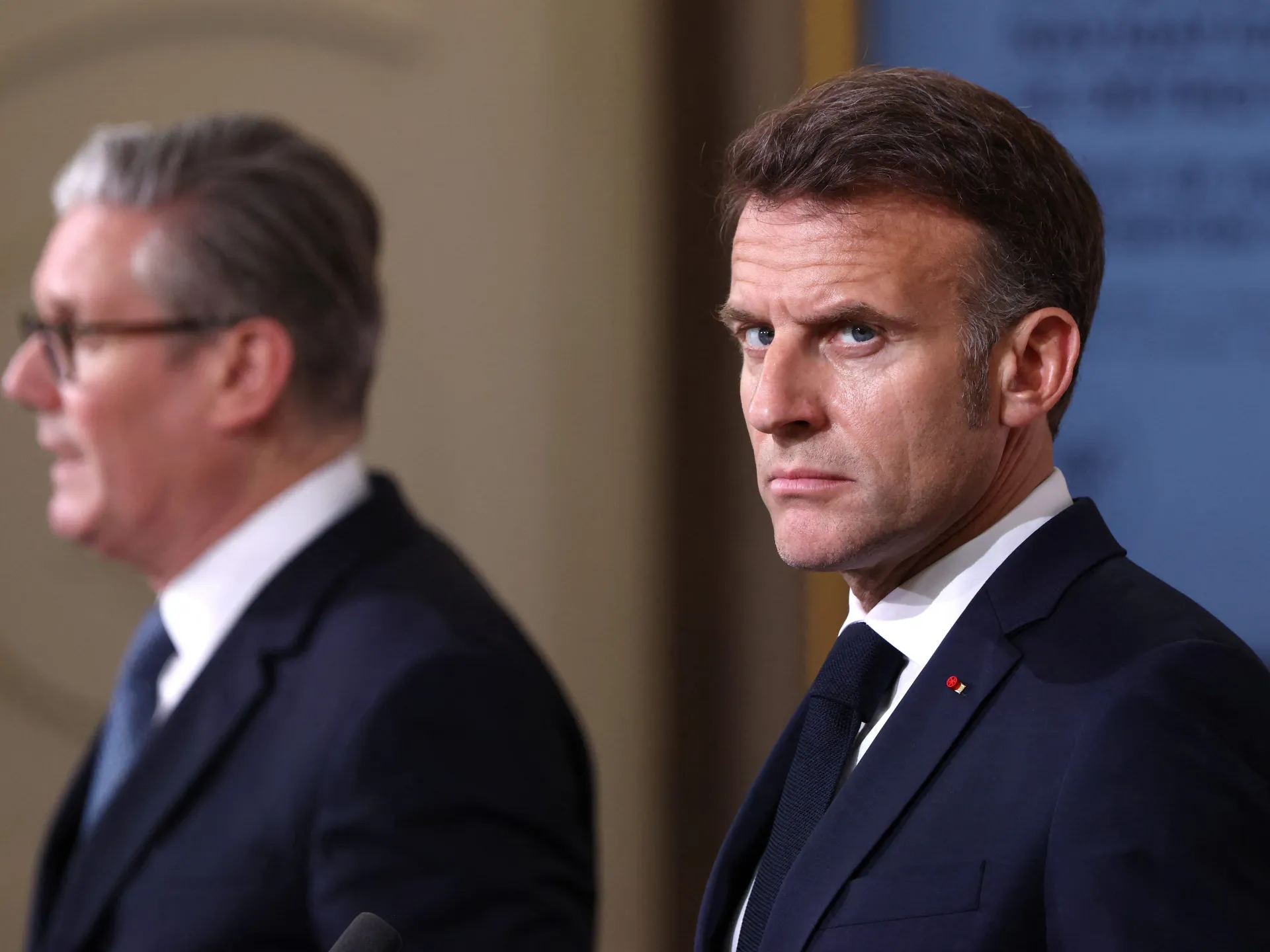
Co-chaired by French President Emmanuel Macron and British Prime Minister Keir Starmer, the conference on the Initiative for Maritime Navigation in the Strait of Hormuz looked at ways of protecting shipping after the fighting ends.
Starmer said the U.K. and France will lead a multinational mission to “protect freedom of navigation” in the Strait as soon as conditions permit. He added that the mission would be “strictly peaceful and defensive,” with the aim of reassuring commercial shipping and supporting mine clearance efforts.
Starmer invited other countries to join, saying that roughly a dozen countries had committed to contributing assets.
Kaja Kallas, European Union High Representative for Foreign Affairs and Security Policy/Vice-President of the European Commission, said leaders also discussed ensuring that Iran imposes no tolls on passage through the Strait.
“Any pay-for-passage scheme will set a dangerous precedent for global maritime routes,” she stated on X. “Iran has to abandon any plan to levy transit fees. Europe will play its part in restoring the free flow of energy and trade, once a ceasefire takes hold.”
Kallas added that the EU’s Aspides naval mission is already operating in the Red Sea “and can be quickly strengthened to protect shipping across the region. This could be the fastest way to provide support.”
Yesterday, a spokesman for Aspides told us that there were no changes in its mission.
Under international law, transit through waterways like the Strait of Hormuz must remain open and free of charge. This is what leaders made clear in their call on reopening the Strait today.
Any pay-for-passage scheme will set a dangerous precedent for global maritime routes.… pic.twitter.com/Jeufv4hQou
Tehran, Iran – United States President Donald Trump’s announcements about securing major concessions from Tehran have riled supporters of the Iranian establishment, prompting rejections and clarifications from the authorities.
Several current and former senior officials, state media and the Islamic Republic’s hardcore backers expressed anger, frustration, and confusion after the US leader made a series of claims, with days left on a two-week ceasefire reached on April 8.
Recommended Stories
list of 4 itemsend of list
Trump on Friday said Iran and the US would jointly dig up the enriched uranium buried under the rubble of bombed Iranian nuclear sites, and transfer it to the US. He claimed Iran had agreed to stop enriching uranium on its soil.
He also said the Strait of Hormuz had been opened and would never be closed again, while the US naval blockade of Iran’s ports remained in place, and sea mines were removed or were in the process of being removed.
Trump also emphasised that Iran would not receive billions of dollars of its own frozen assets abroad due to US sanctions, and that the 10-day ceasefire between Israel and Lebanon was completely unrelated to Iran.
Amid Pakistan’s ongoing efforts to mediate another round of negotiations, Iran’s Parliament Speaker Mohammad Bagher Ghalibaf, who led the Iranian delegation to the Islamabad talks earlier this month, rejected all of Trump’s claims.
“With these lies, they did not win the war, and they certainly will not get anywhere in negotiations either,” he posted on X early on Saturday.
By Saturday noon, the Khatam al-Anbiya Central Headquarters of the Islamic Revolutionary Guard Corps (IRGC) released a statement, saying the Strait of Hormuz is once again heavily restricted and under “strict management” of the armed forces. It cited continued “acts of piracy and maritime theft under the so-called label of a blockade” by Washington as the reason.
‘Haze of confusion’
In the hours it took between Trump’s flurry of announcements on Friday and official responses from Iranian authorities, supporters of the establishment voiced serious concerns about any major concessions.
“Is there no Muslim out there to talk to the people a bit about what is happening?!” Ezzatollah Zarghami, a former state television chief and current member of the Supreme Cyberspace Council that controls the heavily restricted internet in Iran, wrote on X.
Alireza Zakani, the hardline mayor of Tehran, said if any of Trump’s claims are true, then the Iranian establishment must beware “not to gift the vile enemy in negotiations what it failed to achieve in the field”.
A fan account on X for Saeed Jalili, an ultrahardline member of the Supreme National Security Council who has opposed any deals with the US for decades, said “dissent” may be at play. It said Supreme Leader Mojtaba Khamenei, who has not been seen or heard from outside of several written statements attributed to him, must release a voice or video message to confirm what is happening.
Jalili’s main account distanced itself from the comment, saying the fan account – which was subsequently deleted – was a sign of “infiltration” by enemies of Iran who were trying to sow discord.
Iranian state media released another written statement attributed to Khamenei on Saturday to mark Army Day, but made no mention of the political drama unfolding hours earlier, or the negotiations with the US.
The dissonance was clearly on display on state television and other state-linked media on Friday, especially those affiliated with the IRGC.
Multiple state television hosts and analysts harshly attacked Foreign Minister Abbas Araghchi because he tweeted on Friday that the Strait of Hormuz was “declared completely open for the remaining period of ceasefire, on the coordinated route as already announced by Ports and Maritime Organisation”.
One of the hosts demanded Araghchi must immediately clarify. Another said the top diplomat’s tweet was in English, and since the Iranian people do not have access to X due to the state-imposed near-total internet shutdown for seven weeks, the message was not directed at the people.
With a huge Hezbollah flag in the background, a furious presenter on state television’s Channel 3 claimed that Araghchi was somehow “the representative of the people of Lebanon, Yemen and Iraq” because they are a part of Iran’s “axis of resistance” of armed forces, so he should demand concessions on their behalf from Trump.
Morteza Mahmoudvand, a representative for Tehran in the Iranian parliament, went as far as saying Araghchi would have been impeached had it not been for “the excuse of war”.
The Fars and Tasnim news sites, which are affiliated with the IRGC, also heavily criticised Araghchi and called for further explanations on Friday evening, with Fars arguing that “Iranian society was plunged into a haze of confusion.”
Armed supporters in the streets
Critical comments from supporters of the Iranian government also flooded social media, including local messaging applications and the comments section of state-run sites.
“We took to the streets every night with clear demands, but you shook hands with the killer of our supreme leader and handed our strait to the Zionists,” one user wrote on Friday in the local app Baleh, in reference to Israel.
“After all these years of sanctions and war and costs imposed on the people, if you are to give up the uranium and the strait, then why did you play with the people’s livelihoods and the blood of the martyrs for so long?” another user wrote.
A large number of analysts and media personalities, including Hossein Shariatmadar, the head of the Kayhan newspaper, who was appointed by late Supreme Leader Ayatollah Ali Khamenei, also voiced criticism and demanded answers on Fars and other outlets.
Regardless of whether there will be more mediated negotiations in Pakistan or whether the war will continue, Iran continues to encourage and arm backers to take to the streets to maintain control.
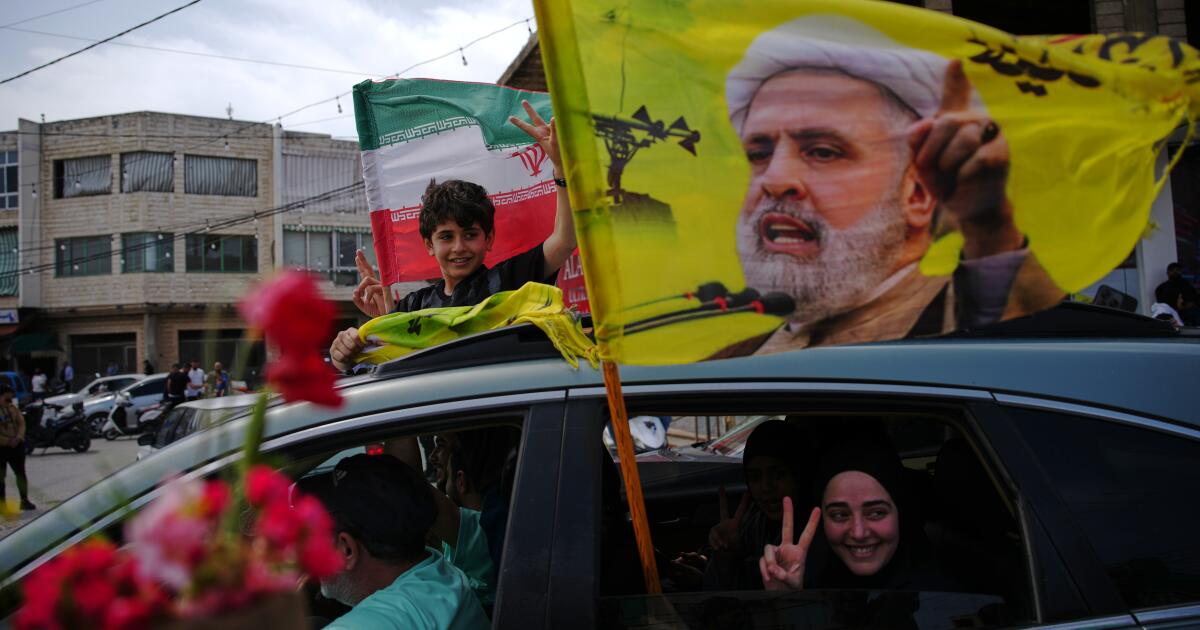
State media on Friday aired footage of more armed convoys moving through the streets of Tehran while waving the flags of Lebanon’s Hezbollah, Iraq’s Hashd al-Shaabi and other groups. The video below shows women and children crewing heavy machineguns mounted on the back of pick-up trucks during a rally in downtown Tehran.
With no end in sight to the state-imposed internet shutdown that has wiped out millions of jobs in Iran, in addition to steel factories and other infrastructure that were destroyed, the Iranian economy continues to suffer.
The timing of the back-and-forth between Trump and the Iranian officials meant that oil prices dropped before Western markets closed on Friday, and the Iranian currency experienced more volatility.
The rial was priced at about 1.46 million against the US dollar on Saturday morning, the first day of the working week in Iran. But it shot back up to about 1.51 million after the IRGC announced the repeated closure of the Strait of Hormuz.
A maritime agency reported that a tanker was fired on by gunboats in the Strait of Hormuz. The United Kingdom Maritime Trade Operations agency says it received a report of a tanker being fired upon by what it said were two gunboats linked to Iran’s Revolutionary Guard Corps. The vessel and its crew were reported safe.
Reports of Iranian gunboats opening fire on a tanker in strait, after Tehran said it is closing the waterway until the US lifts the blockade of its ports.
Published On 18 Apr 202618 Apr 2026
Iran says it has closed the Strait of Hormuz again, calling the decision a response to a continued blockade of its ports by the United States.
The Iranian military on Saturday said control of the strategic waterway, through which 20 percent of the global oil flows, has “returned to its previous state”, with reports saying Iranian gunboats fired at a merchant vessel as it attempted to cross.
Recommended Stories
list of 4 itemsend of list
The closure of the strait came hours after it was reopened, with more than a dozen commercial ships passing through the waterway, after a US-mediated 10-day ceasefire deal was reached between Israel and Lebanon.
The Islamic Revolutionary Guard Corps (IRGC) on Saturday said in a statement, cited by the Iranian media, that the ongoing US blockade of Iranian ports represented “acts of piracy and maritime theft”, adding that the control over Hormuz is “under the strict management and control of the armed forces”.
“Until the US restores full freedom of navigation for vessels travelling from Iran to their destinations and back, the status of the Strait of Hormuz will remain tightly controlled and in its previous condition,” it said.
By 10:30 GMT on Saturday, no fewer than eight oil and gas tankers had crossed the strait, but at least as many ships appeared to have turned back, having begun to exit the Gulf, the AFP news agency reported.
The toing and froing over the strait cast doubt on US President Donald Trump’s optimism the day before, that a peace deal to end the US-Israel war on Iran was “very close”.
Trump had celebrated the reopening of the strait on Friday, but warned the US attacks would resume until Iran agreed to a deal, which included its nuclear programme.
“Maybe I won’t extend it,” Trump told reporters on board Air Force One about the temporary ceasefire agreement in place. “So you’ll have a blockade, and unfortunately we’ll have to start dropping bombs again.”
Asked whether a potential deal could be made in this short timeframe, Trump said: “I think it’s going to happen.”
But Iran says no date has been agreed for another round of peace talks, accusing the US of “betraying” diplomacy in all negotiations.
The conflicting and changing reports about the strait and how much freedom ships have to transit through it have deterred many vessels from crossing, according to John-Paul Rodrigue, a maritime shipping specialist at Texas A&M University.
“Ships have been attempting transit since the announcement, but it looks like many of them are heading back because the situation is unclear,” Rodrigue told Al Jazeera. “There is contradictory information being issued by all parties.”
Reporting from Tehran, Al Jazeera’s Tohid Asadi said “uncertainty is the name of the game” as far as the Strait of Hormuz is concerned.
“Iran is looking for a comprehensive end to the war across the region, security assurances, sanctions relief, the unfreezing of frozen assets, regional relations – and on top of all of that – the nuclear dossier and Iran’s stockpile of highly enriched uranium,” he said.
“But right now, uncertainty is the name of the game. The fragile situation makes it hard to talk about the possibility of successful negotiations down the road.”
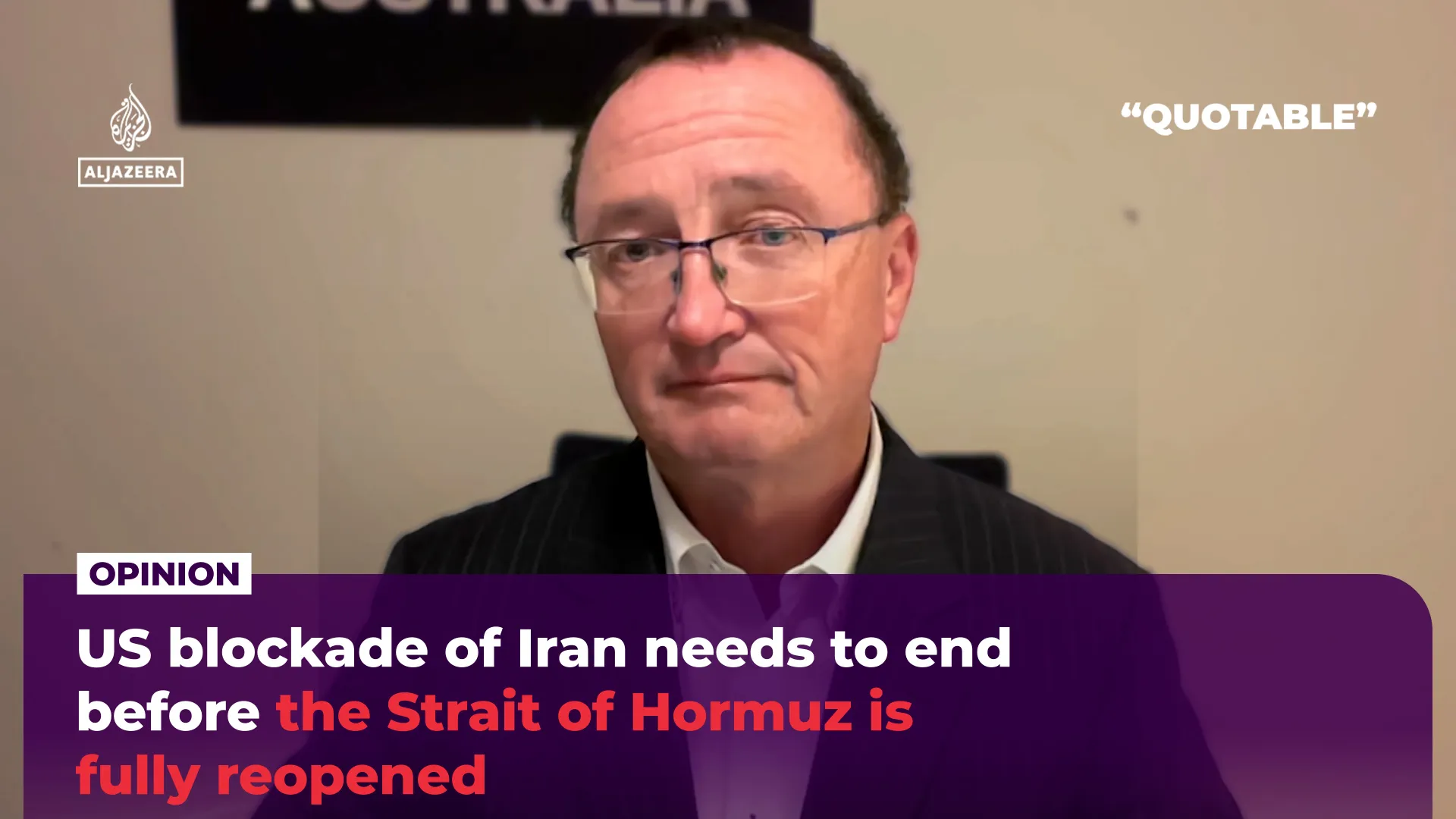
Michael Shoebridge, Director of Strategic Analysis Australia, says the US may be forced to end its blockade of Iran in order to see the full reopening of the Strait of Hormuz.
Field Marshal Asim Munir leaves Tehran while premier Shehbaz Sharif heads home from Turkiye amid hopes of another round of US-Iran talks.
Published On 18 Apr 202618 Apr 2026
Pakistan’s army chief and the prime minister have wrapped up separate diplomatic visits aimed at advancing efforts to end the United States-Iran conflict, with Field Marshal Asim Munir leaving Tehran and Prime Minister Shehbaz Sharif returning from Turkiye.
Munir met Iran’s leadership and peace negotiators during a three-day visit to Tehran, a Pakistani military statement said on Saturday.
Recommended Stories
list of 4 itemsend of list
The visit demonstrated Pakistan’s “unwavering resolve to facilitate a negotiated settlement… and to promote peace, stability and prosperity,” the military said ahead of expected US-Iran talks in Islamabad in the coming days.
Munir held talks with the country’s president, foreign minister, parliament speaker and head of Iran’s military central command centre.
Parliament Speaker, Mohammad Bagher Ghalibaf, and Foreign Minister, Abbas Araghchi, led the Iranian delegation to Islamabad for peace talks with the US last week, the highest level face-to-face contact between Washington and Tehran in decades.
Those talks ended without agreement, and a ceasefire is due to expire on April 22.
But diplomacy has continued, with Pakistan’s Prime Minister, Shehbaz Sharif, visiting Saudi Arabia, Qatar and Turkiye to push the peace process.
His three-country trip concluded on Saturday, with Sharif and Foreign Minister Ishaq Dar departing a diplomacy forum in Antalya, according to statements from both officials.
“I leave Antalya [Turkish city] with fond memories and a renewed commitment to further strengthening the enduring fraternal bonds between our two nations, and to continuing our close cooperation to advance dialogue and diplomacy for lasting peace and stability in the region,” Sharif posted on X.
The flurry of diplomacy comes as further negotiations are expected in Pakistan in the coming days as Islamabad intensifies contacts with regional and global leaders in an effort to sustain momentum towards a US-Iran deal.
Pressure for a deal between the two countries has grown after Iran reimposed restrictions on the Strait of Hormuz, hours after its reopening following the start of a ceasefire in Lebanon. Tehran accused the US of violating a deal to reopen the strategically important waterway.
Donald Trump has said a second round of talks with Iran could be held in Pakistan in the coming days. The New York Post reported that Trump praised Munir, saying he was “doing a great job”.
Reporting from Islamabad, Al Jazeera’s Kamal Hyder said Munir landed back home on Saturday as Pakistan prepared for another round of US-Iran talks expected “within the next few days”.
“We have also seen a lot of praise from the Trump administration on social media, praising the Pakistani leadership. So all eyes are on Islamabad. Serious differences remain, but there is a flurry of diplomatic activity and a hope and expectation that some sort of breakthrough may happen,” he said.
There is another way to read the ongoing Middle East crisis, one that makes legible what standard analysis consistently struggles to explain. It begins not with capability but with the geometry of the system through which capability must travel to produce effects. The United States and its partners possess overwhelming military superiority over Iran, and that superiority is not in question, yet the conflict has produced a pattern that defies its logic. A superpower coalition has been unable to impose coherent strategic outcomes against an adversary operating through proxies, low-cost disruption, and the systematic exploitation of global commercial vulnerabilities.
Over the past two years, we have seen multiple instances of this kind of disruption with consequential effects on the global system. Houthi drones force the rerouting of global shipping, with Red Sea cargo volumes falling by roughly 50% through early 2024 as major carriers diverted around the Cape of Good Hope, adding up to two weeks to transit times, driving freight costs sharply higher across European markets, and costing Egypt nearly $800 million per month at peak in lost Suez Canal revenue. A non-state network spanning Lebanon, Yemen, Iraq, Syria, and Gaza has absorbed sustained air campaigns, targeted eliminations of senior commanders, and repeated ground operations without losing its capacity to generate coordinated pressure across multiple theaters simultaneously. The asymmetry seems to follow a deliberate strategic logic that raw power analysis struggles to read, precisely because the conflict operates on a surface that capability assessments were never designed to map. What this suggests is that the decisive variable is not what actors possess but whether the relationships connecting them can transmit coordinated action when the system is under strain.
When that system cannot coordinate, something important breaks down. An alliance that formally exists but faces operational friction at every decision point ceases to be an alliance in any meaningful strategic sense. A security guarantee that cannot be transmitted rapidly to the partner it is meant to protect has, in effect, already failed its primary function. It follows that the gap between what a system formally is and what it can actually do under pressure is not a secondary consideration but the surface on which this conflict is being decided. Conventional analysis, calibrated to count warheads and assess intentions, consistently leaves this gap unmapped.
Analysts know that Saudi Arabia’s OPEC production decisions have repeatedly positioned Riyadh against Washington’s economic preferences, they know that European energy dependency complicates transatlantic alignment, and they know that Iran’s proxy network extends across five countries and absorbs military pressure without fracturing. Yet what the available frameworks cannot do is convert that knowledge into a structural reading of the system. They show that these conditions exist. What they cannot show is how those conditions interact, where they compound, and what the aggregate geometry of their interaction means for whether coordinated action is possible at all.
Power analysis was built to read capability differentials between states, and it does that well. Alliance theory was built to read the conditions under which formal commitments hold or fail, and it does that too. Neither, however, was built to read the operational weight of the ties through which capability and commitment must travel to produce effects.
The instruments available are calibrated to answer questions different from those the current situation poses. Deploying them on a problem they were not designed to read produces the consistent failure to explain what is actually happening that has marked analysis of this conflict from the start.
Adjacency mapping is an instrument designed to read that gap by mapping connectivity, by which I mean their operational weight, specifically their capacity to carry coordinated action under strain. What distinguishes it from standard approaches is its unit of analysis. Rather than the actors themselves, it treats the weight of the relationships as primary. The question it asks is not who holds power but whether the ties connecting power-holders can transmit that power when the system needs them to. Two states can be formally allied, operationally integrated in name, and structurally disconnected at the same time, and nothing in standard analysis will tell you which of those conditions is actually operative until the moment of crisis reveals it.
The instrument assigns each significant relationship in the system a weight between 0 and 1, reflecting how frequently the two actors interact operationally, how reliably information moves between them, how the tie has behaved under recent stress, and how quickly it transmits pressure when the system is under strain. At the higher end of the scale, a weight at or above 0.6 indicates that coordination approaches automaticity, and the tie carries load without constant investment to maintain it. Around 0.3, friction accumulates. In this setting, decisions require deliberate effort at every juncture, slowing the system and making it susceptible to gradual degradation that never triggers a visible rupture. At or below 0.2, the tie has effectively ceased to function as a transmission pathway, leaving the actors operationally disconnected regardless of what their formal relationship nominally says.
These weights are analytical judgements calibrated against observable evidence. In other words, their value lies in making visible what experienced analysts already carry as intuition and in giving that intuition a structure precise enough to argue about. The numbers are therefore analytical judgements, not measurements. A more rigorous application would derive them from quantifiable indicators across each dimension, including military interoperability, intelligence exchange depth, crisis responsiveness, economic interdependence, and signaling consistency, averaged and weighted systematically. That work lies beyond the scope of this piece, but the architecture is designed to accommodate it.
There is a risk management dimension to this reading that is worth making explicit. Standard geopolitical risk assessment focuses on actor-level variables such as regime stability, military capability, and leadership intentions. What adjacency mapping adds is a structural layer that those assessments typically miss. A coalition whose load-bearing relationships operate in the friction zone is exposed to a category of risk that capability assessments do not capture and that becomes visible only when the system is read structurally.
What the matrix adds is the ability to see how compound weakness across multiple relationships produces cascading effects that bilateral assessment alone would struggle to predict. A system whose dominant actor holds several weak partnerships faces more than friction. As a consequence, the geometry of those weaknesses determines whether any concerted response is structurally possible at all. Aggregate capability becomes, in that light, secondary to that question.
If we apply this to the Middle East security complex, the instrument produces one possible reading. This reading differs considerably from the picture conventional analysis generates. Its value is not in the precision of the numbers but in making the system’s geometry visible enough to argue about.
The matrix below maps operational connectivity across the system’s key actors. The numbers are analytical judgements, not measurements.
The geometry they make visible is what matters here.
US
IL
SA
QA
UAE
OM
KW
BH
PK
IR
PN
US
—
0.8
0.4
0.8
0.6
0.5
0.7
0.8
0.6
0.1
0.1
IL
0.8
—
0.5
0.4
0.6
0.2
0.2
0.4
0.1
0.1
0.1
SA
0.4
0.5
—
0.5
0.6
0.4
0.6
0.7
0.6
0.2
0.1
QA
0.8
0.4
0.5
—
0.4
0.4
0.4
0.3
0.3
0.2
0.1
UAE
0.6
0.6
0.6
0.4
—
0.3
0.5
0.6
0.4
0.1
0.1
OM
0.5
0.2
0.4
0.4
0.3
—
0.3
0.3
0.3
0.4
0.1
KW
0.7
0.2
0.6
0.4
0.5
0.3
—
0.5
0.2
0.2
0.1
BH
0.8
0.4
0.7
0.3
0.6
0.3
0.5
—
0.2
0.2
0.1
PK
0.6
0.1
0.6
0.3
0.4
0.3
0.2
0.2
—
0.5
0.1
IR
0.1
0.1
0.2
0.2
0.1
0.4
0.2
0.2
0.5
—
0.7
PN
0.1
0.1
0.1
0.1
0.1
0.1
0.1
0.1
0.1
0.5
—
The matrix is intentionally non-symmetric. Where operational influence flows asymmetrically between two actors, the weights reflect that directionality.
The matrix reveals, in this light, a system whose dominant actors are connected at fundamentally different weights. And more significantly, its most important bilateral relationship is operating in the friction zone. It’s formally excluded adversary has constructed the only alternative connectivity architecture in the system. What this implies is that the geometry of the conflict runs considerably deeper than standard alliance analysis tends to suggest.
On the coalition side, the US has high adjacency with Qatar, Bahrain, Israel, and Kuwait, ties that enable rapid coordination and require little maintenance, constituting the operational backbone of what Washington can actually activate quickly.
Its relationship with Saudi Arabia, however, sits at 0.4. That number is analytically more significant than almost anything else in the matrix. Saudi Arabia remains, on most readings, the relationship on which Gulf order coherence formally depends, the anchor of the security architecture since the 1970s, and it is operating in the friction zone where every significant decision requires renegotiation from scratch rather than flowing through an established channel. Saudi Arabia’s invitation to join BRICS in August 2023, yuan-denominated oil transactions with China, and its participation in the Chinese-brokered rapprochement with Iran in March 2023 all point in the same direction. Riyadh is hedging structurally toward China and the broader non-Western order, a posture that sits uneasily alongside its formal security alignment with Washington. Taken together, these are not isolated political episodes but evidence of a tie that has been operating below the coordination threshold for years and whose weakness is, on this reading, the system’s most consequential structural vulnerability.
Through the normalization architecture, the UAE has arguably become the system’s most structurally reliable node at 0.6 with both the US and Israel, its operational integration exceeding Saudi Arabia’s despite Saudi Arabia’s formal primacy. The Abraham Accords of September 2020 established the formal foundation for that integration. The operational depth it has since generated, across intelligence sharing, defence cooperation, and coordinated positioning on Iran, has made the UAE the coalition’s most functionally connected Gulf partner. Oman holds what is perhaps the system’s most anomalous position, meaningful adjacency with both the US coalition and Iran simultaneously, a profile no other state actor in the matrix replicates. That structural position gave Oman the back-channel role it played through the early phases of the conflict, with documented precedent in the secret US-Iran nuclear negotiations that began in Muscat in 2012 and ran through 2013. As the conflict has intensified, Pakistan has assumed the primary mediation function, but Oman’s position as a quiet facilitator has not disappeared; it has simply been supplemented by a node with more direct access to both capitals at this particular moment.
Pakistan has emerged as the conflict’s primary mediation node, hosting the highest-level direct negotiations between Washington and Tehran since 1979 and brokering the April 2026 ceasefire. That role reflects a structural position the matrix makes legible: high Saudi adjacency, a functioning Iran tie, and a rehabilitated relationship with Washington that no other regional actor currently combines. China’s influence over both Pakistani and Iranian decision-making operates as an exogenous pressure that the matrix only partially captures, and Pakistan’s own domestic constraints, including its difficulty developing direct channels with the IRGC, limit how far that mediation role can ultimately reach.
Iran’s position is where the matrix becomes most analytically revealing. Across the state actors in the system, Iran’s adjacency sits at or near fragmentation, built up through sanctions, absent operational channels, and decades of adversarial signalling that have left Tehran formally isolated from the coordination architecture the United States and its partners have constructed.
And yet the only high-weight tie Iran holds is with its proxy network at 0.7. That single number may go further toward explaining the architecture of the entire campaign than any other figure in the matrix.
It is an asymmetric relationship in which Tehran’s capacity to activate and direct exceeds the reverse influence those actors exert over Iranian strategic decisions. What that single structural condition implies goes further toward explaining the architecture of Iranian pressure operations than most analyses of Iranian intentions or capabilities tend to reach. Iran is geographically central and formally excluded. It is precisely that combination, positioned to apply pressure across every theatre while bearing none of the coordination costs that formal inclusion imposes. That, from this vantage point, is what makes legible a strategy that standard analysis, focused on actors and their capabilities, cannot see.
Seen through this lens, what Iran is doing across the region is something more structurally ambitious than a military campaign. It is attempting to restructure the matrix itself. The goal appears to be less about battlefield victory than about the gradual degradation of the ties connecting the United States to its regional partners, below the threshold at which coordinated response becomes automatic, eroding the will to keep paying the price of alignment while simultaneously building alternative adjacency in the nodes where US-aligned connectivity is weakest.
The Houthi campaign against Red Sea shipping is calibrated to stay below the threshold that would compel a unified military response. It introduces friction into the economic relationships connecting European states to the Gulf system, raising the cost of alignment with Washington’s regional posture without forcing the kind of direct confrontation that would unite the coalition. Strikes on Gulf infrastructure follow the same calibration, persistent enough to signal that the US security guarantee cannot insulate its partners from costs, yet restrained enough to avoid crossing the point at which coalition fragmentation becomes irrelevant because a unified response becomes compulsory. Across Iraq and Syria, simultaneous pressure from affiliated militias prevents the concentration of attention that sustained coalition coordination requires. In each case, the instrument targets a relationship rather than a capability, specifically the weight of the ties whose degradation would restructure the system’s geometry without requiring Iran to displace the existing order directly.
The US-Saudi tie at 0.4 is the primary focus of that degradation effort. Should that threshold be breached, Saudi Arabia hedges. As hedging reduces operational interactivity the tie weakens further. The process risks becoming self-reinforcing. Iranian military superiority over any individual partner is not required to sustain it.
The same logic extends across European actors, though not uniformly. Germany’s industrial exposure to energy price volatility, France’s residual strategic autonomy instinct, and the EU’s institutional preference for de-escalation all produce different thresholds for continued alignment with Washington. Their shared energy dependency gives them asymmetric stakes in the Gulf system’s stability, but their appetite for risk diverges from Washington’s in ways that are not identical across capitals, and each time Iran forces a decision about the cost of continued alignment, that divergence fragments the coalition’s coordination surface further.
By sustaining operational ties with non-state actors across the region, Iran is constructing alternative adjacency in precisely the nodes where US-aligned connectivity is weakest. These are populations and factions that the existing regional order has excluded from the dominant coalition’s coordination architecture. Deliberately so — Iran is building in the structural gaps the system leaves open. Displacing the existing order appears unnecessary. Becoming the more reliable pole of alignment for the actors that order has failed to integrate may be sufficient. All that is required is that the order fragment sufficiently at its margins for that offer to appear credible, and the current trajectory of US-Saudi friction and European hedging is steadily moving in that direction.
The coalition’s instruments are calibrated to military threats. The system, however, is failing along a different surface entirely, or so this reading suggests. The formal architecture remains largely intact, security guarantees have not been withdrawn, Gulf states remain formally aligned, and normalisation agreements hold. And yet the operational adjacency that gives that architecture its functional weight is under sustained pressure from an actor that has correctly identified the gap between formal commitment and operational tie as the system’s primary vulnerability. That identification is outpacing the coalition’s capacity to respond.
On this reading, the surface on which the conflict appears to be decided is not the one the coalition is defending.
What adjacency mapping reveals is a story about geometry. The system’s dominant actor holds formal commitments at weights the system cannot sustain under the pressure being applied to it. Its adversary, in turn, has built the only alternative coordination architecture in the space that those weakening ties leave open. The conflict is likely to be determined by which ties the system can no longer afford to lose under sustained and calibrated pressure. The question is whether the actors currently holding those ties in the friction zone can rebuild them to the coordination threshold before the process of degradation becomes irreversible. That is a question that capability assessments are not well-positioned to answer, and one that a structural reading of the system’s connectivity at least helps to make visible.
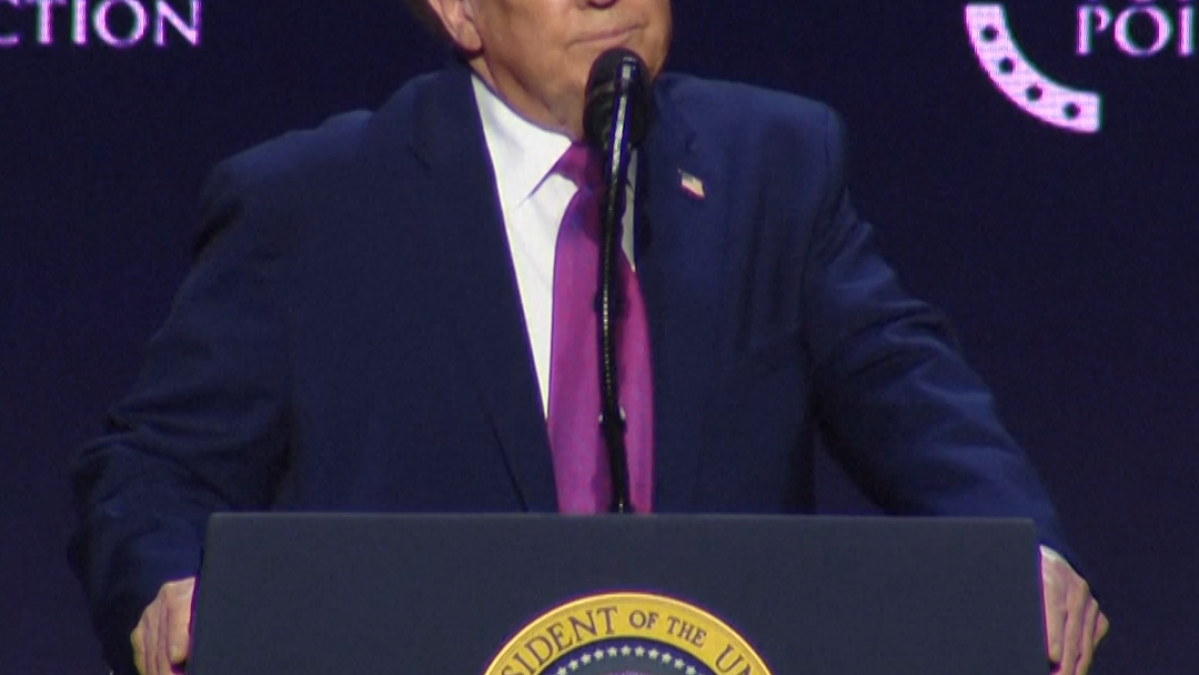
‘This will be a great and brilliant day for the world’ US President Donald Trump said at a Turning Point USA event as Iran fully opens the Strait of Hormuz. He also thanked Gulf states for their ‘tremendous’ support.
He was asked if now is a good time to open an ISA or not
Martin Lewis shared some tips on his BBC podcast(Image: ITV)
Martin Lewis has offered some advice on how you could organise your savings. He explained the practical tip amid the current uncertainty surrounding the economic impact of the Iran conflict.
The major war has already triggered a surge in oil prices, with fears of long-term consequences for food production and global economic growth.
Mr Lewis was questioned on his BBC podcast about whether now is an opportune moment to open a stocks and shares ISA, given that markets are struggling. When share prices fall, it can present a prime opportunity to invest, as your funds could increase in value when the market bounces back. But if prices decline further, the worth of your holdings could also drop. In response, Mr Lewis outlined the general principle to bear in mind.
He said: “If you’re talking about investing for a long term money that you don’t need for five years and you’re going to do that in a nice spread of investments, like a global tracker fund or an S&P tracker or FTSE tracker, then you just have to accept that you will never know when the perfect time to put money in is.”
£1,000 savings tactic
Nevertheless, he did reveal one strategy you could use to reduce the risk posed by market volatility. Mr Lewis said: “Let’s just imagine you’re putting £10,000 in a stocks and shares ISA, and you’re putting it away for a long time.
“You could put £10,000 in now but you could arrange with the provider that it sits in its cash part. You can hold it in cash, within a stocks and shares ISA, for the moment.
“You could say I’ve got £10,000, over the next 10 months, I’d like you to buy £1,000 a month of that tracker fund that I’m putting my investment into. It’s called pound-cost averaging.
“Because you’re drip feeding the money in, that helps smooth out the short-term volatility of buying at the right moment. So if you’re worried about that volatility, you might want to adopt that tactic.”
Mr Lewis continued in saying that in reality nobody can predict the optimal time to invest. He said: “They are unknowable in the short term, but in a broad spread of investment over the long term, on the balance of probabilities, investing will outperform saving.
“So don’t let the volatility put you off, but you might want to spread the time that you’re putting the money in.”
Major changes to ISA allowances
Savers may also want to note that major changes to ISA allowances are on the horizon. Currently, you can deposit up to £20,000 each tax year, which can be divided as you wish between cash ISAs and stocks and shares ISAs.
From April 2027, you will only be permitted to save up to £12,000 as you choose. The remaining £8,000 will only be available for deposits into investment-based accounts.
Savers aged 65 and over will be exempt from the new regulations, retaining the existing £20,000 allowance. ISAs are entirely tax-free, with no tax liability on any interest earnings or investment gains within these accounts.
WASHINGTON — Upbeat claims from President Trump over an imminent peace deal to end the war with Iran were met with deep skepticism Friday across the Middle East, where Iranian and Israeli officials questioned the prospects for a lasting agreement that would satisfy all parties.
The outlines of an agreement began to emerge that would provide Iran with a major strategic victory — and a potential financial windfall — allowing the Islamic Republic to leverage its control over the Strait of Hormuz to exact significant concessions from the United States and its ally Israel as Trump presses for a swift end to the conflict.
In a series of social media posts and interviews with reporters, Trump announced that the strait was “fully open,” vowing Tehran would never again attempt to control it. But Iranian officials and state media said that conditions remained on passage through the waterway, including the imposition of tolls and coordination with the Islamic Revolutionary Guard Corps.
Iranian diplomats posted threats that its closure could resume at any time of their choosing, and warned that restrictions would return unless the United States agreed to lift a blockade of its ports. Trump had said Friday that the blockade would remain in place.
“The conditional and limited reopening of a portion of the Strait of Hormuz is solely an Iranian initiative, one that creates responsibility and serves to test the firm commitments of the opposing side,” said a top aide to Iran’s president, dismissing Trump’s statements on the contours of a deal as “baseless.”
“If they renege on their promises,” he added, “they will face dire consequences.”
In an overture to Iran, Trump said Israel would be “prohibited” from conducting additional military strikes in Lebanon, where the Israeli government of Prime Minister Benjamin Netanyahu seeks to prevent Hezbollah, an Iranian proxy militia, from rearming, a potential threat to communities in the Israeli north.
But in a speech delivered in Hebrew, Netanyahu would say only that Israel had agreed to a temporary ceasefire, while members of his Cabinet warned that Israel Defense Forces operations in southern Lebanon were not yet finished. A top ally of the prime minister at a right-wing Israeli news outlet warned that Trump was “surrendering” to Iran in the talks.
It was a day of public messaging from a president eager to end a war that has proved historically unpopular with the American public, and has driven a rise in gas prices that could weigh on his party entering this year’s midterm elections.
Yet, Republican allies of the president have begun warning him that an agreement skewed heavily in Tehran’s favor could carry political costs of its own.
Trump was forced to deny an Axios report Friday that his negotiating team had offered to release $20 billion in frozen Iranian assets in exchange for Tehran agreeing to hand over its fissile material, buried under rubble from a U.S. bombing raid last year.
That sum would amount to more than 10 times what President Obama released to Iran under a 2015 nuclear deal, called the Joint Comprehensive Plan of Action, that was the subject of fierce Republican criticism in the decade since.
“I have every confidence that President Trump will not allow Iran to be enriched by tens of billions of dollars for holding the world hostage and creating mayhem in the region,” said Sen. Lindsey Graham (R-S.C.), a strong supporter of the war. “No JCPOAs on President Trump’s watch.”
Still, Trump said in a round of interviews that a deal could be reached in a matter of days, ending less than two weeks of negotiations.
He claimed that Tehran had agreed to permanently end its enrichment of uranium — a development that, if true, would mark a dramatic reversal for the Islamic Republic from decades developing its nuclear program, and from just 10 days ago, when Iranian diplomats rejected a U.S. proposal of a 20-year pause on domestic enrichment in favor of a five-year moratorium.
He said Iran had agreed never to build nuclear weapons — a pledge Tehran has made repeatedly, including under the Nuclear Nonproliferation Treaty, in a religious decree from then-Supreme Leader Ayatollah Ali Khamenei, and in the 2015 agreement — while continuing nuclear activities viewed by the international community as exceeding civilian needs.
And he repeatedly stated that Iran had agreed to the removal of its enriched uranium from the country, either to the United States or to a third party. Iranian state media stated Friday afternoon that a proposal to remove the country’s highly enriched uranium had been “rejected.”
Iran’s agreement to allow safe passage for commercial vessels through the Strait of Hormuz is linked to a ceasefire in Lebanon that the Israeli Cabinet approved for only a 10-day period. Regardless of whether it holds or is extended, Israeli officials said their military would not retreat from its current positions in southern Lebanon — opening up Israeli forces to potential attack by Hezbollah militants unbound by a truce brokered by the Lebanese government.
The Lebanese people, Hezbollah officials said, have “the right to resist” Israeli occupation of their land. Whether the fighting resumes, the group added, “will be determined based on how developments unfold.”
An Iranian official threw cold water on the prospects of reaching a comprehensive peace deal in the coming days, telling Reuters that a temporary extension of the current ceasefire, set to expire Tuesday, would “create space for more talks on lifting sanctions on Iran and securing compensation for war damages.”
“In exchange, Iran will provide assurances to the international community about the peaceful nature of its nuclear program,” the official said, adding that “any other narrative about the ongoing talks is a misrepresentation of the situation.”
Trump told reporters Friday that the talks will continue through the weekend.
While Trump claimed there aren’t “too many significant differences” remaining, he said the United States would continue the blockade until negotiations are finalized and formalized.
“When the agreement is signed, the blockade ends,” the president told reporters in Phoenix.
Times staff writer Ana Ceballos contributed to this report.
Iran’s Foreign Minister Abbas Araghchi and United States President Donald Trump have said that the Strait of Hormuz is open to commercial vessels.
Araghchi declared on Friday that the strategic waterwat was “completely open” in line with the ceasefire between Israel and Lebanon that took effect the previous day.
Recommended Stories
list of 3 itemsend of list
Trump affirmed on social media that the strait was open, later claiming that Iran had agreed to “never close the Strait of Hormuz again”. However, he also posted that the US naval blockade on Iranian ports would “remain in full force”.
In parallel, France and the United Kingdom hosted a meeting in Paris involving about 40 countries, which agreed to play a role in restoring freedom of navigation in the Strait of Hormuz once the US-Israeli war on Iran stops.
The blocking of tankers from using the strait, through which about 20 percent of the world’s crude flows on a typical day, has led to a global surge in fuel prices.
World leaders have welcomed the news with cautious optimism amid mixed messages from the US and Iran:
United States
“The Strait of Hormuz is completely open and ready for business and full passage, but the naval blockade will remain in full force and effect as it pertains to Iran, only, until such time as our transaction with Iran is 100% complete,” Trump wrote on Truth Social.
Minutes later, he issued another post saying the US Navy’s blockade on Iranian ships and ports “will remain in full force” until Tehran reaches a deal with the US, including on its nuclear programme.
Later, Trump told the news agency AFP that a deal to end the war on Iran was “close”, saying there were “no sticking points” left between Washington and Tehran.
Iran
Foreign Minister Abbas Araghchi posted on X that the strait was “declared completely open” and would remain open for the remaining period of the 10-day Israel-Lebanon ceasefire, which took effect overnight Thursday into Friday.
Some Iranian state media reports later appeared to contradict Araghchi’s announcement, with a senior military official telling state media that only nonmilitary vessels would be allowed to transit with permission from the Iranian Islamic Revolutionary Guard Corps (IRGC) Navy.
The Fars news agency, which is close to the IRGC, noted a “strange silence from the Supreme National Security Council”, the de facto top decision-making body in the country, as the status of the new supreme leader, Mojtaba Khamenei, remains unknown.
United Kingdom
UK Prime Minister Keir Starmer cohosted a summit on a potential military mission to secure the Hormuz Strait with French President Emmanuel Macron in Paris on Friday, with about 30 to 40 countries participating in person or by video conference.
On the sidelines, Starmer cautiously welcomed news of the strait’s reopening but said it must become “both lasting and a workable proposal”.
He said the UK and France would lead a “strictly peaceful and defensive” multinational mission to protect freedom of navigation as soon as conditions allow.
France
Speaking after the gathering, Macron said, “We all demand the full, immediate and unconditional reopening of the Strait of Hormuz by all parties.”
“We all oppose any restrictions or system of agreements that would, in effect, amount to an attempt to privatise the strait – and, of course, any toll system,” he added.
Macron’s office said roles for members of the international coalition working to reopen the strait could include “intelligence, mine-clearing capabilities, military escorts [and] communication procedures with coastal states”.
Germany
Chancellor Friedrich Merz said Germany could contribute mine clearance and intelligence capabilities to the international mission, but would need parliamentary support and a ″secure legal basis″ such as a UN Security Council resolution.
He said he wanted US involvement in the international mission to secure shipping through the Strait of Hormuz. “We believe this would be desirable,″ he said.
Trump later appeared to rebuff his overtures, saying on social media that he had received a call from NATO, but declined its assistance in no uncertain terms.
Finland
Finnish President Alexander Stubb, who participated in the Paris summit, said on X, “We welcome Iran’s announcement on opening the Strait. Lasting solutions require diplomacy,”
United Nations
United Nations Secretary-General Antonio Guterres on Friday welcomed the opening of Strait of Hormuz by Iran and said it was “a step in the right direction”.
International Maritime Organisation
Arsenio Dominguez, secretary-general of the UN shipping agency said, “We are currently verifying the recent announcement related to the reopening of the Strait of Hormuz, in terms of its compliance with freedom of navigation for all merchant vessels and secure passage.”
Shipping companies
The Norwegian Shipowners’ Association said several things had to be clarified before any ships can transit the strait, including the presence of mines, Iranian conditions and practical implementation.
“If this represents a step towards an opening, it is a welcome development,” said Knut Arild Hareide, CEO of the association, which represents 130 companies with some 1,500 vessels.
A spokesperson for Germany’s Hapag-Lloyd Shipping Company said, “We are now beginning to assess the new situation and the risks involved … For the time being, therefore, we are still refraining from passing through the strait.”
In a statement, Denmark’s Maersk said: “We have noted the announcement. The safety of our crew, vessels and customers’ cargo remains our priority. Since the outbreak of the conflict, we have followed the guidance of our security partners in the region, and the recommendation so far has been to avoid transiting the Strait of Hormuz.
“Any decision to transit the strait will be based on risk assessments and close monitoring of the security situation, with the latest developments also included in the ongoing assessments.”
Markets
Oil prices plunged after Iran’s announcement that passage for commercial vessels would remain “completely open” for the duration of a 10-day ceasefire in Lebanon.
“This news is having an immediate impact on markets,” said Kathleen Brooks, research director at XTB. “This is the biggest development so far during the ceasefire, and it gives hope that the war will end soon, and supply chains will return to some normality.”
Shipping companies said several things had to be clarified, including the presence of mines, Iranian conditions, practical implementations.
Published On 17 Apr 202617 Apr 2026
Shipping companies have cautiously welcomed Iran’s announcement that the Strait of Hormuz is open but said they would require clarifications, including about the risk of mines, before vessels move through the entry point to the Gulf.
Iran’s Foreign Minister Abbas Araghchi said on Friday that the Strait of Hormuz was open to all commercial vessels during a 10-day Lebanon ceasefire accord, prompting a fall in oil and other commodity prices while stock markets rose.
Recommended Stories
list of 4 itemsend of list
All commercial ships, including United States vessels, can sail through the strait, although their plans need to be coordinated with Iran’s Islamic Revolutionary Guard Corps, a senior Iranian official told the Reuters news agency.
Transit would be restricted to lanes which Iran deemed safe, adding that military vessels were still prohibited, the official said.
“We are currently verifying the recent announcement related to the reopening of the Strait of Hormuz, in terms of its compliance with freedom of navigation for all merchant vessels and secure passage,” said Arsenio Dominguez, secretary-general of the United Nations shipping agency, the International Maritime Organization.
The Norwegian Shipowners’ Association said several things had to be clarified before any ships could transit the strait, including the presence of mines, Iranian conditions and practical implementation.
“If this represents a step towards an opening, it is a welcome development,” said Knut Arild Hareide, CEO of the association which represents 130 companies with some 1,500 vessels.
Shipping association BIMCO cautioned members on returning to the strait.
“The status of mine threats… is unclear and BIMCO believes shipping companies should consider avoiding the area,” said Jakob Larsen, BIMCO’s chief safety and security officer.
The threat posed by mines in parts of the strait is not fully understood, and avoidance of the area by ships should be considered, a US Navy advisory on Friday, seen by Reuters, also said.
German shipping group Hapag-Lloyd on Friday said it was working for its ships to sail through the strait “as soon as possible”, but added that several questions remained.
“Our crisis committee is in session and will try to resolve all open items with the relevant parties within the next 24-36 hours,” it added.
Its Danish peer Maersk said it was closely monitoring the security situation and would act based on its risk assessment.
France’s CMA CGM and Norwegian oil tanker group Frontline declined to comment.
A recent route imposed by Tehran through its territorial waters near Larak Island would present navigational challenges even if vessels were not required to pay a toll, and would raise questions regarding compliance and insurance, said Matt Wright, lead freight analyst at data intelligence firm Kpler.
US President Donald Trump on Friday said Iran had agreed to never close the strait again, and that it was removing sea mines from it.
One of the world’s most important maritime chokepoints, disruption in the strait has forced shipping companies to suspend sailings, reroute cargo and rely on costly workarounds to keep goods moving in and out of the Gulf.
French President Emmanuel Macron said he welcomed the reopening of the Strait of Hormuz and the Lebanon ceasefire, as the US and Iran declared the key waterway open. His comments came as European leaders discuss a post-war Hormuz maritime force.
Iran says ‘passage for all commercial vessels through Strait of Hormuz’ open during the Israel-Lebanon ceasefire.
Published On 17 Apr 202617 Apr 2026
The Strait of Hormuz is “completely open” for all commercial vessels and will remain so during the Israel-Lebanon ceasefire, Iran’s foreign minister has said.
“In line with the ceasefire in Lebanon, the passage for all commercial vessels through Strait of Hormuz is declared completely open for the remaining period of ceasefire,” Abbas Araghchi said in a post on X on Friday.
Recommended Stories
list of 3 itemsend of list
A 10-day ceasefire was agreed between Israel and Lebanon late on Thursday.
The passage of vessels through the strait will be on the coordinated route as already announced by Ports and Maritime Organisation of Iran, Araghchi added.
United States President Donald Trump confirmed in a social media post that the strait was “completely open and ready for business and full passage”.
Al Jazeera’s Tohid Asadi discusses the prospect that the ceasefire between Israel and Hezbollah in Lebanon could lead to a comprehensive deal between the US and Iran to end regional hostilities.
Until recently, President Trump always found a way to fail forward, through a combination of spin, threats, payoffs and bluster.
OK, that’s the simplistic interpretation. The fine print tells a less-glamorous story: a man born on third base who spent decades insisting he’d hit a triple.
Still, it’s hard to argue with success. When Trump entered politics, he redefined the rules of the game. Rivals who tried to outflank him on policy detail, ideological consistency and institutional norms found themselves either vanquished or assimilated by the Borg.
By my lights, only once during Trump’s admittedly chaotic first term did he run into something that his playbook couldn’t at least mitigate or parry: the COVID-19 pandemic. For the final year of his presidency, reality refused to negotiate, and political gravity reasserted itself. It turns out, viruses aren’t susceptible to the Art of The Deal.
But then, miraculously, Trump wriggled through legal jeopardy, bulldozed his way past more conventional Republicans and Democrats, and re-emerged victorious in 2024.
If anything, that comeback reinforced the idea that Trump could survive anything by virtue of his playbook.
By the start of his second term, he’d made impressive headway in co-opting not only individuals but also major institutions within big tech, the media and academia.
Even in foreign affairs, Trump’s sense that any problem could be solved via force, intimidation or money was confirmed when he captured Venezuelan President Nicolás Maduro and installed Maduro’s vice president, Delcy Rodríguez, as a sort of puppet leader. Everyone has a price, right?
Unfortunately for Trump, no. Not everyone does.
Lately, the president has encountered a different kind of resistance — adversaries motivated by something bigger and more transcendent than money, power or the avoidance of pain.
In dealing with Iran, for instance, Trump has confronted people operating under a wholly different set of incentives. It’s a regime guided by a mix of ideology, radical religious doctrine and long-term strategic interests that don’t always align with short-term material gain.
(Now perhaps, having punished Trump enough already, Iran will finally come to the negotiating table. But even if that happens, it will have occurred after exacting a steep price — so steep, in fact, that it may already be too late for Trump to plausibly claim a win.)
It turns out, you can’t easily intimidate or pay off a true believer who isn’t afraid to die and believes they have God on their side.
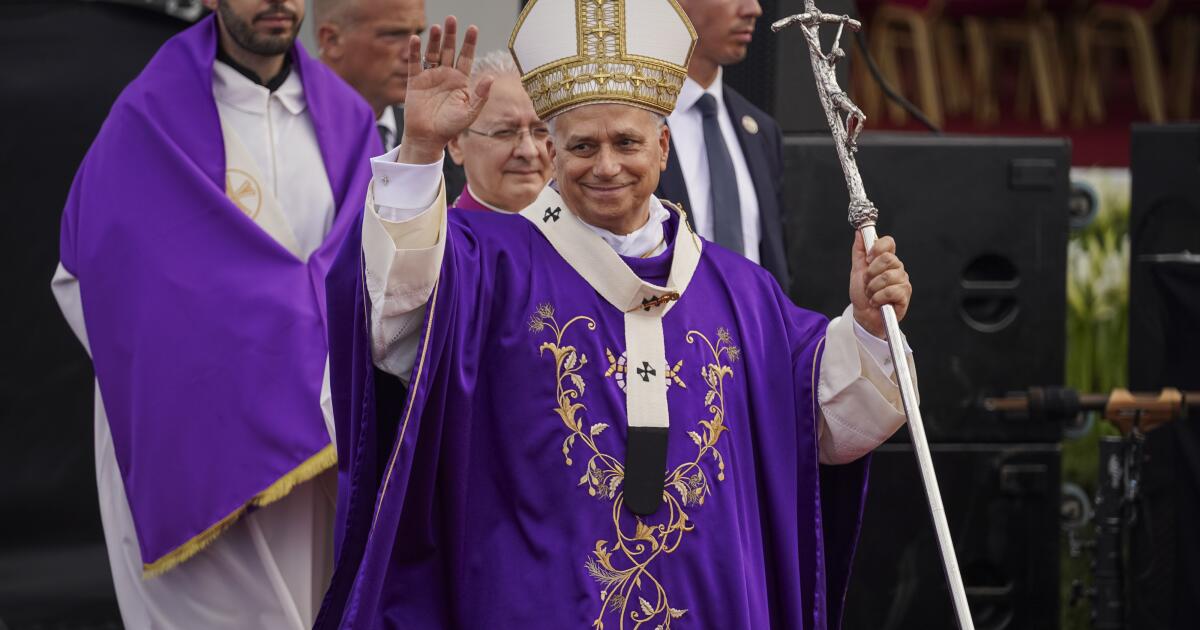
A similar (though obviously not morally equivalent) dynamic is now also on display in the form of Trump’s skirmish with Pope Leo XIV, a man who commands moral authority. He opposes the war in Iran (“Blessed are the peacemakers”) and has demonstrated a stubborn refusal to back down to Trump’s attempts at bullying.
“Woe to those who manipulate religion and the very name of God for their own military, economic and political gain, dragging that which is sacred into darkness and filth,” Leo said during a tour of Africa. It’s a remark that the American pope seemed to implicitly be aiming at the American president.
Here’s what Trump doesn’t understand: There are still pockets of the world where concepts like faith and national identity outweigh tangible incentives. Where sacrifice and suffering are an accepted part of the plan.
When facing these sorts of foes, Trump’s usual operating system starts to look less like a cheat code and more like a category error.
But he can’t see this because Trump is always prone to a sort of cynical projection — of assuming everyone views the world in the same base, carnal, corrupt way he sees it.
Whether it was his incredulity that Denmark wouldn’t sell Greenland, rhetoric that seemed to discount the motivations of those who serve and sacrifice in the military, or his affinity for nakedly transactional gulf states, the pattern is familiar: a tendency to view decisions through a cost-benefit lens that not everyone shares.
To be fair, that lens has often served him well. In arenas where power, money and leverage dominate, Trump’s approach is eerily effective.
But after years of taming secular, “rational” opponents, he is fighting a two-front war against people who see their struggles as moral and spiritual.
They aren’t stronger in a conventional sense. But they are, in a very real sense, less susceptible to Trump’s methods.
For perhaps the first time in his life, Donald Trump finds himself facing adversaries who aren’t just immune to his usual Trumpian playbook but are playing a different game altogether.
The International Monetary Fund has downgraded its global growth forecast for 2026 from 3.3 to 3.1 percent, citing the impact of the United States-Israeli war on Iran and the shutdown of the Strait of Hormuz on the world economy.
The war has damaged energy infrastructure across the Gulf, while critical exports like oil, gas, chemicals and fertiliser remain largely stranded by Iran’s shutdown of the strait and the subsequent US naval blockade of Iranian ports.
Recommended Stories
list of 4 itemsend of list
In the worst-case scenario of a prolonged war, the IMF said global growth could fall to 2.5 percent in 2026, with low-income and developing economies hit the hardest by soaring commodity and energy prices. The global shipping and logistics industry is facing a separate crisis.
But every economic crisis also has beneficiaries: despite the dire macroeconomic outlook, some corners of the global economy are thriving on the uncertainty.
Here’s a look at five industries that are doing well either despite – or because of – the darkening economic outlook.
Wall Street investment banks
Global investors have been on a rollercoaster since the start of US President Donald Trump’s second term last year. The president’s erratic decision-making, where he often issues an ultimatum one day and then changes it the next, has led traders to coin the term “TACO trade”, where TACO stands for “Trump Always Chickens Out”.
The recent volatility has made some investors anxious, but it’s been a boon to investment banks, which make millions in commissions and revenue from the surging volume of trade, according to Sean Dunlap, a director of equity research at Morningstar Research Services.
“Clients want to reposition, so they trade frequently,” he told Al Jazeera. “Spreads tend to increase, which increases the profitability for trade intermediaries like banks.”
First-quarter results for 2026 – released this week – showed that Morgan Stanley reported a profit of $5.57bn, up 29 percent year on year, while Goldman Sachs reported a profit of $5.63bn, up 19 percent year on year.
JP Morgan Chase also reported major gains, with first-quarter earnings of $16.49bn, up 13 percent year on year. The banks all cited high levels of trading, deal-making, and “robust client engagement” as the reasons behind surging profits.
The boomtime for banks could reverse course, however, if volatility persists for too long, Dunlap warned, because investors may become increasingly cautious and less willing to borrow money to make trades.
Prediction markets
As mainstream Wall Street banks reap profits, the crypto-based prediction platform Polymarket has been earning upwards of $1m a day since the start of the month by letting users make peer-to-peer bets on everything from sports tournaments to elections.
Polymarket has been doing well since the start of the war, but it revised its fee structure on March 30 to cash in even more on its popularity.
Rival platforms like Kalshi, Novig and Robinhood also follow the same business model, but Polymarket has been the standout winner of 2026 because it controversially allows users to bet on the outcome of conflicts like the Iran war.
Polymarket revised its fee structure on March 30 to cash in on its popularity. The change has already netted the platform more than $21m in fees since April 1, up from $11.6m for all of March and $6.23m for all of February, according to DefiLlama, a website that provides data analysis for decentralised finance platforms.
If the current trend continues, Polymarket could make $342m in fees this year alone, according to DefiLlama’s analysis.
Anonymous users have also made millions correctly predicting the dates of major events like the US-Iran ceasefire, but the outcomes for rank-and-file users are typically less impressive.
Researchers found that the top 1 percent of Polymarket users captured 84 percent of all trading gains, according to a new report released this month analysing 70 million trades from 2022 to 2025. The returns are so high that US federal regulators have pledged to crack down on insider trading in prediction markets following suspiciously well-timed bets on Iran war outcomes.
Aerospace and defence
Unsurprisingly, the aerospace and defence industries are booming this year due to major conflicts in Ukraine, Iran, Sudan, Gaza and Lebanon and a surge in global defence spending.
About half of the world’s countries have increased their military budgets over the past five years, according to an April report from the IMF, which means they are also buying everything from drones to missiles — more than ever before. Demand is growing particularly fast in Europe, where NATO countries have committed to raising defence spending to 5 percent of gross domestic product (GDP) by 2035.
The defence industry has, in turn, seen major gains on the stock market. The MSCI World Aerospace and Defence Index – which tracks aerospace and defence stocks across 23 global markets – reported net returns of 32 percent year on year at the end of March.
The defence index outpaced the MSCI World Index, which tracks 1,300 large and mid-cap companies across the same 23 markets. The index, which gives a broader overview of global stock markets, reported net returns of 18.9 percent over the same period.
Artificial intelligence
Last year, the United Nations Trade and Development (UNCTAD) office predicted that the AI industry would grow from $189bn in 2023 to $4.8 trillion by 2033, and the Iran war does not seem to have dented the outlook.
“Despite the shocks from the Iran war, we’re still seeing resilience in a lot of sectors like artificial intelligence and renewable energy,” said Nick Marro, lead analyst for global trade at the Economist Intelligence Unit.
One metric for the AI boom has been the high volume of semiconductor chips still being exported out of East Asia, he said. At the top of the chart is chipmaking powerhouse Taiwan, which reported record-breaking merchandise exports of $80.2bn in March, up 61.8 percent year on year, according to EIU analysis.
The surge was led by exports to the US, which grew by 124 percent year on year, the EIU said.
Taiwan Semiconductor Manufacturing Company, the world’s top chipmaker better known by its acronym “TSMC,” on Thursday posted a net income of 572.8 billion New Taiwan Dollars (NTD) ($18.1bn) for the first three months of 2026 – up 58 percent year on year in NTD.
Another metric, initial public offerings or “IPOs,” also shows that the industry is confident for the moment, with industry leaders Anthropic and OpenAI both planning to go public this year.
Renewable energy
The Iran war has highlighted the need to transition from fossil fuels not only for environmental reasons, but also for reasons of energy security. The war marks the third major energy shock this decade, following the COVID-19 pandemic and the 2022 Russian invasion of Ukraine.
The Iran war has “boosted” renewable energy “given the urgency to switch away from fossil fuels and diversify towards renewable sources,” Marro of the EIU said.
Even before the Iran war began, the International Energy Agency reported that global governments were already taking active measures to invest in renewable energy for geopolitical reasons.
According to an IEA report released this month, “150 countries have active policies to advance renewable and nuclear deployment, 130 have energy efficiency and electrification policies, and 32 have policies to incentivise supply chain resilience and diversification across critical minerals and clean energy technologies.”
The Iran war has triggered another flurry of policymaking in Asia, which typically buys 80 to 90 percent of the oil and gas that transits through the Strait of Hormuz. Since the shutdown, the region has been struggling to find alternative sources of energy, forcing governments to deploy emergency measures like fuel rationing and price caps.
South Korea, Thailand, India, Cambodia, Indonesia, Vietnam and the Philippines have all announced a variety of measures from tax breaks for at-home solar panels to commissioning new renewable energy projects – and even restarting nuclear reactors.
The surge in policymaking has been good for the renewable industry. The S&P Global Clean Energy Transition Index, which tracks 100 companies that produce solar, wind, hydro, biomass and other renewable energy across emerging and developed markets, is up 70.92 percent year on year.