OFFICIALS have warned that there is just weeks of jet fuel supplies left before airlines start running out.
Earlier this week, the head of the International Energy Agency warned that vital supplies remain blocked by conflict in Iran – as a result, many airlines have already started axing routes.
Sign up for the Travel newsletter
Thank you!
Certain airlines, like Norse, have started cutting back on flight routesCredit: GC ImagesBritish Airways has axed one route completely from April 24, 2026Credit: Getty
The blockade of the Strait of Hormuz is holding up major supply chains which has led to a huge hike in fuel costs – and shortages.
ACI Europe, which represents European airports, said the key trade route must open within three weeks or fuel reserves will run drastically low.
In response, a number of major airlines have been cancelling flights in preparation for shortages – with thousands affected.
Here are the major eight airlines that have already cut back on their routes…
With up to 5,000 flights a month – working out to around 4,000 domestic and 800 international routes – this means it affects around 250 flights a month.
United Airlineshas the world’s largest airline fleet with more than 1,075 aircraft.
Chief Executive of Air New Zealand Nikhil Ravishankar said the airline would see roughly a five per cent reduction in its services which would continue until the beginning of May 2026.
This reduction equates to around 1,100 flights which in turn will affect 44,000 passengers out of its 1.9million.
A spokesperson said: “Due to the continued increase in fuel constraint risks, fuel prices, and the resulting impact on our operating costs, we have had to make the difficult decision to suspend our LAX operations this summer, May to October.”
Norse operated a summer route from London Gatwick to LA.
BA said the terminating of the service was due to a shift in demand rather than fuel costs as hasn’t axed any flights because of that so far.
Virgin Airways
Virgin Atlantic announced earlier this month that it would be permanently scrapping its London flight to Riyadh from April 7, 2026.
It said some of the reasons were the “evolving situation in the Middle East” and “operating costs.”
Some airlines have increased prices to offset costs instead…
Rather than axing routes – other airlines have added surcharges or baggage fees…
Air France and KLM have have increased their round-trip fares by €100 (£87) on most of their long-haul flights– with an additional charge of €10 (£8.69) for a round trip in economy.
Virgin Atlantic confirmed it would do the same earlier this week – passengers in economy will pay an extra £50, in premium economy passengers will pay an extra £180 and anyone in business class will see flights cost an extra £360.
JetBlue has increased baggage fees by $4 (£3) for off peak, economy travellers. This will now be $39 (£30) – the cost peak economy travellers will be $49 (£37).
The low-cost Spanish Airline Volotea is adding maximum surcharge of €14 (£12.20) per person to flight bookings.
Stock index futures were muted on Friday as President Donald Trump signaled that the U.S. and Iran could hold talks over the weekend, boosting optimism that Middle East tensions may be easing.
Donald Trump has indicated that the conflict with Iran could conclude “soon,” citing progress in negotiations and a possible meeting between the two sides in the coming days. A temporary ceasefire between Israel and Lebanon has added to cautious optimism, though the broader regional situation remains unstable. The war, which began with U.S.-Israeli military action, has had sweeping geopolitical and economic consequences.
Ceasefire in Lebanon: A 10-day truce between Israel and Lebanon has come into effect, offering a brief pause in cross-border hostilities. However, early reports of violations underline the fragility of the arrangement. Hezbollah, aligned with Iran, has been urged by Washington to maintain restraint during this critical window.
Diplomatic Breakthrough Efforts: Backchannel diplomacy, with Pakistan playing a mediating role, has reportedly led to progress on key issues. Talks are expected to produce an initial memorandum of understanding, potentially followed by a comprehensive agreement within weeks. Engagement between U.S. and Iranian officials is likely to intensify in the immediate term.
Global Economic Shock: The conflict has disrupted global energy flows, particularly through the Strait of Hormuz, through which a significant share of the world’s oil supply passes. This has triggered sharp oil price fluctuations and raised concerns about a broader economic slowdown, even as markets show signs of stabilizing on hopes of a resolution.
Nuclear Issue as Core Dispute: Iran’s nuclear program remains the central obstacle in negotiations. Washington is pushing for long-term restrictions, while Tehran seeks shorter commitments and the lifting of sanctions. Bridging this gap will be critical to securing a durable settlement.
Political Pressures and Regional Stakes: The war has created domestic political challenges for Trump, particularly ahead of upcoming elections. At the same time, regional actors are closely watching the outcome, as any agreement will shape the balance of power and security dynamics across the Middle East.
Analysis: Momentum toward a deal is clearly building, but the situation remains precarious. The ceasefire in Lebanon and progress in diplomacy suggest a window of opportunity, yet unresolved issues, especially around nuclear limits and sanctions relief, could still derail negotiations. Trump’s urgency reflects both strategic calculation and domestic political pressure, while Iran appears willing to engage but not at any cost. If a preliminary agreement is reached, it would mark a significant de-escalation, but sustaining peace will require careful management of deep-rooted tensions and competing interests on all sides.
‘We can do whatever we want’.
US President Donald Trump has described the war on Iran which has killed more than 2,000 people as a ‘little diversion’. Speaking in Las Vegas, he said it was ‘going swimmingly’ and ‘should be ending pretty soon’.
The testimony from Russell Vought jump-starts the White House’s push to increase defense spending to nearly $1.5 trillion in the next budget year, up from nearly $1 trillion this year, while cutting health research, heating assistance and scores of other domestic programs by about 10% overall. Such cuts do not cover mandatory spending, which includes such programs as Social Security and Medicare.
The debate over Trump’s proposal underscored the sharp divide that will shape some of the most significant policy debates going into a midterm election that will give voters the ultimate say on the direction of the country.
“For the industrial base to double or triple and build more facilities, not just add shifts, it requires multiyear agreements to purchase into the future,” Vought told lawmakers. “That cost has to be booked in this first year.”
The White House is calling for about $1.1 trillion for defense through the regular appropriations process, which typically requires support from both parties for approval. An additional $350 billion would come through a separate bill that Republicans can accomplish on their own, through party-line majority votes.
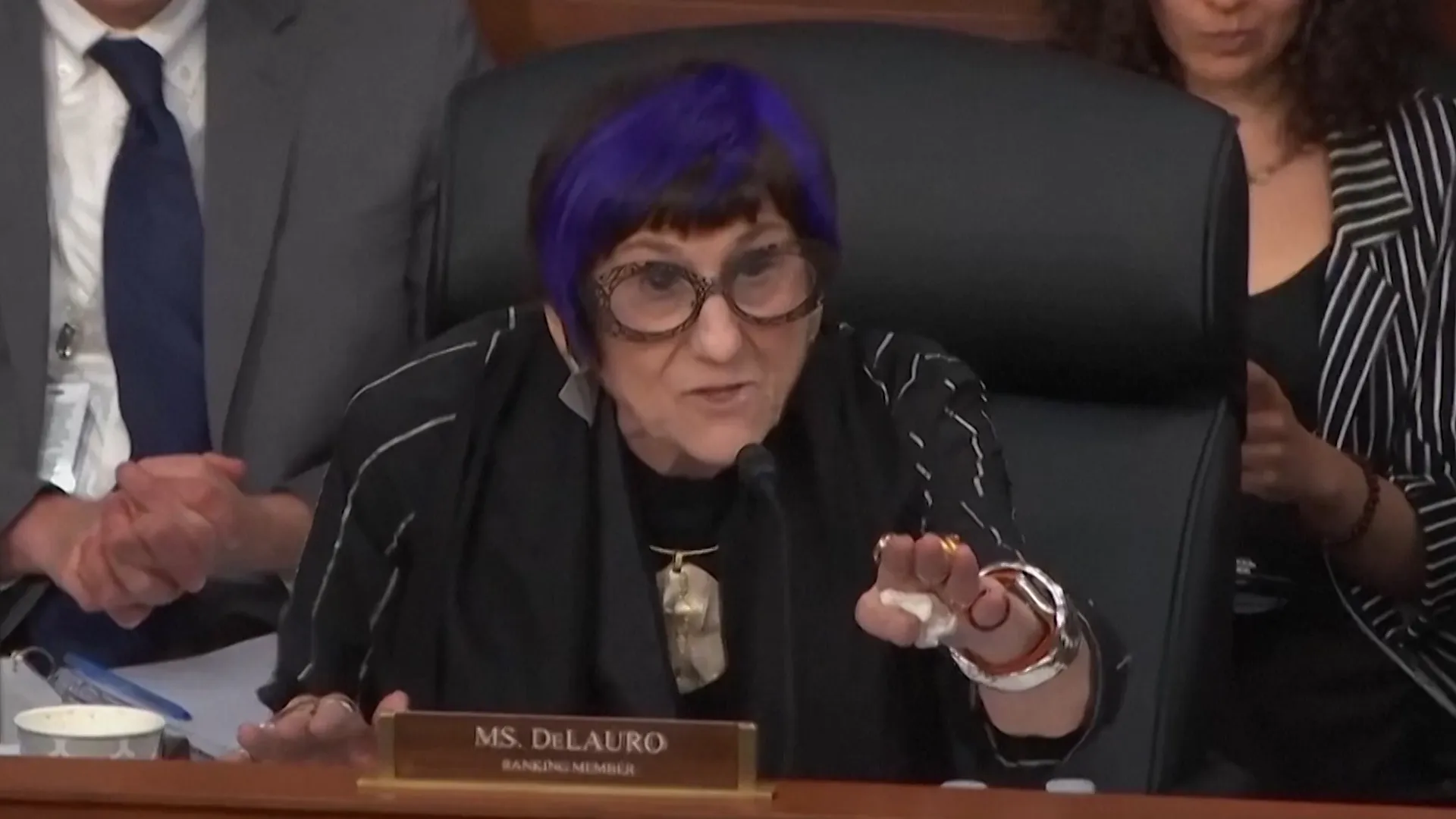
Rep. Brendan Boyle of Pennsylvania, the ranking Democratic member of the committee, said he believes in a strong national defense. But he said the idea of increasing defense by more than 40% while cutting programs that people need shows that the Republican administration’s priorities are “out of whack.”
The committee chairman, Rep. Jodey Arrington (R-Texas), predicted the hearing would be more “amped up” than usual, and that proved to be true, beginning with his opening statement focused on criticizing Democrat Joe Biden’s presidency. Arrington said he did not know of any president in his lifetime who “inherited such a complete and utter mess as President Trump did in January of last year.”
Since then, Arrington said, Trump has secured the border, cut taxes and constrained nondefense spending.
It was the beginning of several back-and-forths at the hearing.
“You know how bad this economy is when we hear Joe Biden being invoked, we hear trans people being invoked. I was waiting for Jimmy Carter to be blamed next,” Boyle said in response to Arrington’s opening remarks.
Boyle said consumer confidence is plummeting under Trump and noted a gas station he passed in Philadelphia recently was selling gas at $4.11 a gallon versus less than $3 a gallon some six weeks ago because of Trump’s “war of choice in Iran.”
Rep. Becca Balint (D-Vt.) called the proposed defense spending increase shocking.
“We’ve never in the history of this country seen spending like this, paid for by slashing healthcare, education and housing,” Balint said. “Mr. Vought, yes or no, is $350 billion for the war in Iran lowering costs for Americans?”
“It is certainly not defunding child care. We fully fund child care in this budget,” Vought said, not directly answering the question.
Balint went on to incorporate Trump’s “America first” mantra in her questioning.
She said that $350 billion could pay for an enhanced health insurance tax credit for 10 years and that her constituents are asking how the country can continue to spend money on wars and not find a solution to helping people afford healthcare.
Vought said the president has made clear he was not going to let Iran have nuclear weapons, missiles and a navy that affect U.S. national security.
“He is doing what is necessary to keep us safe, while at the same time trying to pursue diplomacy so that we can get out of wars and lower those costs over time,” Vought said.
Vought said it was unclear how much the administration would seek to fund the war during the current budget year, which ends Sept. 30. That money would be part of an emergency supplemental spending bill and would be on top of the funds the White House is seeking to boost defense spending next year.
“Would it be more than $50 billion?” asked Rep. Veronica Escobar (D-Texas).
“We’re still working on it,” Vought said. “I don’t have a ballpark for you.”
WASHINGTON — Defense Secretary Pete Hegseth, leading a Pentagon prayer meeting, quoted a fictional bible verse taken from a violent monologue in Quentin Tarantino’s 1994 film “Pulp Fiction,” originally delivered by actor Samuel L. Jackson just before his character shoots a helpless man to death.
The secretary used the prayer to frame the war in Iran as an act of divine justice, the same justification Jackson’s character cites in the film before pulling the trigger.
Hegseth told the audience at a monthly Pentagon worship service held Wednesday that he learned the prayer from the lead mission planner of a team called “Sandy 1,” which recently rescued downed Air Force crew members in Iran.
Hegseth said the verse is frequently spoken by combat search-and-rescue crews, who call the prayer “CSAR 25:17, which I think is meant to reflect Ezekiel 25:17” from the Bible.
“And I will strike down upon thee with great vengeance and furious anger those who attempt to capture and destroy my brother,” Hegseth recited. “And you will know my call sign is Sandy 1, when I lay my vengeance upon thee.”
The infamous Ezekiel 25:17 speech from “Pulp Fiction” is almost entirely a screenwriter’s creation; only the final refrain is loosely inspired by the actual biblical verse. The majority of the monologue in Tarantino’s film is adapted from the opening of the 1976 Japanese martial arts film “The Bodyguard,” with action star Sonny Chiba.
Hegseth’s minute-long prayer closely followed those scripts, with only the last two lines resembling language from the Bible. In Hegseth’s version, he replaced “and they shall know that I am the Lord,” from the book of Ezekiel with the call sign for a U.S. A-10 Warthog aircraft.
Chief Pentagon Spokesman Sean Parnell said some outlets accused Hegseth of mistaking Jackson’s Golden Globe-winning performance with actual scripture, and called that narrative “fake news.”
“Secretary Hegseth on Wednesday shared a custom prayer, referenced as the CSAR prayer, used by the brave warfighters of Sandy-1 who led the daylight rescue mission of Dude 44 Alpha out of Iran, which was obviously inspired by dialogue in Pulp Fiction,” Parnell wrote on X. “However, both the CSAR prayer and the dialogue in Pulp Fiction were reflections of the verse Ezekiel 25:17, as Secretary Hegseth clearly said in his remarks at the prayer service. Anyone saying the Secretary misquoted Ezekiel 25:17 is peddling fake news and ignorant of reality.”
Hegseth has frequently used his prayer sessions to call for violence in the ongoing Iran war. In last month’s sermon, he asked God to “grant this task force clear and righteous targets for violence.”
The services are not mandatory, a senior defense analyst with knowledge of Pentagon operations told The Times, but some who work closely with Hegseth’s office feel an “implied pressure” to attend and “fill seats.”
The effect — some feel — is less attention on the Pentagon’s wartime efforts, and more on supporting political stunts, according to the source, who is not authorized to speak to the media and requested anonymity.
“We have managers and leaders that are missing mission critical work to go listen to ‘Pulp Fiction’ quotes,” the source said. “It delays our ability to make operational, mission related war-fighting decisions.”
The prayer came amid an ongoing clash between the Trump administration and Pope Leo XIV, who has spoken out in recent weeks against the U.S.-Israeli war in Iran. Statements from the Vatican were met with a series of reprisals from President Trump, who said he doesn’t “want a pope” who criticizes the president of the United States.
On Thursday, the pope released a statement against military leaders who conflate war with divinity.
“Woe to those who manipulate religion and the very name of God for their own military, economic, and political gain, dragging that which is sacred into darkness and filth,” he said.
WASHINGTON — If the U.S. and Iran aren’t able to soon come to a deal to end the war or extend the ceasefire that expires next week, the Trump administration is setting the stage to shift its war campaign toward a more economic-focused effort aimed at choking Tehran into submission rather than relying on bombs alone.
Treasury Secretary Scott Bessent told reporters at a White House briefing Wednesday that the U.S. plans to ramp up economic pain on Iran, and said the new moves will be the “financial equivalent” of a bombing campaign.
The threat of secondary economic sanctions on countries doing business with people, firms, and ships under Iranian control — including allies like the United Arab Emirates and competitors like China — represents an escalation of sanctions that the U.S. is already employing.
Bessent said the administration has “told companies, we have told countries that if you are buying Iranian oil, that if Iranian money is sitting in your banks, we are now willing to apply secondary sanctions, which is a very stern measure. And the Iranians should know that this is going to be the financial equivalent of what we saw in the kinetic activities.”
Treasury Department warns China, Hong Kong, the UAE and Oman
The warning comes the day after the Treasury Department sent a letter to financial institutions in China, Hong Kong, the UAE, and Oman, threatening to levy secondary sanctions for doing business with Iran, and accusing those countries of allowing Iranian illicit activities to flow through their financial institutions.
It’s part of an economic playbook that President Trump still can use to pressure Iran to accept U.S. proposals to limit its nuclear ambitions, a person familiar with the administration’s thinking told the Associated Press. The person spoke on the condition of anonymity because they were not authorized to discuss private discussions on the record.
Privately, the argument being made to Trump is that the Iranians think they can weather the storm — but if they cannot pay their loyalists, that could pressure Iran to the table.
And some in the administration believe there are still more economic targets that can be hit that would put the economic hurt on Iran, including bonyads, the charitable trusts that account for a significant percentage of the Iranian economy.
Bessent told reporters that two Chinese banks have received warnings about handling Iranian money. Trump is preparing to visit Beijing next month for talks with Chinese President Xi Jinping.
Bessent also said that Iran’s Gulf neighbors are now willing to look at freezing Iranian money in their banks because of Iran’s aggression during the war.
Daniel Pickard, a sanctions attorney, said imposing secondary sanctions could result in “diplomatic and economic blowback” from allies that could hurt efforts to build coalitions against Tehran.
“A lot of our trading partners have been outspoken in regard to their opposition to the conflict in Iran,” Pickard said. “Most economic sanctions professionals would agree that when you get more people on the team, the chances of your economic sanctions being effective are greater.”
On Wednesday, the U.S. imposed sanctions on an oil smuggling network connected to the deceased senior Iranian security official Ali Shamkhani, who was a close advisor to the former Supreme Leader of Iran. Sanctions include dozens of individuals, companies, and vessels involved in secretly transporting and selling Iranian and Russian oil through front companies, many of which are in the UAE.
“Treasury will continue to cut off Iran’s illicit smuggling and terror proxy networks,” Bessent said in a statement. “Financial institutions should be on notice that Treasury will leverage all tools and authorities, including secondary sanctions, against those that continue to support Tehran’s terrorist activities.
The administration believes the momentum has shifted
Trump administration officials have also signaled growing confidence that the ceasefire and a blockade of shipments from Iranian ports in the Strait of Hormuz have shifted momentum in Trump’s favor.
Iran has endured tens of billions of dollars in damage during the bombardment to the country’s infrastructure — including setbacks to its oil industry, the heart of its fragile and long-isolated economy — that could take years to repair.
Vice President JD Vance on Tuesday said Trump “doesn’t want to make, like, a small deal. He wants to make the grand bargain.”
“That’s the trade that he’s offering,” Vance said. “If you guys commit to not having a nuclear weapon, we are going to make Iran thrive.”
The president’s deputy chief of staff, Stephen Miller, offered a more caustic assessment of the moment, suggesting that Trump had “played the checkmate move” on Iran by implementing the blockage in the strait.
“If Iran chooses the path of a deal that’s great for the world, that’s great for everybody. If Iran chooses the path of economic strangulation by blockade, then the world will pass Iran by,” Miller said in a Fox News appearance Tuesday evening. “New energy routes will be established. New supply chains will be established. Other nations throughout the region — throughout the world, and especially America — will power the world and Iran will become a footnote.”
Some Republicans are skeptical that more sanctions will work
Some Republicans believe that any tactic to exert more pressure on Tehran is worth trying.
“I would support anything,” said Sen. Thom Tillis (R-N.C.). “If the administration came up with the ideas, I would support all of the above. More pressure, the better.”
Others were skeptical, noting that Tehran was already facing a litany of economic penalties that had little impact on its behavior.
“I’m not sure if it’s sanctions that’ll do it. I think we’re putting some pretty heavy sanctions on right now,” said Sen. Mike Rounds (R-S.D.), a member of the Banking and Armed Services Committees. “I personally am just not optimistic that we actually can fix this thing without a regime change.”
Trita Parsi, executive vice president of the Quincy Institute, a think tank that has been critical of Trump’s decision to launch the war, says that Trump had been “politically cornered and strategically constrained” before he announced the ceasefire. But now, Parsi argues, Trump may have altered the difficult dynamic and created a situation where “Iran now appears to need an agreement more than the United States does.”
“The window now open offers Tehran a chance to convert battlefield leverage into lasting strategic gain,” Parsi wrote in a new analysis. “To let it close would mean forfeiting not just incremental progress, but the possibility of reshaping its economic and geopolitical position. By contrast, the United States, having already secured a tenuous exit ramp through the ceasefire, has less at stake in the short term.”
Hussein, Madhani, Weissert and Kim write for the Associated Press.
Islamabad, Pakistan – Pakistan’s Foreign Ministry on Thursday confirmed that the United States and Iran were in discussions – through Islamabad – to hold a second meeting between their negotiators to end their now nearly seven-week war, with a fragile ceasefire announced on April 8 days away from expiring.
But it added that no date had been set for that next round of negotiations, even as Islamabad stepped up a parallel diplomatic push to keep the process alive.
Recommended Stories
list of 4 itemsend of list
“Who will come, how big the delegation will be, who will stay, and who will go is for the parties to decide,” Foreign Ministry spokesperson Tahir Andrabi told reporters in Islamabad, referring to what upcoming talks might look like. “As a mediator, it’s important for us to keep the talks confidential. We had the details and information of the talks entrusted to us by the negotiating parties.”
Speaking of the first round of talks on April 12 in Islamabad, which concluded without a deal, Andrabi said: “There was neither a breakthrough nor a breakdown.”
The spokesperson confirmed that nuclear issues remained among the key subjects under discussion, but declined to elaborate.
His comments came as Pakistan’s civil and military leadership is travelling across the region in what some observers have begun calling the “Islamabad Process”, reflecting the government’s attempt to frame negotiations as an ongoing diplomatic effort rather than a one-off engagement.
Parallel diplomatic tracks
Pakistan’s Prime Minister Shehbaz Sharif arrived in Doha on Thursday, the second stop of a four-day regional tour that began with Jeddah on Wednesday, and will see him visiting Antalya next.
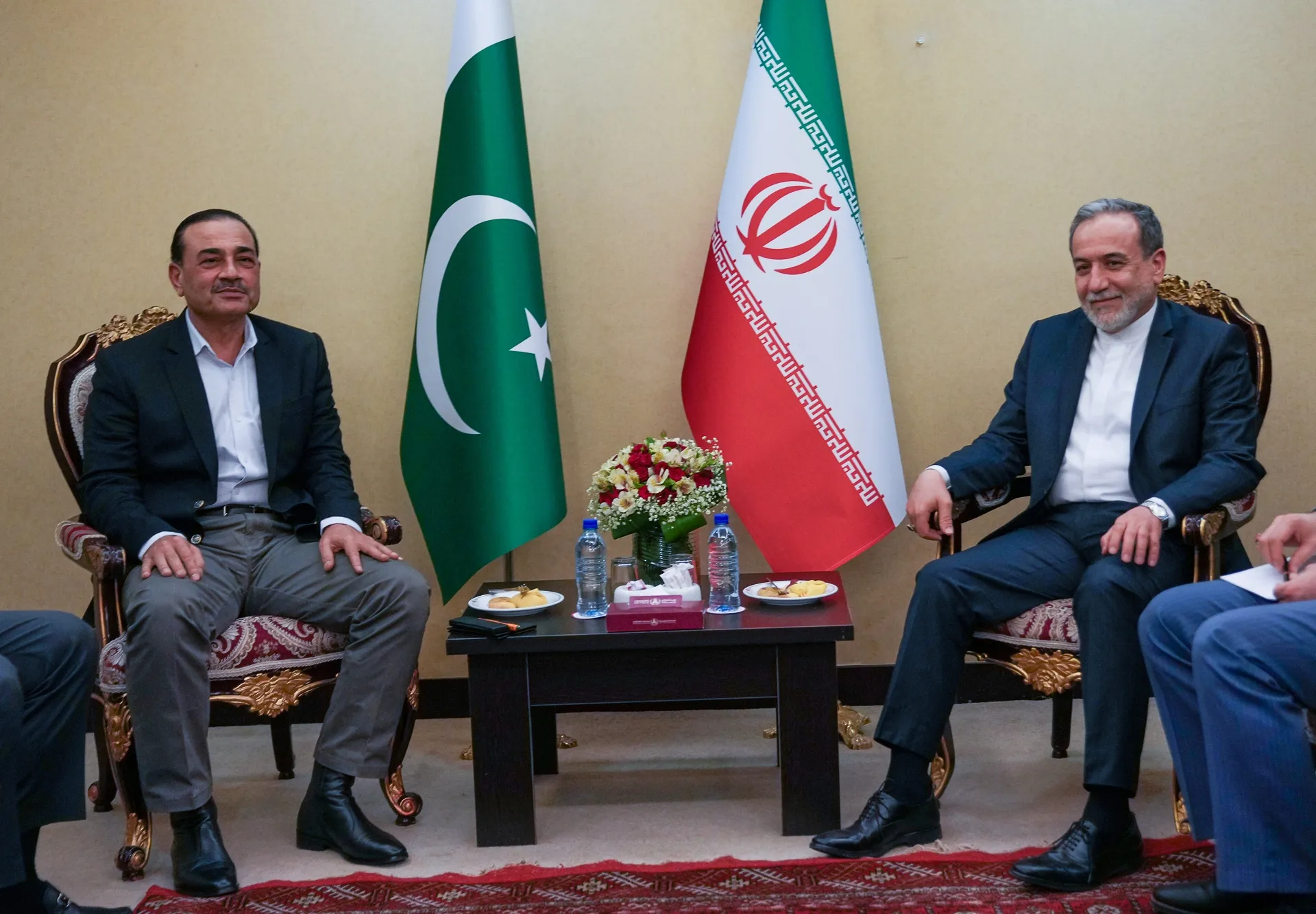
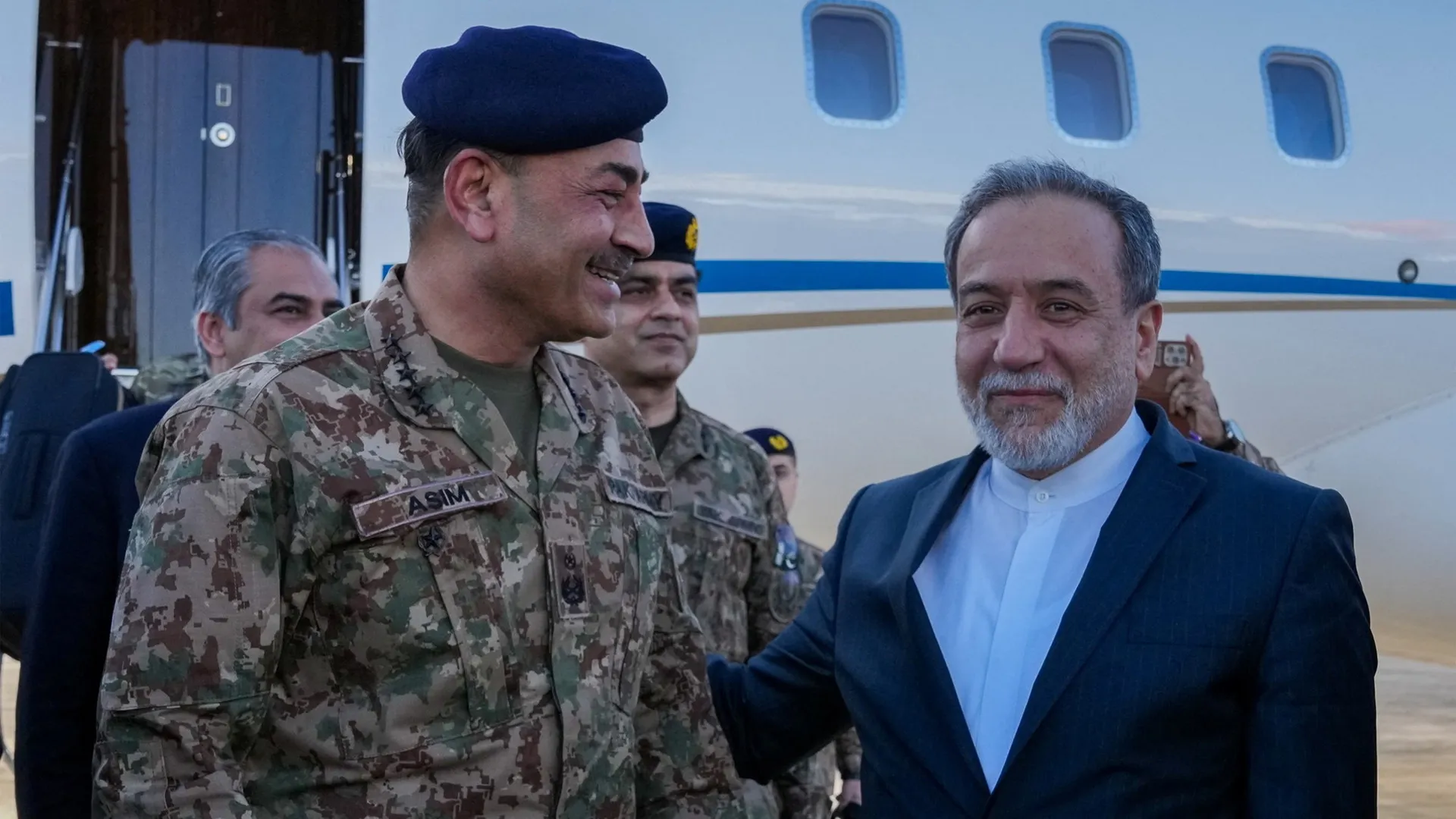
Meanwhile, Pakistan’s Chief of Defence Forces (CDF) Asim Munir arrived in Tehran on Wednesday with a delegation that included Interior Minister Mohsin Naqvi.
Munir was received at the airport with a warm hug from Iranian Foreign Minister Abbas Araghchi, who said he was “delighted” to welcome the field marshal and expressed gratitude for Pakistan’s “gracious hosting of dialogue”.
On Thursday, Iranian Parliamentary Speaker Mohammad Bagher Ghalibaf, who led Tehran’s delegation at the Islamabad talks, also met Munir.
Reza Amiri Moghadam, Iran’s ambassador to Pakistan, said at an event in Islamabad that Tehran would not consider any venue other than Pakistan for talks with Washington.
“We will do talks in Pakistan and nowhere else, because we trust Pakistan,” he said.
Muhammad Faisal, a Pakistani security analyst and scholar at the University of Technology Sydney, said the parallel outreach reflected a deliberate division of labour.
“Pakistan’s strategy appears to be dual-tracked: PM Sharif is reassuring Gulf allies and attempting to build a broader support coalition, while CDF Munir is engaged in hard negotiations between the two sides to narrow gaps between Iran and the US, with an eye on extending the ceasefire and reaching a broader understanding,” he told Al Jazeera.
Reports that Munir might travel to Washington, DC after Tehran were denied by security officials, who called them “speculative”. Andrabi said he was not aware of any such development.
Saudi Arabia’s Crown Prince Mohammed bin Salman (right) greeting Pakistan’s Prime Minister Shehbaz Sharif prior to their meeting in Jeddah, Saudi Arabia on Wednesday [Handout/Prime Minister’s Office via AFP]
In Jeddah on Wednesday, Sharif met Saudi Crown Prince Mohammed bin Salman and expressed “full solidarity and support” for the kingdom following regional escalation, according to Pakistan’s Foreign Ministry. The crown prince praised what Riyadh described as the “constructive role” played by both Sharif and Munir.
In Doha, Sharif met Qatar’s Emir Sheikh Tamim bin Hamad Al Thani and discussed “the regional situation, particularly in the Gulf region”, underscoring “the importance of de-escalation, dialogue and close international coordination to ensure peace and stability”, the prime minister’s office said.
From Doha, Sharif heads to Antalya with Deputy Prime Minister and Foreign Minister Ishaq Dar. They are expected to meet counterparts from Saudi Arabia, Turkiye and potentially Egypt on the sidelines of the Antalya Diplomacy Forum on April 17.
Regional security push
The Antalya meeting is part of a broader diplomatic effort. Turkiye is preparing to host talks on a regional security platform involving Pakistan, Saudi Arabia and possibly Egypt, according to officials familiar with the discussions.
It would be the third such meeting in a month, following earlier rounds of talks in Riyadh and Islamabad.
The goal is to establish a platform for regular, structured cooperation on regional security issues, the officials said, stressing the discussions are distinct from current efforts to end the Iran war.
Turkish Foreign Minister Hakan Fidan confirmed that discussions were under way, but said no agreement had been finalised.
“This pact is necessary so that countries can be assured of one another,” he told the state-run Anadolu Agency on Monday.
Turkiye also reaffirmed support for the US-Iran peace process on Thursday.
“We will continue to provide the necessary support for the ongoing ceasefire to turn into a permanent truce and eventually lasting peace, without becoming more complex and difficult to manage,” the Defence Ministry said, adding that it expected “the parties will be constructive in the ongoing negotiation process”.
Pakistan’s Foreign Ministry said senior officials from the four countries had also met in Islamabad earlier this week to prepare recommendations for Antalya.
Ceasefire under strain
The two-week ceasefire brokered by Pakistan on April 8, which halted attacks in Iran and the Gulf, is due to expire on April 22. While still holding, it is under increasing strain.
A US naval blockade on Iranian ports remains in place, with the US Central Command saying its forces had turned away nine ships as of Wednesday.
Kamran Yousuf, an Islamabad-based journalist and expert on diplomatic affairs, said he expected the ceasefire to be extended.
“I would be really surprised if the current ceasefire is not extended. There is little appetite on both sides to go back to war. There are enough signs on the ground that if there is no deal before the truce expires, the ceasefire will be extended,” he told Al Jazeera.
Faisal offered a more cautious assessment, warning that failure to secure a second round would shift Pakistan’s role.
“Pakistan’s mediation will not collapse immediately, but Islamabad’s role will change from mediator to crisis manager. If hostilities resume, Pakistan will focus again on brokering a ceasefire,” he said.
Despite uncertainty, signals from both Washington and Tehran have remained cautiously optimistic.
White House press secretary Karoline Leavitt said further talks would “very likely” take place in Islamabad, adding, “We feel good about the prospects of a deal.”
Iran’s Foreign Ministry spokesperson Esmaeil Baghaei said multiple messages had been exchanged with Washington through Pakistan since April 12.
US President Donald Trump said on Tuesday that talks could resume within two days and that Washington was “more inclined to go” to Pakistan.
Sticking points remain
The path to a second round remains complicated by unresolved disputes.
Iran has insisted that Lebanon be included in any agreement, arguing that ongoing Israeli strikes there, which have killed more than 2,000 people and displaced 1.2 million, cannot be separated from the wider conflict.
On April 14, the United States convened a trilateral meeting in Washington with the ambassadors of Israel and Lebanon, the first direct engagement between the two sides since 1993.
US Secretary of State Marco Rubio mediated the talks, which both sides described as “productive”, but no ceasefire or follow-up meeting was agreed.
Washington has maintained that any Lebanon deal must remain separate from US-Iran negotiations, rejecting Tehran’s position. On Thursday, Israel said its Prime Minister Benjamin Netanyahu would speak on the phone with Lebanese President Joseph Aoun — but Beirut had not confirmed any plans for a telephone conversation. The two countries do not have formal diplomatic relations.
At Thursday’s briefing, Andrabi aligned Pakistan with Iran on this issue.
“Peace in Lebanon is essential for US-Iran peace talks,” he said, adding that “signs of improvement on the Israel-Lebanon front over the past two days are encouraging.”
Yousuf said a Lebanon ceasefire would send an important signal to Iran.
“Extending the ceasefire to Lebanon will be an important confidence-building measure, a signal from the US that it is serious about a second round. It will also give Tehran good reason to return to the table,” he said.
But he added that the deeper challenge remained Iran’s nuclear programme.
“The nuclear issue is at the heart of the real problem. The flurry of shuttle diplomacy initiated by Pakistan is aimed at bridging the gap between the two sides,” he said.
Grace Wermenbol, a former US national security official and senior visiting fellow at the German Marshall Fund, said Washington’s approach to Lebanon would hinge on Trump’s willingness to pressure Israel.
“A clear pathway to a cessation of hostilities in Lebanon exists,” she told Al Jazeera. “The question is whether Trump will be willing to apply the pressure necessary on Israel to halt its military offensive and allow the Lebanese government to continue its military disarmament efforts. So far, and this is also true for the months preceding the latest escalation between Israel and Hezbollah, we have not seen this pressure materialise.”
The Strait of Hormuz remains another major obstacle.
The waterway, through which roughly a fifth of the world’s oil passes during peacetime, has effectively been blocked by Iran since early in the war, except for ships belonging to countries that have struck individual deals with Tehran.
Starting Monday, the US imposed its own naval blockade on the strait, to prevent any Iran-linked vessel from passing through.
“Iran’s effective closure of the Strait of Hormuz has emerged as the primary issue in US-Iranian negotiations. Opening it is crucial to easing upward pressure on oil prices and instilling confidence in global markets,” Wermenbol said.
She added that Tehran appeared to be betting Washington would eventually back down.
“There is no easy military option here,” she said. “The only way to resolve this issue and remove the threat to maritime traffic will need to involve a diplomatic deal.”
Modern warfare has dramatically changed as we have seen from the Russia-Ukraine war, conflicts involving Gaza, India and Pakistan, and the recent US-Israeli strikes on Iran. At the centre of this shift is a surging global reliance on drone and missile technology as well as advanced air defence systems.
Turkiye, one of the largest military powers in the Middle East, is increasingly positioning itself as a major supplier in the global defence sector. Central to this effort is Roketsan, a company founded in 1988 to supply the Turkish Armed Forces, which has since evolved into the country’s primary manufacturer of missile and rocket systems.
Recommended Stories
list of 3 itemsend of list
Currently exporting to approximately 50 countries, the firm is one of the fastest-growing defence companies globally.
So how did Roketsan secure a large share of the global arms trade?
Bypassing Western embargoes
Turkiye’s defence expansion was largely accelerated by restrictions placed upon it. Western embargoes aimed at halting its military advancement meant Ankara could not acquire the necessary technical systems or components.
In 2020, the United States imposed Countering America’s Adversaries Through Sanctions Act (CAATSA) restrictions on Turkiye – a key member of the transatlantic military alliance NATO. These sanctions targeted Turkiye’s military procurement agency, its chief Ismail Demir, and three other senior officials. Washington also ejected Ankara from the F-35 stealth jet programme in July 2019.
The measures came after Ankara purchased Russia’s S-400 missile defence system, which was seen as a potential threat to NATO security. The European Union also prepared limited sanctions and discussed restricting arms exports following energy exploration disputes in the Eastern Mediterranean.
To circumvent this, the country built an integrated, domestic defence ecosystem. Today, Turkiye relies on a vast supply chain of nearly 4,000 small and medium-sized enterprises (SMEs) scattered across the country. As a result, the Turkish defence industry now operates with a local production rate exceeding 90 percent.
Türkiye’s defence industry now operates with a local production rate exceeding 90 percent, bypassing long-standing Western embargoes [Al Jazeera]
This shift has yielded significant financial returns for Ankara. In 2025, Turkiye’s defence industry reported $10bn in exports. Roketsan’s General Manager Murat Ikinci told Al Jazeera that the company currently ranks 71st among global defence firms, with ambitions to break into the top 50, then the top 20, and ultimately the top 10.
To support this expansion, Turkish President Recep Tayyip Erdogan inaugurated several large-scale facilities last week, including:
Europe’s largest warhead facility.
new research and development (R&D) centre housing 1,000 engineers.
the “Kirikkale” facility dedicated to rocket fuel technology.
new infrastructure for the mass production of ballistic and cruise missiles.
These projects represent a $1bn investment, with the company planning to inject an additional $2bn to expand mass production capabilities.
The ‘Tayfun’ and modern warfare
Roketsan’s R&D strategy – which employs 3,200 engineers and makes the company the third-largest R&D institution in Turkiye – is heavily influenced by data gathered from ongoing global conflicts.
According to Ikinci, the war in Ukraine highlighted the impact of cheap, first-person view (FPV) and kamikaze drones supported by artificial intelligence. In response, Roketsan developed air defence systems like “ALKA” and “BURC,” alongside the “CIRIT” laser-guided missile.
The regional landscape was further complicated during the US-Israel war on Iran, as cheap Iranian-designed Shahed drones – recently upgraded by Russia with “Kometa-B” anti-jamming modules – overwhelmed defences and even struck a British base in Cyprus in March 2026. During the same month, NATO air defences were forced to intercept three Iranian ballistic missiles that entered Turkish airspace.
Meanwhile, the recent conflict between Israel and Iran showcased the use of complex attacks combining ballistic missiles with “swarms” of kamikaze drones designed to overwhelm air defences. This environment makes hypersonic technology a critical asset.
This brings the Tayfun (Typhoon) project into focus. Tayfun is a developing family of long-range ballistic missiles. Its most advanced iteration, the Tayfun Block 4, is a hypersonic missile engineered to penetrate advanced air defence systems by travelling at extreme speeds.
When Al Jazeera asked for specific details regarding the Tayfun’s exact operational range, Ikinci was elusive. “We avoid mentioning its range; we just say its range is sufficient,” he noted.
Similarly, historical Western sanctions have pushed Turkiye to form new cooperation initiatives, effectively accelerating an “Eastern shift” away from Western defence dependence. Turkish drones are now being used by a growing number of countries, including by Pakistan during its war against India last May.
Based on these threat assessments, Roketsan has prioritised five key areas of production:
long-range ballistic and cruise missiles.
air defence systems, including the “Steel Dome”, Hisar-A, Hisar-O, and Siper.
submarine-launched cruise missiles, utilising the AKYA system to leverage Turkiye’s large submarine fleet.
smart micro-munitions designed specifically for armed drones.
long-range air-to-air missiles, a need highlighted by the brief India-Pakistan skirmish.
A strategic export model
Unlike traditional arms procurement, Turkiye is marketing its defence industry to international buyers as a strategic partnership.
“Our offer to our partners… is as follows: Let’s produce together, let’s develop technology together,” Ikinci stated.
Rokestan’s General Manager Murat İkinci, right, emphasises that Roketsan’s international strategy is based on ‘partnership models’ rather than simple sales [Al Jazeera]
By establishing joint facilities and R&D centres in allied nations across the Middle East, the Far East, and Europe, Turkiye is attempting to secure long-term geopolitical alliances rather than purely transactional sales. Ikinci highlighted Qatar as a prime example of this model, describing it as a benchmark for technological, military, and security cooperation in the region.
Filling the global stockpile gap
This rapid expansion comes at a critical time for the global arms trade. Ongoing wars have severely depleted the stockpiles of advanced weapon systems worldwide.
During the recent US-Israel war on Iran, Washington relied heavily on multimillion-dollar Patriot and Terminal High Altitude Area Defense (THAAD) systems to intercept cheap Iranian drones targeting US assets across Qatar, Kuwait, Bahrain, Saudi Arabia, and the United Arab Emirates. With growing concerns that US interceptor supplies could run low, Gulf states – which have collectively detected over 1,000 drones in their airspace – are actively seeking alternative defence technologies, creating a highly lucrative opening for Turkiye’s missile industry.
Defence analyses indicate that even military superpowers like the US will require significant time to replenish their current air defence inventories due to the complexity and massive infrastructure required to build them.
Turkish defence officials view this shortage as a strategic opening. Having localised its supply chain, Turkiye claims it can manufacture and export these highly sought-after complex systems independently.
As global demand for air defence and ballistic technologies rises, Roketsan is aggressively reinvesting its revenues into production infrastructure to expand its footprint in the international arms market.
United States Pentagon Chief Pete Hegseth has said the military blockade of Iran’s ports will continue “as long as it takes”, saying Washington remained “locked and loaded” to attack Iran’s energy facilities.
The US Pentagon chief spoke on Thursday as a tenuous pause in fighting agreed to last week has continued. On Monday, President Donald Trump announced the military would blockade Iran’s ports in the Strait of Hormuz and the Persian Gulf after US-Iran talks in Pakistan failed to reach a breakthrough.
Recommended Stories
list of 3 itemsend of list
Hegseth struck an aggressive tone as he maintained the US military was monitoring Iran’s military movements during the pause in fighting, which currently is meant to extend through early next week.
“We are reloading with more power than ever before…even more importantly, better intelligence than ever before,” Hegseth said.
“As you expose yourself with your movement to our watchful eye, we are locked and loaded on your critical dual-use infrastructure, on your remaining power generation and on your energy industry,” he said.
Still, the Pentagon chief said the US prefers to resolve the conflict, which began with US-Israeli attacks on Iran on February 28, through diplomacy.
“You, Iran, can choose a prosperous future, a golden bridge, and we hope that you do for the people of Iran,” he said. “In the meantime and for as long as it takes, we will maintain this blockade, successful blockade, but if Iran chooses poorly, then they will have a blockade and bombs dropping on infrastructure, power and energy.”
On Wednesday, a Pakistani delegation arrived in Tehran to coordinate a new round of talks. While both sides have indicated they remained open to further negotiations, Major-General Ali Abdollahi, the commander of the Khatam al-Anbiya Central Headquarters of the Islamic Revolutionary Guard Corps (IRGC), warned that the US blockade could end the current pause in fighting.
White House spokesperson Karoline Leavitt, meanwhile, indicated the US maintained a positive outlook on future talks.
“At this moment, we remain very much engaged in these negotiations, in these talks,” she said.
But reporting from Tehran on Thursday, Al Jazeera’s Ali Hashem says deep-seated distrust remains. The US under Trump twice attacked Iran amid ongoing indirect talks over Iran’s nuclear programme, a fact that has cast a long shadow over the most recent bout of diplomacy.
“Clearly, there have been several messages conveyed to the Iranians. But rather than consolidating a feeling of trust and optimism, it seems that it’s already shaken,” he said.
“We saw a platform closely associated with the foreign ministry tweeting today, quoting a source saying that whatever is being demonstrated or said in the media regarding the optimism is just hype, and this is used for PR and it’s for President Trump to use in the markets,” he said.
Iran’s speaker of parliament, Mohammad Bagher Ghalibaf, who led the Iranian delegation in the talks with Iran, told his Lebanese counterpart on Thursday that a ceasefire in Israel’s invasion and ongoing bombardment of Lebanon is “as important” as the pause in fighting in Iran.
A Lebanon ceasefire has emerged as one of the main sticking points in talks, which also include control of the Strait of Hormuz and the future of Iran’s nuclear programme.
‘We will use force’
Speaking during the news conference on Thursday, General Dan Caine, the chairman of the Joint Chiefs of Staff, said so far, 13 ships leaving Iranian ports have turned around in response to US military warnings.
“If you do not comply with this blockade, we will use force,” Caine said.
Admiral Brad Cooper, the head of US Central Command (CENTCOM), meanwhile, said the US is using the wear to rearm and reposition its forces.
“We’re rearming, we’re retooling, and we’re adjusting our tactics, techniques and procedures. There’s no military in the world that adjusts like we do, and that’s exactly what we’re doing right now during the ceasefire,” said.
During questions with reporters, Hegseth also shot down reports that China was planning to send weapons to Iran amid the pause in fighting. Hegseth said Washington had received assurances from Beijing that this was not the case.
Hegseth also used a large portion of the news conference to attack US press coverage of the war, which the Trump administration is receiving criticism for its shifting objectives and justifications for launching the conflict.
Hegseth called the coverage “incredibly unpatriotic”.
A EUROPEAN airline is axing all flights with immediate effect.
Lufthansa‘s subsidiary airline CityLine is to cease operations due to both the Iran war and ongoing strike action.
Sign up for the Travel newsletter
Thank you!
European airline Lufthansa has announced that it is cutting capacity across its network due to rising fuel costs and strikesCredit: Getty
The airline – which operates some flights to and from the UK – will be grounding 27 aircraft from April 18.
Flight routes typically connect London to both Frankfurt and Munich.
It isn’t clear how this will affect passengers just yet, as to whether they will offer alternative routes or refunds.
They said in a statement, according to local media: “As a first, immediately effective step, the 27 operational aircraft of Lufthansa CityLine will be permanently removed from the flight programme starting the day after tomorrow, in order to reduce further losses at the loss-making airline.”
CityLine was due to cease operations by 2028, but has since decided to close this month instead.
Sun Travel has contacted Lufthansa for comment.
Lufthansa’s main airline has also announced that it will be grounding four Airbus jets and two Boeing jets for good, by the end of the summer, which are mainly used for longer flights.
Lufthansa will reduce short and medium-haul flights by five aircraft from this winter as well, while long-haul capacity will be reduced by six.
Till Streichert, chief financial officer of Lufthansa Group, also said: “The goal is to focus our short- and medium-haul platforms more clearly and make them more competitive.”
The announcement follows hundreds of flight cancellations this week following pilot strike action.
Union Vereinigung Cockpit called the strike action over pension disputes and yesterday announced that the strike action would be extended by two days.
Pilots first walked out on Monday leading to hundreds of flights being cancelled, including many from the UK.
Around 34 flights were cancelled to and from the UK yesterday and with an average flight usually carrying around 150 passengers each, more than 5,000 Brits could have been impacted.
When further strike action was announced, VC president Andreas Pinheiro said: “The situation remains unchanged; there is absolutely no movement on the employers’ side.
“For us, this is not about political power struggles or egos, but about sustainable solutions.”
In a statement, the airline told passengers earlier this week: “Lufthansa and Eurowings are working intensively to keep the impact on passengers as low as possible.
“We are trying to have as many flights as possible operated by other airlines within the Lufthansa Group and by partner airlines.
The developments following the 12-day war between Iran and Israel did not lead to de-escalation, but rather to a redefinition of the conflict on a much broader scale. While volatile negotiations between Tehran and Washington continued, the gap between the two sides’ expectations deepened. Ultimately, this gap led to a decision at the White House based on an optimistic assessment: To enter a limited conflict and force Iran into a rapid retreat.
But the battlefield quickly shattered that assumption. The war that was meant to be short, controlled, and manageable turned into a 40-day war of attrition, one that not only failed to achieve the initial objectives of the United States but imposed heavy military, economic, and political costs.
The key question is: What caused this deep disconnect between initial assessments and reality? To answer that question, this article focuses on pre-war miscalculations and decisive variables during the conflict.
1- Incorrect generalisation of the 12-day war experience
Washington assumed Iran’s behavioural pattern from the short war with Israel would repeat, but this time the level of direct US involvement was far higher. Iran adjusted its response accordingly, most notably by playing the Strait of Hormuz card. According to published reports from a US situation room meeting on February 12, General Keane, chairman of the Joint Chiefs of Staff, warned of the risks of closing the strait, but Trump rejected the general’s assessment and assumed Iran would surrender before reaching that point. On the ground, however, the Strait of Hormuz became a decisive factor in disrupting both economic and military calculations.
2- Neglecting Iran’s strategic shift
The US still assumed Iran’s main target would be Israel, but this time Tehran focused on US bases across the region. The UAE, Bahrain, Kuwait, Qatar, Saudi Arabia and Jordan were placed directly on Iran’s target list.
3- Miscalculating Iran’s military and defensive capabilities
Iran’s gradual advances in missile technology, operational precision and air defence systems were not sufficiently accounted for in Washington’s calculations. The US did not believe Iran’s air defences could down its fighter jets or that Iranian missiles could disable the advanced radars at Gulf Arab states’ bases. Battlefield developments revealed a real leap in Iran’s offensive and defensive capabilities, imposing high costs on the US Air Force and seriously challenging its air superiority.
4- Wrong predictions about Iran’s domestic situation
One of Washington’s key assumptions was the outbreak of instability or internal collapse. Intelligence reports from December led them astray, convincing Trump that with widespread assassinations and the activation of public protests, Iran lacked the necessary resilience. In practice, however, a state of war led to social cohesion and strengthened the spirit of resistance. The reason lies in the “civilisational variable”, the role of historical identity and behavioural patterns within Iranian society, which, in times of crisis, through modern activism and mass street presence, shape national resistance. Washington mistook a “battle for national survival” for “political protests”.
5- Underestimating the cohesion of the “axis of resistance”
The US expected Iran-aligned groups to play a marginal role, but their operational coordination drastically increased battlefield complexity. The “axis of resistance” lined up in a unified front against the US, while NATO failed to provide effective support for Washington, revealing fractures in Washington’s traditional alliances when faced with costly crises.
6- Growing domestic and international pressure
The continuation of the war was met with opposition inside the US – from media criticism by former Trump supporters and figures like Tucker Carlson to human rights protests over attacks on civilians, particularly the Minab school tragedy, which quickly eroded the moral legitimacy of the operation in global public opinion, including within the US.
Meanwhile, the expansion of the war into the region caused oil prices to surge past $120, raising serious concerns and analyses about $200 oil, placing heavy economic pressure on US households.
On the international stage, the veto of Bahrain’s proposed resolution by Russia and China, along with the independent stances of some Western allies, dramatically increased the political cost of the war for Washington.
7 – Signs of fractures within US military decision-making structures
Command disagreements grew increasingly severe. The widespread dismissal of senior generals – including the army chief of staff and several other commanders – in the middle of the war was like a major earthquake at the Pentagon. This was no simple administrative reshuffle; it reflected a deadlock in modern military doctrine, which negatively impacted operational continuity.
Taken together, these errors – from misreading Iran’s behaviour and strategic evolution to ignoring simultaneous domestic and international pressures – placed the US in a position where accepting Iran’s terms after 40 days to begin negotiations became the only realistic option.
In the end, this war stands as a clear example of strategic deadlock: Where the gap between optimistic initial estimates and battlefield realities fundamentally alters the course of events.
It is an experience that will likely be discussed and revisited for years to come in Washington’s strategic circles.
The views expressed in this article are the author’s own and do not necessarily reflect Al Jazeera’s editorial stance.
The Iran war has deepened the damage to its sanctions-hit economy, but oil revenues have provided a crucial cushion.
The US has spent decades trying to squeeze Iran economically. Six weeks into the Middle East conflict, Tehran is still standing. US and Israeli attacks on infrastructure, industry and trade have damaged Iran’s sanctioned economy even further.
But oil revenues have kept flowing, giving the regime a financial cushion.
The Strait of Hormuz is now at the centre of this economic battle; whoever controls it controls the pressure.
At the negotiating table, sanctions relief, billions in frozen assets and war reparations are all at stake.
Meanwhile, millions of Iranians are bearing the brunt of inflation, shortages and a collapsing currency.
The benchmark US equity indices surged to new territory entering price discovery, reflecting a market that appears to be looking past immediate geopolitical risks in favour of potential de-escalation and corporate strength.
ADVERTISEMENT
ADVERTISEMENT
On Wednesday the S&P 500 closed 0.8% higher at 7,022 points, up on the day and surpassing its previous peak from January of this year.
The S&P 500 is now 11% higher since it bottomed on 30 March and after it first dropped 9% during last month.
The Nasdaq Composite also posted a record, rising 1.6% to over 24,000 points while the Dow Jones Industrial Average edged 0.15% lower and continues significantly below its all-time high.
The advance comes despite persistent headwinds.
Shipping through the Strait of Hormuz, a critical chokepoint for roughly one-fifth of the global oil supply, has been severely disrupted since late February following Iranian actions and a subsequent US naval blockade.
Traffic has dropped sharply, with Iran declaring the strait closed to vessels linked to the US, Israel and their allies.
The US Central Command also confirmed its blockade of Iranian ports took full effect earlier this week, stating that “ten vessels have now been turned around and ZERO ships have broken through since the start of the US blockade on Monday”.
Oil prices, while easing in the last two weeks, remain elevated.
At the time of writing, Brent crude stands at around $96.5 per barrel and WTI at $92.5, still well above pre-war levels and contributing to inflationary concerns.
The International Monetary Fund has responded by lowering its global growth outlook. In its latest World Economic Outlook, released on Monday, the IMF cut the 2026 forecast to 3.1% from 3.3% previously projected, citing energy price spikes and supply disruptions.
Headline inflation is now seen at 4.4% for the year, under a reference scenario assuming a short-lived conflict, with risks of even weaker growth and higher prices if tensions escalate and prolong.
The modest decline in energy prices followed reports that the two-week ceasefire is holding and that fresh talks between the US and Iran could resume soon.
US President Donald Trump also indicated that negotiations for lasting peace might restart by the end of the week.
Investors appear to be pricing in an eventual reopening of the Strait of Hormuz and a contained negative impact of the war in general.
Speaking to Euronews, Alan McIntosh, chief investment officer of Quilter Cheviot Europe, explained that “although the first round of talks led to no agreement, a likely extension of the ceasefire gives optimism that an early resolution can be reached”.
“Assuming a fairly swift end to hostilities and a resumption of oil shipments, the economic damage to global inflation and growth should be fairly limited,” he added.
Why US indices defy the odds
Analysts point to several factors behind the market resilience.
Hopes of a swift end to hostilities have encouraged risk-taking, while corporate America is showing strength. Bank executives highlighted a strong US consumer and a healthy pipeline for deals and initial public offerings.
Earnings expectations for the first quarter have been revised higher, with S&P 500 companies now forecast to report combined profits of over $605 billion (€513bn), up from earlier estimates.
Tech shares, particularly those linked to AI, provided additional support. The Nasdaq’s outsized gain reflected renewed enthusiasm for growth-oriented stocks even as broader economic projections softened.
McIntosh told Euronews that “the capital spending boost relating to AI shows no sign of slowing down so this continues to support US economic growth. We have just started the US quarterly results season and so far there is limited evidence of a negative impact from the current Middle East conflict”.
The indices also include defence companies that have all performed well with the war in the backdrop pushing governments, in particular the US, to increase military budgets.
History also offers context for the current rebound. In past US-involved wars, equity markets have frequently experienced short-term volatility followed by recovery and gains.
During the 2003 Iraq War, for example, the S&P 500 rose over 25% in the first full year after the invasion began.
The Gulf War of 1990-1991 saw an initial 11% decline in the index, but a strong relief rally followed the swift coalition victory, delivering positive returns in the subsequent year.
Similar patterns emerged in the Korean War and Vietnam War eras, where stocks posted solid long-term advances despite prolonged uncertainty.
Data compiled by the Royal Bank of Canada and other sources indicate that, across multiple conflicts, equities rose in the first year of hostilities around 60% of the time.
Markets have tended to focus on eventual outcomes rather than immediate shocks, rewarding resolution and economic adaptability. The latest record for the S&P 500 and the Nasdaq underscore this enduring pattern.
While risks remain if the Iran conflict worsens, investors are currently betting that diplomacy and corporate fundamentals will prevail.
BRITS have been warned to book their summer getaways now or face a massive spike in prices as the Middle East conflict sends fuel costs soaring.
The boss of easyJet today sounded the alarm after revealing the war has already cost the budget airline £25million in fuel hikes.
Sign up for the Travel newsletter
Thank you!
EasyJet reported that the conflict has created “near-term uncertainty around fuel costs and customer demand” as families hesitate to bookCredit: AFP
The Luton-based carrier has been hit hard by rising oil prices after Iran tightened its grip on tankers passing through the Strait of Hormuz.
Holidaymakers are being told that if these high costs persist, the extra bill will be passed directly onto passengers through higher fares across the entire industry.
EasyJet reported that the conflict has created “near-term uncertainty around fuel costs and customer demand” as families hesitate to book.
Official figures show that bookings for the peak summer months of June through to September have already dipped compared to last year.
The airline is braced for a massive headline loss of between £540million and £560million for the six months leading up to the end of March.
Investors reacted with panic to the news as shares in the company tumbled by as much as 9% in early trading on Thursday.
EasyJet chief executive Kenton Jarvis admitted the firm has struggled.
He said: “Our H1 financial performance worsened year on year, impacted by the conflict in the Middle East and the competitive environment in some markets.”
Despite the gloom, the airline boss insisted that planes are still taking off as normal following the busiest Easter period on record.
He added: “Following our busiest Easter holiday period ever, the operational ramp up into peak summer continues as planned.”
Mr Jarvis claimed the company has the cash reserves to survive the crisis.
He said: “EasyJet’s financial strength from our investment grade balance sheet and £4.7billion of liquidity mean we are well placed to navigate current geopolitical challenges while remaining focused on our medium term targets.”
Experts are worried that the war could eventually lead to fuel shortages and forced cancellations, but the airline insists airports are currently “operating as normal” with supplies secured until mid-May.
Everything now rests on whether the crisis in the Middle East escalates or cools down in the coming weeks.
A quick resolution could see prices drop, but a long-term war could see holiday demand dry up as fuel is rationed around the world.
A major fire at a key refinery in Australia refinery has disrupted fuel production, raising fears of shortages as supplies are already strained by the Iran war.
US–Iran talks gain pace as Pakistan mediates, with fresh optimism for a new round of talks in Islamabad.
Published On 16 Apr 202616 Apr 2026
Efforts to revive US-Iran negotiations are gathering pace, with Pakistan again having an important mediating role as its leaders hold high-level talks in Tehran and the Gulf.
Amid a renewed push to end the war, a Pakistani delegation, led by army chief Field Marshal Asim Munir is in Tehran. He is expected to relay messages from the United States, while Pakistan’s Prime Minister, Shehbaz Sharif, arrived in Saudi Arabia as part of a regional tour that includes Qatar and Turkiye.
Recommended Stories
list of 4 itemsend of list
Iran’s Foreign Ministry spokesman, Esmael Baghaei, said Tehran and Washington have remained in contact since talks in Islamabad ended on Sunday. On Wednesday, Washington signalled optimism about a new round of talks in the Pakistani capital.
But the diplomatic push comes amid increasing tension, as Iran warns it could expand its response to the US naval blockade beyond its own waters.
Divisions in Washington persist, with the US Senate rejecting a measure to limit the war without congressional approval.
Here is what we know:
In Iran
Hormuz tensions remain high: Adviser Mohsen Rezaei warned that Iran could target US ships, if Washington continues to enforce its naval blockade in the Strait of Hormuz. The warning comes as the US tightens restrictions on vessels linked to Iranian ports, with ships already being turned back amid the standoff.
Nuclear issue shows potential breakthrough: Analyst Abas Aslani says Tehran is open to nuclear transparency if Washington is serious about a deal, but new US sanctions and the blockade of Iranian ports are fuelling distrust.
“There is a sense of distrust, and at the moment, Iran is ready for every possible scenario, either progress in the negotiations or returning to the military conflict,” he told Al Jazeera.
Iran’s Foreign Minister Abbas Araghchi warned of consequences over US “provocative actions” in the Gulf and the Strait of Hormuz during a call with his Chinese counterpart Wang Yi.
War diplomacy
Round two of talks: The US is discussing holding a second round of peace talks with Iran and is optimistic about reaching a deal, the White House said.
China supports ‘momentum’ of peace talks: China’s Foreign Minister, Wang Yi, told his Iranian counterpart that Beijing “supports maintaining the momentum of the ceasefire and peace talks”.
Saudi crown prince, Pakistan PM meet: Crown Prince Mohammed bin Salman and Shehbaz Sharif met in Jeddah to discuss regional issues, including US-Iran negotiations. Talks hosted by Pakistan were a key focus, said the Saudi Press Agency.
US and Qatar: US President Trump discussed regional developments and energy concerns, specifically regarding the oil market and gas prices, with Qatari Emir Sheikh Tamim bin Hamad Al Thani.
Saudi Crown Prince Mohammed bin Salman and Pakistan’s Prime Minister Shehbaz Sharif in Jeddah, Saudi Arabia [Saudi Press Agency/Reuters]
In the US
US President Donald Trump has announced that Israeli and Lebanese leaders will hold direct talks later today – their first such contact in 34 years.
New oil sanctions: US officials targeted more than two dozen individuals, along with companies and vessels linked to the oil transport network of Iranian shipping magnate Mohammad Hossein Shamkhani.
US says 10 vessels blocked from Iranian ports: The US military’s Middle East command (CENTCOM) said 10 ships were stopped or redirected within the first 48 hours of a naval blockade, with none leaving Iranian ports.
US Congress divisions: The Senate rejected efforts to limit US involvement in the war and blocked measures targeting arms sales to Israel, though growing opposition signals shifting political pressure.
In Israel
‘Identical’ goals: Israeli Prime Minister Benjamin Netanyahu said that Israel and the US are fully aligned in their objectives to contain Iran.
Ceasefire pressure, no halt in fighting: Despite pressure, Netanyahu said Israel would continue military operations.
End of Hezbollah: The Israeli prime minister said the country’s top priority in Lebanon was to secure the “dismantling” of Hezbollah, in its first direct talks with the country in decades.
“There are two central objectives: first, the dismantling of Hezbollah; second, a sustainable peace… achieved through strength,” he said.
In Lebanon
Relentless strikes continue: Air raids and shelling hit southern and eastern Lebanon, including Kafr Sir and Nabatieh, while a “triple-tap” strike in Mayfadoun killed four paramedics. Israeli vehicles and bulldozers remain active.
Lebanon’s Minister for Administrative Reform Fadi Makki said an Israeli attack that killed four paramedics in southern Lebanon was “a new war crime”.
Rising toll: Israeli strikes have killed at least 2,167 and injured more than 7,000 people, according to the Lebanese Health Ministry. About 1.2 million people have been displaced since March 2. Israel has been accused of destroying homes in southern Lebanon, as happened in Gaza.
‘Homes that no longer exist’: “Even if a ceasefire is reached, the reality on the ground is devastating.. entire communities along the border have been destroyed,” Al Jazeera’s Malcolm Webb reported from Beirut. He added that Israel has yet to secure its objective of controlling territory up to the Litani River.
Balakrishnan Rajagopal, the UN special rapporteur on the right to housing, has joined other UN human rights experts, calling for Israel to immediately stop its bombing of Lebanon. Rajagopal wrote on social media that the Israeli military is using the “same strategy” in southern Lebanon as in Gaza or the occupied West Bank.
Diplomatic tensions grow: Hezbollah has condemned US-hosted Israel-Lebanon talks as “shameful,” while a failed Senate vote to block bulldozer sales to Israel highlights increasing concern over civilian harm.
An armoured Israeli military vehicle near the Lebanon border [Florion Goga/Reuters]
Global economy
Growing hunger fears: The war could push millions more towards hunger as its economic fallout reverberates around the globe, the World Bank’s chief economist told AFP.
“You have about 300 million people who suffer from acute food insecurity already,” Indermit Gill said. “That’ll go up by about 20 percent very, very quickly,” as knock-on effects grow.
Wall Street records: Major Wall Street stock indices finished at record highs on Wednesday following optimism about an accord in the US-Iran conflict.
Srinagar, Indian-administered Kashmir — The gold earrings were a gift from her father on her birthday just months earlier. But on March 21, as South Asia marked Eid‑ul‑Fitr, Masrat Mukhtar handed them over to an aid collection effort to help civilians in Iran trying to survive the US-Israel war on the country.
She was one of many in Indian-administered Kashmir who paused their customary rituals and celebrations on the auspicious day to contribute cash, household items, and personal assets for a people more than 1,000 miles away.
Her cousins followed, each bringing items of personal value. Families offered copper utensils, livestock, bicycles, and portions of savings. Children broke their piggy banks, sharing savings they had carefully collected over several years. Shopkeepers and traders handed over parts of their earnings.
“We give what we love. This brings us closer to them,” said Mukhtar, a 55-year-old woman from Budgam in the central part of Indian-administered Kashmir, before referring to a name by which the region has historically also been known. “This is what Little Iran does for its namesake. The bond persists through time and conflict.”
That bond, rooted in more than six centuries of historical connections, has taken on a much more overt presence during the war – drawing recognition from Iranian authorities, and concerns over some fund collection methods from Indian officials.
Cash donated for Iran at a collection drive in Indian-administered Kashmir [Junaid Bhat/Al Jazeera]
One daughter’s wealth, to another daughter
In Zadibal, a Shia-majority area of Srinagar – the biggest city in Indian-administered Kashmir – 73-year-old Tahera Jan watched neighbours contribute copper pots.
“Kashmiris traditionally collect these utensils for their daughters’ weddings. We chose to give them instead to daughters who lost mothers and sisters in the attacks,” Jan said.
Sadakat Ali Mir, a 24-year-old mini-truck driver, contributed one of the two vehicles he drives for his livelihood. Other contributors offered bicycles, scooters, and other essential items. Children, including nine-year-old Zainab Jan, handed over piggy banks.
To be sure, that Shia constitute between 10 to 15 percent of Indian-administered Kashmir’s population is a factor in why the war in Iran resonates so deeply in the region. But donations for Iran have extended well beyond Shia. Several Sunni families observed simpler Eid meals, redirecting household resources towards Iranian relief. Some shopkeepers closed early, while families adjusted daily routines to contribute.
Political and religious figures also participated. Budgam lawmaker Aga Syed Muntazir Mehdi donated a month’s salary to the relief effort. Imran Reza Ansari, a Shia scholar and leader of the People’s Conference party, noted public participation across communities.
Similar donation campaigns in support of Iranians have also been reported from Pakistan, Iraq and other countries.
But at the heart of this outpouring of support for Iran in Indian-administered Kashmir – which also witnessed large rallies after the killing of Iranian Supreme Leader Ayatollah Ali Khamenei on February 28 – are rare cultural ties that Kashmir and what was then Persia have shared for centuries.
Women arrive carrying kitchenware to donate at a relief drive for Iran in Budgam, Indian-administered Kashmir, Monday, March 23, 2026 [Mukhtar Khan/ AP Photo]
‘Little Iran’
Sufi scholar Mir Sayyid Ali Hamadani arrived in Kashmir from Hamadan in Iran in the 14th century, introducing religious practices, art forms, and Persian literary traditions. Persian architectural influences appear in historical mosques, and the Persian language has shaped local literature.
Irshad Ahmad, a scholar of Central Asian studies, said donation drives drew on this historical reservoir, with prayers, rituals, and art forms reflecting longstanding ties. Kashmir has historically been referred to as Iran-e-Sagheer, or Little Iran.
The donations carry personal and cultural meaning beyond financial value, said experts. “People are not only parting with objects; they are sharing emotional continuity,” Sakina Hassan, a lecturer on humanitarian practices in New Delhi, said.
More than 2,000 people have been killed in Iran during the war, which is on pause at the moment amid a fragile ceasefire brokered by Pakistan. The first round of direct talks between the United States and Iran in Islamabad last week broke down without a deal, and mediators are working on pushing the two sides towards new talks. The ceasefire is set to expire next Wednesday.
A volunteer auctions a donated copper vessel to raise cash for a relief drive for Iran in Budgam, Indian-administered Kashmir, Monday, March 23, 2026 [Mukhtar Khan/AP Photo]
Millions in donations
The scope of donations from Kashmir is significant. Estimates from local authorities place the value of contributions at up to six billion rupees ($64m), including cash, gold, jewellery, household items, livestock, and vehicles.
Collection points in Srinagar, Budgam, Baramulla – another major city – and the region’s northern districts were staffed by volunteers documenting donations.
Small contributions, including coins, piggy banks, and utensils, make up a large portion of total aid in terms of volume. Syed Asifi, a volunteer managing central Srinagar collections, said even individuals with limited means brought what they could.
Medical kits were assembled by local doctors, and supply drives were organised by students and educational institutions based on assessed needs in Iran.
The Iranian embassy in New Delhi acknowledged contributions in a post on X: “We sincerely thank the kind people of Kashmir for standing with the people of Iran through their humanitarian support and heartfelt solidarity; this kindness endures.” A video shared by the embassy showed a widow donating gold she had kept as a memento of her husband, who died 28 years ago.
That post was subsequently pulled down by the embassy, though the mission later posted again, thanking the people of India and Kashmir.
The embassy added that Kashmir’s contributions constitute a substantial portion of donations from India, with local sources estimating the Valley’s share at more than 40 percent of the total.
Jewellery donated by women for an Iran aid drive in Indian-administered Kashmir [Junaid Bhat/Al Jazeera]
Security concerns
But while the majority of donations are directed towards humanitarian purposes, Indian authorities have raised concerns about potential misuse. Jammu and Kashmir Police and the State Investigative Agency (SIA) have said some funds collected through door-to-door drives by unverified individuals could be diverted to local networks of separatists and armed groups.
“People depositing money directly to the Iranian embassy should not be worried,” said a senior official, speaking on condition of anonymity. “Collections by middlemen without transparent monitoring may not reach the intended recipients.”
Authorities have also asked volunteers to maintain records to ensure compliance with fundraising regulations.
There’s a reason for this concern, say Indian authorities.
They point to the example of 2023, where funds collected in southern Kashmir – ostensibly for humanitarian purposes – were allegedly instead funnelled towards rebel groups. Organisers of the Kashmir drives for Iran maintain that all efforts are humanitarian.
Pakistani officials are expecting a “major breakthrough” in talks between Iran and the United States on Tehran’s nuclear programme, sources have told Al Jazeera, as Islamabad steps up diplomatic efforts to end a war that has killed thousands of people.
The optimism on Wednesday came as a high-level Pakistani delegation, headed by Army Chief Asim Munir, arrived in Tehran to deliver a message from the US to the Iranian leadership, according to Iran’s Press TV broadcaster.
Recommended Stories
list of 4 itemsend of list
He was received by Iran’s Foreign Minister Abbas Araghchi, who expressed gratitude for Pakistan’s “gracious hosting of dialogue”. According to Press TV, Munir is also seeking to lay the groundwork for a second round of talks between the US and Iran.
Al Jazeera’s Osama Bin Javaid, who has been covering the US-Iran talks, said Pakistani officials were expecting “a major breakthrough on the nuclear front” and that the delegates were continuing to relay messages back and forth between Washington and Tehran.
The central sticking point remains the duration of any enrichment freeze by Iran and the country’s stockpile of 440 kilogrammes of highly enriched uranium.
“We know that both sides are essentially stuck on between five years of no enrichment to 20 years of no enrichment. And there is a solution in the middle,” Bin Javaid said.
“There’s also talk about what Iran will do with the 440kg of nuclear-enriched material that it has in the country. There are multiple options – whether sending it abroad to a third party or bringing it down to either uranium in its natural form or up to 3 percent,” he said.
“According to these sources, there’s major headway that has been made, and they’re expecting that the Pakistanis are going to be able to convince Tehran,” he added.
Shuttle diplomacy
The shuttle diplomacy by Pakistan came after talks between the US and Iran in Islamabad ended over the weekend without an agreement to end the war. Mediators are pressing for a compromise on three main issues: Iran’s nuclear programme, control of the Strait of Hormuz – which Tehran has effectively closed, causing a surge in global oil prices – and compensation for wartime damages.
The conflict, launched by the US and Israel on February 28, has killed more than 3,000 people in Iran and triggered retaliatory attacks by Tehran on Gulf countries. It has also reignited a conflict between Israel and Hezbollah in Lebanon, where Israeli forces have killed more than 2,000 people since March 2.
A ceasefire between Tehran and Washington on April 8 has halted attacks in Iran and the Gulf, but strikes by Israeli forces on Lebanon have continued.
Separately on Wednesday, Pakistan’s Prime Minister Shehbaz Sharif also travelled to Saudi Arabia as part of a regional tour that also includes stops in Qatar and Turkiye. Al Jazeera’s Bin Javaid said Sharif’s tour was part of a “double-pronged strategy”.
“While the Iranians are speaking to the Pakistani military chief, the Pakistani prime minister and foreign minister are talking to the Saudis and the Qataris. The day after, they go to Turkiye,” he said, with the aim of neutralising any detractors to a deal
Bin Javaid said the detractors include elements in Tehran, in Washington, DC, and most of all, Israel, “which does not want a peace deal and wants a perpetual war in the region”.
‘Very close to over’
The diplomatic push appears bolstered by optimistic comments from US President Donald Trump, who said late on Tuesday that the world should brace for an “amazing two days” and the war on Iran is “very close to over”.
White House Press Secretary Karoline Leavitt later said that further negotiations would likely be held in Islamabad, calling Pakistan-mediated discussions “productive and ongoing”.
“We feel good about the prospects of a deal,” she said on Wednesday.
In Tehran, Iran’s Ministry of Foreign Affairs confirmed that exchanges with the US have continued since the end of the talks in Islamabad. Spokesman Esmaeil Baghaei said “several messages have been exchanged through Pakistan” and that Iranian “positions have been expressed in those exchanges”.
Tensions remain, however.
A US Navy blockade on Iranian ports – which began following the end of the talks – remains in effect in the Strait of Hormuz. The US Central Command claimed it has turned back nine vessels as of Wednesday.
Iran’s military has denounced the blockade as a violation of the April 8 ceasefire. Iran’s Fars News Agency separately reported that a sanctioned Iranian supertanker had crossed the Strait of Hormuz despite the blockade, though it gave no further details.
Ali Abdollahi, the commander of Iran’s joint military command, has also threatened to halt trade in the region if the US does not lift its blockade. He warned that Iran would retaliate by blocking trade through the Red Sea, along with the Gulf and the Sea of Oman.
A source has told Al Jazeera that Pakistan is expecting a breakthrough tied to Iran’s nuclear programme as Islamabad helps negotiate an end the US-Israeli war on Iran. Pakistani military and government officials met with Iranian and Saudi leaders on Wednesday.
Watch the moment a Democratic congresswoman tells the US Energy Secretary he is ‘living in a different world’ after his response to whether he’d adequately warned the White House that a war on Iran would have global consequences.





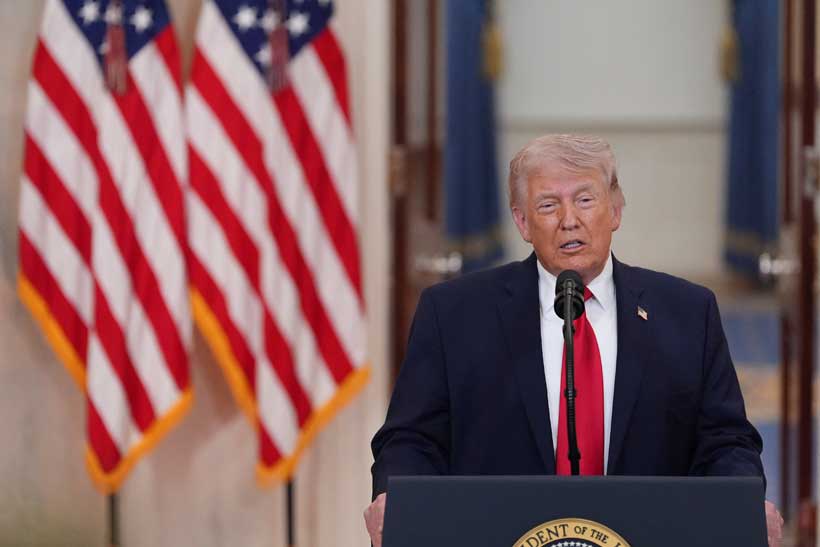
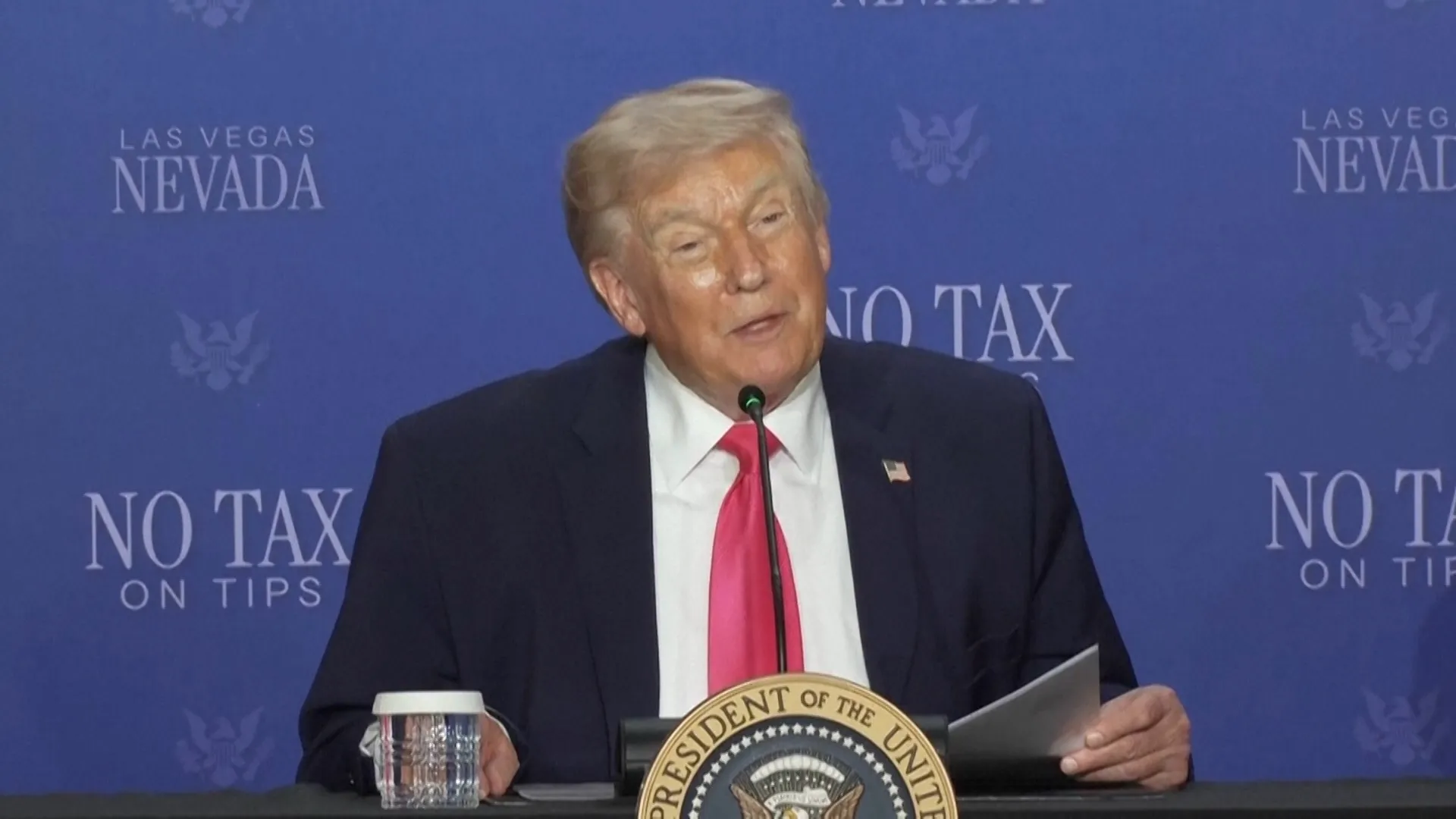
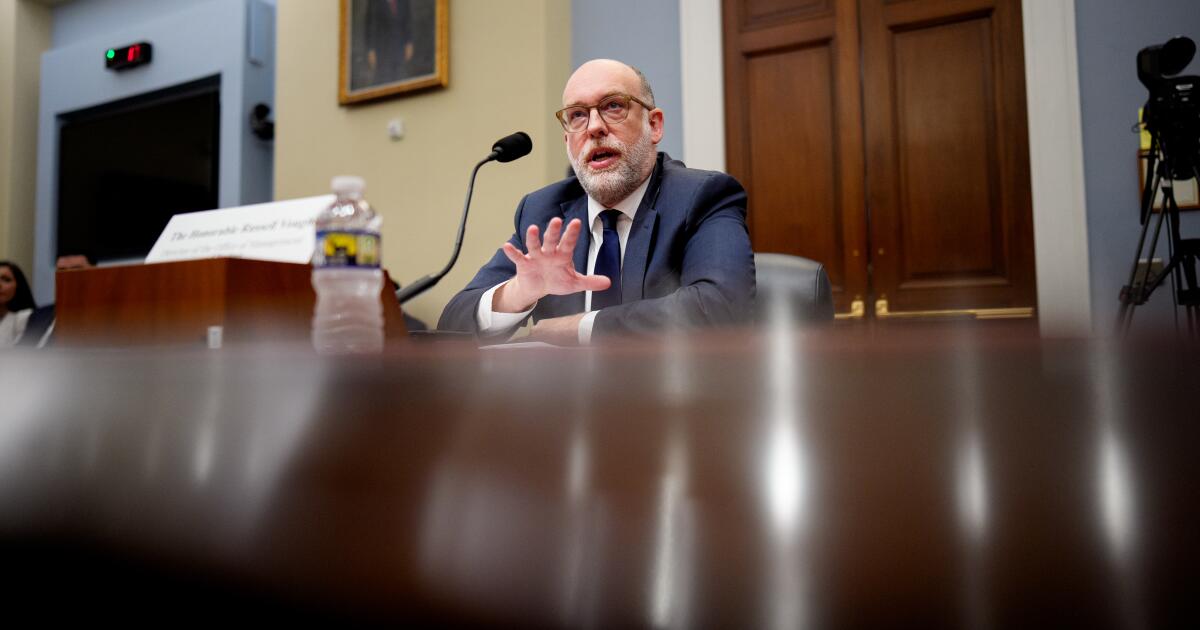
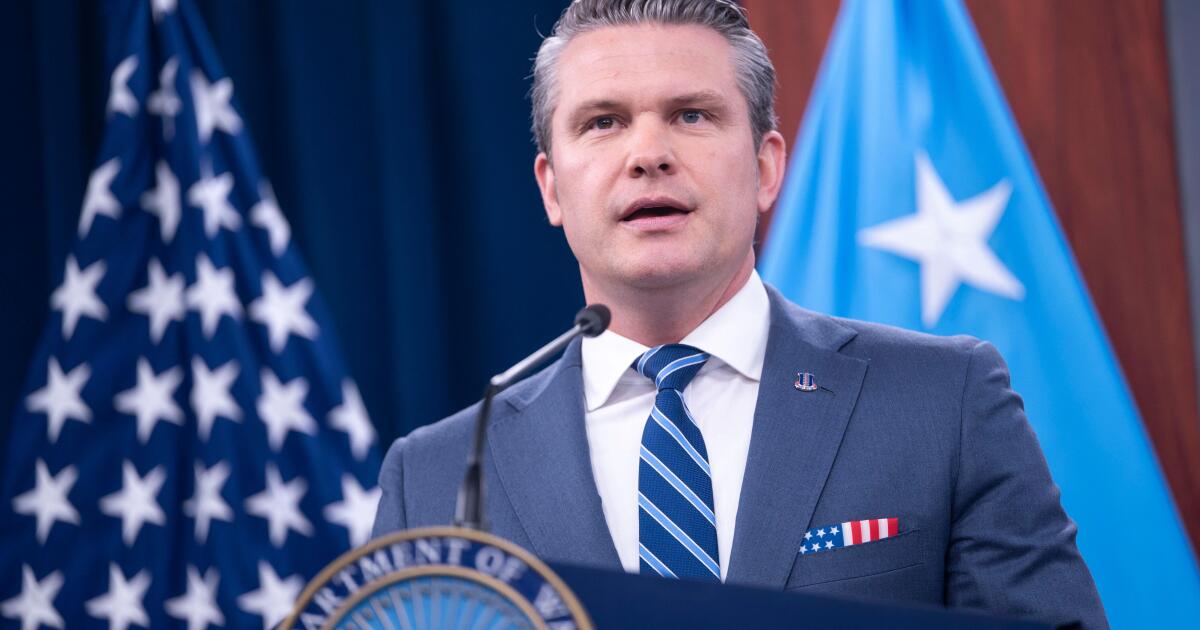
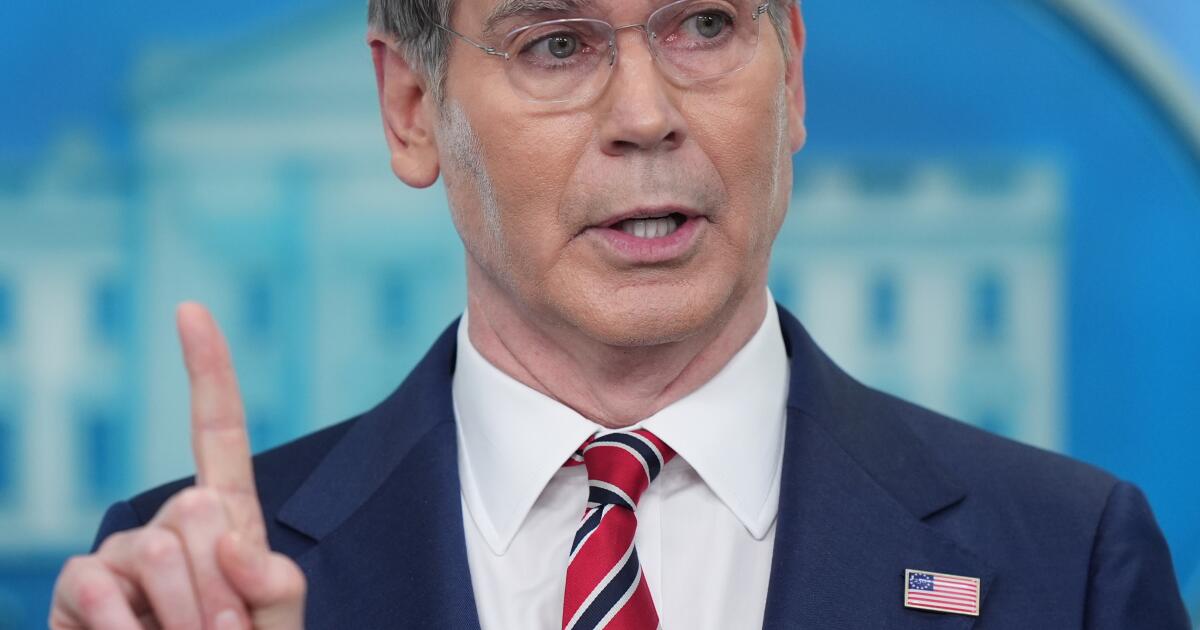
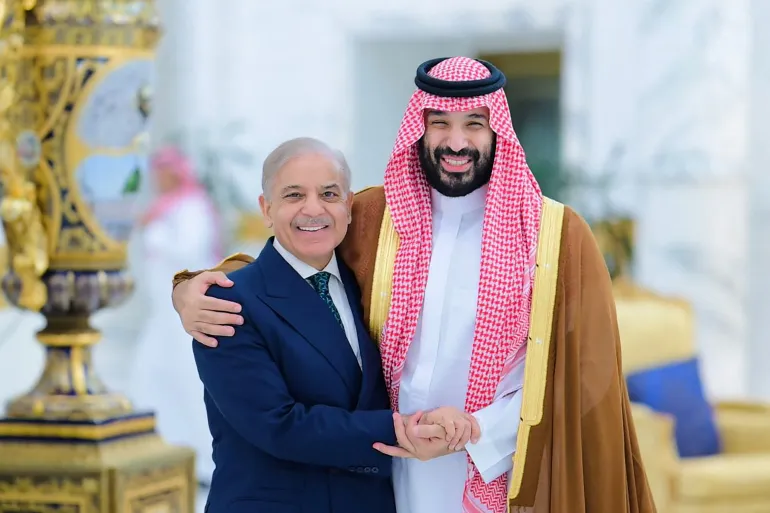


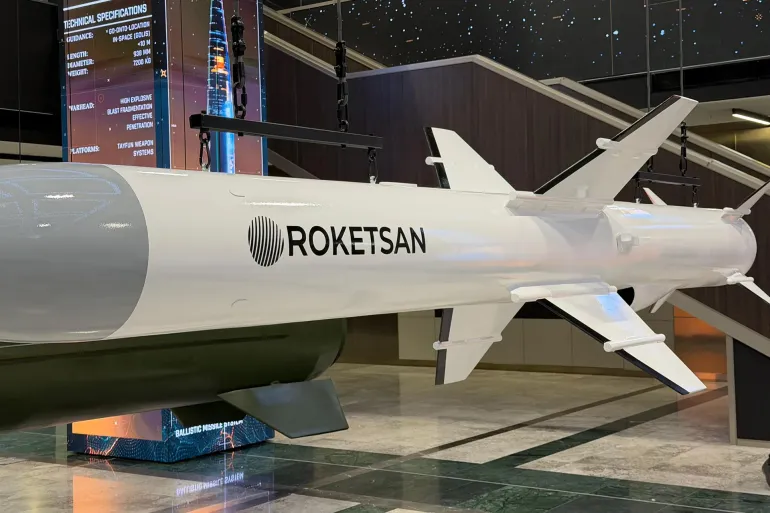
![Türkiye's defense industry now operates with a local production rate exceeding 90 percent, bypassing long-standing Western embargoes. [Al Jazeera]](https://i0.wp.com/occasionaldigest.com/wp-content/uploads/2026/04/Turkiyes-defense-industry-now-operates-with-a-local-production-rate-exceeding-90-percent-bypassing-l.webp?w=640&ssl=1)
![İkinci emphasizes that Roketsan's international strategy is based on "partnership models" rather than simple sales. [Al Jazeera]](https://i0.wp.com/occasionaldigest.com/wp-content/uploads/2026/04/%D9%81%D9%82%D8%A8%D8%BA6%D9%82-1775995428-copy-1776326256.jpg?w=640&ssl=1)
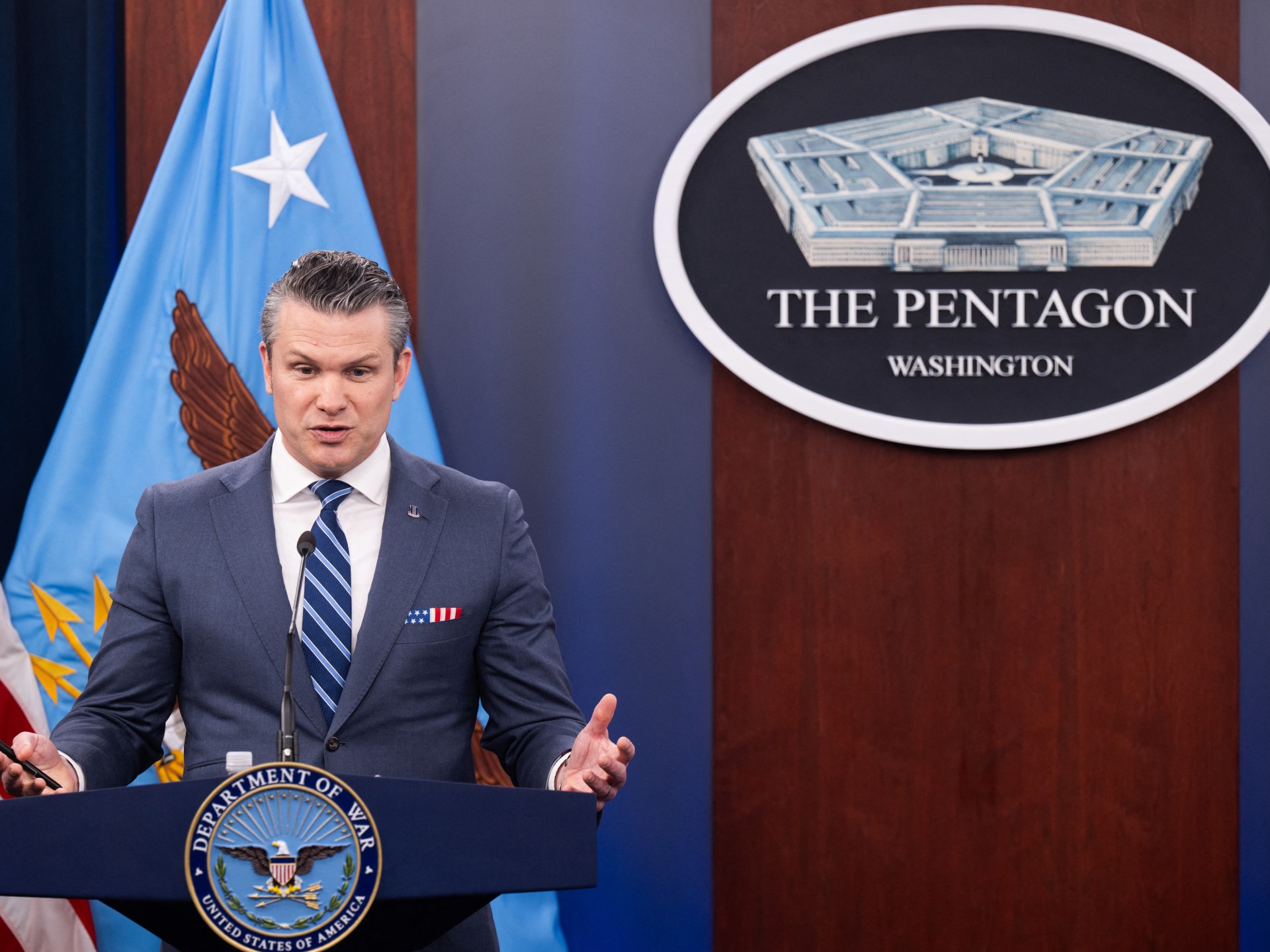



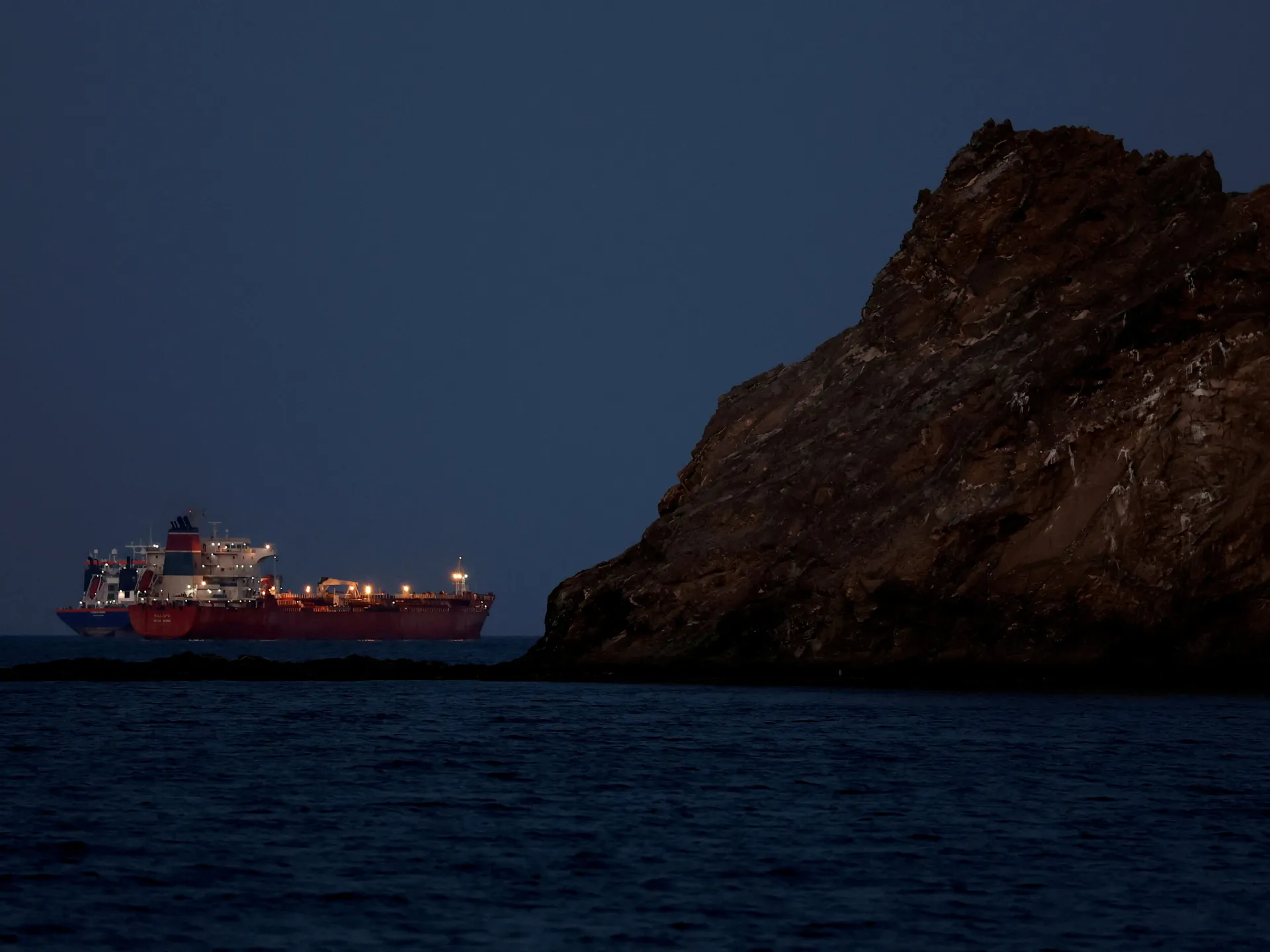


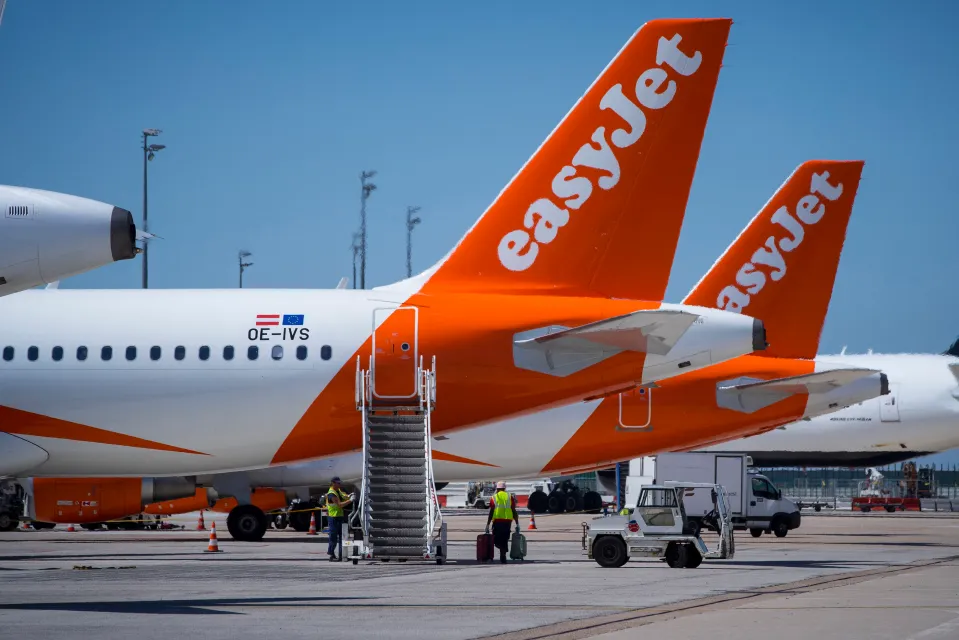


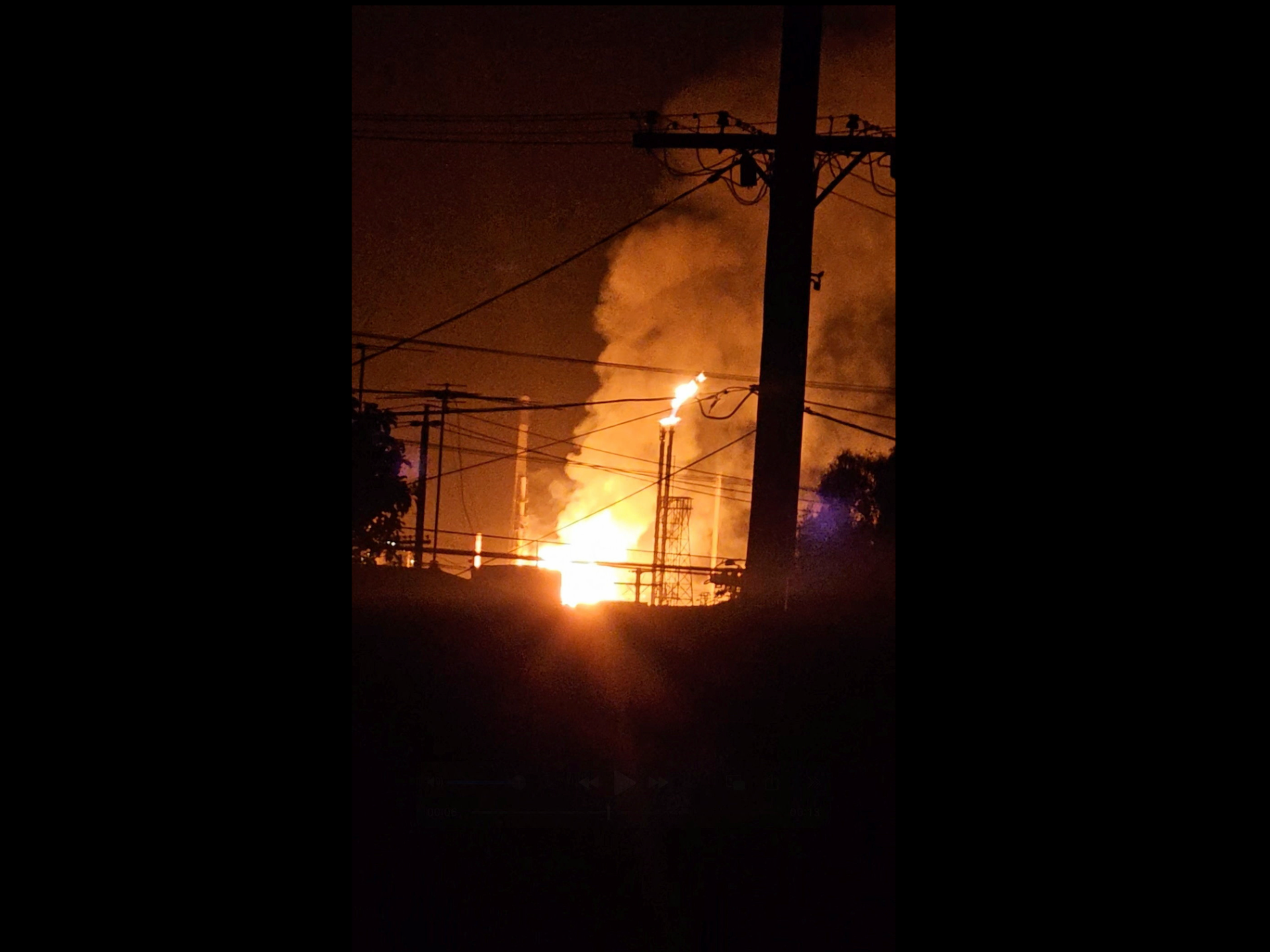


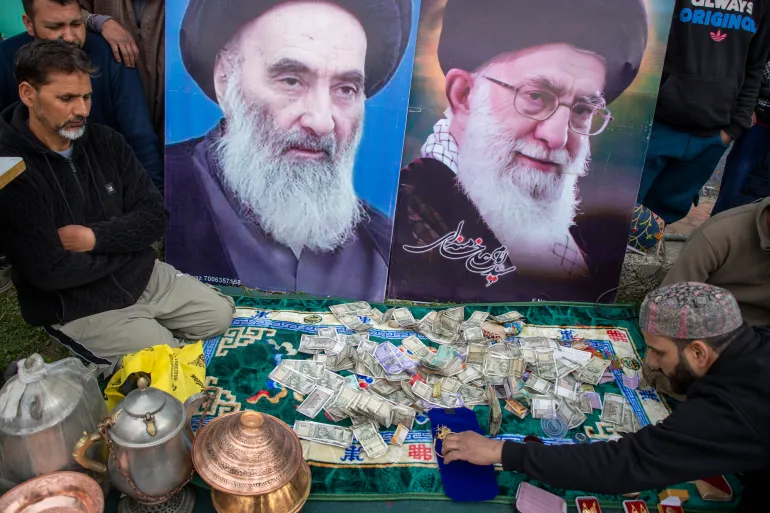
![Cash donated for Iran at a collection drive in Indian-administered Kashmir [Junaid Bhat/ Al Jazeera]](https://i0.wp.com/www.aljazeera.com/wp-content/uploads/2026/04/IMG_9741-1-1776318418.jpg?w=640&ssl=1)


![Jewelry donated by women for an Iran aid drive in Indian-administered Kashmir [Junaid Bhat/ Al Jazeera]](https://i0.wp.com/www.aljazeera.com/wp-content/uploads/2026/04/IMG_9748-1776318679.jpg?w=640&ssl=1)