Iran war live: Pakistan in push for new round of US-Iran peace negotiations
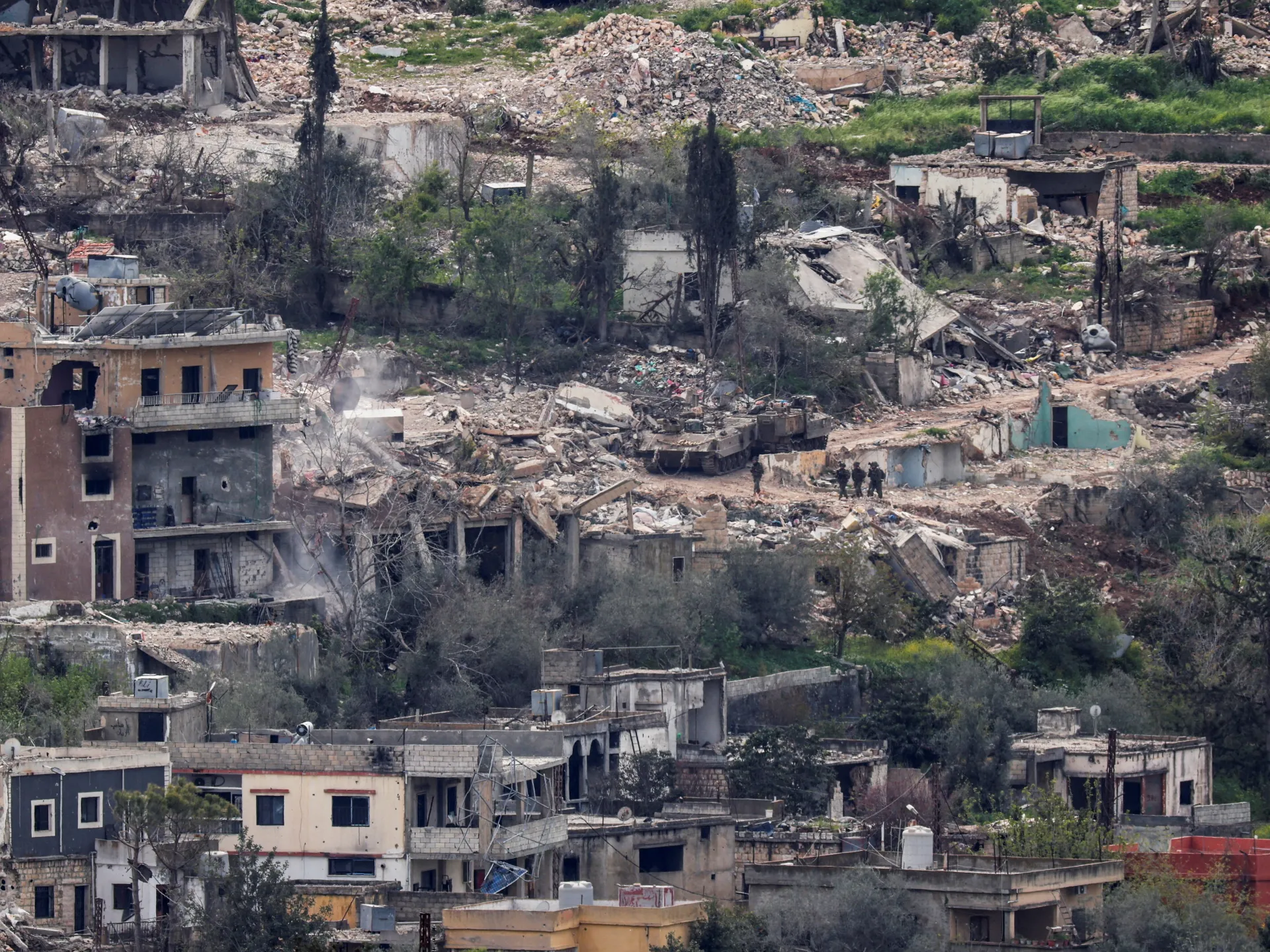
At least 2,167 people have been killed and more than 7,000 injured in Israeli attacks on Lebanon since March 2.
Source link
At least 2,167 people have been killed and more than 7,000 injured in Israeli attacks on Lebanon since March 2.
Source link
WASHINGTON — With a fragile ceasefire set to expire with Iran in a matter of days, President Trump is still deciding between diplomacy and a resumption of fighting that may ultimately hinge on his definition of victory.
Negotiations have continued over the last week between the warring sides over a potential agreement that would end the conflict and curtail Iran’s nuclear ambitions, with interlocutors from Pakistan passing messages that have kept talks alive. Tehran has floated an extension of the two-week ceasefire, set to expire Tuesday, that is under active consideration by the American side.
But the Islamic Republic has simultaneously vowed retaliation over a new U.S. blockade of Iranian ports that in effect cut off Tehran’s oil sales, which make up nearly 85% of the country’s export revenue. And the Trump administration is deploying up to 10,000 additional troops to the region, on top of the 50,000 already there, both reinforcing the blockade and threatening ground operations if diplomacy fails.
Conflicting messages from the Trump administration are designed to escalate pressure on Tehran ahead of the ceasefire deadline, potentially extracting concessions at the negotiating table.
But speaking with reporters, Trump has made it clear he is seeking a way to end the war for good.
“I think it’s close to over,” Trump told Fox Business Network’s “Mornings with Maria” on Wednesday. “I view it as very close to over. If I pulled up stakes right now, it would take them 20 years to rebuild that country. And we’re not finished. We’ll see what happens. I think they want to make a deal very badly.”
Negotiations toward that end have proved more challenging than the administration initially anticipated.
Trump has said he started the war in order to eliminate Iran’s nuclear infrastructure, degrade its ballistic missile and drone programs, and destroy its navy. But in talks, the Iranians have not relented on their right to enrich uranium, to maintain conventional defensive capabilities and to police traffic through the Strait of Hormuz, one of the world’s most vital waterways.
Tehran rejected a proposal by U.S. negotiators last week for a 20-year pause on Iran’s domestic enrichment of fissile material, with the Iranians countering with a five-year moratorium, one official said.
In his interview with Fox, Trump said the talks were going so well that an extension of the ceasefire might not be necessary. Yet, speaking with the New York Post, Trump suggested he wouldn’t settle for less than an indefinite cap on Iran’s nuclear work.
“I’ve been saying they can’t have nuclear weapons,” Trump said, “so I don’t like the 20 years.”
“I don’t want them to feel like they have a win,” he added.
The U.S. ceasefire with Iran was predicated on the resumption of free navigation through the Strait of Hormuz. But Iranian threats of a new toll system and warnings of drifting mines have limited traffic, prompting the Trump administration to announce a full blockade of the strait. Despite the U.S. threat, ships have continued transiting the passage this week, suggesting the U.S. blockade has focused more specifically on Iranian ports.
Amid the impasse, global oil prices remain stubbornly high — a concern for Republicans entering this year’s midterm election season. Trump told Fox that he expected prices to drop to prewar levels by the time of the vote in November.
“There’s gonna be a hit, but it’s going to recover, I think, fully,” Trump said. “I think that we will be somewhere around where we were — maybe even lower. And when this is over, I think the stock market is going to boom.”
A second round of high-level negotiations could take place in Islamabad, Pakistan, over the next several days, Karoline Leavitt, the White House press secretary, told reporters at a news briefing Wednesday.
Pakistani officials traveled to Tehran on Wednesday to deliver a message from the U.S. delegation, potentially laying the groundwork for new, in-person talks.
“He’s made his red lines in these negotiations very clear to the other side,” Leavitt said. “We feel good about the prospects of a deal.”
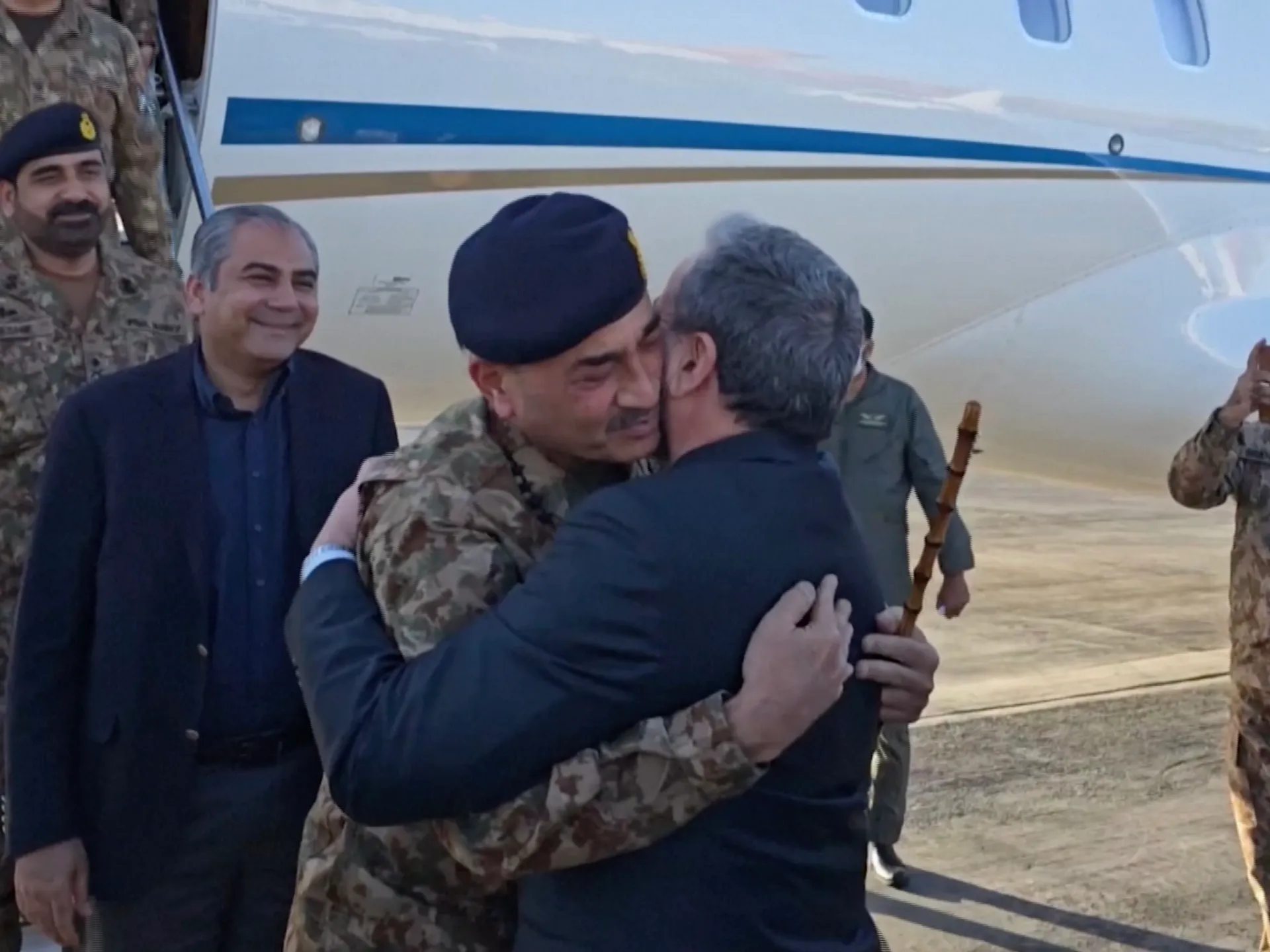
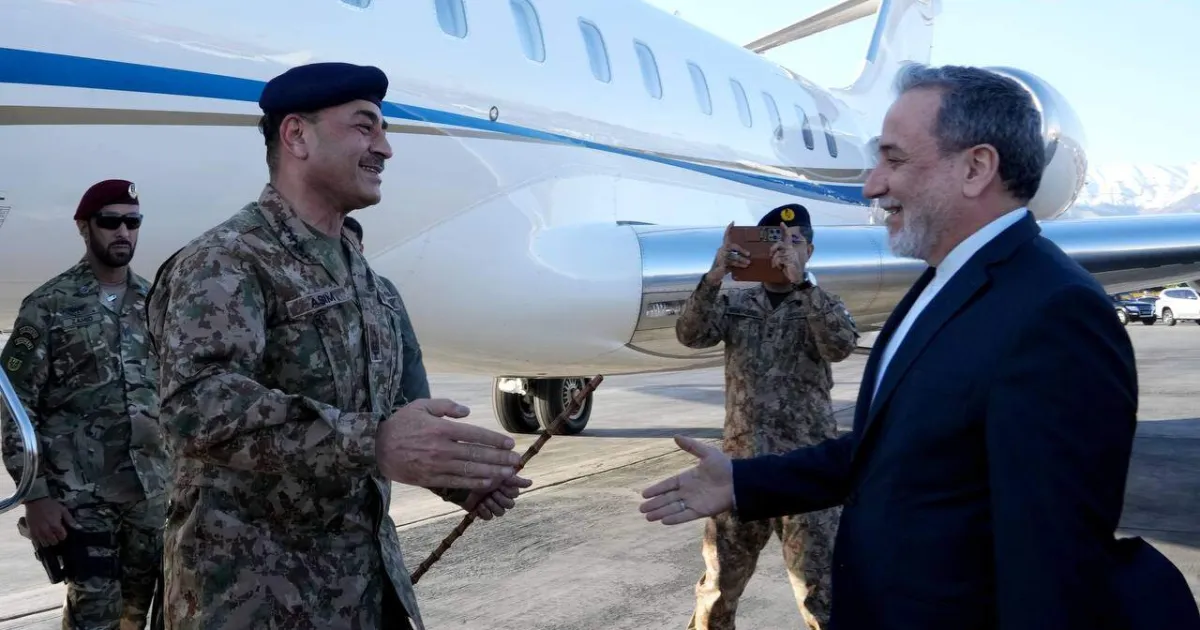
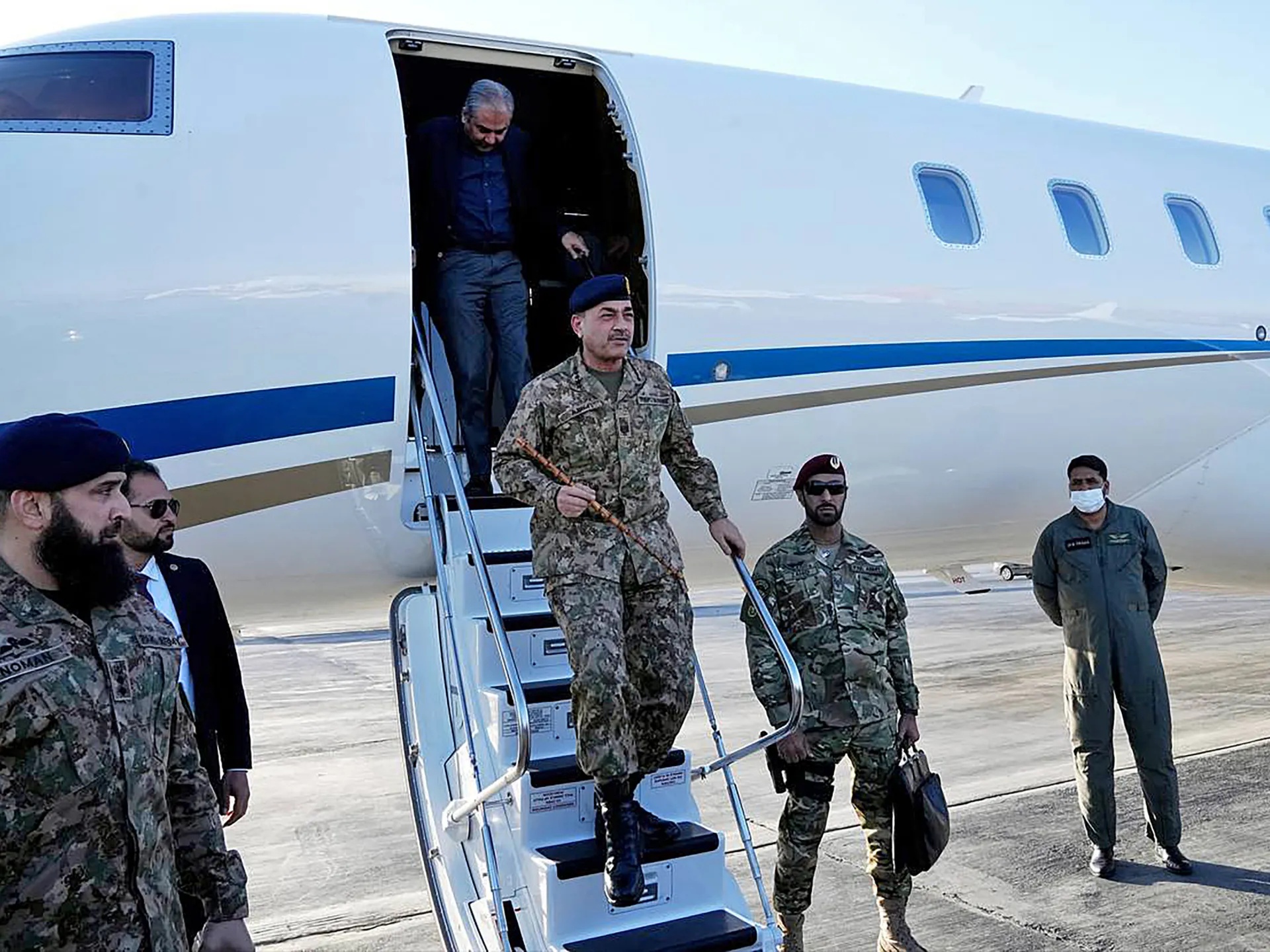
Pakistan’s army chief, Asim Munir, has arrived in Iran for high-level talks aimed at reviving negotiations between Tehran and the United States. The visit comes as Iran warns it could halt trade across key waterways if a US naval blockade on its ports continues.
Published On 15 Apr 202615 Apr 2026
Share
Sources tell Al Jazeera that Pakistani mediators are hopeful about a breakthrough on Iran’s nuclear programme.
A high-level Pakistani delegation has travelled to Iran to hold talks focused on arranging a fresh round of negotiations between Iran and the United States, a week before their fragile truce is due to expire.
Pakistan Army Chief Asim Munir is heading the delegation that arrived in Tehran on Wednesday evening, according to Iranian state media. It said he came with a new message from the US and plans to coordinate a second round of US-Iran talks, after an initial round in Islamabad ended on Sunday without a deal to end the war.
list of 3 itemsend of list
Pakistan’s Interior Minister Mohsin Naqvi is also joining mediation efforts in Tehran, while Pakistan’s Prime Minister Shehbaz Sharif is in Saudi Arabia for the first stop in a four-day Gulf tour.
Pakistan’s diplomatic blitz comes as competing US and Iranian sea blockades strain tensions – and the global economy – but amid indications of progress towards a deal to end the war, which has killed 3,000 people in Iran and spiralled across the Middle East.
“The urgency is being driven by the ceasefire expiring on April 22, and Pakistani officials are hoping they can get that extended,” said Al Jazeera’s Kimberly Halkett from Islamabad. “Sharif will try and convince regional partners to also use their leverage to convince the US to participate in new talks with Iran and make sure there is no diplomatic line-crossing.”
The latest mediation appears bolstered by optimistic comments from US President Donald Trump, who said the world should brace for an “amazing two days” as the war with Iran is close to over.
Trump also said his negotiators were likely to return to Pakistan, thanks largely to the “great job” Munir was doing to moderate the talks.
White House press secretary Karoline Leavitt later reiterated that additional talks with Iran would likely go forward in Islamabad. “We feel good about the prospects of a deal,” she told reporters on Wednesday.
Nevertheless, the US military said its naval blockade on all Iranian ports was still in effect, with US forces “present, vigilant and ready to ensure compliance”.
The blockade, which Iran’s military slammed as a violation of the ceasefire, turned nine ships away as of Wednesday, according to US Central Command.
The commander of Iran’s joint military command, Ali Abdollahi, threatened to halt trade in the region if the US did not lift its blockade. He also warned Iran would retaliate by blocking trade through the Red Sea along with the Gulf and Sea of Oman.
Mediators in the conflict are pushing for a compromise on three main sticking points – Iran’s nuclear programme, control of the Strait of Hormuz, and compensation for wartime damages.
Iran’s Foreign Minister spokesman Esmaeil Baghaei has said Iran is open to discussing the type and level of its uranium enrichment, but his country “based on its needs, must be able to continue enrichment”, according to Iranian state media.
Sources told Al Jazeera that Pakistani mediators are optimistic about a potential major breakthrough on the nuclear front, which is the reason for Munir’s rare diplomatic trip.
“It looks like there is some agreement in the making, but we’ve been cautioned by sources [close to the mediation effort] that there are detractors on all sides,” said Al Jazeera’s Osama Bin Javaid from Doha.
He said the detractors include elements “in Tehran, in Washington, DC, and biggest of them all, according to Pakistani sources, is Israel, which does not want a peace deal and wants a perpetual war in the region”.
The TWZ Newsletter
Weekly insights and analysis on the latest developments in military technology, strategy, and foreign policy.
Despite Beijing’s rising anger over the war in Iran, a country upon which it relies heavily for oil, U.S. President Donald Trump insisted his relationship with his Chinese counterpart remains strong. However, in a post on his social media network, Trump also dismissed Chinese concerns that its energy situation is becoming more precarious as the result of strangulation of the Strait of Hormuz and U.S. blockade of Iranian ports.
All this comes as Trump has been telling media outlets that he believes the war could soon end. We’ll talk more about that later in this story.
“China is very happy that I am permanently opening the Strait of Hormuz,” the American leader proclaimed on Truth Social, even as the flow of oil from the Middle East has been drastically reduced by the war. “I am doing it for them, also – And the World. This situation will never happen again. They have agreed not to send weapons to Iran.”
“President Xi will give me a big, fat, hug when I get there in a few weeks,” he added. “We are working together smartly, and very well! Doesn’t that beat fighting??? BUT REMEMBER, we are very good at fighting, if we have to – far better than anyone else!!!”
In a pre-taped interview that aired Wednesday morning, Trump told Fox News that the war hasn’t soured his relationship with Xi, who has expressed frustration with American actions in the Middle East.
“I don’t think it does,” Trump told Fox News host Maria Bartiromo. “He’s somebody that needs oil. We don’t. He’s somebody I get along with very well. He just wrote me a beautiful letter…He responded to a letter that I wrote because I had heard that China is giving weapons to – I mean, you’re seeing it all over the place – to Iran…I wrote him a letter asking him not to do that, and he wrote me a letter saying that essentially he’s not doing that.”
Trump:
I wrote a letter to Xi. I asked him not to give Iran weapons. He wrote me a letter, and he is saying that he is essentially not doing that. pic.twitter.com/yrTT9Dwi2V
— Clash Report (@clashreport) April 15, 2026
Trump was referring to reports that U.S. intelligence determined Beijing was providing military support to Tehran.
Before his Truth Social Post and the Fox interview aired, Financial Times reported that Iran “secretly acquired a Chinese spy satellite that gave the Islamic republic a powerful new capability to target US military bases across the Middle East during the recent war.”
“Leaked Iranian military documents show the satellite, known as TEE-01B, was acquired by the Islamic Revolutionary Guard Corps’ Aerospace Force in late 2024 after it was launched into space from China,” according to the outlet. “Time-stamped coordinate lists, satellite imagery and orbital analysis show that Iranian military commanders later tasked the satellite to monitor key US military sites. The images were taken in March before and after drone and missile strikes on those locations.”
As we have previously reported, Iranian strikes on U.S. military facilities killed U.S. troops and caused damage to bases and equipment. However, it should be noted that Iran has also beenreceiving Chinese commercial satellite imagery and Russia is likely providing it as well. At the same time, U.S. commercial satellite companies like VANTOR and Planet Labs are now refraining from sharing imageryof the Middle East and elsewhere at the Pentagon’s behest.
Meanwhile, China continues to push back against accusations that it is helping Iran and repeated previous assertions that it will respond should Trump go through with his threat to impose a 50% tariff.
“Media reports accusing China of providing military support to Iran are purely fabricated,” Chinese Foreign Ministry spokesman Lin Jian stated on X. “If the U.S. goes ahead with tariff hikes on China on the basis of these accusations, China will respond with countermeasures.”
Lin did not offer details about those countermeasures.
Media reports accusing China of providing military support to Iran are purely fabricated.
If the U.S. goes ahead with tariff hikes on China on the basis of these accusations, China will respond with countermeasures. pic.twitter.com/QwETjpJEyY
— Lin Jian 林剑 (@SpoxCHN_LinJian) April 15, 2026
Regardless, Iran’s use of commercial space imagery to strike U.S. and allied targets “will force the Pentagon to adjust, the head of U.S. Space Command said,” according to Defense One.
“We have to recognize that the rest of the world can now see the entire planet transparently and almost 24/7 and so we have to be able to operate in that environment successfully,” Gen. Stephen Whiting, the head of U.S. Space Command told reporters Tuesday during the Space Symposium conference.
UPDATE: 2:24 PM EDT –
White House Press Secretary Karoline Leavitt denied the U.S. requested an extention to the ceasefire.
‘I saw some reporting that we had formally requested an extension of this ceasefire. That is not true. We remain engaged in these negotiations.’
Karoline Leavitt tells reporters that the next round of Iran talks ‘will likely be held in Islamabad’https://t.co/3n6o5i1euG pic.twitter.com/jNf6a3h9xU
— Sky News (@SkyNews) April 15, 2026
She also thanked Pakistan for its help in the negotiations.
PRESS SEC on U.S.-Iran negotiations: The Pakistanis have been incredible mediators and we really appreciate their friendship and efforts to bring this deal to a close.
The President feels it’s important to continue to streamline this communication through the Pakistanis. pic.twitter.com/3iIeF0oUpn
— Department of State (@StateDept) April 15, 2026
Trump, as we noted earlier, is saying that he believes the war could soon be concluded.
“I think it’s close to over,” Trump posited. “I mean, I view it as very close to over. You know what? If I pulled up stakes right now, it would take them 20 years to rebuild that country. And we’re not finished. We’ll see what happens. I think they want to make a deal very badly.”
Trump also told Sky News that the end of the war may be nigh.
When asked by Sky whether a deal could happen before King Charles visits the U.S. at the end of the month, Trump said: “It’s possible. Very possible. They’re beaten up pretty bad.”
U.S. and Iranian negotiators made progress in talks on Tuesday, moving closer to a framework agreement to end the war, two U.S. officials said, Axios reported on Wednesday.
“U.S. officials and sources familiar with the mediation cautioned that a deal is not guaranteed, given the substantial differences between the two sides,” the news outlet noted.
“Let’s wait and see if we can get a deal. We are hopeful and accordingly trying to push with both sides,” a Pakistani official told Axios.
“U.S. officials and sources familiar with the mediation cautioned that a deal is not guaranteed, given the substantial differences between the two sides.”
“We want to make a deal. And parts of their government want to make a deal. Now the trick is to get the whole of government…
— Jason Brodsky (@JasonMBrodsky) April 15, 2026
In another step toward potential future negotiations, Pakistan’s Army Chief of Staff Asim Munir arrived in Tehran today for talks.
Iran’s Foreign Minister Spokesman, Esmail Baghaei, said that during the visit, “the views of both sides are likely to be discussed in detail.”
Iran’s Foreign Minister Spokesman, Esmail Baghaei, confirms that a high-ranking Pakistani delegation will visit Tehran today to follow up on talks with the U.S. in Islamabad. “During this visit, the views of both sides are likely to be discussed in detail,” Baghaei said. pic.twitter.com/bdMnyCKUA5
— Ariel Oseran أريئل أوسيران (@ariel_oseran) April 15, 2026
Baghaei, however, said Iran would not capitulate.
“If a negotiation is based on one side imposing conditions on the other, that is not negotiation; it is dictation and imposition, and you know that the Islamic Republic of Iran and the Iranian nation will never accept such imposition,” he stated.
Iranian Foreign Ministry spokesperson:
If a negotiation is based on one side imposing conditions on the other, that is not negotiation; it is dictation and imposition, and you know that the Islamic Republic of Iran and the Iranian nation will never accept such imposition. pic.twitter.com/lnKeJT9Pow
— Iran News 24 (@IRanMediaco) April 15, 2026
In an X post, CENTCOM on Wednesday said that during “the first 48 hours of the U.S. blockade on ships entering and exiting Iranian ports, no vessels have made it past U.S. forces. Additionally, 9 vessels have complied with direction from U.S. forces to turn around and return toward an Iranian port or coastal area.”
During the first 48 hours of the U.S. blockade on ships entering and exiting Iranian ports, no vessels have made it past U.S. forces. Additionally, 9 vessels have complied with direction from U.S. forces to turn around and return toward an Iranian port or coastal area. pic.twitter.com/h4msgvaPTl
— U.S. Central Command (@CENTCOM) April 15, 2026
Late Tuesday night, Adm. Brad Cooper, commander of CENTCOM, took to X to announce that the “blockade of Iranian ports has been fully implemented as U.S. forces maintain maritime superiority in the Middle East.”
“An estimated 90% of Iran’s economy is fueled by international trade by sea,” Cooper noted. “In less than 36 hours since the blockade was implemented, U.S. forces have completely halted economic trade going into and out of Iran by sea.”
Senior IRGC commander Maj. Gen. Ali Abdollahi claimed the Islamic Republic would consider it a prelude to the breach of the ceasefire if “the aggressive and terrorist America” continues the blockade.
Abdollahi “threatened that the powerful Iranian armed forces would not allow any export and import to keep going in the Persian Gulf, the Sea of Oman, and the Red Sea region, in the face of the US maritime aggression,” the official Iranian IRNA news agency stated on Wednesday.
His comments suggested that the Houthi rebels of Yemen, an Iranian proxy, could resume their attacks on Red Sea shipping, something we previously examined as a possibility.
BREAKING: Commander of Iran’s Khatam al-Anbiya Headquarters:
We will not allow any export or import activity in the Gulf and the Sea of Oman if the American blockade continues.
Our armed forces will not allow trade to flow through the Red Sea if the naval blockade continues.…
— Clash Report (@clashreport) April 15, 2026
Meanwhile, the Malta-flagged VLCC Agios Fanourios I became the first crude carrier to head west through the Strait of Hormuz since the US blockade on Iran’s ports came into force, according to MarineTraffic.
First crude carrier heads west through Strait of Hormuz since the US blockade
The Malta-flagged VLCC Agios Fanourios I has become the first crude carrier to head west through the Strait of Hormuz since the US blockade on Iran’s ports came into force. According to #MarineTraffic… pic.twitter.com/K8syfSZtFL
— MarineTraffic (@MarineTraffic) April 15, 2026
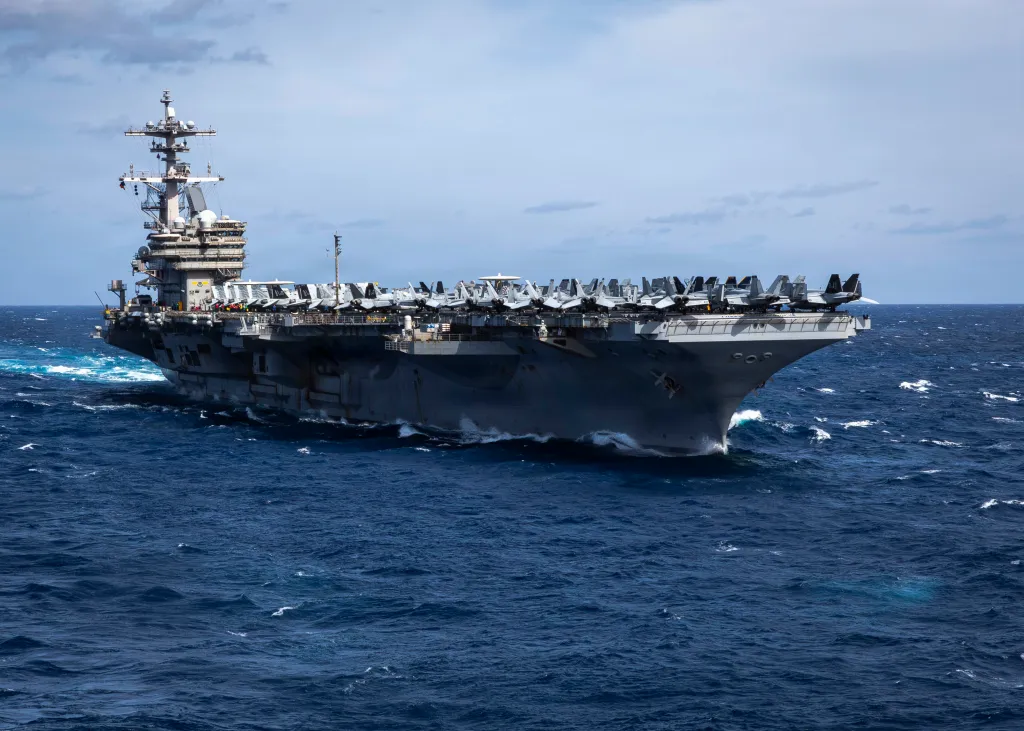
Though another round of peace talks between the U.S. and Iran is being discussed, the Pentagon continues to pour resources into the Middle East, something we have been reporting about for weeks.
“The forces moving into the region include about 6,000 troops aboard the aircraft carrier USS George H.W. Bush and several warships escorting it, said current and former officials,” according to The Washington Post, citing anonymous officials. “About 4,200 others with the Boxer Amphibious Ready Group and its embarked Marine Corps task force, the 11th Marine Expeditionary Unit, are expected to arrive near the end of the month.”


During the pause in fighting, Iran appears to be using the time to reopen entrances to underground missile cities damaged during the war, according to CNN. The network published footage showing engineering equipment at the Tabriz South missile base and the Khomein missile bases.
The network also noted that, according to U.S. intelligence estimates, about half of the Iranian missile launchers remained intact after a month of fighting, and that many of these launchers could have been buried in underground storage facilities as a result of strikes on the entrances.
CNN published footage showing engineering equipment making use of the ceasefire to reopen the entrances to underground facilities at missile bases that were damaged during the war.
The sites documented include the Tabriz South missile base and the Khomein missile base.
Notably,… pic.twitter.com/B88HISqVYD
— Ben Tzion Macales (@BenTzionMacales) April 15, 2026
A day after negotiations took place in Washington between the U.S., Israel and Lebanon, Hezbollah issued a veiled threat to Beirut. Considered a terrorist organization by the U.S. and Israel, Hezbollah was not a party to the talks.
“The Lebanese authorities must reconsider their actions and return to the embrace of the people,” said Hezbollah MP Hassan Fadlallah in a statement. “The authorities withdrew the army from the south, leaving it vulnerable to occupation and giving the enemy [Israel] free rein.”
Meanwhile, Israel is continuing to bombard Hezbollah.
“In the past 24 hours, the IDF struck over 200 Hezbollah terror infrastructure sites in southern Lebanon,” it claimed. “Among the targets struck: terrorists, military structures, approximately 20 launchers, including those recently used to fire towards the State of Israel.”
ביממה האחרונה הותקפו יותר מ-200 מטרות של ארגון הטרור חיזבאללה בדרום לבנון. בין התשתיות שהותקפו: מחבלים, מבנים צבאיים וכ-20 משגרים, בהם משגרים ששיגרו לעבר שטח הארץ והושמדו בסגירות מעגל מהירות. pic.twitter.com/LeR2mr37Vv
— Israeli Air Force (@IAFsite) April 15, 2026
Contact the author: howard@thewarzone.com

Iran has condemned a ban imposed by YouTube on a pro-Iranian group that releases Lego-style artificial intelligence videos. But as war messaging moves into
Published On 15 Apr 202615 Apr 2026
Share
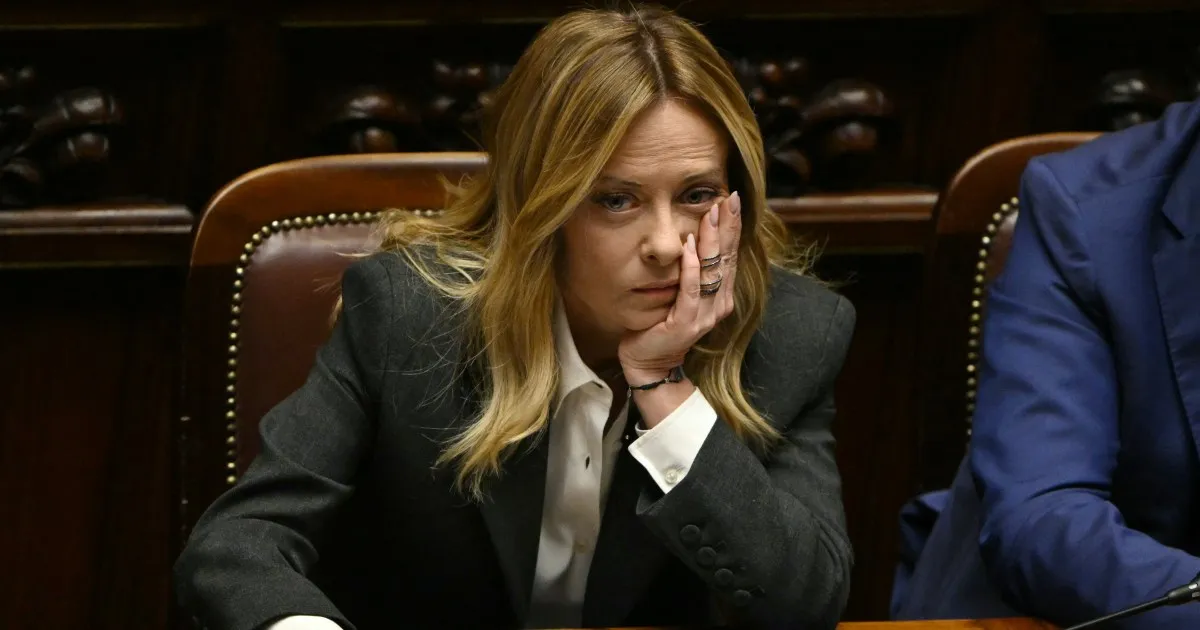
Italy’s decision to suspend a defence agreement with Israel has more symbolic value than concrete consequences, but it is an unprecedented move by the Italian government and reflects deep unease over its longtime ally’s actions in the Middle East, analysts say.
On Monday, Prime Minister Giorgia Meloni said Italy would not renew a memorandum of understanding – signed in 2003 and ratified in 2005 – between the two countries’ ministries of defence. The accord provided a framework for cooperation in “defence industry and procurement policy” and “import, export and transit of defence and military equipment”, among other things.
list of 3 itemsend of list
The memorandum was set to automatically renew every five years “unless a written notice of intention to denounce is given” by one of the two countries to the other.
That notice arrived on Monday in a letter written by Italian Defence Minister Guido Crosetto to his Israeli counterpart, Israel Katz.
The Israeli government has downplayed the move. Foreign Minister Gideon Saar said it was a deal that “never materialised” and did not have “substantial content”. “Israel’s security will not be harmed,” he wrote on X.
It is true that the Italy-Israel agreement constituted more of a political framework than a series of operational commitments between the two countries. Furthermore, the Italian government’s decision does not cancel it outright, as opposition parties and human rights advocates have long demanded, but merely suspends it.
Still, the move is a sharp reversal for a right-wing government that has been one of Europe’s staunchest allies of Israel.
Along with Germany, Italy has been one of the strongest opponents of calls to suspend a trade agreement between Israel and the European Union. Italy has largely supported Israel’s war on Gaza, which a United Nations inquiry says amounts to genocide, and it has refused to recognise Palestinian statehood.
But relations between Israel and Italy have soured recently.
On Monday, the Italian ambassador to Tel Aviv, Luca Ferrari, was summoned after Italy’s Foreign Minister Antonio Tajani condemned Israel for its “unacceptable attacks against the civilian population” in Lebanon during a visit there. And last week, the Italian government accused Israeli forces of firing warning shots at a convoy of Italian peacekeepers in southern Lebanon, prompting Tajani to summon the Israeli ambassador.
Israel also launched a massive attack across Lebanon last week, bombing 100 targets in 10 minutes on Wednesday, shortly after a two-week truce between Iran and the US was called. That series of strikes killed hundreds of people in one of the country’s worst mass slaughters since the end of the country’s civil war in 1990. Observers say the attack on Lebanon was an unwelcome disruptor to efforts to de-escalate tensions in the region.
The Italian government’s decision to suspend its defence agreement with Israel “must be seen within a broader effort to progressively stabilise the region, including by reducing tensions in Lebanon”, said Michele Valensise, president of the Institute for International Affairs and former secretary-general of Italy’s Ministry of Foreign Affairs.
“Israel’s military operation there objectively constitutes an irritant, complicating negotiations with the Iranians,” said Valensise. “If the Lebanese front can be part of a deal with Iran, then everyone has an interest in de-escalation there.”
European governments, including Italy, have been watching nervously as the United States-Israeli war on Iran has unfolded. Following initial joint Israel-US strikes on Tehran on February 28, Iranian forces brought shipping traffic in the Strait of Hormuz to a near-total halt, causing the paralysis of the one-fifth of global oil and liquefied natural gas (LNG) exports that pass through the narrow waterway in peacetime.
Following a first failed round of high-stakes Iran-US talks in Islamabad last weekend – amid a fragile two-week truce – Washington imposed a naval blockade on Iranian ports, further aggravating fears of a protracted energy crisis. Italy heavily relies on gas imports.
Possibly more importantly, Italy’s government and prime minister are preparing for elections next year.
“There is a general discontent over the war in Iran and the crisis in the Strait of Hormuz – a crisis that’s impacting Italian growth and, if it continues, could have a significant impact on citizens, something Meloni worries about in a pre-election year,” said Arturo Varvelli, a political scientist and senior policy fellow at the European Council on Foreign Relations.
Italian public opinion also has a strong pro-Palestinian component. Last October, more than two million Italians took to the streets as part of a general strike in solidarity with the Global Sumud Flotilla, which was intercepted by Israel while trying to bring aid to Palestinians in Gaza. The flotilla had been carrying 40 Italians among its passengers, calling on Israel to “stop the genocide”.
“There’s a concern that this will be a long agony, between an increasingly unmanageable Trump and the economic problems he and Netanyahu have caused with the war in the Middle East,” Varvelli said.
After years of efforts to emerge as US President Donald Trump’s “whisperer” in Europe, Meloni has been pushed by the war in Iran to put some distance between herself and Trump. Rome refused the US president’s request to join a naval coalition to force the opening of the Strait of Hormuz and to allow US bombers to refuel at a military base in southern Italy.
Trump had not commented on those decisions until yesterday, when, in an interview with Italian newspaper Corriere della Sera, he took aim at Meloni. The Italian PM had leapt to defend Pope Leo XIV after he became embroiled in a feud with Trump. Pope Leo had condemned the US president’s threat that Iran’s “civilisation will die” if it didn’t re-open the Strait of Hormuz. In response to that, Trump unleashed a storm of criticism at Leo, calling him “weak on crime” and “terrible for foreign policy”. He said he does not “want a Pope who criticises the President of the United States”.
Trump also posted a bizarre image of himself as a Christ-like figure healing the sick on social media. He has since claimed it was meant to depict him as a doctor, following widespread criticism.
Of Meloni, who he once affectionately called “a real live wire”, Trump said, “I’m shocked at her” during an interview with Corriere della Sera on Tuesday.
“Do people like her? I can’t believe it,” he said in the interview, adding, “I thought she had courage. I was wrong.”
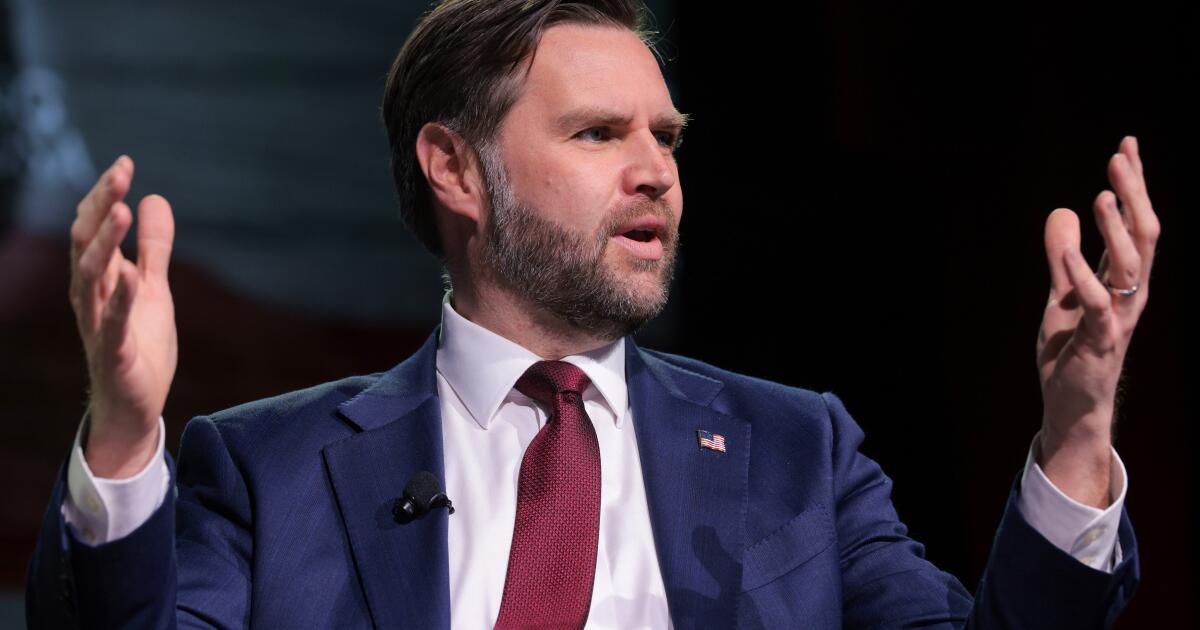
ATHENS, Georgia — Fresh from a marathon trip to Pakistan that failed to reach a deal for ending the war with Iran, Vice President JD Vance jetted to this Georgia college town for a campus tour organized by the conservative powerhouse Turning Point USA.
But instead of showcasing the youthful energy that the organization harnessed to return President Trump to the White House less than two years ago, there was a mostly empty arena, awkward questions and unusually sharp criticism.
The event affirmed Trump’s difficulty selling the war and how much he’s complicated his own political fortunes by assailing Pope Leo XIV and posting a social media meme that depicted himself as Jesus.
“I did vote for Trump. I am not a Trump supporter anymore,” said Joseph Bercher, a Catholic who said he was glad that Leo has expressed opposition to the war with Iran.
Bercher said the Jesus meme, which the president took down Monday after a rare conservative backlash, was a “red flag” indicating Trump’s true character.
“He sees himself as like a demagogue or someone to be worshipped,” Bercher said.
C.J. Santini, a recent graduate of Liberty University, an evangelical school in Virginia, said he didn’t have an opinion on whether Iran was truly close to manufacturing a nuclear weapon and thus needed to be attacked. But he laughed and shook his head when asked about Trump attacking Leo.
“It’s just stupid. Stupid,” he said, calling it a “distraction” from Trump’s agenda in Iran and at home.
Many of the college-age attendees donned Turning Point attire, Trump hats and red-white-and-blue paraphernalia for the event. Yet they were outnumbered more than 2-to-1 by empty seats in what is not even the largest arena on this sprawling campus that sits about a 90-minute drive from downtown Atlanta.
A Marine veteran who served in Iraq, Vance acknowledged that not all young conservatives are enamored with another U.S. war in the Middle East.
“I’m not saying you have to agree with me on every issue,” Vance told the young crowd. “What I’m saying,” he added, “is don’t get disengaged.”
The vice president took questions from Turning Point executive Andrew Kolvet instead of Erika Kirk, who began leading the organization after the assassination of her husband Charlie Kirk. Kolvet said Erika Kirk canceled her plans to be on stage because of unspecified threats she had received.
Vance, whose presence ensured significant Secret Service and other law enforcement protection around the venue, said he’d been worried that the event would be canceled altogether.
Kolvet asked Vance directly about the war and Trump’s back-and-forth with Leo. Audience questions were more aggressive. Vance jousted with at least one heckler over the war in Gaza, and he was pressed by another person over the administration’s handling of the Jeffrey Epstein case files.
In the audience, even some of Vance’s sympathetic listeners offered caveats and critiques.
“The pope needs to stay out of politics,” said Jessie Williams, a Methodist. But he noted his mother is Catholic, and he said he understands why Catholics recoil at Trump calling the pope “weak” and suggesting that the first U.S.-born pontiff was chosen only as a counter to Trump.
Williams called Trump’s meme distasteful.
“I don’t like it, but it’s — what can we do?” Williams said. “He’s a grown man, he’s gonna do what he wants.”
Blake McCluggage, a Baptist, said he did not approve of the meme or Trump’s profane Easter Sunday message that threatened widespread destruction of Iran’s civilian infrastructure.
The threat, plus Trump’s follow up message that a “whole civilization” would die, prompted escalating criticism from Leo, with the pope calling the president’s comments “truly unacceptable.”
However, McCluggage said, “you can still be a Republican” despite disagreeing with Trump.
A day before coming to Georgia, Vance tried to laugh off the meme as a joke that “a lot of people weren’t understanding.” The vice president also seemed to echo Trump’s assertion that Leo should concentrate less on global affairs.
“It would be best for the Vatican to stick to matters of morality, to stick to matters of what’s going on in the Catholic church and let the president of the United States stick to dictating American public policy,” Vance said in a Fox News interview.
On stage in Athens, he shifted his arguments, saying he welcomes Leo’s comments even if he disagrees with them.
“At the very least, it invites conversation,” said Vance, who converted to Catholicism as an adult.
Still, Vance questioned Leo anew, pushing back specifically at the pope’s Palm Sunday assertion that God does not hear the prayers of those who make war. Leo was quoting scripture from the Old Testament book of Isaiah. Vance asked whether God was on the side of Allied forces in World War II as they liberated Jewish survivors of Nazi extermination camps.
“I certainly think the answer is yes,” Vance said. When Leo mixes global affairs and complex theology, Vance said, “it’s very important for the pope to be careful.”
Barrow and Megnien write for the Associated Press.

Oleksii Liskonih
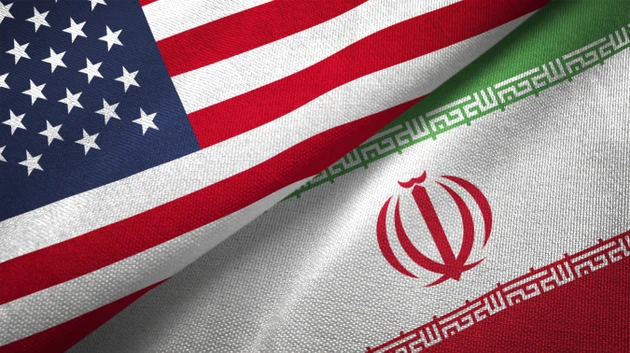
U.S. and Iranian negotiators made significant progress in talks on Tuesday, moving closer to a framework agreement to end the war, according to a report by Axios citing two U.S. officials.
Mediators from Pakistan, Egypt, and Turkey are working urgently to bridge
Praise be to Allah.
For the second time in two weeks, President Trump used that phrase in a post about the Israel-U.S. war against Iran.
Crowing about the alleged destruction of Iran’s planes, ships and bases in a Truth Social post Saturday, he emphasized his greatest victory in the monthlong campaign: “Most importantly, their longtime ‘Leaders’ are no longer with us, praise be to Allah!”
Making sense of anything Trump says in the heat of posting is a fool’s errand, but it’s also entirely necessary. Sane wash his words we must, because no matter how unhinged or infantile, the world’s safety, fortunes and future are inextricably tied to America’s next move, and therefore to his next move.
So what is Trump trying to communicate, or provoke, by using the Arabic word for God, as Muslims do? Let’s translate.
The first and most likely explanation: “Praise be to Allah” was meant to disparage his adversaries in the Islamic Republic of Iran. They are Muslim, they refer to God as “Allah,” therefore, he will turn their phrasing against them. Word bombs to accompany the deadly ones falling in Iran and Lebanon.
All leaders deploy tough talk in times of war, but Trump’s posts read more like the feverish ramblings of mad Col. Kurtz (Marlon Brando) in “Apocalypse Now” — “You’re an errand boy sent by grocery clerks to collect a bill” — than Winston Churchill’s galvanizing call to arms against the Nazis, “We shall fight on the beaches…”
Unlike the fictional Kurtz or the real Churchill, Trump has no military experience. He avoided the Vietnam War draft with four student deferments and one medical deferment for bone spurs. An area where he is experienced? Baiting foes. Antagonizing enemies, genuine or imagined, is a Trump specialty, be it from the Oval Office, on the campaign trail, or in the before times, as a reality TV personality.
Painting Muslims as the Other is nothing new for Trump, (unless they come bearing luxury airliners as gifts — then they’re friends). The same goes for others in his party. Since the U.S. and Israel attacked Iran on Feb. 28, Rep. Andy Ogles (R-Tenn.) posted that Muslims don’t belong in American society. Rep. Randy Fine (R-Fla.) wrote, “We need more Islamophobia, not less. Fear of Islam is rational.” And Sen. Tommy Tuberville (R-Ala.) reposted an image of the Twin Towers burning side by side with an image of New York City Mayor Zohran Mamdani, with his own caption: “The enemy is inside the gates.”
The president’s first usage of “Praise be to Allah” as a middle finger to Iran landed on a Christian holy day, Easter Sunday. He posted a demand that Iran open the Strait of Hormuz: “Open the F— Strait, you crazy b—, or you’ll be living in Hell – JUST WATCH! Praise be to Allah.” Hardly messaging that brings to mind Easter egg hunts on the White House lawn.
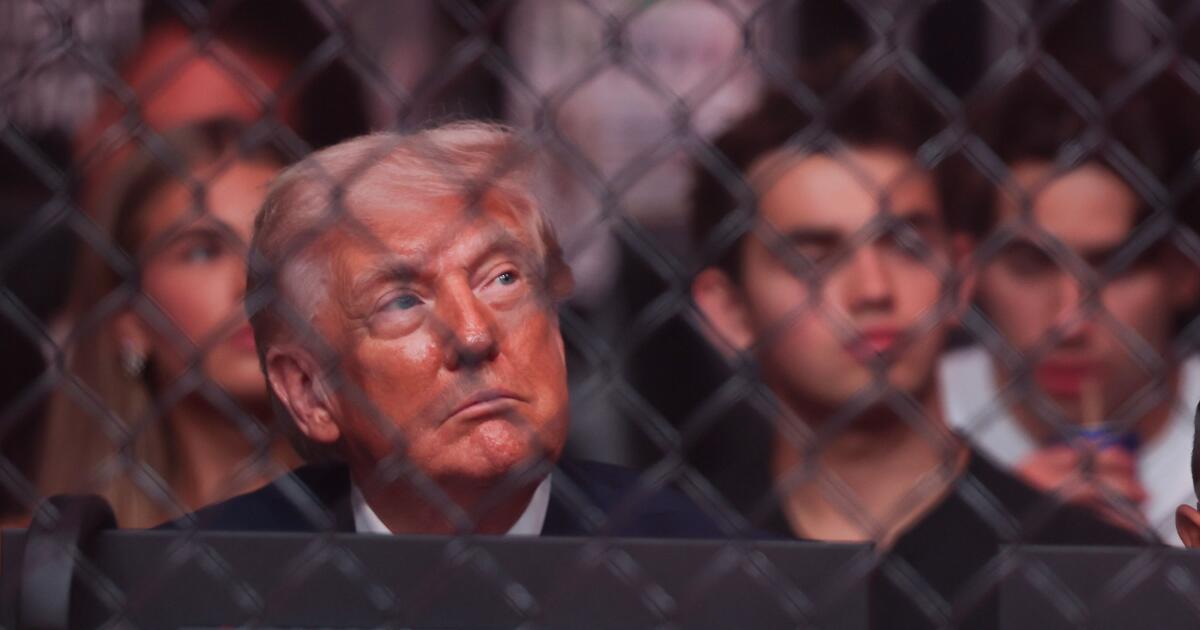
If the idea was to humiliate Iran into submission, it’s not working. Iran doesn’t appear to be backing down, even after Trump’s week-ago threat that a “whole civilization will die tonight” if it failed to meet his deadline to reopen the strait. The critical global shipping route is still closed. Trump didn’t appear all that interested in the art of the deal, either, even as Vice President JD Vance tried and failed to negotiate with Iranian leaders in Pakistan on Saturday. The president told reporters that he didn’t “care” what happens with Iran negotiations because “regardless what happens, we win.” He also said, “Whether we make a deal or not makes no difference to me.” He was seen later in Miami at an Ultimate Fighting Championship cage match with Secretary of State Marco Rubio.
Making the Allah references all the stranger were Trump’s other religious-themed posts this past weekend. One was a lengthy screed against Pope Leo XIV, whom Trump described as too liberal and “weak on crime.” It’s worth noting that more than half of American Catholics voted for Trump in the last election, and that his vice president is Catholic, as is the secretary of State and the first lady.
The other was a stand-alone, AI-generated image of himself as a Christ-like figure. It showed the 79-year-old clad in a white robe and papal-red cape, a divine light emanating from the palm of one hand while the other hand was placed on an ailing man. The post was deleted Monday morning after a sizable backlash.
“I did post it, and I thought it was me as a doctor, and had to do with Red Cross, as a Red Cross worker there, which we support,” Trump said, responding to a reporter Monday during a presser at the White House as DoorDash delivered an order from McDonald’s to promote the president’s “no tax on tips” policy.
There was no mention of Allah during that particular event.
Alhamdulillah.
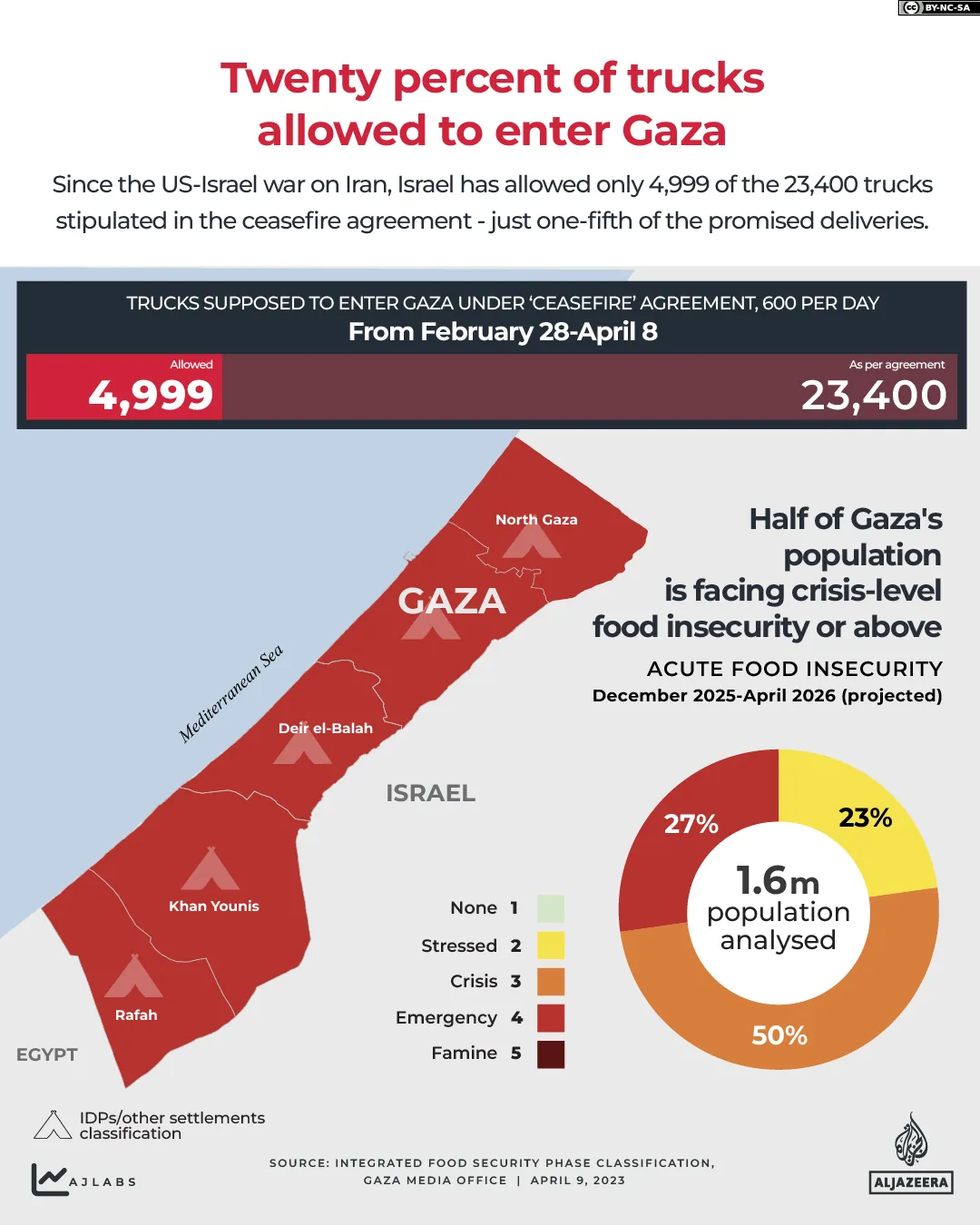
With the global attention fixated on the diplomatic efforts to end the war on Iran, Israel has systematically escalated its attacks on Gaza and choked off vital aid, plunging the besieged enclave into what economic experts are now calling an “engineered, compounded famine”.
The number of aid trucks entering Gaza has dropped drastically in violation of the October 2025 ceasefire with Hamas. Since then, the Government Media Office in Gaza has recorded 2,400 military violations by Israeli forces, resulting in the killing of more than 700 Palestinians.
list of 4 itemsend of list
On Tuesday, Israel’s military killed at least 11 Palestinians, including two children, in separate attacks across the war-torn Strip.
The intensity of these attacks spiked during peak regional tensions. Between February 28 and April 8, while Israel and the US were engaged in a bombing campaign against Iran, Israeli forces bombed Gaza on 36 out of those 40 days.
In the last five weeks alone, more than 100 people have been killed, including Al Jazeera journalist Mohammed Wishah. Israel has killed more than 72,336 people since launching the brutal military offensive on October 7, 2023.

While Israel frequently claims it is allowing hundreds of aid trucks into Gaza, Palestinian officials and economic experts argue these figures are a deliberate mathematical deception.
According to the Government Media Office, only 41,714 aid and commercial trucks have entered Gaza over the past six months. This represents a mere 37 percent of the 110,400 trucks stipulated under the ceasefire agreement. The fuel situation is even more critical, with only 1,366 fuel trucks entering out of a promised 9,200 – an abysmal 14 percent compliance rate.
Recent daily logs highlight the severity of the bottleneck. On April 13, a total of only 102 aid trucks and 7 fuel trucks were allowed into the entire Strip, alongside 216 commercial trucks – a fraction of the more than 600 total trucks required daily under the “ceasefire” deal. By April 14, the numbers remained critically low with 122 aid trucks and 12 fuel trucks entering.
Crucially, Israeli authorities entirely shut down additional entry points like the Zikim and Kissufim crossings, which had processed dozens of commercial and aid trucks just a day prior, bottlenecking all limited traffic exclusively through Karem Abu Salem.
Mohammed Abu Jayyab, a Palestinian economic expert based in Gaza, told Al Jazeera that Israel utilises a “technical and commercial deception” to inflate these numbers.
“An Israeli truck carries up to 32 or 34 pallets… which are then unloaded into two or three smaller, dilapidated Palestinian trucks on the Gaza side,” Abu Jayyab explained. “Consequently, the UN and Israel count double or triple the actual number of Israeli trucks entering.” One pallet holds roughly 1 tonne of goods or food items.
Furthermore, Israel recently banned mixed-load shipments. If a merchant brings in 20 pallets of sugar, the remaining 12 pallet spaces on the truck must remain empty, yet it is still registered as a full commercial truck.
“The political agreement stipulated a ‘truck’ but did not specify quantities, weights, or the number of pallets,” Abu Jayyab noted, allowing Israel to weaponise logistics to restrict aid while appearing compliant.
This logistical strangulation is part of a broader strategy. Hassan Abu Riyala, undersecretary of the Ministry of National Economy in Gaza, stated in a meeting published on the ministry’s official Telegram channel that Israel is “engineering a policy of starvation”.
To ensure chaos in the local markets and sky-high prices, Israel has deliberately dismantled civil regulatory bodies. “The occupation targeted the majority of the crews that monitored prices, and assassinated the [former] undersecretary of the Ministry of Economy and five directors general during the war,” Abu Riyala said.
The results have been devastating, basic commodities have become scarce, and bread production has plummeted to 200 tonnes daily, far below the 450 tonnes required to feed the population.
“We manage this structural deficit under exceptional and coercive conditions,” Ismail Al-Thawabteh, director general of the Government Media Office, told Al Jazeera.
He described the ongoing reduction of supplies despite the truce as a “systematic restriction of basic supplies” that pushes the population towards dangerous levels of food insecurity. Fresh produce has skyrocketed, with 1kg (2.2lb) of tomatoes jumping from $1.50 to nearly $4 in a matter of weeks.
Moreover, the humanitarian catastrophe is being accelerated by the withdrawal of major aid groups. Al-Thawabteh noted that the scaling back or suspension of operations by key international institutions, most notably the World Food Programme (WFP), due to Israeli restrictions, represents a “highly dangerous development” that threatens the complete collapse of Gaza’s relief system.
“We issue an urgent appeal to the international community and the guarantors of the agreement to immediately pressure Israel to open the crossings… before reaching a point of no return and an imminent human explosion,” he said.
The crisis has evolved beyond a simple lack of food; it is now a complete collapse of the Palestinian economy.
Abu Jayyab described the current situation as a “compounded famine”. With unemployment soaring to 80 percent and the destruction of more than 160,000 jobs across industrial, agricultural, and commercial sectors, the population has entirely lost its purchasing power.
“It has become illogical to link the entry of food supplies from the crossings to their availability to Palestinian citizens,” Abu Jayyab told Al Jazeera. Even when goods reach the market, between 70 to 80 percent of families simply cannot afford to buy them due to the total absence of income.
This extreme deprivation is forcing civilians into life-threatening alternatives. “The return of long queues for bakeries, and citizens resorting to burning plastic and waste in the absence of cooking gas, are dangerous field indicators of an unprecedented deterioration,” Al-Thawabteh warned, noting that government health facilities are currently struggling to treat respiratory and skin diseases resulting from this toxic pollution.
Meanwhile, the stranglehold extends to Gaza’s most vulnerable patients. While the ceasefire agreement mandated the opening of the Rafah crossing for medical evacuations, Israel has kept the borders tightly restricted.
Over the past six months, only 2,703 people have been allowed to cross through Rafah out of an expected 36,800 – a compliance rate of just 7 percent. Consequently, only 8 percent of the severely wounded and chronically ill patients slated for urgent medical evacuation have been permitted to leave. According to the World Health Organization, roughly 18,000 people are still trapped in Gaza waiting for life-saving treatment abroad.

Draw for the 24-team 2027 AFC Asian Cup, originally set for Saturday, moved to May 9.
Published On 15 Apr 202615 Apr 2026
The draw for the 2027 Asian Cup in Saudi Arabia has been rescheduled for May 9 in Riyadh as the United States-Israel war on Iran disrupts regional sporting events.
The draw, originally scheduled for last Saturday, will be held at the historic At-Turaif District in Diriyah. The Asian Football Confederation (AFC) said on Wednesday that the postponement was made to ensure the full participation of all key stakeholders and member associations.
list of 4 itemsend of list
A number of sporting events across the region have been postponed or cancelled due to the war, which began on February 28.
Saudi Arabia is set to host the 24-team, quadrennial continental championship for the first time from January 7 to February 5. With 23 of the 24 teams already confirmed, the draw will divide the qualified nations into six groups of four.
The final qualification place will be decided on June 4 when Lebanon face Yemen in a playoff.
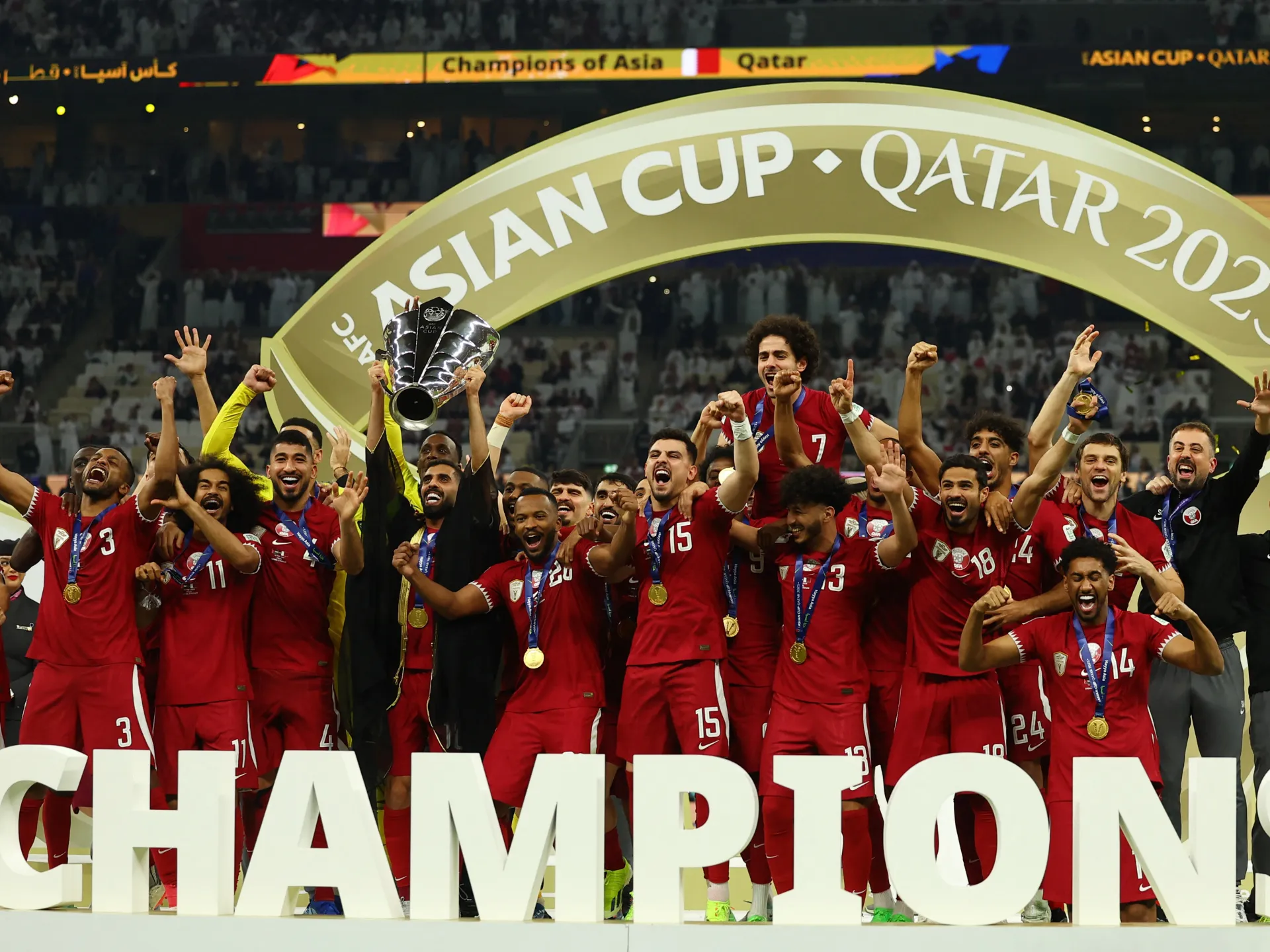
Defending champions Qatar have already secured their place at the finals along with four-time winners Japan and fellow World Cup qualifiers South Korea, Iran, Jordan, Australia and Uzbekistan.

April 15 (UPI) — U.S. President Donald Trump said peace talks with Iran “could be happening in the next two days,” with American negotiators most likely to return to Islamabad where the first round of talks at the weekend ended without a breakthrough.
In an interview with the New York Post on Tuesday, Trump said talks between the sides were “happening, but, you know, a little bit slow,” saying a new round of direct negotiations would probably be hosted by a country in Europe.
However, around 30 minutes after the interview had concluded, Trump called back to tell the Post that it should keep its reporter covering the talks in Islamabad in place and not bring them home.
“You should stay there, really, because something could be happening over the next two days, and we’re more inclined to go there [Islamabad]. It’s more likely, you know why? Because the field marshal is doing a great job,” Trump said, referencing Pakistan’s Field Marshal Gen. Asim Munir who has a direct line of communication with the regime in Tehran and a strong relationship with Trump.
“He’s fantastic, and therefore it’s more likely that we go back there. Why should we go to some country that has nothing to do with it?” added Trump.
The Washington D.C.,-headquartered Institute for the Study of War also said a fresh round of negotiations was likely this week but said it believed Iran’s approach would be to try to buy time by spinning out the talks
“Iran likely aims to protract negotiations as long as possible in order to prepare for a potential resumption of conflict,” ISW said in a post on X.
The developments, which came as a fragile cease-fire that took effect April 7 entered its second week, followed earlier reports in which unnamed White House officials told CNBC, CNN and NBC News that in-person negotiations could restart before the truce expires on Tuesday.
Vice President JD Vance said round one of the talks in Islamabad, which ran for more than 20 hours, foundered on differences over Iran’s nuclear program — which the United States wants it to give up completely to ensure it can never develop a nuclear weapon — and control of the Strait of Hormuz.
Reports later emerged that more progress had been made than initially suggested, with the sides getting close to agreement on nuclear enrichment after Iran countered U.S. demands for a 20-year suspension with an offer to halt all enrichment for 5 years.
Trump told the Post he was unhappy with the thinking that a moratorium on enrichment, instead of terminating the program, would make the regime in Tehran more amenable to a lasting peace agreement by providing them a face-saving “success” to sell to the Iranian people.
“I’ve been saying they can’t have nuclear weapons. So I don’t like the 20 years. I don’t want them [Iran] to feel like they have a win.”
Experts concurred with Trump’s analysis, saying the only way to guarantee Iran would not be able to pursue a nuclear weapon in the future was to make sure the entire program was put beyond use, in a verifiable way, and that it needed to happen while Trump was still in office.
Under the Joint Comprehensive Plan of Action, a 2025 deal between Iran and the United States, Britain, France, Germany, Russia and China, enrichment by Tehran of its 300 Kg stockpile of uranium was capped at 3.67%, in exchange for sanctions relief.
However, that deal lapsed in October, although in practice it was long dead after Trump pulled the United States out of the agreement in May 2018, during his first term, with Iran subsequently proceeding to enrich an expanded 441 kg uranium stockpile to around 60%, not far short of weapons grade.

Release of Mahdieh Esfandiari comes a week after Iran released two French citizens held on espionage charges.

Published On 15 Apr 202615 Apr 2026
Iranian national Mahdieh Esfandiari has returned home after being held in France for more than a year as part of what appears to be an exchange of detainees between the countries.
Iran’s state television reported on Wednesday that the “rights activist”, sentenced to one year in prison after making online comments supportive of Palestine and the 2023 Hamas attack on Israel that prompted the genocidal war on Gaza, had returned to Iran.
list of 2 itemsend of list
The University of Lyon graduate, who had been living in France since 2018, where she worked as a translator, was arrested in February last year on charges of promoting “terrorism”, and released on bail in October.
“I think it’s clear for everyone that there is no freedom of speech, at least not in France where I was. The court’s ruling was very unjust,” Esfandiari told state television in a Wednesday broadcast.
Esfandiari’s release comes a week after French citizens Cecile Kohler, 41, and Jacques Paris, 72, arrived in France after being held for more than three years in Iran.
Kohler and Paris were arrested by Iranian authorities in May 2022 but were freed in November last year, after more than three years in prison on espionage charges that their families vehemently deny.
They were taken by French diplomats to France’s mission in Tehran, where they lived under house arrest until their full release on April 7. Upon their release, they were driven from Iran to neighbouring Azerbaijan before taking a flight to Paris.
President Emmanuel Macron’s office said their release was the outcome of a “long-term effort”, but talks accelerated in recent weeks due to pressure from the US-Israel war on Iran, giving a sense of urgency to the situation.
While an exchange was not explicitly acknowledged by France, Iran’s state-run agency IRNA had previously said Tehran reached an agreement with Paris for the release of the French citizens in exchange for Esfandiari.
The TWZ Newsletter
Weekly insights and analysis on the latest developments in military technology, strategy, and foreign policy.
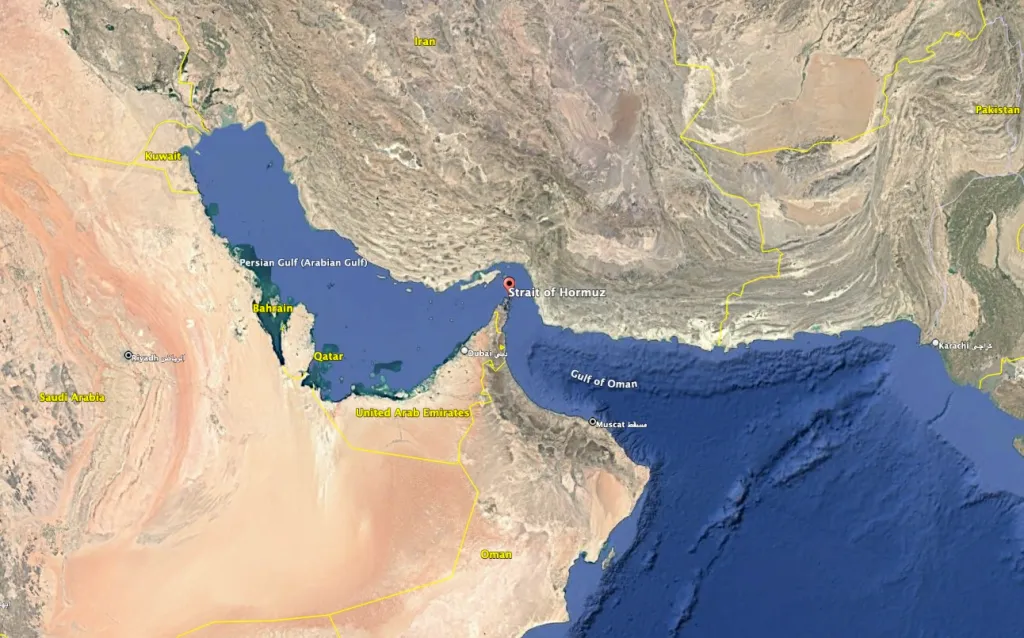
A day into the U.S.-imposed military blockade of the Strait of Hormuz, several ships have apparently transited the narrow waterway, including at least two that reportedly had previously stopped at Iranian ports. However, U.S. Central Command (CENTCOM) is pushing back against claims that vessels ran the blockade. As we noted yesterday, CENTCOM said the maritime exclusion operation would be “enforced impartially against vessels of all nations entering or departing Iranian ports and coastal areas, including all Iranian ports on the Arabian Gulf and Gulf of Oman.”
Meanwhile, there are indications that the U.S. and Iran may continue seeking a diplomatic offramp to the crisis, which began Feb. 28 when America and Israel began bombarding the Islamic Republic. We will discuss that in greater detail later in this story.

Christianna, a Liberia-flagged cargo ship, “exited the Persian Gulf through the strait on Monday night, after leaving the Iranian port city of Bandar Imam Khomeini,” The New York Times reported, citing the global trade intelligence firm Kpler. It said the ship was not carrying any cargo.
In addition, Elpis, a methanol carrier, “traversed the strait roughly around the time that the U.S. blockade began, according to ship-tracking data,” the newspaper added, “Kpler said that the vessel had been at the Iranian port of Bushehr. The United States had placed sanctions on the ship last year under an earlier name, Chamtang, over its connections to the Iranian oil trade.”
It is unclear if these two ships fell within CENTCOM’s “grace period” around the deadline, had gained permission to pass or had somehow bypassed the blockade, the Times noted. We have reached out to CENTCOM and the White House for more details.
CENTCOM stated on X that during “the first 24 hours, no ships made it past the U.S. blockade and 6 merchant vessels complied with direction from U.S. forces to turn around to re-enter an Iranian port on the Gulf of Oman.”
“The blockade is being enforced impartially against vessels of all nations entering or departing Iranian ports and coastal areas, including all Iranian ports on the Arabian Gulf and Gulf of Oman,” the command reiterated. “U.S. forces are supporting freedom of navigation for vessels transiting the Strait of Hormuz to and from non-Iranian ports.”
All told, more than “10,000 U.S. Sailors, Marines, and Airmen along with over a dozen warships and dozens of aircraft are executing the mission to blockade ships entering and departing Iranian ports,” CENTCOM explained.
More than 10,000 U.S. Sailors, Marines, and Airmen along with over a dozen warships and dozens of aircraft are executing the mission to blockade ships entering and departing Iranian ports. During the first 24 hours, no ships made it past the U.S. blockade and 6 merchant vessels… pic.twitter.com/dpWAAknzQp
— U.S. Central Command (@CENTCOM) April 14, 2026
Several other Iranian-linked ships also exited the Strait, however, there was no indication they stopped at any Iranian port and thus would not have been subject to the blockade.
The Rich Starry, “sanctioned by the US for Iran-related trade, sailed east from Sharjah in the UAE through the strait overnight, data shows,” according to BBC. “The tanker Murlikishan, which is also under US sanctions for Iran-related trade, sailed from Lanshan in China and headed west through the strait overnight.”
BREAKING: US-sanctioned tanker, Chinese-owned Rich Starry, transited through the Strait of Hormuz on Tuesday despite a US blockade of the vital oil chokepoint, shipping data from LSEG showed. pic.twitter.com/yrIRltDvrI
— Al Jazeera Breaking News (@AJENews) April 14, 2026
Overall, shipping in the region has largely remained at a standstill. There are concerns this could exacerbate economic woes across the globe sparked by Iran’s near total closure of the Strait in the wake of U.S. and Israeli attacks. At the moment though, Brent Crude, a petroleum benchmark, was trading at just over $95 a barrel as of Tuesday at 11 a.m. EDT. That’s down from a high of nearly $110 a barrel on April 6, according to OilPrice.com.
“Little traffic is entering and leaving Iranian ports in the Persian Gulf and the Gulf of Oman on the first full day of the US-declared blockade,” CNN reported, citing ship-tracking data. “Shipping through the Strait of Hormuz also remains severely curtailed, with just a handful of tankers and bulk carriers transiting the waterway in the last day.”
Traffic deflates further after US blockade takes effect
Commercial traffic through the Strait of Hormuz remains well below typical levels, with just six vessels crossing on 13 April compared with 14 the previous day. While a ceasefire and the US naval blockade are now in place,… pic.twitter.com/swZQ6OYgPh
— Kpler (@Kpler) April 14, 2026
“Maritime activity in the Strait of Hormuz is entering its first full day under active U.S. enforcement, with early vessel behavior indicating a fragmented response to the blockade,” according to the latest report from Windward Maritime Intelligence.
Initial movements “show a mix of continued transit, route deviation, and potential blockade evasion,” Windward explained. “Sanctioned and falsely flagged vessels remain active, with some proceeding through the Strait while others delay, reverse, or shift routing patterns.”
At the same time, “Iranian oil flows continue to rely on indirect distribution networks, with significant volumes accumulating offshore rather than moving directly through the Strait,” the company continued. “Taken together, the operating environment is shifting from uncertainty to active enforcement dynamics, where compliance, evasion, and selective movement are all occurring simultaneously.”
Activity in the Strait of Hormuz is intensifying as sanctioned dark fleet vessels navigate the newly imposed blockade.
Two critical movements unfolding this morning:
• Starry Rich: A U.S.-sanctioned, falsely flagged tanker signaling laden. After reversing course yesterday, it… pic.twitter.com/lzBSBHljnL
— Windward (@WindwardAI) April 14, 2026
Amid all this, Iran “is considering a short-term pause to shipments through the Strait of Hormuz to avoid testing a US blockade and scuppering a fresh round of peace talks,” Bloomberg reported, citing a person familiar with Tehran’s deliberations.
“The potential pause reflects a desire to avoid immediate escalation at a sensitive diplomatic juncture as Washington and Tehran sort logistics for another face-to-face meeting, the person said.”
China’s Foreign Ministry strongly condemned the blockade on Tuesday.
“The US’s targeted blockade and its increased military deployment are dangerous and irresponsible,” said ministry spokesperson Guo Jiakun. “At a time when the parties concerned have reached a temporary ceasefire arrangement, the blockade will only aggravate tensions, further destabilize the situation, undermine the already fragile ceasefire, and further jeopardize navigational security in the Strait of Hormuz.”
The US’s targeted blockade and its increased military deployment are dangerous and irresponsible, said a spokesperson for China’s Foreign Ministry on April 14, 2026.
Chinese FM Spokesperson Guo Jiakun was speaking on Tuesday, a day after the US military announced a blockade of… pic.twitter.com/81zAizEHUN
— China Military Bugle (@ChinaMilBugle) April 14, 2026
As the blockade continues, several countries have called for the Strait and by implication surrounding waterways to be reopened. Several hundred miles of Iran’s coastline sits along the Gulf of Oman, which is also included in the CENTCOM blockade.
“We have been clear from the outset that the security of the Strait of Hormuz must not be harmed by any escalatory moves,” said Majed Al-Ansari, a spokesman for the Qatari Foreign Ministry. “We reject any attempt to politicize the Strait and call for the immediate resumption of maritime activity without pre-imposed conditions, given its importance to the global economy. We are engaging with regional and international partners toward a solution. Regarding the talks in Islamabad, we remain in contact with Pakistan and support their mediation efforts, while focusing on strengthening regional coordination around this process.”
Dr. @majedalansari , Advisor to the Prime Minister and Spokesperson for the Ministry of Foreign Affairs, during the weekly media briefing:
We have been clear from the outset that the security of the Strait of Hormuz must not be harmed by any escalatory moves. We reject any… pic.twitter.com/4IEhz8bBl5
— Ministry of Foreign Affairs – Qatar (@MofaQatar_EN) April 14, 2026
French President Emmanuel Macron called for the Strait to “be reopened unconditionally, without restrictions or tolls, as soon as possible. Under these conditions, negotiations should be able to resume quickly, with the support of the key parties concerned.”
He added that “France and the United Kingdom will also host a conference in Paris this Friday, bringing together by videoconference non-belligerent countries ready to contribute, alongside us, to a multilateral and purely defensive mission aimed at restoring freedom of navigation in the strait when security conditions allow.”
Yesterday, I spoke with Iranian President Massoud Pezeshkian, as well as with U.S. President Donald Trump.
I urged the resumption of the negotiations suspended in Islamabad, the clearing up of misunderstandings, and the avoidance of any further escalation.…
— Emmanuel Macron (@EmmanuelMacron) April 14, 2026
We have concluded our coverage for the day.
UPDATE: 5:26 PM EDT –
To execute the blockade, American naval assets are not lingering near Iranian ports or in the Strait of Hormuz itself, The Washington Post noted.
“Iranian forces mined the strait, one of several flash points in negotiations, soon after hostilities began more than six weeks ago,” the newspaper reported. “The narrow, shallow corridor also leaves any vessels there vulnerable to attack.”
“Our net is the Gulf of Oman,” said one of the officials, who explained that the U.S. warships involved wait for an opportune moment — after observing vessels leave Iranian facilities and clear the strait — before intercepting the merchant ships and forcing them to turn around.
“There’s one way in and one way out,” the official said. “We’ve got the whole thing on lockdown.”
.@USNavy is watching each ship — and waiting for them to exit the Strait of Hormuz where more than a dozen U.S. warships await. “Our net is the Gulf of Oman,” one official said. Whether a vessel is stopped or not depends on it it was in an Iranian port after 10 am EST April 13.…
— Tara Copp (@TaraCopp) April 14, 2026
UPDATE: 4:52 PM EDT –
There have been no indications yet reported during the CENTCOM blockade, but more than 20 commercial ships have passed through the Strait of Hormuz recently, The Wall Street Journal reported. The publication added that it marks “an improvement in the flow of vessels through a critical chokepoint.”
WSJ: More than 20 commercial ships have passed through the Strait of Hormuz in the past 24 hours, according to two U.S. officials… Ships that aren’t visiting Iran’s ports aren’t subject to the blockade and are being allowed to transit freely.
— Annmarie Hordern (@annmarie) April 14, 2026
UPDATE: 4:08 PM EDT –
Following today’s trilateral meeting with Israel’s Ambassador to the U.S., Yechiel Leiter, said his country won’t allow Hezbollah to fire missiles into Israel.
Israeli Ambassador to U.S.:
“We will not allow a terror organization to continually fire missiles into our population centers,” after his meeting with Rubio and the Lebanese Ambassador, in Washington D.C.. pic.twitter.com/fEdmkyvgyI
— Open Source Intel (@Osint613) April 14, 2026
UPDATE: 3:58 PM EDT –
UN Secretary-General Antonio Guterres stated that it’s “highly probable” talks to end the war will resume. He spoke after meeting with the Deputy Prime Minister of Pakistan.
UN Secretary-General Antonio Guterres says it’s “highly probably” talks to end the US-Israel war on Iran will resume.
He spoke after meeting with the Deputy Prime Minister of Pakistan. pic.twitter.com/hAhjVztKAc
— Al Jazeera Breaking News (@AJENews) April 14, 2026
UPDATE: 3:35 PM EDT –
CENTCOM offered some additional details about its blockade of Iran.
“An F-35B stealth fighter jet is prepared for flight aboard USS Tripoli (LHA 7) as the amphibious assault ship sails in the Arabian Sea,” CENTCOM stated on X. “Tripoli and its 3,500 Sailors and embarked Marines are executing the mission to blockade ships entering and departing Iranian ports. The blockade is being enforced impartially against vessels of all nations.”
An F-35B stealth fighter jet is prepared for flight aboard USS Tripoli (LHA 7) as the amphibious assault ship sails in the Arabian Sea. Tripoli and its 3,500 Sailors and embarked Marines are executing the mission to blockade ships entering and departing Iranian ports. The… pic.twitter.com/TrrT8qKT5t
— U.S. Central Command (@CENTCOM) April 14, 2026
UPDATE: 3:09 PM EDT –
The U.S. State Department provided some details of the trilateral meeting between the U.S., Israel and Lebanon. This meeting “marked the first major high-level engagement between the governments of Israel and Lebanon since 1993. The participants held productive discussions on steps toward launching direct negotiations between Israel and Lebanon,” the department stated.
“The United States congratulated the two countries on this historic milestone and expressed its support for further talks, and for the Government of Lebanon’s plans to restore the monopoly of force and to end Iran’s overbearing influence,” the State Department said in an email. “The United States expressed its hope that talks can exceed the scope of the 2024 agreement and bring about a comprehensive peace deal. The United States expressed its support for Israel’s right to defend itself from Hizballah’s continued attacks. The United States affirmed that any agreement to cease hostilities must be reached between the two governments, brokered by the United States, and not through any separate track. The United States underscored that these negotiations have the potential to unlock significant reconstruction assistance and economic recovery for Lebanon and expand investment opportunities for both countries.”
The State of Israel “expressed its support for disarming all non-state terror groups and dismantling all terror infrastructure in Lebanon and expressed its commitment to working with the Government of Lebanon to achieve that goal to ensure security for the people of both countries,” the message added. “Israel expressed its commitment to engage in direct negotiations to resolve all outstanding issues and achieve a durable peace that will strengthen security, stability and prosperity in the region.“
UPDATE: 3:01 PM EDT –
Stepping up the pressure on Tehran in what it calls Economic Fury, the Treasury Department said the short-term authorization permitting the sale of Iranian oil already stranded at sea is set to expire in a few days and will not be renewed.
Treasury is moving aggressively with Economic Fury, maintaining maximum pressure on Iran. Financial institutions should be on notice that the department is leveraging the full range of available tools and authorities and is prepared to deploy secondary sanctions against foreign…
— Treasury Department (@USTreasury) April 14, 2026
UPDATE: 2:41 PM EDT –
The New York Post said Trump informed them during a phone interview that additional US-Iran peace talks “could be happening over next two days” in Pakistan’s capital.
Trump initially claimed that discussions were “happening, but, you know, a little bit slow” before indicating that a second round of direct negotiations to end the seven-week war would likely happen somewhere in Europe, the newspaper added.
About half an hour later, Trump called back with an update.
“You should stay there, really, because something could be happening over the next two days, and we’re more inclined to go there,” he said of Islamabad. “It’s more likely, you know why? Because the field marshal is doing a great job.”
Trump was referring to Pakistan Field Marshal Gen. Asim Munir.
BREAKING: President Trump tells a New York Post journalist to stay in Pakistan, saying peace talks are so close they could break at any moment.
Peter Doocy says the president believes a deal is now within reach over the next couple of days.
DOOCY: “Good afternoon, President… pic.twitter.com/quxaTfRXt4
— Overton (@overton_news) April 14, 2026
Days after in-person peace talks between the U.S. and Iran ended with no agreement, the two sides are still talking. There are also reports that there may be another round of meetings later this week.
“The United States and Iran have traded proposals for a suspension of Iranian nuclear activities but remain far apart on the length of any agreement,” The New York Times reported, citing Iranian and U.S. officials.
During the negotiations in Islamabad, “the United States asked Iran for a 20-year suspension of uranium enrichment,” the newspaper added. “The Iranians, in a formal response sent on Monday, said they would agree to up to five years, according to two senior Iranian officials and one U.S. official. Mr. Trump rejected Iran’s offer, according to a U.S. official.”
NYT: The US proposed a 20-year “suspension” of all nuclear activity. That would allow the Iranians to claim they had not permanently given up their right, under the Nuclear Nonproliferation Treaty, to produce their own nuclear fuel.
In response, Iran renewed a proposal that it…— Annmarie Hordern (@annmarie) April 14, 2026
Still, despite the impasse and the U.S. imposed blockade on Iranian ports, “U.S. officials are discussing details for a potential second in-person meeting with the Iranians,” CNN noted.
Trump administration officials are discussing another meeting with Iranian negotiators before the ceasefire ends, with possible dates and locations under review, CNN reports. pic.twitter.com/vS6F3Ik1ll
— Open Source Intel (@Osint613) April 13, 2026
Meanwhile, as the fighting continues in Lebanon between Israel and Hezbollah, Jerusalem and Beirut are scheduled to hold talks in Washington today. The first direct diplomatic discussion between the two nations in more than 30 years is aimed at preparing negotiations to end the conflict. However, there is little hope of any quick resolution.
Lebanon’s pre-condition is a full ceasefire, something Israel is refusing to do, CBC noted. Hezbollah’s chief Naim Qassem has called the discussions “pointless” and said just talking to Israel is akin to surrendering.
Hezbollah is a separate entity from the Lebanese government and is fighting Israel, not that nation. However, Beirut called for the meeting to discuss “the announcement of a ceasefire” between the warring parties “and the date for starting negotiations between Lebanon and Israel under American sponsorship,” The Washington Post explained.
The State Department said the talks will focus on “how to ensure the long-term security of Israel’s northern border and to support the Government of Lebanon’s determination to reclaim full sovereignty over its territory and political life,” the publication added.
“We’re not about to release the peace doves,” an Israeli official told The Times of Israel. As Israel prepares for its most senior in-person engagement with Lebanon in its 78-year history, expectations are being managed.
There is one problem preventing the flight of those… pic.twitter.com/gke7Ew7mrO
— Amit Segal (@AmitSegal) April 14, 2026
On the battlefield, the Israeli Defense Forces (IDF) and Hezbollah continue to attack each other.
The IDF claimed that “three soldiers were severely injured, and an additional soldier was moderately injured in a close-quarters encounter in southern Lebanon.”
It also said it struck more than 150 Hezbollah targets across southern Lebanon.
🎯⏰24HR RECAP: ~150 Hezbollah targets were struck in numerous areas across southern Lebanon.
Accomplishments:
– Rocket launchers & UAVs struck
– Military structures, anti-tank missile launch points & terror command centers were targeted
– Terrorist cells that attempted to carry… pic.twitter.com/FYbntP7ml6— Israel Defense Forces (@IDF) April 13, 2026
Hezbollah said it struck the Yiftah military barracks in northern Israel.
Hezbollah has released footage showing the targeting of the Yiftah Barracks in northern Israel using Sayyad-2 (also known as T2 and Sayyad-107) loitering munitions. pic.twitter.com/5vsNJlXDCJ
— OSINTWarfare (@OSINTWarfare) April 14, 2026
Mossad operated “in the heart of Tehran” during the recent US-Israeli campaign against Iran, the Israeli intelligence agency’s Director David Barnea said at a Holocaust Remembrance Day ceremony.
“We brought precise intelligence to the Air Force, and we hit missiles that threatened Israel,” he explained.
“But our mission has yet to be completed,” the spy chief added. “We didn’t think that this mission would be completed immediately with the end of the battles. But we planned intensively for our campaign to continue and achieve results even in the period after the strikes in Tehran.”
Mossad Director David Barnea:
Our mission will only be complete when the extremist regime in Iran is replaced.
We did not believe the mission would be finished immediately after the fighting subsided, but we did plan—indeed carefully—that our campaign would continue and be… pic.twitter.com/WvIaNQX54N
— Clash Report (@clashreport) April 14, 2026
Chinese President Xi Jinping weighed in on the tense situation in the Middle East, issuing “four propositions on safeguarding and promoting peace and stability” in the region, according to Mao Ning, spokesperson for the Chinese Foreign Affairs ministry.
Xi is calling for commitments to preserving “peaceful coexistence…the principle of national sovereignty…the rule of law” and “a balanced approach to development and security.”
President Xi Jinping made four propositions on safeguarding and promoting peace and stability in the Middle East.
1️⃣ Stay committed to the principle of peaceful co-existence. The Gulf states in the Middle East are close neighbors that cannot move away. It’s important to support… pic.twitter.com/dBfGZCV9TF
— Mao Ning 毛宁 (@SpoxCHN_MaoNing) April 14, 2026
The Chinese MFA took a much harsher stance in response to Trump’s threat to impose a 50% tariff on Chinese imports if it provides arms to Iran. Trump issued that warning in an interview on Sunday with Fox News. He was reacting to reports that U.S. intelligence determined Beijing was providing military support to Tehran.
“China always acts prudently and responsibly on the export of military products, and exercises strict control in accordance with China’s laws and regulations and due international obligations,” the MFA proclaimed on X. “Media reports accusing China of providing military support to Iran are purely fabricated. If the U.S. goes ahead with the tariff hikes on China on the basis of these accusations, China will respond with countermeasures.”
The MFA did not specify what those countermeasures might be.
China always acts prudently and responsibly on the export of military products, and exercises strict control in accordance with China’s laws and regulations and due international obligations.
Media reports accusing China of providing military support to Iran are purely… pic.twitter.com/cMW2EDhEZP
— CHINA MFA Spokesperson 中国外交部发言人 (@MFA_China) April 14, 2026
Author’s Note: We have adjusted the headline to better reflect the story.
Contact the author: howard@thewarzone.com
US president says second round of talks could be held in Pakistan as blockade of Iranian ports continues.
Published On 15 Apr 202615 Apr 2026
Share