Weekly insights and analysis on the latest developments in military technology, strategy, and foreign policy.
A video out of RAF Fairford in England shows American B-1Bs getting prepped for a strike mission against Iran. In addition to the staple AGM-158 JASSM cruise missiles being readied for loading onto the ‘Bones,’ we see GBU-31 Joint Direct Attack Munitions (JDAMs) equipped with BLU-109 2,000-lb bunker buster warheads. We can also see the revolving weapons rack being extracted from the B-1’s weapons bay. The move from cruise missiles to JDAMs, at least for some targets, is a sign that air supremacy over Iran is becoming more assured, at least in some areas. You can read all about how the U.S. and Israel had not achieved air supremacy last week in our report linked here.
The videos were posted on X by journalist Richard Gaisford and can be seen below:
Missiles delivery systems are being removed from the B1 Lancers at RAF Fairford this afternoon, to be replaced by JDAM bombs. For those asking, the US Airforce has positioned these aircraft close to the fence in full view of media. @AJENewspic.twitter.com/fWtDRfV5g4
US Airforce ground crew work under hatches of a B1 Lancer at RAF Fairford today. What appear to be cruise missiles sit by the warplane. Three B1 bombers returned this morning, on what is believed to be the first attack on Iran from a British base during this conflict. @AJENewspic.twitter.com/80YkxHL5rT
The bomber force at RAF Fairford has expanded even larger over the last couple of days. There were nine American bombers at Fairford — three B-52s and six B-1s — as of the start of this week. Now there are 15 total — three B-52s and 12 B-1Bs.
Bomber aircraft can achieve far greater and more varied effects if they are allowed to directly strike targets instead of relying on cruise missiles fired at standoff ranges. This is especially true for delivering withering assaults on large target areas via a belly full of JDAMs. It also allows the aircraft to do this against targets that require bunker-buster capabilities. So far, we only know of the B-2 that has executed large-scale bunker buster attacks in Iran, using its stealth capabilities, as well as support from the total force, to ensure it can safely return from the mission. Fighters have been able to deliver much smaller numbers of these weapons onto targets deeper in Iran. Opening up these same target sets to forward-deployed B-1s and B-52s would help change the pace and impact of the air campaign.
NEW: At least three U.S. B-52 bombers have landed at RAF Fairford in the U.K., signaling preparations for potential sustained heavy bomber strikes against Iran.
Potential targets include large industrial complexes used for long-range weapons production and development, command and control bunkers, nuclear-program related sites, and, maybe most likely, keeping Iran’s underground ‘missile cities’ entombed by bombing their entrances so that the weapons that are housed inside can not be put to use.
B-1s first mission to Iran out of RAF Fairford UK
Still, B-1s and B-52s will likely operate over western Iran, where degradation of enemy air defenses has been the focus for nearly two weeks. Venturing into the eastern part of the country, which has seen far less attention, probably remains too risky. This is underscored by the map below, which the Pentagon released yesterday, showing the distribution of strikes across Iran during the first 10 days of the conflict (February 28 to March 9).
US Military
We still don’t know if the U.S. military will activate Diego Garcia as another forward operating location for its bombers. The U.K. government approved the use of both Fairford and Diego Garcia last week after denying that access leading up to the war. We have seen some heavy transport movements in satellite imagery to the remote island outpost in the Indian Ocean, and KC-135 tankers and force protection F-16s are still there, so it’s possible this could occur or has already happened. Cloud cover has kept the island obscured in satellite imagery for the last few days. Of course, such a deployment all depends on how long this campaign will actually last, with conflicting signals from the Trump administration as to its planned duration and exit strategy.
Regardless, it looks like the B-1s are going to be using their extremely large payload capacity to directly attack hardened Iranian targets in the very near future.
Iranian President Masoud Pezeshkian has laid out terms for ending the war with the United States and Israel in what analysts say is a possible sign of de-escalation from Tehran as the US-Israel war on Iran entered its 13th day on Thursday.
In a post on Wednesday on social site X, Pezeshkian said he had spoken to his counterparts in Russia and Pakistan, and that he had confirmed “Iran’s commitment to peace”.
Recommended Stories
list of 4 itemsend of list
“The only way to end this war – ignited by the Zionist regime & US – is recognizing Iran’s legitimate rights, payment of reparations, and firm int’l guarantees against future aggression,” Pezeshkian wrote.
This is a rare posture from Tehran, which has maintained a defiant stance and initially rejected any possibility of negotiations or a ceasefire when war broke out nearly two weeks ago.
Pezeshkian’s statement comes as pressure mounts on the US to halt what has become a very costly mission. Analysts say speculation from Washington that Iran would quickly submit after the killing of Supreme Leader Ayatollah Ali Khamenei were misguided.
Tehran is likely going to determine the end of this war, not the US or Israel, because of its ability to inflict economic pain broadly, they say.
Amid a military pummelling by the US and Israel, Iran has launched heavy retaliatory strikes at US assets and other critical infrastructure in Gulf countries, upsetting global supplies. It has also adopted what analysts call “asymmetric” tactics – such as disrupting the critical Strait of Hormuz and threatening US banking-linked entities – to inflict as much economic pain on the region and wider world as it can.
This is what we know about Pezeshkian’s stance and what the pressures are on both sides to draw the conflict to a close, quickly.
A building lies in ruins after a strike, amid the US-Israeli conflict with Iran, in Tehran, Iran, on March 12, 2026 [Majid Asgaripour/WANA (West Asia News Agency) via Reuters]
What has the war cost so far?
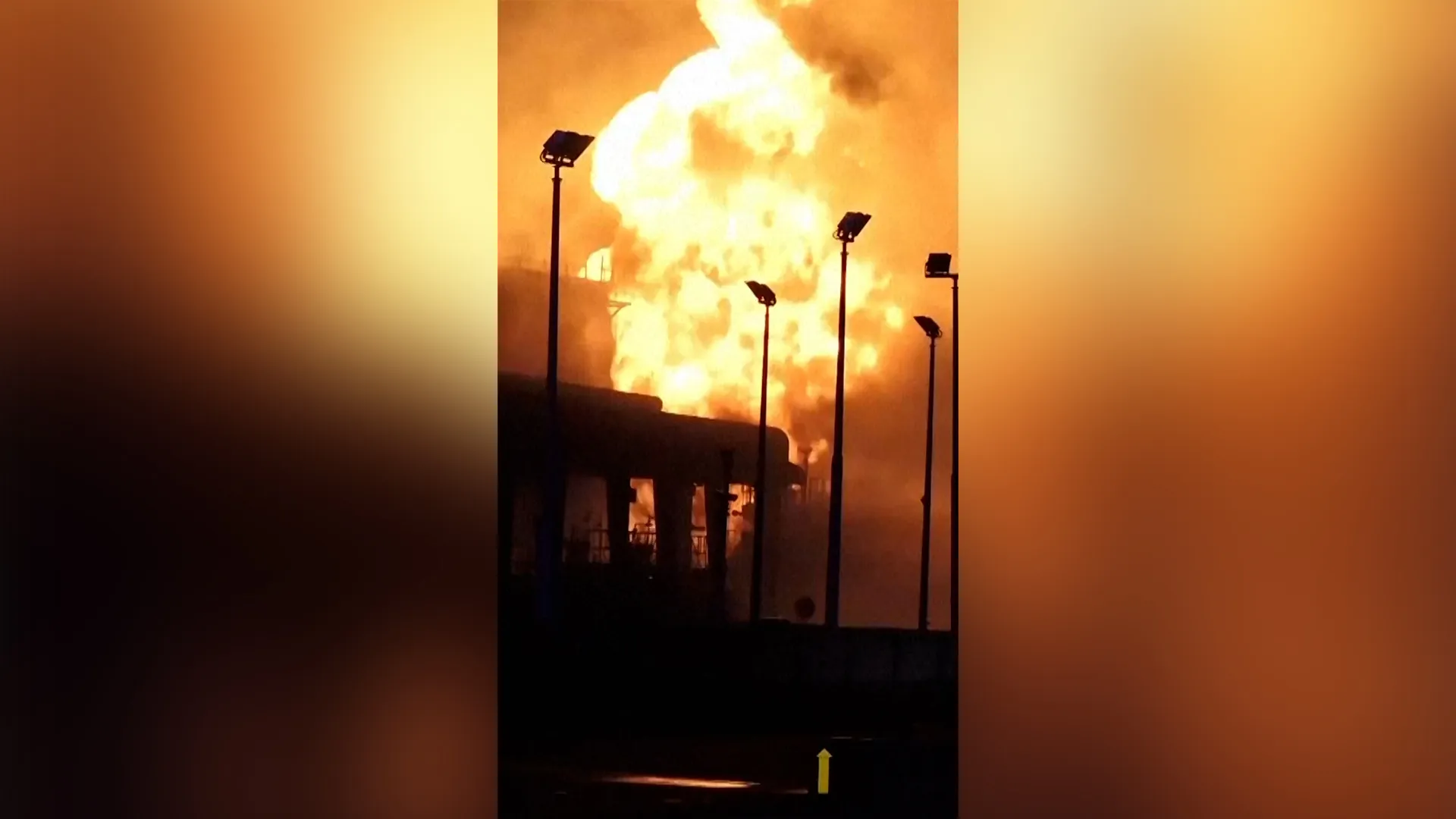
Economically, both sides have weaponised energy. Israel first targeted Iran’s oil facilities in Tehran on March 8, prompting an outcry from global health experts over the potential risk of air and water pollution.
Iran has, meanwhile, tightened its chokehold on the Strait of Hormuz shipping route – the only route to open sea for oil producers in the Gulf – with its military promising on Wednesday that it has the capabilities to wage a long war that could “destroy” the world economy.
Attacks on ships in the strait, through which about 20 percent of global oil and gas traffic normally passes, have effectively closed the route.
Oil prices rocketed above $100 per barrel late last week, up from around $65 before the war, with ordinary buyers feeling the increases at pumps in the US, Europe and parts of Africa.
On Wednesday, Iran upped the ante, saying it would not allow “a litre of oil” to pass through the strait and warned the world to expect a $200-per-barrel price tag.
“We don’t know how quickly it’ll revert back,” Freya Beamish, chief economist at GlobalData TS Lombard, told Al Jazeera. “We do think it’ll revert back to $80 in due course, but the ball is to some degree in Iran’s court,” she said, adding that because Iran needs oil revenue, the price hikes are expected to be time-limited.
The International Energy Agency agreed on Wednesday to release 400 million barrels from the emergency reserves of several member states but it is not yet clear what impact that will have, nor how quickly this quantity of oil can be released.
Tehran has also been accused of directly attacking oil facilities in neighbouring countries this week. Iraq shut all its oil port operations on Thursday after explosive-laden Iranian “drone” boats appeared to have attacked two fuel tankers in Iraqi waters, setting them ablaze and killing one crew member.
A drone was filmed striking Oman’s Salalah oil port on Wednesday, although Tehran has denied involvement.
What are Iranian officials saying about ending the war?
There has been conflicting messaging from the Iranian leadership.
Iran’s elite army unit and parallel armed force, the Islamic Revolutionary Guard Corps (IRGC), continues to show defiance, issuing threats and launching attacks on Israel and US military assets and infrastructure in neighbouring Gulf countries.
However, the political leadership has appeared more inclined towards diplomacy, analysts say. On Wednesday, President Pezeshkian said that ending the war would take the US and Israel recognising Iran’s rights, paying Iran reparations – although it’s unclear how much is being asked for – and providing strong guarantees that a future war will not be waged.
In a video recording last week, he also apologised to neighbouring countries for the strikes and promised that Iran would stop hitting its neighbours as long as they do not allow the US to launch attacks from their territory.
“I personally apologise to the neighbouring countries that were affected by Iran’s actions,” the president said, adding that Tehran was not looking for confrontations with its neighbours.
However, it is not known how much sway the political leadership has over the IRGC. Hours after the president’s apology last week, air defence sirens went off in Saudi Arabia, Qatar, the UAE and Bahrain, as strikes continued on the Gulf.
So, what is Iran’s actual position?
“Iran wants to go to the end to make sure that the United States and Israel never attack Iran again … so this has to be the final battle,” Al Jazeera’s Resul Serdar Atas explained.
Indeed, the IRGC sees this as an existential war, but the timing of Pezeshkian’s statement about ending the conflict also shows Tehran is pressured economically, politically and militarily, Zeidon Alkinani of Qatar’s Georgetown University told Al Jazeera.
“These differences and divisions [between IRGC and political leaders] always existed even prior to this war but we may notice it now more, given the fact that the IRGC believes that it has the right to take the front seat in leading this regional war, which is why a lot of the statements and positions are contradicting with the official ones from Pezeshkian,” he said.
The IRGC reports directly to Iran’s Supreme National Security Council (SNSC) and not to the country’s political leadership. That council is led by Ali Larijani, a top politician and close aide to the late supreme leader, Ali Khamenei, who analysts describe as a “hardliner”.
In a post on X on Tuesday, Larijani responded to threats from Trump about attacks on the Strait of Hormuz, saying: “Iranian people do not fear your hollow threats; for those greater than you have failed to erase it … So beware lest you be the ones to vanish.”
The newly elected supreme leader, Mojtaba Khamenei, was once in the IRGC and was put forward by the unit as the next ayatollah after his father was killed on the first day of the war, analysts say. He is thus not expected to follow the reformist, diplomatic ideals of President Pezeshkian and other political leaders which his father managed to marry with the IRGC militarised stance, they say.
Mojtaba Khamenei, son of Iran’s late Supreme Leader Ayatollah Ali Khamenei, attends a gathering in Tehran on March 2, 2016. Iran marked the appointment of Ayatollah Mojtaba Khamenei to replace his father as its supreme leader with a barrage of missiles against Israel and the Gulf states [File: Rouhollah Vahdati/ISNA via AFP]
What do the US and Israel say about ending the war?
There have also been conflicting messages from the Trump administration and Israel regarding when the war mission on Iran, codenamed Operation Epic Fury, is likely to end.
Trump told US publication Axios on Wednesday that the war on Iran would end “soon” because there’s “practically nothing left to target”.
“Anytime I want it to end, it will end,” he added. He had said earlier on Monday that “we’re way ahead of our schedule” and that the US had achieved its goals, even as speculation mounts about a possible US ground mission.
On the other hand, Israel’s Defence Minister Israel Katz said on Wednesday that the war would go on “without any time limit, for as long as necessary, until we achieve all the objectives and decisively win the campaign”.
Analysts say Trump’s stance that the conflict will be quick reflects increasing pressure on his administration ahead of upcoming mid-term elections in November.
Trump’s advisers privately told him this week to find a quick end to the war and avoid political backlash, according to reporting by The Wall Street Journal. That came as polls from Quinnipiac University and The Washington Post suggested that most Americans are opposed to the war in Iran.
In his 2024 presidential campaign, Trump promised to lower prices, and inflation had stabilised at 2.4 percent ahead of the war, according to government data released on Wednesday. Analysts speculate the conflict will likely push it back up.
The US spent more than $11.3bn in the first six days of the war, Pentagon officials told lawmakers in a classified briefing on Tuesday, Reuters reported this week – nearly $2bn a day.
The Washington-based think tank, Center for Strategic and International Studies (CSIS), estimated that the war cost Washington $3.7bn in its first 100 hours alone, or nearly $900m a day, largely due to its expenditure on costly munitions.
“It’s quite ironic that [Trump] chose a war that would make affordability worse, not better,” Rebecca Christie, a senior fellow at the Bruegel think tank, told Al Jazeera’s Counting the Cost.
“Every time the US loses even one object, air defence or a plane or something like that, that represents an awful lot of money that could have been used on some of these issues that have an impact on people’s day-to-day lives in the United States.”
Multiple explosions have been reported across Iran’s capital, Tehran, and other cities as United States-Israeli attacks and Iranian retaliation continue.
As the conflict saw its 13th day on Thursday, Iran’s representative to the United Nations, Amir Saeid Iravani, said at least 1,348 civilians have been killed.
The humanitarian toll continues to mount with more than 17,000 injured in Iran since the US and Israel launched their war on February 28. UNICEF described the situation as “catastrophic”, noting that more than 1,100 children have been reported injured or killed.
The Office of the UN High Commissioner for Refugees (UNHCR) estimated that up to 3.2 million people have been displaced within Iran since the conflict began. “This figure is likely to continue rising as hostilities persist, marking a worrying escalation in humanitarian needs,” UNHCR said in a statement.
Meanwhile, in Lebanon, Israeli attacks since March 2 have killed at least 687 people, including 98 children, according to Information Minister Paul Morcos.
United Nations refugee agency says forced displacement likely to increase as US and Israel continue deadly strikes across Iran.
Published On 12 Mar 202612 Mar 2026
Share
More than three million people have been displaced in Iran since the United States and Israel launched a war against the country late last month, the United Nations says, as concerns mount over a worsening humanitarian crisis.
The UN High Commissioner for Refugees (UNHCR) said on Thursday that as many as 3.2 million people – representing between 600,000 and one million Iranian households – have been forcibly displaced since the war began on February 28.
Recommended Stories
list of 3 itemsend of list
“Most of them are reportedly fleeing from Tehran and other major urban areas towards the north of the country and rural areas to seek safety,” UNHCR official Ayaki Ito said in a statement.
“This figure is likely to continue rising as hostilities persist, marking a worrying escalation in humanitarian needs.”
The US and Israeli militaries have continued to bombard Iran despite mounting international condemnation and calls for de-escalation.
More than 1,300 people have been killed in US-Israeli attacks across the country to date, according to the latest figures from Iranian officials.
While the US and Israel have said they are targeting Iranian leaders as well as military and nuclear infrastructure, Iran says thousands of civilian sites, such as schools and hospitals, have been attacked.
Iran’s Deputy Health Minister Ali Jafarian told Al Jazeera on Thursday that medical teams have been responding to a growing number of casualties as strikes on urban areas have intensified in recent days.
“Most of these people are civilians,” Jafarian said, adding that more than 30 hospitals and health facilities have been damaged due to the attacks.
On Thursday, explosions were heard in several parts of the capital, Tehran, and other Iranian cities as the strikes continued.
Al Jazeera’s Tohid Asadi said rescuers were digging through mounds of rubble as several multistorey apartment buildings were heavily damaged in recent attacks on a hard-hit eastern neighbourhood of Tehran.
“We saw bodies taken out [of the rubble] … and the situation was far beyond what I can call disastrous,” Asadi said.
Iran has responded to the US-Israeli assault by launching a barrage of missiles and drones at US bases and other sites in countries across the wider Middle East region.
It has also shut down the Strait of Hormuz, a critical Gulf waterway through which about one-fifth of the world’s oil transits, raising serious concerns of disruptions to global energy supplies.
SEVERAL cruises have been cancelled amid growing regional tensions in the Middle East, as some ships have been left ‘stuck’ in ports.
A number of cruise lines are cancelling European sailings following a number of ships getting stuck in ports in Dubai, Doha and Abu Dhabi amid conflict in the Middle East.
Sign up for the Travel newsletter
Thank you!
A number of cruises are being cancelled including European sailings due to the conflict in the Middle EastCredit: EPA
European cruises cancelled include two Celestyal Cruises sailings on March 20 and March 23 in the Aegean Sea.
This is because the Celestyal Discovery has not yet been able to leave Dubai as it needs to travel through The Strait of Hormuz which is currently closed due to the ongoing conflict in the Middle East.
Guests who were booked on the Greek sailings have been offered a full refund or can opt for cruise credit.
MSC Cruises has cancelled its three remaining wintercruises from Dubai that were due to set sail between March 14 and 28 as MSC Euribia remains docked in Dubai port.
Aroya Cruises has also cancelled all cruises for the remainder of the season.
As for TUI, two ships previously stuck in the Strait have resulted in cruises being cancelled up to March 16 for Mein Schiff 4 and March 12 for Mein Schiff 5.
While the final passengers are on their way home via flight, the ships remain in the area.
The main issue for cruise ships at the moment in regards to the conflict, is that since March 2 the Strait of Hormuz has been closed.
This means any ships, so not just cruise ships, are currently not travelling the Strait of Hormuz.
This impacts cruises mainly heading to Doha, Dubai and Abu Dhabi.
Normally, between 10 and 14 cruises travel through the Strait each week during the winter season (November to March).
A spokesperson for AROYA Cruises commented: “Due to ongoing regional operational considerations and in coordination with the relevant maritime and national authorities, AROYA Cruises will not proceed with the remaining sailings scheduled in the Arabian Gulf for the current season.
“All guests were safely disembarked in Dubai on March 7, with the safety, security, and wellbeing of our guests and crew guiding this process.
“We are supporting our guests as they arrange their onward travel and providing guidance and assistance throughout this process.
“The safety, security, and comfort of our guests and crew remain our highest priority and continue to guide every operational decision we make.”
TUI, MSC, Celestyal Cruises, Viking Cruises, Royal Caribbean and Avalon Waterways have been contacted for comment.
Some ships have been stuck in the Strait of Hormuz, which they must travel through to dock in DubaiCredit: Alamy
What does it mean for British cruise passengers?
The UK government is working to support Brits in all of the impacted areas including the United Arab Emirates.
Official guidance advises Brits who are due to head off on a cruise with stops at the impacted ports to check in with their cruse line to see if their sailing has been cancelled, postponed or rerouted.
For Brits heading on fly-cruises, you should also check with your airline to see if they are still operating your scheduled flight.
Lisa Minot, The Sun’s Head of Travel said: “Six cruise ships are stuck in ports in Dubai, Abu Dhabi and Doha, unable to sail to safer waters without entering the Strait of Hormutz.
“Assistance will be provided to all impacted guests, and cruisers on cancelled sailings will receive full refunds or a future cruise credit to reschedule.”
Despite United States President Donald Trump’s repeated declarations of victory in the US-Israeli war on Iran, Tehran’s retaliatory strikes on Israel and US military assets in the region have continued, upending global financial and energy markets.
“We’ve had two decades to study defeats of the US military to our immediate east and west. We’ve incorporated lessons accordingly,” Iranian Foreign Minister Seyed Abbas Araghchi wrote in a post on X on March 1, the day after US and Israeli strikes on Tehran killed Iran’s Supreme Leader Ayatollah Ali Khamenei and other senior Iranian officials.
Recommended Stories
list of 3 itemsend of list
“Bombings in our capital have no impact on our ability to conduct war,” he wrote.
According to analysts, Iran has made use of “asymmetric” warfare tactics while striking the US and Israel. So, are Tehran’s war tactics working?
Here’s what we know:
What is ‘asymmetric’ warfare?
When the balance of capabilities is unequal in a conflict – as it is in relation to weapons in this one – the weaker party can turn to unconventional methods of warfare, John Phillips, a British safety, security and risk adviser and a former military chief instructor, told Al Jazeera.
This is known as “asymmetric” warfare.
This can include the use of guerrilla tactics, terrorism, cyberattacks, use of proxies and other indirect tools, Phillips said, in order “to offset conventional inferiority, avoid the enemy’s strengths, and exploit vulnerabilities in political will, logistics, and legal or ethical constraints”.
“Iran is conventionally weaker than the US and Israel, but relatively strong compared to many neighbours,” he said.
“What makes Iran distinctive is not that it uses these methods at all, but that they sit at the centre of its grand strategy rather than at its margins.”
Why is Iran using asymmetric warfare?
In the ongoing war between Iran and the US-Israel, Washington and Tel Aviv have been using expensive missiles and drones to attack Iran and to intercept missiles Iran has fired back. The Patriot and THAAD defence systems, for example, which launch interceptors to take out incoming drones and missiles, can cost millions of dollars for each missile they fire. This compares with the $20,000-$35,000 cost of each Iranian Shahed drone.
As a result, the US has reportedly spent $2bn a day in its war on Iran and there are fears it could run out of interceptor missiles altogether if the war goes on for more than a few weeks.
It is therefore in Iran’s interests to focus on holding out against strikes and protecting its own weapons supplies while it does so, military experts say.
However, Phillips explained that precision strikes and sabotage by Israel and the US have demonstrated that Iran is not able to fully shield its missile, drone and nuclear‑related assets, while sanctions and domestic pressures have limited its capacity to sustain a very high‑tempo confrontation.
“As a result, Iran’s asymmetric approach is best understood as an effective ‘survival and leverage’ mechanism that produces a chronic, costly ‘shadow war’, rather than a path to decisive regional hegemony or victory,” he said.
Iran began using asymmetric warfare techniques following the 1979 Iranian revolution, which overthrew Shah Mohammad Reza Pahlavi.
“Instead of trying to match high‑end aircraft, precision munitions, or blue‑water fleets, [Iran] has built a ‘forward deterrence’ posture that operates in the grey zone between war and peace,” Phillips said.
“This is backed by large inventories of ballistic and cruise missiles, mass‑produced drones [often handed to proxies], cyber-operations, and a posture of underground, dispersed and hardened facilities that make preemption difficult and preserve some retaliatory capability.”
What asymmetric tactics has Iran been using?
Enemy depletion tactics
Since US-Israeli strikes on Iran began on February 28, Tehran has launched a wave of ballistic missiles targeting Israel and US military bases across the Gulf region.
Using a mix of short and medium-range ballistic missiles, as well as drone swarms through this defence system, Iran aims to deplete Israeli and US interceptor stockpiles.
Economic warfare
Iran has shut down the Strait of Hormuz through which about 20 percent of global oil and gas supplies are shipped. Linking the Gulf to the Gulf of Oman, the strait is the only waterway to the open ocean available to Gulf oil producers.
On Thursday, Iran attacked fuel tankers in Iraqi waters. Instability in and around the Strait of Hormuz drove Brent crude oil prices past $100 a barrel last week, with wild swings ongoing, prompting fears of a global energy crisis.
Iran has also targeted civilian infrastructure like airports and desalination plants which are crucial for water supply in the region, and it has launched drones targeting oil depots.
(Al Jazeera)
War on global finance
Meanwhile, on Wednesday this week, Iran’s Islamic Revolutionary Guard Corps (IRGC) threatened to attack “economic centres and banks” with links to United States and Israeli entities in the Gulf region after what it claimed was an attack on an Iranian bank, with the war in its 12th day.
Since then, many banks like Citibank and HSBC in Qatar, have begun shutting, further threatening global financial stability.
Top technology companies such as Google, Microsoft, Palantir, IBM, Nvidia and Oracle, as well as the listed offices and infrastructure for cloud-based services, are also located in several Israeli cities and in some Gulf countries, which Iran has also threatened to attack.
Use of proxies
Iran has aimed to keep the much more powerful US military and its allies off balance through proxies in Iraq, Lebanon and Yemen. Hezbollah in Lebanon, for example, has fired missiles and drones into northern Israel since March 2 as part of Iran’s retaliatory strikes.
“At the core of this [asymmetric] approach is a network of proxies and partners – Hezbollah in Lebanon, Shia militias in Iraq, groups in Syria, Hamas and Palestinian Islamic Jihad in Gaza and the Houthis in Yemen – which receive weapons, training, funding and ideological guidance from Iran,” Phillips said.
These actors allow Tehran to threaten Israeli and US forces, as well as regional shipping lanes, on multiple fronts, “often with a degree of deniability and at a fraction of the cost of deploying its own regular forces”, Phillips noted.
‘Mosaic’ defence system
Iran has organised its defensive structure into multiple regional and semi-independent layers instead of concentrating power in a single command chain that could be paralysed by a decapitation strike. This concept is most closely associated with the formation of the parallel military force, the Islamic Revolutionary Guard Corps (IRGC), particularly under former commander Mohammad Ali Jafari, who led the force from 2007 to 2019.
The doctrine has two central aims: to make Iran’s command system difficult to dismantle by force, and to make the battlefield itself harder to resolve quickly by turning Iran into a layered arena of regular defence, irregular warfare, local mobilisation and long-term attrition.
What damage have these tactics done to the US and Israel?
Iran’s asymmetrical playbook has made the war more expensive for the US. It has been forced to spend money on replacing stockpiles of expensive missiles like Tomahawks and defensive systems such as Patriot and THAAD interceptors.
According to the Center for Strategic and International Studies (CSIS), the first 100 hours alone of Operation Epic Fury – the codename for the US-Israeli assault on Iran – cost the US approximately $3.7bn, mostly unbudgeted. Israel, already reeling from the economic strain of its prolonged wars in Gaza and Lebanon, faces mounting domestic pressure as daily sirens force millions into bunkers.
While the Pentagon has not yet announced an official estimate for the cost of the war, late last week, two congressional sources told US broadcaster MS NOW that the war is costing the United States an estimated $1bn a day.
A day later, Politico reported that US Republicans on Capitol Hill privately fear the Pentagon is spending close to $2bn a day on the war.
Meanwhile, officials from President Donald Trump’s administration estimated during a congressional briefing this week that the first six days of the war on Iran had cost the US at least $11.3bn, a source familiar with the matter told the Reuters news agency.
Reporting from Washington, DC, following the publication of the CSIS analysis last week, Al Jazeera’s Rosiland Jordan said the Pentagon had put together a $50bn supplemental budget request in order to replace Tomahawk and Patriot missiles and THAAD interceptors already used in the first week of the war, along with other equipment that had been damaged or worn out so far.
Are Iran’s tactics working?
To a certain extent, they are.
According to a report by The Soufan Center, the “pattern of Iranian counterattacks suggests a layered operational approach designed to generate pressure on Gulf states, create regional disruption on land, sea, and air, while simultaneously attempting to exhaust US and allied defensive resources”.
“Tehran appears to be fighting a war of endurance: prolong the conflict, expand the economic battlefield, make the costs increasingly prohibitive, ration advanced capabilities, and impose steady human and financial costs on its adversaries. All with the hope that political tolerance erodes faster in Jerusalem and Washington than in Tehran,” the report noted.
This may be working. Questions about the cost of the war are already causing a political headache for the Trump administration in Washington.
Congress’s House Minority Leader Hakeem Jeffries told reporters at a Capitol Hill news conference last week that President Donald Trump is “plunging America into another endless conflict in the Middle East” and “spending billions of dollars to bomb Iran”.
“But they can’t find a dime to make it more affordable for the American people to go see a doctor when they need one,” he said. “Can’t find a dime to make it easier for Americans who are working hard to purchase their first home. And they can’t find a dime to lower the grocery bills of the American people.”
Trump won the presidency in 2024 largely on the back of a promise to handle the rising cost of living and he faces mid-term elections this year. It is likely that the cost of the war will not play well with voters, analysts say.
In Israel, opposition politician Yair Golan has also criticised his government’s economic management of the war.
In a post on X on Sunday, he wrote: “The war with Iran has been planned for months. The fact that the Israeli government has not prepared an orderly economic plan to support citizens during the war period is a disgrace.
“The serving and working public should not be the one footing the bill for the war out of its own pocket while billions of shekels go to the evading and non-working sector,” he said, adding that the opposition will soon replace the government.
Ali Vaez, director of the Iran Project at the International Crisis Group, told Al Jazeera that at a fraction of the cost – and despite a significant technological gap – Iran has demonstrated an ability to hold the global economy at risk, to pressure Washington into “blinking first”.
“A steady stream of inexpensive drones and limited missile strikes can disrupt the thriving economies of Israel and the Gulf, sending shockwaves through energy markets and ultimately translating into higher prices at American gas stations,” he said.
Phillips, the British safety, security and risk adviser, said the strategy has worked in important but limited ways.
“It has helped the Islamic republic survive intense sanctions, clandestine campaigns and periodic strikes while maintaining a credible ability to hit US bases, Israeli territory and Gulf infrastructure, which in turn raises the political and military cost of any attempt at regime-change war,” he said.
“Iran’s reach – stretching from Lebanon and Syria to Iraq and Yemen – allows it to shape crises, quickly raise the stakes of local conflicts, and force adversaries to devote substantial resources to missile defence, counter‑UAV systems, naval protection and regional coalition management,” he noted.
“However, there are clear constraints and growing problems. Key proxies such as Hezbollah and various militias have suffered leadership and infrastructure losses; the network has become more fragmented and sometimes less controllable, increasing the risk of unwanted escalation even as its coherence as an instrument of policy erodes,” he added.
Al Jazeera’s Tohid Asadi shows the aftermath of US-Israeli airstrikes on a residential neighbourhood in Iran, where rescue teams have been searching for survivors among the rubble.
Brent futures rose sharply on Thursday, spiking above $100 before easing slightly but remaining higher than levels seen earlier in the week as markets stay incredibly volatile.
ADVERTISEMENT
ADVERTISEMENT
This comes despite an unprecedented decision by the 32-member International Energy Agency (IEA) on Wednesday to release a record 400 million barrels to calm markets, more than double the volume released after Russia’s 2022 invasion of Ukraine.
Following the IEA decision, Iran stepped up its offensive campaign and launched strikes on Omani oil storage facilities at the Salalah port and multiple ships in and near the Strait of Hormuz, sending prices higher again.
Record coordinated release of reserves
The US alone is contributing 172 million barrels. Germany, France and Italy also confirmed they would tap their stocks, while Japan said it would begin releases next Monday.
IEA executive director Fatih Birol described the current Iran-related crisis as an “oil market challenge unprecedented in scale”, adding that the collective response reflected “strong solidarity” in defence of global energy security.
Exports of crude and refined products from the region have dropped to 10-15% of pre-war levels, with the Strait of Hormuz, which normally carries one-fifth of the world’s oil, effectively closed to the large majority of tankers.
Iran’s attacks blunt expected price relief
The new Iranian strikes came at lightning speed, directly after the IEA announcement.
Drones targeted fuel storage tanks and silos at Oman’s Salalah port, igniting fires that Omani authorities were still working to contain late on Wednesday.
British maritime security firm Ambrey confirmed damage to the facilities, while Danish shipping giant Maersk temporarily halted port operations.
Omani officials stressed there had been “no disruption to the continuity of oil supplies or petroleum derivatives” inside the country itself, while Iranian state media reported that President Pezeshkian had assured Oman’s sultan the incident would be investigated.
At the same time, six vessels were struck in the Gulf and Strait of Hormuz.
Among the reports, there was confirmation of a projectile hitting a container ship near the UAE and strikes on two tankers in Iraqi waters.
UK Maritime Trade Operations, and other monitoring groups, attributed the incidents to Iranian forces or proxies.
These developments, occurring the very day of the reserves release, appear to have smothered the anticipated calming effect on prices.
As of Thursday, the number of ships struck in the region since the beginning of the conflict rose to at least sixteen.
Record release may signal deeper market concerns
Some analysts note that the sheer volume of the release could itself be interpreted negatively. Previous coordinated actions never exceeded 183 million barrels.
The scale of the release suggests importing nations already view the disruption as the most severe and long-lasting in decades.
Even worse, a record release may not be enough.
Speaking to Euronews, Warren Patterson, Head of Commodities Strategy at ING, was blunt in his assessment.
“A record 400 million barrel release from emergency reserves is helpful, but it’s not going to go very far to offset the roughly 15 million daily supply currently disrupted.”
Patterson also added that “the only solution that will bring oil prices down on a sustained basis is getting oil flowing through the Strait of Hormuz again.”
Oxford Economics echoes this concern, warning that “the economic effect of higher energy costs rises as the oil price increases,” in a report that seemingly indicates the crisis is far from over and we have yet to feel the compounding effect of the initial shock.
Russian sanctions relief remains off the table
With the reserve release failing to calm prices, attention has turned to Russian oil as a potential source of additional supply.
The US Treasury last week granted Indian refiners a 30-day waiver to purchase Russian crude from vessels already stranded at sea, though the measure expires on 4 April and deliberately excludes new shipments.
Following the G7 emergency discussions on Wednesday, French President Emmanuel Macron stated that the group had agreed “the situation does not justify lifting any sanctions” on Russia, emphasising the need to increase global production instead.
The contrast between Washington’s narrow waiver and the G7’s firm collective position leaves little prospect of sanctions relief acting as a meaningful pressure valve, a view shared by analysts.
“Any sanction relief for Russia would see some marginal supply increases, but again not enough, with Russia’s oil output having held up well in recent years despite sanctions,” Warren Patterson of ING told Euronews.
$140-$150 oil barrel possible if conflict is prolonged
Should tensions persist, analysts warn prices could climb substantially higher.
Oxford Economics identifies $140 per barrel as the threshold at which the global economy tips into mild recession, reducing world GDP by 0.7% by year-end and pushing the UK, the Eurozone and Japan into contraction.
The managing director of the IMF, Kristalina Georgieva, also stated that every 10% increase in oil prices, provided they persist for most of the year, will push up global inflation by 0.4% and reduce worldwide economic output by as much as 0.2%.
“The risk is stark,” Patterson warned. “It’s only a matter of time before we see oil prices hitting fresh record highs if the conflict is not swiftly and decisively resolved.”
The IEA’s intervention has provided a temporary buffer, but with little visible impact on prices.
President Trump was uncommonly lucky in his first term, neither inheriting nor provoking a crisis of the sort that tests U.S. presidents, until COVID struck in his final 10 months. (He failed that test, contributing to his 2020 reelection defeat.) Trump 1.0 was bequeathed a growing economy from President Obama, and the incoming president assembled a roster of capable advisors who often acted to prevent him from doing nutty things at home and abroad.
Trump 2.0 made sure that no such human guardrails populated his second Cabinet, only genuflecting enablers. Unrestrained, he has presided over one crisis on top of another, all of his own making. Tariff mayhem and high prices. Armed agents and troops in American cities. Repeated violations of court orders. Demolition at federal agencies and the White House.
And now Trump has taken the nation to war against Iran in league with Israel’s Benjamin Netanyahu. Depending on the moment and the audience, a contradictory Trump is either claiming the war is “very complete” or that much remains to be done to “decimate” Iran. On Wednesday he blithely told Axios, “Any time I want it to end, it will end,” even as U.S. officials planned further actions.
In any case, Trump’s war of choice and the killing of the supreme leader of Iran’s terroristic theocracy now has spawned another potential crisis, counterterrorism experts warn: the risks of retaliatory terrorist threats at home. And that is a threat, whether from homegrown extremists or sleeper cells of the sort that came alive for 9/11, that is likely greater because of the initial self-induced crisis of Trump’s second term: his whacking of the federal government.
Trump authorized Elon Musk’s destruction of the bureaucracy in the name of “government efficiency” and continues to exact retribution against any federal employee who had anything to do with investigating and prosecuting him during his interregnum. Longtime agents and operatives have been eliminated at the FBI, Justice Department, Department of Homeland Security, CIA and elsewhere. Especially at the FBI, counterterrorism experts with centuries of collective experience are gone and many who remain have been diverted to Trump’s top priority: mass deportations.
Consequently, the president who promised to “Make America Safe Again” has arguably made Americans less safe.
I raised this scary prospect just over a year ago as Trump’s teardown of the purported Deep State was underway. And now a Mideast war that Trump promised never to start has further incentivized Iran and its jihadi proxies to hit back, just as he’s diminished the nation’s early-warning systems.
Enough intelligence remains, however, that even in the days before Trump ordered the first strikes against Tehran, government analysts were picking up “worrisome signs” of Iranian plotting against U.S. targets, the New York Times reported. After the U.S.-Israel onslaught and death of Ayatollah Ali Khamenei on Feb. 28, the government intercepted a possible Iranian “operational trigger” to “sleeper assets” outside Iran, according to ABC News.
Counterterrorism expert Colin P. Clarke, executive director of the Soufan Center, which focuses on global security and transnational terrorism, wrote this week in the Atlantic that U.S. agencies’ record of disrupting Iranian-backed plots in America was in jeopardy given the recent changes in funding, personnel and priorities. “Because of this,” he concluded, “the U.S. homeland is arguably more vulnerable than it has been in a long time.”
In a follow-up exchange of emails, Clarke told me, “Many of this administration’s moves have been myopic — shifting counterterrorism resources to immigration, firing FBI agents working counterintelligence, etc. A week before the U.S. went to war with Iran, the FBI Director Kash Patel was off gallivanting in Milan at the Olympics [where he struggled to chug a Michelob Ultra, a firing offense in its own right] when he should have been preparing for the potential for an Iranian response on U.S. soil.”
Patel’s preposterous partying with the U.S. men’s hockey team while war-planning was underway in Washington was widely, justifiably mocked. But it stands as a metaphor for the entire Trump administration’s cavalier attitude toward homeland security. Its abusive focus on both migrants and citizens protesting on the migrants’ behalf is a distraction from actual threats to the country.
Patel, like his boss at the Justice Department, Atty. Gen. Pam Bondi, has made plain in words and actions that the president’s political enemies are the real public enemies No. 1. One of Bondi’s first acts was creation of a “weaponization working group” to identify, fire or prosecute those in her department who’d investigated and prosecuted Trump, many of whom also had experience in domestic and transnational terrorism. The association representing FBI agents called her purges “dangerous distractions” from the work “to make America safe again.”
Days after starting the Iran war, when homeland security should have been on red alert, Trump fired his secretary of Homeland Security, Kristi Noem. Her costly cosplaying as the homeland’s heroine on horseback in anti-migrant videos, along with her penchant for luxury jets allegedly to transport deportees, was too much even for him.
Yet all three “national security” officials — Noem, Bondi and Patel — simply reflect Trump’s own warped approach and blasé attitude toward the homefront.
When Time magazine last week asked the commander in chief whether Americans should be worried about potential terrorist strikes at home, he replied, “I guess.”
“We plan for it,” he added. “But yeah, you know, we expect some things. Like I said, some people will die. When you go to war, some people will die.”
The administration is planning for it all right. An extraordinary number of senior Trump officials have taken up residence in houses on military bases, including Bondi, Noem, the secretaries of State and Defense, Marco Rubio and Pete Hegseth, and White House consigliere Stephen Miller.
The rest of us just have to keep our fingers crossed. I guess.
The surge in oil prices triggered by the war in Iran is increasingly becoming a major concern for global central banks, which are closely monitoring the potential economic and financial consequences of the shock.
More than a week of conflict in the Middle East has disrupted energy supply routes and pushed crude prices sharply higher, raising fresh fears about inflation. For policymakers already grappling with fragile economic conditions, the oil spike presents a complex policy dilemma.
Historically, oil shocks have posed a difficult challenge for central banks. Rising energy prices can drive inflation higher while simultaneously weakening consumer spending and business activity by raising costs. In such circumstances, policymakers face an uncomfortable choice: tighten policy to control inflation or ease financial conditions to support economic growth and employment.
The current situation could potentially produce both outcomes at once, creating a scenario where inflation rises even as economic demand weakens a combination that complicates monetary policy decisions.
Inflation Versus Economic Growth
Central banks traditionally respond to inflationary pressures by raising interest rates or maintaining tighter monetary policy. Some policymakers argue that responding quickly to inflation triggered by an oil shock can prevent inflation expectations from becoming entrenched and reduce longer-term economic damage.
Others, however, advocate “looking through” temporary energy-driven price spikes, arguing that aggressive tightening could unnecessarily damage economic growth. This approach gained prominence after the pandemic, when many central banks initially viewed inflation as temporary a judgment widely criticised in hindsight.
The decision facing policymakers now depends on several uncertainties, including how long the conflict lasts, how severely energy supplies are disrupted, and whether governments intervene with subsidies or price caps to protect consumers.
Given these unknowns, many central banks may prefer to adopt a cautious approach, waiting to see how markets and economic conditions evolve before making significant policy adjustments.
Financial Stability Risks Enter the Picture
Beyond inflation and growth concerns, central banks must also consider a third responsibility that has gained prominence since the global financial crisis: financial stability.
Senior policymakers worry that the oil shock could expose vulnerabilities that have been building in global financial markets for years. A large macroeconomic disturbance involving energy prices, inflation, interest rates and currency volatility could trigger a broader financial stress event.
Much of the concern centres on the growing role of “shadow banking” institutions, financial intermediaries operating outside traditional banking regulation. These entities have become increasingly important providers of credit to companies and governments.
One major area of focus is the rapid expansion of private credit funds, which now manage more than $3 trillion globally. These funds allow asset managers to lend directly to businesses, often outside the scrutiny of public markets or traditional banking standards.
Regulators worry that during a major shock, investors could rapidly withdraw funds from these vehicles, potentially creating liquidity problems for borrowers and spillover risks for banks that help finance or manage the funds.
Pressure in Bond and Repo Markets
Another major source of concern lies in government bond markets, where highly leveraged hedge funds have become increasingly active. Many of these funds use repurchase agreements, or “repo” markets, to borrow money and finance large trades involving government bonds.
These strategies often rely on exploiting small price differences between cash bonds and futures contracts, but they involve substantial leverage. While such activity can help smooth government financing, it can also create systemic vulnerabilities during periods of market stress.
The Financial Stability Board, which monitors risks to the global financial system for the G20, warned earlier this year that sudden deleveraging in repo markets could disrupt sovereign bond markets.
More than $16 trillion in repo transactions backed by government bonds were outstanding last year, with about 60% concentrated in the United States. A sudden withdrawal of leveraged investors could therefore have significant ripple effects across global financial markets.
New Fragilities: Stablecoins and Technology Stocks
Regulators are also monitoring emerging risks linked to digital finance. Stablecoins cryptocurrencies pegged to traditional currencies such as the U.S. dollar have grown rapidly and are increasingly investing reserves in government bonds.
With the stablecoin market now worth roughly $300 billion and expanding, any loss of confidence in these assets could trigger large-scale sales of the bonds that back them. Such an event could add stress to already volatile financial markets.
At the same time, some investors remain concerned about high valuations and heavy market concentration in the rapidly growing artificial intelligence sector, which could amplify market volatility during periods of economic uncertainty.
Analysis: Oil Shock Could Trigger Wider Financial Stress
The Iran war oil shock illustrates how geopolitical crises can interact with financial vulnerabilities to create broader economic risks.
Higher energy prices directly increase inflation and strain household finances. At the same time, they can force central banks to reconsider interest-rate policies, potentially leading to higher borrowing costs and greater volatility in financial markets.
Such conditions could expose weaknesses in highly leveraged sectors of the financial system, particularly in shadow banking, hedge funds and digital financial markets.
Although previous shocks including the economic turmoil following Russia’s invasion of Ukraine did not ultimately trigger a major financial crisis, policymakers remain cautious. The brief turmoil in the U.S. regional banking sector in 2023 demonstrated how quickly financial stress can emerge when economic conditions shift.
If oil prices remain elevated and central banks are forced to respond aggressively, the resulting tightening of financial conditions could amplify existing vulnerabilities across markets.
For now, the disturbances appear manageable. But the combination of geopolitical conflict, energy market disruption and financial fragility ensures that central banks will continue to watch the situation with increasing concern.
YOUR holiday sangria or paella could be much more expensive on your next trip to the Spanish islands.
Officials have said that destinations like the Canaries and Balearics will experience a price hike when it comes to food and drink because of the ongoing conflict in the Middle East.
Sign up for the Travel newsletter
Thank you!
Price of food and drink on popular Spanish islands are set to increaseCredit: AlamyThe increasing price of fuel will impact goods heading to the Canary and Balearic IslandsCredit: Alamy
The Spanish islands are incredibly popular with Brits, especially during the summerholidays.
The Canary Islands welcomes up to six million British tourists each year and it’s where you’ll find the likes of Tenerife and Lanzarote.
Meanwhile, around three million tourists visit the Balearics – with over two million heading to Majorca alone.
Both locations are popular thanks to their high temperatures and direct flights from multiple locations across the UK.
Now, industry chiefs have said the increase in cost of food and drink at these destinations will be worse than 2022 when prices shot up after the war in the Ukraine began.
Urgent meetings are already being held in the Balearic Islands and in the Canaries which are very dependent on imports due to their more isolated locations.
In July 2022, inflation climbed to 10.8 per cent in Spain.
President of the Association of Food and Beverage Distributors of the Balearic Islands, Mr Bartolomé Servera is warning of severe increases, which will depend on the duration of the crisis in Iran.
Mr Servera said the new impact will be much greater if the conflict is prolonged as the weight of the Middle East is much greater, especially through the Strait of Hormuz, through which 20 per cent of oil and gas pass.
Mr Servera says carriers have already begun to raise prices because the price of fuel has skyrocketed.
Brits flock to the likes of Majorca each year with around two million visitingCredit: Alamy
Diesel has risen by 32 cents per litre, around 22 per cent; while Gasoline 95 has become between 18 and 20 cents per litre more expensive, which represents 12 per cent.
In addition, it is not ruled out that the barrel of Brent will continue to rise: this Wednesday (March 11) it is around 90 dollars, but this past Monday (March 9) it was close to 120 dollars.
This is likely to then effect everything on the island from hotels and resorts.
The association president said “Milk, eggs, bread, fruit will rise.
“Everything needs fuel for its production or transport, so they will not escape the escalation of costs and producers will have to pass them on to consumers.”
The Canary Islands also fear soaring prices and will meet with transport leaders shortly.
President of the Cabildo de La Gomera, Casimiro Curbelo said official need to be monitoring the impact of the war on the islands and prepare contingency plans.
The Government of the Canary Islands says it is “very attentive” to the consequences of the war in the Middle East and plans to hold a meeting with the transport sector in the coming days in view of the increase in fuel prices.
Faced with this situation, the Government of Spain is working on an aid package, as it did at the beginning of the war in Ukraine, to alleviate the looming rise in prices.
Weekly insights and analysis on the latest developments in military technology, strategy, and foreign policy.
British Armed Forces assets continue to flow into Cyprus, as the United Kingdom bolsters its military presence in the eastern Mediterranean in response to the war in the Middle East. While the British government has not taken part in direct military action against targets within Iran, the expanding conflict has also put Cyprus under direct threat. Meanwhile, the rush to bolster the U.K.’s military capabilities in the region has highlighted some glaring deficits in the British Armed Forces.
The British military response to the conflict in the Middle East has centered on the island of Cyprus in the eastern Mediterranean, which has long been home to a U.K. Armed Forces presence. As well as providing a ‘landing pad’ for British forces operating in the region, for example, during the counter-ISIS mission, Cyprus has long been used by the British for training and exercises. The so-called Sovereign Base Areas on Cyprus comprise the airbase of RAF Akrotiri and Dhekelia Station (a former airfield), which have been in British hands since the Republic of Cyprus was established in 1960.
British bases in Cyprus in relation to the wider eastern Mediterranean. Google EarthRAF Akrotiri. Google Earth
Fighter assets
Before the Iran war began, eight Royal Air Force Typhoon multirole fighters were already deployed to Akrotiri, where they were still operating on the U.K. counter-ISIS mission, Operation Shader. Other U.K. Armed Forces personnel were also in Iraq under Shader.
In the wider region, there was also an existing RAF Typhoon footprint in Qatar, where a squadron of the jets is operated jointly with the Qatar Emir Air Force. This unit was strengthened in January, when another four Typhoons deployed there from the United Kingdom, specifically for air defense.
Today, we can confirm we are sending four additional @RoyalAirForce Typhoon jets to Qatar, to support defensive operations in the region.
These aircraft are in addition to the existing jets from the UK-Qatar Joint Typhoon Squadron that we deployed in January to reinforce… pic.twitter.com/WZZDEj3Vfa
Typhoons from No. 12 Squadron, the joint U.K.-Qatar Typhoon squadron, conduct a flypast over Doha. Crown Copyright AS1 Tomas Barnard RAF
In February, six RAF F-35B Lightnings were sent to Akrotiri in Cyprus, joining the Typhoons already deployed there.
As Iran and its proxies have launched drones and missiles at countries across the region, the U.K. Armed Forces have been active in intercepting drones (and potentially also cruise missiles).
The real wakeup call came overnight on March 1, when a drone launched by Hezbollah in Lebanon hit Akrotiri. There were no reported casualties and only “minimal damage,” although this was, significantly, an impact that tore a hole in the hangar used by the U.S. Air Force U-2 Dragon Lady spy planes that are also regularly detached to Cyprus. Two more drones heading toward Cyprus were reportedly intercepted the same day.
Another two drones heading for Cyprus were intercepted on March 4, according to a Cypriot government spokesperson.
The U.K. Ministry of Defense has confirmed that the four Typhoons in Qatar, as well as the Cyprus-based F-35Bs, have since been active in bringing down hostile drones. The F-35B achieved its first air-to-air victories in British hands when one of the fighters shot down a pair of Iranian drones, announced on March 3.
The pilot involved in that historic engagement was a Royal Navy aviator embedded within the RAF’s joint-force No. 617 Squadron, the “Dambusters.”
The pilot fired two infrared-guided Advanced Short-Range Air-to-Air Missiles (ASRAAM) in the space of 20 minutes, each from a range of less than a mile, to destroy the Shahed-type drones over Jordan. They subsequently toldThe Telegraph:
“Your adrenaline is pumping pretty hard, you’re working down low at night above the desert in unfamiliar terrain. Emotionally, those things get pushed aside in the moment. It’s not until after landing that it begins to settle in.”
An F-35B jet conducts Quick Reaction Alert training, operating from RAF Akrotiri. Crown Copyright AS1 Amber Mayall RAF
Lt. Col. Mike Carty, commanding officer of No. 617 Squadron, added: “The tempo of flying here is greater than anything the Lightning Force has embarked upon before. The sheer amount of sorties and flying hours is quite high. People are being stretched and working incredibly hard, but nobody is under any particular strain. We are set up here to be able to sustain this.”
The continued threat posed by Iranian drones and cruise missiles has also seen the decision made to send another four Typhoons to Qatar. RAF Typhoons have also successfully shot down drones targeting Bahrain, Jordan, and Qatar.
Destroyer deployment
The United Kingdom has also elected to beef up its defensive capabilities in the eastern Mediterranean with the deployment of a Type 45 destroyer. This was the subject of considerable debate before it was finally announced that HMS Dragonwould sail for the region. The warship departed yesterday for a voyage that will take around 10 days.
HMS Dragon departs Portsmouth Harbour, U.K., to head to the eastern Mediterranean to bolster British defences in the region today, on March 10, 2026. Crown Copyright LPHOT Tim Lombard
However, the Type 45 is the United Kingdom’s most balanced and capable air defense platform, at least against drones and cruise missiles.
HMS Dragon has begun her journey to the eastern Mediterranean to join the UK’s defensive operations in the region.
Hundreds of well-wishers, including loved ones of the ship’s crew, lined the seawall as the ship sailed from Portsmouth.
The basic Type 45’s weapons fit includes Aster 30 missiles fired from the Sea Viper system, which represents the Royal Navy’s outer air defense layer. According to the Royal Navy, the Sea Viper is able to track “hundreds” of potential threats to an individual ship or task group at ranges up to 250 miles, using Aster 30 missiles to eliminate them when they close to “around 70 miles.” Other sources suggest the Mach-3 missile has a range of more than 75 miles.
HMS Dragon fires a Sea Viper missile against a supersonic sea-skimming target. Crown Copyright LPhot Oliver Leach
There is also the Aster 15 with a range of around 18 miles, optimizing it for close-in and local-area and point defense. For aerial threats even closer to the warship, the Type 45 can call upon a pair of Phalanx close-in weapon systems (CIWS) armed with 20mm ‘Gatling’ cannons, 30mm guns, and various machine guns.
When it comes to ballistic missile defense, the Type 45 is much more limited, however.
While HMS Diamond did shoot down one of the Houthis’ anti-ship ballistic missiles (ASBMs) in 2024, this is an easier threat to deal with than the medium-range ballistic missiles (MRBMs) that Iran is currently launching toward Israel.
“Smoke” (infrared) decoy employment aftermath seen from HMS Diamond’s bridge during the ballistic missile engagement. One of the decoy launchers can be seen beneath the 30mm gun sponson, loaded with the by now familiar mix including Chemring Large Payload Carriers. pic.twitter.com/1TgWrgrDzP
Also in 2024, the U.K. Ministry of Defense announced that it would invest around $515 million to upgrade Sea Viper, making it “even more lethal against new and growing threats from hostile drones and missiles.”
Under the upgrade, the Aster 30 missile will be modernized to improve its capabilities against ASBMs, with an enhanced warhead plus new guidance and seeker software. The upgrade will also address the Sampson multi-function radar as well as the command-and-control system and combat management system.
A second phase will see the evaluation of a new missile, the Aster 30 Block 1NT, currently under development by France, Italy, and the United Kingdom. This missile features a new seeker, which would further improve the ballistic missile defense capabilities of the Type 45. In particular, Block 1NT will be better equipped to intercept MRBMs carrying maneuverable reentry vehicles (MaRVs), which you can read more about here.
However, these upgrades are yet to be fielded.
More generally, there have long been questions about the availability of the Type 45s, despite their undoubted capabilities. These six vessels are still very modern, but they have spent a notably long time in maintenance. Typically, only two are actually available to deploy at any given time. With one of the warships normally earmarked for the North Atlantic and Russia, and another needed to escort one of the U.K. aircraft carriers when that is at sea, there is very little capacity left to play with.
This also brings us to the question of the two British aircraft carriers of the Queen Elizabeth class. With the war entering its second week, HMS Prince of Wales appeared poised to deploy, with the crew at five days’ notice to sail. Earlier this week, however, the Prime Minister’s official spokesman gave the following statement: “HMS Prince of Wales has always been on very high readiness. The MoD is increasing the preparedness of the carrier — reducing the time it would take to set sail for any deployment — but there is no decision taken to deploy her.”
HMS Prince of Wales and HMS Queen Elizabeth are pictured at sea for the first time together in 2021. Crown Copyright HMS Prince of Wales and HMS Queen Elizabeth pictured at sea for the first time. Wednesday 19 May 2021 saw a historic moment in Britain’s carrier renaissance as HMS Queen Elizabeth and HMS Prince of Wales met at sea for the first time. Petty Officer Photographer Jay Allen
Critics of the hugely costly aircraft carrier program might ask why these warships, which are designed to respond to just this kind of crisis, are being held back.
U.S. President Donald Trump also used the lack of carrier deployment as a stick with which to beat the U.K. government. On his Truth Social platform, Trump said that the United States did not need Britain’s carriers in the conflict and suggested they would have been useful had they deployed before the war began.
Short-range air defense
To help cover short-range air defense over Cyprus, the United Kingdom has deployed two Royal Navy Wildcat helicopters armed with Martlet missiles. On the plus side, each helicopter can carry up to 20 of these missiles, which are ideal for bringing down drones. On the other hand, the missiles have a range of only around five miles, and with just two ‘cabs’ available, the Wildcat deployment is really only capable of providing limited point defense.
A Royal Navy Wildcat HMA2 lifts off for a training flight after arrival at a British base in Cyprus on March 8, 2026. Crown Copyright AS1 Joshua Whiting
With that in mind, it’s somewhat surprising that the British Army hasn’t deployed any of its Sky Sabre short-range air defense systems to Cyprus, or anywhere else in the region. The Sky Sabre is intended to bring down aircraft, as well as drones and cruise missiles. However, it’s unclear how many batteries are currently deployable. One is stationed in the Falkland Islands, and another has been deployed on NATO’s eastern flank, in Poland, and the 12 batteries on order are still being delivered.
The Sky Sabre fires the Common Anti-Air Modular Missile, or CAMM, also known as the Land Ceptor. The same CAMM missile is also used in naval applications — including aboard Royal Navy warships — as the Sea Ceptor. Fitted with an active-radar seeker, the CAMM is derived from the aforementioned ASRAAM. The CAAM has a reported range of more than 15 miles and is said to be able to tackle a wide range of threats, including low-observable targets, high-speed missiles, drones, and precision-guided air-to-ground weapons.
The British Army Sky Sabre air defense system. Sky Sabre comprises three separate components: the Agile Multi-Beam Surveillance Targeting radar (Giraffe, pictured left), the Battle Management Command & Control Communications (not shown), and the Land Ceptor CAMM (Common Anti-Air Modular Missiles) missile launcher vehicle (right). Crown Copyright Corporal Adam J Wakefield
Meanwhile, the ability to surveil the airspace around Cyprus received an upgrade yesterday with the arrival of a Royal Navy Merlin HM2 Crowsnest helicopter, with airborne surveillance and control (ASaC) capabilities.
The Merlin brings a look-down sensor capability, making it something of a ‘pocket’ version of the E-7 Wedgetail. From altitude, the radar has an excellent field of view to spot low and slow-flying targets, even if they are relatively small. This makes it especially useful for tracking drones and cruise missiles.
A Royal Navy Merlin Crowsnest helicopter from RNAS Culdrose, seen here departing for the Middle East on March 7, 2026. Crown Copyright Royal Navy
Other British counter-drone units have also been active in the wider region.
Few details have been provided, but these are likely to consist of non-kinetic systems (like the ORCUS) and man-portable air defense systems (like the Starstreak missile) used by troops who have a limited presence in Jordan and Iraq, where they have been since before the Iran war began.
The Air Defence Troop of 29 Commando, armed with Starstreak, reacts to a simulated F-35 attack during Exercise Green Dagger 25, in California. Crown Copyright LPhot Stainer- Hutchins
Overall, though, the conflict has highlighted the somewhat limited nature of U.K. ground-based air defense capabilities.
More generally, the deployments so far, in a purely defensive capacity, have raised concerns about the breadth, depth, and readiness of U.K. military power and its relevance in international affairs.
The question of “going kinetic”
The United Kingdom initially denied permission for the U.S. military to use its airbases — including Diego Garcia in the Indian Ocean — for strikes against Iran, as we discussed at the time. This was soon revised, with Prime Minister Keir Starmer saying his government had agreed to a U.S. request to use British military bases for “defensive” strikes.
The Prime Minister of the United Kingdom, Keir Starmer, visits RAF Akrotiri in December 2024. Crown Copyright
Were the British stance to change, it is questionable whether RAF jets, as currently deployed, would be able to make a significant contribution, based on their small numbers, their other taskings, and the long distance to targets in Iran.
According to an assessment by the U.K.-based Royal United Services Institute (RUSI) think-tank, realistically, the fighter force at Akrotiri would only have been able to fly 28 strike sorties against Iran, had they been committed to Operation Epic Fury. This is very much a best-case scenario, and would also have required significant tanker support.
A British offensive campaign against Iran would otherwise rely primarily upon the Royal Navy, which operates nuclear-powered attack submarines that can launch Tomahawk Land Attack Missiles (TLAM). However, this is a capability that has suffered from poor availability in recent years. Currently, only one of five in-service Astute class submarines, HMS Anson, is at sea, and it was in the Indo-Pacific region as of January.
HMS Anson arrives in Australia earlier this year for a historic visit to strengthen the U.K.’s commitment to the security of the Indo-Pacific. Crown Copyright LAC Thomas Clarke-Kelly
So far, however, the U.K. government has held back from committing to any kind of direct offensive action against Iran, although there have been voices raised across the political spectrum urging that the United Kingdom should back the United States more actively, including taking part in strikes. Kemi Badenoch, leader of the opposition Conservative Party, berated Starmer this week for not doing more to “stop the people who are attacking us” and said the U.K. Armed Forces should “do more than catch the arrows” and should “catch the archer” — a reference to striking missile and drone facilities directly.
For the time being, the U.K. Armed Forces, ravaged by decades of post-Cold War cuts, are bringing some useful but fairly limited in capacity air defense capabilities to the region. Should the U.K. government’s policy regarding Iran become aligned with that of the United States, then much more serious questions will be answered about the relevance and resilience of British military power in an operation of this kind.
One the UK’s biggest tour operators has suspended its profit guidance after revealing impact of Middle East war on bookings
09:50, 12 Mar 2026Updated 15:06, 12 Mar 2026
On the Beach says Egypt is among the normally popular destinations where demand has been hit(Image: Getty Images)
Spooked Brits are putting their holiday plans on hold because of the Middle East crisis.
Leading holiday firm On the Beach revealed a “significant” drop in demand from British families to Turkey, Greece, Cyprus, and Egypt. “The timing of when the conflict will end and the shape of recovery in demand to these destinations are unknown,” it said.
At the same time, there are are warnings that the cost of a summer getaways could jump after a spike in jet fuel prices. It comes as many UK families would be booking sunshine trips for the Easter holidays.
The scale of the hit to bookings was enough for On the Beach to suspend its full year profit guidance. Boss Shaun Morton said: “Following the onset of the conflict in the Middle East, our operational teams have been working round the clock to support directly impacted customers in resort and to enable a return home as soon as possible.”
The fall-out from the Iran war has already seen fuel prices jump and the cost of fixed rate mortgages rise. Industry experts Moneyfacts said the average two-year fixed rate mortgage had risen again, from 5.01% 5.04%. The average five-year fixed deal went up from 5.09% to 5.13%.
It came as oil prices remained at around $100 on Thursday – as two tankers were ablaze in Iraqi waters after what appeared to be Iranian strikes.
The latest wave of attacks on oil and transport facilities across the Middle East came as Iran warned the world should be ready for oil to hit $200 a barrel.
The conflict has spread across the region and prompted the International Energy Agency to recommended releasing 400 million barrels from reserves to dampen one of the worst oil shocks since the 1970s, the biggest such intervention in history.
Iran has made clear it intends to impose a prolonged economic shock.
Oil prices, which shot up earlier in the week to nearly $120 a barrel before retreating, jumped almost 10% back above $100 amid renewed fears about supply disruption.
Iranian explosive-laden boats appear to have attacked two fuel tankers in Iraqi waters setting them ablaze and killing one crew member.
Chris Beauchamp, chief market analyst at IG, said: “Overnight attacks on shipping off Iran are the stuff of nightmares for investors, confirming that one of the world’s key waterways is closed to shipping and resulting in a fresh surge in oil prices.”
US President Donald Trump claimed the IEA decision “will substantially reduce oil prices as we end this threat to America and the world.”
So far there has been no sign that ships can safely sail through the Strait of Hormuz, the now-blockaded channel along the Iranian coast that serves as a conduit for around a fifth of the world’s oil.
An Iranian military spokesperson said the Strait was “undoubtedly” under Iran’s control.
Each were hit in separate incidents by an “unknown projectile,” according to the United Kingdom Maritime Trade Operations (UKMTO), a monitoring agency that is part of the U.K. Royal Navy. One was a cargo ship traveling north of Oman. Another was a bulk carrier hit north of Dubai. The third was a container vessel struck near Ras al-Khaimah in the United Arab Emirates, The Washington Post noted.
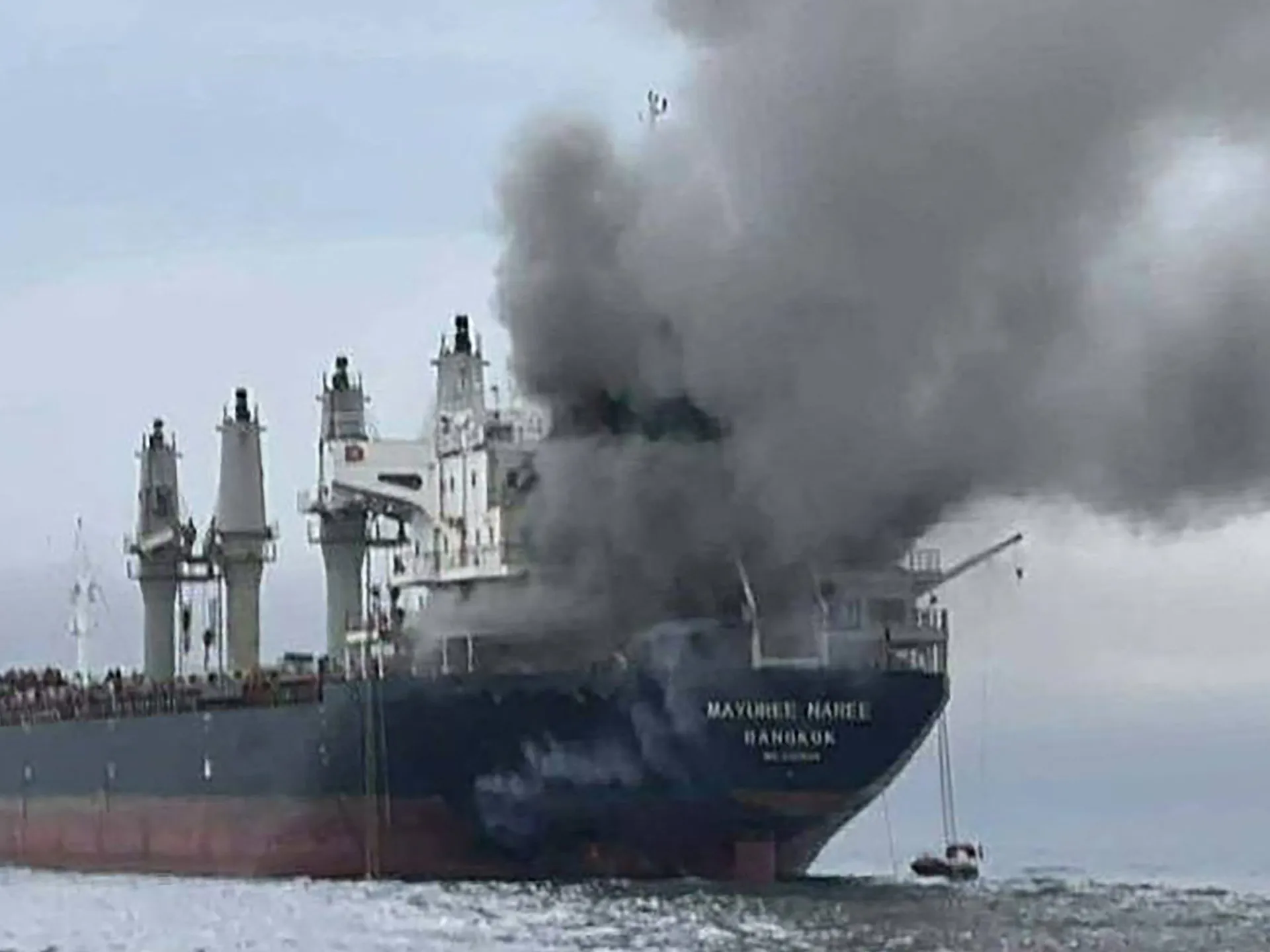
A Thai-flagged cargo vessel, Mayuree Naree Bangkok, was attacked near the Strait of Hormuz on March 11, leaving 3 of its 23 crew missing. The ship had departed Dubai and was heading to India when struck near its stern. #Iranpic.twitter.com/0BYBjqJIt1
Since Epic Fury was launched on Feb. 28, UKMTO “has received 17 reports of incidents affecting vessels operating in and around the Arabian Gulf, Strait of Hormuz (SOH) and Gulf of Oman,” the organization stated. That figure includes 13 attacks and four suspicious incident reports.
Iran said it is increasing these attacks to serve as an economic weapon against the U.S., Israel and allies.
The U.S. “will not be able to control oil prices,” the spokesperson for Tehran’s Khatam al-Anbiya military command headquarters vowed on Wednesday.
“We won’t allow even one liter of oil to reach the U.S., Zionists and their partners,” Ebrahim Zolfaqari proclaimed. “Any vessel or tanker bound to them will be a legitimate target.”
“Get ready for the oil barrel to be at $200 because the oil price depends on the regional security which you have destabilized,” Zolfaqari added.
As one example of market volatility, Brent Crude was trading at just over $90 a barrel as of Wednesday morning Eastern Day Light time, according to OilPrice.com. The prices have fluctuated wildly, surging to a recent high of more than $116 a barrel on March 8 and dropping to a little more than $84 a barrel yesterday.
🚨Iran is threatening to not allow ships through the Strait of Hormuz, also saying they will force oil to $200 per barrel.
“Not a single liter of oil will pass through the Strait of Hormuz for the benefit of the U.S., Israel, or their partners.”
Even as it cuts off the Strait for others, Iran is “exporting more oil through the Strait of Hormuz than before the war, showing it is in control of a strategic waterway that it has closed off to the rest of the region’s oil producers,” The Wall Street Journal reported.
Iran is exporting more oil through the Strait of Hormuz than before the war, showing it is in control of a strategic waterway that it has closed off to the rest of the region’s oil producers https://t.co/CeZTClmHBa
The world’s biggest liquefied natural gas (LNG) export plant in Qatar hasn’t exported a shipment for five days, Bloomberg News reported. It marks the longest streak in data going back to 2008.
“A loaded tanker hasn’t left the Ras Laffan facility in five days,” according to a Bloomberg analysis of Kpler ship-tracking data. “No LNG ship traversed the Strait of Hormuz after Feb. 28, when the US and Israel began strikes on Iran.”
The unprecedented closure of the liquefaction plant, which supplies nearly 20% of the world’s LNG, came after an Iranian drone attack early last week — resulting in a jump in gas prices in Europe and Asia, the news organization noted. Ras Laffan did load a handful of shipments after stopping output, likely using fuel from storage tanks, the last of which was on Friday.
The world’s biggest LNG export plant in Qatar hasn’t exported a shipment for five days — the longest streak in data going back to 2008 — threatening to further boost prices for the fuel https://t.co/BKFTpIV0dH
Two pipelines were built – one in Saudi Arabia, the other in UAE – just to bypass the Strait of Hormuz. This conflict, The Wall Street Journal posited, has highlighted their importance since they are the only ways to get a significant amount of oil out of the Persian Gulf and into world markets.
The blockage in the Strait of Hormuz has suddenly made Saudi Arabia’s East-West pipeline one of the most critical pieces of infrastructure in the world https://t.co/6bwxev9vKc
Iran’s closure of the Strait to most foreign shipping has thrown the world energy market into chaos, causing oil and gas prices to fluctuate dramatically.
“Japan, Germany and Austria will release oil from their strategic reserves in response to disruptions in the supply from the Middle East, officials in those countries said on Wednesday,” according to the Post. “They made the announcements hours before a meeting of leaders of the Group of 7 industrialized nations, including the United States, to discuss jointly releasing oil in consultation with the International Energy Agency.”
Japan will begin releasing oil from its reserves as early as Monday to offset disruptions in Middle Eastern supply, Prime Minister Sanae Takaichi said Wednesday in Tokyo.
The International Energy Agency (IEA) on Wednesday agreed to release 400 million barrels of oil to address the supply disruption triggered by the Iran war, the largest such action in the organization’s history, CNBC reported.
“The IEA did not set out a timeline for when the stocks would hit the market,” the news outlet noted. “It said that the reserves would be released over a timeframe that is appropriate to the circumstances of each of its 32 member countries.”
The U.S., meanwhile, has yet to tap into its Strategic Petroleum Reserve, a network of salt caverns in Texas and Louisiana that can hold up to 714 million barrels of crude.
PARIS/LONDON, March 11 (Reuters) – The International Energy Agency is to recommend the release of 400 million barrels of oil, the largest such move in IEA history, to try to restrain soaring crude prices amid the U.S.-Israeli war with Iran.
Iran is not preventing all ships from passing through the Strait. Tehran has agreed to provide Bangladeshi oil vessels with safe passage. The move comes as the Bangladesh government has intensified efforts to maintain a stable fuel supply through multiple strategic measures amid escalating conflict in the Middle East.
Bangladesh has sought assurances from Iran for the safe passage of its oil and liquefied natural gas (LNG)-carrying vessels through the Strait of Hormuz as escalating conflict in the Middle East threatens one of the world’s most critical energy shipping routes.
Iran has officially agreed to grant safe passage to Bangladeshi oil and LNG vessels traveling through the Strait of Hormuz. Under the new agreement, Bangladeshi ships must notify Iranian authorities before entering the strategic waterway to ensure secure transit.
Some vessels are also using their AIS system to identify as Chinese owned, shipping expert Sal Mercogliano noted. Iran’s closure of the Strait does not pertain to Chinese-owned ships.
The Marshal Islands-bulker KSL Laiyang is running the Strait.
She is broadcasting on AIS “China Owners & Crew”.
This is EXACTLY what we saw happen in the Red Sea against the Houthis. Expect to see more of this. pic.twitter.com/LSCESnEDKI
— Sal Mercogliano (WGOW Shipping) 🚢⚓🐪🚒🏴☠️ (@mercoglianos) March 10, 2026
The New York Times claimed that Iran’s ongoing attacks on shipping, as well as its continuing missile and drone barrages are an example of how the Trump administration miscalculated Iran’s response to Epic Fury.
The Trump administration has said it will send U.S. Navy warships to escort commercial vessels through the Strait, but that plan has yet to be implemented. Such a deployment would put American warships at far greater risk than they are facing now at standoff distances from Iran. It remains unclear how much longer Epic Fury will continue. The longer it does, however, the more Iran can bring economic pain around the globe with even just threats against Strait shipping. The Iranian attacks have led to Trump proposing that the U.S. provide political risk insurance for seaborne trade in the Gulf. “However, Lloyd’s of London, the heart of maritime insurance globally, emphasizes it has not stopped providing contracts to those who ask – although at the right tariff,” The Guardian reported.
Though no escorts have been set up, the U.S. is continuing to strike Iran’s Navy, including the sinking of the last of Iran’s Soleimani class catamaran warships, the head of U.S. Central Command said in a video statement on Wednesday morning.
“To date, we have struck more than 5,500 targets inside Iran, including more than 60 ships using a variety of precision weapon systems,” Adm. Brad Cooper said in a video. “Just yesterday, we had strike waves nearly every hour from different locations and directions going into Iran. We also took out the last of four Soleimani class warships. That’s an entire class of Iranian ships now out of the fight.”
Cooper did not name which of the catamarans was hit, but the video shows one from the Soleimani class and one from a smaller class. The hull number on the smaller ship – PC313-01 – indicates it was the IRIS Abu Mahdi al-Muhandis. The ship was unveiled in a ceremony at Bandar Abbas in January 2024, the Iranian Press TV news outlet reported at the time.
The now-sunk IRIS Abu Mahdi al-Muhandis at its unveiling in January 2024. (Iranian media)
U.S. Army Sgt. First Class Cory Hicks told ABC News about the Iranian drone attack on a command center in Kuwait that killed six soldiers on March 1.
Sgt. First Class Cory Hicks described the horrific moment a drone struck a U.S. command center in Kuwait and killed six service members: “I turned to my right, and that’s when it blew up and just blew the whole building apart.”
The deadly attack was more severe than previously known, with dozens of troops suffering injuries that included brain trauma, burns and severe injuries from shrapnel, according to CBS News.
NEWS via @CBSNews: An Iranian drone attack in Kuwait that killed U.S. service members in the early hours of the war with Iran was more severe than previously known, with dozens suffering injuries that included brain trauma, shrapnel trauma and burns, per sources. More than 30…
“I heard news that Mr Mojtaba Khamenei had been injured. I have asked some friends who had connections,” Pezeshkian stated on Telegram. “They told me that, thank God, he is safe and sound.”
State television had called Khamenei, 56, a “wounded veteran of the Ramadan war” but never specified his injury.
BREAKING Iran’s new supreme leader Mojtaba Khamenei is “safe and sound” despite reports of an injury during the war with Israel and the United States, the son of the Iranian president said on Wednesday pic.twitter.com/97ofF4dS1G
Iran’s Islamic Revolutionary Guard Corps (IRGC) has threatened to attack “economic centers and banks” related to United States and Israeli entities in the region after what it called an attack on an Iranian bank, Al Jazeera reported.
A spokesperson for the Khatam al-Anbiya Headquarters, a group described as IRGC-owned by the United Nations, said on Wednesday that “the enemy left our hands open to targeting economic centres and banks belonging to the United States and the Zionist regime in the region.”
To the people of Bahrain, the UAE, and Kuwait: Do not remain within one kilometer of banks
Khatam al‑Anbiya Headquarters spokesperson: After the U.S. and Israeli attack on an Iranian bank, we are now free to target U.S. and Israeli economic centers and banks across the region.
The warning came after a reported attack on a Bank Sepah branch north of Iran, which is said to have killed many putting in extra hours ahead of the Persian New Year.
The Khatam Al-Anbiya Air Defense HQs warns people in the entire region to stay away for 1km from banks after American-Zionists attacked a Bank Sepah branch in north of Tehran, killing a lot of personnel working extra hours ahead of Persian New Year. pic.twitter.com/JYcAaCQlLI
Iranian officials claimed to have hit several other U.S. targets in the region on Wednesday.
(Reuters) – The Iranian military said on Tuesday it had launched missiles at a U.S. base in northern Iraq, the U.S. naval headquarters for the Middle East in Bahrain, and at Be’er Ya’akov city in central Israel.
Explosions rang out in Bahrain, while in Dubai four people were…
IDF Chief of the General Staff, Lt. Gen. Eyal Zamir claimed that “many thousands” of Iranian soldiers and commanders have been killed so far in this war.
IDF Chief of Staff Lt. Gen. Eyal Zamir says “many thousands” of Iranian soldiers and commanders have been killed in Israeli strikes in Iran, warning that “no one is immune.”
“We are in a campaign that is deepening the damage to the Iranian regime and its foundations and pushing… pic.twitter.com/0C5XvjBFTy
— Emanuel (Mannie) Fabian (@manniefabian) March 11, 2026
The IDF released new video showing airstrikes on what it claims were Iranian troops preparing to launch drones.
The IDF releases footage showing airstrikes on Iranian soldiers who were preparing to launch drones at Israel from western Iran this week.
According to the military, the Iranian soldiers were identified on Monday at a drone launching site. A short while later, an Israeli Air… pic.twitter.com/XRWXO7YVaq
— Emanuel (Mannie) Fabian (@manniefabian) March 11, 2026
The IDF completed another wave of strikes in Dahiyeh in Beirut against what it claims were Hezbollah command centers and weapons storage sites. IDF said it issued a warning to residents before the attacks and also struck a Hezbollah command post in the coastal area of Tyre.
צה”ל השלים גל תקיפות נוסף בביירות
הבוקר , צה”ל השלים גל תקיפות נוסף בדאחייה שבביירות נגד מפקדות טרור ואתרים בהם אוכסנו אמצעי לחימה של ארגון הטרור חיזבאללה.
בנוסף, צה”ל תקף אתמול , מפקדה של ארגון הטרור חיזבאללה במרחב צור שבלבנון.
The IDF justified the strike by claiming the Lebanon-based Iranian proxy is hiding missiles, drones and other weapons in the heart of the Dahieh neighborhood in Beirut.
INTELLIGENCE REVEALS: Hezbollah is hiding its strategic weapons in the heart of the Dahieh in Beirut, beneath the residential buildings of Lebanese residents. These are missiles, drones and additional weapons funded by the Iranian terror regime and designed to harm Israeli…
The owner of this white pickup may be the luckiest person in the Middle East. Video emerged on social media showing Lebanese Army troops removing an unexploded bomb from the vehicle’s cargo bed.
Faced with growing threats from Hezbollah, Zamir ordered the Golani Brigade to be transferred from the Southern Command to operations in the Northern Command sector.
Zamir added that a decision will be made regarding additional reinforcements.
🚨NEW: The IDF says Chief of Staff Lt. Gen. Eyal Zamir has ordered significant reinforcements to Israel’s northern front, shifting the Golani Brigade combat team from the south to Northern Command following a new operational assessment.
In a post on X, the UAE Defense Ministry (MoD) said its air defenses “are currently dealing with missile attacks and incoming drones originating from Iran, and the Ministry of Defense confirms that the sounds heard in scattered areas of the country are the result of the air defense systems intercepting ballistic missiles, as well as fighter jets intercepting drones and loitering munitions.”
تتعامل حالياً الدفاعات الجوية الإماراتية مع اعتداءات صاروخية وطائرات مسيرة قادمة من إيران وتؤكد وزارة الدفاع أن الأصوات المسموعة في مناطق متفرقة من الدولة هي نتيجة اعتراض كل من منظومات الدفاع الجوي للصواريخ البالستية، والمقاتلات للطائرات المسيرة والجوالة.
Reuters posted a photograph on X of a building in Manama, Bahrain, reportedly damaged by an Iranian drone strike.
A building damaged in a reported Iranian drone strike, amid the U.S.-Israeli conflict with Iran, in Seef, Manama, Bahrain, March 10, 2026. REUTERS/Stringer pic.twitter.com/luPTavYyJT
With Bahrain also being battered by Iranian attacks, Gulf Air has relocated its fleet of aircraft from there to Saudi Arabia, according to Al Jazeera.
Iranian Armed Forces spokesperson Brig.-Gen. Abolfazl Shekarchi “called on regional Muslims and countries to reveal the locations of U.S. and Israeli military assets to enable Tehran to conduct more accurate attacks,” the Jerusalem Post reported, citing official Iranian media.
Shekarchi also framed the request as a way to ensure the safety of the people in the region.
“I call on the Muslim people of the region and the countries of the region to show us the hideouts of US and Zionist forces so that they themselves will not be harmed, and so that we can strike them more precisely,” Shekarchi proclaimed.
Iranian Armed Forces spokesperson Brig.-Gen. Abolfazl Shekarchi called on regional Muslims and countries to reveal the locations of US and Israeli military assets to enable Tehran to conduct more accurate attacks.https://t.co/YSSDWmIZ8s
In the wake of the joint U.S.-Israeli attack, The New York Times “has identified at least 17 damaged U.S. sites and other installations, several of which have been struck more than once since the war began,” the publication reported. “Our analysis is based on high-resolution, commercial satellite imagery, verified social media videos and statements by U.S. officials and Iranian state media.”
U.S. Air Force maintainers can be seen in the X post below loading weapons onto B-1B Lancer bombers, which have arrived at Fairford Air Base in the U.K.
US Airforce ground crew work under hatches of a B1 Lancer at RAF Fairford today. What appear to be cruise missiles sit by the warplane. Three B1 bombers returned this morning, on what is believed to be the first attack on Iran from a British base during this conflict. @AJENewspic.twitter.com/80YkxHL5rT
Romanian President Nicusor Dan said that U.S. refueling planes, monitoring equipment and satellite communications systems can use his country’s military bases.
BUCHAREST, March 11 (Reuters) – American refueling planes, monitoring equipment and satellite communications could use Romanian military bases during the U.S.’ offensive in Iran, Romanian President Nicusor Dan said on Wednesday.
Turkey has reportedly deployed an ASELSAN’s ŞAHİN 40mm anti-drone system to Northern Cyprus, where it is now operational to defend against low-flying mini and micro UAVs using airburst smart grenades.
Türkiye deployed ASELSAN’s ŞAHİN 40mm anti-drone system to Northern Cyprus, where it is now operational to defend against low-flying mini and micro UAVs using airburst smart grenades. pic.twitter.com/HT641qe6w7
Ukrainian President Volodymyr Zelensky claims that Russia may send troops to Iran. That would be in addition to the support Moscow is already providing in the form of drones and air defenses, Zelensky said. He added that Russia will likely send missiles in the not-far-off future.
Ukraine, which has long sought interceptors to help fend off waves of Russian missile and drone attacks, took to social media to note the discrepancy in how much it has been supplied over the course of four years versus how much the U.S. and allies have used during 11 days of Epic Fury.
800 Patriot missiles were used for air defense in just 3 days in the Middle East. Ukraine received 600 in 4 years of full-scale war.
Russia, Iran and North Korea form a new Axis of Evil. Ukraine was the first to confront this Axis. We continue to fight, but we need support.
Add Italian Prime Minister Giorgia Meloni to the list of world leaders proclaiming that an Ayatollah-led regime in Iran should never obtain nuclear weapons.
Italy’s Meloni on Iran:
We cannot afford an Ayatollah regime in possession of a nuclear weapon, combined, moreover, with a missile capability that could soon be able to directly strike Italy and Europe. pic.twitter.com/gdQE6HlckA
We have concluded our rolling coverage in this piece.
UPDATE: 5:11 PM EST –
Video has emerged showing a reported attack on an oil tanker near Iraq. Information at this point is scarce. The Ambrey martime security firm said it is investigating the matter.
The U.S. used as much as $4 billion worth of munitions in the first 72 hours of its attacks against Iran, including about 400 cruise missiles and 800 air defense interceptors, Bloomberg News reported, citing estimates from German defense giant Rheinmetall AG.
“The numbers, released in the company’s earnings presentation on Wednesday, were drawn from ‘publicly available sources and in-house assumptions,’ the slides said,” according to the news outlet. “Other reports have put the munitions cost for the first two days of the conflict higher, at as much as $5.6 billion.”
The US used as much as $4 billion worth of munitions in the first 72 hours of its attacks against Iran, including about 400 cruise missiles and 800 air defense interceptors, according to estimates from German defense giant Rheinmetall https://t.co/7xiR8WNbtM
Trump said that he picked the name Epic Fury from a list of about 20 and that the U.S. has already won.
“You know, you can only do it if you win — and we’ve won,” the American leader proclaimed. “Let me say: we’ve won. You never like to say it too early, but we won the bet in the first hour. It was over.”
Trump on Iran:
Operation Epic Fury — is that a great name? Well, it’s only good if you win.
You know, you can only do it if you win — and we’ve won. Let me say: we’ve won. You never like to say it too early, but we won the bet in the first hour. It was over.
Israel’s Iron Dome air defense system “could not stop about half the 100 rockets Hezbollah launched at Israel just a few hours ago,” New York Post reporter Caitlin Doornbos posted on X.
Exclusive: The Iron Dome could not stop about half the 100 rockets Hezbollah launched at Israel just a few hours ago.
The leaders of the G7 group of nations – the United States, Canada, Japan, Italy, Britain, Germany and France – “agreed to examine the option of providing escort for ships so they can navigate freely in the Gulf,” according to a statement from the G7 Presidency on Wednesday.
(Reuters) – The leaders of the G7 group of nations – the United States, Canada, Japan, Italy, Britain, Germany and France – agreed to examine the option of providing escort for ships so they can navigate freely in the Gulf, said a statement from the G7 Presidency on Wednesday.…
Despite threats from the regime to stay home, anti-government protestors are reportedly continuing to take to the streets in Iran demanding change.
For 12 consecutive night, without missing a single day, Iranian people have hit the streets to express their anger over Israel/US attacks on Iran & its leader.
They express support for armed forces & demand harsh revenge.
The U.K. Defense Ministry (MoD) provided its latest update on Middle East operations.
The UAE MoD said its air defenses “dealt with 6 ballistic missiles, 7 cruise missiles, and 39 drones coming from Iran” today. “Since the start of the brazen Iranian aggression, UAE air defenses have dealt with 268 ballistic missiles, 15 cruise missiles, and 1,514 drones.”
الدفاعات الجوية الإماراتية تتعامل مع 6 صواريخ باليستية و7 صواريخ جوالة و 39 طائرة مسيرة.
تعاملت الدفاعات الجوية الإماراتية (11 مارس 2026) مع 6 صواريخ باليستية، و7 صواريخ جوالة، و 39 طائرة مسيرة قادمة من إيران.
The IRGC posted video it claims shows missile launches toward U.S., Israeli and allied military bases housing American forces in the region.
Iran’s IRGC published footage of its missile launches towards “Israel” and US bases.
The missiles include Qadr, Emad, Kheybar Shekan, and Fattah missiles against targets in Tel Aviv, Haifa, and US bases in the region such as the Muwaffaq Salti Air Base in Jordan & Prince Sultan… pic.twitter.com/Jkb8JRO04q
Kuwaiti air defenses are currently confronting hostile missile and drone attacks, the nation’s army announced on X.
“The General Staff of the Army notes that if explosion sounds are heard, they are the result of air defense systems intercepting the hostile attacks,” the announcement added.
تتصدى حالياً الدفاعات الجوية الكويتية لهجمات صاروخية وطائرات مسيرة معادية.
تنوه رئاسة الأركان العامة للجيش أن أصوات الانفجارات إن سمعت فهي نتيجة اعتراض منظومات الدفاع الجوي للهجمات المعادية.
— KUWAIT ARMY – الجيش الكويتي (@KuwaitArmyGHQ) March 11, 2026
UPDATE: 4:18 PM EST –
Three Ukrainian teams of military personnel and engineers have gone to the Middle East to help the U.S. and allies in the fight against Iran, Ukrainian President Volodymyr Zelensky stated on X.
After four years of fending off daily bombardment by Russian missiles and drones, Ukraine has a lot of hardearned expertise to share.
Three Ukrainian teams have gone to the Middle East. Strong teams – with experts, military personnel, and engineers. The military are already communicating and working today. The NSDC Secretary, Rustem Umerov, has arrived in the UAE today to discuss areas of cooperation. He will…
— Volodymyr Zelenskyy / Володимир Зеленський (@ZelenskyyUa) March 11, 2026
Al Jazeera said a senior Iranian military official claimed that if “Washington commits a strategic mistake, another strait will be in a situation similar to the Strait of Hormuz,” the publication posted on X. “The region may enter a regional war soon, and we still have many cards to play. Any American mistake will complicate the situation in the region, and Iran has phased and graduated military plans.”
#عاجل| مسؤول عسكري إيراني رفيع للجزيرة: إذا ارتكبت واشنطن خطأ استراتيجيا فإن مضيقا آخر سيكون في وضع مماثل لمضيق هرمز – المنطقة قد تدخل حربا إقليمية قريبا ولا تزال لدينا أوراق عديدة لاستعمالها – أي خطأ أمريكي سيعقد الوضع في المنطقة ولدى #إيران خطط عسكرية مرحلية ومتدرجة pic.twitter.com/gLm38EUy4D
Despite what appears to be a coordinated Israel attack on Basij checkpoints in Tehran, the regime is reportedly keeping a tight lid on any potential anti-government protests, journalist Nilo Tabrizy said a source told her.
“The government constantly sends threatening [text] messages to everyone. It says that if you come to the streets to protest, you will be considered an Israeli soldier and will be killed.”
A source in Iran told me about the continued repression by state security forces despite waves of heavy air strikes over their city:
“The government constantly sends threatening [text] messages to everyone. It says that if you come to the streets to protest, you will be…
Meanwhile, the Speaker of the Iranian Parliament is urging pro-government crowds to remain on the streets.
“Dear Iranian nation, to whom I would sacrifice my life a thousand times!” MB Ghalibaf stated on X. “Your presence in the streets has bewildered and enraged the enemy. This humble soldier of yours has three requests from you: the streets, the streets, the streets. Your children in the armed forces have taken their lives in hand to defend #Iran; strengthen their backs by holding the streets firm.”
ملت عزیز ایران که جانم هزاران بار فدای شما!
حضور شما در خیابانها دشمن را گیج و عصبانی کرده است.
این سرباز کوچکتان سه درخواست از شما دارد: خیابان، خیابان، خیابان.
فرزندان شما درنیروهای مسلح جان خود را برای دفاع از #ایران در دست گرفتهاند، پشت آنها را با حفظ خیابان محکم کنید.
— محمدباقر قالیباف | MB Ghalibaf (@mb_ghalibaf) March 11, 2026
Alarms have again sounded in Bahrain, as the nation braces for another wave of Iranian attacks, officials there claim.
تم إطلاق صافرة الإنذار ،نرجو من المواطنين والمقيمين الهدوء والتوجه لأقرب مكان آمن ومتابعة الأخبار عبر القنوات الرسمية
Kuwait National Guard bomb squad engineers have destroyed a drone warhead that fell inside a fuel tank, spokesman Jadaan Al-Fadhel said in a statement on Wednesday, adding that no injuries were reported during the operation.
Kuwait National Guard bomb squad engineers have destroyed a drone warhead that fell inside a fuel tank, Spokesman Jadaan Al-Fadhel said in a statement on Wednesday, adding that no injuries were reported during the operation.
During a visit to Thermo Fisher Scientific in Cincinnati on Wednesday, Trump said that for Iran, it’s a “war.” But for America, it’s “easier than we thought.”
During a site visit to Thermo Fisher Scientific in Cincinnati on Wednesday, President Trump told reporters the U.S. military operation in Iran is “both” a “little excursion” and a “war.”
“For them it’s a war,” Trump said. “For us it’s turned out to be easier than we thought.”… pic.twitter.com/RkRZxWuRfN
The U.S. president also claimed that more than two dozen Iranian mine boats have been destroyed during Epic Fury.
“They started talking about mines. So we hit 28 mine ships as of this moment,” Trump proclaimed. “Twenty-eight. Like, using the same weapon — the exact same weapon that we use against the drug dealers in the water. We have — as an example, we had tremendous drugs pouring in through the water — through the sea. And now we have almost none. It’s down 97%.”
U.S. President Donald J. Trump tells reporters that 28 mine-laying vessels operated by the Iranian Navy and Islamic Revolutionary Guard Corps Navy (IRGCN) have now been targeted and destroyed:
“They started talking about mines. So we hit 28 mine ships as of this moment.… pic.twitter.com/znwGK9sydD
Iran deployed about a dozen mines in the Strait of Hormuz, Reuters reported, citing two sources familiar with the matter. The move is likely to complicate reopening the waterway — an important route for shipping oil and liquefied natural gas.
🚨 Western sources in a conversation with N12: “The Iranians have already laid more than 10 mines in the Strait of Hormuz and intend to lay more. Both the entry and exit routes are blocked – to put pressure on us. They have created a bypass route and allow only those they want to…
Trump is preparing to invoke Cold War-era powers to pave the way for renewed oil production off the southern California coast, Bloomberg News is reporting. The move is seen as “a long-shot bid to help ease the global crude supply crunch spurred by his war with Iran,” according to the outlet.
“Trump is set to soon summon authorities under the Defense Production Act to preempt state laws and ease permitting for Sable Offshore Corp., a Houston-based company looking to restart significant production from a cluster of offshore platforms in California,” Bloomberg added. “The plan was described by a person familiar with the matter who asked not to be named because it’s not yet public.”
Trump is preparing to invoke Cold War-era powers to pave the way for renewed oil production off the southern California coast, a long-shot bid to help ease the global crude supply crunch spurred by his war with Iran. https://t.co/uopErGQnUh
The fire at Oman’s Salahah Port seems to be intensifying. The port was attacked by Iran earlier on Wednesday.
Several security forces and members of Iran’s paramilitary Basij force were killed by Israeli drones in Tehran today, according to the IRGC-affiliated Fars News Agency.
Iran’s IRGC-affiliated Fars News Agency has reported that several security forces and members of the paramilitary Basij force were killed in Tehran today, accusing Israel of targeting them with drones.
— Ghoncheh Habibiazad | غنچه (@GhonchehAzad) March 11, 2026
UPDATE: 2:53 PM EST –
Hezbollah fired dozens of rockets from Lebanon and Iran fired several ballistic missiles at the area, according to Israeli media.
The Israeli military later confirmed that it didn’t intercept some of the projectiles, adding that rescue services and emergency teams are “currently operating at the impact sites.”
Video has emerged showing an Iranian Shahed-type long-range strike drone approaching, then hitting the fuel tanks in the Omani port of Salalah earlier on Wednesday. The attack caused a powerful explosion and fireball.
In a post on X, Iranian President Masoud Pezeshkian said he told leaders from Russia and Pakistan that his nation reaffirms its “commitment to peace in the region.”
“The only way to end this war—ignited by the Zionist regime & US—is recognizing Iran’s legitimate rights, payment of reparations, and firm int’l guarantees against future aggression,” he exclaimed.
Talking to leaders of Russia and Pakistan, I reaffirmed Iran’s commitment to peace in the region. The only way to end this war—ignited by the Zionist regime & US—is recognizing Iran’s legitimate rights, payment of reparations, and firm int’l guarantees against future aggression.
The Coordination Committee of the Iraqi Resistance issued a warning to Syrian leader, Ahmed Sharaa, threatening that any hostile move toward Lebanon, particularly if coordinated with the U.S. or Israel, would be treated as a declaration of war against the entire Axis of Resistance.
Notable: The Coordination Committee of the Iraqi Resistance – a loosely coordinated body made up of Iran-backed Shiite militias in Iraq that align messaging, threats, and occasionally operations – issued a warning to Syrian leader, Ahmed Sharaa, threatening that any hostile move… pic.twitter.com/ze40sgZcPC
The threat in Iraq remains real as you can see by the following video, which reportedly shows an interceptor hitting an Iranian drone over Erbil.
There is pushback to claims that the U.S. is sending Terminal High Altitude Area Defense (THAAD) systems from Korea for deployment to the Middle East.
According to the latest reports, the six launchers present in Korea left their base, delivered (presumably 48) interceptor missiles to Osan Air Base to be transported out, then returned. (And an anti-THAAD group is demanding the radar be removed, as it is still there) https://t.co/T4igHmcCDq
UAE reportedly sees an opportunity to reclaim the Abu Musa, Greater and Lesser Tunb islands that Iran seized in 1971.
The Bellingcat investigative team geolocated eight videos showing U.S. Tomahawk launches.
Bellingcat has geolocated eight videos showing US Tomahawks cruise missiles in Iraq heading towards Iran. The missiles appear to be flying low across valleys and were most likely fired from the Mediterranean sea, an expert told us. pic.twitter.com/9bTO2BODa1
Meanwhile, India condemned the Iranian attack on the Thai ship bound for Kandla.
“Iran and the terrorist militias allied with it may be planning to target U.S.-owned oil and energy infrastructure in Iraq,” the U.S. Embassy in Baghdad warned. “Additionally, Iran-aligned terrorist militias have targeted hotels frequented by Americans in various parts of Iraq, including the Kurdistan Region of Iraq. “
تنبيه أمني – سفارة الولايات المتحدة في بغداد، العراق – 11 آذار 2026 – تحديث رقم 1
الموقع: العراق
التحديث: قد تكون إيران والميليشيات الإرهابية المتحالفة معها بصدد التخطيط لاستهداف البنية التحتية للنفط والطاقة التي تملكها للولايات المتحدة في العراق. كما وقامت ميليشيات إرهابية…
The IDF released a video containing what it says was audio of a radio exchange between an Israeli and U.S. pilot.
UPDATE: 2:06 EST –
An ongoing military investigation has determined that the United States is responsible for a deadly Feb. 28 Tomahawk missile strike on an Iranian elementary school, The New York Times reported, citing U.S. officials and others familiar with the preliminary findings.
The Feb. 28 strike on the elementary school was the result of a targeting mistake by the U.S., preliminary inquiry says: “U.S. Central Command created the target coordinates for the strike using outdated data provided by the Defense Intelligence Agency.” https://t.co/sgMwh2wRz1pic.twitter.com/2cTHHdGg3q
Iran’s Armed Forces spokesman General Shekarchi warned the U.S. and allies against striking Iranian ports.
“If any threat is made against our ports, all docks and economic ports in the entire region will be our legitimate targets, and we will carry out operations heavier than those we have done so far,” he vowed.
#BREAKING Spokesperson of Iran’s Armed Forces General Shekarchi: If any threat is made against our ports, all docks and economic ports in the entire region will be our legitimate targets, and we will carry out operations heavier than those we have done so far. pic.twitter.com/vrtKP4bOkQ
Iran may be using a Chinese satellite navigation system to target Israel and United States military assets in the Middle East, intelligence experts say, according to Al Jazeera.
“Former French foreign intelligence director Alain Juillet told France’s independent Tocsin podcast this week that it is likely that Iran has been provided access to China’s BeiDou satellite navigation system because its targeting has become much more accurate since the 12-Day War with Israel in June,” the outlet reported.
1:55PM EST—
The NYT reports that Pentagon officials told U.S. lawmakers that Iran has as much as 50% of its missiles and launchers remaining.
“Two military officials said there was concern that the Pentagon did not have full clarity on all of Iran’s launch sites. The officials also said that Iran had kept many missiles in reserve to strike at important battlefield targets like the American radars…. Pentagon officials…
A Merlin early warning and control helicopter has arrived in Cyprus to provide a critical ‘look down’ capability for spotting incoming drones. You can read about how critical this capability is and how new assets are being sent to the Middle East to help provide it in our story from yesterday linked here.
Lawmakers express concerns as Trump officials project $50bn more may be needed for Iran war funding.
Published On 12 Mar 202612 Mar 2026
Share
Officials from President Donald Trump’s administration have estimated during a congressional briefing this week that the first six days of the war on Iran had cost the United States at least $11.3bn, a source familiar with the matter told the Reuters news agency.
That figure, from a closed-door briefing for senators on Tuesday, did not include the entire cost of the war, but was provided to lawmakers as they have clamoured for more information about the cost.
Recommended Stories
list of 3 itemsend of list
Several congressional aides have said they expect the White House to soon submit a request to Congress for additional funding for the war. Some officials have said the request could be for $50bn, while others have said that estimate seems low.
The administration has not provided a public assessment of the cost of the conflict or a clear idea of its expected duration. Trump said during a trip to Kentucky on Wednesday that “we won” the war but that the US would stay in the fight to finish the job.
The $11.3bn figure was first reported on Wednesday by The New York Times.
The human cost
The US-Israeli war on Iran has so far killed about 2,000 people, mostly Iranians and Lebanese, as the conflict has spread across the Middle East, with Iranian retaliatory strikes on neighbouring countries hosting US assets, sending energy prices soaring.
The United Nations children’s agency (UNICEF) says the “intensifying conflict” has killed or wounded 1,100 children, creating a “catastrophic” situation for millions of children across the Middle East.
About 800,000 people have already been displaced in Lebanon by relentless Israeli bombardment.
Administration officials also have told lawmakers that $5.6bn of munitions were used during the first two days of strikes.
Members of Congress, who may soon have to approve additional funding for the war, have expressed concern that the conflict will deplete US military stocks at a time when the defence industry was already struggling to keep up with demand.
Democratic lawmakers have demanded public testimony under oath from administration officials about the Republican president’s plans for the war, including how long it might last and what his plans are for Iran once the fighting has stopped.
Trump on Wednesday said the war with Iran may end “soon” because there is “practically nothing left” for the US military to bomb. He did not provide any evidence for that claim.
Israeli journalist and writer, Gideon Levy, says that regime change in Iran is unlikely and the decision to end the war ultimately rests with US President Trump, not Israel.
Iranian explosive-laden boats appear to have attacked two fuel tankers in Iraqi waters, setting them ablaze and killing one crew member, after projectiles struck three vessels in Gulf waters, according to reports.
The ships targeted in late-night attacks on Wednesday in the Gulf near Iraq were the Marshall Islands-flagged Safesea Vishnu and the Zefyros, which had loaded fuel cargoes in Iraq, two Iraqi port officials told the Reuters news agency.
Recommended Stories
list of 4 itemsend of list
“We recovered the body of a foreign crew member from the water,” one port security official said, as Iraqi rescue teams continued searching for other missing seafarers. It was not immediately clear which ship that person was linked to.
One Iraqi port security source said Zefyros is flagged in Malta and provided Reuters with a list of crew names.
Al Jazeera’s correspondent in Baghdad, Iraq, Mahmoud Abdelwahed, said the tankers were loaded with crude oil from the Umm Qasr port in southern Iraq in the Basra province, and were attacked soon after their voyage got under way.
“Iraqi officials say this is a flagrant violation of Iraq’s sovereignty given the fact this act, they say, of sabotage has happened in Iraq’s territorial waters,” Abdelwahed said.
Reuters said that reports of the use of explosive-laden unmanned surface vessels, which Ukraine has used with great effect in its war with Russia, come as Iran has blocked oil shipments from transiting the key Strait of Hormuz, through which one-fifth of the world’s oil transits but has been blocked amid the United States-Israeli war on Iran.
Reuters, citing two unnamed sources, also reported on Wednesday that Iran has deployed about a dozen mines in the strait, while US President Donald Trump said US forces had struck 28 Iranian mine-laying vessels, amid warnings by Trump of severe repercussions should Iran lay mines in the key waterway for global shipping.
Strait of Hormuz sealed
Iran’s Islamic Revolutionary Guard Corps (IRGC) have warned that any ship passing through the Strait of Hormuz will be targeted.
The Thai-flagged Mayuree Naree dry bulk vessel was struck by “two projectiles of unknown origin” while sailing through the strait earlier on Wednesday, causing a fire and damaging the engine room, the ship’s Thai-listed operator Precious Shipping said in a statement.
“Three crew members are reported missing and believed to be trapped in the engine room,” Precious Shipping said.
“The company is working with the relevant authorities to rescue these three missing crew members,” it said, adding that the remaining 20 crew members had been safely evacuated and were ashore in Oman.
Images shared by Thai news outlet Khaosod English showed what were reported to be crew members of the ship after their rescue by Oman’s navy.
The IRGC said in a statement carried by the semi-official Tasnim news agency that the ship was “fired upon by Iranian fighters”, suggesting the first direct engagement by the IRGC, who have previously fired missiles or drones.
The Japan-flagged container ship ONE Majesty also sustained minor damage on Wednesday from an unknown projectile 25 nautical miles (about 46 kilometres) northwest of Ras al-Khaimah in the United Arab Emirates, two maritime security firms said. Its Japanese owner Mitsui OSK Lines and a spokesperson for Ocean Network Express, its charterer, said the vessel was struck while at anchor in the Gulf, and an inspection of the hull revealed minor damage above the waterline.
All crew are safe, they said, adding that the vessel remains fully operational and seaworthy. The owner said the cause of the incident remained unclear and was under investigation.
A third vessel, a bulk carrier, was also hit by an unknown projectile approximately 50 nautical miles (about 93km) northwest of Dubai, maritime security firms said.
The projectile had damaged the hull of the Marshall Islands-flagged Star Gwyneth, maritime risk management company Vanguard said, adding that the vessel’s crew were safe. Owner Star Bulk Carriers said the ship was hit in the hold area while it was anchored. There were no crew injuries and no listing.
The US Navy has refused near-daily requests from the shipping industry for military escorts through the Strait of Hormuz since the start of the war on Iran, saying the risk of attacks is too high for now, sources familiar with the matter told Reuters.
The Bahraini interior ministry released footage of a massive blaze at a fuel storage facility following an Iranian attack. Bahrain hosts the US Navy’s Fifth Fleet and has been consistently targeted amid the US-Israeli initiated war.
Some supporters of the US-Israeli war on Iran are using the treatment of women in the country as a justification for bombing it. Al Jazeera’s Ava Warriner explains.
During a cabinet meeting, Qatar’s Prime Minister Sheikh Mohammed bin Abdulrahman Al Thani called for strengthening the country’s ability to withstand “hardship” as the US-Israel war on Iran rages.
Iran’s sports minister said his nation will not participate in this summer’s World Cup following the attacks on the country by the U.S., one of the tournament’s hosts.
The U.S. bombing campaign against Iran, which began two weeks ago, has triggered a region-wide conflict and killed more than 1,300 Iranians including Ayatollah Ali Khamenei, the country’s supreme leader, according to Iran’s U.N. ambassador Amir Saeid Iravani.
“Considering that this corrupt regime has assassinated our leader, under no circumstances can we participate in the World Cup,” sports minister Ahmad Donyamali said on state television Wednesday.
“Our players do not have security, and fundamentally the conditions for participation do not exist.”
Donyamali’s statement came just hours after FIFA president Gianni Infantino said he had received assurances from President Trump that Iran would be allowed to participate in the tournament, which will be played in the U.S., Mexico and Canada.
“President Trump reiterated that the Iranian team is, of course, welcome to compete in the tournament in the United States,” Infantino wrote in an Instagram post. “We need an event like the FIFA World Cup to bring people together now more than ever, and I sincerely thank the President of the United States for his support.”
Last year President Trump signed an executive order suspending visa issurance to nationals of 19 countries, including Iran, although the State Department can make exceptions for “participants in certain major sporting events” such as the World Cup.
Iran, which has played in the last three World Cups, earned its place in this summer’s tournament by dominating its group in the Asian confederation tournament. However it did not send a representation to a World Cup planning summit last week in Atlanta.
Iran was drawn into Group G for the World Cup and is scheduled to begin play June 15 against New Zealand at SoFi Stadium in Inglewood. Iran’s second group-stage game, against Belgium, is also scheduled for SoFi Stadium before the team finishes the first stage of the tournament against Egypt in Seattle.
According to The Athletic, no country has withdrawn from a World Cup after qualifying since the 1950 tournament in Brazil, when India, Scotland, France and Turkey pulled out, mostly over costs and logistical issues.
Donyamali did not say whether he has begun the formal process or withdrawing Iran from the World Cup but FIFA could be facing a time crunch if it had to replace Iran in the 48-team field. Article 6.7 of FIFA’s 2026 World Cup regulations states: ‘If any Participating Member Association withdraws and/or is excluded from the FIFA World Cup 26, FIFA shall decide on the matter at its sole discretion and take whatever action is deemed necessary. FIFA may decide to replace the Participating Member Association in question with another association.”
The most likely replacement scenario would have Iraq, the top non-qualifier from the Asian confederation, taking Iran’s place. Iraq is scheduled to play the winner of a Suriname-Bolivia playoff in Mexico later this month for a final World Cup berth but with airspace over the Middle East closed because of the war, the Iraqis are unsure how they will get to Mexico. Giving them Iran’s berth would solve that problem but it would create another; who would replace Iraq in the playoff against the Suriname-Bolivia winner? Based on the Asian qualifying tournament, the UAE would be the most likely candidate but it, too, would face travel concerns in getting to Mexico.
FIFA could leave those playoffs untouched and give Iran’s spot to Italy, which is ranked 13th in the world but must win a four-team UEFA playoff later this month to qualify for the World Cup. Basically FIFA can do whatever it wants.
FIFA regulations say that any team that withdraws from the tournament “no later than 30 days before the first match” will be fined and could face other “disciplinary sanctions” including expulsion from subsequent FIFA competitions. This summer’s World Cup kicked off June 11 in Mexico City and Toronto. The U.S. opener is scheduled for June 12 in Inglewood.
Earlier this week six members of Iran’s delegation to the Women’s Asian Cup were granted humanitarian visas and allowed to remain in Australia rather than return to Iran where they feared persecution for not singing the national anthem during the tournament.
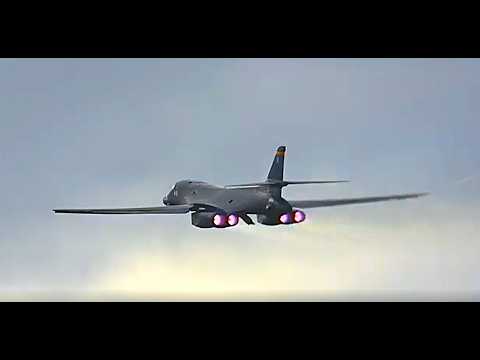


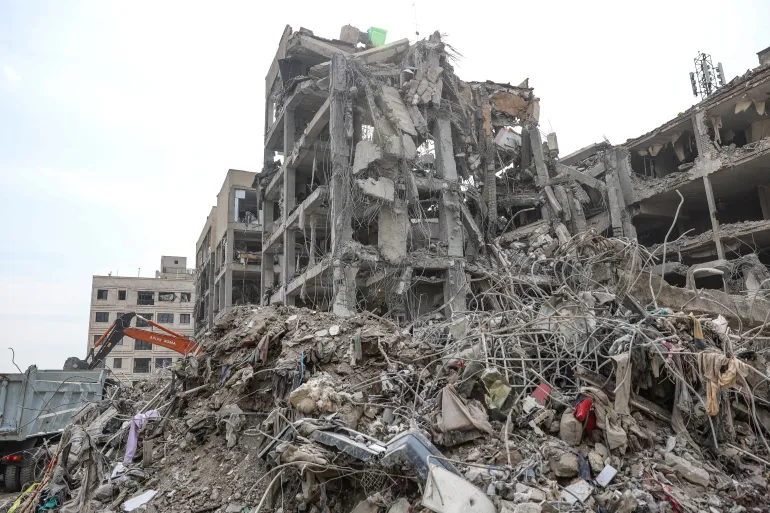






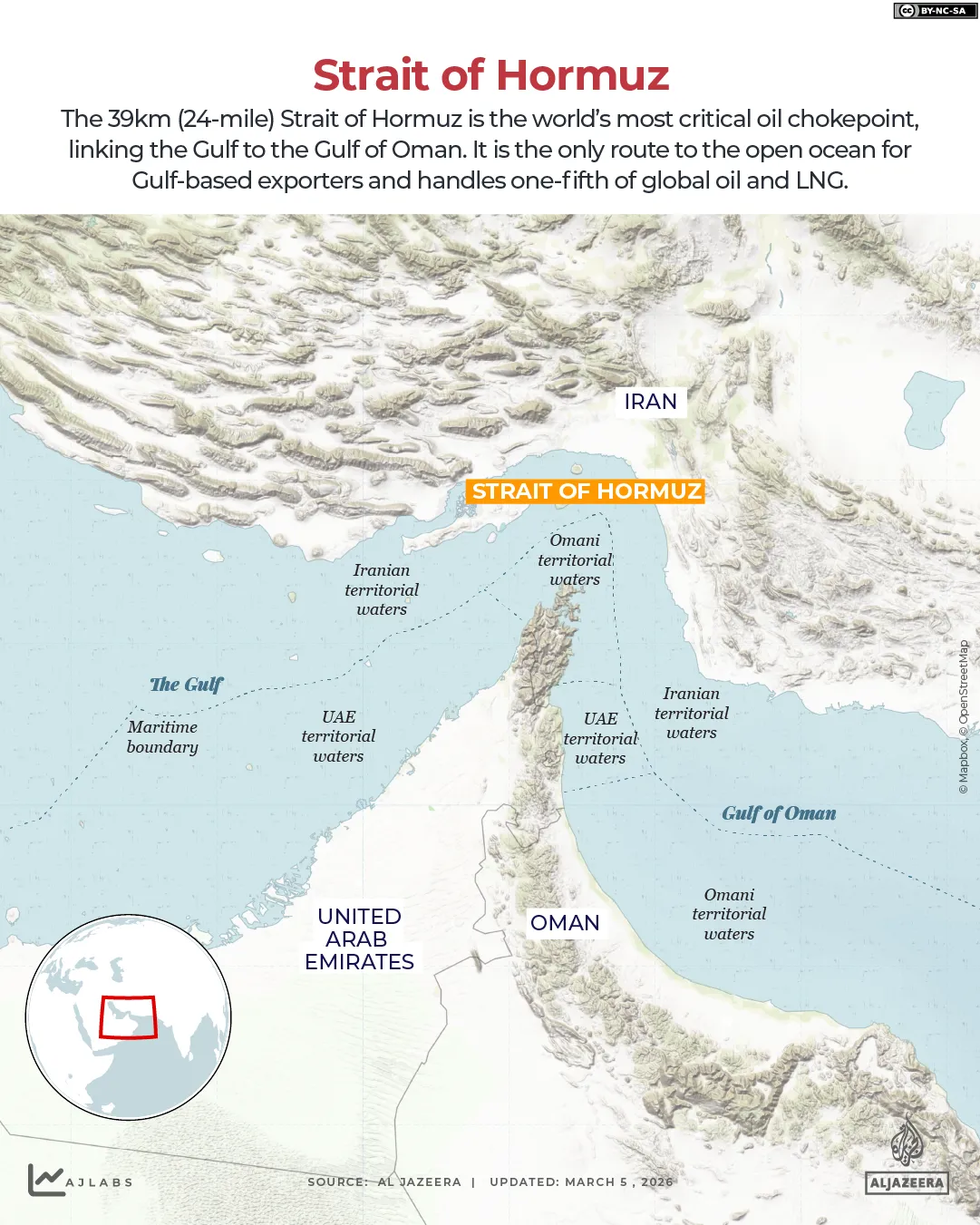

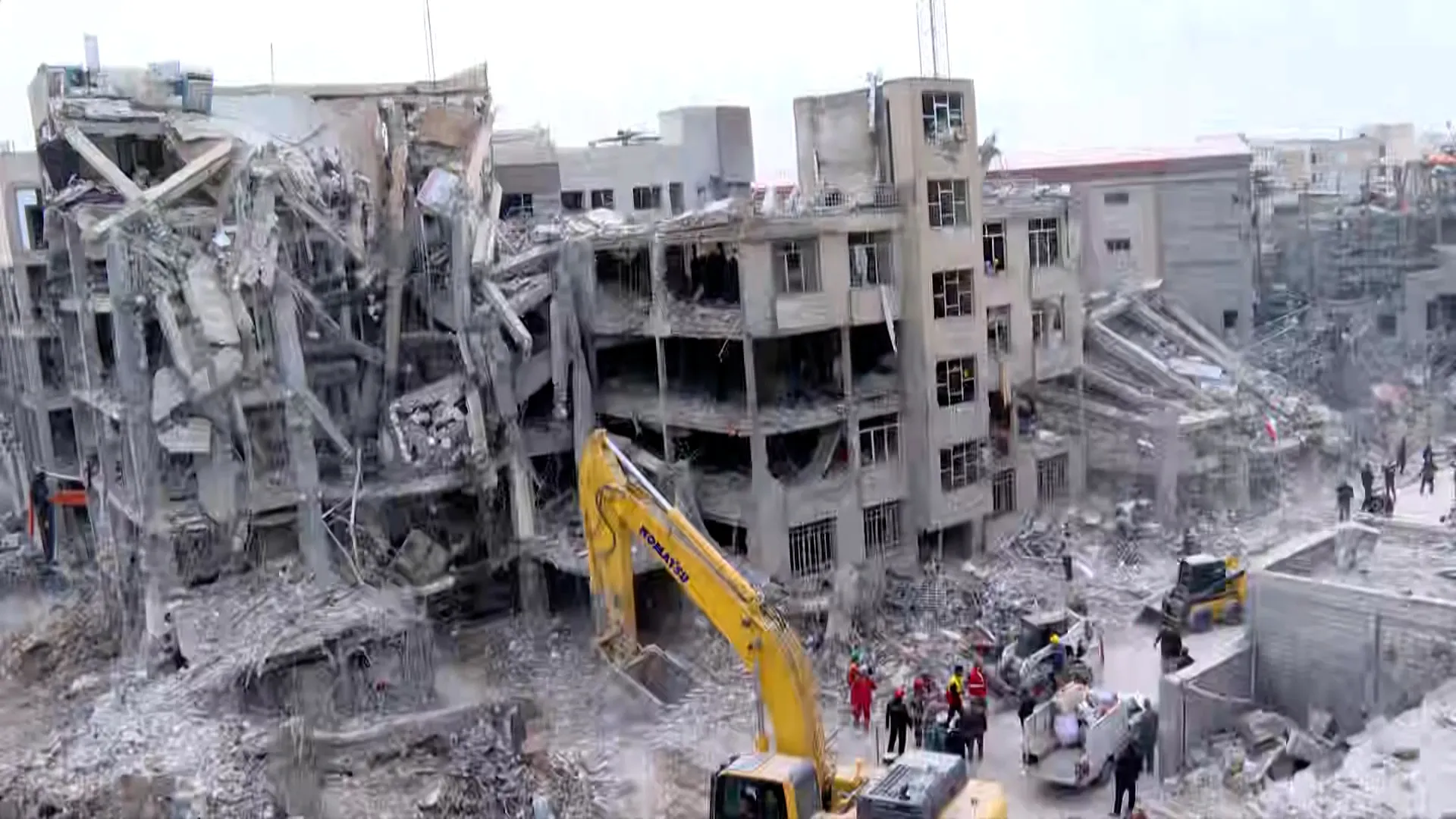


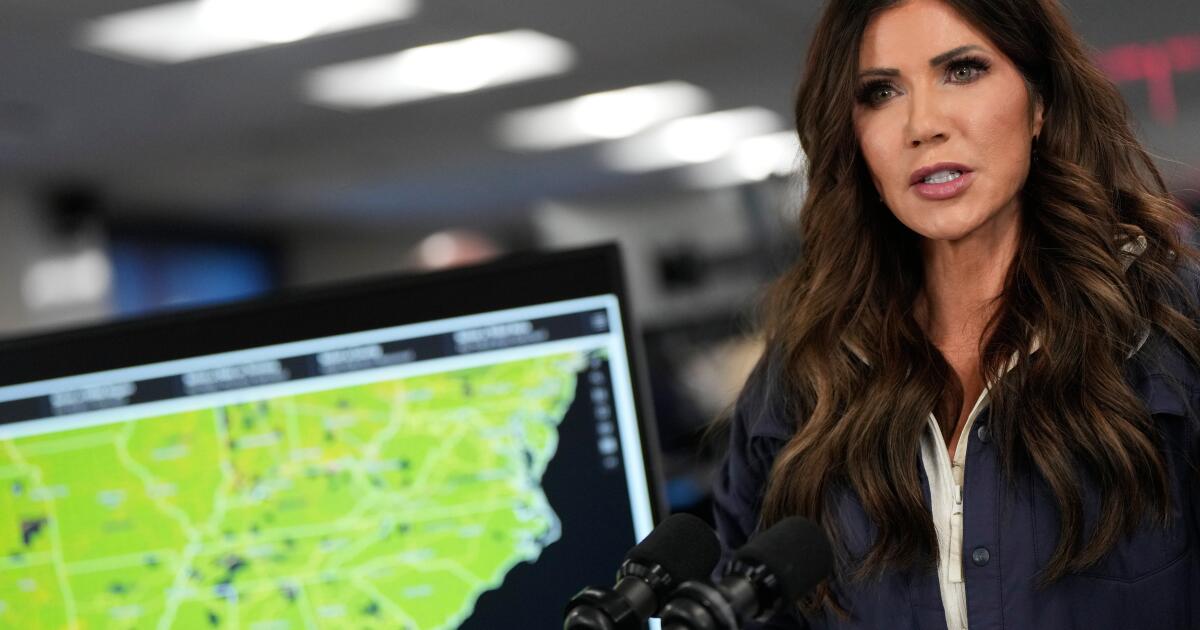
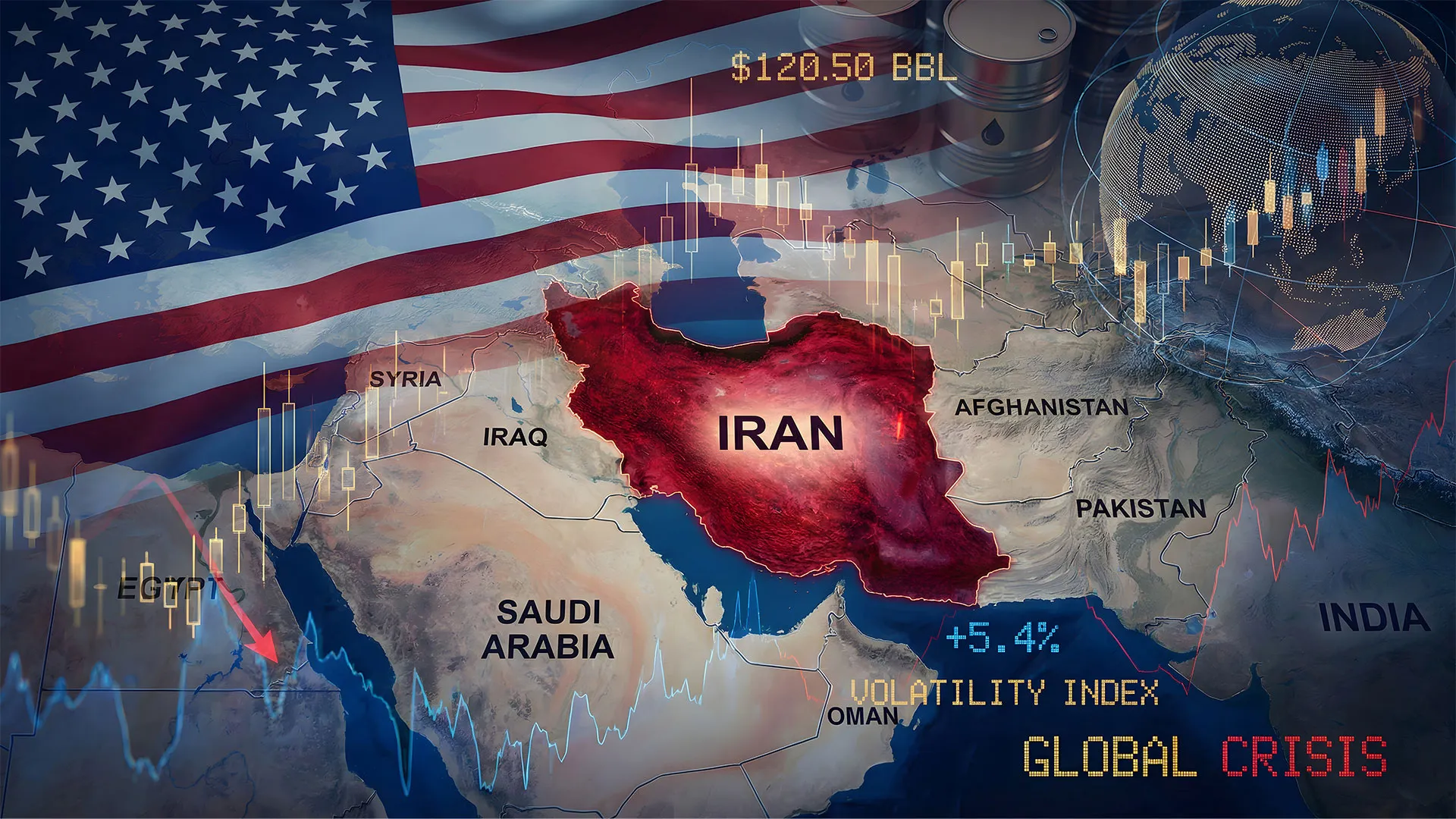
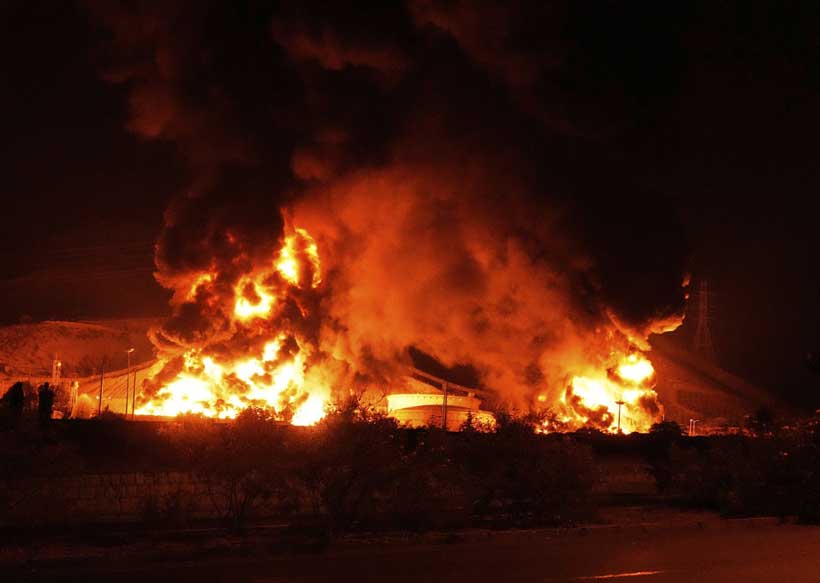



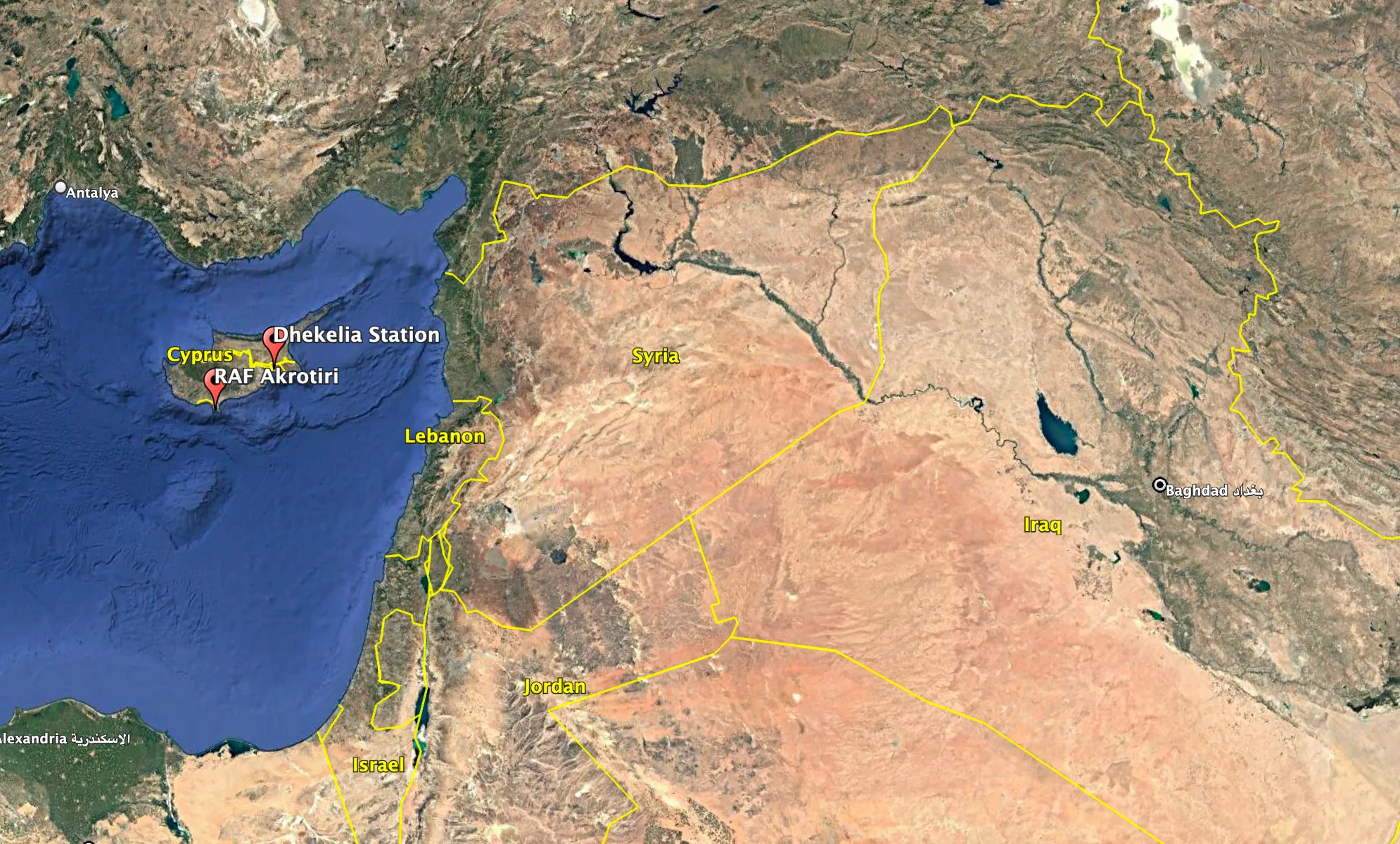


![Pictured: 9th February 2026 – 617 Sqn F-35B Lightning jets conduct QRA (Quick Reaction Alert) training, operating from RAF Akrotiri. F-35B Lightning, a 5th Generation, multi-role, stealth fighter, is usually based at RAF Marham. The Station is also home to a range of engineering support functions, from maintenance to frontline support. [Names have been blurred from jets and surcoats to protect PERSEC]](https://i0.wp.com/www.twz.com/wp-content/uploads/2026/03/LTNG-20260209-0110-0003-0050.jpg?resize=640%2C960&ssl=1)