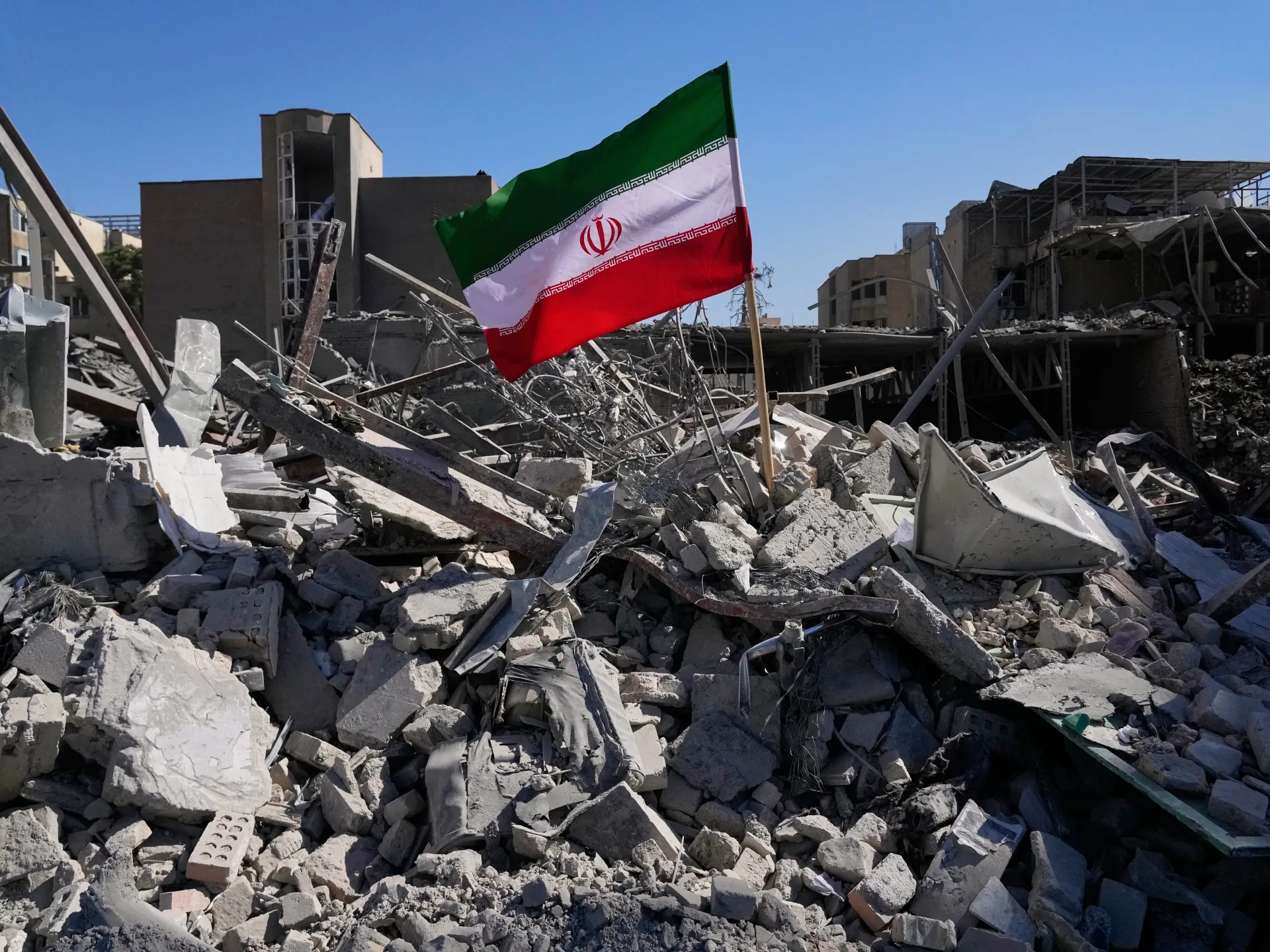
Iran’s sports minister said his nation will not participate in this summer’s World Cup following the attacks on the country by the U.S., one of the tournament’s hosts.
The U.S. bombing campaign against Iran, which began two weeks ago, has triggered a region-wide conflict and killed more than 1,300 Iranians including Ayatollah Ali Khamenei, the country’s supreme leader, according to Iran’s U.N. ambassador Amir Saeid Iravani.
“Considering that this corrupt regime has assassinated our leader, under no circumstances can we participate in the World Cup,” sports minister Ahmad Donyamali said on state television Wednesday.
“Our players do not have security, and fundamentally the conditions for participation do not exist.”
Donyamali’s statement came just hours after FIFA president Gianni Infantino said he had received assurances from President Trump that Iran would be allowed to participate in the tournament, which will be played in the U.S., Mexico and Canada.
“President Trump reiterated that the Iranian team is, of course, welcome to compete in the tournament in the United States,” Infantino wrote in an Instagram post. “We need an event like the FIFA World Cup to bring people together now more than ever, and I sincerely thank the President of the United States for his support.”
Last year President Trump signed an executive order suspending visa issurance to nationals of 19 countries, including Iran, although the State Department can make exceptions for “participants in certain major sporting events” such as the World Cup.
Iran, which has played in the last three World Cups, earned its place in this summer’s tournament by dominating its group in the Asian confederation tournament. However it did not send a representation to a World Cup planning summit last week in Atlanta.
Iran was drawn into Group G for the World Cup and is scheduled to begin play June 15 against New Zealand at SoFi Stadium in Inglewood. Iran’s second group-stage game, against Belgium, is also scheduled for SoFi Stadium before the team finishes the first stage of the tournament against Egypt in Seattle.
According to The Athletic, no country has withdrawn from a World Cup after qualifying since the 1950 tournament in Brazil, when India, Scotland, France and Turkey pulled out, mostly over costs and logistical issues.
Donyamali did not say whether he has begun the formal process or withdrawing Iran from the World Cup but FIFA could be facing a time crunch if it had to replace Iran in the 48-team field. Article 6.7 of FIFA’s 2026 World Cup regulations states: ‘If any Participating Member Association withdraws and/or is excluded from the FIFA World Cup 26, FIFA shall decide on the matter at its sole discretion and take whatever action is deemed necessary. FIFA may decide to replace the Participating Member Association in question with another association.”
The most likely replacement scenario would have Iraq, the top non-qualifier from the Asian confederation, taking Iran’s place. Iraq is scheduled to play the winner of a Suriname-Bolivia playoff in Mexico later this month for a final World Cup berth but with airspace over the Middle East closed because of the war, the Iraqis are unsure how they will get to Mexico. Giving them Iran’s berth would solve that problem but it would create another; who would replace Iraq in the playoff against the Suriname-Bolivia winner? Based on the Asian qualifying tournament, the UAE would be the most likely candidate but it, too, would face travel concerns in getting to Mexico.
FIFA could leave those playoffs untouched and give Iran’s spot to Italy, which is ranked 13th in the world but must win a four-team UEFA playoff later this month to qualify for the World Cup. Basically FIFA can do whatever it wants.
FIFA regulations say that any team that withdraws from the tournament “no later than 30 days before the first match” will be fined and could face other “disciplinary sanctions” including expulsion from subsequent FIFA competitions. This summer’s World Cup kicked off June 11 in Mexico City and Toronto. The U.S. opener is scheduled for June 12 in Inglewood.
Earlier this week six members of Iran’s delegation to the Women’s Asian Cup were granted humanitarian visas and allowed to remain in Australia rather than return to Iran where they feared persecution for not singing the national anthem during the tournament.
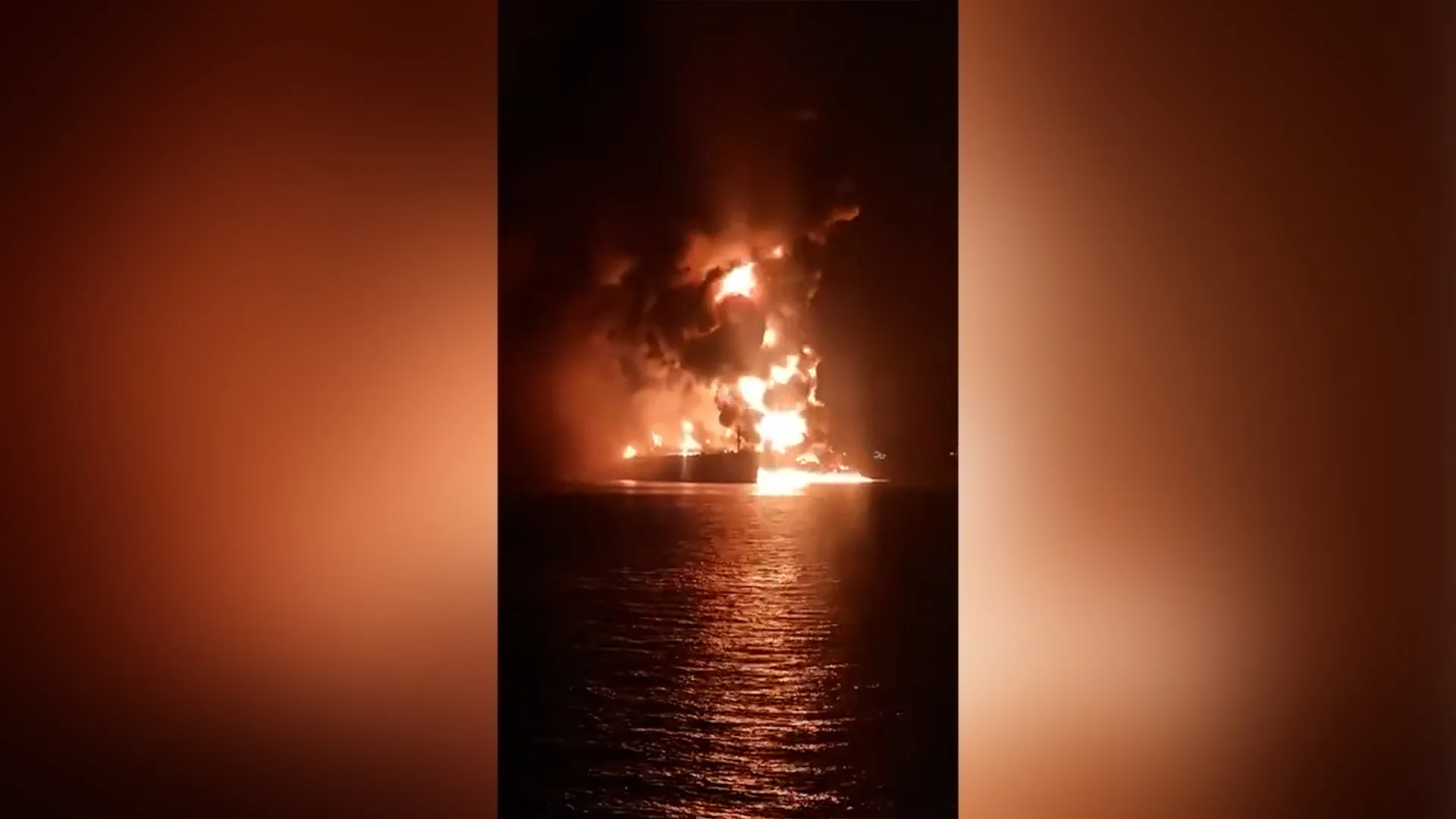
Two foreign tankers were seen ablaze in Iraqi territorial waters after a strike near the al-Faw port. Authorities say they evacuated 25 crew members but have confirmed at least one death and are battling to control the flames.
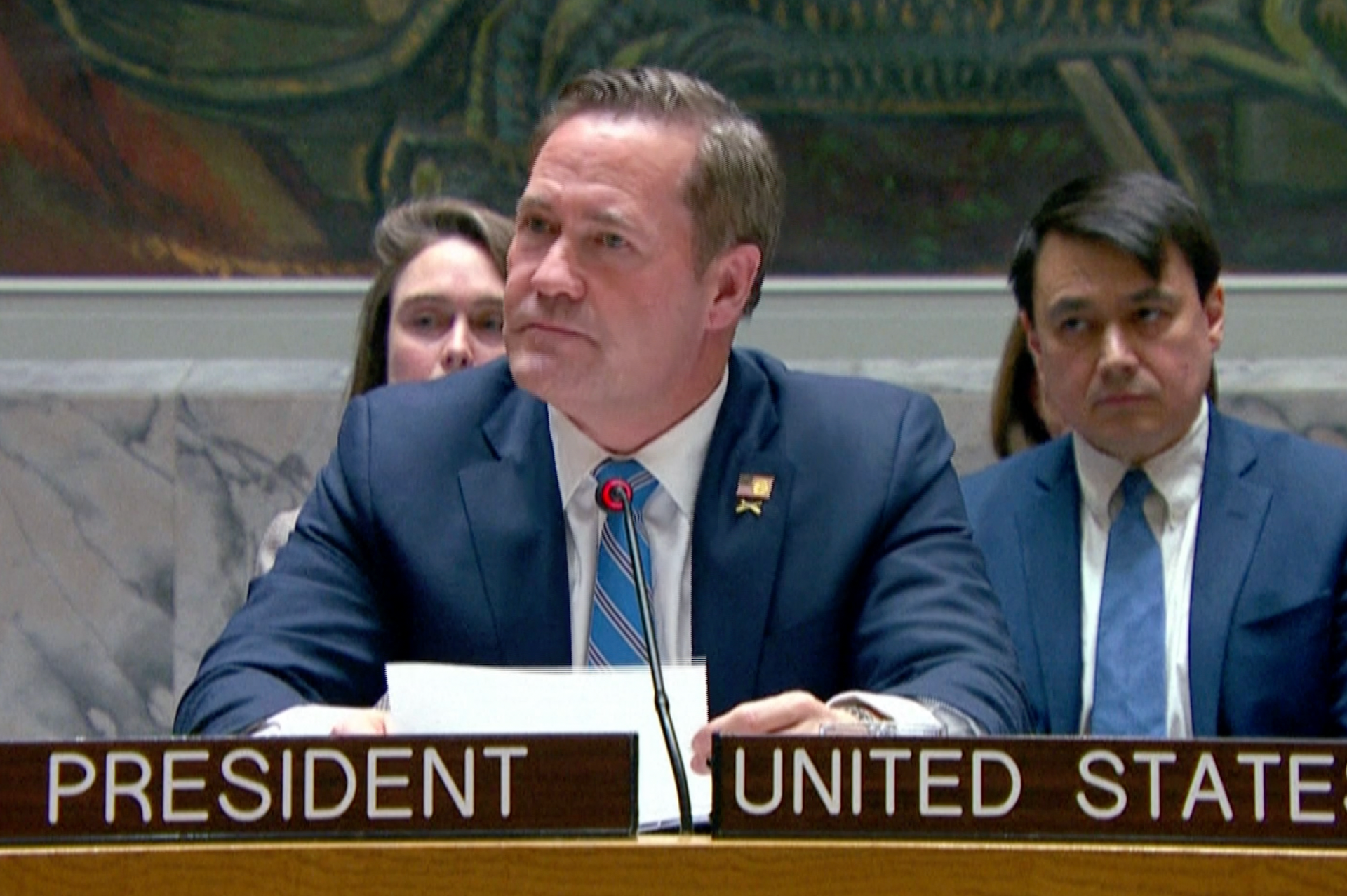
The UN Security Council has passed a resolution put forward by Gulf Cooperation Council members calling on Iran to halt its attacks on Gulf countries. The measure was adopted with 13 votes in favour and two abstentions, while no member states voted against it.
Global currency and commodity markets stabilised slightly on Tuesday after a volatile start to the week triggered by the war involving Iran, United States and Israel. The U.S. dollar steadied against major currencies after earlier declines, following remarks from U.S. President Donald Trump that the conflict could end “very soon.”
Financial markets had been thrown into turmoil a day earlier amid fears that a prolonged war could trigger a major global energy shock. The conflict has disrupted oil and gas exports through the critical Strait of Hormuz, a vital shipping route for global energy supplies.
Although markets calmed somewhat after Trump’s comments, the broader environment remains highly uncertain as investors continue to assess the potential economic fallout from the conflict.
Dollar Holds Ground as Oil Prices Ease
In Asian trading, the U.S. dollar was largely steady against other major currencies after retreating from the highs reached during Monday’s market turbulence.
The currency traded at around 157.73 yen against the Japanese yen and about $1.1632 against the euro, reflecting a stabilisation following the sharp movements seen earlier.
Meanwhile, oil prices remained elevated but declined from the dramatic peaks reached at the start of the week. Brent crude traded at roughly $93 per barrel, still significantly higher than levels before the outbreak of the war but well below Monday’s surge toward $120.
The pullback in oil prices helped ease immediate concerns about a severe energy shock, although analysts caution that volatility could continue if the conflict escalates again.
Investors Remain Cautious
Despite the relative calm in currency markets, analysts say investors are far from convinced that the crisis is nearing resolution.
Rodrigo Catril, a currency strategist at National Australia Bank, warned that markets could continue to experience sudden shifts in sentiment as geopolitical developments unfold.
According to Catril, it remains unclear whether the Iranian leadership would be willing to pursue de-escalation, suggesting that the risk of renewed market volatility remains high.
The Islamic Revolutionary Guard Corps in Iran dismissed Trump’s suggestion that the conflict could end quickly, describing the remarks as “nonsense.”
Risk-Sensitive Currencies Under Pressure
Currencies closely linked to global economic sentiment weakened as investors remained cautious.
The Australian dollar slipped to around $0.7063, while the New Zealand dollar fell to roughly $0.5912. These currencies often decline during periods of geopolitical uncertainty or when investors shift toward safer assets.
The dollar, by contrast, has benefited from its traditional role as a safe-haven currency during times of crisis. The escalation of the conflict and disruption to energy markets prompted investors to move funds into U.S. assets, supporting the currency.
The British pound recovered from losses earlier in the week to trade around $1.3434.
Energy Prices and Global Growth Concerns
Investors remain concerned that sustained high energy prices could slow global economic growth. Rising oil costs increase expenses for businesses and households, effectively acting as a tax on economic activity.
At the same time, higher energy prices could complicate monetary policy by pushing inflation upward and making it harder for central banks to lower interest rates.
Analysts at Deutsche Bank noted that a broader market sell-off in risk assets would likely require several conditions to occur simultaneously: persistently high oil prices, a shift in central bank policy expectations and clear evidence of a slowing global economy.
Strategist Henry Allen said markets are now significantly closer to those thresholds than they were just a week ago, though the full conditions for a major downturn have not yet materialised.
Analysis: Markets Brace for Prolonged Volatility
The market reaction to the Iran war underscores how closely global financial conditions are tied to geopolitical developments in the Middle East.
While Trump’s comments about a possible quick end to the conflict helped stabilise markets temporarily, the underlying risks remain substantial. The disruption of energy supplies through the Strait of Hormuz continues to threaten global oil flows and could trigger renewed price spikes if the conflict intensifies.
For investors, the situation presents a delicate balance. On one hand, hopes for de-escalation could stabilise energy prices and reduce pressure on financial markets. On the other, continued fighting or further disruptions to oil shipments could quickly reignite volatility across currencies, commodities and equities.
Until there is clearer evidence of either de-escalation or escalation, markets are likely to remain highly sensitive to political developments, with the dollar continuing to benefit from its role as a global safe haven.
Attacks on multiple commercial ships in the waters around Iran on Wednesday increased global energy concerns, pushed nations to unleash strategic oil reserves and sparked fresh critiques of the Trump administration’s readiness for a war it started.
As Trump administration and U.S. military officials continued to claim increasing success and advantage in the conflict — and authorities downplayed a reported threat of drone attacks on California — leaders around the world scrambled to respond to the latest attacks and the International Energy Agency’s call for the largest ever release of strategic oil reserves by its members to help stem energy price spikes.
President Trump also faced renewed questions about a deadly strike on an Iranian elementary school at the start of the war, after the New York Times reported Wednesday that a military investigation had determined the U.S. was responsible.
“I don’t know about it,” Trump said when asked about the report.
In an address Wednesday morning, IEA Executive Director Fatih Birol said energy shipments through the Strait of Hormuz had “all but stopped” amid the conflict, driving massive global competition for oil and gas in wealthier countries and fuel rationing in poorer nations.
He said the IEA’s 32 member nations have brought a “sense of urgency and solidarity” to recent discussions on the matter, and had unanimously agreed to “launch the largest ever release of emergency oil stocks in our agency’s history,” making 400 million barrels of oil available.
However, he said the most needed change is the “resumption of traffic through the Strait of Hormuz.”
A vendor pumps petrol from Iranian fuel oil tankers for resale near the Bashmakh border crossing between Iraq and Iran.
(Ozan Kose / AFP/Getty Images)
Several countries, including Germany, Austria and Japan, had already confirmed their plans to release reserves.
The White House did not immediately respond to a request for comment on any U.S. plans to release its strategic reserves, or how much would be released. The U.S. is an IEA member.
Trump told reporters Wednesday that the U.S. has hit Iran “harder than virtually any country in history has been hit,” including by wiping out its naval fleet and eliminating other vessels capable of laying mines, and that he believes oil companies should resume shipments through the strait despite the recent attacks.
U.S. Interior Secretary Doug Burgum backed the idea of releasing oil reserves in a Fox News interview.
“Certainly these are the kinds of moments that these reserves are used for, because what we have here is not a shortage of energy in the world; we’ve got a transit problem, which is temporary,” Burgum said. “When you have a temporary transit problem that we’re resolving militarily and diplomatically — which we can resolve and will resolve — this is the perfect time to think about releasing some of those, to take some pressure off of the global price.”
Burgum said that while Iran is “holding the entire world hostage economically by threatening to close the strait,” Trump has made the consequences of such actions “very clear,” and “there’s a lot of options between ourselves and our allies in the region, including our Arab friends in the region, to make sure that those straits keep open and that energy keeps flowing for the global economy.”
The IEA did not provide details as to the release of the 400 million barrels, part of a broader reserve of some 1.2 billion barrels held by its members. It said the reserves “will be made available to the market over a time frame that is appropriate to the national circumstances of each Member country and will be supplemented by additional emergency measures by some countries.”
The agency said an average of 20 million barrels of crude oil and oil products transited the strait per day in 2025, and that options for bypassing the strait are “limited.”
While some tankers believed linked to Iran were still getting through the Strait of Hormuz, which under normal circumstances carries about 20% of the world’s oil and natural gas, Iranian officials threatened attacks on other vessels — saying they would not allow “even a single liter of oil” tied to the U.S., Israel or their allies through the channel, which connects to the Persian Gulf.
Trump has repeatedly claimed that the U.S. and its powerful Navy would support commercial vessels and ensure the strait remains open to oil shipments, but that has not been the case.
Tankers wait off the Mediterranean coast of southern France on Wednesday.
(Thibaud Moritz / AFP/Getty Images)
The United Kingdom Maritime Trade Operations center, run by the British military, reported at least three ships struck in the region Wednesday — including ships off the United Arab Emirates and a cargo ship that was struck by a projectile in the strait just north of Oman, setting it ablaze.
The Trump administration and the U.S. military, meanwhile, have been pushing out messaging about wiping out Iran’s ability to plant mines in the strait — posting dramatic videos of major strikes on tiny boats on small docks.
Adm. Brad Cooper, the leader of U.S. Central Command, said in a video posted to X on Wednesday morning that “in short, U.S. forces continue delivering devastating combat power against the Iranian regime.”
“I’ve said this before, but it bears repeating: U.S. combat power is building, Iranian combat power is declining,” he said.
The U.S. has struck more than 60 Iranian ships, and just “took out the last of four Soleimani-class warships,” he said. “That’s an entire class of Iranian ships now out of the fight.”
Cooper said Iranian ballistic missile and drone attacks have “dropped drastically” since the start of the war, though “it’s worth pointing out that Iranian forces continue to target innocent civilians in gulf countries, while hiding behind their own people as they launch attacks from highly populated cities in Iran.”
He also addressed the attacks on commercial shipping in the region directly, saying that “for years, the Iranian regime has threatened commercial shipping and U.S. forces in international waters,” and that the U.S. military’s “mission is to end their ability to project power and harass shipping in the Strait of Hormuz.”
Other U.S. leaders called the U.S. war plan — and specifically its approach to protecting the Strait of Hormuz — into question.
In a series of posts to X late Tuesday, which he said followed a two-hour classified briefing on the war, Sen. Chris Murphy (D-Conn.) slammed the administration’s plans as “incoherent and incomplete.”
Murphy wrote that the administration’s goals for the war seemed to be focused primarily on “destroying lots of missiles and boats and drone factories,” and without a clear plan for what to do when Iran — still led by “a hardline regime” — begins rebuilding that infrastructure, other than to continue bombing them. “Which is, of course, endless war,” he wrote.
Murphy also specifically criticized the administration’s plan for the Strait of Hormuz — which he said simply doesn’t exist.
“And on the Strait of Hormuz, they had NO PLAN,” he wrote. “I can’t go into more detail about how Iran gums up the Strait, but suffice it [to] say, right now, they don’t know how to get it safely back open. Which is unforgiveable, because this part of the disaster was 100% foreseeable.”
Ships in the strait remained under threat of various forms of attack Wednesday, as did much of the region as the war raged on.
There was an attack on a U.S. Embassy operations center at Baghdad’s airport, which officials attributed to a drone launched by Iranian proxies based in Iraq. No casualties were reported.
Lebanon’s Health Ministry reported the death toll there — from fighting between Israel and Iranian-backed Hezbollah fighters — had risen to 634 since last week, including 91 children. Another 1,500 people had been wounded, the ministry said.
Iranian authorities have said U.S. and Israeli attacks have killed 1,255 people since Feb. 28. That includes many Iranian leaders, including then-Supreme Leader Ayatollah Ali Khamenei. U.S. officials have said Iranian attacks in the region have killed seven U.S. service members, with another 140 wounded.
CBS News reported Wednesday that dozens of those injuries were sustained by service members in the March 1 Iranian drone attack on a tactical operations center in Kuwait — which is also where six of the seven deaths occurred.
The outlet reported that the attack was more severe than the Trump administration has revealed, with more than 30 military members still in hospitals Tuesday with a range of battle injuries including “brain trauma, shrapnel wounds and burns.”
Threats extended beyond the Middle East, too — including to California, where law enforcement agencies were warned by federal authorities that Iran “allegedly aspired to conduct a surprise attack” on California using drones launched from a vessel off the U.S. coast.
However, sources told The Times that advisory was cautionary and not backed by credible intelligence.
Times staff writer Gavin J. Quinton, in Washington, D.C., contributed to this report.
The war involving Iran, United States and Israel is increasingly affecting energy supplies far beyond the Middle East, with Bangladesh now scrambling to secure fuel imports after disruptions to regional shipping routes.
Bangladeshi officials say the country has begun receiving diesel shipments from suppliers including China and India, allowing authorities to secure enough fuel to meet roughly one month of national demand. Arrangements are also being made to secure supplies for an additional month.
The South Asian nation of about 175 million people depends heavily on imported energy, with roughly 95% of its fuel requirements sourced from abroad. The disruption of Middle Eastern oil flows following the war has therefore exposed Bangladesh to severe supply risks.
Fuel Rationing and Economic Disruptions
To manage the supply shortage, authorities have introduced emergency measures including fuel rationing for vehicles, restrictions on diesel sales and the temporary closure of universities.
Energy shortages are also affecting Bangladesh’s critical export industries. The country is the world’s second-largest clothing exporter after China, and many garment factories rely on diesel-powered generators during power outages.
Industry leaders say the situation has worsened since the conflict began in late February. Power cuts have doubled to as much as five hours per day, forcing factories to rely more heavily on backup generators.
Mahmud Hasan Khan, president of the Bangladesh Garment Manufacturers and Exporters Association, said many companies are struggling to obtain sufficient diesel to keep their operations running during electricity outages.
The shortages threaten to disrupt production in one of Bangladesh’s most important economic sectors, which accounts for the majority of the country’s export earnings.
Emergency Diesel Shipments Arrive
To stabilise supplies, the state-run Bangladesh Petroleum Corporation (BPC) has arranged diesel shipments from international traders.
Energy officials say around 60,000 metric tons of diesel are currently being delivered by three trading companies, with another 90,000 metric tons expected to arrive later this month.
A cargo of approximately 27,000 metric tons from PetroChina has already arrived at Chittagong Port, while another shipment of roughly 28,000 metric tons from Vitol is waiting at the port’s outer anchorage.
Additional supplies are also arriving through a cross-border pipeline from India’s Numaligarh Refinery, which is currently providing about 5,000 metric tons of diesel. Officials said negotiations are underway to secure a further 30,000 metric tons from Indian Oil Corporation.
Bangladesh typically consumes about 380,000 metric tons of diesel each month. However, officials estimate that rationing measures have reduced current demand to around 270,000 metric tons per month.
Oil Imports Threatened by Hormuz Disruptions
While refined diesel cargoes have continued to arrive, Bangladesh faces greater risks in securing crude oil shipments for its domestic refineries.
The country imports about 1.4 million metric tons of crude oil annually under long-term supply agreements with Saudi Aramco and Abu Dhabi National Oil Company.
However, shipments from these suppliers must travel through the strategically vital Strait of Hormuz, which has been heavily disrupted by the war. Officials say at least one cargo of around 100,000 tons from Saudi Aramco has already been delayed in the Gulf due to the ongoing crisis.
The Strait of Hormuz is one of the world’s most important energy transit routes, and any prolonged disruption could have far-reaching consequences for countries heavily dependent on imported fuel.
Gas Shortages Add to Energy Crisis
Bangladesh’s energy difficulties extend beyond diesel shortages. Severe natural gas shortages have already forced the closure of four of the country’s five state-run fertiliser factories.
Authorities have redirected the available gas supply toward electricity generation in an effort to stabilise power production during the crisis.
The combination of diesel shortages, disrupted oil imports and limited gas supplies is placing growing pressure on Bangladesh’s energy system at a time when global fuel markets are already experiencing heightened volatility.
Analysis: Energy Dependence Exposes Economic Vulnerability
Bangladesh’s struggle to secure diesel supplies illustrates how the war involving Iran is affecting energy-importing economies far beyond the immediate conflict zone.
Countries that rely heavily on imported fuel are particularly vulnerable to disruptions in global energy shipping routes, especially those linked to the Strait of Hormuz. Even temporary interruptions can lead to fuel shortages, higher prices and broader economic disruption.
For Bangladesh, the situation highlights the structural risks created by its dependence on imported energy. Industries such as garments, which rely on stable electricity supplies and backup diesel generators, are especially exposed to supply shocks.
Although emergency shipments from China and India have temporarily stabilised supplies, the situation remains fragile. If the conflict in the Middle East continues to disrupt oil shipments or drive up prices, Bangladesh could face prolonged energy shortages with significant implications for its economy and export industries.
US President Donald Trump on Tuesday threatened Iran with unprecedented military consequences if it had placed mines in the Strait of Hormuz and failed to remove them, Anadolu reports.
“If for any reason mines were placed, and they are not removed forthwith, the military consequences to Iran will be at a level never seen before,” Trump wrote on his social media platform Truth Social.
He added that removing the mines would be “a giant step in the right direction.”
Trump, however, also noted that US has “no reports of” Tehran putting out mines in the waterway.
The warning came after a CNN report that Iran has begun laying mines in the strait. Sources told the news outlet that only a few dozen had been placed so far, but Iran still had up to 90% of its small boats and mine-laying vessels intact, leaving it capable of deploying hundreds more.
The Strait of Hormuz is one of the world’s most critical energy chokepoints, with around 20 million barrels of oil passing through it daily. Iran’s IRGC had previously announced the closure of the strait to transit following the start of the US-Israeli attacks on Iran on Feb. 28, pushing oil prices above and raising fears of a prolonged global energy disruption.
The escalation in the Middle East flared since Israel and the US launched a joint attack on Iran on Feb. 28, and to date killing more than 1,200 people, including Ayatollah Ali Khamenei, who was the supreme leader. At least eight US service members have been killed since the beginning of the campaign.
Warning comes as 400 million barrels of oil are being released from global reserves during waterway’s closure.
Published On 11 Mar 202611 Mar 2026
Share
Iran’s Islamic Revolutionary Guard Corps (IRGC) says it will not allow “a litre of oil” through the Strait of Hormuz as the closure of the key Gulf waterway continues to roil global energy markets during the US-Israeli war on Iran.
A spokesperson for the IRGC’s Khatam al-Anbiya Headquarters said on Wednesday that any vessel linked to the United States and Israel or their allies “will be considered a legitimate target”.
Recommended Stories
list of 3 itemsend of list
“You will not be able to artificially lower the price of oil. Expect oil at $200 per barrel,” the spokesperson said in a statement. “The price of oil depends on regional security, and you are the main source of insecurity in the region.”
Global oil prices have fluctuated wildly this week during continued US-Israeli attacks against Iran, which has retaliated by firing missiles and drones at targets across the wider Middle East.
The closure of the Strait of Hormuz, through which about one-fifth of the world’s oil supplies transit, and production slowdowns in some Gulf countries have raised concerns of further disruptions.
Concerns around the duration of the war, which began on February 28 and has shown no sign of abating, are also adding to uncertainty, sending oil prices soaring.
On Wednesday, three ships were hit by projectiles in the Strait of Hormuz, maritime security and risk firms said, including a Thai-flagged cargo vessel that came under attack about 11 nautical miles (18km) north of Oman.
Release of oil reserves
World leaders, including members of the Group of Seven (G7) and the European Union, have been mulling what action to take in response to the war’s impact on global economies.
Christian Bueger, a professor of international relations at the University of Copenhagen and an expert in maritime security, said Europe will be facing “a major energy supply crisis” if the Strait of Hormuz is not reopened.
“For the shipping industry right now, it’s impossible to go through the Strait of Hormuz,” Bueger told Al Jazeera. “And if there are not stronger signals in the near future that they can at least try to go through the strait, then we are looking at a major shipping crisis, which can last weeks if not months.”
On Wednesday, the International Energy Agency (IEA) announced that its 32 member countries had unanimously agreed to release 400 million barrels of oil from their emergency reserves to try to lower prices.
“This is a major action aiming to alleviate the immediate impacts of the disruption in markets,” IEA Executive Director Fatih Birol said during an address from the agency’s headquarters in Paris.
“But to be clear, the most important thing for a return to stable flows of oil and gas is the resumption of transit through the Strait of Hormuz,” he added.
The reserve supplies will be made available “over a timeframe that is appropriate” for each member state, the IEA said in a statement without providing details.
German Economy and Energy Minister Katherina Reiche said earlier in the day that the country would comply with the release while Austria also said it would make part of its emergency oil reserve available and extend its national strategic gas reserve.
Meanwhile, Japan’s Ministry of Economy, Trade and Industry said it would release about 80 million barrels from its private and national oil reserves.
Japanese Prime Minister Sanae Takaichi said the country, which gets about 70 percent of its oil imports through the Strait of Hormuz, would begin releasing the reserves on Monday.
Israel believes it is progressing faster than expected in achieving its objectives in the war against Iran, according to Israel’s ambassador to France.
Ambassador Joshua Zarka said the military campaign, which Israel initially predicted would last several weeks, is moving ahead of schedule in meeting its strategic goals.
Speaking to BFM TV, Zarka said Israel’s objectives extend beyond dismantling Iran’s nuclear programme. He said the broader aim is to weaken Iran’s leadership so that it can no longer project power beyond its borders and so that the Iranian population can determine its own political future.
Israel’s Broader Strategic Objectives
According to Zarka, Israel’s campaign is designed not only to limit Iran’s military capabilities but also to significantly weaken the country’s ruling authorities.
The ambassador said that reducing the government’s ability to operate abroad would help prevent attacks against Israel and its allies, while also creating conditions in which Iranians could “take their fate into their own hands.”
His comments reflect a broader strategic message from Israel that the war is intended to reshape Iran’s regional role, rather than simply eliminate specific military programmes.
Zarka, who previously served as Israel’s lead diplomat dealing with Iran, suggested that Israel’s military progress is exceeding initial expectations.
Warning Over New Iranian Leadership
Zarka also commented on the recent appointment of Mojtaba Khamenei as Iran’s new supreme leader following the death of his father, Ali Khamenei.
He said that if Mojtaba Khamenei follows the same policies as his predecessor, he could become a potential target for Israel.
The remark underscores the increasingly confrontational rhetoric surrounding the conflict and signals that Israel sees Iran’s leadership itself as central to the confrontation.
Conflict Expands to Lebanon
At the same time, Israel has intensified military operations against Hezbollah, the Iran-backed militant group based in Lebanon, after cross-border attacks on Israeli territory.
The Lebanese government has said it would like to hold direct talks with Israel to stop the fighting. However, Zarka dismissed the possibility of negotiations at this stage.
Instead, he argued that the war would end only if Hezbollah is disarmed a step he said depends on decisions taken by the Lebanese government.
Analysis: Israel Signals No Immediate Path to Negotiations
Zarka’s comments suggest Israel believes the current military campaign is producing results and therefore sees little incentive to pursue negotiations in the near term.
By framing the war’s goals around weakening Iran’s leadership and limiting its regional influence, Israeli officials are signalling that the conflict is about more than just nuclear or missile capabilities.
The remarks also highlight Israel’s strategy of confronting Iran’s regional network of allied groups, including Hezbollah, which it views as a key extension of Tehran’s power.
Taken together, the statements indicate that Israel intends to continue military pressure until it believes Iran’s ability to project influence across the region has been significantly reduced.
Simon Calder gave his thoughts on when travel disruption will start to ease following the strikes on Iran
13:00, 11 Mar 2026Updated 16:05, 11 Mar 2026
Travel remains severely disrupted as strikes on Iran continue
A travel expert has shared his views on when ‘people will be able to travel again’ as the Middle East conflict continues to escalate. Journalist Simon Calder, who specialises in travel, discussed the crisis and its impact on worldwide travel.
American and Israeli strikes on Iran are approaching the end of their second week, with no resolution in sight. Travel to the Middle East remains limited, with airlines cutting back on the number of flights to and from the area.
Countries such as Oman, Qatar, and the United Arab Emirates serve as vital transport hubs for destinations including Asia and Australasia. The outbreak of hostilities has left hundreds of thousands of travellers stuck.
Speaking to Sky News, Mr Calder offered his perspective on when travel might become more straightforward. He said: “We’ve already seen missiles sent to Turkey and attacks on Cyprus. Now, personally, I think the chances of anything happening to a tourist in Turkey or Cyprus are microscopically low, but I also know that people are rebooking away. They’re going to the western Mediterranean – typically Spain and Portugal – because they believe they will be safer there.
Content cannot be displayed without consent
“If you’re flying from the UK to a holiday spot such as Turkey or Cyprus and that flight is cancelled, then, fortunately, air passenger rights rules are squarely on your side. The airline that cancels the flight has to get you to your destination as soon as possible, regardless of the cost. And if you can’t get there immediately, the airline has to provide meals and accommodation, if necessary, before you are able to get to your destination.
“The Foreign Office warns against travel to Kuwait, to Bahrain, to Qatar and, crucially, to the UAE, home to the busiest hub in the world: Dubai International Airport. But I’m also predicting that, actually, that ruling is going to lift fairly quickly, and people will be able to travel again.”
Flights are still operating through Dubai International Airport, despite two Iranian drones injuring four people after exploding at the facility. The Dubai Media Office, which releases statements on behalf of the city-state’s government, confirmed flights are continuing, and that the attack caused ‘minor injuries to two Ghanaian nationals and one Bangladeshi national, and moderate injuries to one Indian national’.
Officials have been attempting to restore its flight schedule, though the airport has been targeted amid the conflict. The war has created uncertainty for travellers with flights booked in the coming weeks, prompting Mr Calder to offer his guidance on what passengers should do.
“If your flight is due to go, I’d say, a week or more from now, well, all you can do is just hope that it goes ahead,” he stated. “If you’re going imminently and you do not know if your trip is running, well, the basic news is that if you go to Abu Dhabi, to Dubai, to Doha, you will be going against Foreign Office advice. So, be aware of that; your travel insurance will be invalidated.
“I’ve got some skin in the game. I am booked to fly out on Saturday night from Jakarta, the Indonesian capital, through to Abu Dhabi and connect onwards to London. Now, at the moment, along with many, many other travellers, I’m absolutely promised the flight will go ahead as normal, and I trust that it will. But I simply do not know.
“At the moment, I’m definitely not cancelling my flight because, well, bluntly, if you cancel the flight – which is what the airlines would really like you to do – you will simply be removing yourself from the problem. If, like me, you’re booked in a few days’ time and you do have a bit of flexibility, then absolutely keep your booking open.
“If you go for a refund, first of all, the airline will be delighted because you’ll be a problem that’s removed from their cares and, secondly, you could find yourself paying three times, five times, 10 times as much to get back. Much better to remain a problem for the airline; they’ve got to get you where you need to be.”
Motorists around the globe are already feeling the impact of the United States and Israel’s war on Iran, with fuel prices sharply rising since the war began.
In the US, a gallon of regular petrol that averaged $2.94 in February now costs $3.58, marking a 20 percent increase, according to data from AAA Fuel Prices, a retail fuel price tracker from the American Automobile Association (AAA).
While each US state sets its own petrol prices, several states have surpassed $4 per gallon, with California exceeding $5 per gallon, the highest level it has been in more than two years.
Which countries have the sharpest petrol price increases?
According to data analysed from Global Petrol Prices, a data platform that tracks and publishes retail energy prices across approximately 150 countries, at least 85 countries have reported increases in petrol prices following the initial attacks on Iran by the US and Israel on February 28. Some nations announce price changes only at the end of each month, so higher prices are expected for many others in April.
Vietnam recorded the highest petrol price increase of nearly 50 percent, rising from $0.75 per litre of 95-octane on February 23 to $1.13 on March 9. Laos follows with a 33 percent increase, then Cambodia at 19 percent, Australia at 18 percent, and the US at 17 percent.
The table below shows the countries that have increased petrol prices at the pumps.
Asian countries pay the biggest price
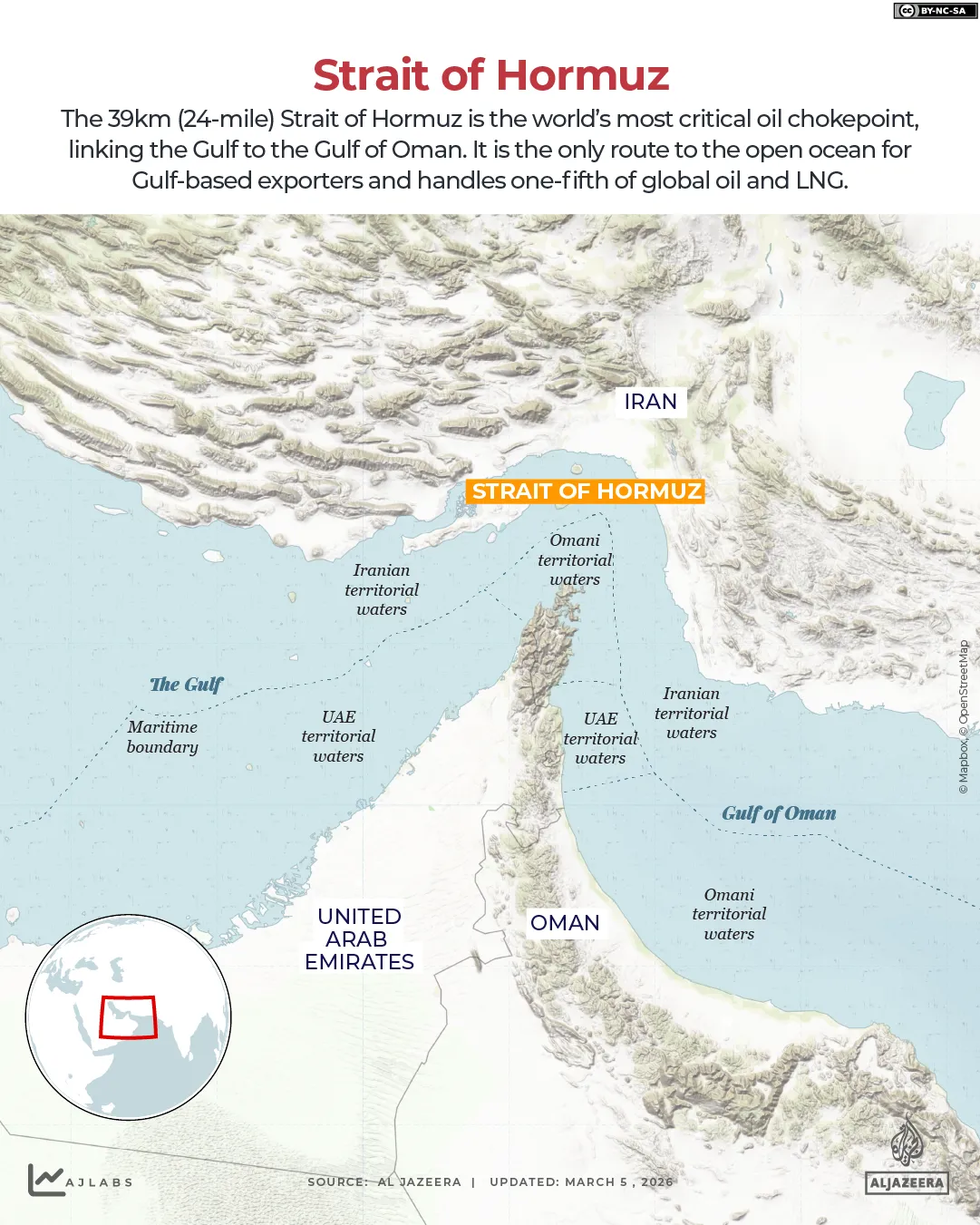
Asia is disproportionately dependent on the Strait of Hormuz for the delivery of its oil and gas, which has been effectively closed since the start of the war. The strait joins the Gulf – also referred to as the Persian Gulf and the Arabian Gulf – to the Gulf of Oman and is the only passage for the region’s oil producers to the open ocean.
Japan and South Korea are among the most vulnerable, importing 95 percent and 70 percent of their oil from the Gulf, respectively.
Both East Asian nations have enacted emergency measures to stabilise their energy markets. On March 8, Japan instructed its oil reserve sites to prepare for a potential release of strategic reserves. The next day, South Korea introduced a maximum price cap on petrol and diesel for the first time in 30 years.
In South Asia, the impact of the war is more severe than in East Asia because countries like Pakistan and Bangladesh have much thinner financial buffers and smaller strategic reserves.
In an attempt to conserve energy, Bangladesh‘s government has ordered all public and private universities to close immediately. In Pakistan, government offices will now operate a four-day workweek, while schools have closed, and a 50 percent work-from-home policy has been enacted to save fuel.
In Europe, the Group of Seven finance ministers convened an emergency meeting to discuss rising prices, with French President Emmanuel Macron raising the possibility of releasing 20-30 percent of emergency strategic reserves to ease the pressure on consumers.
How high oil costs drive up the price of food
Oil prices and food prices move in lockstep, with energy prices affecting every stage of the food supply chain, from the fertilisers used in the fields to the trucks that carry food from field to supermarket shelf.
Rising oil prices also directly affect shipping and the cost of transport.
“The lifeblood of the global economy is transport,” economist David McWilliams told Al Jazeera. “It’s getting stuff from A to B – it’s a logistics problem, a supply chain problem, and ultimately transportation is the energy of the global economy.”
Fears of stagflation – increasing inflation and rising unemployment, which major oil shocks have historically summoned – are rising. Economists point to the crises of 1973, 1978 and 2008 as evidence that every significant spike in oil prices has been followed, in some form, by global recession.
In lower-income countries, where populations spend a far greater share of their income on food and import large quantities of grain and fertiliser, rising oil prices could rapidly translate into food shortages.
What products are made from oil and gas?
Oil and gas are used for far more than just fuel. They are raw materials for thousands of everyday products.
Plastics, including water bottles, food packaging, phone casings and medical syringes, are all derived from crude oil.
Crude oil is also the hidden ingredient in synthetic fabrics such as polyester, nylon and acrylic, which are used to make everything from sportswear to carpets. It also underpins the cosmetics industry, as it is used to make products such as petroleum jelly (Vaseline), lipsticks and concealers.
Household items also rely on oil-based ingredients, with laundry detergents, dishwashing liquids, and paints all derived from petroleum products.
The global food supply is essentially built on natural gas in the form of fertilisers, used to enhance crop yields and ensure that food production can meet demand.
For years, Iran’s leaders believed time was on their side.
After the United States withdrew from the 2015 nuclear agreement, known as the Joint Comprehensive Plan of Action (JCPOA), Tehran effectively adopted what later came to be described as a “strategic patience” approach. Rather than immediately counter-escalating, Iran chose to endure economic pressure while waiting to see whether diplomacy could be revived.
The logic behind the strategy was simple: eventually, Washington would recognise that confrontation with Iran was against its own interests.
Today, that assumption lies shattered.
The collapse of diplomacy and the outbreak of war have forced Iran’s leadership to confront a painful reality: their belief that the US would ultimately act rationally may have been a profound miscalculation.
If Iran survives the current conflict, the lessons Iranian leaders draw from this moment may motivate them to pursue a nuclear deterrent.
The strategy of waiting
After the first Trump administration withdrew from the JCPOA and launched its “maximum pressure” campaign in 2018, Tehran initially avoided major counter-escalation. For nearly a year, it largely remained within the deal’s limits, hoping the other signatories, particularly Europeans, could preserve the agreement and deliver on the promised economic benefits despite US sanctions.
When that failed, Tehran began gradually increasing its nuclear activities by expanding enrichment and reducing compliance step by step while still avoiding a decisive break.
The pace accelerated after Iran’s conservative-dominated parliament passed a law mandating a significant increase in nuclear activities, in the wake of the assassination of top nuclear scientist Mohsen Fakhrizadeh. The shift was reinforced further by the 2021 election of conservative President Ebrahim Raisi.
The ultimate goal was to rebuild negotiating leverage, as Tehran believed that broader geopolitical and regional trends were gradually shifting in its favour. From its perspective, China’s rise, Russia’s growing assertiveness, and widening fractures within the Western alliance suggested that Washington’s ability to isolate Iran indefinitely might weaken over time.
At the same time, Iran pursued a strategy of reducing tensions with its neighbours, seeking improved relations with Gulf states that had previously supported the US “maximum pressure” campaign. By the early 2020s, many Gulf Cooperation Council countries had begun prioritising engagement and de-escalation with Iran, culminating in moves such as the 2023 Saudi-Iran rapprochement brokered by China.
Against this backdrop, even as tensions rose, Tehran continued to pursue diplomacy. Years of negotiations with the Biden administration aimed at restoring the JCPOA ultimately produced no agreement. Subsequent diplomatic efforts under Trump’s second presidency also collapsed.
Underlying this approach was a fundamental assumption: that the US ultimately preferred stability to war. Iranian officials believed Washington would eventually conclude that diplomacy, rather than endless pressure or a major war, was the most realistic and least costly path forward.
The joint US-Israeli assault on Iran has now exposed how deeply flawed that assumption was.
The return of deterrence
While Tehran based its strategy on mistaken beliefs about the rationality of US foreign policy, Washington, too, is misreading the situation.
For years, advocates of the maximum pressure campaign argued that sustained economic and military pressure would eventually fracture Iran internally. Some predicted that war would trigger widespread unrest and even the collapse of the regime.
So far, none of those predictions has materialised.
Despite the enormous strain on Iranian society, there have been no signs of regime disintegration. Instead, Iran’s political base — and in many cases broader segments of society — has rallied in the face of external attack.
Furthermore, Iran spent years reinforcing its deterrence capabilities. This involved expanding and diversifying its ballistic missile, cruise missile and drone programmes and developing multiple delivery systems designed to penetrate sophisticated air defences. Iranian planners also drew lessons from the direct exchanges with Israel in 2024 and the June 2025 war, improving targeting accuracy and coordination across different weapons systems.
The focus shifted towards preparing for a prolonged war of attrition: firing fewer but more precise strikes over time while attempting to degrade enemy radar and air defence systems.
We now see the results of this work. Iran has been able to inflict significant damage on its adversaries. Retaliatory attacks have killed seven Americans and 11 Israelis, placing a growing strain on US and Israeli missile defence systems, as interceptors are steadily depleted.
Iranian missile and drone strikes have hit targets across the region, including high-value military infrastructure such as radar installations. The closure of the Strait of Hormuz has sent global energy markets into turmoil.
Apart from the immense cost of war, the US decision to launch the attack on Iran may have another unintended consequence: a radical shift in Iranian strategy.
For decades, Supreme Leader Ali Khamenei maintained a longstanding religious prohibition on nuclear weapons. His assassination on the first day of the war may now motivate the new civilian and military leadership of the country to rethink its nuclear strategy.
There may now be fewer ideological reservations about pursuing nuclear weapons. The logic is simple: if diplomacy cannot deliver sanctions relief or permanently remove the threat of war, nuclear deterrence may appear to be the only viable alternative.
Iran’s actions in this conflict suggest that many leaders now see patience and diplomacy as strategic mistakes. These include the unprecedented scale of Iranian missile and drone attacks across the region, the targeting of US partners and critical infrastructure, and political decisions at home that signal a harder line, most notably the appointment of Mojtaba Khamenei as supreme leader.
The choice of Khamenei’s son breaks a longstanding taboo in a system founded on the rejection of hereditary rule and reflects a leadership increasingly prepared to abandon previous restraints.
If a more zero-sum logic of deterrence takes hold across the region, replacing dialogue as the organising principle of security, the Middle East may enter a far more dangerous era in which nuclear weapons are viewed as the ultimate form of deterrence and nuclear proliferation can no longer be stopped.
The views expressed in this article are the author’s own and do not necessarily reflect Al Jazeera’s editorial stance.
Video shared online shows the destruction caused to buildings and vehicles in Iran’s capital after a reported strike near Mehrabad international airport.
Mohammed bin Abdulaziz al-Khulaifi also says Qatar and Oman cannot act as mediators while under attack.
Published On 11 Mar 202611 Mar 2026
Share
Qatar’s minister of state for foreign affairs has called for a de-escalation in hostilities across the Middle East and urged Iran and the US to return to the negotiation table for a mediated solution.
Speaking to Al Jazeera in an exclusive interview, Mohammed bin Abdulaziz al-Khulaifi said that Iran’s attacks on its regional neighbours bring “benefit for no one”.
Recommended Stories
list of 4 itemsend of list
Iran has responded to a nearly two-week-long bombardment campaign from the United States and Israel by firing missiles and drones at its neighbours in the Gulf region and beyond, causing casualties, damaging critical infrastructure and severely disrupting the region’s energy-driven economy.
Al-Khulaifi said Qatar remains “extremely worried” about the wider range of attacks, including against civilian infrastructure.
“It’s unfortunate where we are standing right now,” the minister said.
“We also believe that there is no pathway to a sustainable and long-lasting solution other than returning to the negotiation table,” he told Al Jazeera.
Qatar condemns in the “strongest terms, the unjustified and outrageous attacks on the state of Qatar that directly impact its own sovereignty”, he said.
Doha will continue to take “every possible and legal measure to defend and practise its exercise of self-defence against this aggression”, he added.
Al-Khulaifi said the conflict demands a “global solution” to ensure that the Gulf’s energy supply chain keeps moving through the Strait of Hormuz, where global traffic has been severely disrupted by the conflict.
Ensuring freedom of movement through the waterway is “very critical,” he noted.
It is notable, Al-Khulaifi pointed out, that Iran has targeted countries such as Qatar and Oman, which had previously served as regional mediators and tried to “build bridges between Iran and the West”.
Neither country can play that role as long as the attacks continue, he said.
“We will not be able to fulfil that role under attack, and that’s something the Iranians need to understand.”
Qatari Prime Minister Mohammed bin Abdulrahman Al Thani tried to convey those points during a phone call with Tehran several days ago, the foreign minister said, when he urged Iran to cease attacks on its neighbours.
“The regional countries are not an enemy of Iran, and the Iranians are not understanding that idea,” Al-Khulaifi told Al Jazeera.
Doha also remains in contact with officials in the US and has encouraged US President Donald Trump to cease hostilities, he said.
“Our line of communication is always open with our colleagues in the United States, and we keep encouraging and supporting the pathway of peace and resolving conflicts through peaceful means.
“We really hope that the parties can find that pathway, end military operations, and return to the negotiation table.”
A group of Democrats in the United States Senate is demanding public hearings on the country’s war against Iran after receiving a series of classified briefings from officials in President Donald Trump’s administration.
Lawmakers say the White House has not clearly explained why the US entered the conflict, what its goals are, or how long it may last.
Republicans currently hold a narrow, 53-47 Senate majority, which gives them the power to control what legislation comes to the floor for debate.
Some Democrats have expressed frustration after the latest closed-door briefing. Trump has not ruled out sending US ground troops into Iran.
“I just came from a two-hour classified briefing on the war,” Senator Chris Murphy from the state of Connecticut said on Tuesday. “It confirmed to me that the strategy is totally incoherent.
“I think this is pretty simple: if the president did what the Constitution requires and came to Congress to seek authorisation for this war, he wouldn’t get it – because the American people would demand that their members of Congress vote no,” he added.
Here is what we know:
What has happened so far?
Since the US and Israel launched attacks on Iran on February 28, senior officials, including Secretary of State Marco Rubio and Defense Secretary Pete Hegseth, have held several closed-door meetings to brief Congress members on the military campaign and its progress.
Because the meetings are classified, lawmakers are restricted in what they can publicly disclose about the information they received.
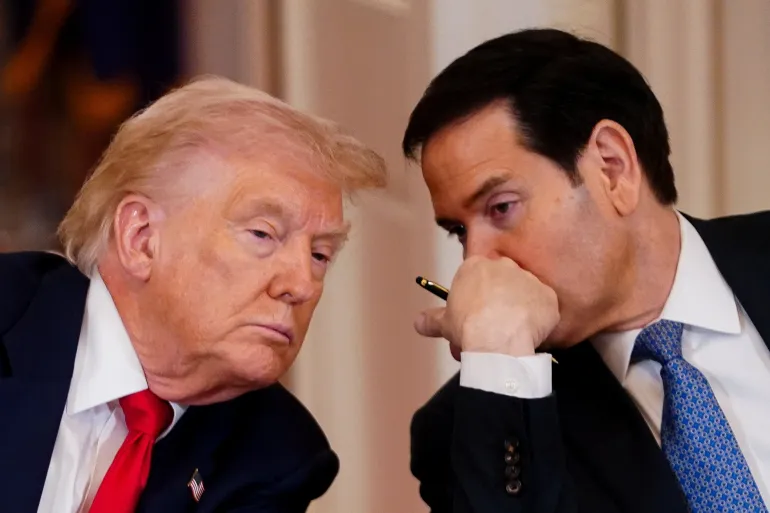
US President Donald Trump listens to Secretary of State Marco Rubio [File: Nathan Howard/Reuters]
What are Democrats saying?
Several Democratic senators have said they left the briefings frustrated, arguing that the administration had not provided clear answers about the war’s objectives, timeline or the long-term strategy guiding their approach to the conflict.
Earlier this week, six Democratic senators also called for an investigation into a strike on a girls’ school in Minab, in southern Iran. Reports indicate the attack, which investigators say involved US forces, killed at least 170 people, most of them children.
“There seems to be no endgame,” Democratic Senator Richard Blumenthal said. “The president, almost in a single breath, says it’s almost done, and at the same time, it’s just begun. So this is kind of contradictory.”
Senator Elizabeth Warren from Massachusetts raised concerns about the cost of war.
“The one part that seems clear is that while there is no money for 15 million Americans who lost their health care, there’s a billion dollars a day to spend on bombing Iran,” Warren said on Tuesday.
“The one thing Congress has the power to do is to stop actions like this through the power of the purse,” she added.
Others seem worried that a ground deployment could take place.
“We seem to be on a path toward deploying American troops on the ground in Iran to accomplish any of the potential objectives here,” Blumenthal, of Connecticut, told reporters after Tuesday’s classified briefing.
“The American people deserve to know much more than this administration has told them about the cost of the war, the danger to our sons and daughters in uniform and the potential for further escalation and widening of this war,” he added.
Democratic Senator Richard Blumenthal of Connecticut [File: Ben Curtis/AP]
What are Republicans saying?
Republicans, who have slim majorities in both houses of Congress, have almost unanimously backed Trump’s campaign against Iran, with only a handful expressing doubt about the war.
Some Republican leaders say the strikes are necessary to curb Iran’s military capabilities, missile programme and regional influence.
They have also argued that the operation is limited in scope and designed to weaken Iran’s ability to threaten US forces and allies in the region.
Republican Representative Brian Mast of Florida, chairman of the House Foreign Affairs Committee, last week publicly thanked Trump for taking action against Iran, saying the president is using his constitutional authority to defend the US against the “imminent threat” posed by Tehran.
But some Republican members of Congress have voiced concerns.
Representative Nancy Mace from South Carolina said she did “not want to send South Carolina’s sons and daughters into war with Iran”, in a post on X.
Rand Paul, a Republican senator from Kentucky, accused the Trump administration of changing its narrative and rationale for the war on a daily basis.
“We keep hearing new reasons for war with Iran—none convincing,” he wrote on X. “‘Free the oppressed’ sounds noble, but where does it end? We’ve been told for decades Iran is weeks from a nuke. War should be a last resort, not our first move. A war of choice is not my choice.”
Why does the debate matter?
The dispute has revived a long-running debate in Washington, DC, about the limits of presidential war powers.
Under the US Constitution, Congress has the authority to declare war, but modern presidents have frequently launched military operations without formal congressional approval, often citing national security or emergency threats.
The law allows the president to deploy US forces for up to 60 days without congressional authorisation, followed by a 30-day withdrawal period if Congress does not approve the action.
Some lawmakers and legal experts say the war on Iran highlights the need for stronger congressional oversight of military action.
“In the 1970s, we adopted something called the War Powers Resolution that gives the president limited ability to do this,” said David Schultz, a professor in the political science and legal departments at Hamline University.
“And so, either you could argue that what the president is doing violates the Constitution by… not [being] a formally declared war; or b, it exceeds his authority, either as commander-in-chief or under the War Powers Act,” he added.
“And therefore, you could argue that domestically, his actions are illegal and unconstitutional,” Schutlz said.
The Trump administration has argued that the February 28 strikes were justified as a response to an “imminent threat”, a rationale often used by presidents to justify military action without prior congressional approval.
However, US intelligence agencies had themselves said before the start of the war that they had no evidence of an imminent Iranian threat to the US or its facilities across the Middle East.
Footage from the ground in Erbil, Iraq shows several drones over the city’s airspace and the wrecking of a drone falling through the sky onto the city.
Footage from the ground in Erbil, Iraq shows several drones over the city’s airspace and the wrecking of a drone falling through the sky onto the city.