Iran

Oil rises above $106 per barrel as US, Iran deadlocked in Strait of Hormuz | US-Israel war on Iran

Jump in prices comes as Donald Trump says vessels will need permission of US Navy to transit key waterway.

Oil prices have jumped on heightened tensions between the United States and Iran in the Strait of Hormuz following Washington and Tehran’s tit-for-tat captures of commercial vessels.

Brent crude, the international benchmark, topped $106 per barrel early on Friday morning as Washington and Tehran stepped up their confrontation over the key maritime route for transporting the world’s energy.

Recommended Stories

list of 4 itemsend of list

Brent stood at $106.80 as of 01:00 GMT, up nearly 5 percent from its closing price on Wednesday, when it surpassed $100 per barrel for the first time in two weeks.

US stocks fell overnight, with the benchmark S&P 500 index dipping 0.41 percent and the tech-heavy Nasdaq Composite dropping 0.89 percent.

Shipping in the Strait of Hormuz, which normally carries about one-fifth of the world’s supply of oil and natural gas, remains at a standstill as Iran continues to demand the right to decide which vessels may pass and the US blocks Iran’s maritime trade.

US President Donald Trump said in a Truth Social post on Thursday that he had ordered the US Navy to destroy any Iranian boats laying mines in the strait, shortly after the Pentagon announced that it had seized a tanker carrying sanctioned Iranian oil for the second time in less than a week.

Trump also appeared to expand the scope of the US naval blockade beyond Iranian ports, writing on Truth Social that no ship “can enter or leave” the strait without the approval of the US Navy.

“It is ‘Sealed up Tight,’ until such time as Iran is able to make a DEAL!!!” Trump said.

Trump’s threats came a day after Iran’s Islamic Revolutionary Guard Corps announced the capture of two foreign cargo ships in the waterway.

The IRGC said it had seized the Panamanian-flagged MSC Francesca and Greek-owned Epaminondas after the vessels had endangered maritime security “by operating without the necessary permits and tampering with navigation systems”.

The Greek Maritime Affairs and Insular Policy Ministry has denied that the Epaminondas was captured and said the vessel remains under the control of its captain.

Only nine commercial vessels transited the strait on Wednesday, compared with seven on Tuesday and 15 on Monday, according to maritime intelligence platform Windward.

Before the US and Israel launched their war against Iran on February 28, the waterway saw an average of 129 transits each day, according to United Nations Trade and Development.

Source link

New Spain airline ticket prices travel alert for 3 major UK tourist hotspots

Tourists travelling to some of the most popular holiday destinations in Spain have been handed an update on prices

Travel officials in Spain have warned that airline ticket prices are set to rocket this summer. The warning comes as the Iran conflict places severe strain on the supply of jet fuel to airlines across the globe.

The mounting pressures have already prompted some airlines to scale back their planned flight schedules, with knock-on effects already being felt on ticket prices. And bosses say there are further headaches ahead for holidaymakers at some of the most popular Brit tourist spots as the peak travel season approaches – with around 18 million Brits heading to Spain every year.

The latest alert was issued by travel agents in Spain. The Balearic Islands Travel Agencies Association (AVIBA) has warned those heading to popular destinations such as the 3 key tourist spots of Mallorca, Menorca and Ibiza to brace themselves for steeper ticket prices – even as it confirmed flights to the region are not expected to be reduced.

According to reports in the Spanish media, AVIBA president Pedro Fiol cautioned that ticket prices will inevitably rise sharply due to the financial pressures stemming from the conflict. He warned that the war is likely to produce a summer “with a context of greater tension and rising costs that will be gradually passed on to ticket prices”, Spanish website Ultima Hora reports.

Despite this, he maintained that the profitability of routes to the Balearic Islands makes it unlikely that flights to the area will be axed. He did, however, flag that this could become a possibility outside of peak season.

AVIBA note that airlines are currently maintaining “a certain restraint” in airfares. But the president warned that the scarcity and increased cost of fuel driven by the Iran conflict will undoubtedly result in higher airfare prices. The Airline Association (ALA) has issued a similar forecast.

Lufthansa yesterday confirmed the axing of some 20,000 flights through October as part of its operational shake-up. The carrier explained that these reductions relate to unprofitable bases, though none of these are located in Spain. The strategy is to refocus resources on the most lucrative routes.

Mr Fiol said: “We don’t foresee a summer with planes grounded due to a lack of fuel, but we do anticipate a more complex and price-driven environment.” Meanwhile, Spanish website INB3N reports that Mr Fiol also cautioned there was a danger that additional flights could be compelled to make stops so aircraft can refuel mid-journey.

This week, TUI revealed the Iran war set it back around 40 million euros (£34.8 million) last month after it was obliged to bring home thousands of holidaymakers and staff. Europe’s biggest travel operator slashed its profit forecast and suspended revenue guidance as a consequence, causing its shares to fall.

The firm is amongst travel companies to have been substantially disrupted by the conflict in the Middle East, which erupted at the end of February. It is also amongst airline operators to face strain from a spike in jet fuel prices after the conflict drove up the cost of oil.

And holidaymakers should have “no worries” about flights being cancelled this summer, despite airlines confronting a “triple whammy” as a consequence of the conflict in the Gulf, a former industry boss has maintained.

Tim Jeans, a former commercial director at Ryanair who was later managing director of Monarch Air, said that while there “may be some trimming of schedules” by airlines, he did not expect carriers to scrap routes entirely.

His remarks follow stark warnings from the trade body representing European airports, which cautioned that a “systemic” jet fuel shortage could emerge ahead of the peak summer season if the Strait of Hormuz fails to reopen in the coming weeks.

Airports Council International, which represents more than 600 airports, recently wrote to European commissioners for energy, transport and tourism, warning that if the vital strait does not reopen in a “significant and stable way within the next three weeks” then “systemic jet fuel shortage is set to become a reality for the EU”.

Director-general Olivier Jankovec said: “The fact that we are entering the peak summer season… is only adding to those concerns.” However, Mr Jeans insisted: “I don’t see a situation where flights will get cancelled because of the non-availability of fuel.”

He acknowledged that there was a “triple whammy for airlines at the moment”, pointing to “the issues in the Middle East which has caused a massive spike in the cost of fuel”.

Speaking on BBC Radio Scotland’s Breakfast programme, Mr Jeans added: “That in turn is pushing up ticket prices, and the uncertainty around whether it is going to be possible to travel, plus the increase in prices is reducing demand.

“And so you have a situation where airlines are looking at their bookings for the next three months ahead and saying ‘should we fly that flight, is it going to be profitable?'”

Source link

Iran dismisses Trump’s claim of leadership rift, says nation is ‘one soul’ | US-Israel war on Iran News

Several Iranian officials have stressed that their country is united, rejecting United States President Donald Trump’s claims of a rift in the leadership in Tehran.

Iran’s President Masoud Pezeshkian, Foreign Minister Abbas Araghchi and Parliament Speaker Mohammad Bagher Ghalibaf all issued statements rejecting the United States president’s assertion.

Recommended Stories

list of 3 itemsend of list

Pezeshkian and Ghalibaf joined the Supreme National Security Council in posting the same message on X.

“In Iran, there are no radicals or moderates,” it said.

“We are all ‘Iranian’ and ‘revolutionary’, and with the iron unity of the nation and government, with complete obedience to the Supreme Leader of the Revolution, we will make the aggressor criminal regret his actions.”

Mohammad Reza Aref, Iran’s first vice president, also shared the statement, adding another note in English.

“Iran is not a land of rifts, but a stronghold of unity,” Aref said. “Our political diversity is our democracy, yet in times of peril, we are a ‘Single Hand’ under one flag. To protect our soil and dignity, we transcend all labels. We are one soul, one nation.”

Iranian Supreme Leader Mojtaba Khamenei has not made a public appearance since replacing his father, Ali Khamenei, who was killed by US-Israeli strikes on February 28.

US officials have said that the younger Khamenei was wounded and “disfigured” in the strike that killed his father.

The New York Times reported on Thursday, citing unidentified Iranian officials, that Khamenei is gravely wounded but remains “mentally sharp”.

Trump and his aides have been reiterating daily over the past week that there are major disagreements among Iranian leaders.

The US president claimed that Iranians are “having a very hard time figuring out who their leader is”, alleging that there is “crazy” infighting between “moderates” and “hardliners” in Tehran.

Citing the supposed rift by Trump could serve to justify the extension of the ceasefire while also putting the blame on Iran for the stalled diplomacy.

Tehran, however, has stressed over the past days that the talks – previously scheduled to take place in Pakistan – are not happening due to the US blockade on its country’s ports.

On Thursday, Araghchi dismissed allegations that the Iranian military is at odds with the political leadership.

“The failure of Israel’s terrorist killings is reflected in how Iran’s state institutions continue to act with unity, purpose, and discipline,” he wrote on X.

“The battlefield and diplomacy are fully coordinated fronts in the same war. Iranians are all united, more than ever before.”

diplomatic impasse with the US, with Trump suggesting that he is comfortable with the status quo of blockading Iran’s ports to inflict economic pain on the country without resuming the war or rushing towards a conclusive deal.

“Iran’s Navy is lying at the bottom of the Sea, their Air Force is demolished, their Anti-Aircraft and Radar Weaponry is gone, their leaders are no longer with us, the Blockade is airtight and strong and, from there, it only gets worse — Time is not on their side!” Trump said on social media on Thursday.

“A Deal will only be made when it’s appropriate and good for the United States of America, our Allies and, in fact, the rest of the World.”

But the truce under the status quo remains tenuous. Air defences were activated over Tehran earlier on Thursday, but there has been no official confirmation of an attack against the country.

Earlier on Thursday, Trump said the US military will “shoot and kill” Iranian laying mines in the Strait of Hormuz, which could spark a response

And oil prices are once again rising due to the uncertainty and the double blockade in the Gulf – Iran closing down Hormuz and the US naval siege on Iranian ports.

Israel also appears ready to rejoin the war. Defence Minister Israel Katz said on Thursday his country is awaiting the green light from Trump to return Iran to the “age of darkness”.

“Israel is prepared to renew the war against Iran. The [Israeli military] is ready in defence and offence, and the targets are marked,” Katz said, according to the Times of Israel newspaper.

Source link

How Trump’s Iran war is driving military dissent | US-Israel war on Iran News

From protests to quiet resistance, dissent is rising inside the United States military over the US-Israel war on Iran.

As the US expands its war with Iran, opposition is growing – not just among the public, but inside the military itself. Some service members are questioning orders, exploring conscientious objection, and speaking out. What’s driving this shift, and how far could it go?

In this episode: 

  • Mike Prysner (@MikePrysner), Executive Director of the Center on Conscience & War

Episode credits: 

This episode was produced by Marcos Bartolomé, Tamara Khandaker, and Sarí El-Khalili with Spencer Cline, Tuleen Barakat, and our host, Malika Bilal. It was edited by Tamara Khandaker and Noor Wazwaz. 

Our sound designer is Alex Roldan. Our video editors are Hisham Abu Salah and Mohannad al-Melhem. Alexandra Locke is The Take’s executive producer.

Connect with us:

@AJEPodcasts on XInstagramFacebook, and YouTube


Source link

With talks in ruins, Iran displays its power over strait

Iran displayed its strengthened control over the Strait of Hormuz on Thursday by releasing video footage of its commandos boarding a large cargo ship. The video, aired on state television, showed masked troops storming the MSC Francesca and included scenes of another captured ship, the Epaminondas, which Iran accused of trying to cross the strait without proper permits.

As tensions remain high, the U. S. announced that it boarded another tanker, the Majestic, in the Indian Ocean. This was likely a reference to the supertanker, the Phonix, which was carrying 2 million barrels of crude oil off Sri Lanka. Since the start of conflict in February, Iran has effectively restricted access to the strait, asserting control after peace talks between the U. S. and Iran were halted shortly before a ceasefire expired.

Iran’s willingness to re-engage in talks depended on the U. S. lifting its blockade and releasing Iranian ships. In a post on Truth Social, U. S. President Donald Trump indicated that he ordered the Navy to “shoot and kill” Iranian boats that were laying mines in the strait, escalating military actions without addressing other Iranian tactics like speedboats and drones.

Iran’s judiciary chief stated that the merchant vessels attacked by Iran’s forces had faced legal consequences, while Iran’s vice speaker announced that the first toll revenue collected from ships using the strait had been transferred to the central bank, but provided no specifics on payments or amounts.

Tehran proclaimed it would not reopen the strait, which typically handles a significant portion of global oil and gas shipments, until the U. S. lifted the blockade considered a breach of the ceasefire. Although Trump refrained from escalating attacks in the ceasefire’s final hours, he remained firm on not lifting the blockade. There was no formal extension of the ceasefire nor plans for new negotiations.

Iranian citizens faced uncertainty and anxiety in what they termed a state of “neither peace nor war,” fearing potential attacks from the U. S. or Israel. Pakistan, previously facilitating talks, remained in contact with both countries about reviving discussions, but Iranian officials hesitated to commit due to the U. S. blockade.

On the U. S. side, another round of discussions was set for Thursday, focused on Israel and Lebanon, where Lebanon sought an extension of a recent ceasefire amidst continued Israeli airstrikes that resulted in casualties, marking a significant day since the ceasefire began.

In a significant personnel change, U. S. Navy Secretary John Phelan was dismissed amid conflicts over shipbuilding decisions and tensions with high-ranking officials.

The ongoing situation in the Strait of Hormuz has caused volatility in markets, pushing oil prices upward, while stock prices in the U. S. reached record highs despite uncertainty about energy supply. Washington has thus far failed to achieve its stated war goals of limiting Iran’s military capabilities, ending its nuclear efforts, and fostering regime change. Iran maintains its missile and drone capabilities and stockpiles of highly enriched uranium, while its government remains resilient against internal dissent. Despite threats from Trump, Iran’s control over the strait appears to strengthen its position in the conflict.

With information from Reuters

Source link

US-Israeli war on Iran will push 30 million back into poverty, UN warns | US-Israel war on Iran News

Disruption to fuel and fertiliser supplies due to the Strait of Hormuz closure will hit crop yields, UNDP chief warns.

The Iran war will push more than 30 million people back into poverty, with the knock-on effects of the conflict likely to increase food insecurity in the coming months, the United Nations has warned.

Disruption to fuel and fertiliser supplies due to the ongoing blocking of cargo vessels through the Strait of Hormuz has already lowered agricultural productivity and will hit crop yields later this year, the UN’s development chief said on Thursday.

Recommended Stories

list of 4 itemsend of list

“Even if the war would stop tomorrow, those effects, you already have them, and they will be pushing back more than 30 million people into poverty,” said Alexander De Croo, administrator of the United Nations Development Programme (UNDP).

He also warned of other fallouts of the United States-Israeli war on Iran, including energy shortages and falling remittances.

Much of the world’s fertiliser is produced in the Middle East, and one-third of global supplies passes through the Strait of Hormuz, where Iran and the US are jostling for control.

The UN’s Food and Agriculture Organization (FAO) last week warned that a prolonged crisis in the strait could lead to a global food “catastrophe”.

India, Bangladesh, Sri Lanka, Somalia, Sudan, Tanzania, Kenya, and Egypt are among the countries most at risk, according to the FAO.

“Food insecurity will be at its peak level in a few months – and there is not much that you can do about it,” De Croo said.

Straining humanitarian efforts

The knock-on effects of the Iran conflict have already wiped out 0.5 percent to 0.8 percent of global gross domestic product (GDP), according to De Croo, who noted, “Things that take decades to build up, it takes eight weeks of war to destroy them.”

De Croo, the former prime minister of Belgium, also warned that the Middle East crisis is straining humanitarian efforts in other parts of the world, with the sector already facing funding cuts.

The US-Israeli attacks on Iran, which began on February 28, have also choked up key humanitarian aid routes, delaying life-saving shipments to some of the world’s worst crises.

“We will have to say to certain people, really sorry, but we can’t help you,” De Croo said. “People who would be surviving on help will not have this, and will be pushed into even greater vulnerability.”

Source link

Vance, eyeing 2028, navigates a diplomatic minefield with Iran

Reporters assigned to travel aboard Air Force Two were told to prepare for an early morning departure on Tuesday for Islamabad until an unexplained delay — followed by a detour by Vice President JD Vance to the White House — revealed clues that something was wrong.

Iranian diplomats had not yet responded to U.S. proposals intended to form the basis of a new round of talks. Some were questioning whether they would attend at all. Had he departed as planned, Vance risked a humiliation, spending hours flying to Pakistan only to be stood up on arrival.

A crisis meeting at the White House led President Trump to announce an indefinite extension to a ceasefire deadline that had been set as a pressure tactic. Now, unable to bring the Iranians to heel, that pressure was suddenly off.

It was an early lesson for Vance in the many ways high-stakes diplomacy can veer off-course.

“There are obvious risks for Vance,” said Chester Crocker, who served as an assistant secretary of State in the Reagan administration, “being associated with failure or with a dubious deal.”

Trump’s aides are clear on the stakes in negotiations with Iran over its nuclear program and an end to the war. Control of the Strait of Hormuz could determine global oil prices for years. Any final deal will shape whether Americans ultimately conclude the fight was worth it — and could sway the outcome of the midterm elections.

But for America’s lead negotiator, the stakes are also personal.

Vance, a diplomatic novice, has found himself at the helm of an effort rife with political risk that has stymied seasoned diplomats ahead of an anticipated run for president.

You’re reading the L.A. Times Politics newsletter

George Skelton and Michael Wilner cover the insights, legislation, players and politics you need to know. In your inbox Monday and Thursday mornings.

The potential payoff is substantial, placing Vance at the center of an international stage with the power to end a historically unpopular war.

But he also may be forced to attach his name to a nuclear deal that provides Tehran access to billions of dollars in sanctions relief, in exchange for limits on its nuclear work that will ultimately expire over time, under conditional monitoring access for international inspectors — an agreement with striking echoes to a 2015 nuclear deal negotiated by a Democratic administration that was disparaged by his party for over a decade.

Vance is negotiating not on his own terms, but on behalf of a mercurial president whose decisions will ultimately determine whether an agreement can be reached. And the Iranians know that Trump’s days in office are numbered, with Vance, a war skeptic, possibly in line to succeed him.

One U.S. official familiar with the negotiations said the vice president is “a pragmatist,” realistic about the prospects of a deal.

“What he has to gain is an image that he can operate effectively on the world stage on a fraught issue. Even if he will give credit to the president, he will be seen as capable of resolving really hard, security-related problems,” said Dennis Ross, a veteran diplomat on the Israeli-Palestinian conflict who served in the George H.W. Bush, Clinton and Obama administrations. “What he has to lose is that he was given the role and did not succeed.”

Failure could raise doubts about his statecraft. But even success at the negotiating table could result in an agreement that turns off Republican voters he may need in a 2028 presidential bid.

“Vance is put in an impossible position,” said Arne Westad, a professor of history at Yale.

“Any deal with the current Iranian regime will be seen as problematic by many Republicans,” Westad said. “If he fails to secure a deal, he will be attacked by those who want an end to the U.S. war — and be seen as ineffective by the president.”

Reputation ‘on the line’

Trump has publicly acknowledged that Vance, a Marine Corps veteran who has consistently opposed U.S. military engagements in the Middle East, had reservations over launching the Iran war in the first place. “He was, I would say, philosophically a little bit different than me,” the president told reporters in March. “I think he was maybe less enthusiastic.”

For that reason, according to Iranian state media reports, Vance was seen by Tehran as their preferred interlocutor in negotiations. Iranian officials expressed gratitude when, during fevered talks ahead of the initial announcement of a ceasefire, they learned that Steve Witkoff, the president’s roving negotiator, had recommended that the vice president be included in the delegation — an exceptional gesture that marked Washington’s highest-level engagement with the Islamic Republic in history.

Republican strategists said Vance’s participation is a demonstration that Trump trusts him, an essential trait for any future Republican presidential nominee and aspiring heir to the MAGA movement.

“It’s rare that a vice president has been put in the position of directly negotiating with a foreign adversary,” said Terry Nelson, a longtime Republican media strategist. “We are engaging a very senior political leader in negotiations with a country that has killed U.S. soldiers and sown chaos in the region. I do think it’s an indication of our resolution and seriousness.”

Whit Ayres, a veteran Republican pollster who has consulted Republican senators and governors for more than three decades, said the vice president’s appointment as lead negotiator “elevates Vance as Trump’s heir-apparent even more than before.”

“Whether that becomes a plus or a minus depends on the outcome of the negotiations,” Ayres added, “and Trump’s ultimate standing with the Republican electorate, both of which are unknowns.”

Talks are currently deadlocked over long-standing demands from Tehran that its leadership has held since the early 2000s, when previously undisclosed nuclear activities first triggered international alarm over Iran’s expanding program.

Iran has periodically accepted temporary limits on its nuclear work — pausing uranium enrichment during talks and, under the 2015 deal, committing to a prolonged cap on enrichment at levels beyond any clear civilian need. But it has always insisted on a “right to enrich” on its own soil, rejecting U.S. attempts to permanently end the program as a foreign attempt to thwart Iran’s scientific progress.

Returning from the first round of ceasefire negotiations, Vance dismissed that position, articulated to him in Islamabad by the speaker of Iran’s Parliament.

“He said, ‘We refuse to give up the right to enrichment,’” Vance said. “And I thought to myself, you know what, my wife has the right to skydive, but she doesn’t jump out of an airplane, because she and I have an agreement that she’s not going to do that, because I don’t want my wife jumping out of an airplane.”

Echoes of a broken deal

The 2015 deal known as the Joint Comprehensive Plan of Action — negotiated by veteran, nonpolitical U.S. diplomats and nuclear scientists over two years of near-constant negotiations — removed roughly 98% of Iran’s nuclear stockpile from the country, while keeping the country’s nuclear infrastructure largely in place, save for the decommissioning of a heavy-water plutonium reactor that could have provided Tehran with a second path to a nuclear bomb.

Under the agreement, Iran consented to limit its use of advanced centrifuges for 10 years, and to restrict uranium enrichment to below weapons-grade levels for 15 years. Inspectors from the U.N.’s International Atomic Energy Agency were granted unprecedented access to monitor the program, though some of these enhanced inspection measures were set to expire after roughly two decades.

In exchange, Iran regained access to tens of billions of dollars of its frozen assets, and settled a long-standing legal dispute with Washington that led the Obama administration to transfer $400 million in cash to Tehran. The episode prompted scandal on the political right, which accused Democrats of fueling terrorism through the funding of Iran’s proxy militias.

Now, after just two weeks of negotiations, the Trump administration is already acknowledging that a final deal with Iran would rely on a familiar formula: temporary caps on Iran’s nuclear work in exchange for substantial sanctions relief. Trump withdrew from the JCPOA in 2018.

Iran comes to the talks with added leverage today, able and willing to disrupt the flow of 20% of the world’s energy through the Strait of Hormuz. And the United States is negotiating alone, without its former partners in the “P5+1” — Russia, China, France, the United Kingdom and Germany — at its side.

Anna Kelly, principal deputy press secretary at the White House, told The Times that “after Democrats like Joe Biden and Barack Hussein Obama weakened our country on the world stage, President Trump has effectively restored American strength with the help of Vice President Vance, who is doing a great job leading the United States in negotiations with Iran.”

“The president and his entire national security team have an incredible track record in making good deals for our country, and the American people can rest assured that the United States will not enter any agreement that does not put our national security interests first,” Kelly said.

Matt Gorman, a longtime Republican strategist and chief communications officer at Targeted Victory, said the JCPOA was viewed particularly critically because it “was negotiated in peacetime.”

“Vance would essentially be ending a war, if successful, and that allows him to make a very different argument,” Gorman said.

The vice president is currently polling as the front-runner for the 2028 Republican presidential nomination, ahead of Marco Rubio, who — despite serving as Trump’s secretary of State and national security advisor — is not directly involved in the Iran talks.

Vance’s role at the negotiating table could help position him as a peacemaker, Crocker noted, distinguishing him from advocates of the war entering the presidential primaries.

But Vance “has been tasked by a president incapable of staying on message, with limited stores of credibility with adversaries as well as allies and a disregard for the complexities of the issues,” said Barbara Bodine, former U.S. ambassador to Yemen. “His task? A credible end to the war without clear objectives.”

“At best, this will be a faux-gilded JCPOA 2.0. Victory will be declared to no applause. On the line is not just Vance’s own reputation, but a demerit in his run for the 2028 presidency,” Bodine added. “The Iran portfolio was no gift.”

What else you should be reading

The must-read: How a Trump-endorsed Republican could become California’s next governor
The deep dive: Palisades reservoir that was empty during fire is dry again. Residents aren’t happy about it
The L.A. Times Special: The Flores twins built a drug empire with El Chapo — then betrayed him

More to come,
Michael Wilner

Was this newsletter forwarded to you? Sign up here to get it in your inbox.

Source link

Another airline set to raise fares by 20 per cent amid Iran war fuel crisis

ONE of the world’s biggest airlines has said they could soon increase the cost of flights due to ongoing conflict.

United Airlines has warned that fares could go up by as much as 20 per cent because of soaring jet fuel prices.

United Airlines planes on the tarmac with a city skyline in the background.
United Airlines has said it might need to increase flight fares Credit: Reuters

The airline flies mainly to America from a number of UK airports including Edinburgh, Manchester and London Heathrow.

According to Reuters, the airline’s CEO Scott Kirby said on Wednesday that the airline could increase flight prices by between 15 and 20 per cent to offset the surge in fuel costs.

For example, if a flight was £500 before, after the price rise it could be as much as £600.

The airline added that it has already begun raising some prices, as well as higher baggage fees – all to offset increased fuel costs.

Read more on travel inspo

ALL IN

I found the best value all inclusive London hotel… just £55pp with free food & booze


TAKING OFF

I’ve visited 50 countries & this much-loathed budget airline is the world’s best

Kirby added that the airline has not yet seen a drop in demand, despite prices rising.

However, he also accepted that if the airline does introduce higher prices, it may test and put off travellers.

United Airlines has also already confirmed that five per cent of flights would be cancelled – or around 250 flights a month – because of rising fuel cost fears.

This news follows data released by The Transport & Environment (T&E) that disruption to jet fuel supplies has added as much as $100 (£77) per person to the price of long-haul flights from Europe.

As such, for a family of four heading on a long-haul holiday it would cost them an extra £308.

For short-haul flights within Europe, prices have increased by £25.26 per passenger – which would be more than £100 per family heading on holiday.

And a number of airlines have already raised their prices to offset the increasing cost of jet fuel.

For example, on Virgin Atlantic flights economy fares have been increased by £50.

Anyone flying in premium economy will pay an extra £180 and those in business class will pay an extra £360.

What does this mean for your upcoming holiday?

1. How will this affect my holiday?

Getaways should not be seriously impacted immediately as airlines bought fuel far in advance at a fixed rate.

But if the crisis continues into June, operators may start adding a surcharge to holiday prices.

A limited number of flights may be cancelled, but mostly on well-served routes with alternatives.

If supplies start to dry up, cancellations would increase.

2. Am I entitled to a refund?

IF some or all of your holiday is cancelled by the provider, your refund depends on whether you booked your trip as a package holiday, or individually.

Your money tends to be much better protected with a package deal.

3. Is now a bad time to book?

There are some great deals, but book with caution.

You must take out travel insurance as, if your flight is cancelled, you may have protection against the cost of other elements of your holiday, such as accommodation.

Air France and KLM, which are part of the same company, are also increasing round-trip fares by €100 (£87) on most of their long-haul flights.

Some airlines have cancelled flights as well.

For example, Lufthansa has cancelled 20,000 flights up to September, Air New Zealand and Scandinavian Airlines have cancelled around 1,000 flights, KLM has cancelled 160 flights and Cathay Pacific has cancelled two per cent of flights up to June.

In other flight news, a major airline is set to axe 20,000 flights this summer amid soaring fuel costs due to Iran war.

Plus, Brits are being warned that their summer holidays are at risk of being cancelled as jet fuel runs low and thousands of flights are axed.

United Airlines passenger planes parked at gates at Newark Liberty International Airport.
If an increase is introduced, flight fares will rise by between 15 and 20 per cent Credit: Getty

Source link

Iran Ramps Up Attacks On Ships In The Strait Of Hormuz After Trump Ceasefire Extension (Updated)

Though President Donald Trump on Tuesday declared an extension to a ceasefire with Iran, the Islamic Republic continues to attack shipping in the Strait of Hormuz. At least two ships were fired on by Iran, according to the United Kingdom Maritime Trade Operations (UKMTO). Iranian officials say the Islamic Revolutionary Guard Corps (IRGC) seized those ships and fired on another.

These incidents came a day after U.S. forces boarded an Iran-linked oil tanker in the Indian Ocean and highlighted that regardless of diplomacy, shipping remains a target for both sides. Meanwhile, Iran made veiled threats against the telecommunications cables running under the Strait. All this is happening as Tehran says it won’t return to the bargaining table until the U.S. ends its blockade of Iranian ports. We’ll discuss that more later in this story.

The first attack in the Strait on Wednesday took place shortly before midnight EDT about 15 nautical miles northeast of Oman, according to UKMTO. 

“The Master of a Container Ship reported that the vessel was approached by 1 IRGC gun boat, no VHF challenge that then fired upon the vessel which has caused heavy damage to the bridge. No fires or environmental impact reported. All Crew reported safe.”

Nour News, a website affiliated with Iran’s Supreme National Security Council, said the Islamic Revolutionary Guard Corps (IRGC) opened fire on the Epaminodes, after it had “ignored the warnings of the Iranian armed forces,” the BBC reported.

Epaminodes is a Liberian-flagged container ship, according to MarineTraffic.com.

A second incident took place about three hours later eight nautical miles west of Iran, UKMTO stated. 

“A master of an outbound cargo ship reports having been fired upon and is now stopped in the water,” the organization explained in an alert. “Crew are safe and accounted for. There is no reported damage to the vessel. UKMTO is aware of high levels of activity in the SoH area and encourages vessels to report any suspicious activity.”

It is unclear at the moment which ship was attacked in that incident. UKTMO did not name the vessel. However, in addition to claiming they fired on the Epaminodes, Iranian officials say they also struck the Euphoria, which MarineTraffic said is a Panamanian-flagged container ship, and the MSC-Francesca, also a Panamanian-flagged container ship, according to MarineTraffic.

The Epaminodes and MSC-Francesca were also seized for “endangering maritime security by operating without the necessary permits and tampering with navigation systems,” the IRGC claimed, stating the vessels have been “directed to the coast of Iran.”

🚨Update: The two vessels are currently in the territorial waters of the Islamic Republic of Iran for inspection of their cargo, documentation, and related records. https://t.co/aXbSZLSNFa

— IRIB (Islamic Republic of Iran Broadcasting) (@iribnews_irib) April 22, 2026

The disposition of the vessels and crews is not currently known. U.S. Central Command could not confirm any of these incidents.

A Sentinel-2 satellite image captured today shows what looks like a swarm of IRGCN fast attack craft sailing north of the strait of Hormuz near Kargan coast, according to open source investigator Mehdi H on X. 

The image shows what appears to be at least 33 boats. It is unclear if there is any connection between these craft and the shipping attacks. The IRGC has invested heavily in its fleet of small boats for decades as TWZ has explored in the past. Some of these vessels are armed with short-range anti-ship missiles, as well as artillery rockets and other weapons. They can also be used to lay naval mines. These fleets are extremely hard to find and fix, and do not need large ports to operate from. While CENTCOM says it has destroyed well over 150 Iranian ships, the IRGC still has many remaining small boats.

Sentinel-2 satellite image today shows what looks like a flotilla of IRGCN fast attack crafts sailing north of strait of Hormuz near Kargan coast.
At least 33 boats can be seen in what looks like a show of force enforcing the strait closure by Iran.
Geo-location: 26.899,56.824 pic.twitter.com/smNuM0y6D3

— Mehdi H. (@mhmiranusa) April 22, 2026

As we noted earlier in this story, in addition to attacking and capturing ships on the Strait, Iran pointed out the vulnerability of telecommunications cables running under it.

“The Strait of Hormuz is not only a crucial route for oil and gas transportation; this narrow waterway is also one of the most important internet chokepoints in the region and the world,” the IRGC-linked Tasnim news agency noted on Wednesday. “According to submarine network data, at least 7 main communication cables of the Persian Gulf countries pass through this route; while more than 97% of the world’s internet traffic is transferred via these fiber optic cables laid under the sea.”

“Cables such as FALCON, AAE‑1, TGN‑Gulf, and SEA‑ME‑WE connect a significant part of the region’s digital communication to major data centers in the Middle East, Europe, and Asia,” the outlet added. “These infrastructures are the backbone of data transfer, e-commerce, cloud services, and online communications in the Persian Gulf countries.”

“The concentration of many internet cables in a narrow passage makes the Strait of Hormuz a vulnerable point for the region’s digital economy,” Tasnim posited, calling it “a place where cables, after passing through the strait, connect to coastal landing nodes and major regional data centers.”

New post from Iran state media Tasnim about major undersea Internet cables in the Strait of Hormuz

“The concentration of a large number of internet cables in a narrow passage has made the Strait of Hormuz a vulnerable point for the region’s digital economy” pic.twitter.com/JE0o4qcCC6

— Steve Lookner (@lookner) April 22, 2026

UPDATES

Our coverage for the day has concluded.

UPDATE: 7:56 PM EDT –

Though the fighting may be paused, White House Press Secretary Karoline Leavitt said the economic pressure on Iran continues.

.@PressSec on Iran: “There’s a ceasefire with the military and kinetic strikes, but Operation Economic Fury continues and… we are completely strangling their economy through this blockade. They’re losing $500M/day… He’s satisfied with that as we await their response.” pic.twitter.com/SdtLveF1ZH

— Rapid Response 47 (@RapidResponse47) April 22, 2026

The aircraft carrier USS George H. W. Bush is set to arrive in the Middle East in about three to five days after sailing around the southern tip of Africa, Fox News Chief National Security Correspondent Jennifer Griffin stated on X.

The timing, she noted, coincides with Trump’s extending the ceasefire deadline by that same timeline.

3rd aircraft carrier USS Bush arrives in Middle East after detour around southern tip of Africa in next 3-5 days as Trump extends the ceasefire with Iran by “3-5 days.” https://t.co/MymBLABmlE

— Jennifer Griffin (@JenGriffinFNC) April 22, 2026

The Washington Post reports that the Pentagon has told Congress it could take six months to fully clear the Strait of Hormuz of mines deployed by the Iranian military.

The publication added that any such operation is unlikely to be carried out until the U.S. war with Iran ends.

This “assessment that means the conflict’s economic impact could extend late into this year or beyond,” the newspaper added.

“The timeline — met with frustration by Democrats and Republicans alike, two of these people said — is the latest sign that gasoline and oil prices could remain elevated long after any peace deal is reached,” the Post noted.

EXCLUSIVE: It could take six months to fully clear the Strait of Hormuz of mines deployed by the Iranian military, and any such operation is unlikely to be carried out until the U.S. war with Iran ends, the Pentagon has informed Congress — an assessment that means the conflict’s…

— Dan Lamothe (@DanLamothe) April 22, 2026

Israel’s N12 News reported on X that Trump has given Iran a deadline of Sunday.

Two Israel Air Force technicians from Tel Nof Airbase, near Ashdod, will be charged with spying for Iran during Operation Roaring Lion, Israel’s public broadcaster KAN News reported on Wednesday.

“The two technicians, who worked on IAF F-15 fighter jets, handed over documentation of the engine diagrams, as well as photographs showing the face of a flight instructor, which is against military censorship rules, The Jerusalem Post reported.

“They were also asked to gather information about former IDF chief Lt.-Gen. (ret.) Herzi Halevi and National Security Minister Itamar Ben-Gvir,” the publication noted. “Authorities are considering whether to increase the charges on one of the technicians to treason, rather than the lower charge of espionage.”

Report: Two Israel Air Force technicians from Tel Nof Airbase will be charged with spying for Iran during Operation Roaring Lion. They provided sensitive military documents and photos.
Written by @JamesGennhttps://t.co/KA8lLh9672

— The Jerusalem Post (@Jerusalem_Post) April 22, 2026

The New York Post said Trump told them that another round of negotiations with Iran may take place later this week. At issue is the future of Iran’s highly enriched uranium, its supply of ballistic missiles, support of proxies like Hezbollah and the Houthis, and ultimate disposition of the Strait of Hormuz.

“‘Good news’ about a second round of talks between the US and Iran may be coming as soon as Friday,” the publication said Trump and Pakistani sources told it on Wednesday.

“Sources in Islamabad touted positive mediation efforts with Tehran, renewing the possibility of more peace talks within the next ‘36 to 72 hours,’” the newspaper added. “Asked about this possible breakthrough by The Post, Trump, in a text message, said: ‘It’s possible! President DJT.’”

Well, guess I’m not going anywhere just yet!

President Trump and Pakistani sources today told me good news about a fresh round of talks between the US and Iran is “possible” as soon as Friday.https://t.co/5TdF0kRgO7

— Caitlin Doornbos (@CaitlinDoornbos) April 22, 2026

Trump “plans to give the Iranians a limited timeframe to come up with a unified proposal to get diplomatic negotiations back on track,” CNN reported, citing two sources familiar with the internal discussions. “The administration does not want to indefinitely extend the ceasefire, the sources said, and does not want to give Iran time to drag out talks further.”

President Trump plans to give the Iranians a limited timeframe to come up with a unified proposal to get diplomatic negotiations back on track, two sources familiar with the internal discussions tell me.

The administration does not want to indefinitely extend the ceasefire, the…

— Alayna Treene (@alaynatreene) April 22, 2026

“Trump is willing to give another three to five days of ceasefire to allow the Iranians to get their shit together,” one U.S. source briefed on the matter told Axios. “It is not going to be open-ended.”

Trump’s negotiators “believe a deal to end the war and address what’s left of Iran’s nuclear program is still achievable,” the outlet added. “But they also worry they may not have anyone in Tehran empowered to say yes.”

Supreme Leader Mojtaba Khamenei “is barely communicating,” Axios posited. “The IRGC generals now in control of the country and Iran’s civilian negotiators are openly at odds over strategy.”

“We saw that there is an absolute fracture inside Iran between the negotiators and the military — with neither side having access to the supreme leader, who is not responsive,” a U.S. official told the news organization.

Axios added that though Vice President JD Vance was all set to go to Pakistan for the second round of negotiations, he instead found himself waiting for the IRGC generals now in control of Iran to let parliament Speaker Mohammad Bagher Ghalibaf and Foreign Minister Sayed Abbas Araghchi travel to Pakistan to meet him. However, while the Iranians appeared to have given Pakistani mediators the green light for talks, by Tuesday morning, that signal was gone, replaced by a demand that the U.S. lift its naval blockade.

“Trump is willing to give another three to five days of ceasefire to allow the Iranians to get their shit together,” one U.S. source briefed on the matter said. “It is not going to be open-ended.”https://t.co/QdZWaZPYL3

— Jason Brodsky (@JasonMBrodsky) April 22, 2026

As we have previously noted, Trump extended the ceasefire deadline yesterday, but gave no specific date for when fighting could resume. In a Truth Social post, he said he did so to give time for the fractured Iranian leadership to come up with a response to U.S. demands and that the ongoing blockade of Iranian ports would remain in effect.

His post came after Iranians refused to commit to peace talks tentatively scheduled to be held in Pakistan.

The official Iranian IRIB news outlet denied Tehran has taken any official position on Trump’s ceasefire extension or future negotiations.

🚨 IRIB EXCLUSIVE
“Iran has NOT yet announced an official position on Trump’s claim about extending the ceasefire. Rumors about Iran’s formal agreement are #not_accurate, and no statement has been issued by Iranian officials.”

— IRIB (Islamic Republic of Iran Broadcasting) (@iribnews_irib) April 22, 2026

The Iranians say the future of negotiations depends on the status of the ongoing blockade of its ports.

Iran’s UN Ambassador Amir Saeid Iravani stated that Tehran is prepared to negotiate immediately after the United States ends its naval blockade, emphasizing that Washington must first halt its “ceasefire violations.”

He added that while Iran is prepared to negotiate, it is also prepared for war.

Iran Ready for Talks Once US Lifts Naval Blockade, Envoy Says

Iran’s UN Ambassador Amir Saeid Iravani stated that Tehran is prepared to negotiate immediately after the United States ends its naval blockade, emphasizing that Washington must first halt its “ceasefire violations.” pic.twitter.com/GOxEO8yqzS

— Tasnim News Agency (@Tasnimnews_EN) April 22, 2026

Citing data from the Vortexa cargo tracking group, Financial Times is reporting that “at least 34 tankers with links to Iran have bypassed the US blockade since it began.” 

CENTCOM, which on Tuesday said the US Navy had directed 28 vessels to turn back to Iranian ports since the blockade was enacted, told us the assertion that dozens of ships bypassed the blockade “is not true.”

Good morning, Asia. While you were sleeping, one of our most-read stories reported that dozens of ships have managed to circumvent the blockade since it began — despite Donald Trump declaring it a ‘tremendous success’. https://t.co/TI52fxy7VQ pic.twitter.com/BkOeMke1pR

— Financial Times (@FT) April 22, 2026

The Pentagon on Wednesday pushed back on the assertion that the Iranian-linked oil tanker Tifani was seized by the U.S., however, it may be a matter of semantics.

As we reported yesterday, the vessel boarded by U.S. forces in the Indian Ocean and The Washington Post later said it was “seized” as the United States determines “next steps for the Tifani and its crew in the next couple of days.”

“Seized wouldn’t be accurate at this time,” a Pentagon official told us. “So the way it works is after interdiction the U.S. has 96 hours to determine next steps. That’s where the rest of the interagency comes in. It varies by ship and situation what the solution would be. At this point DoW’s finished its role with just the interdiction.”

“During that 96-hour period, State would make the determination it’s stateless and work through diplomatic channels on where to take it,” the official added. “DHS and Coast Guard could be the ones to escort it. DoE gets involved for the oil, treasury for the sanction, DoJ for the legal elements and warrant. It really is a large, complex coordination effort across the interagency.”

The exact current disposition of the vessel is unclear. We have reached out to the White House for more details.

U.S. forces on Tuesday boarded the Iranian-linked oil tanker M/T Tifani. (Pentagon)

With Iran partially reopening its airspace, the U.S. State Department stated that any U.S. citizens still in the country “should leave Iran now, monitor local media for updates, and consult with commercial carriers for additional information on flights out of Iran.”

Americans seeking to depart Iran “may also depart by land to Armenia, Azerbaijan, Türkiye, and Turkmenistan. U.S. citizens should not travel to Afghanistan, Iraq, or the Pakistan-Iran border area,” the warning added. “Be aware that the Iranian government may prevent U.S. citizens from departing or charge an ‘exit fee’ for departures from Iran. U.S.-Iranian dual nationals must exit Iran on Iranian passports.”

Iran: As of April 21, Iran’s airspace has partially reopened. U.S. citizens should leave Iran now, monitor local media for updates, and consult with commercial carriers for additional information on flights out of Iran. Americans seeking to depart Iran may also depart by land to… pic.twitter.com/yvVIqO0XoJ

— TravelGov (@TravelGov) April 22, 2026

During the course of Epic Fury, the U.S. has run through a large amount of advanced munitions, CNN reported.

The list includes about 50% of Terminal High Altitude Area Defense (THAAD) interceptors, 50% of its Patriot interceptors, 45% of its Precision Strike Missiles, 30% of its Tomahawk Land Attack Cruise Missiles (TLAMs), 20% of its Joint Air-to-Surface Standoff (JDAM) munitions and 20% of its Standard Missiles (SM-3 and SM-6).

Approximate estimates of percentages of U.S. munitions expended in Iran war, per @CNN :
50% THAAD interceptors
50% Patriot interceptors
45% Precision Strike Missiles
30% Tomahawk missiles
20% Joint Air-to-Surface Standoff Missiles
20% Standard Missiles (SM-3 and SM-6) https://t.co/1A9TH0zpr5

— John M. Donnelly (@johnmdonnelly) April 21, 2026

Given the expenditure of costly defensive munitions used to swat down much cheaper Iranian drones, the U.S. military has introduced Ukrainian counter-drone technology in recent weeks at a key U.S. air base in Saudi Arabia, Reuters reported, citing five people with ​knowledge of the matter.

These attacks have destroyed aircraft and buildings, and killed at least one service member.

“The deployment of a Ukrainian command-and-control platform called ‌Sky Map at Prince Sultan Air Base, which has not previously been reported,” is another sign of Ukrainian battlefield technological advances after more than four years of full-on war with Russia.

Contact the author: howard@thewarzone.com

Howard is a Senior Staff Writer for The War Zone, and a former Senior Managing Editor for Military Times. Prior to this, he covered military affairs for the Tampa Bay Times as a Senior Writer. Howard’s work has appeared in various publications including Yahoo News, RealClearDefense, and Air Force Times.


Source link

Trump maintains blockade as Iran’s factions struggle to unite

Iranian forces attacked three commercial vessels in the Strait of Hormuz on Wednesday, stoking an already tense standoff in the Persian Gulf as a U.S. naval blockade strains Tehran’s economy and pressures its divided leadership to return to peace talks.

The Islamic Revolutionary Guard Corps, or IRGC, claimed responsibility for the attack, saying it seized two ships and damaged a third after the vessels “ignored repeated warnings.” British maritime monitors confirmed the incidents, describing one cargo ship left disabled in the water and another that took heavy damage to its bridge.

“Disrupting order and safety in the Strait of Hormuz is considered a red line for Iran,” the Iranian Navy Command said in a statement.

Hours before, President Trump confirmed he would maintain the naval blockade in the gulf, but agreed to give Iranian leaders additional time to agree on a new peace proposal, he wrote in a Truth Social post.

“Based on the fact that the Government of Iran is seriously fractured, not unexpectedly so and, upon the request of Field Marshal Asim Munir, and Prime Minister Shehbaz Sharif, of Pakistan, we have been asked to hold our Attack on the Country of Iran until such time as their leaders and representatives can come up with a unified proposal,” Trump wrote Tuesday.

More than a dozen American warships have prevented exports from leaving Iranian ports since peace talks in Islamabad failed earlier this month. The tactic has greatly constrained Iranian oil exports — about 90% of which flow through the Strait of Hormuz — contributing to rising inflationary pressure.

The restrictions could wipe out roughly $435 million in daily economic activity, according to Miad Maleki, a senior fellow at the Foundation for Defense of Democracies. Oil exports, Tehran’s primary revenue source, have halted. At the same time, Iran has been unable to import food or industrial goods. As a result, the blockade is expected to empty Iran’s war coffers and sharply accelerate inflationary effects on its people.

Trump is betting that the strategy will force Iran’s fractured negotiating team — which appears to be split between parliamentary moderates and hard-liners within the Revolutionary Guard — to agree on a “unified” peace proposal.

Karoline Leavitt, the White House press secretary, said Wednesday the president extended the ceasefire agreement to allow Iran to get their “act together,” and emphasized that Trump has not given Iran a “firm deadline” to respond yet.

“President Trump will ultimately dictate the timeline and he will do so when he feels it is in the best interest of the United States and the American people,” Leavitt told reporters.

Though she declined to specify who the administration is negotiating with in Iran, Leavitt said the president was “generously offering a bit of flexibility” to the regime so that they can come up with a unified response.

“This is a battle between the pragmatists and the hard-liners in Iran right now,” Leavitt told reporters at the White House.

That division was visible earlier this week when plans for a second round of talks in Islamabad collapsed after Iranian officials failed to confirm participation and instead introduced new preconditions under pressure from hard-line factions.

Iranian Parliament Speaker Bagher Ghalibaf initially signaled a willingness to attend talks, but was overshadowed by Islamic Revolutionary Guard Corps commander Maj. Gen. Ahmad Vahidi, who insisted that the United States lift its blockade before discussions could begin. A report by the Institute for the Study of War said Vahidi sought to derail negotiations rather than secure meaningful economic relief.

“One challenge with the ongoing negotiations is the divided nature of Iran’s negotiating team,” the report said, adding that “[Trump’s] reference to a ‘unified’ proposal appears to imply that previous proposals were not unified in some way.”

And while hard-liners continue attempts to derail diplomacy with continued demands and attacks in the strait, moderates in Iran continue to push for peace.

This week, prominent Sunni cleric Moulana Abdol Hamid called a “fair agreement” the only viable path forward and warned that those who seek to block negotiations would bear responsibility for the “homeland’s devastation.”

Benjamin Radd, a political scientist at UCLA who studies Iran, said the dispute is a sign of a larger power struggle for control of Tehran’s government.

“There are clear divisions within the leadership,” Radd said in an interview. “Right now, it’s the IRGC faction that has all the power. They have the guns, they have the weapons. What they don’t have is the diplomatic connections and experience dealing with the United States.”

Radd pointed to the economic toll of the U.S. blockade as a key driver of tension inside Iran.

“They’re facing a huge domestic crisis,” he said. “They’re not able to replenish their own needs. Nothing can get in or out of the country. They can’t make any money.”

The consequences of the U.S. strategy could push the more moderate Iranian leaders to strike a deal on nuclear enrichment or a reopening of the strait in exchange for the United States lifting the blockade, Radd said.

“That would start rebuilding some sort of trust,” Radd said. “And then we’re seeing the IRGC is basically steadfast, refusing to do any of this.”

With renewed Israeli attacks in Lebanon killing at least three people Wednesday, despite a 10-day ceasefire agreement, Iranian leaders are preparing for the possibility that talks with the United States will fail altogether.

“Iran has prepared for a new phase of fighting,” the IRGC-affiliated Tasnim News Agency reported this week, citing military redeployments and updated target lists.

Meanwhile, Iranian Judiciary Chief Gholam Hossein Mohseni Ejei warned that renewed U.S. or Israeli strikes were likely. Iran Foreign Ministry spokesman Esmaeil Baghaei made a similar statement in a news briefing Wednesday. He announced the country’s armed forces were “on high alert” and ready to defend against any threat, while being open to Pakistan’s mediation efforts.

He did not confirm if the government was participating in a second round of negotiations.

“Diplomacy is a tool for ensuring national interests and security,” he said, “and we will take the necessary steps whenever we conclude that the necessary and logical grounds exist to use this tool to achieve national interests.”

Until then, it appears both Washington and Tehran will continue brinkmanship in the strait.

On Wednesday morning, the IRGC released a statement confirming it seized the two cargo ships and identified them as the MSC Francesca and the Epaminondas. It claimed the MSC Francesca was linked to Israel and accused both of “jeopardizing maritime security by operating without necessary permits and tampering with navigation systems.”

A third ship, the Euphoria, which sails under the Panamanian flag and is owned by a company based in the United Arab Emirates, was fired upon early Wednesday while heading east out of the Strait of Hormuz, according to Vanguard, a maritime intelligence firm.

The Euphoria later resumed sailing toward the Gulf of Oman, according to Lloyd’s List.

In Lebanon, Amal Khalil became the fourth journalist killed by Israeli fire since hostilities with the Lebanese Shiite militant group Hezbollah intensified on March 2.

Khalil’s body was reported to have been found under the rubble of a house where she and freelance photographer Zeinab Faraj were sheltering, according to their colleagues.

Khalil and Faran were in the southern Lebanese town of Al-Tayri, covering developments there when an Israeli attack targeted the vehicle in front of them, killing its occupants.

The two journalists then sheltered in a house but were hit by Israeli fire once more, according to a statement from the Lebanese Health Ministry.

When Red Cross crews scrambled to the area to rescue the trapped journalists, they were targeted with a sound bomb and machine-gun fire.

The Israeli military said it was not preventing rescue teams from reaching the area and that the incident was under review. It acknowledged targeting a vehicle it said had come out of a structure used by Hezbollah and was heading toward Israeli troops.

The Red Cross reached the house by the early evening local time, and rescued Faraj, who is reported to be in stable condition after undergoing surgery for a head wound, according to her colleagues.

Times staff writers Ana Ceballos in Washington and Nabih Bulos in Beirut contributed to this report.

Source link

Iran says ‘fully prepared’ for football team’s World Cup participation | World Cup 2026 News

Tehran says all necessary arrangements has been made for participation in the tournament cohosted by the US.

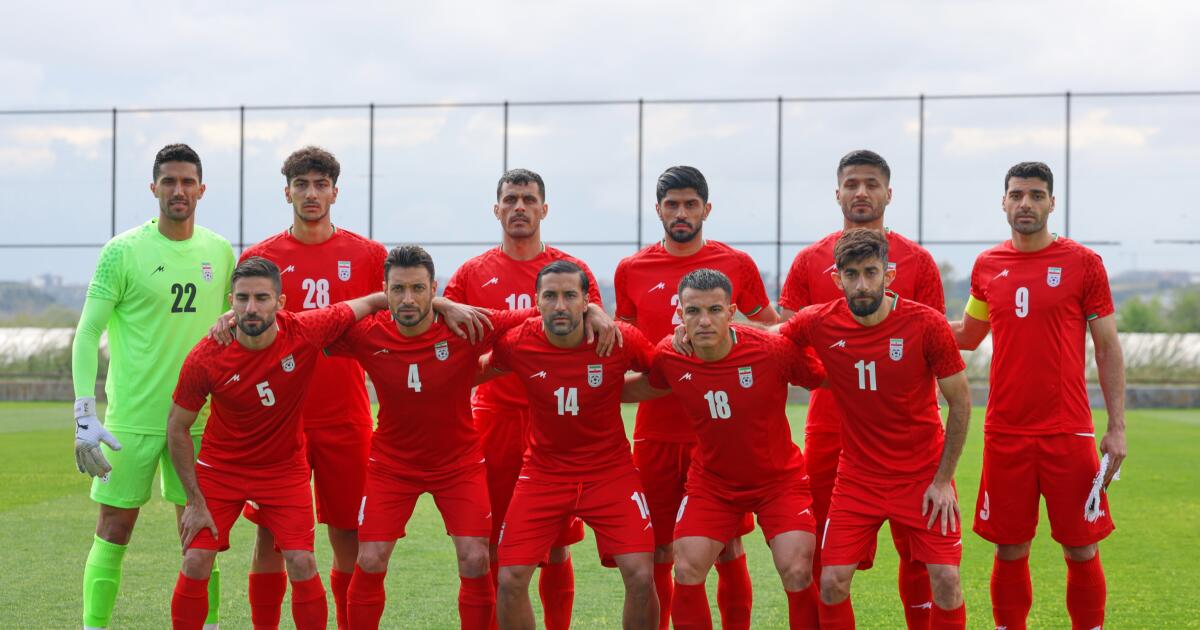
Iran says that the country’s institutions are fully prepared for its national football team’s participation in the 2026 FIFA World Cup in the United States, Canada and Mexico.

In a statement made to state broadcaster IRIB, government spokesperson Fatemeh Mohajerani said on Wednesday that the Ministry of Youth and Sports ensured all necessary arrangements for the team’s effective participation in the tournament.

Recommended Stories

list of 4 itemsend of list

She also said the preparations were made under the directive of the sport minister, with a focus on providing the required facilities for a successful performance.

FIFA President Gianni Infantino said on April 16 that Iran is expected to participate in the upcoming World Cup, taking place from June 11 to July 19, noting that the team has qualified and expressed its willingness to compete despite the ongoing US-Israeli war on Iran.

“But Iran has to come, they represent their people, they have qualified, the players want to play,” he said of the Iranian team’s upcoming matches scheduled in the United States in June.

“Sports should be outside of politics,” Infantino said.

Group matches in the US

US President Donald Trump said in March that while Iran’s team would be welcome at the tournament, he questioned whether it would be appropriate for them to attend, citing concerns over their “life and safety”.

Iran is scheduled to play its three Group G matches in the United States – two in Los Angeles, one in Seattle – with their base for the tournament in Tucson, Arizona.

Iran’s participation in the global tournament being cohosted by the three North American countries had been thrown into doubt by the conflict launched by the United States and Israel on February 28.

Iran raised the prospect of a “boycott” of the competition before asking FIFA to move its matches from the United States to Mexico, a request the world governing body rejected.

After several weeks of air strikes on Iran and Iranian reprisals against Israel and other countries in the region, a fragile truce came into effect on April 8.

The announcement of the two-week ceasefire was followed by rare direct talks in Islamabad on April 11–12, which ended without an agreement. The ceasefire was later extended by the US as diplomatic efforts continue.

The World Cup, the first to feature 48 teams, starts on June 11.

Source link

Trump calls Iran’s leadership ‘fractured’. Is it, and who’s in charge? | US-Israel war on Iran News

United States President Donald Trump has described the Iranian leadership as “seriously fractured” as he announced an extension to a ceasefire.

Trump said on Tuesday that the ceasefire would be extended to allow more time for negotiations and appeared to be suggesting that Iran’s leadership is in disarray.

Recommended Stories

list of 3 itemsend of list

He added that the US naval blockade on the Strait of Hormuz and Iranian ports would remain in place.

Three weeks ago, Trump claimed the US military campaign had succeeded in its goal of forcing a change in Iran’s government and the US was now dealing with “a whole new set of people” in charge of the country.

On April 11, Iran sent a delegation led by parliament Speaker Mohammad Bagher Ghalibaf to Pakistan’s capital, Islamabad, to begin talks with the US.

So is Iran’s government “fractured”? We take a look at the key Iranian stakeholders and power centres in Iran and how their approach to US negotiations may differ.

Who are the key figures in Iran, and are they ‘fractured’ over talks with the US?

Supreme Leader Mojtaba Khamenei

Khamenei is the second son of former Supreme Leader Ali Khamenei, who was killed in US-Israeli air strikes on Tehran on the first day of the war on February 28. Mojtaba Khamenei was selected as Iran’s new supreme leader on March 8, according to state media reports.

The 56-year old has never run for office or been elected but has for decades been a highly influential figure in the inner circle of his father, cultivating deep ties with the the Islamic Revolutionary Guard Corps (IRGC).

Observers said the younger Khamenei’s ascension is a clear sign that more hardline factions in Iran’s establishment have retained power and could indicate that the government has little desire to agree to a deal or negotiations with the US in the short term.

Since his ascension, however, Mojtaba Khamenei has not been seen in public. On March 13, US Secretary of Defense Pete Hegseth claimed Iran’s new supreme leader had been wounded in US-Israeli strikes.

An April 11, a Reuters news agency report that quoted three people close to the supreme leader’s inner circle said Khamenei was still recovering from severe facial and leg injuries suffered in the air strike that killed his father. The sources were quoted as saying he was taking part in meetings with senior officials through audioconferencing.

Al Jazeera could not independently verify these claims.

According to state media reports, Khamenei has been active in making decisions on the war.

In a message read on Iranian state TV on April 18, Khamenei warned that the Iranian navy was ready to inflict “new bitter defeats” on the US and Israel as tensions escalated in the Strait of Hormuz.

Parliamentary Speaker Mohammad Bagher Ghalibaf

Ghalibaf, 64, has served as Iran’s parliamentary speaker since 2020.

He was commander of the IRGC air force from 1997 to 2000. After that, he served as the country’s police chief. From 2005 to 2017, he was the mayor of Tehran.

Ghalibaf stood in elections for president in 2005, 2013, 2017 and 2024. He withdrew his bid for president before the election in 2017 when Hassan Rouhani won a second term.

Last month in the early days of the US-Israel war on Iran, it was suggested that Ghalibaf was the Trump administration’s “pick” to lead the country after the war ended. He has also been the main Iranian official leading negotiations with Washington since they began on April 11 in Pakistan.

In an overnight post on X on Tuesday, Ghalibaf wrote that Iran is “prepared to reveal new cards on the battlefield” after Trump threatened Tehran with “problems like they’ve never seen before” if the two-week ceasefire ended this week without a deal.

Ghalibaf expressed anger at Trump for “imposing a siege and violating the ceasefire”.

“We do not accept negotiations under the shadow of threats, and in the past two weeks, we have prepared to reveal new cards on the battlefield,” he said.

The ceasefire was supposed to have ended on Wednesday, but shortly before its expiration, Trump extended it until Iran “can come up with a unified proposal”.

Within Iran, however, Ghalibaf’s willingness to engage in negotiations with the US has been criticised by some people who have accused him of “betrayal”.

According to a report on Monday by the Iran International TV channel, some critics of Ghalibaf have said on social media platforms in Iran that the parliamentary speaker’s suggestion that peace talks with the US were progressing was “worrying”.

“There is no good in negotiation except harm,” one critic said.

But Ghalibaf has defended undertaking negotiations with the US. In a televised interview on Saturday, he said diplomacy does not mean “a withdrawal from Iran’s demands” but is a way to “consolidate military gains and translate them into political outcomes and lasting peace”.

Islamic Revolutionary Guard Corps

Iran’s military power structure is often described as opaque and complex.

The nation operates parallel armies, multiple intelligence services and layered command structures, all of which answer directly to the supreme leader, who serves as the commander in chief of all the armed forces.

The parallel armies comprise the Artesh, Iran’s regular army, which is responsible for territorial defence, defence of Iran’s airspace and conventional warfare, and the IRGC, whose role goes beyond defence and includes protecting Iran’s political structure.

The IRGC also controls Iran’s airspace and drone arsenal, which has become the backbone of Iran’s deterrence strategy against attacks by Israel and the US.

After the US and Israel struck Iran and killed Ali Khamenei, the IRGC promised revenge and launched what it called “the heaviest offensive operations in the history of the armed forces of the Islamic Republic against occupied lands [a reference to Israel] and the bases of American terrorists”. Since then, it has struck US military assets and infrastructure across the Gulf region.

Some experts said Iranian officials negotiating with the US are more closely aligned with the IRGC than other leaders and groups.

In an interview with Al Jazeera on March 25, Babak Vahdad, a political analyst specialising in Iran, noted that Iran’s appointment of Mohammad Bagher Zolghadr as secretary of Iran’s Supreme National Security Council suggested Iranian negotiations would become more tightly aligned with the IRGC’s priorities. Zolghadr is a former IRGC commander and has been secretary of the advisory Expediency Council since 2023.

But Javad Heiran-Nia, who directs the Persian Gulf Studies Group at the Center for Scientific Research and Middle East Strategic Studies in Iran, said a divide between the IRGC and Iran’s negotiating team was plain to see.

Iran has attacked three cargo ships in the Strait of Hormuz since Trump announced the ceasefire on April 6 and said the US naval blockade will remain.

“The attack on tankers during the ceasefire demonstrates the IRGC’s dominance over the diplomatic team and its disregard for their positions,” he told Al Jazeera.

IRGC
IRGC members attend an exercise in southern Iran on February 16, 2026 [Handout/IRGC via West Asia News Agency and Reuters]

Paydari Front

Heiran-Nia pointed to the role of the Paydari Front (Steadfastness Front), whose members are hardliners within Iran’s political structure who are deeply committed to preserving the original principles of the 1979 Islamic revolution and the absolute power of the supreme leader. This group, he said, has been using the negotiations to cement its position within the power structure and among its support base.

He added that the Paydari Front has also been questioning the negotiations.

“In Iran’s current political climate, various groups are trying to raise their weight, both within the power structure and in public opinion. Of course, the Paydari Front’s efforts are more meaningful in relation to their own support base rather than trying to influence other segments of society because their hardline approach holds no appeal for other social classes,” he said.

The influence this group could have over the progress of talks is debatable, however, he added.

“If a deal is reached, it will likely have a sovereign character. The establishment will impose its own narrative, and the IRGC will accept it. In the meantime, the hardliners will attack the administration of [President] Masoud Pezeshkian and Mohammad Bagher Ghalibaf over the deal. However, it is unlikely that this will spread to the decision-making body of the establishment,” he added.

Source link

What is uranium enrichment and how quickly could Iran build a nuclear bomb? | US-Israel war on Iran News

United States President Donald Trump has claimed that a new nuclear deal being negotiated with Iran will be “far better” than the 2015 Joint Comprehensive Plan of Action (JCPOA), which the US withdrew from in 2018 during his first term.

On Tuesday, Trump extended the two-week ceasefire with Iran a day before it was set to expire, with hopes for a second round of talks in Islamabad, Pakistan.

Key among the US demands is that Iran stop all enrichment of uranium.

Iran has always insisted its nuclear programme is for civilian use only, such as for power generation, which requires uranium enrichment of between 3 percent and 5 percent. To build nuclear weapons, uranium needs to be enriched to 90 percent.

In this explainer, we visualise what uranium is, how it is enriched and how long it could take Iran to make a nuclear weapon.

What is uranium, and which countries have it?

Uranium is a dense metal used as a fuel in nuclear reactors and weapons. It is naturally radioactive and usually found in low concentrations in rocks, soil and even seawater. About 90 percent of the world’s uranium is produced in just five countries: Kazakhstan, Canada, Namibia, Australia and Uzbekistan. Reserves of uranium have also been found in other countries.

Uranium is extracted either by digging it out of the ground or, more commonly, through a chemical process that dissolves uranium from within the rock.

INTERACTIVE - update_Where is uranium found map nuclear-1776865649

Before it can be used as nuclear fuel, uranium is processed through several different forms, including:

  • Yellowcake: Mined ore is crushed and treated with chemicals to form a coarse powder known as yellowcake, which, irrespective of its name, is usually dark green or charcoal in colour, depending on how hot it has been treated.
  • Uranium tetrafluoride: Yellowcake is then treated with hydrogen fluoride gas, which turns it into emerald-green crystals known as uranium tetrafluoride or green salt.
  • Uranium hexafluoride: Green salt is further fluorinated to create a solid white crystal known as uranium hexafluoride. When heated slightly, this crystal turns into a gas, making it ready for enrichment.
  • Uranium dioxide: The gas is spun in a centrifuge machine, which chemically converts it into a fine, black powder.
  • Fuel pellets: The black powder is pressed to form black ceramic pellets, which can then be used in a nuclear reactor.

INTERACTIVE How uranium turns into fuel nuclear reactor-1776853142

How is uranium enriched?

Natural uranium exists in three forms, called isotopes. They are the same element, with the same number of protons but different numbers of neutrons.

Most naturally occurring uranium (99.3 percent) is U-238 – the heaviest and least radioactive – while about 0.7 percent is U-235 and trace amounts (0.005 percent) are U-234.

To generate energy, scientists separate the lighter, more radioactive U-235 from the slightly heavier U-238 in a process called uranium enrichment. U-235 can sustain a nuclear chain reaction while U-238 cannot.

To enrich uranium, it must first be converted into a gas, known as uranium hexafluoride (UF₆). This gas is fed into a series of fast-spinning cylinders called centrifuges. These cylinders spin at extremely high speeds (often more than 1,000 revolutions per second). The spinning force pushes the heavier U-238 to the outer walls, while the lighter U-235 stays in the centre and is collected.

A single centrifuge provides only a tiny amount of separation. To reach higher concentrations – or “enrichment” – the process is repeated through a series of centrifuges, called a cascade, until the desired concentration of U-235 is achieved.

INTERACTIVE - How does uranium enrichment work centrifuge_updated-1776865507

What are the different levels of uranium enrichment?

The higher the U‑235 percentage, the more highly enriched the uranium is.

Small amounts (3-5 percent) are enough to fuel nuclear power reactors, while weapons require much higher enrichment levels (about 90 percent).

The International Atomic Energy Agency (IAEA) considers anything below 20 percent to be low-enriched uranium (LEU), while anything above 20 percent is considered highly-enriched uranium (HEU).

Low enriched – less than 20 percent

  • Commercial grade – 3-5 percent: This is the standard fuel for the vast majority of the world’s nuclear power plants
  • Small modular reactors – 5-19.9 percent: Used in more modern reactors and advanced research reactors

Highly enriched – More than 20 percent

  • Research grade – 20-85 percent: Used in specialised research reactors to produce medical isotopes or to test materials
  • Weapons grade – above 90 percent: This is the level required for most nuclear weapons
  • Naval grade – 93-97 percent: Used in the nuclear reactors that power submarines and aircraft carriers

Depleted uranium, which contains less than 0.3 percent U‑235, is the leftover product after enrichment. It can be used for radiation shielding or as projectiles in armour‑piercing weapons.

How long does it take to enrich uranium?

The effort it takes to enrich uranium is not linear, meaning it is much more difficult to go from 0.7 percent natural uranium to 20 percent LEU than it is to go from 20 percent to 90 percent HEU. Once uranium reaches 60 percent enrichment, it becomes much quicker to reach 90 percent weapons grade.

The effort it takes to enrich uranium is measured in separative work units (SWU).

According to the IAEA, Iran is believed to have about 440kg (970lbs) of uranium enriched to 60 percent – enough to theoretically build 10 or 11 low-technology atomic bombs if refined to 90 percent.

fordo
The then-President Mahmoud Ahmadinejad inspecting the Natanz nuclear plant in central Iran, March 2007 [Handout/Iran President’s Office via EPA]

Ted Postol, professor emeritus of science, technology and international security at the Massachusetts Institute of Technology (MIT), told Al Jazeera that before the US attack on Iran’s nuclear facility at Fordow, the country had at least 10 cascades of 174 IR-6 centrifuges in operation – meaning 1,740 IR-6 centrifuges.

The IR-6 is one of Iran’s most advanced centrifuge models. The country also has tens of thousands of older centrifuges.

Little is known about the conditions of these centrifuges or the stocks of uranium hexafluoride, which are still believed to be buried underground.

Postol has calculated that Iran’s cascade of centrifuges could produce 900 to 1,000 SWUs annually.

“Getting from natural uranium to 60 percent enrichment, which Iran has already achieved, takes roughly five years, and about 5,000 SWUs using Iran’s cascades.”

“If I want to go from 60 to 90 percent, I only need 500 SWUs. So, instead of five years, [by] starting with the 60 percent here, this might take me four or five weeks. Because I am already very enriched,” Postol said.

Using an analogy of a clock, Postol explained: “Let’s say it takes seven minutes to get 33 percent enrichment, and then eight minutes to get to 50 percent enrichment. It only takes me one minute to get to total [90 percent] enrichment.”

INTERACTIVE - How long does it take to enrich uranium_updated-1776865509

How easy would it be for Iran to build a nuclear weapon?

Postol said Iran’s stockpile is held underground, meaning a military strike would not necessarily eliminate the nuclear threat.

A single centrifuge cascade capable of enriching weapons-grade uranium could take up “no more floor space than a studio apartment, making it easily hidden in a small laboratory”, he said, estimating the area at 60sq metres (600sq feet).

“A single Prius Compact Hybrid car can produce enough electric power to run four or more of these cascades at a time,” Postol added, meaning “Iran can covertly convert its 60 percent uranium into weapons-grade uranium metal”.

“What they have done is put themselves in a position where anybody who thinks about attacking them with nuclear weapons has to know that they could be sitting in those tunnels after such an attack, refining [and] enriching the final step they need to build atomic weapons and converting it to metal, and building a nuclear weapon, and that they have the means to deliver it,” Postol said.

“They would have all of the technical equipment they need to build the atomic weapons. And they have the missiles, which are also in the tunnels and can be manufactured in addition to what they already have. And the atomic weapon would not need to be tested, because uranium weapons do not need to be tested before they’re used.”

What does the NPT say about enrichment?

The Treaty on the Non-Proliferation of Nuclear Weapons (NPT), established in 1968, is a landmark international agreement aimed at preventing the spread of nuclear weapons and promoting peaceful uses of nuclear energy. Iran is a signatory to this pact.

The treaty supports the right of all signatories to access nuclear technology and enrich uranium for peaceful purposes, including energy, medical or industrial purposes, with precise safeguards to ensure it is not diverted to make weapons.

Under the NPT, nuclear-weapon states agree not to transfer nuclear weapons or assist non-nuclear-weapon states in developing them. Non-nuclear-weapon states also agree not to seek or acquire nuclear weapons.

Despite this, most nuclear powers are currently modernising their arsenals rather than dismantling them.

Most of the countries are signatories, except five: India, Pakistan, Israel, South Sudan and North Korea.

INTERACTIVE - Nuclear weapons NPT members-1776853134

What agreements has Iran made about its nuclear programme in the past?

In 2015, under the Obama administration, Iran struck a deal with six world powers — China, France, Germany, Russia, the United Kingdom and the US — plus the European Union, known as the JCPOA.

Under the pact, Tehran agreed to scale down its nuclear programme, capping enrichment to 3.67 percent, in exchange for relief from sanctions.

“The Iranians agreed to it, and they were following the treaty. There was no problem with the treaty at all, absolutely no problem,” Postol said.

“They were allowed to have 6,000 centrifuges, which, if they had natural uranium, they could probably build a bomb within a year if they were secretly using these centrifuges, but that was all under inspection. They were just simply going to enrich to 3.67 percent, which is for a power reactor. They’re allowed to do that by the Non-Proliferation Treaty.”

But in 2018, Trump pulled out of the deal, calling it “one-sided” and reimposing sanctions on Iran. Iran responded by eventually resuming enrichment at Fordow.

After the US killed Iran’s General Qassem Soleimani in January 2020, Tehran stated it would no longer follow the set uranium enrichment limits.

Former President Joe Biden made attempts to revive the deal, but it never came to fruition due to disagreements over whether sanctions should be lifted first or Iran should rejoin the JCPOA first.

Trump has repeatedly said Iran should not have the ability to produce nuclear weapons. It has been one of Washington’s red lines during talks with Iranian officials over the past year, and was also the central justification that Washington used when it bombed Iranian nuclear facilities during the 12-day US-Israel war on Iran last year.

In the current negotiations, Iran has said it is willing to “downblend” its 60 percent enriched uranium to about 20 percent – the threshold for low-enriched uranium. The process of downblending involves mixing stocks with depleted uranium to achieve a lower percentage of enriched U-235 overall.

“From the point of view of showing goodwill, I think it’s good, it shows that the Iranians are thinking of ways to address what the Americans claim are their concerns,” Postol said.

INTERACTIVE - TImeline of Iran nuclear programme JCPOA-1776853136

Which countries have nuclear weapons?

Nine countries possessed roughly 12,187 nuclear warheads as of early 2026, according to the Federation of American Scientists. Approximately two-thirds are owned by two nations – Russia (4,400) and the US (3,700), excluding their retired nuclear arsenals.

Some 9,745 of the total existing nuclear weapons are military stockpiles for missiles, submarines and aircraft. The rest have been retired. Of the military stockpile, 3,912 are currently deployed on missiles or at bomber bases, according to the Federation of American Scientists. Of these, some 2,100 are on US, Russian, British and French warheads, ready for use at short notice.

While Russia and the US have dismantled thousands of warheads, several countries are thought to be increasing their stockpiles, notably China.

The only country to have voluntarily relinquished nuclear weapons is South Africa. In 1989, the government halted its nuclear weapons programme and began dismantling its six nuclear weapons the following year.

Israel is believed to possess nuclear weapons, with a stockpile of at least 90. It has consistently neither confirmed nor denied this, and despite numerous treaties, it faces little international pressure for transparency.

INTERACTIVE - which countries have nuclear weapons-1776853140

Source link

Tucker Carlson’s too-little, too-late mea culpa for supporting Trump

Former Fox News host and ex-Trump advocate Tucker Carlson is feeling remorse for the role he and others played in publicly promoting Donald Trump as a candidate and as the president.

“In very small ways, but in real ways, you and me and millions of people like us are the reason this is happening right now,” Carlson said Monday on his podcast, “The Tucker Carlson Show.” He was chatting with Buckley Carlson, his brother and a former Trump speechwriter, about the erosion of conservative values within the Republican Party under Trump.

“I do think it’s a moment to wrestle with our own consciences,” Carlson said. “You know, we’ll be tormented by it for a long time. I will be, and I want to say I’m sorry for misleading people. It was not intentional, and that’s all I’ll say.”

After nearly 10 years of yammering nightly about the greatness of Trump, Carlson picks now to cut the conversation short?

There’s a lot more to say, but this time, it’s about Carlson’s too-little, too-late mea culpa. His claim that he did not intentionally mislead the public is in itself misleading. While Carlson promoted Trump and the Big Lie ad nauseam on his prime-time Fox News show, “Tucker Carlson Tonight,” he was privately disparaging the president and discrediting Trump’s claims that the 2020 election was stolen.

His off-camera thoughts were revealed when internal communications between Fox staffers went public in 2023 due to Dominion Voting Systems’ defamation lawsuit against Fox News for knowingly broadcasting false claims that its machines rigged the 2020 election. Texts and emails from Carlson and other high-profile hosts suggested they knew Trump’s election fraud claims were unfounded, yet they still pushed the “rigged” narrative on air.

In one such example, Carlson texted that Trump needed to concede, and agreed that “there wasn’t enough fraud to change the outcome” of the election, according to the filing. Yet three nights later, he was on air claiming that there were “legitimate concerns” about election integrity. There were several more communications from Carlson where he expressed doubt about Trump’s claims. But in the public eye, he continued to assail the election results and the legitimacy of Biden’s win.

The Fox News host also privately scorned the first Trump presidency as a “disaster,” then turned around and stumped for Trump in 2024, praising him as a “national leader” at the Republican National Convention and campaigning with him in Arizona just days before the election.

If that’s not intentionally misleading the public, then what is?

Perhaps Carlson should have heeded his initial instincts about Trump. Before gaining notoriety with his Fox show, he posted on the website Slate about Trump in 1999, referring to him as “the single most repulsive person on the planet.”

Today the podcaster is among a growing number of right-wing influencers who have turned on their former leader. Former Rep. Marjorie Taylor Greene and conspiracy theorist Alex Jones want to push Trump out of office by invoking the 25th Amendment. Carrie Prejean Boller, who was a Trump-appointed member of the Religious Liberty Commission up until February, simply called him an “evil psychopath”.

Carlson has criticized the Trump administration’s decision to go to war in Iran, calling it “absolutely disgusting and evil” in March, and later said it was the “single biggest mistake” of Trump’s presidency. And when Trump demanded on Truth Social that Iran “open the F—– Strait, you crazy bastards,” Carlson said the post was “vile on every level” and “the most revealing thing the president has ever done. … Who do you think you are? You’re tweeting out the F word on Easter morning?” Carlson said in his podcast.

The president has responded to criticism from Carlson by telling the New York Post that his detractor is a “a low-IQ person” who has “absolutely no idea what’s going on.”

But Carlson is hardly the only American with buyer’s remorse. A recent NBC poll found that Trump is facing the lowest job approval rating of his second term, largely due to strong disapproval of how the president has handled inflation and the cost of living. Carlson, unlike the rest of the country, rode the MAGA wave to prosperity. His show kicked off in 2016, within weeks of the election, and he rose to prominence on the fervor of Trumpism. Supporting Trump was a family business. From his brother, a Republican operative who previously wrote speeches for Trump, to his son, who worked until recently in Vice President JD Vance’s press office.

Now Carlson is making his way back into the conversation by opposing the man he once claimed to revere.

He is asking for forgiveness for backing a faulty product, while also claiming to be a victim of its beguiling charms. “You and I and everyone else who supported him … you wrote speeches for him, I campaigned for him. We’re implicated in this for sure,” Carlson told his brother on the podcast. “It’s not enough to say, ‘Well, I changed my mind,’ or ‘Oh, this is bad. I’m out.’”

True, that’s not enough. Carlson should apologize for misleading the public, intentionally.


Source link

Iran’s gunboat fires on container ship off Oman coast | US-Israel war on Iran News

The IRGC says the aggression came in response to what it described as the US seizure of an Iranian commercial vessel.

An Iranian gunboat has fired on a container vessel near the coast of Oman, according to a British maritime monitoring agency, in an incident that occurred hours after United States President Donald Trump said he would extend a ceasefire with Iran.

The United Kingdom Maritime Trade Operations (UKMTO) centre said on Wednesday that the ship’s captain reported that the vessel had been approached by a vessel of Iran’s Islamic Revolutionary Guard Corps (IRGC) before shots were fired.

Recommended Stories

list of 4 itemsend of list

It “has caused heavy damage to the bridge. No fires or environmental impact reported,” the agency added. No casualties were reported, and all crew members were said to be safe.

British maritime security firm Vanguard Tech said the ship was sailing under a Liberian flag and had been informed it had permission to pass through the Strait of Hormuz, one of the world’s most strategically important waterways.

Iranian news agency Tasnim, however, said the vessel had ignored warnings issued by Iran’s armed forces.

The incident followed a warning from the IRGC’s Khatam al-Anbiya Central Headquarters after what it described as the US seizure of an Iranian commercial ship in the Sea of Oman, the IRNA news agency reported.

It accused Washington of violating the ceasefire and carrying out “armed piracy” after allegedly firing on the Iranian vessel and disabling its navigation systems.

Trump extends ceasefire

Trump earlier announced he would delay a planned military attack on Iran after requests from Pakistan’s army chief Asim Munir and Prime Minister Shehbaz Sharif.

Writing on Truth Social, Trump said the decision was made because Iran’s government was “seriously fractured” and needed time to present a unified position.

“We have been asked to hold our Attack on the Country of Iran until such time as their leaders and representatives can come up with a unified proposal,” he wrote.

He added, however, that the US naval blockade of the Strait of Hormuz would remain in place and said the military had been ordered to stay “ready and able”.

The announcement marked a shift from comments made a day earlier, when Trump said it was “highly unlikely” he would extend the truce beyond Tuesday.

‘Positive and negative signals’ from Tehran

Al Jazeera’s Tohid Asadi, reporting from Tehran, said Iranian officials were sending mixed messages over the ceasefire and the prospects for negotiations.

“Tehran is saying they won’t negotiate under imposed terms and conditions … when we compare the initial 10-point and 15-point proposals by the Iranians and Americans, we can understand that the two sides are poles apart,” he said.

“The atmosphere is also clouded by this mistrust in Tehran towards the United States, as well as the simultaneous military rhetoric related to a potential failed negotiation … It is a warning that another round of confrontation may be ahead.”

He said Iran still viewed the Strait of Hormuz as a key source of leverage in any talks.

“It’s trying to exercise authority over the ships and vessels transiting this strategically significant chokepoint,” he said.

Asadi added that Iranian officials framed their regional position as based on mutual security. “Iranians are saying that the basis of their foreign policy behaviour, particularly when it comes to Israel, is security for all versus security for none,” he said.

Source link

UK inflation hits 3.3% as Iran war drives energy costs higher

Published on

The cost of living in the UK accelerated throughout March, propelled by a significant increase in petrol and diesel prices following the outbreak of the Iran war.


ADVERTISEMENT


ADVERTISEMENT

According to the Office for National Statistics, the annual consumer price inflation rate moved to 3.3% from 3% the previous month, a shift that matched the forecasts.

This inflationary pressure is largely attributed to an 8.7% monthly jump in motor fuel costs, which represents the sharpest rise seen since the summer of 2022, following Russia’s full-scale invasion of Ukraine.

Beyond the petrol stations, the fallout from higher energy prices has trickled down into airfares and food supplies, complicating the economic landscape for the government and the Bank of England.

UK Treasury chief Rachel Reeves noted that while the conflict is not a domestic one, it is directly pushing up bills for families and businesses across Britain.

Lindsay James, an investment strategist at Quilter, observed that “this morning’s inflation data showed CPI creeping back up to 3.3%, confirming that price pressures are re-accelerating rather than fading away since the outbreak of the war in Iran.”

While international markets have shown some signs of recovery in equity prices, the physical market for oil delivery into Europe remains under immense strain.

Experts suggest that a swift reopening of the Strait of Hormuz is the only viable path to unwinding the current inflationary trend, yet the situation remains volatile and unpredictable.

The Bank of England’s policy dilemma

The timing of this inflation surge is particularly problematic because it coincides with a period of cooling in the domestic economy.

Recent data from the labour market indicates that payrolled employment is falling and economic inactivity is on the rise, while wage growth has started to ease.

For the average British worker, the combination of rising essential costs and stagnating earnings growth creates a challenging environment for real purchasing power.

As for the Bank of England, this sudden spike in prices has disrupted the projected path of beginning to lower borrowing costs this spring.

Prior to the escalation of the Iran war, there was a growing consensus that the central bank would reduce its main interest rate from 3.75% as inflation appeared to be heading back toward the official 2% target.

However, with inflation now expected to potentially hit 4% in the coming months, the Monetary Policy Committee faces a much more difficult decision during its meeting next week.

There is a growing debate among economists regarding whether traditional interest rate hikes are the correct tool to address this specific crisis.

According to James “a rise in rates risks misdiagnosing the problem. This inflationary pulse is being driven by supply disruption, not excess demand. Higher interest rates will do nothing to increase the flow of oil or other goods from the Middle East.”

This sentiment suggests that the Bank of England may choose to maintain its current stance, keeping rates on hold while monitoring whether these price increases begin to manifest in higher wage demands across the broader economy.

Source link

Iran war: What’s happening on day 54 as Trump extends ceasefire? | US-Israel war on Iran News

President Trump said the US would extend the ceasefire until Iran presents a proposal and talks are concluded, but a naval blockade of its ports continues.

President Donald Trump said the United States is extending the ceasefire until Tehran submits its latest proposal with conditions for ending the war, and until negotiations conclude, keeping diplomacy open while maintaining pressure on Iran.

However, Trump said the US naval blockade on Iran would remain. Iran has insisted that the blockade represents a violation of the ceasefire, and has said it will not negotiate under the “shadow of threats” or while the blockade remains in place, underscoring the fragile and uncertain path to talks.

Meanwhile, violence continues across the region, with Israeli settlers killing two people, including a child, in the occupied West Bank, and Israeli strikes in southern Lebanon wounding civilians and damaging homes despite a 10-day ceasefire.

In Iran

  • The Islamic Revolutionary Guard Corps (IRGC) said oil production across the Middle East could be targeted if attacks were launched from Gulf neighbours’ territory.
  • The US is continuing its naval blockade of Iranian ports despite the truce, a move Iran says undermines the ceasefire.
  • An adviser to Iran’s parliamentary speaker said the ceasefire extension could be a “ploy to buy time” for potential military escalation.
  • Foreign Minister Abbas Araghchi described the US naval blockade as an “act of war” and a violation of the truce.

War diplomacy

  • Tehran open to diplomacy: Reporting from Tehran, Al Jazeera’s Almigdad Alruhaid said there was no official response to Trump’s ceasefire extension, but officials signalled openness to talks. The US blockade of the Strait of Hormuz is seen as a violation of the truce, with commanders saying forces are fully prepared to respond to any escalation.
  • US sanctions widened: The US imposed new sanctions linked to Iran’s weapons programmes, while the European Union is moving to expand its own measures.
  • Talks planned in Washington, DC: The US is set to host ambassador-level negotiations between Israel and Lebanon, as Lebanese Prime Minister Nawaf Salam pushes for a full Israeli withdrawal from the country’s territory as Beirut’s main objective.

INTERACTIVE_LIVETRACKER_IRAN_US_ISRAEL_MIDDLEEAST_ATTACKS_April 21_2026_GMT0830

In the Gulf

  • Trump said a potential currency swap with the United Arab Emirates is “under consideration”, adding Washington would support the Gulf ally if needed, after reports the idea was raised with US officials amid concerns the war could strain the UAE’s economy.

In the US

  • The US president said he was extending a ceasefire with Iran to give more time for negotiations, but would maintain the naval blockade of Iranian ports.
  • Reporting from the White House, Al Jazeera’s Alan Fisher said Trump has shifted between conciliatory and hardline rhetoric, linking the blockade of the Strait of Hormuz to forcing Iran to negotiate, while warning of military action if negotiations fail.
  • The mixed messaging has unsettled markets, but some analysts argue the strategy shows calculated pressure and a willingness to wait for Iran’s response.

In Israel

  • Israeli Prime Minister Benjamin Netanyahu said the country has been strengthened by its campaigns against Iran and its allies, claiming joint efforts with the US weakened Tehran’s capabilities and boosted Israel’s regional position, opening the door to new alliances.

In Lebanon

  • Prime Minister Salam said on Tuesday that Lebanon needed $587m to address the conflict’s ongoing humanitarian fallout amid a fragile ceasefire between Israel and Hezbollah.
  • Tensions remain high as Israel and Hezbollah accuse each other of breaching the truce. Israel said rockets were fired at its troops in southern Lebanon and that it responded with strikes, while Hezbollah said its attacks were retaliation for Israeli shelling and ongoing strikes on Lebanese areas.

Oil and global economy

  • Shipping through the Strait of Hormuz remains severely limited, raising concerns over global oil flows.

Source link

Trump extends ceasefire and hopes for ‘unified proposal’ | Newsfeed

NewsFeed

In a social media post, President Trump announced an extension of the ceasefire in the war on Iran, but with the US blockade still in place. Al Jazeera’s Alan Fisher says there are signs of movement as Trump shifts towards discussing a ‘unified proposal’.

Source link

More than 30 airlines axe flights or add charges over jet fuel crisis – full list

The sharp rise in the cost of jet fuel, driven by escalating tensions in the US-Israel war with Iran, has forced several airlines to hike fares, cut routes and reassess their financial forecasts

Multiple airlines are cancelling flights and introducing new charges as a deepening jet fuel crisis sends shockwaves through the global aviation industry.

Prices have surged dramatically in recent weeks, climbing from roughly $85-$90 per barrel to as high as $150-$200, driven by escalating tensions in the US-Israeli war with Iran.

The sharp rise in costs has now forced carriers to hike fares, cut routes and reassess their financial forecasts. The spike has triggered warnings of major disruption, with International Energy chief Fatih Birol cautioning that Europe could have as little as six weeks of jet fuel supply remaining if the Strait of Hormuz stays closed.

There are more than 30 airlines around the world who say they have been forced to cancel flights or add charges:

AirAsia X – Cut around 10% of flights and introduced a fuel surcharge of roughly 20%.

Air France-KLM – Raising long-haul fares, plus cabin fares by 50 euros per round trip, as well as cancelling flights. KLM, the group’s Dutch arm, is set to scrap 160 European services in the coming months.

Air India – Switching to distance-based fuel surcharges, warning current pricing does not cover rising costs, reports the Independent.

Air New Zealand – Reducing flights through May and June, increasing fares and suspending its full-year earnings forecast.

Akasa Air – Introducing fuel surcharges ranging between 199 and 1,300 Indian rupees ($2 to $14) on both domestic and international routes.

Alaska Air – Increasing checked baggage fees by up to $150 on North American routes, as well as for its Hawaiian Airlines unit.

American Airlines – Raising baggage fees by $10 each for the first and second checked bags and by $150 for the third checked bag, while cutting some economy benefits.

Asiana Airlines – Cutting 22 flights between April and July due to fuel costs.

Cathay Pacific – Cancelling a small portion of flights from mid-May until the end of June and increasing fuel surcharges.

China Eastern Airlines – The airline said it would raise ⁠fuel surcharges for domestic flights from April 5, with flights of 800km and below hit with a 60 yuan ($9) surcharge and a 120 yuan surcharge for flights over 800km.

Delta Airlines – Delta said it would cut capacity by around 3.5 percentage points from its original plan and raise fees for checked bags.

Easyjet – CEO Kenton Jarvis previously said European consumers should expect higher ticket prices towards the end of summer, when existing fuel hedges come to an end.

Greater Bay Airlines – Said it would raise fuel surcharges on most routes from April 1, while keeping them unchanged on mainland China and Japan routes. Its surcharge for flights between Hong Kong ‌and the Philippines will more than double, the carrier said.

Hong Kong Airlines – The airline said it would raise fuel surcharges by up to 35% from March 12, with the sharpest increase on flights between Hong Kong and the Maldives, Bangladesh and Nepal

Indigo – India’s biggest airline said it would introduce fuel charges on domestic and international flights from March 14.

Jetblue Airways – The US-based low-cost carrier said it was increasing fees for optional services such as checked baggage as it experiences “rising operating ⁠costs”. Baggage prices will rise by either $4 or $9, it said.

Lufthansa – Grounding 27 planes early and cutting more aircraft from its fleet.

Norse Atlantic AirwaysAxed its London Gatwick to Los Angeles route because of fuel costs.

Pakistan International AirlinesRaising domestic fares by $20 and international fares by up to $100.

SAS – Will cancel 1,000 flights in April after already hiking fares.

Spring Airlines – The airline will raise domestic fuel surcharges from April 5.

Southwest AirlinesHiking baggage fees to $45 for a first bag and $55 for a second.

SunExpress – The airline will add a temporary 10-euro fuel surcharge on Turkey-Europe routes.

TAP Air Portugal – Said fare rises would soften the blow from higher fuel prices.

Thai Airways – Increasing fares by up to 15%.

United Airlines – United Airlines is scaling back loss-making routes over the next six months. It has also been able to push up fares without seeing a major impact on bookings, chief commercial officer Andrew Nocella said, despite the sharp rise in oil and jet fuel costs.

United is also increasing first and second checked baggage fees by $10 for customers travelling within the US, Mexico, Canada and Latin America, according to Reuters.

VietJet AirCut flights on some routes because of fuel shortages.

Vietnam Airlines – plans to cancel 23 domestic flights a week from April. The airline reportedly requested government assistance to remove an environmental tax on jet fuel.

Virgin Atlantic – The airline is adding fuel surcharges to fares and will still struggle to return to profitability this year, its CEO Corneel ‌Koster told the Financial Times.

Volotea – Introduced a pricing policy that could add fuel surcharges of up to 14 euros per passenger.

WestJet – Cutting seats, combining flights and adding a C$60 fuel surcharge on some bookings, according to the Canadian press

Source link