Trump says Tehran did not make satisfactory offer after Iranian foreign minister travelled to Pakistan to present a framework to mediators to end the war.
Tehran, Iran – Iran’s authorities and state media project that they are less interested than before the war in negotiations with the United States if they go beyond their accepted terms, as mediated talks failed to materialise in Pakistan.
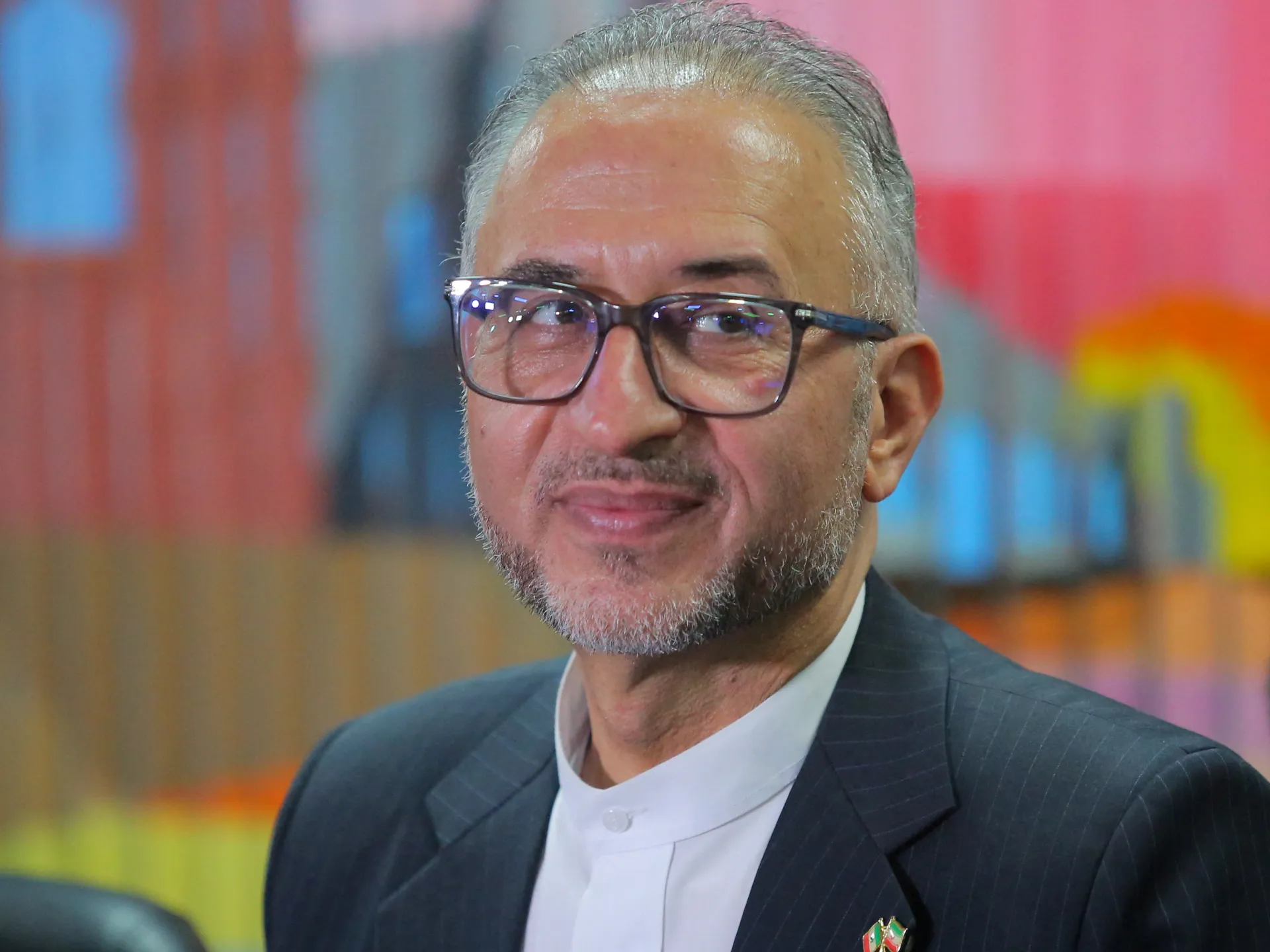
Foreign Minister Abbas Araghchi met senior Pakistani officials in Islamabad on Saturday and left for Oman, to be later bound for Russia. The top diplomat, who was not joined by Parliament Speaker Mohammad Bagher Ghalibaf like in a previous round of negotiations earlier this month, said he was “yet to see if the US is truly serious about diplomacy”.
Recommended Stories
list of 3 itemsend of list
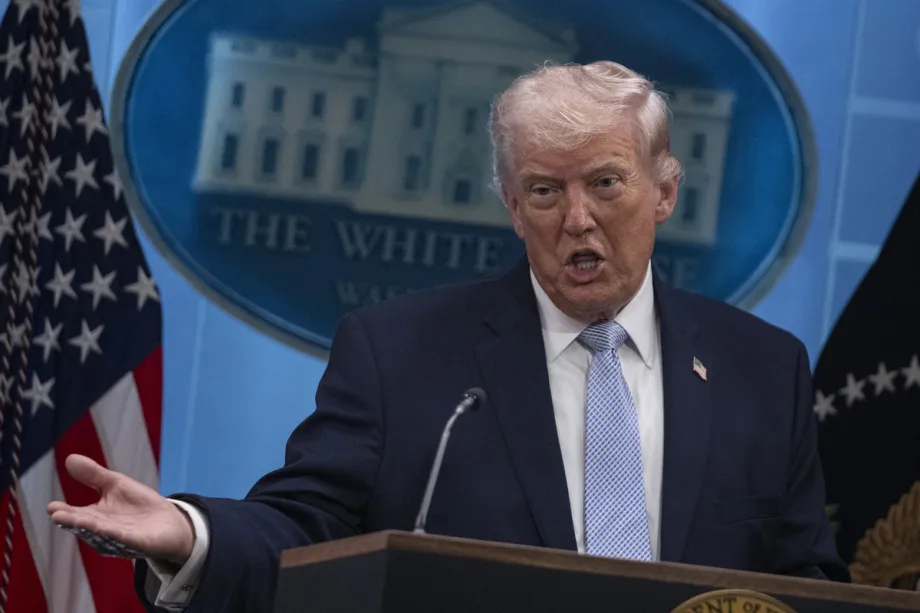
Envoys Steve Witkoff and Jared Kushner had been expected in Pakistan after the White House said Iran asked for a second round of direct negotiations, but US President Donald Trump cancelled the trip and said, “we have all the cards, they have none” while reiterating his claim about “infighting and confusion” among Iran’s leadership.
“If they want to talk, all they have to do is call!!!” Trump wrote in an online post, continuing to put the onus on Iran’s leadership.
Amid a state-imposed near-total internet shutdown in Iran, nearing two months, officials and the supporters of the Islamic Republic emphasise that they are united in opposing any concessions to Trump.
The US president said earlier this week he was in “no rush” to reach an agreement with Iranian leadership, whom he claimed, without evidence, were “fighting like cats and dogs” among themselves.
Since Trump highlighted the perceived fractures, military, security, judiciary and government authorities in Iran have been releasing synchronised messages with near-identical wording to proclaim absolute unity.
The messages, circulated through state media and even using similar graphics and fonts but with different colours, claim that everyone in the country is “revolutionary” and exercises “complete obedience” to Supreme Leader Mojtaba Khamenei.
The authorities also claim that more than 30 million people – a third of Iran’s total population – have registered in a state-run campaign to express readiness to “sacrifice” their lives if necessary, but they have not provided any documentation to prove this.
The Khatam al-Anbiya Central Headquarters of the Islamic Revolutionary Guard Corps (IRGC) said on Saturday afternoon that armed forces would retaliate against the US if it continues its “blockade, banditry and piracy” in Iran’s southern waters.
“We are prepared and determined to monitor the behaviour and movement of the enemies in the region and maintain management and control of the strategic Strait of Hormuz, and to inflict more severe damages on the American-Zionist enemies in case of another aggression,” read its statement.
The IRGC on Saturday took a state television presenter to broadcast near two vessels seized days earlier in the strait to report that Iran exercised “total control” over the waterway.
Police officers stand guard behind a barricade near Serena Hotel, as Pakistan prepares to host the US and Iran for the second round of peace talks, in Islamabad, Pakistan, April 25, 2026 [Asim Hafeez/Reuters]
Iranian authorities continue to call on their supporters, including paramilitary forces, to take to the streets every night in order to maintain control.
In a rally in downtown Tehran on Friday night, Meysam Motiei, a prominent state-backed religious singer with links to the supreme leader’s office, told the crowds that anyone stuck in factional infighting during times of war “has not grown up yet”.
“If anyone from any group or faction, especially in the name of being a revolutionary, tries to disturb the unity of the people, they will get a slap in the face by the people,” he asserted.
But in ultraconservative Mashhad in northeast Iran, where a shrine considered holy for Shia Muslims is located along with powerful religious and economic foundations, some were still preaching aggressively against the possibility of former reformist and moderate leaders retaking power.
“They have instructed us to keep unity with incumbent officials, not these two people,” a speaker told a gathering crowd on Friday night in a clip shared by state-linked media, in reference to former President Hassan Rouhani and his foreign minister, Mohammad Javad Zarif.
“We are not afraid of B-2s and B-52s; we are afraid of dishonourables who have no concern for the homeland. Wherever Trump makes a mess, Zarif comes and blabbers away,” he said, about the diplomat who led nuclear talks that led to a now-expired landmark accord with world powers in 2015.
Iran’s judiciary continues to execute dissidents, and on Saturday announced the hanging of Erfan Kiani, who was arrested during the nationwide protests in January when thousands were killed.
The judiciary described him as “Mossad’s hired knife-wielder” and said he was accused of destroying property, arson and more in downtown Tehran.
Iranian Foreign Minister Abbas Araghchi meets Pakistan Army Chief Field Marshal Asim Munir, in a location given as Islamabad, Pakistan, released April 25, 2026 [Seyed Abbas Araghchi via Telegram/Handout via Reuters]
No nuclear talks?
Iranian state media reports indicate that the US naval blockade of Iran’s ports is undermining the ceasefire extended by Trump and allowing the more hardline voices in Tehran to come out on top.
The Tasnim and Fars news agencies, affiliated with the IRGC, argued against allowing any nuclear negotiations to take place with the US, even though Trump and Israel’s Prime Minister Benjamin Netanyahu started the war with the predominant goal of preventing a nuclear-armed Iran. Tehran has consistently stressed that its nuclear programme is peaceful, although some Iranian leaders have called for the development of a bomb.
“The negotiations with the US are strictly to end the war, and Iran does not consider the nuclear issue to be part of the talks,” Tasnim said, claiming that time was not on Washington’s side due to the tumult in global markets resulting from the war.
Khamenei has not directly commented on more negotiations, but Ali Khezrian, another representative of Tehran in the hardline-dominated parliament, told state media on Thursday that Khamenei was “opposed to any extension of negotiations” under threats from the US and Israel.
Israel’s Defence Minister Israel Katz earlier this week adopted Trump’s apocalyptic messaging, and said armed forces are awaiting a greenlight from the US to “return Iran to the age of darkness and stone by blowing up central energy and electricity facilities and crushing national economic infrastructure”.
There are currently three US aircraft carriers and their supporting vessels in the Middle East region, according to the US military, which marks the first time this has happened since the buildup to the 2003 invasion of Iraq.
But Mahmoud Nabavian, a senior black-turban cleric and hardline member of parliament who was a part of the large Iranian delegation in the first round of talks, said it was a “strategic mistake” to even include the nuclear issue.
He told state media that this allowed the US to raise demands like a 20-year suspension of enrichment, and shipping Iran’s buried high-enriched uranium abroad.
“From now on, entering any negotiations with the US is pure damage and has no interest for the Iranian nation,” he said earlier this week, adding that oil sales were providing the government with a “full hand”.
Mohammad Saeedi, the Friday prayer imam of ultraconservative Qom, located south of Tehran, said in reference to the US that it would be “meaningless and unfair to sit down behind the negotiating table with a symbol of corruption”.
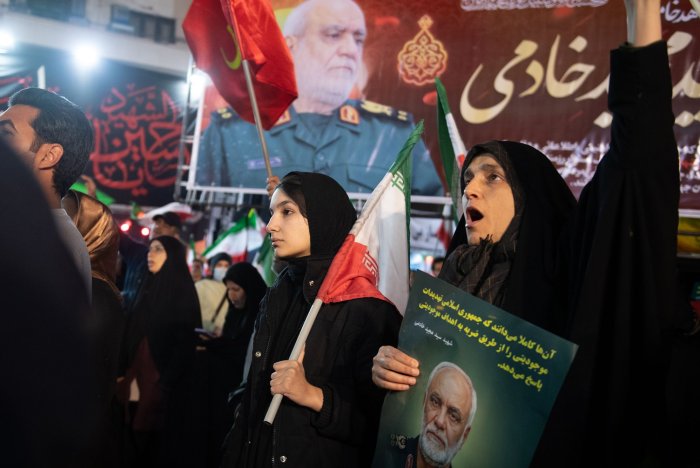
Women hold Iranian flags and a portrait of Supreme Leader Ayatollah Mojtaba Khamenei during a state-organised rally in support of the supreme leader marking National Girl’s Day in Tehran, Iran, Friday, April 17, 2026 [Vahid Salemi/AP]
Civilian infrastructure in danger
The government of relatively moderate President Masoud Pezeshkian has signalled concern about the potential impacts of systematic targeting of more civilian infrastructure, especially power plants, in case the war continues.
“We have a simple request from the people: to reduce their consumption of power and energy. For now, we have no need for these dear people to sacrifice their lives, but we need to control consumption,” the president said on Saturday. “They have hit our infrastructure and blockaded us, so the people become dissatisfied.”
Mohammad Allahdad, the head of Tavanir, the government-owned mother company for development and operation of Iran’s power grid, told state television that it would pay a reward to citizens who would report any theft and illegal use of electricity.
First Vice President Mohammadreza Aref said, “We will build Iran back more glorious” through unity after previous infrastructure attacks that hit oil and gas facilities, steel producers, petrochemical firms, aluminium factories, energy facilities, as well as airports, naval ports, bridges and railway networks.
The government reopened Tehran’s Imam Khomeini Airport for limited foreign-bound flights on Saturday, including those taking people to the Hajj pilgrimage in Saudi Arabia, despite the potential of war resuming.
Trump later suggests that next talks will be over phone, saying ‘If they want to talk, all they have to do is call!!!’
Published On 25 Apr 202625 Apr 2026
United States President Donald Trump has announced that his envoys would not be travelling to Pakistan for talks with Iranian officials after Foreign Minister Abbas Araghchi left the country.
The US president told news outlet Fox News that he had ordered Steve Witkoff and Jared Kushner to ditch plans to visit the Pakistani capital, Islamabad, for the possible talks, despite his earlier claims that Iran was “making an offer” aimed at resolving the two-month conflict.
“I said, ‘Nope, you’re not making an 18-hour flight to go there. We have all the cards. They can call us anytime they want, but you’re not going to be making any more 18-hour flights to sit around talking about nothing,” Trump said.
In any case, Araghchi had already departed Islamabad, the first destination of a three-leg tour including Oman and Russia. Iran’s state-run Press TV confirmed he left on Saturday after meeting Pakistani Prime Minister Shehbaz Sharif, Army chief Field Marshal Asim Munir and Foreign Minister Ishaq Dar.
Posting on X, Araghchi said he had shared “Iran’s position concerning workable framework to permanently end the war on Iran” with Pakistani officials. “Have yet to see if the U.S. is truly serious about diplomacy,” he added.
Later, Trump appeared to say on social media that any future talks would be taking place over the phone. “If they want to talk, all they have to do is call!!!” he wrote, adding that nobody knew who was in charge in Iran and that there was “tremendous infighting and confusion within their ‘leadership’”.
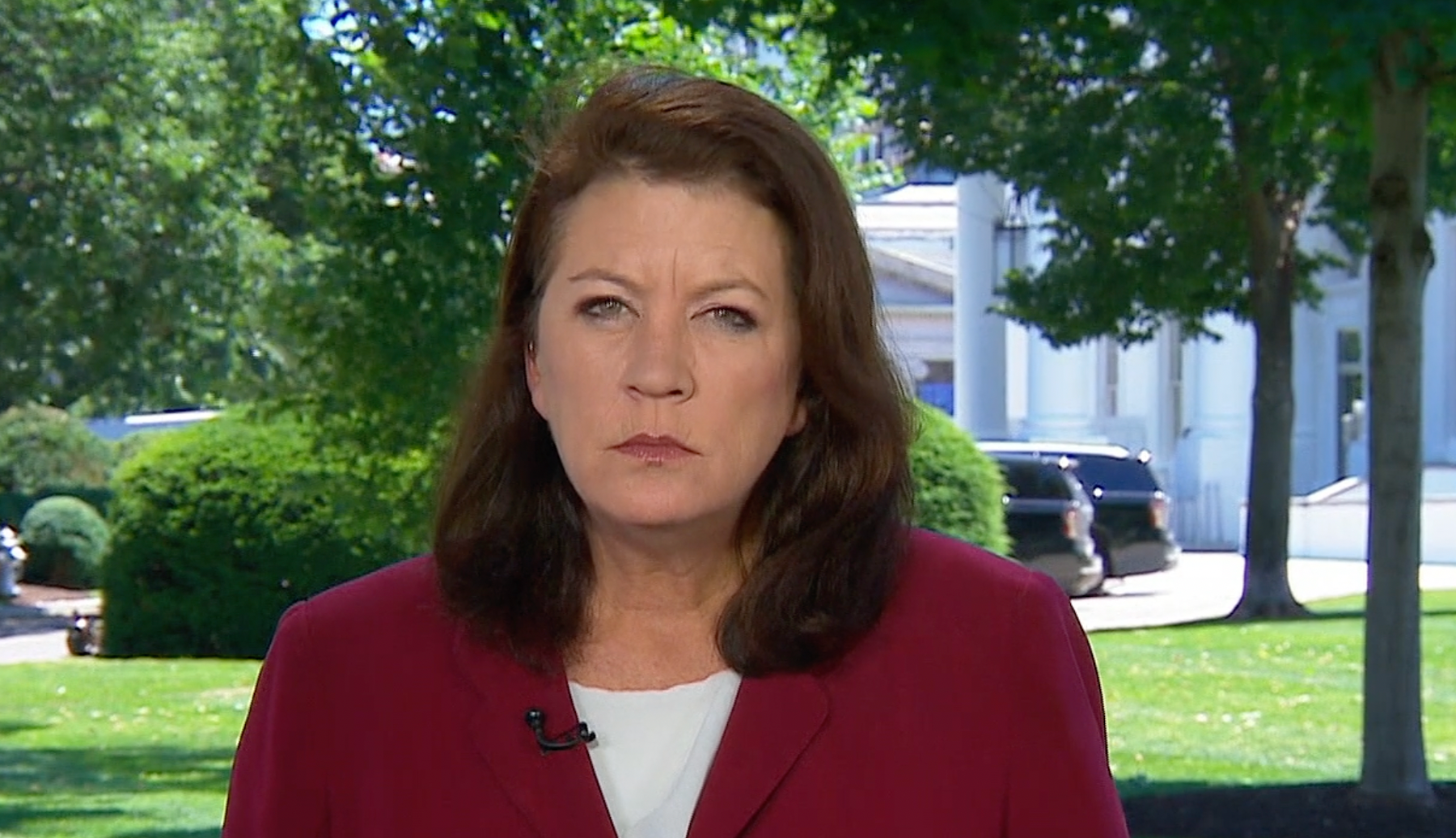
Reporting from Washington, Al Jazeera’s Rosiland Jordan said Trump’s comments suggested that the US did not see “any yielding on the Iranians part”.
She said that his talk of holding “all the cards” appeared to allude to “the US naval blockade, as well as the ongoing presence of more than 50,000 troops in the region, ready to resume combat operations”.
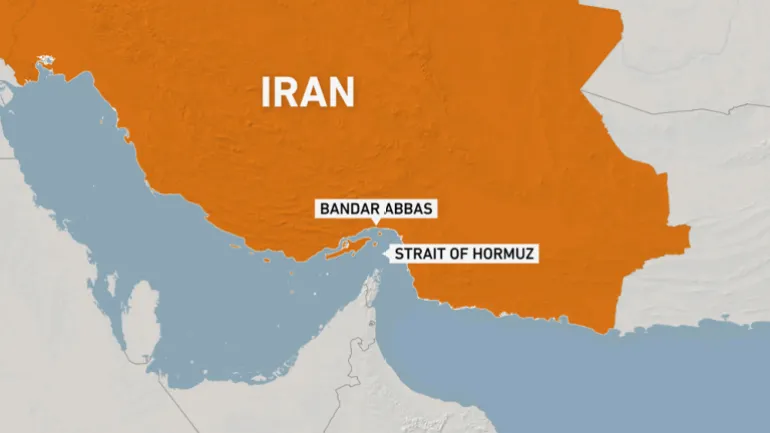
The pressure to strike a deal to permanently end the war has mounted amid an ongoing standoff in the Strait of Hormuz, through which approximately one-fifth of global oil and liquefied natural gas shipments transit.
Iran’s powerful Islamic Revolutionary Guard Corps said Saturday that they had no intention of ending their effective blocking of the waterway, which has thrown energy markets into turmoil, according to the news agency AFP.
Asked by US media outlet Axios whether the cancelled trip by his envoys meant a resumption of hostilities, Trump said: “No. It doesn’t mean that. We haven’t thought about it yet.”
Iran’s Ministry of Foreign Affairs said Araghchi had arrived in Muscat on Saturday for meetings with Omani officials. He is also expected to travel on to Russia to discuss efforts to end the war, which the United States and Israel began against Iran on February 28.
An Iranian delegation led by Foreign Minister Abbas Araghchi met Pakistani Prime Minister Shehbaz Sharif in Islamabad. Iran outlined its proposal to Pakistani mediators as part of efforts to revive direct negotiations with the US.
The US-Israel conflict with Iran dragged almost every country into a phase of energy insecurity. While Iran’s neighboring countries are directly affected by the armed conflict, immediate regions too have not remained insulated from the ongoing conflict. For India, the conflict has demonstrated the implications of getting caught in the crossfire of a conflict in its vicinity. Two particular incidents—the US sinking of the Iranian warship IRIS Dena in the waters off the coast of Sri Lanka (just 40 nautical miles away) and the reported firing of two ballistic missiles towards the joint UK-US base at Diego Garcia in the Indian Ocean—serve as a grim reminder about a conflict spiraling in India’s maritime backyard in the Indian Ocean Region (IOR).
For decades, the Indian Ocean region has remained largely peaceful, away from any direct impact of a conflict in a neighboring region or any major power conflict with a regional impact. The two above-mentioned incidents highlight the need for littoral states of the IOR to have a regional security mechanism to deal with any crisis in the region in a more cohesive and coordinated fashion. Being one of the major stakeholders in the region, it is incumbent upon India to foster meaningful and substantial cooperation with IOR littoral states through regional mechanisms such as the Colombo Security Conclave (CSC) and the Indian Ocean Naval Symposium (IONS). It would be a timely exercise to strive to move beyond non-traditional security cooperation mechanisms to protect the shared maritime space, especially during such conflicts.
The sinking of IRIS Dena in the IOR when it was returning to its home after participating in the International Fleet Review and multinational exercise MILAN, hosted by India, serves as a major strategic lesson to countries of the region. Since the International Fleet Reviews are an acknowledgement by the regional and global peers of the host country’s sovereignty and maritime supremacy in its neighborhood, the sinking of an Iranian warship does not augur well for India’s claim as a net security provider or preferred security partner in the IOR.
Additionally, Iran’s launch of two ballistic missiles, which failed to strike the designated target, towards the Diego Garcia base, reflects the risk of a distant war reaching India’s maritime backyard. The 2025 decolonization agreement between the UK and Mauritius enabled the transfer of the Chagos archipelago, including Diego Garcia Island, to Mauritius; however, the UK retained access to the Diego Garcia military base for 99 years. Thus, in the event of a conflict, Diego Garcia, as the joint UK-US base, may become a target, thereby drawing the war into the Indian maritime backyard. With the escalating conflict with Iran, Hezbollah, and the Houthi rebels, the possibility of repetition of such an incident cannot be ruled out.
During the Cold War, India and the IOR countries endeavored to halt the foreign military presence in the IOR, as illustrated by the UNGA Resolution 2832 of 1971, which sought to establish the Indian Ocean Zone of Peace (IOZOP). However, the regional countries failed to implement the declaration because of resistance from the major powers. In 2016, India attempted to revive implementation of the 1971 resolution but failed to garner significant attention from the IOR countries, putting aside any major power.
Rather than seeking IOZOP through restrictions on foreign military presence, India should strengthen its naval capabilities, especially its intelligence, surveillance, and reconnaissance (ISR) platforms. Earlier, in 2018, India envisioned a 200-ship fleet by 2027; however, in 2026, the goal was revised to a 200-plus-ship fleet by 2035. Despite the induction of new platforms, this goal seems ambitious, as older platforms retire faster than new ones are inducted, especially given the constrained budget allocation to the Indian Navy.
A sizable portion of India’s submarine fleet is aging. The current force comprising Russian-origin Kilo-class submarines and German-origin Type 209 submarines has been in service for decades and is set to retire soon. Although the induction of nuclear-powered ballistic missile submarine Aridhaman in April 2026 and Arighaat in August 2024 strengthened India’s nuclear triad, the pace of induction of conventional submarines remains lagging. Project 75I, aimed at developing advanced diesel-electric submarines, was originally set in motion in 2007; however, its deal with the manufacturer—a German firm—has yet to be signed.
Earlier, it was planned that India would expand its fleet of long-range maritime reconnaissance Boeing P-8I aircraft from 12 to 28. But then the plan to expand the fleet to 28 P-8I aircraft was reduced to 20-22 due to constrained spending. Additionally, the Indian Navy only possesses 15 MQ-9B high-altitude, long-endurance (HALE) drones.
Therefore, if India needs to entrench its position as a preferred security partner in the IOR and realize its vision of Security and Growth for all in the Region (SAGAR)—upgraded to Mutual and Holistic Advancement for Security and Growth Across Regions (MAHASAGAR) in 2025—in the IOR, then it needs to support its normative framework with military capabilities.
Given India’s lack of naval capabilities—across all three mediums (air, surface, and undersea)—to conduct persistent surveillance of the enormous IOR (spanning more than 70 million square kilometers), India should collaborate with littoral countries to conduct surveillance in the IOR through regional mechanisms such as the CSC and the IONS. Presently, cooperation in these forums is largely limited to countering non-traditional security threats, such as piracy, trafficking, maritime disasters, etc. Challenges such as differing threat perceptions, disparity in naval capabilities, and a lack of regional consciousness hinder meaningful and substantial cooperation.
However, if the littoral countries of the IOR seek to avoid getting caught in the crossfire of a distant conflict, such as the present one, they need to move beyond non-traditional security cooperation to develop a common understanding of how to protect the shared maritime space in the IOR, especially during such conflicts. India, being the most militarily equipped country in the IOR, should take the lead in forging the collaborative efforts to conduct persistent surveillance in the IOR, as maritime wars do not respect geographical boundaries.
As uncertainty in international travel continues amid the conflict in the Middle East, travel firms have reported increased bookings to three UK destinations
11:26, 25 Apr 2026Updated 11:37, 25 Apr 2026
Staycations in the UK are on the rise (Image: GETTY)
With mounting worries about flight cancellations and soaring prices among UK travellers due to the Iran conflict, new data indicates that staycations are becoming increasingly popular. Travel experts have cautioned that, should disruption to oil supplies through the Strait of Hormuz persist, Europe could see jet fuel reserves dwindling within a matter of weeks, heightening the threat of flight disruptions.
Asia is especially vulnerable to the fuel shortages, given its greater dependence on Gulf imports. Yet European nations including Italy, France, the Netherlands, and Denmark are also said to be tapping into reserves, according to Bryan Terry, managing director at Alton Aviation Consultancy, speaking to The Times.
Earlier this week, Germany’s largest carrier Lufthansa revealed it had scrapped 20,000 flights between May and October in a bid to conserve fuel.
Amid the ongoing uncertainty, travel firms have noted a spike in bookings for three sought-after UK staycation destinations; the Lake District, Northumberland, and Pembrokeshire.
The Lake District welcomes roughly 18 million visitors annually. While many are attracted by its stunning landscapes, peaceful surroundings and walking trails, others head there for particular attractions or to enjoy outdoor pursuits. Guests typically choose from a variety of accommodation options, encompassing both self-catering and serviced properties.
Northumberland similarly lures tourists with its blend of scenic beauty, historical heritage and adventure activities. Key draws include beaches like Bamburgh, alongside iconic sites such as Bamburgh Castle, Alnwick Castle and Hadrian’s Wall. Popular outdoor activities encompass hiking, watersports, cycling and wildlife watching.
Wales’ Pembrokeshire stands out as one of Britain’s premier coastal destinations, providing a distinct alternative to more conventional holiday spots.
Attractions feature the Pembrokeshire Coast National Park, striking clifftops, secluded bays and expansive sandy shores, with places like Barafundle Bay and Whitesands frequently listed among the nation’s finest.
Airbnb’s Lisa Marcais told The i Newspaper: “As we enter the spring and summer season, we’re already seeing a clear uptick in demand for UK getaways,” s Searches have reportedly risen by over 15 per cent for May bank holiday breaks versus last year.
“Lesser-known destinations are particularly popular, with Brits swapping traditional hotspots for rural escapes in Northumberland, Pembrokeshire and the Derbyshire Dales.”
James Shaw from Sykes Holiday Cottages has also noted an increase in staycations over the Easter period and anticipates this trend will carry on throughout the summer months.
“The rise in last-minute bookings is particularly interesting,” he said. “With this level of demand continuing into spring, we’re expecting a strong summer ahead.”
He went on to say that holidaymakers are displaying growing enthusiasm for locations such as Whitby in North Yorkshire, Lyme Regis in Dorset, and Lake District favourites including Windermere and Keswick.
Meanwhile, Yorkshire-based luxury holiday cottage firm Holiday at Home has similarly recorded a 17 per cent surge in reservations.
A prominent shipping organisation has condemned the United States and Iran’s tit-for-tat capture of commercial ships and is calling for the immediate release of their crews.
In an interview with Al Jazeera, John Stawpert, marine director of the International Chamber of Shipping, said seafarers must be allowed to go about their business “freely and without persecution”.
Recommended Stories
list of 4 itemsend of list
Stawpert, whose organisation is the top trade association for merchant shipowners and operators worldwide, called the capture of the vessels an affront to freedom of navigation as enshrined in international law.
“All these people are doing is transporting trade. And really, we can’t have a situation where ships are being seized, ultimately for political ends, to prove a political point,” said Stawpert, whose organisation represents about 80 percent of the world’s merchant fleet.
“These are innocent farers and they should be allowed to go about their jobs without fear of, essentially, imprisonment.”
Stawpert said Iran’s stated wish to charge tolls in the Strait of Hormuz had no basis in international law and would set a dangerous precedent.
“If you can do it in the Strait of Hormuz, why can’t you do it in the Strait of Gibraltar, say, or the Straits of Malacca?” he asked.
Stawpert also said the US President Donald Trump’s naval blockade of Iranian ports had heaped further uncertainty on shipping companies already reeling from Iran’s effective closure of the strait.
“We don’t know what conditions are in place. We don’t know what the targeting criteria of Iran are really,” Stawpert said. “And so we then have another state coming in, effectively doing the same thing through the blockade of the straits”.
The Epaminondas captured by the Islamic Revolutionary Guard Corps in the Strait of Hormuz, Iran, April 24, 2026 [Meysam Mirzadeh/Tasnim/WANA via Reuters]
The US and Iranian militaries have each announced the capture of two commercial vessels over the past week as Washington and Tehran continue to face off in the strait and in waters beyond the Gulf.
The US defence department on Thursday said it had captured the Iran-linked Majestic X as it was transporting sanctioned oil in the Indian Ocean, days after announcing the interception of another ship, Tifani.
Iran’s Islamic Revolutionary Guard Corps on Wednesday said it seized the Panamanian-flagged MSC Francesca and the Greek-owned Epaminondas for “operating without the necessary permits and tampering with navigation systems”.
The Philippines’ Department of Migrant Workers on Wednesday confirmed 15 Filipino seafarers were on the two vessels.
Officials said they had been assured by Iranian authorities that all the crew were “unharmed” and “safe.”
Montenegro’s maritime minister, Filip Radulovic, said in an interview with the state broadcaster earlier this week that four Montenegrin crew on the MSC Francesca were “fine”.
There have been no official updates on the condition of the crews on the vessels captured by US forces.
“It seems they’re not being maltreated,” Stawpert said. “But even so, that’s not really the point. The point is they shouldn’t be in custody in the first place”.
Stawpert also expressed concern for the well-being of an estimated 20,000 seafarers who have been left stranded in the Gulf due to the effective closure of the strait.
“Their welfare is also a priority for us,” he said. “The psychological burden, I think, will be beginning to tell on them after seven weeks now of what’s, to all intents and purposes, house arrest”.
Stawpert called on both the US and Iran to respect freedom of navigation.
“Let’s resume freedom of navigation and respect the right to innocent passage as soon as we possibly can,” he said.
The blockage of the strait, which usually carries about one-fifth of global oil and natural gas supplies, has driven up fuel prices worldwide and forced many governments to start emergency energy-saving measures.
Traffic in the waterway remains a fraction of pre-war levels, with reports saying just five ships transited the strait in the last 24 hours.
Before the US and Israel launched their war against Iran on February 28, the strait saw a daily average of 129 transits, according to the United Nations Trade and Development.
Iran’s foreign minister is in Islamabad, with US envoys also on the way. Iranian officials deny they plan on holding talks with US delegates, but the visits have raised hopes the two sides can break the Strait of Hormuz deadlock with diplomacy.
Iranian Foreign Minister Abbas Araghchi arrives in Islamabad, but Tehran yet to commit to more talks with US delegation.
United States President Donald Trump is sending envoys Steve Witkoff and Jared Kushner to Pakistan as Iran’s foreign minister arrived in the country, raising hopes of new talks on ending the US-Israeli war on Iran amid a fragile ceasefire and growing tensions over control of the Hormuz Strait.
White House press secretary Karoline Leavitt said on Friday that US envoys would sit down with Abbas Araghchi, expressing hope that parties would “move the ball forward to a deal”, but it remained unclear whether the Iranian delegation had agreed to hold talks.
Recommended Stories
list of 3 itemsend of list
Writing on X on Friday, Iran’s top diplomat had said he was off on a “timely tour of Islamabad, Muscat, and Moscow”, to coordinate on “bilateral matters”, with no specific mention of any intention to meet with US negotiators.
Trump expressed optimism over a potential deal, telling the news agency Reuters that Iran was “making an offer” aimed at satisfying US demands, which include ending its nuclear programme.
Earlier, US Defense Secretary Pete Hegseth said Iran had a chance to make a “good deal”. “Iran knows that they still have an open window to choose wisely … at the negotiating table,” he said, adding that all they had to do was “abandon a nuclear weapon in meaningful and verifiable ways”.
But two Pakistani government sources told Reuters that the Iranian foreign minister’s visit would be brief, focusing on Iran’s proposals for talks with the US, which mediator Pakistan would then convey to Washington.
Reporting from Tehran, Al Jazeera’s Ali Hashem said a “senior official” had “made it clear” to him that there would not be any US-Iran talks in Pakistan.
“These regional partners all have their own ideas on how to solve this deadlock, but for the moment, Iran has said it would not meet for a new round of talks,” he said.
Top negotiators from last round absent
Reports on Araghchi’s trip in Iranian state media made no mention of Mohammad Baqer Ghalibaf, the speaker of Iran’s parliament, who was the head of its delegation at talks with a US delegation earlier this month that ended with no breakthrough.
The Iranian parliament’s media office denied a report that Ghalibaf had resigned as head of Iran’s negotiating team, adding that there was no new round of talks scheduled yet, according to Reuters.
US Vice President JD Vance also participated in the first round of talks, but is not travelling to Pakistan on this occasion, though Leavitt said he remained “deeply involved” and was on “standby” to join if needed.
She said Trump decided to send Witkoff and Kushner to Pakistan “to hear the Iranians out”. “We’ve certainly seen some progress from the Iranian side in the last couple of days,” she maintained, without offering any further details.
Reporting from Washington, Al Jazeera’s Mike Hanna said there appeared to be a “graded process” in place, describing it as “an initial exploratory phase” that could lead to “higher-level engagement if negotiations deepen”.
A new round of talks had been expected to start on Tuesday but did not materialise, with Iran saying it was not yet ready to commit to attending.
Trump had unilaterally extended a two-week ceasefire on Tuesday to allow more time to reconvene the negotiators as the US continued its blockade on Iranian ports.
Iran says it will not stop blocking the Strait of Hormuz, a crucial maritime trade chokepoint, until Trump lifts his blockade. On Friday, the US applied more pressure on Tehran by freezing $344m in cryptocurrency assets in a bid to “systematically degrade Tehran’s ability to generate, move, and repatriate funds”.
Special envoy Steve Witkoff (L) and President Donald Trump’s adviser and son-in-law Jared Kushner are heading to Islamabad, Pakistan, Saturday, to have more talks with Iran to make a peace deal. File Photo courtesy Ukrainian President’s Office | License Photo
April 24 (UPI) — Talks with Iran are set to resume with special envoy Steve Witkoff and President Donald Trump‘s adviser and son-in-law Jared Kushner heading to Pakistan on Saturday to meet with Iranian Foreign Minister Abbas Araghchi, the White House confirmed Friday.
Iranian state news agency IRNA said that no meeting has been scheduled, Axios reported.
“The Iranians want to talk. They want to talk in person, and the president is always willing to give diplomacy a chance,” White House press secretary Karoline Leavitt told reporters Friday.
“We hope progress will be made, and we hope that positive development will come from this meeting. We have certainly seen some progress from the Iranian side in the last few days.”
Araghchi landed in Islamabad on Friday night for talks with Pakistani Prime Minister Shehbaz Sharif, Foreign Minister Ishaq Dar and Field Marshal Asim Munir, Axios reported.
A Pakistani official told Axios that the meeting was expected to focus on relaunching negotiations with the Trump administration.
“A trilateral meeting with the U.S. will be assessed after our meeting with Araghchi,” the Pakistani official said.
“We’ve certainly seen some progress from the Iranian side in the last couple of days. Again, the president has made the decision to send Steve [Witkoff] and Jared [Kushner] to hear the Iranians out, and so we’ll see what they have to say this weekend,” Leavitt said about the potential for a peace deal.
Araghchi is scheduled to travel from Islamabad to Muscat, Oman, and then on to Moscow, Axios said. It’s not clear when he will meet with Witkoff and Kushner. Two sources told Axios that the meeting could happen Monday, after Kushner and Witkoff have talks with Pakistani mediators.
Vice President JD Vance will not travel to Pakistan for these meetings.
A missile identified as “Khorramshahr-4” was on display during a public rally in Tehran’s Enghelab Square on April 21, 2026. Photo by Behnam Tofighi/UPI | License Photo
Al Jazeera’s Rory Challands reports from the EU summit in Cyprus, where the leaders of Egypt, Syria, Lebanon and Jordan met with European leaders to discuss the regional crisis caused by the US-Israeli war on Iran.
As tensions ramp up amid fragile truce, US military says it ‘redirected’ 34 vessels as part of blockade on Iran’s ports.
Published On 24 Apr 202624 Apr 2026
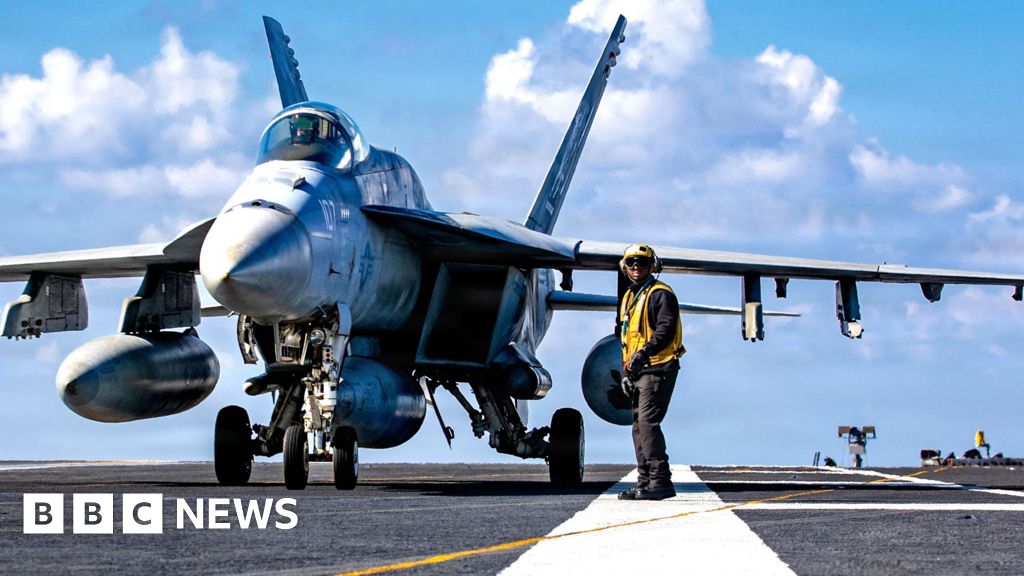
The United States has three aircraft carriers in the Middle East for the first time in 23 years with the arrival of the USS George HW Bush, the US military has said, amid a fragile ceasefire with Iran.
The Middle East-based Central Command (CENTCOM) of the US military said on Friday that the carriers include 12 accompanying ships, more than 200 aircraft, and 15,000 soldiers.
Recommended Stories
list of 3 itemsend of list
“For the first time in decades, three aircraft carriers are operating in the Middle East at the same time,” CENTCOM said.
The last time the US amassed that amount of military assets in the region’s waters was in the lead up to the US-led invasion of Iraq in 2003.
The other two US aircraft carriers in the region are USS Abraham Lincoln and USS Gerald R Ford, which is the largest in the world.
The show of force signals that the US is preparing to return to fighting should the fragile ceasefire between the US, Israel and Iran unravel.
Diplomacy between the two countries has been in limbo, with Iran setting the lifting of the US naval blockade against its ports as a condition for resuming the talks.
US President Donald Trump announced extending the truce on Wednesday, but he said the naval siege would persist.
For its part, Iran has reblocked the Strait of Hormuz in response to the US blockade after declaring the waterway completely open last week when the regional ceasefire was extended to Lebanon.
Trump has not set a deadline for the extended ceasefire and suggested that he is comfortable with the status quo, which he argues is depleting the Iranian economy at a low cost for the US.
“I have all the time in the World, but Iran doesn’t,” he wrote in a social media post on Thursday.
The US president was later asked how long he would be willing to wait before receiving a proposed deal from Iran. He said: “Don’t rush me.”
Iran has described the blockade – which has seen US forces seize at least two Iranian oil ships – as an “act of war”.
Iranian forces have also captured foreign commercial ships in the Hormuz Strait, accusing them of violating maritime regulations.
With negotiations on hold, Trump has shown no signs of willingness to lift the siege in order to facilitate talks.
On Friday, the US military said it has “redirected” 34 vessels in the region. “The blockade against ships entering or exiting Iranian ports continues,” CENTCOM said.
Trump has previously threatened to destroy Iran’s civilian infrastructure, including bridges, power and water stations.
Israeli Defense Minister Israel Katz said on Thursday that his country is awaiting the green light from Trump to return Iran to the “age of darkness”.
“Israel is prepared to renew the war against Iran. The [Israeli military] is ready in defence and offence, and the targets are marked,” Katz said, according to The Times of Israel newspaper.
On April 20, the United States fired at and then seized an Iranian-flagged container ship close to the Strait of Hormuz in the northern Arabian Sea, amid its blockade of Iranian ports.
It was similar to a scene which played out in the 1980s during the so-called Tanker War between Iran and Iraq, during which both countries fired on each other’s tankers in the Strait of Hormuz, seeking to cripple each other’s economies.
Recommended Stories
list of 3 itemsend of list
As naval tensions rise again in the Strait of Hormuz – this time between Iran and the US – we break down what happened in the 1980s and examine the parallels and differences between the situations then and now:
The ‘Pivot’ tanker in flames in the Strait of Hormuz in 1987 during the Iran-Iraq war [File: Francoise De Mulder/Roger Viollet via Getty Images]
How the 1980s Tanker War played out – a timeline
The war between Iran and Iraq began in 1980 when then-Iraqi President Saddam Hussein launched a full-scale invasion of Iran following Iran’s 1979 Islamic revolution.
In 1984, this war reached the Gulf when Iraq attacked Iranian oil tankers, seeking to cripple its oil-revenue-dependent economy. Iran retaliated by firing at oil tankers belonging to Iraq and its allies in the Gulf.
According to a report by the University of Texas’s Robert Strauss Center for International Security and Law, Iran also threatened to close the Strait of Hormuz then, but did not do so since its own economy, already crippled by the war, was dependent on exporting oil to the rest of the world through it.
In November 1986, when Iran struck Kuwait’s ships, Kuwait asked for foreign help. The former Soviet Union was the first to respond and helped escort the nation’s ships in the Gulf.
The US, led by then-president Ronald Reagan, launched Operation Earnest Will in July 1987, also seeking to protect tankers in the Gulf and render more assistance than Moscow. The operation involved reflagging Kuwaiti tankers with the US flag so they could legally sail under US protection.
According to an article by the Veterans Breakfast Club, a US-based website which shares experiences of former US military veterans, during Washington’s very first escort mission in July 1987, a reflagged tanker hit an Iranian mine in the Gulf.
“The convoy continued, but the incident made clear that the United States had entered a shadow war with Iran at sea,” the article said.
“Over the next fourteen months, dozens of US warships rotated through the region escorting tankers and protecting shipping lanes. US forces also conducted special operations to hunt Iranian mine-layers at night and conducted strikes against Iranian military positions and ships. The mission wasn’t a small one, consuming 30 US Navy ships at one time,” the article added.
Then in April 1988, the US frigate USS Samuel B Roberts was damaged by an Iranian mine in the Strait of Hormuz. Historian Samuel Cox, writing for the US Naval History and Heritage Command (NHHC), noted in 2018 that by the end of 1987 that vessel was so badly damaged, that “the only thing actually holding the ship together was the main deck”.
So, the US launched Operation Praying Mantis, seeking to destroy Iranian vessels.
The tanker war eventually ended in August 1988, following a United Nations-brokered ceasefire agreement between Iran and Iraq.
Cox noted that by the end of 1987, “Iraq had conducted 283 attacks on shipping, while Iran attacked 168 times. Combined, the attacks had killed 116 merchant sailors, with 37 missing and 167 wounded, from a wide variety of nationalities.”
“Initially, there was great concern that the attacks would cut off the vital flow of oil from the Arabian Gulf, but all they really did was drive up insurance rates. The world’s need for oil was so great, that over 100 dead merchant seamen was apparently an acceptable price,” he wrote.
A tanker in flames in the Strait of Hormuz in December 1987 during the Iran-Iraq war [File: Francoise De Mulder/Roger Viollet via Getty Images]
What is happening in the Strait of Hormuz now?
The current hostilities between the US and Iran in the Strait of Hormuz began when Tehran, whose territorial waters extend into the strait, closed passage to all vessels after the US and Israel began bombing the country. On March 4, the Islamic Revolutionary Guard Corps (IRGC) declared that it was in full control of the strait, and ships would need to get clearance from them to pass through it.
Shipping through the strait collapsed by 95 percent, sending the price of oil – 20 percent of global supplies of which are shipped this way – soaring above $100 a barrel.
Iran, through its imposition of control over who passes through Hormuz, has for almost eight weeks now, determined which vessels can exit the strait from the Gulf into the Gulf of Oman.
At first, Iran indicated that it would allow “friendly” ships to pass if they paid a toll. On March 26, Iran’s Foreign Minister Abbas Araghchi told Iran’s state TV: “The Strait of Hormuz, from our perspective, is not completely closed. It is closed only to enemies. There is no reason to allow the ships of our enemies and their allies to pass.”
Vessels from Malaysia, China, Egypt, South Korea, India and Pakistan passed through the strait through most of March and early April.
Iran’s Islamic Revolutionary Guard Corps (IRGC) provided these vessels with an alternative route through the Strait of Hormuz to avoid potential sea mines. US officials, including Donald Trump, have said mines have been placed there by Iran, although it has not officially confirmed or denied this.
(Al Jazeera)
But on April 13, alarmed that Iran was continuing to ship its own oil out of the strait, the US imposed a naval blockade of all Iranian ports. Since then, US Central Command has said US forces have directed 33 Iran-linked vessels to turn around or return to an Iranian port.
On Monday, the US military fired on and then captured the Iranian-flagged container ship Touska close to the Strait of Hormuz in the northern Arabian Sea, and, a day later, detained another oil tanker sanctioned for transporting Iranian crude oil as it sailed in the Bay of Bengal, which links India and Southeast Asia.
In a post on social media after detaining the Touska, the Pentagon wrote: “As we have made clear, we will pursue global maritime enforcement efforts to disrupt illicit networks and interdict sanctioned vessels providing material support to Iran – anywhere they operate. International waters are not a refuge for sanctioned vessels.”
Since the US naval blockade of Iranian ports began, Tehran, which was earlier allowing vessels from “friendly” nations to pass through the Strait of Hormuz, has further tightened its grip on the strait.
Justifying the decision not to allow any foreign ships to pass until the US ends its naval blockade on April 19, Iran’s First Vice President Mohammad Reza Aref said the “security of the Strait of Hormuz is not free”.
“One cannot restrict Iran’s oil exports while expecting free security for others,” he wrote in a post on X.
Last Saturday, Iran reportedly fired at two Indian-flagged merchant vessels in the strait. The IRGC said the two ships were attacked because they were “operating without authorisation”, according to state media reports.
Then, on April 22, Iran captured two container ships seeking to exit the Gulf via the Strait of Hormuz after firing on them and another vessel.
What are the parallels between the two wars?
Just like during the Tanker War of the 1980s, shipping has been severely disrupted by the US-Israel war on Iran, upending global oil and gas prices.
According to an April 17 article by the World Economic Forum, from the mid-1980s when the Tanker War took place, to the start of the new millennium, a barrel of crude oil averaged $20.
On Friday, while a ceasefire between the US and Iran was in effect, a naval battle was still playing out in the Strait of Hormuz, and Brent crude, the international benchmark, topped $106 per barrel. During open warfare between the US, Israel and Iran in March and early April, oil rose as high as $119 per barrel.
Mines in the sea are another problem common to both time periods.
While vessels were damaged by mines during the 1980s Tanker War, there has so far been no report of vessels being damaged by mines in the current war. However, the risk is the same.
US President Donald Trump has said the US will ramp up efforts to remove mines from the Strait of Hormuz. This has not begun yet, however.
According to CNN, there are only a few US minesweeping ships in the Gulf. The US Navy also told the broadcaster that four dedicated minesweepers stationed in the Gulf region were decommissioned last year.
John Phillips, a British safety, security and risk adviser and former military instructor, told Al Jazeera: “There are some clear parallels between the current situation in Hormuz and the Tanker War of the 1980s. In both cases, the basic idea is the same: pressure at sea can have effects far beyond the water itself.
“A relatively small amount of naval disruption, whether that means mining, harassment of shipping, missile threats, or attacks on tankers, can create real strategic and economic consequences, especially in a chokepoint like the Strait of Hormuz. So in that sense, the original Tanker War is a useful reminder of how vulnerable global trade can be when the maritime domain becomes part of a wider political or military confrontation.”
What are the differences between the two wars?
During the Tanker War, the US escorted ships to protect them from Iranian attacks and also deployed vessels to remove mines. NATO countries like the United Kingdom, Belgium, the Netherlands, France and Italy also joined.
But in the current standoff in the Strait of Hormuz, US allies like the UK and other NATO nations have refused to join Washington in reopening the Strait of Hormuz, or begin minesweeping operations, fearing they will be dragged into the war.
In a post on Truth Social in early April, the US president took aim at allies, “like the United Kingdom”, which, he said, have “refused to get involved in the decapitation of Iran”, telling them to either buy US fuel or get involved in the rapidly escalating war.
“You’ll have to start learning how to fight for yourself, the U.S.A. won’t be there to help you anymore, just like you weren’t there for us. Iran has been, essentially, decimated. The hard part is done. Go get your own oil!” Trump wrote.
The framework of the US-Israel war on Iran is different from that of the war between Iraq and Iran in the 1980s, experts say.
“In the 1980s, the Tanker War was part of the broader Iran-Iraq War, so the shipping attacks were tied to a much larger land conflict between two regional armies. Today, the situation is more about Iran’s standoff with the United States and its allies, and the maritime activity is less about asymmetrical war at sea and more about deterrence, signalling and the threat of escalation,” said Phillips.
“The military lesson, really, is that Hormuz is still one of those places where limited actions can have outsized effects, but the modern setting is more fast-moving, more technologically advanced and potentially more volatile than the original Tanker War,” he added.
Analysts have also pointed out that, unlike in the 1980s, Iran is currently stronger when it comes to withstanding attacks and naval blockades by the US.
In the Tanker War, Iraq was militarily supported by Western allies, while Iran was under a US arms embargo imposed in 1979 after the Iranian revolution. While this gave Iraq a military advantage, Iran’s IRGC used asymmetric warfare tactics by striking Iraq’s allies’ ships and oil tankers.
Experts also say that since the 12-day war between Iran and Israel last year, Tehran has shifted its military doctrine from one that is primarily about defensive containment to an explicitly offensive asymmetric posture.
“Iran today appears more structurally aggressive in doctrine where it is formally embracing earlier and more extensive use of regional missiles, drones, cyberattacks and energy coercion [when energy resources and infrastructure are targeted or cut off], but is operationally constrained by battle damage, sanctions and internal instability,” Phillips, the risk adviser and a former military chief instructor, told Al Jazeera in an interview on March 2.
A former US ambassador to Bahrain, Adam Ereli, also told Al Jazeera that Iran and the IRGC have “revolutionary fervour”, which means they can “survive”.
“They can tolerate pain for a lot longer than I think most American decision-makers and planners calculate,” he said.
Travel expert Simon Calder has explored the latest challenges facing UK airlines and passengers amid jet fuel shortages caused by the Iran war
Robert Rowlands Deputy editor, money and lifestyle, content hub
15:53, 24 Apr 2026Updated 15:53, 24 Apr 2026
A Ryanair plane on final approach to Edinburgh airport, on January 28, 2026 – the airport was one of those discussed by Simon Calder in his podcast(Image: Getty)
Travel expert Simon Calder has released an update on his podcast about what to do should your flight be suddenly cancelled amid worldwide jet fuel shortages. The highly regarded travel journalist – well known for his frequent TV appearances and contributions to the Independent – has spoken with a prominent industry figure after seeing ‘so many people getting in touch feeling anxious about their holidays.’
He noted that many people were even contemplating whether to stay in England for their holidays. His remarks come as the Iran war continues to rumble on. The conflict, which began on February 28, has restricted the flow of oil and gas across the globe, placing pressure on markets and driving up the cost of jet fuel for airlines, reports the Liverpool Echo.
This week, jet fuel shortages have emerged as a significant concern, as statements from senior industry figures have sparked worry amongst ordinary travellers about the potential impact on their holidays this year. Dan Jorgensen, the EU energy commissioner, this week said: “Unfortunately, it’s very likely that many people’s holidays will be affected, either by flight cancellations or very, very expensive tickets. Even if we do everything we can do, if the jet fuel is not there, then it’s not there.”
Speaking on his podcast on Thursday, April 23, Simon began by saying: “You might be more inclined to stay in England because of all the headlines we’ve been seeing over the past couple of days. For example, Lufthansa of Germany said they were cancelling 20,000 flights.
“I’ve had so many people getting in touch feeling anxious about their holidays when I would hope they would be looking forward to them with great anticipation.” To tackle this, he spoke with Ted Wake, managing director of Kirker Holidays.
Simon put the question to him: “So just suppose I have booked a Kirker holiday. I’m maybe going to some of the great cities in Germany. Amazing cultural treasures to be found. And I’m flying maybe from Birmingham, from Edinburgh, from Glasgow, and suddenly Lufthansa cancels my flight. What do you do then as a tour operator?”
Ted responded: “We would find the nearest flight which would provide a sensible, practical alternative. We would liaise with the client about whether or not it was convenient for them and, if they’re in agreement, Kirker would pick up the tab for any logistical costs that have been incurred.
“There are occasions where tour operators like us might extend the client’s stay by an additional night and we might pick up the tab for that. But if you have booked through an ATOL-protected tour operator and the tour operator is mindful to nurture long-term relationships, it is in our interest to iron out the creases in that way.
“And you have mentioned some regional services there and it may be the case that Lufthansa cancel 1 or 2 of those but there will often be alternative flights, perhaps with a different carrier, and Kirker would pick up the tab for that as well as manage the logistical research in terms of what alternative flight could be suitable to ensure that people have a fabulous holiday.”
Ted’s remarks come just days after EU official Mr Jorgensen cautioned: “[Currently] it is primarily a crisis of prices and not yet a crisis of supply, but unfortunately we cannot be sure to prevent a crisis of supply, especially on jet fuel in the future, if the crisis continues.”
The International Energy Agency has similarly advised that severe supply disruptions could materialise within the next five or six weeks. It was against this backdrop that Simon addressed passenger concerns here in the UK.
Jet fuel flight cancellations and the EES
Ted highlighted that airlines are currently grappling with two distinct challenges – the jet fuel shortage and the new EES system. This system – the Entry/Exit System (EES) – is a new digital border arrangement that introduces additional checks for British travellers heading to numerous European destinations.
It launched this month. On your first visit following the change to a country within the so-called Schengen area (which encompasses many EU nations), you may be required to create a digital record upon arrival at an airport. You may be required to submit your fingerprints and have your photograph taken. The system has resulted in significant delays for some UK travellers since its introduction.
Ted discussed the jet fuel challenges confronting airlines and what this means for everyday passengers across the UK. He said: “I think Lufthansa has got a very comprehensive schedule. Twenty thousand flights isn’t a drop in the ocean but it’s a relatively small number if you look at the overall picture.
“I think other airlines within the UK market will be doing something similar. You might argue that it is a sensible logistical profit management exercise as well as a jet fuel situation, but I don’t see it having a major impact on consumers and if you book through a tour operator – of course, Simon, you tell your readers all the time and indeed your listeners for that matter – if you book through a tour operator, it’s a tour operator’s responsility to iron out all the creases so the consumer is not adversely impacted by the change.”
United States President Donald Trump has claimed Iran is “collapsing financially” and said the country is losing millions of dollars a day due to Washington’s naval blockade of Iranian ports.
In a post on his Truth Social platform on Tuesday night, Trump wrote: “Iran is collapsing financially! They want the Strait of Hormuz opened immediately – Starving for cash! Losing 500 Million Dollars a day. Military and Police complaining that they are not getting paid. SOS!!!”
Recommended Stories
list of 3 itemsend of list
The US blockade of Iranian ports began at 14:00 GMT on April 13. Since then, the US has fired on and seized an Iranian-flagged tanker near the Strait of Hormuz, and redirected ships in the open seas carrying cargo to or from Iran. Iran’s armed forces have called this “an illegal act” that “amounts to piracy”.
In response to the US naval blockade, Iran has closed the Strait of Hormuz to all foreign shipping and has captured several foreign-flagged ships. Previously, it had allowed some ships deemed “friendly” to Iran to pass.
On April 19, Iran’s First Vice President Mohammad Reza Aref said the “security of the Strait of Hormuz is not free”.
“One cannot restrict Iran’s oil exports while expecting free security for others,” he wrote in a post on X.
“The choice is clear: either a free oil market for all, or the risk of significant costs for everyone,” he added. “Stability in global fuel prices depends on a guaranteed and lasting end to the economic and military pressure against Iran and its allies.”
In a statement on social media on Thursday, Iran’s parliamentary speaker and lead negotiator in the ceasefire talks, Mohammad Bagher Ghalibaf, said a full ceasefire could only work if the US naval blockade is lifted.
Analysts say the blockade is hurting Iran but believe the country has the economic and political will to sustain it.
How long can Iran survive the naval blockade?
Here’s what we know:
How is the naval blockade hurting Iran?
Iran exports oil, gas and other goods including petrochemicals, plastics and agricultural products by sea. Analysts say the US naval blockade of its ports, including in the Strait of Hormuz, could therefore affect this trade.
Soon after the start of the US-Israel war on Iran on February 28, authorities in Tehran implemented the effective closure of the Strait of Hormuz, the only waterway out of the Gulf, through which 20 percent of the world’s oil and liquefied natural gas (LNG) supplies were shipped from Gulf producers in peacetime.
The near-shutdown of the vital chokepoint sent global oil and gas prices soaring, and since then, Iran has controlled the strait. However, it has continued to export its own energy products through the waterway.
Iran’s oil exports through the Strait of Hormuz account for about 80 percent of its total oil exports. According to Kpler, a trade intelligence firm, Iran exported 1.84 million barrels per day (bpd) of crude oil in March and has shipped 1.71 million bpd so far in April, compared with an average of 1.68 million bpd in 2025.
From March 15 to April 14, it exported 55.22 million barrels of oil. The price per barrel of Iranian oil – across its three major variants, known as Iranian light, Iranian heavy and Forozan blend – has not fallen below $90 per barrel over the past month. On many days, the price has surpassed $100 a barrel.
Even at the conservative estimate of $90 a barrel, Iran has earned at least $4.97bn over the past month from its ongoing oil exports.
By contrast, in early February before the war started, Iran was earning about $115m a day from its crude oil exports, or $3.45bn in a month.
Simply put, Iran has earned 40 percent more from oil exports in the past month than it did before the war.
Stopping this is a key motivation behind the US naval blockade of Iranian ports.
In an interview with Al Jazeera on April 14, Frederic Schneider, a nonresident senior fellow at the Middle East Council on Global Affairs, told Al Jazeera that the previous six weeks had been a boon for Iran in terms of oil revenues, but with the US blockade, that will change.
“Iran has some buffer in the form of crude oil reserves in floating tanks – basically parked tankers – which was estimated at about 127 million barrels in February. But that doesn’t mean that the blockade wouldn’t hurt Iran,” he said.
On Friday, Schneider told Al Jazeera that Iran, however, seems to be “playing the longer game” and has anticipated and prepared for this sort of conflict to some degree.
“The naval blockade has added economic strain, as several civilian ships have been captured in international waters. But it remains unclear how tight the blockade is, how many ships manage to pass given the considerable amount of floating Iranian oil, and how long Trump can maintain the blockade,” he said.
(Al Jazeera)
Can the US keep the blockade going for long?
Schneider noted that Trump will face a legislative challenge by May 1, when the 60 days he can maintain a foreign offensive without congressional approval come to an end.
Dire conditions have been reported on the ships that are upholding the blockade, he said, and it remains to be seen how China will react to the continuing seizure of ships that carry any of its cargo.
“China has already said it sees the blockade of Chinese trade with Iran as unacceptable. Further, the closure of Hormuz by Iran in retaliation is hurting, if not the US itself that much, American allies in the region and globally, raising the pressure on Trump,” he said.
“If we can glean anything from the behaviour of the two sides, it is Iran that is signalling patience and Trump showing impatience,” he added.
Adam Ereli, a former US ambassador to Bahrain, told Al Jazeera’s This is America programme that while the US blockade of Iranian ports and seizure of vessels transporting Iranian oil “makes sense” as a policy, it may not work as intended due to domestic political considerations in the US.
“The Iranians have prepared for this, for this eventuality. They have their own plans. They’ve got alternative means of storing their oil or selling their oil,” Ereli told Al Jazeera.
“Even if they ran out of oil, they have ways to survive a very tough blockade and sanctions regime that, frankly, I think will outlast Trump’s patience and the patience of the American people,” he said.
“Remember, this isn’t just about moving soldiers and ships and planes around on a map. There’s politics involved here in the United States,” he added.
“Trump is nothing if not attuned to the political winds. And for that reason, I think that you’ve got this Iran strategy on the one hand that runs up against an electoral strategy on another hand, and therefore, the question is, which one is going to give?”
Can Iran store the oil the US is blockading in the meantime?
Iran’s domestic refineries have a capacity of 2.6 million bpd, according to consultancy FGE Energy. Its oil and gas production facilities are concentrated in southwestern provinces: Khuzestan for oil and Bushehr for gas and condensate from the South Pars gasfield.
Iran is also the third-largest oil producer in the Organization of the Petroleum Exporting Countries (OPEC) and exports 90 percent of its crude oil via Kharg Island for shipping through the Strait of Hormuz.
The US naval blockade has begun affecting the country’s storage capacity, according to TankerTrackers, the maritime intelligence agency. The blockade means Iran has to store more oil, and space could become tight.
TankerTrackers said that on Kharg Island, to prepare for the possibility of running out of oil storage space, Iran has brought an old tanker named NASHA (9079107) out of retirement.
“She’s a 30yo [year old] VLCC [Very Large Crude Carrier] that’s been anchored empty for the past few years; currently spending 4 days on a trip that should take 1.5-2 days,” TankerTrackers said in a post on X, suggesting that the tanker is being used to store oil. It is unclear if the ship has a heading or course.
Can Iran continue to earn revenues from oil?
Yes, analysts say that for a few months, Iran can continue to earn revenue from oil which is already in transit at sea.
Kenneth Katzman, former Iran analyst at the Congressional Research Service in Washington, DC, said Iran is not exporting new oil amid the US blockade of Iranian ports, but Tehran has between 160 million and 170 million barrels of oil “afloat” on ships around the world currently.
Those supplies, which transited the Strait of Hormuz before the US blockade was imposed, are on board hundreds of tankers and “waiting to be delivered”, Katzman told Al Jazeera.
Katzman said he had been informed by an Iranian professor that, based on those supplies, Tehran could have revenue flows that can last until August despite the US naval blockade.
“Which is a long time. Does President Trump have until August? Probably not,” he said.
“He’s probably going to have to look at kinetic escalation if he wants to bring this to the conclusion that he wants, or he’s going to have to accept less than the deal he ideally wants,” he said.
Iranian ships will still have to avoid US naval ships on the open ocean, as the US Navy has also recently intercepted ships carrying Iranian cargoes.
On Wednesday this week, for example, the US military intercepted at least three Iranian-flagged tankers in Asian waters, Reuters reported, and was said to be redirecting them away from their positions near India, Malaysia and Sri Lanka.
How else can Iran earn revenue?
Besides oil revenue, Iran is also currently receiving revenue from a “toll booth” system that the country imposed on the Strait of Hormuz in March.
On Thursday, Iran’s deputy parliament speaker Hamidreza Haji-Babaei said Tehran’s central bank had received the first revenues from tolls imposed since the start of the war, according to the semiofficial Tasnim news agency. It is unclear how much that toll revenue is.
Iranian politician Alaeddin Boroujerdi told the United Kingdom-based, Farsi-language satellite TV channel Iran International in March that the country has been charging some vessels as much as $2m each to pass through the strait.
According to Lloyd’s List, the shipping news outlet, at least two vessels that have transited the strait so far have paid fees in yuan, China’s currency. Lloyd’s List reported that one “transit was brokered by a Chinese maritime services company acting as an intermediary, which also handled the payment to Iranian authorities”. It is, however, not clear how much the vessels paid.
How resilient is Iran’s leadership?
In recent days, while pressuring Iran to negotiate a ceasefire deal, US President Donald Trump has claimed that Iranians are “having a very hard time figuring out who their leader is”, alleging that there is “crazy” infighting between “moderates” and “hardliners” in Tehran.
But the country’s officials have insisted that Iran’s government is united.
Mohammad Reza Aref, Iran’s first vice president, said on Thursday: “Our political diversity is our democracy, yet in times of peril, we are a ‘Single Hand’ under one flag. To protect our soil and dignity, we transcend all labels. We are one soul, one nation.”
Foreign Minister Abbas Araghchi also dismissed allegations that the Iranian military may be at odds with the political leadership.
“The failure of Israel’s terrorist killings is reflected in how Iran’s state institutions continue to act with unity, purpose, and discipline,” he wrote on X, referring to the assassinations of Iranian political and military figures Israel has carried out in recent weeks.
“The battlefield and diplomacy are fully coordinated fronts in the same war. Iranians are all united, more than ever before.”
One of the strongest messages of unity came from Iran’s President Masoud Pezeshkian.
“In Iran, there are no radicals or moderates,” he said on X.
“We are all Iranians and revolutionaries. With ironclad unity of nation and state and obedience to the Supreme Leader, we will make the aggressor regret.”
How strong is Iran militarily?
Iran has demonstrated considerable military resilience in the face of weeks of US-Israeli strikes through its use of asymmetric warfare.
This includes the use of guerrilla tactics, cyberattacks, arming and supporting proxy armed groups and other indirect tools.
During its war with the US and Israel, Iran has targeted energy infrastructure in Israel and across the Gulf, threatened to target banking institutions and targeted US data centres of technology companies such as Amazon in the United Arab Emirates and Bahrain.
Iran has also blocked the Strait of Hormuz and reportedly placed mines in the strait to disrupt shipping, sending global oil prices soaring.
Since the US began its naval blockade of Iranian ports in mid-April, Iranian officials have repeatedly promised that their country will defend itself and respond to any US attack.
Earlier this week, after the US military said it had seized an Iranian vessel and ordered dozens of others to turn around, Iran also retaliated by capturing foreign commercial vessels around the Hormuz Strait, which it said violated naval regulations.
Ereli, the former US ambassador, told Al Jazeera that Iran and the IRGC have “revolutionary fervour”, which means they can “survive”. “They can tolerate pain for a lot longer than I think most American decision makers and planners calculate,” Ereli said.
Ereli said it was unknown how long Tehran could last under “siege conditions” imposed by the US, but probably a lot longer than the US anticipates.
“I think they can go a lot longer, especially than most people imagine, and especially when it comes to kneeling to the Americans,” Ereli said.
“There’s a level of pride and survival. They’re at war with us, and for them it’s a war of necessity. They’ve got to survive,” he added.
This week Tucker Carlson apologized for unintentionally “misleading” voters into supporting President Trump’s return to the White House. The apology came days after the president called Carlson dumb and overrated on social media. We’ve seen this plot before: It’s a different name but the same story.
Recall the president’s first term was closely shadowed by high-profile breakups from loyalists who disagreed with him on matters of substance. For example, the split with his first Defense secretary, James Mattis, began in 2017 when Mattis, a man who spent more than four decades in uniform, defended the importance of NATO. His successor, Mark Esper, found himself at odds with the president for refusing to use the military on citizens. On his way out the door, Esper told the country that if his replacement was “a real ‘yes man’ … then God help us.”
Some of the highlights from Trump’s second term include squabbles with his biggest donor, Elon Musk, who was upset the president wasn’t lowering the national debt enough; with former congresswoman Marjorie Taylor Greene because millions of Americans faced losing health insurance; and with Rep. Thomas Massie for having the audacity to seek justice for the victims of Jeffrey Epstein’s child sex-trafficking operation.
Now it appears it’s Carlson’s turn. He, like Pope Leo XIV and many of our allies and nearly 70% of Americans, disapproves of the president’s handling of the war in Iran. On a recent episode of the Carlson podcast, the former Fox News host invited his brother Buckley, himself a former Trump speechwriter, on the show to discuss their buyer’s remorse.
Everyone has that line they won’t cross for the president.
Omarosa Manigault Newman left reality TV to advise Trump. She followed him to the White House, found out there was a lot of racism over in MAGA land, and ended up back on reality TV. For Mattis, it was abandoning our allies. For Esper, it was shooting protesters.
For Carlson, it’s Iran. Candidate Trump campaigned on ending endless wars. This week, Trump said there’s no timeline for when the war he started with Iran will end.
“I do think it’s like a moment to wrestle with our own consciences,” Carlson told his brother. “We’ll be tormented by it for a long time. I will be. And I want to say I’m sorry for misleading people.”
Now before Tucker’s apology, Buckley defended his initial support of Trump’s candidacy in 2015 — despite “all of his obvious foibles and his disgusting elements of his personality” — in part because “he built things.” Buckley also said that after the election of President Obama, white Americans in Washington were subjugated by a version of Jim Crow in education and society, and that progressives “would look blank or angry” whenever he asked what Obama was doing to strengthen the nation.
In other words, being red in the face over Trump did not turn the Tucker boys blue. In fact, the episode ended with the two calling the left a bunch of “lunatics,” even after listing the ways the Trump administration was holding back release of the Epstein files and hurting the country.
“Demonic influences concentrate on those who have power. Beware of power,” Tucker warned listeners halfway through the show before his brother chimed in: “And those who seek power.”
Of course, Trump’s ascension to the White House wasn’t solely based on the contributions of media folks. The president entered 2015 having been a public figure for more than 30 years. He’s had the luxury of criticizing elected officials and legislation on camera without the burden of governing for much of that time. When he entered the political arena, he didn’t have a record to defend. He likes being quotable, not being held accountable. That’s why it’s doubtful he would have been elected a second time if not for the support from unscrupulous podcasters masquerading as political journalists such as Joe Rogan, Theo Von and Andrew Schulz, who less than a year ago said everything Trump “campaigned on, I believed he wanted to do. And now he’s doing the exact opposite thing.… I voted for none of this.”
As if “this” had not been clearly spelled out in the pages of Project 2025 for all to see before deciding whether to vote for Trump and that agenda.
Schulz, the comedian and podcaster, might not have read that outline, but Tucker Carlson probably did. That’s why his apology to listeners — like the mea culpas from the discarded loyalists of the past — ultimately won’t mean anything to mainstream Republicans or MAGA. Those who identify with the latter listen only to Trump. As for the former — they have always known that people like Carlson don’t regret supporting Trump. They regret falling out of favor.
US Secretary of State Marco Rubio says the US has not told the Iranian national team that it cannot play.
Published On 24 Apr 202624 Apr 2026
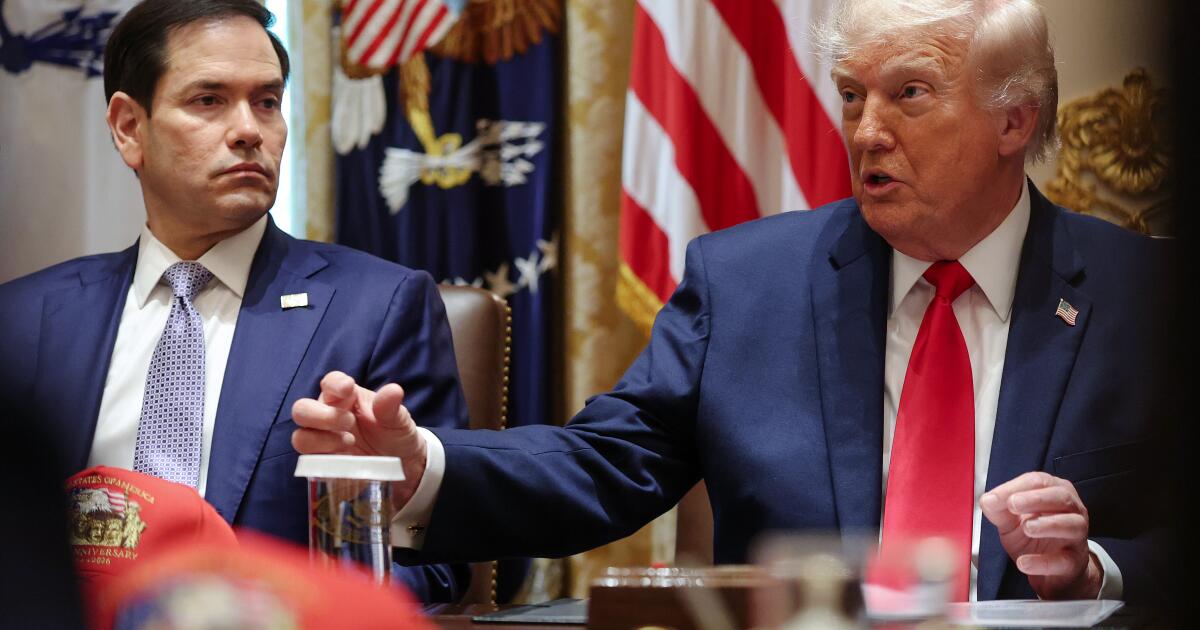
US Secretary of State Marco Rubio said Washington has no objections to Iranian players participating in the 2026 FIFA World Cup, but he added the players will not be allowed to bring people with ties to Iran’s Islamic Revolutionary Guard Corps (IRGC) with them.
Since the United States-Israeli war on Iran began on February 28, Iran’s participation in this summer’s edition of FIFA’s global showpiece has been in doubt because all of the country’s group-stage matches are scheduled to be played in the United States.
Recommended Stories
list of 3 itemsend of list
“Nothing from the US has told them they can’t come,” Rubio told reporters.
“The problem with Iran would be not their athletes. It would be some of the other people they would want to bring with them, some of whom have ties to the IRGC. We may not be able to let them in, but not the athletes themselves,” Rubio said.
“They can’t bring a bunch of IRGC terrorists into our country and pretend that they are journalists and athletic trainers,” Rubio added.
Washington has designated the IRGC as a “foreign terrorist organisation”.
US President Donald Trump, speaking alongside Rubio, added that his administration “would not want to affect the athletes”.
The World Cup is set to begin on June 11 across the US, Mexico and Canada.
Speculation about Iran’s participation has been rife, with officials from both Iran and the US weighing in.
In a statement on Wednesday, however, Iran’s government spokesperson Fatemeh Mohajerani said all necessary arrangements for the team’s participation in the tournament have been ensured by the Ministry of Sports and Youth.
An envoy for Trump, though, has been quoted as suggesting that Italy, who failed to qualify for the World Cup for a third straight edition, should replace Iran at this year’s World Cup.
Paolo Zampolli, an Italian-American who is a US envoy for global relations, told The Financial Times that he made the suggestion to both Trump and FIFA President Gianni Infantino.
“I’m an Italian native, and it would be a dream to see the Azzurri at a US-hosted tournament. With four titles, they have the pedigree to justify inclusion,” Zampolli, who has no official connection with the World Cup or Italian football, said earlier this week.
Italian Sports Minister Andrea Abodi has rebuked the idea, saying “it is not appropriate … You qualify on the pitch,” while Economy Minister Giancarlo Giorgetti described the concept as “shameful”.
Iran qualified for a fourth successive World Cup last year but, after the start of the war, requested that FIFA move the team’s three group matches from the US to Mexico – a suggestion that was rejected.
“We are preparing and making arrangements for the World Cup, but we are obedient to the decisions of the authorities,” Iranian football federation President Mehdi Taj told reporters at a pro-government rally in Tehran on Wednesday.
In the battle of propaganda, fake videos and images of female victims of Iran’s government are going viral, with even the US president sharing them. Al Jazeera’s Soraya Lennie explains how Iranian women, real or fake, are often used to sell foreign intervention.
WASHINGTON — President Trump has turned to naval blockades to pressure the governments of Venezuela, Cuba and now Iran to meet his demands, but his preferred tactic is confronting a very different reality in the Middle East than in the Caribbean.
Unlike Cuba or Venezuela, Iran choked off a crucial trade route for energy shipments, meaning the longer the standoff persists, the more the global economy will suffer. Tehran also poses a greater military threat than those two adversaries in America’s own hemisphere and requires a sustained military presence far from U.S. shores.
Iran’s leverage over the Strait of Hormuz gives it power during a shaky ceasefire because the widening economic risks, especially higher U.S. gas prices in an election year, could force the Republican president to end the blockade on Iran’s ports and coastline, experts say.
“It’s really a question now of which country, the U.S. or Iran, has a greater pain tolerance,” said Max Boot, a military historian and senior fellow for national security studies at the Council on Foreign Relations.
Iran presents ‘major differences’ from other blockades
The effectiveness of Trump’s use of the world’s most powerful navy to block the trade of Iran’s sanctioned oil and other goods is very much up for debate. But it certainly appears to be intensifying as the war grinds on.
The U.S. military on Thursday announced the seizure of another tanker associated with the smuggling of Iranian oil, a day after Iran’s paramilitary Revolutionary Guards took control of two vessels in the crucial waterway.
Trump also announced he has ordered the U.S. military to “shoot and kill” Iranian small boats laying sea mines in the strait.
But the situation in Iran is not exactly analogous to what is playing out with the U.S. operations in Venezuela and Cuba.
Some experts say Trump’s success in Venezuela probably had more to do with the U.S. military raid that captured leader Nicolás Maduro than American warships seizing sanctioned oil tankers to enforce U.S. control over the South American country.
A U.S. oil embargo on Cuba, meanwhile, has caused the island’s most severe economic crisis in decades. While U.S. and Cuban officials have met recently on the island for rare talks, the financial strangulation has failed to produce the Trump administration’s stated goal of leadership change.
“I do think that the success of the Maduro mission in Venezuela has probably emboldened the president,” said Todd Huntley, director of Georgetown University’s National Security Law Program.
That does not make the situations in Venezuela and Iran similar — geographically, militarily or politically. “There are some major differences,” said Huntley, a retired Navy captain and judge advocate general.
While the blockade against Iran has delivered a severe blow to its economy, including stopping freighters from importing various supplies, the country has still been able to move some of its sanctioned oil, ship-tracking companies say.
Iran has rejected Trump’s demands to reopen the strait, where 20% of the world’s oil normally flows, and it has been firing on ships again this week. Stalled shipments through the strait have sent gasoline prices skyrocketing far beyond the region and raised the cost of food and a wide array of other products, creating a political problem for Trump before the November’s elections.
“Blockades are usually just one tool of a mechanism used in a conflict,” said Salvatore Mercogliano, a maritime history professor at Campbell University in North Carolina. “They can be important. But it’s only one element. And I don’t think it’s going to be enough to convince the Iranians.”
Effectiveness of U.S. blockade called into question
Adm. Brad Cooper, head of U.S. Central Command, claimed last week that “no ship has evaded U.S. forces.” The command overseeing the Middle East said it has directed 31 ships to turn around or return to port as of Wednesday.
Merchant shipping groups are skeptical.
Lloyd’s List Intelligence said “a steady flow of shadow fleet traffic” has passed in and out of the Persian Gulf, including 11 tankers with Iranian cargo that have left the Gulf of Oman outside the strait since April 13.
The maritime intelligence firm Windward said this week that Iranian traffic continues to flow “via deception.”
Iranian ships have several ways to sneak through the blockade, including spoofing their location tracking data or traveling through Pakistani territorial waters, Mercogliano said. He also noted that the sheer volume of shipping traffic the military needs to screen is a challenging task.
Blockades require patience to work
The last time the U.S. mounted a blockade similar to the one focused on Iranian ships was during the Kennedy administration in the early 1960s, against Cuba, Huntley said.
“And it wasn’t even called a blockade,” he said. “We called it quarantine.”
Some naval blockades over the course of history have had an impact, such as Britain’s blockade on Germany during World War I. “But they tend to be very long-term impacts, whereas Trump is looking for short-term, quick results,” according to Boot, the military historian.
He said Trump probably saw the blockade on sanctioned oil tankers tied to Venezuela as playing a large role in the success of leadership changes in that country. But Boot said it had more to do with the U.S. ousting Maduro and the subsequent cooperation from his vice president, Delcy Rodríguez, who is now the acting president.
“There is no Delcy Rodríguez in Cuba or Iran,” Boot said. “I think his success in Venezuela led him astray, thinking that this was a template that could be replicated elsewhere. He sees it as a huge success at little cost. And, in fact, it turns out to be a unique set of circumstances.”
Finley, Klepper and Toropin write for the Associated Press.