1st Lt. Franklin H. McKinney is shown in a photo provided by the Defense POW/MIA Accounting Agency. McKinney’s remains were identified May 15, nearly 82 years after his plane vanished on a mission. Photo courtesy of the DPAA
July 2 (UPI) — A young World War II pilot who disappeared during a flight in1944 has been accounted for, the Defense POW/MIA Accounting Agency announced Thursday.
The remains of 1st Lt. Franklin H. McKinney, 21, of the U.S. Army Air Forces were identified May 15, nearly 82 years after his plane vanished on a mission, the agency said.
McKinney was a pilot with the 35th Photo Reconnaissance Squadron, 14th Air Force, the announcement said. On Nov. 5, 1944, he left a U.S. base on a reconnaissance mission from Yunnanyi, China, over Burma and Thailand.
McKinney, who was flying an F-5 Lightning aircraft, failed to return from the mission. Personnel from the American Graves Registration Service searched along his planned flight path to the Chinese/Thailand border, but found no sign of a crash, the DPAA report said.
His remains were not recovered immediately after the war, and his name was engraved on the Tablets of the Missing at the Manila American Cemetery in the Philippines.
McKinney’s personnel profile on the DPAA website says that a wartime report from the Royal Thai Air Force Museum later led researchers to new information. The report said that a plane was hit by lightning, exploded and crashed in a wooded area in Lampang Province, Thailand, near the time McKinney’s aircraft vanished.
In 2018, the profile said, third-party researchers found a crash site in the region that they matched with McKinney’s plane. In 2022, a recovery team excavated the site and found human remains. Modern forensic techniques eventually identified them as McKinney’s.
The pilot’s family will be briefed by the DPAA, CBS News reported. A rosette will be added next to his name on the Tablets of the Missing. McKinney will be laid to rest with full military honors.
McKinney’s home of record is listed as Rhode Island. This does not necessarily mean he from the state, but that he joined the service there, the DPAA said.
The agency is a department within the U.S. Department of Defense. It identifies its mission as providing “the fullest possible accounting for our missing personnel to their families and the nation.”
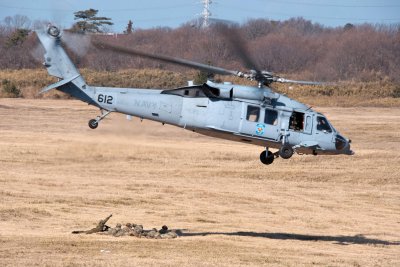
A U.S. Navy MH-60 helicopter, like the one seen here, made a water landing in the Arabian Sea on Wednesday. A search has been launched for one aircrewman aboard the helicopter was has since reported missing. File Photo by Keizo Mori/UPI | License Photo
July 2 (UPI) — A search is ongoing for an aircrewman who went missing after the Navy helicopter they were aboard performed an emergency landing in the Arabian Sea, the U.S. military said.
U.S. Naval Forces Central Command said in a brief statement that the MH-60S Sea Hawk helicopter with four people on board made the emergency landing at 3:30 a.m. EDT Wednesday.
Three of the helicopter’s crew were recovered and were listed in stable condition, while the fourth member remained missing.
U.S. Navy assets in the region are searching for the missing aircrewman, it said.
Little information about the incident has been made public. U.S. Naval Forces Central Command said there was no indication that hostile activity prompted the emergency landing.
“The cause of the incident is under investigation,” it said.
The helicopter was assigned to the aircraft carrier USS George H.W. Bush, which departed Norfolk, Va., on March 31, according to U.S. Fleet Forces Command. The aircraft carrier has been in the Arabian Sea since at least May 3, according to a statement from U.S. Central Command, which said it was deployed to the U.S. 5th Fleet area of operations to support maritime security and stability in the Middle East.
The United States has been at war with Iran since Feb. 28. The two sides are negotiating an end to the war amid a cease-fire.
Weekly insights and analysis on the latest developments in military technology, strategy, and foreign policy.
Imagery has recently appeared showing a Russian Sukhoi Su-57 Felon fighter with an unusual external weapons load of short-range air-to-air missiles, as well as what looks like a previously unseen type of targeting pod. While we cannot say for sure, we may just have gotten our first close look at a Su-57 equipped to counter the Ukrainian kamikaze drones and cruise missiles that are now a regular menace to air defenses increasingly deep inside Russia.
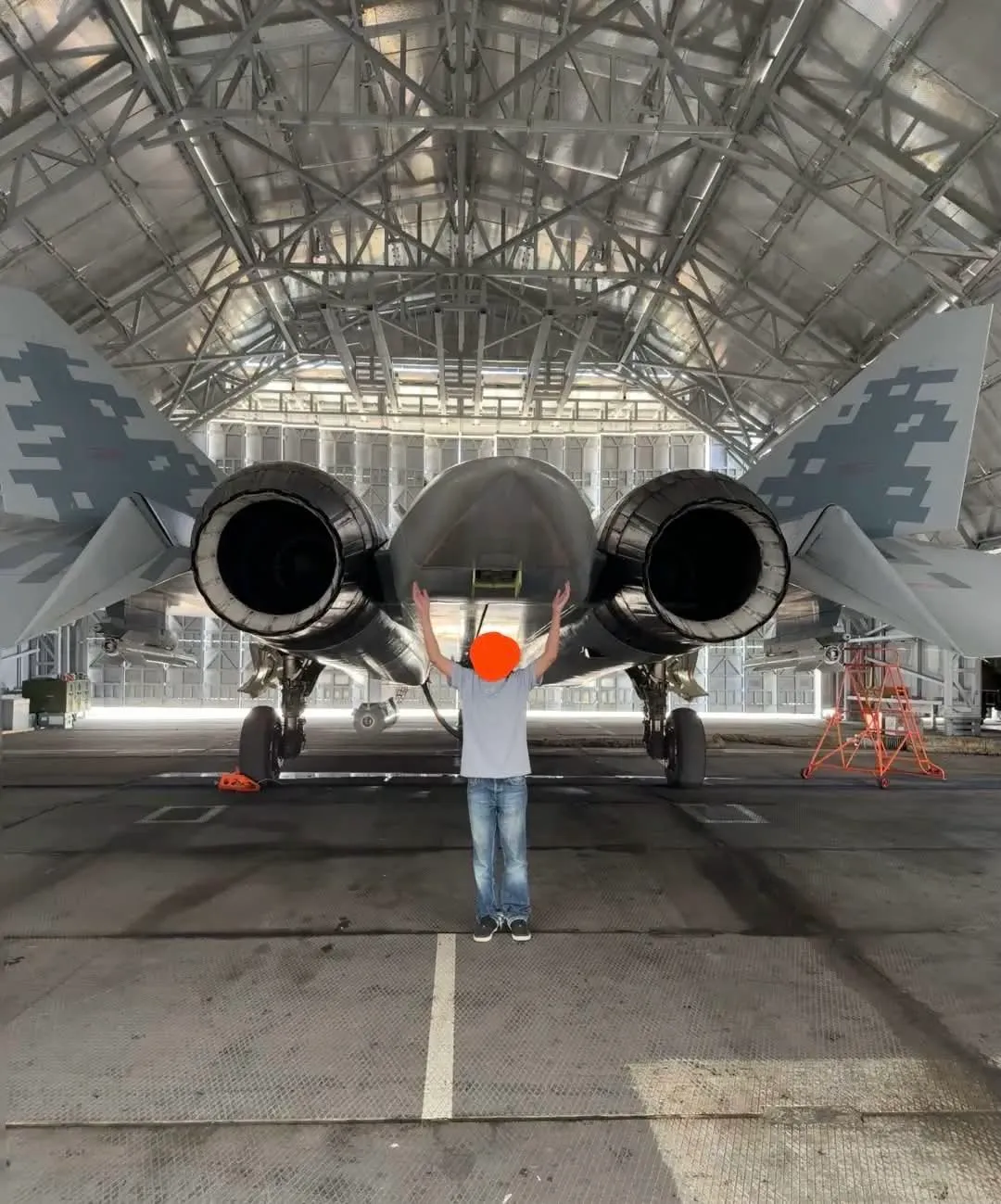
Two photos, the original source of which is unclear, show a Su-57 configured with a pair of R-73/R-74 (AA-11 Archer) series short-range air-to-air missiles on pylons under the wings. One of those photos further shows the mysterious targeting pod below the left engine nacelle.
This rear view of a Su-57 reveals the two missiles underwing as well as the targeting pod below the left engine nacelle. via X
Both show a Su-57 seen from the rear inside a large shelter. One photo apparently surfaced on the TikTok social media platform. Somewhat surprisingly, it is one of a pair that also show apparent teenagers posing alongside the Felon — one of them inside the fighter’s cockpit — suggesting some kind of unofficial tour of the base.
The photos have been reposted on Russian social media, with military bloggers identifying them as showing Su-57s configured to hunt and shoot down Ukrainian drones.
A civilian, apparently a teenager, sits in the cockpit of a Su-57. via X
While this certainly seems likely, we should not rule out some other possibilities, including a Felon involved in some kind of weapons trials. On the other hand, it is unusual to see Su-57s, in operational service or otherwise, carrying short-range air-to-air missiles externally. After all, the jet has internal bays specifically for this purpose, something we have described in detail in the past.
A pre-production Su-57. The triangular, canoe-like wing-root weapons bays are visible outboard of the aircraft’s engine intakes. Vitaly Kuzmin
At the very least, this would appear to be a load-out optimized for close-range engagements, of the kind that would be required for hunting Ukrainian long-range one-way attack drones and, increasingly, cruise missiles.
It is also worth noting the large shelter in which the Su-57 is parked. This looks to be of the same type that has been installed at the airfield at Akhtubinsk in the Astrakhan region of the Russian Federation, located more than 350 miles from the front line. In June of 2024, Akhtubinsk was itself hit by Ukrainian drones, which appear to have severely damaged, if not destroyed, a Felon parked in the open.
‼️ Вперше уражено Су-57
💥 8 червня 2024 року на території аеродрому «ахтубінск» в астраханській області рф, розташованому за 589 кілометрів від лінії бойового зіткнення, уражено багатоцільовий винищувач держави-агресора Су-57.
— Defence Intelligence of Ukraine (@DI_Ukraine) June 9, 2024
Russian military bloggers complained bitterly about the lack of protection from drone attacks at Akhtubinsk.
This reflected wider questions about the ability of Russia’s widely dispersed and heavily targeted air defenses to counter Ukrainian drone incursions and the ability to protect its own aircraft. Almost all of these assets, at the start of the conflict, sat in the open without any sort of shelters, let alone hardened ones. This is an area that Russia has since begun to address, even extending this to its long-range bomber fleet.
The Su-57 is very much a prized, ‘silver bullet’ asset of the Russian Aerospace Forces (VKS). But it is also notably well-equipped for countering drones and cruise missiles, as we will come onto later.
The scope of the Su-57’s contribution to Russia’s conflict in Ukraine is hard to quantify.
The U.K. Ministry of Defense has stated that Su-57s have been used in Ukraine since “at least June 2022.”
Prior to that statement, there had been on-and-off claims of the Felon being used to launch standoff strikes, mirroring tactics for other Russian jets involved in similar missions, in which they avoid the highly contested airspace over Ukraine itself.
For this purpose, the Felon can be armed with the Kh-69 stealthy cruise missile, intended to destroy small, hardened targets at distances of over 180 miles. It also carries the Kh-58UShK anti-radiation missile (including in its internal weapons bays) with a maximum range of around 150 miles, depending on launch parameters.
Meanwhile, the Su-57 has very impressive air-to-air capabilities.
Most impressively, it is armed with the 124-mile-range R-37M (AA-13 Axehead) air-to-air missile, complemented by the R-77-1 (AA-12 Adder) air-to-air missile, with a range of 68 miles, which are also capable of engaging Ukrainian aircraft ‘across the border’ in some scenarios.
Using high-end, fifth-generation, or equivalent fighter jets to tackle hostile drones and cruise missiles would not be unique to Russia. The U.S. military, as well as Israel and the United Kingdom, have called upon their F-35 fleets to deal with lower-end threats like these in the Middle East.
The Su-57 is the only operational Russian fighter available in any kind of meaningful numbers with an active electronically scanned array (AESA) radar.
The N036 radar, which has five separate AESA arrays, is part of a broader, integrated fire-control system that includes the 101KS electro-optical suite, the N036Sh identification friend or foe (IFF) system, and the L402 electronic countermeasures suite.
You can clearly see one of the supplemental side radar apertures below the ‘chine line’ under the aerial refueling probe. Russian Embassy
AESA radars are, in general, much better able to deal with drone and cruise missile threats.
Overall, any kind of AESA radar provides a significant boost to modern combat aircraft. In comparison with traditional mechanically scanned array technology, an AESA can find and track a target at a much greater range, more quickly, and with a greater degree of accuracy. This also applies to smaller threats, including those with limited radar signatures, or flying at very low levels, such as drones and cruise missiles.
The passive 101KS electro-optical suite should also be very useful against the same kinds of threats. It comprises an infrared search-and-track (IRST) sensor ahead of the cockpit, four ultraviolet missile-approach warning sensors, two directional infrared countermeasures turrets, and one imaging infrared sensor for low-level flying. Using the IRST, in particular, for counter-drone and cruise missile work, would reflect U.S. fighters’ employment of podded infrared sensors for the same. These sensors allow for long-range detection of low-radar-signature targets, including drones and cruise missiles. They can work collaboratively with the radar and other sensors to detect, classify, and engage these kinds of hard-to-spot targets at long distances.
The Su-57’s 101KS-V IRST is mounted where it is found traditionally on Russian fighters and is not the best spot for low observability. UAC Russia
Furthermore, unlike previous Russian tactical fighters, the Su-57 has a navigation and targeting pod, the 101KS-N, developed for it from the outset. Again, these kinds of stores have begun to be employed much more widely in efforts to counter drones and cruise missiles.
While targeting pods were first fielded for air-to-ground applications, they can also be used for air-to-air engagement, being highly important for visual ID at range. The laser designator can also be employed to illuminate, or ‘laze,’ a target, although that does not come into play with the Felon, since the aircraft has no laser-guided air-to-air weapons that we know of.
Most likely this is the 101KS-N Atoll from UOMZ. If that’s the case, that’s actually very good—UOMZ usually produces some pretty low-quality stuff. https://t.co/54laFDZ6gcpic.twitter.com/6cqMFyYIzw
— 𝔗𝔥𝔢 𝕯𝔢𝔞𝔡 𝕯𝔦𝔰𝔱𝔯𝔦𝔠𝔱△ 🇬🇪🇺🇦🇺🇲🇬🇷 (@TheDeadDistrict) May 18, 2026
Interestingly, the pod seen in the accompanying image has a different rear end from the standard 101KS-N. It is unclear if it represents a new version of the pod, or even one that is optimized for air-to-air engagements, but that is a possibility. We also should not rule out that this is another type of store entirely, although its position on the nacelle makes that less likely.
Meanwhile, despite claims that Russia is developing laser-guided rockets that can be used for air-to-air engagements, like the U.S. developments of the 70mm Advanced Precision Kill Weapon System II (APKWS II) rocket as a lower-cost way to down drones, there is no evidence that these have yet been fielded. This leaves the R-73/R-74 series short-range air-to-air missiles as the cheapest option for bringing down these kinds of threats.
When the R-73 first emerged in the early 1980s, it soon established itself as a very capable short-range air-to-air missile. Its combination of an all-aspect infrared seeker, high off-boresight capability, thrust-vectoring controls, and the fact it could be cued by the pilot’s helmet-mounted sight was unusual for the time, but is now much more commonplace. It has also been proven as a drone-killer, as seen in the video below, of a Russian MiG-29 Fulcrum shooting down one of Georgia’s Israeli-made Hermes 450 drones over Abkhazia in March 2008.
The successor to the R-73 is the R-74M, which looks almost identical but has a new two-band infrared seeker. This provides an increased seeker range and an expanded off-boresight capability, reducing the possibility of the enemy aircraft escaping it in a tight-turning dogfight.
RVV-MD is the export name used for the Vympel R-74M. The abbreviation denotes “short-range air-to-air missile” in Russian. Rosoboronexport
However, since critical parts of the R-74M were sourced from Ukraine, Russia then moved to the R-74M2, which is optimized for internal carriage by the Su-57. This uses a Russian-made seeker and a rocket motor with increased burn time, for longer range. The weapon can also be fired in lock-on-after-launch mode, which is typically required when launched from an internal bay, the missile beginning its flight under inertial control before achieving an in-flight lock-on.
This sequence may or may not show the launch of an R-74M2 from one of the Su-57’s two small wing-root weapons bays. Russian Ministry of Defense capture
It’s unclear which of these weapons are carried under the wings of the Su-57 in these images. However, with plentiful stocks of older R-73s still available, it would make good sense to carry these externally, since they cannot be accommodated in the internal weapons bays.
Another key counter-drone and cruise missile weapon could be the Su-57’s 30mm single-barrel cannon within the starboard wing root and provided with 150 rounds of ammunition. You can see it in action here. On the other hand, downing slow and low drones with the gun is very challenging from a fighter and can be outright dangerous. The 30mm gun on the Felon also has a notably limited magazine size.
All in all, there is some circumstantial evidence that Su-57s are now being used — whether routinely, or as part of combat trials — for air defense against Ukrainian drones and cruise missiles.
Clearly, this is a growing problem for Russia, underscored very publicly by the large-scale daylight raid on Moscow last month. In what was one of the biggest attacks on the Russian capital in the conflict, multiple Ukrainian drones and cruise missiles hit several locations across the city.
In response, Russia is calling upon a wide variety of assets to help defend against the drones and cruise missiles.
Although many key assets are deployed closer to the front lines in Ukraine, there is now an array of additional layered air defenses deployed in and around key potential targets. Defensive systems extend from S-400 long-range surface-to-air missile batteries to attack helicopters tasked with gunning down drones in midair. Most prominently, Pantsir short-range air defense batteries have been positioned on rooftops and elevated towers.
The ruSSians are using a Mi-26 heavy-lift helicopter to deliver a Pantsir-SMD-E air defense system onto the roof of the Nordstar Tower business center in downtown Moscow.
Well thanks, now everyone knows where the next Ukrainian drone is going to hit 🎯 👍 pic.twitter.com/hgeIPJUwSq
— 𝔗𝔥𝔢 𝕯𝔢𝔞𝔡 𝕯𝔦𝔰𝔱𝔯𝔦𝔠𝔱△ 🇬🇪🇺🇦🇺🇲🇬🇷 (@TheDeadDistrict) May 28, 2026
Ukraine has demonstrated it can now strike targets over vast expanses of Russian territory. With its ground-based air defenses already stretched extremely thin, robustly protecting a growing landmass from potential strikes with those systems alone just isn’t possible. With Ukraine increasingly using long-range cruise missiles capable of delivering very heavy warheads, the stakes are further increased. Even if fighter aircraft were just focused on defensing key targets from the heavy cruise missile threat, it would make sense as these missiles can do huge amounts of damage and are easier to spot using both infrared and radar sensors.
New, incredibly clear footage of a Ukrainian Flamingo cruise missile slamming into Russia’s Titan-Barrikady missile plant last week. pic.twitter.com/Su30R6qRXI
In addition, we know fighters are part of the overall response equation already. For instance, they have been forward-stationed on alert at the bomber base at Engels for some time now.
These kinds of fighter activities are less visible, and the Russian authorities are unlikely to publicize them much, since the fact they are doing this work paints a less-than-impressive picture of the state of Russian air defenses, and further underlines expanding Ukrainian capabilities. This is especially true of the prized Su-57s, which may well now be involved in these lower-end defensive efforts.
July 1 (UPI) — A federal judge has temporarily blocked the Defense Department from enforcing its escort policy, at least for reporters with The New York Times, dealing another blow to the Trump administration’s attempt to restrict media access at the Pentagon.
It was not entirely clear whether the order applied to all credentialed reporters or just those associated with The New York Times.
U.S. District Judge Paul Friedman in D.C. issued his preliminary injunction Tuesday, finding the plaintiffs were likely to succeed on their claims that the escort policy was retaliatory and infringed on their First Amendment rights.
“This Court has spoken at several points about the critical importance of protecting the freedoms enshrined in the First Amendment, and that evergreen principle bears repeating: ‘Those who drafted the First Amendment believed that the nation’s security requires a free press and an informed people and that such security is endangered by government suppression of political speech,'” Friedman said in his Tuesday opinion, quoting from one of his previous opinions in the case.
“‘That principle has preserved the nation’s security for almost 250 years.'”
The ruling comes in a protracted case that began when the Defense Department announced a new policy in October permitting the revocation of Pentagon credentials for collecting and reporting information it deemed unauthorized.
After Friedman ruled in March that the policy was unconstitutional, the Department of Defense came back with a new policy that, among other restrictions, mandated reporters be escorted by Defense Department personnel at all times within the Pentagon.
The Trump administration has argued that the new requirements are for national security purposes. By limiting access and requiring escorts, the Department of Defense said it could prevent the gathering and public disclosure of what it calls classified national security information and controlled unclassified information.
The Times then challenged the revised policy, with the court again siding against the Defense Department, which appealed, seeking only a limited stay pending appeal to allow the implementation of only the escort requirement.
In late April, a divided three-judge appeals panel granted the Trump administration’s emergency request, finding that it was likely to succeed in showing that the escort requirement was not within the scope of the lower court’s original order, without weighing the merits of the case. The Times then filed a new, second lawsuit challenging the Pentagon’s escort policy.
The Pentagon on Wednesday said it “strongly disagrees” with the court and will appeal the decision.
In a statement, Sean Parnell, chief Pentagon spokesperson, argued that the removal of the escort policy will make it easier for “sensitive and classified information to reach our adversaries.”
“Unescorted access to the Pentagon allowed journalists to observe activity patterns and develop relationships that contributed to repeated unauthorized disclosures of operational plans and intelligence,” Parnell said.
“The court’s order effectively restores that risky environment at a time when protecting our military’s secrets is more critical than ever.”
The Times argued that the policy was not only a restriction on its reporters’ First Amendment rights, but also retaliatory, an argument that Friedman said would likely succeed in court, pointing to numerous instances of Trump administration officials, including President Donald Trump and Defense Secretary Pete Hegseth, insulting the newspaper and other news organizations.
UPI has contacted The Times for comment.
The Freedom of the Press Foundation celebrated the ruling online, while calling for punishment if the Trump administration tries to find another workaround to enforce its media-restriction policies.
“The DoD can’t be allowed to punish journalism or evade court orders without consequences,” it said in an online statement.
“If the Pentagon keeps trying to avoid this ruling, the court should respond with sanctions or contempt.”
WASHINGTON — Former CIA Director John Brennan sued the Trump administration on Wednesday, demanding a court order that would require officials to preserve records from investigations that he says are targeting him for “phantom criminal conduct.”
Brennan said in the lawsuit that the records would be essential for him to mount a defense on vindictive prosecution grounds in the event of an indictment brought by the administration. Such a defense, his lawyers said, would be supported by the more than 100 verbal or written statements that President Trump has made since 2017 lambasting Brennan and by the Republican president’s directives to his Department of Justice to initiate cases “without regard to factual or legal justification.”
“To fully consider those motions, the reviewing judge would need to scrutinize the motivations of the Justice Department officials who directed, oversaw, or undertook those actions to determine whether they violated Director Brennan’s rights, and specifically whether they were motivated by a desire to vindictively prosecute him as an act of retribution,” Brennan’s lawyers wrote in the lawsuit filed in federal court in Washington.
The lawsuit names as defendants Trump and other top law enforcement officials from his administration, including acting Atty. Gen. Todd Blanche, FBI Director Kash Patel and the prosecutors in Florida who have been overseeing investigations related to Brennan and other perceived Trump adversaries.
The lawsuit says Brennan is facing separate investigations in Florida, including one examining whether he made a false statement to Congress related to an assessment by intelligence agencies documenting Russian interference in the 2016 presidential election, in which Trump defeated Democrat Hillary Clinton. The other investigation aims to determine whether former law enforcement and intelligence officials conspired to undermine Trump, including during the course of the Russian interference investigation.
No charges have been brought. The Department of Justice has denied claims of weaponization.
Iran and U.S. negotiators will meet with intermediaries Wednesday to discuss the cease-fire agreement. Photo by Abedin Taherkenareh/EPA
July 1 (UPI) — Envoys Steve Witkoff and Jared Kushner and their Iranian counterparts are planning to meet with Qatari negotiators Wednesday for ongoing peace talks.
Iran and Qatar have said that there will be no direct, high-level meetings between United States and Iranian officials and that all discussions will be through Qatari intermediaries, The New York Times reported. Today’s negotiations will be about the cease-fire agreement and getting it implemented, a spokesperson told The Times.
Iran’s negotiator Mohammad Bagher Ghalibaf, in an interview with Iran’s state media Tuesday, laid out the most important provisions of the memorandum of understanding signed on June 17.
Ghalibaf said the most important prerequisite provisions to Iranian negotiators were Articles 1, 4, 5, 10 and 11, CNN reported.
Article 1 demands an end to all fighting, including in Lebanon. Israel and Lebanon signed a cease-fire agreement on Saturday, but Hezbollah hasn’t agreed to it.
Article 4 says that the United States must lift its naval blockade and Iran must allow shipping traffic through the Strait of Hormuz. The U.S. Navy is no longer blocking the strait but it still has a presence there. Article 5 says that Iran will allow passage through the strait with no tolls for 60 days.
The next two articles are about Iranian money and oil sales. Article 10 says the U.S. will allow waivers for Iran to sell its oil, which has happened – at least for 60 days. And Article 11 says that the United States will make frozen Iranian assets available, which is unclear. The United States has said that Iran must fulfill its commitments first.
Traffic through the strait is picking up, with 34 ships passing through on Tuesday, CNN said, though that’s far from pre-war levels, which saw about 100 per day.
News anchors are seen outside the Supreme Court of the United States as the court releases their final opinions before summer recess on Tuesday. The court upheld birthright citizenship and also state laws banning transgender women and girls from playing on school athletic teams. Photo by Bonnie Cash/UPI | License Photo
South Korean President Lee Jae Myung (C) poses for a photo during a meeting of the Peaceful Unification Advisory Council at a hotel in Incheon on Wednesday. Pool Photo by Yonhap
President Lee Jae Myung said Wednesday the government will pursue sustained efforts to engage North Korea and replace the Korean War armistice with a peace regime.
Lee made the remarks in a meeting of the Peaceful Unification Advisory Council, a presidential advisory body on unification of the two Koreas.
“At least to open a ‘Korea premium’ era for the future Korean Peninsula that is drawing global attention, we must replace the armistice with a peace regime,” Lee said.
However difficult it may be, the government should continue to “knock on North Korea’s closed door,” the president said.
“Difficult does not mean impossible … If we keep knocking, it will eventually open.”
North Korea has remained unresponsive to the Lee administration’s repeated dialogue overtures, instead hardening its hostile stance toward Seoul.
Since the 1950-53 Korean War ended in an armistice, not a peace treaty, the two Koreas remain technically at war.
“Now is the time to resume action toward peace,” Lee declared, pledging to find a way for the two Koreas to peacefully coexist while respecting each other’s political systems and sovereignty.
“We will never give up (the effort), however slow (the process) may be,” he said.
The president also reaffirmed this administration’s commitment to nonaggression toward Pyongyang, saying Seoul will respect the North Korean system, will not pursue unification through absorption and will not engage in hostile actions.
“I will keep these promises without fail,” he pledged.
Copyright (c) Yonhap News Agency prohibits its content from being redistributed or reprinted without consent, and forbids the content from being learned and used by artificial intelligence systems.
Iranian Foreign Minister Abbas Araqchi speaks at a press conference in Baghdad, Iraq, on June 28, 2026. Iranian and U.S. envoys will travel to Doha, Qatar, to discuss the cease-fire with Qatari intermediaries. Photo by Iran MFA/UPI | License Photo
June 30 (UPI) — American and Iranian delegates arrived Tuesday in Doha, Qatar, for “technical talks” to discuss the memorandum of understanding that created a cease-fire between the two countries.
Qatari Foreign Ministry spokesman Majed al-Ansari said Tuesday that these are not high-level talks.
Unlike the recent talks in Switzerland with Vice President JD Vance and Iranian chief negotiator Mohammad Bagher Ghalibaf, these will be led by U.S. Special Envoy Steve Witkoff and Iranian Deputy Foreign Minister Kazem Gharibabadi. They will not meet in person and the talks will be mediated by Qatari officials. President Donald Trump‘s son-in-law Jared Kushner also participated.
Witkoff and Kushner met with the prime minister of Qatar, Sheikh Mohammed bin Abdulrahman al-Thani.
The discussions will “produce documents that will be elevated to principles in the high-level meetings to agree upon,” al-Ansari said.
Some of the topics expected to come up are: Financial restrictions and lifting sanctions on Iran, how to establish the free flow of vessels through the Strait of Hormuz, the future of Iran’s nuclear program, the potential release of Iran’s frozen assets and regional security, CNN reported.
Iran insists that the MOU gives it authority over the strait and has threatened ships that don’t travel on Iranian-mandated routes.
“If vessels pass through other routes, we will oppose it, we will try to prevent it, and if anything happens to those vessels, the responsibility will be their own,” Gharibabadi said on Monday, according to Iranian state media.
Iranian Foreign Ministry Spokesperson Esmaeil Baghaei said on Tuesday that the discussions will be about the MOU.
“What will probably take place in Doha tomorrow is a discussion with the Qatari side on the implementation of some provisions of the memorandum of understanding, including the provision concerning the release of Iran’s restricted assets,” Baghaei said.
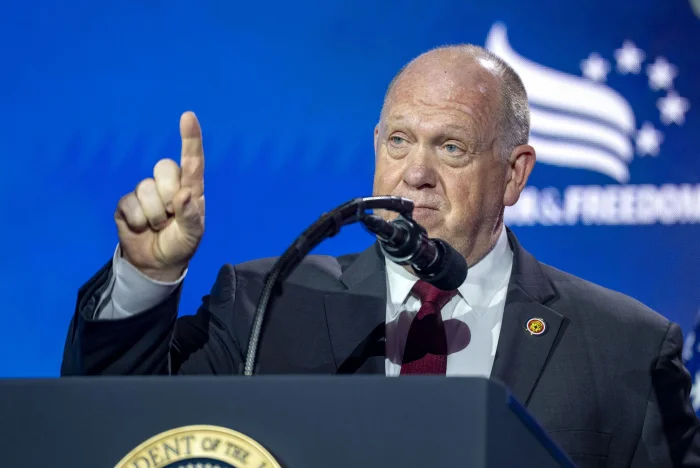
White House Border Czar Tom Homan speaks during the Faith and Freedom Coalition 2026 Road to Majority Policy Conference at the Washington Hilton on Friday. Photo by Bonnie Cash/UPI | License Photo
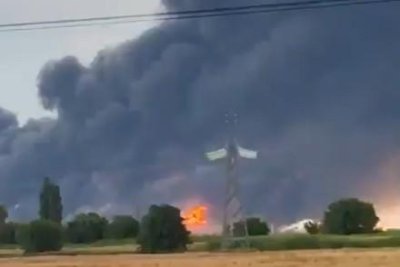
An image from a video provided by Ukrainian officials shows what purports to be a Russian oil refinery on fire Sunday after being struck by long-range weapons. Ukrainian President Volodymyr Zelensky has launched a 40-day campaign of strikes against Russian oil industry targets. Photo courtesy of the Ministry of Defense of Ukraine
June 28 (UPI) — Ukrainian long-range weapons struck two major Russian oil refineries on Sunday as President Vladimir Putin promised to ramp up security against Kyiv’s attacks in an address to United Russia party members.
Ukrainian President Volodymyr Zelensky announced in a social media post that the Slavyansk oil refinery in the Krasnodar region and another facility in the Yaroslavl region were hit, accompanying those claims were video showing buildings ablaze with thick smoke pouring into the sky.
The Slavyansk refinery is about 186 miles from the front lines of the Russian invasion in eastern Ukraine, while the Yaroslavl facility significantly farther away, at approximately at 434 miles.
Zelensky said Ukrainian forces celebrated the nation’s Constitution Day with the attacks, which continued Kyiv’s recent ramping up of its strikes on Russian infrastructure located far behind the front lines through the use of sophisticated long-range weaponry.
“We continue our operations that weaken Russia’s ability to wage this war,” Zelensky said. “Each of our long-range sanctions means fewer resources serving Russia’s war machine, and another step toward peace.”
Our warriors began Ukraine’s Constitution Day with great accuracy. Last night, our long-range sanctions reached two oil refineries in Russia. The Slavyansk oil refinery in the Krasnodar region was hit – about 300 kilometers from the frontline. We also reached a refinery in the… pic.twitter.com/MiKOSjszFF— Volodymyr Zelenskyy / Володимир Зеленський (@ZelenskyyUa) June 28, 2026
Sunday’s strikes appeared to be a continuation of Zelensky’s newly announced 40-day “influence campaign” of using intermediate- and long-range weapons against Russia’s oil infrastructure in a bid to bring Putin to the negotiating table.
The Russian-installed occupation authorities in the Crimean Peninsula announced a regional state of emergency on Friday amid gas shortages shortly after the initiation of campaign.
In Moscow, meanwhile, Putin on Sunday obliquely admitted Ukraine’s long-range strike campaign was affecting Russians’ lives, but then quickly dismissed those concerns.
In a speech to the 23rd congress of his United Russia Party, Putin vowed to improve security and defenses against Ukrainian attacks.
“The congress of United Russia, our leading political party, is taking place at a difficult time — it would be safe to say that it is a pivotal moment for our country and a period of radical and systemic transformation of the entire world,” the president said, while pointing the finger at “Western elites.”
“Once again, Russia is confidently repelling any attempts to deter our progress. We have sufficient resources, means, and political will, and nobody should doubt that,” he declared.
Putin did not mention the wide-scale gasoline shortages being felt around the country but vowed to ensure the security of Russia.
Artificial intelligence is increasingly being used in the military for planning and operations as a decision support tool at multiple stages. The US’s use of Anthropic’s Claude model against Iran marks a significant moment in the history of warfare. Integrated via Palantir’s Maven Smart System, AI-supported intelligence analysis, target identification, and operational simulations enabled planners to process information faster than human capabilities. While analysts have framed this as an “AI war,” the more significant shift lies in the growing influence of algorithmic systems in shaping military decision-making architectures.
Admiral Brad Cooper, who led Operation Epic Fury, said that AI systems processed massive amounts of intelligence and surveillance data, allowing commanders to gain insights within seconds. This is part of a wider movement to shift more complex intelligence tasks to algorithmic systems, raising questions about transparency, oversight, and reliance on algorithmic assessments.
This is also observed in other conflict zones, but in different operational roles. In Gaza, Israel’s Lavender system, developed by Unit 8200, assisted in the targeting of 37,000 suspected individuals, based on reported affiliations, using AI. Structural strikes and real-time tracking were made possible through the use of additional tools like “The Gospel” and “Where’s Daddy?” These systems reduced human review into quick, seconds-long “stamp of approval” decisions, moving targeting to machine-driven validation. In Ukraine, AI tools were used to assist in drone operations and battlefield analysis by training datasets. Initial programs, like Project Maven, relied on manually labeling 150,000 images. Currently, the Brave1 has enabled over 100 defense-tech firms to train combat AI on millions of annotated images from ongoing missions to improve these AI models.
The modern battlefield produces unprecedented volumes of data from interwoven sensor networks, drones, satellite imagery, and localized communications streams. This information comes at high speed and volume, which can overload the human brain. AI is being used to deal with this information overload, but there are concerns about the accuracy of AI-driven assessments and how much human oversight might be required to rely on AI. Military officials emphasize that humans have the final authority, but systematic integration poses challenges to oversight quality. The other predicament is automation bias, a psychological phenomenon in which a human operator, particularly under pressure or high stress, is likely to rely on the system’s recommendations. Therefore, striking a balance between speed and responsibility, ethical judgment, and accountability in the use of force is a key challenge.
Stay ahead of the geopolitical week.
MD Briefing delivers expert analysis across five global fronts — the Indo-Pacific, energy, geoeconomics, European security, and the Middle East — every Monday morning. Free.
Another area of concern pertains to legal and ethical issues. International humanitarian law is based on the principles of distinction, proportionality, and precaution. With the growing use of AI in military operations, it becomes more difficult to apply these principles, thereby making accountability and scrutiny more difficult. The International Committee of the Red Cross has warned that, when algorithmic systems provide input for analysis, targeting, or operational planning, it is hard to assign responsibility for any errors. Even with humans “in the loop,” the black-box nature of machine learning limits transparency and complicates legal review. It is not just a theoretical problem; it has been seen in practice. In the early US campaign against Iran, an AI-assisted missile struck a girls’ school near an IRGC compound, killing 120 children, likely due to a classification error. Anthropic’s CEO’s admission of limited awareness over Claude’s use in the strike highlights a broader issue. AI developers are fully aware of the risks associated with delegating autonomous functions to AI, yet they continue to promote its adoption. As AI assumes greater decision-making roles, concerns over misidentification and the possibility of AI acting against human directives are often overshadowed by narratives emphasizing its benefits.
For Pakistan, these developments are neither distant nor theoretical. In a region where crises can escalate quickly, AI-enabled decision support offers advantages but also carries risks. It improves situational awareness and accelerates analysis but compresses decision time, limits verification, and heightens the risk of miscalculation. Considering both, Pakistan is accelerating efforts to build AI capacity and strengthen its supporting infrastructure. At the policy level, this translates to a recognition that successful adoption is not just about adopting algorithms but about enhancing data governance, institutional maturity, and a skilled workforce capable of embedding AI into decision-making processes. Thus, Pakistan’s approach remains focused on leveraging AI to bolster human judgment in intelligence fusion, surveillance, logistics, and cyber defense.
There is a clear lesson from the academic literature and initial operational experience: algorithmic systems are transforming military information processing. However, as their role in decision-making grows, they also entail bias, error propagation, lack of transparency, and overreliance on machine-generated recommendations. AI, therefore, must be used as a support system, with humans retaining final decision-making responsibility. This requires investment in training, auditability, and institutional safeguards to ensure that human decision-makers are meaningfully engaged, rather than merely present in form. The future of warfare will likely be defined not by machines acting alone, but by humans making increasingly time-pressured decisions shaped by machine-generated insights. The central strategic challenge is not whether to adopt algorithmic tools, but how to ensure that their speed never outpaces sound judgment.
June 27 (UPI) — The United States attacked Iranian drone sites Saturday morning, and Iran hit Bahrain in response.
In Bahrain, two one-way attack drones hit the country, according to the New York Times. One was shot down by a ground-launched air-defense weapon, a U.S. official told the Times, and the other landed without harm in a remote airfield.
“This constitutes a flagrant violation of its sovereignty, a blatant threat to the safety of citizens and residents,” Bahrain’s foreign ministry said in a statement.
Ebrahim Azizi, a conservative Iranian lawmaker, said in a social media post that the U.S. attacks on Friday were a “reckless violation of the cease-fire” and warned that the attacks would lead the United States to “retreat and regret.”
Azizi added that the strikes show that President Donald Trump “has no commitment to the principles of negotiations.”
On Friday afternoon, Trump ordered strikes on Iran after it staged a drone strike on a shipping vessel transiting the Strait of Hormuz. The president had made vague threats on Iran and said that the country had attacked ships in the strait.
Vice President JD Vance, who has been handling the negotiations, posted on X that the United States had honored the MOU.
“If they have disagreements about how the MOU is being applied, they can pick up the phone,” he posted. “But violence will be met with violence.”
Saturday morning, another ship was hit in the strait by an “unidentified projectile” damaging its bridge but causing no injuries to the crew, according to the United Kingdom Maritime Trade Operations Center. The organization didn’t say who launched the attack.
Mohsen Rezaei, a former Iranian military chief who advises Supreme Leader Mojtaba Khamenei, accused the United States of “continuing to create tensions” in the strait. “The response to the violation of any article of the memorandum of understanding will be swift and decisive,” he said in a post on social media, The Times reported.
White House Border Czar Tom Homan speaks during the Faith and Freedom Coalition 2026 Road to Majority Policy Conference at the Washington Hilton on Friday. Photo by Bonnie Cash/UPI | License Photo
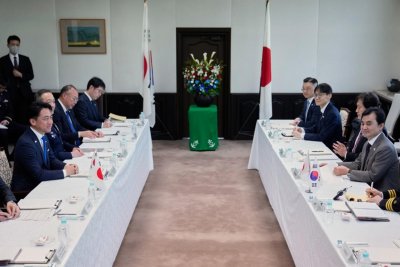
Japan’s Defense Minister Shinjiro Koizumi (L) and South Korea’s Defense Minister Ahn Gyu-back (R) attend their meeting at the headquarters of the Japan Maritime Self-Defense Force Yokosuka District, south of Tokyo, Japan. Photo by EUGENE HOSHIKO / EPA
June 26 (Asia Today) — South Korean Defense Minister Ahn Gyu-back will meet Japanese Defense Minister Shinjiro Koizumi at the Defense Ministry headquarters in Seoul on Sunday morning, the ministry said Friday.
Koizumi will visit South Korea as part of reciprocal ministerial diplomacy following Ahn’s trip to Japan in January.
During the visit, the ministers are scheduled to inspect aircraft operated by the South Korean Air Force’s Black Eagles aerobatic team, hold bilateral talks and take part in a security dialogue with young people from both countries.
They will also discuss ways to strengthen defense exchanges and cooperation between South Korea and Japan.
The meeting will come about one month after Ahn and Koizumi held bilateral talks on May 30 on the sidelines of the 23rd IISS Asia Security Summit, commonly known as the Shangri-La Dialogue, in Singapore.
It will be the first visit to South Korea by a Japanese defense minister specifically for bilateral talks since 2015, according to the ministry.
Koizumi is also scheduled to pay his respects at Seoul National Cemetery during the trip. He is expected to meet South Korean Foreign Minister Cho Hyun on Sunday.
Egypt’s foreign ministry used carefully calibrated language on Monday to restate a familiar position: unwavering support for Sudan’s “unity, sovereignty and territorial integrity” and for its “national institutions, particularly the Sudanese Armed Forces (SAF).” Framed as a rejection of “parallel entities” seeking to form an alternative government in exile, the statement is another sign that Cairo is tying its Sudan policy ever more tightly to General Abdel Fattah al‑Burhan and the SAF as the country’s civil war grinds into yet another year.
Behind the diplomatic phrasing lies a blunt political choice. Since the outbreak of fighting between the SAF and the Rapid Support Forces (RSF) in April 2023, Egypt has emerged as one of the army’s main regional backers, both politically and—according to multiple reports—quietly in security terms. Egyptian officials insist they are defending Sudanese state institutions against militia fragmentation and external meddling, a message they repeat in multilateral forums and joint communiqués with Burhan’s Transitional Sovereignty Council.
From Cairo, the stakes in Sudan are seen as existential rather than abstract. Egyptian analysts routinely describe the stability of their southern neighbour as a vital national security concern, citing fears of refugee flows, arms smuggling and jihadist safe havens along the porous border. Control of the Nile is an even deeper driver: since the 2019 fall of Omar al‑Bashir, Egypt has intensified security and military coordination with Khartoum to counter Ethiopia’s upstream Grand Ethiopian Renaissance Dam (GERD) and preserve its historic water share.
There is also a clear regime‑security affinity, however misguided that affinity might be. Burhan, a career officer who trained in Cairo and maintains close ties with Egyptian generals, represents a familiar authoritarian model for President Abdel Fattah el‑Sisi, himself a former general who came to power after a coup in 2013. Supporting the SAF fits Egypt’s long‑standing pattern of siding with Sudan’s army “whoever is in charge of it,” and buttresses Cairo’s broader preference for strong central militaries over messy civilian transitions across the region.
Stay ahead of the geopolitical week.
MD Briefing delivers expert analysis across five global fronts — the Indo-Pacific, energy, geoeconomics, European security, and the Middle East — every Monday morning. Free.
Officially, Egypt insists it is not a party to Sudan’s war. Sisi has repeatedly pledged “non‑interference,” and Cairo frames its role as limited to mediation, humanitarian aid, and hosting millions of Sudanese fleeing the conflict. Egyptian troops captured by the RSF at Merowe airbase in April 2023 were described as participants in pre‑scheduled joint exercises, not combat operations, a spin that few international observers bought.
The line between deterrent presence and de facto involvement has become increasingly blurred. Analysts note years of intensifying joint drills, intelligence cooperation and arms ties between the two militaries since 2019. Think‑tanks and regional media have reported unconfirmed Egyptian airstrikes on RSF positions and possible targeting of gold‑mining camps in northern Sudan, amid allegations by RSF leaders that Cairo is providing drones and tactical support to the SAF—claims Egypt denies. The pattern points towards at the very least a protective security umbrella for Burhan’s forces, far beyond the strict neutrality Cairo proclaims.
Yet in Burhan Egypt is backing a very risky partner. By hinging its Sudan strategy almost entirely on the SAF and Burhan’s sovereignty council, Egypt is betting on a man and an institution that look increasingly incapable of reunifying the country. The war has left tens of thousands dead, displaced over 14 million people, and pushed parts of Sudan towards famine, with the army losing and regaining territory in a grinding stalemate against the RSF. Burhan’s own legitimacy is deeply contested: he led the 2021 coup that derailed a fragile civilian‑military power‑sharing agreement, and his government is widely seen by pro‑democracy groups as a continuation of military dominance rather than a path to elections.
Cairo’s categorical rejection of “parallel governments” sounds like a defence of state unity, but in practice it risks delegitimising genuine civilian coalitions seeking to organise outside the SAF‑RSF binary. By equating Sudan’s “national institutions” with the existing military leadership, Egypt narrows the political horizon and sidelines the broad civilian forces that led the 2018–2019 uprising—precisely the actors most likely to provide a sustainable, inclusive settlement. If the SAF continues to fragment on the battlefield or loses further territorial control, Cairo may find that its red lines have locked it into defending a shrinking power centre with dwindling popular backing.
There is also a long‑term reputational cost. Egypt positions itself as a mediator through formats such as the “Quad”, and hosts conferences of Sudanese civil and political actors in Cairo. But as long as its public diplomacy is tethered to explicit promises that it “will not be lax or late in supporting the legitimate Sudanese government” under Burhan, that positioning is scarcely credible. On the contrary, Egypt has decisively and actively allied itself to Sudan’s military junta.
Defenseman Brandt Clarke has agreed to a five-year, $37 million deal to stay with the Kings.
The Kings announced the deal Friday for Clarke, the eighth overall pick in 2021 who has grown into the new cornerstone of their defense.
Clarke had career highs of eight goals and 32 assists while playing in all 82 regular-season games last season for the Kings, who lost in the first round of the Stanley Cup playoffs for the fifth consecutive year. He was third in the NHL with 185 blocked shots, and he finished fourth on the LA roster in scoring.
The 23-year-old Clarke spent parts of the past four seasons with the Kings, but has been an NHL regular for only two years. Kings general manager Ken Holland still saw enough to lock down the mobile defenseman through the 2030-31 season.
The Kings hired Peter Laviolette as their head coach earlier this month, and Clarke’s offensive skill fits well into the team’s possible evolution away from its traditional defense-first mentality to a more aggressive club under Laviolette.
Clarke was the Kings’ most prominent restricted free agent heading into the summer, but Holland also must make decision on unrestricted free agents Andrei Kuzmenko and Scott Lawton.
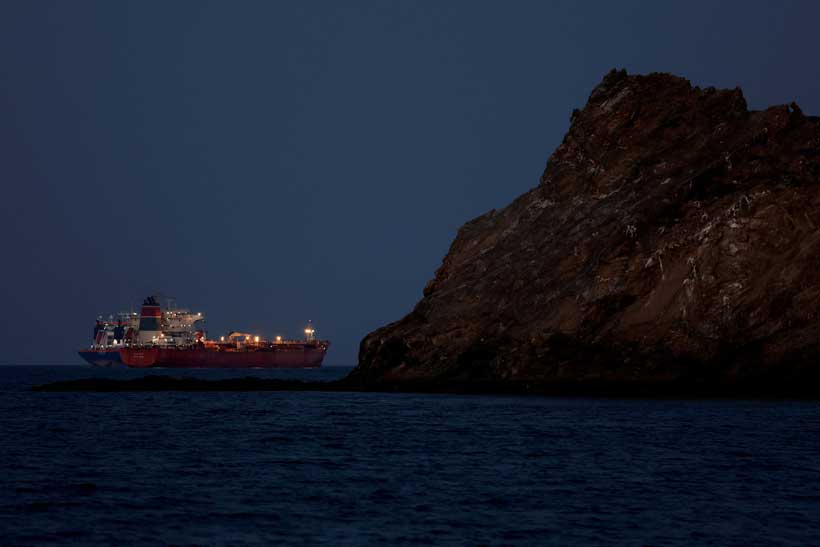
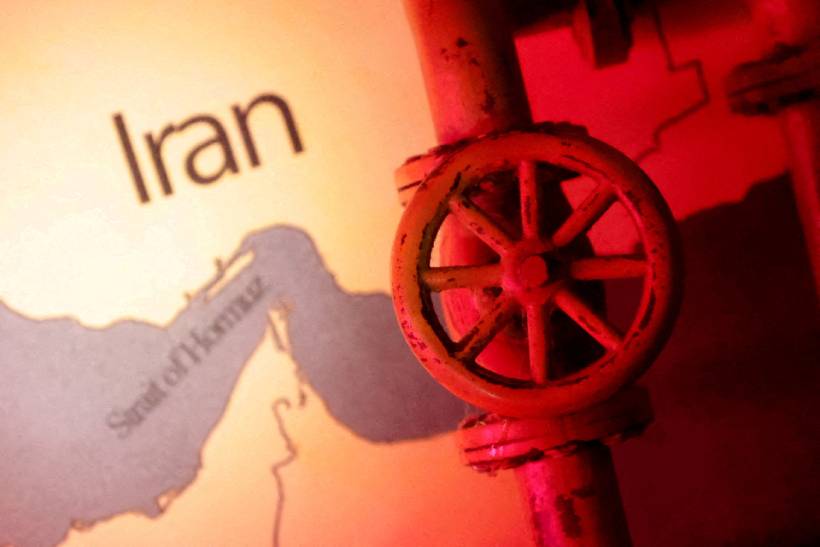
The reopening of the Strait of Hormuz has restored the flow of oil and natural gas after more than 100 days of disruption, but the crisis has already left a lasting mark on global energy markets. The prolonged closure exposed the vulnerability of the world’s energy supply chain and has prompted governments to reconsider how they secure fuel supplies.
Analysts say the crisis mirrors the impact of the 1973 Arab oil embargo, which transformed global energy policy by encouraging conservation, diversification, and strategic stockpiling. While today’s energy system proved more resilient, the Hormuz disruption may accelerate a broader shift away from fossil fuels.
What Happened?
The Strait of Hormuz, through which nearly 20 percent of global oil and liquefied natural gas supplies normally pass, remained effectively closed for more than three months during the US Israeli conflict with Iran.
Despite the disruption, global markets avoided a severe supply crisis through rapid rerouting of cargoes, the release of strategic reserves, reduced Chinese imports, and shifting demand patterns.
However, analysts say these emergency measures were only temporary. Energy inventories fell sharply during the crisis, and markets were approaching a critical point before shipping resumed.
Why the Crisis Matters
The Hormuz disruption demonstrated that even today’s highly interconnected global energy system remains vulnerable to geopolitical conflict.
Unlike previous crises, the world avoided a complete energy collapse because governments, traders, and shipping companies quickly adapted. Nevertheless, the episode exposed the limits of those emergency responses and reinforced concerns about overreliance on a single strategic chokepoint.
The crisis is expected to influence long term energy investment decisions far beyond the Middle East.
Lessons From the 1973 Oil Embargo
The 1973 Arab oil embargo fundamentally changed global energy policy after oil producing nations restricted exports to countries supporting Israel during the Yom Kippur War.
The embargo caused oil prices to surge, triggering inflation and prompting governments to adopt fuel efficiency standards, develop domestic oil production, establish strategic petroleum reserves, and create the International Energy Agency.
Rather than ending fossil fuel use, the crisis encouraged countries to consume energy more efficiently while reducing dependence on imported oil.
A New Energy Strategy Emerges
The Hormuz crisis appears to be driving another major strategic shift, particularly across Asia.
Countries heavily dependent on Middle Eastern oil and gas are increasingly prioritizing energy security over low fuel costs. Governments are expected to expand strategic petroleum reserves while accelerating investment in domestic renewable energy, nuclear power, and alternative fuel sources.
India, Pakistan, Japan, and South Korea are among the countries reviewing long term strategies aimed at reducing exposure to overseas energy disruptions.
Europe Continues Its Energy Transition
Europe entered the Hormuz crisis after already reshaping its energy system following Russia’s invasion of Ukraine in 2022.
The loss of Russian energy supplies forced European countries to cut gas consumption, diversify imports, and rapidly expand renewable energy capacity.
The latest Middle East disruption is expected to reinforce that trend by encouraging further investment in clean energy and energy efficiency while reducing dependence on imported fossil fuels.
Investment Trends Support the Shift
Global investment patterns already suggest that energy markets are evolving.
According to the International Energy Agency, worldwide energy investment is projected to reach 3.4 trillion dollars this year, with much of the growth directed toward renewable energy, electricity infrastructure, battery storage, and grid resilience rather than new oil production.
Electric vehicle sales continue to rise rapidly across Europe, Latin America, and Asia Pacific, while Chinese solar panel exports have surged across Africa and Southeast Asia.
Governments are also increasing spending on energy efficiency, with around 20 countries introducing new conservation measures directly in response to the Hormuz crisis.
Why It Matters
The Hormuz crisis has reinforced that energy security is becoming just as important as energy affordability.
Rather than relying solely on global oil markets, governments are increasingly pursuing diversified energy systems that combine fossil fuels with renewables, nuclear power, strategic reserves, and domestic production.
This transition is expected to influence investment, industrial policy, and international trade for years to come.
Future Outlook
Oil and natural gas are expected to remain central to the global economy for decades, particularly in transportation, manufacturing, aviation, and power generation.
However, future growth in fossil fuel demand may become significantly slower as governments invest more heavily in renewable energy, electric vehicles, battery storage, and efficiency improvements.
The Hormuz crisis may ultimately be remembered not as the event that ended the oil era, but as the moment many countries accelerated preparations for a more diversified energy future.
Implications
The Hormuz crisis is likely to have consequences that extend far beyond the immediate recovery in oil and gas flows. Governments that experienced supply disruptions are expected to place greater emphasis on energy security, even if it comes at a higher economic cost. This could accelerate the expansion of strategic petroleum reserves, diversify import sources, and increase investment in domestic energy production, including renewables, nuclear power, and critical energy infrastructure.
For oil exporters in the Gulf, the crisis may strengthen the case for developing alternative export routes that bypass the Strait of Hormuz, reducing dependence on a single maritime chokepoint. Import dependent economies, particularly across Asia, are also likely to rethink long term procurement strategies by securing more flexible supply contracts and expanding storage capacity.
Financial markets are also expected to assign a higher geopolitical risk premium to energy prices. Even after shipping has resumed, investors may continue to price in the possibility of future disruptions, increasing volatility across oil, gas, shipping, and insurance markets. The crisis could also accelerate capital flows into technologies that reduce dependence on imported fossil fuels, including electric vehicles, battery storage, hydrogen, and energy efficiency.
Analysis
The Hormuz crisis may ultimately prove more significant for what it revealed than for the physical disruption it caused. Although global energy markets demonstrated remarkable resilience, that resilience depended on temporary measures such as drawing down inventories, rerouting cargoes, reducing consumption, and relying on spare production capacity. These mechanisms bought time rather than solving the underlying vulnerability of the global energy system.
Unlike the 1973 Arab oil embargo, which primarily forced consuming nations to improve efficiency while expanding fossil fuel production elsewhere, today’s crisis occurred at a time when commercially competitive alternatives to oil and gas already exist. Renewable energy, electric vehicles, battery storage, and advanced power grids have matured into viable strategic assets rather than purely environmental investments. As a result, governments are increasingly viewing clean energy not only as a climate policy but also as a national security priority.
Another important distinction is the shift in investment behavior. Historically, supply disruptions often encouraged greater investment in oil exploration and production. Following the Hormuz crisis, however, a growing share of capital is moving toward energy diversification instead of simply increasing fossil fuel output. This suggests policymakers increasingly see reducing oil dependence as a more sustainable way to improve resilience than expanding strategic reserves alone.
The crisis also exposed a structural imbalance in global energy markets. While production remains concentrated in politically sensitive regions, demand growth is increasingly centered in Asia, leaving major importers highly exposed to geopolitical instability. Countries such as India, Pakistan, Japan, and South Korea may therefore pursue parallel strategies of securing diversified hydrocarbon supplies while rapidly expanding domestic renewable generation, nuclear power, and energy storage.
Perhaps the most important takeaway is that energy security has overtaken cost as the dominant driver of policy decisions. For decades, governments largely optimized their energy systems for affordability and efficiency. The Hormuz disruption demonstrated that the cheapest energy source can quickly become the most expensive if geopolitical events interrupt supply. That realization is likely to reshape government policy, corporate investment, and global energy trade for years to come.
The crisis does not signal the immediate end of the oil era. Oil and natural gas will remain indispensable for transportation, petrochemicals, aviation, heavy industry, and electricity generation in many regions. However, it may represent an inflection point where the trajectory of fossil fuel demand begins to flatten as countries systematically reduce their strategic dependence on imported hydrocarbons. In that sense, the Hormuz crisis could be remembered less as an energy supply shock and more as the catalyst that accelerated the next phase of the global energy transition.
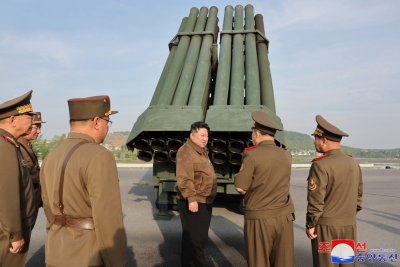
North Korean leader Kim Jong Un oversaw tests of new weapons to bolster firepower along the inter-Korean border, state-run media reported Friday. In this May 2024 photo, Kim views a 240mm multiple rocket launcher system. File Photo by KCNA/EPA-EFE
SEOUL, June 26 (UPI) — North Korean leader Kim Jong Un oversaw tests of a new rocket launcher system and other weapons as part of a plan to bolster firepower along the inter-Korean border, state-run media reported Friday, highlighting Pyongyang’s continued effort to modernize conventional weapons capable of threatening the Seoul metropolitan area.
The new weapons, tested at an undisclosed location Thursday, included an upgraded 240mm 24-tube multiple rocket launcher with an automated guidance system and an extended range of 56 miles, the official Korean Central News Agency reported.
Also tested were shells for a 155mm self-propelled howitzer with an extended range of 40 miles and a special warhead for a tactical ballistic missile. KCNA said the warhead was “aimed at inflicting fatal damage on major targets including airfields, ports and power facilities of the enemy.”
Kim described the launches as a demonstration of the “great technological progress” made in implementing the party’s policy of “bringing about a change in the fire posture on the southern border.”
He added that the policy was intended not only to strengthen defenses but also to build a “deadly and destructive offensive posture to make no enemy dare to confront.”
Seoul, home to more than 10 million people, lies roughly 30 miles from the border, while the surrounding Gyeonggi Province is one of South Korea’s most densely populated and industrialized regions.
The tests come amid an extended push by Pyongyang to harden its military posture toward South Korea. Last month, Kim called for strengthening frontline defenses along the border to create an “impregnable fortress,” and Thursday’s weapons tests appear to represent the firepower component of that broader effort.
North Korea has ramped up fortification work near the Military Demarcation Line inside the DMZ, including the installation of barbed-wire fencing and preparations for mine-laying operations. South Korea’s Defense Ministry on Monday called the activity a violation of the armistice agreement that ended fighting in the 1950-53 Korean War.
Earlier this week, Pyongyang also commissioned its first 5,000-ton destroyer, the Choe Hyon, which Kim said is armed with nuclear-capable missiles. Images released by state media appeared to show missile launchers and radar systems resembling those found on Russian warships, prompting speculation that Pyongyang has received technical assistance from Moscow.
North Korea has deployed troops, artillery and weapons to support Russia’s war in Ukraine and is widely believed to be receiving financial support and advanced military technology in return.
While South Korean President Lee Jae Myung has sought to ease tensions with North Korea since taking office last year, he has also called for strengthening Seoul’s military capabilities in response to Pyongyang’s expanding weapons programs.
On Friday, South Korea’s Defense Ministry unveiled a plan to rapidly expand the military’s drone and counter-drone capabilities, citing lessons from modern conflicts and North Korea’s growing military cooperation with Moscow.
“Since North Korea is currently receiving technology transfer from Russia, we decided that we urgently need to proactively respond to various changes in the war operation environment,” Defense Minister Ahn Gyu-back said at a press briefing.
The plan calls for acquiring 20,000 low-cost reconnaissance and loitering drones by 2030 while accelerating the deployment of homegrown K-Lucas long-range suicide drones. It also includes expanded counter-drone capabilities, including laser weapons, high-power microwave systems and interceptor drones designed to defeat low-cost aerial threats.
As part of the strategy, South Korea aims to train 500,000 “drone warriors” across the army, navy, air force and marines. Ahn said drones should become “a universal means of combat” across the armed forces, with every soldier eventually able to operate them “like a second personal weapon.”
June 25 (UPI) — A cargo vessel in the Strait of Hormuz was attacked Thursday, prompting officials to halt the evacuation of sailors stranded in the chokepoint by the war.
It was unclear who attacked the cargo ship. According to the British navy’s United Kingdom Maritime Trade Operations office, the vessel was struck on its starboard side by an unknown projectile at about 5:40 p.m. local time. It was about 7 1/2 nautical miles southeast of Dahit, Oman, when it was attacked, it said.
The vessel’s bridge sustained damage, but no casualties or environmental impact were reported.
Following the attack, the United Nations’ International Maritime Organization paused its evacuation operation in the Strait of Hormuz.
“I have decided to temporarily pause its implementation in order to reconfirm that the necessary safety guarantees continue to be in place for the ships on our evacuation list and all those in the region,” IMO Secretary-General Arsenio Dominguez said in a statement.
The war, which began Feb. 28, left some 11,000 sailors stranded in and around the Strait of Hormuz, a vital energy shipping route. The IMO announced the evacuation operation Tuesday, after the United States and Iran agreed to a Memorandum of Understanding that seeks to pave a path to ending the war.
The vessel struck Thursday was not transiting the Hormuz under the IMO’s evacuation framework, the U.N. agency said.
Though it unclear who was responsible for the attack, the Iran’s U.S.-sanctioned Persian Gulf Strait Authority, newly created by Tehran to oversee and manage the strait, issued an advisory Thursday, stating it is not responsible for the protection of vessels transiting “outside designated routes.”
“Any consequences arising from unauthorized routing shall be the sole responsibility of the vessel owner, charterer and master,” it said.
Control of the strait has been a focus of ongoing U.S. efforts to end the war.
Iran effectively closed the strait after being attacked Feb. 28, causing energy prices to surge and threatened nations with worsening energy crises.
Since then, Iran has attempted to maintain control of the strait and has sought to impose fees on ships that transit it.
The United States is seeking to secure free maritime travel through the strait as part of the MOU. U.S. Secretary of State Marco Rubio is currently in the Middle East trying to sell the MOU to allied nations.
However, the Institute for the Study of War said in a report Thursday night that Iran’s alleged attacks and threats directed at vessels in the strait “advance its objective of establishing control over the waterway” as well as “undermine international efforts to guarantee safe passage through the Strait of Hormuz.”
“Iran is using military threats and economic incentives to try to convince Gulf states to support its efforts to control the strait, but the Gulf states appear to be resisting Iranian pressure at present,” it said.
The family behind German industrial group Wegmann is preparing to cash in on Europe’s defense spending boom through the planned initial public offering of KNDS, the Franco-German tank manufacturer that could be valued at €15 billion to €18 billion, Bloomberg News reported Thursday.
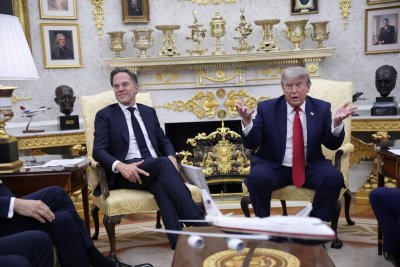
June 24 (UPI) — Democratic lawmakers accused the Trump administration Wednesday of seeking to push through a multimillion-dollar arms deal with Turkey by bypassing congressional review, the latest executive action critics say usurps the lawmakers’ authority.
Rep. Gregory Meeks, D-N.Y., ranking member of the House Foreign Affairs Committee, said he was informed by the Trump administration late Tuesday that it would bypass congressional review of an arms sale to Turkey worth more than $700 million.
“The State Department did not even attempt to justify its decision,” Meeks said in a statement.
“It did not invoke any emergency authority, did not present a written rationale and for months refused to make a good-faith effort to brief me on implications of the sale for the U.S.-Turkey relationship, Turkey’s continued possession of the Russian S-400 system and other regional security concerns,” he continued.
“It simply informed my office that it would immediately proceed with a formal notification of the sale.”
The United States and NATO opposed Turkey’s adoption of the S-200 system, and Washington removed Turkey from the F-35 fighter program in 2019 during Trump’s first administration.
Meeks called the decision to bypass congressional review “yet another deeply troubling example of this administration’s open contempt for Congress’ oversight authority.
“There can be no pretense that this was urgent or unavoidable,” he said, stating the items will not be delivered to Turkey for years.
“This was a deliberate choice to shut Congress out and to treat legitimate oversight as an inconvenience to be brushed aside.”
Trump is scheduled to visit Turkey early next month. During a White House press conference alongside NATO Secretary-General Mark Rutte on Tuesday, he praised Erdogan as “a great friend.”
Erdogan is known to be seeking to acquire U.S.-made fighter jets, including the F-35. Asked if he was planning to announce a potential deal when he visits Ankara, Trump replied: “I’m going to probably do something that’s going to make him very happy.”
It was unclear if jets were part of the arms deal.
UPI has contacted the State Department for comment and to detail the contents of the sale.
Democrats and other critics of President Donald Trump have repeatedly accused his administration of bypassing Congress through executive orders and unilateral decisions, particularly in its use of the military.
The Trump administration has faced staunch criticism from opponents for launching a war against Iran in late February without congressional authorization. Democrats have frequently argued that the Constitution gives Congress, not the president, the power to declare war.
Democrats have also criticized the administration’s use of the military to attack suspected drug-trafficking boats in the Pacific and Caribbean without congressional authorization.
June 24 (UPI) — Senate lawmakers have approved a war powers resolution directing President Donald Trump to halt U.S. hostilities with Iran or seek congressional authorization.
The Senate voted 50-48 on Tuesday, with four Republicans — Sens. Bill Cassidy of Louisiana, Susan Collins of Maine, Lisa Murkowski of Alaska and Rand Paul of Kentucky — joining their Democratic colleagues in passing H.Con.Res. 86. Sen. John Fetterman, D-Pa., was the only Democrat to vote against the measure.
The measure’s legal force was disputed. Though concurrent resolutions are non-binding, Democrats argue H.Con.Res. 86 is binding because it was adopted under the War Powers Resolution.
Either way, the measure shows the deepening fissure in support among Trump’s Republican Party for the war his administration unilaterally launched in late February.
Democrats have been forcing repeated war powers resolution votes for months, most of which have been stonewalled by Republicans. But GOP support for the war has waned as it has dragged on, culminating Tuesday when the Senate approved the measure that the House narrowly passed 215-208 earlier this month.
“Both chambers have now made clear that the president cannot continue this war of choice and must cease all hostilities against Iran,” Rep. Gregory Meeks, the resolution’s sponsor and ranking member of the House Foreign Affairs Committee, said Tuesday after the vote.
“Regardless of what President Trump says, this measure is binding under the War Powers Resolution, and I will explore all legal avenues to ensure the Executive complies with the will of Congress.”
Democrats argue that the U.S. war with Iran — as well as other military actions taken by Trump, including attacks on suspected drug-trafficking boats in international waters — is illegal as Congress has not authorized war, a power the Constitution gives to Congress.
Trump has responded that he does not need authorization, and any war powers resolution is moot due to the fragile U.S.-Iran cease-fire that went into effect in early April.
Amid the cease-fire, Trump has been seeking an agreement to end the war, and his administration was actively negotiating terms with Iran when the vote was held Tuesday.
In a social media statement, Trump lambasted Congress over the vote, saying it was informing Iran that the United States does not support him while hee has “Iran on the ‘ropes,’ ready to go down for the fall.”
“Four Republican Losers voted with the Dumocrats,” he said, while calling the measure “poorly timed and meaningless.”
“These Senators have just made my job more difficult, but I will get it done, one way or the other, because I always get it done.”
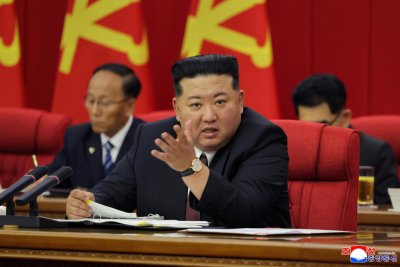
In this photo released Tuesday, North Korean leader Kim Jong Un (C) speaks during a plenary meeting of the Ninth Central Committee of the Workers’ Party of Korea in Pyongyang. Kim called for the expansion of Pyongyang’s nuclear forces, citing military cooperation between Seoul and Washington. Photo by KCNA/EPA
SEOUL, June 23 (UPI) — North Korean leader Kim Jong Un called for accelerating the expansion of North Korea’s nuclear forces, citing increasingly hostile military cooperation between Seoul and Washington and an unstable global security environment, state media reported Monday.
Kim led a plenary meeting of the Ninth Central Committee of the ruling Workers’ Party of Korea from Saturday through Monday to review progress on national goals for the first half of the year and outline priorities for the remainder of 2026, according to the official Korean Central News Agency.
The meeting reaffirmed Pyongyang’s commitment to strengthening and expanding its nuclear forces, describing them as “the core of the military sovereignty of the country” and the foundation of its war deterrent.
“To thoroughly exercise the position of a nuclear weapons state is the most correct and unique way to actively and confidently cope with the unpredictable international military and political situation,” KCNA said.
North Korea passed a law declaring itself a nuclear-armed state in 2022. Kim later amended the country’s constitution to enshrine the permanent growth of its nuclear arsenal, calling the status “irreversible.”
The remarks come weeks after Kim toured a newly inaugurated nuclear fuel production facility and vowed to continue expanding the country’s fissile material at an “exponential rate.”
In an address to the meeting, Kim said it was necessary to bolster North Korea’s defense capabilities in response to an increasingly volatile international environment.
“Wars, bloodshed and political and economic instabilities are becoming a daily occurrence in the world due to the gangster-like and unlimited geopolitical greed and misuse of strength,” Kim said, according to KCNA.
The North Korean leader criticized the U.S.-South Korea military alliance, citing regular joint military exercises and Seoul’s pursuit of a nuclear-powered submarine.
Kim also singled out the allies’ Nuclear Consultative Group, which met in Seoul earlier this month, calling it a “nuclear war body” and accusing Washington and Seoul of developing plans for a nuclear strike against North Korea.
He further accused Japan of transforming itself into a “war state” and warned that military buildups in Northeast Asia were heightening regional tensions.
In addition to expanding the country’s nuclear program, Kim outlined broader military modernization goals, including construction of a 10,000-ton strategic guided missile cruiser, expansion of munitions production and the development of new naval facilities. He also called for completing ongoing efforts to harden the border with South Korea.
The remarks come as North Korea continues extensive fortification work near the Military Demarcation Line inside the DMZ, including the installation of barbed-wire fencing and preparations for mine-laying operations.
South Korea’s Defense Ministry on Monday called the activity a violation of the armistice agreement that ended fighting in the 1950-53 Korean War.
North Korea has revised its constitution to remove all references to reunification with South Korea, formalizing Kim’s push to redefine inter-Korean ties as relations between two separate states.
“In particular, it is essential to thoroughly adhere to the principle of struggle against the enemy set forth by our party which defined the ROK as the most hostile state,” Kim said, using the official acronym for South Korea.
The remarks underlined Pyongyang’s continued rejection of South Korean President Lee Jae Myung’s outreach efforts since taking office last year.
Last week, Lee said he discussed North Korea with U.S. President Donald Trump during the Group of Seven summit in France, arguing that sanctions had failed to halt Pyongyang’s nuclear development and suggesting a more phased approach.
Trump met Kim three times during his first term and has repeatedly said he would be open to meeting the North Korean leader again since returning to office.
“President Trump said it was time to pay attention to the North Korea issue again,” Lee said.
The disruption caused by the Iran war and the temporary closure of the Strait of Hormuz has prompted countries around the world to reconsider their energy security strategies. Governments that suffered economic damage from supply shortages and soaring prices are now looking to build larger strategic oil and gas reserves, potentially creating demand for hundreds of millions of additional barrels over the coming years.
Hormuz Crisis Exposed Energy Vulnerabilities
The near-total closure of the Strait of Hormuz disrupted around one-fifth of global oil and liquefied natural gas supplies for more than three months, sending shockwaves through energy markets.
Brent crude prices surged to nearly $120 a barrel as import-dependent economies faced rising fuel costs, supply uncertainty and growing inflationary pressures.
Emergency Reserves Helped Stabilize Markets
One of the key factors preventing a deeper energy crisis was the release of strategic petroleum reserves.
All 32 members of the International Energy Agency agreed to a record release of 400 million barrels from emergency stockpiles, helping offset supply disruptions and ease pressure on global markets.
The coordinated action highlighted the importance of maintaining large emergency reserves during major geopolitical crises.
China’s Stockpile Strategy Pays Off
China emerged from the crisis in a stronger position than many other major importers due to its massive strategic petroleum reserve.
The country has spent years building what is believed to be the world’s largest emergency oil stockpile, estimated at more than one billion barrels.
During the conflict, China significantly reduced crude imports, allowing it to avoid buying large volumes of oil at elevated prices and limiting the economic impact of the disruption.
Import-Dependent Economies Face Greater Pressure
Countries with limited strategic reserves faced much greater challenges.
Several Asian economies relied on emergency measures such as:
Fuel subsidies
Consumption restrictions
Reduced working hours
Energy-saving programs
The experience exposed vulnerabilities among countries heavily dependent on Middle Eastern energy supplies without substantial emergency stockpiles.
India Eyes Larger Strategic Reserves
India is among the countries most likely to expand its emergency storage capacity.
As the world’s third-largest oil importer and one of the fastest-growing energy consumers, India currently holds reserves covering only a small fraction of its import needs.
Meeting International Energy Agency standards would require hundreds of millions of additional barrels of storage capacity.
Recent plans under consideration suggest New Delhi is moving toward expanding its strategic petroleum reserve network.
Pakistan Also Reviewing Energy Security
Pakistan, which relied heavily on Middle Eastern oil and LNG imports before the conflict, is also examining ways to increase domestic storage capacity.
The Hormuz disruption underscored the risks facing countries that lack sufficient reserves to absorb prolonged supply interruptions.
Australia Moves to Address Reserve Gap
Australia, long criticized for failing to meet International Energy Agency stockpile requirements, has announced plans to significantly increase fuel reserves.
The move reflects a broader recognition that energy security has become a national security issue amid growing geopolitical uncertainty.
Europe Considers Additional Gas Storage
Europe already maintains extensive gas storage infrastructure to manage winter demand.
However, the war has renewed concerns about dependence on imported LNG, particularly as the region increasingly relies on overseas suppliers.
Additional government-controlled gas storage facilities may become part of future energy security planning.
Gulf Producers Seek Overseas Storage
The lessons of the Hormuz disruption are also influencing major energy exporters.
National oil companies in the Gulf are exploring opportunities to expand storage capacity outside the region to maintain export flexibility during future crises.
Additional overseas storage could help producers continue serving customers even if regional shipping routes face disruptions.
Oil Market Impact
The expansion of strategic reserves worldwide could create substantial new demand for crude oil and refined products.
At the same time, emergency reserves that were depleted during the conflict will need to be replenished.
Together, reserve rebuilding and new storage programs could generate demand for roughly one billion barrels over the coming years, providing support for global oil prices even if overall supply growth remains strong.
What It Means for Global Energy Security
The Hormuz crisis has reinforced a lesson many governments learned during previous energy shocks: supply security can be just as important as supply availability.
Countries are increasingly viewing strategic reserves not as emergency assets to be used rarely, but as a core component of economic and national security planning. The crisis has also demonstrated how large stockpiles can provide governments with flexibility to reduce imports during periods of market stress and extreme prices.
Analysis
The most significant consequence of the Iran war may not be the temporary spike in oil prices but the long-term shift in how countries manage energy security. The conflict exposed a clear divide between nations with large strategic reserves and those forced to absorb the full impact of supply disruptions. China emerged as a model for energy resilience, while countries such as India and Pakistan were reminded of their vulnerability to geopolitical shocks.
If governments follow through on plans to expand storage capacity, the global oil market could gain a major new source of structural demand. Reserve construction and replenishment may help absorb future supply surpluses and provide a floor for prices, particularly during periods of weak economic growth.
At the same time, larger strategic stockpiles could make future oil shocks less severe. Countries with substantial reserves are better positioned to reduce imports during crises, dampening demand spikes and limiting extreme price volatility. In the longer term, the world could emerge from the Hormuz crisis with a more resilient energy system, but one in which strategic stockpiles play a much larger role in shaping oil demand, trade flows and government policy.