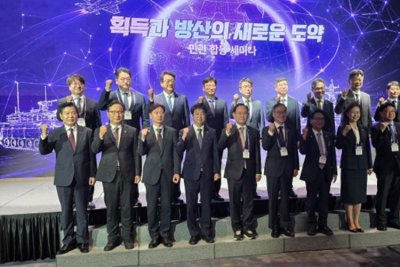
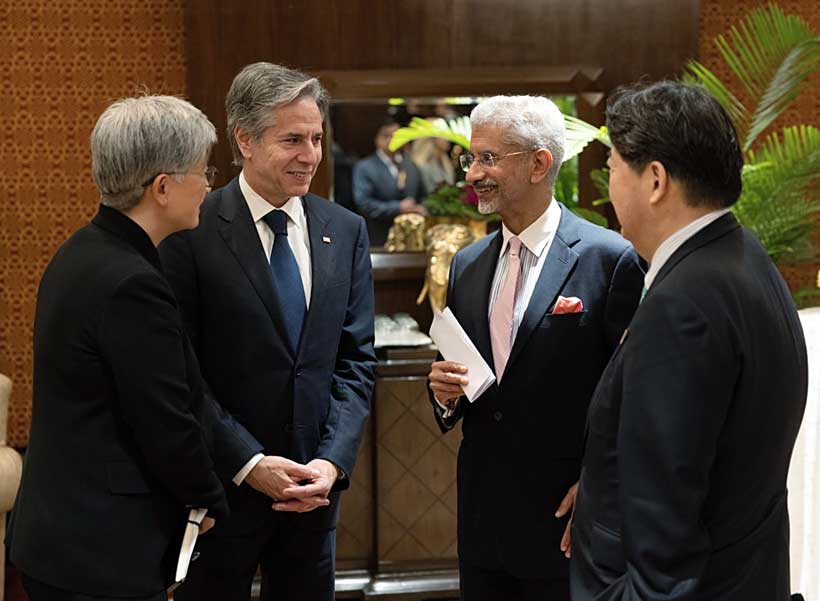
1 of 3 | Government officials, lawmakers, researchers and defense industry executives attend a seminar marking the 20th anniversary of South Korea’s Defense Acquisition Program Administration in Seoul on Friday. Photo by Asia Today
June 19 (Asia Today) — South Korea is seeking to transform its defense industry into a national growth engine by integrating military procurement, weapons exports, advanced technology and industrial policy, government and industry officials said Friday.
Officials at a public-private seminar in Seoul rejected the long-standing argument that growing foreign orders could divert production capacity from the South Korean military and delay domestic weapons deliveries.
Instead, they said an analysis of about 2,000 South Korean defense companies found that exports increased factory utilization, encouraged investment in research and production facilities and eventually reduced manufacturing costs.
The findings were presented at a seminar titled “A New Leap Forward in Acquisition and the Defense Industry,” held at the Fairmont Ambassador Seoul in the city’s Yeouido financial district.
The Defense Acquisition Program Administration organized the event as it marked the 20th anniversary of its establishment.
Participants included lawmakers, officials from the defense, industry, science and small-business ministries, defense company executives and academic researchers.
They called for an end to treating military procurement and defense exports as separate policy areas.
Lee Yong-cheol, minister of the Defense Acquisition Program Administration, said South Korea’s annual defense exports had grown from about $250 million when the agency was established to $15.4 billion last year.
“Defense exports are no longer merely a supplement to domestic military procurement,” Lee said. “They have become a central growth engine driving the Republic of Korea as a whole.”
Lee said South Korea also needed to move beyond selling individual weapons.
He proposed combining weapons with energy systems, infrastructure, maintenance, repair and overhaul services and other forms of industrial cooperation.
“The era of selling weapons as stand-alone products is over,” Lee said. “We will transform the K-defense paradigm through cross-industry package cooperation.”
Lawmakers from South Korea’s governing and opposition parties pledged bipartisan legislative support for faster procurement and stronger financing for small and midsized defense companies.
They said a system that can take about 15 years to plan, develop and deploy a weapon is not suitable for an era in which artificial intelligence, drones and robotic systems evolve rapidly.
Participants also cited research indicating that financial instability among smaller suppliers, rather than export production, was a more important cause of delivery delays.
They called for expanded government-backed financing to prevent small manufacturers in the defense supply chain from being overwhelmed by debt and working-capital shortages.
Study links exports to stronger domestic production
South Korea’s defense industry has long debated whether large export contracts weaken or strengthen the country’s own military procurement.
Critics have warned that foreign orders could occupy production lines and delay the delivery of weapons to South Korean forces.
Supporters have argued that exports create economies of scale, preserve production capacity and lower the price paid by the South Korean military.
Research presented at Friday’s seminar supported the second view.
A team led by researchers from Myongji University analyzed data from about 2,000 South Korean defense-related companies.
The analysis found that increasing exports produced an immediate rise in factory utilization. Higher utilization was then associated with greater investment in research, development and production facilities.
Researchers said the benefits became more evident about three years after an export increase.
The analysis identified improvements in operating profit, lower production costs and greater independence in critical technologies after that period.
Repeated production also allowed factory workers and engineers to improve their skills and reduce defects, a process commonly described as a learning effect.
At the same time, producing weapons in larger quantities spread fixed development and manufacturing expenses across more units.
Researchers said those effects increased the competitiveness of South Korean products in foreign markets while potentially lowering the cost of weapons purchased by the South Korean military.
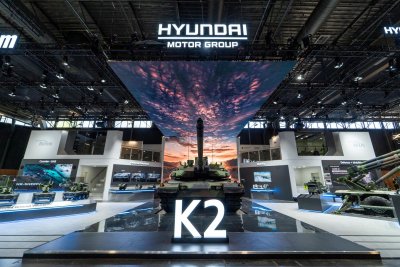
Industry experts cited South Korea’s large exports of K2 tanks and K9 self-propelled howitzers to Poland as an example.
They said the contracts increased domestic production, helped reduce unit costs and accelerated work on upgraded models.
Kim Myung-keun, an executive at Hyundai Rotem, said the company achieved economies of scale after receiving Poland’s large K2 tank order.
“Mass production lowered costs, reduced the acquisition cost for our own military and accelerated the development of upgraded models,” Kim said.
Yoon Byung-jo, an executive at SNT Motiv, said repeated production generated through large export orders also strengthened technical capabilities on factory floors.
“The learning effect accumulated by technicians during repeated production is the most powerful tool for reducing defects in critical components and increasing technological independence and localization,” Yoon said.
Lee Jung-hyun, a Myongji University professor involved in the study, said the analysis did not identify export volume as the principal cause of delayed deliveries.
“The real causes of delivery delays were companies’ debt ratios and financial soundness,” Lee said. “Exports instead improved operating profits and technological capabilities after a time lag of about three years.”
Lee said the government should strengthen the financial stability of smaller defense companies rather than restrict exports.
Officials seek to shorten 15-year procurement cycle
Government officials said South Korea’s traditional weapons acquisition process is too slow to keep pace with civilian advances in AI, drones, robots and human-machine teaming systems.
Weapons programs can take about 15 years from initial planning through development and operational deployment.
Officials said that schedule risks delivering technology that has already become outdated by the time it reaches military units.
Won Jong-dae, an assistant defense minister, said the existing system had become a national security obstacle.
“In the age of AI and drones, an acquisition process that takes 15 years is an impediment to security,” Won said.
He said the government would seek legislation tentatively called the Advanced Defense Capabilities Projects Act to shorten the process from initial requirements planning through deployment.
Kim Seong-su, a senior research and development official at the Science and Technology Ministry, said innovation in the civilian sector was advancing more quickly than military technology.
Kim called for an adaptive research and development system that would allow mature commercial technologies to be introduced into the military without passing through the full conventional development process.
The acquisition agency said it plans to expand rapid-introduction programs, particularly for drones and AI-related technologies.
The programs would allow the military to test and deploy promising civilian products more quickly while making adjustments based on operational experience.
Jeong Hwan, chief executive of infrared sensor manufacturer i3system, said smaller companies with advanced commercial technologies often cannot withstand the military’s complicated testing requirements and lengthy acquisition schedule.
He urged the government to make rapid acquisition programs more flexible and accessible to technology companies.
Financial support sought for smaller suppliers
Officials said South Korea must also strengthen small and midsized companies that produce components and materials for major weapons manufacturers.
Park Yong-soon, a senior official at the Ministry of SMEs and Startups, said the research presented Friday showed that financial weakness was a major source of supply-chain disruption.
Park said the government would shift policy toward stronger financial support for vulnerable suppliers and seek to increase the share of domestic defense revenue generated by small companies.
Smaller companies currently account for about 18% of South Korean defense industry sales. The government aims to raise the proportion to 25%.
Officials said those businesses can face severe cash-flow pressures because defense contracts require lengthy development, testing and certification before companies receive full payment.
The problem can become more serious when a small supplier must expand production rapidly to meet a major overseas order.
Park said the government must ensure that otherwise competitive companies do not collapse because they cannot obtain sufficient operating capital.
Park Dong-il, a senior official at the Industry Ministry, also warned that South Korea’s export portfolio remained concentrated in ground weapons.
More than 60% of the country’s defense exports come from land-based systems, he said.
Park said the government would work to diversify the industry into aerospace, next-generation satellites and advanced naval vessels while strengthening the domestic manufacturing and component ecosystem.
South Korea plans national security export packages
The acquisition agency said future export efforts would go beyond individual tanks, aircraft or artillery systems.
The government plans to package defense products with energy projects, transportation and industrial infrastructure, information and communications technology, maintenance services and technology transfers.
Officials described the approach as exporting an integrated security platform rather than a single weapon.
They cited Poland as a model.
South Korean arms agreements with Warsaw have included not only K2 tanks, K9 howitzers and other weapon systems but also plans for local production, technology cooperation, training and long-term maintenance.
An industry official said future transactions could involve building a partner country’s broader security and industrial system.
“The business will no longer be about exporting one tank,” the official said. “It will become a platform business that exports an entire national security system.”
Such packages can help importing countries create domestic jobs, develop supply chains and maintain weapons locally.
They can also give South Korean companies access to long-term revenue from training, spare parts, upgrades and depot-level maintenance after the initial sale.
The approach, however, requires coordination among several ministries because infrastructure, export financing and industrial cooperation extend beyond the authority of the acquisition agency.
Kim Il-dong, deputy minister of the Defense Acquisition Program Administration, said procurement and exports should be viewed as two sides of the same coin.
Kim said the acquisition agency could not achieve South Korea’s defense industry goals on its own.
He called for coordinated action by the defense, science, industry and small-business ministries to develop the sector as a strategic national industry.
Seoul targets 5% share of global defense market
The Defense Acquisition Program Administration said it aims to increase South Korea’s share of the global defense market to at least 5% and establish the country as one of the world’s four largest defense exporters.
Officials said South Korea’s defense industry had already approached the global top five based on its 2025 export performance.
Future growth will depend on moving beyond the country’s current strength in tanks, armored vehicles and artillery, they said.
The government plans to support companies working in AI, space systems, drones, advanced ships and autonomous and human-machine teaming technologies.
It also wants to foster globally competitive defense startups and companies capable of reaching valuations of more than $1 billion.
Officials and industry representatives said South Korea’s defense sector had completed an initial period of quantitative growth and now needed to focus on technology, productivity and supply-chain resilience.
“The past 20 years were a period of quantitative growth in which K-defense built weapons capabilities from the ground up,” seminar participants said. “The next 20 years should be remembered as an era of qualitative growth centered on AI, space, drones and unmanned systems.”
They said military procurement and the defense industry should no longer be treated as separate areas.
Instead, both should be viewed as parts of a single strategic industry supporting South Korea’s security, technological development and economic growth.
— Reported by Asia Today; translated by UPI
© Asia Today. Unauthorized reproduction or redistribution prohibited.
Original Korean report: https://www.asiatoday.co.kr/kn/view.php?key=20260619010006831