Defense

Zelenskiy Condemns Russia After Deadly Missile Strike on Kyiv Apartment Building

Ukrainian President Volodymyr Zelenskiy strongly condemned Russia after a missile strike on a residential apartment building in Kyiv killed at least 24 people, including three children.

The attack occurred during one of the heaviest aerial bombardments on the Ukrainian capital this year and further intensified international concern over the continuing war between Russia and Ukraine. Rescue operations continued for more than a full day before emergency workers completed searches through the destroyed structure in Kyiv’s Darnytskyi district.

The strike formed part of a broader wave of Russian drone and missile attacks across Ukraine that officials say targeted multiple regions over consecutive days.

Zelenskiy Visits the Site of the Attack

Zelenskiy visited the destroyed apartment building on Friday, laying red roses at the site and meeting rescue workers who had spent more than twenty eight hours searching for survivors beneath the rubble.

In remarks shared through social media, the Ukrainian president praised emergency responders for their continuous efforts and accused Russia of deliberately destroying civilian lives.

According to Zelenskiy, the missile strike effectively destroyed an entire section of the residential building. Ukrainian officials stated that initial analysis suggested the attack involved a recently manufactured Russian Kh 101 cruise missile.

The Ukrainian leader once again appealed to international allies for stronger air defence support and increased pressure on Moscow.

Heavy Civilian Casualties

Kyiv authorities declared Friday a day of mourning in memory of the victims. Flags across the capital were lowered to half mast, and public entertainment events were cancelled or postponed.

The Interior Ministry reported that rescue teams removed approximately 3,000 cubic meters of rubble during the operation. Hundreds of emergency personnel participated in the search efforts.

Officials confirmed that 24 bodies were recovered from the site, while approximately 30 people were rescued alive. Nearly 50 individuals were injured, and hundreds required psychological support following the attack.

The deaths of children among the victims further intensified public grief and anger across Ukraine.

Russia Intensifies Air Campaign

Ukrainian authorities stated that Russia launched more than 1,500 drones along with dozens of missiles during attacks carried out over two consecutive days this week.

The strikes extended beyond Kyiv and affected western regions of Ukraine located far from active frontline combat zones. Officials reported that six people were killed during attacks in western Ukraine on Wednesday.

The scale of the aerial assault highlights Russia’s continuing ability to conduct large coordinated attacks despite prolonged international sanctions and battlefield losses.

Moscow did not immediately comment specifically on the apartment building strike. Russia consistently denies deliberately targeting civilians, although residential buildings, hospitals, schools, and energy infrastructure have repeatedly been damaged throughout the conflict.

Ukraine Also Conducts Cross Border Attacks

The conflict has increasingly involved reciprocal long range attacks by both sides.

Russian regional officials stated that Ukrainian drone strikes killed four people, including a child, in the Russian city of Ryazan. Authorities reported damage to apartment buildings and an industrial facility during the incident.

Ukraine has expanded drone operations against targets inside Russia over the course of the war, aiming to disrupt military infrastructure, industrial production, and logistical operations linked to Moscow’s military campaign.

These developments reflect the increasingly transnational nature of the conflict, with civilian populations on both sides facing growing security risks.

The Continuing Humanitarian Crisis

The attack on Kyiv underscores the severe humanitarian consequences of the war, which began with Russia’s full scale invasion of Ukraine in February 2022.

Millions of Ukrainians have been displaced since the start of the conflict, while repeated strikes on civilian infrastructure have damaged homes, hospitals, schools, transportation systems, and energy networks across the country.

International organizations and human rights groups have repeatedly raised concerns about civilian casualties and the destruction of non military targets during the war.

At the same time, the prolonged conflict has placed enormous economic and psychological pressure on Ukrainian society as cities continue to face the threat of missile and drone attacks.

Analysis

The deadly strike on Kyiv demonstrates how the war between Russia and Ukraine continues to evolve into a prolonged campaign involving large scale aerial warfare and attacks far beyond frontline battle zones.

For Ukraine, the attack reinforces the urgent need for stronger air defence systems capable of intercepting missiles and drones before they reach urban areas. Zelenskiy’s renewed appeals to allies reflect growing concerns that Ukraine’s defensive capabilities remain under intense strain as Russia increases the scale and frequency of aerial assaults.

For Russia, sustained missile and drone attacks appear aimed at weakening Ukrainian morale, exhausting defence systems, and increasing pressure on the government through continued civilian disruption.

However, such attacks also carry significant international consequences. Civilian casualties, especially involving children and residential buildings, strengthen global criticism of Moscow and may encourage additional military and financial support for Ukraine from Western allies.

The conflict additionally illustrates the changing character of modern warfare, where advanced missiles, drones, and long range strikes allow both sides to target infrastructure and urban centers far from traditional battlefields.

Despite ongoing diplomatic discussions in various international forums, there remains little indication of a near term political settlement. Instead, the war increasingly appears locked in a prolonged phase of escalation, attrition, and humanitarian suffering.

The strike on Kyiv therefore stands not only as a tragic individual event but also as a broader symbol of the continuing devastation caused by one of the most consequential conflicts in modern Europe.

With information from Reuters.

Source link

Mobix Labs bull run: 90% surge on defense & critical minerals re-rating

Mobix Labs (MOBX) stock jumped nearly 90% to around $3.24 on Thursday, pushing its monthly gain to about 65%. The stock is now up 41.04% YTD, beating the S&P 500 (SP500) return of 8.75%.

The rally started after Mobix Labs announced

Source link

UKMTO says Honduran-flagged vessel seized by Iran near UAE

A container ship sails on the Strait of Hormuz, as seen from Ras Al Khaimah, United Arab Emirates, in June 2025. The UK’s Maritime Trade Operations said Thursday that a Honduran-flagged vessel was seized by Iran northeast of Fujairah, United Arab Emirates. File Photo by Ali Haider/EPA-EFE

May 14 (UPI) — The U.K.’s Maritime Trade Operations said Thursday that a Honduran-flagged vessel was seized by Iran northeast of Fujairah, United Arab Emirates.

The Hui Chuan, described by UKMTO as a “floating armoury,” was in the Gulf of Oman when it was seized by Iranian forces. The vessel is moving toward Iranian waters.

UKMTO said in a statement that the seizure was reported about 38 nautical miles northeast of Fujairah.

“The CSO has reported that the vessel has been taken by unauthorized personnel [whilst] at anchor and is now bound for Iranian Territorial Waters,” UKMTO said in its report. “UKMTO continue to investigate.”

The vessel had been anchored in the Gulf of Oman for about a month. Its operators said it was storing weapons used to protect ships from pirate attacks.

The Hui Chuan is at least the second vessel to be attacked on the Gulf of Oman in as many days. On Wednesday, the Indian-flagged vessel Haji Ali sank off the coast of Oman after an explosion.

Security firm Vanguard said the explosion was believed to have been caused by a “drone or missile.”

Tensions in the Persian Gulf remain high during an uneasy ceasefire between the United States and Iran. The United States has imposed a naval blockade on the Strait of Hormuz, pursuing any vessels using Iranian ports. Iran has meanwhile threatened vessels traversing the strait since the United States and Israel launched strikes on Iran on Feb. 28.

Wreathes are seen amongst the statues at the Korean War Veterans Memorial during Memorial Day weekend in Washington on May 27, 2023. Memorial Day, which honors U.S. military personnel who died while in service, is held on the last Monday of May. Photo by Bonnie Cash/UPI | License Photo

Source link

Remains of second missing U.S. soldier in Morocco recovered

May 13 (UPI) — The remains of a second U.S. soldier who went missing during exercises in Morocco earlier this month have been recovered, the U.S. military said Wednesday evening, ending a joint U.S.-Morocco search.

The remains of Spc. Mariyah Symone Collington, 19, of Tavares, Fla., were located and retrieved Tuesday from a coastal cave roughly 1,640 feet from where she and 27-year-old 1st Lt. Kendrick Lamont Key Jr. are believed to have fallen into the ocean, U.S. Army Europe and Africa said.

Key’s remains were located and recovered Saturday.

“The loss of Spc. Collington is a profound loss for the 10th Army Air and Missile Defense Command,” Brig. Gen. Curtis King, commanding general of the 10th Army Air and Missile Defense Command, said in a statement.

“Her recovery closes the search for our two missing soldiers, but our commitment to caring for their families, friends and teammates continues. We are grateful to the U.S. and Moroccan forces for their professionalism and support throughout the search.”

Key and Collington went missing May 2 near the Cap Draa Training Area, a coastal military training site near Tan-Tan, located in southwestern Morocco about 342 miles southwest of Marrakech, where they were participating in African Lion 26, this year’s iteration of the U.S. military’s largest Africa-based exercise.

Their disappearance was not related to active training. Military officials believe they fell into the Atlantic Ocean near cliffs during a recreational hike. They were reported missing the night of May 2 after a base-wide head count, prompting a joint U.S.-Moroccan search.

U.S. military officials said Collington’s remains were transported via helicopter by the Royal Moroccan Armed Forces to the morgue of Moulay El Hassan Military Hospital in Guelmim, about 80 miles northeast of Tan-Tan.

Moroccan and U.S. forces conducted a “dignified carry” at the military airport in Guelmim on Tuesday, and the remains of Key and Collington have departed Morocco for the United States, USAREUR-AF said.

“Spc. Collington was a bright light in this battalion,” said Lt. Col. Chris Couch, the 5-4 ADAR battalion commander.

“To the soldiers who knew her best and served alongside her each day, she was a treasured friend whose loss leaves a deep and profound void on our team.”

Source link

Trump, Xi and Cold War 2.0: Managing Rivalry in a Fragmented World

The world today is no longer witnessing isolated geopolitical crises. From Ukraine and West Asia to Taiwan and the Indo-Pacific, almost every major flashpoint bears the imprint of an expanding strategic contest between the United States and China. The emerging order increasingly resembles a “Cold War 2.0” — though very different in structure, methods and consequences from the US-Soviet rivalry of the 20th century.

Unlike the earlier Cold War1.0, the present contest is not defined by ideological blocs alone. The US and China remain deeply intertwined economically, technologically and financially even as they posture against each other militarily, diplomatically and strategically. It is therefore a paradoxical competition: adversarial coexistence under conditions of mutual dependence.

The forthcoming summit between US President Donald Trump and Chinese President Xi Jinping in Beijing assumes significance far beyond bilateral optics. It is not merely about tariffs or trade balances. It is about whether the world’s two largest powers can manage competition without pushing the international system into prolonged instability.

Cold War 2.0: Similarities and Differences

There are unmistakable similarities between the old Cold War and the current strategic rivalry. Technology races, military posturing, proxy theatres, sanctions, espionage, supply-chain wars and ideological narratives are again shaping global politics. Taiwan today resembles what Berlin once symbolised during the original Cold War — a potential trigger point with global implications.

Yet the differences are even more important.

The US and Soviet Union operated largely in separate economic ecosystems. In contrast, America and China remain deeply integrated through trade, manufacturing, investment flows and technological supply chains. As a result, Cold War 2.0 is less about total decoupling and more about selective disengagement, strategic denial, and competitive coexistence. China’s rise has also changed the nature of power transition; unlike the Soviet Union, China is economically embedded within the global capitalist system while simultaneously challenging Western strategic dominance. Beijing does not seek immediate overthrow of the international order; rather, it seeks gradual restructuring of global institutions and norms to reflect Chinese power and preferences.

Because of this interdependence, direct conflict is expensive for both parties. As a result, selective disengagement, strategic denial, and competitive coexistence are more important in Cold War 2.0 than total decoupling.

The nature of power transitions has also changed as a result of China’s growth. China, in contrast to the Soviet Union, both challenges Western geopolitical dominance and is economically integrated into the global capitalist system. Beijing aims to gradually restructure international institutions and norms to reflect Chinese strength and preferences rather than topple the current international order.

Trump’s Return: Strategic Pressure with Transactional Flexibility

President Trump’s return has introduced a more personalised and transactional dimension to US-China relations. His approach combines aggressive economic nationalism with pragmatic deal-making. Trump views geopolitics substantially through the prism of economic leverage, tariffs, industrial revival and negotiated advantage.

During his earlier tenure, Trump launched the trade war against China, challenged Chinese technological expansion and questioned assumptions of unlimited globalisation. In his second term his tariff rhetoric and coercive stance seems tampering down by Beijing’s stiff retaliation and domestic vows through courts; hence appears focused on “managed competition” rather than ideological confrontation.

Current indications suggest that Trump seeks three broad objectives from Beijing:

  • Reduction of trade imbalances and greater market access for American companies.
  • Chinese restraint regarding Iran, fentanyl precursors and strategic technology transfers.
  • Taiwan and Indo-Pacific tensions should be relatively stable to prevent unchecked escalation. At the same time, Trump appears willing to negotiate tactical understandings with Beijing if they produce visible economic or political gains domestically.

This reflects an important distinction between traditional American strategic establishments and Trump’s worldview. Washington’s institutional security establishment and deep state often sees China as a long-term systemic challenger. Trump, however, also sees Beijing through the lens of bargaining opportunity. This creates unpredictability both for allies and adversaries.

Xi Jinping’s China: Strategic Patience and Controlled Assertiveness

If Trump represents transactional nationalism, Xi Jinping represents centralised strategic continuity with greater diplomatic maturity.

Beijing’s military modernisation, naval expansion, technological aspirations, and Belt and Road outreach reflect a long-term strategy aimed at reducing dependence on the West while enhancing China’s centrality in global affairs. Under Xi’s leadership, China has evolved from a cautious economic power into an increasingly assertive geopolitical actor. Beijing’s long-term objective to lessen reliance on the West and increase China’s influence in world affairs is reflected in its military modernisation, navy expansion, technological aspirations, and Belt and Road outreach.

Xi’s leadership style is marked by centralised authority, ideological discipline and strategic patience. Unlike the short electoral cycles of Western democracies, China’s leadership can pursue long-duration geopolitical objectives with consistency.

Beijing today appears more confident than during Trump’s first presidency. Despite economic headwinds, demographic pressures and property-sector challenges, China has strengthened domestic technological capabilities and diversified export networks.

China’s approach to global dominance differs fundamentally from America’s traditional model.

The United States historically exercised leadership through alliances, military presence, financial systems and institutional influence. Its dominance relied substantially on coalition-building and normative legitimacy, an approach, which seems to be eroding under President Trump, America First/America only agenda.

China’s model is more infrastructure-centric, economically transactional and state-driven. Beijing prefers influence through trade dependency, technology ecosystems, strategic investments and manufacturing centrality. It avoids formal alliances but expands leverage through economic penetration and calibrated coercion.

In essence, Washington exports political influence backed by military power to dislodge all potential competitors; Beijing exports economic dependency backed by state capacity aims at not dislodging potential markets to include U.S., EU and India.

The Taiwan Factor and Indo-Pacific Competition

No issue captures Cold War 2.0 more sharply than Taiwan.

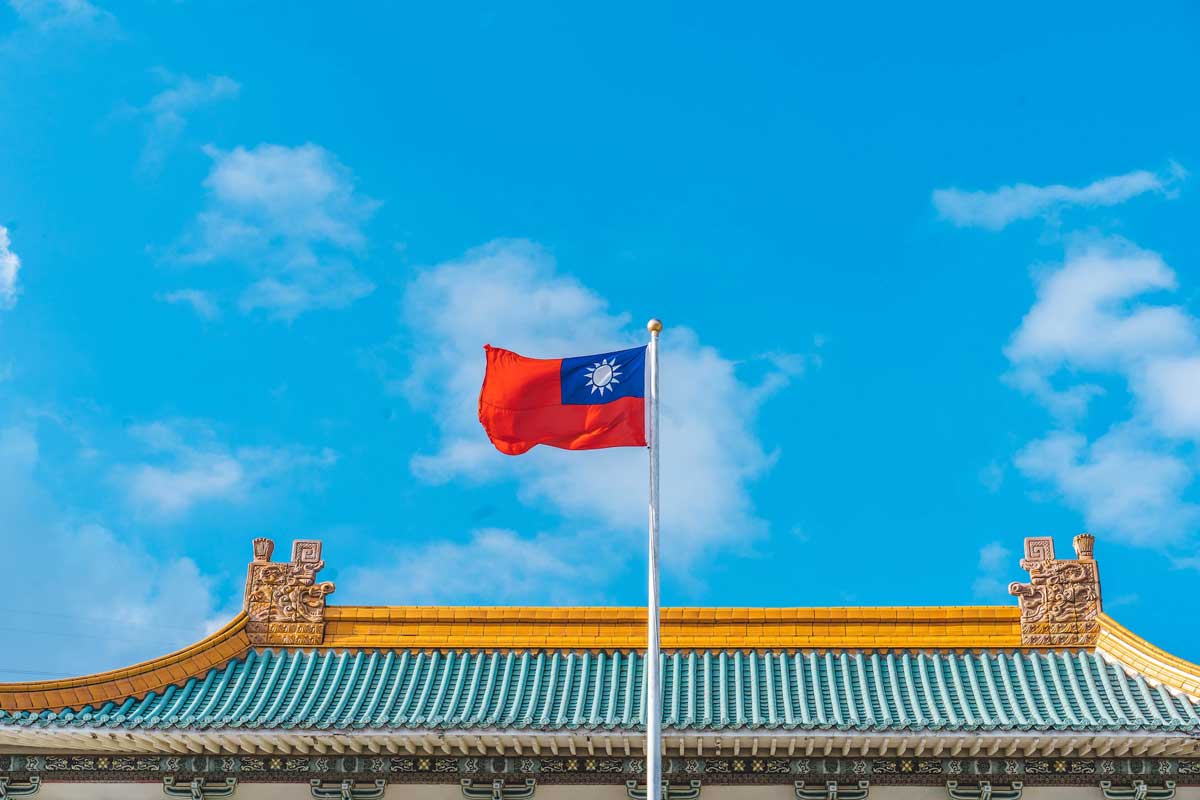
For China, Taiwan remains a core sovereignty issue tied to national rejuvenation. For the United States, Taiwan represents strategic credibility, Island chain dominance in the Indo-Pacific and the larger balance of power against China.

Neither side currently appears to seek direct military confrontation. Yet both are steadily preparing for prolonged strategic competition around Taiwan. China continues military signalling and grey-zone pressure, while the US strengthens Indo-Pacific partnerships and defence arrangements.

Trump’s Beijing visit is therefore expected to prioritise “stability management” rather than dispute resolution. Beijing seeks assurances against perceived American encouragement of Taiwanese independence and military capacity building, while Washington seeks deterrence against coercive reunification efforts.

With recent claims of President Trump on Greenland, Canada, and Panama and actions in Venezuela, he doesn’t have any moral leverage to lecture China on Taiwan, because his security concerns over these areas are woefully short of Chinese security concerns of Island chains. Thus the reality of Cold War 2.0 is more of escalation management more than genuine reconciliation, as competition remains.

The Real Issue: Supply Chains and Technology Agendas

Artificial intelligence, semiconductors, rare earths, cyber systems, quantum technologies and critical supply chains have become strategic weapons. Economic security is increasingly inseparable from national security.

America still leads in advanced innovation ecosystems, financial influence and military alliances. China dominates large parts of manufacturing, industrial supply chains and infrastructure scalability.

The contest is therefore asymmetric. Washington seeks to slow China’s technological ascent through export controls and alliance-based restrictions. Beijing seeks self-reliance through indigenous innovation and strategic diversification.

Simultaneously, both nations are competing to shape global narratives.

The US projects democratic resilience and rules-based order. China projects efficiency, development delivery and non-interference. Many countries in the Global South increasingly engage both sides pragmatically rather than ideologically.

US-Israel War on Iran: Uneasy Calm Amid Strategic Contestation

China and the United States both need  regional stability in Middle East to avoid economic shockwaves and disruption of global energy flows, but their strategic intentions are quite apart. Trump led America’s action plan, duly influenced by Israeli lobby includes military action, coercive deterrence, and the retaining American strategic dominance in West Asia, especially Petro-dollar domination. China, on the other hand, is attempting calibrated balance, openly supporting de-escalation while covertly defending its long-term geopolitical, economic, and energy links with Tehran.

Beijing will refrain from any overt alignment that could lead to direct conflict with Washington, but it is unlikely to desert Iran. China seems confident that it can endure supply chain crisis in Strait of Hormuz longer than Trump and Iran. In any case a over-engaged US with depleted reserves works towards Chinese strategic advantage.

The larger strategic picture shows for Beijing, the crisis offers an opportunity to project itself as a responsible stabilising power while gradually expanding influence through economic leverage and diplomatic positioning; as a result, the likely outcome is not cooperation in the classical sense, but competitive crisis management—limited convergence to avoid uncontrolled escalation, while China advances through strategic patience, economic penetration, and calibrated diplomacy. Demonstrating credibility and deterrence to adversaries, such as China, is another goal for Washington in the Iran theatre.

Thus, Iran becomes yet another arena in which China gains through strategic patience, economic penetration, and calibrated diplomacy, while the US primarily depends on military power and a weakening alliance structures.

Likely Outcomes of the Trump–Xi Engagement: Competitive Coexistence, Not Resolution

Expectations from the Trump–Xi engagement must remain realistic and free from rhetorical overstatement. The structural contradictions driving US–China rivalry — Taiwan, technological dominance, supply chain control, military competition, sanctions regimes and competing visions of global order — are too deep to be resolved through summit diplomacy alone. At best, both sides may seek temporary stabilisation of tensions to avoid simultaneous economic disruption and strategic overstretch. Therefore, the likely outcome is not reconciliation, but managed confrontation under conditions of deep interdependence.

Trump’s pressure tactics may slow certain aspects of China’s technological rise and compel tactical adjustments, but they are unlikely to reverse Beijing’s long-term strategic trajectory or ambition for greater influence in global governance structures.

Equally, China is not positioned to replace the United States as a singular global hegemon, as yet. Internal economic pressures, demographic decline, debt vulnerabilities, trust deficits and the absence of robust alliance structures remain important constraints on Chinese power projection.

Consequently, the more plausible scenario is a prolonged strategic contest marked by partial economic bifurcation in critical technologies, competing digital and AI ecosystems, intensified military signalling in the Indo-Pacific, and expanded geopolitical competition across the Global South through infrastructure financing, trade dependency, arms transfers and narrative warfare.

Emerging World Order: What should remaining World Do?

Cold War 2.0 will not produce a neat bipolar world nor purely multipolar. Unlike the 20th century, today’s international system is multipolar, economically interconnected and technologically diffused. Middle powers such as India, regional blocs and strategic swing states will play increasingly important roles in shaping outcomes through strategic balancing avoiding bloc politics. The aim remains to avoid collateral damage in a competition, which neither U.S. nor China can decisively win in the foreseeable future.

The prudent course lies in strategic autonomy backed by economic resilience, technological self-reliance, diversified partnerships and flexible diplomacy. Nations will increasingly pursue sector-specific alignments while resisting pressure to become instruments of either camp’s maximalist strategic narratives.

In this evolving landscape, Trump’s coercive unilateralism and “America First” orientation may paradoxically accelerate the very multipolarity Washington seeks to resist. Many nations, including close American partners, increasingly seek strategic hedging against unpredictability in US policy, even while remaining cautious of China’s expanding influence and coercive economic practices

Cold War 2.0 is unlikely to end through a dramatic collapse or military victory. It will instead remain a long geopolitical test of endurance, adaptability, economic resilience and strategic patience in an era of competitive coexistence, issue based cooperation and crisis management below the threshold of military confrontation.

Trump’s leadership may make the contest louder, sharper and more transactional, while Xi’s China may continue pursuing calibrated expansion with long-term strategic discipline. Yet the underlying structural reality remains unchanged: the US–China rivalry is here to stay, and the rest of the world must learn to navigate carefully between pressure and prudence, rhetoric and reality, competition and coexistence.

Source link

In war with Iran, China sees a familiar pattern of U.S. mistakes

The Trump administration has repeatedly framed the war in Iran as a quick, winnable fight, vowing to defeat the Islamic Republic “totally and decisively” — incomparable to the “dumb” wars in Iraq and Afghanistan.

But from China’s perspective, the parallels are clear.

“You can blow everything up — destroy it all,” one Chinese official told The Times, describing the Americans, “but you don’t have a strategy.”

President Trump arrives in Beijing this week for talks with a Chinese government that is confident as ever in its ascendance on the world stage, taking stock of its leverage and still baffled the U.S. administration chose yet another costly war in the Middle East.

China has watched as the United States, over seven weeks of fighting an outmatched enemy, has depleted nearly half of its stockpiles of high-end munitions — including its THAAD and Patriot batteries — and fired its Army chief of staff, among other Pentagon leaders, who had warned of critical shortages.

Marco Rubio, Trump’s national security advisor and secretary of State, has said the military operation that started the war known as Operation Epic Fury “is over.”

But the Strait of Hormuz, one of the world’s most vital commercial waterways, remains effectively shuttered. Iranian attacks in the region continue. And talks between Washington and Tehran have failed to reach a diplomatic agreement to bring a definitive end to the conflict.

“The Chinese have high regard for the operational proficiency of U.S. forces, but they recognize that, thus far at least, the Trump administration has not achieved its core objectives in going to war with Iran,” said David Ochmanek, a former deputy assistant secretary of Defense now with the Rand Corp.

The war has given Beijing an opportunity, Ochmanek said, “to double down on the claim they have made for the past year and a half that the [People’s Republic of China], not the U.S., is a force for global stability.”

The war has allowed China to demonstrate some diplomatic prowess. An initial ceasefire reached between the United States and Iran last month was only clinched after Beijing pressured Tehran to agree. And China’s advocacy for an open strait — rejecting Iranian attempts to impose a toll system — while opposing the U.S. war itself has allowed Beijing to maintain leverage with both sides.

It has also inflicted costs. Allies of Beijing noticed when the government did not leap to the defense of Tehran at the start of the war. And China has its own vested interest in a free and open waterway, where nearly 50% of the country’s crude oil imports pass through each day.

Building up to the start of the war and throughout its initial weeks, Washington diverted significant military assets from Asia — where Trump’s own national security strategy says they are needed most — to the Middle East.

The USS Abraham Lincoln was redirected from the South China Sea, along with scores of advanced missile interceptors from South Korea and Japan and nearly the entire U.S. inventory of long-range air-to-surface missiles in the Pacific.

Policy experts at the Pentagon were brought in to discuss a potential invasion of Kharg Island, the jewel of Iran’s oil industry, to draw lessons from planning a defense of Taiwan, according to a Defense official, who was granted anonymity to speak candidly. A Marine expeditionary unit was sent from Okinawa to the region for the potential operation.

Chinese officials and analysts have been candid in their assessments of U.S. hard power, impressed by a military they acknowledge remains the best in the world.

But Beijing sees a persistent flaw in U.S. strategy: the belief that military strength alone can reshape political realities, a view further weakened by the pressures on a democratic government whose public grows impatient with wars that drag on beyond days or weeks.

China’s autocracy is free from accountability to the public — and anyway has confidence that Chinese public opinion would be on its side if it were to launch a major military operation against its main target, Taiwan.

But there are lessons of caution to be learned from the Americans, as well.

Over the last year, the Taiwanese Navy has been practicing the rapid deployment of cheap and domestically produced smart mines for the sea — a potential bulwark against enemy blockades of ports and hostile invasion forces.

It is the type of asymmetric warfare that has so far frustrated the U.S. military in the Strait of Hormuz, protracting a war that Trump vowed would last a month or less.

Taiwan, too, would confront Beijing with political realities that military force cannot erase. Nearly 90% of the Taiwanese people oppose a Chinese takeover, and about 60% say they would resist it at all costs.

“Chinese analysts see two things at once,” said Craig Singleton, senior director of the China program at the Foundation for Defense of Democracies. “They are impressed by U.S. military reach, precision and operational capability, but they also see a familiar pattern of American power struggling to translate battlefield success into a durable political outcome.”

That matters for Taiwan, Singleton said, “because China’s own military modernization has borrowed heavily from the American model, relying heavily on joint operations, high-tech precision strikes, decapitation concepts and information dominance.

“If the world’s most experienced military can still struggle to convert military pressure into political success,” he added, “Beijing has to ask whether the [People’s Liberation Army] could do better in a far more complex Taiwan scenario.”

Source link

Nonpartisan group: Trump’s ‘Golden Dome’ missile defense system could cost $1.2 trillion

U.S. President Donald Trump announces he has selected the path forward for his Golden Dome missile defense system in May 2025 in the Oval Office of the White House in Washington, D.C. A report by a nonpartisan office said Tuesday said the system could cost $1.2 trillion, far more than Trump said during this announcement. File Photo by Chris Kleponis/UPI | License Photo

May 12 (UPI) — A nonpartisan office said Tuesday that President Donald Trump‘s proposed Golden Dome missile defense system could cost $1.2 trillion over two decades – far more than the $175 billion he said it would cost last year.

The Congressional Budget Office said in a report that this analysis isn’t based on final blueprints, as full details of the system’s architecture haven’t been announced, Time reported. It said this estimate shows the price of “one illustrative approach rather than an estimate of a full Administration proposal.”

The CBO said that acquisition costs for the system would alone cost more than $1 trillion, and of that, about 70 percent of the cost would be for the interceptor layer, orbital weapons meant to destroy missiles after they’re launched, The Hill reported. This would include about 7,800 satellites.

Gen. Mike Guetlein, the Pentagon official in charge of the project, said in March that it would cost about $185 billion. The CBO report said that this difference in estimated price may mean that the “objective architecture is more limited” for the project than the system accounted for by the CBO, The Hill reported.

Congressional Republicans have earmarked $25 billion for the project in the 2025 One Big Beautiful Bill Act. The Pentagon has asked for $17 billion more in a reconciliation bill this year.

The Trump administration’s fiscal 2027 budget request, which includes $750 billion earmarked for the Golden Dome system, says the system “keeps Americans safe, while using innovative program management and acquisition approaches to prudently employ taxpayer dollars,” The Hill reported. Trump has said he wants the system operational by the end of his term.

The CBO said the system it used in its estimate could counter a limited attack but would be overwhelmed by a large-scale one, Time reported. Israel’s similar air-defense system, often called the Iron Dome, has intercepted missiles from Iran and other localized groups but is meant for a smaller area and shorter-range threats, as opposed to the United States’ need to defend a much larger area from long-range attacks, it said.

Sen. Jeff Merkley, D-Ore., requested the CBO report. He said Tuesday that the report shows the Golden Dome project “is nothing more than a massive giveaway to defense contractors paid for entirely by working Americans” that will “do little to advance American national security.”

Source link

Man charged in White House correspondents’ dinner attack pleads not guilty

A man accused of storming the White House Correspondents’ Association dinner while armed with guns and knives pleaded not guilty on Monday to charges that he attempted to kill President Trump and fired a shotgun at a Secret Service officer who tried to stop the attack.

Cole Tomas Allen was handcuffed and shackled and wearing an orange jail uniform when he appeared in federal court for his arraignment. Allen didn’t speak during the brief hearing. One of his attorneys entered the plea on his behalf.

Allen’s lawyers are asking U.S. District Judge Trevor McFadden to disqualify at least two top Justice Department officials from direct involvement in prosecuting him because they could be considered victims or witnesses in the case, creating a potential conflict of interest.

Acting Atty. Gen. Todd Blanche and U.S. Atty. Jeanine Pirro were attending the event when Allen ran through a security checkpoint and fired a shotgun at a Secret Service officer, authorities said. In a court filing last week, Allen’s attorneys argued that it creates at least the appearance of a conflict of interest for Blanche and Pirro to be making any prosecutorial decisions in the case.

McFadden, a Trump nominee, didn’t rule from the bench on that question but asked Allen’s attorneys to elaborate on the possible scope of their recusal request. Defense attorney Eugene Ohm said the defense likely would seek to disqualify Pirro’s entire office from involvement in the case. Ohm acknowledged that a bid to disqualify the entire Justice Department would be unlikely.

“That would be quite a request,” the judge said.

McFadden gave prosecutors until May 22 to respond in writing to the defense’s request. The judge asked the government to specify whether it believes Pirro and Blanche could be considered victims in the case.

“That might add some clarity here,” McFadden said.

In their filing, Allen’s attorneys suggested that the appointment of a special prosecutor might be warranted.

Allen is scheduled to return to court on June 29.

A Secret Service officer was shot once in a bullet-resistant vest during the April 25 attack at the Washington Hilton hotel, which disrupted and ultimately prompted an early end to one of the highest-profile annual events in the nation’s capital. The officer fired five shots but didn’t hit anybody, authorities said.

Allen, 31, of Torrance, was injured but was not shot.

Besides the attempted-assassination count, Allen also is charged with assaulting a federal officer with a deadly weapon and two additional firearms counts. He faces a maximum sentence of life in prison if convicted of the attempted assassination charge alone.

Allen was placed on suicide watch after his arrest, but jail officials removed him from that status after several days. Allen’s attorneys complained that he had been unnecessarily confined in a padded room with constant lighting, repeatedly strip searched and placed in restraints outside his cell.

Allen told FBI agents that he didn’t expect to survive the attack, which could help explain why he was deemed to be a possible suicide risk, a Justice Department prosecutor has said.

Allen was outfitted with an ammunition bag, a shoulder gun holster and a sheathed knife when he took a photo of himself in his room at the hotel just minutes before the attack, according to prosecutors. In a message that authorities say sheds light on his motive, Allen referred to himself as a “Friendly Federal Assassin” and alluded obliquely to grievances over a range of actions by Trump’s Republican administration.

Authorities have alleged that Allen on April 6 reserved a room for himself at the Hilton where the event would be held weeks later under its typical tight security. He traveled by train cross-country from California, checking himself into the hotel a day before the dinner with a room reserved for the weekend.

Trump was rushed off the stage by his security team at the Saturday night event and appeared at the White House two hours later, still in his tuxedo, to talk about the attack and the suspect.

“When you’re impactful, they go after you. When you’re not impactful, they leave you alone,” the president said. “They seem to think he was a lone wolf.”

Kunzelman writes for the Associated Press.

Source link

U.S. soldier’s remains found in Morocco; search continues for another

May 11 (UPI) — The remains of one of two U.S. soldiers who disappeared during exercises in Morocco earlier this month have been recovered, the U.S. military said, as the search continues for the other soldier.

A Moroccan military search team found the remains of 1st Lt. Kendrick Lamont Key Jr. at 8:55 a.m. Saturday, the U.S. Army Europe and Africa announced Sunday.

USAREUR-AF said Key’s remains were found along the shoreline of the Atlantic Ocean within 1 mile of where the two soldiers are believed to have disappeared.

His remains have been transported by the Royal Moroccan Armed Forces via helicopter to the morgue of Moulay El Hassan Military Hospital in Guelmim, located about 265 miles southwest of Marrakesh.

Next of kin have been notified and plans are underway to repatriate his remains, officials said.

“Our hearts are with his family, friends, teammates and all who knew and served alongside him,” Brig. Gen. Curtis King, commanding general of the 10th Army Air and Missile Defense Command, said in a statement.

“The 10th Army Air and Missile Defense Command family is grieving, and we will continue to support one another and 1st Lt. Key’s family as we honor his life and service.”

Key, 27, and a second U.S. soldier went missing May 2 near Cap Draa Training Area, a coastal military training site near Tan-Tan, during African Lion 26, this year’s version of the U.S. military’s largest Africa-based exercise.

Their disappearance is unrelated to the exercises, with military officials believing the pair may have slipped off a cliff during a hike near the training range.

The pair were reported missing at 9 p.m. May 2 during a base-wide head count, and a search was launched.

U.S. military officials said they worked with Moroccan forces, concentrating intelligence, surveillance and reconnaissance assets in the search, which involved more than 1,000 U.S. and Moroccan military and civilian personnel.

The search effort continues for the remaining missing soldier, they said.

Key was from Richmond, Va., and was a platoon leader assigned to Charlie Battery, 5th Battalion, 4th Air Defense Artillery Regiment, 10th Army Air and Missile Defense Command.

USAREUR-AF said he was known at Charlie Battery, which he joined last year, for “the care he showed for his soldiers, his commitment to others and the relationships he built across the formation.”

“Kendrick embodied the highest standards of service as a selfless, inspirational leader whose unwavering dedication to his soldiers and their development leaves an enduring legacy within our ranks,” Lt. Col. Chris Couch, commander of 5-4 ADAR, said in a statement.

Virginia Gov. Abigail Spanberger issued an online statement of condolence.

“Adam and I join Virginians across our Commonwealth in extending our deepest condolences to his family, friends and loved ones,” she said.

Source link

Sparks can’t keep pace with defending champion Aces in loss

To be the best, you have to beat the best, and the Sparks aren’t quite there.

In their season opener, the Sparks couldn’t build momentum against defending champion Las Vegas and fell 105-78 behind a remarkably efficient shooting day from the Aces.

Las Vegas shot 63% from the floor and the Sparks had few answers. Nneka Ogwumike had 19 points and 10 rebounds in her return to the Sparks, and Kelsey Plum opened her campaign with 27 points. Reigning WNBA MVP A’ja Wilson led the Aces with 19 points and Jackie Young picked up 20 points and nine assists. Chennedy Carter had 22 points in her first WNBA game since 2024.

Plum scored 11 of her points in the fourth quarter, but by then the Aces had opened a 20-plus point lead.

The Aces were coming off a 33-point blowout opening day loss to Phoenix on Saturday but showed no sign of fatigue.

Las Vegas (1-1) pounded the paint early with 26 points in the first half and 14 free throws to seven from the Sparks (0-1). They also shot 68.8% in the opening quarter to lead 29-14.

But the Sparks’ offense also seemed a bit out of sorts, with nine turnovers in the opening half that the Aces turned into 10 points. Las Vegas opened the second quarter on an 18-5 run.

The Sparks narrowed the deficit to one by halftime following an Ogwumike three-pointer and backhand layup late in the second. But mostly, the Sparks’ defense activated, forcing 10 turnovers, led by two steals apiece from Ariel Atkins and Erica Wheeler to fuel the comeback.

The Aces expanded their lead back to nine following a pair of turnovers from Atkins and Plum.

Last season, the Sparks had the worst defense in the WNBA, giving up 88.2 points per game. Defensive woes haunted them once more with 33 points allowed on 73.7% shooting in the third quarter, allowing the Aces to pull away.

Even with 15 offensive rebounds to the Aces’ six, the Sparks’ offense wasn’t efficient enough to compete. The Sparks also only got seven from the bench, with Wheeler shooting one for 11 in 20 minutes.

The Sparks host Indiana (0-1) on Wednesday night.

Source link

Iran responds to U.S. peace proposal, state media says

May 10 (UPI) — Iran has communicated its response Sunday through a mediator to a proposal by the United States to end the war, its state media reports.

The Islamic Republic News Agency reported Sunday that Iran’s response has been sent through Pakistan, which has mediated talks between Iran and the United States. IRNA did not share details about what the response was.

“According to the proposed plan, negotiations at this stage will focus on the issue of ending the war in the region,” IRNA said.

The war has centered on the blockade of the Strait of Hormuz, with U.S. and Iranian forces continuing to exchange fire in the Persian Gulf region as recently as Saturday.

“We will never bow our heads before the enemy, and if talk of dialogue or negotiation arises, it does not mean surrender or retreat,” Iranian president Masoud Pezeshkian posted on social media Sunday. “Rather, the goal is to uphold the rights of the Iranian nation and to defend national interests with resolute strength.”

Mike Waltz, U.S. ambassador to the United Nations, said on Fox News on Sunday that he expects President Donald Trump to remain firm that Iran must abandon its nuclear program.

“We’ll see what the Iranians just came back with overnight in terms of their response to our very clear red line,” Waltz said.

Source link

Russia, Ukraine confirm three-day cease-fire, prisoner swaps after Trump conversations

May 8 (UPI) — Russia and Ukraine on Friday confirmed a three-day cease-fire and prisoner swap, which they said was agreed to after their leaders spoke with U.S. President Donald Trump.

Trump announced in a post on Truth Social that the countries agreed to pause the conflict Saturday through Monday, and for both country to swap 1,000 prisoners each that have been captured during the four-year war.

Ukrainian President Volodymyr Zelensky confirmed the agreement in a post on X, and said that he has instructed his team to “promptly prepare everything necessary for the exchange.”

Russian presidential aide Yuri Ushakov also confirmed the deal, saying that Russian President Vladimir Putin found it acceptable and that Russia “welcomes” it, Turkey’s state-run Anadolu Agency reported.

The deal comes less than a day before Russia celebrates Victory Day, its annual commemoration of the allied powers victory over Nazi Germany in World War II.

“This request was made directly by me, and I very much appreciate its agreement by President Vladimir Putin and President Volodymir Zelenskyy,” Trump said in the post, referring to calls he placed to both leaders and which they confirmed.

“Hopefully, [the cease-fire] is the beginning of the end of a very long, deadly, hard fought War,” Trump said. “Talks are continuing on ending this Major Conflict, the biggest since World War II, and we are getting closer and closer every day.”

The cease-fire in the biggest land war in Europe since World War II will include “a suspension of all kinetic activity,” as well as countries returning 1,000 prisoners each to one another.

Zelensky said there had been appeals and signals about a potential cease-fire to start on Saturday because of Victory Day, which motivated it to negotiate the pause and pursue the return of Ukrainians held during the war.

“An additional argument for Ukraine in determining our position has always been the resolution of one of the key humanitarian issues of this war — namely, the release of prisoners of war,” he said. “Red Square is less important to us than the lives of Ukrainian prisoners who can be brought home.”

Ushakov said that Trump, during the call with Putin, emphasized that Russia and the United States were allies during World War II, pointing to Victory Day as a potential date to start a cease-fire.

“An agreement on this matter was reached during our telephone contacts with the U.S. administration,” Ushakov said. “In turn, U.S. representatives were in contact with Kyiv.”

Source link

Justin Bieber plays an A-list Montecito party with defense execs

Just weeks after Justin Bieber’s well-received Coachella headline gig, the singer played a small private event for tech, entertainment and defense industry moguls. Executives at controversial firms, such as surveillance tech giant Palantir, were also on the bill.

Bieber was a headliner at WNDR, entertainment executive Jeffrey Katzenberg’s invitation-only confab at the Rosewood Miramar in Montecito last week. The programming for the event was first reported by Puck.

The ultra A-list talks and guests included director James Cameron and former Disney CEO Bob Iger, YouTube CEO Neal Mohan, FIFA President Gianni Infantino, Oprah Winfrey and Julia Roberts, comedians Chris Rock and Trevor Noah and artist Jeff Koons on a panel discussion with LACMA chief Michael Govan.

Bieber, meanwhile, performed a Wednesday poolside set for attendees at the Rosewood. The “Swag” singer reportedly became the highest-paid headliner in Coachella history last month, and its most lucrative merch seller.

Representatives for Bieber did not immediately respond to a request for comment.

While there was lighter programming (like a karaoke party with pop producers StarGate and a talk about snacks with chef Nancy Silverton), the bill included talks and cameos from major weapons and surveillance technology firms noted for their support for — or deep engagement with — the Trump administration.

One panel featured Anduril Industries’ Palmer Luckey, who recently welcomed Defense Secretary Pete Hegseth to its Southern California headquarters. “We are rebuilding the Arsenal of Freedom,” Hegseth said after the Anduril visit.

Palantir Chief Executive Alex Karp led another talk. Palantir’s AI-driven defense and surveillance software has faced scrutiny around how tech like its Maven Smart System may have been used to target civilians in the Iran war.

Karp also published a recent book, “The Technological Republic,” where he wrote that “We must resist the shallow temptation of a vacant and hollow pluralism. We, in America and more broadly the West, have for the past half century resisted defining national cultures in the name of inclusivity. But inclusion into what?”

Katzenberg’s WNDR conference is one of several recent multi-discipline, ultra-elite gatherings hosted by CEOs, including Jeff Bezos and Eric Schmidt. Katzenberg founded his investment firm WndrCo in 2017.

Source link

U.S. strikes Iranian military sites after attacks on warships

U.S. Navy Arleigh Burke-class guided-missile destroyer USS Rafael Peralta, left, is one of three warships reported to have been attacked by Iranian missile and drone Strikes on Thursday. File Photo by Mass Communication Specialist 1st Class Ryre Arciaga/U.S. Navy/UPI

May 7 (UPI) — U.S. Central Command said Thursday that American forces struck Iranian military sites responsible for “unprovoked” missile, drone and boat attacks on U.S. warships in the Strait of Hormuz.

“U.S. forces intercepted unprovoked Iranian attacks and responded with self-defense strikes as U.S. Navy guided-missile destroyers transited the Strait of Hormuz to the Gulf of Oman,” CENTCOM said in a statement.

CENTCOM said Iran had targeted the USS Truxtun, the USS Rafael Peralta and the USS Mason.

“No assets were struck,” it said.

The U.S. strikes targeted the Bandar Abbas and Qeshm ports near the strait, CBS News and CNN reported, each citing unnamed U.S. officials.

The attacked Iranian facilities included “missile and drone launch sites; command and control locations; and intelligence, surveillance and reconnaissance nodes,” according to CENTCOM.

After the U.S. vessels had transited the strait, President Donald Trump promptly took to social media to post a warning to Iran.

“Missiles were shot at our Destroyers, and were easily knocked down,” he wrote. “Likewise, drones came, and were incinerated while in the air. They dropped ever so beautifully down to the Ocean, very much like a butterfly dropping to its grave! A normal Country would have allowed these Destroyers to pass, but Iran is not a Normal country. They are led by LUNATICS.”

Iran’s elite Islamic Revolutionary Guard Corps Navy said in a statement carried by Iranian state-owned outlet Press TV that it attacked the U.S. warships in response to an alleged U.S. cease-fire violation as well as a U.S. attack on an Iranian tanker near the Iranian city of Jask.

Iranian forces caused “significant damage” to the U.S. warships, it said.

A spokesperson for the Khatam al-Anbiya Central Headquarters also said the Iranian strikes were in response to the “aggressive, terrorist and outlaw” U.S. military, Press TV reported.

The attacks come after Trump earlier this week called off Project Freedom, a U.S. military operation to escort ships through the Strait of Hormuz, as Washington and Tehran try to reach an agreement to end the war.

Despite the attacks, Trump told reporters that the fragile cease-fire that halted the war that began in late February was still intact.

“They trifled with us today. We blew them away,” Trump told reporters Thursday evening.

“If there’s no cease-fire, you’re not going to have to know. You’re just going to have to look at one big glow coming out of Iran.”

Source link