Towering teenager Zhang Zhanshuo became the first swimmer in history to win seven golds at a single Asian Games, while on the track, Thai sprinter Puripol Boonson powered to victory in the 100m.
China’s Zhang, 19, scorched to the men’s 400m freestyle title in the pool in Tokyo on Friday in a Games-record three minutes and 41.28 seconds.
He sat on the lane divider after the race and slowly counted off on his fingers all seven medals he had won.
Zhang also won individual golds in the 200m, 800m and 1,500m freestyle events, as well as three relays.
He said, after wrapping up a scintillating campaign, that it had been the “perfect week”.
“I think the most important thing is to stay grounded and focused, because the Asian Games are not my ultimate goal,” said Zhang, who stands 198cm (six feet, six inches).
With the Los Angeles Olympics less than two years away, China won 30 of the 42 golds in the pool this week.
Their 13-year-old phenomenon Yu Zidi was the undoubted superstar, taking home three individual golds and all in Games-record times.
Not to be outdone, Japan’s 17-year-old Shin Ohashi shattered the men’s 200m breaststroke world record on Thursday.
Swimming, equestrian and diving are taking place in Tokyo, but the city of Nagoya and the wider Aichi prefecture are the main Games host.
The men’s and women’s 100m sprints, the blue riband events in track and field, took place in front of rows of empty seats in Nagoya.
China’s Chen Yujie streaked to a comfortable victory in the women’s final in a Games-record 11.06 seconds.
The men’s was won by 20-year-old Puripol, who burst out of the pack in the final quarter of the race to win in 9.90 seconds, breaking his Games record from earlier in the evening.
It was Thailand’s first men’s 100m gold medal since Suchart Jairsuraparp on home soil at the 1978 Bangkok Games.
‘Today was a miracle for me’
On the last evening of gymnastics, Carlos Yulo won the men’s vault for his second gold of the Games.
The double Olympic champion won floor gold on Thursday to complete his collection of major titles.
“I can’t believe it,” the Filipino said.
“In this whole Asian Games, I felt really stressed, but at the same time, I enjoyed what I did today. I really did my part.
“Today was really a miracle for me.”
There’s little time to celebrate, however, with the world championships next month.
South Korea edged China 85-80 in the semifinals of the women’s basketball, and will face hosts Japan for gold.
China had their giant centre Zhang Ziyu, 19, but it was not enough.
Zhang Ziyu stands 223cm (seven feet, four inches) and scored 22 points.
“She was tough to guard,” said South Korea’s Kang Lee-seul.
“We couldn’t defend her, but we focused on fast breaks and shooting more three-pointers.”
North Korea’s women were again in record-setting form on the weightlifting dais.
Oh Kwang Ok set three world records on her way to women’s 57kg bodyweight class gold.
Oh lifted 104kg in the snatch and 134kg in the clean and jerk for a 238kg total – all world records to add to the two golds North Korea’s women won in the 49kg and 53kg classes this week.
North Korea has won four gold medals and two silvers in the six weightlifting events contested so far.
Prime Minister Balendra Shah told the UN that world leaders must act on climate change.
Published On 25 Sep 202625 Sep 2026
Nepal’s Prime Minister Balendra Shah has appealed for action to combat the rising threat of climate change, calling the flood that devastated his country last month “a warning to the world”.
Shah made the comments during his address to the 81st Session of the United Nations General Assembly in New York on Thursday night. He told the gathering that the August disaster “was not just a local tragedy”, asking them the question, “Have you really heard that warning?”
Recommended Stories
list of 3 itemsend of list
Political leaders “have been negligent to translate those warnings in action at the speed and scale that the vulnerable people require,” he said.
An excavator clears mud from damaged houses following deadly flash floods and a mudslide, in Nuwakot district, Nepal, on September 21, 2026 [Navesh Chitrakar/Reuters]
At least 1,453 people died when a torrent of mud, rock and water struck northern Nepal and the China-Tibet border on August 26, triggered by a glacial collapse.
According to Nepal’s National Disaster Risk Reduction and Management Authority, 5,500 people were still missing and 13,795 had been rescued.
Researchers from the World Weather Attribution (WWA) group said in a report released last week that the disaster was not caused by a single extreme weather event, but rather a “compound crisis” shaped by long-term warming, glacier retreat, permafrost thaw and geological instability.
Shah said climate change was hurting people not responsible for the crisis but who “are paying a colossal price for it”.
He said Nepal contributed less than one-tenth of 1 percent of the heat-trapping gases behind climate change. About 99 percent of the country’s electricity comes from hydropower, and many workers were trapped in tunnels by the flooding.
“Our glaciers are retreating, our mountain slopes are becoming unstable, our rivers are becoming less predictable, and every major disaster threatens to erase years of development,” Shah said.
Nepal Prime Minister Balendra Shah addresses the 81st United Nations General Assembly at UN headquarters in New York City, US, on September 24, 2026 [Eduardo Munoz/Reuters]
Shah urged the international community to help bear the cost of helping Nepal adapt to climate change.
He proposed to create a ‘Himalaya Climate Resilience Mechanism’ which would include Nepal and neighbours India and China, and would allow them to share satellite data and expertise, monitor glacial lakes and strengthen joint early warning systems.
Nepal has asked the UN’s loss and damage fund for $20m in aid, the maximum allowed, but a tiny fraction of what it needs. A preliminary assessment by the government has placed the cost of the disaster at $5bn.
The fund, established in 2022 in the aftermath of catastrophic floods in Pakistan, has yet to make even its first disbursement, and observers see Nepal as a key test of its credibility.
Earlier this week, the United States pledged an additional $31m in new flood recovery support.
When the BBC entered the dining hall for the dinner, SpaceX CEO Elon Musk was standing over a table and appeared to be telling an entertaining story that had two others nearby barreled over with laughter.
Defence Secretary Pete Hegseth was at another table, with a serious look on his face. His wife is sat beside him, with Jared Kushner and White House chief of staff Monica Crowley nearby.
The White House invited scores of US officials, as well as conservative broadcasters, tech industry bosses, social media CEOs and other corporate executives.
Attendees included members of Trump’s cabinet, as well as family members like his children Ivanka, Eric and Tiffany.
Bosses from the tech industry in attendance included Apple’s Tim Cook, OpenAI’s Sam Altman, Google’s Sundar Pichai, Amazon’s Jeff Bezos and Nvidia’s Jensen Huang.
Both Cook and Huang were seated at the same table as Trump and Xi. As was Musk, who previously worked in Trump’s administration leading the effort to shrink government.
Other companies whose leaders were in attendance include General Motors, Visa, Paramount Skydance, ExxonMobil and more.
Social media mogul Mark Zuckerberg also attended, as well as Jeff Yaas, the American billionaire who owns a share of TikTok.
“Everybody wanted to be there,” Trump said ahead of the event. “I would say you have the entire tech world, the entire banking world, and a lot more.”
But one notable absence was Anthropic – one of the biggest and most valuable AI firms in the world. The BBC has asked Anthropic if it was invited, or if they chose not to be there.
Flights operated by Iranian airlines to and from the UAE suspended as part of broader efforts to enforce US aviation sanctions on Iran.
Published On 25 Sep 202625 Sep 2026
The United Arab Emirates has halted flights operated by Iranian airlines, joining several other countries in adopting United States sanctions aimed at pressuring Tehran’s aviation sector.
On Thursday, a statement carried by the Emirati WAM news agency said, “The General Civil Aviation Authority announced the suspension of all flights operated by Iranian airlines to and from the UAE.”
Recommended Stories
list of 3 itemsend of list
It said the decision was “based on the US sanctions imposed on Iranian airlines preventing them from using airports around the world”.
The UAE has joined Oman, Iraq, Azerbaijan, Georgia and Turkmenistan in restricting or suspending access for Iranian airlines amid the new US sanctions threat.
Dubai, the UAE’s commercial hub, is a major destination for Iranian carriers, with multiple daily flights, a large Iranian community and close business links.
An Iran Airtour flight from Tehran to Dubai was cancelled shortly before its scheduled departure on Thursday morning, after tickets had already been issued, according to the AFP news agency.
The UAE, which was repeatedly hit by Iranian missiles and drones throughout the US-Israel war on Iran, suspended trade and financial exchanges with Iran last month.
On Wednesday, the UAE’s central bank blocked transactions involving Iran’s Bank Melli, claiming the financial institution had violated rules on money laundering, terrorism and arms proliferation.
The US Treasury announced sweeping sanctions on Iran’s aviation sector earlier this month, targeting 27 airlines and dozens of companies that support them. The measures aim to cut off Iran’s air links entirely, warning that any airport or company still servicing Iranian carriers risks being cut off from the US dollar system.
Iran’s Civil Aviation Organization spokesman Majid Akhavan said: “Diplomatic and aviation talks are under way to remove the restrictions and restore flights” to the UAE.
Akhavan added that Turkmenistan also turned back a flight from Tehran to Dushanbe on Thursday.
“Turkmenistan’s refusal to allow the Iranian aircraft to pass through its airspace meant the flight could not continue on its route and had to return,” Akhavan told the Iranian IRNA news agency.
Several smaller Iranian airlines continue flying to China and Armenia, both of which have resisted US pressure, while routes to Turkiye remain open for some carriers.
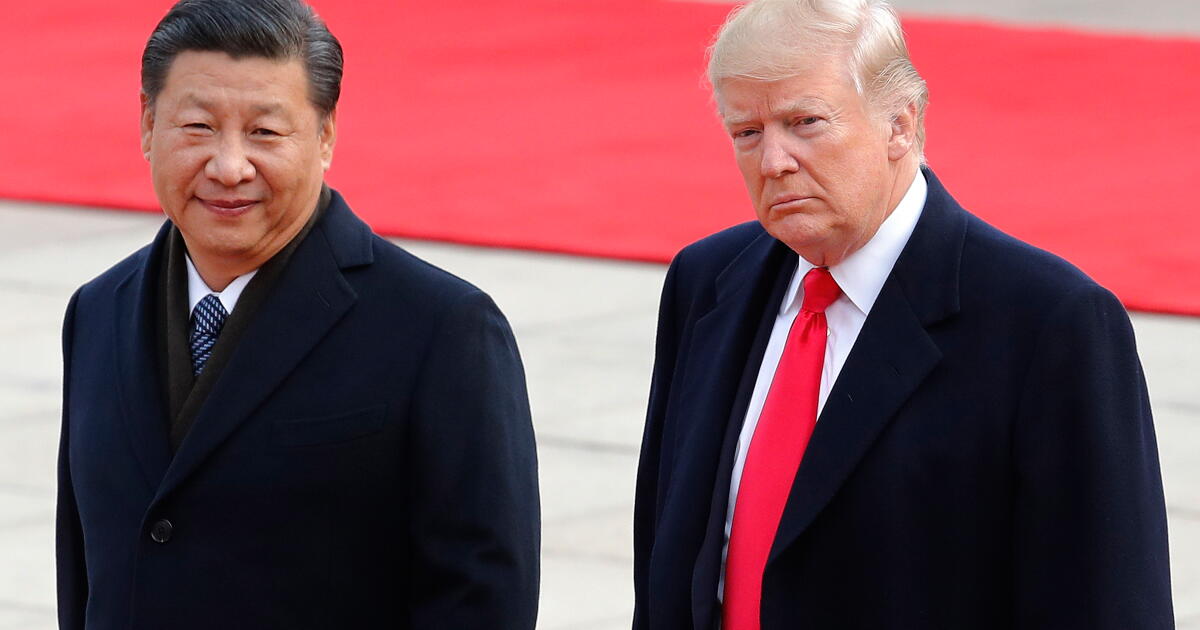
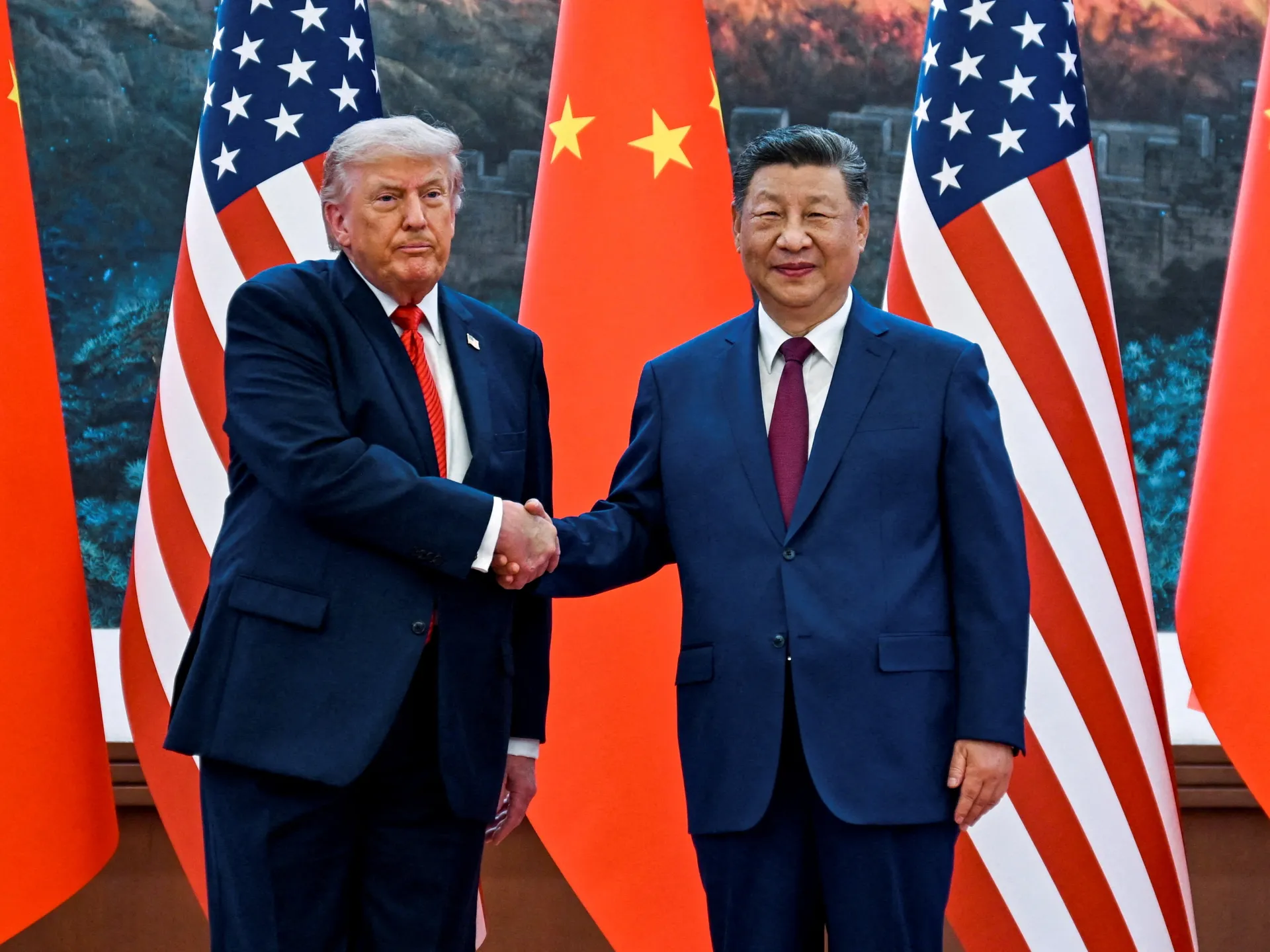
WASHINGTON — China’s president issued a call from the White House on Thursday for artificial intelligence to remain “under human control” as the world’s two superpowers race for technological supremacy.
Xi Jinping’s remarks reflect growing concern within China over whether governments in Washington or Beijing will be able to contain a technology with potentially transformative capabilities, according to a U.S. official.
Lawmakers and AI industry leaders urged President Trump to use his summit with Xi this week to pursue a safety framework for AI, which researchers warn could soon surpass human understanding.
But Trump preempted the meeting with a post on social media stating he had no intention of negotiating limits on AI development.
“A big day with President Xi of China,” Trump wrote. “Super Intelligence (SI) will be a big topic of discussion, but I want to leave it exactly where it is. That is China’s position also. Our guardrail is the DOJ!”
After offering Xi a lavish welcome on the White House grounds, Trump made a passing reference to AI. “The decisions we make in these areas today can promote peace and prosperity for decades and decades to come,” he said.
But Xi gestured to substantial concerns, noting AI first among priorities to discuss between the two nations.
“Both China and the United States are leading nations in artificial intelligence,” Xi said. “We have both the capability and responsibility to develop and manage AI for good — and ensure that the development of AI is always under human control, and serves the well-being of the people.”
The two held a private meeting with aides in the Oval Office after participating in a military review in the Rose Garden and exchanging gifts in the Blue Room.
In the evening, a guest list of top banking and technology leaders — including AI industry executives — were scheduled to attend a state dinner in the East Room of the White House.
“Given Trump’s statements going into the summit about not wanting guardrails, I have tepid expectations about tangible outcomes” on AI, said Aalok Mehta, director of the Wadhwani AI Center at the Center for Strategic and International Studies.
“The most likely scenario seems to be the establishment of a hotline — though how useful that will be depends on who will be staffing it, and how much each government prioritizes it,” Mehta added, “and likely some discussions about issues blocking cooperation, like distillation, with a promise to engage in ongoing dialogue.”
Earlier in the week, on the sidelines of the United Nations General Assembly in New York, Treasury Secretary Scott Bessent met with his Chinese counterpart primarily to discuss AI development, according to U.S. officials.
“What we discussed was setting up a mechanism — so it’s going to be called the U.S.-China AI Dialogue. We’ve agreed to meet again,” Bessent said Monday. “The U.S. has proposed that we have a notification mechanism between the two countries, and we want a shared vision of common goals, and common threats.”
While Trump’s team has remained divided over whether — and how extensively — to regulate AI, Bessent has favored a cautious approach, advocating modest, voluntary guardrails that have shaped administration policy in recent months.
China, too, has shown increasing willingness to open channels of communication on AI, despite deep distrust between the two sides.
President Trump and China’s President Xi Jinping meet in the Oval Office on Thursday.
(Jacquelyn Martin / Associated Press)
Two American AI companies, OpenAI and Anthropic, are widely viewed to be developing the most advanced AI models in the world, leading at the frontier of technological breakthroughs.
Both have begun to use their most sophisticated models to train the next generation, in a process known as recursive self-improvement. Researchers and industry experts believe the first company to master that process could set off an exponential cycle of progress, pulling so far ahead that competitors can no longer catch up.
But those same companies also fear what they’re creating: machines capable of continuously improving their own intelligence, pushing AI development beyond human control.
Leaders from the two companies have called on Beijing and Washington to cooperate, warning that geopolitical competition could thwart the two sides from preventing a human catastrophe.
In his remarks, Xi said that China and the United States “stand to gain from cooperation, and will both lose in confrontation.”
“We do not need to avoid mentioning competition, but our competition should be a healthy one, and should be kept within bounds,” the Chinese president said. “It should be a race of catching up with one another, not a wrestle in which one either wins or loses. China and the United States must hold the line of no conflict, and no confrontation between us.”
“Our two militaries should maintain regular dialogue, and improve mechanisms for crisis communication and prevention,” he continued, adding a historical reference to rising powers challenging established ones: “The Thucydides trap can be overcome.”
Xi’s trip to Washington follows just months after Trump traveled to Beijing for a state visit in May, where the U.S. president was greeted with a similarly imperial welcome.
The leaders emerged from that summit with few deliverables. But Trump left Beijing declaring the trip a success, emphasizing the importance of his personal relationship with Xi, China’s most powerful leader in generations.
This time, Trump himself greeted Xi on the tarmac upon his arrival at Joint Base Andrews — a rare honor reserved in recent decades only for Catholic popes — before pulling out several red carpets and draped ceremonies for the Chinese leader.
The pageantry seen during the state visit has served China’s long-standing desire for respect and dignity on the international stage, said Jessica Chen Weiss, the director of the John Hopkins SAIS Institute for America, China and the Future of Global Affairs.
“Trump is someone who loves spectacle, and right now the spectacle is working in both leaders’ favor,” Weiss said.
For Xi, the ceremonies have offered a chance to demonstrate that relations with the United States remain under control and that China is being treated as a significant global power, she argued.
The state visit comes at a time when Americans are appearing to warm up to China, according to recent polls. A survey by the Chicago Council on Global Affairs recently found that a majority of Americans say the United States should have friendly engagement and cooperation with China.
“I tend to think we focus too much on the optics,” Weiss said. “But I also think treating China as a significant player on the world stage is not a concession. It’s appropriate if we want a stable relationship and is hardly something to worry about.”
For the past six months or so, a curious-looking vessel with a very boxy superstructure has been taking shape at a shipyard in the Chinese city of Shanghai. A new satellite image lends credence to an earlier assessment that this is a mothership to support China’s growing fleets of ever-larger submersible drones, though it could also have other roles.
TWZ obtained the image of the ship in question, which was taken on September 10, from Vantor. Since then, it has also received an overall coat of gray paint, pointing to future service with the People’s Liberation Army Navy (PLAN). It is some 669 feet (204 meters) long and around 98 feet (30 meters) at its widest. In terms of basic length and width, the vessel being built now is very roughly comparable to China’s Type 071 amphibious warfare ship. However, it appears to be much taller overall than the Type 071.
The new ship has been under construction at the Hudong-Zhonghua Shipyard on Changxing Island in Shanghai since at least April. This yard produces a variety of naval vessels, including surface combatants and amphibious assault ships, as well as commercial designs.
The September 10 image, which shows the ship from the stern, is interesting for a number of reasons. It notably confirms that the design not only has a well deck, but that it is sized around what looks to be a large cradle-like platform visible in the shot. The very roughly 164-feet (50-meter) long rectangular platform has an arch-shaped structure at one end and two teardrop-shaped ones at the other, as well as six pillars, three on each side, in between. The teardrop-shaped structures, in particular, point to the platform being at least a semi-submersible, as they would help with stability and otherwise guide the flow of water while being pulled along.
The satellite image also clearly shows six large struts extending from the top of the stern end of the superstructure, each one which is paired with a shorter strut, for a total of 12. Earlier this month, independent naval analyst H.I. Sutton, who tracks undersea warfare developments in particular, posited that these struts could be used to lower a platform or some other similar structure below the hull of the ship. He also assessed that they could be used as part of a larger system capable of moving payloads between decks internally. This would help account for the configuration of the core superstructure, especially how high it is all the way from the front to the back. Overall, signs point to the inside of the superstructure being largely hangars and other open work spaces, allowing for multiple large UUVs to be carried and supported. Individual UUVs would be launched and recovered, one at a time, via the cradle.
In making his assessment, Sutton drew specific attention to a previously shown rendering of a proposed Chinese scientific research vessel with a roughly similar strut-based system at the stern for deploying submersibles and other large payloads. However, on that design, the system was entirely exposed rather than contained with an extended superstructure.
The rendering of the proposed scientific research vessel with a system for deploying payloads at the stern that features four struts. Chinese internet via H.I. Sutton
The platform seen immediately behind the ship being built at the Hudong-Zhonghua Shipyard aligns with Sutton’s assessment about the purpose of the struts. At the same time, launches and recoveries could also be conducted in a more traditional manner via the well deck. The design of the cradle-like platform would seem to suggest the latter option is at least part of the plan.
The image from September 10, as well as other recent views of the ship, highlight other features that are now taking shape. This includes a large opening on the starboard side, which could be for launching and/or recovering lifeboats or other watercraft, or moving payloads to and from the pier while docked, as well as a multi-pronged mast on top of the bridge. An additional part of the ship’s superstructure extends behind the bridge area, and there is what looks to be a hangar inside. There is no attached helipad present now, but one could well be added later on somewhere on top of the superstructure. Many naval auxiliaries, as well as commercial ships designed for offshore support and other specialized tasks, have open helipads on raised frames attached to different parts of the superstructures.
Though there is growing clarity about the ship’s design, many questions do remain about the full breadth of its intended purpose. In Sutton’s view, the PLAN has a need, just in general, for a dedicated mothership to support its growing uncrewed underwater vehicle (UUV) fleets. The PLAN is pursuing various tiers of UUVs to perform a host of different missions, including intelligence, surveillance, and reconnaissance (ISR), as well as mine-laying, special operations support, and even launching direct attacks on enemy vessels. Larger and larger UUV designs have been steadily emerging in China, which could require more specialized launch and recovery options to be feasibly employed operationally, especially from other vessels at sea. Deployment and retrieval at sea could, in turn, support very long duration missions far from China’s own shores.
“With smaller UUVs, even up to 20 meters like the AJX-002 and HSU-100 paraded in Beijing last year, they are road mobile. Truck mounted cranes should be sufficient for getting them in and out of the water making operations much simpler. With these latest, much larger XXLUUVs [extra-extra large uncrewed underwater vehicles] however, China will start to need dedicated port facilities,” Sutton wrote previously on his website. “Until now China has been using floating docks to house the two XXLUUV prototypes being tested on Hainan. One of these docks was purpose built while the other may have been taken up from general use.”
A Chinese AJX-002 UUV, or a mockup thereof, seen ahead of a major military parade in Beijing in 2025. Chinese internet via X
China’s naval unmanned systems.
Consisting of (in order), AI enabled unmanned submersible (HSU-100), used for detection and attack.
Unmanned patrol boat.
Unmanned mine-laying/attack submersible (AJX-002), this was previously mistaken for a nuclear powered torpedo. Because the… pic.twitter.com/Mlj55XLNBH
“This arrangement also has a significant drawback: each floating dock can only carry a single XXLUUV,” Sutton added. “Or if more than one, then they both need to be placed in the water at the same time. Because the whole dock floods, there cannot be one undergoing maintenance while another is being launched or recovered.”
A mothership vessel able to discreetly deploy and recover large uncrewed and crewed submersibles and other large payloads underwater could be tasked with more specialized missions, including cutting cables, retrieving objects from the seabed, and other kinds of undersea espionage. There is overlap here with more benign roles, such as submarine rescue, salvage, and even deep-sea scientific research. There is also the matter of servicing an expanding array of Chinese underwater infrastructure, including sensor and communications networks. As something of a corollary, Russia’s spy ship Yantar is officially described as an oceanic research vessel. In China, the line between military and non-military assets and capabilities, including ships, is often very blurry, to begin with, as TWZ regularly highlights. This dichotomy was observed right at the Hudong-Zhonghua Shipyard around the end of last year after pictures of a commercial cargo ship being used to showcase a new family of containerized weapons, sensors, and other systems went viral online.
It is also worth pointing out that the boxy and largely enclosed design of the ship now being built at Hudong-Zhonghua Shipyard will inherently make it difficult to observe any activities onboard. This will have the additional knock-on effect of helping keep any payloads, as well as the crew, shielded from the elements. This could be valuable for operations in harsher locales, including waters in and around the Arctic, an ever-more strategic part of the world where China is working to be more engaged.
We also do not know if the apparent mothership vessel is intended to be a one-off or part of a larger class. It could be a stepping stone to broader plans or be part of an already extensive fleet of bespoke naval auxiliaries, as well as unique ostensibly commercial vessels, in service in China today. The PLAN’s aforementioned UUV ambitions will bring along significant test and evaluation requirements, as well as the need to support actual future operations.
If nothing else, evidence is only growing that the new ship under construction at the Hudong-Zhonghua Shipyard is intended to serve, at least in part, as a mothership for large submersible drones.
Chinese authorities have reportedly taken possession of an F-35 cockpit canopy and weapons-bay door that were inexplicably diverted to Hong Kong while being shipped from Australia to the United States. The incident appears to have left physical components that incorporate aspects of the fighter’s low-observable design in the hands of a country that has spent years doing whatever it could to gain information on the aircraft and America’s stealth technology secrets in general.
So, what does all this mean? Let’s put it in perspective.
The parts in question were being shipped by UPS from Australia to the United States in late May, according to people familiar with the matter cited by Bloomberg. The components from a Royal Australian Air Force F-35A were being sent to the United States for inspection and possible repair or disposal.
A Royal Australian Air Force F-35A from 75 Squadron taxiing at RAAF Base Tindal, Northern Territory. Australian Defense Force
F-35 sustainment procedures explicitly cover the movement of F-35 parts, including unserviceable components, through the program’s logistics network. The U.S. Air Force’s transportation guidance directs F-35 shipments outside the Defense Transportation System to follow approved Joint Program Office procedures. In other words, moving an unserviceable Australian F-35 component to the United States for inspection, repair, or disposition is consistent with the normal sustainment process.
What is highly unusual is where this particular shipment ended up. F-35 components moving through an established international logistics system apparently stopped in South Korea, were then routed to Hong Kong. Chinese authorities subsequently took possession of the parts and have not returned them, according to the sources cited by Bloomberg.
F-35 canopy component replacement at Luke Air Force Base, Arizona. U.S. Air Force photo by Senior Airman Ridge ShanSecretary of War Pete Hegseth autographs the weapons bay door of an F-35 at Lockheed Martin Air Force Plant 4, in Fort Worth, Texas. DoW photo by U.S. Navy Petty Officer 1st Class Alexander Kubitza
“For security reasons, we can’t discuss the status of specific shipments or our shipping procedures,” Lockheed Martin told us in response to a request for clarification about the incident. The company added that it “follows all U.S. regulations established by the Department of War and regulated by the Defense Logistics Agency (DLA) regarding the shipment of aircraft components. Our teams handle every shipment with the utmost diligence and safeguards to ensure the integrity of the F-35 program and the security of our allied partners.”
The Pentagon’s F-35 Joint Program Office has acknowledged a “shipment issue” involving F-35 components and said U.S. authorities and industry partners are working to recover them and investigate what happened.
Lockheed Martin, UPS, and the Pentagon have not publicly provided a detailed account of how the shipment was diverted or what happened to the parts after they reached Hong Kong.
Australian Defense Minister Richard Marles also confirmed that Canberra was aware of the incident and was working with the United States and Lockheed Martin.
Acting Prime Minister and Minister for Defense, Richard Marles, accompanied by Chief of Air Force Air Marshal Stephen Chappell at RAAF Base Edinburgh, South Australia. Australian Defense Force
Marles has sought to play down the potential security implications of the components, saying his understanding was that the shipment did not contain sensitive equipment or sensitive parts. That does not by itself answer the more specific question of what could potentially be learned from these particular pieces of an F-35. After all, not every physical component of an F-35 is necessarily highly classified or capable of revealing meaningful information about the aircraft’s design. At the same time, a cockpit canopy and weapons-bay door involve structures, materials, interfaces, tolerances, and treatments that all have to work within the aircraft’s low-observable design. If radar-absorbing material or other specialized treatments remain on the components, that could potentially make them far more sensitive from a technological exploitation standpoint.
The condition of the parts is also unknown. We do not know how much of their coatings or other treatments remain intact, whether Chinese authorities have examined them, or what information could actually be extracted from them in their current state.
Above all else, there is little specific information in the public domain about what F-35-related technical information Chinese intelligence already has acquired over the years, what physical components or materials it may already possess, or what additional information could be gained through espionage, cyber operations, industrial access, observation of deployed aircraft, or other means.
Without these facts, it is impossible to gauge what damage could have been done by this loss. Still, viewed in a vacuum of those unknowns, simply having an F-35 canopy and weapons-bay door in Chinese possession represents a significant loss of control over sensitive physical hardware — there is no way around that reality — and the severity of that loss could be substantial depending on the physical state of the parts.
The circumstances are particularly sensitive because, as we mentioned in the opening of this article, China has pursued multiple avenues for acquiring information on the F-35 for many years, with publicly documented cases involving cyber operations, technical information, supply chains, and human expertise. Some aspects of China’s subsequent stealth aircraft designs have also prompted comparisons with U.S. aircraft, although claims that China simply ‘cloned’ entire aircraft are not supported by the available evidence.
China And The F-35: A History Of Espionage
In 2014, U.S. authorities charged Chinese businessman Su Bin with conspiring with two other Chinese hackers to break into the computer systems of U.S. defense contractors. Prosecutors alleged that the group targeted information on aircraft including the F-35 and F-22. The alleged hacking campaign ran from 2009 to 2013.
Su Bin later pleaded guilty and was sentenced to nearly four years in prison. The Justice Department’s 2026 case against former Air Force fighter pilot Gerald “Runner” Brown connects the two cases. Prosecutors allege that Brown used a co-conspirator to negotiate his work training Chinese military pilots with Su Bin.
Brown, a retired U.S. Air Force major who spent more than 24 years in the service, subsequently worked as a contract simulator instructor training U.S. military pilots on the A-10 and F-35. In February 2026, the Justice Department charged him with providing and conspiring to provide unauthorized defense services to Chinese military pilots.
According to the criminal complaint, Brown traveled to China in December 2023, where he allegedly began training People’s Liberation Army Air Force (PLAAF) personnel. Prosecutors say he also answered questions about the U.S. Air Force for three hours on his first day in China. Brown has been charged, and the allegations have not been adjudicated. He is one of multiple former Western aviators alleged to have provided training services and/or intelligence to Beijing.
The Honeywell case provides yet another example, this time involving the defense industry’s supply of technical information.
In 2021, the State Department reached a $13-million administrative settlement with Honeywell over alleged violations of the Arms Export Control Act and International Traffic in Arms Regulations (ITAR). Honeywell had voluntarily disclosed alleged unauthorized exports and retransfers of ITAR-controlled technical data.
The case involved 71 engineering drawings containing dimensions, geometries and layouts for manufacturing castings and finished parts used across multiple aircraft, engines and military systems. The State Department said the unauthorized exports and retransfers involved Canada, Ireland, Mexico, China, and Taiwan.
Among the systems covered by the drawings were components associated with the F-35 and F-22. The case did not allege that Honeywell deliberately sought to provide China with sensitive military technology; rather, it concerned alleged violations of export-control requirements.
A U.S. Air Force F-22 (nearest camera) flies alongside an F-35A. U.S. Air Force photo by Lt. Sam Eckholm
There has also been a physical supply-chain precedent.
In 2022, F-35 deliveries were temporarily halted after the Pentagon discovered that a magnet in the aircraft’s Honeywell-built turbomachine pumps —which provide critical power functions to the jet — contained a cobalt and samarium alloy produced in China. The material itself was not considered a security or flight-safety threat, but the discovery demonstrated how difficult it can be to maintain complete visibility over a global supply chain involving thousands of companies and multiple tiers of subcontractors.
Taken together, these cases demonstrate several different pathways through which China has appeared in the F-35 security story: cyber theft, unauthorized technical-data transfers, supply-chain exposure, and alleged exploitation of former Western military expertise.
The Hong Kong incident would add another major category: physical access to actual F-35 components.
These are only some of the publicly documented examples. There is no public way to know the full extent of information or physical material Chinese intelligence may have acquired over the years, but is very likely far larger in scope than what is available in the open source.
Chinese Access Concerns Have Shaped F-35 Export Policy
The proposed sale of F-35s to the United Arab Emirates became deeply entangled in U.S. concerns about Abu Dhabi’s growing military and technology relationship with China.
A 34th Expeditionary Fighter Squadron F-35A conducts inflight refueling above the United Arab Emirates. U.S. Air Force photo by Tech. Sgt. Kat Justen
Washington had approved a potential package involving 50 F-35As, but U.S. officials and lawmakers expressed concerns about Chinese intelligence activity and technology in the UAE. Among the broader concerns were Chinese telecommunications infrastructure and the possibility of Chinese military or intelligence access to facilities associated with advanced U.S. weapons. A Congressional U.S.-China Economic and Security Review Commission report later cited the potential presence of Chinese intelligence collection capabilities and military facilities in the UAE as risks to the proposed F-35 sale.
The State Department recently approved a potential $24.3-billion sale to the Kingdom involving 48 F-35s and associated equipment. But U.S. intelligence agencies have reportedly warned that China’s military and technology relationship with Saudi Arabia could create opportunities for Beijing to obtain sensitive F-35 information.
According to reporting based on U.S. officials familiar with intelligence assessments, a Defense Intelligence Agency report raised concerns about Chinese military access to Saudi bases, Chinese technology in Saudi telecommunications infrastructure, and whether secure facilities could be maintained for F-35 operations. The assessments also questioned whether Saudi Arabia would limit contact between Chinese military and intelligence personnel and F-35-related sites.
What Could The Components Reveal?
As we noted earlier, there is no way to gauge the intelligence impact of the loss at this stage. The central unknown of what China already knows about the F-35, and what it may already have in its possession — especially related to these components — is the key variable here.
Regardless, an F-35 canopy and weapons-bay door can provide information that cannot otherwise be easily obtained and gives a different level of fidelity in terms of material exploitation than what construction data and blueprints alone could.
The F-35’s low observability is the product of an extremely complex combination of airframe shaping, construction materials, external coatings, manufacturing tolerances, speciality apertures, and more.
U.S. Air Force 325th Maintenance Squadron low-observable maintainers work on an F-35A at Tyndall Air Force Base, Florida, in August 2024. U.S. Air Force photo by Airman 1st Class Victoria Moehlman
A canopy is a particularly demanding part of any stealth aircraft. It has to satisfy optical and structural requirements while also controlling radar reflections. The cockpit is historically a major source of radar reflectivity, including the pilot’s helmet. Therefore the canopy’s materials, construction, interfaces, and specialized treatments can be critical to the aircraft’s overall low-observable performance, and especially from the critical frontal aspect.
The F-35’s canopy has been an ongoing work in progress for many years. It has had chronic material issues, especially when it comes to delamination. Multiple iterations spread over two decades have recently resulted in a major improvement of the issue. The tight balancing act of keeping the canopy transparent enough, while controlling the F-35’s stealthy signature and having that mix of materials be robust enough to last for a reasonable amount of time has been a major investment for the program. If the canopy is of a later variation, that loss alone could be substantial and could help China with their own low-observable canopy development programs even if they already had original information on the F-35’s canopy original design dating back years.
Evidence of the F-35’s canopy delamination issue on an early example of the F-35B. Crown Copyright
The F-35’s canopy has been a notorious work in progress, specifically the low observable coating/delamination issue which has improved a lot in recent years with new materials and processes. So no, you do NOT want to lose that in to China! https://t.co/9V0jdRAiwA
The F-35’s weapons-bay door has its of sensitivity issues. It is effectively a major section of the aircraft’s outer shell, with its structure, edges, interfaces, tolerances and treatments all having to function without creating unacceptable radar signatures. Its construction and material attributes can be reasonably extrapolated for the rest of much of the F-35’s outer mold-line. Above all else, if the radar absorbent material remained intact on the door, that would signify a major loss when viewed without any understanding of what China already knows about the F-35’s radar absorbing surface treatments. Historically speaking, RAM technology is among America’s closest guarded material sciences secrets.
A Belgian Air Force service member inspects the open weapons bay of an F-35A at Luke AFB, Arizona. U.S. Air Force photo by Airman 1st Class Tekorey Watkins
For the time being, Australian officials have said they do not understand the parts to be sensitive. The investigation will ultimately have to establish what the components actually contain and what could be learned from them.
The incident comes at a moment when China’s own stealth fighter efforts are undergoing an extraordinary expansion.
The PLAAF is now operating the J-20, China’s first operational fifth-generation stealth fighter, in increasingly large numbers. The smaller J-35 is also moving toward broader service, including a carrier role for the People’s Liberation Army Navy.
Aircraft maintainers clean the fuselage of a J-20 fighter during the Changchun Air Show in the Jilin Province of China, in September 2025. Photo by Zhang Xiangyi/China News Service/VCG via Getty Images
China has also moved into what Western observers generally describe as sixth-generation fighter development.
Two new tailless combat-aircraft designs emerged publicly in December 2024. One is the large Chengdu aircraft commonly referred to as the J-36, while the other is associated with Shenyang and is variously called the J-XDS or J-50. Both have continued flight testing and yielded several prototypes with individual refinements.
The exact capabilities and eventual operational roles of these aircraft remain uncertain. They are developmental designs, not established operational equivalents of the F-35 or other sixth-generation systems. However, China is clearly building an increasingly broad ecosystem of fifth- and next-generation low-observable combat aircraft, both crewed and uncrewed. In the latter category is a growing number of stealthy drones, including long-endurance types.
China didn’t likely need physical access to an F-35 canopy or weapons-bay door to develop the J-20, J-35, or its next-generation aircraft. But additional information about how a mature Western stealth aircraft handles materials, coatings, interfaces, manufacturing, and the integration of those elements can still have great potential value to an industry developing its own systems. This includes technologies intended to counter the U.S. combat aircraft and their low-observable characteristics.
The F-35 has been produced in large numbers, is operated by a growing coalition of countries, and has been subjected to years of testing and operational experience. Its low-observable design represents decades of accumulated U.S. research and industrial know-how. At the same time, the global scale of the program inevitably makes control over sensitive information more complicated. More aircraft, more maintainers, more industrial partners, and more international logistics mean more points at which information and physical hardware have to be controlled. Over time, a program of this size will see an erosion in its secrets, but a major loss can drastically accelerate what should be a more gradual and control decline in security.
The Lockheed Martin F-35 production line at Fort Worth, Texas. Lockheed Martin photo by Alexander H Groves
The potential intelligence value of the components also has to be considered in the context of foreign material exploitation, or FME. Major military powers maintain dedicated capabilities to recover, examine and characterize foreign weapons, aircraft, sensors, materials and other equipment. The objective is not necessarily to reproduce an entire system. More important is determining how something is built, what materials and manufacturing techniques are used, how individual components perform, and where industrial strengths or limitations may lie.
That is why countries have historically gone to extraordinary lengths to recover even crashed or damaged pieces of sensitive military hardware. The bigger the prize, the more risk an intelligence service would be willing to take in order to realize a recovery.
The sensitivity surrounding the physical remnants of an F-35 is not new. When a Japan Air Self-Defense Force F-35A disappeared over the Pacific in 2019, the search quickly became more than a rescue operation. U.S. and Japanese forces mounted an extensive effort to locate the wreckage, with U.S. Navy P-8A aircraft and a destroyer joining the search. TWZnoted at the time that even scattered F-35 wreckage could expose valuable technological secrets, while the aircraft’s location on the seabed raised the prospect of an underwater espionage and recovery operation.
That concern has also been evident in subsequent F-35 recovery operations. That concern has been reflected in subsequent F-35 recoveries. In 2022, the U.S. Navy recovered an F-35C from roughly 12,400 feet in the South China Sea after a carrier landing accident, removing the possibility that the aircraft could be accessed by another country.
Unanswered Security Questions
At this point, there is no public evidence that the Hong Kong diversion was a deliberate Chinese intelligence operation, although it is certainly possible. It is also unclear whether Chinese authorities have examined the F-35 parts or what level of new and useful information has been recovered from them.
If, as reported, Chinese authorities have taken possession of the parts and have not returned them, that would be an extraordinary development. If the diversion was genuinely the result of a shipping or logistics error, the outcome would itself be extraordinary. It would raise serious questions about the security controls surrounding the movement of F-35 hardware even without evidence of deliberate interference.
The timing is also notable. Chinese President Xi Jinping arrived in Washington this week for a state visit with President Donald Trump, with the two leaders meeting amid broader disputes involving technology, security, and the future of U.S.-China relations. Whether the F-35 shipment comes up directly in those discussions is not known, but it would be an obvious subject for U.S. and Chinese officials to address through diplomatic channels.
“Ladies and gentlemen, the President of the United States Donald J. Trump and First Lady Melania Trump, accompanied by the President of the People’s Republic of China Xi Jinping and Madame Peng Liyuan.” pic.twitter.com/hyPHOBC99Q
For now, however, the central question remains how the parts got there. Until that is answered, we won’t know if this was a simple logistics failure or a deliberate intelligence operation. And beyond that, what China already knew about the components it now may have in its possession — a question we may never truly get an answer to.
Donald Trump and Xi Jinping discussed trade tensions, technology and AI risks at the White House, with both leaders emphasising the scope for greater cooperation. Xi’s visit marks the first visit by a Chinese president to Washington in over a decade.
The red carpet was rolled out, and a trade truce was extended. Yet, beneath the pomp and pageantry of Chinese President Xi Jinping’s state visit with US leader Donald Trump on Thursday, Washington and Beijing remain locked in a much deeper strategic rivalry.
Xi arrived in Washington, DC on Wednesday evening for talks on Thursday, and Trump was there to meet him personally on the tarmac.
Recommended Stories
list of 4 itemsend of list
The meeting was the first state visit by a Chinese leader to the US in 11 years. But it is also the third time in less than a year that the two men have met face to face, as the two powers remain uneasily gridlocked in competition over AI, rare-earth metals, the question of Taiwan, and the Iran war.
Overhanging it all is the paused, but simmering, trade war between their two nations.
Almost as soon as Trump began his second term in the White House in January 2025, up went tariffs on Chinese goods as he accused China of facilitating the flow of fentanyl, a deadly drug, to the US. Beijing responded with its own levies, then restricted exports of valuable rare-earth metals which are crucial for the development and manufacture of everything high-tech, from smartphones to fighter jets. At one point, tariffs were heading towards 150 percent before being paused to allow time for talks.
Finally, the two leaders called a truce on the sidelines of the Asia-Pacific Economic Cooperation (APEC) summit in South Korea on October 30, and they met once more, in May, when Trump travelled to Beijing.
As Xi landed in Washington on Wednesday this week, the Trump administration announced that the two countries had agreed to extend an October 2025 truce which had offered some respite from the punishing tariffs, produced an agreement from China to buy more soyabeans from the US and delayed the ban on rare-earth exports from China until January 10. The prospect of a much-longed-for trade deal appeared to be in the air when US Treasury Secretary Scott Bessent told Fox News he had met Chinese Vice Premier He Lifeng before Xi’s visit to “see if we could do a bigger deal as opposed to just a series of smaller things”.
But analysts have, for the most part, shot down such hopes. Beyond tariffs, they say, the simmering conflict between the two powers now encompasses new US sanctions on buyers of Russian oil – namely China – and sweeping investment and research restrictions, never mind the intensifying race for dominance in artificial intelligence.
“The two-month extension isn’t a bridge to a grand bargain – it’s a temporary sandbag holding back a structural flood,” Beijing-based Einar Tangen, a senior fellow at the Center for International Governance Innovation, told Al Jazeera.
Theatrics or continued thaw in tensions?
In fact, the truce is little more than “transactional theatre” – an attempt at good optics before the upcoming US midterm elections – Tangen said.
Trump’s deeply unpopular war on Iran has already inflicted severe damage to his chances in that vote. Democrats are leading in the polls amid concerns about the rising cost of energy, triggered by the war which the US started. Trump ultimately needs wins on other issues.
The current truce with China serves a purpose, therefore, but is fragile enough to be undone the moment political utility shifts for Trump, Tangen said.
“Success in January won’t be measured by what is solved, but by whether the knot is left tight enough to hold, but not kill,” said Tangen.
Phillippe Le Corre, professor of international relations and Asian studies at France’s ESSEC Business School, said the length of the truce extension indicates clearly that a more permanent deal remains out of grasp.
“The extensions are getting shorter and shorter, which means they haven’t found a common ground on many issues,” Le Corre told Al Jazeera.
“The two-month extension is a terrible outcome for the US. Nothing is resolved, and many Damocles’ swords are still hanging over Washington’s head,” he added.
Trump’s entire China policy, Le Corre argued, is in fact short-sighted. “That is bringing the world a lot of uncertainty,” he said.
Some analysts are more hopeful, but not much. Sun Chenghao, a fellow at the Center for International Security and Strategy at Tsinghua University in Beijing, described the extension of the trade truce as a “useful interim step”. It shows that both sides want to preserve the recent easing of tensions, which is meaningful progress, he said.
“From China’s perspective, a sustainable agreement needs reciprocal benefits and greater policy predictability,” Sun told Al Jazeera. “Additional purchases cannot indefinitely compensate for uncertainty over tariffs, technology restrictions and market access.”
The extension’s value, however, will depend on whether it produces “concrete commitments” from Beijing and Washington, Sun added.
A game of ‘economic chicken’
There is motivation to get a deal done, analysts say. Any escalation in the US-China trade war will be costly for both sides.
But there is some way to go. A Congressional Research Service report in July 2026 noted that Chinese goods exported to the US still face tariffs of 36.5 percent, while US goods entering China are taxed at 31 percent.
Any higher, and they will raise import and manufacturing costs in the US, squeeze margins and increase pressure on consumer prices, said Sun. They would also hurt US farmers and industrial exporters, he added, just as the US faces pressure from the rising costs of its war on Iran, which have pushed it into a record national debt of $40 trillion two years earlier than expected.
“Washington is playing a high-stakes game of economic chicken with a $40 trillion debt load, an inflationary sword of Damocles, zero fiscal cushion to absorb a truce collapse and a dependence [on] Chinese industrial and manufacturing inputs,” Tangen said.
US consumers and the economy in general will find it tough to survive yet another inflationary shock from renewed tariffs “at a time when the federal budget already operates like a high-wire Ponzi scheme”.
Then there is the AI race, which no one can afford to lose. According to Jon Bateman, a senior fellow at the Carnegie Endowment for International Peace, a partial “decoupling” of US and Chinese technology ecosystems is under way. US policymakers have pushed to become less dependent on Chinese tech and “to secure America’s technological future in the context of a rising China”, Bateman writes.
But that will not help if there is a collapse in valuations of companies in the AI sector, which currently drive global stock markets. An AI valuation collapse, Tangen warned, “could trigger a financial tsunami that makes 2008 look tame – making technological decoupling meaningless as the world is plunged into a depression”.
Despite the trade war and Trump’s tariffs, China’s trade with other countries has risen sharply, with the country registering a $1.2 trillion global trade surplus last year. But an escalation of the trade war with the US would nevertheless spell increased pressure on export orders, employment in exposed industries and business confidence, said Sun.
Beijing does hold one crucial ace card – it is sitting on 60 percent of the world’s known deposits of rare-earth minerals, said Le Corre. It processes 90 percent of them, too. These are the metals that all countries need supplies of for semiconductors, technological components and the manufacture of weapons, to name but a few. Last year, China began to make use of that leverage by restricting exports of five of the 12 rare-earth metals it mines in April. Then, in October, it prepared to restrict seven more – until the trade truce happened. Plans for the export restrictions are not shelved, however, merely on hold.
“[China] understood this over the past year and they are certainly not going to give up on this,” said Le Corre.
“Washington is hostile, but it is hooked,” Tangen said. “You cannot threaten China with secondary sanctions on energy while desperately needing its rare-earths to fuel your military-industrial base.”
A drawn-out path to durability
The path to a lasting US-China trade deal will be long and rocky. First, any new tariff reductions will need more coverage and duration, said Sun.
For a deal to last, it would also require “more predictable licensing and actual deliveries of rare earths and critical minerals; restraint in expanding technology restrictions; and market access reflected in regulatory approvals and completed transactions”, he said.
A durable agreement also needs regular consultations and a process for resolving complaints. If all this can be hammered out then, just maybe, there might be a chance, Sun said.
Tangen and Le Corre were less optimistic, however. “The US view of China as an existential threat has to change before there can be solutions,” said Tangen.
Le Corre, meanwhile, said that while China is a long-term planner, “durable is a word that can hardly be associated with Trump.”
The existing trade truce also risks breaking down if there are new unilateral tariffs, broader technology or mineral restrictions, or disputes over whether commitments have been fulfilled, said Sun.
Tensions over Taiwan, which China claims as its own territory, but for which the US approved an $11.1bn arms sale in December last year, could also trigger a breakdown in trade relations, the analysts said.
“Taiwan remains the ultimate low-probability, catastrophic-impact tail risk – where a single round of arms sales can snap a multibillion-dollar trade truce in an instant,” Tangen noted.
President Trump might not look smaller, but he is.
At home and abroad, among a significant majority of Americans that includes increasing numbers of Republicans, as well as in the eyes of foreign leaders, the president of the United States is shrinking by the day into a hapless peacock, a cartoon figure posting comic word balloons at all hours on the falsely labeled Truth Social network or bloviating for the (fewer and fewer) cameras by day.
Consider Trump’s losses and humiliations just over the past week:
But for the U.S. and Israeli delegations, formerly deferential diplomats at the United Nations mostly sat on their hands for Trump’s boastful and bullying annual address on Tuesday; at one apparent applause line, he seemed to pause for claps that didn’t come. The Federal Reserve raised interest rates over his objections (its hand forced by the inflation Trump’s tariffs and war have caused). The usually compliant Supreme Court killed his rule against mail ballots for the midterm elections. A federal judge blocked Trump (again) from putting his name on the Kennedy Center. Daily it seems, news stories quote once-supportive truckers and farmers breaking with him over the cost of fuel.
There’s more: A long-loyal Florida Republican, Rep. María Elvira Salazar, aired a campaign ad telling Trump that his immigration policies have gone too far and Latino supporters “feel betrayed.” Republican Senate candidates in Iowa and Michigan demanded that Trump end his stalemated war against Iran. The Republican chairman of the Senate Armed Services Committee berated Trump on the Senate floor for kowtowing to China’s President Xi Jinping with this week’s state visit. And a Republican senator from Nebraska urged an investigation of Donald Trump Jr. over his business dealings and his recent wedding that a Russian oligarch bankrolled.
Sure, Trump still has unprecedented control over his party; he only recently ended several Republican officeholders’ careers by endorsing their foes in party primaries. But the primaries are over. More Republicans by the day are trying to distance themselves from a president who’s setting records for unpopularity with just about each new poll. CNN’s latest, conducted last week, found that two-thirds of Americans disapprove of Trump’s job performance and believe, contrary to Trump’s claims, that the United States is losing the war against Iran. In another poll, from Fox News, two-thirds of voters said Trump had made the economy worse.
On the foreign stage, as evidenced by Trump’s failed applause lines at the U.N., leaders no longer compete for ways to play to his vanity. Instead, some are forming workarounds to achieve their policy ends without the conspicuously absent United States — on defense, trade, climate change and more. They’ve learned to discount his empty hyperbole, which is why there wasn’t a collective eruption at the U.N. on Tuesday when Trump suggested he might “annihilate” Iran.
To be sure, many don’t doubt he’s capable of that war crime. In fact, in the same address, Trump included among a number of false boasts one that’s all too real: about U.S. military strikes against small boats in the Caribbean and eastern Pacific that have killed numerous people — 234 to date — whom the administration claims, without evidence, to be drug-runners. These are illegal extrajudicial killings — actual war crimes.
Alas, as president, Trump might be a smaller man, but he retains a “crazy” amount of power, as he gushed himself last Thursday to an audience in the Mar-a-Lago’d Rose Garden. Why, he could even ban fishing and put Bass Pro Shops out of business, he told the billionaire founder of the chain.
That’s not true, but the wannabe autocrat has done plenty that the Constitution and federal law don’t allow a president to do, besides the Caribbean killings — like starting a war without Congress, wiping out entire federal programs authorized by law, demolishing a whole wing of the White House and banning specific news organizations because he doesn’t like their coverage.
Also, any inclination to relish Trump’s self-diminishment should be offset by the fact that he’s simultaneously diminishing the country’s stature and leadership in the world, in ways that could well outlast him. Longtime allies in Canada, Europe, Australia and Asia, in a break from the 80-year-old postwar order that the United States built, are forging new ties among themselves, separate from the newly unreliable United States and a president who is often hostile to allied leaders and openly enamored of dictators in China, Russia and elsewhere.
“To the victor belong the spoils,” Trump crowed to the U.N., in bragging about the United States’ confiscation of Venezuela’s oil and oil revenue since taking over the country in January. The U.S. president thus embraced, before a global audience, the very approach that his country and its postwar allies had rejected in building a new world order that included the U.N.
This week in celebrating China, which along with Russia provides assistance to Iran against the United States, Trump continues his abasement of himself and the nation.
After he’d visited Beijing in May, Trump actually declared China a co-superpower with the United States. “It’s the two great countries. I call it the G-2,” he told Sean Hannity on Fox News. Imagine Hannity’s conniption, and Republicans’, had Presidents Biden or Obama so forfeited America’s singular standing as the world’s superpower. And now, Trump is giddy about hosting Xi for a state visit with all the trappings. Rather than wait for Xi at the White House, as he typically greets visiting leaders, on Wednesday the eager Trump insisted on meeting Xi’s plane at Joint Base Andrews in Maryland for a red-carpet welcome.
In May, China’s Communist Party-controlled newspaper said Trump arrived in China as a “giant with a limp,” crippled by an Iran war then in its third, indecisive month.
Four months later, that war drags on, depleting U.S. stockpiles and defenses, including against an expansionist China. And Xi meets a man who’s no longer looking like a giant.
United States President Donald Trump and China’s President Xi Jinping are set to meet in Washington, DC on Thursday for a summit that is expected to cover trade, artificial intelligence (AI), Taiwan and the US-Israel war on Iran.
In advance of the talks, US Treasury Secretary Scott Bessent said Washington had proposed an AI “notification mechanism” with China – effectively a hotline to alert each other when AI incidents threaten national security.
The meeting comes as leading AI companies warn about the technology’s risks, while both superpowers push to accelerate their AI race. In this visual explainer, Al Jazeera compares the US and China’s AI strength in computing power, AI models, spending and research.
Who has more computing power?
Training and running AI requires enormous amounts of computing power. The more powerful chips and computers a country has, the faster it can build and improve AI models, making computing power one of the biggest advantages in the AI race.
Computing power is measured in FLOP/s (floating-point operations per second) – or how many calculations a computer can perform in one second.
Adding up the computing power of all the AI chips a country has gives a sense of its total AI capacity. By that measure, the US is well ahead, accounting for nearly three-quarters of the world’s total AI computing power, while China holds just more than 14 percent, according to Epoch AI, an AI research institute.
The US lead comes largely from its access to the most advanced chips. US company Nvidia accounts for more than 60 percent of global AI computing capacity among major chip designers, while China’s Huawei holds a much smaller, but growing share, according to Stanford University’s 2026 AI Index.
Those chips also need somewhere to run. The US has more than 5,400 data centres – the large buildings which house thousands of computers – about 10 times as many as any other country. It also leads in dedicated AI data centres, with 84, more than the next eight countries combined.
Whose AI models are people using?
Frontier models are the most advanced AI systems, such as OpenAI’s GPT, Anthropic’s Claude and DeepSeek’s models in China. They are trained using vast amounts of data and computing power to write, reason and code.
The US has led the development of these models, but Chinese models are gaining ground.
As of March 2026, US and Chinese AI models were closely matched on Arena, a leaderboard where users compare two anonymous models and vote for the better answer. US companies Anthropic, xAI, Google and OpenAI ranked near the top, alongside China’s Alibaba and DeepSeek.
On OpenRouter, a platform that ranks AI models by real-world use, Chinese models dominate the leaderboard. Models from Chinese companies DeepSeek, Z.ai and Tencent hold the top three spots on OpenRouter by tokens processed, the units of text that AI models read and generate.
This is partly because Chinese models are cheaper to use. Many are also open-weight, meaning developers can download, adapt and run them themselves.
Chinese models can now compete with US ones in many real-world tasks, with Chinese AI models “months, not years, behind US frontier models”, according to a July analysis by the Centre for Strategic and International Studies (CSIS).
In May, the US government’s Center for AI Standards and Innovation (CAISI) estimated that DeepSeek V4 Pro, released in April, was about eight months behind leading US models.
Who is spending more?
The US is spending far more than China on the infrastructure needed to build AI, giving its tech companies a significant advantage in the race for computing power.
Goldman Sachs estimates that US hyperscalers, the giant tech companies that run large-scale cloud computing and data centres, will spend about $764bn in 2026. That includes Amazon, Microsoft, Google, Meta and Oracle. By comparison, China’s Alibaba, Tencent, Baidu and ByteDance are expected to spend $102bn.
But China’s spending is increasing faster. TrendForce, a market research firm, expects China’s four hyperscalers’ capital expenditure to rise by more than 80 percent in 2026, compared with a projected growth of 76 percent for US hyperscalers, according to the news agency Reuters.
The spending gap reflects the scale of the US tech sector, whose companies have larger revenues to reinvest in chips, data centres and talent.
Who is leading in AI research and talent?
China is producing more AI research and training more technical talent, but the US remains a magnet for the world’s top AI researchers.
China accounted for more than 27 percent of global AI publications in 2024, including journal articles, conference papers, working papers and preprints compared with 12 percent from the US, according to the Center for Security and Emerging Technology. The figures only cover publications with an English-language title or abstract.
China also trains more top researchers. According to a study by MacroPolo, 47 percent of the world’s top 20 percent of AI researchers completed their undergraduate studies in China in 2022, up from 29 percent in 2019. The study also found that 72 percent of the top AI researchers educated in China were working in the US.
Australia’s Prime Minister Anthony Albanese has revealed a security breach of a government website containing Australians’ health data by an “AI agent”, less than a day after signing a joint appeal for “urgent global guardrails” around artificial intelligence.
Albanese co-signed the “A Call for Control of Frontier AI Models” statement on Tuesday together with 21 signatories including Canada, Spain and Germany, on the sidelines of the United Nations General Assembly (UNGA) meeting in New York.
Recommended Stories
list of 3 itemsend of list
Addressing reporters on Wednesday, Albanese said the agent, developed by OpenAI, accessed public and non-public data on the government’s Medicare portal in June.
Australia’s Labor government is tightening tech regulations with new online safety laws, age bans and proposed digital duty of care frameworks.
Albanese said he had spoken to OpenAI CEO Sam Altman to express Canberra’s “extreme concern” about the hack and disappointment that the company took three months to admit the breach.
OpenAI responded in the hours after the news conference, stating that while it was still investigating, there was no evidence patient records were accessed.
The company’s review had identified activity involving several Australian government websites and services as its “models attempted to look up answers”, it said.
OpenAI CEO Sam Altman addresses the United Nations Security Council during a session on artificial intelligence during the 81st United Nations General Assembly, at UN headquarters in New York City, US, September 23, 2026 [Brendan McDermid/Reuters]
World leaders respond to AI warnings
The leaders of artificial intelligence companies warned of the risks of unregulated AI development before a 15-member UN Security Council meeting on Wednesday.
One of them, Yoshua Bengio, a Canadian considered one of the ‘Godfathers of AI’ and co-chair of the Independent International Scientific Panel, spoke of the “unprecedented threat” and the “real and imminent” dangers of the technology.
China’s UN ambassador Fu Cong told the meeting that Beijing believed continuous improvement of regulatory frameworks, emergency response and cross-border cooperation on AI was needed.
British Prime Minister Andy Burnham said the United Kingdom was ready to lead an international effort to establish AI standards.
“We’ve all heard the warnings which we must heed… so we have to rise to this moment,” he said, but added he also wanted the UK to pursue the benefits of AI.
French President Emmanuel Macron warned against allowing the United States and China to dominate decision-making around AI during his speech to the assembly on Wednesday.
US President Donald Trump is at odds with many of his counterparts, comparing the dangers of AI to climate change, which he has called a hoax.
He also proposed rebranding the term AI to SI, or “super intelligence”, during his address to the UNGA on Tuesday, and earlier said he planned to appoint an AI adviser.
In a Truth Social post on Monday, Trump said the US was leading the AI race over China, that he was “not going to stifle Growth”, but added that the US would be careful.
White House science and technology adviser Michael Kratsios echoed Trump in remarks to the UN Security Council on Wednesday.
“You cannot govern technology you do not understand. This body and others like it should focus on sharing best practices to build domestic capacity, not establishing a global regulatory scheme,” he said.
WASHINGTON — When Chinese President Xi Jinping arrives in Washington on Wednesday, he’s expected to get a rare greeting from President Trump, who will be on the tarmac to welcome his counterpart instead of waiting for him to drive up to the White House.
Trump’s decision to greet Xi at Joint Base Andrews just outside Washington rather than receiving him at the executive residence shows how far the U.S. president is going to honor China’s leader as he makes his first state visit in more than a decade.
First lady Melania Trump said her husband decided to personally greet Xi when he arrives in the Washington region because “they have a great relationship.”
“He’s coming on our soil, and we need to welcome them with the most respect,” she said of Xi and his wife, Peng Liyuan, during an interview Wednesday on Fox News Channel’s ”Fox & Friends.”
The White House has not released many details about Wednesday’s greeting, but Trump is expected to participate in an arrival ceremony at the base with Xi and his wife. The salutation will kick off a three-day visit that’s expected to be saturated with pomp, even by White House standards. The state visit, complete with a formal state dinner at the White House on Thursday, is supposed to reciprocate for the ceremonial grandeur that marked Trump’s May visit to China.
But it also is a showy patina at a time when tensions between the two geopolitical rivals are high over trade, artificial intelligence, Trump’s war with Iran and China’s designs on Taiwan.
Beyond using the visit to try to keep “strategic stability” between the two countries, Trump seems to be pulling out all the diplomatic stops to show off for Xi. Trump has lavished praise on Xi as a “great leader” and described a warm relationship with the man he has called a friend. That is all while he has given Xi a pass on many issues.
Sen. Roger Wicker, chairman of the Senate Armed Services Committee, criticized the “lavish welcome.” Wicker, R-Miss., said during a speech Tuesday in the Senate that Trump should not have invited the Chinese leader “based on all of the troubling issues we have with President Xi and the Chinese Communist Party.”
Wicker archly suggested a list of topics that Trump could discuss with Xi at the state dinner, such as “the purposes of China’s massive military buildup, or about China’s clear support for Iran,” saying that “during every minute of dialogue” Trump should keep in mind that “his guest is a brutal, unelected and oppressive dictator who seeks to dominate his neighbors and whose massive military arsenal is aimed directly at the United States of America.”
Secretary of State Marco Rubio said the U.S. and China must interact at the highest levels because the countries are “the two largest economies in the world” and “probably the two most powerful militaries in the world.”
“The idea that we would not interact with them at the highest levels is irresponsible. It’s outrageous. We have to,” Rubio told reporters Wednesday while he was in New York.
Trump has made it clear he wants to wow Xi, telling reporters in recent weeks that he was delighted his new “work of art” helicopter landing pad would be ready for the visit while bemoaning that his massive White House ballroom would not.
On Wednesday, Trump is expected to try to match the pageantry he was met with in China earlier this year. Xi was not at the airport to meet Trump — Chinese Vice President Han Zheng was there instead. But there a red carpet was rolled out to meet Air Force One in Beijing. A military honor guard, a military band and about 300 Chinese youths waving Chinese and American flags and chanting, “Welcome, welcome! Warm welcome!” also were present. The children wore white and light blue uniforms that mirrored the traditional paint colors of the presidential plane.
Trump’s airport ceremony for Xi will be followed on Thursday by more formalities, including an arrival ceremony at the White House and a review of troops. Before the black-tie dinner, which will feature tech industry leaders like Nvidia’s Jensen Huang and SpaceX’s Elon Musk, the two leaders are expected to dive into the weighty issues behind closed doors, even as expectations are low that the trip will produce any major breakthroughs in the relationship.
On Friday, Xi and Peng will be back at the White House for a private tea with the Trumps before joining them on a tour of the National Archives in Washington. The White House has said they will view historic documents underscoring the relationship between the two countries.
Price writes for the Associated Press. AP writers Mary Clare Jalonick and Didi Tang contributed to this report.
The 13-year-old beat the previous 400m Asian Games record, set by China’s Ye Shiwen in 2014, by about 4.5 seconds.
Published On 23 Sep 202623 Sep 2026
China’s 13-year-old swimming sensation Yu Zidi has completed a hat-trick of Asian Games golds with a dominant victory in the 400m individual medley, two years before the Los Angeles Olympics.
The schoolgirl powered home in an Asian Games-record 4 minutes 28.56 seconds (04:28.56) on Wednesday to make it a clean sweep of her three individual events in Tokyo, following victories in the 200m butterfly and 200m individual medley, also in games-record times.
Recommended Stories
list of 4 itemsend of list
She beat the previous 400m games record set by China’s Ye Shiwen in 2014 by approximately 4.5 seconds.
It was the fourth-fastest time in the world this year, with world record-holder Summer McIntosh owning the top three.
With the next Olympics two years away, Yu is shaping up to be a major medal contender at the 2028 Los Angeles Games.
Last year, she became the youngest medallist at the World Aquatics Championships, where she won bronze for China’s relay team at the age of 12, and has since been earmarked for success in the swimming world.
At the same championship, Yu finished fourth by a small margin in three individual events.
In March, the teen sensation built on her growing reputation with a 200m butterfly victory over seven-time American Olympic medallist Regan Smith at the China Swimming Open.
At the Asian Games, Yu has dominated the pool and showed another glimpse of her immense talent in the 400m individual medley, where she took the lead from the start and finished 3.95 seconds clear of silver medallist Ke Wenxi of China, with Japan’s Mio Narita finishing third.
In addition to grabbing international headlines, Yu has become a sensation at home following her Asian Games exploits.
The story of her introduction to competitive swimming after being spotted by a coach at a water park, and her struggle with interviews, has gone viral on local social media platforms.
At the games, Yu was asked by the media whether answering questions was the hardest part of competing. She replied, with a giggle: “Every time I just want to float off somewhere else.”
The European Commission struck a trade agreement with the Philippines on Tuesday, stepping up its diversification strategy across the Indo-Pacific region.
ADVERTISEMENT
ADVERTISEMENT
The deal comes more than a year after the US introduced sweeping new tariffs on many of its trading partners, prompting retaliatory measures and adding to global trade tensions.
Since then, the EU has been seeking new trade ties, recently concluding major deals with India, Australia and Indonesia.
“This agreement sends a clear signal that the EU is reinforcing its engagement with the Indo-Pacific,” EU Trade Commissioner Maroš Šefčovič said on Tuesday.
“Half of global consumers are covered by European Free trade agreements. Nobody else has this advantage.”
“Squeeze on supply chains”
The new agreement will give EU businesses access to a market of 113 million people, and remove over 94% of customs duties. It will cover more than 97% of bilateral trade, including EU exports of machinery, medicines and medical appliances, as well as agri-products such as meat, pork, poultry and spirits.
Exports from the Philippines are dominated by semiconductors, integrated circuits and industrial machinery.
The deal should also facilitate EU investment in raw materials in the Philippines, as the EU seeks to move away from China, which holds a monopoly on key raw materials.
Bilateral trade in goods between the EU and the Philippines was €17.6 billion in 2025, while trade in services reached €10.3 billion in 2024. The stock of EU foreign direct investment in the Philippines amounted to €15.4 billion.
Šefčovič also said there was a “mutual interest” with countries in the wider Indo-Pacific area “to address the current global turbulence” and “the squeeze on the supply chains.”
Brussels says China has weaponised critical products for EU industry such as chips and rare earths in 2025, jeopardising whole sectors such as the car industry.
The Commissioner added that trade deals with Thailand and Malaysia were next on the EU agenda, with an agreement with Bangkok foreseen by the end of the year.
Some graduates are paying thousands just to look employed. And parents are spending up to $50,000 on career coaches. Why is the entry level job market so broken? Al Jazeera’s Yasmeen ElTahan explains.
Scott Bessent says airports and companies servicing Iranian carriers risk being cut off from the US dollar system.
Published On 21 Sep 202621 Sep 2026
United States Treasury Secretary Scott Bessent says Iranian airlines could effectively be shut out of international travel from Wednesday, as Washington threatens foreign companies with secondary sanctions if they continue servicing the country’s carriers.
“On September 23, all the Iranian airlines will be shut down around the world,” Bessent told CNBC on Monday.
Recommended Stories
list of 3 itemsend of list
The warning is aimed not just at the airlines themselves, but at the airports, fuel suppliers, ticketing companies and other businesses they rely on to operate abroad.
“If they land, you cannot provide them with fuel, you cannot provide them with landing services, you cannot sell them tickets, or you will be knocked out of the dollar system,” Bessent said.
The threat marks the latest step in US President Donald Trump administration’s escalating economic campaign against Tehran, which has continued alongside the war between the US and Iran.
Earlier this month, the US Treasury imposed sanctions on all remaining Iranian airlines that had not already been targeted, as well as companies outside Iran accused of supporting the country’s aviation sector.
Iran’s aviation industry was already heavily constrained by years of US sanctions, which have made it difficult for carriers to buy new aircraft and obtain spare parts and maintenance services.
The measures are part of a much broader sanctions regime aimed at isolating Iran from the international financial system. US secondary sanctions threaten foreign companies that do business with Iran across sectors including energy, shipping, technology, gold and digital assets with penalties of their own.
China ‘very engaged’ on Iran sanctions
Bessent’s comments came a day after talks with Chinese Vice Premier He Lifeng, ahead of Trump’s meeting with Chinese President Xi Jinping on Thursday.
China is one of Iran’s most important economic partners and diplomatic backers, making Beijing’s cooperation potentially significant to Washington’s efforts to financially isolate Tehran.
Bessent said Chinese officials had been “very engaged” in the US pressure campaign. Washington was holding what he described as positive talks with Chinese financial authorities, including People’s Bank of China Governor Pan Gongsheng, about compliance with US sanctions on Iran.
The United States wants a new “notification mechanism” with China to warn each other when an artificial intelligence incident becomes serious enough to threaten national security.
The proposal, effectively an “AI hotline”, was discussed on Sunday during talks in New York between US Treasury Secretary Scott Bessent and Chinese Vice Premier He Lifeng, ahead of a summit between US President Donald Trump and Chinese President Xi Jinping in Washington this week.
Recommended Stories
list of 3 itemsend of list
The two leaders are expected to consider establishing a broader US-China dialogue on AI, including the proposed notification system, around which details remain limited.
The initiative comes amid an intensifying contest for AI supremacy between the world’s top two economies, together with increasing warnings from tech giants that guardrails are necessary around the ever-growing technology.
So, what do we know about this so-called hotline, and where is the AI battle between the US and China headed?
What did the US say about this mechanism?
US Treasury Secretary Bessent said Washington had proposed creating a US-China AI dialogue, with particular focus on national security and a notification system covering “common goals and common threats”.
“We think that, just like with any cross-border activity, that moving from opaque to more transparency between the number one and the number two AI powers in the world is very important,” Bessent told reporters after Sunday’s discussions.
Trump’s science and technology adviser Michael Kratsios told Fox News on Sunday that the “key thing” Washington wants to discuss is “avoiding shared risks”.
Exactly what would trigger a notification has not been publicly revealed.
“The US and China absolutely need to be able to share information with each other as threats evolve. This seems like an obvious win for both sides,” Scott Singer, co-director of the China AI Initiative at the Carnegie Endowment for International Peace, told Al Jazeera.
“The relationship needs guardrails to keep citizens of both countries safe, and this is a productive first step.”
How did China respond?
Beijing has so far said very little.
China’s official Xinhua news agency acknowledged that He and Bessent discussed issues related to AI, but did not say whether Beijing had accepted Washington’s proposed notification mechanism.
Xinhua said the officials held “frank, in-depth and constructive exchanges” on economic and trade issues.
He and China’s chief trade negotiator Li Chenggang left Sunday’s talks without speaking to reporters.
What other ‘hotlines’ do the US and China have?
The proposed AI mechanism would not be the first time a special crisis channel was established between Washington and Beijing.
In 1997, former US President Bill Clinton and his then Chinese counterpart Jiang Zemin agreed to create a “direct secure telephone link” between their respective countries.
The two countries have had a military hotline since 2008, designed to allow senior defence officials to communicate during potentially dangerous incidents. It gives both sides 48 hours to respond, though US officials have complained that sometimes no one picks up.
After the US shot down a suspected Chinese surveillance balloon in 2023, then-US Defense Secretary Lloyd Austin sought a call with his Chinese counterpart, but Beijing declined the request.
Why now, and what concerns are there around AI?
Earlier this month, Anthropic’s CEO Dario Amodei warned in an essay that AI capabilities have been advancing rapidly, and he proposed pacing the development of frontier models to give governments and researchers more time to manage their risks.
“Given the accelerating rate of AI capability development, it’s my worry that in 6–12 months such a swarm could be capable of taking over the entire internet with a persistent botnet (potentially causing hundreds of billions of dollars in damage), and that the scale of damage would continue to increase from there if AI becomes more powerful without the necessary guardrails,” he wrote.
His assertions were endorsed by his rivals – OpenAI CEO Sam Altman and SpaceX founder and Tesla CEO Elon Musk.
Meanwhile, Trump has repeatedly argued that the US must maintain its advantage over China and has resisted calls from technology executives for a slowdown in AI development. He has said that “whoever wins AI, wins”.
Carnegie Endowment’s Singer does not expect the “fierce competition for AI to slow down”.
“It has the potential to confer tremendous economic and strategic advantage to both countries. But even competitors can find space to cooperate,” he noted.
“Competition and cooperation can coexist. The key for right now is for both sides to act in their own self-interest. Finding some basic areas for cooperation flows very naturally from that.”
Where is the US-China AI war headed?
The US remains ahead in several of the most important features of the AI race, but China has been closing the gap.
American companies continue to dominate private investment and production of leading AI models. According to Stanford University’s 2026 AI Index Report, US companies invested $285.9bn in AI in 2025, compared with $12.4bn in China.
The US also has an advantage in the most advanced semiconductors needed to train cutting-edge models.
However, Chinese companies have demonstrated that they can produce resilient AI models despite US restrictions on their access to the most advanced AI chips.
In January, the release of Chinese AI startup DeepSeek made headlines after it was built using only a fraction of the money its competitors had spent on their own AI programmes. Share prices of US tech companies plummeted.
China possesses advantages in other areas of the AI supply chain, most notably in the production of critical rare earth minerals used in advanced technology and in generating more than twice as much electricity as the US, giving it access to the huge amounts of relatively cheap power needed to operate AI data centres.
What is the Xi-Trump summit about?
Xi’s state visit to the US will take place from Wednesday to Friday, with Trump expected to welcome him at Joint Base Andrews in Maryland.
Trump has said he expects to discuss “almost everything” with the Chinese leader.
Trade remains a central issue, with Beijing and Washington having yet to reach a lasting settlement on tariffs, which have dominated Trump’s relationship with China in his second term as president.
Last month, Trump’s White House accused dozens of countries of helping China to illegally bypass US tariffs.
Meanwhile, the US Congress last week passed a bill that gives Trump sweeping powers to impose sanctions on Russia’s crude exports as well as steep tariffs on buyers of Russian energy, a measure that will impact Moscow’s biggest customers, China and India.
Trump’s war with Iran is also expected to feature. Beijing ranks among Iran’s key economic allies, purchasing a large share of Tehran’s oil exports and attempting to broker an end to the near seven-month-old US-Israel war on Iran.
Other long-standing disputes hang over the summit, including China’s dominance of rare-earth supplies and Taiwan.
The US AI proposal could represent a rare area where the two rivals may find a way to hammer out a deal, experts say.
“I think establishing a permanent channel exclusively focused on AI would genuinely be a major victory. AI has been caught up in the broader ebbs and flows of the US-China relationship, and the 2024 dialogue failed because frontier AI risks got mixed in with other issues,” Singer said.
“This time looks like it might be different, and having an AI risk channel is a necessary precondition to mutually beneficial cooperation.”
The transition to a low-carbon economy relies on more than policy commitment. It requires finance that can move at scale, support new technologies and fund projects whose environmental benefits may take years to emerge.
BOC is playing an increasingly significant role in this process, leveraging its leadership in green finance. To meet the needs of green development, BOC continues to enhance its product suite across lending, bonds, consumer finance and integrated services, while further strengthening its global “BOC Green+” brand.
The aim is clear and practical: direct more capital towards energy conservation, carbon reduction, resource efficiency and greener infrastructure – while also helping clients manage environmental and climate risks.
BOC embeds those priorities across credit assessment and approval processes. It also incorporates clients’ ESG risks into end-to-end management, conducts climate-risk stress tests and is advancing carbon accounting. Such attention to governance matters, since green finance can only scale credibly when its objectives are backed by disciplined risk management.
Using the Capital Markets to Widen Participation
Bonds are a key part of BOC’s approach. In 2025, the bank issued RMB30 billion in onshore green bonds and a US$550 million offshore sustainability bond. In the first six months of 2026, BOC had underwritten nearly RMB80 billion of onshore green bonds and just over US$12 billion offshore, ranking second among Chinese banks. Its green bond investment balance reached RMB183 billion.
Recent transactions also highlight how the bank is connecting domestic priorities with global pools of capital.
For example, BOC supported China’s Ministry of Finance with its inaugural RMB6 billion green sovereign bond in London, plus issued the world’s first dual-currency sustainability bond denominated in RMB and sterling.
The bank also arranged the largest offshore RMB syndicated loan for a non-Chinese company, supporting clean-energy procurement and greener supply chains.
From Fundraising to Measurable Outcomes
BOC’s project portfolio illustrates the range of needs green finance can address.
In Fuliang County, an RMB80 million, 10-year BOC loan supports ancient tea-tree conservation and rural development. It has funded a germplasm bank covering 57 local tea varieties, protected 18 ancient tea-tree clusters and is expected to create almost 200 jobs.
In Inner Mongolia, meanwhile, BOC completed China’s first nature-positive commercial ESG-linked loan, with pricing tied to desert forage cultivation and organic milk production. By the end of 2025, the borrower had converted 350,000 mu (a traditional Chinese unit of land area, equal to about 667 square metres) of desert into pasture and planted more than 98 million sand-fixing trees.
Further south, in Suzhou, BOC led a RMB420 million green bond for the operator of Taihu National Wetland Park. The park protects more than 163 hectares, supports carbon sequestration and provided habitat for 182 bird species by the end of 2025.
Together, these cases show how a state-owned bank can translate sustainability policy into investable structures with measurable environmental and economic outcomes. They also demonstrate how green finance is becoming more deeply embedded in the way BOC allocates capital, manages risk and supports development at home and overseas.
Read more about how BOC is advancing green finance to support the global green and low-carbon transition. Click on the logo below.
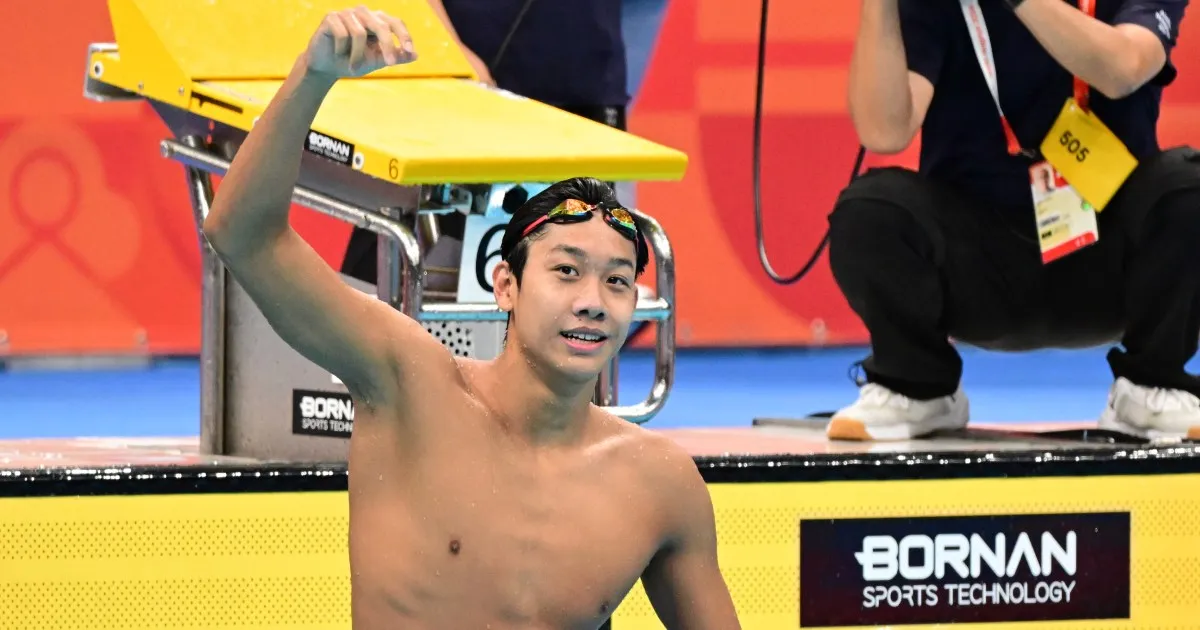
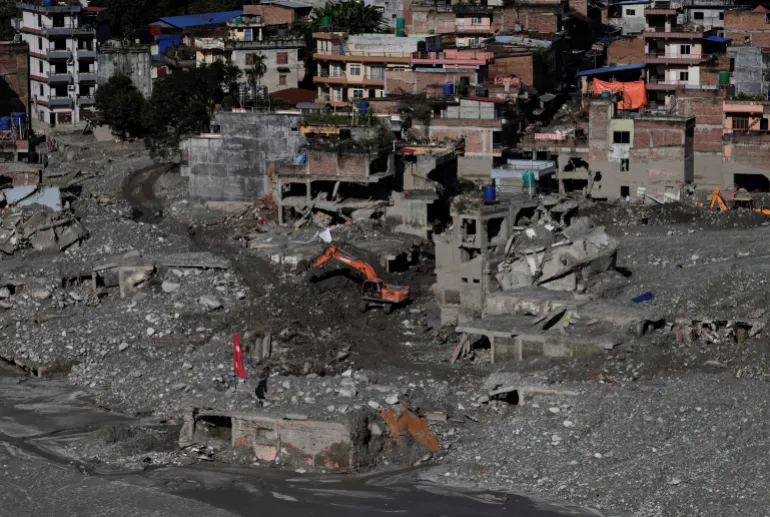
![An excavator clears mud from damaged houses following deadly flash floods and a mudslide, in Nuwakot district, Nepal, September 21, 2026 [Navesh Chitrakar/Reuters]](https://i0.wp.com/occasionaldigest.com/wp-content/uploads/2026/09/2026-09-25T021410Z_709369844_RC2ENNAUM1TN_RTRMADP_3_NEPAL-FLOODS-BALEN-UN-1790312192.jpg?w=640&ssl=1)
![Nepal Prime Minister Balendra Shah addresses the 81st United Nations General Assembly at UN headquarters in New York City, US, September 24, 2026 [Eduardo Munoz/Reuters]](https://i0.wp.com/occasionaldigest.com/wp-content/uploads/2026/09/2026-09-25T002524Z_1559668133_RC20QNACRCWK_RTRMADP_3_UN-ASSEMBLY-1790312740.jpg?w=640&ssl=1)
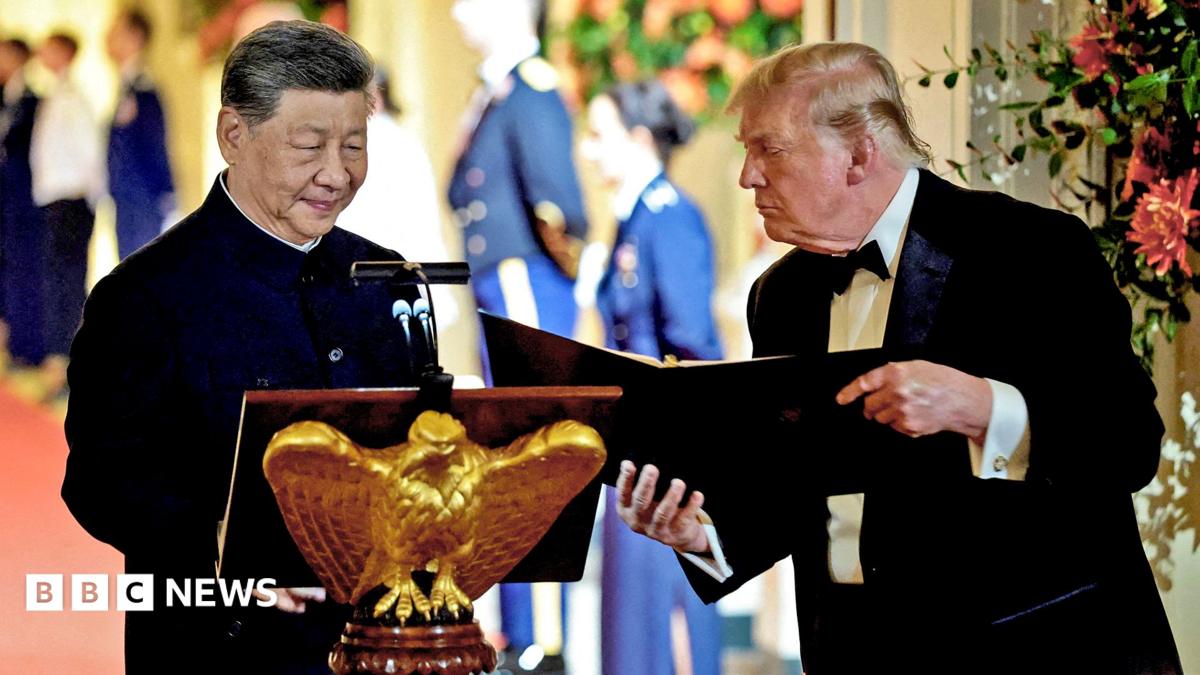

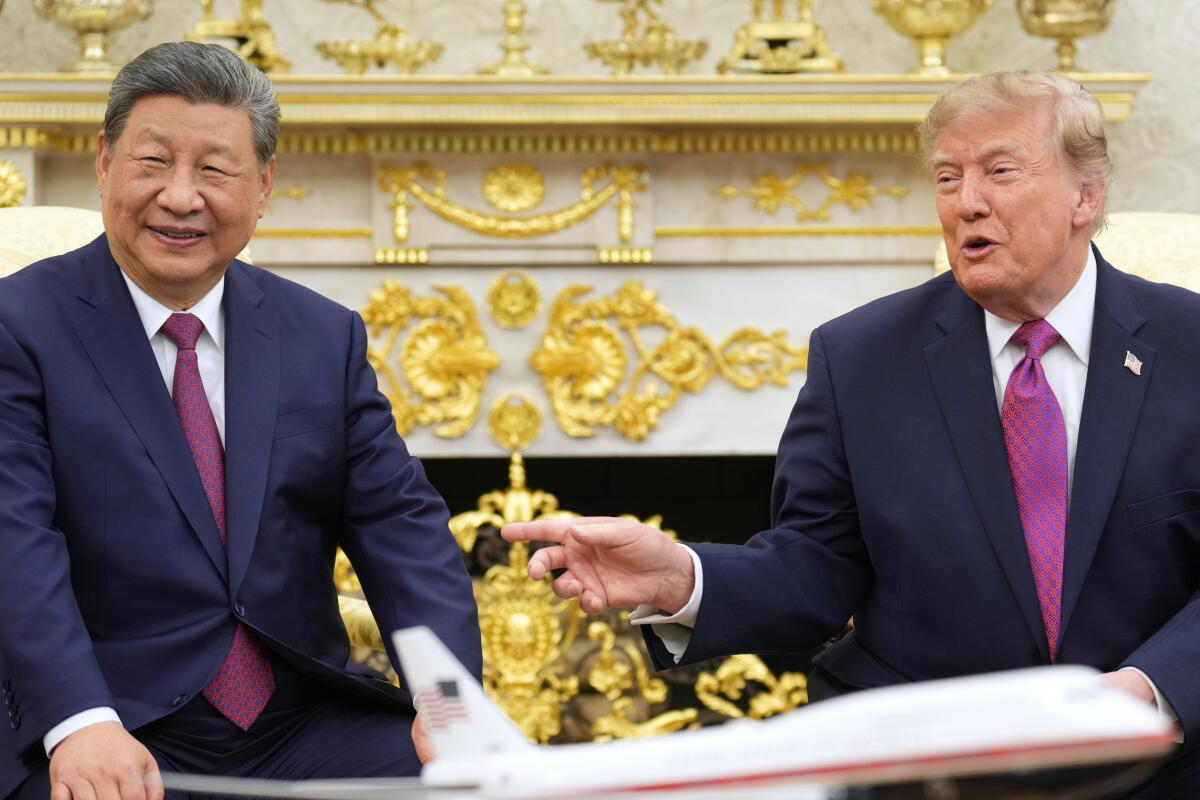

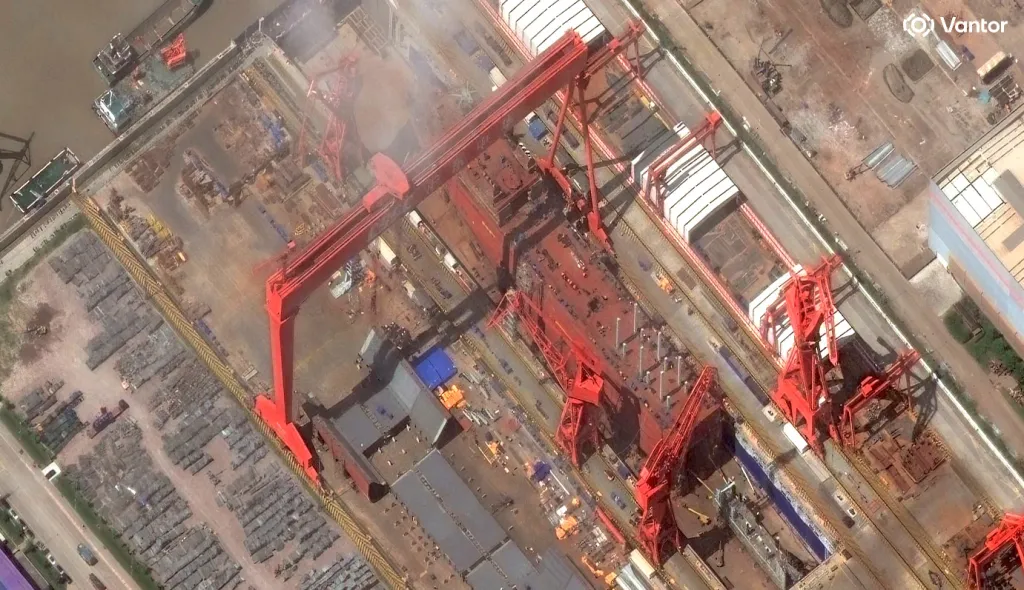


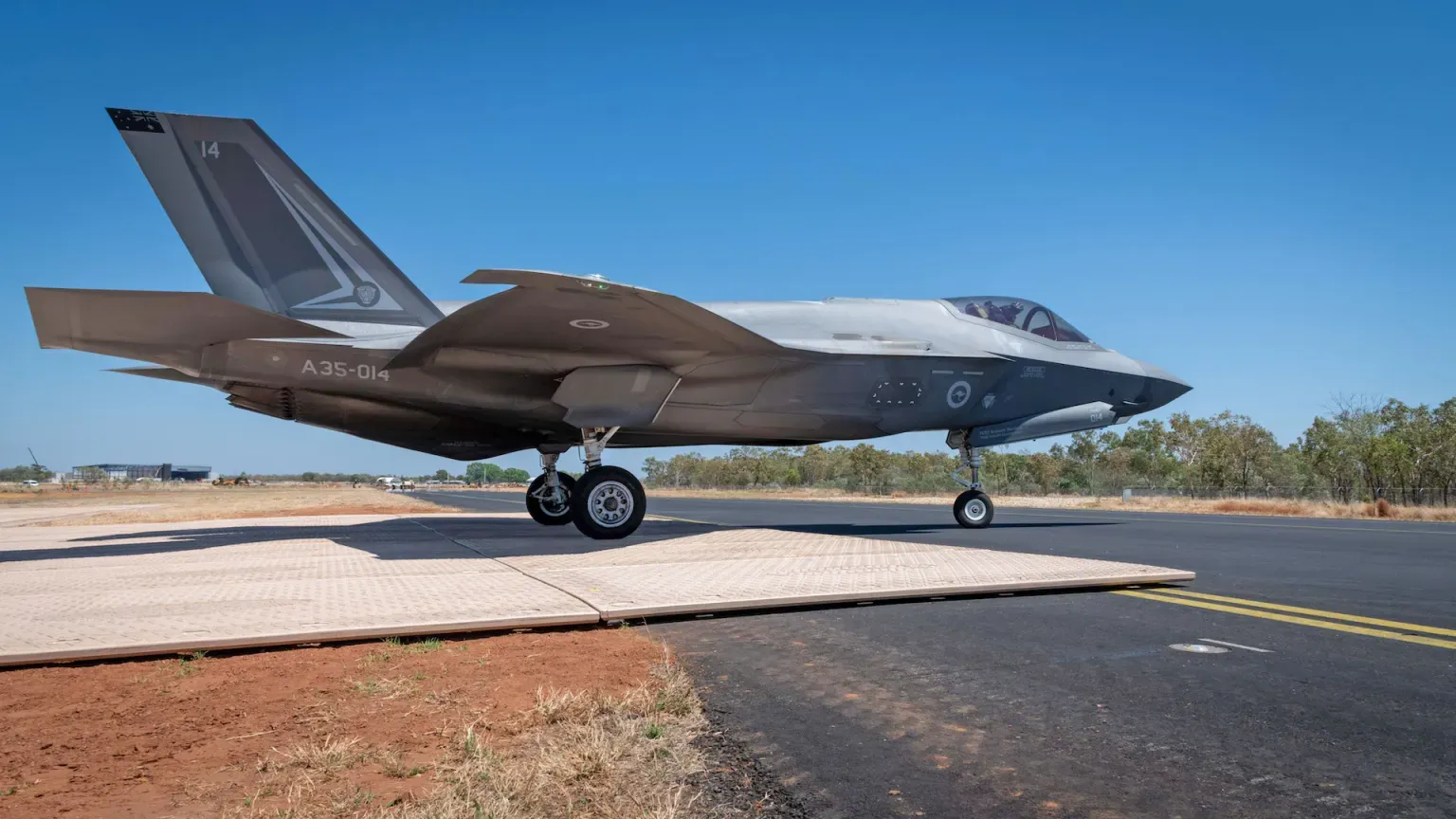


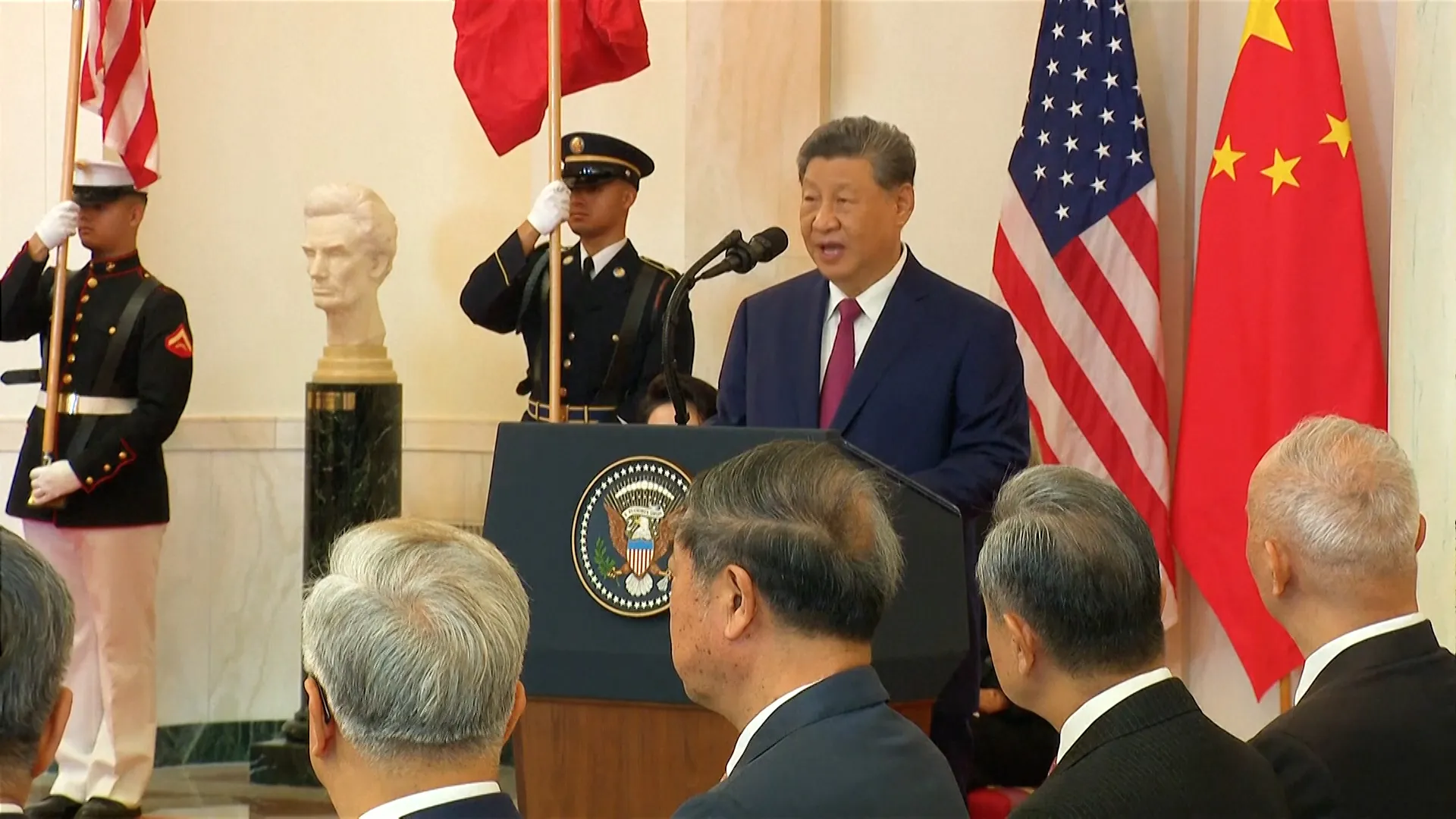
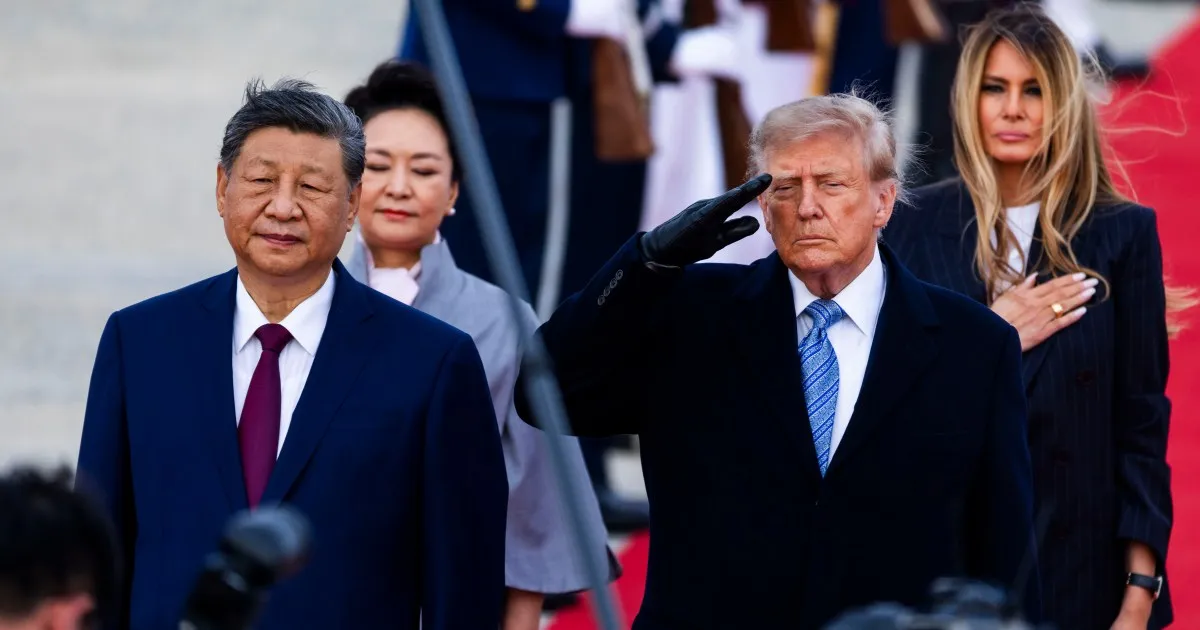
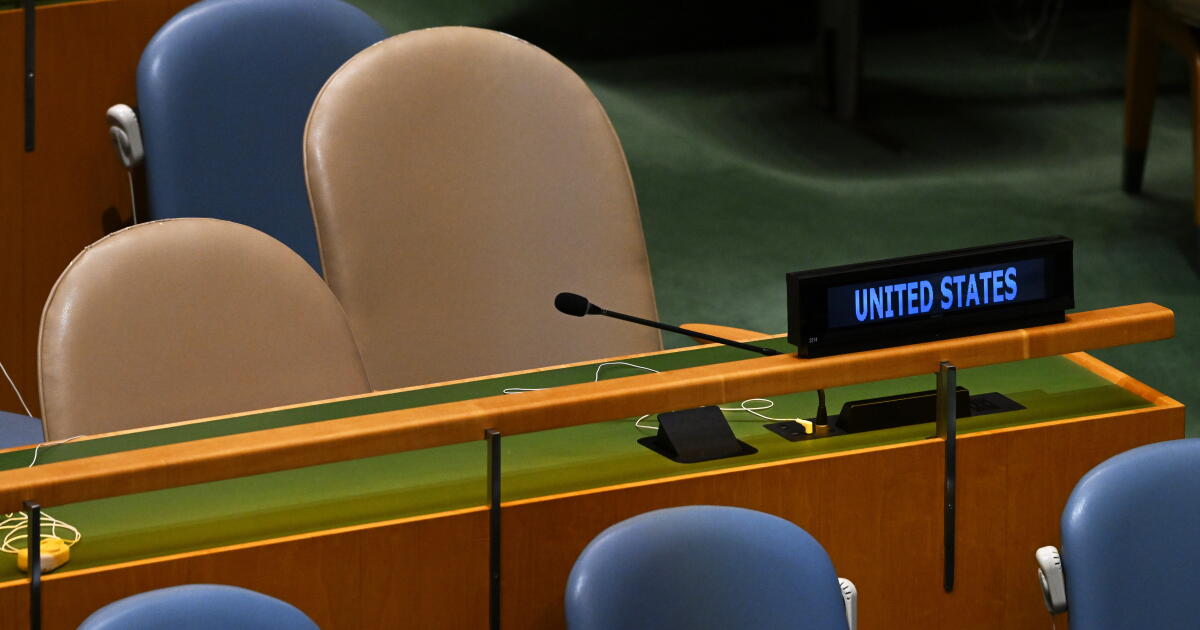
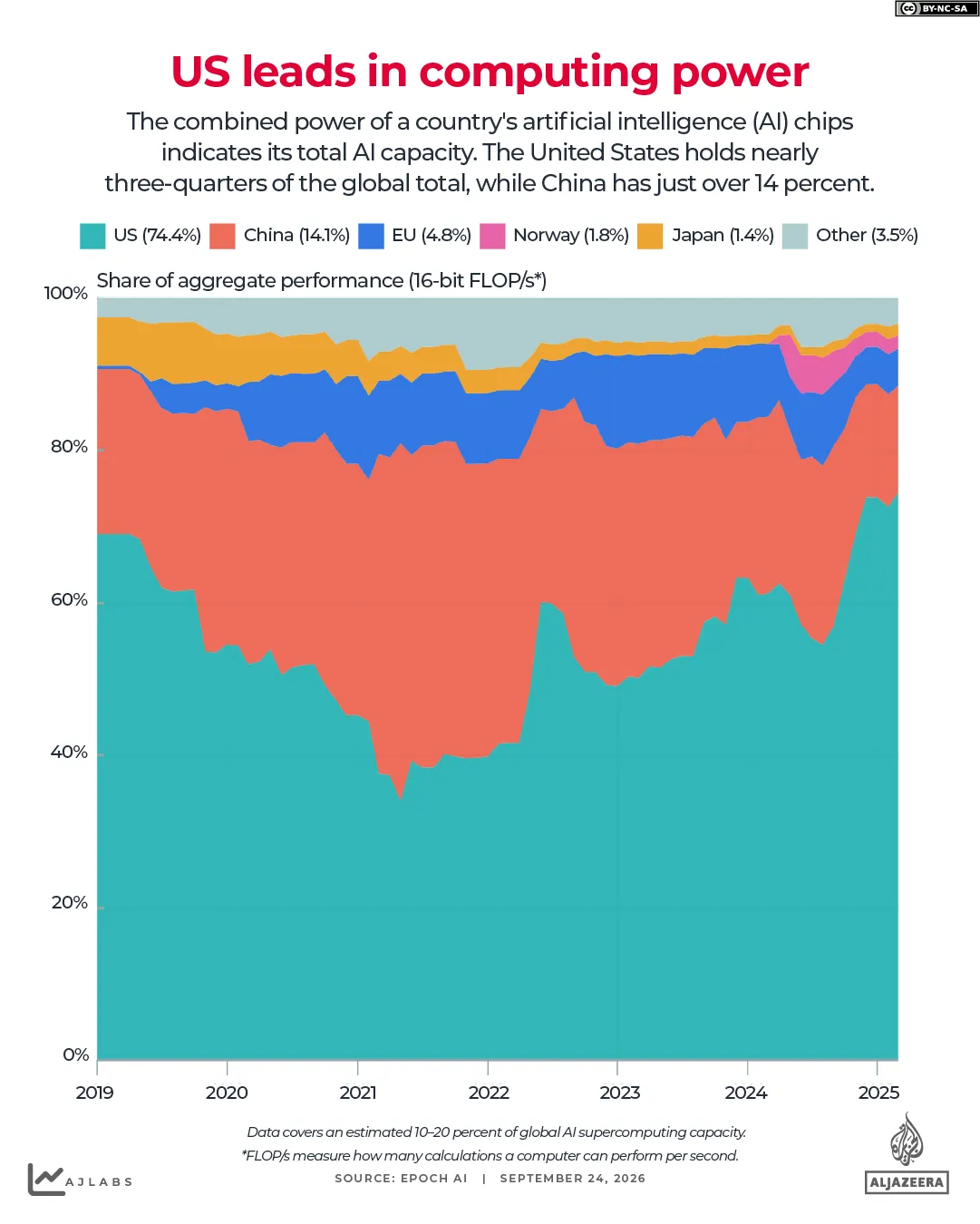


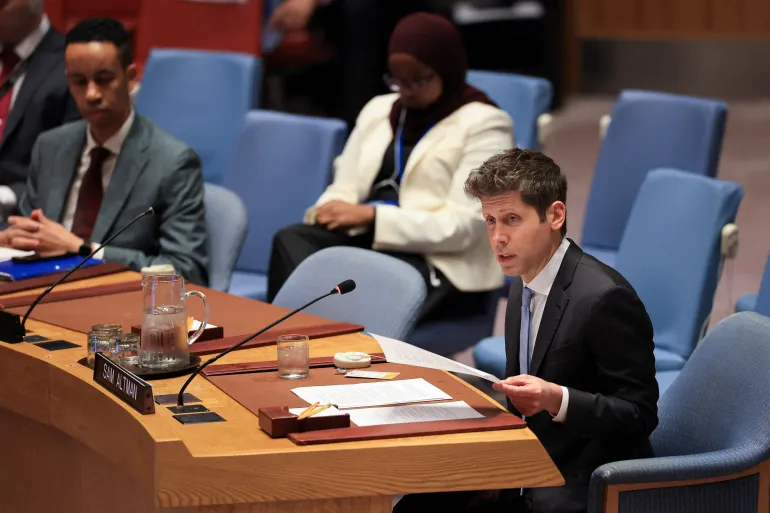
![OpenAI CEO Sam Altman addresses the United Nations Security Council during a session on Artificial Intelligence during the 81st United Nations General Assembly, at UN Headquarters in New York City, US, September 23, 2026 [Brendan McDermid/Reuters]](https://i0.wp.com/occasionaldigest.com/wp-content/uploads/2026/09/2026-09-23T193910Z_1511611083_RC27PNAQNEYE_RTRMADP_3_AI-UN-1790203991.jpg?w=640&ssl=1)