China

Taiwan Open to Trump Lai Call After US China Summit Raises Tensions

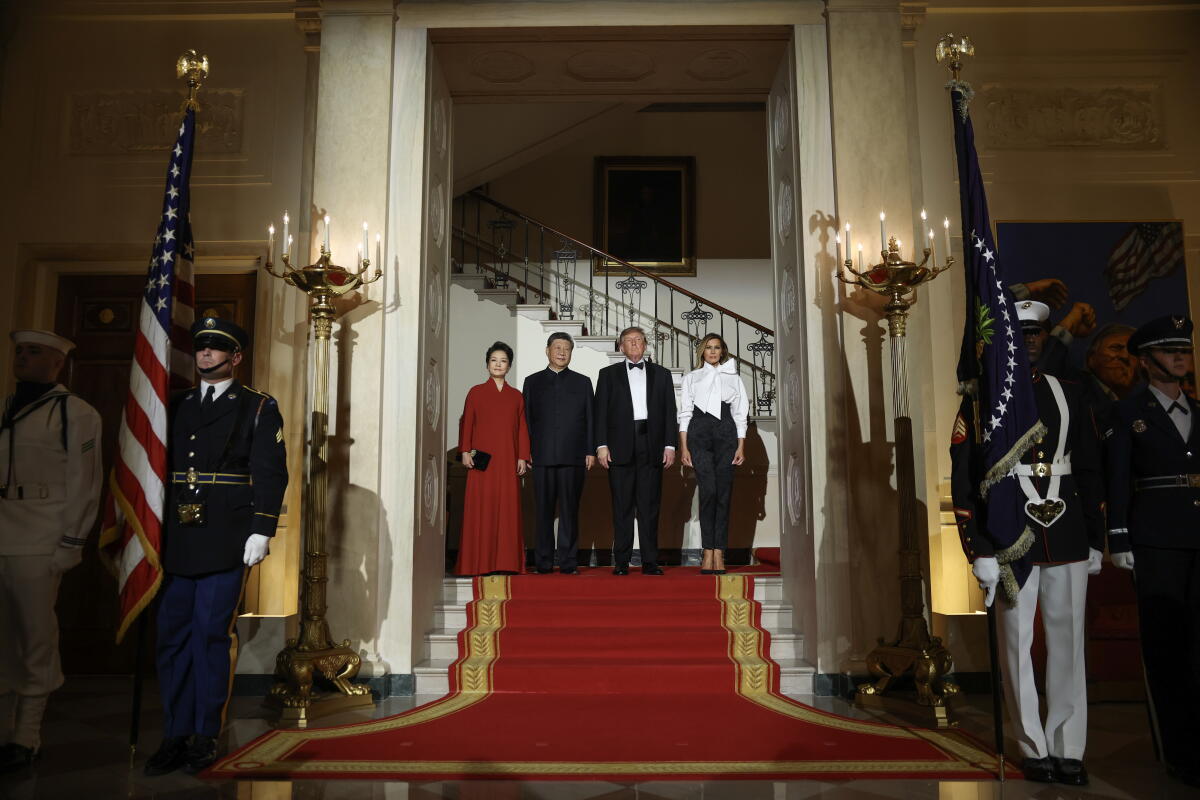
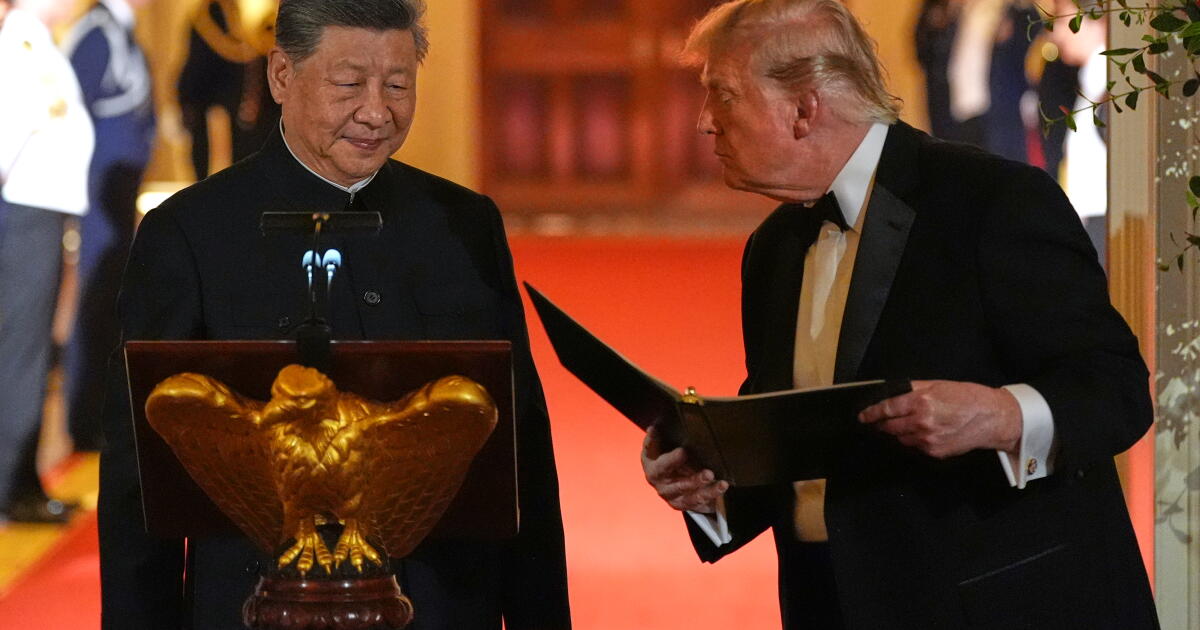
Taiwan has expressed openness to a direct conversation between US President Donald Trump and Taiwanese President Lai Ching te, following heightened diplomatic attention after Trump’s recent summit with Chinese leader Xi Jinping in Beijing.

The discussion comes amid renewed sensitivity over Taiwan’s political status and security, an issue that remains one of the most contested points in US China relations. During the summit, Taiwan was reportedly discussed, with Xi warning of potential conflict if the issue is not handled carefully.

Trump made several public comments on Taiwan following the meeting, including uncertainty over future arms sales and remarks interpreted as cautious on Taiwan independence.

Why the Issue Matters Now

A direct call between a US president and Taiwan’s leader would be highly significant, as no such conversation has taken place since Washington switched diplomatic recognition from Taipei to Beijing in 1979.

Taiwan relies heavily on the United States for security support and arms supplies, making US political signaling on the issue highly consequential for regional stability.

Taiwanese officials said recent remarks had created some uncertainty domestically, even as the government maintains that its core policy position has not changed.

Taiwan Diplomatic Position

Taiwan’s foreign ministry indicated that it would welcome a direct conversation if the opportunity arises, while also seeking clarity on Washington’s intentions.

Officials emphasized that Taiwan continues to view its relationship with the United States as stable, even amid shifting rhetoric following high level US China engagement.

Taipei reiterated that its political future must be determined by its own population, rejecting Beijing’s sovereignty claims.

US China Taiwan Triangle

The situation reflects the broader strategic competition between United States and China, where Taiwan remains a central geopolitical flashpoint.

Beijing considers Taiwan part of its territory, while Washington maintains a policy of strategic ambiguity, supporting Taiwan’s defense capabilities without formally recognizing it as an independent state.

Analysis

The possibility of direct engagement between Trump and Lai would represent a notable diplomatic signal, even if symbolic in nature. It would likely be interpreted differently by Washington, Taipei, and Beijing, each of which assigns distinct strategic meaning to Taiwan related communication.

For Taiwan, such contact would reinforce political visibility and strengthen informal ties with its key security partner. For the United States, it could serve as a calibrated message of support while still avoiding formal diplomatic recognition.

However, it also carries escalation risks. Any perceived shift in US Taiwan engagement often triggers strong reactions from Beijing, increasing regional tension.

Overall, the development highlights how Taiwan remains a central pressure point in US China relations, where even limited diplomatic gestures can have outsized geopolitical impact.

With information from Reuters.

Source link

China economic slowdown deepens: Retail sales flatline and factory out

Data Concept

ronniechua

China’s economy slowed down sharply in April 2026 as geopolitical fallout from the war in Iran weighed heavily on consumer spending and factory output.

Retail Sales: Growth flattened to just 0.2% year-over-year, marking the weakest performance since late 2022. This was a sharp deceleration

Source link

US says China to buy billions in agricultural goods after Trump-Xi talks | Business and Economy News

China will buy ‘at least’ $17bn worth of US agricultural goods annually, the White House says.

China will buy “at least” $17bn worth of agricultural goods from the United States annually following US President Donald Trump and Chinese leader Xi Jinping’s summit in Beijing, the White House has said.

China will make the purchases through 2028, with the 2026 target applying to the remainder of the year on a proportionate basis, according to a fact sheet released on Sunday.

Recommended Stories

list of 4 itemsend of list

The White House said the deal is in addition to China’s commitment to buy at least 87 million metric tonnes of US soya beans, which was made at Trump and Xi’s summit in South Korea in October.

China will also restore market access for US beef by renewing the expired listings of more than 400 production facilities, and resume imports of poultry from states determined by the US Department of Agriculture to be free of avian influenza, according to the fact sheet.

Trump and Xi also agreed to establish two new bodies – the US-China Board of Trade and the US-China Board of Investment – to manage trade and investment between the sides, the White House said.

China has yet to confirm or comment on the White House’s announcement.

The Chinese Embassy in Washington, DC, did not immediately respond to a request for comment.

The White House’s update provides further clarity on the outcome of Trump and Xi’s two-day summit, which was heavy on pageantry and camaraderie but light on concrete agreements.

During their two days of talks in Beijing, Trump and Xi sought greater alignment on economic issues and trade, while largely skirting the sensitive issues of Taiwan and the US-Israel war on Iran.

In a readout after the summit wrapped up on Friday, the White House said the two sides had discussed ways to “enhance economic cooperation”, and that they agreed on the need to keep the Strait of Hormuz open and that Iran “can never have a nuclear weapon.”

Beijing did not explicitly state that Iran should not have nuclear weapons, but stressed the importance of reaching “a settlement on the Iranian nuclear issue and other issues that accommodates the concerns of all parties”.

Neither White House statement contained any mention of Taiwan, the self-governing island that Beijing views as an integral part of its territory.

The omission of any reference to the island – the defence of which Washington is committed to supporting under the 1979 Taiwan Relations Act – came after Xi warned of “clashes and even conflicts” between the superpowers if the issue is not “handled properly”.

After nearly a decade of tit-for-tat economic salvoes between Washington and Beijing, US-Chinese trade is down sharply from its peak.

Their bilateral trade in goods last year came to some $415bn, down from more than $690bn in 2022.

Source link

Canadian FM: Is the US still a reliable ally? | Politics

Anita Anand discusses Donald Trump, NATO, Israel, China and Canada’s international role.

Canadian Foreign Minister Anita Anand discusses whether Canada can still depend on the United States – as well as defence spending, Arctic security, Gaza, Iran, China, India, and Canada’s push to diversify trade beyond the US.

Source link

News Analysis: Trump spent two days with Xi in Beijing. Was he outplayed?

As President Trump left Beijing on Friday, Chinese social media resurfaced a familiar nickname for the president — flattering at first glance — declaring that Chuan Jianguo, the “Nation Builder,” had returned.

It was not meant as a compliment. The nation he is building, according to the Chinese, is not the United States but their own, through a series of inadvertent yet costly mistakes inflicted by Trump at home and abroad.

  • Share via

If the Chinese government was self-assured entering Trump’s summit with Xi Jinping, then the results of the state visit, in which Beijing refused to offer Trump any meaningful deals or concessions, signal their unmistakable confidence in American decline.

Chinese government statements in local media stating as much made their way back to Trump as he was departing, aggravating the president, a U.S. official said. But the White House secured a clarification from the Chinese that seemed to placate Trump. America was only declining under President Biden, they said — not anymore.

President Trump and President Xi Jinping tour Zhongnanhai Garden in Beijing

President Trump and President Xi Jinping tour Zhongnanhai Garden on Friday in Beijing.

(Evan Vucci / Pool via Getty Images)

The Trump administration argues the trip was a success, having secured the display of conciliation and partnership the president had sought after years of increasingly dangerous acrimony.

Foreign policy hawks on China will be displeased with his new direction of friendship and cooperation with a government they view as openly hostile to the United States. But Trump seems to have reached a similar conclusion as past administrations, that China might require a relationship in pursuit of, as Xi put it, “constructive strategic stability.”

Trump was notably out of character throughout his stay here, deferential to his host, marveling at displays of Chinese power and reticent to speak with the press.

Five times over two days, Trump referred to Xi as his friend, taking every public opportunity to offer his compliments and pats on the back. None of it was reciprocated. The Chinese leader, Trump told Fox News in an interview, was “all business” in private, as well, apparently uninterested in his overtures of personal goodwill.

Presidents Xi and Trump tour Zhongnanhai Garden.

Presidents Xi and Trump tour Zhongnanhai Garden on Friday.

(Evan Vucci—Pool/Getty Images)

The summit may ultimately be remembered as the moment when Trump recognized a shifting power dynamic, where an American president had the rare and uncomfortable experience of entering a meeting clearly overmatched.

“I think the most important thing is relationship,” Trump said in the interview, describing the summit as “historic.”

“It’s all about relationship,” he added. “I have a very good relationship with President Xi.”

Taiwan was discussed ‘the whole night’

Little of substance was accomplished over two days of talks. But Chinese officials expected no less after warning Trump’s team before the summit that its minimal preparation had failed to lay the groundwork for diplomatic agreements.

Still, the lack of breakthroughs may come as a relief to some in Washington. Trump appears to have held to a long-standing U.S. line on Taiwan, for now, refusing to provide Xi with clarity on whether the United States would defend the self-ruled island if China tries to reclaim it by force.

The two men discussed the matter “the whole night,” Trump told Fox.

If China attacked, “they would be met harshly, and bad things will happen,” Trump said. Yet within the same answer, he questioned Taiwan’s “odds” against China if war were to break out, even with U.S. help, noting its proximity to the Chinese mainland and its vast distance away from the United States.

Whether Trump will proceed with arms sales to Taiwan — passed by Congress and obligated by law under the Taiwan Relations Act — is still an open question.

“If you kept it the way it is, I think China is going to be OK with that,” Trump said, referencing an ambiguous status quo around Taiwan’s status, “but we’re not looking to have somebody say, ‘Let’s go independent because the United States is backing us.’ ”

“Taiwan would be very smart to cool it a little bit,” he added. “China would be smart to cool it a little bit. They ought to both cool it.”

President Trump departs as President Xi looks on after a visit to Zhongnanhai Garden on Friday.

President Trump departs as President Xi looks on after a visit to Zhongnanhai Garden on Friday.

(Evan Vucci/ Pool via Getty Images)

Curious company

Trump’s choice of company in the U.S. delegation left the Chinese with questions over the purpose of the trip.

Lara Trump, a Fox News host and the president’s daughter-in-law, attended alongside her husband, Eric Trump, whose presence as a private citizen running the Trump Organization was a direct appeal to Beijing to treat the administration like a family business. Brett Ratner, director of the “Rush Hour” series and a documentary on the first lady that bombed at the box office, was given prime placement along with America’s top business leaders.

The last time a secretary of Defense attended a presidential state visit to China was on Richard Nixon’s famous trip in 1972. Chinese officials were unsure what to make of Pete Hegseth’s presence — whether it was meant to convey a softer stance, a hardening one, or simply an ignorance of basic diplomatic protocol.

Trump said he felt personally honored by the lavish welcome he received on the edge of Tiananmen Square, outside the Great Hall of the People, where China hosts all visiting dignitaries.

Before a lunch at Zhongnanhai, the secretive headquarters of the Chinese Communist Party, Trump asked Xi if he was special for getting to visit the compound. He was the fourth U.S. president to do so.

While the Trump administration offered itself glowing reviews of the outcome of the summit, the Chinese government offered little to say as he departed. And Chinese media highlighted Beijing’s resolute stance on American priorities — from trade to the Iran war — as evidence of Chinese confidence and American decline.

But all that business wasn’t the point of the trip, Trump told Fox’s Bret Baier. For the president, it was all personal.

“I want to thank President Xi, my friend, for this magnificent welcome,” Trump said in his toast at the state banquet, repeating the personal overture. “The American and Chinese people share much in common. We value hard work. We value courage and achievement. We love our families and we love our countries.

“Together, we have the chance to draw on these values to create a future of greater prosperity, cooperation and happiness and peace for our children,” Trump added. “We love our children. This region and the world — it’s a special world, with the two of us united and together.”

Source link

Russia’s Putin to visit China following Trump’s trip | Politics News

Putin and Chinese President Xi Jinping plan to ‘further strengthen the comprehensive partnership’, the Kremlin says.

Russia’s President Vladimir Putin will pay an official visit to China from May 19 to 20, the Kremlin has announced.

Putin and his Chinese counterpart, President Xi Jinping, plan to “further strengthen the comprehensive partnership and strategic cooperation” between Moscow and Beijing, the Kremlin said in a statement.

Recommended Stories

list of 4 itemsend of list

Putin is also scheduled to discuss economic and trade cooperation with Chinese Premier Li Qiang.

Russia’s TASS news agency reported that the visit is timed to commemorate the 25th anniversary of the signing of the Treaty of Good-Neighborliness and Friendly Cooperation, a key Moscow-Beijing agreement signed in 2001.

News of Putin’s forthcoming trip arrives one day after United States President Donald Trump departed China following the first presidential visit to Beijing in almost a decade.

Although Trump and Xi touted several broad trade deals, they appeared to make little public progress on key sticking points related to Taiwan or the US-Israel war on Iran.

They also touched on the Russia-Ukraine war, in which China is officially neutral and Xi has presented himself as a mediator.

Still, Xi’s “no limits” alliance with Putin – announced just before the full-scale Russian invasion of Ukraine in 2022 – has undercut that stance.

China has also denied reports from Reuters and other news agencies showing that Chinese firms have single-handedly sustained Russian drone production, in part by shipping engines mislabelled as “industrial refrigeration units” to drone assembly plants.

“We discussed – well, it’s one that we’d like to see settled,” Trump said in remarks reported by the Kyiv Post.

Trading partners

As Washington and Beijing’s relationship has been beset by tension, Chinese-Russian relations have only appeared to deepen in recent months.

Although the duo are not formal military allies, they maintain extremely close political and economic ties, with China stepping in to buy Russian oil and goods after Western nations cut ties with Moscow.

Before a four-day trip to China last August, Putin decried “discriminatory” Western sanctions and heaped praise on Beijing.

China is now by far Russia’s biggest trading partner by volume, and transactions are almost entirely carried out in Russian roubles and Chinese yuan, Putin said at the time.

Last month, Xi pressed for “closer and stronger strategic coordination” between Beijing and Moscow in a meeting with Russian Foreign Minister Sergey Lavrov.

Xi also visited Russia in May last year and pledged to stand with Moscow against “unilateralism and hegemonic bullying”.

Source link

Was the mayor a spy? L.A. suburb wonders about depth of Chinese plot

As Eileen Wang and her supporters tell it, the former Arcadia mayor was led astray by a man she trusted and loved.

After chasing her political ambitions in the San Gabriel Valley suburb, Wang, 58, won a City Council seat in 2022 with the help of a campaign advisor who was also her romantic partner. Two years later, he was charged by federal authorities with secretly working on behalf of the Chinese government.

Wang, a naturalized U.S. citizen, distanced herself from her ex and remained in office, becoming mayor earlier this year. The scandal had mostly quieted — until Monday, on the eve of President Trump’s planned trip to Beijing, when a plea deal was unsealed revealing Wang’s own murky role as an agent for China.

A man walks past an empty space where a photograph of former Arcadia Mayor Eileen Wang hung between other photos on a wall.

A man walks past an empty space where a photograph of former Mayor Eileen Wang was removed in the lobby of Arcadia City Hall.

(Genaro Molina/Los Angeles Times)

Now, Wang has become a national political talking point, with critics painting her as a calculating foreign agent who sought to infiltrate the American government and undermine democracy.

Katie Miller, wife of top Trump advisor Stephen Miller, blasted Wang on social media site X as a “spy.”

“This is pure China trying to influence U.S. politics and U.S. elections,” Katie Miller said on Fox News.

Back home, some of Wang’s former colleagues in local government say they repeatedly tried to raise alarms about her.

“There were red flags everywhere,” said Sharon Kwan, an Arcadia city council member and former mayor.

Wang admitted in her plea agreement to posting and editing web content at the request of the Chinese government — without disclosing her ties to U.S. authorities, as the law requires. She ran afoul of the Foreign Agents Registration Act, or FARA, a federal statute that experts said has seen ramped up enforcement over the last decade, particularly in cases involving China.

But those familiar with the law — and international espionage — said it does not appear that Wang was engaged in spycraft as it is commonly understood.

Dennis Wilder, a former senior U.S. intelligence official and professor at Georgetown University, said that, in the CIA, Wang would be referred to as “an agent of influence.”

“She’s not a spy in the Jason Bourne sense,” Wilder said, referring to the fictional American agent. “She’s not out there recruiting sources and that sort of thing. That’s not the role that they want for her. But they see this other role as extremely important.”

A man exits Arcadia City Hall

A man exits Arcadia City Hall on Tuesday.

(Christina House/Los Angeles Times)

A run for city council

Wang moved to the U.S. around 30 years ago, in part, she told The Times in 2024, because she wanted “freedom for speech, freedom [for] thinking.”

Her mother was a Chinese medicine and acupuncture doctor and her father was a physician in Sichuan province before working at USC, she said. Authorities have not detailed how she immigrated or her path to citizenship. She landed in Arcadia, she said, lured by what the school district in the affluent city of 54,000 could offer her two young boys.

She ran an after-school program and was involved in some community organizations, but said she did not move in political circles until shortly before her 2022 run for city council. She switched her party affiliation from Republican to Democrat, which, she said, spoke more to the needs of voters in her district, where many share her Chinese roots.

“I walk about 140 days,” she said of her campaign, adding that she hit every door in her district five times. “I never stop.”

Yaoning “Mike” Sun, Wang’s former fiance, managed her campaign.

Arcadia City Councilmember Sharon Kwan

Arcadia City Councilmember Sharon Kwan stands outside the front entrance of the San Gabriel Valley suburb’s City Hall. “This is not something where we can just dismiss and pretend nothing happened,” said Kwan regarding the case against ex-mayor Eileen Wang.

(Genaro Molina/Los Angeles Times)

Kwan, who was elected to the city council at the same time, recalled Sun as a constant presence at city meetings and events, “always with the camera.”

“Always recording, always promoting her,” Kwan said. “She was like a celebrity to him.”

Two years after Wang took office, in December 2024, federal authorities arrested Sun on suspicion of acting as an illegal agent of China.

Prosecutors accused Sun in a criminal complaint of working with another man to cultivate Wang as a political asset for the People’s Republic of China or PRC. Federal prosecutors in Los Angeles identified the other man as John Chen, describing him in a sentencing memorandum as “a high-level member of the PRC intelligence apparatus,” who had “met personally” with Chinese President Xi Jinping.

Chen instructed Sun to submit reports on Wang, referred to throughout the complaint as “Individual 1,” to Chinese officials, including one the federal complaint said they referred to as the “Big Boss.” A draft of the report allegedly included a request for $80,000 to “support pro-PRC activities in the United States.” Sun was also told to tout Wang’s relationship with an unnamed U.S. congressperson, the complaint said.

Both men eventually pleaded guilty to working as unregistered agents of China, with Sun sentenced this year to four years in prison. Chen was sentenced to 20 months.

Wang spoke with Chen on the day she was elected and three more times over the next few months, according to the complaint in Sun’s case.

“You are doing a good job, I hope you can continue the good work, make Chinese people proud,” Chen told Wang, in a conversation on Jan. 23, 2023, according to the complaint in Sun’s case.

Chen and Sun also coordinated a trip to China in 2023 for Wang to meet with “leadership,” which would include stops in six different places, according to the complaint. It’s unclear whom Wang met with on the trip.

The fallout

After Sun’s arrest, Wang denied to several people that they had been engaged to marry. She said during a council meeting that their relationship ended in spring 2024.

Jolene Cadenbach, a pastor in Arcadia, said Wang confided in her that “she had been lied to” by Sun.

“I think he did a con job on her,” Cadenbach said.

The recent plea agreement gave the wrong impression about Wang, the pastor said.

“It made her sound like she was some kind of spy and it wasn’t like that at all,” she said. Wang was only following Sun’s orders, she added: “He told her to put up this site, she did it. She didn’t really investigate it.”

In a statement, Wang’s lawyers said she “apologizes and is sorry for the mistakes she has made in her personal life.” They said “she genuinely loves this city and is devoted to the people and the community within it,” but “her trust and love for apparently the wrong person… ultimately led her astray.”

Longtime Arcadia resident Sonia Martin sits on the porch of her home.

Arcadia resident Sonia Martin sits on the porch of her home. Martin said she had long expressed concerns about the city’s former mayor, Eileen Wang.

(Genaro Molina/Los Angeles Times)

After Sun was charged in 2024, Sonia Martin and other Arcadia residents showed up at council meetings carrying protest signs. Martin said she expected Wang to be pushed out. Instead, she said, most council members appeared to unite behind Wang.

“They wanted to have this feeling of, like, everything’s great here. We’re all warm. Look at us, it’s kumbaya,” Martin said.

Kwan said she repeatedly tried to bring up the concerns of constituents to her fellow council members but was brushed off.

“Everybody was just so silent,” Kwan said. “This is not something where we can just dismiss and pretend nothing happened.”

The job of mayor rotates among Arcadia City Council members, and when it was Kwan’s turn last April, she warned during her swearing-in speech that constituents “must remain vigilant against influence of foreign governments, including efforts by the Chinese Communist Party, that may seek to shape local policy for the interests that do not align with our residents.”

Since Wang’s plea agreement became public, some have scoffed at the notion that Chinese spies would establish an outpost in Arcadia, or that the web posts she made before becoming mayor amounted to any sort of meaningful propaganda campaign.

But according to Sun’s plea agreement, local office was just the start. Prosecutors said Sun’s 2023 report for Chinese officials boasted that “during the 2022 U.S. midterm elections, I orchestrated and organized my team to win the election for city council.” He called Wang a “new political star.”

Wilder, the former U.S. intelligence official, said that sounded like a familiar strategy.

“Maybe she would end up in Congress some day or at the state government level. They invest in these folks hoping they move up the political food chain,” the Georgetown professor said. “That is part of the Chinese long game.”

‘San Gabriel Valley deserves better’

In her plea agreement, Wang admitted that from late 2020 through at least 2022, she worked with Sun to run a website called U.S. News Center that branded itself as a news source for Chinese Americans.

Wang and Sun “executed directives” from Chinese government officials, posting requested articles and reporting back with screenshots showing how many people viewed the stories, the agreement says.

Prosecutors also say Wang edited articles at the request of officials and shared information showing the reach of the posts.

“Thank you leader,” she wrote on Aug. 20, 2021, after being complimented for a post that was viewed more than 15,000 times, according to the plea agreement.

Wang never disclosed that the Chinese government had directed her to post the content, according to court documents.

That sort of low-level violation of the law is not supposed to trigger federal charges unless, according to a February 2025 memo by then-Atty. Gen. Pam Bondi to Justice Department prosecutors, the case involved “conduct similar to more traditional espionage.” The Trump administration has pursued other high-profile foreign agent cases recently, with prosecutors winning a conviction Wednesday of a man charged with running a covert police station in Manhattan and keeping tabs on political dissidents.

When news broke of the charges and plea deal involving Wang, current and former city officials said they were not surprised.

A wall of photographs of former Arcadia mayors inside Arcadia City Hall.

A wall of photographs of former Arcadia mayors hang inside Arcadia City Hall. Eileen Wang is shown second from left on the bottom row. Wang admitted in court filings this week to working as an unregistered agent for China.

(Genaro Molina/Los Angeles Times)

“The warning signs around Eileen Wang were public for more than a year before this plea, agreement, and too many people in positions of influence defended and supported her,” April Verlato, a former mayor of Arcadia, said in a statement. “Our electeds should have represented what was best for the community and held her accountable. The San Gabriel Valley deserves better.”

Paul Cheng, mayor pro tem of Arcadia, said the council didn’t move earlier to oust Wang because a majority of its members wanted to let the federal investigation run its course.

“The public always says, ‘Why didn’t you investigate her when her boyfriend was arrested? Why didn’t you do something?’” he said.

Pedestrians walk along a sidewalk

Pedestrians walk along a sidewalk next to Huntington Drive in downtown Arcadia on Wednesday.

(Genaro Molina/Los Angeles Times)

But, he emphasized, “council members are not federal investigators.”

“We are not supposed to get involved,” said Cheng, an attorney. “It would make the situation 10 times worse.”

Cheng spoke highly of Wang, painting her as a committed civil servant with a passion for veterans, first responders and diversifying the businesses on Baldwin Avenue, the city’s main corridor.

“She probably attended the most events compared to all of us,” he said. “People have tried getting me to say she’s a horrible person, but I can only say what I saw, which was I thought she did a good job on council.”

Source link

Trump and Xi move towards business-first relationship after Beijing summit | Xi Jinping News

Early signs point to the United States and China moving towards a relationship focused on pragmatic areas of common interest following US President Donald Trump’s trip to China, according to analysts, setting aside the turmoil that marked 2025.

Trump was in Beijing for three days this week to meet with Chinese President Xi Jinping, accompanied by a delegation of American CEOs, including the heads of Apple, Nvidia, BlackRock and Goldman Sachs.

Recommended Stories

list of 4 itemsend of list

The meeting between the two leaders came just over six months after they agreed to pause the US-China trade war for a year on the sidelines of a multilateral summit in South Korea. While a frequent critic of China’s economic policies at home, Trump appeared to get along with Xi in person throughout his trip and lavished praise on the Chinese leader.

“It’s an honour to be with you, it’s an honour to be your friend, and the relationship between China and the USA is going to be better than ever before,” Trump told Xi on Thursday.

The White House readout of the Trump-Xi meeting on Thursday stressed areas of common ground, stating that the leaders had “discussed ways to enhance economic cooperation between our two countries” by “expanding market access for American businesses into China and increasing Chinese investment into our industries”.

Notably absent from the statement was any mention of China’s export controls on rare earths, critical materials used across the tech, defence and energy sectors. China controls nearly the entire industry, and it has moved to restrict US access.

William Yang, senior Northeast Asia analyst at the Crisis Group, told Al Jazeera that Trump’s remarks showed he would likely try to compartmentalise US-China relations into areas where the two sides can work together without being overshadowed by geopolitical concerns.

Xi, while less effusive, also spoke of his desire to move towards a new US-China framework based on “constructive strategic stability”, meaning that the US and China should try to “minimise competition, manage differences and allow stability to be the foundation of the bilateral relationship”, according to Yang.

Both leaders appear to have sidestepped other controversial issues, such as the status of Taiwan, a 23 million-person democracy claimed by Beijing but unofficially backed by Washington.

Xi told Trump during their meeting that Taiwan was the “most important issue” in the US-China relationship, and that mishandling it could lead to “clashes and even conflicts” between the two sides. Beijing objects to Washington’s ongoing military support of Taiwan and has pressed the US to take a more explicit line on Taiwan’s political status.

Although the US does not recognise the government in Taipei, it maintains a deliberately vague policy on China’s territorial claims. Despite the controversy, neither the Chinese nor the US readout mentioned whether Trump discussed Taiwan or the future of arms sales – suggesting he either disagreed with Xi or avoided the topic.

Analysts like Yang say it is still too soon to know whether Trump will heed Xi’s remarks by blocking or delaying a $14bn arms deal reportedly in the works for Taiwan. The deal would need Trump’s sign-off to move forward, according to US legislators.

Xi was equally circumspect on Iran and the Strait of Hormuz, which has been shuttered since the US and Israel launched a war on Iran on February 28.

Trump has previously pushed China to encourage Iran to reopen the strait, through which a fifth of the world’s oil and gas passed each year before the war, because of its close relationship with Tehran. China and Iran signed a 25-year “strategic partnership” in 2021, and Beijing buys 80 to 90 percent of Iran’s oil annually.

Trump raised the points again in his meeting with Xi in Beijing, according to the US readout, which said the two leaders “agreed that the Strait of Hormuz must remain open to support the free flow of energy”.

“President Xi also made clear China’s opposition to the militarisation of the Strait and any effort to charge a toll for its use, and he expressed interest in purchasing more American oil to reduce China’s dependence on the Strait in the future. Both countries agreed that Iran can never have a nuclear weapon,” the readout said.

The Chinese readout of their meeting on Thursday did not include mention of Iran or its nuclear programme.

Chucheng Feng, founding partner of Hutong Research based in Beijing, told Al Jazeera that the omissions reflect that Xi and Trump still disagree on key issues, including Iran, but that the overall message from the summit was a desire to move forward.

“For Beijing, the most important thing is to find a floor for the relationship, to set up and enhance guardrails so that no surprises or uncontrolled escalations suddenly emerge. For that, item-by-item disagreements are largely secondary,” he said.

Source link

Trump and Xi Focus on Trade Stability While China Raises Iran and Taiwan Concerns

United States President Donald Trump concluded his final round of discussions with Chinese President Xi Jinping in Beijing while attempting to present the visit as a major economic success. The summit came at a sensitive moment for both countries as tensions over trade, Taiwan, artificial intelligence technology, and the Iran conflict continue to shape relations between the world’s two largest economies.

Trump emphasized trade agreements and commercial cooperation during the visit, hoping to strengthen his political standing ahead of important midterm elections in the United States. China, however, used the occasion to deliver clear warnings regarding Taiwan and to criticize the ongoing Iran conflict, signaling that major strategic disagreements remain unresolved despite the positive diplomatic atmosphere.

Trump Highlights Economic Progress

During meetings at the Zhongnanhai leadership compound in Beijing, Trump promoted what he described as successful trade negotiations between Washington and Beijing. He stated that both sides had reached agreements that would benefit their economies and help stabilize commercial relations after years of tariff disputes and economic uncertainty.

The United States announced several proposed agreements involving agricultural exports, beef, and energy sales to China. Officials also discussed mechanisms to manage future trade disputes and identified billions of dollars in potential goods trade between the two countries.

One of the most closely watched announcements involved aircraft manufacturer Boeing. Trump claimed China had agreed to purchase 200 Boeing aircraft, marking China’s first major order of American commercial planes in nearly ten years. However, investors reacted negatively because markets had anticipated a significantly larger agreement. Boeing shares declined after the announcement, reflecting disappointment over the scale of the deal.

The summit also failed to produce a breakthrough regarding advanced artificial intelligence technology exports. Expectations had been growing that restrictions on the sale of advanced AI chips from NVIDIA to China might ease, especially after company chief executive Jensen Huang joined the trip. No major agreement emerged on that issue.

China Pushes Back on Iran Conflict

While Trump focused publicly on economic achievements, China used the summit to voice frustration over the war involving Iran. Beijing stated that the conflict should never have started and called for diplomatic efforts to restore peace.

The Iran crisis has become a major international concern because of its impact on global energy markets. Rising instability in the Middle East has pushed oil prices upward and increased fears about disruptions to energy supplies traveling through the Strait of Hormuz, one of the world’s most critical shipping routes.

China’s position reflects both economic and strategic interests. Beijing relies heavily on stable energy imports and also views Iran as an important geopolitical partner that can balance American influence in the Middle East. Analysts believe China is unlikely to pressure Tehran aggressively because maintaining strong relations with Iran supports Beijing’s broader strategic goals.

Although Trump stated that he and Xi shared similar views on Iran, Chinese officials avoided publicly endorsing Washington’s approach. This difference highlighted the continuing gap between the two powers on international security issues.

Taiwan Remains the Most Sensitive Issue

Despite the friendly diplomatic setting, Taiwan emerged as one of the summit’s most serious areas of tension. Xi warned that mishandling the Taiwan issue could lead to conflict, reinforcing Beijing’s longstanding position that the island is part of China.

Taiwan remains one of the most dangerous flashpoints in global politics. China has repeatedly stated that it does not rule out the use of military force to bring Taiwan under its control, while the United States continues to support Taiwan’s defensive capabilities under American law.

American officials maintained that United States policy toward Taiwan had not changed. Secretary of State Marco Rubio emphasized that Washington continues to support regional stability while maintaining its established position on Taiwan.

The issue remains highly sensitive because any military escalation involving Taiwan could severely disrupt global trade, semiconductor production, and international security across the Indo Pacific region.

A Fragile Trade Truce Continues

One of the summit’s most important outcomes may simply be the continuation of the fragile trade truce reached during earlier talks between the two leaders. Previous negotiations had temporarily paused extremely high tariffs and reduced tensions over rare earth mineral exports that are essential for modern technology manufacturing.

However, uncertainty remains about whether the current trade arrangements will continue beyond the end of the year. American officials indicated that no final decision had been made regarding the future of tariff suspensions and broader economic cooperation.

This uncertainty reflects the deeper structural rivalry between the United States and China. While both countries benefit economically from stable trade relations, they remain competitors in technology, military influence, and geopolitical leadership.

Human Rights Concerns Surface

Human rights issues also appeared during the summit. Trump reportedly raised the case of Hong Kong media businessman and democracy advocate Jimmy Lai, who was sentenced to prison under Hong Kong’s national security law.

American officials expressed hope that Lai could eventually be released, while China maintained that Hong Kong affairs are internal matters and rejected foreign criticism.

The discussion demonstrated that human rights disputes continue to complicate relations between Washington and Beijing even during periods of economic cooperation.

Analysis

The Trump Xi summit demonstrated the increasingly complex nature of United States China relations. Both sides attempted to project stability and cooperation, particularly on trade and economic matters, yet major disagreements remained visible beneath the surface.

Trump sought to frame the visit as proof of economic leadership and diplomatic success. However, the relatively modest scale of announced agreements and the lack of major breakthroughs on technology exports limited market enthusiasm.

China, meanwhile, used the summit to reinforce its strategic priorities. Beijing signaled that Taiwan remains a non negotiable issue, defended its relationship with Iran, and resisted external pressure on human rights matters.

The summit ultimately reflected a broader reality in global politics. The United States and China are deeply interconnected economically, but they are also strategic rivals competing for influence across multiple regions and industries. Cooperation may continue in trade and commerce, but tensions over security, technology, and global power are unlikely to disappear soon.

With information from Reuters.

Source link

For Trump in China, a tonal shift yields few results

A conciliatory President Trump on Friday hailed success in his state visit to China, claiming a tonal reset with Xi Jinping despite departing Beijing with few concrete achievements.

The visual spectacle around Trump’s visit was itself considered a breakthrough by the two sides, who expressed an eagerness entering the talks to move on from a yearslong stretch of deteriorating relations.

But Trump’s homage and deference to Xi were a striking display of an often commanding president adapting to a new power dynamic, understanding China’s rise and its emerging role in the world.

Trump deployed a charm offensive throughout his stay here, confident in the impact of his personal touch on world leaders, often seen patting Xi on the back and repeatedly calling him his friend.

Yet in private, tensions gripped negotiations that touched nearly every major issue on Trump’s agenda, from trade relations to the U.S. war in Iran.

“He’s all business,” Trump said from Beijing in an interview with Fox.

China agreed to buy 200 Boeing jets and spend billions on American agricultural products, U.S. officials said — modest deals that fall short of restoring Chinese investment levels to their pre–2025 highs, before Trump launched a trade war that aggressively targeted Beijing.

Nevertheless, Trump referred to the trade agreements as “fantastic,” and said Xi had also pledged to purchase U.S. energy going forward. Beijing did not confirm any such agreement.

Nor did the Chinese Foreign Ministry comment on any commitment to help the United States reopen the Strait of Hormuz, effectively shuttered by Iran since the Trump administration launched a war against the Islamic Republic earlier this year.

Chinese President Xi Jinping and President Trump participate in a friendship walk through Zhongnanhai Garden.

Chinese President Xi Jinping and President Trump participate in a friendship walk through Zhongnanhai Garden Fridah in Beijing.

(Evan Vucci / Pool / Reuters via Associated Press)

“We feel very similar on Iran, we want that to end,” Trump said Friday. “We don’t want them to have a nuclear weapon. We want the straits opened, and we want them to get it ended, because it’s a crazy thing — they’re a little bit crazy.”

At the beginning of the summit, Xi warned the Trump administration that the longstanding U.S. position of strategic ambiguity on Taiwan had set the two nations on a collision course, Chinese state media reported. But departing Beijing, Marco Rubio, the president’s national security advisor and secretary of state, said that Washington’s position on Taiwan remained “unchanged.”

Their second day of meetings was held at Zhongnanhai, an imperial garden and lake district that has served as the secretive seat of power for the Chinese Communist Party since the revolution of 1949.

The two men strolled quiet pathways dotted with Chinese roses and ornamental archways before taking tea and lunch in Xi’s private quarters. Trump was offered rose seeds to bring home for the White House Rose Garden, the Chinese said.

“This has been an incredible visit,” Trump told reporters at the compound. “A lot of good has come of it.”

It was not the first time that Xi has hosted a president at the historic compound. In 2014, the Chinese leader, still relatively new to the presidency, hosted President Obama overnight at Zhongnanhai, where the two met in private over dinner.

President Trump and Chinese President Xi Jinping tour Zhongnanhai Garden.

President Trump and Chinese President Xi Jinping tour Zhongnanhai Garden.

(Evan Vucci / Pool / Getty Images)

It was another smoggy day for Trump in the Chinese capital, although cooler than Thursday, when Xi greeted Trump at the footsteps of Tiananmen Square with a lavish state welcome. There, Xi hosted Trump and his delegation at the Great Hall of the People for a day of meetings and a banquet dinner of Peking duck and pan-fried pork buns.

The two men will have future opportunities to meet, with Trump inviting Xi to Washington for a state visit at the White House in September.

“He’s a man I respect greatly,” Trump said.

Source link

Iran war day 77: Trump, Xi discuss Hormuz as Tehran rallies BRICS | US-Israel war on Iran News

The US and Chinese leaders agreed during talks in Beijing that the Strait of Hormuz should remain open to ensure global energy supplies.

United States President Donald Trump and Chinese President Xi Jinping discussed the Strait of Hormuz during talks in Beijing, with the White House saying Xi agreed the strategic waterway “must remain open to support the free flow of energy” as tensions over the Iran war continue to roil global markets.

Meanwhile, Iran’s Foreign Minister Abbas Araghchi urged fellow BRICS nations at a meeting in New Delhi, India, to condemn the US-Israel war on Iran as a violation of international law, insisting Tehran would “never bow to any pressure”.

At the same time, a third round of direct talks between Lebanese and Israeli negotiators is under way in Washington, DC, aimed at ending hostilities, even as Israeli attacks continue across towns and villages in southern Lebanon.

Here is what we know:

In Iran

  • Iran urges BRICS to condemn US and Israel: Araghchi told the BRICS+ bloc that Iran was a “victim of illegal expansionism and warmongering” and called on member states to oppose “Western hegemony” by condemning the actions of the US and Israel.
  • Iran accuses UAE over war: Araghchi also accused the United Arab Emirates of playing an active role in the war against Iran, saying during the BRICS summit in India that the UAE was “directly involved in the aggression against my country”.
  • Iran signals new Hormuz strategy: Iranian media reported that more than 30 ships, including some linked to Chinese companies, were allowed to transit the Strait of Hormuz overnight as Tehran signalled the waterway was “open to all commercial ships” that cooperate with Iranian naval forces.

War diplomacy

  • Xi offers help on Hormuz: Trump said Xi Jinping had offered China’s help to open the Strait of Hormuz and pledged not to send military equipment to aid Iran in its war against the US and Israel.
  • Trump-Xi summit held amid ‘promise fatigue’: Analyst Drew Thompson said Washington and Beijing remain deeply distrustful after years of unmet expectations, with both sides accusing the other of breaking promises. He described the summit as “carefully managed” and focused on preventing further deterioration in ties.
  • US says Israel-Lebanon talks ‘positive’: A US official said talks in Washington on Thursday between Israel and Lebanon about an expiring ceasefire were “positive” and will take place as planned for a second day.

In the US

  • Trump wants Iran’s uranium for ‘public relations’: The US president suggested that hunting down Iran’s enriched uranium was primarily for political optics, after Israel demanded it as a goal in the war. “I just feel better if I got it, actually, but it’s – I think, it’s more for public relations than it is for anything else,” Trump told Fox News.
  • Trump says Iran must make deal: In the same interview, Trump told Sean Hannity he was running out of patience to reach a truce with Iran as peace talks have stalled. “I’m not going to be much more patient… They should make a deal. Any sane person would make a deal, but they might be crazy,” Trump said.

In Israel

  • NYT lawsuit: Israel says it will sue The New York Times after the newspaper published an article by columnist Nicholas Kristof detailing rape allegations by Palestinian detainees against Israeli forces. The Israeli Prime Minister’s Office announced the legal move three days after the report, which was based on accounts from 14 male and female Palestinian victims.

In Lebanon and Syria

  • Hezbollah claims attacks on Israeli forces: The group said it launched rockets, drones and artillery attacks on Israeli troops and military vehicles in southern Lebanon, and claimed to have downed Israeli drones.
  • Israel-Lebanon talks face uncertainty: According to Al Jazeera’s Manuel Rapalo, Israel is seeking stronger security guarantees and Hezbollah’s disarmament, while Lebanon wants a permanent ceasefire and Israeli troop withdrawal from the south. Rapalo says Hezbollah’s refusal to commit to any future agreement adds significant uncertainty, although diplomats still view the talks as a breakthrough.
  • Amnesty urges Israel to conduct Syria war crimes probe: The rights group called for investigations into Israeli raids and shelling in southern Syria, which residents say have destroyed homes and farmland and led to detentions. Israel has also seized additional territory beyond the occupied Golan Heights, in violation of the 1974 disengagement agreement.

Source link

After Trump’s pledge to ‘open up’ China, low expectations for trade deal | Business and Economy News

Before arriving for his high-stakes summit with Chinese leader Xi Jinping, United States President Donald Trump aimed to set expectations high.

He said he would urge Xi to “open up” China’s economy and announced a delegation of top business executives, including Tesla’s Elon Musk, Apple’s Tim Cook and Nvidia’s Jensen Huang, to accompany him.

Recommended Stories

list of 4 itemsend of list

As Trump and Xi prepare to wrap up two days of meetings on Friday, the expectations for their summit’s outcome among observers generally are modest at best.

While Trump and Xi are anticipated to extend the one-year pause in their trade war agreed to in South Korea in October, the expectations are for a stabilisation – not revitalisation – in ties between the world’s two largest economies, which are locked in a rivalry that spans everything from trade and artificial intelligence to the status of Taiwan.

“It is important to be clear-eyed about the state of relations here,” Claire E Reade, a senior counsel at Arnold & Porter who previously worked on China at the Office of the US Trade Representative (USTR), told Al Jazeera.

“China does not trust the US, and China wants to beat the US in what it sees as long-term global competition,” Reade said.

“This limits what can be agreed.”

While Trump and Xi have yet to announce the final contours of any trade agreement, the US side has flagged various business deals in the pipeline.

In a pre-recorded interview with Fox News that aired on Thursday, Trump said that China would invest “hundreds of billions of dollars” in companies run by the CEOs in his delegation, without providing further details.

Trump also said that Beijing had agreed to purchase US oil and 200 Boeing aircraft.

Trump administration officials have said that the sides are also discussing the establishment of a “Board of Investment” to manage investments between the countries.

“A realistic ‘opening up’ of the Chinese market would likely focus first on sectors where the economic complementarity is most obvious,” Taiyi Sun, an associate professor of political science at Christopher Newport University in Newport News, Virginia, told Al Jazeera.

“Agricultural goods such as soybeans and beef, as well as high-value-added manufacturing products like Boeing aircraft, are natural areas for expansion because they match existing Chinese demand with American export strengths.”

Sun said a “gradual” opening for US firms in sectors such as financial services could also be possible.

“But those areas are politically and institutionally more sensitive inside China, so progress would likely be incremental rather than immediate,” he said.

Gabriel Wildau, a senior vice president at global business advisory firm Teneo, said both sides will be seeking to address supply-chain vulnerabilities exposed by their trade war.

“The Iran war has likely increased the US’s vulnerability to export controls on rare earths, given the need to rebuild the munition stocks depleted in that war,” Wildau told Al Jazeera.

“Washington will therefore be willing to offer tariff relief – or at least assurances not to impose new tariffs – in exchange for Beijing’s commitment to keep rare earth exports flowing.”

While Trump and Xi agreed to roll back some trade barriers at their summit in South Korea, US-Chinese business and trade remain severely constrained after a decade of tit-for-tat economic salvoes between the sides.

The average US tariff on Chinese goods stood at 47.5 percent after the South Korea summit, up from 3.1 percent before Trump’s first term, according to the Peterson Institute for International Economics.

China’s average tariff on US goods stood at 31.9 percent, up from 8.4 percent in 2018, according to the think tank.

Two-way goods trade amounted to about $415bn in 2025, down sharply from its 2022 peak of $690bn.

Carsten Holz, an expert on the Chinese economy at the Hong Kong University of Science and Technology, said China has less incentive to make concessions to the US than before, amid the rise of its domestic industries.

“Across many industrial sectors, PRC [People’s Republic of China] firms hold leading or controlling positions,” Holz told Al Jazeera.

“As a result, the PRC economy has little to gain from opening further to the US and is likely to only offer largely symbolic gestures.”

Deborah Elms, head of trade policy at the Hinrich Foundation in Singapore, voiced similar sentiments about the limits of US leverage.

“Basically, Trump expects China to buy more stuff from America and let US companies operate more freely in China,” Elms told Al Jazeera.

“What is he offering?” Elms said. “Very little, largely because Trump sees the bilateral relationship as one where the US has been fair and China has not.”

Reade, the former USTR official, said Xi would not agree to any measures that “harm Chinese interests in any way.”

“Instead, China will potentially give the US no-cost ‘gifts,’” Reade said, suggesting such measures could include the removal of trade barriers it placed on US beef.

“It may buy US goods it needs,” Reade said.

“If it allows purchases of US tech products, it will only be because it needs them right now,” she added, “But this does not interfere with China’s strategic plans to eliminate dependence on US technology over the longer term.”

Source link

China’s Complex Relationship With Elon Musk: Hero or Villain?

In China, Elon Musk has gained both admiration and criticism. While he is seen as a visionary, he has faced scrutiny from regulators and the public due to issues with customer complaints. The success of Musk’s SpaceX and its Starlink satellite service has also led to concerns from the People’s Liberation Army, especially as Tesla faces growing competition from Chinese electric vehicle (EV) manufacturers, which threatens Musk’s standing in the market.

Musk recently attended a summit in Beijing with U. S. President Donald Trump, alongside other CEOs like Tim Cook and Jensen Huang, focusing on resolving business issues with China. After a formal welcome, Musk expressed his desire to achieve “many good things” in the country. At the same event, Xiaomi’s CEO Lei Jun, an admirer of Musk, took a selfie with him, which became popular on social media, showcasing the public’s interest in Musk.

Despite facing competition on technology and pricing from local companies, Musk and Tesla remain influential in China. Experts note that Musk’s business goals align with China’s technological priorities, including electric vehicles, AI, and advanced robotics, making Tesla’s self-driving technology the standard in the industry. In 2018, Tesla became the first foreign automaker permitted to operate in China without a local partner, and its sales in the country reached about 626,000 vehicles last year, contributing significantly to its revenue.

Other Chinese carmakers, like Chery, draw inspiration from Tesla’s focus on innovation, blending it with Toyota’s emphasis on quality. However, Musk’s other ventures, particularly SpaceX, provoke concern among Chinese military and government officials due to its dominance in satellite communications, especially in light of geopolitical tensions, hinting at efforts to develop domestic alternatives.

Though Musk’s social media platform, X, is banned in China, he has a significant following on Weibo and has been celebrated as a global icon in the country. His recent visit pertains to an attempt to purchase $2.9 billion in solar manufacturing equipment from Chinese suppliers, although this may be affected by China’s potential export restrictions on advanced technologies to the U. S.

Musk’s company is also seeking regulatory approval for more advanced self-driving technology. However, his relationship with China has been delicate, particularly when Tesla faced backlash in 2021 over its handling of customer complaints, highlighted by a public protest at an auto show. Additionally, Teslas were previously banned from military areas due to security concerns.

Looking ahead, organizations believe that Tesla’s standing might challenge Musk’s popularity in China as local companies continue to progress. However, he is likely to remain an influential figure in China’s tech scene for his achievements in the automotive and technology industries.

With information from Reuters

Source link

Column: Trump surrendered to China before he even landed there

Ahead of President Trump’s arrival in Beijing on Wednesday for his summit with Chinese President Xi Jinping, longtime China expert Kurt M. Campbell offered a novel way of watching the two leaders’ high-stakes faceoff. Think of it not as nation-versus-nation or army-versus-army, but as the sort of “single combat” celebrated in ancient literature, along the lines of David and Goliath in the Bible or Achilles and Hector in “The Iliad.”

“This one has the feel of a geopolitical heavyweight matchup,” Campbell, chairman of the Asia Group strategic consulting firm, wrote in Foreign Affairs this week.

Unlike in their initial get-together early in Trump’s first term, both men now are seasoned leaders in their separate ways — Xi an unchallenged dictator, and an envious Trump seeking to be. Both act with few immediate checks on their power, though Xi acts strategically and Trump impulsively and transactionally. And both, as leaders of super-powers, have the capability to shape the economic and security fates of a wary world.

That world, Campbell concluded in his essay, is “eager to see whether the two leaders emerge driving together in the chariot, or with one dragging the other behind,” as Achilles did the vanquished Hector.

However the Trump-Xi meeting ends, Trump is no Achilles going into this match. In fact, in the six decades of U.S.-China relations, perhaps no American president has entered the summit arena in a weaker position than Trump, the would-be strongman and artiste of the deal. Worse, his weakness — and by extension his country’s — is mostly self-inflicted.

Trump had postponed what was intended as an early April meeting in hopes of striding triumphantly into Beijing as the conqueror of Iran, a China ally. Instead China is receiving him as a “giant with a limp,” in the phrase of its Communist Party-controlled Global Times newspaper.

Trump’s Mideast war, the sort he’d promised never to start, lingers for a third month in a costly stalemate — $29 billion and counting — that has humiliated the president in the public words of Germany’s chancellor and the private thoughts of many more global leaders, Xi likely among them. Trump can’t “project the same arrogance” as he did visiting China in 2017, a former Chinese army officer, Yue Gang, told the New York Times.

At home, the conflict has caused gasoline prices and inflation to spike while tanking Trump’s already depressed polls. A newly released CNN poll conducted April 30 to May 4 had 65% of Americans disapproving of his overall job performance and a whopping 70% against his handling of the economy — the issue that arguably got him elected. With experience, American consumers and soybean farmers now know that they, not the Chinese, have paid for Trump’s beloved tariffs.

The president’s standing at home could hardly have been helped by his parting words to reporters at the White House. Asked “to what extent are Americans’ financial situation motivating you to make a deal” with Iran, Trump blithely replied, “Not even a little bit.” He added, in the sort of political gaffe that journalist Michael Kinsley defined as telling the truth: “I don’t think about Americans’ financial situation. I don’t think about anybody.”

He’s already a loser in the negotiations with Xi. For weeks the Trump administration has unsuccessfully urged China to use its leverage to goad Iran to accept a peace on Americans’ terms or, at a minimum, to reopen the Strait of Hormuz, given China’s self-interest as Iran’s biggest oil customer by far. As China scholar Henrietta Levin of the Center for Strategic and International Studies told the Associated Press, “I don’t think China has any interest in solving the problems the U.S. has created for itself in the Middle East.”

Not least, perhaps, because China has seen that, by the Pentagon’s own reckoning, the war has depleted U.S. stockpiles of weaponry after thousands upon thousands of strikes against Iran. And that has further raised questions in China and beyond about whether Trump would have the United States come to the defense of Taiwan, the self-governing, U.S.-armed island that China claims as its own.

After all, the thinking goes, if the United States can’t bring a lesser power like Iran quickly to heel, how might it fare against a near-peer such as China, especially with a diminished U.S. arsenal and Mideast distractions?

It’s mostly a mystery what the leaders’ talks might yield. In a break with diplomatic tradition, though not with Trump’s seat-of-the-pants style, apparently little planning went into this super-power summit — another reflection of a distracted U.S. side. Still, with a number of tech, agribusiness, finance and aerospace chieftains in tow, Trump and his team are hoping for a few politically appealing deliverables, such as sales of U.S. soybeans and Boeing aircraft, to give the president a lift back home.

But don’t look for progress on the longstanding issues dividing the United States and China over trade and military dominance in the Pacific region. And as for another of those perennial issues — climate change and clean-energy technology — the U.S. under Trump has willfully surrendered global preeminence to China, ceding markets for solar, wind energy, electric vehicles, grid storage and more in his backward-looking, ostrich-like obsession with drilling oil and mining coal.

Whatever hyperbolic claims Trump makes for his China trip, the outcome of the summit (on top of his quagmire in Iran) should at least be this: retiring the myth of Trump the deal-maker and savvy businessman.

If he were such a visionary, Trump would be prodding the nation to global leadership in technology and clean-energy investments, not reversing past progress and paying companies billions of taxpayers’ dollars to stop clean-energy projects. In markets worldwide, the future is now and America is forfeiting the game to China.

In this contest, Trump is letting Xi drive the chariot. Unfortunately, average Americans are the ones being dragged through the dust as China rides into the 21st century.

Bluesky: @jackiecalmes
Threads: @jkcalmes
X: @jackiekcalmes

Source link

United States China Tech Rivalry Delays Nvidia AI Chip Exports

The latest developments surrounding Nvidia’s H200 chip sales to China highlight the growing complexity of the technological rivalry between the United States and China. Although Washington has reportedly approved several major Chinese firms to purchase Nvidia’s advanced artificial intelligence chips, no deliveries have taken place so far.

The situation reflects how geopolitical competition is increasingly disrupting even officially approved commercial agreements in the semiconductor sector.

Nvidia, the world’s leading artificial intelligence chip manufacturer, now finds itself caught between United States export control policies and China’s push for technological self reliance.

What Is the H200 Chip?

The H200 is Nvidia’s second most powerful artificial intelligence chip and is designed for advanced AI model training and data center operations.

The chip is particularly valuable for companies developing large language models, cloud computing systems, and next generation AI applications.

Before export restrictions tightened, Nvidia dominated China’s advanced AI chip market with an estimated market share of around 95 percent.

China also represented a major source of revenue for Nvidia, making access to the Chinese market strategically important for the company’s long term growth.

Which Chinese Companies Were Approved?

According to reports, the United States Commerce Department approved around ten Chinese firms to purchase H200 chips.

These reportedly include major Chinese technology companies such as:

  • Alibaba
  • Tencent
  • ByteDance
  • JD.com

Several distributors were also reportedly approved, including:

Under the licensing terms, each approved customer could reportedly purchase up to 75,000 chips.

However, despite these approvals, no actual sales or deliveries have yet been completed.

Why Have the Sales Stalled?

The delays appear to stem from concerns on both the United States and Chinese sides.

Chinese Concerns

Chinese authorities reportedly fear that reliance on Nvidia chips could undermine Beijing’s efforts to strengthen its domestic semiconductor industry.

China has invested heavily in local AI chip development, particularly through companies such as Huawei.

Beijing increasingly sees semiconductor self sufficiency as a national security priority amid escalating technological competition with Washington.

There are also concerns within China regarding supply chain security and possible vulnerabilities linked to imported American technology.

Recent Chinese regulations aimed at reducing foreign dependence in critical technology sectors have reportedly intensified scrutiny of these chip purchases.

United States Restrictions

The United States has simultaneously imposed strict export control requirements on advanced semiconductor sales to China.

Chinese buyers must reportedly prove that the chips will not be used for military purposes and that adequate security procedures are in place.

Nvidia must also satisfy inventory and compliance conditions under American export laws.

Additionally, reports suggest the Trump administration negotiated an unusual arrangement in which the United States would receive a portion of revenue generated from the chip sales. This reportedly requires the chips to pass through American territory before shipment to China.

Such conditions have further complicated the transaction process.

Jensen Huang’s Diplomatic Push

Nvidia Chief Executive Officer Jensen Huang has emerged as a key figure in efforts to preserve Nvidia’s access to the Chinese market.

Huang reportedly joined President Donald Trump during a diplomatic visit linked to talks with Chinese President Xi Jinping.

His participation underscores the economic significance of the semiconductor dispute and the importance of China to Nvidia’s business strategy.

Huang has repeatedly warned that export controls risk permanently weakening Nvidia’s position in China while encouraging Chinese firms to accelerate domestic alternatives.

The Larger Strategic Battle

The Nvidia dispute reflects a broader struggle between the United States and China over technological dominance in artificial intelligence.

Washington increasingly views advanced semiconductor technology as a strategic national security asset. American policymakers fear that unrestricted access to advanced AI chips could strengthen China’s military and technological capabilities.

China, meanwhile, sees semiconductor independence as essential to reducing vulnerability to foreign pressure and sanctions.

As a result, both sides are attempting to balance economic interests with long term strategic competition.

Implications for the Global AI Industry

The uncertainty surrounding Nvidia’s China business could have major implications for the global artificial intelligence industry.

If Chinese companies lose access to Nvidia chips, they may accelerate investment in domestic alternatives, potentially reshaping the global semiconductor market over time.

At the same time, restrictions on AI chip trade risk fragmenting the global technology ecosystem into competing American and Chinese spheres.

This could reduce international collaboration, disrupt supply chains, and intensify geopolitical competition over emerging technologies.

Future Outlook

Despite current delays, neither the United States nor China appears willing to completely sever technological and commercial ties.

However, the Nvidia case demonstrates that semiconductor trade between the two powers is becoming increasingly politicized and strategically sensitive.

The future of AI competition may ultimately depend not only on innovation, but also on which country can build the most resilient and independent technology ecosystem.

For Nvidia, maintaining its position between the world’s two largest economies will likely remain one of its greatest strategic challenges.

Conclusion

The stalled Nvidia H200 deal illustrates how deeply geopolitical tensions now shape the global technology industry.

Although the United States has approved limited chip exports to China, political distrust, national security concerns, and strategic competition continue to obstruct implementation.

As artificial intelligence becomes central to economic and military power, semiconductor trade is no longer simply a commercial issue. It has become a defining arena in the broader contest between Washington and Beijing for technological leadership in the twenty first century.

With information from Reuters,

Source link

Trump marvels at Chinese power as summit kicks off

An extraordinary display of power and precision along Tiananmen Square greeted President Trump in Beijing on Thursday, kicking off a two-day summit with particularly high stakes for the Americans.

Trump’s meetings with his Chinese counterpart, Xi Jinping, began at the Great Hall of the People moments after a welcome ceremony that seemed to impress the president, featuring a Chinese military honor guard and a greeting from excited school children. American flags waved as “The Star Spangled Banner” rang out on a smoggy day in the heart of the capital.

Children holding Chinese and U.S. flags rehearse before the welcome ceremony for President Trump.

Children holding Chinese and U.S. flags rehearse before the welcome ceremony for President Trump.

(Maxim Shemetov / Associated Press)

Trump reflected on the stakes of his visit at the top of the meeting, telling Xi that the ceremony was an honor “like few I’ve seen before.”

“There are those who say it may be the biggest summit ever,” he said. “I have such respect for China, the job you’ve done.”

Both men struck a conciliatory tone, despite the agenda for the summit featuring some of the thorniest issues facing the two superpowers today, from the U.S. war in Iran to trade relations and the future of Taiwan.

“We’ve gotten along — when there have been difficulties, we’ve worked it out,” Trump added. “We’re going to have a fantastic future together.”

Trump is expected to ask Xi for help reopening the Strait of Hormuz, a vital commercial waterway disrupted by Iran since the start of the war, and for the extension of a truce in the trade war he started at the beginning of his second term.

China, in turn, will ask the Trump administration not to proceed with arms sales to Taiwan, despite their approval by Congress, and for a declaration of opposition to Taiwanese independence. Beijing also seeks access to top-end chips made by American manufacturers.

Chinese President Xi Jinping and President Trump shake hands at the Great Hall of the People.

Chinese President Xi Jinping and President Trump shake hands at the Great Hall of the People.

(Kenny Holston / Associated Press)

The agenda exposes the mutual dependence of the two rival superpowers, marked by distrust but driven by a quest for cooperation and stability.

The welcome ceremony outside of the Great Hall kicked off with Xi shaking the hands of Trump’s delegation, including figures such as his political advisor, James Blair, his communications director, Steven Cheung, and his daughter-in-law, Lara Trump.

They were just a few members of a U.S. delegation accompanying Trump filled with curiosities.

Chinese officials were surprised to learn that Pete Hegseth was joining Trump in Beijing this week, marking the first time a president has brought his secretary of defense on an official state visit. It wasn’t immediately clear to the Chinese what his inclusion was meant to convey.

Eric Trump, the president’s son, is here, seeking to leverage the family name for lucrative business deals as Beijing aggressively campaigns against government corruption at home. And First Lady Melania Trump decided to stay at home, an unusual snub of such a high-level event.

A contingent of U.S. business leaders was given little notice to prepare for the trip, including the CEO of Nvidia, who raced to join Trump aboard Air Force One at a refueling stop in Alaksa.

The diplomatic faux pas follow weeks of Chinese frustration over what they see as the Trump administration’s lack of preparation — a perceived display of incompetence that boosts their confidence heading into the negotiations.

Over the course of the visit, Trump is expected to visit the Temple of Heaven, a monument to imperial China and Confucian thought in the center of Beijing. Ahead of Trump’s arrival, an area roughly the size of 400 American football fields was closed in preparation for a stop here.

On Thursday night, local time, Trump will return to the Great Hall of the People for a banquet dinner. Additional meetings are scheduled for Friday morning before Trump departs midday for home.

Source link

Trump, Xi and Cold War 2.0: Managing Rivalry in a Fragmented World

The world today is no longer witnessing isolated geopolitical crises. From Ukraine and West Asia to Taiwan and the Indo-Pacific, almost every major flashpoint bears the imprint of an expanding strategic contest between the United States and China. The emerging order increasingly resembles a “Cold War 2.0” — though very different in structure, methods and consequences from the US-Soviet rivalry of the 20th century.

Unlike the earlier Cold War1.0, the present contest is not defined by ideological blocs alone. The US and China remain deeply intertwined economically, technologically and financially even as they posture against each other militarily, diplomatically and strategically. It is therefore a paradoxical competition: adversarial coexistence under conditions of mutual dependence.

The forthcoming summit between US President Donald Trump and Chinese President Xi Jinping in Beijing assumes significance far beyond bilateral optics. It is not merely about tariffs or trade balances. It is about whether the world’s two largest powers can manage competition without pushing the international system into prolonged instability.

Cold War 2.0: Similarities and Differences

There are unmistakable similarities between the old Cold War and the current strategic rivalry. Technology races, military posturing, proxy theatres, sanctions, espionage, supply-chain wars and ideological narratives are again shaping global politics. Taiwan today resembles what Berlin once symbolised during the original Cold War — a potential trigger point with global implications.

Yet the differences are even more important.

The US and Soviet Union operated largely in separate economic ecosystems. In contrast, America and China remain deeply integrated through trade, manufacturing, investment flows and technological supply chains. As a result, Cold War 2.0 is less about total decoupling and more about selective disengagement, strategic denial, and competitive coexistence. China’s rise has also changed the nature of power transition; unlike the Soviet Union, China is economically embedded within the global capitalist system while simultaneously challenging Western strategic dominance. Beijing does not seek immediate overthrow of the international order; rather, it seeks gradual restructuring of global institutions and norms to reflect Chinese power and preferences.

Because of this interdependence, direct conflict is expensive for both parties. As a result, selective disengagement, strategic denial, and competitive coexistence are more important in Cold War 2.0 than total decoupling.

The nature of power transitions has also changed as a result of China’s growth. China, in contrast to the Soviet Union, both challenges Western geopolitical dominance and is economically integrated into the global capitalist system. Beijing aims to gradually restructure international institutions and norms to reflect Chinese strength and preferences rather than topple the current international order.

Trump’s Return: Strategic Pressure with Transactional Flexibility

President Trump’s return has introduced a more personalised and transactional dimension to US-China relations. His approach combines aggressive economic nationalism with pragmatic deal-making. Trump views geopolitics substantially through the prism of economic leverage, tariffs, industrial revival and negotiated advantage.

During his earlier tenure, Trump launched the trade war against China, challenged Chinese technological expansion and questioned assumptions of unlimited globalisation. In his second term his tariff rhetoric and coercive stance seems tampering down by Beijing’s stiff retaliation and domestic vows through courts; hence appears focused on “managed competition” rather than ideological confrontation.

Current indications suggest that Trump seeks three broad objectives from Beijing:

  • Reduction of trade imbalances and greater market access for American companies.
  • Chinese restraint regarding Iran, fentanyl precursors and strategic technology transfers.
  • Taiwan and Indo-Pacific tensions should be relatively stable to prevent unchecked escalation. At the same time, Trump appears willing to negotiate tactical understandings with Beijing if they produce visible economic or political gains domestically.

This reflects an important distinction between traditional American strategic establishments and Trump’s worldview. Washington’s institutional security establishment and deep state often sees China as a long-term systemic challenger. Trump, however, also sees Beijing through the lens of bargaining opportunity. This creates unpredictability both for allies and adversaries.

Xi Jinping’s China: Strategic Patience and Controlled Assertiveness

If Trump represents transactional nationalism, Xi Jinping represents centralised strategic continuity with greater diplomatic maturity.

Beijing’s military modernisation, naval expansion, technological aspirations, and Belt and Road outreach reflect a long-term strategy aimed at reducing dependence on the West while enhancing China’s centrality in global affairs. Under Xi’s leadership, China has evolved from a cautious economic power into an increasingly assertive geopolitical actor. Beijing’s long-term objective to lessen reliance on the West and increase China’s influence in world affairs is reflected in its military modernisation, navy expansion, technological aspirations, and Belt and Road outreach.

Xi’s leadership style is marked by centralised authority, ideological discipline and strategic patience. Unlike the short electoral cycles of Western democracies, China’s leadership can pursue long-duration geopolitical objectives with consistency.

Beijing today appears more confident than during Trump’s first presidency. Despite economic headwinds, demographic pressures and property-sector challenges, China has strengthened domestic technological capabilities and diversified export networks.

China’s approach to global dominance differs fundamentally from America’s traditional model.

The United States historically exercised leadership through alliances, military presence, financial systems and institutional influence. Its dominance relied substantially on coalition-building and normative legitimacy, an approach, which seems to be eroding under President Trump, America First/America only agenda.

China’s model is more infrastructure-centric, economically transactional and state-driven. Beijing prefers influence through trade dependency, technology ecosystems, strategic investments and manufacturing centrality. It avoids formal alliances but expands leverage through economic penetration and calibrated coercion.

In essence, Washington exports political influence backed by military power to dislodge all potential competitors; Beijing exports economic dependency backed by state capacity aims at not dislodging potential markets to include U.S., EU and India.

The Taiwan Factor and Indo-Pacific Competition

No issue captures Cold War 2.0 more sharply than Taiwan.

For China, Taiwan remains a core sovereignty issue tied to national rejuvenation. For the United States, Taiwan represents strategic credibility, Island chain dominance in the Indo-Pacific and the larger balance of power against China.

Neither side currently appears to seek direct military confrontation. Yet both are steadily preparing for prolonged strategic competition around Taiwan. China continues military signalling and grey-zone pressure, while the US strengthens Indo-Pacific partnerships and defence arrangements.

Trump’s Beijing visit is therefore expected to prioritise “stability management” rather than dispute resolution. Beijing seeks assurances against perceived American encouragement of Taiwanese independence and military capacity building, while Washington seeks deterrence against coercive reunification efforts.

With recent claims of President Trump on Greenland, Canada, and Panama and actions in Venezuela, he doesn’t have any moral leverage to lecture China on Taiwan, because his security concerns over these areas are woefully short of Chinese security concerns of Island chains. Thus the reality of Cold War 2.0 is more of escalation management more than genuine reconciliation, as competition remains.

The Real Issue: Supply Chains and Technology Agendas

Artificial intelligence, semiconductors, rare earths, cyber systems, quantum technologies and critical supply chains have become strategic weapons. Economic security is increasingly inseparable from national security.

America still leads in advanced innovation ecosystems, financial influence and military alliances. China dominates large parts of manufacturing, industrial supply chains and infrastructure scalability.

The contest is therefore asymmetric. Washington seeks to slow China’s technological ascent through export controls and alliance-based restrictions. Beijing seeks self-reliance through indigenous innovation and strategic diversification.

Simultaneously, both nations are competing to shape global narratives.

The US projects democratic resilience and rules-based order. China projects efficiency, development delivery and non-interference. Many countries in the Global South increasingly engage both sides pragmatically rather than ideologically.

US-Israel War on Iran: Uneasy Calm Amid Strategic Contestation

China and the United States both need  regional stability in Middle East to avoid economic shockwaves and disruption of global energy flows, but their strategic intentions are quite apart. Trump led America’s action plan, duly influenced by Israeli lobby includes military action, coercive deterrence, and the retaining American strategic dominance in West Asia, especially Petro-dollar domination. China, on the other hand, is attempting calibrated balance, openly supporting de-escalation while covertly defending its long-term geopolitical, economic, and energy links with Tehran.

Beijing will refrain from any overt alignment that could lead to direct conflict with Washington, but it is unlikely to desert Iran. China seems confident that it can endure supply chain crisis in Strait of Hormuz longer than Trump and Iran. In any case a over-engaged US with depleted reserves works towards Chinese strategic advantage.

The larger strategic picture shows for Beijing, the crisis offers an opportunity to project itself as a responsible stabilising power while gradually expanding influence through economic leverage and diplomatic positioning; as a result, the likely outcome is not cooperation in the classical sense, but competitive crisis management—limited convergence to avoid uncontrolled escalation, while China advances through strategic patience, economic penetration, and calibrated diplomacy. Demonstrating credibility and deterrence to adversaries, such as China, is another goal for Washington in the Iran theatre.

Thus, Iran becomes yet another arena in which China gains through strategic patience, economic penetration, and calibrated diplomacy, while the US primarily depends on military power and a weakening alliance structures.

Likely Outcomes of the Trump–Xi Engagement: Competitive Coexistence, Not Resolution

Expectations from the Trump–Xi engagement must remain realistic and free from rhetorical overstatement. The structural contradictions driving US–China rivalry — Taiwan, technological dominance, supply chain control, military competition, sanctions regimes and competing visions of global order — are too deep to be resolved through summit diplomacy alone. At best, both sides may seek temporary stabilisation of tensions to avoid simultaneous economic disruption and strategic overstretch. Therefore, the likely outcome is not reconciliation, but managed confrontation under conditions of deep interdependence.

Trump’s pressure tactics may slow certain aspects of China’s technological rise and compel tactical adjustments, but they are unlikely to reverse Beijing’s long-term strategic trajectory or ambition for greater influence in global governance structures.

Equally, China is not positioned to replace the United States as a singular global hegemon, as yet. Internal economic pressures, demographic decline, debt vulnerabilities, trust deficits and the absence of robust alliance structures remain important constraints on Chinese power projection.

Consequently, the more plausible scenario is a prolonged strategic contest marked by partial economic bifurcation in critical technologies, competing digital and AI ecosystems, intensified military signalling in the Indo-Pacific, and expanded geopolitical competition across the Global South through infrastructure financing, trade dependency, arms transfers and narrative warfare.

Emerging World Order: What should remaining World Do?

Cold War 2.0 will not produce a neat bipolar world nor purely multipolar. Unlike the 20th century, today’s international system is multipolar, economically interconnected and technologically diffused. Middle powers such as India, regional blocs and strategic swing states will play increasingly important roles in shaping outcomes through strategic balancing avoiding bloc politics. The aim remains to avoid collateral damage in a competition, which neither U.S. nor China can decisively win in the foreseeable future.

The prudent course lies in strategic autonomy backed by economic resilience, technological self-reliance, diversified partnerships and flexible diplomacy. Nations will increasingly pursue sector-specific alignments while resisting pressure to become instruments of either camp’s maximalist strategic narratives.

In this evolving landscape, Trump’s coercive unilateralism and “America First” orientation may paradoxically accelerate the very multipolarity Washington seeks to resist. Many nations, including close American partners, increasingly seek strategic hedging against unpredictability in US policy, even while remaining cautious of China’s expanding influence and coercive economic practices

Cold War 2.0 is unlikely to end through a dramatic collapse or military victory. It will instead remain a long geopolitical test of endurance, adaptability, economic resilience and strategic patience in an era of competitive coexistence, issue based cooperation and crisis management below the threshold of military confrontation.

Trump’s leadership may make the contest louder, sharper and more transactional, while Xi’s China may continue pursuing calibrated expansion with long-term strategic discipline. Yet the underlying structural reality remains unchanged: the US–China rivalry is here to stay, and the rest of the world must learn to navigate carefully between pressure and prudence, rhetoric and reality, competition and coexistence.

Source link