China

Fears of an AI breakthrough force the U.S. and China to talk

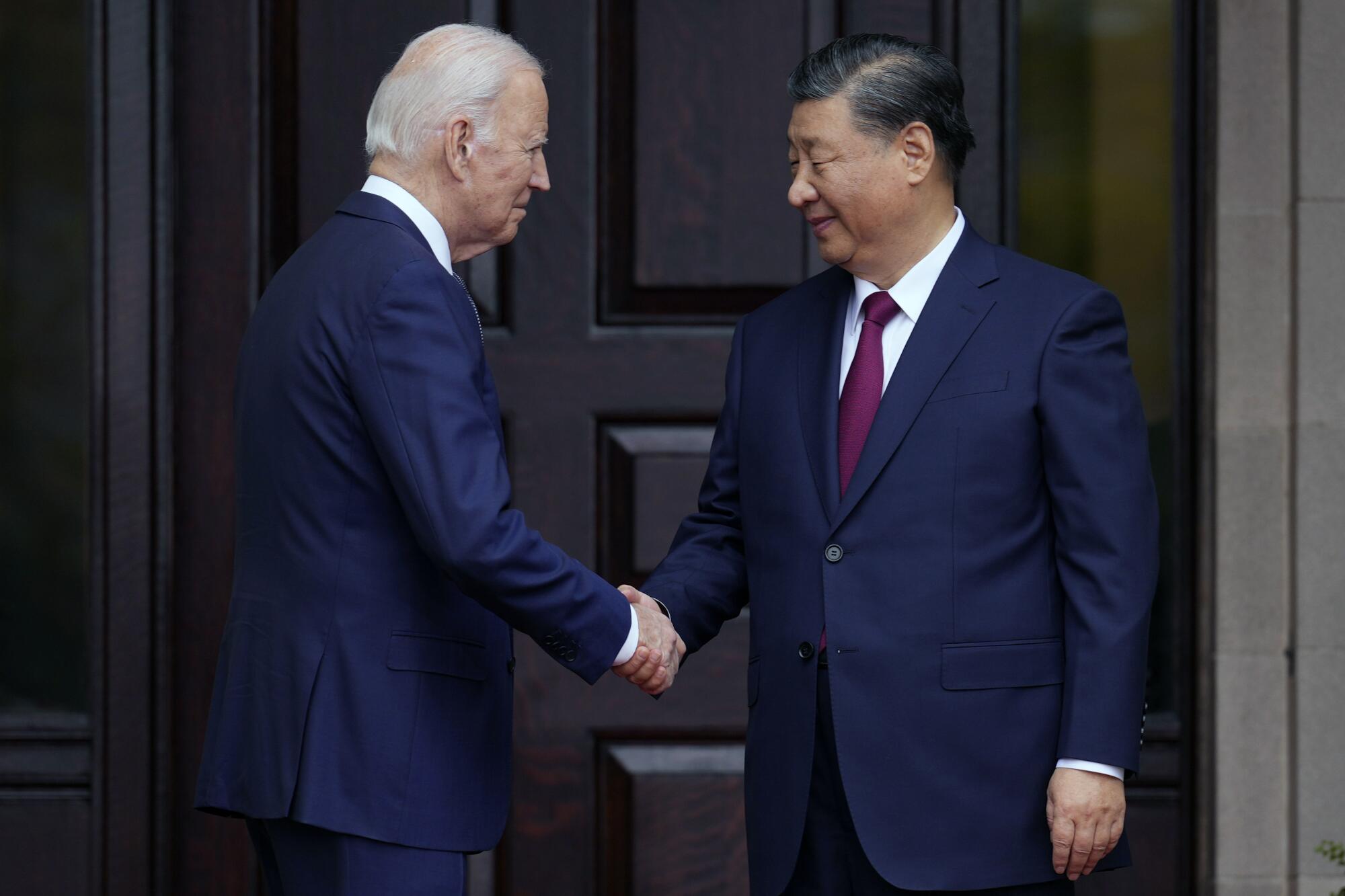
Three years ago, in the idyllic town of Woodside south of San Francisco, the United States and China held their first high-level talks on the dangers posed by artificial intelligence. President Xi Jinping and his longtime foreign minister appeared serious in their conviction that a channel should be a established between Beijing and Washington — a red phone for AI in case of emergencies.

They authorized a diplomatic effort that would begin in 2024 in Switzerland, only months before the U.S. presidential election. A large U.S. delegation arrived with high hopes that were abruptly dashed, according to four sources who attended the talks. The Chinese contingent dismissed American concerns over runaway AI as academic, almost theoretical, quickly turning the conversation to export controls seen in Beijing as yet another U.S. effort to hold China back.

“They naturally view any American diplomatic initiative involving limitations or restrictions of one flavor or another on a capability as being a trap,” Jake Sullivan, U.S. national security advisor under President Biden, said in an interview.

Despite the distrust — and Democrats losing the White House to Donald Trump — an accord was struck in November of that year in Peru, where both sides agreed to keep AI out of the command and control of nuclear weapons.

“It was a breaking of the seal that we could actually do something on AI,” Sullivan said. “In the transition, I told the incoming Trump team that they should really pick up that dialogue. But the Trump administration’s view was just far more laissez-faire, and they didn’t seem particularly interested in it.”

“That’s all changed in the past few weeks,” he added.

A Trump administration once eager to gun for technological supremacy is now, for the first time, reckoning with the power AI could unleash if left unchecked.

In a surprise reversal, quiet discussions have taken place ahead of President Trump’s state visit to China this week to explore reviving talks on an emergency channel, officials told The Times, prompted by shared alarm in Beijing and Washington over the debut of Mythos, Anthropic’s powerful new model.

One senior administration official told reporters Sunday that the White House was looking to create a channel of communication for AI like others that they have “in many areas that have intense focus with the U.S. and China.”

“I think what that channel of communication looks like, its formality and what that looks like, is yet to be determined,” the official said, “but we want to take this opportunity with the leaders meeting to open up a conversation. We should establish a channel of communication on that matter.”

Mythos’ capabilities are seen across the industry and government as those of an unprecedented cyberweapon, able to infiltrate and exploit digital communication systems — including government databases, financial institutions and healthcare programs — with untold consequences.

Whether an announcement will come to fruition this week is not yet clear. Any talks between the United States and China over AI regulations — designing some kind of arms control agreement governing the use of a technology that neither side fully understands or controls — will be fraught with suspicion, misunderstandings and risk, experts say.

“Right now, there is almost no support from U.S. policymakers to engage in formal discussions on AI governance with China,” said Aalok Mehta, director of the Wadhwani AI Center at the Center for Strategic and International Studies.

“The logic is that this is a winner-takes-all race,” Mehta said, “and that it’s imperative to accelerate AI progress to ensure that the United States wins that race.”

America in the lead

China would enter those discussions with a powerful argument, that U.S. leadership in AI — and the prevailing strategy of American AI companies — is propelling the world to a fraught frontier.

Every major U.S. player in the arena — OpenAI, Google, Anthropic, Microsoft and Meta Platforms — is racing to be the first to build a model capable of artificial general intelligence, or AGI, a threshold without a common definition, but that most agree will require a model to perform any intellectual human task.

The prevailing theory is that the first to achieve AGI will secure a prize that multiplies itself: a self-training, recursively improving intelligence, growing exponentially and leaving all competitors in its wake.

Chinese companies, by contrast, are following a state-sanctioned strategy focused on integrating AI into siloed industries and systems, training models to improve individual tasks and accelerate growth in a more tailored approach.

“The Chinese believe there is no single race, but multiple races,” said Scott Kennedy, senior advisor on Chinese business and economics at the Center for Strategic & International Studies. “The U.S. is focused on achieving AGI, while China is focused on diffusion and applications of AI into the rest of their economy — manufacturing, humanoid robotics, all aspects of the internet of things.”

China scholars, AI industry insiders and successive administrations have questioned Beijing’s strategic thinking and forthrightness.

“It’s so baked into the community here that AGI will have this transformative potential that people can’t believe China isn’t focused on this, as well,” said Matt Sheehan, a scholar of global technology issues at the Carnegie Endowment for International Peace with a focus on China. “It says it’s focused on applications, but is that a fake out for an AGI program hidden in the mountains somewhere?”

But most insiders believe that Beijing’s guidance to Chinese companies reveals its true intentions.

“They are not as AGI-pilled as the United States is, and I think that remains the case today,” Sullivan said, “so they regarded a lot of the conversation in the U.S. around extreme frontier risk — misalignment and loss of control — as a bit abstract, and not really as relevant to how they saw AI diffusing in China.”

President Biden greets Chinese President Xi Jinping in Woodside, Calif., in 2023.

President Biden greets Chinese President Xi Jinping in Woodside, Calif., in 2023.

(Doug Mills / Pool Photo)

Although China’s progress has exceeded U.S. expectations — especially since DeepSeek released its model over a year ago — the state has focused computer power on specific applications rather than the broad strategy needed to develop more powerful models capable of advancing toward AGI.

“It’s not just chips. It’s money,” Sheehan added. “China’s leading companies are much more financially constrained than U.S. companies. There’s concern over a bubble here, but OpenAI is valued at something near $800 billion. Leading Chinese companies that have gone public are valued at $20 billion. There’s just an orders-of-magnitude gap in available financing.”

Still, some in the U.S. government fear China won’t need comparable computing power if it simply steals the technology wholesale.

Doing so isn’t simple. But last month, in a memo, the White House Office of Science and Technology Policy accused Chinese actors of “industrial-scale campaigns to distill U.S. frontier AI systems,” in effect replicating the performance of the most advanced existing models “at a fraction of the cost.” The memo did not accuse Beijing of endorsing the activity.

In the process, the memo added, carefully constructed security protocols are deliberately stripped away.

China’s negotiating advantage

Whatever its strategic calculus may be, China would enter talks with the Trump administration trailing in the race — while disagreeing on the nature of the finish line.

AGI, in theory, could reach a stage of recursive self-improvement that results in a loss of human understanding or control. But if it is only the Americans, and not the Chinese, seeking to reach that threshold, then who is responsible to stop it?

Daniel Remler, who led AI policy at the State Department during the Biden administration and took part in the Geneva talks, cast doubt on Chinese claims of disinterest in AGI and ignorance of its risks. China falling behind in the race is no strategic design, he said.

“Chinese technologists are close observers of the U.S. AI ecosystem, and sometimes they say what they think,” Remler said. “Many were impressed by the [Mythos] model to the point of despair. Leaders in China’s top AI labs have been vocal in recent months, even before Mythos, about how compute-constrained they are at the frontier. Some have said they may never catch their American competitors.”

Talks at this point in the race could follow a familiar pattern in the recent history of U.S.-China diplomacy, in which Beijing claims it is behind the United States in development, ultimately securing a handicap and greater concessions at the negotiating table.

In other competitive domains — such as with China’s entry into the World Trade Organization and in cybersecurity negotiations between Beijing and the Obama administration — agreements were ultimately reached that Washington believes in hindsight disadvantaged American companies.

The Trump administration, Remler added, “needs to approach AI diplomacy with China with clear-eyed expectations anchored to our own national interests.”

Silicon Valley itself is divided over regulating AI. Anthropic, which was founded on concerns that other AI companies were failing to take safety and alignment concerns seriously, raised alarms over Mythos, its own model, to the Trump administration, a moment that has prompted reflection at the White House on the best path forward.

Spooked after meeting with leaders from America’s top banks over their vulnerabilities, Treasury Secretary Scott Bessent internally advised U.S. government reviews of future model releases — a practice already underway in China, where the training parameters for models, known as “weights,” have been publicly released.

Even the suggestion of government oversight sparked backlash from Silicon Valley. Last week, the White House sent out a memo to reassure industry allies that submitting new models for federal review would be strictly voluntary.

If talks ultimately resume between Washington and Beijing on AI, experts believe the negotiations would be far more complex than those that resulted in arms control agreements governing nuclear weapons in the Cold War.

The superpowers would not only be discussing threats of instability to the global financial system, but also fears of proliferation — advanced AI tools getting into the hands of bad actors interested in using bio- or cyberweapons that could target both countries.

And they ultimately would have to decide whether to discuss regulating the integration of AI into the Chinese and U.S. militaries, an almost unfathomable goal between the world’s biggest adversaries, where trust is lowest and verification would be hardest.

Those in the industry who most fear what artificial superintelligence could bring have told the Trump administration that talks with China are an existential necessity.

Dario Amodei, the chief executive and co-founder of Anthropic, speaks at an event in New York in 2025.

Dario Amodei, the chief executive and co-founder of Anthropic, speaks at an event in New York in 2025.

(Michael M. Santiago / Getty Images)

But even within Anthropic, which has championed diplomacy, there are concerns that Beijing could exploit its current disadvantage to entangle American industry at the cusp of its crowning achievement.

Rather than pushing for a single sweeping agreement, industry insiders are advising the administration to pursue targeted deals with Beijing to mitigate specific risks, like the pact on nuclear command and control, two industry sources said.

In private, both Xi and Chinese Foreign Minister Wang Yi seemed to understand that the gravity of the emerging technology before them required some form of cooperation, Sullivan said.

“At a conceptual level, I believe they had a conviction on that and authorized it,” Sullivan said, “but I believe their level of urgency was considerably lower than ours, and saw this as a longer-term process that would play out over time.”

“Their level of urgency and their stake in it has gone up,” he added.
Source link

China’s AI IPO Boom Leaves US in the Dust

Chinese AI firms dominate Hong Kong IPOs with $22 billion in exits, while US tech listings lag amid investor skepticism.

China’s artificial intelligence companies are driving a sharp divergence in global IPO markets, dominating first-quarter listings in Hong Kong and outpacing U.S. tech peers as investor sentiment fractures across regions.

Consider the trend: Chinese AI firms listed in Hong Kong accounted for four of the largest public listings in the first quarter. According to new data from PitchBook, these companies — Z.ai, MiniMax, Biren Technology and Iluvatar CoreX Semiconductor — collectively helped drive more than $22 billion in AI-related exit value during the quarter.

Adding Edge Medical, a surgical robotics company, brings the total for all five Chinese listings to over $24 billion.

The performance stands in sharp contrast to the muted reception many U.S. technology IPOs have faced. Investors have grown increasingly skeptical of richly valued software companies amid concerns that AI could disrupt traditional software business models.

“It’s genuinely a confluence of factors rather than any single driver,” Harrison Rolfes, senior research analyst at PitchBook, told Global Finance. “The DeepSeek moment in early 2025 fundamentally shifted investor perception of Chinese AI capability, and that rerating carried momentum into these listings.”

Rolfes said geopolitical considerations also played a major role, creating what he described as a “national champion premium” among investors in Hong Kong and broader Asian markets.

“Structurally, these companies came to market at more digestible valuations relative to their growth profiles compared to U.S. tech IPOs, which have repeatedly disappointed at high entry multiples,” he said.

Investor enthusiasm surrounding Chinese AI firms has emerged as U.S. IPO performance deteriorates.

A Record Stretch of IPO Underperformance

According to PitchBook data, the median U.S. IPO has underperformed its benchmark by 42 percentage points within 120 days of listing over the trailing 12 months.

“That’s historically the worst stretch in our dataset,” Rolfes said.

PitchBook noted that 2025 already represented a record low, with median IPOs trailing benchmarks by 35.6 percentage points after 120 days. Early 2026 listings are performing even worse, according to the report.

The closest comparison, Rolfes said, was the post-boom correction in 2021, when median U.S. IPOs lagged their benchmarks by 32 percentage points following aggressive pricing during the .

Globally, the median venture capital-backed IPO has underperformed the Morningstar U.S. Market Broad Growth Extended Index—a broad U.S. equity benchmark—by nearly seven percentage points over the past year. In the U.S., the index as a growth-stock yardstick shows that the gap widens sharply to 42 percentage points within 120 days of listing.

Roughly 66% of companies that have gone public since the start of 2025 are currently trading below their IPO prices, PitchBook found.

“The deterioration is progressive, suggesting that initial pricing optimism is giving way to fundamental reassessment as lockup expirations approach and more information reaches the market,” according to the May 5 report.

The divergence in performance has been particularly stark among high-profile tech listings.

SaaSpocalypse to Blame?

CoreWeave, based in Livingston, New Jersey, saw its shares nearly triple since its debut as investor demand for AI computing infrastructure accelerated. But many other venture-backed listings have struggled—badly.

Among the U.S.-listed laggards are shares of eToro, down 45.2%; Netskope, down 61%; Klarna, down 67.1%; Figma, down 85.7%; and Gemini Space Station, down 86.3%.

PitchBook said broader public SaaS markets have also weakened as investors increasingly treat AI as a threat to incumbent software firms rather than a growth catalyst.

“Public markets appear to be treating AI not as a tailwind for existing software but as a displacement risk, which many are calling a ‘SaaSpocalypse,’ in which incumbents are repriced downward even as private AI unicorns command record valuations,” according to the report.

For investors, the divergence raises questions about whether U.S.-listed AI companies still offer the best risk-adjusted exposure to the global AI boom.

“The companies leading Hong Kong’s surge — semiconductor designers, applied AI platforms and robotics-adjacent businesses — are generating real revenue with defensible vertical positioning, and they have outperformed their U.S. counterparts by a wide margin,” Rolfes said.

What’s Next?

Expect investors to take a closer look at how heavily their portfolios are tilted toward specific geographies, considering AI-related valuation premiums are persisting longer in Hong Kong than in New York.

Rolfes also cautioned that some of the highest-valued Chinese AI names could eventually face corrections. Still, the underlying businesses are stronger than many Western investors have assumed, he argued.

“The broader takeaway,” he said, “is that Chinese AI has likely graduated from a risk to monitor to a market to understand.”

Source link

Trump to discuss Iran with Xi Jinping during China visit: Officials | Donald Trump News

Official says US president will likely ‘apply pressure’ on China over Beijing’s purchase of Iranian oil amid war.

Donald Trump is set to arrive in Beijing on Wednesday evening to discuss the Iran war and other issues with his Chinese counterpart President Xi Jinping.

White House Principal Deputy Press Secretary Anna Kelly said an opening ceremony and meeting will be on Thursday morning, and the trip will conclude on Friday. The US plans to host the Chinese leader during a reciprocal visit later this year.

Recommended Stories

list of 3 itemsend of list

Kelly said that this week’s trip would be of “tremendous symbolic significance” and focus on “rebalancing the relationship with China and prioritising reciprocity and fairness to restore American economic independence”.

Trump’s visit, initially scheduled for earlier this year but postponed in March due to the US-Israel war on Iran, comes as the US president struggles to contain the fallout from the war, both at home and abroad.

A senior administration official told news outlets in an anonymous briefing on Sunday that Trump could “apply pressure” to China on Iran in areas such as oil sales and Tehran’s purchase of potential dual-role military-civilian goods.

US Treasury Secretary Scott Bessent last week accused China of “funding” Iran.

“Iran is the largest state sponsor of terrorism, and China has been buying 90 percent of their energy, so they are funding the largest state sponsor of terrorism,” Bessent told Fox News.

Iran closed the Strait of Hormuz in response to US-Israeli attacks, restricting passage through a key artery of global energy transport.

China has said that it wants to see the war end and hosted Iranian Foreign Minister Abbas Arraghchi last week. At the same time, Beijing has refused to recognise Washington’s “unilateral” sanctions on Iran’s oil sector.

Disruptions stemming from the war have disrupted the global economy, with Asian states that depend on imports from the Middle East especially hard hit.

Trump could also bring up China’s support for Russia during the talks, along with trade and rare earth minerals, a vital resource for the US tech sector. Business executives from aerospace manufacturer Boeing and a handful of agricultural companies are set to travel with the US delegation.

The anonymous administration official said that no change was expected regarding the US stance on Taiwan, a main sticking point in relations between Washington and Beijing. China considers the self-ruling island a part of its territory, but the US has deep security and economic commitments to Taiwan.

Source link

Taiwan fears Trump will speak off-script on its fate in Beijing

A resolute Secretary of State Marco Rubio took to the White House lectern Tuesday and declared the United States, under President Trump’s leadership, had launched a bold new operation to reopen the Strait of Hormuz, based on the principle that international waterways must remain free.

An hour later, Trump walked it all back, ending the complex military endeavor after less than a day.

It was just the latest evidence to America’s allies that the word of the U.S. government is subject entirely to the president’s whims. And such is the worry fueling concerns in Taipei ahead of Trump’s state visit to China this week.

Privately, senior administration officials have assured Taiwanese leadership ahead of the trip that Trump has no intention of changing long-standing U.S. policy on the island, two sources familiar with the discussions said — a stance of “strategic ambiguity” that has avoided any declarative statements on Taiwanese independence since it was coined by Henry Kissinger 55 years ago.

A White House official was definitive that U.S. policy toward Taiwan “remains the same as the first Trump administration.”

“The U.S. One China policy, as our cross-strait policies are collectively known, is based on the Taiwan Relations Act, the three U.S.-PRC Joint Communiques and the Six Assurances to Taiwan,” the official said. “There is no change to our policy with respect to Taiwan.”

But Chinese officials told The Times that their president, Xi Jinping, intends to raise the matter as a top priority, knowing that only one person — Trump himself — speaks for the administration today.

Whether Xi can leverage the intimacy of a private audience to shift Trump’s stance, potentially linking it to other U.S. objectives, is the source of significant concern here.

Taiwanese officials fear even the most subtle rhetorical change in policy from Trump could imperil a delicate status quo that has held, to its benefit, for decades. They have similarly sought assurances that the administration will follow through on a pending U.S. arms sale worth over $10 billion, which received approval from Taiwan’s legislature on Friday.

“The most serious scenario would be if President Trump were to make an impromptu statement, such as, ‘I oppose Taiwanese independence,’ particularly if he were to link this to trade, the Iran issue, or a summit agreement,” said Chienyu Shih, of the Institute for National Defense and Security Research in Taiwan. “This would constitute a rhetorical concession of substantial significance to Beijing.”

Rubio told reporters at his news conference Tuesday — with a similar confidence he expressed on the Iran file — that China understands Washington’s long-standing position on the island.

“I’m sure Taiwan will be a topic of conversation. It always is. The Chinese understand our position on that topic — we understand theirs,” Rubio said.

“I think both countries understand that it is in neither one of our interests to see anything destabilizing happen in that part of the world,” he added. “We don’t need any destabilizing events to occur with regards to Taiwan, or anywhere in the Indo-Pacific. And that’s to the mutual benefit of both the United States and the Chinese.”

Trump has suggested a willingness to shift U.S. policy on Taiwan before.

During his initial campaign for the presidency in 2016, Trump openly questioned the One China policy, drawing ire from Beijing for suggesting he might endorse Taiwanese independence. He accepted a call from Taiwan’s president after his victory and would later support significant arms sales to Taipei.

And yet, at a 2017 meeting with Xi, Trump vacillated, telling the Chinese leader he could “deal with” the Taiwan issue in “a matter of months,” according to the Wall Street Journal. The Chinese were reportedly so flabbergasted by the comment that they dismissed it as rhetorical flourish.

“There is concern that the conversation between the two leaders could veer into sensitive territory on the topic of Taiwan,” said Brian Hart, deputy director of the China Power Project at the Center for Strategic and International Studies, “but there are many in the administration who would still appreciate the importance of general continuity in U.S. policy.”

U.S. support for Taiwan’s democratic movement used to be a matter of principle. Today, Washington sees it as a matter of national security. Over 60% of semiconductors are produced in Taiwan, including 90% of the world’s most advanced chips. And it is viewed as the clasp of the first island chain guarding against Chinese maritime expansion.

A robust debate between Taiwan’s Cabinet and the opposition in parliament ended Friday not over whether to accept U.S. defense equipment, but over how much to spend. The Legislative Yuan approved $24 billion in purchases — including a defense package passed by Congress in December and the pending arms sale — falling short of Taipei’s $40-billion proposal.

Anticipation for the president’s state visit is high here in the capital city, where local news is filled with questions over the influence Trump’s war in Iran might have on his appetite for supporting Taiwan.

Chinese defense analysts have seen the war as a sign of U.S. weakness. But Taiwanese defense experts have taken away a different lesson: cheap equipment from a lesser military, such as dumb mines thrown in a strait, may just be enough to paralyze a superpower.

The latest U.S. National Security Strategy, released by the Trump administration in December, emphasized the importance of support for Taiwan and the status quo.

But the Taiwanese took note that the strategy also called for an end to forever wars in the Middle East, offering little preview of the president’s sudden strategic pivot on Iran in February, launching a war few saw coming.

What Trump chooses to say in China “might be difficult to predict,” said Jyh-Shyang Sheu, a scholar of Chinese politics and military capabilities based in Taiwan.

But “in Taipei, we are still focusing on the U.S. policy,” he added, “more focusing on what he does instead of what he says.”

Source link

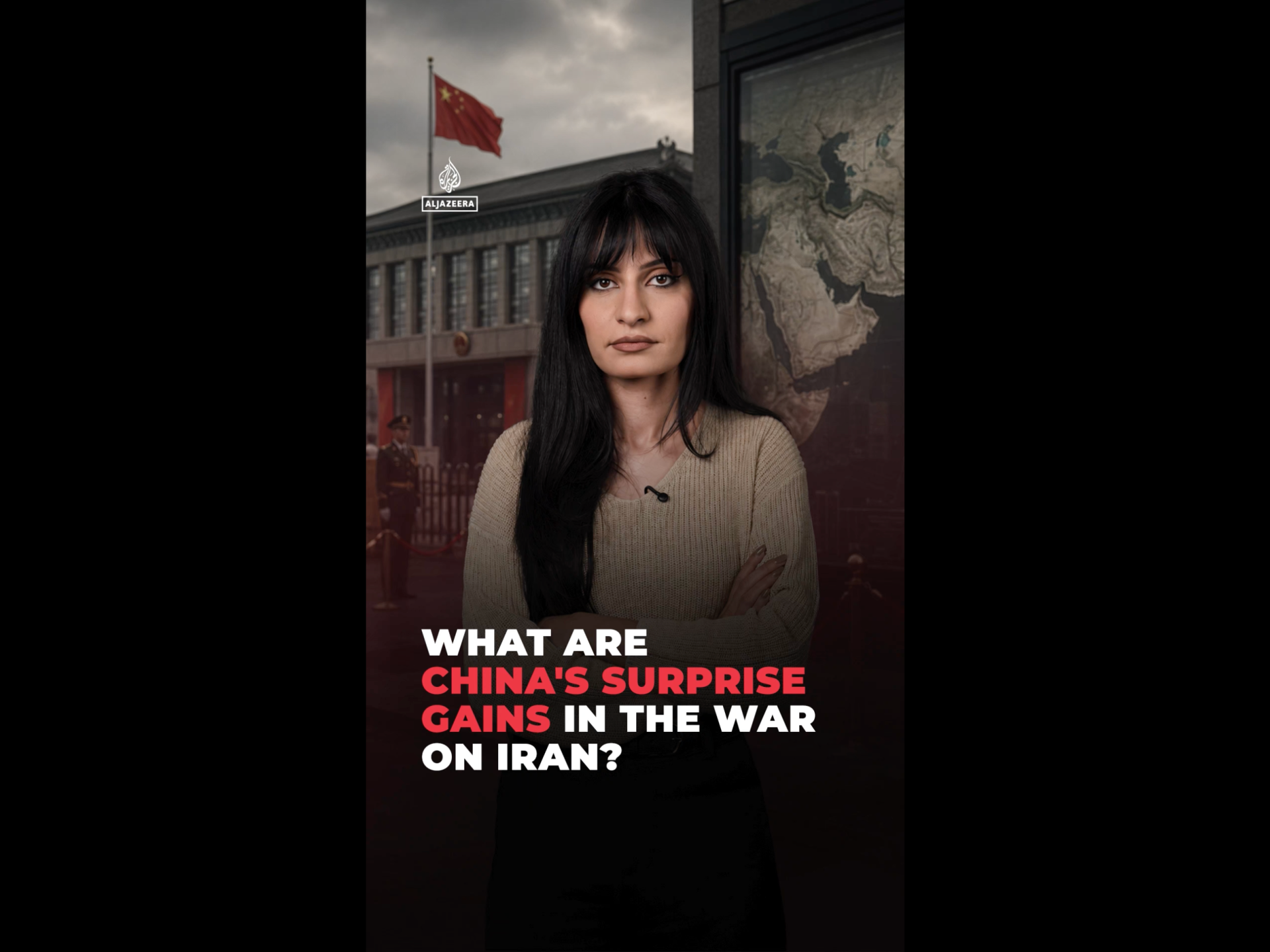
What are China’s surprise gains in the war on Iran? | US-Israel war on Iran

NewsFeed

Iran’s Foreign Minister Abbas Araghchi is in Beijing, seeking support on a deal with the US, while US President Trump will be in China next week, and Iran will be on the agenda.

Why is everyone turning to China? What role is Beijing playing in the US-Israel led war on Iran?

Source link

Asian American and Pacific Islander-owned restaurants to support in L.A.

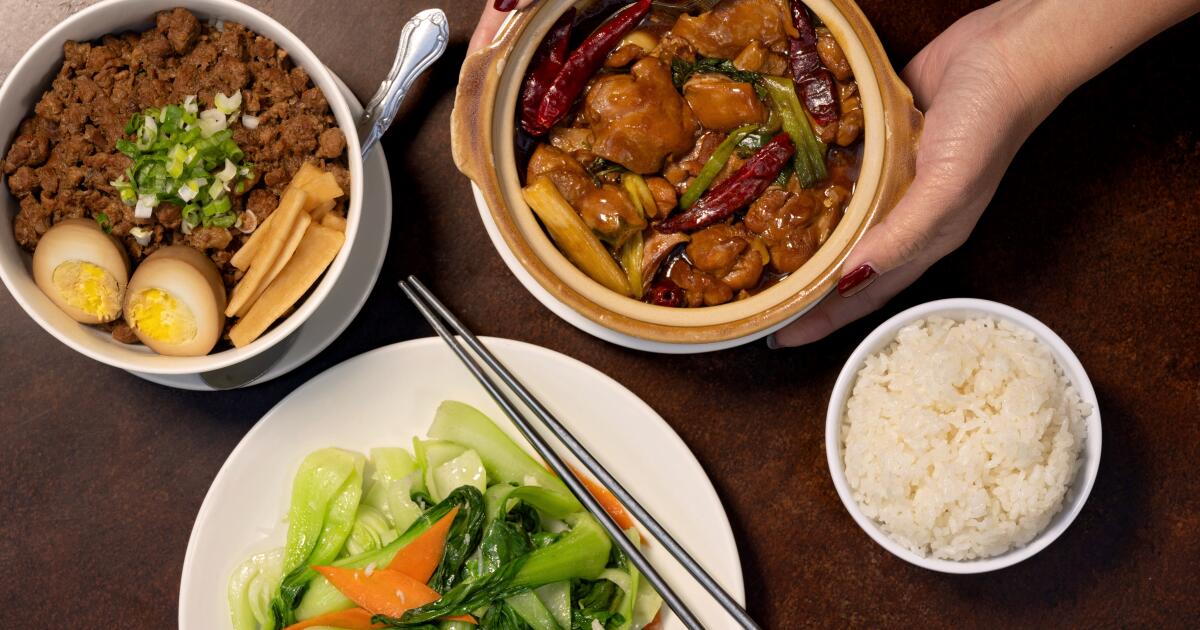
Los Angeles is a city rich with regional specificity when considering the cuisines of Asia. When someone asks for a restaurant recommendation for “Korean food” or “dumplings” or “Thai,” I encourage them to be more specific. Are you in the mood for xiao long bao, mandu, gyoza or momos? You want to know where to get barbecue in Koreatown? Those sizzling grills crowded with galbi, while dependably righteous, only scratch the surface of the breadth and depth of Korean cuisine in what is home to the largest Korean diaspora outside of Korea.

There are omakase experiences for every price point. Cramped izakayas. A restaurant where the sole speciality is lamb prepared in the style of the Uyghur people of China’s Xinjiang province. Pho parlors and banh mi shops with pâté-smeared baguettes. Sunny Taiwanese breakfast restaurants slinging steaming bowls of congee and tightly wrapped fantuan.

AAPI-owned restaurants act as the vital centers of countless communities around the city. The San Gabriel Valley, Westminster, Little Bangladesh, Koreatown and so many more. These are places that are both hubs for thriving immigrant communities and sought-after dining destinations.

Here’s a list of 20 AAPI-owned standouts from our most recent guide to the 101 Best Restaurants in the city. — Jenn Harris

Source link

Egyptian military bases: a strategic linchpin for China’s interests in the Eastern Med and Red Sea

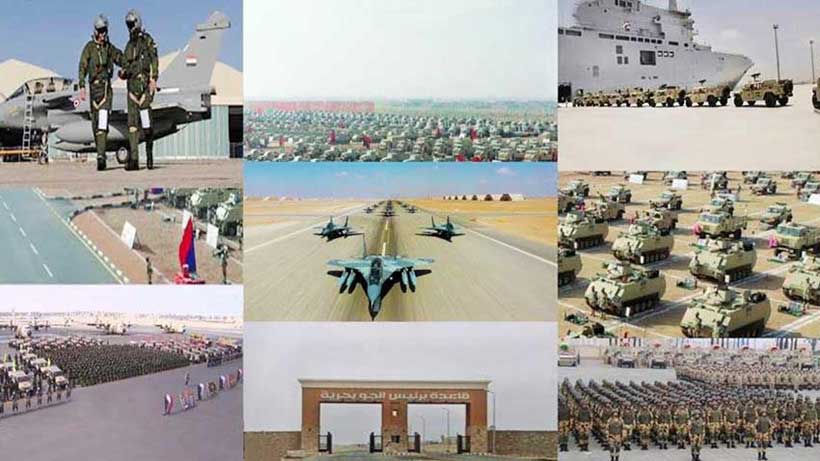
Chinese military and intelligence analyses for 2025 and 2026 indicate that China views the expansion of the Egyptian Armed Forces in establishing numerous naval and air bases, such as the Bernice and Gargoub bases, with strategic interest. Beijing considers this trend, spearheaded by the Egyptian political leadership under President El-Sisi and the Egyptian Ministry of Defense, a vital component of a comprehensive strategic partnership between Egypt and China, aimed at securing shared interests in strategically vital regions. Chinese intelligence and military agencies view the Egyptian expansion in establishing military bases, such as the Mohamed Naguib base, the July 3 base, and bases east and west of the Suez Canal, as part of a comprehensive Chinese strategy to develop the Egyptian Armed Forces and enhance their deterrent capabilities against Beijing’s adversaries in the region. This perspective aligns with Beijing’s view of Egypt as a key strategic partner in Africa and the Middle East. The Chinese military establishment’s vision for this Egyptian military development of air and naval bases up to 2026 can be detailed, as follows: Supporting the Egyptian political leadership’s vision, from a Chinese perspective, of Egyptian military development under President Abdel Fattah al-Sisi, is seen as a serious attempt to modernize the army and transform it into a smart deterrent force capable of protecting national security and the country’s economic interests. This aligns with China’s +1 strategy (localization), as China seeks to leverage the development of Egyptian bases to become centers for localizing Chinese military technology in Egypt, particularly in the areas of unmanned aerial vehicles (UAVs), such as the Wing Loong and advanced air defense systems, such as the HQ-9B.

In this context, China views Egypt’s expansion in establishing military bases, such as the Mohamed Naguib Base, the July 3 Base, and the bases east and west of the Suez Canal, with strategic interest as a crucial element in strengthening the comprehensive strategic partnership between Cairo and Beijing. China considers these Egyptian military bases, especially those located on the Mediterranean Sea and near the Suez Canal. Bases like the July 3rd Air Base serve as vital support points for protecting China’s commercial interests and the routes of its Belt and Road Initiative, which passes through the Egyptian Suez Canal. Egypt represents a cornerstone in China’s 21st-century strategy. Therefore, China aims to bolster Egypt’s deterrent capabilities (a defense partnership). Chinese military officials believe that modernizing the Egyptian armed forces through these naval and air bases and localizing Chinese defense industries in Cairo, in accordance with President Sisi’s vision, enhances the independence of Egyptian military decision-making, paves the way for multipolarity, supports developing countries in the Global South, and contributes to regional stability. Relations between Egypt and China have moved beyond mere arms deals to the localization of Chinese technology within Egypt, enabling Egypt to confront regional challenges more effectively and creating a kind of regional balance of power. Here, Beijing, by supporting Egyptian military expansion through these bases, aims to create a strategic balance in the region amidst a growing Egyptian-Chinese rapprochement seen as an alternative to or complement to traditional partnerships with the West. This can be inferred from the military exercises. The air capabilities and joint military exercises between Egypt and China are reflected here. Joint air exercises, such as Eagles of Civilization 2025, and cooperation at Wadi Abu Rish Air Base are Egyptian-Chinese joint training exercises aimed at exchanging expertise in air combat and protecting maritime routes. This coincides with Egypt’s interest in military and arms deals with China, such as the J-10C. Other Egyptian military negotiations with China regarding the purchase of advanced submarines, known as the Yuan class, are also underway. This reduces Egypt’s military dependence on Washington and the West and strengthens the Chinese presence in the Egyptian military arsenal. This reflects a convergence of military visions between the two countries, with China supporting Egypt’s efforts to modernize its military infrastructure. The new bases are considered a cornerstone for securing shared interests in the Eastern Mediterranean and the Red Sea.

Beijing also aims to strengthen the comprehensive strategic partnership. Here, the Chinese vision extends beyond mere arms deals; it views this as a core partnership aimed at establishing a broad military alliance with Egypt to develop the Chinese military Silk Road. This includes joint operational planning and training exercises, as demonstrated in the Civilization Eagles 2025 maneuvers. China seeks to effect a comprehensive shift in the regional balance of power. Chinese intelligence believes that establishing bases and developing naval and air forces will grant Egypt strategic independence and reduce its dependence on the West. This, in turn, opens the door for China to enhance its influence in the region through defense cooperation, thereby securing shared Chinese and Egyptian military interests. Beijing considers securing Egyptian bases for maritime routes (the Suez Canal) and the Red Sea to be in line with Chinese economic and security interests within the framework of the Belt and Road Initiative. In general, the Chinese military establishment views Cairo as working to build a strong regional pivot point, and Beijing sees this expansion as an opportunity to deepen defense and technological ties with Cairo, paving the way for the formal declaration of a Chinese-Egyptian military Silk Road partnership.

China views the new Egyptian military bases as a means of protecting its strategic interests within the framework of the Belt and Road Initiative. These bases, particularly those located on the Red Sea, the Mediterranean Sea, and the Suez Canal, occupy vital maritime chokepoints, and China considers them a guarantee for the security of its international trade routes. The relationship between Egypt and China has evolved from mere arms purchases to the localization of defense industries, such as the production of unmanned aerial vehicles (UAVs) and electronic warfare systems, increasing Egypt’s military reliance on Chinese technology. These Egyptian military bases, which enhance Egypt’s rapid deployment capabilities, align with China’s interests in establishing a multipolar regional order that reduces American influence in the Middle East. Chinese intelligence, military, defense, and security reports indicate a qualitative shift in Egyptian military doctrine. Chinese military institutions affiliated with the People’s Liberation Army analyze that Egyptian military bases, such as the July 3rd base, provide strategic depth and protection for economic assets (gas fields and the Dabaa nuclear power plant), thus contributing to the economic stability in which China participates. For this reason, the Chinese People’s Liberation Army (PLA) is seeking to train and qualify the Egyptian military elite through the Military Academy for Advanced Studies as an alternative to Western and American training.

The Chinese intelligence and military establishments view the Egyptian army’s expansionist vision in establishing naval and air bases within Egypt as part of the development strategy adopted by the Egyptian Armed Forces and the political leadership of President El-Sisi. This strategy aims to complete the modernization of the Egyptian Armed Forces and advance the Chinese military Silk Road with Egypt’s assistance. China supports the Egyptian Armed Forces’ efforts to modernize Egyptian military infrastructure, considering the new Egyptian military bases a cornerstone for securing China’s shared interests in the Eastern Mediterranean and the Red Sea. China views these new Egyptian military bases, particularly on the Red Sea, as essential for securing Chinese trade routes (the military/maritime Silk Road) and mitigating risks. In addition to the significant role Egypt plays for China as a regional power center and a key player in the balance of power, relevant military circles in Beijing analyze the modernization of the Egyptian army as a center of gravity for stability in the Middle East and Africa. A strong and stable army serves China’s interests in the Eastern Mediterranean. Therefore, China translates its vision into tangible support, including modernizing Egypt’s military infrastructure to align with the Chinese Belt and Road Initiative in its maritime, air, and naval components and equipping it with advanced weapons systems.

Based on the preceding understanding and analysis, we conclude that the new Egyptian military bases (naval and air) are considered, according to the Chinese military and strategic vision, strategic strengths. Their benefits extend beyond Egypt, securing China’s commercial and military interests in the Mediterranean and Red Seas. They also provide a Chinese technological alternative in a region previously dominated by Western and American platforms, paving the way for China’s gradual expansion of its military Silk Road initiative.

Source link

Iran’s Araghchi holds talks with China’s Wang Yi in Beijing | US-Israel war on Iran News

Iran’s foreign minister meets his Chinese counterpart one week before President Donald Trump’s visit to Beijing.

Iran’s Foreign Minister Abbas Araghchi is holding talks with his Chinese counterpart, Wang Yi, in Beijing amid tensions with the United States in the Strait of Hormuz.

Araghchi’s one-day trip on Wednesday comes a week before US President Donald Trump’s scheduled ⁠visit to Beijing for a summit with President Xi Jinping on May 14 and 15.

Recommended Stories

list of 4 itemsend of list

China’s official Xinhua news agency reported the meeting between Araghchi and Wang had begun, without providing further details.

Araghchi’s visit to Beijing marks the first time he has travelled to China, a close ally of Tehran, since the US-Israeli war on Iran began on February 28. Araghchi had spoken with Wang by telephone at least three times following the start of the war.

Earlier in Washington, DC, US Secretary of State Marco Rubio expressed hope that Beijing would reiterate to Tehran the need to release its chokehold on the Strait of Hormuz.

Iran effectively closed the strait, through which major oil and gas supplies passed, after the war began, sending prices of fuel and fertiliser skyrocketing and rattling the global economy.

Following a ceasefire in April, the US imposed its own blockade on Iranian ports in a bid to compel Tehran to agree to Washington’s terms in peace talks.

Al Jazeera’s Katrina Yu, reporting from Beijing, said two things will be front and centre on the agenda of Araghchi and Wang’s meeting – maintaining the ceasefire and reopening the Strait of Hormuz.

“We know that China has been very critical of the US’s naval blockade on Iranian ports, calling it dangerous. But increasingly, Beijing has also been critical of Iran’s decision to continually close that vital chokepoint,” Yu said.

Wang is expected to speak to Araghchi about what kind of support China can continue to offer Iran if it continues to close the strait.

“Iran will need Chinese backing, for example, at the United Nations, to continue to block any action that would put any additional sanctions on Iran because of its closure of the strait,” Yu said.

“Reportedly, the Iranian foreign minister is looking for clarity from Beijing as to what it will put on the table when Xi meets with Trump, and whether Beijing will be making any concessions to Washington that could make Tehran nervous.”

China, in return, “wants its own assurances that Iran won’t act in any escalatory way or any dramatic fashion in the lead up to that very important meeting”, she added.

Araghchi and Wang’s meeting came as Trump announced a pause on a US military operation to escort stranded ships out of the Strait of Hormuz.

The effort, which began on Monday, ratcheted up tensions, with the US military claiming it sank several Iranian boats that attempted to interfere in the operation. The United Arab Emirates also reported coming under missile and drone attacks from Iran, with one assault sparking a fire at an oil refinery. Tehran denies the launching the attacks.

Trump said on Truth Social the pause was based “on the request of Pakistan and other Countries” and because “Great Progress has been made toward a Complete and Final Agreement with Representatives of Iran”.

Pakistan has been leading efforts for a peace deal between Iran and the US.

The two sides held direct talks in Islamabad on April 11 and 12, but the negotiations ended without an agreement. Key sticking points include US demands for Iran to halt all nuclear enrichment and Tehran’s wish to continue to exercise control over the Strait of Hormuz.

Source link

World’s most beautiful museums revealed

THE most beautiful museums in the world have been named but you will have to hop on a plane to visit any of them.

The 2026 list has been revealed Prix Versailles, with the architecture competition including everything from airports to train stations.

The world’s most beautiful museums have been revealed and NONE are in the UK Credit: Alamy
Lithuania’s Lost Shtetl Museum was the only European entry Credit: Alamy

Yet the 2026 The World’s Most Beautiful Museums list only has one entry in Europe – and it wasn’t in the UK.

“Beyond welcoming their visitors, we hope these places will be sources of inspiration for all those who serve the common good of humanity.”

The only European winner was Lost Shtetl Museum in Šeduva, Lithuania.

Designed to look like a small town (being the Yiddish translation of Shtetl), the museum is based on the typical Lithuanian Jewish family.

NO KID-DING

Small UK museum ‘made for kids’ named best in Europe and it’s free to visit


PLAY ON

The huge new ‘world-class’ indoor attraction set to open in the UK

Tourists have raved about it, with one saying: “This museum is one of the best at least in Baltics, if not in Europe.”

Zayed National Museum in Abu Dhabi, which opened in December last year and cost £502million to build, also made the list.

The museum goes back 300,000 years of the Emirates, and is a tribute to the UAE’s first president Zayed bin Sultan Al Nahyan.

It was even designed by the UK architectural company Foster + Partners (behind London’s Gherkin) and has a collaboration with the British Museum to offer more than 500 artifacts.

The new Zayed National Museum in Abu Dhabi made the list Credit: Alamy
Xuelei Fragrance Museum was also named, and it the largest fragrance museum in the world) Credit: prix versailles / © Xuelei Fragrance Museum

America’s National Medal of Honor Museum in Texas was also named, which features recipients of the highest military awards.

In Uzbekistan, the Islamic Civilization Center made the list, which is home to a museum as well as libraries and science labs.

Having opened back in March 2026, it has also been awarded a Guinness World Record for being the world’s largest museum of Islamic civilization.

China had two entries on the most beautiful museum list – the Xuelei Fragrance Museum (the largest fragrance museum in the world) and Shenzhen’s Science and Technology Museum which opened last year.

America’s Medal of Honor Museum was named too Credit: 2025 © Corey Gaffer LLC.
The Islamic Civilization Center in Uzbekistan is even a world record holder Credit: Alamy

And finally, Japan‘s MoN Takanawa: The Museum of Narratives, which opened in March 2026, was also praised.

Jérôme Gouadain, Secretary General of the Prix Versailles explained: “The World’s Most Beautiful Museums List for 2026 stands out for the quality of its architectural interpretations and staging, elevating the sites with extraordinary narrative power.

“Together, these museums provide a real illustration of how strength and talent can be revealed through harmony, sensitivity and sharing.”

Previous winners on the list include Grand Palais in Paris (2025) and Grand Egyptian Museum (2024).

The New Building of Shenzhen Science and Technology Museum in China’s Shenzhen is a geometric marvel Credit: Alamy

Here is one of the UK’s newest museums that opened last year.

As well as the UK’s newest most popular museum.

Here’s some of the most beautiful museums in the UK that SHOULD have made the cut

The British Museum, London – a Greek Revival style building with the biggest covered public square in Europe.

The Ashmolean, Oxford – founded in 1683, it is the UK’s first public museum

Royal Pavilion & Garden, Brighton – created as a seaside palace for King George IV and inspired by India

The Fitzwilliam Museum, Cambridge – the Grade I listed building is built in a Neoclassical style

Natural History Museum, London – described as a ‘cathedral to nature’ and made to be big enough for huge creatures

Source link

Explosion at China fireworks plant kills 26, dozens hurt

May 5 (UPI) — An explosion at a fireworks factory in China’s Hunan Province has killed 26 people and injured dozens more, state media reported Tuesday, prompting Chinese President Xi Jinping to call for those responsible to be held accountable.

The blast occurred Monday afternoon at the Huasheng Fireworks Manufacturing and Display plant in the southern city of Liuyang, the state-run Xinhua News Agency reported. Authorities said 26 people were killed and 61 injured at a press conference Tuesday.

Five rescue teams totaling nearly 500 personnel were dispatched to the scene, while an area with a radius of nearly two miles was evacuated due to the risk of further explosions.

Rescuers set up firebreaks and sprayed water over the site to “prevent secondary accidents during the rescue,” Xinhua said.

Mayor Chen Bozhang of provincial capital Changsha told reporters Tuesday that search and rescue operations were largely complete, adding that real-time air and water monitoring showed no signs of environmental contamination.

The person in charge of the fireworks company has been taken into custody, Chen said.

Aerial footage from Chinese state broadcaster CCTV showed widespread damage, with smoldering factory buildings leveled across a wide area.

Xi on Tuesday ordered a prompt investigation into the accident and said “those responsible must be held accountable,” state media reported. He also called for stronger risk screening and hazard controls in key sectors, along with enhanced public safety management.

The blast follows other deadly fireworks-related accidents in China in recent years. Ahead of Lunar New Year celebrations in February, an explosion and fire at a fireworks store in Jiangsu Province killed eight, prompting officials to call for increased safety checks on pyrotechnics.

In 2019, another fireworks factory explosion in Liuyang killed 13 people. The city is the hub of China’s fireworks manufacturing industry, accounting for about 60% of the domestic market and roughly 70% of exports, according to state media.

Source link

Japan, Vietnam boost supply chain ties amid China concerns

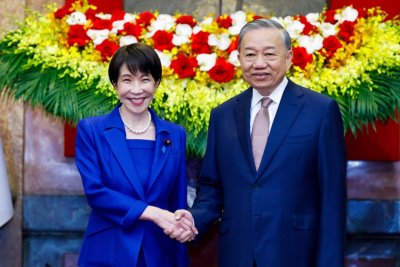
Vietnamese President and General Secretary of the Communist Party To Lam (R) shakes hands with Japanese Prime Minister Sanae Takaichi (L) during their meeting at the Presidential Palace in Hanoi, Vietnam 02 May 2026. Photo by LUONG THAI LINH / EPA

May 3 (Asia Today) — Japan and Vietnam agreed to deepen cooperation across key economic security sectors, including energy, critical minerals, semiconductors, artificial intelligence and space, as Tokyo seeks to strengthen supply chains and reduce reliance on China.

Prime Minister Sanae Takaichi met with Vietnam’s top leadership, including Communist Party General Secretary and President To Lam and Prime Minister Le Minh Hung, during her visit to Hanoi. After the meetings, she said both countries had designated economic security as a top priority in bilateral cooperation.

According to Vietnamese media and Reuters, the two countries agreed Saturday to elevate their comprehensive strategic partnership and signed six memorandums of understanding covering technology, climate response and information and communications.

Energy cooperation at the forefront

A key outcome was in energy. Vietnam said Japan will support crude oil supplies to the Nghi Son refinery through a $10 billion “Power Asia” initiative aimed at strengthening energy resilience in the region.

The program, introduced by Takaichi last month, is designed to help Southeast Asian countries affected by disruptions in the Strait of Hormuz by supporting oil procurement, storage and supply chain resilience.

Japan’s Idemitsu Kosan has already decided to send about 4 million barrels of crude oil to Vietnam via routes that bypass the Strait of Hormuz. The shipment, equivalent to about 10 days of refinery operations, followed a request from Vietnam earlier this year.

Strategic message on China

In a speech at Vietnam National University, Takaichi emphasized the risks of overdependence on a single country for critical supplies, a remark widely interpreted as targeting China.

“Overreliance on one country often stems from abnormally low prices,” she said, calling for a “level playing field” in global trade.

She also stressed that regional supply chains depend on secure and open sea lanes, referencing both the Strait of Hormuz and the South China Sea.

The speech reaffirmed Japan’s vision of a “free and open Indo-Pacific,” a framework originally proposed by former Prime Minister Shinzo Abe and now updated for what Takaichi described as a more challenging global environment.

Expanding cooperation in critical minerals

The two countries also agreed to expand cooperation on critical minerals, as Japan seeks to diversify supply chains heavily dependent on China.

Vietnam holds significant reserves of rare earth elements and gallium but lacks refining capacity, leaving it reliant on Chinese processing. Strengthened cooperation could help Japan secure alternative supply sources.

Japan remains one of Vietnam’s largest economic partners, with bilateral trade exceeding $50 billion last year. It is also Vietnam’s largest provider of official development assistance.

Takaichi highlighted Vietnam’s growing role in global manufacturing, citing production of Apple AirPods and Nintendo Switch devices, as part of efforts to encourage renewed Japanese investment.

She is scheduled to travel to Australia next, where she will meet Prime Minister Anthony Albanese to mark the 50th anniversary of bilateral relations and upgrade ties to a “special strategic partnership.”

— Reported by Asia Today; translated by UPI

© Asia Today. Unauthorized reproduction or redistribution prohibited.

Original Korean report: https://www.asiatoday.co.kr/kn/view.php?key=20260503010000231

Source link

China tightens drone rules despite global industry dominance

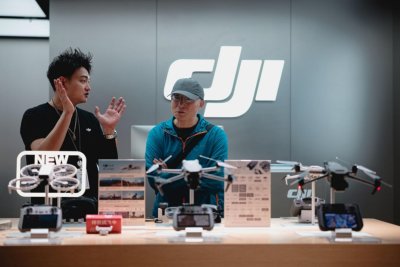
A man talks to the vendor in a DJI drone manufacturer store in Shanghai, China. File. Photo by ALEX PLAVEVSKI / EPA

May 2 (Asia Today) — China has begun tightening regulations on its fast-growing drone industry, prompting concerns that the government may be undermining one of its most competitive global sectors.

Recent reports from Chinese media outlets, including the New Beijing News, indicate that China holds a commanding position in the global drone market, with an estimated market share of at least 70%. Industry leader DJI dominates both domestic and international markets, facing limited competition even as Taiwan makes inroads in Europe.

Despite this strong position, new regulations took effect Thursday in Beijing, effectively designating much of the capital as a no-drone zone. Under the new municipal ordinance on unmanned aerial vehicle management, the transport, sale, rental and operation of drones within the city have been broadly restricted.

The measures have already led to store closures. DJI flagship outlets in areas such as the 798 Art District in Beijing’s Chaoyang district have shut down, in some cases under pressure from authorities.

Officials say the move reflects growing concerns over national security and public safety, as drones are increasingly viewed as potential threats in sensitive areas. Beijing has previously imposed temporary flight bans on low, slow and small aerial objects during major political events, a policy that now appears to be expanding into a more permanent framework.

Analysts say the Beijing regulations could serve as a model for broader nationwide controls. If expanded, such measures may significantly weaken China’s dominance in the global drone industry and could even erode its competitive edge.

Industry insiders have expressed concern that excessive regulation could harm a key growth sector, with some privately warning that China risks damaging its own technological leadership.

— Reported by Asia Today; translated by UPI

© Asia Today. Unauthorized reproduction or redistribution prohibited.

Original Korean report: https://www.asiatoday.co.kr/kn/view.php?key=20260502010000045

Source link

China’s security model blends tech, community, and digital growth

China currently boasts one of the lowest rates of homicide, violent crime, and gun and explosive incidents globally. The Chinese-style sense of security is a comprehensive system integrating advanced technology, community engagement, and continuous improvement in living standards. This has positioned China as one of the safest countries in the world, according to the 2025 Global Security Report, with 98.2% of Chinese citizens feeling safe by 2025, further solidifying its status as a globally stable destination. The pillars of this Chinese-style sense of security are built upon advanced digital technologies, relying on smart networks and modern surveillance systems such as facial recognition and artificial intelligence to enhance the security network within China.

The phrase “Chinese-style security” refers to China’s model for achieving social stability and reducing crime rates. This model is based primarily on three pillars: proactive prevention systems, where, rather than simply addressing crime after it occurs, China focuses on prevention and control through extensive security networks and a constant police presence in key areas; the continuation of the community mobilization system (the Fengqiao model), a historical concept (currently revived) that involves citizens and local committees in resolving community disputes before they escalate into crimes or legal cases, thus promoting the idea of ​​self-regulation and public cooperation with Chinese authorities; and the use of digitalization and artificial intelligence technologies, where China has heavily invested in smart city technologies and the Skynet system. Skynet utilizes millions of cameras equipped with facial recognition and big data analytics to predict suspicious activities and track wanted individuals with high precision. This combination aims to create a secure environment that supports economic growth within China, despite the occasional international debates it sparks regarding the balance between public security and individual privacy.

Data and reports confirm exceptional social stability in China, with citizens’ sense of security exceeding 98% for six consecutive years. This security is attributed to effective governance, advanced digital technologies, and a high standard of living, making China a safe destination for investment and a source of stability. Key features of Chinese governance and the sense of security include increased levels of trust and optimism, with the Chinese people ranking among the world’s highest in trust in the government and optimism about the future, according to trust index reports. A robust safety net exists, built on Chinese-style security through crime prevention systems, community mobilization, and enhanced digitalization. These systemic features, along with numerous other advantages, reflect the stability within China and the state’s ability to fulfill its commitments and provide a safe and stable social environment, earning international praise, particularly in light of global geopolitical conflicts. With the continuation of Chinese-style modernization, ongoing modernization has contributed to raising living standards, thus strengthening the sense of security within China.

Accordingly, the Chinese government and the authorities of the ruling Communist Party of China support several pillars and points that support this approach to enhance the sense of security within the country. Based on current developments, focusing on security as the foundation for development in China, the stability of the situation in China is seen as a key element in boosting investor confidence and building a safe and stable living environment for citizens, which contributes to economic growth. With the intensification of the Chinese-style modernization model, modernization in China is not limited to economic growth but also focuses on improving the quality of life, providing employment opportunities, and upgrading social services, which significantly raises living standards. With the stable sense of security, China, through well-considered social policies, has succeeded in maintaining a high level of social security, which enhances public trust in the government and contributes to long-term stability. This has resulted in continued international praise (amidst crises). At a time when several regions around the world are experiencing geopolitical conflicts, China’s stability stands out as a model attracting the attention and scrutiny of international observers, particularly due to the Chinese state’s ability to effectively manage its internal affairs compared to many systems worldwide, including American and Western ones. This strengthens China’s capacity to lead the developing Global South and strongly promote its model of Chinese governance.

Based on the preceding understanding and analysis, we can see how the development for security strategy can form a fundamental pillar within the Chinese governance system. Improving living standards contributes to consolidating social stability and public security within China. This analysis highlights a delicate equation in the contemporary Chinese landscape, where continuous development (Chinese-style modernization) is linked to social stability, creating a secure environment in a turbulent world.

Source link

China blocks US sanctions against five ‘teapot’ refineries | Business and Economy News

Ministry of Commerce says sanctions against refineries accused of importing Iranian oil violate international law.

China has announced an injunction to block US sanctions placed on five Chinese refiners accused ‌of buying oil from Iran.

The sanctions announced by the United States Department of the Treasury late last month bar the companies from the US financial system and seek to penalise anyone doing business with the firms.

Recommended Stories

list of 3 itemsend of list

In a statement on Saturday, China’s Ministry of Commerce said the sanctions “improperly” restrict business between Chinese enterprises and third countries “in violation of international law and the basic norms governing international relations”.

The Commerce Ministry said it had issued a “prohibition order” stipulating that the sanctions “shall not be recognized, enforced, or complied with” to “safeguard national sovereignty, security, and development interests”.

“The Chinese government has consistently opposed unilateral sanctions that lack UN authorisation and basis in international law,” the ministry added.

It said the order blocked US measures against Hengli Petrochemical (Dalian) Refinery and four other so-called “teapot” refineries: Shandong Jincheng Petrochemical Group, Hebei Xinhai Chemical Group, Shouguang Luqing Petrochemical and Shandong ⁠Shengxing Chemical.

Announcing the sanctions on April 24, the US Treasury Department called Hengli “one of Tehran’s most valued customers”, saying it had generated hundreds of millions of dollars in revenue for the Iranian military through crude oil purchases.

The Trump administration imposed sanctions on the other four refineries named by the Chinese ministry, among other facilities, last year.

China gets more than half of its oil from the Middle East, much of it from Iran.

According to commodities data firm Kpler, China bought more than 80 percent of the oil Iran shipped in 2025.

China’s “teapot” refineries operate independently and are generally smaller than the facilities run by state-owned oil giants, such as Sinopec.

The facilities, which have been crucial to China’s efforts to secure its oil supplies, capitalise on heavily discounted crude sold by countries under sanctions, such as Iran, Russia and Venezuela.

Teapots account for a quarter of Chinese ⁠refinery capacity, operate with narrow and sometimes negative margins, and have been squeezed recently by tepid domestic demand.

US sanctions have created additional hurdles for refiners, including difficulties selling refined products under their correct place-of-origin markings.

Source link