Strategic ambiguity, the US policy of neither explicitly supporting nor opposing Taiwanese independence, has been considered effective for decades in maintaining stability in the Taiwan Strait. However, the summit between Trump and Xi Jinping on May 14-15, 2026, in Beijing revealed signs that this formula’s effectiveness is beginning to be limited. China pushed the US not merely to “not support” but to actively “oppose” Taiwanese independence. The US responded by displaying an inconsistent position. Taiwan openly asserted its sovereignty. All three responses emerged within less than 24 hours, and no international forum was able to manage the contradictions.
AT His strategic ambiguity is not simply a matter of US foreign policy. It reflects deeper limitations in the global governance system in addressing unresolved sovereignty issues. At the same time, China is actively promoting an alternative world order through its Belt and Road Initiative, non-interventionist principles, and multipolarity agenda, which indirectly influence how the Taiwan issue is positioned on the international stage. Without a concrete framework for joint governance, the potential for miscalculations across the Taiwan Strait will continue to increase.
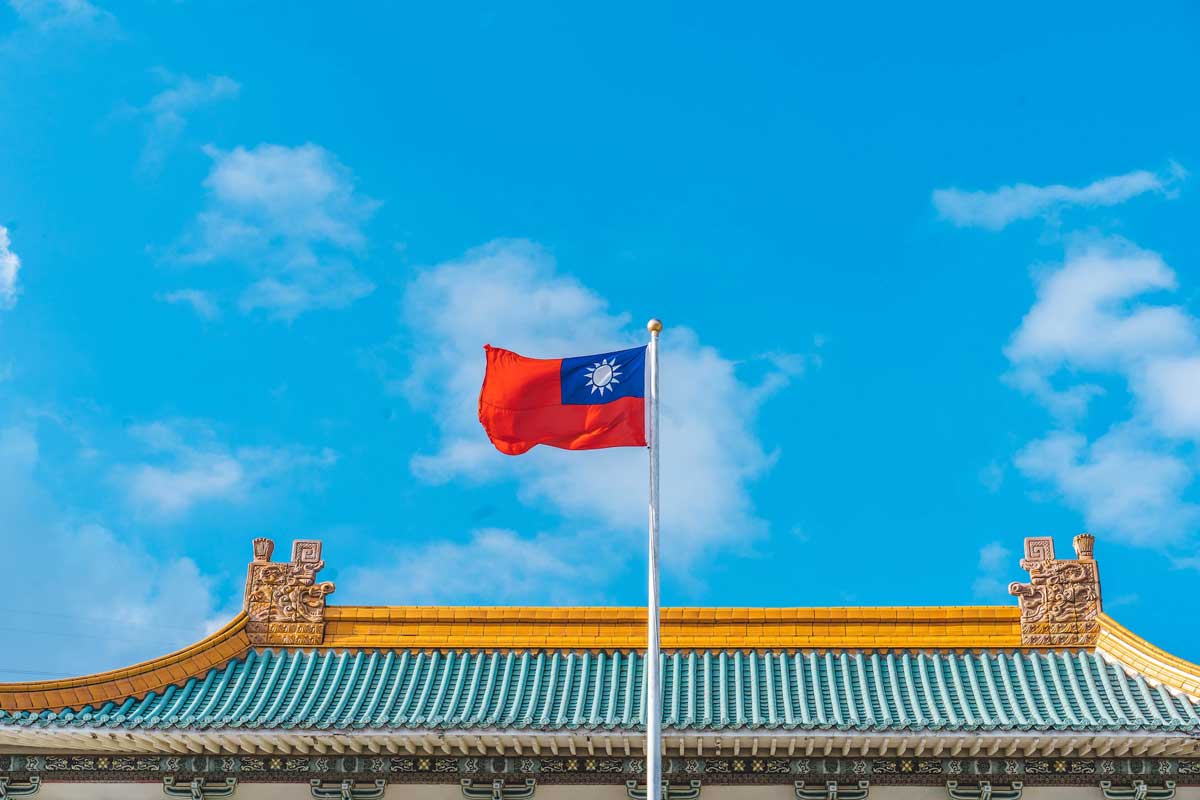
On May 16, 2026, the day after Trump left Beijing, Taiwan’s Ministry of Foreign Affairs issued an official statement. Taiwan is a sovereign and independent nation. It is not under Chinese rule. This statement was not new rhetoric.
What makes this significant is the context. Trump had just called a $14 billion arms sale to Taiwan a bargaining chip in negotiations with Xi Jinping. China had just successfully pushed the US to soften its tone on Taiwan. In less than 24 hours, three main actors make statements that cannot all be true at the same time. And there is no one international institution that has the authority to decide which is more valid.
This isn’t a sudden diplomatic failure. It’s the result of a policy of strategic ambiguity that has been in place for more than five decades and is now beginning to show its limitations.
Strategic ambiguity was once effective because all parties had an incentive not to test its limits. That situation is changing. China is becoming increasingly assertive. militarily and increasingly actively shaping an alternative global order. Taiwan is becoming more assertive in claiming its political identity. The US under Trump is increasingly unpredictable. In these conditions, the ambiguity that once served as a buffer for stability has now become a source of uncertainty. The global governance system lacks adequate instruments to fill the gaps left by this increasingly outdated formula.
Starting from the background, a US strategic ambiguity towards Taiwan was born of deliberate compromise. In the Shanghai Communique (1972), Washington used the word “recognizes” China’s position that Taiwan is part of China, not “accepts.” The difference in vocabulary was no accident. It opened diplomatic normalization with Beijing without formally abandoning Taipei.
This formula was then codified through the Taiwan Relations Act of 1979 and three joint US-China communiques. During the Cold War era and the two decades that followed, this formula remained relatively stable because China was not yet strong enough to challenge it militarily and Taiwan was not yet confident enough to challenge it politically. As noted by T.Y. Wang in the journal Politics and Policy, strategic ambiguity is designed not only to deter China from attacking Taiwan but also to restrain Taiwan from taking steps that Beijing might deem provocative.
But the conditions that made that formula effective have changed structurally. Taiwan’s democratization since the 1990s has produced a political identity increasingly independent of the “One China” narrative. The PLA’s military modernization has changed the cost calculations of conflict. And Trump’s return to the White House has brought a transactional approach that, as noted by the Global Taiwan Institute, exacerbates existing ambiguities with conflicting signals that are record arms sales accompanied by a striking rhetorical silence on US security commitments to Taiwan.
On the ground, this uncertainty has already resulted in a measured escalation. Military exercises: Justice Mission 2025 In December 2025, a full-scale blockade of Taiwan was simulated, with over 90 aircraft crossing the median line of the Taiwan Strait in a single day. These median line violations were not an anomaly. Since 2022, they have become increasingly routine and have rarely elicited an organized response from the international community.
The most important part to understand next is about the One China Policy. The One China Policy affirms that a single label includes three irreconcilable positions. Beijing maintains that Taiwan is an unreturned province and that reunification is a non-negotiable goal. Taipei maintains that the Republic of China (ROC) is a sovereign state that predates the People’s Republic of China and that the two have never ruled each other. Washington maintains its own version, based on the Taiwan Relations Act, that recognizes Beijing’s position without explicitly endorsing it.
These three positions exist simultaneously because they have never been tested in an international forum that has the authority to decide which is more valid. Brookings Institution; he noted that this policy was originally designed for a period when China was not yet acting like a revisionist power. Now, conditions have changed, and the old formula requires a recalibration that has yet to materialize.
There’s a compelling argument here. Strategic ambiguity has also served as a deterrent to war. It prevents China from attacking because it’s unsure whether the US will intervene. It also prevents Taiwan from declaring formal independence because it’s unsure whether the US would defend it. In this logic, ambiguity is a feature, not a bug.
However, analyst Brandon K. Yoder in the European Journal of International Relations, The effectiveness of deterrence hinges on credibility, which is currently eroding. When Trump called weapons for Taiwan a “negotiating chip,” he indirectly communicated to Beijing that the US commitment was conditional. When commitments are conditional, their deterrent effect is significantly weakened.
What results is not new stability, but rather an increasingly unpredictable gray area. Each party operates based on its own assumptions about the limits that can be tested. Without governance mechanisms that explicitly clarify these limits, the risk of miscalculation continues to grow.
The Taiwan issue cannot be read in isolation from China’s broader agenda of reshaping the global order. Over the past two decades, Beijing has not only protested the existing international system but also actively developed an alternative.
The Belt and Road Initiative, which now encompasses more than 140 countries, is more than just an infrastructure project. As analyzed in China Quarterly of International Strategic Studies, BRI serves as both a governance and economic mechanism, linking infrastructure development with new standards of connectivity and cooperation that reflect the Chinese model of development without political conditions.
Beyond the BRI, China is actively pushing three major initiatives: the Global Development Initiative, the Global Security Initiative, and the Global Governance Initiative. They share a common thread that is strengthening the norm of sovereignty, rejecting intervention based on Western values, and promoting multipolarity as a substitute for single-party hegemony. Bruegel noted that the concept of “Community with a Shared Future for Mankind” popularized by Xi at Davos 2017 has even been included in several UN General Assembly resolutions, demonstrating how far China has succeeded in pushing its global narrative into multilateral institutions.
The relevance to the Taiwan issue is that the more countries accept China’s sovereignty-based, non-interference-based governance framework, the more limited the space for international mechanisms to challenge Beijing’s claims to Taiwan. China’s global governance agenda and its claims to Taiwan are not separate issues. They are part of the same project: redefining who has the right to set the rules of the game in what have traditionally been called “internal affairs.”
This also makes Trump’s and Xi’s bilateral approach a more suitable instrument for China’s interests. When the Taiwan issue is managed through negotiations between the two great powers, broader norms, such as the right to self-determination and representation of sovereign entities, are not discussed. Observer Research Foundation noted that BRI cooperation with the UN from 2015 to 2019 was more about mutual legitimacy than structural integration, and a similar pattern is seen in the way China uses multilateral forums to validate its diplomatic positions without actually committing to the process.
Trump’s and Xi’s meeting in May 2026 shows a pattern that deserves serious attention. That is, the Taiwan issue is now managed almost entirely outside the multilateral framework. There are no regional forums, no UN mechanisms, no activated joint protocols. There are just two leaders, two delegations, and an agenda far broader than just Taiwan.
Observation: Both sides reveal a glaring asymmetry. In China’s version, Taiwan is referred to as the “most important issue,” and Xi warned of potential conflict if handled incorrectly. In the US version, Taiwan is not mentioned at all. CSIS noted that the meeting resulted in a commitment to “strategic stability” without concrete instruments to realize it. The lack of crisis communication protocol. Limited incident management framework. There isn’t any commitment to refrain from provocative military exercises.
This is not simply a shortcoming of the meeting. It reflects a more systemic limitation. namely the limitations There is no sufficiently authoritative multilateral platform to address this issue. The UN Security Council is hampered by Beijing’s veto power. ASEAN adheres to the principle of non-intervention, which actually benefits China’s narrative. The G20 has no mandate to address sovereignty disputes.
The result is what could be called a governance deficit. This doesn’t mean there are no institutions, but rather that the existing ones are insufficiently effective for the situation. And it’s in this deficit that military escalation moves in to fill the space that structured diplomacy should be filling. Modern Diplomacy noted that the US approved an $11.1 billion arms package for Taiwan by 2025 while simultaneously sending ambiguous rhetorical signals, a combination that makes it difficult for both China and Taiwan to read exactly where the real line is.
The following three recommendations are not intended to resolve the Taiwan status question. Their purpose is more limited and more immediate. namely for reducing the risk of miscalculation before a minor incident escalates into an uncontrollable crisis. All three rely on existing political conditions and momentum.
First, the momentum of the Trump-Xi meeting should be used to establish a permanent, dedicated military crisis communication channel for incidents in the Taiwan Strait. The most relevant precedent is the Washington-Moscow hotline, established after the 1962 Cuban Missile Crisis, precisely because the world had nearly come to war due to miscommunication, not intention. CNBC noted the May 2026 meeting resulted in a relatively constructive atmosphere between the two leaders. This is a rare window of opportunity and should be used for something concrete.
Second, Indonesia, as a BRICS member and ASEAN dialogue partner with a relatively balanced working relationship with Washington and Beijing, could propose a regional consultation forum focused on managing incidents in the Taiwan Strait. This would not be a forum to decide Taiwan’s status, but rather a technical mechanism for de-escalation procedures and crisis communication. ASEAN has the foundation for this through the Treaty of Amity and Cooperation, and Indonesia’s current position within BRICS provides added legitimacy in Beijing’s eyes.
Third, the US, China, Japan, and South Korea need to negotiate a joint commitment that no party will change the status quo in the Taiwan Strait through force. This is inspired by the Helsinki Final Act of 1975, which successfully committed European countries not to change their borders by force, despite many of their mutual distrust. The agreement did not resolve existing disputes, but it did raise the costs of escalation measurably. With Xi seeking economic stability before 2027 and Trump seeking to avoid military engagement far from the US mainland, both sides’ calculations are now more open to this type of commitment than in previous periods.
It can be concluded that strategic ambiguity is one of the most ingenious products of Cold War diplomacy. It maintained stability in the Taiwan Strait for decades, not by solving the problem, but by making all parties unsure whether testing its limits was a good idea.
The conditions that make that formula work are changing simultaneously. China is stronger and more assertive. Taiwan is more assertive in its political identity. And the US under Trump is sending signals that are more easily read as conditional than committed. These three changes are not occurring one after the other, but simultaneously, and the global governance system has not yet responded accordingly.
The Trump-Xi meeting in May 2026 is neither a turning point in the war nor a step toward a resolution. It is a reflection of the current situation: three actors with three different interpretations, no referee, and increasingly little room for error.
What’s needed isn’t a final solution on Taiwan’s status, as that won’t come anytime soon. What’s needed are concrete steps that reduce the risk of miscalculation while keeping all options open. Crisis channels, regional consultative forums, and non-escalation commitments are small steps but have clear historical precedent. The question is whether the political will for these small steps can still be found amidst the escalating rivalry.