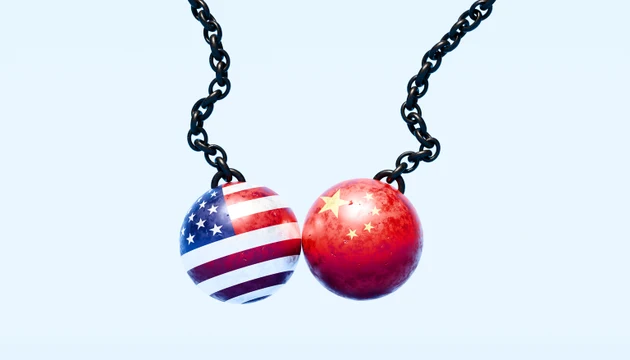


How Chinese Media Views the U.S. Hosting the FIFA World Cup
Chinese media and think tanks view the United States’ hosting of the FIFA World Cup from a purely geopolitical, economic, and commercial perspective, critically assessing the infrastructure and political climate. Chinese circles see the tournament not merely as a sporting event but as a central tool for the United States to polish its image, bolster its global leadership amidst current international polarization, and advance its political agenda. This perspective is highlighted through several key points, the most important being the geopolitical dimension. Here, Chinese think tanks argue that the tournament reflects the level of competition between major powers, with Washington attempting to use hosting as a soft power tool to project its influence. However, Chinese media, in turn, emphasized the state of sharp international polarization and division, criticizing the political challenges and the wrangling that accompanied the broadcasting negotiations. Furthermore, a number of (commercial considerations) have been raised, with the tournament facing criticism from Chinese media due to its exorbitant cost and the significant time difference between North America and China, leading to a decline in Chinese public interest. This hesitation was reflected in the negotiations, as FIFA incurred financial losses after China Media Group (CMG) signed the broadcasting agreement late and at a price significantly lower than FIFA’s requested.
Regarding the (organizational and policy challenges), Chinese research and media institutions expressed reservations about the tournament’s logistical challenges, particularly the longer travel distances between host cities compared to previous editions, as well as concerns related to US immigration laws and security restrictions. Despite the absence of the Chinese national team from the tournament, China’s commercial involvement was substantial. Beijing demonstrated its active presence through Chinese commercial sponsors, such as Hisense, and sporting goods factories in eastern China, which reaped significant economic benefits from manufacturing tournament flags and souvenirs. Chinese media coverage, particularly through its official channels, was extensive. CGTN, the Chinese state broadcaster, developed comprehensive plans to broadcast and cover the matches, ensuring the event reached millions of Chinese fans across its various platforms.
Furthermore, Chinese state media and intelligence and military think tanks utilized Washington’s hosting of the FIFA World Cup to offer a number of strategic, media, and intellectual analyses regarding China’s calculations in response to American actions. Major events are often used as a primary arena for geopolitical competition between the two superpowers. Beijing’s vision can be summarized by its use of major sporting, cultural, and other events as a political tool. Beijing views Washington’s hosting of major international tournaments or events as more than just sporting or cultural occasions; it sees them as an extension of American information and decision-making strategies aimed at projecting American influence and hegemony globally. While China seeks to highlight international contradictions, Beijing has directed its media apparatus to demonstrate that Washington’s attempts to unilaterally assume leadership or project messages of unity are, in reality, met with sharp division and polarization within the international system. Here, China has attempted to counter American soft power. This media coverage of the FIFA World Cup in the United States reflects a continuous Chinese effort to neutralize Western and American soft power by focusing on structural issues in international relations, such as the absence of multipolarity, and by promoting the Chinese model as an alternative striving for a more balanced world.
In this context, Chinese media and think tanks view the United States’ hosting of the World Cup through the lens of soft power, geopolitical strategies, and trade, while sharply criticizing the infrastructure and political circumstances surrounding the tournament, particularly in the aftermath of the Iran War and a number of global geopolitical upheavals stemming from US policies. Chinese analyses focus on purely commercial interests, criticizing the exorbitant costs of broadcasting rights. Conversely, they highlight the role of leading Chinese companies in profiting from the event by providing innovative and advanced broadcasting technologies and exporting merchandise and fan supplies. However, they also offer several critical observations regarding the infrastructure and political climate. Chinese research centers express critical skepticism about the readiness of US cities, suggesting that complexities related to visa requirements and a strict security and political environment could hinder fans and undermine the freedom of movement necessary for such events.
Based on the preceding understanding and analysis, we can discern the perspective of Chinese media and research centers that the United States exploits hosting international sporting and political events as a prominent tool for employing sports to enhance American soft power, attempting to project influence to manage conflict, and solidifying its leadership of the global order. Therefore, Chinese think tanks and intelligence agencies have developed a comprehensive media and research plan to expose American polarization worldwide. Conversely, Chinese media and think tanks emphasize Washington’s failure to garner international consensus, highlighting the sharp division and widening gap between Western powers and the rising powers of the Global South. This underscores the mechanism of conflict transformation, where competition is no longer limited to the economic and military spheres but has expanded significantly to encompass soft power tools and media discourse. This reflects a picture of expanded strategic competition and its impact on international stability.
US-Iran war to pull global economy to post-COVID low: World Bank | US-Israel war on Iran News
The Washington institution cut its global growth forecast by 0.4 percentage points to 2.5 percent, citing surging energy prices, inflation and borrowing costs.

Published On 11 Jun 2026
The conflict in the Middle East is set to bring global economic growth to its slowest since the COVID-19 pandemic, the World Bank has warned.
In its latest Global Economic Prospects report, published on Thursday, the Washington-based institution cut its global growth forecast for 2026 to 2.5 percent from the 2.9 percent it had predicted in January, citing surging energy prices, rising inflation and higher borrowing costs.
Recommended Stories
list of 3 itemsend of list
The report highlights the significant economic costs of the conflict, which is at risk of flaring up again, as the fragile ceasefire between the United States and Iran is tested on both sides.
The analysis warns that the outlook could decline further if supply disruptions worsen. Iran’s closure of the Strait of Hormuz – a vital passageway for oil and gas transit – in response to the hostilities launched by the US and Israel has put huge stress upon global energy and other supply chains.
The World Bank estimates that Brent crude prices — the international oil benchmark — will average $94 a barrel this year, 36 percent above last year’s average. Fertiliser prices are forecast to increase significantly this year, with knock-on effects for food prices.
Overall, the closure of the strategic waterway will help to push global inflation to 4 percent this year, a substantial increase from last year’s rate of 3.3 percent.
However, the World Bank cautions that global growth could plummet to as low as 1.3 percent this year, should energy supply disruptions worsen, with inflation pushing to 4.4 percent.
The World Bank report also cautions that developing countries are on the front line of the potential impact.
In its report, the institution has downgraded its growth forecasts for two-thirds of countries since January. Global growth is expected to improve to 2.8 percent in 2027, but will remain 0.4 percentage points below the average during the 2010s, during which the world economy was recovering from the global financial crisis.
Excluding China and India, the report worries that developing countries have made little progress towards narrowing their per capita income gap with wealthy nations over the past decade.
“Developing countries have faced a series of challenges over the last decade,” said Ajay Banga, president of the World Bank Group. “The impact differs by country, but the basic test is the same: protect people and preserve stability today, without giving up on growth and jobs tomorrow.”
The World Bank is pledging to assist any developing country experiencing the economic fallout of the Middle East conflict. The organisation says it has set aside up to $60bn to help. It added that if the conflict persists, it can increase its support to $100bn.
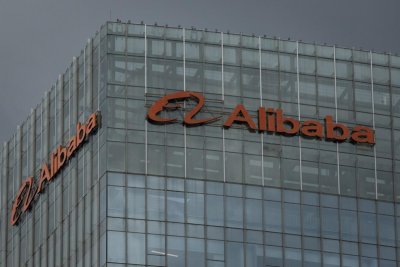
U.S. adds BYD, Alibaba, Baidu to China military-linked list

The Alibaba logo is displayed at a Alibaba office in Beijing, China, 09 June 2026. On 08 June, the Pentagon added Chinese companies Alibaba, BYD, and Baidu, among others, to a list of firms it said aid the Chinese military. Photo by JESSICA LEE / EPA
June 9 (Asia Today) — The U.S. Defense Department expanded its list of Chinese companies it says are linked to China’s military, adding about two dozen firms, including BYD, Alibaba, Baidu, WuXi AppTec and Unitree, according to U.S. media reports.
The annual list, known as the Section 1260H list of Chinese military companies, grew from last year as U.S. national security officials increased scrutiny of Beijing’s use of civilian technology to support military modernization.
The newly added companies span electric vehicles, e-commerce, cloud computing, artificial intelligence, biotechnology and robotics.
BYD is one of China’s leading electric vehicle makers. Alibaba operates e-commerce and cloud computing businesses, including in the United States. Baidu is active in internet search and artificial intelligence. WuXi AppTec is a major pharmaceutical and biotechnology services company, while Unitree is known for humanoid and quadruped robots.
The move shows the Trump administration is looking beyond semiconductors and AI chips as it assesses security risks tied to Chinese technology and industrial supply chains.
Chris McGuire, a fellow at the Council on Foreign Relations and former official at the State Department and National Security Council, said the action shows Washington is increasingly attentive to security risks from Chinese products in industries beyond semiconductors and AI.
China objected to the move.
A spokesperson for the Chinese Embassy in Washington said the Defense Department was overstretching the concept of national security and creating a discriminatory list targeting Chinese companies.
The updated list drew attention because it comes as Washington and Beijing have recently appeared to ease some trade tensions.
The United States had reportedly held back some measures against Chinese companies, including sanctions, high tariffs and cyber-related actions. An earlier version of the list expected in February was withdrawn ahead of a U.S.-China summit, according to U.S. media reports.
The summit, held in Beijing last month, focused heavily on trade issues.
Still, the Pentagon continues to view China as the United States’ main military competitor.
Craig Singleton, a senior fellow at the Foundation for Defense of Democracies, said the trade atmosphere may have improved after the summit, but Washington’s basic assessment has not changed.
He said U.S. officials still believe major Chinese civilian technology companies are connected to China’s military modernization.
Companies placed on the list are barred from doing business with the U.S. military. The designation does not automatically impose broad sanctions, but it can create reputational risk, reduce access to U.S. government-related business and increase scrutiny from investors and regulators.
The commercial effect can vary by company.
SZ DJI Technology, the Chinese drone maker placed on the list in 2022, has continued to maintain a strong position in the U.S. consumer drone market despite its designation.
The latest additions show that Washington’s concerns about China’s military-civil fusion strategy are expanding from advanced chips and AI models into broader technology and manufacturing ecosystems.
— Reported by Asia Today; translated by UPI
© Asia Today. Unauthorized reproduction or redistribution prohibited.
Original Korean report: https://www.asiatoday.co.kr/kn/view.php?key=20260609010002864
US lists China’s BYD, Alibaba, Baidu as ‘Chinese military companies’ | Military News
Chinese embassy in Washington, DC, condemns designation, calling it ‘discriminatory’.

Published On 9 Jun 2026
The United States has designated Chinese corporate giants Alibaba, BYD and Baidu as companies that support China’s military, expanding its blacklist to some of the country’s best-known commercial brands.
The Pentagon included the firms in an update on Monday that is likely to complicate the fragile detente under way between Washington and Beijing after years of rocky relations.
Recommended Stories
list of 4 itemsend of list
China’s embassy in Washington, DC, condemned the listing as “discriminatory” and an example of the US government “overstretching” the concept of national security.
“Chinese companies that do business overseas have been strictly observing laws and regulations of their host countries,” an embassy spokesperson said.
“The US should stop its wrong practice and create a fair, just and non-discriminatory environment for Chinese companies.”
Alibaba, BYD and Baidu did not immediately respond to requests for comment.
The Pentagon’s list of “Chinese military companies,” which is updated annually, now includes 188 firms, up from 134 in 2025.
Firms included on the list, which was created in 2021, will be barred from consideration for US defence contracts from later this month.
The Pentagon defines “Chinese military companies” as entities owned or controlled by the Chinese military, or that contribute to China’s “military civil fusion”, referring to Beijing’s strategy of melding civilian and defence-related research and innovation.
Companies must also carry out some of their operations in the US to be designated.
The expansion of the blacklist comes less than a month after US President Donald Trump met Chinese leader Xi Jinping in Beijing for a two-day summit aimed at lowering the temperature in their countries’ years-long trade war and tech rivalry.
Alibaba, Baidu, and BYD are among China’s most prominent brands, claiming the top spots in the e-commerce, internet search and electric vehicle markets, respectively.
The addition of several household brands not normally associated with the defence sector mirrors last year’s designation of tech firm Tencent, the owner of the ubiquitous messaging app WeChat.
Other additions to the list include RoboSense Technology, an AI and robotics company with headquarters in Shenzhen, and Hangzhou-based Unitree Robotics.
RoboSense Technology and Unitree Robotics did not immediately respond to requests for comment.
Dennis Wilder, a national security expert who worked on China at the CIA and the White House’s National Security Council, expressed scepticism about the feasibility of implementing such a “broad-brush” blacklist.
“Although it may make some US firms wary of engaging with the labelled entities, in fact, many US firms already have deep relationships with these entities, that they are not going to give up unless there are real penalties attached to working commercial deals with them,” Wilder told Al Jazeera.
“Sanctions that range this widely are sanctions that don’t work. Unless the US is willing to decouple from the Chinese economy altogether, these sanctions are simply performative,” Wilder said.
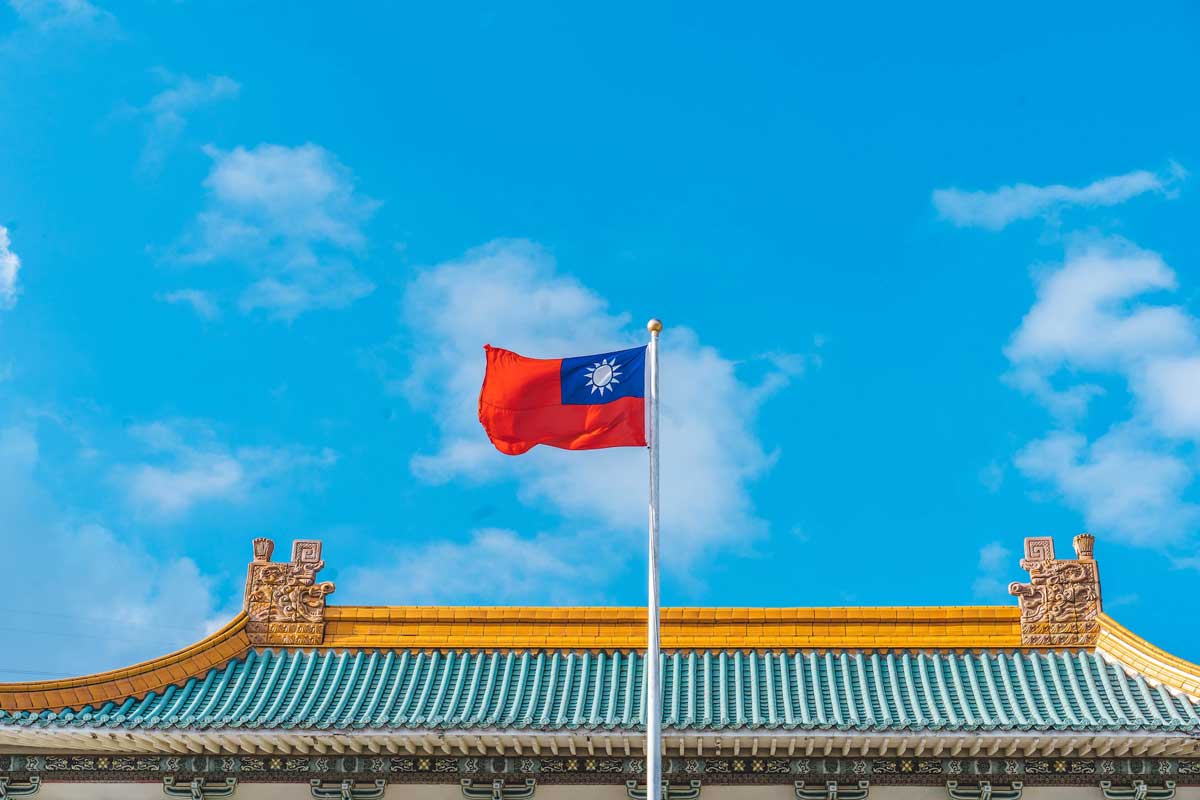
Taiwan Condemns China Coast Guard Patrols Near East
Taiwan has accused China of carrying out a “provocative act” after Chinese Coast Guard vessels conducted patrols in waters east of the island. The operation followed announcements by Japan and the Philippines that they would begin formal talks on maritime boundary delimitation, a move Beijing views as involving waters linked to Taiwan.
Chinese state media described the deployment as a special maritime law-enforcement operation. Taiwan responded by dispatching Coast Guard vessels, which reportedly warned the Chinese ships away from restricted waters. Defence Minister Wellington Koo characterized the patrols as both a challenge to Taiwan’s sovereignty and an example of “cognitive warfare” aimed at reshaping perceptions of territorial control.
The incident comes amid sustained Chinese military activity around Taiwan, including frequent air and naval operations. Taiwan is also monitoring the movements of the Chinese aircraft carrier Liaoning, which is operating in the Western Pacific near waters east of the Philippines.
Why It Matters
The patrols represent more than a routine maritime operation. They signal China’s growing willingness to extend its presence beyond the Taiwan Strait and into areas east of Taiwan that have traditionally been viewed as strategically important for the island’s defence.
The move also demonstrates Beijing’s opposition to emerging regional cooperation among U.S. partners and allies. The maritime boundary discussions between Japan and the Philippines reflect increasing efforts among regional states to clarify maritime rights and strengthen coordination in contested waters.
For Taiwan, Chinese Coast Guard activities present a complex challenge. Unlike military operations, law-enforcement patrols operate within a legal grey zone that allows Beijing to advance territorial claims without triggering a conventional military confrontation. Such actions can gradually normalize China’s presence in disputed areas while increasing pressure on Taiwan’s security apparatus.
The incident further highlights the growing integration of maritime, legal, and information-based strategies in China’s approach to territorial disputes across the Indo-Pacific.
Stakeholders
Taiwan
- Protecting maritime sovereignty and territorial claims.
- Maintaining freedom of navigation and security in eastern waters.
China
- Expanding operational presence around Taiwan.
- Reinforcing sovereignty claims through maritime law-enforcement activities.
Japan
- Engaged in maritime boundary discussions with the Philippines.
- Monitoring Chinese activities that could affect regional security.
Philippines
- Seeking greater legal clarity over maritime boundaries.
- Increasing security cooperation with regional partners.
United States
- Maintaining stability in the Taiwan Strait and broader Indo-Pacific region.
- Supporting freedom of navigation and regional deterrence efforts.
Regional Security Partners
- Including Australia and other Indo-Pacific states concerned about changing maritime dynamics.
Strategic Implications
The patrols illustrate China’s increasing reliance on so-called “grey-zone” tactics, which fall below the threshold of open military conflict while steadily advancing strategic objectives. By deploying Coast Guard vessels rather than naval forces, Beijing can challenge Taiwan’s authority while reducing the risk of immediate military escalation.
The incident also reflects the expanding geographical scope of cross-strait competition. Traditionally concentrated in the Taiwan Strait, tensions are increasingly extending into the Western Pacific, where control of maritime approaches carries significant strategic value for both China and Taiwan.
Furthermore, the timing of the operation suggests that Beijing is seeking to influence regional maritime diplomacy. By responding directly to Japan-Philippines boundary discussions, China is signaling its opposition to initiatives that could strengthen legal and political frameworks contrary to its territorial claims.
The episode reinforces concerns among regional governments that maritime disputes are becoming increasingly interconnected, linking Taiwan, the East China Sea, and the South China Sea into a broader strategic contest.
What’s Next?
Several developments warrant close attention in the coming weeks:
- Taiwan is likely to increase coordination between its military and Coast Guard to strengthen maritime surveillance and response capabilities.
- China may continue deploying Coast Guard vessels east of Taiwan as part of a sustained effort to normalize its operational presence in the area.
- Japan and the Philippines are expected to proceed with maritime boundary discussions despite Beijing’s objections, potentially drawing further diplomatic responses from China.
- Increased activity by the Liaoning carrier group could provide additional indications of China’s broader military objectives in the Western Pacific.
- The United States and regional partners may intensify maritime monitoring and security cooperation to deter unilateral attempts to alter the status quo.
Future outcomes
The incident reflects a broader shift in regional security dynamics, where maritime law-enforcement operations are increasingly being used as instruments of strategic competition. Rather than relying solely on military pressure, China is employing a combination of legal, political, and operational tools to reinforce its territorial claims and shape the regional security environment.
For Taiwan, the challenge extends beyond the immediate presence of Chinese vessels. The longer-term concern lies in preventing the gradual normalization of Chinese activities in areas that Taipei considers vital to its sovereignty and security. As regional actors deepen cooperation on maritime governance and security, incidents of this nature are likely to become an increasingly important indicator of the evolving balance of power in the Indo-Pacific.
With information from Reuters.
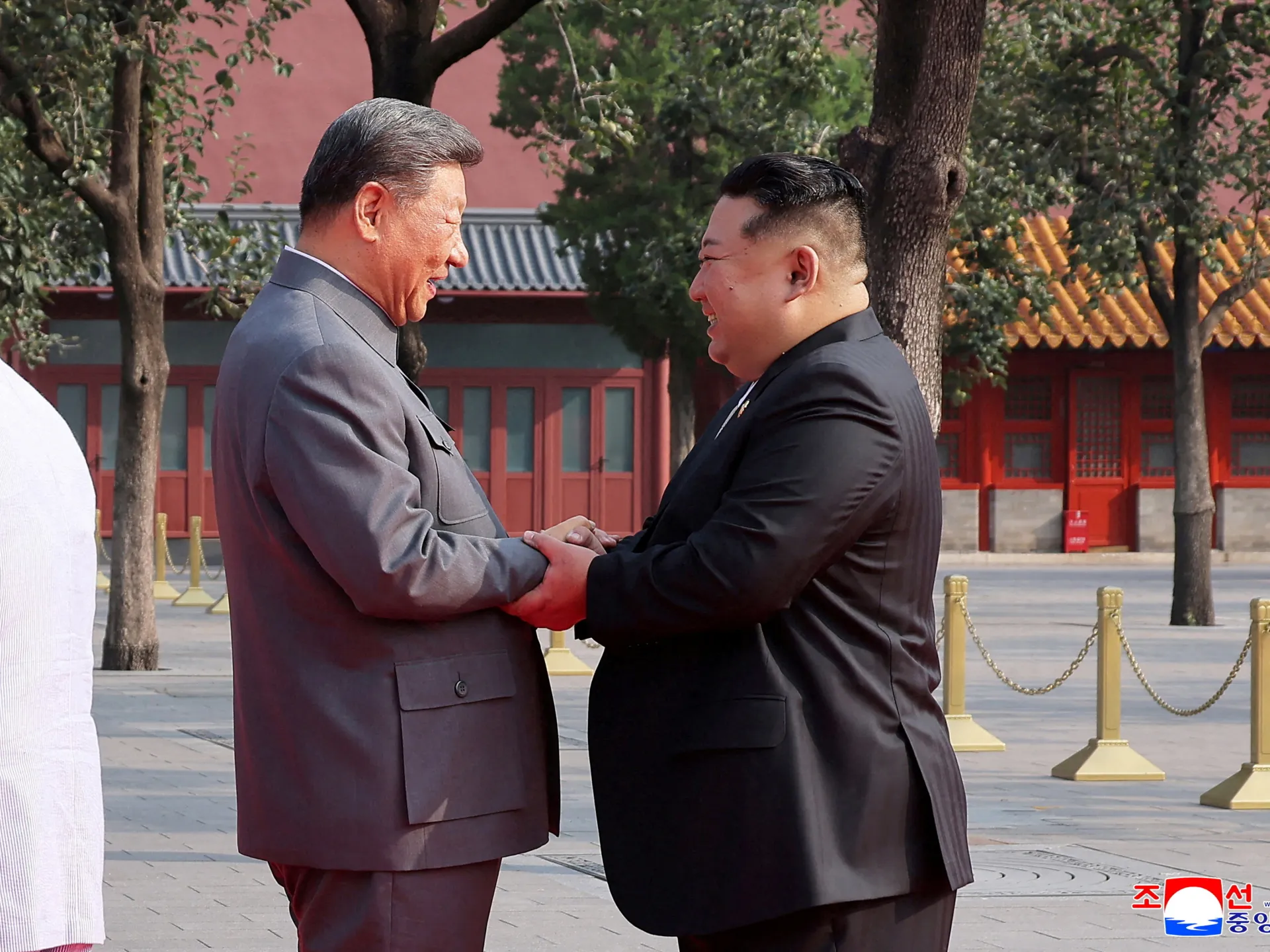
Why is Chinese President Xi Jinping visiting North Korea now? | International Trade News
Chinese President Xi Jinping’s meeting with North Korea’s Kim Jong Un in Pyongyang on Sunday is significant for one reason.
It’s not that they are meeting: The two men met in Beijing just a year ago when China held a massive military parade to mark 80 years since Japan surrendered unconditionally to Allied forces, bringing an end to the second world war.
Recommended Stories
list of 4 itemsend of list
What’s surprising is that Xi is travelling at all.
The Chinese leader has not travelled to Pyongyang since 2019, having steadily cut down his travel in recent years, and world leaders like US President Donald Trump and Russian leader Vladimir Putin generally come to him these days.
“We need to remember that Xi Jinping has not really travelled abroad that much,” William Yang, Crisis Group’s senior analyst for Northeast Asia, told Al Jazeera. “The growing trend is foreign leaders heading to Beijing to meet with him.
“For Xi Jinping to be the one who decides to travel to Pyongyang, it shows the level of significance that China attaches to this trip.”
Xi averaged about 14 trips a year between 2013 and 2019, but dropped to approximately six a year between 2022 and 2025, according to the Asia Society. In 2020, he made just one overseas trip, and in 2021, he made none, as China grappled with the COVID-19 pandemic.
He may be travelling now, though, amid concerns about North Korea’s relationship with Russia, Yang said.
Senior partner no more?
Traditionally, Beijing played the role of senior partner in the China-North Korea relationship, with North Korea heavily dependent on China for as much as 95 percent of its trade, according to one 2022 estimate from the National Committee on North Korea, a US-based nonprofit.
That dynamic has been changing since Russia’s 2022 invasion of Ukraine, however. North Korea has provided Russia with critical weapons, artillery and manpower and is credited by observers with helping to keep Moscow’s war machine going.
South Korea’s Institute for National Security Strategy, a government-funded research institute, estimates that since 2023, Moscow has paid North Korea as much as $14.4bn for troop deployments and the export of “artillery, shells, and guided and ballistic missiles”.
The report said that North Korea may only have received between $580m and $1.5bn of that in the form of “goods”, which means there is a “significant possibility that the majority of the payment from Moscow was in the form of ‘sensitive military technology or related precision parts and materials that are difficult to observe via satellite’,” according to a translation.
Although China shares a mutual defence treaty with North Korea, it is still wary of North Korea acquiring new military technology, Yang said.
“Beijing has always been very careful about providing military assistance to North Korea because they do not see a militarily stronger North Korea as necessarily in its favour,” he said. “A North Korea that is militarily emboldened through its relationship with Russia could be a potential source of disruption to the balance of power and status quo on the Korean Peninsula.”
North Korea has already carried out eight missile launches since the start of the year, and in May unveiled a new AI-guided tactical cruise missile, according to North Korean media and the US Naval Institute.
Earlier this week, North Korean state media also released photos of Kim touring a new “weapons-grade nuclear materials” factory, which would be used to expand Pyongyang’s nuclear capability at an “exponential rate”.
Fluctuating tensions
North Korea has technically been at war with South Korea since 1950, with the conflict suspended by a 1953 armistice agreement. The two countries are divided by a 250-kilometre-long (155-mile-long) Demilitarized Zone, splitting the Korean Peninsula.
Tensions have fluctuated dramatically over the years, reaching a recent low point in 2024 when Kim abandoned the long-term goal of Korean unification.
He has largely cut off communications ever since, according to observers. On Friday, South Korea’s Ministry of Foreign Affairs said that it hopes that Xi’s trip will “play a constructive role in addressing issues related to the Korean Peninsula” – suggesting that Seoul may have lobbied the Chinese leader to try to smooth over relations.
South Korean Minister of Unification Chung Dong-young separately told reporters last month that he expects the two leaders to discuss a possible meeting between Kim and Trump later in the year.
Xi may also be alarmed by other security developments in East Asia, including news of a possible military-logistics support pact between South Korea and Japan, which was raised at the Shangri-La Dialogue of regional defence officials in Singapore last weekend.
While China and South Korea’s relationship fluctuates, its ties with Japan are acrimonious due to longstanding grievances dating back to Imperial Japan’s occupation of China in the 1930s and 1940s. Beijing has also objected to recent moves by Tokyo to expand its de facto military.

China’s military and intelligence views on Lebanon-Israel talks
China strongly condemns the Israeli airstrikes and ground incursion into southern Lebanon, describing these operations as a dangerous escalation that threatens the stability of the entire region. China demands that Israel immediately cease its military operations and fully withdraw its forces from Lebanese territory, warning of the dangers of its incursions and violations of established lines. China views the fourth round of Washington talks between Lebanon and Israel and the military tensions as an extension of a broader crisis. Beijing sees this conflict as a consequence of the Gaza war, emphasizing clear principles in its intelligence and military assessment of the situation across several axes, most notably the necessity of an Israeli withdrawal and a ceasefire. Beijing calls for an immediate cessation of military operations and the withdrawal of Israeli forces from Lebanese territory, warning that expanding ground operations will drag the region into chaos. China’s efforts in the reconstruction of Lebanon focus on providing urgent humanitarian aid packages, signing development cooperation agreements, and encouraging Chinese companies to participate in infrastructure projects and long-term investments within the framework of China’s Belt and Road Initiative. China also defended the Lebanese position in the face of Israeli escalation at the United Nations, with its representative to the Security Council emphasizing that Israel’s advance to Beaufort Castle (Qalaat Al-Shaqif) was the most serious incursion into southern Lebanon in 30 years. He called on the international community to take urgent measures before the situation in Lebanon deteriorated further, demanding respect for Lebanese sovereignty and the withdrawal of all Israeli forces from southern Lebanon.
The most prominent features of these Chinese efforts for joint cooperation with the Lebanese side and the international community in the reconstruction of Lebanon and the cessation of Israeli attacks on southern Lebanon are the provision of direct financial and development support. The Chinese and Lebanese governments signed a development cooperation agreement in Beirut worth 50 million Chinese yuan to support reconstruction and sustainable development efforts, along with the provision of urgent humanitarian aid. China delivered shipments of emergency humanitarian aid through the Port of Beirut to alleviate the economic and living burdens on the Lebanese people. Furthermore, China encouraged the participation of Chinese companies and investments in reconstruction and development efforts in Lebanon. Beijing has expressed its readiness to encourage its major companies and national institutions to participate in Lebanon’s reconstruction projects and support the development of the energy, telecommunications, and infrastructure sectors through China’s Belt and Road Initiative. Lebanon has been a partner in this Chinese initiative since joining in 2017. China aims to enhance Lebanon’s role as a pivotal hub for trade and logistics in the Middle East. In addition to sustained Chinese diplomatic efforts, China has continued its diplomatic and developmental support for Lebanon, alongside its active participation in UN peacekeeping operations in southern Lebanon.
China’s role in halting the Israeli war on Lebanon has focused on exerting diplomatic pressure through the United Nations and utilizing international platforms to call for an immediate ceasefire and the withdrawal of Israeli forces from Lebanese territory, while supporting political and diplomatic solutions to prevent the conflict from escalating. China has consistently called for an end to Israeli military operations against Lebanon during UN sessions and warned that the collapse of ceasefires places the region on a more dangerous precipice. Beijing called for the immediate withdrawal of Israeli forces from the devastated Lebanese territories, emphasizing the need to respect international resolutions, Lebanon’s sovereignty and independence, and the protection of the United Nations Interim Force in Lebanon (UNIFIL). China stressed the importance of ensuring that UN peacekeepers could carry out their duties freely and safely and condemned any attacks against UNIFIL personnel. China also emphasized the need to intensify humanitarian aid to the Lebanese people to address the repercussions of the war and expressed its full readiness to contribute to restoring regional stability.
Here, Chinese diplomatic and intelligence agencies affirmed that Lebanon’s sovereignty and security must not be violated, stressing that extending the authority of the Lebanese state and protecting its stability are the fundamental pillars for preventing the entire region from sliding into a comprehensive regional war. They reiterated the necessity of respecting Lebanon’s sovereignty and security, considering the stability and protection of the Lebanese state as essential to preventing a full-blown regional war. China also expressed its full support for the role of the United Nations Interim Force in Lebanon (UNIFIL) and emphasized the need to provide guarantees for its protection and freedom of movement to carry out its mission. From an analytical perspective, Beijing believes that a political solution to the crisis must include respect for international resolutions and adherence to the two-state solution for Palestine and Israel. It also expressed concern that these negotiations might lead to regional arrangements that serve the interests of certain major powers and marginalize other parties in the region. On the other hand, China welcomes dialogue and diplomatic solutions as a means to ease tensions in the Middle East and supports efforts to restore Lebanon’s sovereignty. However, Beijing has criticized unilateral US actions in managing interconnected issues such as Gaza, Lebanon, and Iran, emphasizing the need to adhere to international resolutions and support regional stability, avoiding military interventions and the expansion of conflict.
Beijing adopts a clear strategic vision regarding the Lebanese crisis, which is summarized in its emphasis on respecting sovereignty. Chinese diplomacy strongly condemns any violations of Lebanese sovereignty and calls for an immediate halt to foreign military operations on Lebanese territory to ensure the safety of civilians. With Chinese intelligence and military agencies calling for a monopoly on weapons, a position reiterated by the Chinese Permanent Representative to the UN Security Council, China supports the Lebanese state as the sole guarantor of internal stability. This signifies Beijing’s strong support for the principle of state monopoly on weapons, considering official institutions the only guarantor of internal stability and the prevention of the country’s disintegration. China also supports the UNIFIL forces, opposing the termination of the UNIFIL mandate and demanding that it be enabled to fulfill its mission to ensure stability in southern Lebanon and contribute to regional de-escalation. Beijing emphasizes that escalation will not resolve crises, urging conflicting parties (including Washington and Tehran) to prioritize diplomacy and political negotiation to exercise restraint.
‘Wolf Warrior Diplomacy’: Israel’s China Strategy in Peril – Middle East Monitor
Israel’s balancing act that allowed it to reap America’s unconditional and, often, blind support, while slowly benefiting from China’s growing economic influence and political prestige, is already floundering.
Thanks to the heated cold war between the US and Chinese economic superpowers, the Israeli strategy of playing both sides is unlikely to pay dividends in the long run.
Soon enough, Tel Aviv might find itself having to make a stark choice between Washington and Beijing. When US Secretary of State, Mike Pompeo, visited Israel on May 13, two items topped his agenda: Israel’s imminent illegal annexation of Palestinian land and the growing Israeli-Chinese economic ties.
Pompeo communicated his country’s stand on both issues, reflecting Washington’s long-standing policies regarding Palestine and China. In the case of Palestine, as with the rest of the Middle East, Washington seems to adhere to Tel Aviv’s agenda, often to the letter. China is a different story.
READ: China rejects Israel’s planned annexation of West Bank
Two significant historical examples come to mind: one, is Israel’s attempt to sell China Israeli-made Phalcon airborne radar system, which relied heavily on American technology in the 1990s; a similar event transpired in 2005, this time concerning Israel’s Harpy anti-radar missile. On both occasions, Israel succumbed to American pressure and canceled both deals.
For the Chinese, Israel matters for two different reasons. One, Israel is a strategic stop in China’s Belt and Road initiative, China’s most significant economic project to date, ultimately aimed at turning Beijing into a center of global trade and financial activities. Two, China is hoping to fight the US on its own political turf in the Middle East – partly in response to the American ‘pivot to Asia’ strategy, which was initiated by the Barack Obama administration.
But the world – in terms of political and economic balances of power – after the coronavirus pandemic is likely to prove a different one when compared with previous years. China’s rise has been in the making for many years and the US political retreat and declining global outreach has been quite evident for some time. The isolationist policies of the Donald Trump Administration, coupled with Washington’s many China-related tantrums in recent years, are all indicators of the vastly changing political realities of a once-unipolar world.
!["I will not miss the opportunity to annex the West Bank"- Cartoon [Sabaaneh/MiddleEastMonitor]](https://i0.wp.com/www.middleeastmonitor.com/wp-content/uploads/2020/05/IMG_0893-scaled.jpg?resize=2048%2C1280&ssl=1)
“I will not miss the opportunity to annex the West Bank”- Cartoon [Sabaaneh/MiddleEastMonitor]
A few years ago, Beijing had the time, patience, and resources to play a long-drawn geopolitical game in order for it to challenge the US’s global influence, whether in South America, Africa, or Israel.
The visit by China’s Vice President, Wang Qishan, to Israel in 2018, to “boost business ties”, was part of this Chinese strategy. That visit followed the signing, one year earlier, of the China-Israel Innovative Comprehensive Partnership. As of 2018, China-Israel trade has jumped to $14 billion and has grown exponentially ever since.
China would have been happy to carry on with that strategy for many years to come. Israel, too, would have played along, considering the lucrative financial returns from its China partnership.
READ: Israel ties to China may risk our ability to work with Tel Aviv
Indeed, despite Washington’s warnings against and, at times, explicit demands on Israel to refrain from giving Chinese companies access to fifth-generation infrastructure (5G) projects in the country, Israel labored to make China feel welcomed.
However, the global response to the coronavirus pandemic is likely to change this, as it has already accelerated the cold war between the US and China, pushing the latter to adopt a more aggressive form of diplomacy and pour massive sums into other countries’ economies to help them in their desperate fight against the COVID-19 disease.
The Chinese strategy is predicated on two main pillars: fortifying existing ties and solidarity with China’s allies or potential allies anywhere in the world, while pushing back against China’s foes, especially those who are participating in Washington’s anti-Beijing campaign.
The latter phenomenon is known as ‘wolf warrior diplomacy’. The ‘wolf warriors’ are Chinese diplomats who have, for months, pushed back with unprecedented ferocity against what they perceive to be US and Western propaganda.
READ: China’s ambassador to Israel found dead in Tel Aviv home
“We never pick a fight or bully others,” China’s Foreign Minister, Wang Yi, told reporters in Beijing on May 24, while explaining China’s novel approach to diplomacy. “We will push back against any deliberate insult, resolutely defend our national honor and dignity, and we will refute all groundless slander with facts,” the top Chinese official said firmly.
China’s new aggressive diplomacy, especially if it continues to define the country’s approach to foreign policy in the coming years, is unlikely to permit Israel to maintain its balancing act for much longer.
China’s ambassador to Israel, Du Wei, who was entrusted with implementing Beijing’s soft-diplomacy with Tel Aviv, died in his home only a few days following Pompeo’s visit to the country. Although Wei’s death was not – at least publicly – perceived to be the result of foul play, his absence, especially in the age of coronavirus and ‘wolf warriors’, might signal a shift in China’s approach to its economic and political interests in Israel.
On May 26, under American pressure, the Israeli Finance Ministry denied China a massive $1.5 billion desalination plant contract, awarding it to an Israeli company, instead.
This is the first time that the US has used its political and economic sway over Israel to curb Chinese influence in the country. China must be anxiously watching events unfold, to see if US pressure on Israel will continue to undermine Beijing’s long-term strategy.
![Deal of the century, embassy relocation, and the Golan Heights - Israel surely can't believe their luck? - Cartoon [Sabaaneh/MiddleEastMonitor]](https://i0.wp.com/www.middleeastmonitor.com/wp-content/uploads/2020/01/IMG_0201-scaled.jpg?resize=2048%2C1280&ssl=1)
Deal of the century, embassy relocation, and the Golan Heights – Israel surely can’t believe their luck? – Cartoon [Sabaaneh/MiddleEastMonitor]
The world’s quickly shifting balance of power and the US-Chinese unmistakable fight for dominance is likely to, eventually, force countries like Israel to make a choice, of wholly joining the American or the Chinese sphere of influence. It is all reminiscent of the American-Soviet Cold War, where much of the globe was divided into zones of influence operated by proxy from Washington or Moscow.
Balancing acts in politics only work if all parties are willing to play or, at least, tolerate the game. While this form of politics suited Israel’s interests in the past and was played, quite successfully for years by Israeli Prime Minister, Benjamin Netanyahu, the country’s balancing act is, possibly, over.
Between Washington’s precise demands to Israel to keep Beijing at bay, and the latter’s aggressive ‘wolf warrior’ diplomacy, Israel is facing a stark choice: remaining loyal to a fading superpower or diving into the uncharted waters of an emerging one.
The views expressed in this article belong to the author and do not necessarily reflect the editorial policy of Middle East Monitor.
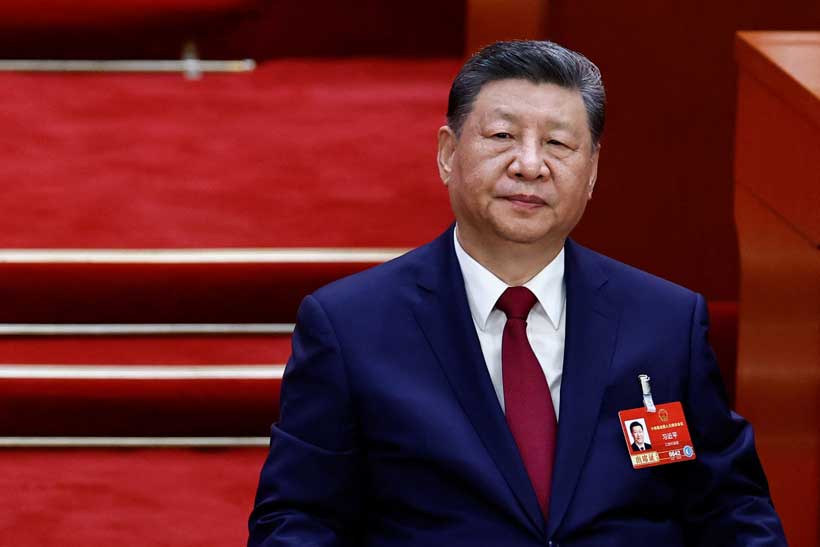
China’s Xinhua to Invest in AI Tool to Promote Xi Jinping’s Ideology
China’s state-linked media system is preparing a major investment in artificial intelligence aimed at advancing and disseminating President Xi Jinping’s political ideology. According to Shanghai Stock Exchange filings, Xinhuanet, owned by the official Xinhua News Agency, plans to invest over 1.1 billion yuan (about $162 million) in an AI system called “Xinhua Yudian,” or “Xinhua lexicon.”
The AI agent is designed as an “authoritative” tool for learning, researching, and distributing Xi Jinping Thought on Socialism with Chinese Characteristics for a New Era. It will draw on a curated state-controlled database and is intended to deliver official narratives, current affairs, and political content in a structured format.
The project builds on China’s broader national strategy to integrate artificial intelligence across governance, industry, and society under the “AI+” initiative launched in 2025, which encourages widespread adoption of AI technologies in both public and private sectors.
Why It Matters
This development highlights how artificial intelligence is increasingly being used not only as a technological tool but also as an instrument of political communication and ideological reinforcement. Unlike commercial AI systems designed for open-ended information retrieval, this platform is explicitly structured to promote state-approved interpretations of policy and leadership thinking.
The initiative reflects Beijing’s growing emphasis on controlling information ecosystems in an era of information overload and competing narratives. By positioning AI as a “trust layer” for political and policy information, China is attempting to address concerns about misinformation while simultaneously strengthening ideological consistency across digital platforms.
The project also signals a broader convergence between state power and emerging technologies. As AI systems become more integrated into education, media, and governance, they are increasingly shaping not only what information is accessed but how it is interpreted. This raises important questions about transparency, bias, and the role of algorithmic systems in political messaging.
Chinese Government and Communist Party
Seeking to strengthen ideological cohesion and ensure consistent dissemination of Xi Jinping’s political doctrine.
Xinhuanet and Xinhua News Agency
Acting as the implementing body, responsible for building and deploying the AI system using state-approved datasets.
Technology Sector in China
Participating in the broader “AI+” initiative, which encourages integration of artificial intelligence across industries.
Chinese Citizens and Digital Users
Target users of the system, particularly students, officials, and professionals seeking policy-related information and official references.
Global Technology Community
Observing China’s use of AI in state communication as part of a wider debate on governance, censorship, and AI ethics.
Future Outlook
The rollout of “Xinhua Yudian” is likely to deepen the integration of artificial intelligence into China’s political and information architecture. If successful, it could serve as a model for other state-backed AI systems designed to standardize ideological communication and policy interpretation.
In the near term, the platform is expected to function as both an information retrieval system and a citation verification tool for official discourse. This may reduce ambiguity in policy communication but also further centralize control over authoritative narratives.
Longer term, the project raises questions about how AI will shape political legitimacy and information control in authoritarian systems. As AI becomes more capable of generating and filtering content at scale, its role may shift from a neutral tool to an active participant in shaping public perception and ideological alignment.
The initiative underscores a broader global trend in which artificial intelligence is not only transforming economies and industries but also becoming a strategic instrument in statecraft and governance.
With information from Reuters.

EU trade chief to meet China envoy amid heated trade tensions
Published on
The European Commission confirmed to Euronews on Wednesday that EU trade chief Maroš Šefčovič will meet his Chinese counterpart, trade envoy Li Chenggang, on the sidelines of an OECD ministerial meeting in Paris on Thursday.

ADVERTISEMENT
ADVERTISEMENT
The visit comes as EU-China relations remain strained, with Brussels seeking to crack down on Chinese overcapacity and tackle a record-high €359.9 billion trade deficit with Beijing.
After the EU unveiled the so-called Industrial Accelerator Act and the Cybersecurity Act which could exclude Chinese companies from the EU market, China threatened retaliation, fuelling fears of a trade war between the two trading partners.
Tensions escalated further last week when EU commissioners met to discuss the bloc’s strategy towards the Asian giant.
“The current state of the trade and investment relationship is not sustainable,” the Commission said in a statement after the meeting.
An EU official told Euronews that a majority of the Commissioners had agreed to strengthen the EU’s trade defence tools to help counter China. Proposals will be made to EU leaders during their summit on 18 June.
However, member states remain divided over the EU’s China policy. A non-paper signed by France, Italy, Spain, the Netherlands and Lithuania called for faster use of tariffs and quotas on imports threatening EU industrial sectors, with China the principle target. The idea is to restore a level playing field against Chinese trade practices that many in Europe describe as unfair.
Among those countries taking a different line is Germany, whose policy is to preserve access to the Chinese market for its companies even as it faces a deep trade deficit.
Meanwhile, the Commission said it will continue engaging with China. There have been reports that Commerce Minister Wang Wentao could visit Brussels on 28 and 29 June, but the visit has not yet been publicly confirmed.
Why Wall Street & China Have the Same Problem in Venezuela
Venezuela holds the largest proven oil reserves on earth. It has lithium. It has agriculture, a coastline three hours away from Miami, and—for the first time in a generation a political window. The reconstruction investment case is real. So is the obstacle for every actor, across every ideology, that wants Venezuelan assets to perform.
The obstacle is not the oil price. It is not the OFAC sanctions framework, which has been substantially liberalized since January 2026. It is not even the absence of functioning institutions, though that is the proximate problem every investor will encounter. The obstacle has a nucleus with name, a title, and an active intelligence apparatus. And his continued presence in power is not merely a moral affront.
This is not a story about mismanagement. Mismanagement leaves a paper trail.
What happened across Venezuela’s infrastructure ministries between 2002 and 2012 lest almost none, deliberately. Over $150 billion in documented railway, housing, and infrastructure contracts were disbursed across that decade. The projects largely do not exist. The documentation largely does not exist. The Tinaco-Anaco railway, a $7.5 billion contract signed with China Railway Engineering Corporation, produced looted campsites and empty concrete columns. The National Railway Plan, budgeted at $150 billion, produced less than one percent of its projected track.
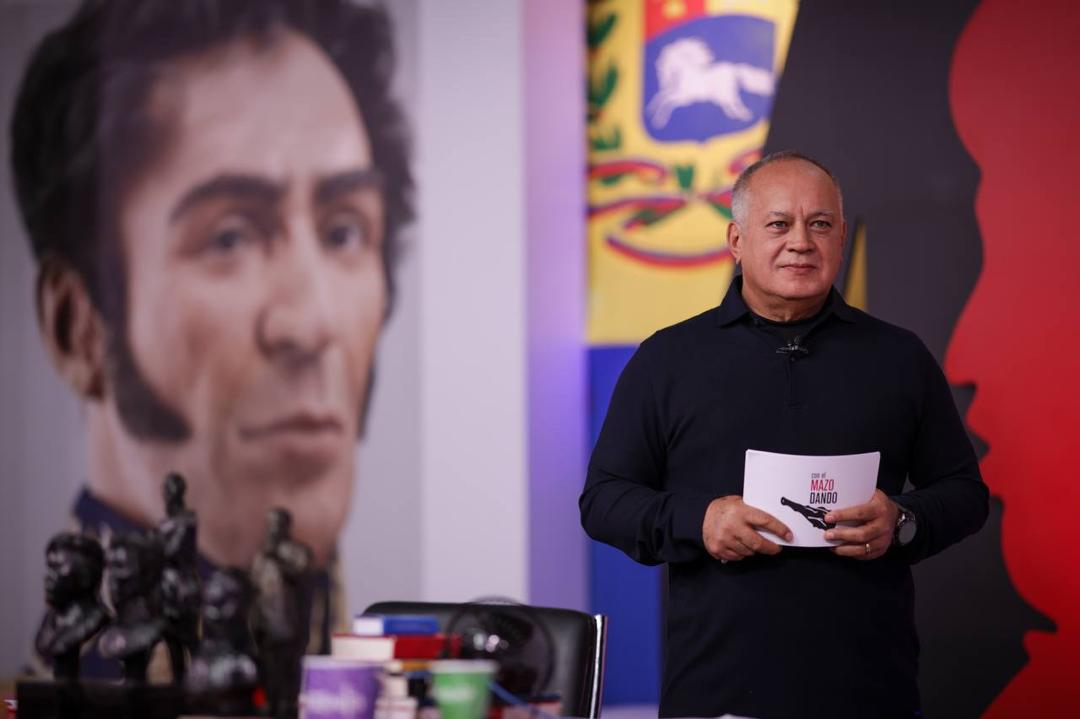
One of the ministers who oversaw that disbursement period of the infrastructure that is so dire, and who preserved an influence only surpassed by Hugo Chávez and Nicolás Maduro, today is the Interior Minister of Venezuela. He controls the national intelligence apparatus, the police, and the armed colectivos. He is Diosdado Cabello, your competing General Partner that has acted without impunity. He carries a live indictment from a New York court on narco-trafficking charges. He is sanctioned by the US Treasury. He hosts a television program that airs every Wednesday evening.
By 2011, the beneficial ownership architecture built by Venezuela’s ruling network spanned more than forty trustees across multiple jurisdictions: a parallel private equity structure embedded inside a sovereign state.
The distinction that every institutional investor must internalize is this: a mismanaged State is recoverable. A State whose productive apparatus was deliberately extracted (not ruined by incompetence but hollowed out because extraction was more profitable than production) presents a categorically different investment problem. The destruction was not the side effect of the governance model. It was the point of it. Cabello remains an icon of that governance model.
The counterparty problem
Conventional private equity rests on a foundational assumption: your counterparty has an interest in the underlying asset performing. Returns depend on it. Exit depends on it. The entire structure of an LP agreement, a term sheet, a co-investment right, all of it assumes a counterparty whose incentive is aligned with asset value.
In Venezuela, the sophisticated actor on the other side of the table for two decades was running a competing structure. One with no limited partners, no fiduciary duty, no quarterly reporting, and a sovereign intelligence apparatus for compliance. That structure had a single mandate: maximum extraction, minimum documentation, zero accountability. It executed that mandate with precision.
By 2011, the beneficial ownership architecture built by Venezuela’s ruling network spanned more than forty trustees across multiple jurisdictions. This is not a warlord’s operation. This is a parallel private equity structure embedded inside a sovereign state.
That sophistication is precisely what makes the residual presence of these networks so consequential for reconstruction capital. They did not disappear with the January 2026 transition. They repositioned. The structures that governed Venezuela’s extraction apparatus are experts at corporate layering: shell companies, nominee directors, off-channel financial instruments designed to distance beneficial owners from the assets they control.
This is the counterparty environment that reconstruction capital is walking into. Not a post-conflict landscape with residual corruption. An active, sophisticated, multi-jurisdictional extraction network that has spent 25 years perfecting its operational security
These are not improvised operations, they are multi-jurisdictional corporate architectures spanning Switzerland, Brazil, Spain, the Caribbean, and more recently Turkey and the Middle East. Each node chosen for its specific regulatory gap or enforcement lag. The $5.2 billion in gold shipped to Switzerland between 2013 and 2016, the Alex Saab procurement network running through Turkey and Cape Verde, the Zapatero indictment revealing consulting structures designed to siphon money from China, Venezuela, and Spain simultaneously these are documented examples of the same operational capability.
These networks retain the best advisors money can pay. Former heads of state, international law firms, financial intermediaries operating across jurisdictions. The Zapatero case is not the exception, it is the template. And they operate with the enforcement discipline of a cartel: strategic asset moves backed by the implicit and sometimes explicit willingness to use coercion when commercial pressure is insufficient. The SDNY indictments against senior regime figures on narco-trafficking charges are not separate from the financial architecture. They are evidence that the same command structure manages both.
This is the counterparty environment that reconstruction capital is walking into. Not a post-conflict landscape with residual corruption. An active, sophisticated, multi-jurisdictional extraction network that has spent 25 years perfecting its operational security, asset acquisitions by “patriotic”expropriations to serve their drug-logistic hubs and is now repositioning for the reconstruction window.
Why China doesn’t actually want this
China’s position in Venezuela is widely misread as unconditional support. The reality is more commercially specific. China has over $60 billion in loan-for-oil exposure through CNPC and the China Development Bank. Those loans require one thing: barrels flowing. Barrels require functional production infrastructure. Functional production infrastructure requires institutional stability, contract enforcement, and (critically) a counterparty with an interest in assets performing.
Beijing understands this better than any outside observer because its own institutions have investigated the damage. Xi Jinping’s Central Commission for Discipline Inspection placed a CITIC Group vice president under investigation for serious disciplinary violations, the same CITIC that embedded confidentiality clauses in Venezuelan housing contracts barring the Venezuelan government from accessing financial information about its own projects. An Andorran court documented $100 million in bribes paid by CAMC Engineering to Venezuelan officials. China did not need backchannel meetings to understand the corruption. Its own companies were defendants in it.
China also enforces its own code of conduct internally. The CCP’s anti-corruption apparatus, operating through the Central Commission for Discipline Inspection, has a long reach, including over state enterprise executives who participated in overseas schemes that damaged China’s institutional reputation. Chinese firms implicated in Venezuelan bribery networks in Andorra for payments to PDVSA lobbyists related to Venezuela’s electricity system did not operate without consequence within their own system. Beijing does not publicize these accountability mechanisms, but they exist. The party does not tolerate reputational exposure that undermines its economic diplomacy, regardless of the geography.
Every dollar that disappears into the extraction apparatus is a dollar that does not produce the barrel that services the Chinese loans.
The Trump-Xi summit concluded in Beijing on May 15, 2026, the same day Lamargas exploded on Lake Maracaibo, a facility operated by China Concord Resources Corp under a PDVSA joint venture contract. At the moment, the US and Chinese governments are navigating toward economic stabilization and a framework for managed competition, building on their South Korea thaw. That G2 stabilization has direct implications for Venezuela: a China that is repositioning toward US capital markets, Boeing purchases, and agricultural commitments is a China with diminishing strategic incentive to backstop a Venezuelan network that embarrasses it commercially.
The Chevron model—US-anchored, internationally governed, with Chinese off-take embedded through structured contracts—is precisely the kind of framework that serves Beijing’s debt recovery needs without requiring it to defend the indefensible.
A ministry based in a kleptocracy whose financial architecture is premised on assets not performing for the state is structurally incompatible with Chinese debt recovery. Beijing is not sentimental about this. It is calculating.
China’s $50-60 billion in loan-for-oil exposure to Venezuela requires one thing above all else: barrels flowing. Barrels require functional production infrastructure. Functional production infrastructure requires institutional stability, contract enforcement, and a counterparty whose economic interest is aligned with assets performing. When the ministry overseeing oil production is the same apparatus that systematically extracted value from every sector it touched, railways that produced concrete columns and nothing else, housing programs with $76 billion in unaccounted deficits, power plants that were paid for and never built, you can see that the problem for Beijing is not political. Every dollar that disappears into the extraction apparatus is a dollar that does not produce the barrel that services the loans.
China tried to correct this internally before abandoning the effort. In 2018, Margaret Myers at the Inter-American Dialogue pointed out that Beijing “tried over the past couple of years to guide decision-making in Caracas by providing advice or by tying loans to production capacity projects in the oil sector, in order to try to help Venezuela right itself economically. That has not proven successful.”
By 2016, China stopped issuing new loans entirely. That is not a diplomatic signal. That is a credit committee decision. The same kind of decision any institutional lender makes when the counterparty’s governance structure has made repayment structurally unlikely.
The Brazilian vector
Brazil’s relationship to Venezuela’s reconstruction is complicated by a paper trail that runs through the largest corruption scandal in Latin American history. Odebrecht paid the highest figure of any country outside Brazil itself. Venezuela’s own former prosecutor general, Luisa Ortega Díaz, formally linked those payments to senior Socialist Party figures including Diosdado Cabello after being removed from office and forced to flee the country. The investigation was halted by Venezuela’s highest court. The Swiss banking system was asked to provide a list of Venezuelan recipients. Neither process was allowed to reach its conclusion.
In Brazil, the Odebrecht network reached the highest levels of political life. Federal prosecutors investigated Lula for allegedly lobbying foreign governments on Odebrecht’s behalf after leaving the presidency, and for his role in directing state development bank BNDES financing toward Odebrecht projects abroad. The contracts that linked Odebrecht to Venezuela were not arm’s-length commercial transactions. They were, by Odebrecht’s own admission in its US Department of Justice plea agreement, instruments of a coordinated bribery architecture that spanned twelve countries and operated through a dedicated internal division (the Division of Structured Operations) whose sole purpose was managing political payments.
What does not yet exist is the decision—by US institutional capital—to arrive with a governance structure that the extraction network cannot penetrate.
Brazil has significant commercial interests in Venezuela’s reconstruction, across energy, agriculture, and infrastructure. Those interests are legitimate and Brazilian private capital is a natural reconstruction partner. The complication is not Brazil. It is the specific political-commercial network that governed Brazil’s prior engagement with Venezuela. Odebrecht did not select its Venezuelan counterparties through competitive markets. Contracts were directed through political relationships — between heads of state, with BNDES as the financing instrument, and with the Odebrecht Division of Structured Operations managing the payments in between.
Political networks have institutional memory. The preferred partners that flow through certain diplomatic channels into Venezuela’s reconstruction window carry relationships forged in that prior architecture. A governance framework serious about reconstruction cannot simply exclude Odebrecht, the legal entity. It must screen for the network that Odebrecht served. That screening is structural, not political. It is the difference between Brazilian capital that competes on merit and Brazilian capital that arrives pre-selected by the same diplomatic infrastructure that enabled the extraction.
The structure that worked and the decision that remains
One Venezuelan asset survived twenty-six years of chavismo with its value intact. One. CITGO Petroleum, incorporated in Delaware, governed under US fiduciary law, with its governance architecture anchored entirely outside Venezuelan legal jurisdiction. It survived not because of political protection but because of structural protection. US law held when every Venezuelan institution around it failed. That is not a coincidence. It is the blueprint.
Venezuela sits very close to Miami. Capital will flow in. The question is whether it arrives with a governance structure equal to the threat, or whether it arrives the way it always has in captured states: trusting counterparties who already demonstrated, at extraordinary scale, that trust was the wrong instrument.
The SDNY indicted the man who sits in the Interior Ministry. The US Treasury sanctioned him. He is still in the building. Turkish construction conglomerates, Asian commodity traders, and European energy juniors are already positioning—without FCPA compliance costs, without fiduciary obligations, without LP reporting requirements. They will move faster. They will price lower. This is what happened in Iraq after 2003. It is what happened in Libya.
The architecture to do this differently exists. Human capital exists in the diaspora: eight million Venezuelans left and within them there are over a million that hold verifiable credentials embedded in US and European institutions, carrying the technical and legal knowledge to rebuild what was taken. The OFAC licensing framework exists. The proof of concept exists in CITGO’s survival. What does not yet exist is the decision—by US institutional capital—to arrive with a governance structure that the extraction network cannot penetrate. That decision is the only thing standing between reconstruction and a second extraction with better letterhead.

Warriors’ Steph Curry signs shoe deal with China’s Li-Ning
Stephen Curry is a free agent no more.
A sneaker free agent, that is.
The four-time NBA champion has spent his entire playing career with the Golden State Warriors and is under contract through the end of next season.
He has been playing without a shoe deal, however, since parting ways with Under Armour in November.
That won’t be the case when Curry starts his 18th NBA season in the fall. The man who holds the NBA record for most career three-pointers announced on Monday that his Curry Brand is teaming with Chinese sportswear and athletic equipment company Li-Ning for a partnership that is “bigger than a shoe deal” and “bigger than a signature series.”
”This is the partnership of a lifetime. The future of Curry Brand is with Li-Ning,” Curry wrote in a post announcing the deal on his Thirty Ink site. “I couldn’t be more proud to build a long-term vision with Li-Ning that will fuel Curry Brand for years to come and unlock the full potential of this company on a global scale.”
ESPN reports that the deal is for 10 years. Terms were not released.
Curry signed with Nike for the first four seasons of his career before switching to Under Armour in 2013. After announcing his sneaker free agency early in the 2025-26 season, Curry wore shoes from a variety of companies during warmups and games. In April, Curry auctioned off more than 70 pairs of those shoes through Sotheby’s, raising more than $1.7 million for his charitable foundation.
While many of his shoe choices had special significance — like when he honored Kobe and Gianna Bryant by warming up in Nike Kobe 6 Protro “Mambacita” sneakers — Curry also was doing his due diligence as a businessman.
“Throughout my sneaker free agency, I was impressed by the quality, comfort and performance of Li-Ning’s shoes,” Curry said. “It was during that time playing in Dwyane Wade and Jimmy Butler’s sneakers, that I knew that Li-Ning could be the right partner that can deliver on the innovation and design that I want Curry Brand to stand for.”
Li-Ning (the company) was founded by Li Ning — the Chinese gymnast who won six medals, including three gold, during the 1984 Los Angeles Olympics — in 1990. A handful of NBA players have signed with the company , starting with then-Cleveland Cavaliers guard Damon Jones in 2006 and also including former Clippers guard Baron Davis and future Hall of Famers Wade and Shaquille O’Neal.
In addition to Curry’s Golden State teammate Butler, other current NBA stars signed with Li-Ning include Atlanta’s C.J. McCollum and Washington’s D’Angelo Russell.
According to Curry, Li-Ning will open Curry Brand stores in the United States and China.
“We’ll be proudly building Curry Brand into a future leading company that will leave its mark in Basketball, in Golf and across the lifestyle space,” Curry wrote.
“We’ll aim to create game-changing products, launch elevated platforms and bring storytelling that will inspire young boys and girls around the globe. My hope is for young athletes to find the same purpose, joy and drive through sports that I’ve long enjoyed throughout this journey.”
China Tech Stocks Surge on AI Optimism Despite Middle East Risks
Technology stocks led a broad market rally across China and Hong Kong on Tuesday as investors poured into artificial intelligence related companies despite continuing uncertainty surrounding developments in the Middle East.
The strongest gains came from major technology firms including Tencent and Meituan, helping push Hong Kong’s technology index to one of its biggest daily advances in months. The rally reflected growing investor confidence in China’s technology sector, particularly in artificial intelligence, even as markets monitored fragile diplomatic efforts and ceasefire discussions involving regional conflicts.
The performance highlights an increasingly important theme in global markets: investors are weighing geopolitical risks against the powerful growth narrative surrounding artificial intelligence and technology innovation.
Background
Chinese technology stocks have experienced a volatile few years marked by regulatory scrutiny, slowing economic growth, property market challenges, and shifting investor sentiment.
However, the global artificial intelligence boom has provided a fresh catalyst for the sector.
As major technology companies race to develop AI models, digital assistants, and enterprise applications, investors have increasingly focused on firms capable of benefiting from the next phase of technological transformation.
At the same time, geopolitical developments continue to influence market sentiment. Escalating tensions in the Middle East, concerns about energy prices, and broader uncertainty in global financial markets have periodically weighed on risk assets.
Against this backdrop, Tuesday’s rally suggests that technology driven growth expectations remain a dominant force in investor decision making.
What Happened?
Major Chinese and Hong Kong equity indices posted strong gains:
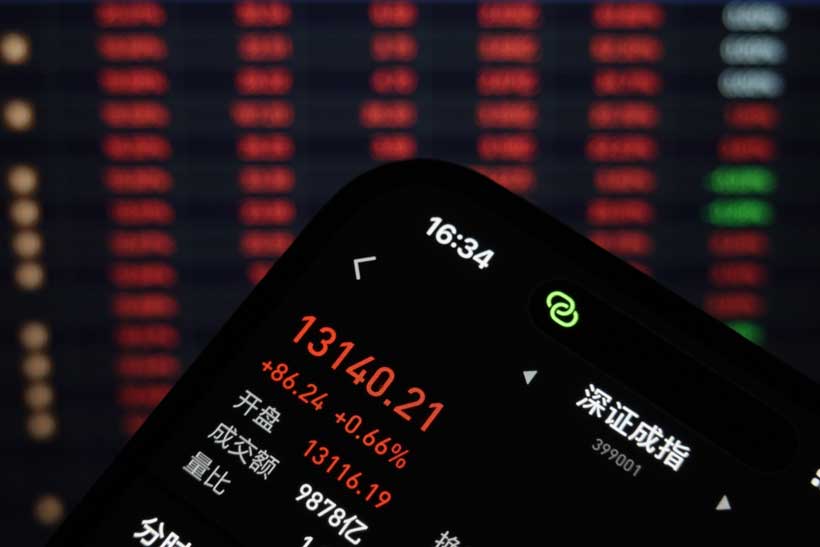
- Hong Kong’s Hang Seng Index rose 2.5 percent.
- The Hang Seng Tech Index surged 4.7 percent.
- China’s STAR 50 Index gained 1.6 percent.
- The ChiNext Index climbed 2.7 percent.
- The CSI300 advanced 1.5 percent.
- The Shanghai Composite Index increased 0.4 percent.
Technology stocks were the primary drivers of the rally.
Tencent shares jumped more than 10 percent following reports that the company is moving closer to launching an artificial intelligence agent integrated into WeChat, China’s largest social media and messaging platform.
Meituan also gained strongly after investors reacted positively to signs that intense competition in China’s food delivery industry may be beginning to ease.
The rally extended beyond technology, with artificial intelligence related shares and non ferrous metal companies also recording significant gains.
Tencent’s AI Push Captures Investor Attention
Why Tencent’s Move Matters
The strongest market reaction centered on Tencent.
Reports suggesting that the company is nearing the launch of an AI agent for WeChat generated excitement because of the platform’s enormous user base of approximately 1.4 billion people.
If successfully deployed, such an AI assistant could become one of the largest consumer facing artificial intelligence applications in the world.
The development is significant because AI competition is increasingly shifting from standalone chatbots toward integration within existing digital ecosystems.
Companies that already possess massive user networks may have advantages in scaling AI services rapidly.
The Strategic Importance of WeChat
WeChat occupies a unique position within China’s digital economy.
The platform combines messaging, payments, shopping, business services, entertainment, and social networking into a single ecosystem.
Integrating AI directly into this environment could significantly enhance user engagement while creating new revenue opportunities through advertising, commerce, and premium services.
Investors appear to be viewing Tencent’s AI ambitions as a potentially transformative growth driver.
Why Meituan’s Gains Matter
Signs of Competitive Stabilization
Meituan’s rise may appear surprising given its latest quarterly loss.
However, investors focused less on earnings and more on indications that subsidy driven competition in China’s rapid delivery sector is beginning to moderate.
For much of the past year, food delivery companies have engaged in aggressive pricing battles designed to capture market share.
While beneficial for consumers, these strategies have pressured corporate profitability.
Evidence that the competitive environment is stabilizing could improve future earnings prospects across the sector.
Shift Toward Profitability
Investors often reward companies when they believe industry conditions are becoming more rational.
For Meituan, expectations of reduced subsidy spending may be viewed as a pathway toward stronger margins and improved financial performance.
The AI Investment Narrative Continues
Artificial Intelligence Remains a Global Theme
One of the most important lessons from Tuesday’s rally is that artificial intelligence continues to dominate market thinking.
Despite geopolitical uncertainty, investors remain eager to identify companies positioned to benefit from AI adoption.
This trend is not limited to the United States.
Chinese technology firms are increasingly being evaluated based on their ability to develop competitive AI products, infrastructure, and services.
Zhipu AI’s Listing Plans
Another development attracting attention was the announcement that Zhipu AI intends to pursue a domestic stock market listing in Shanghai.
The move highlights growing confidence among Chinese AI firms and demonstrates the sector’s increasing importance within China’s capital markets.
A successful listing could further strengthen investor interest in domestic AI development.
The Middle East Factor
Why Investors Remain Cautious
Although technology optimism drove markets higher, geopolitical developments remain a significant source of uncertainty.
Investors continue monitoring negotiations involving the United States, Iran, Israel, and regional actors.
Potential disruptions to energy markets remain a key concern because rising oil prices can increase inflation pressures and slow economic growth globally.
Markets Are Balancing Two Competing Forces
Current market behavior reflects a balancing act.
On one side are geopolitical risks, including conflict, energy market volatility, and diplomatic uncertainty.
On the other side is enthusiasm surrounding technological innovation and artificial intelligence.
Tuesday’s rally suggests that, at least for now, investors believe technology driven growth opportunities outweigh immediate geopolitical concerns.
Analysis: Why China’s Technology Sector Is Regaining Momentum
The significance of Tuesday’s rally extends beyond a single trading session.
It reflects a broader reassessment of China’s technology sector.
For several years, investors viewed Chinese technology companies primarily through the lens of regulatory risk, slowing growth, and geopolitical tensions.
Today, artificial intelligence is changing that narrative.
Investors increasingly see Chinese firms as participants in a global technological transformation rather than merely domestic internet companies.
Tencent’s gains illustrate this shift particularly well.
The market reaction was not driven by short term earnings or cost cutting measures. Instead, it was driven by expectations regarding future technological capabilities and growth potential.
Another important factor is capital flows.
China remains one of the few major emerging markets attracting investment across equities, bonds, and currencies simultaneously. This provides a supportive backdrop for asset prices even when external risks remain elevated.
At the same time, investors should not ignore underlying challenges.
China’s economy continues to face pressures from weak consumer demand, property sector difficulties, and slower growth compared with previous decades.
Artificial intelligence enthusiasm may boost valuations, but sustained market strength will ultimately require broader economic improvement.
Nevertheless, Tuesday’s performance suggests that global investors increasingly view China’s technology sector as a key participant in the AI revolution rather than merely a recovery story.
Future Scenarios
Scenario One: AI Momentum Continues
Technology companies successfully launch new AI products and attract additional investment.
This could drive further gains across China’s technology sector and strengthen market sentiment.
Scenario Two: Economic Weakness Limits Gains
Artificial intelligence enthusiasm remains strong, but broader economic challenges constrain corporate earnings and consumer spending.
Technology stocks continue rising, though at a slower pace.
Scenario Three: Geopolitical Risks Reemerge
Escalating tensions in the Middle East or worsening global economic conditions trigger risk aversion.
Investors shift away from growth assets, leading to increased market volatility.
What’s Next?
Investors will closely watch Tencent’s progress in launching AI features for WeChat and monitor adoption rates if the product is introduced.
Attention will also focus on upcoming earnings reports, AI related announcements, and developments surrounding Zhipu AI’s planned listing.
Beyond technology, markets will continue evaluating geopolitical developments in the Middle East and their potential impact on energy prices and global investor sentiment.
The interaction between technological optimism and geopolitical uncertainty is likely to remain one of the defining themes for financial markets throughout the coming months.
Conclusion
Tuesday’s rally demonstrates that artificial intelligence remains one of the most powerful forces shaping global investment decisions. Strong gains in Tencent, Meituan, and other technology companies highlight growing confidence in China’s ability to participate in the next phase of AI driven innovation.
While geopolitical risks continue to create uncertainty, investors appear increasingly willing to look beyond short term tensions and focus on long term technological opportunities. Whether this momentum can be sustained will depend not only on AI breakthroughs but also on the broader health of China’s economy and the stability of the global geopolitical environment.
With information from Reuters.
US says ban on AI chip shipments applies to Chinese firms outside China | Technology News
Department of Commerce issues guidance on chip restrictions amid concerns about loopholes in export control regime.
Published On 1 Jun 2026
The United States has issued a notice affirming its restrictions on shipments of semiconductors to subsidiaries of Chinese companies located outside China amid concerns about loopholes in Washington’s export control regime.
The Department of Commerce said in the guidance issued on Sunday that its licensing requirements for the export of advanced AI chips applied to all businesses with headquarters or a parent company in China.
Recommended Stories
list of 4 itemsend of list
The Bureau of Industry and Security (BIS), which falls under the Commerce Department, said it issued the clarification in response to questions about whether it was enforcing preexisting licence requirements after it had overturned former President Joe Biden’s AI Diffusion Framework.
“The answer is yes,” the BIS said in the notice.
Unveiled in the final days of the Biden administration, the AI Diffusion proposed the implementation of a globe-spanning framework to control access to AI chips, including export caps for all but the closest US allies.
The framework drew backlash from tech firms, including Nvidia, the world’s most valuable chip company, which cast the proposal as a threat to innovation and cross-border collaboration.
President Donald Trump’s administration scrapped the framework last May, ahead of its implementation, citing the “burdensome new regulatory requirements” and the harm it would do to Washington’s diplomatic relations with other countries.
Chip giant Nvidia, whose top-of-the-line Blackwell GPUs are banned for export to China, said it had already been operating in keeping with the clarified rules.
“The guidance reaffirms that NVIDIA’s sales and vetting process is correct – consistent with our existing approach, licences are required to ship controlled products to PRC headquartered companies,” a Nvidia spokesperson told Al Jazeera, using the acronym for the People’s Republic of China.
AMD and Intel, Nvidia’s main competitors in the GPU space, did not immediately respond to requests for comment.
TSMC, which manufactures the most advanced chips on behalf of clients such as Nvidia, did not immediately return an email seeking comment.
The BIS also did not respond to inquiries.
Chris McGuire, a former State Department official who worked on technology policy in the Biden administration, accused the Trump administration of providing Chinese companies a loophole to buy export-controlled chips.
“Chinese companies have been buying these chips, very likely at scale. And because BIS has not updated export control regulations to clearly state what it IS enforcing, all of this was legal,” McGuire said in a post on X.
“This clarification does make clear that Blackwell shipments to China-headquartered companies outside of China are now illegal again – which is good, although obviously we have to see how many shipments have already gone to assess how much damage was done,” McGuire said.
“BIS’ statement acknowledges these shipments have been happening when it says companies who bought chips under this loophole don’t have to stop using them.”
The US has rolled out numerous restrictions on the supply of high-end technology to China, as Washington and Beijing battle for dominance in AI.
In December, Trump announced that he would allow Nvidia to sell its H200 chip to China, in a major loosening of Washington’s export controls.
While not Nvidia’s most advanced chip, the H200 is about six times as powerful as the H20, the most advanced chip previously allowed for export to China.
Japan rejects ‘new militarism’, says China is rapidly arming | News
Defence Minister Shinjiro Koizumi accuses China of lacking military transparency and stresses the importance of dialogue for regional stability.
Published On 31 May 2026
Japanese Defence Minister Shinjiro Koizumi has dismissed claims that Tokyo is pursuing “new militarism” and accused China of rapidly expanding its military with limited transparency.
China continues to increase its defence spending at a high level, Koizumi said on Sunday at the Shangri-La Dialogue in Singapore.
Recommended Stories
list of 3 itemsend of list
“China’s external approach and military activities are matters of serious concern for Japan and the international community at the same time,” he added.
“Think about it. There’s a country that has a huge arsenal of nuclear weapons and strategic bombers. Japan has neither of such weapons, and yet Japan is labelled ‘new militarism’?”
Koizumi said Japan’s record since World War II “speaks for itself”, citing its adherence to international law and commitment to the United Nations Charter alongside efforts to uphold a “free and open international order”.
In May, China’s Ministry of Foreign Affairs called on Asia Pacific countries to be vigilant and “jointly resist the reckless actions of Japan’s neo-militarism”.
At the Singapore forum, Chinese delegate Major General Meng Xiangqing criticised Japan.
“I deeply doubt whether a country that has not thoroughly eradicated the toxic legacy of militarism is qualified to talk extensively about defence cooperation on international occasions and whether it can win the trust of the international community, especially the Asian countries it once invaded,” he said.

Ties between Japan and China sank to their worst level in years after Japanese Prime Minister Sanae Takaichi warned in November that a hypothetical Chinese attack on Taiwan could draw a Japanese military response.
China claims Taiwan as its own territory over the objections of the island’s government.
Koizumi said transparency comes from “discussion and dialogue” and lamented that China had not sent its defence minister to the conference, but he insisted Japan remains open to engagement.
“We keep the door open,” he said, reaffirming Japan’s commitment to dialogue with China and other regional players to foster stability.
As China has been rapidly expanding and modernising its military, Japan has been reshaping its own defence policy. Last month, Takaichi’s cabinet scrapped a ban on lethal weapons exports, a major change in its post-war pacifist policy.
Japan pushes for unity
Separately on Sunday, Koizumi praised US Secretary of Defense Pete Hegseth for his commitment to the Asia Pacific but at the same time stressed the continued need for strong coalitions globally.
“Division weakens deterrence. Unity strengthens deterrence,” he told the conference in Singapore.
“If gaps emerge among the United States, Europe and allies and like-minded countries, forces which take it as an opportunity will surely come in,” he said.
“We must prevent such a situation. We must keep our cooperation going on. Now is the time to make our cooperation even stronger.”
US President Donald Trump has been harsh about fellow members in NATO, and the comments at the Shangri-La conference came the day after Hegseth again chided Western European allies at the forum for not devoting enough resources to defence.
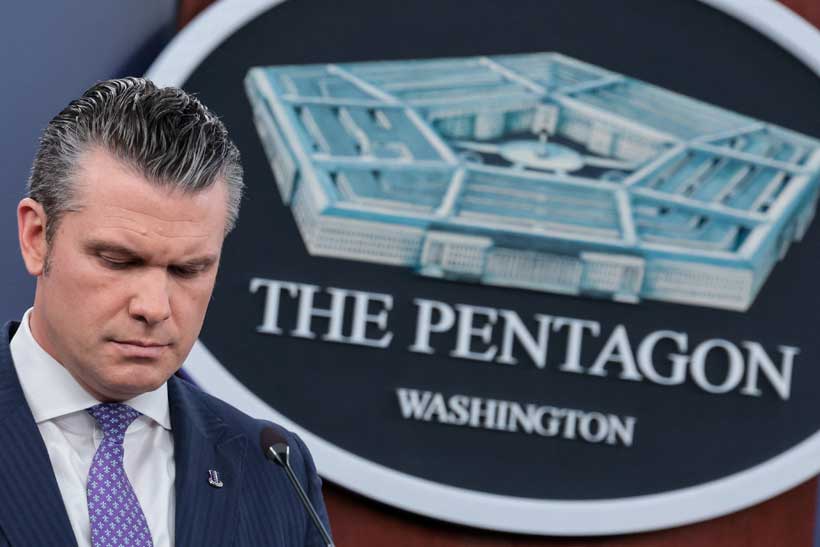
Hegseth Warns of China Threat, Urges Allies to Ramp Up Defense Spending
U. S. Defence Secretary Pete Hegseth called on Asian allies to increase military spending to counter China’s rising influence during his speech at the Shangri-La Dialogue in Singapore. He expressed concern over China’s military buildup and its potential to disrupt the regional balance of power. Hegseth emphasized the need for a robust network of allies that can deter aggression and maintain stability. The U. S. expects allies to raise defense spending to 3.5% of GDP, while the U. S. itself is investing $1.5 trillion in its military.
Hegseth addressed the need for action over discussions, suggesting that the region requires more military resources, such as ships and submarines, rather than just conferences. He underlined that partners want stability and that the U. S. must exhibit strength and disciplined leadership. He also noted improvements in U. S.-China relations, citing increased military communication to help manage tensions, while acknowledging that the relationship remains complicated.
Zhou Bo, a Chinese delegate, recognized a better tone in Hegseth’s remarks compared to the previous year, attributing this change to previous diplomatic engagements. He stated that both nations have communication channels open and that the situation might not be as severe as perceived. Hegseth reiterated President Trump’s call for allies to take more responsibility for their defense costs, proclaiming an end to U. S. defense subsidies for wealthy nations, emphasizing the need for allies to contribute actively.
Hegseth praised contributions from various allies and highlighted Japan’s efforts to enhance its defenses alongside the U. S. Regarding the Middle East, he stated the U. S. is prepared to resume strikes on Iran if diplomatic efforts fail and emphasized the ability to focus on both Asian and Middle Eastern interests simultaneously.
On the topic of arms sales to Taiwan, Hegseth avoided directly addressing concerns but affirmed that decisions about such sales are ultimately up to President Trump. The U. S. is reportedly considering a substantial arms package for Taiwan, which China views as its territory. Hegseth assured that there has been no change in U. S. policy towards Taiwan despite the ongoing dynamics in U. S.-China relations.
With information from Reuters
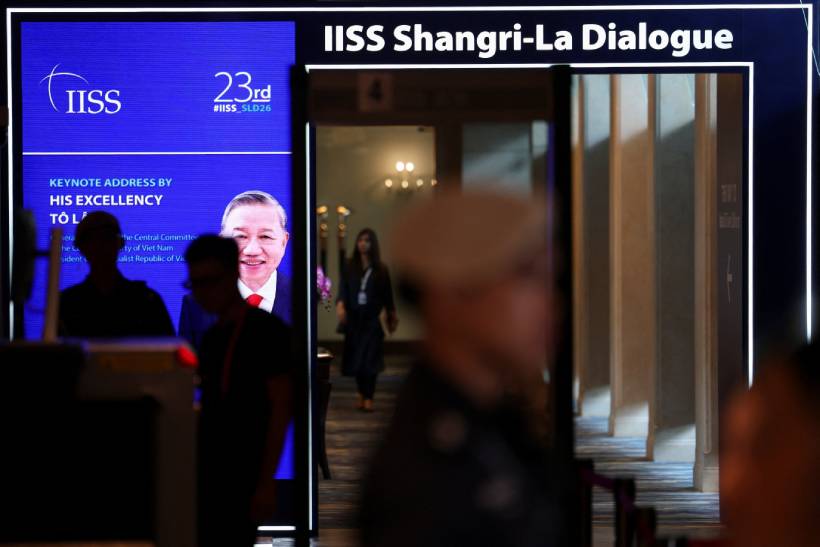
China’s Limited Role at Shangri La Dialogue Seen as Missed Opportunity
China’s decision to send a largely academic delegation instead of senior defence leadership to the Shangri La Dialogue in Singapore has been described by Australia as a missed opportunity for strategic engagement at a time of rising regional tensions.
Australian Defence Minister Richard Marles said the Asia Pacific region needs greater strategic reassurance from Beijing, particularly given China’s ongoing military expansion and its growing influence across the Indo Pacific.
The Shangri La Dialogue is the region’s most prominent defence and security forum, bringing together senior ministers, military leaders, and policymakers from across the world to discuss security challenges and regional stability.
For the second consecutive year, China’s Defence Minister Dong Jun did not attend the meeting, with Beijing instead sending a delegation made up mainly of academics and military experts.
Why It Matters
The absence of senior Chinese defence officials comes at a sensitive moment for regional security dynamics.
Australia and its allies have repeatedly raised concerns about China’s rapid military buildup, which is widely regarded as the largest conventional expansion since the Second World War. Regional governments argue that this military growth has not been matched by sufficient transparency or reassurance about China’s long term intentions.
The lack of direct high level engagement at forums such as the Shangri La Dialogue limits opportunities to reduce misunderstandings, build trust, and manage rising tensions through dialogue.
For countries in the Indo Pacific, especially smaller states, the absence of senior Chinese representation can increase uncertainty about regional security and long term strategic balance.
Key Stakeholders
China
China’s approach reflects a more controlled engagement strategy in defence diplomacy, relying on lower profile participation while continuing to expand military capabilities and regional influence.
Australia
Australia views sustained dialogue as essential for regional stability, while simultaneously strengthening its alliance with the United States and deepening defence cooperation across the Indo Pacific.
United States
The United States remains a central security partner in the region and continues to position itself as a counterbalance to China’s military rise through alliances and defence agreements.
Regional Partners
Countries such as Japan, the Philippines, Malaysia, and others attending the forum are closely watching China’s engagement level as they navigate their own security concerns in a shifting regional order.
Future Outlook
If China continues limiting senior level participation in regional defence forums, diplomatic channels for managing tensions in the Indo Pacific may become more constrained. This could increase reliance on bilateral alliances and military deterrence rather than multilateral dialogue.
At the same time, ongoing military expansion by China will likely keep regional security concerns elevated, particularly among Southeast Asian and Pacific nations.
However, if future editions of the Shangri La Dialogue see higher level Chinese participation, it could open pathways for improved communication and reduced strategic mistrust.
For now, the gap between China’s military rise and its diplomatic engagement remains a key concern for regional powers seeking stability in an increasingly competitive Indo Pacific environment.
With information from Reuters.
Is Europe finally waking up to China?
Tensions between China and the EU have intensified in recent months, prompting the European Commission to convene most of its commissioners for a strategic rethink during an “orientation debate” on Friday.
ADVERTISEMENT
ADVERTISEMENT
“China is a critical partner, and engagement and dialogue will continue,” the commission said in a readout following the debate. “At the same time the current state of the trade and investment relationship is not sustainable.”
Calling the relationship “not sustainable” may understate the depth of the rupture.
Relations have steadily deteriorated since European Commission President Ursula von der Leyen branded Beijing a “systemic rival” in a landmark 2023 speech. But tensions surged to a new level once EU policymakers finally settled their differences over the EU-US trade deal that had consumed Brussels for months, freeing the bloc to sharpen its focus on China.
Last year, according to the commission, the bloc registered a record-high €359.9 billion trade deficit with Beijing, fuelling growing calls in Brussels to better protect the EU market from cheap Chinese imports that threaten entire sectors — metals, chemicals and the car industry among them.
“We are seeing a panic attack in the last few weeks on China,” an EU official told Euronews, speaking on condition of anonymity to speak candidly. The official added that the China issue had been “overlooked for too long.”
A total of 200,000 European jobs were lost in EU industry — particularly in the energy-intensive and automotive sectors — since 2024, with a further 600,000 job losses projected this decade in carmaking alone.
On Friday, the commission readout specified that its “overarching approach remains de-risking, not decoupling,” signalling that the bloc is still pursuing targeted efforts to reduce its dependence on China rather than sever economic ties altogether. Yet the risk of a full-scale trade war has never felt so real.
Here are five key points on how the situation has escalated to this point — and where it may be headed next :
1. Fines and regulatory pressure
During the previous legislative term, the EU passed legislation that drew Beijing’s anger — notably measures to screen foreign direct investment. And it has stepped up its fight against so-called dumping, whereby public subsidies are used to undercut competitors through exports sold below market prices in China.
The European Commission has grown increasingly assertive in countering China’s subsidy-driven approach, including by imposing duties on imports of battery electric vehicles. Several product-specific investigations are also ongoing.
Earlier this week, the Commission fined Chinese e-commerce giant Temu €200 million for selling unsafe products and opened a full-scale investigation into JD.com’s acquisition of e-commerce retailer MediaMarkt.
EU lawmakers and governments are also discussing the Industrial Accelerator Act, a legislative proposal that would impose strict conditions on investments in batteries, electric vehicles, solar panels and critical raw materials from countries controlling 40% of the global market share in a given sector.
A separate proposal — a revamped Cybersecurity Act — could push out Chinese equipment suppliers such as Huawei and ZTE from critical infrastructure.
2. A more systemic approach
To counter Chinese overcapacities, the EU agreed in April to double tariffs on steel imports that exceed EU quotas. The measure is a so-called “safeguard” — a tool backed by some of the EU’s largest economies, including France, Italy, Spain, the Netherlands and Lithuania, which called for it to be extended to sectors beyond metals.
In a non-paper, those countries argued that safeguards were more “agile” than other EU instruments targeting cheap export products. The paper also calls for economic security to be factored into assessments of the EU’s interests when deciding on trade defence measures.
The European industry is also ramping up pressure to crack down on Chinese cheap imports calling on the Commission to use trade defence measures “more flexibly, faster, and preventively.”
A major wake-up call for EU policymakers has been the recent case of Nexperia, a Dutch-based chipmaker acquired by Chinese giant Wingtech, which was caught in the crossfire of US-China trade tensions, causing significant disruption in the automotive sector.
The Commission is now set to require sectors such as the car industry to diversify chip suppliers in certain cases, taking supply-chain risks into account in procurement decisions.
Despite these various initiatives, EU policymakers have grown wary that the current rules are too slow-moving for a fast-moving adversary. After duties were imposed on electric vehicle batteries, China’s focus simply shifted to hybrid vehicles.
Brussels is now moving towards a more systemic approach, treating trade defence as a toolbox to rebalance relations with China. One potential addition is a so-called overcapacity instrument to cap imports in specific sectors.
3. China’s threats of retaliation
In recent weeks, China has repeatedly threatened retaliation if the EU presses ahead with closing its market to Chinese goods.
Both the “Made in Europe” legislation and the Cybersecurity Act have drawn Beijing’s ire, prompting intensified lobbying of Brussels and EU member states, with warnings that implementation will trigger a response.
The Europeans are walking a tightrope, acutely aware that their decisions could spark a trade war. After the EU imposed tariffs on Chinese electric vehicles in 2024, Beijing imposed tariffs on EU pork, brandy and dairy products.
“International trade is a two-way street. There’s no forced trade. The China-EU trade relations are win-win in nature. China does not aim for trade surplus,” Chinese Foreign Ministry spokesperson Mao Ning said at a press briefing on Thursday.
“The EU needs to put trade ties with China in perspective and honour its commitment to free trade. China will closely follow the EU’s moves and take all measures necessary to safeguard legitimate rights and interests,” Ning added.
Some argue it is already too late for the Europeans, who depend on China for key components of their supply chains — components Beijing can weaponize at will.
In 2025, China blocked exports of rare earths, which are vital for EU green technology and defence, as well as chips essential to the European car industry. Beijing can also leverage operating licences for EU companies and restrict access to its market at any time.
4. European divisions
Europe is far from united on China.
Germany, despite a troubling trade deficit with Beijing, has been slow to shift away from its cooperative approach, which prioritises securing market access for German companies in China.
Berlin did not endorse last weekend’s non-paper backed by other major EU economies. Instead, German Economy Minister Katherina Reiche repeated this week that Germany’s overriding priority is to avoid jeopardising exports to China.
Yet the economic cost of dependence on Beijing might be forcing Berlin to reconsider its stance. The German government is reportedly weighing a tougher line that would mark a significant shift in its China policy.
For years, the German industry had a relationship with the Chinese market that critics described as toxic — one that blocked any meaningful attempt to rebalance the trade deficit out of fear of losing commercial access to the vast Asian market.
Spain has emerged as the other major EU country reluctant to act against China. With relatively cheap energy costs, Spain has become attractive to foreign investors, of which Beijing accounts for a growing share.
Its position caused embarrassment for Madrid this week, after it initially appeared to support the France-led non-paper before retreating and claiming it had merely participated in discussions.
“There has been no specific political support for any ‘non-paper’,” Spanish trade minister Carlos Cuerpo said, adding that the EU should “engage” with Chinese authorities through “dialogue.”
5. What happens now?
Brussels’ reassessment of its China stance has been long in the making, rooted in decades of deepening economic dependence. But the latest acceleration was also prompted by a shift in US posture, most visibly the recent visit to Beijing by President Donald Trump.
The Commission’s orientation debate on Friday was just a first step in what could become a broader repositioning. Where that leads — given internal divisions and the threat of retaliation — remains deeply uncertain.
The conclusions of that exercise are expected to feed into a discussion on economic security at the next European Council meeting on 18-19 June. China has appeared on EU leaders’ agenda several times in recent years, only to be pushed aside by more pressing crises.
While Brussels considers adding new instruments to its policy toolbox, political will remains the key determining factor. Nowhere is that gap more stark than in the EU’s handling of the anti-coercion instrument, also known as the “trade bazooka,” which was designed to push back against economic pressure and unfair trade restrictions.
“The anti-coercive instrument was never used, even though we have been coerced quite a lot,” the EU official said. “We need tools that we are actually willing to use.”
Germany resists EU members’ push for a tougher stance on China
German Trade Minister Katherina Reiche is travelling to China from Tuesday to Friday as Berlin’s trade deficit with Beijing continues to deepen.
ADVERTISEMENT
ADVERTISEMENT
The trip comes two days after several of the EU’s largest economies – France, Spain, Italy, the Netherlands, as well as Lithuania – issued a non-paper urging the EU to crack down on Chinese overcapacity and unfair trade practices.
Berlin, however, did not endorse their call.
Germany remains the main chokepoint in the EU’s strategy towards China. While Euronews previously reported that the publication late last year of Germany’s trade deficit with Beijing marked a turning point for the EU executive, which is trying to sharpen its trade defence tools, Germany continues to favour cooperation with the Chinese.
In March, German Chancellor Friedrich Merz called for a trade agreement with Beijing. Brussels pushed back against the idea.
“There are a number of concerns and real challenges that the European Union has consistently expressed to China that we need to see them meaningfully address before we can even talk about any future agreements or anything like that,” the Commission’s deputy chief spokesperson, Olof Gill, said at the time.
Even with a record €87 billion trade deficit with China, Berlin hopes Beijing will keep its market open to German industry, despite the obstacles faced by EU businesses in China and the Asian giant’s strategy of reducing its dependence on foreign products.
Access to China’s market
The main objective of Reiche’s visit this week is to discuss potential economic cooperation. According to the German government, the strategy is to explore future opportunities for collaboration while maintaining dialogue with the Chinese leadership.
Despite a steadily growing trade deficit, China remained Germany’s most important trading partner in 2025. According to the Federal Statistical Office, bilateral trade volume reached €250 billion. Around 5,200 German companies operate in China, making the country one of the most important foreign markets for Germany’s automotive, mechanical engineering and electrical industries.
During the trip, Reiche is expected to hold political talks, attend a business forum and visit local companies. She will be accompanied by a business delegation representing around 40 companies. Discussions are also set to focus on the development of energy technologies.
“We hope the visit will help to transfer the insights gained on the ground into the political discussion in Berlin and to further develop bilateral exchange,” said Oliver Oehms, Executive Director of the German Chamber of Commerce in China.
In a survey published in May by the chamber, 51% of German companies operating in China supported policies favouring partnerships with Chinese companies, while 42% backed the “strategic” use of knowledge gained through such partnerships.
But these sectors are also increasingly under pressure, as Chinese competitors benefit from extensive state subsidies.
According to a report published in May by the EU think tank Centre for European Reform, the growing concentration of global car, machinery and chemicals production in China could weaken innovation in traditional manufacturing hubs and increase Beijing’s leverage over Berlin through the threat of supply disruptions, similar to its blockade of rare earth exports in 2025.
The report added that demand generated by Germany’s fiscal stimulus after easing its debt brake could end up boosting Chinese imports rather than supporting Berlin’s domestic industry.
German exports to China fell by 9.7% year-on-year, while imports of Chinese goods such as electronics, electric vehicles and components rose significantly by 8.8%.
“China has already eaten much of German industry’s lunch and is preparing to start on dinner,” the report said.

Car swept away by floodwater after bridge collapses in China | Floods
An eyewitness captured the moment a car fell into a river as a bridge collapsed in China. Local media says the vehicle had broken down and couldn’t reverse, and the occupants got out before floodwaters swept it away.
Published On 26 May 2026
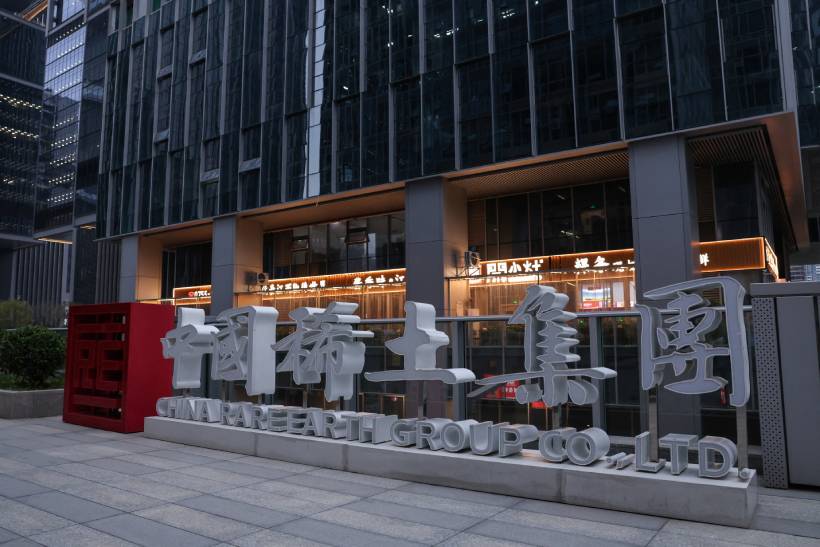
Critical Minerals Rush Risks Creating Global Oversupply, Industry Warns
Western governments are pouring tens of billions of dollars into critical minerals projects as they attempt to reduce dependence on China for materials essential to clean energy, defence technology and advanced manufacturing.
But industry executives, analysts and investors are increasingly warning that poorly coordinated state-backed investment could create severe oversupply problems similar to past commodity booms that ended in market crashes.
The concerns come as countries including the United States, Australia, European Union and Japan accelerate efforts to build strategic reserves and expand production of rare earths and other critical minerals.
Governments Ramp Up Critical Minerals Spending
The United States has committed more than $20 billion toward critical minerals development through multiple financing programmes, including Project Vault, a strategic stockpiling initiative worth around $10 billion.
Australia has also allocated at least A$13 billion to support critical minerals projects and reserves through several government-backed programmes.
These investments are designed to secure supplies of metals used in electric vehicles, semiconductors, renewable energy systems, aerospace equipment and military technologies.
Particular attention has focused on rare earth elements, a group of 17 metals essential for producing powerful magnets used in advanced defence systems and high-tech manufacturing.
Although the global rare earths market was valued at only about $6.4 billion in 2024, combined Western financial commitments to rare earth projects have already exceeded that figure.
Fears Grow Over Potential Oversupply
Mining executives and analysts warn that aggressive subsidies and overlapping national strategies could eventually flood global markets with excess supply.
Brett Beatty of Resource Capital Funds said the biggest danger lies in governments pursuing independent strategies without coordination.
According to Beatty, simultaneous efforts to rapidly increase production could create volumes far beyond global demand, ultimately crushing prices and undermining the very industries governments are trying to build.
Analysts drew comparisons to historical commodity gluts, including Europe’s “butter mountains” of the 1980s, Russian aluminium oversupply and Australia’s wool crisis, where subsidies and state support distorted markets and triggered sharp price collapses.
Rare Earth Market Could Face Surplus Pressures
Consultancy Project Blue warned that several rare earth markets are already on track to move into surplus over the coming years due to expanding state-backed production.
However, analyst David Merriman said governments may still be able to avoid major imbalances if they carefully adjust subsidies, stockpiling programmes and guaranteed purchasing arrangements.
Industry leaders say current stockpiles remain relatively small, limiting immediate risks of market disruption.
Lynas Rare Earths CEO Amanda Lacaze recently said rare earth stockpiles around the world remain modest and are not yet large enough to destabilise markets.
Australian Resources Minister Madeleine King also argued that today’s critical minerals policies differ significantly from past commodity intervention failures because they are more targeted and linked to long-term industrial supply chains.
Global Coordination Emerging Among Western Allies
Concerns about duplication and oversupply are pushing Western governments toward greater policy coordination.
The Group of Seven is reportedly discussing the creation of a permanent secretariat focused on coordinating critical mineral strategies and ensuring continuity between rotating national presidencies.
Industry experts say such coordination could help prevent destructive competition between allied nations while supporting more stable investment planning.
Lessons From Congo and Indonesia
Governments outside the West have already experimented with aggressive intervention in mineral markets.
The Democratic Republic of the Congo boosted cobalt prices by introducing export quotas and stockpiling measures designed to increase mining revenues.
While the policy initially lifted prices, analysts warn prolonged restrictions could encourage manufacturers to seek alternative materials or suppliers.
Similarly, Indonesia dramatically expanded its dominance in nickel production after banning exports of raw nickel ore in 2020 to force domestic processing investment.
Indonesia’s production surged within just a few years, but authorities have since struggled with falling prices and oversupply, forcing Jakarta to tighten mining quotas and centralise export controls.
These examples highlight the difficulty governments face in balancing national industrial ambitions with long-term market stability.
Analysis
The global race for critical minerals is increasingly becoming a strategic contest shaped as much by geopolitics as by economics.
Western governments view supply chain independence as essential after years of relying heavily on China for processing capacity and rare earth production. The push is not simply about commercial competition — it is tied directly to national security, technological leadership and energy transition goals.
However, the very scale of state intervention now unfolding raises the risk of creating distorted markets. If multiple governments simultaneously subsidise production, guarantee prices and build stockpiles without coordination, supply could rapidly outpace actual industrial demand.
That scenario would likely trigger sharp price declines, weaken private investment and potentially create another boom-and-bust cycle in the mining sector.
At the same time, the market dynamics of critical minerals differ from traditional commodities. Many of these materials are essential for emerging technologies, and demand is expected to rise significantly over the next two decades as countries expand renewable energy infrastructure, battery production and semiconductor manufacturing.
This means governments are not only competing to secure supply today but also positioning themselves for future industrial dominance.
Another key challenge is that refining and processing capabilities remain heavily concentrated in China. Even if Western countries succeed in expanding mining output, they may still depend on Chinese infrastructure unless domestic processing networks are developed alongside extraction projects.
The growing emphasis on “friend-shoring” and allied supply chains reflects an attempt to address this vulnerability.
Industry experts also point to a more sustainable model emerging through byproduct extraction. Instead of building entirely new mines based purely on high prices, companies are increasingly looking to recover critical minerals from existing industrial operations, reducing the risk of uncontrolled supply growth.
Projects involving Alcoa, Sojitz and Trafigura illustrate how governments and corporations are experimenting with lower-risk approaches to expanding supply.
Ultimately, the success of Western critical minerals strategies may depend less on how much money governments spend and more on whether they can coordinate policies, manage supply carefully and build integrated processing ecosystems capable of competing with China over the long term.
With information from Reuters.