
Emanuel M Schwermer/DigitalVision via Getty Images
In May 2026, just hours before President Donald Trump met President Xi Jinping, OpenAI’s Vice President of Global Affairs Chris Lehane floated the idea of a US-led global governance body for artificial intelligence that would include China as a member. The model, according to media reports, was compared to the International Atomic Energy Agency (IAEA), a familiar reference for managing strategic technologies with global consequences.
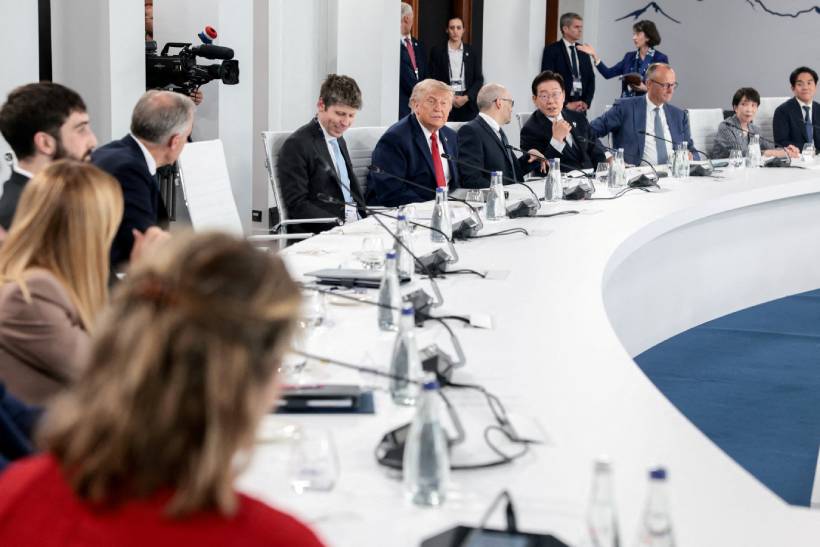
One month later, at the G7 summit in Évian-les-Bains, a different tone emerged. Several influential AI executives joined leaders from advanced economies to discuss AI governance, online safety, and global security. According to Axios, Anthropic’s Dario Amodei and Google DeepMind’s Demis Hassabis leaned towards a more selective framework among democratic countries, while OpenAI’s Sam Altman used broader language, calling for an international forum to develop shared testing standards and risk assessments.
These two moments reveal something important: the meaning of “global AI governance” remains unsettled. In one setting, global means including China for legitimacy. In another, it can mean a trusted coalition designed to manage access, capability, and strategic risk. AI governance is becoming part of the architecture of global power.
Three Voices, Different Emphases
Stay ahead of the geopolitical week.
MD Briefing delivers expert analysis across five global fronts — the Indo-Pacific, energy, geoeconomics, European security, and the Middle East — every Monday morning. Free.
Their presence at the G7 showed how quickly AI firms have moved from building systems to helping shape the politics around them. The leaders of OpenAI, Anthropic, Google DeepMind, Mistral, Cohere, and other firms were not simply observers of geopolitics. They were part of the conversation about how technological power should be governed.
Their positions were not identical. Amodei reportedly urged democratic countries to coordinate more closely so that AI governance would not fragment. Hassabis stressed the strategic importance of frontier capability. Altman, by contrast, used more institutionally neutral language, suggesting that advanced AI should not be shaped only by the companies building the most capable systems.
Even among frontier AI developers, there is no settled imagination of global governance. Should it include all major AI powers, including strategic rivals? Should it be built around trusted coalitions? Should it prioritize safety, democratic values, geopolitical advantage, or public legitimacy?
The question became more complicated because the G7 discussions came shortly after the US government imposed export controls that forced Anthropic to suspend foreign access to its Fable 5 and Mythos 5 models. Reuters reported that the order required Anthropic to block access to the models for foreign nationals, leading the company to disable them more broadly to ensure compliance. The episode showed how frontier AI governance can move from abstract principles to abrupt restrictions. Even among democratic allies, technological solidarity has limits. When AI becomes strategic infrastructure, every country begins to think about its own room for maneuver.
The Asymmetry of “Global”
The deeper issue lies in who has the power to define the word “global” in the first place. In May, global governance could mean a US-led institution that includes China. In June, it could mean coordination among democracies to manage frontier capability and strategic access. The definition changed because the political room changed.
This reveals a double asymmetry. The first is technical: only a small number of firms can define what counts as a frontier model, how its capabilities should be tested, and who should be allowed to access it. The second is narrative: the same ecosystem also helps frame the language through which the world discusses governance.
For countries outside the frontier AI circle, they may be invited to conversations but not always to the stage where categories, thresholds, and governance priorities are first shaped. They may be asked to adopt best practices whose assumptions were formed elsewhere. They may be told that risks are global, even when preparedness remains highly unequal.
G7 outreach to partner countries such as India, Brazil, Kenya, South Korea, and Egypt is important. It recognizes that AI governance cannot remain a conversation among advanced economies alone. Yet there remains a difference between being present in a forum and helping design the architecture of the forum itself. The question is who defines the table, the agenda, the risk categories, and the meaning of global governance itself.
When the AI Frontier Moves Towards the Market
There is another reason why a broader governance imagination is necessary. Frontier AI innovation is no longer centered primarily in universities or public research institutions. It is increasingly shaped by private firms with the capital, compute, talent, data access, and infrastructure required to train and deploy the most capable models.
Stanford’s AI Index 2025 noted that nearly 90 per cent of notable AI models in 2024 came from industry, up from 60 per cent in 2023. A report prepared for the European Economic and Social Committee on generative AI and foundation models also described significant US dominance across the value chain. These findings point to a structural shift: the frontier is becoming more concentrated, more expensive, and more closely tied to corporate and geopolitical capacity.
Much of AI’s progress has come from companies willing to take risks, scale products, and build technical capability at extraordinary speed. But the center of gravity has shifted. When frontier AI is largely financed, defined, and deployed by market actors, the default imagination of AI development can tilt towards commercial viability, platform advantage, user growth, and strategic positioning.
Public interest does not disappear in such a system. It risks becoming secondary unless other actors are strong enough to bring it back into the room.
Open Future, a European digital policy organization, has warned that concentrations of power in AI can make public activities dependent on “a narrow group of monopolists.” The phrase matters because infrastructure-level dependency can weaken society’s ability to negotiate the terms of the technologies it relies on.
A Wider Public-Interest Layer
In a multiplex digital world, power does not flow only through states or markets. It also moves through universities, civil society organizations, professional associations, media, labor groups, open-source communities, public-interest technologists, and moral institutions. Together, these actors form the society layer often missing from discussions dominated by states and markets.
States define security priorities. Companies define technical possibility. Society must help test legitimacy. Who bears the risk? Who benefits from deployment? Who is excluded from design? What harms are being normalized because they are commercially convenient or geopolitically useful?
This is why Pope Leo XIV’s recent intervention on AI is politically relevant beyond its religious context. In his encyclical Magnifica Humanitas, he argues that protecting the human person in the age of AI requires renewed reflection on the common good, solidarity, social justice, and human dignity. Such interventions will not replace regulation or technical standards. They help recover a truth easily lost in frontier AI politics: governance is also about preserving the human meaning of technological progress.
The same question of authorship is beginning to appear in empirical research. Ongoing fieldwork-based research at the University of Oxford has started to examine whether countries in the Global South are developing approaches to AI governance that are neither simple copies of Western regulatory templates nor rejections of international cooperation but pragmatic syntheses shaped by local institutional capacity, regulatory sequencing, and historical experience with technology transfer. Indonesia has appeared as one of the country cases in this line of inquiry.
Governance models worth studying are not only those negotiated in Évian, Brussels, Washington, or New York. They are also being improvised, often informally, by mid-sized digital economies navigating dependency and ambition at the same time.
The United Nations’ Global Digital Compact (GDC), adopted in September 2024, offers a useful multilateral reference point. It frames digital cooperation and AI governance around inclusion, human rights, open standards, interoperability, digital public goods, and multi-stakeholder cooperation. The Compact does not resolve the power asymmetries of frontier AI by itself, but it gives societies, alongside states and firms, a language for claiming a legitimate role in digital governance.
The practical task is to strengthen public-interest evaluation: the ability to test social impact, language bias, local risks, institutional misuse, and deployment consequences in different societies. The aim is to preserve enough room for public reasoning so that the future of AI is not defined only by those with the largest models, the biggest markets, or the strongest strategic leverage.
Imagining a More Inclusive AI Governance
The lesson from the IAEA analogy and the G7 discussions is not that one model is right and the other is wrong. Both reflect real concerns. A broadly inclusive governance arrangement may be necessary for legitimacy, especially when AI risks cross borders. A trusted coalition may also be necessary when capability access raises genuine security concerns. The problem begins when either model claims to be global while leaving too many societies downstream of decisions made elsewhere.
For emerging economies, the strategic challenge is not simply to wait for a better invitation to the next summit. Participation matters, but it is not enough. Countries and societies need stronger capacity to evaluate AI systems, understand their dependencies, articulate local risks, and negotiate governance terms with greater confidence.
This is a call for a more plural architecture of governance, where states, markets, and society all have meaningful roles. The uncomfortable question is not whether AI requires international coordination. It clearly does. The harder question is whether that coordination can remain open enough for societies, not only states and companies, to shape the terms of technological power.
In the age of frontier AI, the future will not be determined only by who builds the largest models. It will also be shaped by who gets to define risk, test systems, question assumptions, and decide what counts as progress.
Every era that has tried to govern a transformative technology eventually learns the same lesson: legitimacy borrowed from power is not the same as legitimacy earned through participation. The IAEA’s own history shows that global trust is rarely built at the moment institutions are created; it is earned over time, through broader representation, credible restraint, and shared accountability. The real question for AI governance is whether it can shorten that distance by design, rather than waiting for legitimacy to arrive only after contestation.
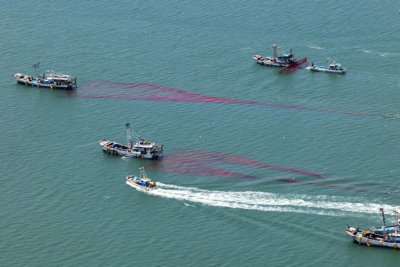

Fishing boats drag their nets in the Yellow Sea off Incheon, South Korea, 18 May 2026. Photo by YONHAP / EPA
June 26 (Asia Today) — China said Friday that it remains in close communication with South Korea over fisheries issues after President Lee Jae Myung called for stronger action against Chinese fishing boats accused of operating illegally in the Yellow Sea.
Chinese Foreign Ministry spokesman Guo Jiakun said maintaining stable waters and an orderly fishing environment between the two countries serves their common interests.
China consistently instructs its fishermen to operate in accordance with laws and regulations while also protecting their lawful rights, Guo said at a regular news briefing in Beijing.
“China and South Korea have a relatively mature dialogue mechanism on fisheries issues and maintain close communication on related matters,” Guo said.
He did not directly address whether the Chinese vessels cited by Lee had engaged in illegal fishing.
Lee raised the issue Wednesday during a visit to the Yeonpyeong Peace Observatory, where he received a briefing on waters near the Northern Limit Line, the de facto maritime boundary between South and North Korea in the Yellow Sea.
After being told that Chinese fishing boats had moved south of the maritime line, Lee questioned why they remained there despite being observed by South Korean forces.
He also asked whether South Korea should station enforcement vessels in the area.
“We have officially confirmed that they crossed the NLL,” Lee said. “I do not think we should simply leave this unattended.”
Lee ordered officials to take firm action, saying the visible presence of the boats during daylight hours showed the seriousness of the problem.
The Chinese government’s response largely repeated its previous position, emphasizing lawful fishing, the protection of Chinese fishermen’s rights and continued consultations with South Korea.
— Reported by Asia Today; translated by UPI
© Asia Today. Unauthorized reproduction or redistribution prohibited.
Original Korean report: https://www.asiatoday.co.kr/kn/view.php?key=20260626010009476
China’s LineShine overtakes US-based El Capitan as most powerful supercomputer, according to the TOP500 list.

Published On 24 Jun 202624 Jun 2026
China has displaced the United States on an influential ranking of the world’s fastest supercomputers, underscoring Beijing’s growing capability to compete with the world’s leading superpower in cutting-edge technology.
China’s LineShine is the most powerful system on the planet, overtaking the US-based El Capitan, according to the biannual ranking announced in Hamburg, Germany, on Tuesday.
list of 4 itemsend of list
LineShine, located at the National Supercomputing Centre in Shenzhen, achieved a performance of 2.198 exaflops, carrying out more than 2 quintillion calculations per second – a 20 percent lead over El Capitan, according to the latest TOP500 list.
LineShine’s position marks the first time a Chinese system has topped the list since Sunway TaihuLight did so in 2017.
El Capitan, based at Lawrence Livermore National Laboratory in California, had ranked as the top-performing system since November 2024.
Frontier, hosted by the Oak Ridge National Laboratory in Tennessee, ranked third, followed by Aurora at the Argonne National Laboratory in Illinois and Jupiter at the Jülich Supercomputing Centre in Germany.
Other countries represented in the top 20 include the UK, Japan, South Korea, Italy, the Netherlands, and Switzerland.
Unlike other supercomputers, LineShine runs entirely on general-purpose central processing units (CPUs), which have fewer processing cores and are slower at performing complex tasks than the graphics processing units (GPUs) indispensable to running AI models, such as ChatGPT and Claude.
LineShine is the first and only system to achieve more than 2 exaflops in performance using a CPU-only design, according to the TOP500 list.
The TOP500 list has been published twice yearly since 1993, when computer scientists Erich Strohmaier and Hans Meuer first compiled statistics on supercomputers around the world in preparation for a conference on the topic.
The list ranks supercomputers’ performance using the LINPACK Benchmark, which measures the amount of time it takes to solve a dense system of linear equations.
While the TOP500 list has been influential for decades, experts consider the ranking to have become less relevant since the advent of AI.
While corporate tech giants such as Microsoft and Amazon are at the forefront of today’s advances in AI, the list is largely made up of government and academic initiatives that volunteered their participation.
In a 2015 paper, researchers at Cornell University estimated that El Capitan achieved only 22 percent of the computational performance of xAI’s Colossus supercomputing facility in Memphis, Tennessee.
China and the US are locked in a fierce battle for global supremacy in leading technologies such as AI, with Washington and Beijing rolling out a slew of tit-for-tat sanctions and export controls to blunt each other’s advances.
The 2026 AI Index Report, released in April by Stanford University, found that China had “effectively closed” the AI model performance gap with the US.
While the US produces more top-of-the-line AI models, China holds the advantage in rolling out patents and industrial robot installations, the report said.
Those trapped in the compounds include Chinese, Philippine, Taiwanese, Malaysian and Brazilian nationals.

Published On 23 Jun 202623 Jun 2026
More than 5,300 people remain trapped in online scam centres in Myanmar near the Thai border, despite a multinational crackdown in the region last year, a human rights group says.
The Thai-based Civil Society Network for Human Trafficking Victim Assistance (CSNHTV) sent a letter to Thai police urging them to take action. It said many of those trapped were foreign nationals held at four locations inside areas controlled by the Myanmar Democratic Karen Buddhist Army militia.
list of 3 itemsend of list
According to the CSNHTV, an estimated 1,600 people trapped are Chinese nationals, and about 200 are people of Myanmar, along with people from the Philippines, Taiwan, Malaysia, Brazil, Russia, Kenya, Uganda, Rwanda, and Zimbabwe.
“Many of these compounds have yet to be dismantled or subjected to rescue operations to free all remaining victims,” it said.
“As a result, these syndicates continue to engage in online fraud and human trafficking, causing harm to victims around the world, particularly in the United States and Europe.”
Scam centres in Southeast Asia, including those in Myanmar and Cambodia, run illegal online schemes that are designed to defraud people worldwide.
The centres grew significantly during the COVID-19 pandemic in the region, and were initially tied to poorly run casinos and online gambling. They have now become a multibillion-dollar industry, according to the United Nations.
A UN report in February said the facilities are mostly staffed by foreign nationals who have been trafficked by criminal gangs and subjected to abuse.
It found instances of “torture and other ill-treatment, sexual abuse and exploitation, forced abortions, food deprivation, solitary confinement, among other grave human rights abuses”.
“The litany of abuse is staggering and at the same time heart-breaking,” UN Human Rights chief Volker Turk said.
“Yet, rather than receiving protection, care and rehabilitation as well as the pathways to justice and redress to which they are entitled, victims too often face disbelief, stigmatisation and even further punishment.”

As the European Union tries to fight its record-high €1 billion deficit per day with China, the bloc’s leaders are increasingly pointing to the problem of currency manipulation, which they say Beijing is using to make products even cheaper on the EU market – which is already flooded with Chinese imports.

“An artificially low currency is an advantage for those who want to improve their economic competition positions,” German Chancellor Friedrich Merz said after the European Council summit on 19 June.
The matter of the Chinese currency and its management was also high on the agenda of last week’s G7 summit in France.
The signs are that this is a new front in Europe’s trade battle against Beijing. To understand why the devaluation of the yuan (or renminbi) matters, here are three things to know.
According to a report by the Haut Commissariat à la Stratégie au Plan, a French government advisory body, the undervaluation of the yuan is estimated at around 20-25 percent.
“While there is no universally recognised method for determining unequivocally whether a currency is significantly overvalued or undervalued, the assessment that the renminbi (RMB) is significantly undervalued is now widely shared, including among international institutions,” the report said.
In theory, China’s trade surpluses should naturally create demand for the yuan, leading to an appreciation of the currency, but it is not the case.
However, the devaluation of the yuan might not be the direct result of central bank intervention. Alicia Ferro Herrera, an expert at the Brussels-based think tank Bruegel, told Euronews that China prevents its currency from appreciating faster by not bringing all of its export revenues back to the mainland.
“They stay in Hong Kong and they are not converted into RMB,” she said.
The EU deficit with China hit a record-high €359.9 billion in 2025. That same year marked the first time that all EU member states had a trade deficit with Beijing, including Germany, the EU’s largest economy.
“This is simply not sustainable,” European Commission President Ursula von der Leyen said last Friday.
According to the Haut Commissariat au Plan report, the undervaluation of the yuan plays a large part in keeping Chinese products competitive; as things stand, they are assessed by EU industry to be around 30-40 percent cheaper than European equivalents.
However, Ferro Herrera pointed out that the inflation differential also plays a great part.
“My estimate is that the inflation differential and its accumulation in Europe since the invasion of Ukraine explains about three quarters of the loss in external competitiveness,” she said.
In his remarks last Friday, Merz suggested the EU begin dialogue with China on the currency issue.
“We have to talk about this topic with each other,” he said. “It is in the interest of both sides.”
The German chancellor cited the 1985 Plaza Agreement, which saw the US, Japan, West Germany, the UK and France agree to depreciate the US dollar against the Japanese yen and the Deutsche Mark. The goal was to head off a protectionist turn from the US as its trade deficit deepened.
Merz also referred to the European Monetary System, which before the adoption of the euro relied on exchange-rate bands to limit currency fluctuations.
“That was a system where countries could coordinate through exchange-rate corridors,” he said.
Conversely, Ferro Herrera points out that the US did not push for any such negotiation when economic imbalances were discussed during the G7 last week.
In her view, Europe should monitor China’s export prices for major sector-by-sector deviations, since this is an important sign of overcapacity, as negative price growth occurs when goods cannot be sold.

The BYD logo is displayed at a BYD dealership in Beijing, China, on June 9. The Pentagon added Chinese companies Alibaba, BYD, and Baidu, among others, to a list of firms it said aid the Chinese military. Photo by Jessica Lee/EPA
June 22 (UPI) — China announced Monday that it is adding 10 U.S. defense companies to its export control list, restricting business with those firms.
The move prohibits Chinese companies from exporting certain items to those companies, including drones, robotic hardware and software that is used for defense and national security capabilities. There are also items for nonmilitary uses that are restricted.
The companies added to the export control list are: AVEOX, Red Cat Holdings, Teal Drones, IMSAR, Jaia Robotics, Ball Aerospace and Technologies, Oshkosh Defense, L3Harris Maritime Services, MP Materials and USA Rare Earth.
“Exporters are prohibited from exporting dual-use items to the aforementioned 10 entities, and any organization or individual from any country or region is prohibited from transferring or providing dual-use items originating in China to the aforementioned entities; any ongoing related export activities must be immediately ceased,” the Chinese Ministry of Commerce announced.
The Chinese Finance Ministry also announced that 46 U.S. companies are banned from participating in government procurement projects. Many of those companies are also defense contractors.
Companies that are banned from participating in government procurement projects include Lockheed Martin, Raytheon and General Atomics.
Both bans take effect immediately, however China has included some flexibility in situations where exporting is “truly necessary.”
China’s new trade restrictions are in response to the Pentagon accusing a number of Chinese companies of aiding its military. The Pentagon updated its list of companies believed to be aiding the Chinese military earlier this month, blocking the Department of Defense from awarding direct contracts to those companies.
The update included the additions of Alibaba Group, Baidu and BYD, a Chinese automaker.
China has added 10 United States-based companies to its export control list and barred government procurement from nearly 50 US companies two weeks after the Pentagon blacklisted some of China’s best-known companies for their alleged ties to the Chinese military.
China’s Ministry of Commerce announced the export order on Monday, barring Chinese companies from exporting “dual-use” items that can be used for civilian or military purposes to the US firms.
list of 4 itemsend of list
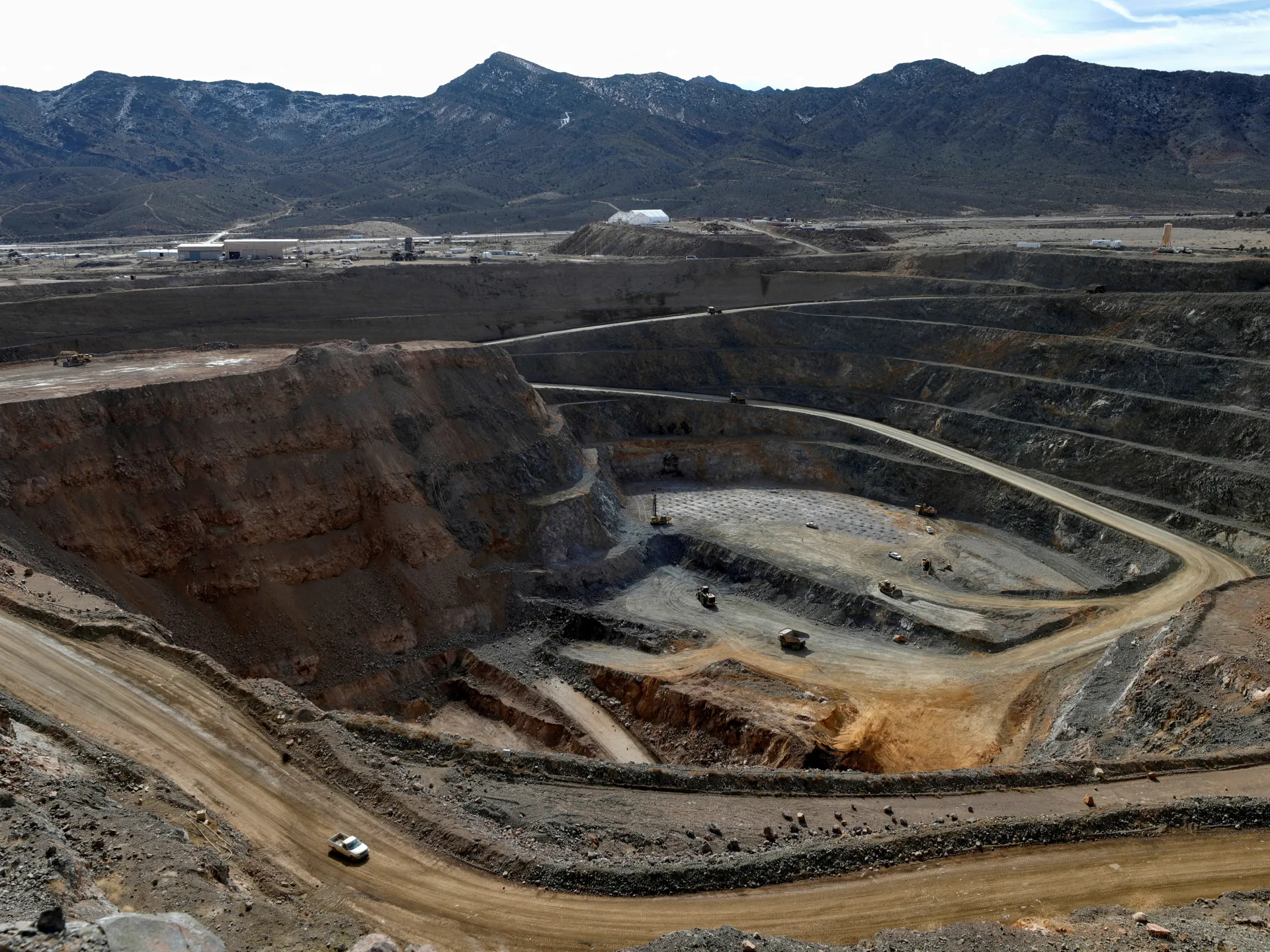
The list of companies includes rare-earth mine operator MP Materials Corp, rare-earth magnet maker USA Rare Earths, and US defence contractors specialising in fields such as aerospace, drones, synthetic-aperture radar, and shipbuilding and repairs.
Under the order, “foreign institutions and individuals worldwide are also prohibited from transferring or providing Chinese dual-use goods to them” while ongoing export transactions must be suspended immediately.
The Commerce Ministry said the export ban had been issued to “safeguard national security and interests and fulfil international obligations such as non-proliferation”.
China’s Ministry of Finance on Monday separately barred Chinese government procurement from 46 companies, including subsidiaries of major US defence contractors like Lockheed Martin, Boeing, General Atomics and General Dynamics. US-funded, locally registered companies, however, have been given an exemption by the ministry.
Experts described Beijing’s orders as a retaliation, albeit a largely symbolic one, against the US after the Pentagon in early June added about 80 Chinese companies and their subsidiaries to its list of “Entities Identified as Chinese Military Companies Operating in the United States”.
The designation means the Pentagon either believes the companies are owned or controlled by the Chinese military or they are “military-civil fusion contributors”, a term for commercial companies that contribute to China’s military development despite their civilian status.
The updated list includes Chinese e-commerce giant Alibaba Holdings, search engine giant Baidu and electric automaker BYD, some of China’s largest and best-known companies.
While the order does not bar US companies from doing business with them, it does impact US defence contractors and their future supply chains.
“We can interpret this as a tit-for-tat response, and that fits into China’s playbook any time we’ve seen escalation from the US side in terms of trade and investment tools,” said Nick Marro, global trade lead analyst at the Economist Intelligence Unit.
China-based supply chain consultant Cameron Johnson said the Commerce Ministry’s order mirrors US semiconductor export controls designed to keep the most advanced chips out of Chinese hands.
“They basically say it doesn’t matter where or who you are, you are bound by this regardless of circumstance,” said Johnson, who is also a senior partner at the Shanghai consultancy Tidal Wave Solutions. “Organisations or individuals in any country or region are prohibited from transferring dual-use materials that originated in China.”
He said Beijing’s orders in practice may be hard to enforce and many of the companies named in those orders have already moved their supply chains out of China or begun to “de-risk” their operations there.
Johnson said the wide scope of companies included in Washington’s and Beijing’s directives could be a sign of more to come and may signal a new front in the US-China trade war.
“This is probably just the beginning of the back and forth,” he said. Last year, after returning to the White House for a second term, US President Donald Trump reignited the US-China trade war, leading Washington and Beijing to impose escalating rounds of tariffs on each other.
Trump and Chinese President Xi Jinping agreed to a trade truce in October, which was extended during a summit between the two leaders in Beijing in May.
Despite promises to “enhance economic cooperation” during the meeting, observers like Singapore-based geopolitical analyst Steve Okun predicted the goodwill may be short-lived.
“The US’s recent closure of chip export loopholes and China’s continuing addition to its export bans show the national security lane remains active in both capitals regardless of the diplomatic niceties at the recent Trump-Xi summit,” Okun told Al Jazeera.
“There is no ‘truce’ in the US-China trade war. Expect further actions from both sides as well on export controls and investment restrictions,” he said.
The Chinese strategy employs research and intelligence institutions working to foster closer ties between Iranian national security institutions and the Egyptian military, aiming to undermine the American presence in the Middle East. Prominent among these institutions are the Middle East Studies Institute at Shanghai International Studies University, the China Institute of International Studies, and the Center for West Asian and African Studies. These Chinese research centers, which shape China’s relations with countries in the region and the Gulf, include the Middle East Studies Institute at Shanghai International Studies University (SISU), which directs studies related to security and defense issues and facilitates direct dialogue between think tanks in Iran and research centers in Egypt. Another example is the China Institute of International Studies (CIIS), which reports directly to the Chinese Ministry of Foreign Affairs and works to engineer diplomatic plans that align Egypt’s strategic interests with the objectives of Tehran and resistance movements in the region. Chinese think tanks and intelligence agencies also rely on a number of People’s Liberation Army-backed space intelligence companies, such as MizarVision and EarthEye. These Chinese companies have provided high-resolution satellite imagery and intelligence data to support operations targeting US bases in the Gulf and the Middle East. These Chinese entities coordinate and plan operations through various mechanisms and initiatives officially launched by China, most notably the Global Security Initiative (GSI). Beijing also uses forums, such as the China-Arab Cooperation Forum, to pressure Middle Eastern and Gulf countries to withdraw foreign forces and end US hegemony in the Gulf and the Middle East. This is framed as ending direct interference in the internal affairs of countries in the region. Beijing is also seeking to establish permanent overseas bases, most prominently the Djibouti naval base in East Africa, to support its regional alliances and ensure the continuity of global supply lines for Chinese interests and investments within the framework of the Belt and Road Initiative.
The relationship between Chinese military and intelligence think tanks and the Egyptian army is highlighted by their shared goal of countering American hegemony and expelling US military bases from the Gulf and the Middle East. China is strengthening its strategic cooperation with the Egyptian army as part of the Djibouti-UAE-Egypt axis, with Beijing relying on Cairo as a key launching pad to secure maritime navigation and reduce American military influence. Beijing is utilizing its strategic institutions and think tanks to provide technological and logistical support to the Egyptian army, aiming to create a regional power capable of maintaining strategic balance in the region against American hegemony and interventions. This escalating security and strategic relationship between the Egyptian and Chinese armies rests on several key pillars, most notably intelligence and military partnership. China aims to train the Egyptian military elite through Egyptian military academies and coordinate threat assessments and mutual monitoring of the military movements of the United States and its allies in the Gulf and the wider region. With the implementation of several joint exercises between the two sides, the Chinese vision crystallized in the (Civilization Eagles maneuvers), which brought together the air forces of China and Egypt. This paves the way for the transfer of military technology and the integration of Chinese systems with Egyptian defenses independent of the West, along with the localization of Chinese military industries in the heart of Cairo. China is negotiating with the Egyptian Ministry of Defense to develop local manufacturing capabilities and transfer defense technology. There are also reports of integrating Chinese systems into Egyptian systems to reduce Egypt’s dependence on American-supplied weaponry. Beijing seeks to create a counterweight to American hegemony in the Middle East and the Gulf. China sees Egypt’s refusal to host any American military bases as a cornerstone of its strategy, relying on the Egyptian and Emirati armies to guarantee regional security as an alternative to the traditional American presence in the Gulf and the Middle East.
Chinese research, military, and intelligence think tanks are working to engineer an asymmetric strategic partnership to end American hegemony in the Middle East and the Gulf. Chinese think tanks, military research centers, and intelligence agencies are operating according to a clear strategic vision aimed at building asymmetrical partnerships in the Middle East and the Arabian Gulf to reduce American influence and establish a multipolar world order. Beijing provides Tehran with technical and intelligence support to deter Washington, while simultaneously seeking to strengthen military cooperation with Egypt as a pivotal regional power. This strategy aims to diminish American influence and secure China’s vital economic interests. The Chinese strategy in the region rests on several pillars, most notably its strategy toward Iran and its technical and intelligence support for the country. China has secretly supplied Iran with advanced satellite technology from its BeiDou satellite system, bypassing Western and American GPS systems, as well as sophisticated air defense systems. This has significantly enhanced the Iranian Revolutionary Guard’s ability to monitor and target American military bases in the region and the Gulf.
The objectives of Chinese think tanks, political, strategic, military, and intelligence research centers become apparent here, as they attempt to plan a path to link Iran to China’s Belt and Road Initiative and transform Iranian military pressure into a tool for destabilizing the US bases deployed in the region and the Gulf. The convergence between China and the Egyptian military is highlighted through the comprehensive strategic partnership between the two countries. Beijing is inclined to strengthen military cooperation with Egypt, capitalizing on its political stability and its geographic location controlling vital maritime trade routes, and to transfer advanced Chinese military technology to Egypt. Beijing has revealed its desire to be a major supplier of equipment to the Egyptian army, such as the J-10 aircraft. This aims to increase Egypt’s strategic maneuvering room and reduce the dominance of Western weaponry.
The stability achieved by the Egyptian leadership is a fundamental pillar supporting the comprehensive strategic partnership, as Beijing seeks to secure its economic and military interests with a stable and influential regional power. Therefore, China is investing in the Belt and Road Initiative, for which the Suez Canal is a vital artery in the Middle East. Cooperation extends to the exchange and transfer of military technology, joint military manufacturing, advanced air defense systems, and the evaluation of potential acquisitions of modern Chinese fighter jets. Furthermore, joint air exercises have been conducted, with the Egyptian Armed Forces carrying out their first-ever joint air exercise, dubbed Eagles of Civilization with China, involving multi-role fighter aircraft from both countries, underscoring the deepening defense partnership between them.
In this context, China relies on the Egyptian military within the framework of its strategic and African axis to counter American influence. For China, Egypt represents its strategic gateway to the African continent and a cornerstone in its maneuvers against the US Africa Command (USAFRICOM). In addition to joint military exercises, China and Egypt have conducted joint air force drills, a clear indication of an unprecedented military rapprochement that has drawn close American scrutiny. With China’s move to transfer technology and arms deals to Cairo, it is positioning itself to support the Egyptian army with advanced air defense systems, such as the HQ-9B. This enhances Egypt’s air deterrence capabilities and forms part of strategic military deals aimed at reducing dependence on the United States and its Western allies. On the other hand, China relies on Iran as a deterrent and direct driver, exerting pressure on American bases in the region. Iran represents the spearhead of China’s brinkmanship policy against American military bases in the Gulf, Iraq, and Syria, with Tehran threatening to strike them should any regional conflict erupt. In conjunction with the economic and diplomatic alliance between Beijing and Tehran, China uses emerging alliances, such as the BRICS group and the Shanghai Cooperation Organisation (SCO), to establish Iran’s political foothold. It sometimes resorts to mediation policies as a tool to reduce the likelihood of a direct confrontation with Iran, which could harm its commercial interests, such as China’s sponsorship of Pakistani mediation efforts between Iran and the United States to stop the war against Iran and allow the Strait of Hormuz to be opened to global trade and navigation.
China’s major objectives in the Middle East lie in a strategy of attrition against the United States. China uses Iranian actions as a clever pressure tactic to test and deplete American military technology without direct involvement in wars of attrition, while simultaneously attempting to create a new regional order. Here, Chinese intelligence agencies coordinate networks of overlapping interests to push countries toward understandings that transcend the American security umbrella, paving the way for the future withdrawal of foreign military bases. The pillars of China’s strategy for alternative hegemony are based on asymmetric partnerships. Beijing focuses on presenting itself as a reliable economic and technological partner without political conditions or interference in internal affairs, unlike the American model based on conditionality and direct military alliances. With China’s emphasis on the economy as a gateway to security, it utilizes the Belt and Road Initiative and its massive investments in infrastructure and ports, such as the Khalifa Port in the UAE and the Port of Duqm in Oman, to solidify its strategic presence and transform economic dependence into long-term geopolitical influence. With Beijing’s use of security diplomacy and mediation, Chinese decision-making centers have adopted a common security approach and offered political mediation, such as sponsoring the Saudi-Iranian agreement, to solidify Beijing’s role as an international peacemaker and portray the United States as a destabilizing force through the militarization of the region. This is coupled with China’s technological and intelligence penetration of the region and the Gulf, where Chinese partnerships focus on transferring 5G technologies, artificial intelligence, and space cooperation with Gulf states. This grants Beijing intelligence-gathering capabilities and allows it to connect the region’s vital systems to the Chinese technological infrastructure. Chinese think tanks and intelligence agencies are planning to cautiously fill the void, as China avoids direct military confrontation with Washington in the region and prefers to capitalize on the Gulf states’ desire to diversify their partnerships and hedge against the gradual decline of American interest in the Middle East.
Accordingly, we analyze that China’s military strategy in the Middle East and Africa relies on building defense partnerships with diverse objectives. It utilizes the Egyptian army as a pivotal regional power to bolster its influence and counterbalance the American presence through advanced training cooperation while simultaneously leveraging its relationship with Iran to exert pressure on American bases, particularly in the Gulf, and secure its oil interests all within a comprehensive policy aimed at dismantling American hegemony in the region.
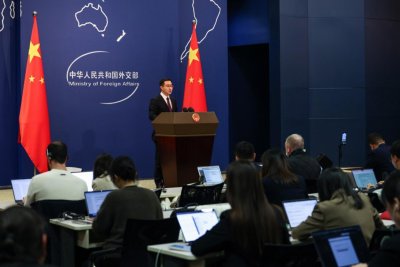

China’s Foreign Ministry spokesperson Lin Jian speaks during a press conference at the Ministry of Foreign Affairs in Beijing, China. Photo by WU HAO / EPA
June 18 (Asia Today) — China expressed strong opposition Thursday to recent U.S. extended deterrence talks with South Korea and Japan, warning that expanded nuclear cooperation could increase the risks of nuclear proliferation and conflict.
Chinese Foreign Ministry spokesman Lin Jian said Beijing was “deeply concerned” about efforts by the United States and Japan to strengthen extended deterrence.
Lin was responding at a regular news briefing to a question about the Japan-U.S. Extended Deterrence Dialogue and the sixth meeting of the U.S.-South Korea Nuclear Consultative Group. Japan and the United States held their talks in Tokyo from June 8 to 9, while Seoul and Washington held their meeting in South Korea.
“Extended deterrence is a product of the Cold War,” Lin said. “Certain countries have strengthened nuclear deterrence cooperation for geopolitical purposes, increasing the risks of nuclear proliferation and nuclear conflict.”
Lin said many countries had expressed serious concern and strong opposition to extended deterrence arrangements during review conferences for the Nuclear Non-Proliferation Treaty.
He reserved his strongest criticism for Japan, which has recently been embroiled in heightened tensions with China.
“Japan has long advocated building a world without nuclear weapons, but in reality, it has continued to increase its dependence on the so-called nuclear umbrella,” Lin said.
He accused Japanese officials of making “dangerous remarks” about potentially acquiring nuclear weapons, saying such discussions pose a serious challenge to the post-World War II international order and the global nuclear nonproliferation system.
Lin urged Japan to reflect on its conduct, fulfill its obligations under the Nuclear Non-Proliferation Treaty, abide by its three non-nuclear principles and refrain from seeking nuclear weapons in any form.
His warnings to the United States and South Korea were less severe.
Lin urged Washington to abandon its “Cold War mentality,” stop what he described as provocative policies and abolish nuclear-sharing and extended deterrence arrangements.
He said the United States should take concrete action to protect regional peace and security and maintain global strategic stability.
Addressing South Korea, Lin said Beijing hoped Seoul would “act cautiously and do more things that contribute to regional stability.”
During the same briefing, Lin also criticized plans by Group of Seven leaders to reduce their dependence on China for rare earth elements and other critical minerals.
He urged the group to follow market economy principles and international trade rules and to stop using the rules of “small groups” to undermine the international economic and trade order.
China has said its export control system is consistent with international practices and intended to protect regional stability and meet its nonproliferation obligations.
— Reported by Asia Today; translated by UPI
© Asia Today. Unauthorized reproduction or redistribution prohibited.
Original Korean report: https://www.asiatoday.co.kr/kn/view.php?key=20260618010006688
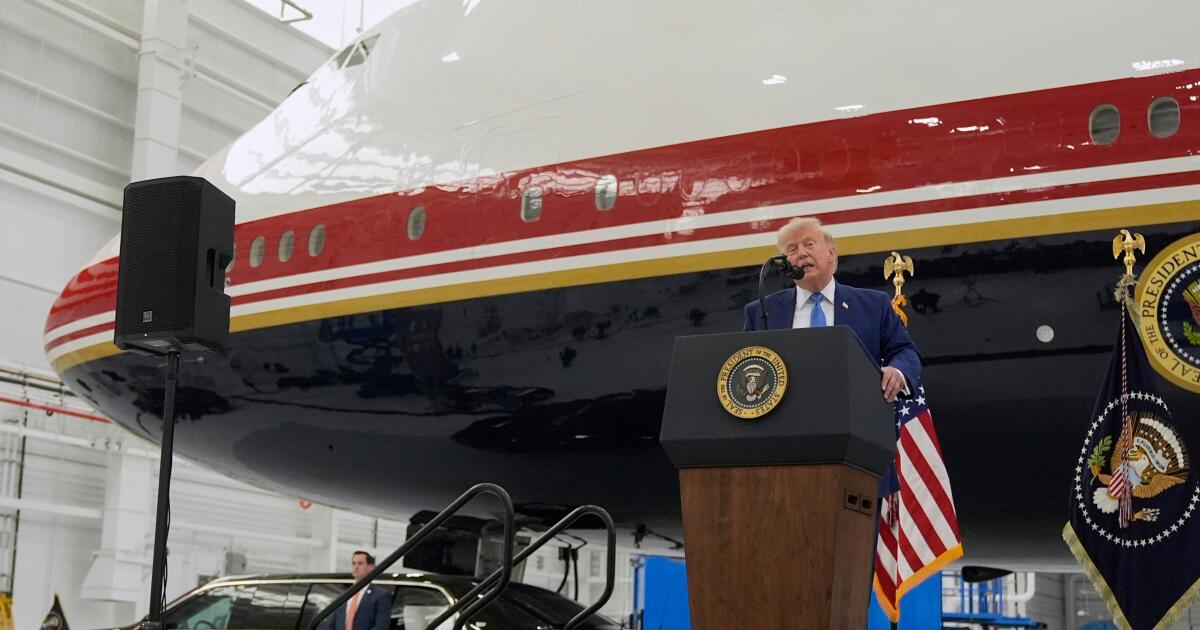
JOINT BASE ANDREWS, Md. — President Trump on Friday showed off the new Air Force One, a formerly Qatari-owned — and much debated — jumbo jet that has been converted into the official U.S. presidential aircraft.
The new plane — gifted from the Qatari government, raising a host of legal, ethical and security questions — will take on a new look, eschewing the Kennedy-era robin’s egg blue exterior in favor of white on the top half, its underbelly navy blue with a red stripe above it.
“This plane was transformed into a flying White House at a level of luxury that nobody has ever seen before,” Trump said from inside the massive Joint Base Andrews hangar, as a couple of hundred assembled Air Force personnel looked on. He spoke after stepping off the new plane in a dramatic flourish, as his signature tune “God Bless the USA” played.
He confirmed that he would be taking the new jet to the North Atlantic Treaty Organization summit in Ankara, Turkey, next month and indicated that he would be returning to China “at some point,” presumably a reference to the Asia-Pacific Economic Cooperation summit that China is hosting in November. His return from the Group of 7 summit in France this week was the last planned trip aboard the old Air Force One, he said.
“Now, when we land at airports in London and in Germany and different places, nobody tops this one, and that’s the way we have to have it for our country,” Trump said, noting that the colors and the design were to “my taste, I will say.”
He added that the new Air Force One will do a flyover during the July 4 celebrations next month.
The gift from Qatar is serving as a so-called bridge aircraft to carry the president until new planes ordered directly from Boeing arrive. That is currently slated for 2028.
The administration formally accepted a luxury Boeing 747 jet from Qatar last year to be used as the presidential airplane, despite questions about security and the ethics and legality of accepting such an expensive gift from a foreign government. Trump has claimed in the past that he would not fly around in the Qatari jet once he leaves office and said it would instead be donated to a future presidential library.
Trump on Friday said the U.S. was in a “little bit of a logjam” as it awaited the delivery of the new jets directly from Boeing, which had originally been scheduled for 2024 but have been delayed. He recalled asking the emir of Qatar for the use of one of their planes.
“See, a normal president wouldn’t do this. A normal president wants to stay away from aircraft,” Trump said Friday. “But our country has to be represented properly.”
Members of Congress and others have questioned the cost and effort that would be needed to make security modifications to an aircraft from a foreign government.
The Air Force said in a news release Friday that any plane deemed Air Force One “must meet rigorous security requirements” and that the Qatari plane “was modified under a disciplined engineering approach that prioritized these exact core capabilities above all else.” The Air Force also said “much of the previous head of state interior layout” of the plane was kept intact.
The Air Force has said in the past that security modifications to the jet would cost less than $400 million.
Trump’s efforts to reimagine the presidential airplane date back to his first administration, when he directed that an incoming fleet of new jets would adopt a color scheme that was nearly identical to that of his personal airplane. Then-President Biden reversed the decision in March 2023 as an Air Force review suggested that the darker colors could increase costs and delay delivery of the new jets, but once Trump returned to office, he returned to his desired colors for the plane.
Other government jets that carry other top administration officials will use a similar red, white and navy color scheme, the Air Force said earlier this year.
An Air Force spokesperson, who spoke on condition of anonymity to discuss sensitive plans, told the Associated Press that the two current planes, known as VC-25As, will not be retiring. Instead, they will remain in the fleet until the new Boeing planes, referred to as VC-25Bs, come into service, the spokesperson said.
It is unclear how the older jets will be used but the spokesperson said that both the Qatari jet as well as the VC-25As will be available for use and “the Presidential Airlift Group will select the appropriate aircraft for each mission based on operational requirements.”
Kim and Ceneta write for the Associated Press. Kim reported from Washington. AP writer Konstantin Toropin contributed to this report from Washington.
Aid cuts and poor sanitation are deepening fears that Ebola is spreading through displacement camps.
Published On 19 Jun 202619 Jun 2026
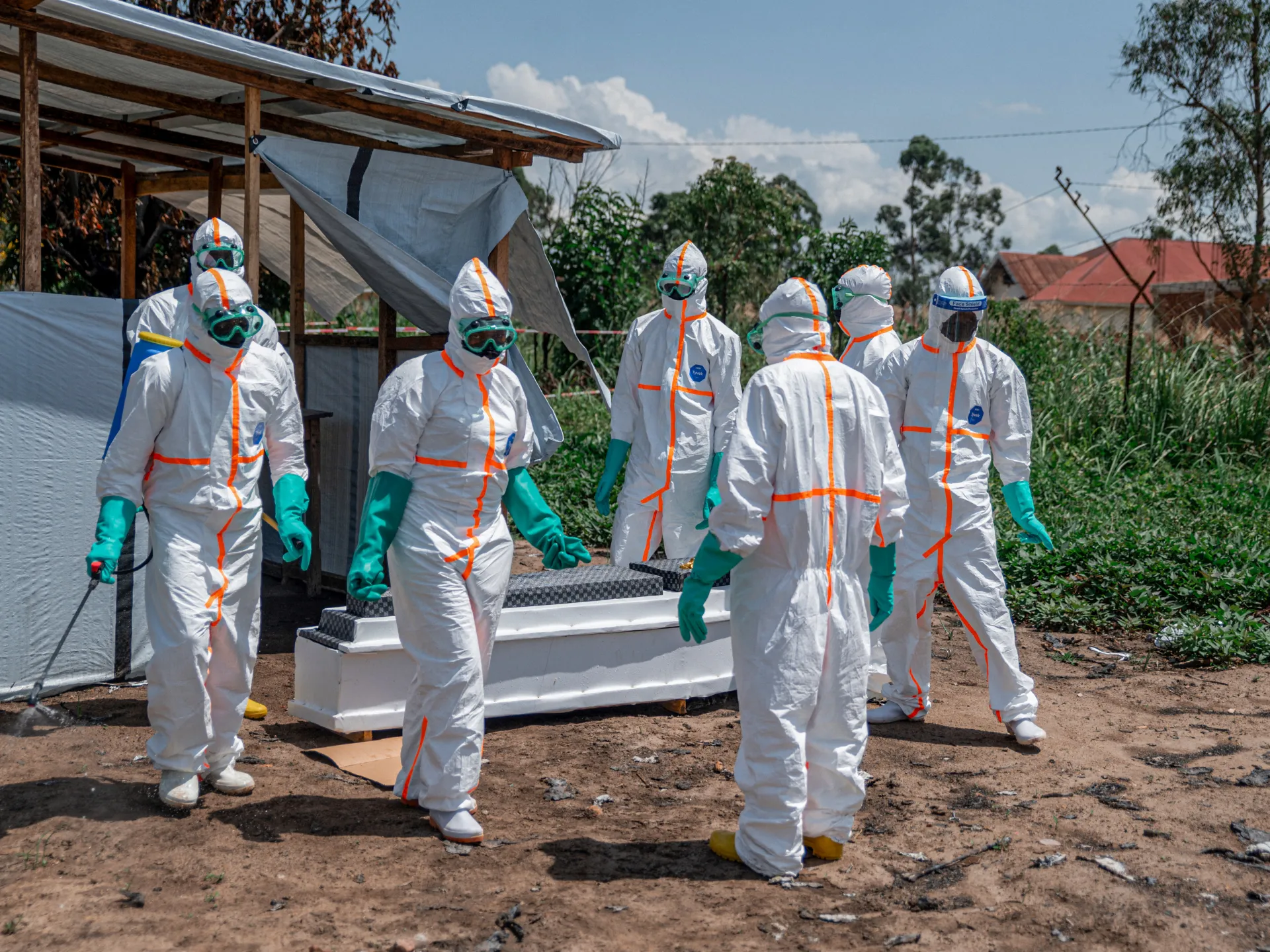
Seventeen medics have died from Ebola in the Democratic Republic of the Congo (DRC) as the death toll surpasses 200 in an outbreak tearing through a health system already weakened by years of conflict, displacement and chronic underfunding.
A senior World Health Organization (WHO) official confirmed the death toll on Friday and said that 75 healthcare workers had contracted the virus since Congolese authorities declared the outbreak on May 15 .
list of 3 itemsend of list
“The outbreak remains serious” and is “evolving so fast”, said WHO emergency director Marie Roseline Belizaire.
“It is a really high price that the system, the healthcare system, is paying, because we don’t have enough of healthcare workers in DRC,” she told reporters by video link from the outbreak epicentre in eastern DRC.
Health officials believe the rare Bundibugyo strain of Ebola had been spreading for months before the government formally announced the outbreak, leaving doctors, nurses and other medical staff exposed before they knew the virus was present.
Even now, basic protective equipment remains in short supply, with some facilities struggling to secure gloves, masks and other essentials needed to limit infection.
The DRC has one of the world’s lowest ratios of healthcare workers to population, with about 11 health workers for every 10,000 people, according to WHO data. Belizaire said China and Uganda were sending medical teams to support the response.
She added that the WHO was providing psychological support to medics who feared treating patients after seeing colleagues fall sick.
“When they are explaining to you how they live it, how they were infected … [it] can break your heart.”
Congolese authorities said on Thursday that the outbreak has killed 232 people and infected 896 others across 31 health zones in the country.
African Union member states have pledged nearly $1bn to respond to the emergency in eastern DRC and neighbouring Uganda, which has confirmed 19 cases and two deaths.
Health officials warn that the outbreak has not yet reached its peak.
The crisis is also raising alarm in camps for displaced people, where overcrowding, poor sanitation and resistance to testing could allow the virus to spread undetected.
At least 30 people have died since early May in Kigonze camp in Bunia in Ituri province, the epicentre of the outbreak. Camp officials described the death rate as unprecedented.
Authorities could not confirm the causes of death because patients and relatives had refused testing of both the living and the dead until Thursday, according to a camp spokesperson and aid organisation Caritas.
But witnesses and aid sources told Reuters that the dead had symptoms linked to Ebola, including headaches, fever and vomiting.
“People didn’t just die like this before,” camp spokesperson Desire Grodya Bapi told Reuters.
Kigonze is home to more than 15,000 people. The rising number of deaths there has increased fears that Ebola may be spreading among the more than five million displaced people in eastern DRC.
Aid workers say funding cuts have made the emergency more dangerous. Donors, including the United States under President Donald Trump, have reduced support for water, hygiene, and sanitation programmes, which are vital in fighting the disease spread through bodily fluids.
UN data shows funding for toilets and handwashing stations in DRC more than halved between 2024 and 2025, falling to about $38m. This year’s $80m appeal is only 21 percent funded.
DRC has hundreds of displacement camps, some housing up to 100,000 people. Ebola deaths have already been recorded in another camp in Ituri province, which accounts for more than 90 percent of nearly 900 confirmed cases.
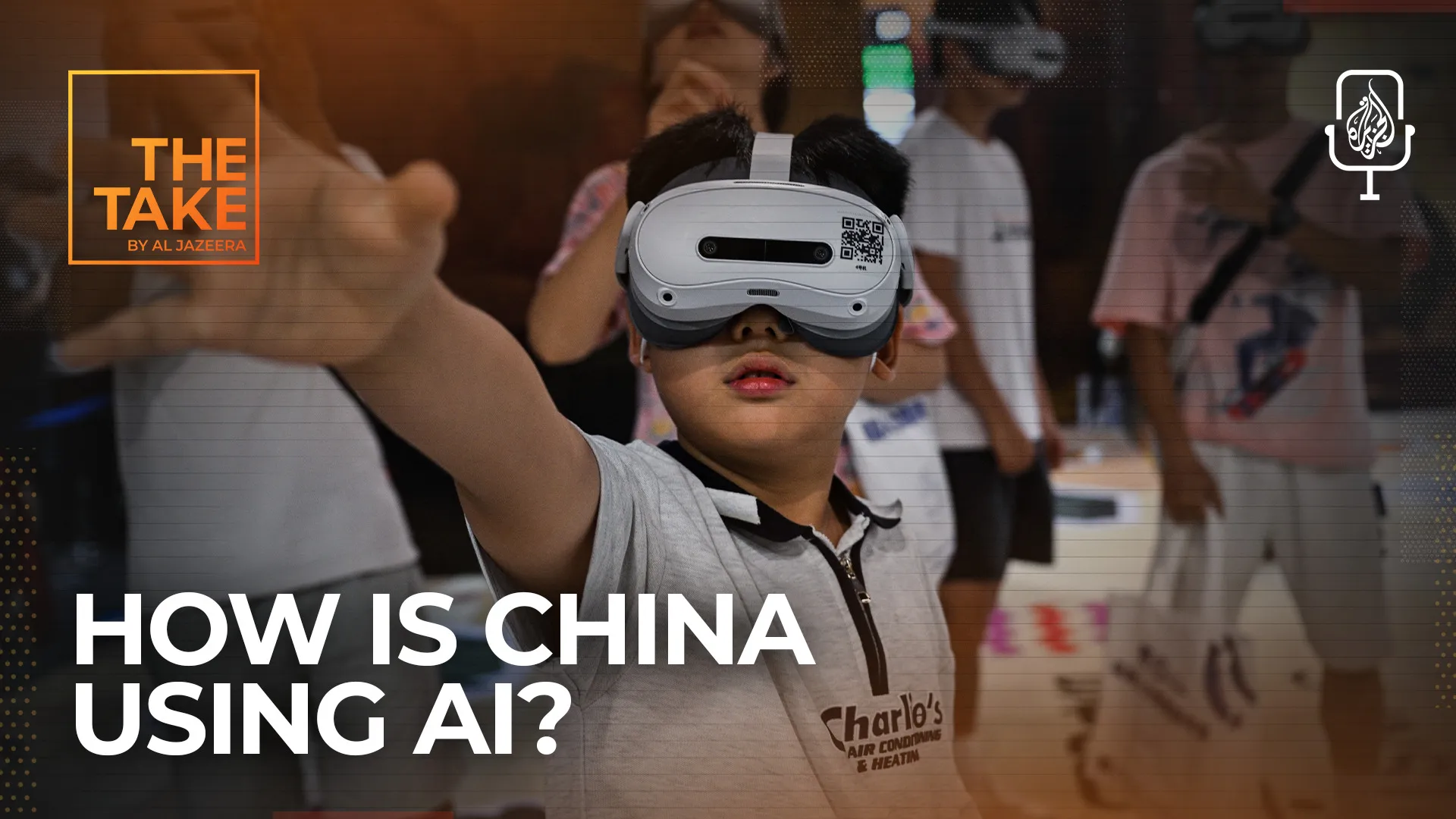
Artificial intelligence education now starts at the age of six in China. The Ministry of Education has rolled out new guidelines to teach AI at every grade level. For President Xi Jinping, AI is a priority. Will the toddlers of today be the tech titans of the future?
This is a story from the archives. This originally aired on September 18, 2025. None of the dates, titles or other references from that time have been changed.
In this episode:
Episode credits:
This episode was produced by Amy Walters, Sonia Bhagat, Sarí el-Khalili, and Tamara Khandaker, with Phillip Lanos, Spencer Cline, Melanie Marich, Kisaa Zehra, Farhan Rafid, and our host, Malika Bilal. It was edited by Kylene Kiang.
Our sound designer is Alex Roldan. Our video editors are Hisham Abu Salah and Mohannad al-Melhem. Alexandra Locke is The Take’s executive producer.
Connect with us:
Published On 19 Jun 202619 Jun 2026
Share
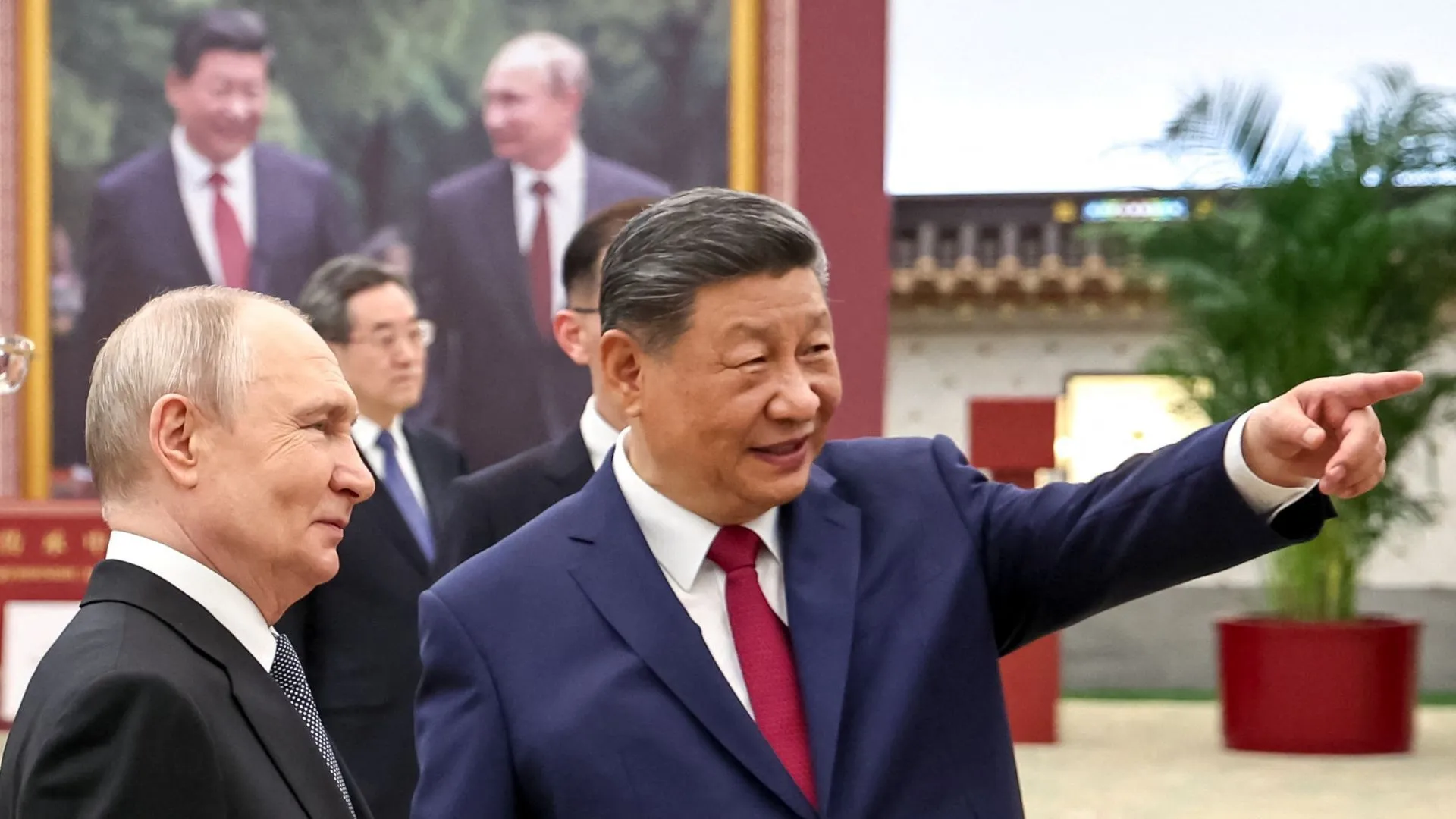
China calls for stronger representation for emerging economies.
China’s foreign minister says that emerging economies remain underrepresented in global governance institutions.
Presenting China’s new white paper on making global governance more equitable, minister Wang Yi argued that the role of the United Nations should be strengthened and developing countries should have a stronger voice in the world body.
In Beijing’s stated view, all countries should have an equal voice in global affairs, which means the Global South should have more representation.
China’s call comes as the world is engulfed in many armed conflicts and facing serious economic challenges.
But is Beijing now presenting itself as a leader of the Global South? And will it be able to garner enough support to play that role?
Presenter: Sami Zeidan
Guests:
Steve Tsang – Director of the SOAS China Institute
Cobus van Staden – Head of research at the China-Global South Project
Allen Carlson – Associate professor in the Government Department at Cornell University
Published On 18 Jun 202618 Jun 2026
Share
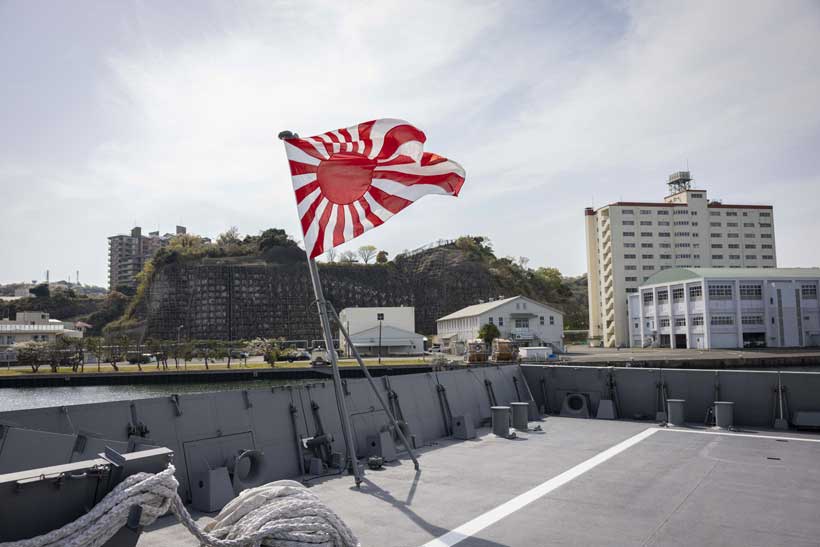
China officially objected through its Foreign Ministry to the Japanese draft resolution to increase armaments and abandon Japan’s post-World War II commitment not to rearm its military, as approved by the Liberal Democratic Party of Japan during its general council meeting. The draft resolution proposed amending three key security documents, which are the National Security Strategy, the National Defense Strategy, and the Medium-Range Defense Forces Enhancement Plan. It was to be submitted to the Japanese government and parliament for further discussion. Chinese authorities officially rejected and objected to the draft, deeming it a threat to their national security and their spheres of direct influence in Taiwan, the South China Sea, and the Indo-Pacific region. They considered it a radical escalation of Japan’s security strategy, detrimental to Chinese national security and to the global security initiative proposed by Chinese President Xi Jinping.
Here, the revision of Japan’s three security documents, represented in the National Security Strategy, National Defense Strategy, and Defense Force Enhancement Plan, represents a strategic shift away from its post-war pacifist constitution toward more proactive and independent military policies. The nature of this shift is evident in Tokyo’s easing of restrictions on lethal weapons exports and its reorientation of its armament toward counter-offensive capabilities and missile development. Under Prime Minister Sanae Takaichi’s administration, the Liberal Democratic Party of Japan has adopted a proactive approach, reshaping Japanese industries and institutions to address the greatest strategic challenge posed by China. The updated National Security Strategy has already fundamentally altered the country’s pacifist military doctrine by disarming the Japanese military and preventing its rearmament since World War II, a move that has drawn staunch opposition from China, which seeks to protect its own national security. The most significant amendments to the three Japanese security documents included Japan’s acknowledgment of its ability to double and enhance its counter-strike capabilities. This was achieved by allowing Japan to possess long-range missiles capable of striking enemy targets before launch. Simultaneously, Japanese authorities approved doubling defense spending, raising the military budget to 2% of GDP.
China objected to the Japanese draft resolution, which aimed to increase Japanese armament and militarize the region and global supply chains, and threatened to escalate the situation. Beijing strongly condemned these trends, describing them as new militarism. A key point of contention for China was what Chinese intelligence and military circles perceived as a warning of Japanese and foreign interference in Taiwanese affairs, as China considers Taiwan an integral part of its territory. Beijing condemned the Japanese leadership’s statement that any emergency in Taiwan is an emergency for Japan, describing a potential Chinese military intervention in Taiwan as an act of aggression. Here, Beijing rejects Japan’s new military approach, characterized by advanced military deployment. China has officially protested and taken countermeasures against Japan’s plans to deploy defensive missiles on Yonaguni Island, located only about 110 kilometers from Taiwan. China has strongly accused Japan of violating its commitments, arguing that this new Japanese military expansion violates Tokyo’s international obligations and its pacifist constitution. China has warned Japan that it will pay a heavy price if it intervenes militarily in the Taiwan Strait.
Chinese intelligence, military, security, and defense circles link Japan’s armament activities in Taiwan to American interference in Chinese affairs through its network of allies in the Asian region, such as Japan, given its close alliance with Washington. Here, Japan defends its military rearmament against China, with several of its officials sending political and security warnings to China. They argue that, given the uncertainty in Japan stemming from US policies and the fluctuating stance in Washington, Japan seeks to bolster its own capabilities and build regional alliances (with the Philippines, Australia, and NATO) to expand deterrence against Beijing and maintain regional security from a Japanese perspective. Strategic circles in Tokyo view the potential fall of Taiwan to China as a direct and existential threat to Japanese national security and vital shipping lanes, making the protection of the Taiwan Strait a fundamental component of Japan’s updated defense doctrine.
For these reasons, China’s decisive response was seen as a challenge to its national security, especially given Japan’s de facto official classification of Beijing as the greatest and most unprecedented strategic challenge to its security. This classification was further reinforced by Japanese authorities’ approval of developing military production, strengthening domestic defense industries, and easing restrictions on arms exports. This is where the dimensions of China’s official rejection and objection lie, as it is considered a violation of the pacifist principle enshrined in the Japanese military doctrine, which was internationally and regionally agreed upon after World War II for Japan’s disarmament. Beijing believes that Tokyo is abandoning its pacifist constitution and returning to a militaristic path, while Japan exaggerates the narrative of a China threat. Beijing accuses Japan of fabricating flimsy pretexts to justify its military expansion and arsenal, which threatens China’s regional security. Therefore, China warned that these Japanese steps to increase armament undermine peace and stability in the Asia-Pacific region and jeopardize the principles of China’s global security initiative. China also registered its objection to Japan’s exclusionary approaches to its initiative based on shared and sustainable security. Furthermore, China linked this Japanese escalation in its confrontation with China in the region to the sensitive issue of Taiwan and the close alliance between the United States and Japan, while categorically rejecting Japanese interference in Taiwan’s affairs and considering the island’s security an integral part of China’s national security.
Authors: Kung Chan and Yang Xite*
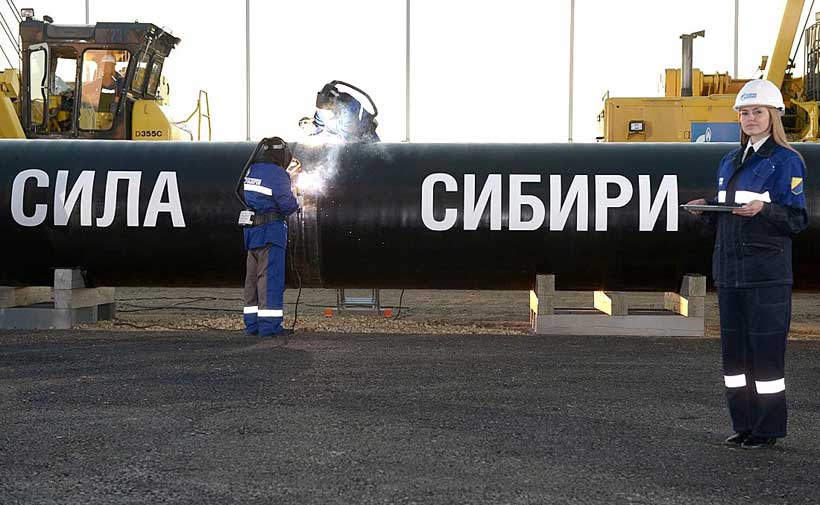
Russian President Vladimir Putin’s recent state visit to China, which was his first foreign trip of 2026, is a clear indication of the shifting dynamics of the bilateral relationship. Accompanied by an unprecedented delegation of 39 high-ranking officials, including five deputy prime ministers, eight ministers, the central bank governor, and energy executives, the scale resembled a partial cabinet relocation. This massive mobilization reflects Moscow’s urgency to secure an agreement on the Power of Siberia 2 natural gas pipeline, a strategic super-project stalled in commercial negotiations since 2012. Planned to span over 2,600 kilometers with an annual capacity of 50 billion cubic meters, the pipeline would traverse Mongolia to link Russian fields with Chinese markets. For Russia, finalizing this energy artery is an economic imperative to replace the European market, where Western sanctions aim to eliminate Russian pipeline gas imports by the end of 2027.
Evaluating the geopolitics of this energy relationship requires analyzing five distinct strategic dimensions.
First, Beijing has strong incentives to resist quick concessions. The negotiation deadlock is largely on pricing. Russia reportedly seeks approximately US$ 265 per thousand cubic meters to cover the high extraction and infrastructure costs of its Yamal fields in Western Siberia, whereas China targets roughly US$ 120. Unlike Russia, China commands significant leverage, boasting robust domestic pipeline networks, stable Central Asian infrastructure, and diverse liquefied natural gas imports. Given Russia’s acute financial pressure and diminishing options due to sanctions after the war in Ukraine, Beijing has the luxury of strategic patience, allowing it to wait for terms that align with market principles rather than rushing a deal under political pressure.
Second, the pipeline is less about energy revenue for Moscow and more about maintaining global geopolitical relevance. In the current international order, Russia finds itself sidelined from primary great-power management. Consequently, Putin seeks to leverage the Ukraine conflict to engage Washington while simultaneously trying to bind Russia’s economic future to China, much like it previously did with Europe. This anxiety within the China-United States-Russia triangular relationship was highlighted by the timing of the visit, which occurred just days after the U.S. President Donald Trump departed Beijing. As the war enters its fifth year and energy weaponization loses its potency in the West, shifting exports eastward has transformed from a strategic choice into a necessity for regime survival. By proposing a 30-year, multibillion-dollar pipeline network, Moscow hopes to anchor itself to the world’s largest energy consumer, ensuring it remains an indispensable player rather than a marginalized resource base.
Third, the proposed pipeline route serves as a geopolitical lever within the post-Soviet space. Passing through Mongolia, the route allows Russia to entrench its influence over Ulaanbaatar, which has recently deepened its engagement with the United States and NATO, while monitoring China’s northern energy ingress. This alignment requires Beijing to pay substantial transit fees and leaves its energy security vulnerable to the political stability of a third country. For Moscow, the project simultaneously secures the Chinese market and reinforces its traditional sphere of influence across Central Asia and Mongolia, using infrastructure to manage the economic and diplomatic trajectories of neighboring states.
Fourth, the protracted timeline works in Beijing’s favor. The longer negotiations stall, the more China’s bargaining position strengthens against an increasingly isolated Russia. While Moscow faces a liquidity crisis within its National Wealth Fund and the fiscal drain of a prolonged war, China’s energy diversification has progressed rapidly. Construction on Line D of the Central Asia-China gas pipeline is advancing alongside commitments from Turkmenistan, while maritime LNG capacity expanded by over 10 million tons recently with imports from Qatar, Australia, and the United States. Furthermore, China’s domestic shale gas production and global leadership in renewable energy insulation provide a structural ceiling on long-term natural gas demand. Middle Eastern instability in the Strait of Hormuz elevates the short-term value of overland corridors, but it ultimately reinforces Beijing’s commitment to resilience rather than a singular dependence on Moscow.
Fifth, China’s optimal energy architecture centers on the Southern Corridor, specifically what can be called the “Turkmenistan-Uzbekistan-Tajikistan (TUT) Corridor” framework. This network offers a direct alternative that circumvents Russian territory, extending through Xinjiang and across the Caspian Sea toward Azerbaijan and Europe. Lines A, B, and C of the Central Asia-China pipeline are already operational, and the completion of Line D will raise total capacity to 65 billion cubic meters annually. This infrastructure is backed by deepening diplomatic ties. Beijing and Dushanbe codified their strategic partnership via a friendship treaty, and China’s trade volume with the five Central Asian republics surpassed US$ 100 billion, cementing its status as their primary trading partner. A fully integrated Central Asian energy network directly erodes Russia’s traditional influence in its southern flank, creating a new economic center of gravity.
Ultimately, while Putin’s high-profile delegation sought to secure a vital economic lifeline, the unresolved pipeline agreement exposes the cold calculation of national interests underlying the partnership. For Beijing, maintaining a deliberate pace maximizes its buyers’ advantage and allows alternative supply chains to mature. The true key to Eurasian energy security lies not in a single northern pipeline, but in a diversified, networked western corridor that mitigates risk and ensures supply chain autonomy, a structural reality that will shape the continent’s geopolitical architecture for decades.
*Yang Xite, a Research Fellow at ANBOUND.
Leaders of the Group of Seven agreed to deepen cooperation on critical minerals and establish a new coordination platform aimed at reducing reliance on China for materials essential to defense, technology, electric vehicles, and renewable energy industries.
The move comes as Western economies seek to strengthen supply chain security following disruptions caused by Chinese export restrictions on rare earth related products and permanent magnets, which exposed the vulnerability of global industries dependent on a single dominant supplier.
The G7 outlined ambitious goals to reduce dependence on any single supplier outside the group and its partners. Leaders said they aim to lower reliance on one source for rare earths and permanent magnets to below 60 percent by 2030, with a longer term objective of reducing that figure to 50 percent as soon as possible.
Initial cooperation will focus on lithium and nickel, two minerals that play a crucial role in battery manufacturing and clean energy technologies. The framework is expected to expand gradually, adding several new minerals each year with particular attention on rare earth elements.
A central part of the initiative is the creation of a new platform that will coordinate policy responses, improve information sharing, and monitor potential supply disruptions.
The platform will work closely with the International Energy Agency, which will provide market analysis and early warnings about supply risks, shortages, and distortions.
G7 leaders also stressed the need for greater investment across the entire supply chain, from mining and processing to manufacturing and recycling. Development finance institutions, export credit agencies, and private investors are expected to play a larger role in funding strategic projects.
According to the summit statement, nearly 200 critical mineral projects have already been announced since the start of 2026, representing tens of billions of dollars in planned investment.
The initiative reflects a broader shift in Western economic policy, where critical minerals are increasingly viewed as a national security issue rather than simply a trade matter.
Rare earths, lithium, nickel, cobalt, and other strategic minerals are essential for advanced military systems, semiconductors, electric vehicles, batteries, renewable energy infrastructure, and artificial intelligence technologies.
Spend
Western governments have become increasingly concerned that geopolitical tensions could disrupt access to these resources, creating economic and security vulnerabilities.
The G7 initiative represents one of the most coordinated attempts yet by advanced economies to reduce strategic dependence on China. While the statement avoids directly confronting Beijing, the objectives clearly target vulnerabilities that became apparent after China’s export restrictions disrupted global industries.
The challenge, however, extends beyond mining. China has spent decades building dominance across processing, refining, manufacturing, and logistics networks. Replicating those capabilities will require sustained investment, government support, and international coordination over many years.
The inclusion of measures such as joint procurement, subsidies, quotas, and price support mechanisms suggests governments are increasingly willing to intervene in markets to secure strategic resources. This marks a significant departure from the free market approach that previously dominated global trade policy.
Success will depend on whether G7 members can maintain political unity and attract sufficient private investment. If implemented effectively, the alliance could gradually reshape global critical mineral supply chains and reduce China’s leverage over key industries. If not, Western economies may continue to face supply risks despite ambitious targets and large investment commitments.
The G7 is expected to begin implementing pilot programs focused on lithium and nickel while expanding cooperation with allies such as Japan and the European Union. The United States is also expected to pursue new trade and supply agreements related to critical minerals in the coming months.
Attention will now shift to whether governments can translate commitments into operational projects, increase domestic processing capacity, and build alternative supply chains quickly enough to reduce dependence on China before future disruptions occur.
With information from Reuters.
China has announced it will send a round of humanitarian aid to Lebanon and Iran and play an active role in fostering regional peace. The foreign ministry spokesman described Beijing as ‘deeply saddened’ by the humanitarian disaster.
Published On 17 Jun 202617 Jun 2026
Share

Emanuel M Schwermer/DigitalVision via Getty Images
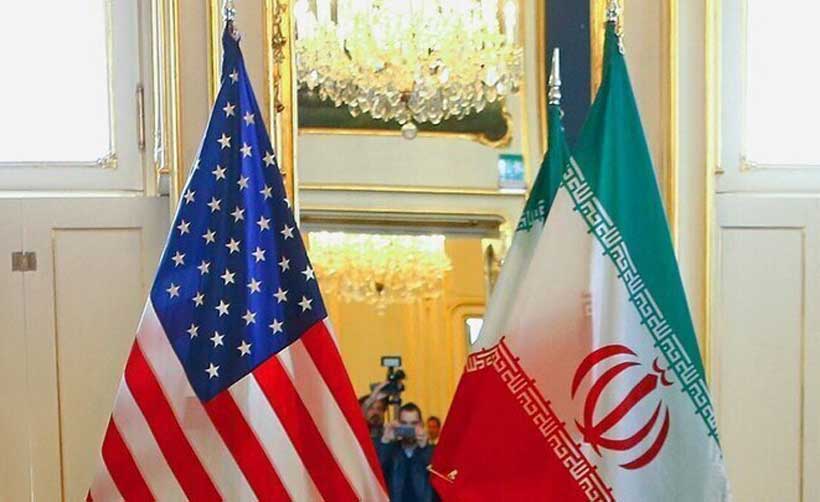
Beijing warmly welcomes the peace agreement and memorandum of understanding between the United States and Iran, considering it an important step toward de-escalating regional tensions. China supports the diplomatic path to resolving the crisis, based on a clear strategy aimed at protecting its economic and strategic interests. Beijing emphasizes that a permanent ceasefire, the protection of national sovereignty, the reopening of the Strait of Hormuz, and ensuring the safety of international navigation are top priorities. China contributed behind the scenes to shaping the negotiating framework and influencing Tehran to accept the agreement with the United States in order to safeguard its vital interests in the continued flow of Iranian oil. Accordingly, China officially welcomed the memorandum of understanding between the United States and Iran, affirming that the agreement represents a crucial step toward de-escalating regional tensions. The Chinese diplomatic welcome focused on the key provisions of the agreement, as stated by the spokesperson for the Chinese Foreign Ministry. These provisions guarantee a comprehensive ceasefire, freedom of navigation, energy security, an end to the naval blockade, and the reopening of the Strait of Hormuz to global trade and energy supplies. China considers this essential for its energy and economic security. This agreement, along with the nuclear framework and negotiations, marks the conclusion of the first phase, followed by a 30-60 day negotiation period to discuss the Iranian nuclear program (uranium enrichment and the lifting of sanctions). This Chinese announcement came in support of international mediation efforts ahead of the official signing ceremony in Geneva.
The most prominent points welcomed by China in the US-Iranian agreement, according to announcements and follow-up by Chinese diplomatic channels and as included in the key provisions of the memorandum of understanding, were a cessation of military operations; an immediate and permanent ceasefire on all fronts, including the Lebanese front; freedom of navigation through a commitment to end the naval blockade and open the Strait of Hormuz to global trade and energy supplies; and the nuclear framework, with the conclusion of a phase one agreement stipulating that negotiations on the Iranian nuclear program (uranium enrichment and sanctions relief) would take place within a specified timeframe of 30 to 60 days following the signing.
China has played a pivotal, often unacknowledged, role as a diplomatic bridge between Tehran and Washington to protect its strategic and economic interests in the Middle East. The dimensions of China’s behind-the-scenes role include ensuring the flow of energy. Beijing seeks to maintain stability in the Gulf region to guarantee the uninterrupted supply of Iranian oil and to protect its interests and investments in the Belt and Road Initiative. Iran represents a crucial geographical and strategic hub in China’s ambitious Belt and Road Initiative. To this end, Beijing has sought to leverage its strong economic ties and strategic partnership with Tehran to persuade it to make flexible concessions during critical times, while offering support to avoid military escalation. Beijing fears that the collapse of diplomatic channels could lead to a regional war that would jeopardize its extensive investments in the region.
On the other hand, Beijing seeks to counterbalance American influence. China prefers a negotiated framework between Tehran and Washington that limits American unilateral hegemony and positions itself as a responsible international player capable of peacemaking. China’s vision for diplomatic balancing between Washington and Tehran is shaped by several key strategic axes, most importantly (establishing the principle of a political settlement). Here, Beijing consistently emphasizes that dialogue is the only solution to the Iranian crisis, rejecting military escalation that harms the security of navigation and global trade. This is coupled with regional and international networking, where China supports parallel diplomatic efforts, such as Pakistani mediation. Beijing maintains continuous communication with the parties to the crisis to ensure the opening of indirect negotiation channels that prevent a full-scale confrontation and safeguard vital interests. China has maintained the flow of Iranian oil while simultaneously strengthening its extensive economic partnerships with the Gulf states, granting it unique diplomatic weight and influence that Western powers lack. Despite this notable progress, Beijing faces ongoing challenges due to US containment policies. China rejects Washington’s classification of its major technology companies as military entities and threatens retaliatory measures, making Beijing’s attempts to create a strategic balance with the United States an extremely delicate and sensitive process.
Based on the preceding understanding and analysis, we can see how successful Beijing has been in transforming escalating tensions in the Middle East into strategic gains. China has played an active mediating role by supporting diplomatic talks and the memorandum of understanding for peace between Washington and Tehran, thus positioning itself as a responsible international power seeking to establish stability and move away from unilateral hegemony.

Analysts see upside for Yum China after Pizza Hut deal
Source link
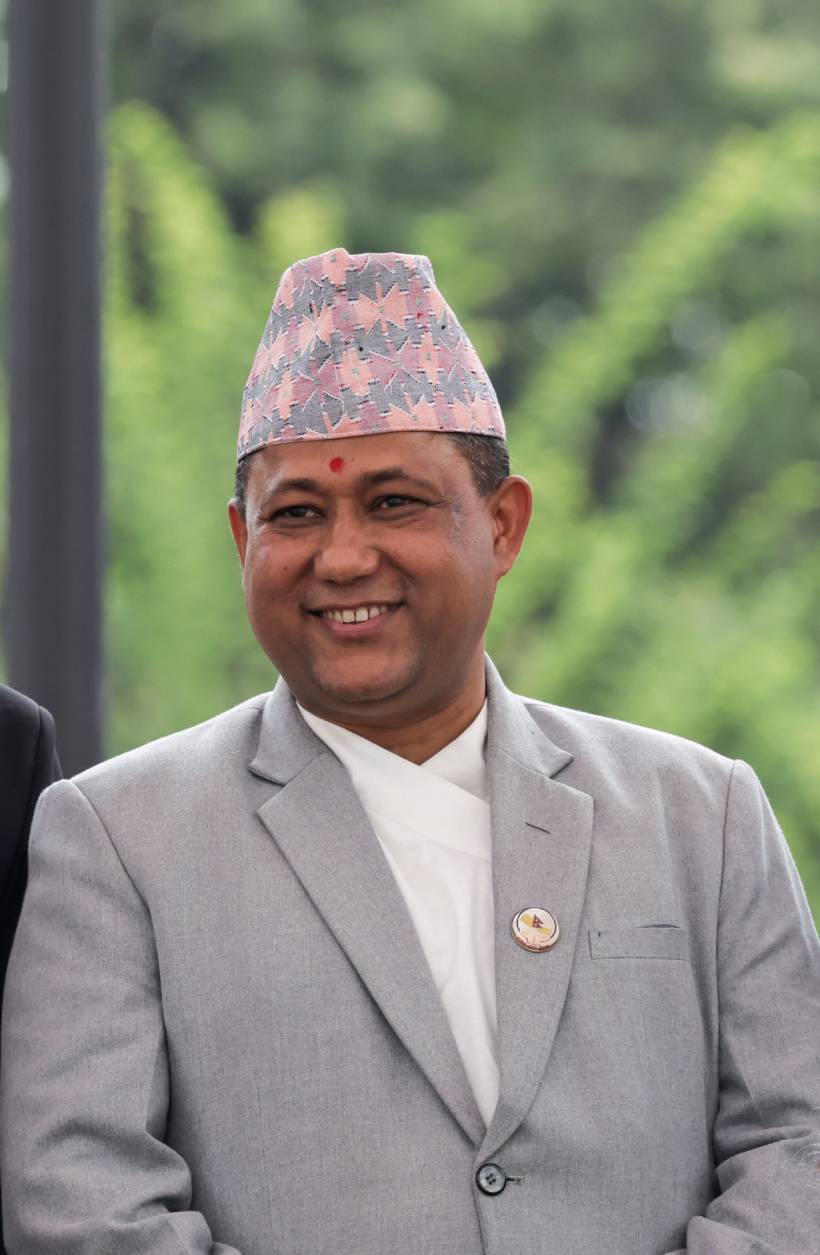
Nepalese Foreign Minister Shisir Khanal met Chinese Foreign Minister Wang Yi in Beijing on Monday, marking his first visit to China since Nepal’s Rastriya Swatantra Party won elections in March and formed a new government. The trip came just days after Khanal visited India, underscoring Kathmandu’s efforts to maintain strong ties with both regional powers.
China has long viewed Nepal as a key partner in its neighborhood diplomacy and has invested heavily in infrastructure projects under the Belt and Road Initiative. However, several projects have faced delays and financing disputes, limiting progress in bilateral cooperation.
Nepal’s new government is reshaping the country’s foreign policy at a time of growing competition between China and India for influence across South Asia. While China has sought deeper economic and strategic engagement with Nepal, the Himalayan nation remains closely linked to India through geography, trade, employment, and cultural ties.
Analysts say Kathmandu’s willingness to engage both powers gives it greater diplomatic leverage. The new government has signaled that it wants improved relations with India while also keeping Chinese investment and infrastructure cooperation on track. This balancing strategy could strengthen Nepal’s bargaining position as Beijing and New Delhi compete for regional influence.
The visit also comes as China faces questions about the effectiveness of some Belt and Road projects in Nepal, including concerns over costs and implementation delays at major infrastructure developments such as Pokhara International Airport.
Nepal is expected to continue pursuing a balanced foreign policy that avoids choosing sides between China and India. Beijing will likely push to accelerate infrastructure cooperation and demonstrate the benefits of its investments, while India will seek to strengthen ties with Nepal’s new leadership.
The success of this approach will depend on whether Nepal can secure tangible economic benefits from both neighbors while maintaining its strategic autonomy. Upcoming decisions on infrastructure financing, trade cooperation, and anti-corruption investigations could shape the future of Nepal’s relationships with Asia’s two largest powers.
With information from Reuters.

Behind a veil of good-natured diplomacy, American adversaries are exploiting the conflict in Iran by gaining insights, strategic lessons, and geopolitical power while the United States wages feckless war against the Middle Eastern theocracy. Beyond the bombings, the blockade, and the oil prices, Russia and China keenly watch how America struggles, succeeds, and scrambles. In doing so, these adversaries are leveraging the conflict to challenge America’s readiness, aid its adversaries, and gain invaluable intel on America’s successes and failures.
The concept of observing a conflict to acquire critical intelligence on how to best conduct combat is not unique to the war in Iran. For example, in the Russo-Ukrainian War, America has gained indispensable knowledge on the most and least effective tools of 21st-century warfare, including information on the power of unmanned aerial systems. With the war in Iran, though, Russia and China are the scientists, and America is the experiment. The Middle East is now a testing ground for cutting-edge drone swarm technologies and a catalyst for how smaller powers can effectively deny their adversaries from accomplishing their objectives—a lesson that China is certainly eager to learn about for a possible conflict over Taiwan. Therefore, when America wages war against Iran, there are consequences that are crucial to recognize, and one of those consequences is that the United States is inadvertently empowering and informing its adversaries.
Maintaining its signaled commitment of multipolarity and geopolitical neutrality, China’s Foreign Ministry spokeswoman Mao Ning commented, “…China…has been making active efforts to promote ceasefire and peace…we will continue playing an active role in restoring…tranquility to the Middle East…” Reality demonstrates that this is false. China is discreetly gaining intelligence on the U.S. military’s readiness, pacing, and warfighting strategies. Furthermore, China has directly supported Iran, providing anti-missile weaponry, building blocks for ballistic missiles, and invaluable military intelligence to the Iranian Revolutionary Guard Corps. Instead of promoting peace and tranquility, these actions are designed to empower Iran and keep America locked in the struggle, weakening the country and allowing China to acquire more intelligence on U.S. readiness. Despite China’s claimed intentions, it’s clear that the nation is bolstering Iran’s strength and sustaining its defenses. Even from a domestic point of view, these actions are increasing domestic American division and the depletion of America’s defense resources. The conflict with Iran is not limited to Iran; by proxy, it’s with America’s foremost adversaries, too.
Similarly, Russia has provided critical support to Iran in the form of targeting intelligence, which Iran couldn’t have otherwise acquired. Shahed drones, assets that have proven to be exceptionally effective against western defenses, are manufactured in Russia’s Alabuga Special Economic Zone and are being provided to Iran by Russia. Contradicting these actions, a statement by the Russian Ministry of Foreign Affairs declared that the country “…stands ready to assist in advancing peaceful solutions grounded in international law, mutual respect, and a balanced consideration of interests.” But equipping Iran with efficacious tools of war is not a peaceful solution. Giving the nation targeting information cannot be construed as a neutral or geopolitically insignificant act. In reality, America’s adversaries are taking an active, hands-on approach to the war in Iran, indirectly but clearly aiding the nation and actively working against U.S. goals.
In response to this tacit yet significant aid to Iran, the natural response for America should be to publicly highlight the hostile actions of its adversaries. But the United States has been hesitant, if not downright unwilling, to do so. For example, Matthew Whitaker, the U.S. Permanent Representative to NATO, commented that “China certainly is not participating and is not aiding and abetting the Iranian demise…” Separately, he claimed, “There’s no indication that we can talk about publicly that the Russians are participating with the Iranians.” Public investigations, though, have proven both those assertions false. The trepidation of the United States to clearly and confidently condemn its adversaries’ belligerence in the region is an enormous blunder of strategic communications. Contrasting this, Russia and China have simultaneously and aggressively pursued campaigns of condemnation to weaken America’s global power. For example, Russia has often claimed that certain U.S. support to Ukraine may constitute an act of war; China strongly condemned recent American intervention in Venezuela as violating the international laws by which America claims to be guided. U.S. adversaries are eager and willing to strategically undermine and criticize U.S. actions, yet America is unwisely unwilling to do the same.
Russia’s and China’s cooperative aid to Iran demonstrates that the conflict is, in many senses, between world powers. A new ‘axis of resistance’ against Western liberalism is developing, and allowing American adversaries to act without denunciation is a failure of strategic communications and allows these nations to act with undeserved impunity. As the United States continues to wage war against Iran, it’s crucial to recognize that every bomb America drops, every mission American soldiers complete, and every destroyed military asset is a datapoint that U.S. adversaries will exploit. Russia’s and China’s critical support to Iran is hostile and counter to American goals; ignoring this is strategically imprudent. Beyond the explosions, America’s adversaries are watching—and acting. It’s the responsibility of the United States to expose those actions for what they really are.