Eastern Libya spent nearly seven years denouncing the maritime memorandum Turkiye struck with its rivals based in Tripoli. Last week, it needed a single sitting of the legislature to embrace it.
On October 20, the House of Representatives (HoR) in Benghazi ratified the deal. The European Union condemned the vote, as did Greece, Israel and Egypt.
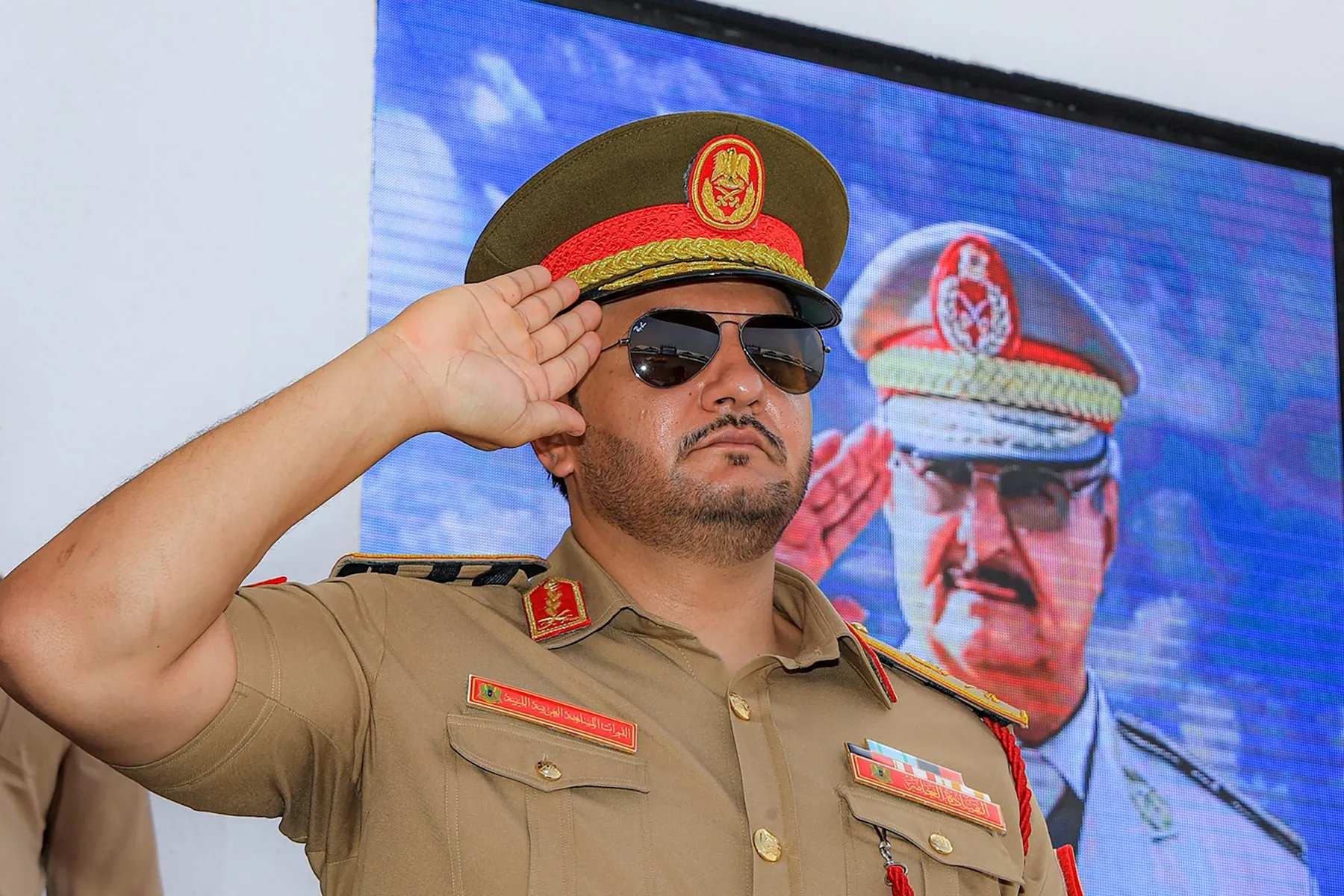
Yet the ratification was less a Turkish triumph than the final act of a sequence choreographed by Saddam Haftar, the son of Khalifa Haftar, the military commander who controls eastern Libya. The ultimate goal is the Libyan presidency.
The United States is currently trying to broker a power-sharing arrangement between Tripoli and Benghazi. Championed by Massad Boulos, US President Donald Trump’s senior adviser for Arab and African affairs, the deal could install Saddam as Libya’s president.
For that to happen, however, he needs the backing of Ankara, whose sway over western Libya gives it a decisive voice in any such settlement. The ratification of the maritime deal, therefore, is meant to secure Turkiye’s blessing.
The opening move in Saddam’s pursuit of the presidency was a palace coup: a fortnight before the vote, the HoR unseated its speaker, Aguila Saleh, who had spent 12 years in this position. It thus removed both Cairo’s principal ally in the east and the most stubborn obstacle to the memorandum’s ratification.
Yet Saleh’s ouster was never only about Egypt, and the same stone felled a second bird. As speaker and nominal supreme commander, he embodied the de jure authority from which Khalifa’s own command flows, and with a weighty tribal constituency among the Obeidat tribe, he was one of the few men capable of complicating, or even arbitrating, any transfer of power. Removing him cleared Saddam’s path to a handover already quietly under way, which the elder Haftar’s advanced age could hasten at any moment.
Saleh’s successor, Al-Salhin Abdulnabi, a fellow Obeidi, who chaired the HoR’s Libyan-Turkish friendship committee, is able to defuse the risk of tribal backlash while signalling where the chamber now takes its cues.
Whether the gambit pays off will be decided in Washington. Saddam is counting on the Trump administration’s appetite for a Libyan deal, sharpened by Turkish and Emirati lobbying and by Turkish President Recep Tayyip Erdogan’s rapport with Trump.
He hopes it can prevail over the objections of Athens and Nicosia and the displeasure of Israel, which is uneasy about Ankara’s reach. This is directly pitting Trump’s transactional instinct against a longstanding US partnership with the Greek-Cypriot-Israeli axis.
The broadside against Israel may even pay a domestic dividend, allowing Saddam to pose as standing up to Israel while dispelling perceptions of a covert channel to it.
Europe, meanwhile, has sidelined itself into near-irrelevance: when Benghazi expelled the EU’s migration commissioner and three member-state ministers on arrival in July 2025, European capitals responded with something closer to grovelling than resolve.
Less than a year later, Athens was hosting Saddam, who duly sidestepped any commitment on an alternative maritime memorandum.
That deference flows from the EU’s navel-gazing fixation on migration that has reduced its Libya policy to counting the boats leaving Libya’s eastern coast for Crete. A Union that implores Saddam to police the very waters now in dispute is in no position to make him pay for redrawing them.
Abu Dhabi, for its part, has every reason to look the other way because it wants Saddam to succeed. None of Khalifa’s sons has been more faithful to the Emiratis, and seeing their most loyal client installed at the apex of the Libyan state would cap a decade of investment in the Haftar project. Whatever their past flirtation with Greece and Cyprus, a maritime line drawn in Ankara’s favour is a modest price for that outcome, though the closeness of that embrace may yet constrain him.
Egypt remains the real question mark: Cairo’s statement objected chiefly to the memorandum’s encroachment on Egypt’s exclusive economic zone and was framed almost entirely in legal terms, a sign perhaps that it is keeping its political options open.
Its relationship with Ankara has been transformed, with the two now aligned on Sudan and the Red Sea. A shared wariness of Israel’s expansionist ambitions has only drawn them closer.
Offering commercial deals could go some way towards softening Egyptian opposition. But Cairo could also lean on its rapport with Ankara to champion an alternative Haftar heir. It would not have to look far for a candidate: Saddam’s brother Khaled, the Libyan Arab Armed Forces’ chief of staff, is considerably closer to Cairo and publicly criticised the US initiative in April.
Should that happen, Saddam would have little left to bargain with, having cashed in his most valuable chip with the Turks, and the strongest card he still holds is one Abu Dhabi would never let him play.
Cutting off support for Sudan’s Rapid Support Forces would win favour in Ankara and Cairo alike, both backers of the Sudanese army, but that would jeopardise the one relationship he cannot afford to lose.
Squeezed between a patron in Abu Dhabi he dare not cross and a partner in Ankara that has already pocketed its reward, Saddam is betting that he can keep both on side long enough for Washington to see the deal through. That he is prepared to run such risks may say as much about desperation as acumen, for the alternative to an institutionalised succession is one contested, perhaps violently, by his siblings or by the constituencies left out of the new order.
History, in Libya, has a mordant sense of humour. The maritime memorandum was the price Tripoli paid for the Turkish intervention that helped halt Khalifa Haftar’s offensive at the gates of the capital and sent his forces and mercenaries into headlong retreat in 2020. Where the father tried and failed to storm Tripoli, the son now hopes to be ushered in on a red carpet woven from the very document that sealed his father’s defeat.
Should he succeed, the instrument of the Haftars’ most humiliating setback will have become the cornerstone of their dynasty. Should Washington baulk, it may instead become the epitaph of the son’s ambitions.
The views expressed in this article are the author’s own and do not necessarily reflect Al Jazeera’s editorial stance.