



Holiday warning for Brits as UK Foreign Office says ‘expect long queues’ at the airport due to new travel rules
THE UK Foreign Office has warned Brits heading abroad to be wary of longer-than-usual airport queues ahead of new travel rules being fully rolled out next month.
The new EES requirement has already resulted in lengthy wait times at airports and are predicted to only get worse across the next few weeks.
The Entry/Exit System (EES) is the new travel system replacing the need for a passport stamp by automatically checking when a person enters and exits an EU country.
Non‑EU residents have to register their details on their first visit to a Schengen area country.
This is done using the EES machines at airports and ferry terminals to log their fingerprints, facial images and scan passports.
With lots of Brits are still yet to register, and with an influx of families heading abroad over the upcoming Easter break – it’s anticipated that this will result in delays and queues at the EES machines.


New advice on the government website reads: “Ahead of the Easter holidays, Brits are being advised to be aware of extra border checks – the EU’s Entry Exit System (EES) – and allow additional time at the border when travelling to the EU.”
It added: “EES checks should take only a few minutes per person, although longer waits at border control are possible, including for your journeys back to the UK.”
From April 10, EES will be fully operational with with every participating border crossing using the system.
Previously, there have been reports of delays of up to four hours with Brits lining up in the airport to use the EES machines.
Travel Reporter Alice Penwill queued for three hours through Lanzarote Airport.
Other airports that have seen long delays include Brussels, Lisbon and Prague.
Some passengers could be subject to further delays – especially those heading to Spain as ground staff are planning to strike at 12 airports across the country.
Several Spanish unions are set to begin an indefinite strike too from today.
Walkouts are planned to take place on Mondays, Wednesdays and Fridays, across three time slots: from 5am to 7am, from 11am to 5pm and from 10pm to midnight.
Other baggage handling staff have planned 24-hour strikes on March 28-29 and April 2-6.
Airports that could be disrupted by these strikes include Madrid-Barajas, Málaga-Costa del Sol, Alicante-Elche, Palma de Mallorca, Barcelona-El Prat, Bilbao, Valencia and Bilbao.
It could disrupt also affect airports on popular Spanish islands too, like Gran Canaria, Tenerife Sur and Norte, Lanzarote, Fuerteventura and Ibiza.
Here are Sun Travel’s top tips on how to deal with EES travel chaos…

Here are our top tips on how to ease the travel chaos if you’re caught up in EES delays…
- Sit at the front
First off is quite simple, book a seat at the front of the plane. If you want to get to border control before the rest of the passengers on your flight, then by being at the front, you’ll be able to get off first. - Early flights
When you’re booking, it might ease wait times if you go head out on one of the first flights of the day. There are generally fewer scheduled flights and they experience less disruption. - Anticipate delays
If you are taking a connecting flight, we’d advise to anticipate delays. Of course this varies from airport to airport, but some travellers might find it will take longer to get through because of the EES requirements. Similarly, if someone’s collecting you perhaps give them a bit more time – especially if they’re in one of the pick-up zones that costs money. - Go for a bigger airport
If you can go to a bigger airport and take a longer road transfer, it could be worth it At a larger airport there’s likely to be more EES machines than at one of the smaller ones For example, Assistant Travel Editor Sophie Swietochowski found there were plenty more of the machines in Spain‘s Alicante Airport than in Austria‘s Salzburg. - Bring entertainment
If you have children, or are generally just bored of queues (and who can blame you?) – think about entertainment It could be worth setting the kids up with an iPad or something that will keep them occupied. Bring a reserve of snacks because standing in line means no access to the airport’s cafes and shops. - Get into the priority lane
For those who are disabled and require assistance make sure to let the airline know in advance as you would usually. After landing, staff should escort you straight through to the front of border control queues. Many major airports offer priority family lanes at passport control for families with young children (usually under 12 years old). - Use the plane facilities
Quite simply, if you are going to be waiting in line for yours, then you want to be comfortable. So before landing, go to the toilet on the plane. If you’re queueing along corridors before heading into border control, then the chances are there won’t be access to toilets
For more on Easter breaks, here are 10 European getaways under £200 per person from beach resorts to cool cities.
And here are 10 of the most affordable English seaside towns for Easter holidays with £1 rides, £2 pints & mega cheap hotels.

Football quiz: Name England’s line-up from their 2014 World Cup match with Uruguay
England take on Uruguay in a friendly on Friday and to mark the match we’re looking back to the last time the two played each other at the 2014 World Cup.
Luis Suarez starred in the Group D encounter, helping Uruguay to a 2-1 win which, after other results went against England, essentially knocked Roy Hodgson’s side out of the tournament.
It’s not a game England fans remember too fondly, but can you pick out the players who started the match? We’ve given you their positions and clubs at the time as a clue.

Now in power, Nepal’s rapper-politician Balen Shah faces new challenge | Politics
For the first 18 years of post-monarchy Nepal, the country had 14 prime ministers — leaders changing almost every year, with some taking office, being forced out, and then returning again a few years later.
On March 5, Nepal appeared to draw a line in the sand. Months after a Gen Z-led uprising ousted the then prime minister, KP Sharma Oli, millions of voters chose rapper-turned politician Balendra Shah — or Balen as he is widely known — and his Rastriya Swatantra Party (RSP) to lead the nation. On Friday, March 27, Shah was sworn in as Nepal’s prime minister.
The RSP is barely four years old, and Shah’s only prior political experience is as mayor of the capital, Kathmandu.
Now, with a landslide win, analysts and voters say that Shah and the RSP have an historic opportunity to build on the popular 2025 revolt and deliver on the aspirations of young Nepalis. But with that opportunity comes risks, they add.
“There is so much excitement with the heavy mandate. This is a historical and unprecedented opportunity for him to execute his agenda because his party is likely to have close to a two-thirds majority,” political analyst Bishnu Sapkota told Al Jazeera. But, he added, “ expectations are enormous. I do not think it is realistic for him to fully meet them.”
Too big a mandate?
In the election, Shah defeated Oli in a constituency that had been the former prime minister’s stronghold for decades. The RSP won 125 of the 165 first-past-the-post seats in parliament. Seats determined through proportional representation — 110 seats are up for grabs — are yet to be divided among parties, but everything points to a two-thirds majority for the RSP.
That’s a larger mandate than even the RSP itself expected.
“We were expecting just over a 50 percent majority, but a two-thirds mandate was beyond our expectations,” RSP leader Shishir Khanal told Al Jazeera. Khanal, who was a lawmaker in the outgoing parliament, won re-election on March 5.
“The challenge is that such a mandate creates very high expectations among people, who want fast results. Given Nepal’s institutional capacity and almost stagnant economic growth, delivering those results will be extremely difficult.”
One immediate test for Shah will be implementing the findings of the Karki Commission, formed by the interim Sushila Karki government that took charge after Oli’s ouster last year. The commission was tasked with investigating the killings and property damage during the Gen Z movement last year. The panel submitted its report to the government last Sunday. This interim government is expected to hand over the investigation to the incoming Shah government to implement.
“There is a popular demand that the report be made public and implemented quickly,” Sapkota, the analyst, said. “If the interim government hands over the report as promised, implementation will have to happen in stages. As soon as he begins doing that, political reactions will follow, and he will have to manage them carefully.” The protests last year were driven by public anger over corruption, poor governance and lack of accountability, issues that voters expect the new government to address urgently. High-profile corruption investigations involving politicians are likely to be among the upcoming government’s first major tasks.
That won’t be an easy challenge to address.
Shah joined the RSP only weeks before the election, and was nominated as its prime ministerial candidate, while Rabi Lamichhane, the television presenter-turned-politician who founded the party, remains its president.
Lamichhane himself remains a controversial figure, facing allegations of fraud, organised crime and money laundering. He has previously served jail sentences and is currently out on bail. Lamichhane is accused of illegally holding two passports, US and Nepali, which is forbidden under Nepali law.
Two power centres?
The relationship between Shah and Lamichhane — and the balance of power between them — will also come under scrutiny, say experts.
Gehendra Lal Malla, professor of political science at Tribhuvan University in Kathmandu, described their alliance as a “marriage of convenience”.
“Balen needed a party to contest the election, and Rabi needed Balen’s popularity,” he said. “But differences could emerge later.”
Malla said Shah will also face a difficult test in dealing with the ongoing charges against Lamichhane. “We have a culture in Nepal where politicians protect each other,” he said. “Shah must uphold the rule of law and not protect anyone from his own party.”
At the same time, Malla noted that Shah’s popularity was the main factor behind the RSP’s success. “Balen’s appeal was the reason the party gained such a huge mandate,” he said. “He could end up having a stronger grip on the party than its president.”
Analyst Sapkota said that the RSP leadership, including Lamichhane, would need to acknowledge that the overwhelming mandate they received was largely because of Shah’s appeal. “They have to recognise that and give Shah absolute freedom to form the cabinet of his choice. Of course, the party can give their inputs and suggestions,” said Sapkota.
Khanal said, based on the conversation and an agreement they had signed, Shah will lead the government and Lamichhane the party. “From that perspective, they have their individual role sorted out, and both will have to face challenges and manage expectations on their own respective front,” Khanal told Al Jazeera. “I have observed them work very closely together within the last election cycle and campaigning. Their decision-making has also been in collaboration. So, with what I have experienced so far, there wouldn’t be any friction between them.”
The first 100 days
For Sapkota, Shah’s political novelty might work in his favour. “He doesn’t have the baggage of party cadres and internal factions,” Sapkota said. “That gives him more freedom compared to previous prime ministers.”
RSP leaders say the government plans to move quickly. “In the first 100 days, the honeymoon period, people will begin to see changes,” Khanal said.
The party has planned to prioritise anticorruption measures, including investigations into the wealth of senior officials and politicians since 1990. “We want to form a commission to investigate the assets of high-level officials and reopen high-profile corruption cases that were paused,” Khanal said.
These steps respond directly to the demands of last year’s Gen Z protests.
For many young activists who drove the protests, the election result represents hope, but also a new government that must be held accountable.
Gen Z activist Yujan Rajbhandari, 23, said the new government must prioritise good governance and protect civic freedoms, or face pushback from the same movement that enabled its rise. “With the RSP’s large majority, parliamentary opposition will be weak,” he said. “So the streets will play a major role as opposition.”
Beyond immediate reforms, Nepal is in the middle of a debate about whether to introduce broader constitutional reforms — with questions about how decentralised power needs to be.
Khanal said the party plans to establish a committee to review whether amendments may be necessary.
Shah’s critics have also questioned his diplomatic skills, citing past social media posts attacking Nepal’s neighbours, including India and China, and important partners such as the US. As Kathmandu mayor, he briefly banned Indian films and displayed a “Greater Nepal” map that showed Indian territory as part of an aspirational larger Nepal.
Sapkota said those concerns were being overblown.
“When he made those remarks, he was a mayor, not a national leader responsible for foreign policy,” he said. Sapkota argued that Shah’s lack of political baggage could allow Nepal to pursue a more independent diplomacy. “This is a clean slate,” he said. “Previous leaders had historical ties and obligations with different countries. Shah does not have that baggage, which could give Nepal greater independence.”
Neighbouring India has already signalled a willingness to work with Nepal’s new leadership.
Indian Prime Minister Narendra Modi congratulated both Shah and Lamichhane after the election and expressed hopes for stronger bilateral relations. Shah responded by emphasising the importance of maintaining the “historical, close and multifaceted relations” between Nepal and India and congratulating India for their recent T20 Cricket World Cup win.
For Malla, another important element to watch would be Shah’s relationship with the media. “Balen should engage more with the press once he becomes prime minister,” he said. “In the past, he has often said he prefers to work more and talk less. But as a national leader, communication and accountability are essential.”

How extensive is Russia’s military aid to Iran? | US-Israel war on Iran News
“A bit” is what United States President Donald Trump thinks about the scale of Russia’s military aid to Iran.
Moscow “might be helping them a bit”, he told Fox News on March 13.
A day later, Iran’s Foreign Minister Abbas Araghchi stated laconically that Moscow’s military cooperation with Tehran was “good”.
His words seemed to confirm earlier media reports that Russia is providing Iran with satellite and intelligence data on the locations of US warships and aircraft.
It may not sound like much, given the superiority of Western military satellites and Russia’s battlefield losses and communication problems after Elon Musk’s SpaceX company switched off smuggled Starlink satellite Internet terminals.
But data on US military assets Iran is receiving most likely comes from Liana, Moscow’s only fully functional system of spy satellites, according to an expert on Russia’s space programme and military.
“The [Liana] system has been created to spy on US carrier strike groups and other navy forces and for identifying them as targets,” Pavel Luzin, a senior fellow at the Jamestown Foundation, a US think tank, told Al Jazeera.
Eyes in the sky
Russia also played a key role in the development of Iran’s space programme and its key satellite, the Khayyam.
Launched in 2022 from Russia’s Baikonur cosmodrome, the 650kg (1,430 pound) satellite orbits the Earth at 500 kilometres (310 miles) and has a resolution of one metre (3.3 feet).
Moscow “can, in theory, receive and process data from Iran’s optical imaging satellite and share data from its own several satellites”, Luzin said.
On Wednesday, Tehran claimed to have struck the Abraham Lincoln carrier with multiple cruise and ballistic missiles, but the Pentagon called the claim “pure fiction”.
On Sunday, Iranian media claimed that a “massive blaze” was caused by a strike on a US destroyer refuelling in the Indian Ocean.
Washington did not comment on that strike.
Russia has, for decades, supplied weaponry to Iran, including advanced air defence systems, trainer and fighter jets, helicopters, armoured vehicles and sniper rifles, worth billions of dollars.
Since Washington and Tel Aviv began their strikes on February 28, Russia has continued aiding Iran with “intelligence, data, experts and components” for weaponry, Lieutenant General Ihor Romanenko, former deputy chief of Ukraine’s general staff of armed forces, told Al Jazeera.
While Moscow and Tehran loudly proclaim their strategic partnership, they do not have a mutual defence clause, and Moscow has not intervened in the conflict directly.
But the arms supplies have been mutual. Since Russia’s 2022 invasion of Ukraine, Tehran has provided Moscow with ammunition and artillery shells, firearms and short-range ballistic missiles, helmets and flak jackets.

Drones with ‘comets’
And then there are the Shahed kamikaze drones – slow, noisy, yet cheap to manufacture – which have been launched on Ukrainian cities in swarms of dozens and then hundreds. Ukraine became so adept at bringing these down – now mass-producing cheap interceptor systems specifically to target Shaheds – that it is now providing its own know-how to Gulf states where US military assets have come under fire from Iran in recent weeks.
In the course of its war with Ukraine, Moscow has manufactured and modernised Shaheds, making them faster and deadlier, and equipping them with cameras, navigators and, occasionally, artificial intelligence modules.
And now, some of the upgrades have made their way back to Iran.
A Shahed drone with a pivotal Russian component launched by Iran-backed Hezbollah from southern Lebanon was able to hit a British airbase on Cyprus on March 1, the UK’s Times newspaper reported on March 7.
It reportedly contained Kometa-B (Comet B), a Russian-made satellite navigation module that also acts as an anti-jamming shield, making drones more resistant to interference.
Russia has also perfected the tactic of sending waves of real and decoy drones to exhaust and overwhelm Western-supplied air defence systems in Ukraine.
These days, the scheme helps Iran hit targets in the Gulf, Western officials say.
“I think no one will be surprised to believe that Putin’s hidden hand is behind some of the Iranian tactics and potentially some of their capabilities as well,” British Defence Secretary John Healey said on March 12 after Iranian drones struck a base used by Western forces in Erbil, northern Iraq.
However, if Iran is suffering a shortage of drones – as some analysts believe it is – that would render the use of Russian tactics, as well as Russia-supplied satellite data useless, experts say.
“Russia does supply data, it’s obvious, the data helps Iran, but not much,” Nikita Smagin, a Russian expert who has written extensively on ties between Moscow and Tehran, told Al Jazeera.
After four days of intensive strikes using up to 250 drones a day in early March, Iran has been launching only up to 50 drones a day, according to Nikolay Mitrokhin, a researcher with Germany’s Bremen University.
“Iran ran out of steam really fast,” he told Al Jazeera.

‘A goodwill gesture’
Moreover, Moscow is not necessarily particularly interested in an Iranian military victory, as the war is benefitting Russian President Vladimir Putin’s own conflict in Ukraine.
Skyrocketing oil prices make “Putin financially capable of further hostilities,” Lieutenant General Romanenko said.
As Iran strangles shipping through the Strait of Hormuz, the price of Brent crude – the international benchmark – has soared past $100 a barrel in the past three weeks. US President Donald Trump was forced to temporarily suspend sanctions on shipped Russian oil to ease the economic backlash. The result has been tankers laden with Russian oil bound for China making U-turns in the open ocean to divert to India, as countries scramble to grab Russian oil cargoes out at sea. The price of Urals crude has bounced.
Putin “hasn’t achieved his goals in Ukraine and will therefore use anything, including the war [in Iran] and lies to achieve his vision, press with his ultimatums,” Romanenko said.
The Kremlin “doesn’t pursue a breakthrough in this war, doesn’t help Iran break the United States and Israel,” Ruslan Suleymanov, an associate fellow at the New Eurasian Strategies Center, a US-British think tank, told Al Jazeera.
The current intelligence and military aid is “more of a goodwill gesture, an attempt to create an illusion of help, to show Tehran that despite the lack of formal commitments, Russia doesn’t leave its friend in need”, he said.
And Tehran fully understands how insufficient Moscow’s aid is – and therefore relies on its own stratagem of expanding hostilities to the entire region through strikes on neighbouring states and of crippling the global economy with soaring oil prices.
“Iranians understand that the forces are not equal and it’s impossible to defeat the United States and Israel on the battlefield, and no Russian aid is going to help,” he said.
It seems that Trump’s assessment that Moscow “might be helping them a bit” may not be too far wide of the mark.

Venezuela Fury, 16, looks amazing in gold dress and tiara as she celebrates hen do with mum Paris ahead of her wedding
BRIDE-TO-BE Venezuela Fury, 16, looked amazing in her gold dress and tiara as she celebrated her hen do with mum Paris ahead of her wedding.
The teen has enjoyed a whirlwind engagement after it was revealed her boyfriend Noah Price, 17, got down on one knee at her 16th birthday party and popped the question.
The young couple have not yet announced a date for their wedding, but as the hen do was last night, this could be a big hint their big day is getting closer.
Venezuela, who appears in the Fury family’s hit Netflix reality series At Home With The Furys, pulled out all the stops as she stepped out for her bachelorette party.
The teen was dressed in a stunning metallic dress, and matching strappy heels.
Venezuela wore her hair up on top of her head with a tiara and bridal veil.


She also made sure to flash her huge engagement ring as she made her way into her hen do, which was held at Morecambe Football Club
As Venezuela walked into her party, she told The Daily Mail: “I can’t wait. I’m really looking forward to married life. I’m very happy and excited.”
The youngster was joined by her glam mum Paris, 36, who looked incredible in her white bodycon dress.
The mother-of-eight showed off her stunning figure in the skintight dress.
It has been reported that Venezuela had an estimated 300 guests at the hen party.
According to the Mail, party goers were treated to a huge buffet, Karaoke and a DJ.
When it was announced last September that the teenager had got engaged, there was some backlash from fans, due to her age.
Venezuela has since been forced to hit back at trolls who have said that she is too young to marry.
Earlier this month the teen’s mum Paris, who has seven other children, shared her thoughts on the upcoming wedding.
“I didn’t feel old enough for this, but Venezuela is over-the-moon happy,” she told The Mirror.
“The two of them are in their own little bubble. And, look, I got married myself at 18.”
Although Paris is delighted for Venezuela and Noah, she insisted it is “too soon” for the pair to start having children – saying they want to travel first.
The mother-of-eight also admitted that she’s worried about herself when her eldest child eventually moves out.
She said: “I’ll feel like I’ve lost my arm. It’s going to hit me hard.
“Right now, Tyson’s in training camp in Thailand, the kids are in school, and Venezuela and I… basically co‐parent!
“But I do let her have her space. The weekends are her time. I know she’ll be fine, getting on with an exciting new life. It’s me I’m worried about.”
It comes as bride-to-be Venezuela recently revealed she is already packing up items to move into a house with her fiance Noah, who is a boxer and an East Midlands belt holder.
In a Q&A with fans on Instagram, the teenager confirmed she would be staying with her parents until she is married.
Venezuela told followers: “I’m trying to get everything booked for May/June time, but I’m not sure when it will be.
“I will be in my mam and dad’s home til I’m married.”
In order to get ready to set up her marital home, Venezuela has been buying home items ready and showed off the results from a haul.
Paris also recently opened up about her feelings surrounding Venezuela’s engagement, which has sparked controversy among fans regarding her age.
But speaking to The Sun, the matriarch insisted she’s “really pleased” for her daughter, adding: “I got engaged at 17, so even though I feel she’s young, I did it.
“I wouldn’t change a thing.
“So if that’s what she wants to do, then 100 per cent, me and her dad support her.”
Paris also dropped some hints about Venezuela’s upcoming wedding as she says the teen isn’t “rushing to plan weddings” – in sharp contrast to her daughter’s Instagram remarks.
“She’s not rushing to plan weddings or get married,” she said.
“We have very different tastes.
“She has said she wants a smaller wedding, so if that’s what she wants, I’ll go along with it.”

Ion Beam Applications SA GAAP EPS of €0.43, revenue of €620.2M
Ion Beam Applications SA GAAP EPS of €0.43, revenue of €620.2M
Source link

England: Will Uruguay be Thomas Tuchel’s toughest test so far?
England won all eight of their qualifying games, scoring 22 goals and conceding none to finish comfortably clear at the top of Group K.
However, their group opponents were Albania, Andorra, Latvia and Serbia – four sides ranked outside the top 20 in the world.
Indeed their toughest test in terms of ranking last year was a friendly against Senegal, who were 19th in the world at the time. England lost 3-1.
It may have been a non-competitive match, but the Three Lions’ performance in that game was concerning.
“No discernible plan. No identity. No improvement – arguably even a regression – since Sir Gareth Southgate stepped down after defeat by Spain in the Euro 2024 final in Berlin,” wrote BBC Sport’s chief football writer Phil McNulty after the game.
“[Tuchel] may offer up mitigating circumstances as he made 10 changes from the World Cup qualifying win against Andorra, plus this was a friendly at the end of a long season. But it was still a sobering, alarming evening as Senegal outclassed England.”
While that result and performance may have been a blip, England needed to face higher-ranked opponents to test them before heading to the World Cup – and they should get that against Uruguay and then Japan, who are 19th in the world.

Ryanair explains why thousands of flights have been cancelled
Ryanair is calling on passengers to act

Ryanair chiefs have explained (Image: tupungato via Getty Images)
Thousands of Ryanair flights have been cancelled, with the budget carrier continuing its campaign to “keep EU skies open”.
Ryanair has set up a a petition, aimed at the European Commission, to reduce the impact of French Air Traffic Control (ATC) strikes on EU flights. The campaign has now garnered support from more than two million people, with thousands of flights scrapped – and more disrupted – in 2025 alone. In October of last year, Ryanair CEO Michael O’Leary said: “It is inexcusable that Europe’s worst performing ATCs in France, Spain, Germany and the UK continue to inflict avoidable delays and cancellations on millions of EU citizens every month.
“Despite warnings, Europe’s ATC performance is not improving, as national providers fail to properly staff and manage their operations. EU ATC needs reform and its passengers who are paying the price.
“ATC delays have already disrupted 33m citizens so far this year, with France, Spain, Germany and the UK consistently failing to staff and manage their services properly.”
The International Air Transport Association (IATA) reported last month that Air Traffic Flow Management (ATFM) delays in Europe have “grown sharply” in recent years, with this “far outpacing traffic growth”. ATFM delays, it said, “have cost airlines and passengers an estimated EUR 17.5 billion since 2015 (in 2025 prices), of which over 70% is linked to capacity shortages and staffing issues”.
The Council of the European Union said last year that “the air traffic control system is increasingly struggling to manage this growing demand”, noting that while “close coordination has been underway for many months between the European Commission and EUROCONTROL as well as ongoing planning between the EUROCONTROL Network Manager, airlines, airports, air navigation service providers and the military … resolving the issue also requires political will at the national level as each country is responsible for providing adequate air traffic services and making the necessary investments to support these services.”

Italy to play Bosnia in 2026 World Cup playoff final, Kosovo face Turkiye | Football News
Italy beat Northern Ireland 2-0 to boost their bid to reach a men’s World Cup for the first time since 2014, as Bosnia and Herzegovina, Sweden, Poland, Turkiye, Kosovo, the Czech Republic and Denmark also won their European playoff semifinals.
Four-time champions Italy, who lost out in the playoffs for the 2018 and 2022 editions, travel to Bosnia on Tuesday for the final, knowing a win will send them to June and July’s tournament in Canada, Mexico, and the United States.
Recommended Stories
list of 4 itemsend of list
Sandro Tonali blasted in superbly from the edge of the box in the second half of a nervous one-off semifinal in Bergamo on Thursday before Moise Kean made the game safe.
“We made life a bit difficult for ourselves, but in the second half we found our rhythm,” Italy coach and 2006 champion Gennaro Gattuso said. “Now we’re going to play this final. We know it’s difficult. The tension we feel will be felt by our opponents, too.”
Bosnia overcame Wales on penalties in Cardiff following a 1-1 draw after extra time.
Daniel James used his pace to score early in the second period for the hosts, and Karl Darlow then made a wonder save from an Ermedin Demirovic header. Edin Dzeko, 40, levelled late on in normal time.
Darlow saved again from Demirovic in the shootout, but Brennan Johnson and Neco Williams both missed.
Kosovo have never reached a World Cup, but are through to Tuesday’s playoff final at home to Turkiye after winning a wild game in Slovakia 4-3.
The Kosovans twice wiped out a deficit, and Kreshnik Hajrizi’s goal on 72 minutes proved the difference.
Ferdi Kadioglu’s second-half goal put Turkiye through after a tight 1-0 home win over Romania.
Kadioglu calmly netted on 53 minutes after Arda Guler’s magical assist at Besiktas’s stadium in Istanbul.
Romania’s 80-year-old coach Mircea Lucescu, who counts Turkiye among his former jobs, was left to rue Nicolae Stanciu hitting the post as the Tricolours missed the World Cup for the seventh straight edition.
Turkiye, third in 2002, have not reached a men’s World Cup since.
Viktor Gykeres bagged a hat-trick in Sweden’s 3-1 win over Ukraine in Valencia. Ukraine have not played at home since the Russian full-scale invasion more than four years ago, and miss out on another World Cup.
Graham Potter’s Swedes next take on Poland, who came from behind to defeat Albania 2-1 in Warsaw.
Arbr Hoxha pounced 42 minutes after Jan Bednarek’s mistake as Albania dreamed of moving closer to a first World Cup appearance. But record Poland scorer Robert Lewandowski equalised, and Piotr Zielinski won it in style with a goal from distance.
Gustav Isaksen scored twice in two minutes to help Denmark thump North Macedonia 4-0 and set up a meeting away to the Czech Republic, who needed penalties to get past Ireland in Prague.
Troy Parrott, the hero as the Irish made the playoffs at the end of November’s group stage, netted the opener from the spot, and an own goal summed up the poor Czech defence.
But the hosts pulled one back through Patrik Schick’s penalty and Ladislav Krejci’s late header to make it 2-2, prompted by a cagey extra time, with the Czechs prevailing in a shootout.
This year’s tournament, in North America in June and July, will feature an expanded 48 teams, meaning more nations have a chance to qualify.
Twelve European countries have already gotten through by winning their groups. The playoffs are made up of second-placed teams and sides who did well in the previous Nations League.
Bolivia beat Suriname, Jamaica edge New Caledonia to reach playoff finals
In FIFA’s intercontinental playoff games on Thursday, Bolivia rallied to beat Suriname 2-1 to qualify for the final qualifying playoff against Iraq.
Liam Van Gelderen put Suriname ahead in the 48th minute, but Moises Paniagua tied the score at the 72nd, and Miguel Terceros had the winning goal on a penalty kick in the 79th minute for the Bolivians, who are aiming for their second World Cup appearance.
The Bolivians have only previously played in the 1994 World Cup in the US. Suriname were looking to qualify for the first time.
Bolivia will play Iraq next Tuesday in Monterrey, with the winner qualifying for Group I with France, Norway and Senegal.
Elsewhere on Thursday, a first-half goal by Wrexham striker Bailey Cadamarteri gave Jamaica a 1-0 victory over New Caledonia and a place in the international playoff final against the Democratic Republic of the Congo (DRC).
The Reggae Boyz have only one World Cup appearance, at France in 1998. New Caledonia, from Oceania, saw their chance to advance to a first World Cup end.
Jamaica will face DRC next Tuesday at Akron Stadium in Guadalajara. DRC qualified for the playoff by defeating Nigeria in an African playoff.
The winner in Guadalajara will play in Group K in the tournament along with Colombia, Portugal and Uzbekistan.
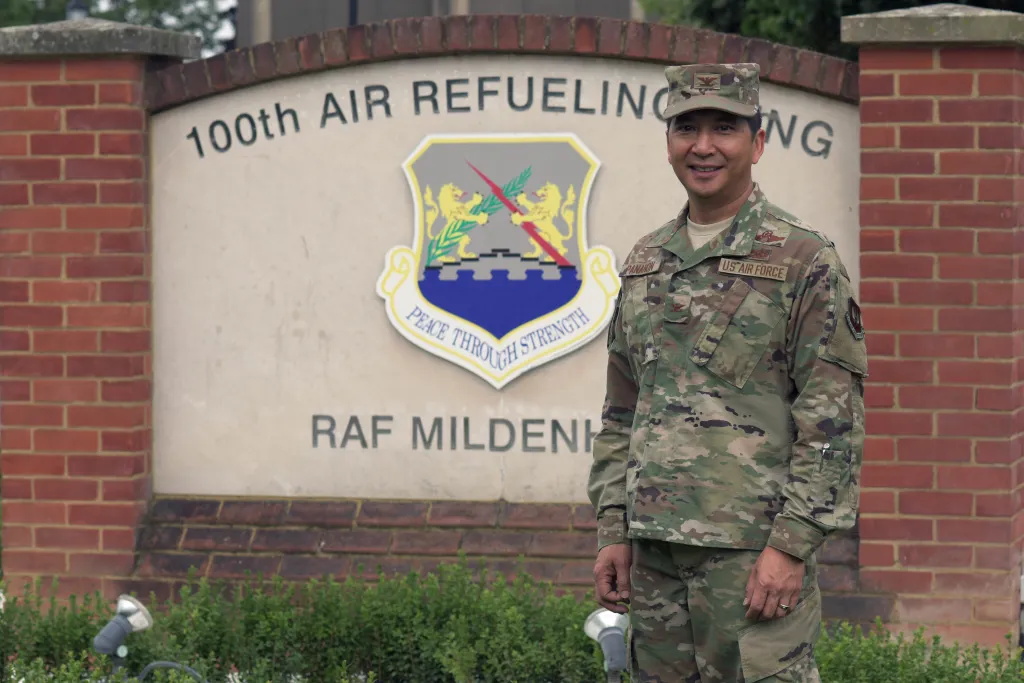
Veteran KC-135 Base Commander’s View Of Epic Fury’s Strain On The Tanker Force
Operation Epic Fury will hit a month old by the weekend. It and the massive military build-up to it were made possible by a global logistics chain that only the Pentagon can supply. At the heart of it is the aerial refueling fleet. These aircraft have flown thousands of sorties to get materiel where it needs to be and fast. These have included stuffing the fuel tanks of C-17s with cargo holds full of Patriot missiles to dragging stealth fighters across the globe. Epic Fury has been one of many operations to heavily tax the tanker fleet in recent years. To get a much better insight into the tanker portion of the war and its impacts, we talked to one man with an extreme level of experience behind the controls of USAF tankers.
For more than 20 years, Troy Pananon, a retired Air Force colonel, served in the aerial refueling community. He flew KC-10 Extender and KC-135 Stratotanker refueling jets and served as deputy commander of the 6th Air Mobility Wing at MacDill Air Force Base in Tampa, Florida (now 6th Air Refueling Wing), and later as commander of the 100th Air Refueling Wing at RAF Mildenhall in England. Both of these installations and their KC-135s are instrumental in the ongoing war in Iran.
In a two-hour, wide-ranging exclusive interview, Pananon offered insights into the strain of the war on the jets and personnel and the challenges of keeping the aging KC-135s flying as they perform hundreds of sorties gassing up fighters, airlifters and other aircraft. One of those missions resulted in the deaths of six airmen after a suspected midair collision over Iraq. Pananon also addressed a whole host of other issues, including how Epic Fury is affecting readiness for a fight against China, the scourge of drone incursions and much more, which will be addressed in future installments.
Pananon, who began his career as an enlisted Marine, retired from the Air Force in 2023 and is now a 737 first officer with United Airlines. The first installment of our conversation focuses on Epic Fury and the toll on the tankers, crews and maintainers. Some of the questions and answers have been lightly edited for clarity.

Q: The Air Force tanker fleet has come under extremely heavy use in recent years, being widely utilized in the evacuation of Afghanistan, the massive deliveries to Ukraine, the constant crisis in the Middle East and the campaign against the Venezuelan dictator Nicolas Maduro. Now, the war in Iran. Talk about the strain this is putting on it, on the aircrews, the maintainers and the airframes, some of which rolled out during the Eisenhower era.
A: I would categorically say that there’s a huge strain on the entire ecosystem. The KC-135s were rolling off the assembly line in the 50s and 60s. Some of the technology, and we called it technology back then, was graduated from the Wright brothers technology. Parts on that aircraft are still reminiscent of some of the things that were invented by the Wright brothers. So it’s amazing to me that the KC-135 is able to operate, and it’s due in large part to the maintainers and the relentless effort that they follow through to keep those aircraft air worthy.

If you think about the [airmen], how they’re operating in places you mentioned all over the world, they’re there. We’ve broken their normal routine. They’re away from home, away from their family and friends. So that’s a mental and physical stressor, because they’re in environments that they’re not accustomed to.
We don’t know how long this conflict could last. We’re approaching a high heat of summer in that region, and so depending on where some of these personnel are based or stationed, they’re certainly out of their normal circadian rhythm, their normal environmental routines. It is a huge strain on those maintainers and the airframes that we’re placing in different parts of the world, exposed to different elements than they may have been exposed to at their normal pace. Maintaining these aging aircraft is a strain on the entire ecosystem, and we are operating them at a high operations tempo, and surely that puts a lot of a significant strain on the KC-135.
We do have the KC-46 that is helping to fill some of that void, but we just retired the KC-10, which was a tremendous workhorse. And so I would say that there’s a significant strain on the ecosystem.

Q: What are the biggest challenges in keeping these Cold War-era jets like the KC-135 flying? How difficult is it to find parts, and what do you do when you can’t?
A: That’s 100% accurate. There have been some breakthroughs in technology. I know that they’ve used 3D printing to help source some parts. They’ve even gone back to the boneyard and pulled parts off of older KC-135s. So resources will always be a great puzzle for our entire team to source.
There’s no new assembly line. They shut that assembly line down back in the ’50s and ’60s. Some of the parts for those aircraft in general were from the ’60s, ’70s and ’80s. And then, you have to take those back and refurbish those certain parts. There’s not a lot of new technology that’s going on to these core platforms. The avionics, for sure, is newer. But everything that you add to this aircraft, I call it the Frankenstein effort – taking bolt-on technology to try and help modernize the fleet. And by modernizing that means that you’re also helping with the parts availability. But going back to the age of these aircraft, some of these parts were developed back in the ’40s and machined back in the ’50s and ’60s. Our teams have to get creative with the acquisition. And that’s a huge, huge challenge. But they currently have done a great job of putting new engines on the aircraft. And so that means that the parts availability is better in some cases, but it’s not a solution.

Davis Monthan AMARG Boneyard tour with KC-135s and Boeing 707s
Q: What are some of the old parts you’re talking about that go back to the ’40s, or to the Wright brothers era?
A: Just think about the flight controls. If you, for whatever reason, need to replace certain pulleys or elements within the flight control system, those parts were thought-up and developed way back in the ’40s. Machined maybe back in the ’50s and ’60s. It’s still not a fly-by-wire aircraft like some of the modern aircraft that we have nowadays. And so you have to go back and machine some of these parts if they get wear and tear.

Q: What are the complexities of supporting such a high tempo operation like the war against Iran with aerial refueling? We’ve heard that the airspace over Iraq is chaotic and that the lack of onboard situational awareness is a major issue with tanker crews and receivers. What have you heard about this?
A: Obviously I haven’t operated over there in a number of years, but I do go back to the times when I was operating aircraft in that theater. That puts me back into the Enduring Freedom, Iraqi Freedom timeframe. We have deconfliction procedures. We have airspace procedures that we study and that we follow. We have aircraft in there that help us deconflict the airspace and ensure that we have safe separation. And it goes to training, it goes to situational awareness.
Back then, we didn’t have some of the avionics and software suites that we have available to us today, so our situational awareness wasn’t as high, but yet we had good, solid procedures and processes that ensured clear deconfliction and separation in the airspace that they’re operating in. Now, I would assume that it’s congested and it’s contested, and so having the ability to have higher situational awareness with onboard avionics suites that are connected is probably more and more essential as we go forward.

Q: But have you heard anything about the chaotic nature of the current airspace and lack of onboard situational awareness? Is it a major issue right now with the tanker crews and receivers?
A: I really can’t comment on it, because I don’t have firsthand knowledge. What I can say is that it’s in a contested environment, and our crews are definitely trained to operate in these kinds of environments. And you know, it’s just like anything there. There are elements that we have little control over, and I call it the fog and friction of warfare. But I have 100% absolute trust in the personnel. They’ve been trained. They are equipped. Could they be equipped better? Could they be resourced better? Sure. But again, it still goes back to the fact that even if we resource them with the newest technology, they then have to go back and be trained to understand how to integrate it and how to use it effectively.
There is still an opportunity here. You can’t solve it overnight, but it does need to happen so it would help. I’m certain that if we ever get into conflict with a near peer, it’s going to be even more challenging.

Q: When was the last time tanker crews flew in contested airspace against adversaries with more robust air defenses than we have seen in past conflicts?
A: I would like to say that any time that you’re operating within a conflict zone, that’s considered contested airspace, right? The tankers are considered a high-value, low-density. We don’t have an infinite number of tankers, so they’re going to tend to operate outside the reach of the adversary’s missiles, or fighter aircraft that would try to reach and take down one of these tankers. So they’re really going to try and operate within a safe, safe zone. I would frankly say that in a conflict, tankers operate in contested airspace all the time, and it’s really contingent on the ability of our joint force to clear that airspace and to allow our tankers to move closer to the tip of the spear, but generally speaking, it is really sacrosanct to keep tankers an arm’s reach away from an adversary’s ability to take them down.

Q: Do you have any sense of what happened in the fatal March 12 KC-135 crash in Iraq that led to the deaths of Maj. John “Alex” Klinner, 33, of Auburn, Alabama; Capt. Ariana G. Savino, 31, of Covington, Washington; Tech. Sgt. Ashley B. Pruitt, 34, of Bardstown, Kentucky; Capt. Seth R. Koval, 38, of Mooresville, Indiana; Capt. Curtis J. Angst, 30, of Wilmington, Ohio; and Tech. Sgt. Tyler H. Simmons, 28, of Columbus, Ohio?
A: There’s an investigation taking place and it’d be wrong of me to comment on what I think took place. These crews are highly trained. They have a process. They have procedures. I don’t know what was taking place on the flight decks of both of those aircraft. There was probably some confusion as to who and where each aircraft was supposed to be, but I don’t know what led to that. There’s a lot of speculation out there. It’d be hard for me to really say what I think actually did happen.
Q: The cause of the tanker crash is suspected to be a collision with another KC-135. How many close calls have you experienced in your career?
A: Well, I have a deep background in the KC-10, and that also gives gas and takes gas. So I’ve been within 10 feet of another aircraft, operating at close to 350 miles an hour. It’s an inherently dangerous occupation when you’re trying to receive fuel from another aircraft. I don’t think that was the case in this particular incident over Iraq. But at all times, everything we do is inherently dangerous because we operate within safe operating margins, but they’re tight. So, a simple split-second decision or maybe error puts you in a precarious position. But we have procedures that, if we make a mistake and we come close to another aircraft – there is a term that we use, which is ‘breakaway.’ And that tells both aircraft, ‘hey, we’re in a situation where we need to create some space between our aircraft,’ and we follow our procedures. It’s a safe maneuver, but probably makes the hair on the back of your neck stand up a little bit. I’ve been in this, I’ve been in situations where I’ve had to rapidly escape from another aircraft.
But again, we get trained for this. We are highly trained. And I think because of the training, when a situation like that occurs, your instinct kicks in and you know what to do. And so, I don’t recall instances where two KC-135s had a midair collision, but certainly, we have had air-to-air collisions, just none in my recent memory.

Q: The air refueling tanker community is tight. You served at MacDill Air Force Base in Tampa, Florida, with Tech. Sgt. Pruitt, one of the airmen who was killed in the crash. Tell me about how the crash affected the community. Tell me a little bit about Pruitt.
A: From my time at MacDill, I do remember her family. In general, losing anyone is just a shock to the system. And especially somebody that you may have worked with in the past, and you know. I just feel for their families. And we have a community. The tanker community – it’s just a system, a brotherhood and sisterhood. We are just one big family. Anytime we have a tragedy that strikes our community, especially like this, it’s tough.
I know that there are teams of people out there that are remorseful for the loss and that are doing anything in their power to support the families of these airmen. And I know there’s a lot of effort right now within our tanker community and outside of our tanker community with Go-Fund-Me pages. This is critical, because the families that have been affected by this lost a parent, right? A brother or sister or a spouse. I really do feel for these families, and I applaud the efforts of the supporters out there that are contributing to help with some of the things that are going to end up financially costing these families; but emotionally, you know that they will need support, probably for the rest of their lives. And so it’s a huge, huge loss.

Q: What can you tell me about Tech. Sgt. Pruitt?
A: Ashley was full of energy and was extremely bright, tenacious, and had an unmatched work ethic. She was a real, genuine people person. When you walked into a room, you knew she was there. But she was incredibly talented and someone that you could rely upon to help others, and she was absolutely an incredible boom operator and highly skilled and her death is this huge, huge loss. For her legacy, she impacted so many people and so many of these airmen and their families were certainly enriched by her being in their lives. At the time, I was the vice commander of the [then-6th Air Mobility Wing] at MacDill. And on occasion, I would go out and go fly with the KC-135 crews. I didn’t have a daily interaction with her, but everybody knew her, and everybody knew of her. And that’s the important part. There are many other airmen that are in our ranks right now that have benefited from being introduced to her and being taught by her and being mentored by her. So she’s surely missed.

Q: Give me a sense of how RAF Mildenhall and other bases in Europe and elsewhere keep these aircraft flying to generate sorties and deploy to combat zones like the Middle East.
A: The best part about having a forward operating base like Mildenhall is that you have all the resources in place, and in this particular case, they’re closer to where the conflict is. You don’t have as much of a long logistical chain, but you still have a logistics chain that you have to support. And so operating at a place like Mildenhall, a round the clock operation every day of the year, you do have weather to contend with on occasion, and you do have airspace constraints that you do have to contend with. But again, all of these crews are highly trained and so I would say that the operations tempo at a place like Mildenhall is extremely high.
Just being able to have the support of the government there and the host nation that there is, and the local community is a big deal. I enjoyed my time there. Of course, we were there during COVID, during the global pandemic, and the lengths and support that we received from the host nation to ensure the safety of our community and our airmen was incredible.

Q: The 100th Air Refueling Wing has 15 tankers and more transit through. What are the concerns and checklists of objectives for a Mildenhall commander during a major contingency operation like Epic Fury?
A: It’s just our ability to support, right? You mentioned there are 15 tankers, but the airfield itself was able to surge to support twice as many. I currently don’t know how many aircraft that we’re currently supporting out of Mildenhall, but the ability to support that means that you have to be able to flex to the surge of the operation that you’re encountering. You have personnel that are helping to fuel the aircraft. You need personnel to maintain and sustain the aircraft. And so I would assume that we are getting support from bases in the United States. And they’re deployed there from all parts of our country and major units. The tanker fleet is a total force effort. Nearly half of the force resides in the [Air Reserve Component] ARC, and so personnel from Reserve, Guard, active duty, I’m sure, have been sent to help support operations like that.
In our next installment, Pananon talks about the KC-46’s lack of a boom pod, how Epic Fury is affecting the ability to potentially fight China and the dangers of flying long distances over the Pacific against an adversary with robust and plentiful modern air defenses.
Contact the author: howard@thewarzone.com

‘The Irish landscape has always been important to me. It’s a big part of how I’m inspired,’ says singer Dermot Kennedy
FOR Dermot Kennedy’s third album, he wanted to explore both the beauty and burden of a successful music career.
The award-winning Irish singer might headline huge arenas but he has always had his feet firmly on the ground, valuing a normal life, privacy and simple things such as walking in his local woods — the theme of his new record.
He says: “I feel I’m at a sweet spot, because I can play The O2 in London but I can walk around all day and no one really knows who I am.
“Having a career in music is a blessing. It’s the most amazing thing, but at the same time, there are certain challenges that come with it. It tests relationships and tests your own resolve, it’s a pressure. And I wanted to write about that.”
The pull of nature as a place to reset became more powerful to the singer as he found success — both his previous collections, Without Fear (2019) and Sonder (2022), topped the album chart.
“With a career in music, you’re not anonymous, you’re constantly moving from city to city,” he explains.


“Being somewhere where you can only see trees in every direction has become more and more important to me, and more powerful. Where I live is quite remote, and that’s the way I want to be.”
This recurring woodland imagery reflects a sense of calm and nostalgia to Kennedy, and the cover of his new album, The Weight Of The Woods, features the singer in a woodland setting.
As we chat in his central London record label offices, he’s signing a huge pile of his new CDs.
“It’s a great album cover,” he says smiling. “Even signing these all morning, I’m not sick of looking at it yet.”
A standout on Kennedy’s new record is the track Sycamore, a gorgeous introspective ode to home and identity.
“The Irish landscape has always been important to me,” he says. “Where we took the picture for the album still resonates. It’s a big part of how I’m inspired.”
Working with producer Gabe Simon — who produced Noah Kahan’s 2022 breakthrough album, Stick Season — Kennedy made The Weight Of The Woods in Ireland, Nashville and Norway.
He says: “Sycamore is lush and smooth, which felt different for me. It was the first song we made when Gabe came over — there’s a sycamore tree right in front of my house that’s become a kind of talisman in my life. It felt like a lovely way to start.
“A lot of these songs carry a vulnerability I haven’t shown before, and that felt important, because you can’t pretend you’re 100 per cent all the time. It’s just not true.”
This shift shows a new confidence, one that allows him to do things his own way.
“Generally, I’m a quiet person, so on previous albums I wasn’t the loudest in the room whereas with this one, I have the confidence to shout for it and take my time.
“It’s taken this long to get to a point where I know what I want — what I need and what’s authentic.”
The Weight Of The Woods reflects a stage in his life where Kennedy feels more secure, more at home and more fully himself. Now married with a baby daughter, his perspective has shifted in ways he struggles to fully articulate.
“How has fatherhood changed me?” he ponders. “It’s hard to sum up, I can’t explain it in a couple of minutes.
“It just means the world to me and gives you a completely new perspective on life.
“It makes you realise there are more important things than chasing goals in music.
“The best thing I can do now is make music that moves me and try to live in a way that feels like the purest version of who I am. It becomes the centre of everything.
“Fatherhood has given me more confidence, but also a different kind of fragility, making me more emotionally open.
“A lot of these songs carry a vulnerability that I haven’t shown in my music before, and that’s important.”
Musically, Kennedy feels the album has a strong Irishness, though it was not a deliberate concept.
Honest is a track that feels especially personal, as it directly references where he is from in Ireland.
He says: The first lyric is about Kilteel [near Rathcoole, Co Dublin] which is an important part of where I’m from. It’s a more personal record so I needed to tell the story of where I’m from.”
He reflects on the pull of home: “Sometimes when you’re trying to have a career in music, people assume they need to move away and live somewhere else.
“But in Ireland we have one of the richest musical landscapes in the world, you know? So, it’s nice to be a part of that.
“And it’s the most Irish-sounding track. I played the bodhran [a traditional Irish frame drum] on it, the drum you hear at the beginning, and there’s also a tin whistle. It all came together very naturally so these songs feel dynamic to me and they’re really going to work live.”
Wasted is a favourite of Kennedy’s on the record. Inspired by US singer and producer Dijon, he says: “It felt like it had that excited, upbeat energy without being pop. It felt real in the room and exciting.”
Then there’s The Only Time I Prayed, which explores the singer’s relationship with faith.
“I’ve got songs like Glory, and lyrics about the devil, but I’d consider myself definitely agnostic. I believe in otherworldly things but I’m not a practising Catholic.
“Still, when things get difficult, people pray — regardless of faith. It comes from desperation, and I find that fascinating. Sometimes I even feel envious of people with a strong faith.”
Another highlight on the record is Funeral, a stunning track about letting go of the past to move forward.
“I just wanted that song to be about ditching any difficult stuff I’ve been through,” he says.
“Songwriters spend an awful lot of time wallowing in the past and I wanted it to feel triumphant — moving forward into something more positive.
“It felt good and the vocal carries an energy which is always a fun thing on a song.”
On this third album, Kennedy feels more confident, self-assured and clearer about what is authentic to him.
He says: “It’s less inhibition and less stress — not poring over every decision. So confidence showed up in quite a carefree, exciting way.”
It was important to Kennedy that the album was stripped back and imperfect to add to the studio atmosphere.
“Musically, if you listen closely, there are lots of imperfections, little noises other artists or producers might take out,” he says.
“You can hear someone talking, a chair creaking. It puts me back in that room, and I don’t want to lose that.”
That same approach mirrors a wider creative release: “I feel like I’ve let go massively, which is a good thing.”
That sense of letting go has also reshaped how he defines success.
“Any pressure that came with the second album was internal, applied by myself,” he says. “I don’t think being competitive puts me in the best place to be the best artist I can be. I’m pretty sure it doesn’t.
“Tracking streams or records isn’t success to me. With this record, it was just lovely to get back to a place where I really enjoyed making the music, the visual world around it, and playing the songs.
“Don’t get me wrong, I still want lots of people to hear it, but I feel like I’ve already succeeded with this project.
“If it reaches a ton of people, that’s fantastic, but I had a beautiful time making it, and that’s everything.
“When you chase numbers and all that stuff, it’s all quite surface level and not very fulfilling in the end.
“I don’t think trying too hard is the move. It’s important to work hard and promote things, but being overly try-hard isn’t appealing.
“It’s better to sit back and let the music do the work. By letting go — stepping back from social media and putting the music first — it feels more likely to set my career up the way I want it.”
Live performance remains central to Kennedy’s identity. He feels he has built his career the “old-fashioned way” by playing rooms and winning audiences over.
He says: “Nowadays, there’s so many ways that someone can forge a career. You can blow up on the internet or go viral. For me, it’s never really been like that.
“It’s been more about getting people into a room. I think I can play in such a way that they might want to come back and see it again next time.”
“For me, when I dreamed about having a career in music, all I thought about was playing in big, beautiful theatres. So playing live is an important part of what I do.”
Even as he now fills large venues, Kennedy is keen to preserve a sense of intimacy within those spaces.
He explains: “We’re going to do it differently. There are lots of ways you can use tech in a live show. You can run tracks for things like horns and production, but then the whole show ends up on track and can feel like elevated karaoke.
“You can come off stage feeling like you haven’t really achieved much. So, with this tour, we’ve got rid of the click track and any backing tracks. It’s about keeping it real and letting the performance have more freedom.
“We’re getting rid of any kind of bells and whistles, and it’s just fun. I could start a song at any tempo, I could be feeling a certain way that ends up being a faster version with more energy, or we could pull it right back.
“You go to a live show for the energy, and I think it’s far easier to tap into that special place if you don’t have that stuff.”
Kennedy is also more careful about looking after his voice when he tours
“I try not to do more than two nights in a row, because it compromises the rest of the tour. It means I can walk on stage excited, instead of just hoping I get through it.”
It’s part of a wider shift in how he approaches performance. “It’s a process as well, working with vocal coaches and stuff. I run a lot more now, because you need that lung capacity. I’m not sure about other people’s experience touring, but it feels like a sport sometimes.”
That mindset has also made him more aware of the level required to sustain a major live career — something he saw first-hand watching Taylor Swift live.
“Well, I saw her at the venue I’m playing this summer, and it was inspiring.” he says. “I saw Travis, her fiancé, talking about her fitness regime and just how she’s operating at a kind of scary level.
“I find that really inspiring, because it makes you realise this is a very high level of what we do — you have to take it seriously. When someone is that on top of their game, it’s just incredibly motivating.”
“The show is, what, three hours long? It was wild to see. And honestly, it was just cool to be in Dublin and see people so excited by those songs.
“What really struck me was that it was just her songs. You realise this is someone who started out just writing songs, and now it’s millions of people all over the world.
“But it doesn’t feel like some manufactured pop machine. It just feels like someone who writes songs, and that’s what makes it so powerful.”
- The album The Weight Of The Woods is out on April 3.
DERMOT KENNEDY
The Weight of The Woods
★★★★☆

‘A kaleidoscope of colour and life’: readers’ favourite UK spring days out | United Kingdom holidays
Winning tip: puffin-watching in the Inner Hebrides, Scotland
Last April, I based myself in Oban and took my teenagers puffin-watching at Lunga, off Mull, in the Treshnish Isles, with an organised tour (Staffa Tours) by ferry and foot. It was a real delight. The guides were brilliant and helpful, especially with my mobility issues, and we were surprised and amazed at how tame and friendly the puffins were – allowing us to get great views of their faces from as near as 5ft or so. Next spring, we are going again as this is the best time to see them arriving in their thousands.
April
Profile
Readers’ tips: send a tip for a chance to win a £200 voucher for a Coolstays break
Show
Guardian Travel readers’ tips
Every week we ask our readers for recommendations from their travels. A selection of tips will be featured online and may appear in print. To enter the latest competition visit the readers’ tips homepage
–
Stunning architecture in the heart of Surrey
Grade I-listed Claremont Landscape Garden near Esher is great to visit in spring. But time your trip there right and you can also visit a National Trust gem just half a mile away: the Homewood, architect Patrick Gwynne’s 1930s modernist villa and accompanying woodland garden (for pre-booked guided tours only on specific Fridays and Saturdays, April-October). The house itself is stunning, with light pouring through the sitting room’s floor to ceiling windows, but on a sunny spring day the garden, complete with rhododendron tunnel, bamboo thicket, water gardens and stepping stones, proves a tranquil spot in which to linger and view the Le Corbusier-inspired abode.
David M
Sheffield’s Tudor turret
One of our favourite days out as a family in spring is to explore the beautiful Sheffield Manor Lodge. There is a wealth of history to explore in the Turret – my young daughter loves telling everyone who’ll listen that Mary, Queen of Scots was detained here. There are also children’s trails, outdoor games and craft sessions – we’ve made stained glass kites, learned about a frog’s life cycle, had Easter egg hunts and completed outdoor yoga trails. On a warm spring afternoon, it is a stunning place – with a lavender maze, apothecary gardens, wildflower meadows and the amazing rhubarb shed cafe.
Susan
Artistic treasure hunt on the North York Moors
This magical mystery tour combines fresh air, beautiful, wild landscapes and art. The project is called Hanging Stones by Andy Goldsworthy, and it’s set in Rosedale. Several buildings that were in varying states of disrepair have been rebuilt as artworks and are connected by a six-mile walk encompassing Northdale, near Rosedale Abbey. You have to book a slot to find out where the key is, which you will pick up, together with a map, to get started. It’s the treasure hunt style that will get even the youngest in the group excited about the walk, allowing the adults to do something they wouldn’t otherwise dream of doing with children: admiring art and going for a decent walk. The cost is £10 per adult, while students and under-18s go free.
Annelore
Dazzling azaleas in Gloucestershire
I always take my family to Westonbirt Arboretum near Tetbury in spring to celebrate the beautiful spectacle of nature exploding into a kaleidoscope of colour and life. The Arboretum is a breathtaking place, especially under a sunny sky. The well-marked paths mean you can easily wander through its 245 hectares (600 acres) and enjoy the fresh air filled with the delicate scent of blooming cherry blossoms. With more than 15,000 specimens and 2,500 species of trees and shrubs from across the globe, it serves as a stunningly beautiful living gallery. In spring, the arboretum dazzles with azaleas and rhododendrons bursting into brilliant shades of white, red and pink. My teenagers especially enjoy exploring the treetop walkway and quiet woodland trails – and a treat of tea and cake at the well-positioned cafe at the end of it all.
Nicoletta
Wild garlic and lily ponds in Pembrokeshire
For a springtime lift, head to Bosherston Lakes set in three limestone valleys with spectacular displays of lilies. Start in ancient woodlands, where there’s a shimmering, scented carpet of white wild garlic. It feels like a fairytale. Emerge at the serene lily ponds, where you might spot an otter or a heron, then follow the path to Broad Haven South. The moment you hit the dunes and see the beach open up is one of the finest coastal views in the UK. Finish with tea and cake at the nearby Stackpole Walled Gardens; it’s run by Mencap, so your pit stop supports a fantastic cause while you soak up the Pembrokeshire sunshine.
Lucy Coast
Kites fluttering in the Chiltern skies
My favourite UK spring activity is flying kites with my family in the Dunstable Downs. The open hills and steady breeze make it the perfect spot to let our kites dance in the sky. There’s something really joyful about watching the colours flutter along with other kite-flyers. After some fun, we spread out a picnic blanket and enjoy homemade treats while soaking up the sunshine and taking in the beautiful views. It’s such a simple but special way to spend a bright spring day together outdoors.
Victoria
A memorable walk in the Cotswolds
The circular walk from Bourton-on-the Water to the Upper and Lower Slaughters provides a buffet of springtime goodness, from trees in blossom and daffodils to wildflowers and nesting swans. Oh, and don’t worry, the Slaughters aren’t as morbid as they sound. They take their name from the Old English word slohtre, meaning “muddy place”, suggesting suitable footwear is needed. While Bourton-on-the-Water remains a tourist hotspot – the perfect example of an idyllic Cotswolds village – the walk towards the Slaughters via the Windrush Way and the Gloucestershire Way makes for a calming amble soundtracked by rivers and birdsong.
Maxine Harris
Luscious blooms and afternoon tea in Devon
Each spring, my family makes a pilgrimage to Killerton gardens in south Devon to see the glory of magnolia blossom on the south-facing slopes of Dolbury Hill, known locally as the Clump. The luscious blooms of pinks and ivory are the main attraction. It’s wonderful to see the children enjoy the release of running on the first-cut lawn and to watch their grandparents taking in the sight of the sea of daffodils. After a wet winter of grey skies, it’s also wonderful to have tea outside the house, basking in the sunshine.
Simonetta Taylor
A Northumberland beach stroll
Can anything beat standing on a beach getting a lungful of fresh sea air? I don’t care if I’m still having to wrap up in layers with a woolly hat, being on a beach feels like the start of summer. Beadnell beach in Northumberland is a great place for a leisurely wander, with cracking views and lots of dog-friendly places to refuel in the village. The breakfasts at the Courtyard Cafe have fuelled many a walk along the beach.
Hannah S

High school baseball and softball: Thursday’s scores
Thursday’s Results
BASEBALL
CITY SECTION
Central City Value 14, Rise Kohyang 3
Chatsworth 6, Taft 3
Downtown Magnets 14, Collins Family 4
Granada Hills 4, El Camino Real 3
Harbor Teacher 2, Fremont 1
LA University 10, Palisades 2
Maywood CES 23, Elizabeth 0
Port of LA 7, King/Drew 0
South East 6, Legacy 4
South Gate 6, LA Roosevelt 0
Sun Valley Magnet 16, Valley Oaks CES 0
Sun Valley Poly 4, San Fernando 2
Sylmar 13, North Hollywood 3
Torres 13, Maywood Academy 0
Verdugo Hills 15, Granada Hills Kennedy 1
Westchester 8, LA Hamilton 7
SOUTHERN SECTION
Adelanto 5, Victor Valley 4
Alta Loma 10, Colony 5
Anza Hamilton 6, Bethel Christian 2
Barstow 3, Silverado 2
Beverly Hills 12, Lawndale 2
Burbank Providence 10, de Toledo 0
Chino 7, Ontario 6
Chino Hills 6, Bonita 4
Classical Academy 3, Fallbrook 2
Diamond Ranch 4, Montclair 1
Don Lugo 10, Chaffey 6
Fontana 10, Colton 0
Great Oak 10, Vista Murrieta 9
Hawthorne 14, Comtpon Centennial 3
Heritage Christian 5, Maranatha 4
Irvine University3, Sage Hill 2
Laguna Beach 19, St. Margaret’s 2
Loara 10, Anaheim 1
Murrieta Mesa 17, Murrieta Valley 5
Norte Vista 3, West Valley 1
Nuview Bridge 16, California Military 0
Oaks Christian 11, Newbury Park 2
Oakwood 6, Milken 2
Orange Lutheran 3, Trinity Classical Academy 2
Portola 7, Northwood 4
Redlands 14, Carter 3
Rio Hondo Prep 10, Webb 1
Rio Mesa 9, Foothill Tech 0
Riverside Prep 3, Rialto 2
Rosamond 12, Frazier Mountain 2
San Dimas 4, South Hills 1
San Jacinto Valley Christian 22, SJDLCS 0
Santa Ana Calvary Chapel 2, Tustin 0
Shalhevet 6, Environmental Charter 1
Southlands Christian 11, Legacy College Prep 1
St. Bonaventure 21, Thacher 4
St. Pius X-St. Matthias Academy 8, Glendale 1
Temecula Valley 5, Chaparral 0
Thousand Oaks 7, Calabasas 5
United Christian Academy 20, California Lutheran 4
Valley Christian 9, Village Christian 4
Vasquez 6, Desert Christian 2
Westlake 9, Agoura 4
Whittier Christian 18, Whittier 1
INTERSECTIONAL
Animo Leadership 12, Compton Early College 7
Casteel 3, St. John Bosco 2
Central Catholic 6, Highland 1
Ida B. Wells 6, Grand Terrace 5
Jesuit 4, Aquinas 3
Layton 6, Northview 5
Quartz Hill 12, Brighton 7
Sacramento Grant 7, La Palma Kennedy 6
Sacramento Grant 7, Eastvale Roosevelt 5
Venice 12, Harvard-Westlake 0
SOFTBALL
CITY SECTION
Arleta 3, LA Marshall 0
Carson 10, San Pedro 0
El Camino Real 16, LA University 3
Garfield 14, Huntington Park 1
Jefferson 16, Diego Rivera 15
LACES 26, Fairfax 2
LA Hamilton 13, Palisades 9
Legacy 9, South East 2
Mendez 22, Belmont 15
Northridge Academy 19, East Valley 2
Panorama 22, Grant 21
Port of LA 19, Locke 2
Rancho Dominguez 16, Gardena 3
SOCES 25, Vaughn 6
Venice 21, Westchester 0
Wilmington Banning 22, Narbonne 0
SOUTHERN SECTION
Arcadia 16, Burbank 0
Alhambra 12, Montebello 2
Aliso Niguel 7, Mission Viejo 1
Anza Hamilton 6, Bethel Christian 2
Bonita 14, Rancho Cucamonga 2
Burbank Burroughs 18, Pasadena 0
California Military 13, Nuview Bridge 3
Camarillo 8, Moorpark 4
Canyon Country Canyon 18, Golden Valley 4
Capistrano Valley 10, Tesoro 7
Chaminade 15, Louisville 2
Chino 12, Ontario 1
Claremont 6, Ontario Christian 4
Colton 12, Citrus Hill 1
Costa Mesa 16, Downey Calvary Chapel 5
Crean Lutheran 30, Troy 7
Diamond Ranch 12, Montclair 8
Don Lugo 12, Chaffey 2
Downey 7, Gahr 6
Etiwanda 11, Corona Centennial 4
Fillmore 14, Hueneme 2
Garden Grove Pacifica 2, Cypress 1
Great Oak 11, Murrieta Valley 7
Hacienda Heights Wilson 7, Southlands Christian 4
Huntington Beach 6, El Modena 2
Irvine 4, Woodbridge 3
La Habra 11, Anaheim Canyon 9
Lakewood 12, Compton 0
Lakewood St. Joseph 6, Bishop Amat 3
La Salle 10, Cantwell-Sacred Heart 0
Lawndale 15, Beverly Hills 11
Lennox Academy 26, Glenn 24
Los Alamitos 10, Edison 3
Los Altos 8, San Dimas 1
Maranatha 12, Mayfield 1
Marina 12, Corona del Mar 0
Mark Keppel 13, San Gabriel 1
Millikan 9, Long Beach Wilson 9
Murrieta Mesa 15, Chaparral 0
Newbury Park 14, Calabasas 0
Newport Harbor 10, Fountain Valley 6
Northwood 10, Irvine University 1
Norwalk 11, Bellflower 1
Paraclete 5, Tehachapi 5
Paramount 18, Lynwood 0
Ramona Convent 25, St. Anthony 0
Rio Hondo Prep 2, Flintridge Sacred Heart 1
Riverside Prep 11, Oak Hills 6
Rosamond 23, Frazier Mountain 13
Rosary Academy 19, Portola 0
San Juan Hills 2, El Toro 1
Santa Ana Foothill 10, Sunny Hills 5
Santa Monica 20, Leuzinger 3
Santa Paula 16, Channel Islands 1
Saugus 5, Hart 1
Schurr 10, Bell Gardens 0
Sherman Oaks Notre Dame 10, Sierra Canyon 0
Silverado 9, Barstow 2
Sonora 5, El Dorado 3
South Hills 12, Colony 1
St. Bernard 28, St. Mary’s Academy 27
St. Bonaventure 11, Santa Clara 3
St. Paul 12, Bishop Montgomery 1
Temescal Canyon 8, San Jacinto 0
Trabuco Hills 12, Beckman 6
Valley Christian 11, Village Christian 0
Valley View 8, Citrus Valley 1
Victor Valley 7, Adelanto 4
Westlake 4, Thousand Oaks 3
West Ranch 16, Valencia 6
West Valley 15, Tahquitz 5
Yorba Linda 7, Brea Olinda 6
INTERSECTIONAL
Castaic 13, Cleveland 5
Environmental Charter 39, HMSA 20
San Dieguito Academy 14, Fallbrook 0
San Marino 19, Dymally 0

‘I stayed in a £30 garage Airbnb, and didn’t know what to expect’
It has a microwave and a radiator
Garage put on Airbnb for £30 a night stays
At garage has been put on Airbnb, complete with bed, bathroom and microwave cooker, and r eviewer Zac Jones said he loved it after booking in for a stay.
A video, which has amassed more than 86k likes on social media, showed the property behind an electric security shutter which rose to reveal the entrance door. Inside it was radiator-heated with a double bed, couch, TV, ensuite toilet and shower.
It even had a fridge. Before his stay, Zac said he really didn’t know what to expect. But once inside, he said he was very pleasantly surprised.
He said: “Someone has put a lot of effort in. It’s got snacks, and tea and coffee-making facilities. Shout out to the owner of this place. This has been one of my most interesting check-ins in a while.”
The garage in Bradford, West Yorkshire is available for £30. Viewers were impressed. One person said: “For the price, it actually looks good.” Another viewer added: “30 quid! I’ve stayed in worse for 100.”
And a third commenter said: “This is totally fantastic idea. If all the planning and building controls have been met. The Government should pay attention to ideas like this. Can you just imagine the very quick fix for many of homeless people.”

‘Truly junk’: E-waste from rich nations floods local markets in Nigeria | Environment News
Kano, Nigeria – On a bustling day in northern Nigeria, Marian Shammah made her way to the Sabon Gari Market, one of the largest electronics hubs in Kano state.
The 34-year-old cleaner was in need of a refrigerator, but with rising costs and a meagre income, she saw the second-hand appliances sold at the market as a lifeline.
Recommended Stories
list of 3 itemsend of list
After locating the one she wanted, she paid the vendor 50,000 naira ($36) and took it home. But just a month later, the freezer collapsed.
“Only the top half of the refrigerator was working, and the freezer wasn’t working,” said Shammah.
Her food spoiled, her savings disappeared, and she was soon back in the market searching for another appliance.
Although Shammah could have bought a new local appliance for just over 30,000 naira ($30) more, she – like millions of Nigerians – believes second-hand products from America and Europe “last longer” than new products sold in Nigeria.
Observers say this trend is part of a larger crisis. Nigeria has become a major destination for the developed world’s discarded electronics – items often near the end of life, sometimes completely dead, and frequently toxic because they contain hazardous materials. When they break down, they add to landfills, worsening an already dire e-waste crisis on the African continent.
Around 60,000 tonnes of used electronics enter Nigeria through key ports each year, with at least 15,700 tonnes already damaged upon arrival, according to the United Nations.
The trade in used electronic goods is powered largely by foreign exporters. A UN tracking study between 2015 and 2016 showed that more than 85 percent of used electronics imported into Nigeria originated from Germany, the United Kingdom, Belgium, the Netherlands, Spain, China, the United States, and the Republic of Ireland.
Many of these imports violate international restrictions, like the Basel Convention, an environmental treaty regulating the transboundary movement and disposal of hazardous electronic waste to developing countries with weaker environmental laws.
Across West Africa, the Basel Convention’s “E-Waste Africa Programme”, a project focused on strengthening e-waste management systems across the continent, estimates that Benin, Ivory Coast, Ghana, Liberia, and Nigeria collectively generate between 650,000 and 1,000,000 tonnes of e-waste annually – much of it the result of short-lifespan second-hand imports.

Health risks
The United Nations describes e-waste as any discarded device that uses a battery or plug and contains hazardous substances – like mercury – that can endanger both human health and the environment. Several of the toxic components commonly found in e-waste are included on the list of 10 chemicals of major public health concern maintained by the World Health Organization (WHO).
According to the WHO, used electrical and electronic equipment (EEE) presents a growing public health and environmental threat across Africa, with Nigeria at the centre of the trade.
“Much of the equipment shipped as used electronics is close to becoming waste,” said Rita Idehai, founder of Ecobarter, a Lagos-based environmental NGO, warning that devices imported and sold as affordable second-hand goods often fail shortly after arrival and quickly enter the waste stream.
The consequences are far-reaching. Many imported fridges and air conditioners, for instance, still contain CFC-based and HCFC-based refrigerants such as R-12 and R-22 – chemicals banned in Europe and the US for causing ozone depletion or being linked to cancer, miscarriages, neurological disorders, and long-term soil contamination. These gases live for 12 to 100 years, meaning leaking equipment adds to a multi-generational environmental burden.
After these imported items stop working or fall apart, informal recyclers then dismantle the electronics with their bare hands, Al Jazeera observed. In Kano, the recyclers inhale poisonous fumes and manage the heavy metals without protection. Their work earns them a meagre 3,500–14,000 naira ($2.50-$10) per week, they said, and the after-effects linger – including persistent coughing, chest pain, headaches, eye irritation, and breathing difficulties after long hours of burning cables and dismantling electronic devices.
The health crisis extends into Kano’s communities.
Among casual recyclers and residents who live close to e-waste dumps, many report symptoms that range from chronic headaches and skin irritation to breathing issues, miscarriages and neurological concerns, according to health surveys done by the International Journal of Environmental Research and Public Health. These ailments are consistent with longtime toxic exposure, the researchers said.
Recent field assessments conducted by Nigeria’s Federal University Dutse also stressed that in and around Kano state, where the Sabon Gari Market is located, there are rising levels of heavy metals in soil and drainage channels.
Dr Ushakuma Michael Anenga, a gynaecologist at the Benue State Teaching Hospital and second vice president of the Nigerian Medical Association, warned that toxic exposure from informal e-waste recycling poses grave health risks to communities in Kano.
“Exposure to heavy metals and refrigerant gases in e-waste causes extreme brief and long-term health issues, generally affecting the breathing and renal organs,” he told Al Jazeera.
“Common casual practices like exposed burning and dismantling result in direct, high-level exposure for workers and nearby residents. Children and pregnant girls are particularly inclined due to the fact that those toxicants can disrupt development or even skip from mother to unborn baby, [while] recyclers who work without defensive equipment face repeated, frequently irreversible damage.”

Profits over protection
In Sabon Gari Market, second-hand electronics are advertised as less costly lifelines for households and poor business owners burdened by inflation.
Many customers say foreign-used home equipment appears sturdier and seems like better value for money than new imports from the developing world. Meanwhile, others are just looking for cheap options in difficult economic times.
“I usually go for second-hand or foreign-used electronics because brand-new ones are too expensive for me,” Umar Hussaini, who sells used electronics at the market, told Al Jazeera.
“Sometimes you can get them for half the price of new ones, and they look almost the same, so it feels like a good deal at the time.”
But the last refrigerator he bought stopped cooling after just three months. With no warranty or guarantee, the seller refused responsibility.
“For weeks, we couldn’t store food properly at home, and we ended up buying food daily, which was more expensive,” he said. “However, I have to buy another one again.”
For small business owners like Salisu Saidu, the losses can be even more devastating. He bought a used freezer for his shop, believing it had been serviced. Within weeks, it failed.
“I lost a lot of frozen food, which meant I lost money and customers,” he told Al Jazeera.
Around his neighbourhood, broken electronics are often dumped out in the street, sometimes emitting smoke or sparks.
“There’s also a lot of electronic waste piling up around,” he said, calling for tighter import controls, proper certification, and mandatory warranties to protect buyers from being sold what he described as “damaged goods disguised as fairly used”.

Bought as bargains, sold as burdens
At Sabon Gari Market, another vendor, Umar Abdullahi, is surrounded by imported refrigerators, air conditioners and washing machines stacked tightly together.
The products in his shop are advertised as “London use” or “Direct Belgium”, while he negotiates the sale of a double-door fridge for 120,000 naira ($87).
Abdullahi’s store is where Shammah returned after the refrigerator she bought failed. But he admits that much of what he sells to customers arrives unchecked.
“We buy them untested from suppliers in Europe, and we also sell them untested so we can make our profit,” he told Al Jazeera.
This despite the fact that international rules under the Basel Convention, as well as Nigerian environmental regulations, prohibit the shipment of material considered e-waste – with penalties including fines and jail terms.
Nwamaka Ejiofor, a spokesperson for Nigeria’s National Environmental Standards and Regulations Enforcement Agency (NESREA), said the country does not permit the import of e-waste. However, the entry of used electronics is allowed under regulated conditions.
“The importation of used electrical and electronic equipment is regulated and may be allowed only where such equipment meets prescribed conditions, including functionality and compliance requirements,” she told Al Jazeera.
“Nigeria applies a combination of regulatory, administrative and enforcement measures to ensure that imported used electronics comply with national law and the country’s international obligations,” she added, listing out measures including environmental regulations, cargo inspection and verifying that imported equipment is “functional”.
However, despite this, some traders find loopholes in the system, including declaring cargo they plan to sell as personal belongings or second-hand household goods to avoid scrutiny.
Although NESREA says enforcement has improved, critics say the steady flow of mediocre goods continues largely unchecked. Even dealers at Sabon Gari Market acknowledge that most appliances are sold “as is”, without certification or guarantees.

‘Loopholes’
Behind the second-hand electronics trade is a network of collectors and exporters who source discarded appliances across Europe.
Baban Ladan Issa, who ships used electronics from Ireland to Nigeria, said items are gathered from weekend markets, private homes that are replacing old gadgets, and contractors clearing out equipment from offices, hotels and hospitals.
“Some suppliers mix working and damaged goods together,” he told Al Jazeera, noting that while he tries to avoid faulty items, not all buyers do the same.
Once assembled, shipments worth millions of naira are sent to Lagos through ships then down to sellers in the market in Kano state, sometimes packed in containers or hidden inside vehicles to reduce inspection risks.
Shipping records seen by Al Jazeera showed consignments labelled as “personal effects”, a classification that can limit detailed checks at ports.
Chinwe Okafor, an environmental policy analyst based in Abuja, said the problem is systemic.
“Exporting nations regularly take advantage of loopholes by means of labelling nonfunctional e-waste as ‘second-hand goods’ or ‘for repair,’” she told Al Jazeera. “In some instances, research estimates that over 75 percent of what arrives in developing countries is truly junk.”
“This permits wealthy countries to keep away from highly-priced recycling at home while pushing unsafe materials into nations with weaker safeguards.”
Ibrahim Adamu, a programme officer with the NGO Ecobarter, added that mislabelling, poor inspection technology and corruption at ports make enforcement difficult.
“The highest profits are captured by exporters and brokers who arbitrage the gap between disposal costs in Europe or Asia and the strong demand for ‘tokunbo’ goods in Nigeria,” he said, using the local name for used imported electronics.
To forestall this, he said Nigeria “must reinforce border inspections” and implement a policy whereby producers and manufacturers bear financial responsibility. At the same time, “the international network has to adopt binding bans that [hold] manufacturers and exporters responsible”, Adamu said.

Little oversight, mounting risks
Although Nigeria has regulations governing the import of electrical and electronic equipment, enforcement gaps keep exposing markets like Kano’s Sabon Gari to ageing and near-end-of-life appliances, locals say.
Ibrahim Bello, a used electronics importer with a decade in the business, said many shipments that arrive from Europe are in less-than-ideal condition.
“Around 20 to 30 percent of the items we receive have issues when they arrive,” he told Al Jazeera. “Some are already damaged, while others stop working after a short time because they are old.
“That’s just part of the business.”
Retailer Chinedu Peter gave similar estimates. “From what I’ve experienced, maybe 40 percent of the electronics have some fault as they come,” he said, adding that environmental and protection checks don’t happen as they are meant to.
“Such a lot of items enter without special checks.”
Both men feel that clearer rules and certified testing systems will improve trust. But until then, thousands of ageing, unsuitable products will continue to flood Nigeria.
Shammah, back at Sabon Gari Market just weeks after her refrigerator broke, was once again searching through rows of stacked appliances, hoping her next purchase might last longer than the last.
“I don’t really trust these fairly used appliances again, but I still have to buy something because we need it at home,” she told Al Jazeera.
“This time I’m thinking … I can buy a new one from a proper shop, even if it takes longer, because I don’t want to lose my money again.”

Navy F/A-18’s Close Call With An Iranian SAM Highlights Remaining Risks To Epic Fury Aviators (Updated)
Videos have emerged showing an apparent very close call for a U.S. Navy F/A-18E/F Super Hornet after it was targeted by an Iranian man-portable air defense system (MANPADS) while conducting a low-level strafing run during an Operation Epic Fury mission. The persistent threat posed by Iranian air defenses, whatever is left of them, is something that we have repeatedly drawn attention to.
The videos have been geolocated to the port of Chabahar in Iran’s Sistan and Baluchestan province, which is located along the country’s eastern shore, near the Pakistan border. This would explain, at least to a degree, why the Super Hornet is operating so low over hostile territory. This coastal area was hit hard by strikes from the start of the war, and the near proximity to the ocean means combat search and rescue would be easier to execute in a pinch. There is also a better understanding of what air defense threats remain than, say, in the eastern part of the country.
The date of the incident is unconfirmed, but it is reported to have occurred yesterday.
Previously, we have seen plenty of evidence of Super Hornets conducting strafing runs with their M61A1 Vulcan rotary cannons in coastal areas of Iran. Some of these are seen in the videos posted directly below.
In the sequence, the distinctive zipping sound of the cannon can be heard, as well as a puff of smoke as the rounds are unleashed.
The F/A-18 makes a left-hand turn before the missile comes into view. It is unclear if the pilot was aware of the threat and maneuvered to avoid it or was unaware of the missile. There is no obvious sign of infrared countermeasures being deployed, although BOL IR-type countermeasures can be harder to see in daylight.
The missile is then seen exploding behind the aircraft, leaving shrapnel in its wake.
While it is not immediately obvious whether or not the F/A-18 was struck, it appears to have escaped relatively unscathed, suggesting this may have been a very lucky near-miss for the crew of the jet.
The Islamic Revolutionary Guard Corps (IRGC) claimed that the Super Hornet crashed in the Indian Ocean. Iran’s Fars News Agency published the statement from the IRGC:
“The enemy F-18 fighter jet was accurately hit in the sky of Chabahar by missiles from the IRGC Navy’s advanced modern air defense system, under the command of the country’s integrated air defense network, and crashed in the Indian Ocean.”
U.S. Central Command responded by denying that any U.S. fighter aircraft had been shot down by Iran, but its statement on X did not immediately rule out a near-miss or damage to the aircraft.
There have been multiple Iranian claims of U.S. aircraft being hit by air defenses. So far, however, there is credible evidence for only one previous such incident.
This was the U.S. Air Force F-35A that the IRGC claimed was hit over Iran, and which U.S. officials confirmed made an emergency landing, with the pilot having sustained shrapnel injuries. The IRGC released a video that they claimed shows the F-35 being hit by a missile, as seen through a forward-looking infrared (FLIR) system.
As we have explained in the past, while the U.S. has claimed air supremacy over Iran, it certainly does not yet possess it across the entire country. There remain very real risks, especially as the air campaign moves more toward increasing direct attacks farther east in the country, bringing aircraft closer to potential lingering threats.
For all the defense-suppression missions that have been flown, Iran still possesses road-mobile air defenses as well as more exotic types that can pop up virtually anywhere and give aircrews very little time to react. These systems can be easily hidden and will remain a threat on the battlefield long after static air defenses are destroyed. Beyond that, there are MANPADS, which, while less of a menace in terms of outright performance and engagement envelopes, are impossible to entirely remove from the battlespace.
UPDATES:
We have ended our rolling coverage on Epic Fury for the day.
UPDATE: 4:30 PM EST –
The open-source researchers at the Bellingcat organization say they have identified the mines found overnight in Kafari, Iran, as U.S.-made BLU-91/B anti-tank mines, usually associated with the Gator Scatterable Mine System.
There have been suggestions that the mines may have been dropped along roads to try to prevent Iranian mobile missile launchers from deploying out of their mountain bases and heading to launch sites.
It looks as if President Trump has suspended his ultimatum on the Strait of Hormuz for another 10 days. Trump, under increasing domestic pressure as oil prices soar, had last week warned that the U.S. military would “obliterate” Iranian power plants if the strait is not open before a 48-hour deadline.
UPDATE: 4:00 PM EST –
U.S. Secretary of State Marco Rubio stated today that a “growing amount of energy” is flowing through the Strait of Hormuz as indirect contacts between the United States and Iran show progress.
“There’s a growing amount of energy that’s been flowing through the strait, not as much as should be flowing, but some of it has picked up. There’s been some progress in regards to the exchange of messages, but that’s an ongoing and fluid process, and not one we’re going to negotiate or talk about in the media,” Rubio explained to reporters.
President Donald Trump today reiterated his estimated timeline for ending the war with Iran, saying that he still plans for it to last just four to six weeks.
Trump made the statement during a Cabinet meeting at the White House, telling reporters that the U.S. is already “way ahead of schedule” on the conflict.
“We estimated it would take approximately 4 to 6 weeks to achieve our mission, and we’re way ahead of schedule. If you look at what we’ve done in terms of the destruction of that country, I mean, we’re way ahead,” Trump said.
UPDATE: 3:50 PM EST –
President Trump has slated the U.K. Royal Navy’s Queen Elizabeth class aircraft carriers as “toys” compared to the flattops of the U.S. Navy.
In his latest spat with the United Kingdom, Trump said America “doesn’t need” British help in the conflict, despite repeatedly criticizing its reluctance to get involved.
Relations between Trump and U.K. Prime Minister Keir Starmer have been tense ever since Starmer refused America permission to launch its initial strikes on Iran from RAF bases.
UPDATE: 3:40 PM EST –
Trump has revealed the nature of the “present” from Iranian officials, which he alluded to earlier this week.
Trump said that Iran has allowed 10 oil tankers through the Strait of Hormuz as a sign of good faith for talks to end the war. Trump told reporters: “[Iran said] we’re going to let you have eight boats of oil, eight boats, eight big boats of oil. This was two days ago. And they’ll sail up tomorrow. That was three days ago. And I didn’t think much about it. And then I watched the news, and they said, a very good anchor actually happened to be Fox. But I watched it, and they said something unusual is happening. There are eight boats that are going right up the middle of the strait. Eight big tankers are going loaded up with oil right through. And I said, well, I guess, I guess they were right. And they were they were real. And I think they were Pakistani-flagged. And, I said, well, I guess we’re dealing with the right people. And, actually, they then apologized for something they said, and they said, we’re going to send two more boats. And we ended up being 10 boats.”
Today, however, publicly available ship-tracking data revealed only two Iran-linked LPG carriers were seen leaving the Persian Gulf, possibly the “extra two” vessels Trump referred to.
UPDATE: 2:05 PM EST –
In its latest update on the situation in the Middle East, the U.K. Ministry of Defense claims that Russia was likely providing intelligence and training to the Iranian military ahead of the United States and Israel launching their operations. Russian expertise for Iran likely encompassed drone technology and electronic warfare, drawing from their own experience in Ukraine.
The commander of U.S. Central Command (CENTCOM), Adm. Brad Cooper, has provided his view on the death of Iran’s Islamic Revolutionary Guard Corps (IRGC) Navy commander in an Israeli airstrike.
According to Cooper, under Adm. Alireza Tangsiri’s command for eight years, the IRGC Navy “harassed thousands of innocent merchant mariners, attacked hundreds of vessels with one-way attack drones and missiles, and killed countless innocent civilians.”
We are seeing a major airlift operation underway at the remote American outpost in the Indian Ocean, Diego Garcia. Five C-17s and a C-5 were visible on the main ramp at the airfield today. This is a sudden uptick in aerial logistics on the island.
There has been a contingent of KC-135R tankers that have been using the island, as well as a handful of F-16s protecting it. And while a transport or two would be seen coming and going, this is an airlift operation that is much larger. There had been some talk that air defenses were being moved from Asia to the island after Iran supposedly took two ballistic missile shots at it. The Navy also continues to use its port facilities there to support ships that are taking part in Epic Fury. The USS Tripoli and its escorts just stopped by there on their way to the Middle East, for instance. But this could also be the logistics surge before a bomber deployment. While B-52s and B-1s operate at a high tempo from RAF Fairford in the UK, the B-2s are still flying missions from the United States. This could be about to change.

Russia is close to completing a phased shipment of drones to Iran, according to Western intelligence reports about Moscow’s efforts to keep its embattled partner in the fight against Israel and the United States. As well as drones, Moscow is set to provide Tehran with medicine and food, the Financial Times reports. However, Russia appears to have turned down Iranian requests for long-range air defense systems.
The British newspaper cites two officials who were briefed on the intelligence report. They state that senior Iranian and Russian officials began secret discussions on the delivery of drones only days after Israel and the United States attacked Iran.
The first shipment of Russian-made drones reportedly began to be delivered to Iran in early March and was due to be completed at the end of the same month.
The reports provide the first firm indication since the start of the war that Moscow is providing Iran with lethal, as well as non-lethal, support. Russia is also understood to provide Iran with other critical military capabilities, including satellite imagery, targeting data, and intelligence support.
Although the types of drones included in the deal are not disclosed, they very likely include the Geran-2, which is a Russian-based version of the Iranian Shahed-136.

Asked about Moscow sending drones to Iran, Kremlin spokesperson Dmitry Peskov told the FT: “There are a lot of fakes going around right now. One thing is true — we are continuing our dialogue with the Iranian leadership.”
Russian support for Iran is not just about ensuring that Iran remains able to hit back at Israel and the United States, but also about securing its own interests: namely, keeping a pro-Kremlin regime in control in Tehran.
Publicly, Moscow has voiced its support for Tehran but has presented its support as humanitarian, rather than military. In particular, Russia has publicized its provision of humanitarian aid to Iran since the start of the conflict.
On the other hand, the Russian provision of Geran-series drones makes a lot of sense for Iran. So far, Tehran has relied heavily on long-range one-way attack drones to hit targets across the Middle East. Reportedly, it has fired more than 3,000 of these drones since the start of the fighting.
While the Shahed-136 is notably cheap to manufacture, Iran is clearly burning through its accessible stocks of the drones, while its production capacity is also coming under attack by Israel and the United States. With a production line already up and running in Russia, and reportedly churning out thousands of Geran drones each month, Iran would clearly benefit from tapping into this supply.
Russia has also been producing more advanced versions of the one-way attack drones for use in its own war in Ukraine. Modifications include measures to better evade air defences and to carry heavier and more varied payloads, as well as more precise navigation systems. Such developments would likely be of interest to Iran, as well.
Ultimately, in the next stage of the deepening Russia-Iran relationship, Tehran could start to manufacture drones incorporating some of the advances that have been introduced and combat-tested by Russia.
Regardless, Israel is already actively interdicting shipments between Iran and Russia on the Caspian Sea via airstrikes. Moving large volumes of drones across that waterway will be an increasing challenge as those shipments will be a top target of the IAF and Mossad.
At the same time, Tehran looks set to miss out on advanced air defense capabilities that it had requested from Russia.
Russia has declined, however, Iranian requests for the S-400, the FT reports, based on information provided by current and former Western officials. It is assumed that Moscow wants to avoid further escalation with the United States, especially if Iran were to use the S-400 to target U.S. military jets.
However, Russia did close a deal last December to deliver 500 Verba man-portable air defense systems (MANPADS) as well as 2,500 of the associated 9M336 missiles over three years. The Verba was developed as a replacement for the widely used Igla. Its primary advantage is its advanced multispectral seeker, operating in the ultraviolet, near infrared, and mid-infrared bands, for improved discrimination between targets and decoys.
An official marketing video showing the Verba (SA-29 Gizmo) MANPADS:

Verba MANPADS
U.S. President Donald Trump has issued another warning to Iran, while repeating his claim that Tehran is “begging” for a deal to end the war.
Trump warned that Tehran “better get serious soon, before it is too late.”
It is unclear whether Iran is serious about negotiations, after reports that the Trump administration offered Tehran a 15-point ceasefire plan earlier this week. The plan was reportedly presented to Iranian officials via Pakistan.
In public, Tehran has said it rejects the proposal, although there have been suggestions that Iranian officials are at least reviewing it.
Iranian Foreign Minister Abbas Araghchi told state media that his government has not engaged in talks to end the war and that it does not plan on any negotiations. While he acknowledged the United States had tried to send messages to Iran through other nations, he said that was “not a conversation nor a negotiation.”
Writing on his Truth Social app, Trump said: “The Iranian negotiators are very different and ‘strange.’ They are ‘begging’ us to make a deal, which they should be doing since they have been militarily obliterated, with zero chance of a comeback, and yet they publicly state that they are only ‘looking at our proposal.’ WRONG!!! They better get serious soon, before it is too late, because once that happens, there is NO TURNING BACK, and it won’t be pretty!”
The White House has reiterated this hard line, with a warning that the U.S. military was prepared to “unleash hell” if Iran did not accept defeat. Press secretary Karoline Leavitt said the U.S. president preferred a peaceful path but was prepared to “hit [Iran] harder than they have ever been hit before” if necessary.
Negotiations as soon as this weekend seem less likely, at least according to Ishaq Dar, the foreign minister and deputy prime minister of Pakistan. In a statement on X, he wrote:
“There has been unnecessary speculation in the media regarding peace talks to end the ongoing conflict in the Middle East. In reality, U.S.-Iran indirect talks are taking place through messages being relayed by Pakistan. In this context, the United States has shared 15 points, being deliberated upon by Iran. Brotherly countries of Turkiye and Egypt, among others, are also extending their support to this initiative. Pakistan remains fully committed to promoting peace and continues to make every effort to ensure stability in the region and beyond. Dialogue and Diplomacy is the only way forward!”
Options for what the U.S. military might do next include deploying ground forces and/or a massive bombing campaign, according to Axios, which cites two U.S. officials and two sources with knowledge of the ongoing discussions.
In terms of ground forces, the United States is looking at the option of invading or blockading Kharg Island; invading the island of Larak, another strategic outpost in the Strait of Hormuz; seizing the strategic island of Abu Musa and two smaller islands, which lie near the western entrance to the strait; and blocking or seizing ships that are exporting Iranian oil on the eastern side of the Hormuz Strait.
We have previously looked at reported plans to send American troops to take Kharg Island or even far deeper into the country to seize stocks of enriched uranium. Any such option would represent a huge escalation for Operation Epic Fury, and an attempt to seize Kharg Island would be very challenging — something that we have discussed with former CENTCOM commander Joseph Votel.
The possibility of the U.S. military seizing one or more islands belonging to Iran or taking control of the Strait of Hormuz is also unlikely to find favor with Israeli officials.
Operations of this kind would be “complex and fraught with danger,” and would likely trigger “massive Iranian attacks on energy infrastructure, the laying of mines, and, in any case, a severe escalation.” This is the assessment of unnamed Israeli security officials speaking to journalist Nadav Eyal.
Trump has also lashed out at NATO allies for doing “absolutely nothing” to assist the United States in the conflict.
Adopting all caps for his Truth Social post, Trump wrote: “NATO NATIONS HAVE DONE ABSOLUTELY NOTHING TO HELP WITH THE LUNATIC NATION, NOW MILITARILY DECIMATED, OF IRAN. THE U.S.A. NEEDS NOTHING FROM NATO, BUT ‘NEVER FORGET’ THIS VERY IMPORTANT POINT IN TIME!”
Israel has announced the latest senior Iranian military official to have been killed in an airstrike: the commander of the Islamic Revolutionary Guard Corps (IRGC) Navy.
According to the Israeli defence minister, Israel Katz, the Iranian naval commander of the IRGC, Alireza Tangsiri, was killed along with other “senior officers of the naval command” in an overnight strike in southern Iran. Tangsiri was “directly responsible for the terrorist operation of mining and blocking the Strait of Hormuz” and has been “blown up,” Katz said in a video statement. Iran has yet to comment.
According to The New York Times, citing three Israeli officials, Tangsiri was targeted while he was in an apartment hideout alongside other IRGC officers. Some Israeli media outlets report that Tangsiri was killed in a strike in the southern Iranian city of Bandar Abbas.
Israel’s military said today that it had carried out a wave of strikes across Iran, including extensively in the central city of Isfahan. It said Israeli forces “completed a wide-scale wave of strikes targeting infrastructure” of the regime.
Meanwhile, Iran has launched further attacks on Israel, with reports of explosions in Jerusalem, as well as in the central town of Kafr Qasim. Both those areas have seen non-stop air raid alerts today, with reports that Iran launched at least six missiles, including some apparently carrying cluster munitions.
Reports indicate that missile fragments or cluster munitions struck the outskirts of Jerusalem, while more missile debris reportedly came down in the Modiin area, just outside Jerusalem.
An Iranian missile attack on Kafr Qasim reportedly left six people “lightly injured by blast effects.” The city’s mayor, Haitham Taha, said the blast this morning was caused by cluster munitions. A video purportedly taken in Kafr Qasim this morning showed a car being flipped over by a nearby blast.
Iranian bombardment of U.S. military facilities in the wider region appears to be having a significant effect, according to a report from The New York Times.
Citing military personnel and American officials, the newspaper states that many U.S. troops have been forced to relocate from their bases to hotels and office spaces throughout the region.
“So now much of the land-based military is, in essence, fighting the war while working remotely, with the exception of fighter pilots and crews operating and maintaining warplanes and conducting strikes,” the article contends.
The need to keep the U.S. military and its allies in the Middle East supplied with weapons could be bad news for Ukraine. The Washington Post reports that the Pentagon is considering whether to divert to the Middle East critical munitions earmarked for Ukraine. The report cites three people familiar with the matter, but notes that a final decision to redirect the equipment has not yet been made.
The weapons that could be diverted away from Ukraine would almost certainly include air defense interceptor missiles, badly needed by Kyiv, but also by allies in the Middle East that continue to come under Iranian drone and missile attack.
The Israel Defense Forces (IDF) remain heavily engaged on a second front in Lebanon. Israeli Prime Minister Benjamin Netanyahu has said that Israel will expand its occupation of southern Lebanon, creating what he described as a “larger buffer zone” to push back the threat of Hezbollah.
Today, the IDF confirmed that another Israeli soldier has been killed in combat in southern Lebanon, amid ongoing fighting with Hezbollah militants along the border. Reportedly, the soldier, part of the Golani Brigade’s Reconnaissance Unit, was killed in an exchange of fire with Hezbollah gunmen, during which another Israeli soldier was lightly hurt.
This brings the number of Israeli soldiers killed in southern Lebanon to three, after the military said two were killed on March 8.
Hezbollah chief Naim Qassem has said any negotiations with Israel would amount to “surrender,” and the Iran-backed group is continuing to launch attacks on Israel.
After a brief lull, Iranian missile and drone attacks are once more targeting the United Arab Emirates.
In Abu Dhabi, the capital of the United Arab Emirates, two people were killed by falling debris after an Iranian missile was intercepted, according to local media. In a post on X, the official Abu Dhabi Media Office said three others were injured in the incident. Since the war began, at least 10 people have been reported killed in the UAE from Iranian attacks.
Kuwait has said it had arrested six people over an alleged Hezbollah plot to assassinate leaders in the Gulf state. The interior ministry said five of those arrested were Kuwaiti citizens. It added that 14 more members of the group had fled the country.
An Iranian envoy has said South Korean ships could pass through the Strait of Hormuz only after coordinating with Tehran, the Yonhap News Agency reported.
Iranian Ambassador to South Korea Saeed Koozechi said that his country has asked Seoul to provide details of the vessels stranded in the key waterway. Reportedly, 26 South Korean ships with about 180 crew members aboard remain stranded in the shipping lane, effectively blocked by Iran following attacks by the United States and Israel.
Contact the author: thomas@thewarzone.com

Photos: Scenes from the 2026 iHeart Music Awards
You thought the Oscars brought awards season to an end? Think again. The iHeartRadio Music Awards took place Thursday night with performances and appearances by Taylor Swift, Miley Cyrus, Sombr, Weezer, Alex Warren, Shaboozey and John Mellencamp, among other stars. Here’s a glimpse at the best looks from the red carpet and the best moments of the show itself, which took place at the Dolby Theatre in Los Angeles.
The Show

Lainey Wilson performs onstage at the 2026 iHeartRadio Music Awards at Dolby Theatre in Hollywood.

Taylor Swift accepts the pop album of the year award onstage at the 2026 iHeartRadio Music Awards at Dolby Theatre in Hollywood.

Miley Cyrus accepts the Innovator Award onstage at the 2026 iHeartRadio Music Awards at Dolby Theatre in Hollywood.

John Mellencamp, right, performs onstage at the 2026 iHeartRadio Music Awards at Dolby Theatre in Hollywood.

Terry Ellis, from left, Cindy Herron and Maxine Jones of En Vogue perform at the 2026 iHeartRadio Music Awards.
Red Carpet

Miley Cyrus on the red carpet for the iHeartRadio Music Awards at the Dolby Theatre in Hollywood.

Ella Langley on the red carpet for the iHeartRadio Music Awards at the Dolby Theatre in Hollywood.

Shaboozey and Kehlani on the red carpet for the iHeartRadio Music Awards at the Dolby Theatre in Hollywood.

Cheryl Porter on the red carpet for the iHeartRadio Music Awards at the Dolby Theatre in Hollywood.

Cindy Herron, Maxine Jones and Terry Ellis of En Vogue on the red carpet for the iHeartRadio Music Awards at the Dolby Theatre in Hollywood.

Teddi Mellencamp on the red carpet for the iHeartRadio Music Awards at the Dolby Theatre in Hollywood.

Brianna Mazzola and Wennely Quezada of ‘3QUENCY’ on the red carpet for the iHeartRadio Music Awards at the Dolby Theatre in Hollywood.

Sublime on the red carpet for the iHeartRadio Music Awards at the Dolby Theatre in Hollywood.

Brent Smith and Zach Myers of Shinedown on the red carpet for the 2026 iHeartRadio Music Awards at the Dolby Theatre in Hollywood.

Graham Stanush, Sebastian Gonzalez, Matty Bielawski and London Hudson of Return to Dust on the red carpet for the iHeartRadio Music Awards at the Dolby Theatre in Hollywood.

Easter getaway fears for millions over fuel price hikes and cancelled flights
Families heading off on the Easter holidays and days out face paying an average 150p a litre for petrol and as much as 180p for diesel – on top of the usual Bank Holiday misery of congested roads

Bumper to bumper queues are expected over the Easter break – especially if there is fine weather(Image: PA)
Brits beginning the Easter getaway face price hikes and possible disruption.
The economic shockwaves from the Middle East war mean the millions taking the road are in for pain at the pumps when filling-up for long journeys. It came as petrol prices rose to close to 150p a litre and diesel nears the punishingly high 180p mark.
And there are warnings those planning to jet abroad face higher fares – if they have not booked ahead – and the risk of cancellations. That is all on top of the usual misery of queues on routes near holiday hotspots for those staying in the UK. The rush is expected to start from Friday as schools break up for the holidays, and will peak over the long Easter weekend.
READ MORE: Spain airport strikes update as three major UK tourist spots set for disruption – datesREAD MORE: Easter holidaymakers warned about mosquitos after surge in tropical virus in UK
The AA said more than 19 million people travelled on Good Friday last year, with 18.5 million on the Saturday and 18.2 million each on Easter Sunday and Easter Monday. Many will end up paying through the nose when they stop off to fill-up, given a sharp rise in fuel prices since the start of the Iran war at the end of March.
The nationwide average for unleaded has jumped to almost 150p a litre, up 17p since before the conflict erupted. Diesel drivers have been hit even harder, with diesel now averaging 176.66p per litre, a leap of 34p in recent weeks.
Motoring groups and ministers have urged drivers not panic buy fuel. Ministers insisted the UK was well stocked, despite Iran’s effective blockade of oil through the key Strait of Hormuz. A handful of forecourts have displayed signs saying they are out of fuel.
RAC mobile servicing and repairs team leader Sean Kimberlin said: “Fuel prices may have risen sharply in recent weeks, but our research with drivers shows they are still determined to make the most of the Easter break. Despite diesel costing around £19 more per tank than last year and petrol about £8 more, only a small number of people are actually changing their plans. For many, Easter is the first real chance to get away since Christmas, so we’re urging drivers to use the myRAC app to find the cheapest forecourts near them.”
He added: “This year we’re expecting one of the busiest Easter getaways since 2022, with planned leisure trips rising again for the second year running.
“Traffic is likely to build from Thursday as schools break up, with the M5 towards Devon and Cornwall and the M25 set to be particularly congested. The worst delays are expected from around 10am, so getting on the road early is still the best way to avoid the queues.”
Predictions that Brits are in for a cracking Easter, with blue skies and temperatures climbing towards 20C, are expected to mean are even busier than normal.
National Highways said it was lifting around 1,500 miles of roadworks between next Thursday and Easter Monday, “meaning 98% of our motorways and major A-roads will be free of roadworks over the bank holiday,” it added.
Airports are also braced for a rush families taking advantage of the Easter break for a week in the sun. Yet it comes amid warnings of possible cancellations to some long haul destinations, partly due to fears of jet fuel shortages. The soaring cost of aviation fuel has also led to concerns that flight prices will rise.
Regulator the CAA says it expects over two million passengers through UK airports across the Easter break, including 1.6 million over the Easter weekend.
It is urging travellers to check the flight status with their airline and ensure they are up to date with the latest government foreign travel advice on any countries they are transiting through before you leave for the airport.
Anticipating possible disruption, it said: “If your flight is delayed or cancelled, you may be entitled to meals, accommodation or alternative travel arrangements provided by your airline.” It went on: “Travel insurance can protect against missed flights, medical emergencies, and lost or stolen belongings. Carefully review the terms and conditions to understand your coverage.”
Selina Chadha, group director for consumers and markets at the CAA, said: “With many UK travellers planning to get away over the Easter holidays, it’s important that those planning to travel know their rights and plan ahead to make their journeys as smooth as possible.”
Gatwick Airport says its near 60 airlines have flights to more than 220 destinations over Easter. “Short-haul breaks are expected to lead over the Easter holidays with bookings for Barcelona, Malaga, Alicante, Dublin and Geneva currently topping the most popular list,” a spokesperson said.
“Passengers are also preparing to travel further afield, with top long-haul options currently including Orlando, Shanghai and Cancun.” The airport’s busiest day over the holidays is set to be Easter Sunday.

Kings shut out last-place Canucks for much-needed win
VANCOUVER, Canada — Darcy Kuemper made 19 saves for his third shutout of the season and 39th of his career to lead the Kings to a 4-0 victory over the Vancouver Canucks on Thursday night.
Trevor Moore had a goal and an assist for the Kings, and Scott Laughton, Artemi Panarin and Quinton Byfield also scored. Mikey Anderson had a pair of assists.
The victory moved the Kings within one point of the Nashville Predators, who hold the second wild-card spot in the Western Conference playoff race.
One of the best stops by Kuemper, whose last shutout was on Dec. 6 against Chicago, came at the 10:43 mark of the first period when Teddy Blueger launched a blast from the slot and the goalie kicked out his right leg to send the puck soaring with the toe of his skate.
Kevin Lankinen made 34 saves for the Canucks, who lost their fourth straight game. Vancouver has been shut out five times this season, with four coming at home.
The Kings opened the scoring with Laughton’s power-play goal 17:34 into the first period. Stationed at the top of the faceoff circle, Byfield took a shot that hit the skate of Laughton as he jumped in front of the net, deflecting the puck in past Lankinen.
Byfield sealed it with an empty-netter with 2:24 left in the game.
Up next for Kings: vs. Utah at Crypto.com Arena on Saturday.

First responders rescue man from Tehran building hit by air strike | US-Israel war on Iran
The Iranian Red Crescent Society released video showing rescuers in Tehran lowering a man strapped to a stretcher from the wreckage of a building severely damaged in an airstrike.
Published On 27 Mar 2026
Malaysia’s ships allowed to pass Strait of Hormuz, PM Anwar says | US-Israel war on Iran News
Malaysian leader says oil tankers granted clearance by Iran as government introduces measures to conserve fuel.

Published On 27 Mar 2026
Iran has allowed Malaysian ships to pass through the Strait of Hormuz, Malaysia’s leader said, amid the global energy crunch driven by the United States and Israel’s war with Tehran.
In a televised address on Thursday, Malaysian Prime Minister Anwar Ibrahim expressed thanks to Iran’s President Masoud Pezeshkian for granting Malaysian vessels “early clearance” through the waterway, which has been effectively closed by Tehran.
Recommended Stories
list of 4 itemsend of list
“We are in the process of securing the release of the Malaysian oil tankers and the workers involved so they can continue their journey home,” Anwar said.
Anwar did not elaborate on how many vessels had cleared the strait, which normally facilitates the transport of about one-fifth of global oil and liquefied natural gas (LNG) supplies, or under what conditions the vessels were cleared for safe passage.
The Malaysian government, which has traditionally pursued a policy of non-alignment in international affairs, did not immediately respond to requests for comment.
Anwar said that while Malaysia had been affected by the disruption to energy supplies, the Southeast Asian country was in a “much better position” than other nations due to the capacity of the state-run oil and gas company Petronas.
As one of the world’s top suppliers of LNG, Malaysia is a net energy exporter, but the country imports nearly 70 percent of its crude oil from the Gulf region.
Anwar said his government would take a series of measures to conserve fuel, including reducing the individual monthly quota for subsidised petrol and “gradually and selectively” moving civil servants onto work-from-home arrangements.
“Food supplies are affected; prices will certainly rise. Fertiliser as well, and of course, oil and gas,” Anwar said.
“So there are steps we need to take. There are countries whose impacts are far worse than ours, but that does not mean we are spared entirely,” he said.
While Iran has stated that the strait is open to ships that are not aligned with the US or Israel, Tehran has claimed the right to exercise control over the waterway and admitted responsibility for at least two of 20 documented attacks on commercial vessels in the region.
Iran’s parliament is also pushing legislation that would establish a toll system in the strait amid reports that Iranian authorities have been demanding vessels fork over as much as $2m to guarantee their safe passage.
Five ships were tracked transiting the strait via their automatic identification systems on Wednesday, up from four the previous day, according to maritime intelligence company Windward.
Before the war, an average of 120 vessels transited the waterway each day, according to Windward.

Break-in attempt at Christian ‘King’ Combs and Raven Tracy’s home
The home of Sean “Diddy” Combs’ son Christian “King” Combs and his girlfriend, Raven Tracy, was the target of what police said was a burglary attempt Thursday morning.
The pair were in Bali when police were summoned to their Porter Ranch home Thursday morning, according to a source familiar with the incident. Neighbors called police around 12:45 a.m. after they heard what they believed were shots fired in the 11900 block of Churchill Way in the affluent San Fernando Valley neighborhood. According to law enforcement, the commotion was actually a window being smashed near the rear patio of the $3-million residence.
King Combs, the 27-year-old rapper, model and son of disgraced music mogul Sean “Diddy” Combs, lives at the 5,400-square-foot property with Tracy, a 32-year-old influencer and fashion entrepreneur.
Images of at least two people were captured on security cameras, a law enforcement source told The Times. It’s unclear whether Combs and Tracy were targeted, or if the suspects were casing homes in the area. When police arrived, all suspects had fled the area. Police investigators told Fox 11 that nothing was stolen.
A source close to Combs told The Times that this was the second recent break-in attempt at the property. The first occurred during Sean “Diddy” Combs’ trial in the summer.
The attempted break-in is the most recent in a string of high-profile home invasions, although it is unclear whether the incidents are related. Earlier this month, “Real Housewives of Beverly Hills” star Rachel Zoe’s Bel-Air mansion was broken into while she was out of town.
The reality TV personality and fashion designer was in Las Vegas for the opening of the Wynn’s ultra-exclusive social club Zero Bond. Zoe is a close friend of club founder Scott Sartiano.
According to TMZ, Zoe’s alarm company received an activation alert and swiftly called local police. Officers responded and spotted two male suspects leaving the property, one of whom the outlet said was taken into custody.
In August, “All Night Long” crooner Lionel Richie was home when a man broke into his Beverly Hills residence around midnight. According to NBC4 Investigates, police responded to a 911 call and searched the neighborhood, finding a suspect blocks away. A 38-year-old man was arrested on suspicion of residential burglary.
Law enforcement sources told the outlet that security cameras at Richie’s home picked up images of the suspect, who entered the home but was spooked by an alarm.