



U.S. Is Burning Through Tomahawk Cruise Missile Stockpile At An Alarming Rate: Report
The Pentagon is alarmed by the rate at which Tomahawk cruise missile stocks have been depleted during ongoing operations against Iran, according to officials who spoke to The Washington Post. The latest development highlights a matter of growing importance for the Department of Defense, which is increasingly looking at the resilience of weapons stocks as it envisages a future high-end scenario in the Pacific, especially a conflict over Taiwan.
So far, the U.S. Navy has fired more than 850 Tomahawk missiles in the war with Iran, officials familiar with the matter told The Washington Post. This has prompted discussions about how more missiles could be made available.

As it stands, only a few hundred examples of the critical long-range strike weapon are manufactured each year, meaning the global supply is limited. The exact number available to the U.S. military at any given time is a closely guarded secret, although the article suggested a higher-end figure of between 4,000 and 4,500 Tomahawk missiles on hand at the start of Epic Fury, and a lower-end figure closer to 3,000 missiles. Again, the Tomahawk would be a primary weapon system used in a conflict with China, where the target sets can range into the tens of thousands, and the country’s anti-access umbrella will require the use of standoff munitions like none other in history.
“The Pentagon has tracked the number of Tomahawks used with an increasing focus on what the burn rate will mean for not only a sustained campaign against Iran but for future military operations as well,” the report states.
One official told The Washington Post that the number of Tomahawks left in the Middle East was “alarmingly low,” while another said that without intervention, the Pentagon is closing in on “Winchester” — military slang meaning out of ammunition — for its supply of the missiles in the region.
The Tomahawk also comes with a hefty price tag: up to $3.6 million for some of the more recent versions, and each round can require up to two years to build. The Navy also faces a problem in that, in recent years, only small batches have been purchased: just 57 examples were included in last year’s defense budget.
At the same time, the Trump administration has repeatedly claimed that critical munitions stockpiles have not been dangerously depleted in the Iran war.
White House press secretary Karoline Leavitt said earlier this month that the U.S. military “has more than enough munitions, ammo and weapons stockpiles to achieve the goals of Operation Epic Fury laid out by President Trump — and beyond.”
Every indication we have seen is that for some munitions, that is not reality. The war in Ukraine and constant crisis in the Middle East have depleted those stockpiles, and many of the weapons take years to build, with finite caps on how many can be delivered in any given year. This is a story we have been covering for years. The Trump administration is working to greatly expand production of advanced munitions, but even the fruits of those efforts will take years to realize.
UPDATES:
We have concluded updates for the day.
UPDATE: 10:37 PM EST-
A missile and drone attack on Prince Sultan Air Base in Saudi Arabia has led to significant injuries to U.S. personnel. 10 American service members were wounded, two of which were seriously injured. It isn’t clear what damage was done to aircraft, but we have seen at least one tanker destroyed in recent satellite imagery. This is in addition to the attack that damaged multiple tankers and destroyed another earlier in the war.
Trump is threatening to abandon NATO after member nations did not pitch in with opening the Strait:
He is also joking about renaming the Strait after himself or the U.S.:
Trump is also saying Cuba is next on his list:
As expected, the USS George Washington and its strike group are deploying to the Middle East:
UPDATE: 3:30 PM EST –
Reuters is reporting that Arab states in the Gulf are urging the United States to ensure that any deal with Tehran should do more than end the war. Instead, it must ensure Iranian missile and drone capabilities are “permanently curbed” and that Iran will never again be able to “weaponize” global energy supplies. The agency cites four unnamed Gulf sources.
Meanwhile, it appears that Qatar, Oman, and Kuwait are prioritizing a quick end to the war, while the UAE, Saudi Arabia, and Bahrain are more willing for the fighting to continue, if their longer-term aims are met in any deal to end the war.
UPDATE: 3:10 PM EST –
The Iranian foreign minister, Abbas Araghchi, has confirmed that Israel struck two of its most important steel production facilities, as well as nuclear sites — presumably including the Khondab Heavy Water Complex (see previous updates).
Araghchi said that Friday’s strikes contradicted President Donald Trump’s pledge to postpone attacking Iran’s energy infrastructure for 10 days after he claimed talks were “going well.” He further said that Tehran would exact a “heavy price” for the attacks.
Saudi Arabia wants the U.S. military to ramp up its attacks on Iran, according to a Saudi intelligence source, and the kingdom is meanwhile reportedly also considering joining the fight directly, alongside the United States and Israel. Whether or not Saudi Arabia also starts launching strikes against Iran remains to be seen, but it is the clearest indication so far that the kingdom might become more deeply involved in the conflict, at least at some level.
A Saudi intelligence source confirmed to The Guardian that Riyadh was urging the United States to both continue and intensify the military campaign against Iran. The same source confirmed similar reporting in The New York Times, which states that Saudi Arabia’s de facto leader, Crown Prince Mohammed bin Salman, had called upon Trump to not curtail Operation Epic Fury, and that the U.S.-Israeli campaign represented a “historic opportunity” to remake the Middle East.

Earlier this week, Trump told journalists that the crown prince is “a warrior. He’s fighting with us.”
At this point, however, there are no reports of active Saudi military involvement in the conflict, but the kingdom is now at least weighing up that option, if peace efforts fail.
This week, The Wall Street Journal and Jerusalem Post both reported that Saudi Arabia has decided to open up additional military bases for the use of the U.S. military in its operations against Iran. Reportedly, the facilities include King Fahd Air Base in Taif in western Saudi Arabia.

Saudi Arabia has come under direct Iranian attack since the start of Epic Fury, including a drone strike last week on the oil refinery in Yanbu on the Saudi Red Sea coast.
At the same time, Saudi oil exports are not as vulnerable as those of other countries in the region, so it has not suffered to the same degree as other Gulf states. Much of Saudi Arabia’s oil exports are carried by a pipeline to the Red Sea, purposefully avoiding the Strait of Hormuz.
There is also the threat that the Iran-backed Houthis in Yemen, which have long waged a separate war with Saudi Arabia, could be drawn into the current conflict if the Saudi position changes.
Were that to happen, the vital Red Sea oil pipeline could become a very prominent target for Iran and the Houthis.
Iran’s Islamic Revolutionary Guard Corps (IRGC) declared today that shipping “to and from ports of allies and supporters of the Israeli-American enemies” is prohibited through any corridor or to any destination, Iranian state media reported.
The IRGC added that the Strait of Hormuz remains closed and any attempted transit through the strategic waterway will face “harsh measures.”
There have been reports today of three container ships of various nationalities turning back from the Strait of Hormuz, after warnings were issued by the IRGC Navy.
As we reported in our previous rolling coverage, Trump threatened last Saturday that he would destroy Iranian power plants if Tehran did not reopen the Strait of Hormuz within 48 hours.
On Monday, the U.S. leader postponed his threat for five days (until Friday), citing “very good and productive conversations” with Iran on ending the war — something that Tehran has described as “fake news.”
Now, Trump is pushing that deadline back again, pausing his threat to attack Iran’s energy infrastructure for 10 days until April 6, claiming that the request came from Tehran and that talks were going “very well.”
At the same time, there are suggestions that the Iran war, in general, may be of diminishing interest to the U.S. president.
“[Trump] is getting a little bored with Iran,” a senior White House official told Jake Traylor of MS NOW. “Not that he regrets it or something — he’s just bored and wants to move on.”
There are suggestions of something of a rift between Israel and the United States, as to the course the conflict should take.
According to Israeli journalist Barak Ravid, U.S. Vice President JD Vance had a “difficult” call with Israeli Prime Minister Benjamin Netanyahu earlier this week.
Reportedly, Vance said that Israeli assessments for toppling the Iranian regime were not realistic enough, saying, “You were too optimistic in your assessments regarding the overthrow of the regime in Iran.”
As we reported earlier this week, F-35Cs from the U.S. Marine Corps are the latest fighters poised to deploy to the Middle East region for Operation Epic Fury. The movement of these aircraft to RAF Lakenheath in England signals what is set to be the first land-based combat deployment for the F-35C, the carrier variant of the Joint Strike Fighter flown by both the Navy and Marine Corps. We now have some better imagery of the first visit of these aircraft to a base in the United Kingdom.
The United Arab Emirates has told allies that it would participate in a multinational maritime task force intended to reopen the Strait of Hormuz, as it pushes to form a coalition to ensure shipping can pass through the vital waterway, the Financial Times reports.
According to the FT, the UAE has told the United States and other Western nations that it would take part, and that Abu Dhabi would deploy assets from its own navy.
Like Saudi Arabia, the UAE is taking a harder line on Iran, as it comes under regular attack by Tehran’s retaliation strikes.
The same report also states that the UAE is working on a UN Security Council resolution with Bahrain to provide any future task force with a mandate.
According to an assessment from the Center for Strategic and International Studies (CSIS) in Washington, D.C., the U.S. strike campaign has settled into a “sustainable pace of bombing,” striking between 300 and 500 targets per day. U.S. forces are also now mainly using stand-in weapons, rather than more expensive standoff munitions. As a result of the “munitions transition,” the costs of running the war have been greatly reduced — although not without risk to aircraft and airmen.
The Pentagon is looking at sending up to 10,000 additional ground troops to the Middle East, the Wall Street Journal has reported, quoting Defense Department officials. Having more troops in the region would give Trump more military options and greater bargaining power, as he seeks to bring Tehran to the negotiating table.
House Speaker Mike Johnson has said that “it should not be necessary” for U.S. forces to invade Iran. “I think we can get this resolved without it,” he added.
Secretary of State Marco Rubio has also suggested that the U.S. military will not need to deploy ground troops to accomplish U.S. objectives in the war, although he also reflected on the importance of giving Trump “maximum optionality” for any contingency.
So far, it seems that Iran’s new Supreme Leader, Mojtaba Khamenei, has not yet agreed to negotiations.
Should the U.S. military conduct some kind of ground operation, various energy infrastructure within the United Arab Emirates (UAE) would come under Iranian attack, with a target list published by Iran’s state-backed Fars News Agency. Designated targets include desalination plants, nuclear power plants, and other power hubs across the UAE.
The Israel Defense Forces (IDF) say they carried out further strikes on targets in Tehran early on Friday. A brief military statement said Israeli forces “completed a wide-scale wave of strikes targeting infrastructure of the Iranian terror regime in the heart of Tehran.”
In a separate statement, the IDF said that it had also struck “ballistic missiles and aerial defense systems production sites across Iran.” It reported hitting missile launchers and storage sites in western Iran, as well as missile production sites in the capital. Other targets apparently included Iran’s primary facility for the production of naval cruise missiles and sea mines in Yazd, Iran.
“The site was used for the planning, development, assembly, and storage of advanced missiles intended for launch from cruise platforms, submarines, and helicopters toward both mobile and stationary maritime targets,” the IDF said.
The latest round of U.S.-Israeli strikes hit a heavy water reactor in central Iran, Iranian media reported today.
“The Khondab Heavy Water Complex was targeted in two stages by aggression from the American and Zionist enemy,” the Fars News Agency reported, citing Hassan Ghamari, an official in the central Markazi province. Fars and other media said there were no casualties or radiation leaks from the site.
The facility is intended to produce the heavy water used to cool nuclear reactors. As a byproduct of this process, plants of this kind also produce plutonium, which can potentially be used in nuclear weapons. This would offer another route to procuring a nuclear warhead, other than enriched uranium.
There are reports out of Iran that recent U.S. and Israeli airstrikes targeted key steel production facilities. The semi-official Iranian Mehr news outlet claims that steel plants were hit in the central Iranian city of Isfahan, with separate attacks on the Khuzestan Steel and Mobarakeh Steel factories.
In response to an inquiry from The Jerusalem Post, the Israeli military said that it was not aware of any Israeli strikes on the facilities.
The U.S. military has deployed uncrewed surface vessels (USVs) for patrols as part of its operations against Iran, the Pentagon has said, according to the Jerusalem Post. The specific type of drone boats that have been deployed was not reported, although this is not the first time that the U.S. military has used USVs in the region, notably in the Persian Gulf and the Strait of Hormuz.
The Iranian foreign minister, Abbas Araghchi, has accused the U.S. military of using Persian Gulf citizens as human shields.
“From outset of this war, U.S. soldiers fled military bases in GCC [Gulf Cooperation Council] to hide in hotels and offices. They use citizens as human shield. Hotels in U.S. deny bookings to officers who may endanger customers. GCC hotels should do same,” Abbas Araghchi said in a post on his X account.
As we reported yesterday, Iranian bombardment of U.S. military facilities in the wider region does appear to be driving the relocation of soldiers, although there is no suggestion of a human shield policy.
According to a report from The New York Times, citing military personnel and American officials, a significant number of U.S. troops have been forced to relocate from their bases to hotels and office spaces throughout the region.
Reports in the Lebanese media suggest that an Israeli strike hit Beirut’s southern suburbs early today. Several explosions were heard in the area, which is considered a Hezbollah stronghold. Israel has previously issued evacuation warnings for the area but provided no specific warning in advance of Friday’s strike, AFP said.

Kuwait’s Shuwaikh port was hit by drones, causing material damage with no injuries reported, the Kuwait Ports Authority said today.
The international airport in Kuwait City also appears to have been on the receiving end of recent Iranian attacks, with a significant blaze there today, after a reported drone strike.
Iran-linked hackers today claimed they had accessed FBI Director Kash Patel’s personal email inbox, Reuters reports. The group claims to have published photographs of the director and other documents on the internet.
Satellite imagery of the Yazd missile complex, one of the most important in Iran, from earlier this month, reveals the shadow of an apparent Khorramshahr missile before being launched toward Israel. The original Khorramshahr first emerged publicly in 2017, and it is assessed to be derived, at least in part, from a North Korean design. It is a liquid-fuel medium-range ballistic missile (MRBM) with a claimed range of around 1,250 miles (2,000 kilometers).
Recent analysis from ThePrint, an Indian digital news platform, suggests that Iran has launched around 4,300 missiles and drones since the start of the current conflict, with the majority of these targeting Gulf nations, rather than Israel. The analysis states that Tehran has launched at least 1,815 drones and 372 missiles at the UAE since the start of the war. Israel, in comparison, has faced roughly 930 missile and drone attacks in the same period.
In related news, Reuters today published an assessment stating that, so far, the Pentagon can only confirm that about a third of the Iranian missile arsenal has been destroyed.
Satellite imagery from yesterday indicates that the aircraft carrier USS Gerald R. Ford has left Naval Support Activity Souda Bay in Crete, Greece, escorted by three patrol boats. The supercarrier went to Souda Bay for repairs after a fire broke out in the laundry area while underway in the Middle East on March 12, injuring two sailors.
Ukrainian President Volodymyr Zelensky says that his country has “reached an important arrangement” with Saudi Arabia on defense cooperation. The agreement between the defense ministries of the two countries is almost certain to involve counter-drone technologies and expertise.
“We are ready to share our expertise and systems with Saudi Arabia and to work together to strengthen the protection of lives,” Zelensky wrote on X. “Now into the fifth year, Ukrainians are resisting the same kind of terrorist attacks — ballistic missiles and drones — that the Iranian regime is currently carrying out in the Middle East and the Gulf region. Saudi Arabia also has capabilities that are of interest to Ukraine, and this cooperation can be mutually beneficial.”
Contact the author: thomas@thewarzone.com

At the Forum, Bad Omens are a good sign for heavy rock’s future
Last May, a strange thing happened on the U.S. album charts. Two metal bands (or at least metal-adjacent hard rock acts) scored No. 1 albums in the same month. The genre hadn’t seen multiple bestsellers in the same year since 2019 — and those were from veteran acts. So it was notable when the young U.K. group Sleep Token crushed on streaming and Ghost topped charts with a Taylor Swift-sized vinyl rollout. Meanwhile, avant-garde heavy rockers Deftones became unexpected TikTok darlings and arena stars.
Metal had not-so-quietly reemerged as a commercial force, and not just in the live sphere, where it’s always thrived and continues to grow. Pop culture seemed ready to welcome back a breed of hitmaker thought lost to time — the sleeve-tatted, throat-shredding hard rock star.
So the wider pop world should acquaint itself with the Virginia-born group Bad Omens, whose slam-packed Thursday night show at the Forum in Inglewood reaffirmed that they’re one of the most ambitious and skilled young bands in heavy rock, and have the star wattage and ravenous fan culture to get even bigger.
Bad Omens — with singer Noah Sebastian, bassist Nicholas Ruffilo, guitarist Joakim Karlsson and drummer Nick Folio — are not brand new. They’ve slugged it out on the metalcore and heavy rock circuit for a decade, signed to the small-ish but influential imprint Sumerian Records. But they hit their stride with 2022’s “The Death of Peace of Mind,” which melded a Weeknd-worthy R&B falsetto with rotted, churning guitars and tasteful electronics.
The band became festival headliners and racked up billions of streams, surely aided by Sebastian’s dreamboat-goth-BF good looks and striking range as a vocalist, where he veers from an ear-tickling whisper to an operatic howl and a shriek worthy of Norway in the ‘90s (sometimes on the same song, as he did on “Like a Villain”).
The band has tipped a new album for some time, though for this career-peak arena tour, it had only a handful of new singles in tow. No matter. At the Forum, the band cohered its catalog with an eye-popping stage production, one that made its case as an ultra-modern heavy rock act with the reach to be huge stars, even if they take genuine fame with some ambivalence.
That force-of-gravity was evident in the days leading up to the Forum show, where fans debated how many hours early they needed to be at the Forum to be on the barricades (the consensus — get there by breakfast). Mid-set, Sebastian pointed out one fan whom he recognized from years on the road. “You’ve been coming to see us since we sucked,” he said, laughing.
That commitment wouldn’t be possible if the music didn’t have a preternatural force to speak to current anxieties. From the first notes of its new single “Specter” — a brooding vocal workout for Sebastian that ended on pulverizing riffs — Bad Omens used cutting-edge tools and underground influence to elicit arena-rock catharsis.
One early peak of the set came when Jake Duzsik of the L.A. industrial-rock trio Health came out to duet on “The Drain,” a lurching, menacing collaborative single and a standout for both bands. Heavy-rock veterans see something compelling in Bad Omens, which helps situate the band’s pop-savvy tracks like “Left for Good” and “Just Pretend” (a platinum-selling single that wrapped up the main set) with earned feeling rather than calculation.
After the Forum show, I understood why it’s taking them so long to finish a new LP. Sebastian has been open about his mental health struggles. The band is pitched right at a difficult juncture at which their artistic ambitions abut real, life-altering attention.
They can make songs like “What It Cost” (a hooky, lecherous electro track that I’d totally believe was co-written with Max Martin if you told me) and the serrated metal that them earned them their fanbase and would cause a revolt without. It’s not easy to pair the two in a natural way. (Just ask Code Orange, once pitched as metal’s breakout stars who got bogged down in electronic experiments.) Having a K-pop-caliber devoted fanbase is great on the way up, but it’s a tense relationship.
But first and foremost, Bad Omens are gifted musicians, and whatever eldritch magic Sebastian wields onstage will always be bolstered by a serious band contorting metal, dark pop and electronic music. I saw nothing that would stop that one fan from coming back for 10 more years of Bad Omens shows, and plenty to suggest others are going to follow him.

Center Parcs alternatives for May half term 2026 from £542 for four nights
If you’re looking for inexpensive holidays in parks with caravans or lodges that offer plenty of activities and access to nature, then here are some picks for the May half-term dates

There are a number of Center Parcs alternatives across the UK (pictured: Tattershall Lakes)(Image: Away Resorts)
May half-term can be an excellent time to book a staycation. It’s usually warm and pleasant, but avoids the intense heat of summer, and popular tourist areas can be less crowded than in July and August.
Many parents will be looking for UK holidays like Center Parcs, with cosy lodges, lots of natural beauty nearby, and plenty to keep the kids entertained. While Center Parcs is an excellent choice for families, May half-term is a pricey time to book. A four-night break in its Whinfell Forest venue in Sherwood Forest for two adults and two children will set you back £1,349. Although if you can go the week before the same break is £599.
However, there are plenty of alternatives to Center Parcs across the UK that offer similar accommodation, activities and vibes for less, and here are a few cheaper breaks you could consider for May half-term. All prices are based on two adults and two children on a four-night midweek break from May 25. All prices are subject to availability and may change.
Tattershall Lakes, Lincolnshire – from £542
In the heart of the Lincolnshire countryside is Tattershall Lakes, a 300-acre resort that sits around serene lakes. Its list of activities is impressive, both on water and dry land, and guests can tackle high ropes and zip wires, take on the inflatable aqua course, swim in the indoor pool or outside lido, or hire a bike and explore the park’s many country trails.
This holiday park offers both caravans and lodges, the former being the cheapest option for May half term at £542 for four nights. However, you can upgrade to a Comfort Lodge for the same dates for £737, or Luxury Alpine Lakeside Lodge for £948. Some accommodation options also have private hot tubs for cosy evenings in. Check availability and book via the Away Resorts website.
Keldy, North Yorkshire – from £895
Lodges at Keldy are deep in the forest, some of them just peek through the trees, while others look out over vast, unspoilt meadows. If you’re looking for a half-term break in nature, this peaceful park is a great option. Accommodation is in well-equipped cabins, and the cheapest option for half-term is the Silver Birch. Priced at £895 for four nights, this cabin has two-storey accommodation that includes two bedrooms, two bathrooms, and its own private hot tub on the decking. Book online at Forest Holidays.
Part of the park’s appeal is that there are not huge amounts of amenities. You simply enjoy the peace of the forest, whether that’s relaxing on your deck or taking a walk or cycling in the forest. There is a shop and coffee lounge for food, a children’s play area, plus a few activities such as archery and a zipwire on offer.
The park is set within the North Moors National Park and is close to the quaint market town of Pickering, where you can hop on the North Yorkshire Moors Railway or explore the ruins of a medieval castle. Or you could just simply enjoy the peace and quiet of this part of England.
Plassey Holiday Park, North Wales – from £945
Within 250 acres of park and woodland in the Dee Valley, you’ll find Plassey Holiday Park, Retail Village and Golf Course, an impressive luxury holiday park with plenty of indoor and outdoor fun. Half-term breaks start at £945 for a two-bedroom studio lodge, which offers modern, open-plan accommodation and includes an outdoor hot tub. These lodges can be booked via Hoseasons, which also offer options such as upmarket safari tents.
The complex includes a large indoor pool, retail village with unique shops and boutiques, a 9-hole golf course, fishing ponds, and walking trails through surrounding farmland. Guests can play badminton or table tennis, enjoy the lively entertainment schedule, or explore the countryside around Wrexham, such as the vast National Trust – Erddig manor house.
Billing Aquadrome Holiday Park, Northamptonshire – from £559
If you’re looking for a half-term packed with activities from axe-throwing to slime-making, then Billing Aquadrome may be the park for you. Lots of activities are included in your holiday price, and there is also a range of extras you can add to your booking if you are a family who likes to always be on the move.
Included in your break are activities such as fitness classes, immersive adventures for kids, live stage shows and family games. There’s an indoor swimming pool, outdoor splash park, soft play, and fishing lakes within the park’s grounds. Once you’ve booked your break, you can also add on extras such as sessions on the lake’s inflatable aqua park, alpaca feeding, or even survival skills courses.
A stay in a three-bedroom Bronze caravan costs £559 for a midweek half-term holiday, but the park offers lots of accommodation options, such as the riverfront Brook glamping pod or Platinum caravans with decking and hot tubs.
Landal Kenwick Woods, Lincolnshire – from £579
Despite having 24 parks across the UK, Dutch holiday park brand Landal Greenparks isn’t as well-known here as it is on the continent. Its parks focus on enjoying nature, outdoor activities, and cosy accommodation, and are worth a visit if you’re looking for a family break. At Landal Kenwick Woods, you can enjoy a four-night half-term break in May for £579 if you stay in one of its wooden six-person lodges, which have three bedrooms and a classic cosy cabin interior. You can book online on Landal’s website.
Kenwick Woods has a heated indoor pool with a hydrotherapy section, spa and thermal suite, 18-hole golf course, and gym alongside a café and restaurant. Outside, it’s in a great location for exploring Lincolnshire Wolds, an Area of Outstanding Natural Beauty known for its chalk hills, valleys, and miles of unspoilt greenery.
Have a story you want to share? Email us at webtravel@reachplc.com

England 1-1 Uruguay: Phil Foden among those who failed to take chance
Marcus Rashford was lively against Uruguay, while Newcastle United’s Anthony Gordon currently appears favourite to start in that position at the World Cup, with Arsenal forward Noni Madueke also comfortable on both flanks.
Tuchel has spoken about Foden as an unorthodox deputy for captain Harry Kane as a central striker, but this would surely be too much of a stretch. The World Cup is no place for wild experiments.
It all leaves Foden as one of the players whose place on the plane to the United States is uncertain, wondering if a big opportunity had passed him by against Uruguay.
England’s struggle to impose themselves on Uruguay meant it was a testing night for those wanting to impress.
“There’s no-one out there in a red shirt that looked over to the bench and said, ‘I’m ready. I’m going to America. I want a ticket for that plane’,” said ex-England goalkeeper Paul Robinson on BBC Radio 5 Live.
Manchester United’s Harry Maguire made the most of his recall in defence with a solid display, capped by two brave, crucial blocks in the closing stages as Uruguay pressed for an unlikely winner.
He is now a serious contender for the squad, especially with fitness doubts continuing to surround John Stones. Tuchel may also find Maguire’s experience at major tournaments crucial.
James Trafford had little to do on his debut in goal, while another making his first full appearance, Everton’s James Garner, was tidy and made a good impression. Whether it is enough for a World Cup place is another matter.
Tottenham Hotspur striker Dominic Solanke worked hard in attack as he pressed his claim to be understudy to Kane, but Leeds United’s Calvert-Lewin – whose last appearance was five years ago – will bitterly regret his missed opportunity with the scoreline goalless.

10 U.S. service members injured in Iranian strike on Saudi air base
A pair of U.S. Air Force F-16Cs from the 457th Expeditionary Fighter Squadron sit prior to take-off from Prince Sultan Air Base in Saudi Arabia, June 13, 2023. On Friday, an Iranian missile and drone attack at the base injured 10 U.S. service members. File Photo by Tech. Sgt. Alexander Frank/U.S. Air Force
March 27 (UPI) — An Iranian attack on an air base in Saudi Arabia on Friday injured 10 U.S. service members — two seriously — unnamed officials familiar with the incident told media outlets.
The attack took place at the Saudi military’s Prince Sultan Air Base in Al Kharj, striking a building where the U.S. service members were, U.S. officials told The Wall Street Journal. NBC News and CBS News also confirmed the attack, citing unnamed sources.
Iran used missiles and drones to carry out the attack, which also damaged multiple refueling vehicles.
Since the start of the war in Iran a month ago, more than 300 Americans have been injured and 13 killed.
The United States and Israel began attacks on Iran beginning Feb. 28 amid stalling talks regarding Iran’s nuclear program. On Thursday, President Donald Trump said the United States would forgo attacks on Iran’s energy sites for 10 days to give time for further negotiations to end the war.
Iran on Friday blamed Israeli for contradicting Trump’s 10-day delay by launching attacks on infrastructure sites, including an energy plant.
The U.S. Air Force’s 378th Air Expeditionary Wing has been based at Prince Sultan base since 2019.

Iranians attend a funeral for a person killed in recent U.S.-Israel airstrikes at Behesht-e Zahra cemetery on the southern outskirts of Tehran in Iran on March 9, 2026. Photo by Hossein Esmaeili/UPI | License Photo

Tiger Woods arrested for suspected DUI after rolling his car | Golf
Police are charging professional golfer Tiger Woods with driving under the influence for a second time after he rolled his Land Rover SUV near his Florida home.
Published On 28 Mar 2026

‘Lion King’ composer sues comedian for botched translation
The Grammy-winning composer behind the signature opening chant in the song “Circle of Life” for “The Lion King” movies is taking a comedian to court for allegedly damaging his reputation by misrepresenting the song’s meaning on a viral podcast episode.
In a federal lawsuit filed this month seeking millions in damages, Lebohang Morake, known as Lebo M, accused Zimbabwean comedian Learnmore Jonasi of intentionally botching the translation of the lyrics, central to both the Disney films and the musical theater adaptations.
“I’m getting sued for $27 million and to make matters worse, I got served the lawsuit while I was performing,” Jonasi said in a post on social media Tuesday. The post included a clip of the comedian performing at the Laugh Factory when a manila envelope is tossed onstage.
“Right now, I’m looking for a lawyer. … I can’t believe I’m getting sued for telling a joke. What kind of stupid world do we live in?” he added.
It all started when Jonasi’s appearance on the “One54” podcast went viral late last month. In the episode of “One54” cited in the lawsuit, one of the podcast’s Nigerian hosts, Akbar Gbajabiamila, prompts the comedian with “I heard you had a problem with the ‘Lion King,’ why?” He then breaks into song, trying his hand at the chant and butchering the delivery.
“That’s not how you sing it, don’t mess up our language like that,” Jonasi says, before singing the correct lyrics in Zulu. When the hosts ask what it means, he says it translates to: “Look, there’s a lion. Oh, my God.”
The hosts erupt with laughter, saying that they’d always thought the chant was something more “beautiful and majestic.”
Jonasi often uses the same “Lion King” bit in his stand-up routines. He translates the song’s lyrics from Zulu and Xhosa, two of South Africa’s 12 national languages, and offers a broader critique on the film.
In Season 19 of “America’s Got Talent,” the comedian won over audiences by joking about how American movies about Africa often confuse Africans, asking, “Why do the lions have American accents?”
The civil lawsuit accuses Jonasi of intentionally mocking “the chant’s cultural significance with exaggerated imitations,” according to the complaint.
Disney’s official translation of the opening phrase “Nants’ingonyama bagithi Baba” is “All hail the king, we all bow in the presence of the king.”
“Hay! baba, sizongqoba,” the chant continues. It translates to “Through you we will emerge victoriously,” according to Lebo M.
Lebo M’s lawyers acknowledged in the complaint that “ingonyama” can literally translate to “lion,” but said it’s used in the song as a “royal metaphor” that invokes kingship, and that Jonasi intentionally misrepresented “an African vocal proclamation grounded in South African tradition.”
Jonasi “received a standing ovation” for a similar joke he made about the song during a March 12 stand-up performance in Los Angeles, according to the lawsuit. Such viral statements, it says, are interfering with Lebo M’s business relationships with Disney and his income from royalties, causing more than $20 million in actual damages. The lawsuit also seeks $7 million in punitive damages.
The complaint also argues that Jonasi presented his translation “as authoritative fact, not comedy,” so it shouldn’t get the 1st Amendment protections afforded to parody and satire.
Jonasi and reps for Lebo M didn’t respond to emails seeking comment, but the two have been busy on social media, making alternating statements and sub-posting each other for weeks.
Earlier this month, Jonasi revealed that he’d been receiving threats on social media for offending his fellow Africans. “It was never my intention to disrespect anybody,” he said in the video posted to Instagram. “When I went on that podcast, my intention was actually to talk about African identity. … I’d like to apologize to anybody that I hurt. But my comedy was a way to crack open a window for a conversation.”
“I had no idea the chant from ‘The Lion King’ was a royal welcoming song … I speak a little bit of Zulu, so I directly translated the words, and I even spoke to some of my South African friends, and most of them don’t even know what it means. And the rest of the world thought it was actually gibberish.”
A few days later, Lebo M posted his own Instagram video, saying he had attempted to speak with Jonasi privately, but claimed the comedian had disrespected him. “You are riding a huge wave of going viral on negativity,” he said in the video.
“I would like to encourage you to please slow down. You have a long way to go. I wish you success, but you cannot disrespect other people’s cultures that gave you the first opportunity to start with and claim it’s comedy. … You continue making a mockery of my work … the likes and the viral things won’t be there when it’s just you.”
After exchanging a few more public statements via Instagram, Jonasi was served with court papers.
He shared the news online and announced he’s selling merchandise and launching a GoFundMe to raise money for his defense. The shirts and hoodies for sale feature two different designs — one reads “Look it’s a lion,” and the other “Look it’s a lawsuit, Oh, my God.” As of Friday afternoon, Jonasi’s GoFundMe raised more than $17,000.
The tense situation seemed to be cooling on Friday morning, when Lebo M posted a lengthy statement to Instagram signaling a shift from an impending courtroom showdown to what his team is calling a “white flag moment.”
According to the post, Lebo M’s team has contacted Jonasi to “explore the possibility of a structured settlement.”
The Associated Press contributed to this report.

Tiger Woods car crash: Golfer charged with driving under influence
Sheriff Budensiek told reporters at a news conference that the crash happened after Woods allegedly attempted to overtake a pressure cleaner truck at “a high rate of speed”.
DUI investigators came to the scene and “Mr Woods did exemplify signs of impairment”, the sheriff said.
“They did several tests on him,” Budensiek told reporters. “He did explain the injuries and surgeries that he’s had and we did take that into account, but they did some in-depth roadside tests.”
He was placed under arrest after the incident, which took place on Beach Road in Jupiter Island just before 14:00 local time on Friday (about 19:00 GMT).
The sheriff explained that investigators at the scene and jail were “really not suspicious of alcohol being involved” and Woods ultimately passed a breathalyser test with “triple zeros”. But, he added, Woods then refused a urine test.
Budensiek also said Woods had been “co-operative but was trying not to incriminate himself”.
“He has a right to refuse that test,” added the sheriff. “There is a statute which he will be charged with for refusing to take that test, but we will never get definitive results as to what he was impaired on at the time of the crash.”
US president Donald Trump was asked about the crash on Friday, saying: “I feel so badly. [Woods has] got some difficulty. There was an accident. That’s all I know.
“He’s a very close friend of mine, he’s an amazing person, an amazing man.”
Sheriff Budensiek said Woods would remain in jail for eight hours then be released on bond. The charges are misdemeanours, not felonies.
The BBC has contacted the golfer’s representatives for comment.

Saturday 28 March Eat An Eskimo Pie Day
Eskimo Pie was first created on January 24, 1922. This frozen treat consists of a vanilla ice cream bar covered in chocolate and has a stick in it that makes it easy to eat. However, this ice cream treat is no longer known as an Eskimo Pie.
During the 2020-21 George Floyd protests, this treat was changed to Edy’s Pie—the last name of Dreyer’s co-founder, Joseph Edy. That’s because the term “Eskimo” is considered to be a colonial name for the Aleut, Inuit, and Yupik peoples and is considered not only to be inappropriate but also a form of cultural appropriation. So maybe this holiday should be renamed Eat an Edy’s Pie Day.
In Russia the traditional “Eskimo Pie” recipe appeared in the early 1930s, quickly garnered a huge fanbase, across all ages & ethnicities, soon became a tasty staple!
Christian Nelson decided to invent this treat after he and his friend went to a corner drugstore, and he watched his friend debate whether he should buy ice cream or a chocolate bar. His friend ultimately decided to buy the ice cream, but the decision perplexed Mr. Nelson. He asked his friend why he didn’t buy both treats, and his friend responded that he simply didn’t have enough money to buy both. That is when Nelson decided to create a treat that combined chocolate and ice cream.

Iran war live: Trump again slams NATO’s lack of support for war on Tehran
Iranian Red Crescent says more than 92,600 civilian units were damaged across the country in US-Israeli attacks.
Source link

Trump says US-Israeli war on Iran creating a new Middle East | US-Israel war on Iran
Donald Trump touted the US-Israel war on Iran as “bold” and “historic,” telling a Saudi investment conference that the Middle East will soon be free from Iranian “nuclear blackmail.”
Published On 28 Mar 2026

Back to the Future & Top Gun actor dies peacefully after 55-year acting career

BACK to the Future and Top Gun actor James Tolkan has sadly died aged 94.
The Hollywood star passed away peacefully at his New York state home on Thursday after a celebrated TV and stage career spanning 55 years.
His death was announced on the Back to the Future website as well as by writer-producer Bob Gale, but a cause was not provided.
Tolkan played the slacker-hating teacher Mr. Strickland in the first two films of the iconic 80s franchise, returning as the grandfather of his character in the third.
He was also known for his performance as air group commanding officer “Stinger” Jardian in the 1986 blockbuster Top Gun, alongside stars Tom Cruise, Val Kilmer and Meg Ryan.
Tolkan’s five-decade-long career started in the 1960s series Naked City and called it a day after the 2015 film Bone Tomahawk.
He was born on June 20, 1931 in Calumet, Michigan and served in the brutal Korean War as part of the United States Navy.
The young sailor was discharged due to a heart condition and set his sights on becoming an actor, earning a BA in drama from the University of Iowa.
An obituary on the Back to the Future website says that he then “got on a bus for New York City with $75 in his pocket, went to work on the docks and enrolled with both Stella Adler and Lee Strasburg to learn the art of acting.
“He spent 25 years in New York theater, from off off Broadway to the great White Way.
Most read in Entertainment
“Notably, he was a member of the original ensemble cast of the ‘Glengarry Glen Ross’.”
Tolkan moved his career from New York to California and Canada in 1983 when he was cast in War Games.
After his roles in Back to the Future and Top Gun, Tolkan had a dual role in Woody Allen’s Love and Death.
Tolkan is survived by his wife of 54 years, Parmelee – whom he met in the off-Broadway play Pinkville in 1971 – and his three nieces in Des Moines, Iowa.
The late actor adored animals and the obituary asked for donations in his memory to your local animal shelter, animal rescue organisation or Humane Society chapter.
Breaking news… More to come…

Connecticut Sun reach deal to relocate team to Houston in 2027
The Connecticut Sun have reached an agreement to sell the team to Rockets owner Tilman Fertitta for $300 million and will move to Houston in 2027, according to a person familiar with the deal.
The person spoke on condition of anonymity to The Associated Press on Friday because the deal hasn’t been announced publicly.
The WNBA Board of Governors still needs to approve the sale and the move. The team will play in Connecticut for the upcoming season before moving to Houston and becoming the Comets again.
This will end a 23-year run by the team in New England after the team moved to Connecticut from Orlando in 2003.
Houston was one of the groups that expressed interest in buying the team last year, eventually raising its bid to $250 million — the amount that Cleveland, Detroit and Philadelphia paid for expansion fees. Now with the $300 million sale price that’s the highest a team has been sold for in WNBA history.
The Sun had an offer for $325 million from a group led by Celtics minority owner Steve Pagliuca that would have moved the franchise to Boston. The WNBA basically blocked that deal from happening by saying that “relocation decisions are made by the WNBA Board of Governors and not by individual teams.”
The league also went on to say that other teams had gone through the expansion process and had priority over Boston.
WNBA Commissioner Cathy Engelbert said during a news conference to announce the three new expansion teams that Houston was up next.
Ever since Mark Davis bought the Las Vegas Aces in 2021, the league has added new owners that have some sort of NBA tie. Golden State, which came into the league last season, is owned by the Warriors. Portland and Toronto are coming into the WNBA this season and the ownership groups are connected to NBA teams.
The next three expansion teams — Cleveland, Detroit and Philadelphia — are all owned by NBA groups in those cities.
The WNBA just agreed to a new collective bargaining agreement last week where teams need to have top notch facilities similar to those of NBA franchises.
With the news of the deal on Friday, it allows the franchise to have clarity for potential free agents who could sign with the Sun next month.
The Houston Comets were one of the original franchises in the league that won the first four WNBA championships from 1997-2000. The franchise disbanded after the 2008 season.
The last WNBA team to move cities was the Las Vegas Aces, who relocated from San Antonio in 2017.
Feinberg writes for the Associated Press.

Rescue workers rush to save lives after south Tehran missile strike | Conflict
Iranian rescue workers have been pulling survivors and bodies out of a residential building in south Tehran after a US-Israeli missile strike. Al Jazeera’s Tohid Asadi was at the scene.
Published On 27 Mar 2026

Hardened Underground Facilities Now Being Sought For Al Udeid Air Base
With its facilities in the Middle East frequently targeted by Iranian missiles and drones, U.S. Central Command is looking for better ways to protect its troops and capabilities. This week, the command and its subordinate units put out two calls for information from companies that can design and provide hardened infrastructure, including underground facilities, as well as shelters. The need for hardened shelters is something that The War Zone has been raising for years, especially when it pertains to aircraft.
The moves come as 13 U.S. troops have been killed, more than 300 wounded and facilities and equipment like radar systems and aircraft have been destroyed and damaged since the launch of Epic Fury on Feb. 28.
The attacks have been so intense that they’ve forced “many American troops to relocate to hotels and office spaces throughout the region,” The New York Times reported on Thursday, citing military personnel and American officials. “So now much of the land-based military is, in essence, fighting the war while working remotely, with the exception of fighter pilots and crews operating and maintaining warplanes and conducting strikes.”
You can see video from one of those Iranian attacks, on the U.S. Navy base in Bahrain, below.
The troop relocations spurred Iran’s powerful Speaker of the Parliament Mohamed Bagher Ghalibaf to mock the U.S. war effort in a post on X.
One of the shelter sources sought requests from CENTCOM this week is a long-term seven-year project while the other is for more immediate protection. Neither addresses the issue of protecting aircraft.
On Wednesday, U.S. Air Forces Central (AFCENT) put out a call for vendors who are able to help bolster force protection at Al Udeid Air Base in Qatar, the largest American military installation in the Middle East. Like many other bases in the region, it has come under frequent attack from Iran. AFCENT is seeking information from companies able to plan and design “a hardened, underground, secure, Combat Center Building…and squadron operations buildings supporting a variety of airframe and missions to include, but not limited to, bombers, fighters, and unmanned aircraft systems for intelligence, surveillance, and reconnaissance (ISR).”
The sources sought solicitation, which could lead to a sole-source contract award, states that the plan may also seek construction of additional facilities, including administrative offices, command and control facilities, operational readiness and life support facilities for specialized personnel, elevators, and a parking garage. However, there is a long lead time for this project, even if it gets approved. A contract solicitation won’t be issued until April 2027, with the award anticipated in January 2028.

The underground shelter plan for Al Udeid is part of Strategic Master Plan 2040 (SMP2040), “a portfolio of over 170 Qatar-funded projects worth $10 billion that will be carried out from the first quarter of 2026 until 2040,” according to AFCENT. “Most of the projects are designed and will be constructed by Qatar with a few being U.S.-designed and constructed.”
It is unclear whether the new shelter project was spurred by current events, but a Feb. 3 AFCENT release on SMP2040 makes no mention of such structures. That fact that the plan will take years to come to fruition also raises questions about why it had not been unveiled sooner, given that Al Udeid has long been known to be a target of potential Iranian attacks. It is also not publicly known whether the proposed Combat Center Building at Al Udeid will replace or augment the current Combined Air Operations Center (CAOC) that serves as a command and control headquarters for U.S. and allied aircraft operating across the Middle East. We’ve reached out to AFCENT for clarification, but they deferred us to CENTCOM, which declined comment.
Al Udeid, just 175 miles from Iran across the Persian Gulf, has already been hit by Iran, suffering damage to a radar and buildings during Epic Fury and forcing the relocation of troops. Last year, Iran launched 10 ballistic missiles at the base in retaliation for the Operation Midnight Hammer strike on Iranian nuclear facilities. That incident spurred what was at the time the largest volley of Patriot interceptors ever expended by the U.S. for one single event.
Attacks on and damage to Al Udeid from Iranian missiles can be seen below.
In a more immediate request, CENTCOM is looking for vendors capable of providing “prefabricated, transportable, hardened shelter systems designed to protect personnel from blast and fragmentation threats,” according to a sources sought posting on Monday. “All proposed solutions must be deliverable to the Aqaba Air Cargo Terminal at King Hussein International Airport in Aqaba, Jordan.”
Unlike the Al Udeid plan, CENTCOM is looking for a quick turnaround on these shelters, asking that vendors submit “three potential delivery options reflecting estimated timelines of 3 days, 15 days, and 30 days.”
“Responses shall include a comprehensive description of the materials used in fabrication, including composition, structural design, and any reinforcement features,” according to the solicitation. “Vendors must also clearly identify the protection level of each proposed bunker, including the highest level of threat (e.g., blast force, fragmentation, or ballistic impact) the system is designed to withstand.”
The total quantity of these shelters is currently unknown and vendors are being asked to provide pricing structures “that reflect any available economies of scale.” The timeline for this project is unclear. Responses are due today, but there is no contract award deadline listed in the solicitation. CENTCOM declined our request for details, citing operational security concerns.
As noted earlier in this story, we have long wondered why the U.S. military has not done more to protect its assets by building hardened shelters, particularly for aircraft. For years now, U.S. military officials have often pushed back on the utility and cost-effectiveness of investing more in the physical hardening of bases and other critical facilities, especially shelters to shield aircraft from drones and other threats.
The most recent incident took place earlier this month when Barksdale Air Force Base in Louisiana experienced waves of drone incursions. The base is home of B-52 Stratofortress bombers and nuclear weapons storage facilities, and is a key part of the airborne leg of America’s nuclear triad.
One of the biggest concerns we have raised over the years is the lack of shelters at the massive and highly strategic Andersen Air Force Base on the island of Guam. The base, a key location for U.S. power projection in the Pacific, will be a prime target for Chinese long-range missiles in the event of a war.
Friday morning, retired Air Force Lt. Gen. David Deptula, now dean of the Mitchell Institute, concurred with our concerns about the lack of shelters and other hardened infrastructure.
“It absolutely has been needed and I made that case back when [Al Udeid] was being built,” Deptula told us. “But it’s all about money. That, along with not hardening aircraft shelters in Guam.
Deputla added that he tried to get hardened shelters built in Guam back when he was Director of Air and Space Operations for Pacific Air Forces more than 20 years ago.
“We were passed over due to other priorities at the time,” he explained.
As for the concept for hardened infrastructure at Al Udeid, Deptula said he was not aware of the plan, “but it is too little too late for this war.”
The reluctance about hardened shelters may be starting to change. Last year, the U.S. Army Corps of Engineers (USACE) announced anti-drone updates to the Modular Protective System-Overhead Cover (MPS-OHC). MPS-OHC was originally developed during the Global War on Terror era in response to indirect fire threats like artillery shells, rockets, and mortar rounds that U.S. forces were facing in Afghanistan and Iraq. The modular shelters, while still hardened, could provide a more temporary and cost-effective way to protect aircraft, other equipment and personnel from drones.

Meanwhile, weeks before Epic Fury was launched, the Pentagon released new guidelines for hardening civilian and military facilities in the homeland from the growing threat from small drones that The War Zone has long warned about. These concerns have been spurred by years of incursions over U.S. bases and critical facilities and were hammered home by Ukraine’s 2025 near-field attack, dubbed Operation Spider Web, that wiped out a large number of Russia’s bombers with concealed arrays of drones stashed near airbases.
Epic Fury, of course, presents a different threat as U.S. bases get hit by ballistic missiles and large drones like Shahed-136s, in addition to first-person view (FPV) drones. Regardless, this conflict has once again highlighted the need to find better ways of protecting American troops and assets.
Contact the author: howard@thewarzone.com

David Cross says stand-up specials aren’t special anymore unless comics start breaking some rules
Ranting about the decline of comedy specials while releasing a new one at the same time feels a bit like an oxymoron. But somehow it still makes sense coming from alt-comedy pioneer David Cross, who isn’t just complaining; he’s finding his own route to making specials feel special again. The only way to do that is by putting one out in the manner he’d like to see more often — starting by making the whole crowd stand up too.
Capturing the energy of a concert at the famous 40 Watt Club in Athens, Ga., was the first step in differentiating “The End of the Beginning of the End” from the typical hour you watch on a big streamer. And, with this new special, Cross is able to get back to his own beginnings of touring across the country with love bands as his openers, performing for crowds for as long as he could until he had to run offstage to pee.
Premiering the special earlier this month on his website (and on April 7, it will be available on YouTube via production company 800 Pound Gorilla), Cross is hoping the special connects with comedy fans in a way that we’ve forgotten specials could.
This interview has been edited for length and clarity
Your new special is called “The End of the Beginning of the End.” What does that title mean to you as it relates to the impending doom of what we’re all living right now.
David Cross: Well, you can look at it in a couple different ways. To me, it signifies that the beginning of the end has occurred. And we are now at the end of the beginning of the end. And from where you go with that, that’s for you to decide.
One of the things I love about the special is the fact that you shoot it at a club in the style of a live–music concert.
I’ve shot specials in theaters and it’s just different, not that one is better than the other, but they’re just different. You have a different relationship with the audience. When I first started touring, I would go to music venues and I’d have a band open for me and then I would just go up and pretty much [perform] as long as I could until I had to pee. Sometimes I’d have a band playing, sometimes two bands, then I’d go out. And I did that a couple of times, and then stopped doing that and did theaters, and I decided for the last two specials I’m going to go to, when I shoot it, I’ll go to a music venue, and I was at the 40 Watt Club in Athens this last time, I was at the Metro in Chicago before that, both places I played on earlier tours, and, you know, it’s not seated. People are standing there at the stage, and I prefer it. It’s more fun. It’s not as lucrative but, to me, a more fun show to do.

Comedian David Cross
(Jason Armond / Los Angeles Times)
The ambience of it was great. You can hear people shouting and drinking and having a good time, and the crowd work is also a little more spontaneous and fun than it would be in a regular venue.
Yeah, well, there’s more opportunity for that. But my thing has never been about crowd work. I like engaging with it, it’s kind of a nice distraction from the set that you’ve been doing 100 times, 150 times at that point. So it’s always fun to have that thing happen and that feeling of spontaneity. And like the guy [who I talk to in the crowd during the special], I could not have asked for [someone better]. I mean, even if it was scripted, it wouldn’t have been as good. The guy who [I talk to] during the stuff about hiking Machu Picchu [with Bob Odenkirk], that’s just… [chef’s kiss].
Speaking of Bob Odenkirk, you guys have this long relationship. How would you describe the dynamic of working with Bob and just how you guys bounce ideas off each other?
I mean, it’s great. We have an inordinate amount of respect for each other, both as people and as creative partners. And so there’s never any real issues. There’s things we will definitely disagree with, but we’re both decent people. So you know somebody backs off and says, “OK, let’s do it that way.” But even then, there aren’t that many of those [issues]. We just have really worked well at building something or molding it, creating it and shaping it. And our aforementioned hike to Machu Picchu, we have a documentary about that, that will be premiering at a fancy festival at some point in the near-future. And so we got that doc and we’ve been working on that. And for the way we work now, because he lives in L.A. and I live in New York, and it’s been like that for a while, he’ll write a bunch of stuff, I’ll make notes, I’ll write my things, send it back. And so we’re able to do that and not necessarily have to be in the same room because we’ve had 30-plus years of working with each other.
It’s a kind of like an unspoken language you guys probably have in terms of comedy, which is super important, I imagine, just for collaborating.
Yeah, and it’s something we discovered very early on … before there was even “Mr. Show,” what would ultimately become “Mr. Show,” when we got together to write sketches for this bigger kind of comedy collective thing, and these shows that we would all do with each other, for each other, and the stuff that we would write together was just, like, really good, easy writing — again, one person adding this thing and one person saying here’s a switch yeah and another person adding this thing in. It was fun, it’s cool, still is. One thing he doesn’t get credit for is he’s a really decent human being. And with all the awfulness in the world that’s magnified, every sense is bombarded with it — it’s just good to be hanging with somebody whose energy is a good person, a decent person and an equitable, nice guy, so that’s good as well.

Comedian David Cross poses for a portrait ahead of his comedy special “The End of the Beginning of the End.”
(Jason Armond / Los Angeles Times)
One thing you guys also have in common is you both have kids, and he has a comedy show for kids called “The Appropriate Show.” Have you taken your daughter to see it?
It’s a sketch show [in which] all the sketches are appropriate for kids to watch. And the sketches have been done in other sketch shows onstage, live. And he puts together this thing once, twice a year here in L.A. And I took my daughter to it last year. It’s just sketches that kids can [understand]. At least if they don’t understand the actual references they get the archetype. “Oh, that’s the boss, that’s that uh… And it’s great, it’s a really cool idea uh… “ And would an ass— think of [a show like] that? No, one good decent person; a good man. But listen, this interview isn’t about me, it’s about Bob Odenkirk, so let’s get back to that.
Well, speaking of having comedy geared toward kids, your daughter’s at an age where she’s probably consumed or seen some of your comedy at this point.
Not, not really. No, no.
Do you shield her from your stuff, or are you not so concerned about it?
I don’t actively shield her, but I don’t introduce her to anything. So I was a little bummed out, and I got over it pretty quickly, but when I found out that she had seen a little bit of “Alvin and the Chipmunks,” and only because I don’t want to spoil the enjoyment of what movies are and what kids’ movies are and how things work. And I feel like that would introduce an element of reality that I want her to be able to just enjoy these things without — she’s seen “Kung Fu Panda”when she was younger, like, I don’t know, three, four, five times, has no idea that I’m in that, that my voice is in there. She knows I do stand-up, she gets that now. And when she was younger, she’d say, “Daddy’s silly for a living.” … I’m just trying to ride the balance of letting her have those childhood joys and experiences.

Comedian David Cross.
(Jason Armond / Los Angeles Times)
Does having a kid make you think about what’s coming up in the future of comedy, or what kids are gonna maybe find funny, or what they find funny now? Do you have any thoughts on kid comedy in general?
Not really. I mean, I can see that she and her friends, who are kind of like-minded, are naturally funny, and then that’s kind of encouraging and heartwarming and they’re silly, but I’ll be long gone when that generation is is providing comedy. And I’m still, although I’ve kind of given up, I’m still trying to grasp what works now. I mean, it’s short-term TikTok, Instagram stuff. There are some amazing, like really, really great things being done as far as film sketches for YouTube channels. “Almost Friday,” they’ve got genius-level stuff. I mean, really good. And where the sketch goes in a place, you’re never ahead of it, goes in a place where you’re not expecting. It’s really well written and well performed.
What are your thoughts on what a comedy special is nowadays or what it should be?
I mean, that’s a great question. I think anybody who plays with the form, whether I think it’s that funny or not, is different. But I’m happy when anybody kind of tries at least to play with a form. I just went to Rory Scovel‘s taping last week of his latest special. I don’t know when that’ll air, but if you’ve seen the beginning to his first special, stuff like that where you’re like, “Wait, what’s happening? What’s going on?” I love stuff like that.
I still get excited to watch specials by some of my favorite comics, but there’s a quality that’s missing. And these are stand-ups I love, and they’re not that great. They’re not bad but they’re not special, you know? And all those guys I mentioned, and more, have great specials. Like, you can go back and they’re great. And I don’t know why that is. I mean, there’s still funny stuff, but I don’t ever want to get to that place where its just feels a little phoned-in a little bit… that is, in part, why the last two specials were shot in this more intimate setting that feels special. And … as I said, the energy’s different, it’s a little bit different, and it’s less slick. It feels like you’re in the moment. You don’t need a million dollars to shoot a special. You don’t 28 camera angles, it‘s just bull—. And it takes something away.

Comedian David Cross
(Jason Armond / Los Angeles Times)
It all should feel the right amount of unsafe as well, I think.
That’s never gonna happen at a theater show. You’re never gonna feel that. And I don’t know, it really does feel almost like maybe we peaked in a sense, like there’s too much, and because of that, these things aren’t special. They’re not revelatory, they’re not unique. I dunno, can 18,000 people in an arena really relate to a … billionaire talking about how they’re gonna get canceled. I mean, is that a thing I guess? Those other big, slick specials that are shot in, like, a 3,200-seat, 3,500-seat theater, it just feels like, “Oh this person is up there and I’m listening to their jokes.” There’s nothing wrong with that. They’re often very funny jokes, but it doesn’t go beyond that. It’s just like, “All right, tell me your joke.” It might as well be an audio thing, you know?
Well, hopefully the robots aren’t coming for your job anytime soon.
Absolutely not. I mean, this could be naive, but I feel 100% safe that you are never going to replicate an evening of stand-up at a nigtclub like that. And not sitting down at tables while you’re having drinks and waitresses are coming by. I’m talking about everybody’s up on the stage, sold-out, maximum capacity; everybody’s there, focused, we’re all sharing that thing. You can’t. AI’s not going to be able to do that.
Yeah, the robots can’t do that, Terminator can’t do that..
Oh, I forgot about Terminator. He could do that. G— it.

Super League: York Knights 14-26 Wakefield Trinity
It was a scoreline which looked emphatic enough at the hooter but was built on rather shaky foundations with a poor start from the visitors.
Indeed, if the first half was a poor advert for Super League, Wakefield more than played their part in that by coughing up three penalties in the first quarter of an hour, struggling under the high ball and gifting 75% possession to their hosts.
York have shaken better teams than Wakefield already, making an assured start to Super League with victory over reigning champions Hull KR and suffering a narrow one-point defeat by Wigan.
Yet for all the ball they had here, and despite multiple chances from inside 10 metres, they came away from the first 20 minutes with just one converted try from Wood to show for it.
It always looked a light haul and, as Wakefield slowly started to get their own game into gear, it became clear the Knights were going to pay for a lack of finishing power when they had the chance.
On 18 minutes, York’s Williams dropped the ball as he went over which was to prove the first of two costly mistakes.
Wakefield’s Hamlin-Uele levelled matters shortly after, charging in from two metres with a great angled dart. Max Jowitt added the extras.
A crossfield kick from Ata Hingano gathered and touched down by 37-year-old Jones-Bishop restored York’s advantage at 10-6 but a poor miss from the goal attempt from Williams, his kick drifting wide from 15 metres just outside the right hand post, proved a body blow.
A Pratt try out wide for Trinity on the left flank and Jowitt adding the extras delivered a 12-10 half time lead, an advantage they never gave up.
Johnstone erred early in the second half, knocking on 10 metres out but York failed to capitalise, Paul McShane fumbling a pass with the line beckoning.
At the other end, Corey Hall went close to going in for Wakefield in the left corner only for the try to be ruled out for an elbow in touch.
Johnstone’s redemption was close at hand, though, with the Trinity winger dotting down hard against the left touchline on 57 minutes.
Jowitt was sin-binned for kicking Will Dagger’s hand as he tried to get the ball down and, despite Xavier Va’a being held up, York finally made the extra man count with Williams going over in the left corner.
But Wakefield were to finish strongly, first with 12 then back to a full complement.
Johnstone, less than convincing with his hands earlier, was dazzling with his feet on 75 minutes, picking a Hall offload and stepping inside Dagger to make it 22-14 with Jack Sinfield adding the two.
York started to fray – they had lost Toa Mata’afa to a nasty looking elbow injury just before Johnstone’s second – and with Rowitt back on, Pratt scored his second to secure victory.

‘Fingers on the trigger’ for military intervention, Houthis warn | US-Israel war on Iran
“We affirm that our fingers are on the trigger.” The Houthis have warned that they are ready for direct military intervention in the US-Israeli war on Iran, laying out the conditions that could prompt their involvement.
Published On 27 Mar 2026
Let’s Talk About All The Things We Did And Didn’t Cover This Week

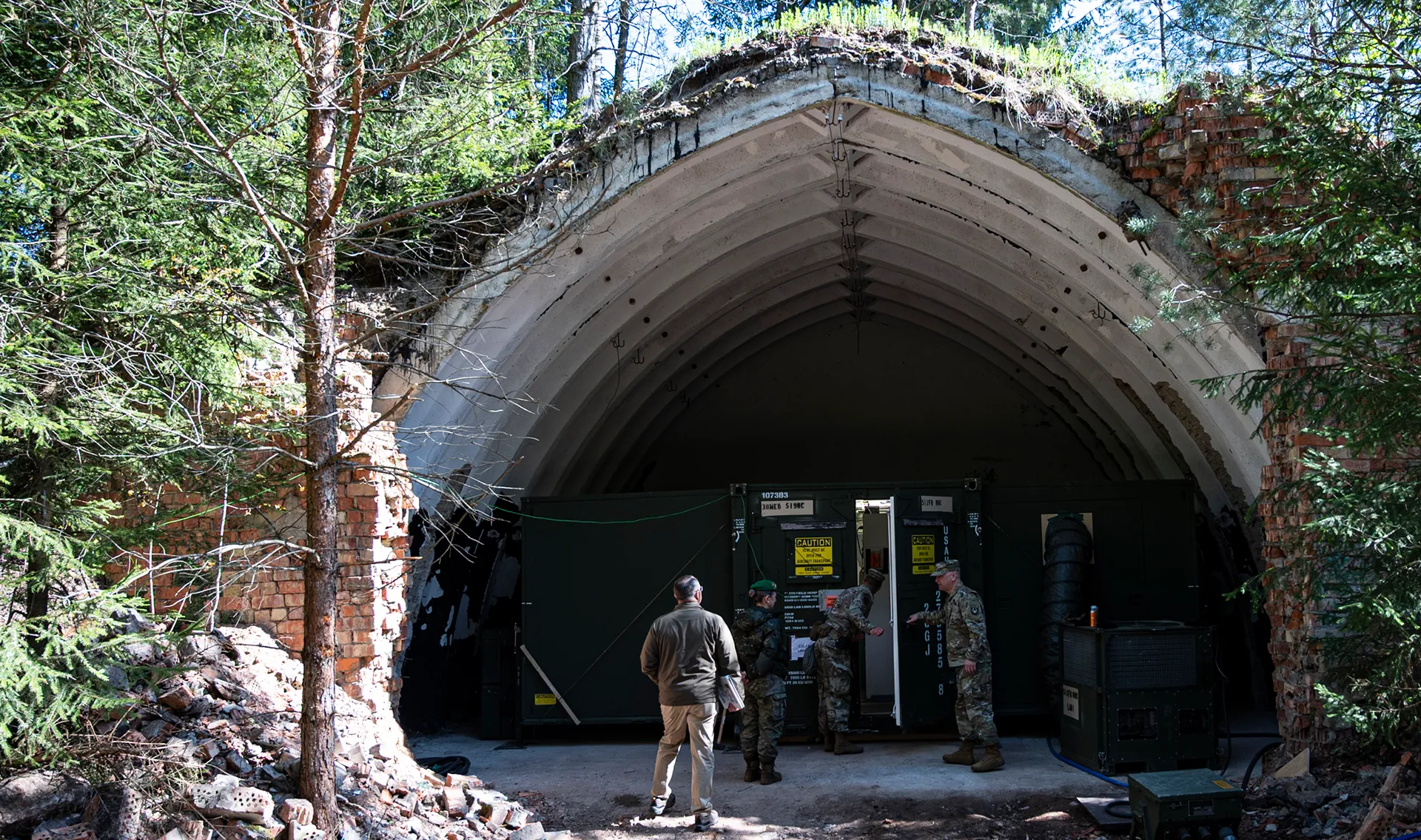
Welcome to Bunker Talk. This is a weekend open discussion post for the best commenting crew on the net, in which we can chat about all the stuff that went on this week that we didn’t cover. We can also talk about the stuff we did or whatever else grabs your interest. In other words, it’s an off-topic thread.
This week’s second caption reads:
A field medical laboratory belonging to the 512th Field Hospital sits inside an old Soviet-era bunker as part of Exercise Dynamic Employment of Forces to Europe for NATO Deterrence and Enhanced Readiness (DEFENDER) 2025, Vepriai Rocket Base, Lithuania, May 12, 2025. During Swift Response, the initial phase of DEFENDER 25, the Defense Health Agency’s Force Health Protection team is providing essential support and expertise to U.S. Army medical providers assigned to the 512th Field Hospital, 519th Hospital Center, 30th Medical Brigade, and 68th Theater Medical Command. As part of DHA’s Operational Medical Systems Program Management Office, FHP works with combatant commands and regulatory experts across the globe to rapidly provide a treatment, diagnostic, or preventive medical countermeasure against high-consequence threats to the Warfighter when a Food and Drug Administration-approved product is not available. (Defense Health Agency Photo by T. T. Parish/Released)
Also, a reminder:
Prime Directives!
- If you want to talk politics, do so respectfully and know that there’s always somebody that isn’t going to agree with you.
- If you have political differences, hash it out respectfully, stick to the facts, and no childish name-calling or personal attacks of any kind. If you can’t handle yourself in that manner, then please, discuss virtually anything else.
- No drive-by garbage political memes. No conspiracy theory rants. Links to crackpot sites will be axed, too. Trolling and shitposting will not be tolerated. No obsessive behavior about other users. Just don’t interact with folks you don’t like.
- Do not be a sucker and feed trolls! That’s as much on you as on them. Use the mute button if you don’t like what you see.
- So unless you have something of quality to say, know how to treat people with respect, understand that everyone isn’t going to subscribe to your exact same worldview, and have come to terms with the reality that there is no perfect solution when it comes to moderation of a community like this, it’s probably best to just move on.
- Finally, as always, report offenders, please. This doesn’t mean reporting people who don’t share your political views, but we really need your help in this regard.

Fresh blow for Eamonn Holmes and Ruth Langsford as joint firm racks up six figure debts after split
EAMONN Holmes and ex-wife Ruth Langsford’s joint business has racked up six-figure debts, new accounts reveal.
Figures filed at Companies House today reveal Holmes & Away has to fork out £251,029 on bills.
It owes a six-figure sum to creditors, according to the figures dated 31 March 2025, and signed off by Eamonn in January.
All are due to be ‘repaid within a year,’ and will leave the firm, which currently holds £203,055 in assets, £47,974 in the red.
The Sun has contacted representatives for Eamonn and Ruth for comment.
It’s another blow for Eamonn, who has been grappling with ongoing health issues as well as a tax dispute with HMRC which he says has cost him £1 million.


Holmes & Away was set up by Eamonn and Ruth back in 2009.
The former couple still co-own and co-run the firm despite splitting in 2024.
It’s the second year in a row that the business has fallen into the red.
In 2024 it was £22,850 in the red and owed £149,115 in bills.
It’s a long way from the firm’s heyday.
At its peak, in 2018, it held assets of £658,680 as well as £337,477 in ongoing profits.
Efforts to end the business relationship seem to have failed, at least as at the date of the new accounts.
For two years running accounts have stated: “These accounts are prepared on a basis other than going concern as the company has ceased trading and plans to dissolve in the next twelve months.”
Despite its intention to close, the firm still has two employees.
In addition to his troubles at Holmes & Away, Eamonn has been outperformed by Ruth in their solo business ventures.
Figures filed last month reveal Ruth paid herself £585,000 and held £776,889 at her solo firm, Hey Ho.
Meanwhile, Eamonn’s solo business, Red White & Green, returned a £29,093 profit in the year to 31 March 2025.
Its accounts, also filed at Companies House today, report £264,778 in funds.
Set up in 2001, it was at the centre of his £1 million tax case that saw HMRC argue he had avoided tax through the firm.

Florida congresswoman Cherfilus-McCormick committed 25 ethics violations, House panel finds
WASHINGTON — Democratic Rep. Sheila Cherfilus-McCormick of Florida committed numerous violations of House rules and ethics standards, the House Ethics Committee found Friday in a ruling that could add weight to Republicans’ potential push to expel her from Congress.
After meeting into early Friday morning following a seven-hour hearing, the ethics panel of four Democrats and four Republicans found that Cherfilus-McCormick had committed 25 ethics violations, including breaking campaign finance laws. The panel said it would recommend a punishment in the coming weeks.
The allegations center around Cherfilus-McCormick’s receipt of millions of dollars from her family’s healthcare business after Florida made an overpayment of roughly $5 million in disaster relief funds. Cherfilus-McCormick is accused of using that money to fund her 2022 congressional campaign through a network of businesses and family members.
The congresswoman, who is running for a fourth term representing a southeastern Florida district, has denied wrongdoing, and her attorney stridently criticized Thursday’s public hearing — the first open proceeding in nearly 15 years. But the ruling from the Ethics Committee could fuel a potential vote on her expulsion and divide a Democratic caucus that is trying to make a comeback to power in the November midterm elections.
Cherfilus-McCormick also faces federal charges for allegedly stealing the $5 million in COVID-19 disaster relief funds and using it for purchases like a 3-carat yellow diamond ring. Her brother, former chief of staff and accountant were also charged. She has pleaded not guilty to those charges, and her attorney indicated Thursday that the trial is expected to start in the coming months.
What did the ethics panel find her guilty of?
The congresswoman declined to testify during Thursday’s ethics hearing, citing her 5th Amendment right against self-incrimination. Her attorney, William Barzee, sparred with some of the lawmakers on the ethics panel and argued that they should have allowed a thorough ethics trial, where he could present witnesses and evidence to counter the conclusions of House investigators.
Barzee accused the panel of giving further momentum to the effort to “throw a woman out of Congress who was duly elected by her constituents” based primarily on bank records.
Committee investigators laid out 27 violations of House ethics standards and rules in a 242-page report. The report accused Cherfilus-McCormick of winning a 2022 special election by portraying her campaign as self-financed when it was actually funded through the $5-million overpayment her family’s company received from Florida for coronavirus vaccination services.
Barzee had argued that “she was entitled to that money,” pointing to a document that broke down how her family would share the proceeds from the healthcare business. But lawmakers on the ethics panel were skeptical of that argument.
The panel found Cherfilus-McCormick guilty of all but two of the ethics violations proposed by investigators. Lawmakers declined to find her guilty of one allegation of receiving political help from an organization run by an advisor and her husband that received funding from the Haitian government. The panel also did not find her guilty of refusing to cooperate with the ethics investigation.
Will there be a push to expel Cherfilus-McCormick?
The full House Ethics Committee said it would meet after Congress returns from a two-week break in April and consider what punishment to recommend for a vote in the House.
Rep. Greg Steube, a Florida Republican, told reporters Thursday that once the committee makes a determination he “will move on the floor to expel.”
House Democratic leaders have declined to condemn Cherfilus-McCormick and said they wanted to see the ethics process play out. A couple of members of the Congressional Black Caucus, one of the most powerful groups of Democratic members, also showed up to the start of the ethics hearing Thursday in an apparent show of support for Cherfilus-McCormick.
But Democratic Rep. Marie Gluesenkamp Perez, a moderate member from Washington state who often breaks with her caucus, posted on social media Friday morning that “since she was found guilty, she should resign or be removed.”
The last member to be expelled from Congress was Republican Rep. George Santos of New York in 2023. He argued at the time that the House would be “haunted” by the precedent of expelling a member before a criminal trial played out. House Speaker Mike Johnson (R-La.) voted against expulsion at the time, expressing the same concern.
It takes a two-thirds majority in the 435-member House to expel a member.
Groves and Kinnard write for the Associated Press. Kinnard reported from Columbia, S.C.

Super League: Hull KR 52-10 St Helens – Robins hammer Saints
Hull KR: Broadbent; Davies, Hiku, Gildart, Burgess; Lewis, May; Sue, Litten, Amone, Hadley, Batchelor, Minchella.
Interchanges: Luckley, Whitbread, Brown, Booth.
St Helens: Robertson; Dagnall, Percival, Cross, Murphy; Sailor, Hastings; Klemmer, Wingfield, Delaney, Wright, Whitley, Shorrocks.
Interchanges: Clark, Paasi, Stephens, Davies.
Referee: Liam Moore.