



The 25 best sports photos of 2025 – and the stories behind them
From the bottom of the swimming pool to the top of the pole vault bar, photographers reveal the stories behind these amazing shots. And a bonus point if you can spot the photographer in their own image.
Source link

First Christmas in Gaza in two years: A story of hope and survival | Gaza News
Gaza City – The Holy Family Church in Gaza has lit its Christmas tree for the first time after two years of Israel’s genocidal war on the Strip. It is Christmas Eve mass, and the worshippers have packed the main prayer hall. Many of them are excited and happy – not just because it is Christmas but because they are still alive.
The glow of lights on the big Christmas tree and holiday decorations could not hide the harsh reality left by the war on Gaza. The church decided to limit the celebrations to a prayer service and brief family gatherings, but the bells rang loud, and that alone filled people with joy.

One of those people is 58-year-old Dmitri Boulos, who missed celebrating Christmas during the war. He was displaced along with his wife and two children in the early days of the fighting after heavy Israeli shelling hit around his home in the Tal al-Hawa area, south of Gaza City.
“We fled to the church seeking safety at the time, but it turned out there was no safe place,” Boulos said. “The church was hit twice while we were inside, and we lost friends and loved ones during that period.
“Nothing had any taste at all,” he recalled. “There was immense fear and grief for those we lost. How can we celebrate when everything around us is wounded and sad?”

Boulos hopes this Christmas and the new year will bring an end to all the suffering and lift restrictions on Gaza.
“We are trying to make ourselves and our children feel that what’s coming will be better, even though the reality is extremely hard,” he said. “We hope things will return to how they were before.”
The Holy Family Church, the only Catholic parish in Gaza, has long held symbolic importance beyond the Strip. Throughout the war, the late Pope Francis called the parish almost daily, maintaining a direct line to the besieged community.
Most of Palestine’s Christians live in the occupied West Bank and East Jerusalem, totalling approximately 47,000 to 50,000, with an additional 1,000 in Gaza before the war.
The number of Christians in Gaza has dwindled in recent years. Today, there are a few hundred left, a sharp drop from the 3,000 registered in 2007.
During the war, Israeli attacks targeted several Christian places of worship where many displaced Palestinians were taking shelter.
Although the Holy Family Church was not placed by Israel in the zones marked for expulsions, the other churches in Gaza City, including the Greek Orthodox Church of Saint Porphyrius and the Anglican St Philip’s Church, were.
But the nearly 550 displaced people sheltering in the Holy Family Church still mistrust the Israeli military. The church has been attacked so many times before – despite Israeli guarantees that it does not target places of worship.
Many of those people remain traumatised and try to rebuild the semblance of a normal life.
“My heart is still heavy with the tragedies and exhaustion we lived through during the war,” Nowzand Terzi told Al Jazeera, as she stood outside the Holy Family Church’s courtyard watching the worshippers without engaging them.

“We were displaced here under bombardment two years ago. I lost my home in an Israeli strike, and then I lost my daughter, who fell suddenly ill last year and passed away,” said Terzi as her voice choked after remembering her 27-year-old daughter – who did not make it on time to hospital because of the war.
“May God help those who have lost their loved ones, and may conditions in the Gaza Strip calm down,” she said, wishing peace and safety for all.
It’s a wish that resonates across the Gaza Strip, where nearly two million people are dealing with continued Israeli attacks and violations of the ceasefire, lack of food, lack of medicine, lack of shelter and basic services.
More than 288,000 families in Gaza are enduring a shelter crisis as Israeli restrictions on humanitarian supplies worsen conditions for Palestinians displaced by the war, the territory’s Government Media Office says.
More than 80 percent of buildings across Gaza have been damaged or destroyed during the war, according to UN figures, forcing enormous displacement.
Edward Sabah is just 18 years old, but he knows well the tragedy of war and displacement. He was forced to leave his home during the war and took shelter in the Saint Porphyrius Church in the Zeitoun neighbourhood of eastern Gaza City. The church was bombed on October 19, 2023, in an Israeli attack that killed 18 people.
“We were gathered in the church courtyard … We were talking normally with other displaced people when suddenly a massive explosion hit one of the church buildings,” Sabah recalls.

“We never expected the church to be targeted, but it happened. Everything unexpected happened during the war. Bombing was everywhere,” he said, adding that he and his family survived and later moved to another church, where they lived for a year and a half.
“During the past two Christmases, we tried very hard to create an atmosphere, but it was extremely sad,” he said. But he is also full of hope and the desire to live.
“This year it’s less intense, but we’re still afraid of what might happen. Still, we decorated the church and tried to create a joyous atmosphere,” Sabah said, adding that he hopes to complete his high school education.
This Christmas has brought joy and a sense of relief to many Christians in the Gaza Strip and in the rest of Palestine. Many Palestinians talk about their sense of belonging and attachment to their land despite all the hardships, tragedies and wars.
That’s why Janet Massadm, a 32-year-old woman from Gaza, decided to style her hair and put on new clothes to celebrate Christmas for the first time in two years.

“We are tired of grief, loss, displacement, and fear that have taken so much from our lives and our years,” Massadm said emotionally.
“Inside, I am completely exhausted because of what we have witnessed,” she added. “But what can we do? We must try to create joy and happiness.”
Like many Christians in Gaza, Massadm was displaced to the church with her family, her parents, brother, and sister, fleeing bombardment in the Remal neighbourhood of central Gaza City.

“I hope the war does not return,” she said. “That people reunite with their loved ones, that we witness a better future, and that Gaza is rebuilt soon.”

Video: Gaza’s Christians mark first Christmas since fragile ceasefire deal | Religion
Gaza’s Christians reflected on the loss they’ve experienced after two years of Israel’s devastating war, as Palestinians marked the first Christmas since the fragile ceasefire deal.
Published On 25 Dec 2025

‘Pluribus’ Season 1 finale: Drop the bomb or save humanity?
This article contains spoilers for the Season 1 finale of Apple TV’s “Pluribus.”
Fellow misanthropes, Season 1 of “Pluribus” is done. Now what do we do, other than lean into our usual harsh judgment and mistrust of others?
Our spirit series left us wondering who or what will put the final nail in humanity’s collective coffin: an alien virus or a malcontent with an atomic bomb. As for saving everyone? Cranky protagonist Carol Sturka (Rhea Seehorn) struggled to find ways to preserve the human race for much of the series, but by the finale, she was fairly convinced that the planet would be better off without us.
For those of you who haven’t kept up with the best show on television this year, Carol’s among 13 people left on Earth who are immune to an alien virus that’s otherwise fused all of humanity’s consciousness together into one blissful hive mind. Now everyone thinks alike and has the same knowledge base, which means TGI Fridays waiters can pilot passenger planes and children can perform surgeries. No one is an individual anymore. They simply occupy the body formerly known as Tom or Sally or whomever. “Us” is their chosen pronoun.
This army of smiling, empty vessels just wants to please Carol — until they can turn her into one of them. Joining them will make her happy, she’s told. It’s a beautiful thing, having your mind wiped. But the terminally dissatisfied Carol would rather stew in her own low-grade depression and angst that forfeit her free will. Plus, her ire and rage is kryptonite against those who’ve been “joined.” When confronted with her anger, they physically seize up and stop functioning. Their paralyzing fear of Carol’s ire is empowering, pathetic and hilarious. The world literally comes to a standstill when she snaps. No wonder she’s my hero.
“Pluribus” comes from Vince Gilligan, the same brilliant mind behind “Breaking Bad” and “Better Call Saul.” The Apple TV series is nothing like his previous successes except that it’s set in Albuquerque, stars Seehorn and is singularly brilliant. And like those other seminal dramas, it plumbs deeper questions about how we see ourselves, who we really are and who we strive to be.
To be fair, Carol was irritated by the human race long before the alien virus converted them into worker bees. She was convinced most people were sheep — including those who loved the flowery writing and cheesy romance plots of her novels. But the the total loss of a free-thinking community isn’t all that satisfying, either.
In the finale, she connects with Manousos Oviedo (Carlos-Manuel Vesga), a fellow survivor who’s also immune to the virus. He wants nothing to do with the afflicted, no matter how peace-loving they appear. In the before times, it appears he was a self-sufficient loner. Postapocalypse, he travels all the way from Paraguay to meet Carol after he receives a video message from her. He drives most of the way before arriving at the treacherous Darién Gap, where he’s sidelined after falling into a thorny tree — but “they” save him, much to his chagrin. He eventually continues the journey, via ambulance.
Now saving the human race is up to two people who never had much love for it in the first place. They converse through a language translation app, which makes their arduous task all the more complicated — and hilarious.
Multiple theories have sprung up around what “Pluribus” is really about. One prevailing thought is that “the joining” is a metaphor for AI creating a world where all individual thought and creativity are synthesized into a single, amenable voice. Surrender your critical thinking for easy answers, or in the case of “Pluribus,” an easy life where you’ll never have to make a decision on your own again. Most humans would rather be a doormat than a battering ram, regardless of the urgency or circumstance.
Optimists might say, “Why pick one extreme or the other? There’s surely a place in the middle, where we can all live in harmony while holding onto our opinions and sense of self.” That’s sweet. Carol and I heartily disagree given the arc of history and all.
Just how my favorite new antihero will deal with her disdain for the Others is yet to be seen. Save the world or destroy it? We’ll all have to wait until next season to find out. Until then, “Pluribus” just needs some space.

50 money-saving tips you NEED to know before booking your next hol

WITH so much choice out there, booking an affordable holiday can feel like a mammoth task.
When is the cheapest time to fly? How do you avoid paying for hand luggage? Is there a way to eat on the cheap? So we’ve spoken to our team of travel experts, with thousands of miles racked up between them each year, for their top tips.
We’ve covered it all, from flights and hotels, to cruise trips and package holidays.
Here are the 50 best tips, according to the Sun’s award-winning Travel team.
Booking your holidays
1. Book as a package instead of separately
While it may be tempting to go for those budget flights and cheap hotel, it might still end up costing you more than a package holiday.
Not only can they often offer insane bargains – Loveholidays regularly have seven-night stays in Europe for under £150 each – but many include free transfers and luggage too.
2. Fly midweek
With so many options for flights these days, looking beyond the traditional weekend to weekend departures will often garner savings.
Instead of heading off on a Friday or Saturday, compare with the pricing for a mid-week flight – very often you’ll spend less on Tuesday or Wednesday departures.
3. Check holiday price matchers
A number of the big travel companies offer holiday price matching, like EasyJet Holidays, Thomas Cook and On The Beach.
For example, EasyJet Holidays guarantee to beat the price if you find the same holiday cheaper after booking with them.
Check the terms and conditions before booking, to make sure you understand exactly when they’ll shell out.
4. Turn on flight price checkers
Setting alerts is the key to this one.
If you’ve got a dream destination where the price of flights is way too high, then make sure to turn on notifications for price change on the likes of Google Flights or Skyscanner.
You can set it up so that you’ll get a message when the fares come down, and you can race to book them.
5. Book your flights in incognito mode
Have you ever been browsing flights, gone back a few days later to look again – and the price has skyrocketed?
If so, then next time you open your browser to book your flights, you may want to hit ctrl+shift+N.
Browsing in incognito mode means that your browser can’t keep track of your cookies, so you’ll avoid those pesky last-minute price raises when you’re desperate to book.
6. Sign up for newsletters
Newsletter sign ups to companies like Which? VoucherCloud are great for saving money, as they flag a range of current restaurants and attractions offering money off.
You can also sign up to chains to get vouchers – Prezzo, Zizzi’s,and Pizza Express all offer deals to subscribers, like a free drink or money off the bill.
The app EatClub (free to download) is also excellent for getting money off the bill – restaurants and bars offer discounts to members for early bird and late slots, to get people through the door.
7. Book attractions online
It’s no secret that attractions cost more on the door. For example, if booked in advance, a day pass for Alton Towers is from £34pp, but the walk-up price is double that.
In some cases, the further in advance, the bigger the savings, so it pays to be organised.
Hotel and accommodation tips
8. Email your hotels for upgrades…
If you don’t ask, you don’t get! It’s always worth emailing your hotel to ask if they have a specific room upgrade.
Or even email the hotel saying you have found a deal online, and they will often either match it or throw in some freebies.
9 …Or remind them if its a special occasion
Don’t forget to tell hotels if it is a birthday or anniversary too, as they often provide small welcome gifts if they are made aware in advance.
Just don’t lie, as you don’t want to risk being caught out.
10. Skip the breakfast
If they’re not already included in the price, breakfast buffets are rarely worth shelling out on.
Instead, pack some cereal bars – they’re often just enough to carry you through until lunch and save you money on added breakfast charges.
11. Find new hotels for soft launches
If you want a luxury hotel stay without the price, look for ones that have just opened as they often offer discounts during their “soft launch”.
Keep an eye on lists of new hotels opening on sites like Hotel News Resource, and be proactive by contacting the reservation desk to ask for an introductory offer.
While this can mean they are not fully operational – for example, the spa may not be open yet – you can still enjoy a five-star on a budget.
12. Work for your board
Sign up to a site like Trusted Housesitters and look after someone’s pet in exchange for free board at their home while they are away.
The website lets people find house and pet sitters for when they are away from home and has listings all over the world, from the Caribbean to Costa Rica, New York and London.
13. Try a hostel with private rooms
Hostels are one of the best and easiest ways to feel like you are clawing your money back.
And don’t worry – these days, they aren’t just for backpackers, with brands like Generator Hostels offering a very boutique feel in city centre locations.
Many have private rooms, which cost far less than a hotel as you may have to share a bathroom.
14. Consider house swapping
If your home is fit to be seen by strangers, and you’re not too OCD about your possessions, then consider listing your property on a house-swapping site.
Website HomeExchange, where you swap homes with someone else around the world, has seen a boom in UK properties signing up – members have to verify their identity and address and build profiles including reviews for security purposes.
You could find yourself in Paris, New York or even Hawaii without having to splash the cash on a hotel or Airbnb.
15. Check the hotel freebies…
Depending on where you are staying, there will usually be some freebies for you to use – and not just shampoo and conditioner.
Some will go even further with a toothbrush and toothpaste, razor, shower cap, earbuds, makeup remover pads and so on.
To find out what is in your room, check the website of where you are staying and look at the reviews, by searching for key words like ‘razor’ or ‘shower cap’.
Quite often reception will also have a selection of items that they will provide if you have forgotten something, too.
16. Check for free hotel perks
Before you choose you hotel, check if they have any additional perks.
For example, some will operate a free shuttle service to popular tourist destinations, while others might hold a daily cheese and wine service in the later afternoon that is complimentary for guests.
17. Sign up for hotel loyalty programmes
With some hotel chains like Ibis and Hilton, if you have a member account – which is usually free to set up – you will get exclusive offers and discounts.
For example, I recently stayed at Ibis London Luton Hotel and because I am a member, I saved around £10 on my booking.
18. Find hotels with free waterpark entry
Next time you are looking for that all-singing, all-dancing hotel resort abroad, try and find one that includes waterpark entry.
This can quickly rack up if you are paying for entry for all of you, and lots of parks have deals with nearby attractions.
When on holiday
19. Avoid overpriced essentials abroad
Don’t skimp out on packing important toiletries (for example, shampoo and ESPECIALLY suncream), as resort towns know you’ll need them – so often sell the basics for a very ridiculously high prices.
20. Find free tours
Once you’ve chosen your destination, it’s always worth searching online for free tours.
Check sites like Freetour, GuruWalk, Walkative as well as Londonwithalocal.
While there is no upfront cost or booking fee, you are expected to tip your guide at the end based on your satisfaction with the tour.
21. Visit museums on first Sundays of the month…
Most European cities have free entry to museums and art galleries on certain days.
This is commonly on the first Sunday of every month, so time your weekend break then to get some free tickets.
22. … Or book closing-hour tickets
Other attractions may offer free tickets an hour before they close, although these are often booked up quickly.
For example, in Seville, both the Royal Alcazar Palace and Seville Cathedral have limited free tickets for the final hours.
23. Secret boarding pass discounts
Never throw away your boarding pass as it can get you discounts on the ground.
Emirates and Etihad Airways passengers can get discounts at shopping centres and theme parks in Dubai and Saudi Arabia, respectively, while Turkish Airlines has discounts at hotels.
24. Make the most of city passes
If you’re looking to do a lot of sightseeing on a city break, it’s always worth checking out any city passes on offer.
For a set fee, you’ll get entry to all the main attractions, plus many also offer free or subsidised travel and discounts on food and drink.
In some cases you might even get skip-the-line access, which will save time during city exploration too.
In London, the London Pass (from £79) offers up to 50 per cent off attractions, while in Lisbon, the Lisboa Card (from £27) lets you queue jump as your card is actually your ticket.
25. Use food waste apps
We swear by Too Good To Go which is an app that sells leftover food from restaurants and shops, ranging from £3 to £10.
Once our Assistant Travel Editor Sophie was in New York with her sister, and she spent just a few bucks on a bag of food before her flight using the app, with pasta, salad, potatoes, couscous and more from a local deli.
26. Grab an eSIM to avoid roaming charges
There’s nothing worse than using your phone abroad, only to be surprised by a massive phone bill when you arrive home.
Rather than paying for an expensive monthly add-on that you’re not even sure will cover all of your travels, you’re often better of downloading an eSim from an app such as Airalo for the specific country you’re visiting.
27. Always ask for tap water (if it’s safe)
Perhaps the most simple one out there is just to ask for tap water in restaurants.
If you ask for still water, you might end up paying for bottled water.
Just make sure it is safe to drink the tap water of the country you are in.
28. Head to designer dupe markets
If you’re not too fussed about having real designer bags or sunglasses, then you can probably find some great dupes on holiday.
Fair enough, they won’t be of the same high quality – but they also won’t be the same high price either.
Some of the best-known are Laleli Market in Istanbul, Pratunam Market in Bangkok and Costa Adeje Market in Tenerife.
29. Find a local carpool
BlaBlaCar is a carpooling platform that helps travellers across Europe, by connecting their with car drivers.
Drivers offer space in their car in exchange for petrol money – so you’re saving the environment and your cash.
All things money
30. Check the discount sites
Discount sites aren’t just for students… There are loads out there to use with real discounts, not fake voucher codes.
For example, students can use Student Beans or Unidays, but so can graduates. If you work for the NHS, you can use the Blue Light discount. And many employers offer discount sites as a work perk.
These sites often have hundreds of companies giving them discounts, from transport to accommodation and from restaurants to things to do – it is always worth checking them out before booking something.
31. Use cashback sites
Cashback websites are an easy way to get some free money on a holiday you are booking.
Some examples include 3.75 per cent cashback on an easyJet holidays (working out to £11 back on a £300 trip) or hotels.com, which gives you seven per cent back (£14 if you book a hotel for two nights at £200).
32. Buy your travel money before you go
Never, ever buy your travel money at the airport – the fees charged and rates you’ll get are always going to be the worst.
Compare foreign exchange providers before you go and have the money either delivered to your house or pick it up and you could make significant savings.
33. Pay in local currency
When the cash machine asks if you want to pay in local currency or pounds, you always go with local.
This is because the conversion rate is always better than your banks’, so it will save you money.
34. Find no foreign fee cards
Don’t fall victim to foreign card fees, with some credit cards charging as much as £2.99 per transaction.
Many like Starling, Revolut and Monzo all have no fees for using cards abroad, as well as banks like First Direct.
Airport hacks
35. Ditch the pricey plane food
For shorter flights, it makes no sense to shell out on expensive sarnies and snacks.
For both kids and grown-ups, pack a Pot Noodle and ask the flight attendant for hot water – they are nearly always happy to oblige if you ask nicely.
36. Try a different airport
You can often make significant savings by choosing to fly from an airport a little further from your home.
This is particularly the case for those living in the north of the country, who can take advantage of the fact that fares from Scottish airports will be less if you travel in the summer, when Scottish school holidays are much earlier than English ones.
37. Check in before you fly
It sounds super simple, but make sure to check in to your flight before you get to the airport, especially if you are flying with a budget airline.
Wizz Air, for example, will only let you check in 24 hours before your flight, but check in then closes three hours before your flight.
If you check in at the airport, you might pay a premium of over £30.
38. Avoid paying for luggage at the airport…
One of the biggest costs to your holiday can be buying your luggage at the airport, which can be as much as £80 each way.
Make sure to always check the airline rules, and to weigh your bag before heading there so you aren’t caught out.
39. …Or never check it in at all
If you are a light packer, try to skip the checked luggage entirely.
Most weekend breaks can easily fit into an underseat bag, while a week-long trip can easily be a carry on.
Compression packing cubes are excellent for saving space in a bag, and try to bring items of clothing that will work for multiple activities.
For instance, our Deputy Travel Editor swears by these sandals that only cost £21, and are the only pair of shoes that she needs to take on holiday.
40. Make use of the duty free bag
Let’s just say that sometimes when I grab a bottle of water in a shopping bag post-security at the airport, it’s not because I’m thirsty.
There’s often plenty of extra room in that duty-free bag…that big jacket you’ve been sweating in? It may just find a nice home in a duty-free plastic bag.
41. Walk a block to get cheaper taxis
If you walk straight out of the airport to the taxi rank, just know that you’ll likely be paying some of the highest prices for a transfer possible.
Next time, walk a few blocks away from the airport with your luggage, download the country’s local taxi app, and call yourself a cab from a bit further away.
Car hire and train travel tricks
42. Bring your own carseat
Hiring a basic booster seat for your child can be astronomical at car hire companies on holiday, with some asking for up for £10 a day.
Instead, buy an inflatable one that can fit in your hand luggage, or the clever booster seat backpacks that are now on the market.
You’ll make your money back in just one trip.
43. Book your car hire excess waiver separately
You can buy excess car hire polices in the UK at much cheaper prices.
Should you have an accident, it protects the no claims bonus and means you aren’t faced with a huge bill.
They are accepted by every reputable car hire company; if they try to convince you that you can’t use it and you have to buy theirs, that is wrong.
There are some very high-pressure selling techniques around so be strong.
It will save you a lot in the long run and annual policies mean if you are going to be hiring cars abroad more than once you’re saving even more.
44. Wait two weeks before your arrive to book cars
Research from TravelSupermarket found that the sweet spot for booking cheap car hire at around two weeks before your holiday.
The worst time to book your car hire is a full year in advance, with average daily prices reaching £93.12 – an extortionate rate compared with the average of £46.75 per day when booked at around the two-week mark.
45. Eurostar snap
Did you know you can get up to half price Eurostar tickets outside of sale season?
Eurostar Snap lets you book last minute tickets just 14 days before travel, where you choose between morning or afternoon slots.
Then 48 hours before, you are told your exact time – and save up to 50 per cent on your ticket.
46. Bid for better train seats
Seatfrog is a useful app that partners with train companies to offer upgrades to first class by auction.
So let’s say you bought a standard class ticket, but decided you want to upgrade, you can bid for a first class seat on your journey and usually secure it for less than a first class ticket in the first place.
You can also swap train times on Seatfrog, and find discounted tickets.
47. Find the right railcard
There are loads of different railcards out there and you might be eligible.
For example, there are 16-17 saver cards, which get 16 and 17-year-olds 50 per cent off travel, while railcards for 18-25-year-olds and 26-30-year-olds can get a Railcard save up to a third on travel prices, along with a senior railcard does the same.
There is also a Family and Friends Railcard and a clever Two Together Railcard, which allows two adults traveling together to get a third off their joint rail fares.
There are a number of regional options to look out for, too.
Cruise hacks
48. Don’t book cruise excursions through the ship
You’ll find them for much better prices if you book them independently – check out local sites for the city you’re stopping at, or visit shoreexcusionsgroup.com.
49. Get cheaper spa treatments on cruise port days
Not all cruisers know that spa treatments onboard are cheaper on port days.
This is because most people are off the ship exploring, whereas during an at sea day, there will be higher demand.
For example, when I went on a Virgin Voyage, some spa treatments cost up to £60 less on port days compared to at sea days.
50. Go for the drinks packages
If you are planning on a boozy cruise holiday, a drinks package could save you a hell of a lot.
For example, Princess Cruises offer a drinks package for $64.99 (£50) which includes unlimited wine, cocktails and soft drinks – so you only need a few coffees and cocktails before you have made your money back.

The Los Angeles Times’ favorite sports stories from 2025
p]:text-cms-story-body-color-text clearfix”>
Why this column stuck with me: I chose “I’m Fighting Parkinson’s One Punch At A Time” because it was a story that took four years to write but one that has resonated immediately and endlessly.
When I was diagnosed with Parkinson’s disease in the winter of 2021, I decided to keep the diagnosis a secret. Initially I didn’t even tell my own three children. I didn’t want people feeling sorry for me, or looking at me differently or, worse, treating me differently. I wanted to continue with my normal life while fighting the disease in private.
As part of this fight, I attended a boxing class for Parkinson’s patients. The class was filled with 80-year-old women pounding on a heavy bag, 75-year-old men dancing across the floor, elderly and trembling people working hard to stave off the effects of PD. They quickly became my heroes, and deserved to be illuminated as inspirations to others. I finally realized that I could tell their story and maybe push others to come out of the PD shadows and seek the same therapy.
And, well, if I was going to write about others with Parkinson’s disease, I would have to come clean about myself. So, with help from boxing instructor Jody Hould and sports editor Iliana Limón Romero, I did. And I’m glad I did. I’ve since heard from countless people that the story moved them to admit their illness and begin boxing therapy or other types of PD workouts. My diagnosis was a punch in the gut. But thanks in part to the encouragement that came from this story, I’m fighting back.
Photos: Global stories of 2025 in pictures | Gaza News

Published On 25 Dec 2025
From Israel’s genocide in Gaza and the Russia-Ukraine war to devastating global weather events – including floods, storms and earthquakes – this year was defined by turmoil and humanitarian crises.
Prolonged violence in Sudan, marked by attacks by the Rapid Support Forces (RSF), added to the mounting civilian toll and displacement across the country.
The year also saw heightened tensions between India and Pakistan, a deadly blaze in Hong Kong, United States and Israeli attacks on Iran, revelations from the Epstein files, and waves of “Gen Z” protest movements across multiple regions.
Together, these developments dominated international headlines, reflecting deepening political instability, social unrest and growing humanitarian needs worldwide.
View the gallery below for powerful photographs that documented and encapsulated these pivotal 12 months.
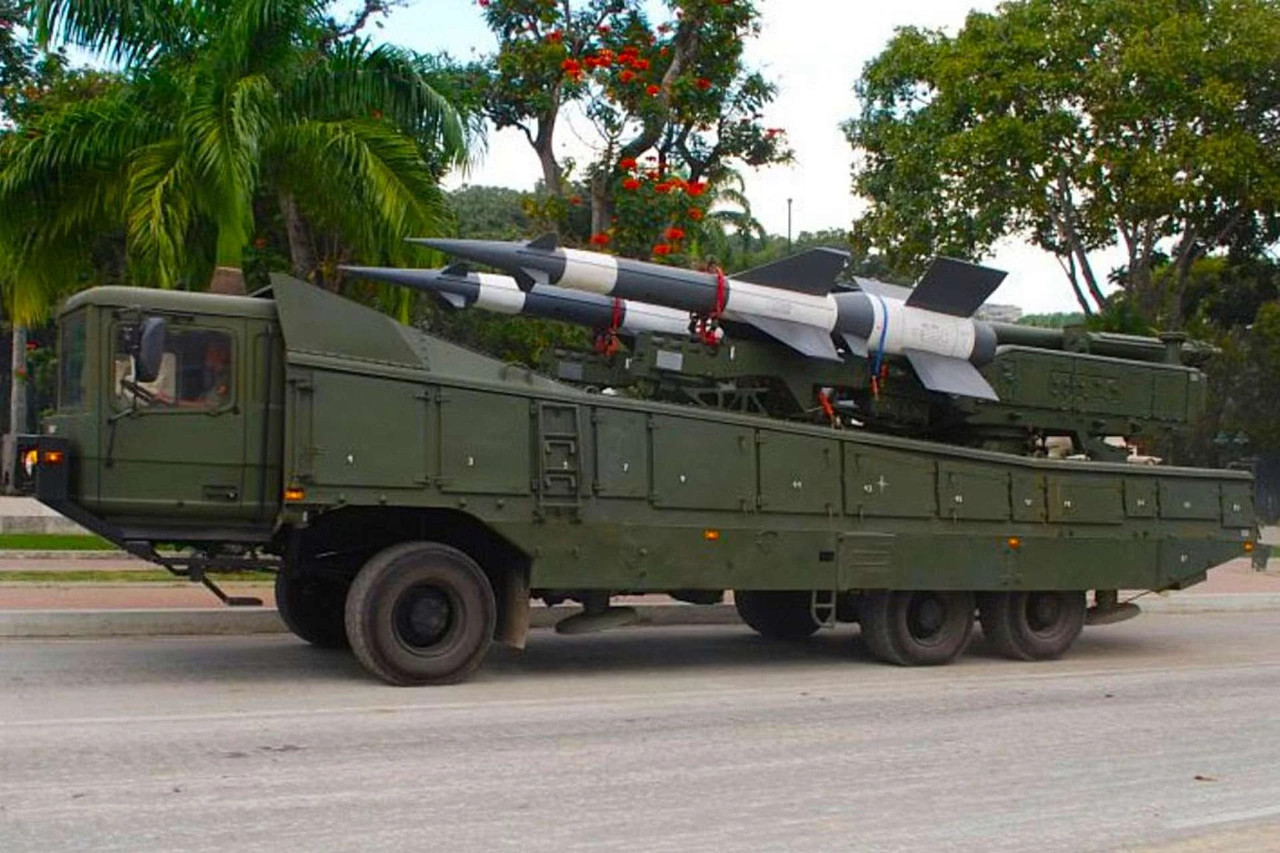
Venezuelan Armed Forces Vow to Defend Airspace as US Increases Warplane Deployment
Venezuela’s air defenses include Russian-supplied S-125 Pechora systems. (Venezuelan Defense Ministry)
Caracas, December 15, 2025 (venezuelanalysis.com) – The Venezuelan Armed Forces reiterated their commitment to defend the Caribbean nation’s airspace amid an escalating US military buildup and provocations.
Defense Minister Vladimir Padrino issued a statement Sunday to mark the 47th anniversary of the Venezuelan Integral Airspace Defense Command (CODAI), hailing the system’s “effective and immediate” response capabilities against “imperialist threats.”
“With its modern radars, missile systems and surface-to-air artillery, CODAI has become the vanguard of the country’s defense,” Padrino wrote on social media. The defense minister went on to highlight CODAI’s “technological independence.”
Padrino’s comments occurred amid a large-scale US military buildup in the Caribbean in a self-declared anti-narcotics mission. The Trump administration has repeatedly threatened to launch strikes against purported drug targets inside Venezuelan territory.
After moving their largest US aircraft carrier, the USS Gerald R. Ford, to the region in November, US forces have likewise ramped up warplane deployments to bases in Puerto Rico. According to reports, the US Navy moved six EA-18G Growler electronic warfare jets to the island’s Roosevelt Roads naval station.
Designed by Boeing, the EA-18G Growlers have advanced capabilities to disrupt and deceive enemy military electronic systems, including air defenses.
Open-access flight tracking websites have shown EA-18G Growlers operating in the Caribbean in recent days. On Tuesday, F/A-18 Super Hornet fighter jets flew for 40 minutes close to the Gulf of Venezuela in the country’s west. Analysts argued that the warplanes could have been mapping air defense systems spotted in the region days before.
On Friday night, social media users watching flight trackers reported that a Growler, codenamed GRIZZLY2, and a Super Hornet, codenamed RHINO61, were flying over Venezuela’s Los Roques archipelago and continental mainland, respectively. However, the false positions were a consequence of trackers such as Flight Radar 24 extrapolating an aircraft’s position for a limited time after losing signal on the basis of the last measured position and speed.
The Venezuelan government and armed forces have consistently denounced the US military maneuvers, accusing Washington of attempting to fabricate a false flag incident to justify an open conflict.
The US’ increased military activity has also affected commercial aviation. On Sunday, JetBlue denounced that an airplane on a Curaçao-New York had to halt its ascent due to the presence of a US Air Force refueling tanker in its path. Curaçao is 40 miles away from Venezuela’s coast.
US authorities have also issued a Notice to Airmen (NOTAM) urging extra caution to planes flying in Venezuela’s Flight Information Region (FIR). For his part, Trump wrote on social media that Venezuela’s airspace should be “considered closed.”
International airlines flying to and from Caracas have suspended their services. Venezuelan companies continue to offer connections to regional destinations including Panama City, Bogotá and Santo Domingo.
ALBA alliance condemns US threats
Amidst the ongoing US military threats and buildup, the Nicolás Maduro government has received diplomatic backing from its main allies. Last week, the Venezuelan leader held phone calls with his Russian, Iranian and Brazilian counterparts to discuss bilateral relations and the threats to peace in the region.
On Sunday, the Bolivarian Alliance for the Peoples of Our America (ALBA-TCP) held a virtual summit and issued a statement condemning the Trump administration’s declared intentions to enforce the Monroe Doctrine in the hemisphere.
The regional body likewise condemned recent US hostile actions, including the seizure of a tanker carrying Venezuelan crude last week. The US Treasury Department followed by imposing new sanctions, blacklisting shipping companies allegedly involved in transporting Venezuelan oil.
Venezuela’s state oil company denounced a cyberattack targeting its operational capabilities but stated that its effects had been minimized. According to Bloomberg, the reported attack caused loading delays in Venezuela’s main oil terminal.
The White House has justified its military buildup and coercive measures escalation with “narcoterrorism” charges against Maduro and other top Venezuelan officials. However, US agencies have not provided court-tested evidence to back the claims, while reports from specialized agencies have shown Venezuela to play a marginal role in global drug trafficking.
International leaders and foreign policy analysts have stated that Washington’s ultimate goal is regime change to seize control of Venezuela’s natural resources.
Edited by Cira Pascual Marquina in Caracas.

Pat Finn dead: ‘The Middle,’ ‘Seinfeld’ and ‘Friends’ actor was 60
Pat Finn, a veteran comedy actor known for playing the Heck family’s friendly neighbor Bill Norwood on “The Middle,” died Monday, reportedly following a three-year battle with cancer. He was 60.
“After a beautiful life filled with laughter, love, family, and friends, we share the heartbreaking news of the death of Pat Finn,” Finn’s family said in a statement to multiple outlets. Finn’s manager, Andrea Pett-Joseph, who described the actor as “the kindest, most joyful person in any room, told Deadline that he died surrounded by his family and friends. His death was first reported by TMZ.
Finn broke into show business in the 1990s, appearing in various sitcoms. His first major role was on “The George Wendt Show,” where he played Dan Coleman, the brother of Wendt’s character, George Coleman. He also had a recurring role on “Murphy Brown” as Phil Jr., the son of the original owner and bartender of Phil’s Bar (portrayed by Pat Corley) who took over the establishment in later seasons.
”Seinfeld” fans might remember Finn from his role as Joe Mayo in “The Reverse Peephole” episode. He also portrayed alternate-universe Monica’s boyfriend Dr. Roger in a couple of episodes of “Friends.” Finn’s credits also included roles on “The Drew Carey Show,” “3rd Rock From the Sun,” “That ’70s Show,” “Curb Your Enthusiasm,” “The Bernie Mac Show,” “2 Broke Girls” and “The Goldbergs.” His most recent credits included the films “Unexpected” (2023) and “Diamond in the Rough” (2022).
Born in Evanston, Ill., Finn attended Marquette University in the 1980s, where he met his future wife, Donna, and Chris Farley, with whom he became friends. After graduating, Finn, along with Farley, joined Chicago’s Second City to hone his comedy chops.
In a 2022 interview published on Phoenix.org, Finn said he’d always gravitated toward comedy.
“My mom and I watched ‘The Carol Burnett Show’ and ‘The Odd Couple,’” he said. “I really liked the idea of sitcoms. Growing up in Chicago, nobody said they wanted to be an actor. They wanted to be firefighters or in sales. … A career in comedy didn’t become a reality until I was picked up by The Second City and then the main stage.”
According to a statement provided to the New York Post, Finn was diagnosed with bladder cancer in 2022. Although he went into remission, the cancer later returned and metastasized.
A lifelong Bears fan, Finn “often showed the biggest signs when the Bears scored a touchdown” in his final days, the statement from the actor’s family said. “No pressure Bears — just saying — do it for Pat.”
Finn is survived by wife Donna and their three children, Cassidy, Caitlin and Ryan.

Five long-haul holiday destinations for 2026 with no jet lag
WHILE the idea of white sand beaches and hot weather can be tempting, they can often come with a downside – the jet lag.
But long haul doesn’t have to be stressful, nor expensive.
In fact, you can book a luxurious long haul holiday for much less than you think with these underrated destinations.
We’ve rounded up our top 5 long haul destinations to book for 2026 – with everything from penguin beaches to lavish beach clubs.
Zanzibar, Tanzania
If you’re dreaming of sugar-white beaches, turquoise waters and palm tree-lined sunsets, Zanzibar is your new best friend.
The region in Tanzania makes for a heavenly beach holiday – without the price tag of the Maldives or Mauritius.


You can laze on luxurious beaches with glass waters like Kendwa or Bwejuu Beach, explore the historic Stone Town, or even meet giant tortoises on Changuu Island.
Direct flights from the UK mean that you can swap British cold drizzly weather for island paradise in under ten hours.
Plus, Zanzibar is only three hours ahead of UK time – meaning that you can enjoy your time away without wasting your days catching up on sleep.
In fact, this tropical archipelago in the Indian Ocean makes for one of the most affordable luxury-style holidays.
Most read in Beach holidays
TUI have some affordable all-inclusive options, with a 7-night stay at the 5-star LUX* Marijani Zanzibar from £1,319 per person.
It’s the kind of exotic escape you’ll want to experience yourself before everyone else catches on.
Cape Verde
If you want long-haul vibes without a hugely long-haul flight, Cape Verde nails it.
It’s a six hour flight from the UK to Cape Verde, and the islands are only one hour ahead of GMT.
Cape Verde is known for its sweeping golden sands and dramatic volcano backdrops.
Days melt away with ocean dips, rum cocktails and beachside barbeques.
And if you’re into something more energetic, there’s plenty of kite surfing, scuba diving and sandboarding spots dotted around the islands.
Spend your days dolphin-spotting, snorkelling, or exploring the Blue Eye of Buracona for neon blue water that doesn’t look real.
Sal is the go-to spot for beach bars, swimming bays and watersports galore.
Whilst laid back Boa Vista and Maio are where you’ll find chilled all-inclusive resorts.
Long-haul flights to Cape Verde are pretty affordable – with easyJet offering return flights from £130.
Doha, Qatar
If you’re looking for 5-star style hospitality without blowing your holiday budget, Qatar is the ultimate choice.
Just over 6 hours from the UK, this Middle Eastern hotspot has skyscraper cityscapes and glam hotels at a price that’ll make you do a double-take.
There’s sleek beach clubs like Bagatelle and Doha Sands if you want to live out your best life on Instagram.
Or there’s desert safaris, quad-biking and camel rides from £17 on sites like Get Your Guide.
Mornings here are best spent wandering the souks for traditional souvenirs, and evenings are for dining under the glittering skyline.
But the best part are the luxury-feel hotels that come with signature Qatari hospitality, for prices that won’t dent your bank account like in Dubai.
Loveholidays stay at Hampton By Hilton Doha Old Town for £499 per person for 7 nights – with flights, hotel and breakfast included.
Cape Town, South Africa
Picture an affordable long-haul getaway and Cape Town might not immediately come to mind – but this iconic city will seriously surprise you.
Once you land from the 11 hour flight, Cape Town is only 2 hours ahead of time from the UK.
And the South African city is packed with affordable things to do.
You can pack your days with activities like hiking Table Mountain or penguin-spotting at Boulders Beach.
Plus the Malay neighbourhood Bo-Kaap is well worth a visit with its cobbled streets, colourful houses and mountain backdrop.
At dinner time, take your pick from fine-dining Waterfront restaurants that won’t break the bank, and sip on world-class wine for the price of a latte in London.
Lastminute.com offer a 6-night stay at Simon’s Town Quayside Hotel in Cape Town from £925pp inc. flights.
Sharm El Sheikh, Egypt
Egypt‘s Sharm El Sheikh is one of the greats when it comes to affordable long-haul all inclusives.
Sharm El Sheikh is only 2 hours ahead of GMT, meaning that you’ll get the far-flung holiday feel without the jet lag.
Just over five hours from the UK, this Red Sea resort city offers year-round sun, warm waters and impressive hotels.
Think palm-lined pools, private beaches and spa days that feel 5-star for the price of a short-haul stay.
And if you can drag yourself away from your poolside lounger, there’s reef snorkelling, lantern-lit markets and plenty of boat rides to enjoy.
Naama Bay is lively with bars and waterfront buzz, whilst Habada and Sharks Bay offer calmer stays with powder-soft sands on your doorstep.
On The Beach offers a week’s holiday at the family-friendly, 5-star rated Parrotel Lagoon Resort in Sharm El Sheikh for £460 per person.

The final Christmas Day Football League fixture – 60 years on
The two sides went into the game struggling at the wrong end of Division One, with Blackburn in 20th place and only outside the relegation zone on goal average, and Blackpool only one point and two places better off.
The home side had won just one of their previous eight league matches while Rovers’ form had improved with two wins from three before the trip to Bloomfield Road.
The Tangerines included future England World Cup winner Alan Ball in their side while Blackburn had Mike England, a Wales international defender who would go on to make almost 400 appearances for Tottenham and manage his country for eight years.
A crowd of 20,851 saw Neil Turner give Blackpool the lead only for George Jones to equalise before half-time.
The home side took control in the second period, with goals from Bobby Waddell and top scorer Ray Charnley, with Ball adding a fourth.
England then wrote himself into the history books by getting Blackburn’s second of the afternoon – and the final goal to be scored in the Football League in England on Christmas Day.
The two sides were once again due to play the return fixture at Ewood Park on Boxing Day but it was postponed because of a frozen pitch.
Blackpool eventually pulled themselves away from trouble to finish in 13th place but Rovers had a disastrous run in the new year, winning only three of their remaining 20 matches to drop to the bottom of the division and suffer relegation to the second tier.
That match in 1965 was the last we would hear of football on Christmas Day until 1983, when Brentford attempted to play their Third Division match with Wimbledon at 11am.
“I see it as a tremendous opportunity for the family to enjoy a fresh-air Christmas morning,” said Brentford chairman Martin Lange at the time.
Supporters did not agree and, with many complaining, the game was brought forward to Christmas Eve with promotion-bound Wimbledon winning 4-3.
Italian regulators accuse Meta Platforms of antitrust violations
Dec. 24 (UPI) — Italy’s antitrust authority accused Mark Zuckerberg-owned Meta Platforms of antitrust violations Wednesday and ordered it to immediately suspend its WhatsApp business solution terms to support access by artificial intelligence competitors.
Officials for Italy’s Autorita Garante Della Concorrenza e del Mercato (the Italian Antitrust Authority) accused Meta Platforms Inc. officials of abuse of a dominant position regarding Meta’s integration of its Meta AI into WhatsApp.
The accusation arises from the messaging app more prominently displaying the Meta AI service on WhatsApp than competing AI services and the pending exclusion of Meta AI competitors from WhatsApp as of Jan. 15.
“Meta’s conduct appears to constitute an abuse, since it may limit production, market access or technical developments in the AI Chatbot services market to the detriment of consumers,” AGCM officials said.
Wednesday’s order applies to Meta Platforms Inc., Meta Platforms Ireland Ltd., WhatsApp Ireland Ltd. and Facebook Italy Srl.
The antitrust authority is working with the European Commission to ensure Meta’s conduct is addressed effectively.
It began investigating the matter in July to determine if Meta engaged in an illegal abuse of a dominant position and expanded the investigation to include the new WhatsApp business solution terms that were added Oct. 15.
Investigators determined Meta’s conduct rises to the level of abuse that could limit production, market access or technical developments in the AI chatbot services market.
Such abuse could harm consumers and Meta’s competitors, while undermining contestability, the authority said.
Meta Platforms owns Facebook, Instagram and WhatsApp and is controlled by majority shareholder Zuckerberg.

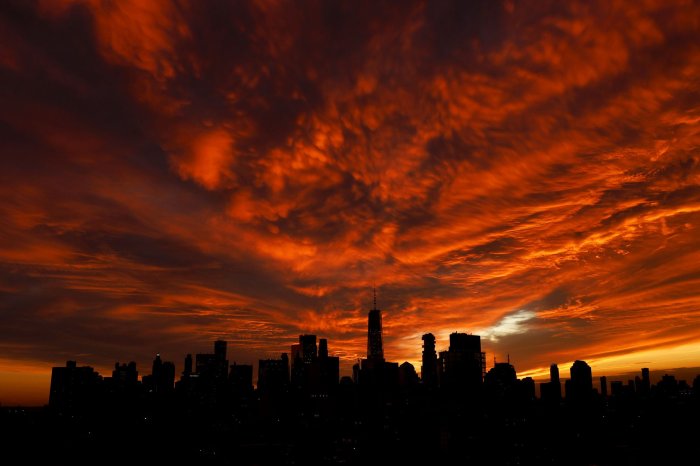
Clouds turn shades of red and orange when the sun sets behind One World Trade Center and the Manhattan skyline in New York City on November 5, 2025. Photo by John Angelillo/UPI | License Photo

Why Did Trump Send His Warships to Venezuela?
US Marines carrying out exercises on USS Iwo Jima as part of SOUTHCOM’s Operation Southern Spear in the Caribbean Sea. (SOUTHCOM)
Ever since Hugo Chávez came to power in 1998, the United States has attempted to overthrow the Bolivarian Revolution. They have tried everything short of a full-scale military invasion: a military coup, selecting a substitute president, cutting off access to the global financial system, imposing layers of sanctions, sabotaging the electricity grid, sending in mercenaries, and attempting to assassinate its leaders. If you can think of a method to overthrow a government, the United States has likely tried it against Venezuela.
However, in 2025, the escalation became unmistakable. The US sent its warships to patrol Venezuela’s coast, began sinking small boats and killing those on board as they left the South American mainland, and seized an oil tanker bound for Cuba. The quantity of attacks on Venezuela has increased, suggesting the quality of the threats has now reached a different magnitude. It feels as if the United States is preparing for a full-blown invasion of the country.
Donald Trump came to office saying that he was opposed to military interventions that did not further US interests, which is why he called the illegal US war on Iraq a waste of “blood and treasure”. This does not mean Trump is against the use of the US military – he deployed it in Afghanistan (remember the “Mother of all Bombs”) and Yemen, and has fully backed the US/Israeli genocide against the Palestinians. His formula is not for or against war categorically, but about what the US would gain from it. With Iraq, he stated that the problem was not the war itself, but the failure to seize Iraqi oil. Had the US taken Iraq’s oil, Trump would likely have been in Baghdad, ready to build – with Iraqi treasure – a Trump hotel on one of the former presidential properties.
Naturally, the US military buildup in the Caribbean is about Venezuelan oil – the largest known reserves in the world. The US-backed politician, Maria Corina Machado, awarded the Nobel Peace Prize just this week after supporting the Israeli genocide and calling for a US invasion of her own country, is on record promising to open up her country’s resources to foreign capital. She would welcome the extraction of Venezuela’s wealth rather than allow its social wealth to better the lives of its own people, as is the goal of the Bolivarian Revolution started by Hugo Chávez. A hypothetical “President Machado” would immediately surrender any claim to the Essequibo region and grant ExxonMobil full command of Venezuela’s oil reserves. This is certainly the prize.
But it is not the immediate spur. A close reading of the 2025 National Security Strategy of the United States shows that there is a renewed emphasis on the Western Hemisphere. The Trump Corollary to the 1823 Monroe Doctrine is clear: the Western Hemisphere must be under US control, and the United States will do what it takes to ensure that only pro-US politicians hold power. It is worth reading that section of the National Security Strategy:
“After years of neglect, the United States will reassert and enforce the Monroe Doctrine to restore American pre-eminence in the Western Hemisphere, and to protect our homeland and our access to key geographies throughout the region. We will deny non-Hemispheric competitors the ability to position forces or other threatening capabilities, or to own or control strategically vital assets, in our Hemisphere. This ‘Trump Corollary’ to the Monroe Doctrine is a common-sense and potent restoration of American power and priorities, consistent with American security interests.”
When Argentina faced local elections, Trump warned that the US would cut off external financing if candidates opposing pro-US President Javier Milei lost. In Honduras, Trump intervened directly to oppose the Libre Party, even offering to release a convicted drug trafficker (and former President). The United States is moving aggressively because it has accurately assessed the weakness of the Pink Tide and the strength of a new, far-right “Angry Tide”. The emergence of right-wing governments across South America, Central America, and the Caribbean has emboldened the US to squeeze Venezuela and thereby weaken Cuba – the two major poles of the Latin American left. Overturning these revolutionary processes would allow a full-scale Monroe Doctrine domination of Latin America and the Caribbean.
Since the 1990s, the United States began to speak of Latin America as a partner for shared prosperity, emphasizing globalization over direct control. Now, the language has changed. As the Trump Corollary asserts: “We want a Hemisphere that remains free of hostile foreign incursion or ownership of key assets and that supports critical supply chains…We want to ensure our continued access to key strategic locations.” Latin America is seen as a battlefield for geopolitical competition against China and a source of threats like immigration and drug trafficking. The attack on Venezuela and Cuba is not merely an assault on these two countries; it is the opening salvo of direct US intervention on behalf of the Angry Tide. This will not deliver better lives for the population, but greater wealth for US corporations and the oligarchies of Latin America.
Trump is ready to revive the belief that any problem can be solved by military force, even when other tools exist. The Trump Corollary promises to use its “military system superior to any country in the world” to steal the hemisphere’s resources.
The aggression against Venezuela is not a war against Venezuela alone. It is a war against all of Latin America.
Vijay Prashad is an Indian historian, editor, and journalist. He is a writing fellow and chief correspondent at Globetrotter. He is an editor of LeftWord Books and the director of Tricontinental: Institute for Social Research. He has written more than 20 books, including The Darker Nations and The Poorer Nations. His latest books are On Cuba: Reflections on 70 Years of Revolution and Struggle (with Noam Chomsky), Struggle Makes Us Human: Learning from Movements for Socialism, and (also with Noam Chomsky) The Withdrawal: Iraq, Libya, Afghanistan, and the Fragility of US Power. Chelwa and Prashad will publish How the International Monetary Fund is Suffocating Africa later this year with Inkani Books.
Source: Globetrotter
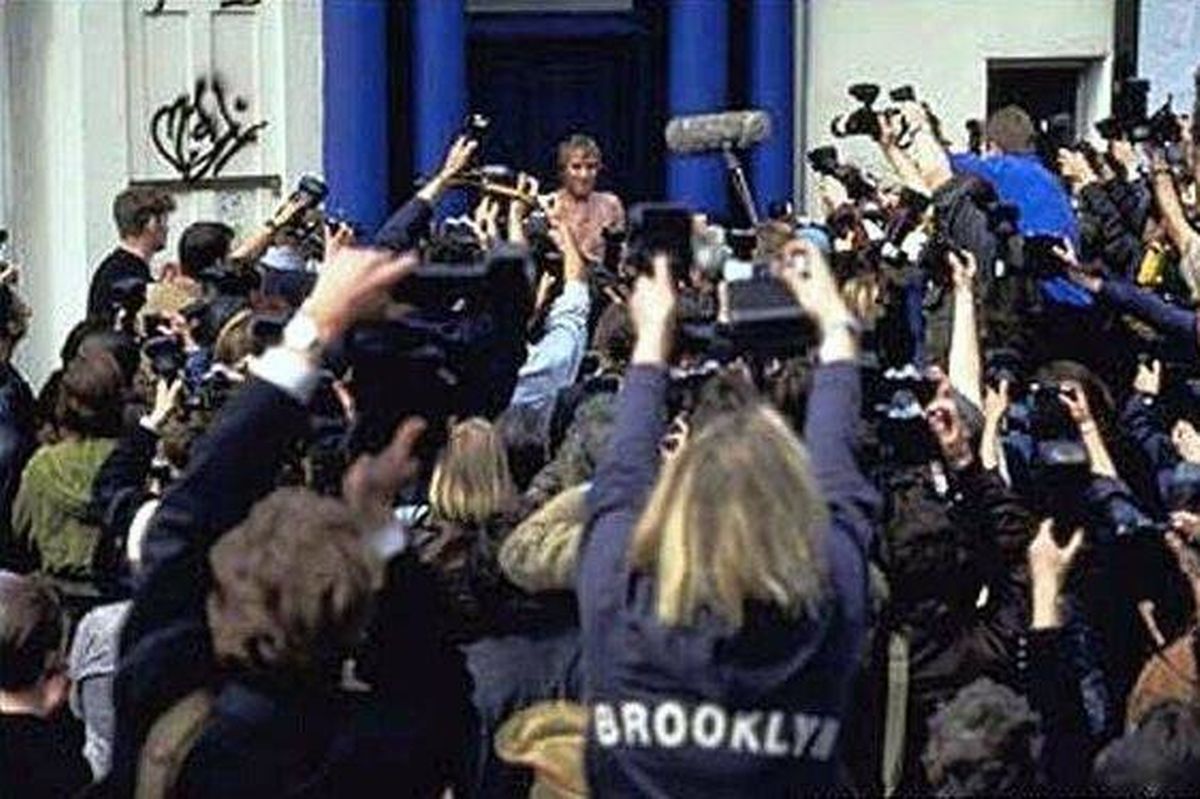
Film 4 Christmas Day movie ‘should be blue print for all rom-coms’
The 1999 romantic comedy is available to watch on Film 4 this evening

This much-loved romantic comedy is set to return to our televisions on Film 4 on Christmas Day.
Written by Richard Curtis, and starring Julia Roberts and Hugh Grant, the nineties classic Notting Hill spins the tale of an improbable romance between a British bookshop owner and a world-famous American actress. The film features a fantastic supporting cast including Rhys Ifans, Hugh Bonneville, Emma Chambers, Tim McInnerny and Gina McKee, and remains a favourite for its feel-good factor, nostalgia and unforgettable quotes.
Its award-winning soundtrack, brimming with hits from iconic musicians, perfectly complements this heartwarming narrative. The life of travel bookshop proprietor William Thacker (played by Grant) takes a surprising twist when the beautiful and renowned US actress Anna Scott (portrayed by Roberts) walks into his Notting Hill, London shop to buy a book. Their lives couldn’t be more contrasting – Will, a divorcee, cohabits with his messy Welsh flatmate Spike (Ifans), while Anna stays at the Ritz hotel during her promotional tour for her latest film.
After Anna surprises Will with a kiss, a flirtation develops into a romance, leading her to meet his eccentric circle of friends. However, as in any love story, there are heartbreaking hurdles to surmount, and the couple find themselves separated due to misunderstandings and miscommunication. Packed with iconic one-liners, including the unforgettable “I’m just a girl, standing in front of a boy”, the film became a runaway hit with both critics and cinema-goers when it premiered in 1999.
The rom-com hauled in £31 million at UK box offices alone, cementing its position as Britain’s biggest-grossing film of the time. The movie garnered numerous awards, including a BRIT Award for its outstanding soundtrack featuring numbers such as Ronan Keating’s When You Say Nothing At All, Elvis Costello’s She, and Bill Withers’ Ain’t No Sunshine.
Fans still adore every element of this treasured classic. On Rotten Tomatoes, where it boasts an impressive 84% rating, one critic wrote: “Charming, feel-good romantic comedy that still holds up. Notting Hill has just the right mix of humor, heart, and sincerity. “The chemistry between Hugh Grant and Julia Roberts is natural and warm, and the story – while simple – hits all the right notes. It’s light but not shallow, and there are moments that genuinely stay with you.”
Another admirer suggested it should be considered the definitive romantic comedy template: “Expertly written and brilliantly directed!” they said. “Classic that should be a sort of ‘model’ for love stories. With Roberts and Grant in the lead, what could go wrong hey? Razor sharp wit and spectacular characters, this is a winner.” A third viewer, who admitted they don’t usually gravitate towards romantic films, gave it a glowing five-star rating and remarked: “Not a rom-com type but this really worked for me. The two leads were superb / It’s perfect… one of the best rom coms of all time.”
Notting Hill is on Film 4 at 11.15pm on Christmas Day.

Stunning valley with limestone villages, England’s highest pub and walking trails
This valley in the Yorkshire Dales is home to charming villages, historic mining sites, scenic trails and England’s highest pub at 1,732 feet

Nestled at the northernmost point of the Yorkshire Dales, this dale is steeped in history from its mining past, with countless tales etched into its landscape.
Swaledale, a delightful Dale, is home to the River Swale, England’s fastest river, which gracefully meanders through its verdant fields. Tucked away amidst this natural beauty is the Tan Hill Inn, England’s loftiest pub, inviting guests to drop by as they traverse the undulating hills of Yorkshire.
Perched at an impressive 1,732 feet above sea level, this historic pub dates back to the 17th century and exudes a cosy charm. Adorned with exposed beams, a stone-flagged entrance and a crackling fire, it provides the perfect tranquil spot for a pint and a bite while exploring the region.
At the heart of the Dale lies Reeth, a central village boasting three popular pubs, charming arts and crafts shops, and a delightful bakery offering local pies and breads. Fridays are a highlight in the area, as the village transforms into a bustling market, with stalls lining the streets selling a variety of eclectic goods.
In Reeth, you’ll discover a museum that illuminates the fascinating rural life of the Yorkshire Dales and its rich local heritage. Here visitors can explore decades of the area’s heritage, with exhibits spanning geological specimens to prehistoric discoveries and, naturally, equipment linked to its rich lead mining past.
Following their trip, one delighted guest said on TripAdvisor that the museum was a “wonderful surprise”. They said: “I love a museum, and I have visited my fair share, but this was a truly surprising little gem.
“I have never seen quite so much variety crammed into such a small space, and the range of information covering the local community in its history was wonderful. A great amount of detail is provided in a clear and understandable manner, combined with humorous and heartwarming local stories.”
For those eager to experience the lush landscapes of the valley, the Swale Trail is an absolute must. Whether tackled on foot or by bicycle, according to enthusiastic explorers, it’s a destination that justifies the effort.
Following their adventure, one visitor said: “Amazing views. We did this by ebike, but imagine you’d need quite a high fitness level for the Gunnerside to Keld route on pedal power alone. Gunnerside to Keld, however, has the best views. This route overall is actually one of the best trails around but seems relatively undiscovered.”
The area’s traditional allure is evident throughout the year, but it’s particularly enchanting during spring and summer when the hardy Swaledale sheep graze and beautiful wildflowers bloom amidst the stunning hay meadows. Even on the chilliest days, the valley continues to reveal a wealth of trails and hidden treasures.
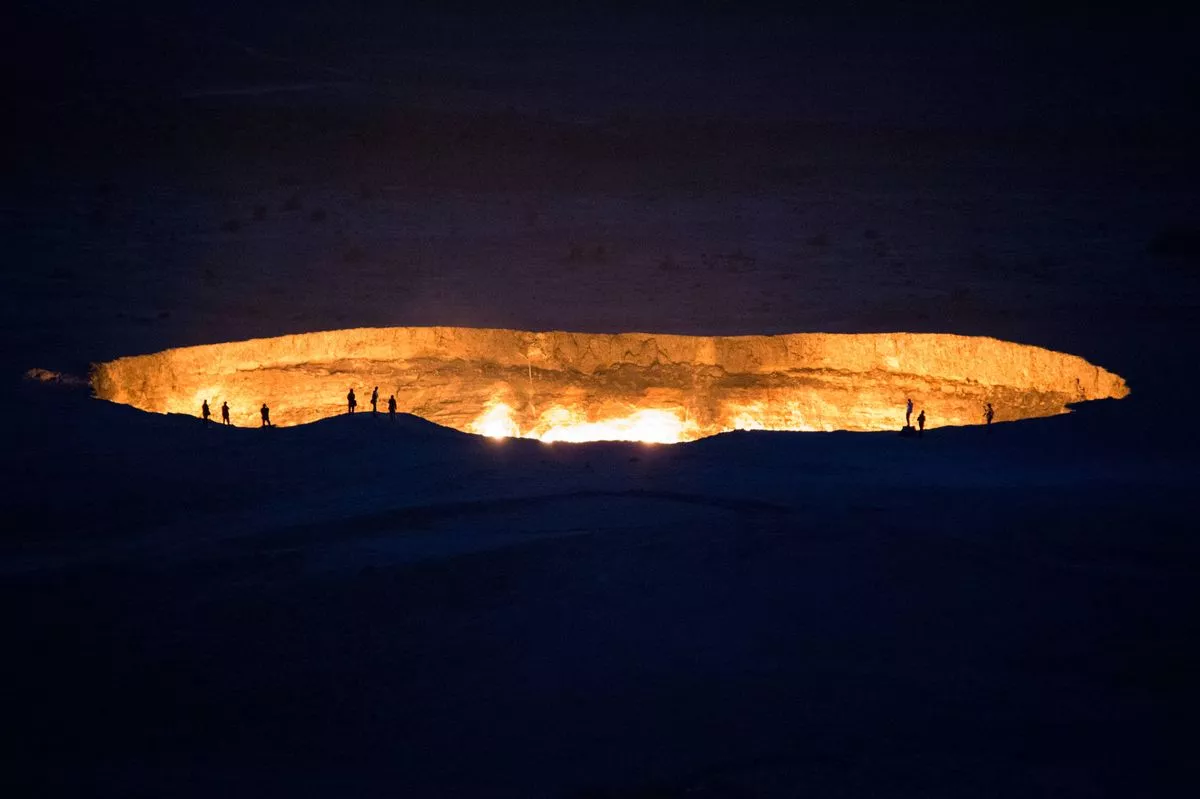
Burning ‘Gate to Hell’ has been on fire for more than half a century
The apocalyptic site, dubbed a ‘doorway to hell’, exists right here on Earth and has been burning since 1971 — only one person is known to have ever descended inside.

Straight out of a dystopian thriller, a fiery ‘Gate to Hell’ exists right here on Earth.
This ominous sight, located in Turkmenistan, has been aptly named the ‘Doorway to Hell’, having first been set alight back in 1971. Over half a century later, it’s still burning. The Darvaza Gas Crater, locally known as the Shining of Karakum, is a blazing sinkhole that’s been spewing out natural gas since 1971.
Legend has it that Soviet geologists accidentally collapsed a natural gas chamber while drilling and subsequently set it on fire in an attempt to contain the lethal gases and prevent them from spreading. What the engineers anticipated would be a flame extinguishing itself within a few weeks has now been burning for over 50 years (hardly surprising given that the country ranks fourth globally in natural gas reserves).
Interestingly, Turkmenistan holds no official records of the incident as relevant documentation is either classified, inaccessible, or missing from the archives – consistent with the country’s policy of secrecy. This ‘Gate to Hell’ can be found ablaze near the village of Darvaza, nestled in the heart of the Karakum Desert, and measures approximately 60-70 meters wide and 98ft deep.
The hellish pit can be seen from miles around and has become a major tourist attraction for Turkmenistan, reports the Daily Star. Despite the seemingly inhospitable conditions of this blazing chasm, visitor accounts suggest that, astonishingly, there may be some signs of life within the crater.
The only known human descent into the crater was undertaken by Canadian explorer George Kourounis. In November 2013, Kourounis ventured to the bottom of the Darvaza Gas Crater with National Geographic, aiming to gather soil samples for the Extreme Microbiome Project to investigate potential signs of life in the crater’s harsh environment. Equipped with a specialised heat-resistant suit, Kourounis managed to spend roughly 17 minutes inside the fiery abyss.
During the thrilling exploration episode, Kourounis described their mission as “looking for alien life right here on Earth”, given that the crater’s hostile, methane-rich environment mirrors that of certain planets found beyond our solar system. And indeed, they discovered signs of life. Kourounis’ expedition unearthed several types of bacteria in the soil from the crater floor.
Recounting his experience of the apocalyptic ‘Door to Hell’, Kourounis said: “It is burning with a tremendous amount of flame like there is a lot of fire down there. Day or night, it is clearly burning. You can hear the roar of the fire if you stand at the edge. The heat, if you are downwind of it, is unbearable. There are thousands of little flames all around the edges and towards the centre. It’s a very volatile place.”
Now, in a dramatic twist, after blazing fiercely for more than 50 years, it appears the flames in this ‘Gateway to Hell’ are at last dying down, though gradually. During a press briefing in June this year, Irina Luryeva, a director at Turkmenistan’s state-owned energy firm Turkmengaz, revealed to the world that the crater was finally burning out, stating: “The reduction [in fires] is nearly threefold. Whereas before a huge glow from the blaze was visible from several kilometres away, hence the name ‘Gateway to Hell’, today only a faint source of combustion remains.”

LA28 closes 2025 on track to meet revenue goals for 2028 Olympics
John Slusher shouldn’t admit this. When the former Nike executive signed on to oversee LA28’s commercial operations last year, he looked at the private organizing committee’s lofty financial goals with some concern. Sales were “incredibly slow.” There was momentum around the first Olympics in L.A. in more than 40 years, but not many results.
Yet.
Weeks after celebrating his one-year anniversary with the group responsible for organizing and delivering the 2028 Games, Slusher and his team delivered a $2-billion present.
After announcing 15 partnerships in 2025, LA28 met its goal of reaching $2 billion in corporate sponsorship by this year, which Slusher said puts the group well on track to meet or exceed its $2.52-billion goal for domestic partnerships that serves as the largest line item funding the 2028 Games.
“Each avenue of commercial, whether it’s sponsorship, licensing, ticketing, hospitality, they’re all just kind of smoking hot, if you will, right now,” Slusher said in a recent interview with The Times. “I think there’s a lot of momentum and a lot of excitement around driving the business. And I think we’re all super focused on delivering an amazing, financially responsible Games.”
Since its bid for the Games began in 2016, LA28 has promised to deliver and operate the event with private funds. The estimated budget is $7.15 billion for L.A.’s first Olympics since 1984. After last year’s Paris Olympics, focus has shifted to the United States as the country begins a major decade of major sports events, including the 2026 FIFA World Cup, the 2028 Olympics and the 2034 Winter Olympics held in Salt Lake City.
“There is still much work to do and I can assure you the team is not resting,” U.S. Olympic and Paralympic Committee Chief Executive Officer Sarah Hirshland said during a media conference call. “But the reality is that this success puts the LA28 Games on track to be very successful while building significant commercial value for Team USA for many years to come. We couldn’t be more pleased with where we sit.”
Slusher, the chief executive officer responsible for revenue for LA28 and U.S. Olympic and Paralympic Properties, said the group is still selling for major sponsorship categories, including quick service restaurant, retail, tech and finance. Ticket registration begins on Jan. 14 with 14 million tickets available for the Olympics and Paralympics, which would break the record for Games tickets sold. Volunteering opportunities connected to LA28 in the community have already begun and volunteer applications for the Games open in the summer of 2026.
From record commercial growth to launching volunteer and community ticketing programs earlier than ever, our north star continues to be delivering a fiscally responsible Games with meaningful impact for L.A. and beyond,” LA28 CEO Reynold Hoover said in a statement. “We’re working day in and day out to make the Games more accessible than ever to the millions of people who want to get involved in a meaningful way.”
LA28 announced a ticket donation program with hopes of making tickets accessible to local fans through community groups. The Rams were the first participants, donating $5 million. Tickets will begin at $28 and LA28 plans to have one-third of tickets under $100.
Ticketing and hospitality is supposed to cover $2.5 billion of LA28’s total budget, the second-largest source of revenue for the Games.
A study done by the Southern California Assn. of Governments estimated the Games will generate between $13.6 billion and $17.6 billion in additional gross domestic product across a six-county region between 2024-2029. The study considered LA28’s $7.15-billion budget, estimated visitor spending and a portion of Games-related transportation infrastructure investments.
While only four of the Olympic venues are outside of L.A. County, the study estimates that five other Southern California counties — Orange, Riverside, San Bernardino, Ventura and Imperial — could still enjoy roughly 33% of the economic benefit because of visitor spending and work provided elsewhere in the region. Orange County, which will host the volleyball competition at Honda Center and surfing at nearby Trestles, could draw between $2.88 billion and $2.44 billion in gross domestic product from the Games, the second-most behind L.A.’s range of $8.96 billion and $11.97 billion.
The study was limited to only short-term gains up to five years after the Games, which does not take into account any “legacy effects.” The 2028 Games will have no permanent venue construction, but the planning agency notes that transportation infrastructure built to support the Games could benefit the region for decades in the future.
Transportation updates are largely the responsibility of the city, which is relying on federal grants to expand the Metro rail system and add more buses for the Games. Improvements to Los Angeles International Airport have been plodding: The People Mover train’s opening date has been delayed again to June 2026.
Outside of money used for infrastructure improvements, L.A. is also at risk to foot the first $270 million in potential overruns from LA28. If the private organizing committee’s debt goes further, the next $270 million would go to the state and anything remaining would return back to the city.
Jordan strikes drug, arms smugglers in Syria border region: Reports | Drugs News
Jordan’s military said the attacks ‘neutralised arms and drug traffickers’ and destroyed their laboratories and factories.

Published On 25 Dec 2025
Jordan’s military has launched strikes on drug and weapons smugglers in the country’s northern border regions with Syria, targeting sites used as “launch points” by trafficking groups into Jordanian territory, according to reports.
The Jordan News Agency, Petra, said the strikes on Wednesday “neutralised a number of arms and drug traffickers who organise weapons and narcotics smuggling operations along the northern border of the Kingdom”.
Recommended Stories
list of 4 itemsend of list
Jordan’s armed forces destroyed “factories and workshops” used by the trafficking groups, Petra reports, adding that the attacks were carried out based on “precise intelligence” and in coordination with regional partners.
The Jordanian military did not name the partner countries involved in the strikes but warned that it would “continue to counter any threats with force at the appropriate time and place”, Petra said.
Syrian state broadcaster Al-Ikhbariah TV reported on its Telegram channel that the Jordanian army had carried out air strikes on locations in the southern and eastern countryside of Syria’s Suwayda governorate.
A resident of Syria’s Suwayda border region told the AFP news agency that the bombardment “was extremely intense and targeted farms and smuggling routes”, while the UK-based Syrian Observatory for Human Rights said jets and helicopters had reportedly taken part in the raid.
The observatory said photos taken at the scene of the attacks showed destruction at an abandoned military barracks of the former al-Assad regime in Suwayda.
There were no initial reports of casualties from the Jordanian attacks and no official comment from authorities in Damascus.
A farm believed to have been used for storing drugs was among the targets, according to the Zaman Al Wasl online news site, which also reported that similar Jordanian attacks had been carried out previously in a bid to stem the flow of captagon – an addictive, amphetamine-type stimulant.
Before the removal of Syria’s President Bashar al-Assad in December 2024, captagon had become the regime’s largest export and key source of funding amid the country’s years of grinding civil war.
Produced in vast quantities in Syria, the synthetic drug flooded the region, particularly the Gulf states, prompting neighbouring countries to announce seizures and call on both Lebanon and Damascus to ramp up efforts to combat the trade.
Although Damascus denied any involvement in the drug trade, analysts estimated that production and smuggling of captagon brought in billions of dollars for al-Assad, his associates and allies as they looked for an economic lifeline amid the civil war, which was fought between 2011 and the regime’s toppling last year.


Algeria passes law declaring French colonisation a crime | History
Algeria’s parliament unanimously passed a law declaring France’s colonisation a crime. Lawmakers celebrated in the chamber as they demanded an apology, reparations and assigned France legal responsibility for the harms caused during colonial rule.
Published On 25 Dec 2025

The Night Manager season 2 start date, cast, episode count and how to watch
BBC thriller The Night Manager is set to return to screens after its successful debut back in 2016
BBC thriller The Night Manager is set to return to screens for its second season.
Based on the characters created by John le Carré, the series followed Jonathan Pine, a night manager of a luxury hotel in Cairo and a former British soldier, who was recruited by the manager of a Foreign Office task force to infiltrate the inner circle of a dangerous arms dealer.
The show won multiple BAFTAs, Emmy Awards, and Golden Globes, including Best Actor for Tom Hiddleston as Pine.
Almost ten years after its explosive finale captivated over ten million viewers, the hit BBC spy thriller is now back with a bang as Pine takes on an explosive new case.
The official synopsis teases: “Jonathan Pine thought he’d buried his past. Now living as Alex Goodwin – a low-level MI6 officer running a quiet surveillance unit in London – his life is comfortingly uneventful.
“Then one night, a chance sighting of an old Roper mercenary prompts a call to action and leads Pine to a violent encounter with a new player: Colombian businessman Teddy Dos Santos.
“On this perilous new journey, Pine meets Roxana Bolaños, a businesswoman who reluctantly helps him infiltrate Teddy’s Colombian arms operation. Once in Colombia, Pine is plunged deep into a deadly plot involving arms and training of a guerrilla army.”
The logline concludes: “As allegiances splinter, Pine races to expose a conspiracy designed to destabilise a nation. And with betrayal at every turn, he must decide whose trust he needs to earn and how far he’s willing to go before it’s too late.”
Here’s everything you need to know about the BBC thriller’s return, including release date, cast, and episode details.
When will The Night Manager be released?
The first episode of season two is set to premiere on BBC One on Thursday, January 1 at 9pm. The new series will then be available to stream on Prime Video from January 11.
Who is in the cast of The Night Manager?
Tom Hiddleston returns as former British intelligence operative, Jonathan Pine, with Diego Calva as Teddy, and Camila Morrone as Roxana. They are joined by Indira Varma as Mayra, Paul Chahidi as Basil, and Hayley Squires as Sally.
Olivia Colman reprises her role as Angela Burr, alongside returning cast members Alistair Petrie as Sandy Langbourne, Douglas Hodge as Rex Mayhew, Michael Nardone as Frisky, and Noah Jupe as Daniel Roper.
The cast and creatives have promised “danger, espionage, betrayal, love, heartbreak, drama, and suspense” in the next chapter of Pine’s story.
How many episodes are in The Night Manager?
The Night Manager season two consists of six hour-long episodes. After the first episode premieres on New Year’s Day, the drama will continue three days later on Sunday, January 4 at 9pm on BBC One.
The following four episodes will air every Sunday at 9pm, with the explosive finale expected to air on February 1.
For international viewers, the first three episodes will drop on Prime Video on Sunday, January 11, with subsequent instalments premiering every Sunday through to February 1.
The Night Manager season 2 premieres on BBC One and BBC iPlayer from 9pm on Thursday, January 1
For the latest showbiz, TV, movie and streaming news, go to the new Everything Gossip website

Should Angels fans just give up and join the Dodgers bandwagon?
Christmas is three days away, and you’re running out of time to get a gift for the Angels fan in your life. How about a Dodgers cap?
If ever a winter posed a loyalty test, this one could. The Dodgers spent $69 million on Edwin Díaz, the best closer available in free agency, and another $2 million in championship parade costs. The Angels spent $2 million on a closer who put up an 8.23 earned-run average last season.
Next year the Dodgers will try to become the first National League team to win three consecutive World Series. The Angels will try to end baseball’s longest postseason drought at 11 years, still without much of a plan beyond rushing first-round draft picks to the major leagues while treading the financial waters until Anthony Rendon’s contract runs out.
On Sunday they missed out on Japanese slugger Munetaka Murakami, who signed with the 102-loss Chicago White Sox. Of the Angels’ five acquisitions this winter, three did not play in the majors last season, and not because they are up-and-coming prospects.
If you’re an Angels fan and you’re sick and tired of this, should you reconsider your loyalty?
Jim Bowden believes you should.
Bowden, formerly the general manager of the Cincinnati Reds and Washington Nationals, serves as a baseball insider on several media platforms. On “Foul Territory” last week he suggested fans of small-market teams have an option that might be more constructive than getting angry.
In Pittsburgh, for instance, the owner would rather complain about the lack of a salary cap than spend enough money to build a winner around generational pitcher Paul Skenes.
“You don’t have to be a Pirate fan,” Bowden said. “You can retire as a Pirate fan, or trade yourself to the Dodgers.
“If you want to see your team win, right now the Dodgers have got the best chance to win a World Series again. As a fan, you can root for any team you want.
“You don’t have to root for the team in your home city. You can see the Dodgers play in your home city. They’ll come into Pittsburgh and beat you.
“If it bothers you that much, just become a Dodger fan. It’s fine.”

Dodgers pitcher Yoshinobu Yamamoto celebrates with teammates, coaches and owners after the Dodgers’ World Series victory over the Toronto Blue Jays on Nov. 1.
(Robert Gauthier/Los Angeles Times)
The Angels no longer operate as a large-market team, and their circumstances could get even more dire in the near future.
On Sunday, Sports Business Journal reported that the parent company of FanDuel Sports Network is in jeopardy of shutting down if it cannot complete a sale to streaming service DAZN. The Angels would not disappear from your screens and streams, but it likely would mean the Angels would take a big cut in local broadcast revenue for a second consecutive year.
The Dodgers’ bandwagon shows no sign of slowing. The Dodgers set a franchise attendance record last season. They offer stadium tours in English, Spanish and Japanese. They launched a fan club in Japan.
So, as a frustrated Angels fan, you could hop on that bandwagon. Or you could try another large-market team — say, the New York Mets.
Mets owner Steve Cohen is worth $23 billion, according to Forbes. When Cohen bought the Mets in 2020, he said this: “If I don’t win a World Series in the next three to five years — I’d like to make it sooner — I would consider that slightly disappointing.”
The Mets still have not won a World Series since 1986. On Friday he took to social media to criticize “the usual idiots misinterpreting a Post article on Mets payroll.”
On Sunday, given the Mets’ losses of Díaz and beloved slugger Pete Alonso in free agency, New York Post columnist Mike Vaccaro shot back, comparing Cohen to greatly unloved former owner Fred Wilpon in this adaptation of a Christmas carol: “Steve’s beginning to look a lot like Wilpon/Mets fans say ‘Hell, no!’/What’s the point in being so rich/And a ruthless sonofabitch/If you don’t spend dough?”
The concept of fan free agency — essentially what Bowden suggested — is not new. Every now and then some disgruntled fan will publicly disown his favorite team, then invite rival teams to suggest why he should support them. If you’re creative enough, rival teams will send you some free swag.
That level of desperation is what many Dodgers fans felt a decade and a half ago, when former owner Frank McCourt needed a loan to cover payroll, hired a Russian physicist who channeled positive energy toward the team and “diagnosed the disconnects” among baseball operations personnel, and disparaged as “un-American” the league’s refusal to approve a television contract that he said would have provided the revenue to keep the Dodgers out of bankruptcy court.

Fans wearing Shohei Ohtani Dodgers jerseys wait to enter Angel Stadium before a game between the Angels and Dodgers on Aug. 12.
(Luke Hales / Getty Images)
In 2011, the year McCourt took the team into bankruptcy, the Angels outdrew the Dodgers for the only time. The Dodgers fans did not bail on their team. They waited for better days.
That is where Angels fans are now — and, for that matter, where Pirates fans are too. Bowden’s suggestion that unhappy Pirates fans exhausted by the perennial futility try the Dodgers did not go over well in Pittsburgh. At the Pirates’ fan site Rum Bunter, Emma Lingan wrote: “Fandom isn’t a streaming subscription you cancel when the content gets bad.”
This year’s World Series was the best and most dramatic I ever covered. But the one that was the most fun was the 2002 World Series: the underdog Angels, the Disney team no one projected for a happy ending, rampaging through October and toppling giants. As The Times’ headline on the Game 7 victory put it: “Fantasyland!”
If you were there in 1982 and 1986, when the Angels had six chances to win one game to clinch their first World Series appearance — and lost all six — then you could have a greater appreciation of 2002. And, if you were there for McCourt bankruptcy, you can have a greater appreciation of Guggenheim majesty.
So get that Angels fan in your life an Angels cap. That fan will be able to wear that cap proudly one of these years, and all the tears will make the cap fit that much more snugly.

Poll: Americans feeling pinch of holiday spending as prices rise
Dec. 24 (UPI) — Americans are not in a jolly mood when it comes to spending for the holidays, with a majority saying it’s been difficult to afford things, according to a CBS News/YouGov survey released Wednesday.
The nationally representative sample of 2,267 U.S. adults was interviewed between Dec. 15 and 17, and asked 16 questions about the holidays and the economy in general.
With items costing more now than they did last year, respondents cut down on gifts, entertainment and travel.
When asked about things to buy for the holiday, 58% said it would be difficult, including 17% “very difficult” and 41% “somewhat difficult.” Conversely, 8% said it will be “very easy to afford” and 34% “somewhat easy.”
Regarding prices compared with last year, 27% said they cost “a lot more,” 44% “a little more,” 24% “the same” and 5% “little less” or “lot less.”
People with lower incomes obviously are struggling more.
For family incomes under $50,00, it is “difficult to afford” for 71% versus 56% for $50,000 to $100,000 versus 58% more than $100,000.
Based on the type of gifts, 42% say they are buying fewer gifts for others, 32% less for food and drinks, 48% for airlines/travel and 50% for entertainment. Of those categories, more spending was 5% for airlines/travel, 6% for entertainment, 16% gifts for others, and 17% food and drinks.
Despite financial concerns, the respondents are more positive this holiday season with 48% saying they feel “grateful,” 43% “happy,” 39% “stressed,” 29% “excited,” 29% “exhausted” and 23% “sad.”
People are preferring to avoid paying for things on credit. It breaks down to 45% using no credit, 30% using some, 16% using mostly credit and 9% using all credit.
People were also asked about the economy in general, with 32% saying it is good and 63% bad.
Thirty-two percent of people said their financial situation was good for them, down from 39% in July. Since January is has been in the 30s.
Compared with past years, 41% said it is worse in 2025, 36% not changed and 22% better.
Inflation is on people’s minds with 76% saying their income hasn’t kept up with their income, which is close to 75% in July and 77% in February. The annual inflation rate in the United States is 2.7% ending in November compared with 3.0% in September 2025, according to the U.S. Bureau of Labor Statistics.
Respondents were negative about the job market with 5% saying it’s “very good,” 29% “fairly good,” 32% “fairly bad,” 20% “very bad” and 14% not sure. The national unemployment rate was 4.6%, released by the U.S.Bureau of Labor Statistics, reflecting the labor market status for November.
Among the bright spots, more Americans rate the condition of the stock market as good than bad, especially for those whom the market’s performance matters a lot to their finances. The stock market was listed as 10% “very good,” 32% “fairly good,” 14% “fairly bad,” 6% “very bad” and 38% “not sure.”
Another good sign is gas prices, with 32% saying they are going down compared with 12% in October. Only 20% say fuel prices are going up vs. 34% in October, with 33% saying the are the same vs. 38% two months ago.
The current average is around $2.85 per gallon for unleaded, compared with $3.04 a year ago, according to AAA. The highest average was $5.02 on June 14, 2022.
The sample was weighted to be representative of adults nationwide, according to gender, age, race and education based on the U.S. Census American Community Survey and Current Population Survey, as well as 2024 presidential vote. The margin of error is 2.5 points.

New Yorkers gather for near Times Square at SantaCon NYC on Saturday as part of the annual worldwide event where thousands dress as Santa or other festive characters for a day of drinking, parading through city streets and celebrating the holidays. Photo by John Angelillo/UPI | License Photo