



Circle targets South Korea to challenge Tether dominance

Comparison of stablecoin market share in South Korea shows Tether dominating domestic trading, while USD Coin leads in global on-chain payment volume. Data from Bank of Korea and CoinDesk. Graphic by Asia Today and translated by UPI
April 14 (Asia Today) — Circle is stepping up efforts to expand its stablecoin footprint in South Korea, aiming to challenge the dominance of Tether through a dual strategy focused on trading and payments.
Tether currently accounts for more than 80% of stablecoin transactions in South Korea and over 60% globally, according to industry data. Circle’s USD Coin, or USD Coin, holds a much smaller share in Korea, at around 10%.
Industry officials said Circle recently met with major South Korean exchanges, including Upbit, Bithumb and Coinone, to expand USDC trading and improve accessibility. The move is aimed at securing liquidity in one of the world’s largest cryptocurrency markets.
Circle CEO Jeremy Allaire visited South Korea this week and signed agreements with local exchanges and fintech firms to promote stablecoin adoption.
With Dunamu, the operator of Upbit, Circle is working on initiatives focused on regulatory compliance, transparency and user education. With Bithumb, the companies agreed to explore integration of multi-chain digital asset infrastructure and stablecoin technologies. Promotions such as fee discounts and airdrops are also being used to boost USDC trading on platforms like Coinone.
Beyond exchange trading, Circle is also expanding its payment infrastructure. The company is promoting its proprietary network to support real-world payments and cross-border transfers, including partnerships with South Korean fintech firm Hecto Financial.
Analysts say this reflects a broader strategy to compete with Tether not only in trading volume but also in real-world financial use cases.
USDC is backed by cash and U.S. Treasury assets and publishes regular disclosures, a structure that has made it attractive to financial institutions. It also operates across multiple blockchain networks, offering flexibility in transaction speed and fees.
Data suggests USDC has gained traction in payments and transfers. According to industry estimates, its on-chain transaction volume reached about $17 trillion last year, exceeding Tether’s roughly $12.9 trillion, indicating stronger usage in real-world transactions rather than exchange trading.
Experts say competition between the two stablecoins is shifting from market share to function.
“Stablecoin competition is no longer about issuance volume but about use cases,” said Gautam Chughani of CoinShares, adding that USDC is expanding rapidly in payments and institutional finance.
Analysts say Tether is likely to maintain its strength in trading liquidity, while USDC could gain ground through integration with the broader financial system.
Circle said it does not plan to issue a Korean won-pegged stablecoin directly, signaling instead that it may participate as a technology provider in a future bank-led consortium structure.
— Reported by Asia Today; translated by UPI
© Asia Today. Unauthorized reproduction or redistribution prohibited.
Original Korean report: https://www.asiatoday.co.kr/kn/view.php?key=20260415010004432

Stormzy's stab vest goes on display in landmark exhibition of Black British music
The Banksy-designed vest features alongside artefacts from Shirley Bassey, Sade and Craig David.
Source link
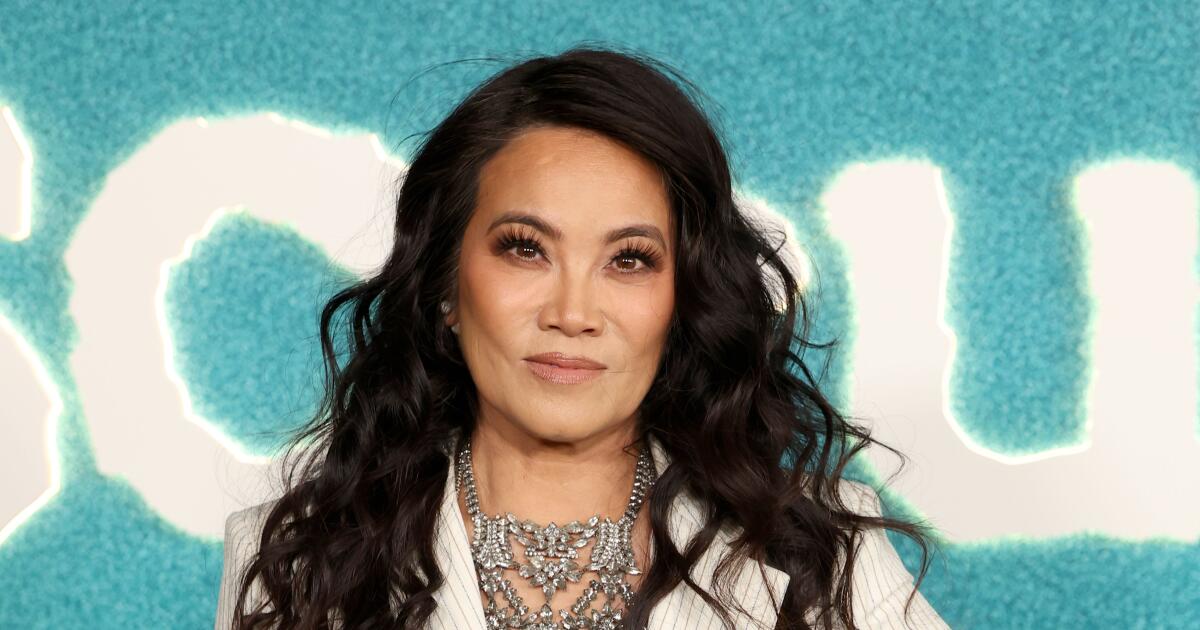
‘Dr. Pimple Popper’ Sandra Lee is coming back from a stroke
Last fall, “Dr. Pimple Popper” suddenly became a patient herself.
Dr. Sandra Lee, the reality TV dermatologist and surgeon known for tackling ick-inducing skin situations on camera, had a bad day a week before Thanksgiving 2025 while she was taping new episodes of her show at her Upland office.
“I had what I thought was a hot flash. I got super sweaty and didn’t feel like myself,” she told People in an interview published Tuesday. She said she finished the shoot and then headed to her parents’ nearby home, where that evening she experienced shooting pains in one leg and later had trouble navigating down a flight of stairs in the middle of the night.
When she awakened the next day, she said, her left side wasn’t working properly and she was having trouble speaking clearly. It was definitely more than a hot flash.
Her doctor dad — also a dermatologist — told her to get herself to an ER, where she had an MRI that showed evidence of an ischemic stroke, where a vessel supplying blood to the brain gets obstructed. The diagnosis was a shock.
“As a physician I couldn’t deny that I had slurred speech, that I was having weakness on one side,” she said, “but I was like, ‘Well, this is a dream, right?’”
Lee, 55, said unmanaged cholesterol levels and high blood pressure were likely contributors to the stroke, plus the stress of balancing her real-life practice with the demands of “Dr. Pimple Popper.” She returned to production in January, she said, though she was more than a little freaked out.
“I don’t like that I don’t have total control of my left hand or the grip wasn’t as strong. If I feel like I’m not at my best — it’s very scary,” Lee said.
Her neurologist told the outlet that Lee’s symptoms are pretty much gone. Lee said she still notices slight differences when she speaks.
The TV doc is on blood thinners now and is still doing some physical therapy after spending two months post-stroke working through PT and occupational therapy. Lee had to make sure her left hand, among other body parts, was functional and that her balance and movement bounced back.
She does, after all, do precise procedures on camera for the Lifetime audience.
And with new episodes of “Dr. Pimple Popper” set to debut Monday for the first time since 2023, Lee remains fascinated by the people who spend time watching her do extractions and excisions, both on the show and online.
“People watch the videos over and over again because it helps them go to sleep at night,” she told People. But, she added, “Others watch it like it’s a scary movie or a roller coaster.”