



SXSW 2026: Hermanos Espinoza, Vanita Leo headline De Los showcase
For the third year in a row, De Los, the Latino-centric vertical of the Los Angeles Times, will be returning to South by Southwest in Austin, Texas, and things are a little different this time around. While the music portion of the festival has typically been given its own weekend to shine, in 2026, it’ll be “folded into” a week-long event alongside film, TV and interactive programming.
But despite these changes, one thing is clear: After a banner year for Latin music at SXSW in 2025, it seems like everyone’s doubled down in 2026, with the festival welcoming a historic number of Latin artists to Austin. That includes the De Los showcase.
If our 2024 event was more of an intimate kickback, 2025 was an all-out party. Thanks to energetic sets from acts like trap corrido pioneers Arsenal Efectivo and the clashing cumbia punk stylings of Sultanes del Yonke, the crowd was up on their feet dancing, twirling and even forming a mosh pit at one point — all into the early hours of the morning. We hope to bring those same vibes back to SXSW this year.
If you’re in Austin for the festival, join us at Mala Fama, located at 422 E. 6th St., Austin, on Sunday, March 15 starting at 8 p.m. As always, the festival is a great opportunity to discover new artists and exciting new sounds, so whether or not you’ll be joining us in Texas, we hope this lineup might inspire you to find a new favorite artist, song or band.
Here’s who’s playing at the 2026 De Los showcase.
Hermanos Espinoza
With their South Texas upbringing (Puro 956!), it shouldn’t come as a surprise that this duo’s Norteño sound has plenty of Tejano flair too. Hailing from Edinburg, brothers Joel and Leonel Espinoza broke out not long after making their debut in 2022, when their song “Prueba de Fuego” hit more than 100 million streams. Their lively, accordion-rich music feels classic enough to be right at home on the playlist for your next carne asada.
Noteworthy track: “Dios por Delante”
Vanita Leo
Music is in Vanita Leo’s DNA. Born and raised in San Antonio, the singer’s father and aunt are both Tejano musicians who inspired Leo to take up the family mantle and put her own spin on the genre. With a love for the old-school sound of the 1990s, Leo manages to weave together her flirty, unserious humor with vintage romance, writing songs that’ll either validate your heartbreak over a bad ex or have you ready to dance it off and forget they ever existed.
Noteworthy track: “Caballito”
Tropa Magica
The second sibling duo on our lineup, Tropa Magica is the brainchild of brothers David and Rene Pacheco. Their signature sound, much like the East L.A. neighborhood they grew up in, is a melting pot of influences, combining old-school cumbias, ’90s grunge, and psychedelic rock into something completely unique to them. Since coming onto the scene in 2018, the band has gotten the stamp of approval from established acts like Bomba Estéreo, Los Tigres Del Norte and Chicano Batman.
Noteworthy track: “Ojos de Lágrimas”
Eddy
This is set to be Eddy’s year. Born Eduardo Hernández Payán, Eddy first made waves when he was discovered by corridos singer-songwriter Diego Millán (Calle 24) and signed to his Ondeados Mafia label. Last year, he built up a reputation for being an artist to watch in the Regional Mexican space thanks to collaborations with Gabito Ballesteros and Ed Maverick. Now, Eddy is prepping for the release of his debut album, “Náufrago,” later this month.
Noteworthy track: “Ultimo Cigarro”
Nezza
Many of you might know Nezza from her viral moment last summer, when she went viral for singing the national anthem in Spanish at Dodger Stadium — her form of protest against the immigration raids that had been taking place all over L.A. But just take a listen to the Dominican-Colombian singer’s original music, and you’ll see that she’s much more than a viral moment. With her Spanglish lyrics, soulful vocals and glittery production, Nezza has her sights set on international pop stardom.
Noteworthy track: “Tasty”

Engineer sues L.A. County over Pride flag at government buildings
A Christian engineer with L.A. County claims his bosses discriminated against him by forcing him to pass by a Pride flag on the way to his office, the latest legal challenge to the government’s policy of requiring many government buildings display the flag throughout June.
Eric Batman, a 24-year veteran of the Department of Public Works, sued the county March 10 for refusing to let him work remotely in June, when the rainbow-striped flag hangs in front of his department’s Alhambra headquarters.
It’s the second lawsuit to target the county’s 2023 policy ordering the raising of the “Progress Pride Flag,” a modified version of the traditional rainbow flag with additional stripes representing people of color and transgender and nonbinary people.
In May 2024, Jeffrey Little, an evangelical Christian county lifeguard, sued the county for requiring he work feet away from the flag. That case, filed by conservative Catholic legal group Thomas More Society, is ongoing.
Batman said he first asked to work remotely for the month of June in 2024 to avoid the flag, which he found “highly offensive,” according to the suit.
A supervisor rejected his request, according to the filing, noting the county was “committed to fostering an inclusive workplace, including for our LGBTQ+ employees.” The supervisor suggested he use another entrance, Batman’s suit claimed.
“They wouldn’t give it to him because the county said ‘Our interest is in inclusivity — regardless of whether or not that includes you,”’ said Daniel Schmid, an attorney with Liberty Counsel, a Christian legal group representing Batman.
Liberty Counsel frequently takes on high-profile plaintiffs who oppose same-sex marriage, including the case of Kim Davis, the Kentucky county clerk who refused to provide marriage licenses to same-sex couples.
A spokesperson for the county’s public works department said she could not comment on the suit as it had not yet been served.

Hall of Fame high school football coach Bob Johnson dies
Hall of Fame high school football coach Bob Johnson, who turned El Toro and Mission Viejo into powerhouse high school football programs and became one of the winningest coaches in state history, has died. He was 80. He had been battling Alzheimer’s.
“I feel for the family,” Mission Viejo football coach Chad Johnson (no relation) said Wednesday.
Johnson passed early Wednesday morning,
Johnson won six Southern Section titles coaching at Mission Viejo and three at El Toro while winning 338 games, the second winningest in Orange County history and in the top five in state history, according to the Orange County Register.
He retired after the 2017 season and was inducted into the California High School Football Hall of Fame in 2023.
His two sons, Rob and Bret, were standout high school quarterbacks before enrolling at USC and UCLA, respectively. Rob made it to the NFL. Both became coaches after their playing days were completed. Rob still coaches as an assistant at Mission Viejo.
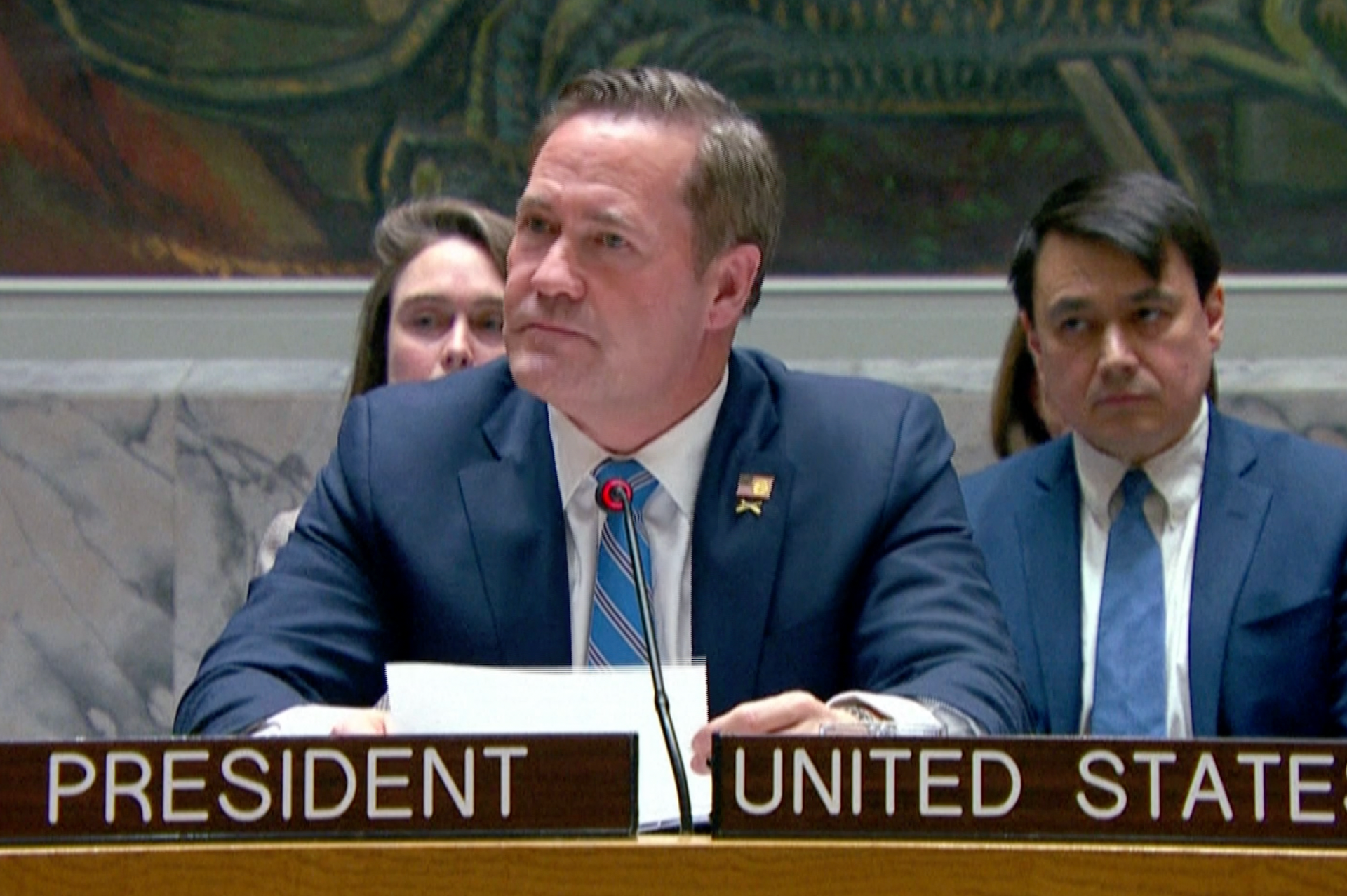
UN Security Council adopts Gulf countries’ draft resolution | GCC
The UN Security Council has passed a resolution put forward by Gulf Cooperation Council members calling on Iran to halt its attacks on Gulf countries. The measure was adopted with 13 votes in favour and two abstentions, while no member states voted against it.
Published On 11 Mar 2026

Dollar Steadies, Oil Pulls Back After Trump Signals Iran War May End Soon
Global currency and commodity markets stabilised slightly on Tuesday after a volatile start to the week triggered by the war involving Iran, United States and Israel. The U.S. dollar steadied against major currencies after earlier declines, following remarks from U.S. President Donald Trump that the conflict could end “very soon.”
Financial markets had been thrown into turmoil a day earlier amid fears that a prolonged war could trigger a major global energy shock. The conflict has disrupted oil and gas exports through the critical Strait of Hormuz, a vital shipping route for global energy supplies.
Although markets calmed somewhat after Trump’s comments, the broader environment remains highly uncertain as investors continue to assess the potential economic fallout from the conflict.
Dollar Holds Ground as Oil Prices Ease
In Asian trading, the U.S. dollar was largely steady against other major currencies after retreating from the highs reached during Monday’s market turbulence.
The currency traded at around 157.73 yen against the Japanese yen and about $1.1632 against the euro, reflecting a stabilisation following the sharp movements seen earlier.
Meanwhile, oil prices remained elevated but declined from the dramatic peaks reached at the start of the week. Brent crude traded at roughly $93 per barrel, still significantly higher than levels before the outbreak of the war but well below Monday’s surge toward $120.
The pullback in oil prices helped ease immediate concerns about a severe energy shock, although analysts caution that volatility could continue if the conflict escalates again.
Investors Remain Cautious
Despite the relative calm in currency markets, analysts say investors are far from convinced that the crisis is nearing resolution.
Rodrigo Catril, a currency strategist at National Australia Bank, warned that markets could continue to experience sudden shifts in sentiment as geopolitical developments unfold.
According to Catril, it remains unclear whether the Iranian leadership would be willing to pursue de-escalation, suggesting that the risk of renewed market volatility remains high.
The Islamic Revolutionary Guard Corps in Iran dismissed Trump’s suggestion that the conflict could end quickly, describing the remarks as “nonsense.”
Risk-Sensitive Currencies Under Pressure
Currencies closely linked to global economic sentiment weakened as investors remained cautious.
The Australian dollar slipped to around $0.7063, while the New Zealand dollar fell to roughly $0.5912. These currencies often decline during periods of geopolitical uncertainty or when investors shift toward safer assets.
The dollar, by contrast, has benefited from its traditional role as a safe-haven currency during times of crisis. The escalation of the conflict and disruption to energy markets prompted investors to move funds into U.S. assets, supporting the currency.
The British pound recovered from losses earlier in the week to trade around $1.3434.
Energy Prices and Global Growth Concerns
Investors remain concerned that sustained high energy prices could slow global economic growth. Rising oil costs increase expenses for businesses and households, effectively acting as a tax on economic activity.
At the same time, higher energy prices could complicate monetary policy by pushing inflation upward and making it harder for central banks to lower interest rates.
Analysts at Deutsche Bank noted that a broader market sell-off in risk assets would likely require several conditions to occur simultaneously: persistently high oil prices, a shift in central bank policy expectations and clear evidence of a slowing global economy.
Strategist Henry Allen said markets are now significantly closer to those thresholds than they were just a week ago, though the full conditions for a major downturn have not yet materialised.
Analysis: Markets Brace for Prolonged Volatility
The market reaction to the Iran war underscores how closely global financial conditions are tied to geopolitical developments in the Middle East.
While Trump’s comments about a possible quick end to the conflict helped stabilise markets temporarily, the underlying risks remain substantial. The disruption of energy supplies through the Strait of Hormuz continues to threaten global oil flows and could trigger renewed price spikes if the conflict intensifies.
For investors, the situation presents a delicate balance. On one hand, hopes for de-escalation could stabilise energy prices and reduce pressure on financial markets. On the other, continued fighting or further disruptions to oil shipments could quickly reignite volatility across currencies, commodities and equities.
Until there is clearer evidence of either de-escalation or escalation, markets are likely to remain highly sensitive to political developments, with the dollar continuing to benefit from its role as a global safe haven.
With information from Reuters.
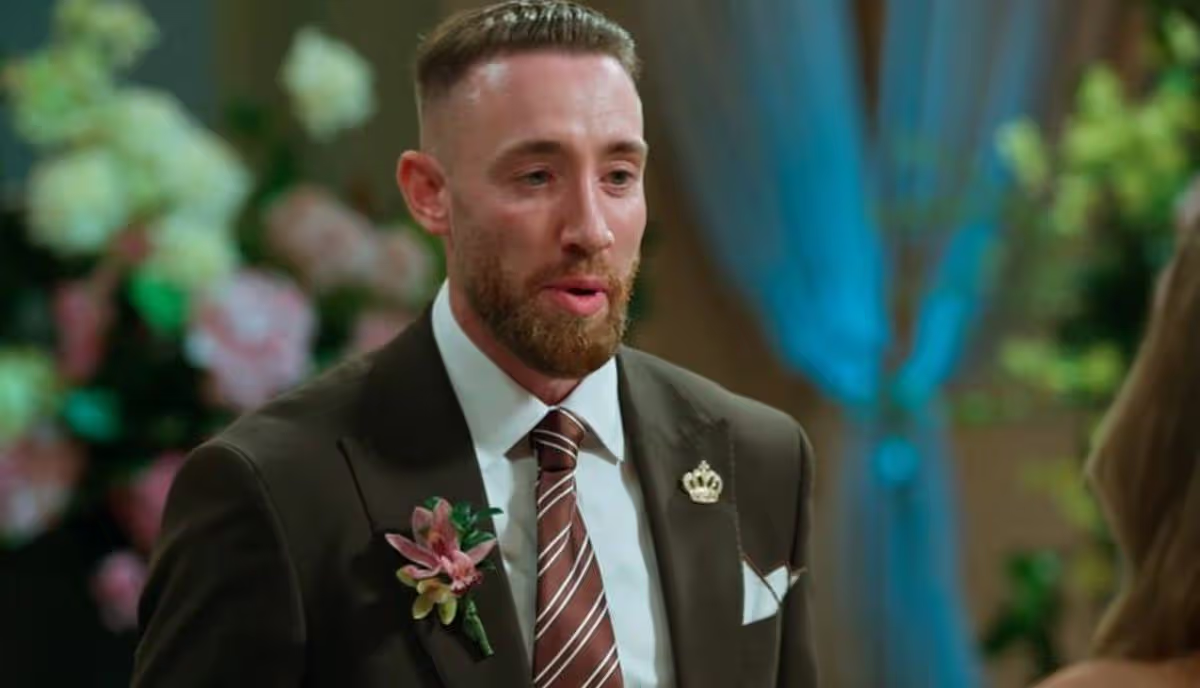
MAFS Australia star breaks down in tears after groom’s shock ‘arrest’ vow
A Married at First Sight Australia groom made an unexpected joke during his wedding vows
MAFS: Jacqui instigates argument with Ryan at wedding
A Married at First Sight Australia star has been left in floods of tears after her groom’s “arrest” speech.
The popular dating programme has made its comeback to E4 for its 13th series, introducing a new batch of brides and grooms seeking romance.
The show tracks singletons from around Australia as they entrust their romantic futures to experts Mel Schilling, John Aiken, and Alessandra Rampolla. Each couple meets for the very first time at the altar, and following their “I do” moment, they’ll find out whether they’re genuinely compatible as they navigate their new relationship.
Over multiple weeks, the newly married couples will go on their honeymoon, before setting up home together and participating in numerous challenges.
Four ceremonies have taken place already, with lots of explosive moments unfolding in the opening two episodes. The most recent episode aired on Wednesday (March 11), with two more couples getting matched by the experts, reports OK!.
The first pair consisted of 35-year-old account manager Bec, who characterised herself as a social butterfly who’s never afraid of commanding attention.
She had previously been engaged, but called it off four months ahead of the ceremony, describing it as the most difficult decision she’d ever made, though she felt proud for leaving a situation that wasn’t suitable.
Bec was paired with 34-year-old businessman Danny, who has called Australia home for 12 years since relocating from the UK. Danny was searching for his “ride or die” partner, a strong woman who ignites passion within him and never fails to make him laugh.
Upon meeting at the altar, Bec and Danny appeared pleased with their pairing, with Bec even sharing a joke with Danny’s stripper best man, Will. However, the atmosphere quickly shifted as Danny began his vows.
Danny started by expressing his devotion to his family and promised Bec he would care for her. He then quipped: “I’m looking for a Bonnie and Clyde type of love. With that being said, if I ever get locked up in prison, I’d like you to bail me out.”
Bec immediately pulled back after hearing Danny’s remark, telling cameras: “He seems like a really lovely guy, but I’m a just bit nervous to be honest with you. I think he may have mentioned in his vows if he gets arrested and what not. I know I can be quite wild and fun, but I really want to settle down and it makes me worried.
“I want to be matched with someone that’s serious about being with their forever person, not someone that’s out getting hammered, acting a fool to the point of getting arrested. I’ve given up everything and you’re mentioning getting arrested in your vows. I wanted to come on here to find love and I don’t know whether or not he wants that.”
Bec then broke down in tears, adding: “I just want something serious. I don’t want to be with anyone that gets arrested.”
She later confided in a producer: “I can just feel it, it’s not going to work. He’s not my husband, no way.” After seeing a different side to Danny during the reception, Bec later apologised to her new husband, with the couple sharing a passionate kiss.
Married at First Sight Australia airs Monday to Thursday on E4 at 7.30pm
For the latest showbiz, TV, movie and streaming news, go to the new Everything Gossip website
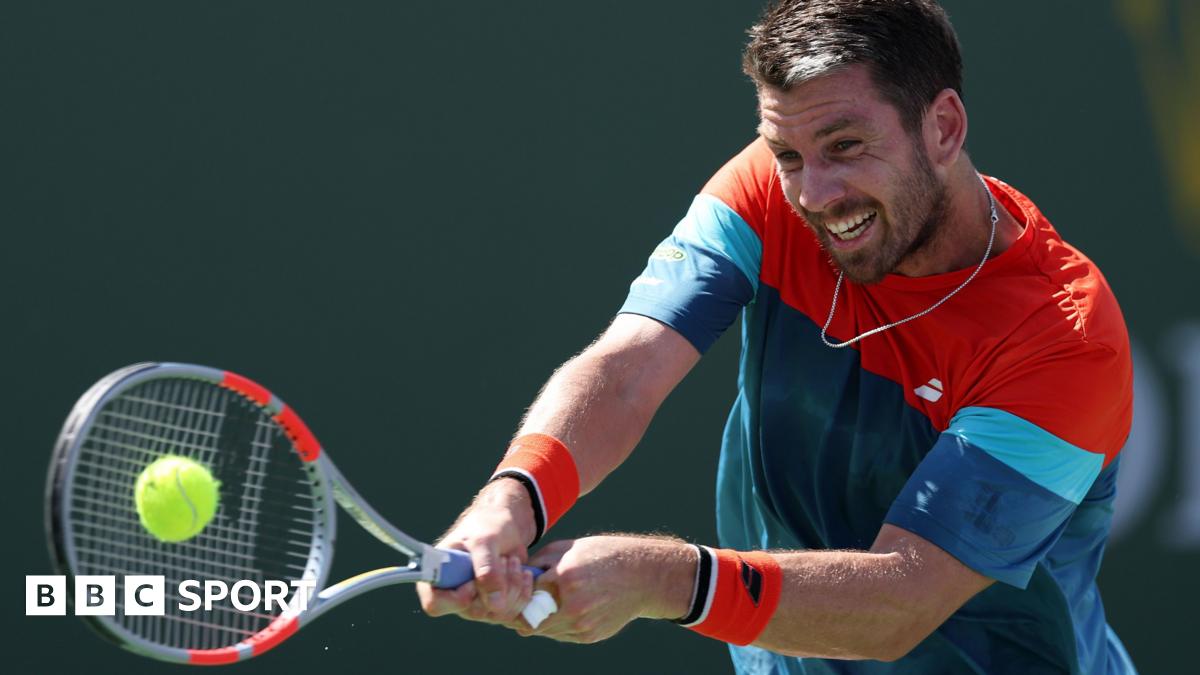
Indian Wells: Cameron Norrie may face Carlos Alcaraz in quarter-finals after beating Rinky Hijikata
Great Britain’s Cameron Norrie beat Australian qualifier Rinky Hijikata in the last 16 at Indian Wells and could meet world number one Carlos Alcaraz in the quarter-finals.
Norrie is yet to drop a set at this year’s tournament, backing up his win over sixth seed Alex de Minaur in the previous round with an impressive 6-4 6-2 victory over world number 117 Hijikata in one hour and 16 minutes.
The 30-year-old left-hander broke Hijikata’s serve in the opening game of the match and, after wrapping up the first set, broke twice more in the second to race into the last eight.
On his own serve, the 27th seed faced only one break point in the match.
Norrie has a good record at the hard-court event in California.
This is his eighth appearance in the men’s singles and it is the fourth time that he has made it to at least the quarter-final stage.
He won the title in 2021, but lost in the last eight in the following two years.

Britain releases files on Epstein probe about ex-ambassador to U.S.

March 11 (UPI) — The British Cabinet Office has released files from its investigation into former ambassador to the United States Peter Mandelson on Wednesday as it digs into his ties to deceased sex trafficker Jeffrey Epstein.
The first batch of documents revealed that Mandelson may have been briefed on classified information before being given security clearance when he was appointed as ambassador. They also show that he requested a large government payout when he was terminated last year.
Mandelson was arrested and then released last month in London over suspicion of misconduct in public office. The allegation stems from emails released in the Epstein files in which Mandelson appears to be sharing market-sensitive confidential information with Epstein.
Documents released by the Cabinet Office share some details after his appointment as ambassador in December 2024. Within days of his being appointed, the Foreign, Commonwealth and Development Office offered to brief Mandelson on highly classified information while he was still being vetted.
Emails about the briefing were shared Dec. 23, 2024, about three days after the announcement of Mandelson’s appointment. It was not until Jan. 30, 2025, that Mandelson received an email confirming that he had cleared the vetting process.
It was in this email that he received a formal offer of employment.
When Mandelson was terminated from his position in September, he requested to be paid the full amount on his contract — more than 500,000 euros or $578,625. Instead, he was paid 75,000 euros or $86,793.75 to terminate the contract.
“As the documents show regarding his severance payment, Peter Mandelson initially requested a sum that was substantially larger than the final payment, not just two or even three times, but more than six times the final amount,” said Darren Jones, chief secretary to the prime minister at the Cabinet office.
“Despite the fact that he was withdrawn from Washington because he had lost the confidence of the prime minister, the government obviously found that to be inappropriate and unacceptable.”
Two killed as tornadoes sweep across US Midwest in latest extreme weather | Weather News
‘Supercell’ thunderstorms hit Illinois and Indiana, after eight people killed by tornadoes in US Midwest last week.

Published On 11 Mar 2026
Two people have been killed in tornadoes in the Midwest region of the United States amid a spate of extreme weather, according to authorities.
At least four tornadoes touched down as intense “supercell” thunderstorms swept across northern Illinois and northwestern Indiana on Wednesday, according to the National Weather Service (NWS).
Recommended Stories
list of 3 itemsend of list
“Supercells” are the rarest form of thunderstorms. They are known to be particularly devastating for their prolonged durations and their “high propensity to produce severe weather, including damaging winds, very large hail, and sometimes weak to violent tornadoes”, according to the NWS.
In Indiana, local officials said an elderly couple had been killed when a tornado hit their home in the town of Lake Village.
Several residents in the wider Newton County were rescued by emergency responders, as the storm knocked down at least 70 utility poles and left some roads impassable.

In a video posted to social media late Tuesday, Sheriff Shannon Cothran warned people about trying to access the damaged areas.
“Please do not come here. Do not try to help right now,” Cothran said, standing in front of the couple’s destroyed home.
Parts of Illinois, Indiana, Kentucky and Ohio remained on tornado watch into the afternoon.
About 40km (25 miles) east of Lake Village, another tornado touched down in Kankakee County, Illinois, late Tuesday.
Officials said the tornado caused extensive damage as it travelled across the suburb of Aroma Park. At least nine people were injured, but no deaths were reported, according to local officials.
Cassidy Sinwelski, 23, told The Associated Press that the storm hit Kankakee harder than expected.

She and her husband took shelter in their home’s bathroom.
“We went into the bathroom, got a piece of plywood, and within minutes, I closed my eyes, the lights flickered, and we just — there was nothing,” Sinwelski said.
Then came loud rumbles and the sound of shattering glass.
“I just kept crying out for God, because I didn’t know what else to do,” she said.
The latest round of extreme weather comes after eight people were killed by tornadoes in the US states of Michigan and Oklahoma last week.

Taylor Swift doubles her fortune to $2billion as full list of 22 celebrity billionaires is revealed
THE list of the richest celebs in the world has been revealed — and it’s good news for Taylor Swift.
The US superstar’s net worth has soared since she was named a billionaire in 2023, and she is now worth twice that.
She has risen from No9 last year to No7 in Forbes magazine’s annual rundown, which revealed there are now 22 celebrity billionaires — up from 18 last year.
Fellow singer Beyonce, tennis ace Roger Federer, rapper Dr Dre and filmmaker James Cameron are the new additions who have crossed the $1billion threshold.
Taylor, 36, boosted her earnings massively with profits from her record-breaking Eras Tour and the value of her music catalogue, all of which she now owns, having bought back the rights to her first six albums last year.
She is said to have amassed $1billion from royalties and touring, while her catalogue of hits has been valued at $900million.
READ MORE ON CELEB RICHES


The Eras 149 gigs across 21 countries from March 2023 to December 2024, made it the highest-grossing tour of all time at $2.077billion, with 10MILLION attendees.
Thanks to the money-spinning shows, she was able to buy the rights to her first six albums.
In 2019 Taylor’s former label, Big Machine, had sold the masters to talent manager Scooter Braun, prompting Taylor to vow to re-record them.
Braun sold them on to LA investment fund Shamrock Holdings in 2020.
But last May she announced she finally controls all her music.
Taylor said last year: “That’s how I spent that Eras Tour money. My fans are why I was able to get my music back.”
The rights to the records had been sold for more than $300million, although it is not known how much she spent to reclaim them.
But she is believed to have made an eight-figure sum in profits from the “Taylor’s Version” remakes of Fearless, Red, Speak Now, and 1989 — which all topped the charts.
She also owns $100million of real estate, including pads in New York, Beverly Hills, Rhode Island and Nashville.
The news coincides with new figures from the British Phonographic Industry, which reveal CD sales in the UK returned to growth in 2025, up 3.1 per cent, largely thanks to 226,000 copies of Taylor’s latest album The Life Of A Showgirl being sold here.
She also contributed to the 19.9 per cent year-on-year rise in vinyl purchases, thanks to 147,000 sales of the record on the format.
It meant The Life Of A Showgirl sold the most vinyl of any new album in a calendar year this century. Her 2023 collection Lover (Live From Paris), which was reissued last year, was also the fourth biggest vinyl of 2025.
Taylor has now scored six No1 singles and 14 No1 albums, beating Madonna’s record of 12 chart toppers for a female artist.
Taylor’s huge net worth dwarfs that of her American football star fiancé Travis Kelce, 36, whose riches total $90million.
The two are expected to marry this summer in a glittering, star-studded ceremony in the US.
Yesterday Travis hinted Taylor has started working on new music for a potential 13th studio album.
He said: “It’s amazing to see her keep going to the table, keep finding new things to write about, keep finding new melodies and things like that.
“On top of that, still seeing her have that love and joy in what she does.
“Of course that’s motivating. That’s motivating for anybody to see, let alone in my fiancée, and knowing that I’m going through something as I try to figure out what the future holds for me.
“Something like that motivates me.”
1. Steven Spielberg
$7.1bn
THE highest-grossing director of all time, 79-year-old Spielberg earns an estimated $100million annually from gross ticket sales thanks to a 1987 deal.
2. George Lucas
$5.2bn
THE Star Wars creator, 81, kept the merchandising rights and ownership of the hit sci-fi franchise and in 2012 sold his firm LucasFilm to Disney for $2.2billion plus shares.
3. Michael Jordan
$4.3bn
BASLETBALL legend, 63, made $2billion from corporate deals.
In 2023 he sold majority stake in NBA team Charlotte Hornets, valued at $3bn.
4. Vincent McMahon
$3.6bn
BUSINESSMAN, 80, made sports promotion firm World Wrestling Entertainment – WWE – a global brand before a $21billion wrestling mega-merger in 2023.
5. Oprah Winfrey
$3.2bn
TALK show host made TV and films through her production firm Harpo.
Oprah, 72, has also earned millions partnering with Weight Watchers and through real estate.
6. Jay-Z
$2.8bn
Rapper, 56, made over $1billion from his alcohol brands D’Usse cognac and Armand de Brignac.
In 2008 he founded the lucrative entertainment firm Roc Nation.
7. Taylor Swift
$2bn
8. Kim Kardashian
$1.9bn
Reality star owns a third of her $5billion shapewear brand Skims.
Kim, 45, also earns through her skincare firm, endorsements, real estate, acting and TV shows.
9. Peter Jackson
$1.9bn
MOVIE director, 64, made Lord Of The Rings films and sold the tech division of his visual effects company Weta Digital for $1.63billion in 2021.
10. Magic Johnson
$1.6bn
FORMER basketball player, 66, has a majority stake in a life insurance company as well as part-ownership of four US professional sports teams.
11. Tiger Woods
$1.5bn
GOLFING legend made $1.9billion during his sporting career and through endorsements.
Woods, 50, is estimated to have earned $121million in prize money.
12. Dick Wolf
$1.5bn
THE producer behind hit US TV dramas Law & Order, Chicago and FBI, 79-year-old Wolf signed a five-year, $1billion deal with NBCUniversal in 2020.
13. Tyler Perry
$1.4bn
THE actor and filmmaker has 100 per cent ownership of his 22 films and over 1,200 TV episodes.
Perry, 56, now owns the largest film production studio in the US.
14. LeBron James
$1.4bn
SPORTS contracts have earned $500million for the 41-year-old basketball player – and he has a lifetime $1billion endorsement deal with Nike.
15. Bruce Springsteen
$1.2bn
ROCKER, 76, has toured for five decades, released 21 studio albums and received $500million when he sold his entire music catalogue to Sony in 2021.
16. Arnold Schwarzenegger
$1.2bn
HAVING earned $500million from films, the 78-year-old actor has also made savvy investments, including in an investment firm which manages $1 trillion in assets.
17. Jerry Seinfeld
$1.1bn
THE comedian has earned almost $500million from syndicating his self-titled sitcom.
Seinfeld, 71, still does stand-up and has a Porsche collection valued at $100million.
18. Roger Federer
$1.1bn
Retired tennis player, 44, won 20 Grand Slams but also had lucrative deals with Rolex and Mercedes.
He also has a stake in athletic
19. James Cameron
$1.1bn
FILMMAKER behind three of the four highest-grossing films of all time.
Cameron, 71, directed Titanic, Avatar and Avatar: The Way of Water, which made over $7.5bn.
20. Rihanna
$1bn
THE Umbrella singer, 38, has a $200million music catalogue but made her main fortune through cosmetics firm Fenty Beauty and lingerie brand Savage X Fenty.
21. Beyonce
$1bn
AS well as grossing more than $1billion in back-to-back tours, the singer, 44, has a $300million music catalogue and a haircare line, Cecred, valued at $100million.
22. Dr Dre
$1bn
RAPPER, 61, co-founded Beats Electronics and Beats Music, and launched the careers of Kendrick Lamar and Eminem through his label Death Row Records.

400 million barrels of oil to be released from strategic reserves as Iran targets commercial ships
Attacks on multiple commercial ships in the waters around Iran on Wednesday increased global energy concerns, pushed nations to unleash strategic oil reserves and sparked fresh critiques of the Trump administration’s readiness for a war it started.
As Trump administration and U.S. military officials continued to claim increasing success and advantage in the conflict — and authorities downplayed a reported threat of drone attacks on California — leaders around the world scrambled to respond to the latest attacks and the International Energy Agency’s call for the largest ever release of strategic oil reserves by its members to help stem energy price spikes.
President Trump also faced renewed questions about a deadly strike on an Iranian elementary school at the start of the war, after the New York Times reported Wednesday that a military investigation had determined the U.S. was responsible.
“I don’t know about it,” Trump said when asked about the report.
In an address Wednesday morning, IEA Executive Director Fatih Birol said energy shipments through the Strait of Hormuz had “all but stopped” amid the conflict, driving massive global competition for oil and gas in wealthier countries and fuel rationing in poorer nations.
He said the IEA’s 32 member nations have brought a “sense of urgency and solidarity” to recent discussions on the matter, and had unanimously agreed to “launch the largest ever release of emergency oil stocks in our agency’s history,” making 400 million barrels of oil available.
However, he said the most needed change is the “resumption of traffic through the Strait of Hormuz.”

A vendor pumps petrol from Iranian fuel oil tankers for resale near the Bashmakh border crossing between Iraq and Iran.
(Ozan Kose / AFP/Getty Images)
Several countries, including Germany, Austria and Japan, had already confirmed their plans to release reserves.
The White House did not immediately respond to a request for comment on any U.S. plans to release its strategic reserves, or how much would be released. The U.S. is an IEA member.
Trump told reporters Wednesday that the U.S. has hit Iran “harder than virtually any country in history has been hit,” including by wiping out its naval fleet and eliminating other vessels capable of laying mines, and that he believes oil companies should resume shipments through the strait despite the recent attacks.
U.S. Interior Secretary Doug Burgum backed the idea of releasing oil reserves in a Fox News interview.
“Certainly these are the kinds of moments that these reserves are used for, because what we have here is not a shortage of energy in the world; we’ve got a transit problem, which is temporary,” Burgum said. “When you have a temporary transit problem that we’re resolving militarily and diplomatically — which we can resolve and will resolve — this is the perfect time to think about releasing some of those, to take some pressure off of the global price.”
Burgum said that while Iran is “holding the entire world hostage economically by threatening to close the strait,” Trump has made the consequences of such actions “very clear,” and “there’s a lot of options between ourselves and our allies in the region, including our Arab friends in the region, to make sure that those straits keep open and that energy keeps flowing for the global economy.”
The IEA did not provide details as to the release of the 400 million barrels, part of a broader reserve of some 1.2 billion barrels held by its members. It said the reserves “will be made available to the market over a time frame that is appropriate to the national circumstances of each Member country and will be supplemented by additional emergency measures by some countries.”
The agency said an average of 20 million barrels of crude oil and oil products transited the strait per day in 2025, and that options for bypassing the strait are “limited.”
While some tankers believed linked to Iran were still getting through the Strait of Hormuz, which under normal circumstances carries about 20% of the world’s oil and natural gas, Iranian officials threatened attacks on other vessels — saying they would not allow “even a single liter of oil” tied to the U.S., Israel or their allies through the channel, which connects to the Persian Gulf.
Trump has repeatedly claimed that the U.S. and its powerful Navy would support commercial vessels and ensure the strait remains open to oil shipments, but that has not been the case.

Tankers wait off the Mediterranean coast of southern France on Wednesday.
(Thibaud Moritz / AFP/Getty Images)
The United Kingdom Maritime Trade Operations center, run by the British military, reported at least three ships struck in the region Wednesday — including ships off the United Arab Emirates and a cargo ship that was struck by a projectile in the strait just north of Oman, setting it ablaze.
The Trump administration and the U.S. military, meanwhile, have been pushing out messaging about wiping out Iran’s ability to plant mines in the strait — posting dramatic videos of major strikes on tiny boats on small docks.
Adm. Brad Cooper, the leader of U.S. Central Command, said in a video posted to X on Wednesday morning that “in short, U.S. forces continue delivering devastating combat power against the Iranian regime.”
“I’ve said this before, but it bears repeating: U.S. combat power is building, Iranian combat power is declining,” he said.
The U.S. has struck more than 60 Iranian ships, and just “took out the last of four Soleimani-class warships,” he said. “That’s an entire class of Iranian ships now out of the fight.”
Cooper said Iranian ballistic missile and drone attacks have “dropped drastically” since the start of the war, though “it’s worth pointing out that Iranian forces continue to target innocent civilians in gulf countries, while hiding behind their own people as they launch attacks from highly populated cities in Iran.”
He also addressed the attacks on commercial shipping in the region directly, saying that “for years, the Iranian regime has threatened commercial shipping and U.S. forces in international waters,” and that the U.S. military’s “mission is to end their ability to project power and harass shipping in the Strait of Hormuz.”
Other U.S. leaders called the U.S. war plan — and specifically its approach to protecting the Strait of Hormuz — into question.
In a series of posts to X late Tuesday, which he said followed a two-hour classified briefing on the war, Sen. Chris Murphy (D-Conn.) slammed the administration’s plans as “incoherent and incomplete.”
Murphy wrote that the administration’s goals for the war seemed to be focused primarily on “destroying lots of missiles and boats and drone factories,” and without a clear plan for what to do when Iran — still led by “a hardline regime” — begins rebuilding that infrastructure, other than to continue bombing them. “Which is, of course, endless war,” he wrote.
Murphy also specifically criticized the administration’s plan for the Strait of Hormuz — which he said simply doesn’t exist.
“And on the Strait of Hormuz, they had NO PLAN,” he wrote. “I can’t go into more detail about how Iran gums up the Strait, but suffice it [to] say, right now, they don’t know how to get it safely back open. Which is unforgiveable, because this part of the disaster was 100% foreseeable.”
Ships in the strait remained under threat of various forms of attack Wednesday, as did much of the region as the war raged on.
There was an attack on a U.S. Embassy operations center at Baghdad’s airport, which officials attributed to a drone launched by Iranian proxies based in Iraq. No casualties were reported.
Lebanon’s Health Ministry reported the death toll there — from fighting between Israel and Iranian-backed Hezbollah fighters — had risen to 634 since last week, including 91 children. Another 1,500 people had been wounded, the ministry said.
Iranian authorities have said U.S. and Israeli attacks have killed 1,255 people since Feb. 28. That includes many Iranian leaders, including then-Supreme Leader Ayatollah Ali Khamenei. U.S. officials have said Iranian attacks in the region have killed seven U.S. service members, with another 140 wounded.
CBS News reported Wednesday that dozens of those injuries were sustained by service members in the March 1 Iranian drone attack on a tactical operations center in Kuwait — which is also where six of the seven deaths occurred.
The outlet reported that the attack was more severe than the Trump administration has revealed, with more than 30 military members still in hospitals Tuesday with a range of battle injuries including “brain trauma, shrapnel wounds and burns.”
Threats extended beyond the Middle East, too — including to California, where law enforcement agencies were warned by federal authorities that Iran “allegedly aspired to conduct a surprise attack” on California using drones launched from a vessel off the U.S. coast.
However, sources told The Times that advisory was cautionary and not backed by credible intelligence.
Times staff writer Gavin J. Quinton, in Washington, D.C., contributed to this report.

Palisades coach remembers when City basketball teams won at highest levels
When Jeff Bryant was playing high school basketball at Sylmar, the top teams in the City Section were annually among the best in California.
“The City dominated back in the day,” Bryant, now the head coach at Palisades, said Tuesday before Southern California Regional Division II boys’ basketball final. His Dolphins lost a heartbreaker, 59-57 at Bakersfield Christian, falling a win short of a trip to Sacramento for the state finals.
Eleven days earlier Palisades captured the City Open Division crown, going undefeated against section opponents, and with 10 players — including all five starters — returning next season, Bryant not only has his sights set on a repeat, he wants to reverse a 15-year trend during which City teams have struggled to compete at the highest level.
City boys teams won the state’s top division five times in six years from 1993-98 and seven times in nine years from 2002-10. However, since the Open Division debuted in 2013 only two City teams have advanced to the regional finals in that division — Westchester in 2014 and Fairfax in 2015 — and the last time a City team made the Open bracket was five years ago when Birmingham lost in the first round.
Bryant, who graduated in 2006, will be rooting for his former coach on Friday when his alma mater plays for the Division V state championship under the guidance of Bort Escoto, who piloted the Spartans to the City Division II title on the same night Palisades won the Open Division. Sylmar was dropped down to Division V for regionals and ran the table.
Birmingham was upset by Fairfax in the opening round of the City Open Division playoffs Feb. 11 and dropped to Division III for the regional tournament. The Patriots have since reeled off four convincing victories and will also play for a state title Friday afternoon.
Birmingham and Sylmar are the latest City teams to benefit from regional playoff expansion in which teams are placed several divisions lower from where they played in their section. Chatsworth advanced to the Division II state final last winter after losing in the City Open Division final and reached the Division IV state final after its City Open semifinal loss two years ago. Like Sylmar this season, Verdugo Hills was the City Division II champion in 2024 and went on to play for the Division V state title.
On the girls’ side, no City squad has won an Open Division state playoff game. Five teams from the section have received berths in the highest division over the last 14 years, but none since Fairfax in 2018. Narbonne is the last City team to conquer the state’s top division, claiming back-to-back Division I titles in 2000 and 2001, long before the Open debuted.
Like the boys, City girls’ teams fare well when dropped to lower divisions.
Palisades, which fell in the first round in the City Open Division, plays for the state Division IV crown Saturday while City Open Division champion Westchester was seeded 14th in Division I for regionals and lost in the first round. Granada Hills went to the Division III state finals two years ago after losing in the first round of the City’s Open Division.
Before taking the helm at Palisades, Bryant guided West Ranch of the Southern Section into the Open Division regional playoffs in 2023. Now he aims to do the same at a school in the section he once played in.

Senators seek review of Trump administration handling of Epstein files

March 11 (UPI) — A bipartisan group of senators penned a letter to the Government Accountability Office on Wednesday calling for an investigation into the Justice Department over its handling of the Jeffrey Epstein files release.
The letter accuses the Justice Department of noncompliance with the Epstein Files Transparency Act, the bipartisan law overwhelmingly passed by both chambers of Congress last year. The lawmakers shared concern that the department has still not released all of the files it is required to by the law, despite a December deadline.
Sens. Dick Durbin, D-Ill., Ben Ray Lujan, D-N.M., Jeff Merkley, D-Ore., and Lisa Murkowski, R-Alaska, signed the letter. They also shared concerns about the files that have been released, including victims’ names not being redacted and alleged coconspirators’ names being redacted.
The Government Accountability Office is an independent and nonpartisan agency in the legislative branch. Its purpose is to operate as a watchdog over the federal government, with the authority to investigate and perform audits.
“Contrary to Congress’s explicit directive to protect victims, these records included email addresses and nude photos in which the names and faces of publicly-identified and non-public victims could be identified,” the letter said. “But when it came to information identifying powerful business and political figures who are alleged coconspirators or material witnesses, DOJ appears to have heavily redacted those.”
The senators are requesting that Comptroller General Orice Williams Brown reviews the department’s process it used to review, redact and release the files. They specify that they want the Government Accountability Office to investigate whether the release of the files “has serve to cover up child sexual abuse.”
The Epstein files have continued to be a source of contention between lawmakers and the Trump administration more than two months after the Justice Department was required by law to release the files.
Lawmakers have pushed for answers about the delayed and mistake-filled release from Attorney General Pam Bondi, leading to fiery exchanges in a House Judiciary Committee hearing last month.
The House Oversight Committee issued a subpoena for Bondi’s testimony last week. Five Republicans joined all of the Democrats in the committee in voting for the subpoena.
“This horrific scandal is one where powerful, wealthy men groomed, abused, and raped young women, men, and children,” the letter from the senators reads. “It is critical to understand what led to DOJ’s failure to redact the victims; information and re-victimize those individuals while violating the Epstein Files Transparency Act in its redactions of information related to their alleged abusers.”

One Man’s Kidnapping in Kano Unmasks Growing Criminal Siege
Audu Danbaba is in his fifties but trudges like someone in his eighties. He walks carefully, sometimes raising his hands as if they were scales calibrating his body’s equilibrium.
As he emerged from his house on Feb. 25, he moved with visible effort – his feet swollen – counting each step as if needles were being pressed into the soles of his feet. With a laboured exhale, he eased himself down onto a mat that faced his home. The house, made of mud bricks, is located in Nassarawa village, Gwarzo Local Government Area (LGA), in Kano State, northwestern Nigeria.
Audu cannot remember the exact date when the armed kidnappers pulled him from his house, but he does know that it happened roughly two months ago, maybe a little longer. “I spent about 40 days with them, and now I’m in my fourth week since I was released,” he told HumAngle.
Audu’s ordeal is a window into a calculated and expanding kidnapping economy that has quietly taken root in the Gwarzo LGA. Kidnapping in Kano is fuelled by informant networks, strengthened by a porous border with Katsina State, and maintained by a ransom cycle that is systematically draining the little resources left in the poorest communities of the northwestern region.
Late at night, he was lying down when he heard screaming. The attackers had already entered his home and were beating both of his wives and children. He rushed outside and asked what was happening. They told him directly that they had come for him. To protect his family, he surrendered.

“Here is where they tied my hands and started beating me with the butt of a gun on my legs,” Audu recalled, gesturing toward the spots he said still ache. “Then they pushed me forward, beating me and shoving me until we had walked a long distance through farmland and crossed a road.”
Audu could not recall how long they had trekked with him because he was barely conscious as they dragged him. His sense of measurement also appears faulty, as he confuses miles and kilometres several times while narrating his story.
And so they kept pushing him.
“It was on the road that I noticed security operatives on patrol, as though they had received a tip and were following us. I tried to lift my head, and they struck me with the rifle butt and pinned me down. I couldn’t speak. We stayed like that until the patrol passed, then they pulled me up and kept beating me as we walked,” he added.
What Audu described, the systematic beating of victims after abduction, has emerged as one of the most disturbing features of the kidnapping crisis in northern Nigeria. After reaching the forest, he said he was tied alongside another man who had also been abducted. The torture continued with such ferocity that the other man died a week after he was abducted.
“After his death, his corpse lay there with me for two days before they took him away,” he said.
Different clips showing how abducted victims are tortured by their abductors have recently been circulated online. One footage featured a member of the National Youth Service Corps (NYSC) being tortured repeatedly by his abductors while pleading for help. In another widely shared video, three women were shown being struck as the abductors pressured them to urge their families to pay a ransom.
Another harrowing case is the testimony of a man published by a local media outlet in Zamfara, Maibiredi TV. The man narrated that his abductors burned one of his hands using molten rubber during ransom negotiations to force his family to speed up payment. Only two of his fingers remain.
What is happening in Gwarzo?
At least five Local Government Areas (LGAs) in Kano share borders with neighbouring Katsina State, namely Rogo, Tsanyawa, Shanono, Gwarzo, and Ghari (formerly Kunchi). While Tsanyawa and Shanono have suffered the most attacks, Gwarzo is particularly vulnerable. The town’s western and northern borders are adjacent to Katsina’s Malumfashi and Musawa LGAs, which have been heavily impacted by terrorist activities for a long time.
The dense and ungoverned forests in these regions provide terrorists with continuous cover for their operations. From there, locals say, they flow into Gwarzo.

Locals say that the first recorded case of kidnapping occurred on Dec. 14, 2025, when terrorists on motorcycles attacked the Kururawa community in the Lakwaya district of Gwarzo. They invaded the home of an elderly man known locally as Yakubu Na Tsohuwa and abducted him. His eldest son, Badamasi, was injured while attempting to stop the assailants from taking his father. Within the same week, a second kidnapping incident was reported.
Gwarzo’s security crisis did not start in December 2025. In January 2024, police operatives arrested Isah Lawal, a 33-year-old man from Giwa LGA in Kaduna, during a clearance operation in Karaye LGA along the Kaduna-Kano border. He confessed to fleeing a terrorist camp in Birnin Gwari due to internal gang violence and expressed his intention to establish a new camp in the Gwarzo-Karaye forest. This arrest, which was largely unreported at the time, served as a warning that the authorities did not adequately heed.
The Gwarzo-Karaye forest corridor, straddling Kano’s border LGAs and stretching toward Katsina’s ungoverned zones, had already been identified by displaced armed factions as a viable new territory.
The December 2025 attacks followed a pattern that exposed how openly these groups now operate. Around 20 armed men were spotted in Danjanku village in Malumfashi LGA, heading toward the Kano axis, according to sources. The attack on Zurum Mahauta in the Gidan Malam Sallau community came at midnight on the same day.
To address the growing threat, the Kano State Government deployed forest guards to monitor the woodland areas around Gwarzo. These guards serve a dual purpose: overseeing the reforestation efforts critical to the state’s climate change response, and functioning as an early-warning layer for security threats emerging from the forest.
Dahir Hashim, the Commissioner for Environment and Climate Change, told HumAngle that the guards were recruited to tackle both challenges simultaneously: “Managing the forests because of their critical role in halting desertification, and providing rapid alerts whenever security threats are detected.”
HumAngle spoke to Abdullahi Hamza, who leads the team managing one of the forests in Mainika, Gwarzo. He is cautiously optimistic about the project, saying: “This initiative by the government has delivered results; at least for now, we have gone many days without a security incident inside Gwarzo, though there may be areas we are not yet aware of.”

There are two forests in Gwarzo. One is known as Dajin Katata, where the forest guard Musa Muhammad previously worked.
“There were constant criminal incidents in that forest; the fear eventually led the previous government to fell the trees to deny criminals cover,” he told HumAngle.
Musa was later reassigned closer to home in Mainika. He does not hide his discomfort with that decision. The felling of Dajin Katata, he said, was ecologically damaging — those trees were a bulwark against the advance of the desert. But he has made his peace with the logic behind it.
“Security comes first,” he said. “You must be alive to breathe the shade of a tree.”
Kidnapping the poor for ransom
Why was Audu a target for abduction in the first place? By every visible measure, even within his own village, Audu is not a wealthy man. His mud-brick house sits among the more neglected on the street, unrepaired and unremarkable.
He told HumAngle himself that shortly before his abduction, he had tried to sell his farmland out of financial desperation, but the offer he received felt so insulting that he walked away from the deal.
“The land was worth between three and a half and four million naira, but they offered me two and a half million naira. I felt disrespected, so I refused,” he said.
Then came a coincidence that, in hindsight, feels like anything but.
Around the same period, the Kano State government began disbursing outstanding allowances owed to former ward councillors across the state. Audu’s son, Anas, had served as a councillor between 2020 and 2023, which placed him among the beneficiaries. The payment, amounting to roughly ₦6 million, was not made quietly; the state government publicised it widely. Photographs were taken at the government house. Screenshots of bank alerts began circulating on social media, shared by recipients whose names and faces were now attached to a specific, traceable sum.
The publicity became something else entirely.
“Many people had their eyes on that money,” said Mallam Saidu, Audu’s neighbour. “There is a strong suspicion that it was this payment that drew the kidnappers to Danbaba’s house that night.”
Audu suspects the same. He says his captors told him, as they held him, that someone had directed them to him. They did not tell him who.
“They showed me about five people from a distance,” he said. “I could barely lift my head to look, and when I did, I didn’t recognise any of them.”
Later, during ransom negotiations, Audu says he kept hearing one side of a phone conversation — someone telling the kidnappers that they should push his family harder to bring more, insisting they had the money and should produce it.
Across northern Nigeria, kidnapping has evolved from opportunistic crime into a sophisticated industry, and at its operational core lies a network of human intelligence that security agencies have struggled, and often failed, to penetrate or counter.

Kano has witnessed a surge in kidnapping and criminal operations aided by local informants and snitches within the state’s localities. This development seems to have inflated security threats in local communities. Musbahu Shanono, for instance, is originally from Faruruwa in Kano but works in Lagos, in Nigeria’s South West.
When HumAngle spoke with Musbahu in 2025, he described the creeping anxiety that now accompanies what should be an ordinary homecoming – the fear of informants making him a stranger in his own community.
“Now I only come at night,” he said. “No one should know I’m around. Not even my friends. Not until I’m sure it’s safe.”
According to security authorities across northern Nigeria, kidnappers conduct detailed advance planning before armed teams execute raids at vulnerable hours, overwhelming lightly protected targets and transporting captives deep into remote forest hideouts.
In 2021, the Zamfara State government announced the arrest of more than 2,000 suspected informants. The following year, the state went further to enact legislation prescribing life imprisonment for anyone found to have aided kidnapping operations or other criminal activity in the state.
Yet the problem has not abated. Security authorities across Nigeria acknowledge that informant networks remain one of the most intractable elements of the crisis, embedded in communities, operating in plain sight, and extraordinarily difficult to root out.
Even Nigeria’s Minister of Defence, then-Chief of Defence Staff, Christopher Musa, admitted publicly in 2024 that informants were being used not only to identify and track targets, but to actively misdirect security forces pursuing terrorists.
“They make the troops go elsewhere, and when they get there, they meet nothing,” Musa said.
The price of coming home
Now Audu is back. But his return has cost his family everything.
“They only released me after we paid ₦8 million and three motorcycles,” he recalled.
The family sold whatever they could find. The farm that he had refused to part with for two and a half million naira, the offer he had walked away from as an insult to his dignity, went for only ₦1.8 million in the end due to desperation.

“Then we went around asking for help – some people gave us gifts, others gave us loans,” said Anas, his eldest son. Today, after his father’s release, the family is saddled with a debt of approximately ₦4.5 million and has no clear idea where to begin repaying it.
Audu carries the weight in his body as much as in his finances. “Even after I returned, everyone who saw me broke into tears at the state I was in,” he said. “Doctors have examined me and given me medication, but the pain in my body has not stopped.”
His deeper anguish is the problem he cannot solve: how does a man who had nothing rebuild from less than nothing? “We sought help from every direction and found very little,” Anas added. “We are still appealing to the government, even if it is just to help settle the debt, because everything we had was consumed by this ordeal.”
For the remaining residents of Nassarawa and the villages clustered along Gwarzo’s edges, the haunting question is not about debt. It is about prevention and how to protect themselves from the fate that swallowed Audu before the kidnappers come again.

‘undertone’ review: This podcast is sponsored by evil
Everyone’s getting into podcasts — even demons.
“undertone,” a muted, personal and static microbudget horror debut by Ian Tuason, takes place in the writer-director’s actual childhood home where he tended to both of his parents before they died. Both hospice and inspiration, it’s a stifling place decorated with floral wallpaper and crucifixes. The pain and exhaustion and grief are so real and oppressive, the camera never dares set a foot outside.
Upstairs, Evy (Nina Kiri), watches over her own terminally ill mother (Michèle Duquet). Tuason funneled his emotional gloom into this movie; Evy co-hosts a horror podcast with her overseas best friend Justin (voiced by Adam DiMarco). “This is the only thing keeping me sane right now,” she says. They’re words she’ll regret within the week.
Kiri and DiMarco have the comfortable, convincing chemistry of two old pals who have done a show for a while. One snippet seems to be an episode on Elisa Lam, the real-life tourist found dead in the rooftop water tank of Los Angeles’ Cecil Hotel. There’s also a reference to a website with a red-faced ghoul who hypnotizes victims into cutting off their ears. The latter may be Tuason seeding his idea for a sequel.
Here the central story is that Justin, who lives in London, has received an email with 10 audio files recorded by a couple named Mike and Jessa (Jeff Yung and Keana Lyn Bastidas) who are trying to understand what she’s saying in her sleep. The sender is unknown. (Possibly an evil spirit hoping for the exposure of a mattress ad?) Justin, the believer, is instantly alarmed by how these eerie tapes escalate from cute banter to ghostly crying babies and backward incantations. Evy is the skeptic who dismisses the noises as either an online hoax or bad plumbing.
Due to the time zone differential, Evy and Justin record their show just before he heads out to work in the morning, which for her is 3 a.m. Most of the movie takes place in that witching-hour window, an airlessly silent time where an at-home podcaster doesn’t worry about being interrupted by a leaf blower, an ice cream truck or a dog. Sound-designed by David Gertsman, “undertone” is so quiet that a tea kettle sounds like a fire alarm. Story-wise, it’s equally inert. One of the biggest action shots in the first hour comes when — eek! — a sink turns on.
I’d love to understand why horror films that I find excruciatingly dull give others the heebie-jeebies. My working theory is that they tap into audiences with a preexisting suspicion that the world is wicked — they prove paranoia to be well-founded. My mental default is that the world is neutral-good, and that may be why I prefer movies with active villains scaring me out of my complacency. I spent “Paranormal Activity” and “Skinamarink” restlessly admiring the production design; here, my main thrill came from the soundscape, like when a vibrating cellphone made my chair rattle like it was a tractor, or a noise that can only be described as death-rattle ASMR.
When Evy slips her on headphones, she’s so focused making sense of the latest scary tape, playing it forward, reversed and slowed-down, that she’s oblivious to the bumps in the night in her own house, upstairs near her comatose mother’s bedroom. I suspect Tuason deeply relates to Evy, to the disassociation of living with death every day, and uses her resistance to explore denial. She refuses to admit that the supernatural is real, even as she repeatedly takes a break to steady herself and, as she puts it, “get back into character.” Her stifled panic makes it obvious that fear is taking over.
The screenplay also has a passing reference to Evy’s useless, off-screen boyfriend Darren (voiced by Ryan Turner). Their miserable dynamic is compelling but overall comes off like a plot point Tuason stuffed in his pocket and never got around to using. Our one peek into it comes when Darren phones Evy to pressure her to ditch her mom and come to a party. He claims he’s throwing a kegger to cheer her up. (A frozen lasagna on the doorstep would be better, dude.)
Evy does reluctantly leave the house — we don’t follow her there — and that one moment says as much about crossed-signals communication as anything else in the movie. It’s bullseye-accurate about how isolating it is to lose a parent earlier than your peers.
The film is so committed to its rigors — the two-person cast, the glacial camera pivots, the moody lighting — that it teeters on the line of becoming monotonous. When Tuason eases up a bit, say in a scene in which Evy pops on a sleep podcast that begins by describing a babbling brook and rapidly becomes a nightmare tale of bobbing corpses, he finally shows you that he has the potential for range.
But “undertone” is rooted in that slow-and-still horror discipline that holds its breath waiting for something to happen. It requires the audience to bring their own bad vibes to shots of religious icons on the wall and long takes of Evy clacking on her laptop, unaware of a flickering light behind her. (Rumor is Tuason has already signed on to shoot the next “Paranormal Activity” sequel.)
Mostly it puts the audience in the position of watching a protagonist so passive that chunks of the running time are watching her sit at a table waiting for Justin to look up things for her on Wikipedia. Like amateur detectives, we learn alongside them as they click around pages about Sumerian devils, Catholic saints and the origin of the nursery rhymes “London Bridge” and “Baa, Baa, Black Sheep.”
As visuals go, “undertone” is so far removed from anything resembling the cinematic experience that I left with a fresh appreciation for campfire storytelling. At least then the listener gets to use their own imagination. But production designer Mercedes Coyle does dig up two satisfyingly creepy props: one, an antique speaking doll, the other, a small white statue that appears to be the Virgin Mary until we get a better look at her mouth, deformed by a hungry scream.
Despite my quibbles with how her character reacts when things really go awry, Kiri’s Evy has a clarity of purpose that holds our attention despite not having that much to do. In her strongest sequence, she and Justin take a few live callers on their podcast, some of whom bear bad news about Mike and Jessa, and another who phones up in the middle of a crisis that’s too big for these self-positioned experts to handle. Real violence is coming and these armchair ghosthunters are totally out of their depth. Yes, everyone is into podcasts. Maybe they shouldn’t be.
‘undertone’
Rated: Rated R, for language
Running time: 1 hour, 34 minutes
Playing: Opens Friday, Mar. 13 in wide release
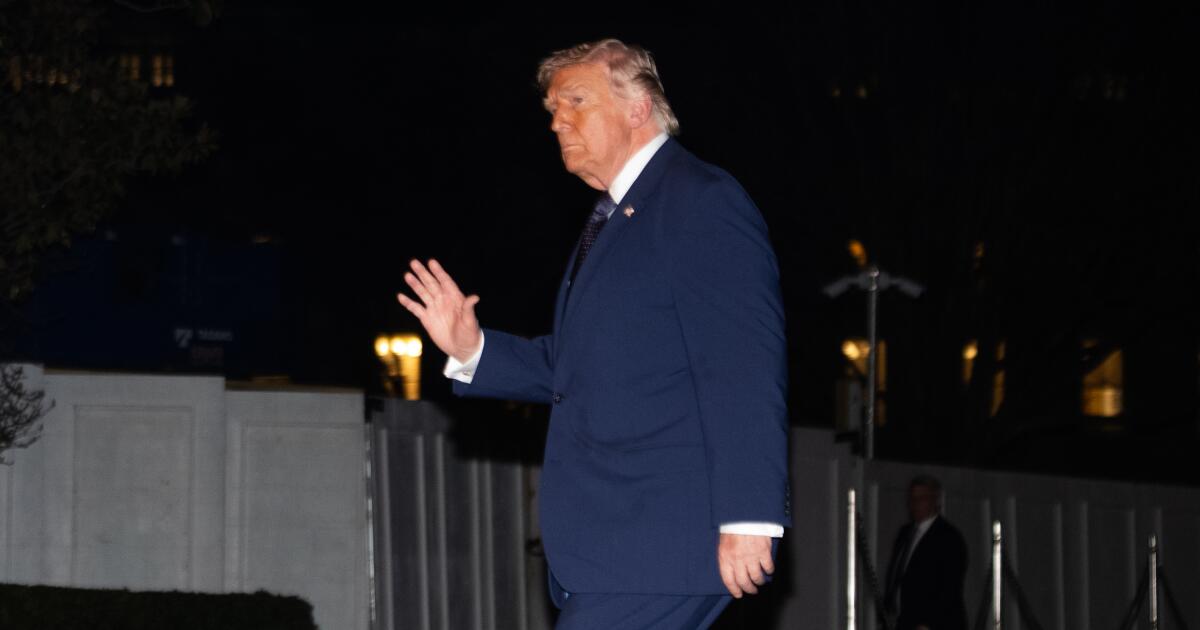
Smartmatic says Trump’s ‘campaign of retribution’ is driving criminal prosecution
MIAMI — Voting technology firm Smartmatic is seeking to dismiss a criminal indictment for money laundering, blaming President Trump and his allies for seeking its prosecution as part of a “campaign of retribution” against those they blame for his 2020 election loss.
Smartmatic’s parent company, UK-based SGO Corporation, was added to a criminal indictment last fall previously charging several executives with paying $1 million in bribes to election officials in the Philippines.
In a motion to dismiss the indictment filed Tuesday, attorneys for Smartmatic said the company had been cooperating with the Justice Department since it first learned of its investigation in 2021, including by producing millions of pages of documents and making presentations to federal agents. A trial date for the executives, including co-founder Roger Pinate, had been set and the company believed that it was in the clear.
But when Trump returned to the White House, the Justice Department reversed course and decided to press charges against Smartmatic. Attorneys for the company said the decision was prompted by Trump’s demands to prosecute his perceived enemies and his “mantra” that Smartmatic helped rig the 2020 U.S. presidential election won by Joe Biden — allegations that are at the heart of a $2.7-billion lawsuit filed by Smartmatic against the president’s allies in the media.
“The prosecution of SGO furthers their collective false narrative that President Trump did not actually lose the 2020 election,” Smartmatic said in the filing in Miami federal court.
The White House did not immediately respond to a request for comment.
Attorneys likened the prosecution to the Justice Department’s targeting of Kilmar Armando Ábrego García, a Salvadoran migrant who was criminally charged for conduct years earlier after he successfully sued the Trump administration over its decision to deport him.
In the years since the election, the filing states, “Smartmatic USA has exercised its right to hold those individuals and entities legally accountable for their deluge of defamatory statements and the attendant damage inflicts on its business, putting it squarely in the crosshairs for retribution.”
The criminal case against Smartmatic and its employees stems from payments, between 2015 and 2018, that were allegedly made to obtain a contract with the Philippine government to help run that country’s 2016 presidential election. Pinate, who no longer works for Smartmatic but remains a shareholder, has pleaded not guilty.
As part of the criminal case, prosecutors in August sought the court’s permission to introduce evidence they argue shows that revenue from a $300-million contract with Los Angeles County to help modernize its voting systems was diverted to a “ slush fund” controlled by Pinate through the use of overseas shell companies, fake invoices and other means.
They also accused Pinate of secretly bribing Venezuela’s longtime election chief by giving her a luxury home with a pool in Caracas. Prosecutors say the home was transferred to the election chief in an attempt to repair relations following Smartmatic’s abrupt exit from Venezuela in 2017 when it accused then-President Nicolas Maduro ’s government of manipulating tallied results in elections for a rubber-stamping constituent assembly.
Smartmatic was founded more than two decades ago by a group of Venezuelans who found early success running elections while the late Hugo Chavez, a devotee of electronic voting, was in power. The company later expanded globally, providing voting machines and other technology to help carry out elections in 25 countries, from Argentina to Zambia.
But Smartmatic has said its business tanked after Fox News gave Trump’s lawyers a platform to paint the company as part of a conspiracy to steal the 2020 election.
Fox said it was legitimately reporting on newsworthy events but eventually aired a piece refuting the allegations after Smartmatic’s lawyers complained. Nonetheless, it has aggressively defended itself against the defamation lawsuit in New York — arguing that the company was facing imminent collapse over its own internal misconduct, not due to any negative coverage.
Goodman writes for the Associated Press.

Barrow boss Dino Maamria leaves League Two strugglers after 28 days
Barrow head coach Dino Maamria has left the League Two strugglers after only 28 days in charge.
The 54-year-old took over on 11 February but managed only one win from his six games, leaving the Bluebirds outside the relegation zone on goal difference with 11 matches remaining.
“We recognise that this has been a very disappointing season with far too much managerial change,” Barrow said in a statement., external
“As the board of directors, we understand that the buck stops with us. We believe this change gives us the best chance of remaining in the football league.”
Experienced midfielder Sam Foley, 39, has been handed the interim head coach role until the end of the season with coaches Simon Ireland and David Worrall remaining in their roles.
Former Burton, Oldham and Stevenage boss Maamria replaced Paul Gallagher at Barrow, who himself lost all five of his games during a 40-day spell at the helm, having replaced Andy Whing in January.
Tunisian Maamria’s only victory came in a late 1-0 win over Colchester United last month which was followed by four defeats from five games, culminating in a 2-0 home loss to fellow strugglers Bristol Rovers on Tuesday.
“Sometimes I want to boo the players, I understand the frustration (of the fans) I think we all know the problems and my job is to fix the problems,” he said in his final post-match interview on BBC Radio Cumbria.
Barrow are at home to Accrington Stanley on Saturday (15:00 GMT).
UK court rejects bid to reinstate ‘terrorism’ charge against Kneecap rapper | Courts News
Irish rapper Liam O’Hanna welcomes ruling in case he says was ‘never about any threat to the public, never about terrorism’.
Published On 11 Mar 2026
British prosecutors have lost an appeal seeking to reinstate a “terrorism” charge against a member of Irish rap group Kneecap accused of waving a Hezbollah flag during a gig in London.
London’s High Court on Wednesday rejected prosecutors’ attempts to challenge a lower court’s decision to throw out the case against Liam O’Hanna in September due to a technical error.
Recommended Stories
list of 3 itemsend of list
The decision means the case will not proceed. In a statement, the Crown Prosecution Service said the High Court had “clarified how the law applies” to such cases and that it accepted “the judgement and will update our processes accordingly”.
O’Hanna – also known as Liam Og O hAnnaid (his name in Gaeilge, the Irish language) and by the stage name Mo Chara (“My Friend”) – was charged in May of last year with displaying a Hezbollah flag during a November 2024 concert in London, in violation of the United Kingdom’s 2000 Terrorism Act.
Kneecap’s members – who rap in Gaeilge and English and have been outspoken in their condemnation of Israel’s genocide against Palestinians in the Gaza Strip – have called the attempted prosecution a “British state witch-hunt”.

O’Hanna welcomed the ruling on Wednesday, saying during a news conference in Belfast that the case was “never about me, never about any threat to the public and never about terrorism”.
“It was always about Palestine, about what happens if you dare to speak up, about what happens if you can reach large groups of people and expose their hypocrisy, about the lengths Britain will go to cover up Israeli and US war crimes,” he said.
Cheered by supporters at the event, O’Hanna was joined by Kneecap bandmates JJ O Dochartaigh and Naoise O Caireallain – better known by their respective stage names, DJ Provai and Moglai Bap.
“Your own High Court ruled against you,” O’Hanna added, addressing the UK government.
“The pathetic thing about this whole process is that you falsely tried to label me a terrorist when it is the British government ministers that are arming and assisting a genocide in Gaza, the destruction of Lebanon, and the senseless slaughter of schoolkids in Iran.”

Bangladesh Secures Diesel After Iran War Disrupts Fuel Shipments
The war involving Iran, United States and Israel is increasingly affecting energy supplies far beyond the Middle East, with Bangladesh now scrambling to secure fuel imports after disruptions to regional shipping routes.
Bangladeshi officials say the country has begun receiving diesel shipments from suppliers including China and India, allowing authorities to secure enough fuel to meet roughly one month of national demand. Arrangements are also being made to secure supplies for an additional month.
The South Asian nation of about 175 million people depends heavily on imported energy, with roughly 95% of its fuel requirements sourced from abroad. The disruption of Middle Eastern oil flows following the war has therefore exposed Bangladesh to severe supply risks.
Fuel Rationing and Economic Disruptions
To manage the supply shortage, authorities have introduced emergency measures including fuel rationing for vehicles, restrictions on diesel sales and the temporary closure of universities.
Energy shortages are also affecting Bangladesh’s critical export industries. The country is the world’s second-largest clothing exporter after China, and many garment factories rely on diesel-powered generators during power outages.
Industry leaders say the situation has worsened since the conflict began in late February. Power cuts have doubled to as much as five hours per day, forcing factories to rely more heavily on backup generators.
Mahmud Hasan Khan, president of the Bangladesh Garment Manufacturers and Exporters Association, said many companies are struggling to obtain sufficient diesel to keep their operations running during electricity outages.
The shortages threaten to disrupt production in one of Bangladesh’s most important economic sectors, which accounts for the majority of the country’s export earnings.
Emergency Diesel Shipments Arrive
To stabilise supplies, the state-run Bangladesh Petroleum Corporation (BPC) has arranged diesel shipments from international traders.
Energy officials say around 60,000 metric tons of diesel are currently being delivered by three trading companies, with another 90,000 metric tons expected to arrive later this month.
A cargo of approximately 27,000 metric tons from PetroChina has already arrived at Chittagong Port, while another shipment of roughly 28,000 metric tons from Vitol is waiting at the port’s outer anchorage.
Additional supplies are also arriving through a cross-border pipeline from India’s Numaligarh Refinery, which is currently providing about 5,000 metric tons of diesel. Officials said negotiations are underway to secure a further 30,000 metric tons from Indian Oil Corporation.
Bangladesh typically consumes about 380,000 metric tons of diesel each month. However, officials estimate that rationing measures have reduced current demand to around 270,000 metric tons per month.
Oil Imports Threatened by Hormuz Disruptions
While refined diesel cargoes have continued to arrive, Bangladesh faces greater risks in securing crude oil shipments for its domestic refineries.
The country imports about 1.4 million metric tons of crude oil annually under long-term supply agreements with Saudi Aramco and Abu Dhabi National Oil Company.
However, shipments from these suppliers must travel through the strategically vital Strait of Hormuz, which has been heavily disrupted by the war. Officials say at least one cargo of around 100,000 tons from Saudi Aramco has already been delayed in the Gulf due to the ongoing crisis.
The Strait of Hormuz is one of the world’s most important energy transit routes, and any prolonged disruption could have far-reaching consequences for countries heavily dependent on imported fuel.
Gas Shortages Add to Energy Crisis
Bangladesh’s energy difficulties extend beyond diesel shortages. Severe natural gas shortages have already forced the closure of four of the country’s five state-run fertiliser factories.
Authorities have redirected the available gas supply toward electricity generation in an effort to stabilise power production during the crisis.
The combination of diesel shortages, disrupted oil imports and limited gas supplies is placing growing pressure on Bangladesh’s energy system at a time when global fuel markets are already experiencing heightened volatility.
Analysis: Energy Dependence Exposes Economic Vulnerability
Bangladesh’s struggle to secure diesel supplies illustrates how the war involving Iran is affecting energy-importing economies far beyond the immediate conflict zone.
Countries that rely heavily on imported fuel are particularly vulnerable to disruptions in global energy shipping routes, especially those linked to the Strait of Hormuz. Even temporary interruptions can lead to fuel shortages, higher prices and broader economic disruption.
For Bangladesh, the situation highlights the structural risks created by its dependence on imported energy. Industries such as garments, which rely on stable electricity supplies and backup diesel generators, are especially exposed to supply shocks.
Although emergency shipments from China and India have temporarily stabilised supplies, the situation remains fragile. If the conflict in the Middle East continues to disrupt oil shipments or drive up prices, Bangladesh could face prolonged energy shortages with significant implications for its economy and export industries.
With information from Reuters.

L.A. Times Festival of Books lineup, speakers and panels
The L.A. Times Festival of Books is back for its 31st year.
The event will feature authors, poets, artists and podcasters across panels, book signings, cooking demonstrations and screenings. This year’s lineup includes comedian Larry David, actor and Booker Prize judge Sarah Jessica Parker, musician Lionel Richie, Beyoncé’s mother and multihyphenate Tina Knowles, bestselling author and social critic Roxane Gay and News & Documentary Emmy- and Peabody-nominated scholar Reza Aslan, among others.
Scheduled for April 18 and 19, the literary festival will feature more than 550 storytellers and nearly 100 panels across the University of Southern California’s campus.
Other notable personalities include: Pat Benatar, Blippi, Mark Harmon, David Duchovny, Susan Lucci, Jennie Garth, Hannah Brown, Anne Lamott, Chanel Miller, Lisa Rinna, Stephanie Garber, Jon Klassen, Mac Barnett, Meghan Quinn, Hayley Kiyoko, Megan McDonald, Elyse Myers, Eli Rallo, Raegan Revord and Molly Jong-Fast.
As part of the Ideas Exchange speaker series, Richie will sit down with Times Pop Music Critic Mikael Wood, to discuss “Truly,” Richie’s new memoir. The book explores the singer’s upbringing in Alabama and his rise to stardom, including performing with the Commodores.
On Saturday, Sarah Jessica Parker and Alexandra Oliva join the festival to discuss Oliva’s new SJP Lit novel “The Radiant Dark.” The following day, Larry David and Times News and Culture Critic Lorraine Ali will talk about Ali’s new book, “No Lessons Learned: The Making of Curb Your Enthusiasm.”
This year’s event will debut the Audiobook and Podcast Stage presented by Spotify, hosting talent like “Crimes of The Times” host and Times writer Christopher Goffard and “Remarkably Bright Creatures” bestselling author Shelby Van Pelt. The festival will also screen a preview of the Hulu show “Rivals,” which will be followed by a discussion between producer and writer Dominic Treadwell-Collins and actor Nafessa Williams.
At the Times Food Stage, Cassandra Peterson, known for her work as Elvira, will be demoing from her book “Elvira’s Cookbook From Hell.” Culinary influencer Cassie Yeung will also be stopping by to discuss recipes from her new Asian takeout cookbook “Bad B*tch in the Kitch.”
The festival will kick off April 17 with The Times hosting the 46th annual L.A. Times Book Prizes at Bovard Auditorium. The ceremony will honor Amy Tan with the Robert Kirsch Award for lifetime achievement, We Need Diverse Books with the Innovator’s Award and Adam Ross with the Christopher Isherwood Prize for Autobiographical Prose. The prizes recognize 61 works in 13 categories.
General admission to the festival is free. Friend of the Festival packages, which include panel reservations, parking and merchandise, are currently on sale.

L.A. will continue to fund eviction defense program
A dispute over the city of Los Angeles’ eviction defense program came to an end Tuesday when the City Council approved millions of dollars in funding for the next 15 months.
The program, Stay Housed L.A., started in 2021 and provides thousands of renters with legal representation in eviction proceedings as well as other services.
Tenant advocates feared that the new contract, which passed 12 to 1 and funds an initial portion of a three-year, $177-million contract, was under threat after City Atty. Hydee Feldstein Soto urged the council to reconsider it in a confidential memo last week.
Feldstein Soto said she had concerns about awarding such a large contract to Legal Aid Foundation of Los Angeles, which frequently sues the city over homelessness issues.
Legal Aid is the main legal service provider under the Stay Housed L.A. contract, which also funds Southern California Housing Rights Center for short-term emergency rental assistance, Liberty Hill Foundation for tenant outreach and Strategic Actions for a Just Economy to protect tenants from harassment.
The city’s Housing Department had recommended a three-year contract, but the council opted for a shorter period that can be extended.
Legal Aid has argued that its lawsuits against the city are unrelated to its eviction defense work under the Stay Housed L.A. contract.
“We are very relieved that our services can continue uninterrupted,” said Barbara Schultz, director of housing justice for Legal Aid, in an interview after the vote.
Feldstein Soto, who is running for reelection, said in a statement that her office wanted to make sure the city wasn’t giving a “blank check” to Legal Aid without requiring detailed reporting of finances and outcomes.
“The eviction defense program is a city program and is in zero jeopardy,” she said. “What is in question is a $177-million blank check to [Legal Aid] and its partners without the reports and invoice review that is required by law. That is an amount that exceeds the budget of numerous city departments.”
On Tuesday, the City Council added a requirement that the nonprofits in the program provide “performance metrics” including the number of tenants served, case outcomes and demographic data.
Schultz said that Legal Aid already provides monthly data to the city.
John Lee was the only councilmember who voted against the new contract, saying he was not comfortable with the new “transparency requirements.”
Since its inception, Stay Housed L.A. has opened about 26,000 cases overall, providing full representation for 6,150 cases and working on nearly 20,000 “limited scope” cases, according to data from Legal Aid. The original contract, which is set to lapse at the end of the month, was for about $90 million.
The program is funded by Measure ULA, the “mansion tax” passed by city voters in 2022. On Tuesday, the council included a provision that would allow it to cease funding the eviction defense program if Measure ULA were overturned.

Cheltenham Festival 2026: Willie Mullins-trained Il Etait Temps wins Queen Mother Champion Chase
Il Etait Temps powered over the line in the Queen Mother Champion Chase to earn trainer Willie Mullins his third win of day two at Cheltenham Festival.
Majborough was the odds-on favourite to claim victory in the big race of the day but a poor jumping display made it an impossible victory.
A mistake at the final fence almost cost Il Etait Temps the win, but jockey Paul Townend steered him over the line at the Festival’s first Ladies Day in five years.
“There was a lot of work put into this horse after Ascot so I have a lot of people to thank,” Townend told ITV Racing. “It shows how tough this lad is. He’s such a courageous horse again today. He was flat as a pan everywhere.
“I wasn’t going to force him but he just found his rhythm.”
Mullins told BBC Radio 5 Sports Extra: “Out of the corner of my eye I could see Paul Townend thinking ‘now we have a horse race’.
“He started to get confident and he planned his move around the last bend.”
Libberty Hunter, priced at 50-1, and Sir Alex Ferguson’s horse, L’eau Du Sud, finished third.
The first winner of the day for Mullins came in the opening race with 11-1 shot King Rasko Grey powering over the finish line.
Act of Innocence, ridden by Nico de Boinville, followed up in second.
Mullins was “disappointed” with his horses in Tuesday’s Supreme Hurdle, but King Rasko Grey’s “form worked out”.
He told BBC Radio 5 Sports Extra: “We were all disappointed with our horses in the Supreme, but his form worked out. The day we bought him from the sales, he looked like a really smooth mover.
“I am very happy. When I saw them here on Monday, my worry was they looked too well.
“I don’t think I have seen my team on the gallop look so well, but they are racing well.”
It was a Mullins one-two in the Novices’ Chase with a brilliant jumping display from 11-1 chance Kitzbuhel allowing him to hold off the challenge of 7-2 shot Final Demand.
Jockey Harry Cobden labelled Kitzbuhel a “phenomenal little horse”.
He told ITV: “He’s braver than I am, this little chap. He’s a phenomenal horse.
“He was brilliant today, looking right the whole way, so that’s why I kept him in the middle. Everywhere I asked him, he delivered. He’s very tough.”