


Hezbollah promises to confront US, Israel over Khamenei killing | Israel-Iran conflict News
The Lebanese armed group has not taken action against Israel or US assets since the attacks on Iran began on Saturday.
Published On 2 Mar 2026
The Lebanese armed group Hezbollah has pledged to fulfil its duty in “confronting aggression” after attacks by Israel and the United States killed Iranian Supreme Leader Ayatollah Ali Khamenei.
In a statement on Sunday, the Iran-aligned group offered condolences for Khamenei, who was killed along with other Iranian leaders in a joint US-Israeli attack on Iran early on Saturday.
Recommended Stories
list of 3 itemsend of list
“That the criminal American and Zionist [Israeli] aggression targeted our guardian, our leader, the leader of the Nation, Imam Khamenei (may his soul be sanctified), along with a group of leaders, officials, and innocent sons of the Iranian people, represents the height of criminality,” the group said.
“We will fulfill our duty in confronting aggression, confident in Allah’s victory, guidance, and support… No matter how great the sacrifices, we will not abandon the field of honour and resistance, nor the confrontation against American tyranny and Zionist criminality, in defence of our land, our dignity, and our independent choices,” it added.
So far, Hezbollah, which operates as a largely independent armed force within Lebanon, has not taken action against Israel or US assets since the attacks began on Saturday.
Lebanese President Joseph Aoun said on Sunday that “the decision of war and peace rests solely with the Lebanese state”, after an emergency meeting of the country’s Higher Defence Council.
On Saturday, Lebanese Prime Minister Nawaf Salam said he would not accept anyone “dragging the country into adventures that threaten its security and unity”.
“In light of the serious developments unfolding in the region, I once again call on all Lebanese to act with wisdom and patriotism, placing Lebanon and the Lebanese people’s interests above any other consideration,” Salam said in a statement sent to the Reuters news agency.
Lebanon is continuing its attempts to recover after a yearlong war between Hezbollah and Israel that ended after the November 2024 ceasefire. However, Israel has continued to target Lebanon in violation of the agreement and has maintained several military outposts within Lebanese territory.
Thousands mourn in Beirut
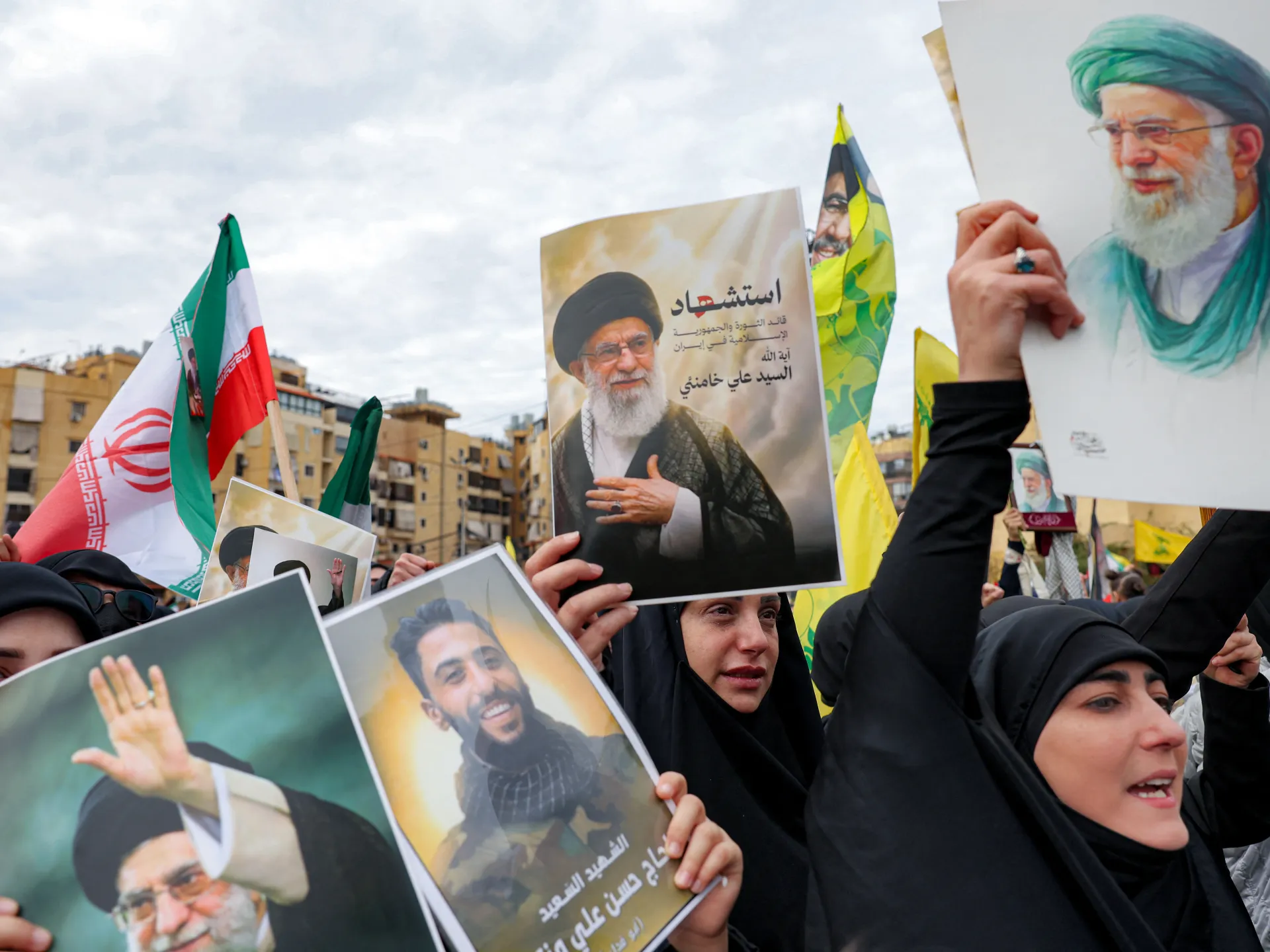
On Sunday, Hezbollah organised a gathering of thousands of supporters in the capital, Beirut, to mourn Khamenei, as they chanted, “Death to America, death to Israel”.
Zainab al-Moussawi, a 23-year-old teacher, told the AFP news agency that the death of Khamenei was “very painful. It is a tragedy.”
“It felt just like the martyrdom of the Sayyed,” she added, referring to Israel’s killing of former Hezbollah leader Hassan Nasrallah in 2024.
Hezbollah also called on mosques to recite the Quran and organise other mourning ceremonies in different parts of the country where the group holds influence to mark Khamenei’s death.

Gordon Ramsay enjoys kiss from wife Tana on loved-up stroll after wading into pal David Beckham’s feud with son Brooklyn
CHEF Gordon Ramsay serves up some romance with his missus.
Ramsay, 59, held hands with Tana, 51, and cuddled up for a kiss while out at the weekend.
Their loved-up stroll in South West London comes after Gordon waded into the Beckham family feud.
He urged David’s estranged son Brooklyn to “remember where you came from” last month in an exclusive interview with The Sun.
The Michelin-starred restauranteur said he loves the aspiring chef, 26, and has been in contact offering support.
He also spoke for the first time about that dance at Brooklyn’s 2022 wedding to Nicola Peltz – which he attended alongside wife Tana.


Loyal Gordon, a long-time family friend, said: “It’s a very difficult situation.
“Victoria is upset, and I know 24/7, seven days a week, just how much David loves Brooklyn.
“Brooklyn and I have messaged a little bit, our relationship is solid. I love him – his heart is incredible.
While Brooklyn has blocked many of his relatives on Instagram, he and Gordon still follow one another.
The chef, who has almost 20million followers, has backed Brooklyn’s cooking endeavours where others were quick to mock.
He is also celebrating his new series Being Gordon Ramsay riding high in the Netflix charts.

Who made the call to leave the Lachman fire? In sworn testimony, LAFD officials pass the buck
Early in Michael McIndoe’s shift on Jan. 2, 2025, his crew got their marching orders: Pick up hoses left overnight at the scene of the Lachman fire.
McIndoe, a captain at Fire Station 69 in Pacific Palisades, didn’t think the plan was a good idea, he said in sworn testimony obtained by The Times. He had read the National Weather Service’s forecast for the day — temperatures were expected to be warmer — and handling any lingering hot spots would be easier with hoses in place.
While he was still at the station, he said, he relayed his concerns by phone to Battalion Chief Mario Garcia, who was in charge of the operation.
Garcia “said something along the lines of, ‘OK. Let me go check it out, and then I’ll get back to you,’ ” McIndoe testified last month.
Despite the warning, Garcia’s orders never changed, and McIndoe spent a couple hours or so that morning rolling up hose lines.
At one point, McIndoe said, he came across a smoldering ash pit. He retrieved a backpack with water from his engine, sprayed into the ground with a couple gallons of water and dug up the dirt with his hand tool until he was satisfied it was cool.

Days later, amid high winds, embers from the Lachman fire ignited into the Palisades fire, which killed 12 people and destroyed thousands of homes.
McIndoe was one of a dozen Los Angeles firefighters deposed in January in a lawsuit filed by Palisades fire victims against the city and the state. Transcripts and videos of the testimony were released Thursday and Friday, backing up earlier reporting by The Times that crews were ordered to pack up their hoses despite signs that the Lachman fire was not completely out.
One firefighter, Scott Pike, testified that he informed a captain of hot spots and ash pits in the area but that he never received orders to take care of the hazards.
Garcia testified that no one informed him of any concerns about picking up the hoses and that he believed the decision was made before his shift.

The testimony raises questions about why LAFD officials did not address concerns expressed to them about weather conditions and potentially dangerous hot spots that could flare up into another fire. With Pike and McIndoe saying they were following directions from above, and Garcia and the battalion chief from the prior shift appearing to pass the buck to others, it is unclear who made the decision to leave the Lachman fire.
LAFD spokesperson Stephanie Bishop declined to answer the question of who decided to pull the hoses, citing an ongoing investigation. She also would not answer whether officials had identified the captain whom Pike spoke with or determined what the captain did with his concerns.
Pike said he did not know the captain’s name but believed the captain was from Engine 69.
McIndoe testified that he was the captain on Engine 69 that day. In an email Saturday, McIndoe said he was not authorized to speak with the media but wanted to correct the record: “I did not speak to, nor do I recall seeing, Firefighter Pike the day that we picked up hose at the Lachman fire.”
Garcia did not immediately respond to a request for comment. Pike did not respond to a request for comment.
That day, McIndoe testified, he saw Garcia on the hill picking up hoses and brought up their earlier conversation.
“I just went up to him, and I said, ‘Hey, I hope you don’t think I’m just trying to get out of work,’ ” McIndoe said. “And he said, no, that’s — that’s fine. Something along those lines, and that that’s all I can really recall.”
He said he was trying to clarify with Garcia that he believed “that the hose should stay up a little bit longer.”
Garcia testified that when he got to the burn scar, no one raised any concerns about the hose pickup, nor did he see any need to leave the equipment at the site.
He said he thought the decision to pick up the hoses was made before his shift — though he was “not 100 percent sure” — and that it was a “collaborative decision, based off all the information that was received.”
By the time he got up to the burn area, Garcia testified, half the hose had already been picked up. He walked the perimeter to ensure there was a line cut around it and that it was cold, and did not see any smoke or any sign that the fire was not fully extinguished.
“Came across several members,” he said. “Nobody mentioned anything about there being any concerns of any sort.”
Battalion Chief Martin Mullen, who was on duty before Garcia, testified that he walked the perimeter four times and left the hose lines in place overnight as a precaution, keeping two assistant chiefs, Vinny Alvarado and Joseph Everett, in the loop. Mullen said they informed another top chief, Phillip Fligiel.
The hoses could be hooked up again quickly “if something were to happen,” Mullen testified.
Mullen testified that he also notified Garcia: “I told him I left him hose lines in place overnight, you need to walk that and make sure there’s nothing going on up there.”
Mullen, who said he was not involved in deciding when to pick up the hoses, did not immediately respond to a request for comment.
In an email Sunday, Everett said: “I was not present or assigned to that incident. As a result I made no command decisions nor do I have information as to anyones testimony.”
Text messages obtained by The Times through a public records request in December show that Fligiel, Alvarado and Everett were making plans to remove the equipment on Jan. 1. The Lachman fire, which federal prosecutors believe was deliberately set, flared up shortly after midnight on Jan. 1, 2025. A few hours later, at 4:46 a.m., the LAFD announced that it was fully contained at eight acres.
“I imagine it might take all day to get that hose off the hill,” Fligiel said in a group chat early the morning of Jan. 1. “Make sure that plan is coordinated.”
At 1:35 p.m. on Jan. 2, Garcia texted Fligiel and Everett: “All hose and equipment has been picked up.”
Earlier that day, Pike was making troubling observations that led him to think that the entire area needed to be re-investigated. He saw about five smoky areas and ash pits, including one he remembered vividly that was too hot to touch with his gloved hand.
“So I just kicked it with my boot to kind of expose it, and there was, like red hot, like, coals,” he testified. “And I even heard crackling.”
Pike, a 23-year LAFD veteran based at a station in Sunland, was working an overtime shift at Fire Station 23, the LAFD’s second outpost in the Palisades, that day. He relayed his observations to a captain and two firefighters.
“That’s how I approached him, is like, ‘Hey, Cap … We have hot spots in general. We have some ash pits,’ ” Pike testified about his conversation with the captain. “That’s an alert to double-check the whole area and maybe we need to switch our tactics.”
Pike testified that it was not his job “to overstep and tell him what to do. He earned that rank.”
The captain, he said, suggested possibly bringing hand tools or a backpack filled with water up the hill to extinguish any hot spots. Pike went back to picking up the hose while awaiting new orders, which never came.
Pike testified that he felt his colleagues — the captain and two firefighters — blew him off.
“It kind of sits heavy with me that nobody listened to me,” he said.
In his deposition, McIndoe did not recall details about other conversations he had that day.
He was asked by a plaintiffs’ attorney: “Any dialogue with anyone else that you haven’t told me about concerning any of the work that was being done up there at the Lachman fire site, in terms of checking for smokers? Making sure that you got all the hose? Anything like that?”
McIndoe responded: “I don’t recall specific conversations. I think I may have had a conversation with one or two of the other captains that were on scene before we left.”
McIndoe testified that he told that captain — whom he said was from Fire Station 37 — that he thought it would be a good idea to leave the hose out because the warm weather could preheat the ground and bring up smokers, “and it would be nice to have the hose lines in place to address those.”
The Times reported in October that crews were ordered to leave the Lachman fire, even though the ground was still smoldering and rocks were hot to the touch.
In a text message reviewed by The Times, a firefighter who was at the scene wrote that Garcia had been told it was a “bad idea” to leave because of the visible signs of smoking terrain, which crews feared could start a new fire if left unprotected.
“And the rest is history,” the firefighter wrote.

Top scorer Chad Baker-Mazara leaves USC men’s basketball
Sixth-year senior guard Chad Baker-Mazara, who spent most of this season as the Trojans top scorer, is no longer with USC’s men’s basketball program, the school announced Sunday.
A person familiar with the situation but not authorized to speak publicly said that it wasn’t any one incident, but an accumulation of issues that led to Baker-Mazara’s departure.
Baker-Mazara left Saturday’s loss to Nebraska a few minutes into the second half after he chased down a lay-in and fell hard on the court. USC coach Eric Musselman said after the game that Baker-Mazara told coaches he was unable to return to the game.
After lead guard Rodney Rice was lost for the season in November, Baker-Mazara stepped into the void as the Trojans’ top scorer, averaging 26 points per game over the remaining seven games of USC’s non-conference slate.
Baker-Mazara became less reliable through Big Ten play. Five times during USC’s conference schedule, he has played fewer than 20 minutes in a game, for one reason or another. At times, his health was what held Baker-Mazara back. Other times, it was less clear.
His exit on the doorstep of March is just another ominous sign for the Trojans, who have lost five in a row. USC has two games still remaining in its regular season slate, with a trip to Washington on tap Wednesday and a home tilt with UCLA next weekend.
Supreme Court to hear case on gun ban for drug users
Supreme Court Chief Justice John Roberts, Supreme Court Justice Elena Kagan, Supreme Court Justice Brett Kavanaugh, and Supreme Court Justice Amy Coney Barrett listen as President Donald Trump delivers his State of the Union last Tuesday. Photo by Annabelle Gordon/UPI | License Photo
March 1 (UPI) — The Supreme Court will determine whether people who regularly smoke marijuana will be allowed to own guns.
In United States v. Hemani, which goes before the Supreme Court on Monday, the Trump administration will attempt to uphold their prosecution of Ali Danial Hemani, who lives in Texas.
In 2022, FBI officials found that Hemani, who is a dual citizen in the United States and Pakistan, owned a pistol while in possession of marijuana and cocaine.
When Hemani said that he engaged in marijuana use approximately every other day, he was indicted, facing up to 15 years behind bars, but the charge was dismissed.
The 1968 law he allegedly violated was meant to disarm people who used drugs.
An appeals court stated that there was not enough “tradition of gun regulation” to “support disarming a sober person based solely on past substance usage,” USA Today reported.
“I think what the court is being asked to decide, and I would imagine the reason it took the case, is to give some more guidance about what kinds of people can be disarmed without violating the Second Amendment,” said Joseph Blocher, one of the Duke Center for Firearms Law, CBS News reported.
Fundamentally, that’s what this case is about,” Blocher said.

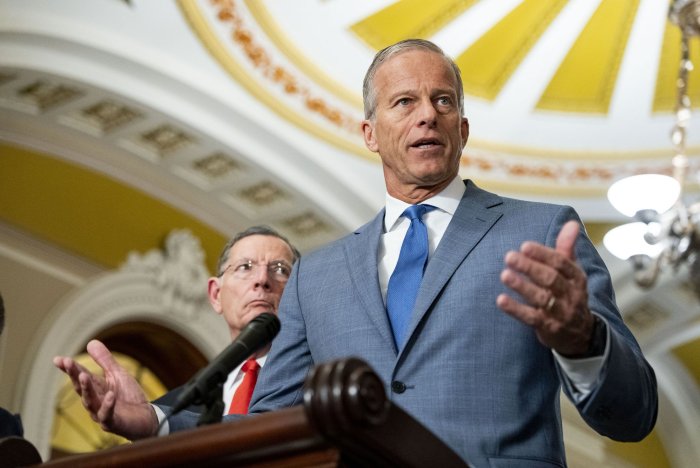
Senate Majority Leader John Thune, R-S.D., speaks during a press conference after the weekly Republican Senate caucus luncheon at the U.S. Capitol on Wednesday. Photo by Bonnie Cash/UPI | License Photo

Merlin slashes annual pass cost to £99 ahead of Easter school holidays
Annual passes can be a great way to keep the kids entertained through the school holidays, and give you unlimited visits to Merlin’s theme parks throughout the year, as well as some other perks

You could enjoy a year of unlimited visits to several theme parks(Image: Merlin Entertainments )
If you’re already wondering how to keep the kids entertained for the Easter holidays, as well as the looming six week school holidays, then this deal might help you out.
Merlin, who own over 20 UK attractions including Alton Towers, Thorpe Park and LEGOLAND Windsor has slashed the cost of the Merlin Annual Pass , meaning families can now enjoy a year of theme park fun from just £99 per person.
The spring sale, which launched today and runs until March 29, offers discounts on Merlin’s three annual pass types.
The Essential Merlin Annual Pass is the cheapest option, with the price cut from £139 to £99 in the sale. This pass offers 339 days of unlimited entry to Merlin attractions, with some restrictions on bank holidays and summer weekends. An availability calendar shows which dates are restricted for certain passes.
The Gold pass, which includes extra perks such as free parking and up to 20% off shops and restaurants in each of the attractions, has been cut from £239 to £189. There’s also a Platinum pass with no date restrictions, four Bring a Friend tickets a year, and a free one-shot Fastrack per visit. This usually costs £299 and is £249 in the spring sale.
You can also opt for a monthly membership, with the cost of a Gold membership reduced from £19.99 to £16.99 a month, and the Platinum level reduced from £24.99 to £20.99 monthly if you sign up during the sale period.
If your family are fans of a particular theme park, or you only plan to go to a local attraction, then some Merlin parks also offer their own annual passes. For example, Alton Towers’ annual pass starts at just £64 a year, the same price as a yearly pass for Chessington World of Adventures. However, it’s worth considering whether you want to limit yourself to one place or if you’d prefer to have lots of options for days out.
Tesco shoppers can also use Clubcard points to get into many Merlin attractions. For example, 50p worth of Clubcard vouchers can be exchanged for £1 to spend on Thorpe Park tickets. If you’re a Blue Light Card holder there are also a number of theme park deals to be snapped up during the year, including Member Days where cardholders enjoy discounted entry, smaller crowds, and free parking.
Annual passholders will be able to enjoy new attractions in 2026 including Alton Towers’ Bluey The Ride: Here Come the Grannies, which opens March 28. Spring 2026 will also see the opening of the World of PAW Patrol in Chessington, while over in LEGOLAND® Windsor, the resort will have a year of celebrations to make its 30th anniversary.
If your family are fans of a particular theme park, or you only plan to go to a local attraction, then some Merlin parks also offer their own annual passes. For example, Alton Towers’ annual pass starts at just £64 a year, the same price as a yearly pass for Chessington World of Adventures. However, it’s worth considering whether you want to limit yourself to one place or if you’d prefer to have lots of options for days out.
Tesco shoppers can also use Clubcard points to get into many Merlin attractions. For example, 50p worth of Clubcard vouchers can be exchanged for £1 to spend on Thorpe Park tickets. If you’re a Blue Light Card holder there are also a number of theme park deals to be snapped up during the year, including Member Days where cardholders enjoy discounted entry, smaller crowds, and free parking.
Full list of attractions where the Merlin Annual Pass can be used
- Alton Towers Resort
- Chessington World Of Adventures Resort
- LEGOLAND® Windsor Resort
- The London Eye
- Thorpe Park
- SEA LIFE London
- National SEA LIFE Centre Birmingham
- SEA LIFE Manchester
- SEA LIFE Blackpool
- SEA LIFE Brighton
- SEA LIFE Weymouth Adventure Park
- SEA LIFE Great Yarmouth
- SEA LIFE Sanctuary Hunstanton
- SEA LIFE Scarborough
- SEA LIFE Loch Lomond
- Warwick Castle
- Madame Tussauds London
- Shrek’s Adventure! London
- LEGOLAND® Discovery Centre Birmingham
- LEGOLAND® Discovery Centre Manchester
- The London Dungeon
- The York Dungeon
- The Edinburgh Dungeon
- Cadbury World
Have a story you want to share? Email us at webtravel@reachplc.com
Ensure our latest stories always appear at the top of your Google Search by making us a Preferred Source. Click here to activate or add us as your Preferred Source in your Google search settings.

Trump vows to continue attacks on Iran, says more US troops ‘likely’ to die | Donald Trump News
United States President Donald Trump has pledged to continue the “righteous mission” against Iran, until “all objectives are achieved”, adding there will likely be more US troop deaths in the process.
Speaking in a video posted to his Truth Social account on Sunday, Trump again framed the war against Iran as a response to an existential threat to the US, saying that “an Iranian regime armed with long-range missiles and nuclear weapons would be a dire threat to every American”.
Recommended Stories
list of 3 itemsend of list
Trump and his top officials had repeatedly made similar statements in the run-up to Saturday’s attacks, which killed Iranian Supreme Leader Ayatollah Ali Khamenei and several high-ranking members of the country’s leadership.
However, they have to date presented no evidence to support that Iran was developing a long-range missile capable of hitting the US or was anywhere close to developing a nuclear weapon.
Tehran has long denied seeking such a weapon, with experts assessing that if it did seek nuclear weapons, the development would still be several years off. The US launched its attacks alongside Israel in the middle of ongoing US-Iran talks on its nuclear programme.
Trump also referenced the three US military personnel confirmed killed on Sunday amid Iran’s regional retaliation.
“As one nation, we grieve for the true American patriots who have made the ultimate sacrifice for our nation, even as we continue the righteous mission for which they gave their lives,” Trump said.
“And sadly, there will likely be more before it ends,” he said. “That’s the way it is – likely be more, but we’ll do everything possible where that won’t be the case.”
He added: “But America will avenge their deaths, and deliver the most punishing blow to the terrorists who have waged war against, basically, civilisation”.
No mention of diplomacy
The speech marked a stark contrast to several interviews Trump had given throughout the day, in which he appeared to float diplomatic off-ramps.
“They want to talk, and I have agreed to talk, so I will be talking to them,” Trump told the Atlantic magazine, referring to what the publication described as Iran’s “new leadership”.
“They should have given what was very practical and easy to do sooner. They waited too long,” he said.
A White House official confirmed to Al Jazeera that Trump was willing to engage with Iran’s new leaders.
Earlier on Sunday, Iran announced a three-member interim leadership council to run the government in the wake of Khamenei’s killing. It includes: President Masoud Pezeshkian; the chief justice of the Supreme Court, Gholam-Hossein Mohseni-Ejei; and a member of the Guardian Council, Ayatollah Alireza Arafi.
Trump acknowledged that some of the negotiators involved in the talks with the US had since been killed.
Some analysts have argued that Iran’s new leadership will likely be wary of engaging with the Trump administration, given its track record. The US also launched attacks alongside Israel during US-Iran negotiations in June last year.
The new leadership could instead pursue a protracted conflict that could be politically damaging for Trump, some experts have said.
“Most of those people are gone,” Trump told The Atlantic. “Some of the people we were dealing with are gone, because that was a big – that was a big hit.”
Attacks continue
In his speech on Sunday, Trump did not reference any diplomatic overtures, instead calling for regime change in Iran.
He again offered amnesty to Iranian Revolutionary Guard Corps (IRGC) members, the Iranian military and police who “lay down” their arms. If they do not, they will face “certain death”, he said.
He also again called on “Iranian patriots who yearn for freedom to seize this moment to be brave, be bold, be heroic, and take back your country”.
He appeared to reference his threats in January to strike Iran in response to the government’s crackdown on protesters.
“I made a promise to you, and I fulfilled that promise,” Trump said. “The rest will be up to you. We’ll be there to help”.
Trump spoke as fighting continued across the region.
The US command that oversees the Middle East (CENTCOM) announced the killing of the three members of the US military earlier on Sunday, but did not provide further details. It said five others were “seriously wounded” in the operation.
The US media has reported that those killed in Iranian strikes were based in Kuwait. Iran has also launched a barrage of attacks against Qatar, the United Arab Emirates, Saudi Arabia, Jordan, Bahrain, and Oman.
Meanwhile, at least 201 people have been killed in Iran, with 747 wounded, while at least nine have been killed and 121 wounded in Israel.
At least one person has been killed in Kuwait, three have been killed in the UAE, and two have been killed in Iraq since the escalation began.
Iran’s IRGC said earlier on Sunday that it had targeted the USS Abraham Lincoln aircraft carrier with four ballistic missiles, but a US official told Al Jazeera that no damage was caused.
Speaking in a separate Fox News interview on Sunday, Trump said that 48 “leaders” had been killed in Iran, although a full list of those killed has not been released. In a post on Truth Social, the US president said the US had “destroyed and sunk 9 Iranian Naval Ships, some of them relatively large and important”.
“In a different attack, we largely destroyed their Naval Headquarters,” he said.
In a post on X, CENTCOM said the IRGC “no longer has a headquarters”.
Iranian Minister of Foreign Affairs Abbas Araghchi, meanwhile, said Iran’s military command had been interrupted, with units acting in an “independent and somewhat isolated” way. He said they were operating “based on general instructions given to them in advance”.
Still, Araghchi told ABC News, “We see no limit for ourselves to defend our people, to protect our people.”

SAG Awards 2026 red carpet: The best fashion looks from Actor Awards
The Screen Actors Guild Awards have been rebranded to the Actor Awards this year. As awards shows undergo major changes, including introducing new categories and moving to new platforms, the only thing that is constant is the red carpet parade of fashion.
Following a breakout year, Teyana Taylor has ruled one red carpet after another this season. She turned heads at the Golden Globes in a custom Schiaparelli bustier gown (with a built-in bedazzled thong), then covered up from head to toe in a plum trench coat-inspired Burberry dress at the BAFTAs. Her co-star Chase Infiniti has also been a sartorial standout in several structured strapless gowns. Other leading ladies sure to steal the spotlight include Kate Hudson and Emma Stone. On the TV side, Jenna Ortega is among the stars who has made a splash in the last few years while veterans Keri Russell, Claire Danes and Michelle Williams continue to impress.
The Actor Awards, hosted by Kristen Bell for the third time, will stream at 5 p.m. on Netflix live from Shrine Auditorium in L.A.
Here’s the best fashion from the 2026 Actor Award, captured by The Times’ photo team.
READ MORE: Winners list | Full coverage
Kristen Bell

Kristen Bell is the hostess with the mostess at the Actor Awards.
(Myung J. Chun / Los Angeles Times)
Sheryl Lee Ralph

Sheryl Lee Ralph wows in a Saiid Kobeisy gown.
(Myung J. Chun / Los Angeles Times)
Dove Cameron

Dove Cameron goes for Gothic glamour in Monique Lhuillier.
(Myung J. Chun / Los Angeles Times)
Hannah Stocking

Social media influencer Hannah Stocking arrives at the Actor Awards.
(Myung J. Chun / Los Angeles Times)
Paige DeSorbo

We’re giggly over reality star and Actor Awards pre-show host Paige DeSorbo’s Marmar Halim gown.
(Christina House / Los Angeles Times)

“E! Live From the Red Carpet” host Erin Lim Rhodes stuns in red.
(Myung J. Chun / Los Angeles Times)

City Section and Southern Section basketball championship scores
HIGH SCHOOL BASKETBALL CHAMPIONSHIPS
CITY SECTION
Friday’s Results
BOYS
At Southwest College
OPEN DIVISION
#1 Palisades 75, #2 Cleveland 56
DIVISION II
#3 Sylmar 70, #4 King/Drew 64
At Birmingham High
DIVISION V
#2 Canoga Park 43, #1 Van Nuys 38
GIRLS
At Birmingham High
DIVISION II
#2 North Hollywood 59, #1 Harbor Teacher 55
At Southwest College
DIVISION III
#1 Washington Prep 45, #2 Gardena 30
At Garfield High
DIVISION IV
#12 Wilmington Banning 39, #11 Bravo 33
DIVISION V
#2 Legacy 33, #9 Los Angeles 32
Saturday’s Results
BOYS
At Pasadena City College
DIVISION I
#1 Granada Hills 59, #2 Chatsworth 51
DIVISION III
#10 Verdugo Hills 62, #1 RFK Community 42
DIVISION IV
#2 Franklin 69, #5 San Fernando 55
GIRLS
At Pasadena City College
OPEN DIVISION
#1 Westchester 60, #2 Birmingham 37
DIVISION I
#2 Granada Hills Kennedy 54, #1 El Camino Real 31
SOUTHERN SECTION
Friday’s Results
BOYS
At Azusa Pacific
DIVISION 4
Colony 51, Trabuco Hills 44
DIVISION 5
Gardena Serra 57, Pilibos 51
GIRLS
At Toyota Arena
DIVISION 1
La Salle 51, Valencia 35
DIVISION 2
Crescenta Valley 51, Saugus 43
DIVISION 3
St. Margaret’s 57, Murrieta Valley 41
At Azusa Pacific
DIVISION 4
El Dorado 41, La Canada 27
DIVISION 6
Savanna 46, Warren 25
Saturday’s Results
BOYS
At Toyota Arena
OPEN DIVISION
Sierra Canyon 59, Harvard-Westlake 53
DIVISION 1
Crean Lutheran 59, JSerra 52
DIVISION 2
Bishop Amat 71, Hesperia 48
DIVISION 3
Murrieta Mesa 65, Aliso Niguel 58
DIVISION 9
Colton 55, Pacific 42
At Azusa Pacific
DIVISION 6
Laguna Hills 78, Ramona 51
DIVISION 7
Rialto 57, Salesian 31
DIVISION 8
Victor Valley 78, South El Monte 45
GIRLS
At Toyota Arena
OPEN DIVISION
Sierra Canyon 69, Ontario Christian 62
DIVISION 8
Schurr 44, Orange 32
At Azusa Pacific
DIVISION 5
Bishop Diego 42, Burbank Burroughs 41
DIVISION 7
La Palma Kennedy 55, Laguna Hills 28
DIVISION 9
Sierra Vista 52, Desert Hot Springs 42

Black smoke pours from oil tanker near Strait of Hormuz | Israel-Iran conflict
Footage from near the Strait of Hormuz shows a Palau-flagged oil tanker ablaze after what Oman’s maritime security centre said was a hit from an unidentified projectile. At least three ships have been struck in the area. More than 150 others have dropped anchor to avoid entering the strait.
Published On 1 Mar 2026
America’s New PrSM Ballistic Missile Just Made Its Combat Debut
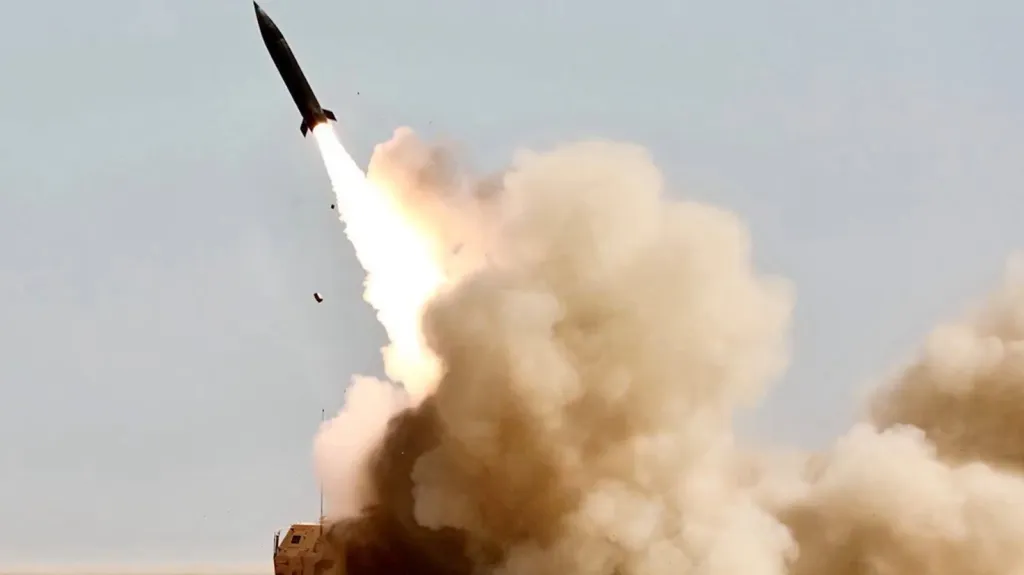
The U.S. military has employed new Precision Strike Missile (PrSM) short-range ballistic missiles as part of ongoing operations against Iran. This looks to be the first combat use of the PrSM, which only began entering service roughly two years ago. The operational debut of the new missiles showcases the significantly greater range they offer compared to their predecessors, the Army Tactical Missile System (ATACMS), and much expanded target areas that American units can now hold at risk as a result.
Overnight, U.S. Central Command (CENTCOM) released a video montage of still pictures documenting the “first 24 hours of Operation Epic Fury.” This is the nickname American authorities have given to their component of ongoing U.S.-Israeli operations targeting Iran. Included in that montage, seen in the social media post below, is an image clearly showing the launch of a PrSM from a wheeled M142 High Mobility Artillery Rocket System (HIMARS) launcher.

Defense and security columnist Colby Badhwar looks to have been the first to spot the PrSM image in the CENTCOM montage. The new missile is distinctly different, especially when it comes to the shape and configuration of its tail fins, from ATACMS.
There is also a picture of an M142 loaded with what looks to be a two-cell ammunition ‘pod,’ which is also in line with PrSM. The M142, as well as the tracked M270 Multiple Launch Rocket System (MLRS), fires munitions from pods with standardized dimensions. ATACMS pods only contain a single missile. M142 and M270 launcher vehicles can also fire 227mm artillery rockets, including guided variants, all of which come in six-round pods.


Yesterday, CENTCOM also released a montage of video clips showing HIMARS launchers firing short-range ballistic missiles. That footage – which came along with the caption “The Iranian regime was warned. CENTCOM is now delivering swift and decisive action as directed.” – may also show at least one PrSM launch, as well as ATACMS being fired.

As already noted, PrSM offers a major boost in range over ATACMS. The baseline PrSM variant, also known as Increment 1, has demonstrated its ability to hit targets at least around 310 miles (500 kilometers) away. The U.S. Army, the service in charge of the PrSM program, has a stated goal to eventually stretch that out to around 400 miles (650 kilometers), if that has not already been achieved. The service is also working toward an even longer-range version able to fly out to at least 620 miles (1,000 kilometers), if not further.

The longest ranged variants of ATACMS can hit targets out to around 186 miles (300 kilometers).
Where PrSMs or ATACMS have been fired from during strikes on Iran as part of Operation Epic Fury is unclear. Regardless, PrSM offering roughly twice as much reach would substantially increase the total breadth of targets that could be held at risk from any location in the region.
In turn, this would allow U.S. forces to hit more targets where the unique benefits offered by ballistic missiles could be advantageous. Ballistic missiles, in general, fly at relatively high speeds, especially as they come down in the terminal phase of flight. This makes them especially well-suited for employment against time-sensitive targets, like Iranian missile launchers and air defense assets, which have been a focal point of strikes in the conflict so far, in general. Using short-range ballistic missiles to help neutralize air defense nodes, shore radar sites, and similar assets would have made particular sense in the opening stages of the conflict to help clear the way for follow-on strikes.
High speed also creates additional challenges for enemy air defenses attempting to engage them compared to other kinds of missiles, including some subsonic air-breathing cruise missiles. How fast ballistic missiles are going when they impact inherently enables ballistic missiles to burrow deeper into hardened targets, which are commonplace in Iran, as well.
Demonstrating PrSM in real combat against Iran could also send signals to other American opponents. The importance of PrSM’s extended reach is often discussed in the context of a potential high-end fight in the Pacific against China, where launch points, at least on land, are much more limited. An anti-ship version of PrSM, also referred to as Increment 2, which features an additional seeker and is capable of hitting moving targets, is also now under development. Another version of PrSM is also in the works that could dispense payloads consisting of kamikaze drones or small precision-guided bombs, as you can read more about here.

We still have more to learn about how PrSM (as well as ATACMS) is being employed as part of Operation Epic Fury. Whatever the case, America’s newest ballistic missile is now a combat-proven weapon, and its use against Iran puts a spotlight on the immense value its greater range, in particular, brings to the table.
Contact the author: joe@twz.com

‘Worse for wear’ Wayne Rooney boozes with two mystery women until 3.25am at pre-Brit awards bash in posh hotel
WAYNE Rooney boozed until the early hours with two women at a Manchester hotel on Saturday during a pre-Brit Awards bash.
At one point, the former Manchester United and England striker struggled to keep his trousers up in the bar at a posh hotel.
Pictures and video obtained by The Sun show the dad of four, married to Coleen, relaxing in the Manchester venue in the early hours of Saturday.
It was full of celebrities ahead of Saturday night’s Brits ceremony in the city.
One surprised onlooker told The Sun: “People who noticed Wayne were saying, ‘What would Coleen think?’. She was nowhere to be seen.”
They added: “Wayne appeared to have been drinking. He seemed to have had a few.”
READ MORE ON WAYNE ROONEY


It comes after he revealed last year that he had curbed his boozing after hitting the bottle too hard in his football career, and said he would be dead if it was not for the support of Coleen.
Rooney had been at the city centre hotel with pop star Calum Scott before he appeared to catch the attention of the two women. One was with her boyfriend.
The group also included a male pal of Rooney.
Witnesses said he looked “worse for wear” at 1.30am when he came out of a toilet and fumbled with his trousers.
One told The Sun: “Wayne couldn’t seem to get his trousers done up.
“At one moment, they almost dropped to the floor but he managed to save them.”
He then “kept pulling his trousers up, but then they’d fall down again”.
Rooney went on to spend almost two hours chatting to the two mystery ladies and knocking back drinks.
An onlooker said: “He seemed like he was having a laugh and joking around with the women.”
Rooney and one of the women eventually left the establishment, before getting into separate cars just after 3.25am.
One witness said: “He later left alone. He stood outside where there were quite a few people gathered and got into a car.
“Around eight minutes later, a taxi came and picked the woman up.
“People in the queue recognised it was him and were saying he didn’t seem to be in a great place.”
Wayne had been at a party with stars including I’m A Celebrity’s Shona McGarty and rapper Aitch prior to spending time with the women.
Shona shared a photograph of her posing with Wayne inside the bash on Instagram and wrote: “Just a little pre Brits party.”
The former EastEnders actress appeared in ITV’s I’m A Celeb jungle show with Wayne’s wife Coleen in 2024.
Rooney, now a BBC pundit on Match of the Day, has had a string of incidents involving other women over the years.
He admitted using sex workers before he married childhood sweetheart Coleen, who is mother to their four sons Kai, 16, Klay, 12, Kit, ten, and Cass, eight.
It was also reported that Wayne even had a threesome with two sex workers while Coleen was pregnant with Kai.
In 2017, he was arrested for drink-driving, with office worker Laura Simpson in the car, following a night out in Cheshire.
Rooney was hit with a driving ban.
Last September, he emotionally revealed that Coleen, 39, was helping him cut down on booze.
Rooney said: “I honestly believe if she weren’t there I’d be dead.
“I’ve made mistakes in the past which are well documented and whatever but I’m a little bit different at times and she keeps me on that path and she’s done it for 20-odd years.
“I wanted to go out and enjoy my time with my friends and have a night out. It got to a point where I went too far.
“That was a moment in my life where I was struggling massively with alcohol.
“I didn’t think I could turn to anyone. I didn’t really want to because I didn’t want to put that burden on anyone.”
Rooney, who is Man United’s all-time leading goalscorer, added of his wife: “She’s managed me because I needed managing.”
Speaking in 2023, Coleen admitted their relationship has at times been “hard”.
But she went on: “There’s always been love there so why give up on it?
“If the love’s still there, why not see if you can work it out?
“People haven’t seen that because we’ve done that behind closed doors and it’s been a battle at times, it’s been hard.
“People only see what’s in the Press, they don’t know what goes on in our life.”
She added: “It was out there, we’ve dealt with it, and we’re moving on.”
Yesterday, Coleen opened up about their marriage again in another interview.
Asked if her husband would think she was bossy, Coleen replied: “He would probably say that, but I would say he needs telling sometimes.”
She added: “You have your ups and downs, you have things that happen in life.
“But I think being together from a young age, we know each other inside and out.
“We’re a team. I wouldn’t say we’ve changed.
“I would say things around us have changed.”
Football bad lad drinks it all over
By Kelly Allen and Howell Davies
WAYNE Rooney’s boozy Brit Awards antics follow a string of drunken scandals during and after his two-decade footie career.
The England great hit the headlines in 2004, when it emerged he had visited massage parlours and prostitutes.
Then aged 19, he said in an apology: “People may understand that it was the sort of mistake you make when you are young and stupid.”
A year after marrying wife Coleen in 2008, Wayne was caught having a threesome with two sex workers while she was pregnant with their first son Kai.
In 2017, he was arrested for drink-driving after a night out while driving home party girl Laura Simpson and slapped with a two-year driving ban and 100 hours of unpaid community service.
Meanwhile, Coleen moved out of their Cheshire mansion.
A year later in 2018, while playing for DC United in the US, Wayne was arrested at a Virginia airport for public intoxication and swearing.
The striker was released on bail — but a few months later The Sun revealed he had been pictured partying with a Florida barmaid for which he incurred the wrath of his wife.
Things came to a head in 2021 when we revealed he had been pictured asleep in a hotel room with three women.
The dad of four has repeatedly promised to rein in his party antics — confessing to drinking “for two days straight” at the peak of his career.

States must spend millions for new Medicaid work mandates
JEFFERSON CITY, Mo. — To receive Medicaid health coverage, some adults will soon have to show they are working, volunteering or taking classes. But to gather that proof, many states first will have to spend millions of dollars improving their computer systems.
Across the nation, states face an immense task and high costs to prepare for the Jan. 1 kickoff of new Medicaid eligibility mandates affecting millions of lower-income adults in the government-funded healthcare program.
The first half of a $200-million federal allotment has already begun flowing to states to help implement the new requirements. But the tab for the needed technology improvements and additional staff is likely to exceed $1 billion, according to an Associated Press analysis of budget projections in more than 25 states. That extra cost will be borne by a mixture of federal and state tax dollars.
The task is not as simple as pushing through a software update on your smartphone or personal computer. That’s because each state has its own system for managing Medicaid, often requiring experts to make customized changes.
“Our current eligibility systems are pretty old, and the ability to change them is very, very difficult,” said Toi Wilde, chief information officer for the Missouri Department of Social Services.
As a consequence of states’ new financial burden, some eligible people may lose their healthcare coverage, officials warn.
New requirements affect millions, but not all
The Republican tax and spending law signed last year by President Trump is financed, in part, by sweeping Medicaid changes intended to cut government spending. Two of the most prominent will apply in four-fifths of the states, affecting Medicaid enrollees ages 19 through 64, without young children, whose incomes are above the typical eligibility cutoff.
Those Medicaid participants will have to work or do community service at least 80 hours a month, or enroll at least half-time as a student. They also will face eligibility reviews every six months, instead of annually, meaning they could lose coverage more quickly when their circumstances change.
The two provisions together are projected to save the federal government $388 billion over the next decade, resulting in 6 million fewer people with health insurance, according to the Congressional Budget Office.
But states first must update their online portals used by Medicaid participants, their aging computer systems used by state workers and their methods of verifying information through various databases.
Most will have to turn to private contractors to meet the time crunch. At least 10 companies have agreed to offer discounted services, according to the federal Centers for Medicare and Medicaid Services.
Making those technology upgrades “is going to be a lift. It’s not something straightforward. It’s not easy,” said Jason Reilly, a partner at Guidehouse, a firm that is advising several states on the Medicaid requirements.
Most states don’t currently collect employment or education information about Medicaid participants. So states are looking to tap into outside sources to verify job and school data. But there’s no database of community volunteers.
And states are still waiting on federal rules — not due until June — to define some of the exceptions to the work requirements, such as how to determine who qualifies as “medically frail.”
States face extra pressure to get it right because the federal government will start penalizing states with too many Medicaid payment errors in October 2029.
Congress guaranteed all states a share of the $200 million allotted for Medicaid work and eligibility changes. But states must apply for additional federal money. The federal government covers up to 90% of states’ costs to develop systems for determining Medicaid eligibility, 75% of costs to maintain those systems and half of most other administrative costs.
Missouri won early approval for the 90% federal funding rate. State lawmakers now are fast-tracking a $32-million appropriation needed to solicit bids for vendors to start upgrading technology platforms and improving a chatbot for Medicaid participants. Over the next year, the state’s social services agency expects to need about 120 additional workers — at a cost of $12.5 million — to handle the extra administrative workload.
Other states also project large costs. Maryland expects to spend over $32 million in federal and state funds to implement the Medicaid changes, Kentucky more than $46 million, and Colorado over $51 million. Arizona estimates it could cost $65 million — and require 150 additional staffers — to implement the new federal requirements.
Some states surveyed by the AP reported even higher expected costs, though they didn’t always provide a breakdown for how much is due to new Medicaid mandates and how much pertains to Supplemental Nutrition Assistance Program changes also contained in Trump’s massive law.
Several states, including Arkansas, said they are still working on cost estimates for the Medicaid changes. Arkansas instituted a Medicaid work requirement in 2018-19, and thousands of people were dropped from the rolls before a federal court ended it. Many of the technology changes required by the new federal mandates could be covered under an existing vendor contract and have “a minimal financial impact on our Medicaid budget,” the Arkansas Department of Human Services said in an email.
Nebraska has said it plans to launch Medicaid work requirements in May, seven months ahead of the federal deadline. But the state has not detailed any associated costs and did not respond to inquiries from the AP.
Georgia’s work requirement prompts concerns
Georgia is currently the only state requiring some Medicaid recipients to work, after receiving special federal approval several years ago to expand coverage to some adults not otherwise eligible.
The Georgia Pathways to Coverage program racked up more than $54 million of administrative costs from 2021 through the first part of 2025 — twice the amount of medical assistance paid out over that same period, according to the U.S. Government Accountability Office. Almost all of those costs came from technology changes to its eligibility and enrollment system.
Some Medicaid analysts point to Georgia’s costs and Arkansas’ enrollment losses as reasons for caution as work requirements roll out in other states.
“A huge amount of funding is going to go to vendors to construct these complicated red-tape systems that prevent people who need it from getting healthcare,” said Joan Alker, executive director of the Center for Children and Families at Georgetown University.
“In my view, that is a big, big risk.”
Lieb writes for the Associated Press.

Vinyl and Breeze advance to Unrivaled semifinals in Brooklyn
MEDLEY, Fla. — Rhyne Howard scored 30 points to lead Vinyl past Laces and into the Unrivaled semifinals on Saturday, while Paige Bueckers’ 29 points led Breeze past Rose to secure its semifinal berth.
The Sparks’ Dearica Hamby hit the game-winning shot against No. 3 Laces in Game 1 of the first round of Unrivaled’s playoffs. Once they secured the 82-69 win, players from the sixth-ranked Vinyl club — the last Unrivaled team to clinch a spot in the playoffs — jumped into Hamby’s arms in celebration.
Dominique Malonga had 17 rebounds and the game-winning free throw to help Breeze rout Rose, last year’s Unrivaled champion, 69-50 and advance to the next round, which will be played at Barclays Center in Brooklyn on Monday night.
Top-seeded Phantom and No. 2 seed Mist earned automatic berths to Monday’s semifinals.
The title game will be March 4 at Unrivaled’s home arena in Miami, with a prize pool of $600,000 to be split among players from the championship-winning club.
Unrivaled announces end-of-season award winners
Phantom forward Aliyah Boston, who is entering her fourth season with the WNBA’s Indiana Fever, was named Unrivaled’s defensive player of the year on Saturday after emerging as one of the league’s biggest defensive standouts.
Boston, who was also named to the league’s second-team All-Unrivaled list, led the league with 29 blocks in 14 regular season games and finished second in total defensive rebounds (111). She also led Phantom in rebounds (136) and points off turnovers (39). She averaged 18.9 points, 9.7 rebounds and 2.1 blocked shots per game — a significant leap from her first Unrivaled season, when she averaged 5.9 points, 5.4 rebounds and 0.4 blocks.
Boston’s Phantom teammate Kelsey Plum, of the Sparks, was named first-team All-Unrivaled along with Bueckers and Rose guard Chelsea Gray.
Bueckers led her Breeze club in points (22.1) and assists (5.5) per game and shot 38% from three-point range this season. Gray, who won Unrivaled’s one-on-one tournament earlier this month, had four game-winning baskets and became the first Unrivaled player to surpass 600 points, 200 field goals, and 100 assists.
Phantom’s Roneeka Hodges was named coach of the year after leading her team to a league-best 11-3 record in her first season at Unrivaled.
Up next
Phantom will face Vinyl Monday in the first of two semifinal games in Brooklyn. Mist will go against Breeze in the second matchup.

Huge fire at Bahrain port home to US Navy’s Fifth Fleet | Conflict
Footage shows a huge fire reportedly ignited by an Iranian strike on a US naval facility at Bahrain’s Salman Port. The port houses the US Navy’s Central Command and Fifth Fleet.
Published On 1 Mar 2026

I’m a family travel expert – here are the best equipment-free car games to play with the kids
Mum of two Hannah Britt is a fan of a family road trip, but driving with young children in tow can be tough. Here she shares how to keep them entertained, not a screen in sight

It is possible to have fun in the car, honest!(Image: Getty)
I’m a mum of two, my children are six and one. And as a family we like to travel. One of the things we tend to do the most is hop in the car from our home in Manchester and drive to the Lake District, or Scotland. Having the car with us means we can lug all the things we need for the children and get to our destination under our own steam. But keeping my little ones entertained can be tricky.
On a recent trip to the Lake District, my good friends at Volvo were kind enough to lend us one of their cars to try – the XC60 Plus plug-in hybrid. It came with a promise: the children will love it. And it gave me an idea, could I entertain them the whole 90 minute journey without a screen or toy in sight?
READ MORE: We banned screens during our family trip away and the change was staggering
I SPY
Best for: my six year old. How it’s done… Select a Spy: One person is chosen to be the “spy”. Choose an Object: The spy selects an object in plain sight of all players but keeps it secret. Give a Clue: The spy says, “I spy with my little eye something…” followed by a hint. By Letter: “…beginning with the letter [letter]” (e.g.”B” for ball). By Colour: “…that is [colour]” (e.g. “Red”). By Description: “…that is [shape/size]” (e.g. “Round”). Guess the Object: Other players take turns guessing the object. Switch Roles: The person who correctly guesses the object becomes the new spy for the next round.
NURSERY RHYMES
Best for: both my one year old and my six year old. How it’s done… there couldn’t be more famous nursery rhymes to choose from, some even have actions to increase the fun and interactivity.
- Twinkle, Twinkle, Little Star: A soothing lullaby about a star.
- Humpty Dumpty: A classic rhyme about a fragile egg.
- Ba Ba Black Sheep: A rhythmic, repetitive poem.
- Row, Row, Row Your Boat: A gentle, interactive, and rhythmic song.
- Old MacDonald Had a Farm: A fun, interactive song for learning animal sounds.
- Jack and Jill: A well-known rhyme about a trip up a hill.
- Hickory Dickory Dock: A classic rhyme featuring a mouse and a clock.
- London Bridge Is Falling Down: A traditional game song.
- Mary Had a Little Lamb: A familiar tale about a loyal lamb.
- The Itsy Bitsy Spider: An action-based song
YELLOW CAR
Best for: my six year old, but my one year old did join in too. How it’s done… To play, simply see who is first to spot a yellow car. First to five or 10 wins. Once you’ve done yellow, move onto other colours. And then play spotting other things, like a helicopter, a tractor and a broken down car.
SPOT THE SHEEP
Best for: my one year old, but my six year old did enjoy. How it’s done… Choose an animal everyone recognises – and one you’re likely to see. There’s no point picking a zebra in Derbyshire! Then simply see who is the first to spot one. Once you get to the countryside you can elevate Spot the Sheep to Count the Sheep – and see who can be the first to spot 100.
WOULD YOU RATHER?
Best for: my six year old. How it’s done… This is a fun, thought-provoking question game to spark conversation. Choose age appropriate things to ask about, examples of which could be:
Food & Silly Choices
- Would you rather eat broccoli-flavoured ice cream or fish-flavoured cookies?
- Would you rather have a bath full of baked beans or mushy peas?
- Would you rather eat only pizza for a year or only tacos for a year?
- Would you rather drink hot chocolate or a milkshake?
- Would you rather swim in a pool of jelly or a pool of marshmallows?
Superpowers & Magic
- Would you rather be able to fly or be invisible?
- Would you rather have the power to control time or control the weather?
- Would you rather have a magic carpet or a teleportation device?
- Would you rather be able to speak to ghosts or aliens?
- Would you rather have a pet unicorn or a dragon?
Animal & Nature
- Would you rather have a tail like a lemur or a trunk like an elephant?
- Would you rather roar like a lion or hiss like a snake?
- Would you rather have fur like a bear or scales like a fish?
- Would you rather be a tree or a flower for a day?
- Would you rather live in a jungle or a desert?
School & Daily Life
- Would you rather have as many toys as you wanted or as many books as you wanted?
- Would you rather go to the park or go to the zoo?
- Would you rather be a superhero or a super-villain?
- Would you rather live on land or under the sea?
- Would you rather build a treehouse or a go-kart?
NUMBER PLATE GAME
Best for: my six year old. How it’s done… See if you can spot number plates from different countries while on your journey. Or see if you can do the whole alphabet, A, B, C and so on. You can make up stories, prompted by the letters too.
*The Volvo XC60 Plus plug-in hybrid costs £63,850, find out more at volvocars.com
READ MORE: We went on an epic family road trip to France and holidays won’t be the same again

US confirms three soldiers killed in Iran attacks | Conflict
The US military has confirmed at least three of its soldiers have been killed and five others injured in its war with Iran. US media reports the three were killed in Kuwait, but Al Jazeera’s Alan Fisher says the military will be hesitant to give more details.
Published On 1 Mar 2026

Delroy Lindo breaks silence after racist slur directed at him by Tourettes activist at Baftas
SINNERS star Delroy Lindo said he appreciates the “love and support” he has received after the N-word was shouted while he was on stage at last week’s Baftas.
The 73-year-old actor and co-star Michael B Jordan were presenting an award when Tourette’s sufferer John Davidson involuntarily blurted out the racial slur.
Lindo addressed the controversy while on stage at the NAACP Image Awards in California on Saturday.
The British-born actor said: “We appreciate – I appreciate – all of the support and love we have been shown in the aftermath of what happened last weekend, it means a lot to us.
“It is an honour to be here amongst our people this evening, amongst so many people who have shown us such incredible support.
“And it’s a classic case of something that could’ve been very negative becoming very positive.


“Thank you so much for the support.”
Lindo praised the ceremony as “a room where being fully seen is not rare, but it is expected”.
Campaigner John said he was “deeply mortified” by what happened.
Jordan and Lindo were acknowledged by actress Regina Hall as she presented the first award of the night.
Hall, best known for appearing in the Scary Movie franchise, said: “I just want to take a moment to the two kings who are in this audience and just send you so much love for your class.”
The 57th NAACP Image Awards were held in Pasadena and hosted by actor and comedian Deon Cole.
Cole took aim at the Bafta incident, joking: “If there are any white men out here in the audience with Tourette’s, I advise you to tell them they can read the room tonight.”
‘Imminent threat’ or ‘war of choice’? Trump justifies Iran attack as Democrats raise doubt
According to President Trump, the United States attacked Iran because the Iranian regime posed “imminent threats” to the U.S. and its allies, including through its use of terrorist proxies and continued pursuit of nuclear weapons.
“Its menacing activities directly endanger the United States, our troops, our bases overseas and our allies throughout the world,” he said in a recorded statement Saturday.
According to leading Democrats in Congress, Trump’s justification is questionable, especially given his claims of having “completely obliterated” Iran’s nuclear capabilities in separate U.S. bombings last year.
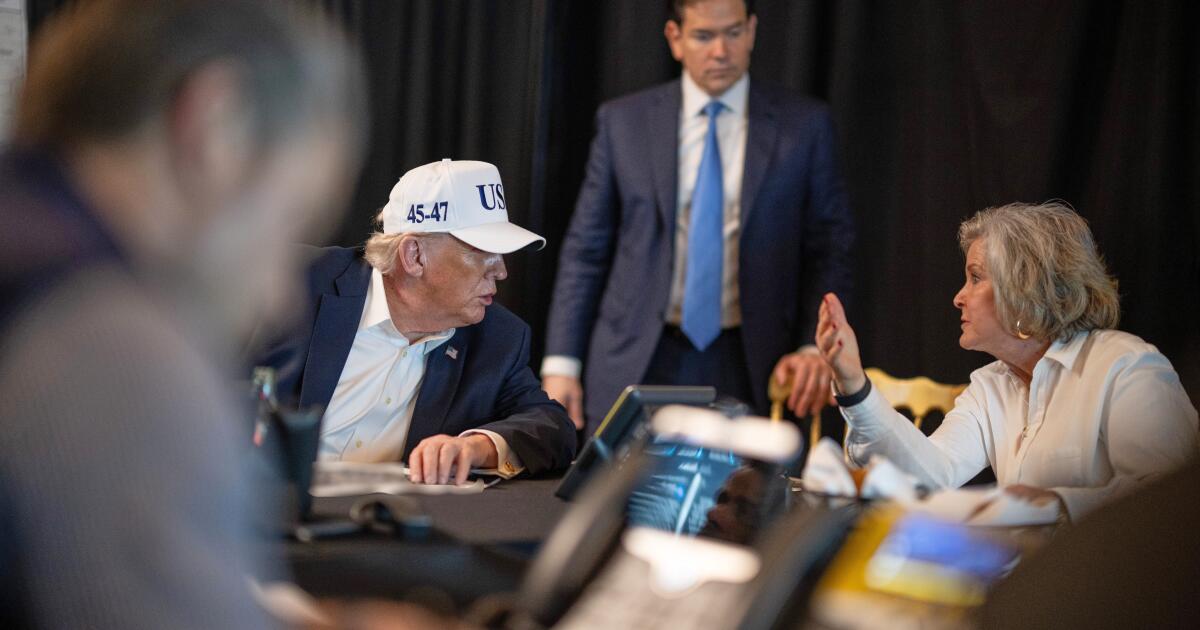
“Everything I have heard from the administration before and after these strikes on Iran confirms this is a war of choice with no strategic endgame,” said Rep. Jim Himes (D-Conn.), ranking Democrat on the House Intelligence Committee and part of a small group of congressional leaders — the Gang of Eight — who were briefed on the operation by Secretary of State Marco Rubio.
That divide is bound to remain an issue politically heading into this year’s midterm elections, and could be a liability for Republicans — especially considering that some in the “America First” wing of the MAGA base were raising their own objections, citing Trump’s 2024 campaign pledges to extricate the U.S. from foreign wars, not start new ones.
The debate echoed a similar if less immediate one around President George W. Bush’s decision to go to war in Iraq following the Sept. 11, 2001, attacks, also based on claims that “weapons of mass destruction” posed an immediate threat. Those claims were later disproved by multiple findings that Iraq had no such arsenal, fueling recriminations from both political parties for years.
The latest divide also intensified unease over Congress ceding its wartime powers to the White House, which for years has assumed sweeping authority to attack foreign adversaries without direct congressional input in the name of addressing terrorism or preventing immediate harm to the nation or its troops.
Even prior to the weekend bombings, Democrats including Sen. Adam Schiff of California were pushing Congress to pass a resolution barring the Trump administration from attacking Iran without explicit congressional authorization.
“President Trump must come to Congress before using military force unless absolutely necessary to defend the United States from an imminent attack,” Sen. Tim Kaine (D-Va.), a member of the armed services and foreign relations committees, said in a statement Thursday.
In justifying the daylight strikes that killed Supreme Leader Ayatollah Ali Khamenei just two days later, Trump accused the Iranian government of having “waged an unending campaign of bloodshed and mass murder” for nearly half a century — including through attacks on U.S. military assets and commercial shipping vessels abroad — and of having “armed, trained and funded terrorist militias” in multiple countries, including Hezbollah and Hamas.
Trump said that after the U.S. bombed Iran last summer, it had warned Tehran “never to resume” its pursuit of nuclear weapons. “Instead, they attempted to rebuild their nuclear program and to continue developing long-range missiles that can now threaten our very good friends and allies in Europe, our troops stationed overseas, and could soon reach the American homeland,” he said.
Other Republican leaders largely backed the president.
“The United States did not start this conflict, but we will finish it. If you kill or threaten Americans anywhere in the world — as Iran has — then we will hunt you down, and we will kill you,” said Defense Secretary Pete Hegseth.
“Every president has talked about the threat posed by the Iranian regime. President Trump is the one with the courage to take bold, decisive action,” said Atty. Gen. Pam Bondi.
While Iran’s coordination with and sponsorship of groups such as Hezbollah and Hamas are well known, Trump’s claims about its ongoing development of nuclear weapons systems are less established — and the administration has provided little evidence to back them up.
Democrats seized on that lack of fresh intelligence in their responses to the attacks, contrasting Trump’s latest claims about imminent threats with his assertion after the separate summer bombings that the U.S. had all but eliminated Iran’s nuclear aspirations.
“Let’s be clear: The Iranian regime is horrible. But I have seen no imminent threat to the United States that would justify putting American troops in harm’s way,” said Sen. Mark Warner (D-Va.), vice chairman of the Senate Intelligence Committee and a member of the Gang of Eight. “What is the motivation here? Is it Iran’s nuclear program? Their missiles? Regime change?”
Senate Minority Leader Chuck Schumer (D-N.Y.) said in a statement that the Trump administration “has not provided Congress and the American people with critical details about the scope and immediacy of the threat,” and must do so.
House Minority Leader Hakeem Jeffries (D-N.Y.) said the Trump administration needs congressional authority to wage such attacks barring “exigent circumstances,” and didn’t have it.
“The Trump administration must explain itself to the American people and Congress immediately, provide an ironclad justification for this act of war, clearly define the national security objective and articulate a plan to avoid another costly, prolonged military quagmire in the Middle East,” he said.
After the U.S. military announced Sunday that three U.S. service personnel were killed and five others seriously wounded in the attacks, the demands for a clearer justification and new constraints on Trump only increased.
Rep. Ro Khanna (D-Fremont) said Sunday he is optimistic that Democrats will be unified in trying to pass the war powers resolution, and also that some Republicans will join them, given that the strikes have been unpopular among a portion of the MAGA base.
Rep. Thomas Massie (R-Ky.), who partnered with Khanna to force the release of the Epstein files, has said he will work with him again to push a congressional vote on war with Iran, which he said was “not ‘America First.’”
Benjamin Radd, a political scientist and senior fellow at the UCLA Burkle Center for International Relations, said that whether or not Iran represented an “imminent” threat to the U.S. depends not just on its nuclear capabilities, but on its broader desire and ability to inflict pain on the U.S. and its allies — as was made clear to both the U.S. and Israel after the Hamas attacks on Israel on Oct. 7, 2023, which Iran praised.
“If you are Israel or the United States, that’s imminent,” he said.
What happens next, Radd said, will largely depend on whether remaining Iranian leaders stick to Khamenei’s hard-line policies, or decide to negotiate anew with the U.S. He expects they might do the latter, because “it’s a fundamentalist regime, it’s not a suicidal regime,” and it’s now clear that the U.S. and Israel have the capabilities to take out Iranian leaders, Iran has little ability to defend itself, and China and Russia are not rushing to its aid.
How the strikes are viewed moving forward may also depend on what those leaders decide to do next, said Kevan Harris, an associate professor of sociology who teaches courses on Iran and Middle East politics at the UCLA International Institute.
If the conflict remains relatively contained, it could become a political win for Trump, with questions about the justification falling away. But if it spirals out of control, such questions are only likely to grow, as occurred in Iraq when things started to deteriorate there, he said.
Israel and the U.S. are currently betting that the conflict will remain manageable, which could turn out to be true, Harris said, but “the problem with war is you never really know what might happen.”
On Sunday, Iran launched retaliatory attacks on Israel and the wider Gulf region. Trump said the campaign against Iran continued “unabated,” though he may be willing to negotiate with the nation’s new leaders. It was unclear when Congress might take up the war powers measure.
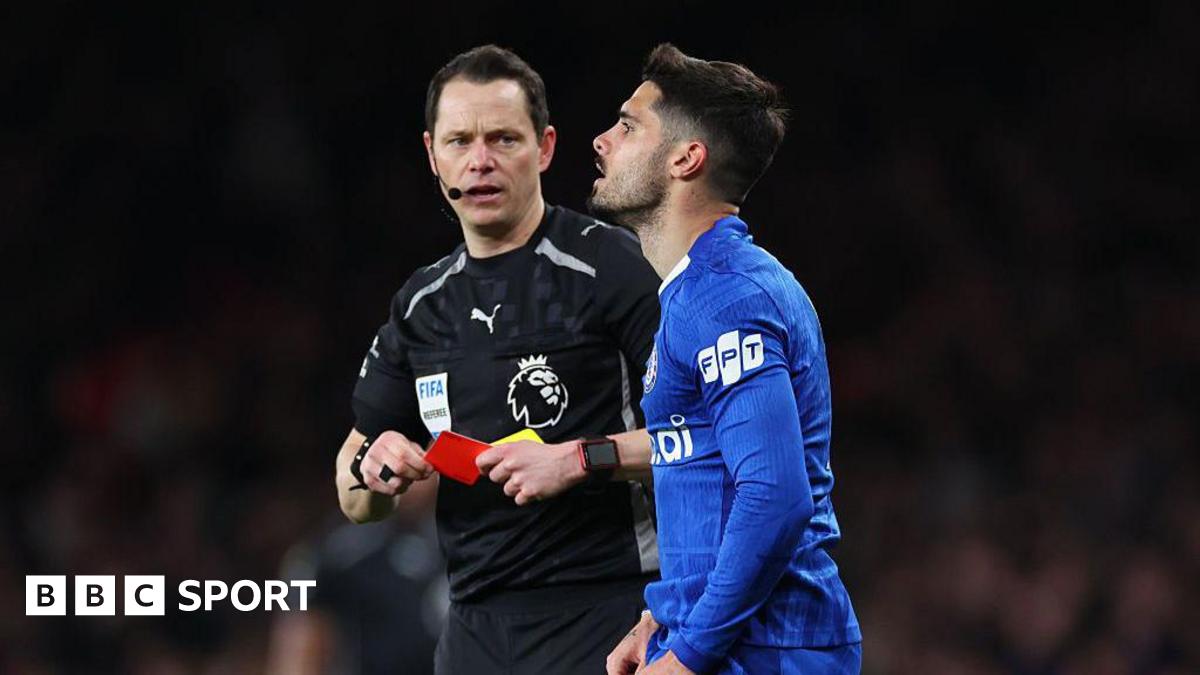
‘It’s cultural’ – red cards and set-pieces wrecking Chelsea’s season
Chelsea have received nine dismissals across all competitions, although former manager Maresca, who was sent off for over‑celebrating a last‑minute winner against Liverpool, does not count in that total.
They are one short of equalling the joint record of eight different players sent off in a single season, held by Sunderland. They are two away from matching the Premier League record for the most red cards in a campaign.
This is far from a new issue.
Chelsea, bottom of the Premier League fair‑play table, finished second‑bottom last season under Maresca and bottom the year before under Mauricio Pochettino.
Maresca initially played down concerns before later launching his own review of the team’s indiscipline prior to his departure. Rosenior, meanwhile, believed he had tightened up Chelsea‘s disciplinary problems – only to see red cards return in consecutive matches.
“I have respect for the previous manager Enzo [Maresca]. I don’t speak about what happened before but it is starting to happen with me,” Rosenior said.
“That’s something I felt we had addressed. We went 10 games without a red card, now [we have had] two in two games and that’s a problem we need to solve.”
Why are Chelsea getting so many players sent off?
One possible factor, which is played down internally in west London, is that they have the youngest squad in the Premier League and lack natural leaders.
Former England defender Matthew Upson told BBC Radio 5 Live: “It is costing them. I don’t think it is something you can address at this point – you’re in March.
“It is something that is said in pre‑season. It is cultural and you build it into the club. The players buy into it and they police it. It is about being measured and controlled at the right moment.
“Again, they are young as well. The younger you are, the more susceptible you are to those situations.”
One of the leaders tasked with helping halt Chelsea‘s disciplinary slide, Reece James, told Sky Sports: “Every time it’s someone different, not the same player. Internally we need to review and keep improving. It’s a problem.
“We are playing in the toughest league in the world — 11 v 11 is tough; 11 v 10 is even harder, no matter who you are playing.”
At least 22 people killed in anti-U.S. protests in Pakistan
Plumes of smoke rise above the skyline of Tehran, Iran’s capitol, after explosions in the city on Sunday. Protests have occurred across the Middle East, including one in Pakistan where more than 20 people died. Photo by Hossein Esmaeili/UPI | License Photo
March 1 (UPI) — Some 22 people were killed amid anti-U.S. protests in Pakistan Sunday, following the U.S.-Israeli offensive Saturday that left 200 people dead.
In Karachi, at least 10 people were killed as they attempted to storm the U.S. Consulate, while two were killed in Islamabad and another 10 killed in Gilgit-Baltistan, the New York Times reported.
“When Iran is attacked, we feel our faith, our identity and our very existence are being targeted,” a student protestor in Karachi said, The Times reported.
The country’s supreme leader, Ayatollah Ali Khamenei was among the dead following the U.S. and Israeli attacks.
In response, protests are swelling across the region, including in Iraq and India.
“We must also ensure that those who are mourning in Jammu and Kashmir are allowed to grieve peacefully,” said the area’s chief minister Omar Abdullah, NDTV World reported. “The police and administration should exercise utmost restrain and refrain from using force or restrictive measures.”
Barron’s reported that protests against the U.S. are anticipated in North Africa, South Asia and across the Middle East.
The U.S.-Israeli airstrikes followed indirect negotiations between the United States and Iran regarding nuclear weapons on Thursday.
Iranian officials had said that additional talks were planned.
President Trump had previously increased military presence in the region and threatened escalation if no deal was reached.
Senate Majority Leader John Thune, R-S.D., speaks during a press conference after the weekly Republican Senate caucus luncheon at the U.S. Capitol on Wednesday. Photo by Bonnie Cash/UPI | License Photo

Iranian drone strikes US military facility in Kuwait | Conflict
Footage captured the moment an Iranian drone struck the US military’s Camp Buehring in northwestern Kuwait, impacting with an explosion and cloud of smoke.
Published On 1 Mar 2026