



South Koreans top Japan visitors as China plunges

Foreign tourists crowd a market street in Tokyo’s Ueno district. Photo by Asia Today
Feb. 20 (Asia Today) — South Korea was the largest source of foreign visitors to Japan in January, filling a gap left by a sharp drop in Chinese tourism, according to official data released this week.
The Japan National Tourism Organization said 3,597,500 foreign travelers visited Japan in January, down 4.9% from a year earlier and marking the first year-over-year decline in four years following the COVID-19 pandemic.
South Korea accounted for 1,176,000 visitors, up 21.6% from a year earlier and representing 32.7% of all arrivals. It was the highest monthly total on record for a single country or region in January.
In contrast, Chinese visitors fell 60.7% to 385,300 from 980,250 a year earlier. The decline followed calls by the Chinese government urging restraint in travel to Japan. The drop extended a steep fall in December.
Visitors from Hong Kong also declined 17.9% to about 200,000, reducing the combined share of mainland China and Hong Kong to roughly 11% of total arrivals, compared with 20% to 30% in previous periods.
Other markets showed solid growth. Taiwan sent 694,500 visitors, up 17%, while the United States recorded 207,800 arrivals, up 13.8%. Australia contributed 160,700 visitors, up 14.6%. South Korea, Taiwan and Australia each posted record January figures.
Despite the slump in Chinese travel, 17 countries and regions set record January totals, helping to limit the overall decline. The tourism agency cited demand for winter sports and an increase in long-stay travelers as supporting factors.
Industry officials said group tours from China have been more heavily affected than individual travelers. The downturn followed remarks by Prime Minister Sanae Takaichi related to Taiwan, after which Beijing encouraged citizens to reconsider trips to Japan.
Tourism operators are seeking to reduce reliance on Chinese demand. A sake brewery in Niigata said Chinese visitors account for about 10% of its 7,000 annual foreign guests. On a recent tour, no Chinese participants were present.
Tourism Agency Commissioner Shigeki Murata said bookings from non-Chinese markets are maintaining levels seen during last year’s Lunar New Year holiday. Yusuke Miura, an economist at Nissei Research Institute, warned that prolonged travel restraint from China could pose risks and called for both businesses and the government to diversify by market.
China’s Spring Festival, which began Feb. 15, typically overlaps with Japan’s off-season for domestic travel, making Chinese tourists a key source of winter demand. Analysts are watching closely how the shortfall will affect hotels, restaurants and souvenir shops.
— Reported by Asia Today; translated by UPI
© Asia Today. Unauthorized reproduction or redistribution prohibited.
Original Korean report: https://www.asiatoday.co.kr/kn/view.php?key=20260220010006001

The aftermath of Pakistan’s air strikes in Afghanistan | Pakistan Taliban News
Published On 22 Feb 2026
Pakistan says it has launched strikes on armed groups in Afghanistan after blaming recent suicide bombings, including attacks during the Muslim holy month of Ramadan, on fighters it says are operating from its neighbour’s territory.
Kabul has repeatedly denied allowing armed groups to use Afghan territory to stage attacks in Pakistan.
Afghanistan’s Ministry of Defence on Sunday said “dozens of innocent civilians, including women and children, were martyred and wounded” when strikes hit a school and homes in the eastern provinces of Nangarhar and Paktika.
Nangarhar police told the AFP news agency the bombardment started about midnight (19:30 GMT on Saturday) and hit three districts.
“Civilians were killed. In one house, there were 23 family members. Five wounded people were taken out,” police spokesperson Sayed Tayeeb Hammad said.
The Afghan Defence Ministry said it will “deliver an appropriate and calculated response” to the Pakistani strikes.
The two countries have been locked in an increasingly bitter dispute since the Taliban authorities retook control of Afghanistan in 2021.
Pakistani military action killed 70 Afghan civilians from October to December, according to the United Nations mission in Afghanistan.
Several rounds of negotiations followed an initial ceasefire brokered by Qatar and Turkiye, but they have failed to produce a lasting agreement.
Saudi Arabia intervened this month, mediating the release of three Pakistani soldiers captured by Afghanistan in October.
The deteriorating relationship has had repercussions for people in both countries with the land border largely closed for months.
Kate Hudson stuns on red carpet ahead of glittering BAFTA Film Awards
KATE Hudson led the fashion pack in a glam corset dress at the Bafta Film Awards Nominees’ Party.
Anticipation is building for the prestigious awards ceremony – honouring the best British and foreign films of 2026 – which will air on the BBC tonight.
Previously, the Bafta 2026 nominations were revealed with Leonardo DiCaprio flick One Battle After Another leading the nominations in 14 categories.
Hollywood veteran Leo, 51, now shares an all-time Bafta record with the likes of movie legends Michael Caine, Daniel Day-Lewis and Laurence Olivier for seven Best Actor nominations.
However he has won the award just the once, for The Revenant in 2016.
Yet while the stars get set for tonight’s proceedings, a swanky shindig at the National Portrait Gallery ramped up the anticipation last night.


Song Sung Blue actress Kate oozed elegance in her trendy frock, which paired a black corset top with a flowing white skirt.
She left her blonde hair flowing over her shoulders and kept her make-up fresh, accessorising with statement silver earrings.
The beauty was seen posing with fellow actress Chase Infiniti, who she is pitted against in the Best Leading Actress category.
One Battle After Another screen star Chase opted for a delicate pink lace bodycon with long sleeve.
Ruffle detail around the waist and wrists added extra glam, and she finished off her look with silver high heels.
Hamnet’s Jessie Buckley and Bugonia’s Emma Stone are among others in the pair’s hotly contested category.
Meanwhile, Star Wars actor Warwick Davies flashed a huge smile as he stepped on the Red Carpet.
Wimbledon actress Kirsten Dunst cut a glam look in a longline black coat with matching handbag while her Fargo star husband Jesse Plemons wore a stylish grey blazer and matching trousers.
He is nominated for the Best Actor role for flick Bugonia.
Big Brother anchor AJ Odudu stood out for all the right reasons in a purple halterneck dress with a side split.
Marty Supreme actress Odessa A’zion, who is nominated for Best Supporting Actress, went for an all-black attire with striking yet sophisticated silver detail cuffs.
The ping pong movie has 11 Bafta nominations, including Best Actor for her co-star Timothee Chalamet, 30.
The Shakespearean drama Hamnet matched that total, including a nod for Irish screen star Paul Mescal, 29, after he missed out on recognition in the recent list of Academy Awards nominees.
There was also a surprise five nominations for Scottish comedy I Swear, about a man struggling with severe Tourette’s.
Wicked: For Good was nominated for Best Costume Design and Best Make-Up – two more nods than it got for the Oscars.
Its leading stars Ariana Grande and Cynthia Erivo were again snubbed.
Other names to miss out include Die My Love’s Jennifer Lawrence, Christy’s Sydney Sweeney and Jay Kelly’s George Clooney.
The 79th annual ceremony will take place tonight at London’s Royal Festival Hall, hosted by Scots star Alan Cumming.

The largest helicopter in the world is so huge it once carried a 23,000-year-old frozen woolly mammoth
The largest and most powerful helicopter has been in service since 1977

World’s biggest helicopter is so huge it once carried a gigantic ‘frozen woolly mammoth’(Image: Getty)
The Mil Mi-26 (codename: Halo) is a Russian-built helicopter and currently holds the title of the world’s largest. Having taken its maiden flight in 1977, the Mi-26 was initially built to transport heavy cargo to isolated locations inaccessible by conventional aircraft.
This huge helicopter boasts rear-loading doors and can carry up to 20 tonnes. Aviation specialists at Key Aero have named it the “undisputed king of military heavy lift helicopters”.
It measures 40 metres in length, making it “taller than a giraffe”, and is also the world’s most powerful helicopter.
“Two 11,400bhp engines allow it to carry loads weighing up to 20 tonnes. In 1982, the aircraft set the world record for the heaviest mass lifted to 2,000 metres by carrying a load of 56,768 kilograms, a record that still stands today.”
Aviation experts said it is “so big it can operate as a mobile hospital”. Perhaps the Mi-26’s most extraordinary cargo was a 20-ton, frozen woolly mammoth, reports the Express.
Back in 1999, the helicopter airlifted the preserved remains of a 23,000-year-old frozen Woolly Mammoth retrieved from Siberia’s frozen Taimyr Peninsula.
Fair Lifts notes: “The Mi-26 is often the first choice for missions that involve transporting heavy machinery, including armoured vehicles, generators, and even small aircraft.
“Its eight-blade main rotor and twin-turbine engines deliver a unique blend of raw power and flight stability, enabling it to operate in some of the world’s harshest environments, from Siberian tundras to Middle Eastern deserts.”
The helicopter continues to serve actively today, mainly deployed by the Russian Aerospace Forces, but it’s also used across other nations, including China and India.
The largest aircraft in the world is the Antonov An-225 Mriya, a remarkable plane built by the Soviet Union, capable of transporting “52 mature elephants “.
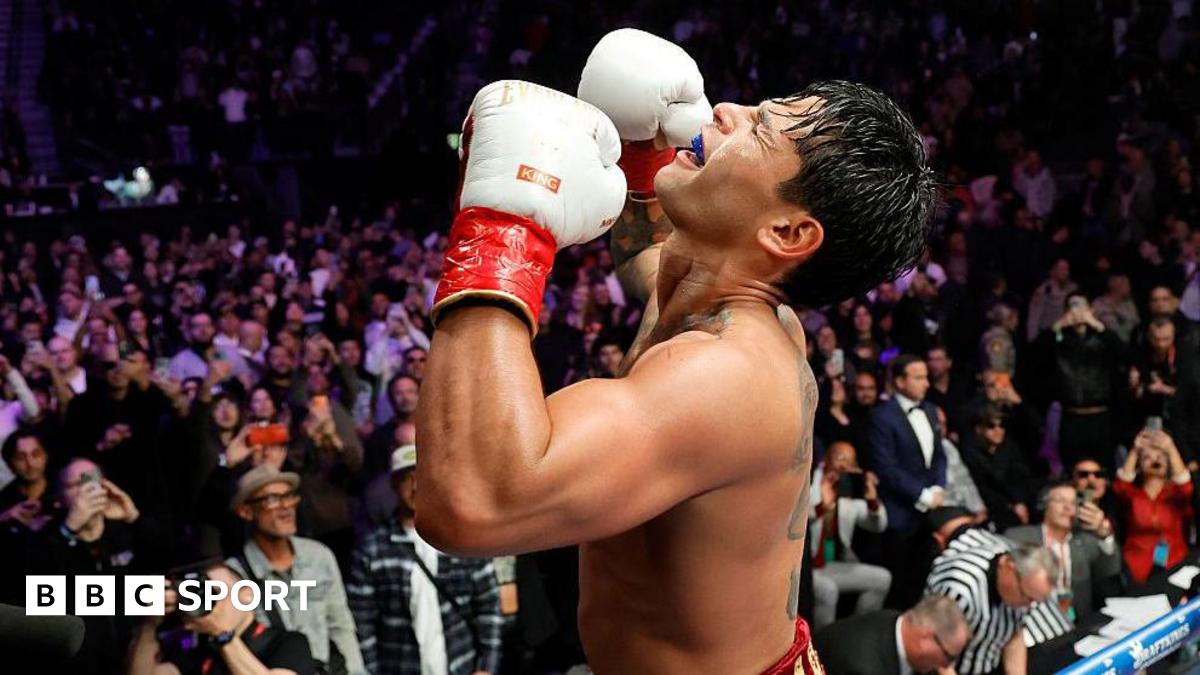
Ryan Garcia beats Mario Barrios and becomes new WBC welterweight champion
Fellow American Stevenson, 28, smiled, nodded his head and clapped as Garcia added: “I want to be a great champion, I’m not scared.
“I fought Devin Haney. I’ll fight you, Shakur Stevenson. I’ll fight anybody.”
Garcia was then told Stevenson had said he was “levels above” him right now, to which he replied: “You’ve got to have some type of punching power to get me off you, because it’ll just be a different style – and I’m not going to hit him light.”
Garcia was given a one-year ban for failing a drugs test in 2024 after beating Haney, with the victory overturned and the fight recorded as a ‘no contest’.
The win for Garcia was his first since a shock points loss to Rolando Romero last year and improves his record to 25 victories and two defeats.
Barrios was upgraded from interim to full WBC champion in June 2024 and had made two previous successful defences via draws, retaining his title with a majority draw against a then 46-year-old Manny Pacquiao last summer.

Ryan Garcia defeats Mario Barrios to win WBC welterweight title | Boxing News
Garcia is the new world champion after a unanimous points decision victory against title holder.
Published On 22 Feb 2026
Ryan Garcia has won the WBC welterweight title with a dominant unanimous decision over Mario Barrios.
Garcia dropped Barrios in the opening seconds on Saturday night in Las Vegas, Nevada, and controlled the fight with sharp combinations. The 27-year-old stayed patient after the early knockdown and turned more conservative late with a big lead.
Recommended Stories
list of 4 itemsend of list
The judges scored the fight 119-108, 120-107 and 118-109 for Garcia (25-2, 20 knockouts) of Victorville, California. The Associated Press news agency had it 119-109.
“It feels good to finally be a world champion,” Garcia said. “It’s something I’ve been dreaming of since I was seven years old.”
Garcia already has begun to turn to his future, looking at WBO super lightweight champion Shakur Stevenson and saying he wanted him next.
This was the second underwhelming bout in a row for Barrios (29-3-2, 18 KOs) of San Antonio, Texas, after he was fortunate to escape with a majority draw victory over Manny Pacquiao in July.
The win capped a turbulent stretch for Garcia, including a suspension, fines and other controversies.
In the co-main event, Gary Antuanne Russell kept his title against Andy Hiraoka.


The tiny coastal commune once loved by pirates has one of the world’s best lidos
ONE of the most popular destinations in Brittany for holidaymakers was also once a thriving hub for pirates.
If you want to explore it now, you’ll find beautiful beaches, and a natural tidal pool that’s one of the best in the world.
Saint-Malo is a popular destinations in northern France with a walled city sitting on a natural harbour and some of the best beaches in the region.
One of them, called Bon Secours Beach, also has a natural tidal lido that’s one of the world’s best.
In 2022, the lido was named by Conde Nast as being one of the “14 prettiest ocean pools in the world”.
The publication said: “It’s a dream destination for water-sport enthusiasts with a sailing school nearby and diving boards to jump from.


“Those sunbathing can enjoy the spectacular views of boats calmly sailing over the bay of Saint-Malo and Dinard.”
Many years ago Saint-Malo was a popular spot for pirates – and not for the reason you might think.
During the 12th century, Saint-Malo was declared a ‘sanctuary city’ where people were safe from all criminal prosecutions.
As a result, pirates flocked to the town until the 17th century – it’s said that as many as 50 pirate ships used the walled city as their base.
Inside the city walls now are lots of restaurants and shops, one of the most popular is Rue de l’Orme.
It’s known for having the popular dairy shop, La Maison du Beurre Bordier.
It’s famous for producing some of the best butter in the world – it is renowned for its traditional, hand-churned, and molded butter which is often used by top Michelin-starred chefs.
Around the corner from Bon Secours Beach is the popular stretch sand called Grande Plage du Sillon, one visitor said it’s “a real pleasure to explore it in any season.”
Grande Plage du Sillon is the longest beach in Saint-Malo and from there, visitors can explore nearby islands.
Both Le Grand Bé and Le Petit Bé can be reached on foot at low tide.
One of the most popular hotels is The Grand Hotel des Thermes on the beach front.
The 5-star hotel has 177 rooms – some with spectacular views across the seafront.
It has three restaurants; Le Cap Horn which faces Saint-Malo bay, La Verrière for healthier meal options and La Passerelle which is a sea view bar and tea room.
On a hot day, head out to La Terrasse to enjoy mussels, oysters, langoustines, Lobster rolls, and seafood wrap.
For outdoor pools closer to home, here are all the lidos in the UK mapped – with water slides, cocktail bars and some are even FREE to enter.
And for more French escapes, check out this seaside town nicknamed ‘Paris-on-Sea’ with seafront casinos and huge palace hotel.

10 least rainy places to book holidays in UK to avoid wet weather ruining vacation

We asked the Met Office for a list of towns that have had the least rainfall over the past year. Some of the driest, rain-light capitals of the UK may come as a surprise
Source link

The new holiday tax needs to be scrapped

TODAY Sun Travel is urging our readers to stand behind our campaign to Stop The Holiday Tax.
The Government is proposing to allow local authorities the right to tax overnight stays in holiday parks, campsites, cottages, B&Bs and hotels.
That could see the cost of some of the cheapest stays at our beloved holiday parks almost DOUBLE.
The new proposals, originally announced during the Budget, could mean a £2 tax per person per night on staycations.
That would mean £70 extra for a family of five taking a week-long break.
And that’s after you’ve paid 20 per cent VAT on your trip.


Most families already pay higher prices because of increased demand for travel during the school holidays.
The proposals will mean that many of those who have the least will be forced to pay more for precious breaks, including the many thousands who enjoy our own Hols From £9.50 trips.
The move has been met with dismay by tourism bosses and travel businesses who fear British holidaymakers may just decide to head abroad instead — or not be able to afford a break at all.
The new taxes would also have an impact on those visiting the UK from abroad.
Research from the World Travel & Tourism Council has found at least £14billion could be lost from the UK economy if daily visitor taxes were introduced.
As an industry, travel and tourism supports 4.5million jobs in the UK, the WTTC said, equivalent to roughly one in eight jobs nationwide.
But their research found that 29 per cent of visitors from the US, France and Germany — the largest inbound tourist markets — would consider alternative destinations or just decide not to visit if a substantial tax is introduced.
The levy would hit tourism in seaside towns that are already struggling to attract visitors away from the lure of cheap foreign breaks.
Just last week, VisitEngland announced a £1million campaign to encourage holidaymakers to visit the UK’s north west coast.
How can taxing those very staycation tourists help boost visits to areas of the UK where they are already having trouble attracting holidaymakers?
To show your support for our campaign and to see just how it could impact you, go to our website at StopTheHolidayTax.uk.
Enter your name and postcode and it will automatically write a message to your MP on your behalf asking them to stop the holiday tax.
The site also has a handy calculator to show you just how much it could end up costing you if the new rules go ahead.
We must stop this hols tax madness
SUN Holiday fans Diane Hunter and Michael O’Brien are already packing their bags for their next bargain break – four nights at Parkdean Resorts Whitley Bay Holiday Park, Tyne & Wear, in two weeks’ time.
But the couple, who have been on more than 200 of our great getaways in the past 20 years, are furious at the Government’s proposed holiday tax.
Retired fork-lift truck driver Michael, 61, says: “It’s an absolute disgrace.
“Just a couple of weeks ago, coinciding with my birthday, I had a major operation to remove a stomach ulcer. This break is part of my recuperation.
“But the threat of this added tax has only added to my anxiety and just shows the present Labour administration does not care about ordinary folk.
“I’m never going to agree with this idea.”
Michael and retired office worker Diane, 57, already have an astonishing nine Sun Holidays booked this year.
The couple, of Grangemouth, near Falkirk, say the value-for-money breaks put the icing on the cake of their time together. Michael feels Labour is now clearly targeting hard-working families as well as the less well-off.
He says: “The amount involved might not seem a lot, but it could mean the difference between being able to afford a holiday or not.
“Labour is scraping the bottom of the barrel here.
“So, we have no hesitation in backing The Sun campaign.
“People have to stand up and fight to stop this madness.”
‘Lots of us will lose out on trips’

JACK CULLWICK went on his first holiday in eight years this week.
With his wife and two sons, aged eight and two, he was spending half-term at Beverley Holiday Park in Paignton, Devon.
Jack, 33, of Stratford-upon-Avon, Warks, runs his own transport business and can’t take holidays overseas because he needs to be close to work, even when he’s off.
He says: “The holiday tax is a terrible idea.
“There are so many people who can’t go abroad for a number of reasons, whether it’s to be nearby for family or because of their jobs or being on call.
“If we’re priced out of coming away in the UK, plenty of people won’t have a holiday at all.”

Six Nations 2026: What went wrong for England in defeat by Ireland?
After seven dynamic caps off the bench, 21-year-old back rower Henry Pollock finally gained a first Test start.
The idea was his energy would help avoid a repeat of last week when Scotland blitzed England in the opening 20 minutes.
“What do you do? Two weeks in a row conceding so many points in the first 15 minutes,” prop forward Ellis Genge told BBC Sport.
“Everyone has to take a look at themselves. No-one knows what the answer is right now or we would have sorted it out.
“It opened up scar tissue from last week – we have to be better at managing that period and stop turning the ball over.
“It’s brutal, professional sport because if you get 5% wrong it’s gone. We probably believed the hype from the first week too much. We can’t let the noise in now.
“We have let everyone down. Apologies for that but I promise we will make it better. We are going to go away and work as hard as we can to go away and rectify things.”
England found themselves deep in Ireland’s 22 on multiple occasions but lacked any clinical edge, making 14 handling errors in the game.
George Ford also missed touch with a penalty that could have put the hosts in a scoring position.
“As players, senior players and the leadership team we have to take responsibility for not starting the game right,” said Itoje.
“It was just our inaccuracy. We turned the ball over too much, and when we did get into positions to hurt Ireland we were not accurate and then gave ourselves a mountain to climb.”

Grammy-nominated salsa music pioneer Willie Colón dies aged 75 as Bad Bunny leads tributes to ‘renowned musician’
GRAMMY-nominated salsa legend Willie Colón has died aged 75.
Heartbreaking tributes have poured in for the musical pioneer – with Bad Bunny calling the star “one of the legends who contributed to this beautiful and legendary genre”.
The iconic artist passed away on Saturday surrounded by loved ones, his manager confirmed.
Colón was a trombonist, composer, arranger, singer and social activist.
Over his decades-long career, he produced more than 40 albums that sold more than 30 million copies worldwide.
His manager Pietro Carlos said: “Today, we’ve lost an architect of the New York sound, a trombonist who made metal his banner and wrote eternal chapters in our musical history.


“Willie didn’t just change salsa; he expanded it, politicized it, clothed it in urban chronicles, and took it to stages where it hadn’t been heard before.
“His trombone was the voice of the people, an echo of the Caribbean in New York, a bridge between cultures.”
He added: “Today we say goodbye to a master, but his legacy lives on.”
Meanwhile, Grammy-winner Bad Bunny said on Instagram: “Today, one of the legends who contributed to this beautiful and legendary genre passed away.”
Most read in Entertainment
The star continued: “So, on behalf of myself and Los Sobrinos, we wish Willie Colón peace.
“Much strength to his family.
“The inspiration of so many of these great musicians who left their mark on this earth will never die as long as there are talented young people like those here, keeping the music, salsa and all Caribbean rhythms alive.”
Colón’s cause of death has not been confirmed, but Saturday’s tragic news follows reports from last week claiming that the star had been hospitalised for respiratory problems, according to TMZ.
A pivotal architect of urban salsa music, Colón collaborated with a long list of fellow icons, including the Fania All Stars, David Byrne and Celia Cruz.
His critically acclaimed collaboration with Rubén Blades, Siembra, which touched on social issues in salsa, became one of the bestselling albums in the genre of all time.
The musician, born to Puerto Rican parents, was nominated for 10 Grammys and one Latin Grammy.
Colón was born in the Bronx, New York, before being raised by his grandmother and aunt, who from a young age nurtured him with traditional Puerto Rican music.
When he was 11 years old he ventured into the world of music, first playing the flute, then bugle, trumpet and finally trombone.
His interest in trombone was sparked after experiencing Barry Rogers playing it on Dolores, Mon Rivera’s song with Joe Cotto.
He recalled in 2011: “It sounded like an elephant, a lion … an animal.
“Something so different that, as soon as I heard it, I said to myself: ‘I want to play that instrument.’”
Colón’s main musical traits included the fusion of rhythms.
The genius harmonized jazz, rock, funk, soul and R&B with the old Latin school of Cuban son, cha-cha-cha, mambo and guaracha.
His style also encompassed traditional Puerto Rican sound including jíbara, bomba and plena music.
A passionate advocate for civil rights, he fought mostly in the US for the Latino community among others.
In 1991 he was awarded the Chubb fellowship from Yale University, a public service recognition also awarded to John F. Kennedy, Moshe Dayan, the Rev. Jesse Jackson and Ronald Reagan.
And he even served in politics – working as a special assistant to David Dinkins, New York’s first Black mayor, and an adviser to Mayor Michael Bloomberg.
Colón had his own stints running for public office too – but had little luck challenging the then-US Rep. Eliot Engel in the 1994 Democratic primary.
In 2001 he also came in third in the Democratic primary for New York’s public advocate.
The late star also appeared in films such – taking roles in Vigilante, The Last Fight, and It Could Happen to You.
On TV, he featured in Miami Vice and Demasiado Corazón.
The icon also appeared in Bad Bunny’s music video for NuevaYol.
Colón is survived by his wife and four sons.

The best time of day to book flights down to the exact MINUTE

HOLIDAY prices move constantly. Most people know that.
But only a few realise just how much the time of day you book can influence what you pay.
I work in travel and spend a large part of my job analysing pricing data, and recently, I wanted to understand how big the swing really is across a single day.
Not just the cheapest day of the week, but the cheapest hour, and even the cheapest minute.
The results were clearer (and way more dramatic) than I expected.
When is the most expensive time to book?
The data shows that the most expensive time of day to book a holiday is between 9am and 10am.
Bookings made in that window came in at around 30 per cent more expensive than the cheapest time of day, according to the data.
There is a straightforward reason for this: it’s when demand spikes.
People arrive at work, open their laptops and start browsing.
Search volumes increase, airline pricing systems respond, and fares begin to rise. Then, package holiday prices follow the same pattern.
In simple terms, booking your summer break with your first coffee of the day is statistically one of the pricier moments to do it.
When is the cheapest hour to book?
At the other end of the scale, the cheapest time to book is consistently between 4am and 5am.
Overnight, demand drops off. Fewer searches mean less upward pressure on prices.
Airline systems effectively reset after the previous day’s activity, and fares often return closer to their baseline before building again through the morning.
It’s not a secret loophole. It’s simply supply and demand working in your favour while most of the country is asleep.
Is there a more realistic option?
Of course, most people are not setting alarms for 4am to book a holiday.
So I looked specifically at sociable hours.
If you are booking in the late evening, roughly 8pm to 10pm, prices were on average around 5 per cent cheaper than during the 9am to 10am rush for the same holiday.
Five per cent may not sound dramatic, but on a £2,000 family holiday that equates to around £100.
That is a tangible difference for many households – mine included.
When is the exact cheapest minute?
Out of curiosity, I pushed into the data further and examined booking times by the minute.
Consistently, the single cheapest minute recorded was 2:48am.
At that exact point, bookings were around 60 per cent cheaper than the most expensive time of day in the data sample.
Now – reality check time. Booking at 2:48am does not mean every holiday will magically be 60 per cent cheaper.
Pricing is influenced by many factors, including availability and route demand.
However, it illustrates just how wide the gap can be between peak and off-peak booking behaviour.
Testing it in real time
Data is one thing. I wanted to see it happen on screen. So I tested two different package holidays.
First, I checked Catty Cats Garden Hotel in Turkey at 2:47am. It was pricing at £133 per person.
Later that same morning, at 11:36am, the exact same hotel and dates were pricing from £165 per person.
That is roughly a 24 per cent increase in a few hours.
Then I repeated the test with a completely different deal – Mahdia Beach & Aqua Park in Tunisia.
At 2:48am, it was pricing from £130 per person. When I checked again at 11:46am, it had risen to £143 per person.
Again, same hotel, same dates. The only thing that changed was the time of day. Early hours versus late morning – identical searches but different prices.
It is a simple demonstration of how sensitive holiday pricing can be to demand levels throughout the day.
What this means for sunseekers
I want to be clear: I’m not encouraging everyone to live like an insomniac just to save a few pounds. But the broader trend is consistent.
Peak browsing hours tend to coincide with higher prices. Quieter periods – particularly early morning and late evening – often offer better value.
If you want a practical takeaway: avoid the 9am to 10am window if you can. Consider booking later in the evening instead.
And if you do happen to wake up at 4am and find yourself scrolling… it might be the most financially productive scroll of the week.
Holiday pricing is reactive, it responds to us.
So sometimes, saving money is not about finding a hidden code or waiting for a sale.
It is simply about stepping slightly outside the rush and pressing “book” when everyone else is still asleep.

U.S. could make history on final day of Milan-Cortina Olympics
Welcome to the Olympic Edition of the Sports Report, an L.A. Times newsletter published every morning during the Winter Olympics. To sign up to receive it via email (it’s free), go here and select the Sports Report. If you’ve already signed up for the Sports Report, you will receive the Olympics edition as well.
Welcome to your daily review and preview of this year’s Milan-Cortina Olympics. My name is John Cherwa and I’m your tour director for the Games as we enter the final day with the U.S. setting a record for golds and closing in on total medals.
Guessing we can call these Games a success for the U.S. after it won its 11th gold medal Saturday — the most ever for the U.S. in a single Winter Olympics. Now the U.S. is hoping to beat or tie its best mark of 34 medals set at Salt Lake City in 2002. With five events yet to be completed, the U.S. is at 33 counting a guaranteed medal in men’s hockey. (A few days ago, we predicted the U.S. would finish with 33.)
There is no chance the U.S. will catch Norway, which has 40 total medals, including 18 golds.
So, with five events remaining does the U.S. have a chance to tie or set a record?
- Cross-country skiing. The final event is the women’s 50-kilometer mass start. The podium is likely to be populated by Sweden and Norway, but Jesse Diggins of the U.S. has an outside chance of making the podium.
- The U.S. is ninth and 12th heading into the final two runs of the four-man bobsled. Could be another Germany sweep.
- The U.S. is out of the women’s curling tournament. Switzerland and Sweden play for the gold.
- The U.S. has a guaranteed silver in ice hockey when it plays Canada.
- The U.S. will not likely medal in the women’s freestyle skiing halfpipe but it could have. One of the favorites is Eileen Gu, who is from the Bay Area but competes for China. Vice president JD Vance criticized her, among other athletes.
Getting them onto the cusp of tying or breaking the total medal record and breaking the gold medal total on Saturday was the U.S. mixed team freestyle aerials group of Kalia Kuhn, Connor Curran and Christopher Lillis, who gave the U.S. back-to-back golds in this event. It was the 11th gold medal.
The U.S. also picked up a bronze when Mia Manganello came in behind the Netherlands and Canada in the speedskating women’s mass start. The men’s mass start was also won by the Netherlands. Three-time medalist Jordan Stolz of the U.S. was fourth.
The U.S. finished the day with a bronze in the two-woman bobsled. Kaillie Humphries and Jasmine Jones were in the sled where, as usual, Germany took gold and silver. Kaysha Love and Azaria Hill finished fifth.
So the U.S needs one more to tie the record. That means either Jesse Diggins or the four-man bobsled have to have career-defining performances.
The big event today is the men’s hockey gold medal game between the U.S. and Canada. The tournament is so much better with the return of NHL players after 12 years.
Here’s a look at NHL players on each team:
United States: Matt Boldy (Minnesota), Kyle Connor (Winnipeg), Jack Eichel (Vegas), Jack Hughes (New Jersey), Jake Guentzel (Tampa Bay), Clayton Keller (Utah), Dylan Larkin (Detroit), Auston Matthews (Toronto), J.T. Miller (NY Rangers), Brock Nelson (Colorado), Brady Tkachuk (Ottawa), Matthew Tkachuk (Florida), Tage Thompson (Buffalo), Vincent Trocheck (NY Rangers), Brock Faber (Minnesota), Noah Hanifin (Vegas), Quinn Hughes (Minnesota), Jackson LaCombe (Ducks), Charlie McAvoy (Boston), Jake Sanderson (Ottawa), Jaccob Slavin (Carolina), Zach Werenski (Columbus), Connor Hellebuyck (Winnipeg), Jake Oettinger (Dallas), Jeremy Swayman (Boston).
Canada: Sam Bennett (Florida), Macklin Celebrini (San Jose), Sidney Crosby (Pittsburgh), Brandon Hagel (Tampa Bay), Bo Horvat (NY Islanders), Seth Jarvis (Carolina), Nathan MacKinnon (Colorado), Brad Marchand (Florida), Mitch Marner (Vegas), Connor McDavid (Edmonton), Sam Reinhart (Florida), Mark Stone (Vegas), Nick Suzuki (Montreal), Tom Wilson (Washington), Drew Doughty (Kings), Thomas Harley (Dallas), Cale Makar (Colorado), Josh Morrissey (Winnipeg), Colton Parayko (St. Louis), Travis Sanheim (Philadelphia), Shea Theodore (Vegas), Devon Toews (Colorado), Jordan Binnington (St. Louis), Darcy Kuemper (Kings—injured), Logan Thompson (Washington).
Elsewhere on Saturday

Oceane Michelon of France approaches the finish line to win gold in the women’s 12.5-kilometer biathlon mass start on Saturday.
(Harry How / Getty Images)
- France picked up gold and silver in the biathlon women’s 12.5-kilometer mass start. There were no U.S. competitors.
- The U.S. closed its curling competition by losing the women’s bronze medal match 10-7 to Canada. Canada won the men’s gold, beating Britain, 9-6.
- Finland beat Slovakia, 6-1, for the men’s bronze in ice hockey.
- The men’s 50-kilometer mass start in cross-country skiing was an all Norway medal stand as they swept the medals and lengthened its lead in total medals. Gus Schumacher of the U.S. was 13th.
- The new must-watch sport of ski mountaineering (skimo) finished with the mixed relay, which was won by France. The U.S. pair of Anna Gibson and Cameron Smith was fourth.
Best thing to watch on TV today
The centerpiece of Sunday’s final day is the closing ceremony, which is less of a ceremony than a party. Athletes just flood the zone and the party begins. The event is not in Milan or Cortina d’Ampezzo but Verona, the city of Romeo and Juliet fame. (Speaking of Shakespeare, the movie Hamnet is a must watch.) It starts at 11:30 a.m. PST and should last about 2½ hours. But, before all that is the gold medal hockey game between the U.S. and Canada. It starts at 5:10 a.m. PST. The final heat of the four-man bobsled is at 3:15 a.m. PST.
Favorite photo

U.S. speedskater Mia Manganello celebrates after earning a bronze medal in the women’s mass start final in Milan on Saturday.
(Robert Gauthier / Los Angeles Times)
Times photographer Robert Gauthier is at the Winter Olympics. Each day, Times newsletter editor Houston Mitchell will select a favorite photo from the many Gauthier has taken.
Sunday’s Olympic TV and streaming schedule
CLOSING CEREMONY
11:30 a.m. — NBC
MULTIPLE SPORTS
2 p.m. — Best of the 2026 Milan-Cortina Olympic Games | NBC
9 p.m. — “Primetime in Milan” (delay): Closing ceremony, bobsled, cross-country skiing, curling, hockey. | NBC
BOBSLED
1 a.m. — Four-man bobsled, Run 3 | Peacock
3:15 a.m. — 🏅Four-man bobsled, final run | Peacock
3:35 a.m. — 🏅Four-man bobsled, final run (in progress) | USA
4:15 a.m. — Four-man bobsled, final run (delay) | NBC
8 a.m. — Four-man bobsled, runs 3-4 (re-air) | NBC
CROSS-COUNTRY SKIING
1 a.m. — 🏅Women’s 50-kilometer mass start classic | USA
4 a.m. — Women’s 50-kilometer mass start classic (re-air) | USA
8:45 a.m. — Women’s 50-kilometer mass start classic (re-air) | NBC
CURLING
🏅Women’s gold-medal match
2:05 a.m. — Switzerland vs. Sweden | Peacock
4 a.m. — Switzerland vs. Sweden (delay) | USA, NBC
10:30 a.m. — Switzerland vs. Sweden (re-air) | USA
HOCKEY
🏅Men’s gold-medal match
5:10 a.m. — United States vs. Canada | NBC
1:30 p.m. — United States vs. Canada (re-air) | USA

In case you missed it …
Check out the following Milan-Cortina Olympics dispatches from the L.A. Times team on the ground in Italy:
Pack mentality prevents Jordan Stolz from adding to his Olympic medal count
Americans earn bronze medal in two-woman bobsled
Snoop Dogg embraces NBC Olympic ambassador of joy role as Games shift to his hometown
Winter Olympics Day 15 live updates: Klaebo wins record sixth gold medal
U.S. men rout Slovakia, will play Canada for hockey gold medal
After shedding pressure, American Alysa Liu rides wave of joy to Olympic gold medal
‘A magical moment.’ Hilary Knight caps off U.S. women’s hockey career with Olympic gold
Olympians Hilary Knight and Brittany Bowe get engaged before gold-medal hockey match
Jordan Stolz takes silver in Olympic 1,500 meters; China’s Ning Zhongyan wins gold
U.S. bobsledder Azaria Hill adding to her family’s rich Olympic Games legacy
Until next time…
That concludes today’s Sports Report Olympic Edition newsletter. If you have any feedback, ideas for improvement or things you’d like to see, email newsletter editor Houston Mitchell at houston.mitchell@latimes.com. To get this newsletter in your inbox, click here and select the Sports Report.

PPP leader rejects Yoon break, deepens party rift

Jang Dong-hyuk, leader of the People Power Party, speaks at a press conference at the National Assembly in Seoul on Feb. 20 regarding the first-instance verdict against former President Yoon Suk-yeol. Photo by Asia Today
Feb. 20 (Asia Today) — People Power Party leader Jang Dong-hyuk rejected calls to sever ties with former President Yoon Suk-yeol on Thursday, intensifying internal divisions within South Korea’s main conservative party ahead of local elections.
At a press conference at the National Assembly, Jang said Yoon’s life sentence in a first-instance ruling does not negate the principle of presumption of innocence.
“This is still a first trial,” he said. “The presumption of innocence must apply to everyone without exception.”
Jang dismissed demands from within the party to formally break with what critics call the “Yoon Again” faction. He argued that forces seeking to distance the party from Yoon are instead fueling division.
“Division is the worst form of incompetence,” he said. “Those who exploit the president’s name for their own interests, and those who use calls for severance to split the party, are the ones we must decisively cut ties with.”
His remarks appeared aimed at the pro-Han Dong-hoon faction and a group of younger lawmakers who had urged the leadership to declare a clear break from Yoon following Wednesday’s verdict.
Rep. Lee Sung-kwon criticized Jang’s stance, saying it showed a refusal to accept the judiciary’s decision. “By shifting responsibility for unconstitutional emergency rule onto others, he cannot call himself the leader of a conservative party before the people,” Lee said.
Seoul Mayor Oh Se-hoon also weighed in on social media, warning that politics centered on the slogan “Yoon Again” would fail to persuade centrist voters and younger generations.
Former party leader Han Dong-hoon issued a sharper rebuke, writing online that Jang was “merely a host for the Yoon faction” and calling for him to be removed to save the conservative movement.
The controversy has exposed differences within the party leadership. Floor leader Song Eon-seok said a day earlier that the party “deeply regrets” the guilty verdict against a former president it produced and apologized to the public, reaffirming that no one stands above the law.
A party official said views appear to be divided even between the party leader and the floor leader, complicating efforts to present a unified message.
With tensions rising, lawmakers are expected to convene a general meeting as early as next week to discuss the party’s direction. Observers warn that continued infighting could weigh on the party ahead of the June 3 local elections.
— Reported by Asia Today; translated by UPI
© Asia Today. Unauthorized reproduction or redistribution prohibited.
Original Korean report: https://www.asiatoday.co.kr/kn/view.php?key=20260220010006110

Hidden Canary Islands with fewer crowds — perfect alternatives to Tenerife
They offer stunning beaches, hiking trails and authentic Spanish culture away from the busier Canary Islands.

La Palma
For decades, the Canary Islands have remained a beloved getaway for British holidaymakers. However, activists are now mobilising to highlight the damaging effects of over-tourism plaguing the sun-drenched Spanish archipelago.
Campaigners point to a severe shortage of local housing and environmental degradation driven by the thriving tourism sector on the most frequented islands: Tenerife, Fuerteventura, Gran Canaria and Lanzarote.
Yet amongst the eight islands, there exist lesser-known gems where mass tourism hasn’t taken hold – destinations equally as stunning but refreshingly unspoilt.
Here the Express explores the islands of La Gomera, El Hierro and La Palma.
Three alternatives in the Canary Islands
La Gomera
La Gomera ranks as the third-smallest amongst the archipelago’s eight principal islands, home to 22,361 residents. San Sebastián de La Gomera serves as its capital.
Katie, a travel blogger behind The World on my Necklace, shares what attracted her to this diminutive island. She said: “I read about La Gomera, one of the smallest islands in the archipelago.
“While Tenerife, Gran Canaria and Lanzarote have areas that are awash with generic package hotels and Irish bars — although even Tenerife has a lot of beauty away from the touristy stuff if you know where to look — La Gomera sounded like a more relaxed and authentic experience and the more I read, the more excited I was to visit.
“I was sold on this idyllic island paradise still untouched by the commercial tourism that steered me away from the larger islands.”
The petite volcanic island offers an abundance of hiking and cycling trails for visitors seeking a more energetic getaway. Its 100-kilometre coastline is dotted with spectacular beaches featuring dramatic black sands.
El Hierro
Known as Isla del Meridiano, the Meridian Island, El Hierro ranks as the second-smallest and most southwesterly of the Canary Islands. Home to just 11,659 residents, it spans 103.67 square miles.
It’s particularly renowned amongst diving aficionados and is progressing towards complete energy self-sufficiency using clean, renewable power sources.
Travel blogger Silvia shared her thoughts about the island on her website. She said: “Let me start with a clear message: el Hierro is the best hidden gem you will find in the Canary Islands. Given that it is the smallest island of them all, I figured there wasn’t that much to see… boy, was I wrong!”.
Visitors who venture there can anticipate hiking, diving and a culinary journey featuring numerous celebrated eateries.
La Palma
La Palma goes by the nickname La Isla Bonita — The Beautiful Island. Covering 273.48 square miles, it’s the fifth-largest of the eight principal Canary Islands, with 84,338 inhabitants.
The compact island is eager for tourists to discover its attractions. Its tourism website reads: “Home to incredible landscapes, imposing volcanoes, dense forests, unique beaches, and star scattered skies, the island of La Palma is rightfully named ‘La Isla Bonita’ (the Pretty Island).”
A safe destination, whose main attribute is its environmental quality, an unmistakable sign of healthy surroundings.”

Rondale Moore, Vikings NFL receiver, dies aged 25 | American Football News
Police say the ex-Purdue University star died of a suspected self-inflicted gunshot wound in his hometown in Indiana.
Published On 22 Feb 2026
Rondale Moore, the National Football League (NFL) receiver who suffered season-ending training camp knee injuries in each of the last two years after a standout college career at Purdue and a promising start with the Arizona Cardinals, was found dead on Saturday, authorities say.
Police said Moore, aged 25, died of a suspected self-inflicted gunshot wound. Moore was found dead in the garage of a property in his hometown of New Albany, police chief Todd Bailey said. The death remains under investigation.
Recommended Stories
list of 3 itemsend of list
Floyd County Coroner Matthew Tomlin confirmed Moore’s death. He said an autopsy would be conducted on Sunday.
After being traded to the Atlanta Falcons in 2024, Moore dislocated his right knee during training camp and never played for them. He signed with the Minnesota Vikings in 2025, but he injured his left knee while returning a punt in their first exhibition game and spent another full season on injured reserve. Moore was so distraught after immediately realising the seriousness of that injury that he slammed his hand down on a cart so hard the sound was audible throughout the stadium.
The Vikings said they had spoken with Moore’s family to offer condolences and support.
“I am devastated by the news of Rondale’s death. While Rondale had been a member of the Vikings for a short time, he was someone we came to know well and care about deeply,” coach Kevin O’Connell said in a statement distributed by the team.
“He was a humble, soft-spoken, and respectful young man who was proud of his Indiana roots. As a player, he was disciplined, dedicated and resilient despite facing adversity multiple times as injuries sidelined him throughout his career. We are all heartbroken by the fact he won’t continue to live out his NFL dream, and we won’t all have a chance to watch him flourish.”

In a statement, the Cardinals said they were “devastated and heartbroken”.
“Our thoughts and deepest condolences are with his family, friends, teammates, and everyone who loved him and had the privilege of knowing such a special person,” the team said in a social media post.
Moore grew up in New Albany, just across the Indiana border from Louisville, Kentucky, and was a first-team All-American as a freshman at Purdue in 2018.
Drafted in the second round by the Cardinals in 2021, Moore had 1,201 receiving yards and three touchdowns, plus 249 rushing yards and one score over three seasons. He served as their primary returner for kickoffs and punts as a rookie before injuries pushed him away from that role.
“Can’t even begin to fathom or process this,” former Cardinals teammate JJ Watt said on social media. “There’s just no way. Way too soon. Way too special. So much left to give. Rest in peace Rondale.”

Despite doubters, Timothée Chalamet has best actor Oscar locked up
Christopher Nolan gave him a noogie.
Denis Villeneuve wore his movie’s swag.
Elle Fanning looked into the future and saw him winning the Oscar.
Is there anyone out there who doesn’t love Timothée Chalamet? I mean, besides the old-timer Oscar voter who recently told me he doesn’t like the young man’s “shenanigans.”
I’m Glenn Whipp, columnist for the Los Angeles Times and host of The Envelope newsletter. Calico Mine Ride or Timber Mountain Log Ride? That’s a 1A / 1B ranking decision. It all depends if I’ve just eaten a slice of boysenberry pie.
Now … back to Timothée …
Did you catch any of the screenings during the American Cinematheque’s recent eight-film retrospective celebrating Chalamet’s career? Or perhaps you landed at the motion picture academy’s Samuel L. Goldwyn Theater on Monday when Chalamet was mobbed following a Q&A after a showing of “Marty Supreme” for guild voters.
If you witnessed a moment during this weeklong celebration — this Chalamania, if you will — you saw a young man whose talent as an actor is matched only by his genius at promotion.
You probably also came away knowing what has been a foregone conclusion since “Marty Supreme” opened in December: Chalamet is winning the Oscar for best actor.
And yet, there has been a lot of postulating that maybe one of the other nominated actors — Leonardo DiCaprio (“One Battle After Another”), Michael B. Jordan (“Sinners”), Ethan Hawke (“Blue Moon”) and Wagner Moura (“The Secret Agent”) — has a chance. You know … if things fall just the right way, there’s a path!
I get it. This year’s awards season has felt endless, and the Oscars are still more than three weeks away. Stories must be written, possibilities explored, no matter how remote.
But c’mon. Chalamet has this Oscar locked, just like “Hamnet” lead Jessie Buckley has owned the lead actress trophy since her movie premiered at Telluride in September. Admittedly, the lack of drama isn’t fun or exciting. Pine for an upset if you must, though it might be more fun to just surrender and celebrate Chalamet, a gifted actor and certified movie star who has stockpiled a remarkable body of work over the last decade.
This isn’t to say that you can’t make the case about who should win. DiCaprio continues to be one of our great comic actors and deserves attention just for the master class in phone acting he gives in “One Battle.” Moura carries “The Secret Agent” with an intense, brooding charisma that, one year shy of his 50th birthday, should push him to even greater recognition. Playing the desperate, despairing lyricist Lorenz Hart, Hawke empties his soul and his vocabulary, venting his way through the entirety of “Blue Moon.” And Jordan connects on the biggest swing of his career, playing twin brothers in “Sinners.”
So why is Chalamet winning in a walk? It’s a process of elimination. DiCaprio and Jordan are out as “Sinners” and “One Battle After Another” are ensemble films. (Even with the dual roles, Jordan is only in half the movie.) Moura’s work in “The Secret Agent” is sublime, but the Oscars rarely reward subtle acting. (This is a category that has gone to Rami Malek in “Bohemian Rhapsody,” Brendan Fraser in “The Whale” and Joaquin Phoenix in “Joker” in recent years.) And Hawke’s nomination is but one of two for “Blue Moon.” Not enough. Even the execrable “The Whale” managed three.

Chalamet already won the Golden Globe for performance by a male actor in a motion picture musical or comedy for “Marty Supreme.” Our columnist predicts an Oscar is next.
(Allen J. Schaben / Los Angeles Times)
Meanwhile, Chalamet is Marty Supreme, the undeniably talented, relentless self-promoter careening toward his goals of fame and fortune with little regard to the damage he is inflicting on others. (That’s Marty, not Timothée.) Marty’s despicable, but also, as played by Chalamet, winningly charming.
No, you’re not supposed to like the guy, which, for voters who, say, blanched at supporting DiCaprio in “The Wolf of Wall Street,” might be a problem. But the academy has changed a lot since Scorsese’s wildly entertaining movie screened for academy members at the Goldwyn and an unnamed screenwriter, seeing Scorsese, DiCaprio, Jonah Hill and writer Terence Winter emerging from an elevator afterward, ran over to them and started screaming, “Shame on you!”
It’s true that not everyone embraces the anxiety-inducing cinema that is the brand of “Marty Supreme” co-writer and director Josh Safdie. Not everyone embraces Safdie himself, after a noisy tabloid story resurfaced allegations of a toxic work environment on the set of the 2017 film “Good Time,” which Safdie directed with his brother, Benny.
But that has nothing to do with Chalamet, who did not work on the movie, or his ferocious, frenetic work in “Marty Supreme.” The biggest knocks against Chalamet seem to be the unorthodox ways he goes about promoting his movie (and himself) and his age (he just turned 30). Historically, the lead actor Oscar goes to men with a few more miles on the odometer. Adrien Brody is the youngest winner, taking the trophy in 2003 for “The Pianist” when he was 29.
But, as noted earlier, things have changed since the film academy began greatly expanding its membership over the past decade. This new academy gave its best picture and three acting prizes to “Everything Everywhere All at Once,” a bonkers movie that embraced chaos, fingers made of hot dogs and sex toys used as weapons. The new academy just crowned indie auteur Sean Baker king of the world for “Anora,” a Cinderella story about a stripper and a Prince Charming who knows where to score the best ketamine in Vegas.
You think these voters are going to care that Chalamet hasn’t “paid his dues,” an idea that’s patently silly on its surface anyway as this is his third Oscar nomination? He’s the youngest actor to earn three Oscar nominations since Marlon Brando did it, at age 30, in 1954.
By the way, Brando won the Oscar that year for “On the Waterfront.”
Chalamet has got this.

High school basketball playoffs: Saturday scores
SATURDAY’S RESULTS
CITY SECTION
BOYS
SEMIFINALS
At Southwest College
OPEN DIVISION
#2 Cleveland 68, #6 Fairfax 62 (OT)
#1 Palisades 71, #5 San Pedro 56
Note: Finals Feb. 27 at 8 p.m. at Southwest College.
GIRLS
SEMIFINALS
At Pasadena City College
OPEN DIVISION
#2 Birmingham 73, #3 LA Hamilton 28
#1 Westchester 79, #5 Venice 45
Note: Finals Feb. 28 at 6 p.m. at Pasadena City College.
At Southwest College
DIVISION I
#1 El Camino Real 37, #4 Eagle Rock 36
#2 Granada Hills Kennedy 63, #3 San Pedro 52
At Pasadena City College
DIVISION II
#2 North Hollywood 56, #3 Santee 31
#1 Harbor Teacher 49, #5 West Adams 29
DIVISION III
#4 LA Marshall at #1 Washington Prep
#2 Gardena 41, #3 San Fernando 25
DIVISION IV
#12 Wilmington Banning 39, #1 Maywood CES 15
#11 Bravo 51, #10 Panorama 28
DIVISION V
#20 Sotomayor at #9 Los Angeles
#2 Legacy 43, #3 Vaughn 33
Note: Finals Feb. 27-28 at TBA.
SOUTHERN SECTION
GIRLS
QUARTERFINALS
OPEN DIVISION
Ontario Christian 114, Fairmont Prep 50
Sage Hill 59, Oak Park 56
Etiwanda 87, Rancho Christian 36
Sierra Canyon 79, Mater Dei 38
Note: Semifinals Tuesday; Finals Feb. 28 at 8 p.m. at Toyota Arena.
STATE PLAY-IN GAMES
JSerra 50, Redondo Union 43
Corona Centennial 66, Lakewood St. Joseph 55
SEMIFINALS
DIVISION 1
Valencia 59, Windward 46
La Salle 48, Moreno Valley 40
DIVISION 2
Saugus 48, Camarillo 46
Crescenta Valley 45, Rosary Academy 44
DIVISION 3
Murrieta Valley 59, Oxnard 56
St. Margaret’s 54, Leuzinger 50
DIVISION 4
La Canada 47, Anaheim Canyon 33
El Dorado 44, Marina 34
DIVISION 5
Bishop Diego 48, Godinez 42
Burbank Burroughs 44, Oakwood 35
DIVISION 6
Savanna 52, San Jacinto 43
Warren 33, Hillcrest 32
DIVISION 7
Laguna Hills 53, Patriot 50
La Palma Kennedy 49, Ridgecrest Burroughs 32
DIVISION 8
Orange 49, University Prep 36
Schurr 44, Chadwick 32
DIVISION 9
Desert Hot Springs 47, Vista del Lago 35
Sierra Vista 62, La Sierra 34
Note: Finals Feb. 27 or 28.

How Russia has weaponised winter against people in Ukraine
Russia has struck Ukraine's energy grid 2,500 times in four years, leaving millions without heat in freezing weather.
Source link

Iran’s president says his country will not bow to US pressure | Conflict
Iranian President Masoud Pezeshkian says Tehran will not bow to US pressure over nuclear talks, after Donald Trump warned on Thursday that ‘bad things’ will happen if Iran fails to reach a deal within 15 days.
Published On 22 Feb 2026

‘The Last Kings of Hollywood’: How Coppola, Lucas and Spielberg changed cinema
On the Shelf
The Last Kings of Hollywood: Coppola, Lucas, Spielberg—and the Battle for the Soul of American Cinema
By Paul Fischer
Celadon Books: 480 pages, $32
If you buy books linked on our site, The Times may earn a commission from Bookshop.org, whose fees support independent bookstores.
Paul Fischer showed “Jaws” to his daughter when she was 10. She wasn’t scared. In fact, she loved it so much that she dressed as Richard Dreyfuss’ Hooper for Halloween. To Fischer, who watched “Raiders of the Lost Ark” at age 4 (“I remember the melting heads but I don’t think I was traumatized”), it shows the staying power of some of the ’70s blockbusters.
“It’s the flip side of how these franchises became so massive and had such a long tail,” he said in a recent video call with The Times, discussing how each generation still finds “Star Wars,” “Raiders,” “E.T.,” “Jaws” and “The Godfather.” “They’ve created films that endured and that overshadow others.”
That is part of the impetus behind his new book, “The Last Kings of Hollywood: Coppola, Lucas, Spielberg—and the Battle for the Soul of American Cinema.” The book, Fischer’s third about film history, starts before the trio were “big mythical names” and instead were just a bunch of guys setting out to fulfill their dreams.
The narrative then follows their journeys from the late ’60s through the early ’80s, filling in the “ecosystem” the trio came up in and how they wanted to change the system to gain creative autonomy. Spielberg worked within the system, Coppola spent lavishly and even ostentatiously to build his own studio and Lucas found his independence through a quieter, more conservative and technology-driven route.
(Martin Scorsese, who was friends with the three and “the most interesting human being of that generation of filmmakers,” gets plenty of ink but was not a titular character, Fischer said, because he remained an outsider who just wanted to make movies, not change the system.)
“I’m not going to pretend I can tell you what was going on in their heads but I tried to make people feel like they were there when it happened,” Fischer said.
While none of the three men would be interviewed, Fischer had decades of quotes and conducted his own interviews with hundreds of people in the filmmakers’ orbits to get a fuller and more honest story. (He added that their representatives were uniformly helpful with fact-checking and providing photos. “There was never a door closed on me,” he said in an accidental reference to the final scene of “The Godfather.”)
Coppola, “who changed quite a bit, was the hardest one for me to pin down,” Fischer said. “There are layers of complexity to him and his willingness to treat the creative life as if it’s an experiment.” Blending that with his self-indulgent philandering and spending of money, he added, “you can change your mind about that guy every five minutes.”
During that era at least, Fischer said Lucas and Coppola seemed ”completely devoid of any self-awareness.” He chronicles how Coppola pressured Lucas to accept changes to his first feature, “THX 1138,” so the studio would release it while Lucas viewed that as Coppola pushing him to sell out. Meanwhile, Lucas was pushing Coppola to do a studio film for hire to keep his fledgling Zoetrope Studio afloat, making Coppola feel pressured to sell out. (That movie was “The Godfather,” so it worked out OK for Coppola.)
“They keep giving each other advice about how to do things and then betray that same advice when it applies themselves,” he said, although he added that he doesn’t “whip them for 300 pages for having giant egos,” and said it’s part of the recipe to be a visionary filmmaker, especially in the Hollywood studio system.
Ultimately, the book depicts Lucas as more of a sellout, acting like the studio suits he once detested as he pressures “The Empire Strikes Back” director Irvin Kershner to make changes, often based on budget and then focusing more on profitability as he conjured up characters like the Ewoks for “Return of the Jedi.” Fischer doesn’t believe Lucas would recognize that version of himself in the book. “He’s someone who lost his BS detector and has drunk his own Kool-Aid.”
In Fischer’s telling, the creative and business sides are interwoven and inseparable from each other and from the personal relationships — their friendships and rivalries with each other but also their relationships with those who worked for them or loved them.
“They were all able to do what they did because of wives or partners or friends or college classmates, who did a lot of the work without being household names,” he said. To fully tell the story, he devotes plenty of narrative space to Coppola’s wife Eleanor, and his most prominent mistress, Melissa Mathison, who later wrote “E.T.,” producer Kathleen Kennedy, who co-founded Amblin Entertainment with Spielberg, and Lucas’ wife, Marcia, who edited the first “Star Wars” trilogy (and Scorsese’s “Taxi Driver”).
“How did these guys break through? Well, they were middle-class white dudes and these women looked after some of this stuff they couldn’t,” Fischer said. “Those aren’t the only reasons these guys became who they did but without that, they probably [wouldn’t have].”
Fischer celebrates the three men’s vision and talents — he calls “The Godfather” “a perfect film” and says Spielberg “speaks the language of a camera better than anybody else”— but the book makes clear how often they got lucky or were saved from themselves.
If Coppola had spent his money more judiciously, he might not have done “The Godfather;” Lucas resisted hiring Harrison Ford to play Han Solo as well as Ford’s creative contributions; and if someone had bankrolled the first feature film Spielberg pitched before latching onto “Jaws” — “a sex comedy San Francisco Chinese laundry riff on Snow White” — it could have sunk his career.
Additionally, Lucas and Coppola’s friendship frayed when the latter snatched back the directing gig for a film he had long ago promised to his buddy. “But imagine George Lucas making some weird low-budget, ‘Battle of Algiers’ version of ‘Apocalypse Now’ in the back streets of Sacramento,” Fischer said. “That sounds pretty crappy. And we would have lost one of the great, novelistic experiential movies that we have.”
Lucas, meanwhile, dangled his idea for “Raiders of the Lost Ark” before Spielberg’s eyes, then told him that Philip Kaufman had dibs. “He’s a fine director but we would have lost something there too,” Fischer said. “There are these crossroads there but still there has got to be something special about these three or they couldn’t have had repeated successes like they did.”
Writing about their failures, foibles and frustrations did not lessen the hold that these three men and their movie magic have on Fischer. He recounts a story of his own connection to one film with undisguised delight and enthusiasm. After graduating film school at USC, he was producing a documentary (“Radioman”) in New York when he learned that “Indiana Jones and the Kingdom of the Crystal Skull” was doing some filming in Connecticut. “Obsessed,” he finagled his way onto the set and into a job. “All I did was turn off the air conditioning,” he said. “‘Roll camera,’ I flip it off. ‘Cut,’ I turn it on. I did that for four days. But when Harrison Ford walked by wearing that jacket, I was 5-years-old again. That was cool.”
Miller is a freelance writer in Brooklyn who frequently writes about movies.

High school soccer: Saturday boys’ and girls’ playoff scores
SATURDAY’S RESULTS
SOUTHERN SECTION
BOYS
SEMIFINALS
OPEN DIVISION
#8 Orange Lutheran 3, #4 Placentia Valencia 1 (OL advances on aggregate)
#2 Mater Dei 2, #6 JSerra 0 (MD advances on aggregate)
Note: Finals Feb. 28.
DIVISION 1
Santa Monica 2, Anaheim Canyon 0
Fontana 2, Sultana 1
DIVISION 2
Newport Harbor 2, Downey 1
Bishop Amat 4, Citrus Hill 0
DIVISION 3
Los Alamitos 3, Godinez 2
Calabasas 1, Channel Islands 0
DIVISION 4
Granite Hills 3, Indian Springs 0
Irvine University 1, Oxnard Pacifica 0
DIVISION 5
Santa Ana Valley 2, San Marcos 1
Esperanza 2, Camarillo 1
DIVISION 6
Animo Leadership 1, Bishop Montgomery 0
Ontario Christian 2, Vista del Lago 1
DIVISION 7
Pasadena Poly 1, Cerritos 1 (Poly wins 4-3 in shootout)
Palmdale Academy Charter 0, Oakwood 0 (PAC wins 5-4 in shootout)
DIVISION 8
Orange County Pacifica Christian 1, San Jacinto Leadership 0
Rio Hondo Prep 2, Thacher 2 (Rio Hondo Prep wins 4-3 in shootout)
Note: Finals Feb. 27 or 28.
GIRLS
SEMIFINALS
OPEN DIVISION
#1 Santa Margarita 1, #4 Oaks Christian 1 (SM advances on aggregate)
#3 Mater Dei 0, #2 Redondo Union 0 (MD advances on aggregate)
Note: Finals Feb. 28.
DIVISION 1
Newport Harbor 1, Westlake 0
Eastvale Roosevelt 4, Sherman Oaks Notre Dame 1
DIVISION 2
Ayala 3, San Marino 0
Millikan 1, Bonita 0
DIVISION 3
Crescenta Valley 2, Paloma Valley 0
Quartz Hill 2, Simi Valley 0
DIVISION 4
San Jacinto 3, Arcadia 2
Immaculate Heart 0, Chino 0 (Immaculate Heart wins in shootout)
DIVISION 5
Coachella Valley 4, Artesia 3
Del Sol 1, Sultana 1 (Del Sol wins 6-5 in shootout)
DIVISION 6
Ocean View 1, Palmdale Aerospace 0
Segerstrom 3, Grace 1
DIVISION 7
Santa Monica Pacifica Christian 0, Savanna 0 (PC wins in shootout)
Azusa 2, Cate 1
DIVISION 8
Buckley 2, Mountain View 1
Webb 2, Big Bear 1
Note: Finals Feb. 27 or 28.