


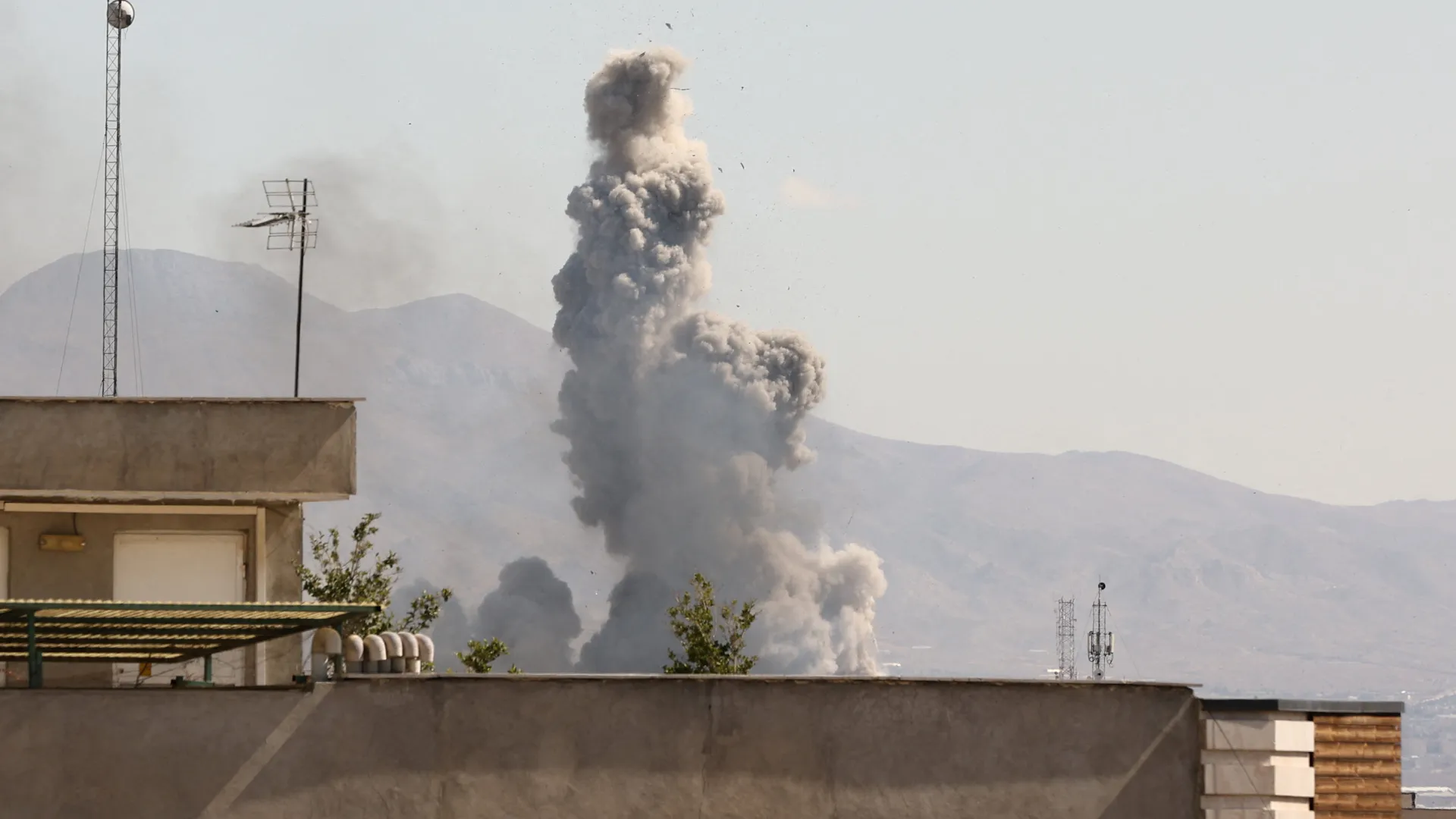
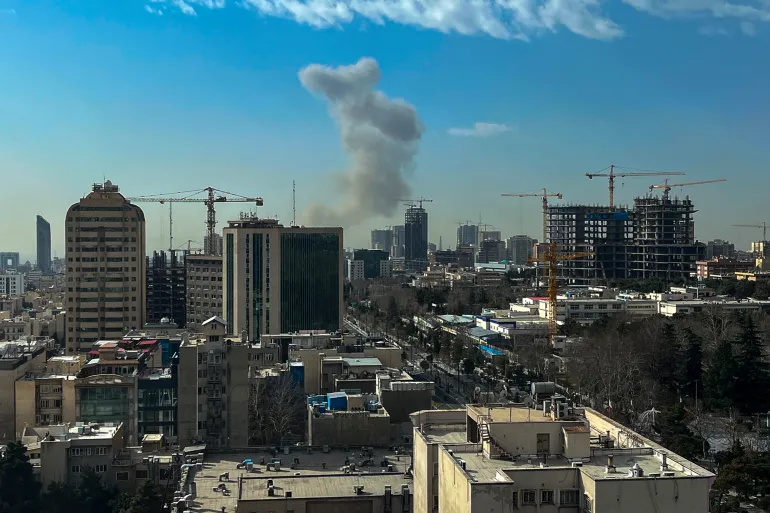
Video: Smoke rises above Tehran after latest US-Israeli attacks | Newsfeed
The Israeli Air Force has launched a new wave of attacks on Tehran. Huge plumes of smoke were seen rising about the Iranian capital as multiple targets were hit.
Published On 1 Mar 2026
Analysis: Will Iran’s establishment collapse after the killing of Khamenei? | Islamic Revolutionary Guard Corps
The assassination of Iran’s Supreme Leader Ayatollah Ali Khamenei in joint US-Israeli air attacks has caused one of the most significant blows to the country’s leadership since the 1979 Islamic revolution, triggering protests by his supporters.
Khamenei assumed Iran’s supreme leadership in 1989 after the death of Ayatollah Ruhollah Khomeini, who had led the Islamic revolution against the pro-United States Shah Mohammad Reza Pahlavi.
Recommended Stories
list of 4 itemsend of list
On Sunday, Iranian President Masoud Pezeshkian said seeking revenge for the killing of Khamenei and other senior Iranian officials is the country’s “duty and legitimate right”.
President Donald Trump has framed the operation as a “liberation” moment, predicting that the removal of the “head” will lead to the swift collapse of the body. However, in Iran, the reality suggests a far more complex situation.
Interviews with insiders, military experts and political sociologists suggest that the decapitation of Iran’s top leadership may not go the way the West envisions. Instead, it risks birthing a “garrison state” – a paranoid, militarised system fighting for its existence with no political red lines left to cross.
The limits of ‘decapitation’
The central premise of the US operation is that Iran is too brittle to survive the death of its supreme leader. In a phone interview with CBS News, Trump claimed he “knows exactly” who is calling the shots in Tehran, adding that “there are some good candidates” to replace the supreme leader. He did not elaborate on his claims.
However, military analysts warn against the assumption that air strikes alone can trigger “regime change”. Michael Mulroy, a former US deputy assistant secretary of defence, told Al Jazeera Arabic that without “boots on the ground” or a fully armed organic uprising, the state’s deep security apparatus can survive simply by maintaining cohesion.
“You cannot facilitate regime change through air strikes alone,” Mulroy said. “If anyone is left alive to speak, the regime is still there.”
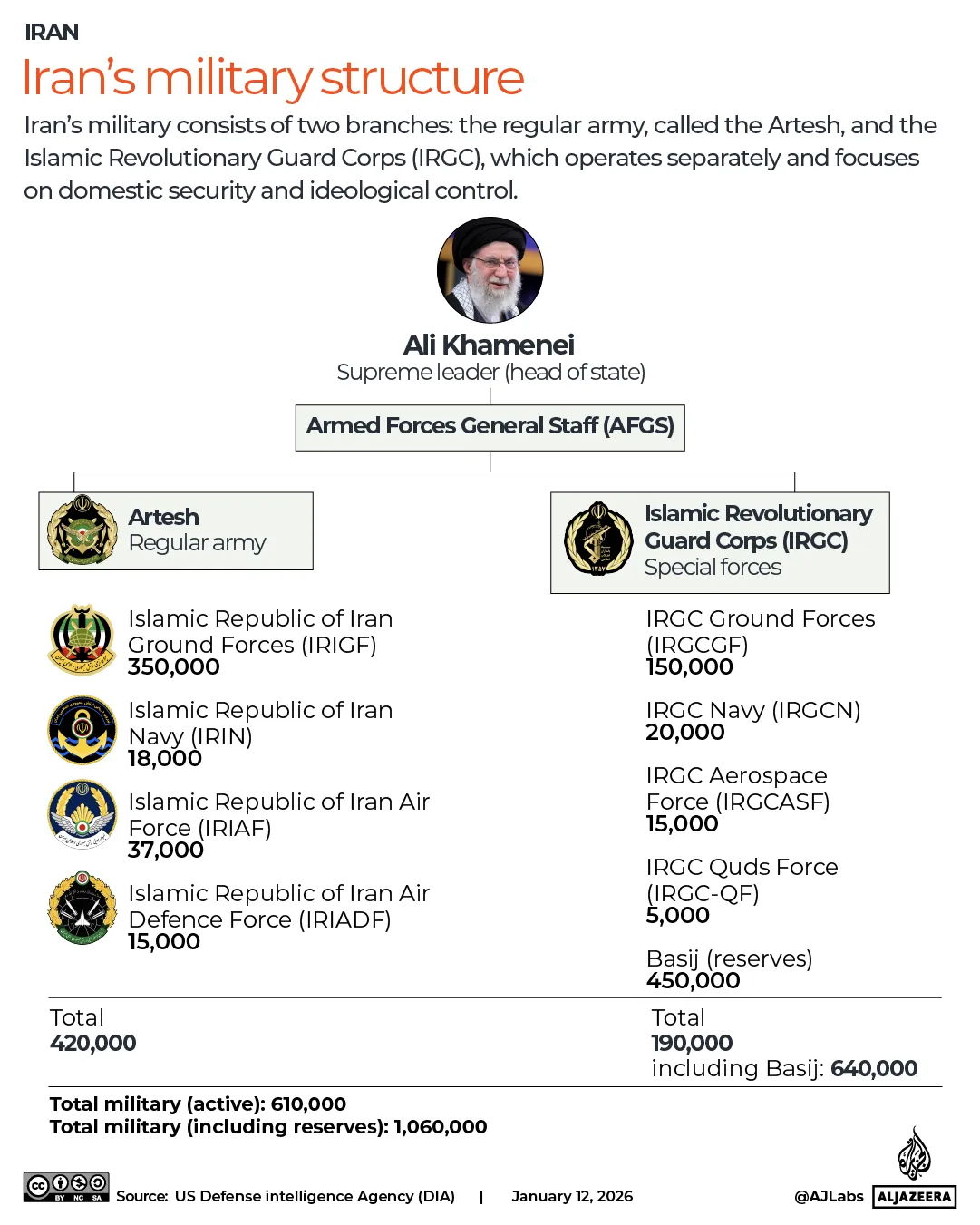
This resilience is rooted in Iran’s dual military structure. The government is protected not just by a regular army (Artesh), but also by the Islamic Revolutionary Guard Corps (IRGC) – a powerful parallel military force constitutionally tasked with protecting the velayat-e faqih system – the principle of the guardianship of the Islamic jurist.
Supporting them is the Basij, a vast paramilitary volunteer militia embedded in every neighbourhood, specifically trained to crush internal dissent and mobilise ideological loyalists.

That cohesion is already being tested.
Hossein Royvaran, a political analyst based in Tehran, confirmed that the strikes wiped out the country’s top security tier, including Khamenei’s adviser and secretary of the newly-formed Supreme Defence Council, Ali Shamkhani.
The secretary of Iran’s Supreme National Security Council, Ali Larijani, said the leadership transition will begin on Sunday.
“An interim leadership council will soon be formed. The president, the head of the judiciary and a jurist from the Guardian Council will assume responsibility until the election of the next leader,” said Larijani.
“This council will be established as soon as possible. We are working to form it as early as today,” he said in an interview broadcast by state TV.
The rapid formation of an interim leadership council – comprising the president, judiciary chief, and a Guardian Council religious leader – indicates that the system’s “survival protocols” have been activated.
According to Royvaran, the system is designed to be “institutional, not personal”, capable of functioning on “autopilot” even when the political leadership is severed.
But a Tehran-based analyst said direction of Iran is still unclear as officials try to ‘project stability’.
“Officials here are trying to project stability, emphasising that the situation is under control and that state institutions are functioning effectively,” Abas Aslani, senior research fellow at the Center for Middle East Strategic Studies, said.
“Today, [the US-Israeli] air strikes targeted security and military infrastructure in the capital [Tehran] and other cities. There are expectations that such strikes could continue – and possibly intensify – in the coming hours or days,” he told Al Jazeera.
“That prospect of escalation is not something many ordinary Iranians welcome. At the same time, Iranian officials are issuing strong warnings, suggesting they could respond with capabilities that have not previously been used against Israel or the United States.”
From theocracy to nationalist survival
Perhaps the most significant shift in the immediate aftermath is Iran’s pivot from religious legitimacy to survivalist nationalism.
Aware that the death of the supreme leader might sever the spiritual bond with parts of the population, surviving officials are reframing the war not as a defence of the clergy, but as a defence of Iran’s territorial integrity.
Larijani, a conservative heavyweight and key figure in the transition, issued a stark warning that Israel’s ultimate goal is the “partition” of Iran. By raising the spectre of Iran being broken into ethnic statelets, the leadership aims to rally secular Iranians and the opposition against a common external enemy.
This strategy complicates the US hope for a popular uprising.
Saleh al-Mutairi, a political sociologist, notes that the government’s declaration of 40 days of mourning creates a “funeral trap” for the opposition. The streets will likely be filled with millions of mourners, creating a human shield for the government and making it logistically and morally difficult for antigovernment protests to gain momentum in the short term.
The end of ‘strategic patience’
If Iran survives the initial shock, the nation that emerges will likely be fundamentally different: less calculated and probably more violent.
For years, Khamenei championed a doctrine of “strategic patience”, often absorbing blows to avoid all-out war.
Hassan Ahmadian, a professor at the University of Tehran, says the era died with the supreme leader.
“Iran learned a hard lesson from the June 2025 war: Restraint is interpreted as weakness,” Ahmadian told Al Jazeera Arabic. The new calculus in Tehran is likely to be a “scorched earth” policy.
“The decision has been made. If attacked, Iran will burn everything,” Ahmadian added, suggesting that the response will be broader and more painful than anything seen in previous escalations.”
This risks a scenario where field commanders, freed from the political caution of the clerical leadership, lash out with greater ferocity. The assassination has humiliated the security establishment, exposing what Liqaa Maki, a senior researcher at Al Jazeera Centre for Studies, calls a catastrophic intelligence failure.
“The believer is not bitten from the same hole twice, yet Iran has been bitten twice,” Maki said, referring to the pattern of US strikes. This “total exposure” is likely to drive the surviving leadership underground, turning Iran into a hyper-security state that views any internal dissent as foreign collaboration, he said.
While the “head” of Iran has been removed, the “body” – armed with one of the largest missile arsenals in the Middle East – remains, Maki said.

The Lisbon-alternative city that’s more affordable with £2.19 pints and cheap hotels
LESS than an hour away from glamorous Porto is a lesser-known destination that is even cheaper then Lisbon too.
Braga is Portugal’s oldest city, and the third-largest in the country.
It’s actually nowhere near the Portuguese capital and that’s what makes Braga more affordable.
According to Wise, the average cost of beer in Braga is €2.50 (£2.19).
The average price of a meal out at a restaurant is €9 (£7.87), and you can pick up a cappuccino for as little as €1.57 (£1.37).
Meanwhile, in Lisbon, while a local beer is roughly the same, a meal out is around €3 more expensive and coffee costs around €2.39 (£2.09).


Hotel room prices are as little as £22 per night on Booking.com.
A one-night stay in the Hotel Moon & Sun Braga is is right in the middle of the city.
Rooms have en-suites, some even have balconies with incredible skyline views – rates for a one-night stay in March start from £29.50pp.
Airbnbs like a double room in the Rua da Violinha guesthouse which has a private bathroom starts from £30 – or £15pp.
When it comes to exploring the city, some of the biggest attractions include Braga Cathedral.
It was built in the 11th century, making it the oldest in the country – technically it was built several centuries before Portugal became a country.
Bom Jesus do Monte is a Roman Catholic sanctuary with around 580 steps.
It has 15 statues and six fountains and is described as a “peaceful and awe-inspiring destination, with stunning panoramic views and serene gardens”.
Palácio do Raio is a beautiful blue-tiled palace which visitors have called “enchanting” with brightly painted doors and balconies.
Other tourist attractions in Braga, including Santa Barbara Garden, a public garden that’s open throughout the year.
For a spot of shopping, you can’t go wrong with Braga Parque with all the big-name shops.
For independent boutiques, head into the city centre where for plenty of clothes and handmade items.
Aside from the historical sites, make sure to check out the city’s trendy cafes and restaurants.
Braga is also home to several trendy cafes like Soul – Alimentação Saudável e do Bem, which serves brunch dishes.
One popular restaurant is Café Astória, which is known as Arcada by the locals, is one of the oldest places to eat in the city with over 110 years of history.
Visitors to the city should try Braga’s signature dishes.
The first being Bacalhau à Braga which is fried cod with onions, peppers, and crispy potatoes.
There’s also Papas de Sarrabulho, pork and blood rice porridge, Rojões, marinated pork, and Pudim à Abade de Priscos, a rich crème caramel pudding, for dessert.
A few years ago, Braga was named Europe’s Emerging Tourism Destination in the Oscars of Travel aka the World Travel Awards which have been running since 1993.
Braga beat previous winner Batumi to the top spot in the up-and-coming European destination category.
While Braga has its own airfield, this is used for private or smaller aircraft.
Major airlines will fly into nearby Porto which is a 45 minutes drive away.
In March, Brits can get to Porto from Birmingham Airport with flights from £16 with Ryanair.
Plus, here are the five lesser-known places where the Portuguese always go on holiday… and where they avoid.
And discover the secret side to Portugal that has been crowned one of the best places in Europe.

Love Island beauty reveals she was evacuated from Dubai airport amid Iran missile strikes
LOVE Island beauty Ella Barnes has revealed she was evacuated from Dubai airport amid Iran missile strikes.
The influencer, 25, who starred on the ITV show in 2023, took to Instagram to explain her flight had been cancelled.
Ella posted an image of the empty airport to her social media account and captioned it: “Got evacuated out of Dubai airport and my flight home cancelled.
“Guess, I’ll be staying here a little longer.”
A scared Ella, later posted snaps of missiles in the air and wrote: “Missiles in the sky.
“No this is so scary. Listen to how loud the explosion is at the end. WTF.”


However, earlier today, Ella posted a snap of her driving along a deserted highway and wrote: “We are out of here. Thanks for all the messages. Had so many”
Ella found fame in Love Island 2023, and stole Sheffield lad Mitch Taylor, 28, from his partner Abi Moores, 25, after entering the matchmaking series as a bombshell.
Ella and Love Island alum Mitch announced their split at the end of August 2023, with two separate statements on social media.
Since then, Ella has seen her screen career go from strength to strength.
She bagged a role on TOWIE as the love interest of Roman Hackett prior to their split.
She then became loved-up with her wealthy entrepreneur man Neil Farrugia after the pair made their relationship official in 2024.
But, she split from the hunk last year as the pair struggled to find time to see each other after a year of dating.
Ella is based in Kent in the UK, while fitness fanatic Neil who previously dated fellow Love Islander Gemma Owen, lives in Malta.
On Saturday, black smoke was seen billowing across the skyline in Dubai after debris from Iran’s missile blitz across the city.
Iran launched a barrage of rockets at nations across the Middle East after vowing revenge for Trump and Israel’s huge blitz on the rogue nation today.
The United Arab Emirate’s top holiday hot spot Dubai is usually a sought after travel destination for celebrities and influencers.
In more recent-times, celebrities from the United Kingdom have been emigrating there, with many Brit celebs choosing Dubai as the place they want to bring up their families.
Sam Gowland from Geordie Shore shared how a “rocket” flew over his home.
“Right above us on the Palm in Dubai today, bloody scary, I tell you that. Never heard a noise like it before,” he penned.
He then later shared a photo of a rocket near his home, writing: “Rocket above my house wtf this is crazy.”
Love Island star Arabella Chi, who relocated from the UK to Dubai with her partner, Billy Henty, and their daughter, Gigi, in 2025, has also shared posts about the scary time she is enduring.
“Dubai friends. Scary times. Stay safe,” she penned on her Instagram stories.
Just hours before the missile strikes, Arabella and her partner were playing with their daughter in the sand.
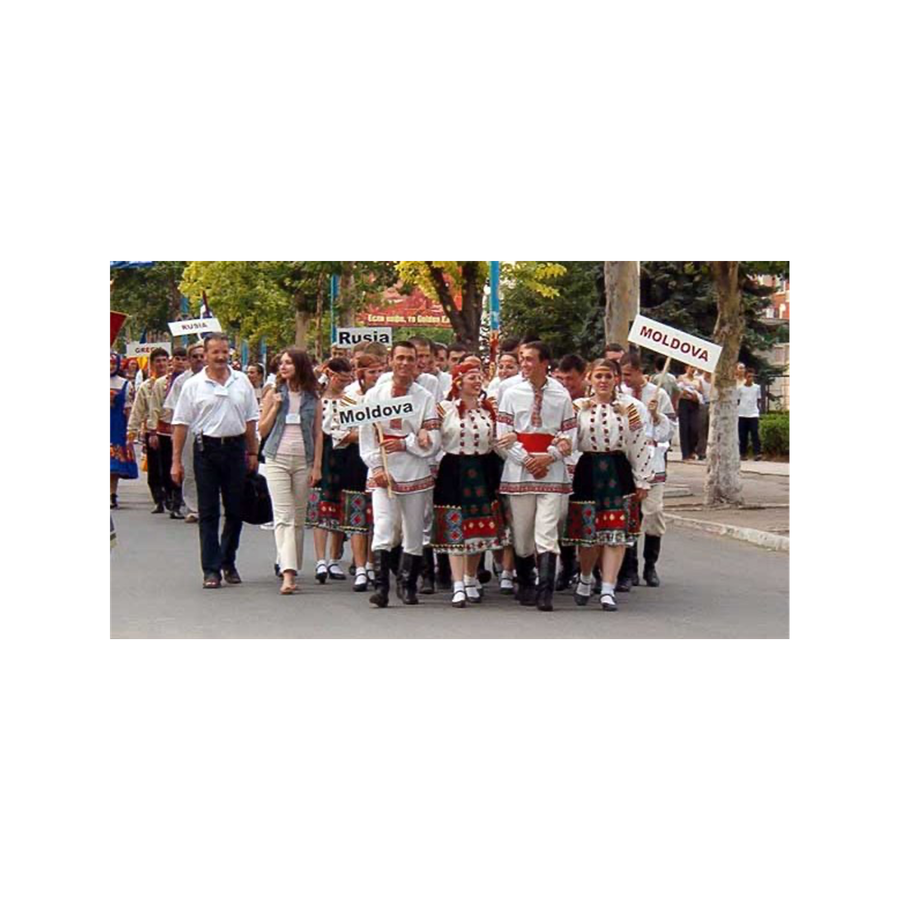
Sunday 1 March Martisor in Moldova
This article explores the historical roots and cultural traditions of Martisor, a celebration observed on the first of March in Romania and Moldova. The author explains that the month’s name originates from Mars, who served as both a god of war and an agricultural deity for the Romans. To welcome the arrival of spring, people exchange symbolic red and white threads tied to small charms, which represent the transition from winter’s cold to summer’s warmth. Women typically wear these tokens throughout the month to invite vitality and wellness into their lives. Finally, the custom concludes by attaching the threads to fruit …

Surveillance company Flock generates controversy, and L.A. customers
Santa Cruz tried out the surveillance company Flock Safety for a little over a year before deciding it was time to move on.
Cambridge, Mass., also had enough and tore up its contract in December. Now, some officials in San Diego have begun to have second thoughts of their own.
In recent months, dozens of cities have cut ties with Flock — the nation’s largest provider of automated digital license plate readers — over fears that data the company captures is helping power President Trump’s mass deportation campaign.
The same can’t be said in one particularly surprising place: Los Angeles. Here, Flock still has an eager customer base of local elected officials, police officers, homeowners associations and businesses.
Unlike some of its competitors, the Atlanta-based company has not only marketed its plate readers to law enforcement as a vital crime-fighting tool, but aggressively pitched its product to private citizens, experts say.
“They are tremendous investigative tools,” said LAPD spokesman Capt. Michael Bland.
But for critics, there’s an obvious downside: the potential tracking of law-abiding citizens without a warrant on a scale once thought unimaginable.
“These can be really powerful tools to find someone, and identity them. But when you don’t have a suspect, everyone can be a suspect,” said Hannah Bloch-Wehba, a professor of law at Texas A&M University.
A Flock spokesperson did not respond to multiple requests for comment for this story.
Typically mounted on street poles or atop police cars, plate readers continuously monitor passing vehicles, recording their location at a specific date and time. But Flock’s AI-powered cameras go even further by also documenting other identifying vehicle details, such as make, model and color, as well as any distinctive markings like scratches or dents on a bumper.
From there, police can easily search for the location of specific vehicles in the company’s vast national database, allowing them not only to potentially retrace the whereabouts of someone suspected of a crime, but also receive predictions about future movements.
In a presentation to the Picfair Village Neighborhood Assn., Flock boasted that its plate readers had helped solve “10% of reported crime in the U.S.” In L.A., the company said, its technology had been deployed to nab porch pirates and car thieves, not to mention played a role in solving a “high-profile crime involving stolen weapons from a politician’s home.”
The problem, at least in the minds of a growing number of privacy and immigration advocates, is that the readers capture a vast amount of information not related to any specific criminal investigation. The ability of federal authorities to access Los Angeles Police Department surveillance data directly from companies like Flock or from regional intelligence hubs called fusion centers undermines the city’s promise as a haven for immigrants, critics say.
“License plate readers play a critical role in providing directions and a road map to ICE for going out to kidnap people,” said Hamid Khan, an organizer with the activist group Stop LAPD Spying Coalition, which last spring wrote a letter to the Police Commission urging it to rewrite the LAPD’s policies to ensure information on law-abiding drivers isn’t shared with federal authorities.
The commission, the LAPD’s civilian oversight panel, ordered a study on the department’s license plate reader system that is expected to be completed this summer.
LAPD officials say records collected by the plate readers are accessible only to five smaller police agencies with which the department has data-sharing agreements. Furthermore, they say the use of the readers, like with other police technology, is restricted by state laws that limit information sharing with federal agencies like Immigration and Customs Enforcement.
Plate-reading technology has been around for decades. But as the Trump administration’s deportation crackdown has ramped up, residents, privacy advocates and officials in some cities across the country have mounted campaigns urging their local governments to stop using the technology.
Much of the backlash has been aimed specifically at Flock — a heavyweight in the surveillance market that contracts with a reported 5,000 U.S. policing agencies. The company’s data-sharing with federal authorities and cybersecurity lapses have been documented by 404 Media and other outlets.
After previously denying it had federal contracts, Flock Chief Executive Garrett Langley admitted in interviews in recent months that the company has worked with U.S. Customs and Border Protection and Homeland Security Investigations. The company has since said that it has severed ties with both agencies, and responded to other concerns by giving communities more power to decide whom to grant access to state or nationwide lookup networks.
In Bloch-Wehba’s view, Flock’s meteoric rise is a triumph of marketing over results.
“There’s very little evidence on the actual impact of these technologies on violent crime rates at all,” said Bloch-Wehba, who noted an explosion of surveillance technology in 2020 to monitor protesters or enforce rules implemented to curb the spread of COVID-19 during the pandemic.
In the L.A. area, Flock has gone head to head with competitor Vigilant Solutions, which has for years supplied the majority of the LAPD’s plate readers. But today, cops tout Flock cameras at community meetings and some City Council members have paid to bring them to their districts.
Flock has also sought to flex its political might. City records show the company has stepped up its lobbying efforts at City Hall in recent years — hiring Ballard Partners, a powerful Florida-based firm whose employees now include former City Councilmember Joe Buscaino.
Many Flock plate readers, though, have been purchased by community groups. In most cases, residents band together to raise money to buy the devices, which they then either grant access to or donate to the LAPD via the Police Foundation, the department’s nonprofit charity. By donating the equipment, neighborhood groups may get to control what type of technology is installed and by whom.
“My real preference would be a fully staffed LAPD, and then we don’t have any cameras,” said Jim Fitzgerald, who lives in Venice and serves on its neighborhood council.
Roy Nwaisser, who chairs the Encino Neighborhood Council’s public safety committee, said that Flock often played up the shortage of police officers during its presentations to residents in his neighborhood.
“I personally have concerns with how Flock conducts their businesses, but they are the biggest player and if LAPD is working with them, they just have to make sure that there are those safeguards,” he said. “I don’t know that automated license plate readers are all that effective when owned by neighbors living on the street who decided to get together.”
Police executives have defended the practice, saying license plate data has helped solve untold numbers of crimes, from run-of-the-mill porch theft to high-profile cases like the 2024 attempted assassination of then-presidential candidate Donald Trump at a Florida golf course. The technology also came into play during an investigation into the fatal drive-by shooting of a 17-year-old boy at a North Hills intersection last month. According to a search warrant affidavit, detectives tracked a suspect vehicle to a home in Sun Valley after it was captured by several scanners near where the shooting occurred.
Because so many plate scanners are in private hands, it’s difficult to say how many of the devices are in operation citywide.
The L.A. Bureau of Street Lighting, which is responsible for installing the devices on city-owned property, said it has mounted 324 over five years — though that tally doesn’t include mobile plate readers.
Bland said the LAPD has 1,500 police vehicles equipped with the scanners. Police also have access to an additional 280 plate readers in fixed locations throughout the city, which are owned privately or by the department, he said. He estimated that about 120 of those readers belong to Flock.
The cameras are also integrated with the department’s new drones, which are being paid for by a $1.2-million donation from the Police Foundation.
The devices are also used for many other purposes outside of regular law enforcement. Big box retailers like Home Depot and Lowe’s have installed Flock cameras across hundreds of parking lots. Many border crossings have them. In East L.A., they are used as an emissions-reduction tool by tracking semi-trailers. USC uses them to enforce parking violations, and the L.A. Department of Transportation has deployed such cameras to nab motorists who park in bus lanes.
Since the beginning of 2025, a small-but-growing number of states and cities have enacted laws aimed at curbing the use of surveillance technology such as license plate readers.
Under California law, police agencies are required to adopt detailed usage and privacy policies governing license plate data, restrict access to authorized purposes, and regularly audit searches to prevent misuse. Gov. Gavin Newsom previously vetoed a bill that would have restricted use of such data, saying the regulations would impede criminal investigations, but the bill has been reintroduced this year.
Nearly 50 cities nationwide have opted to deactivate their scanners or cancel contracts with Flock, mostly in recent months, according to the website DeFlock.me, which has set out to map locations of the company’s cameras. Responding to public pressure, some places like Santa Cruz canceled their contracts after realizing that they had been sharing their data more broadly than they had known, including with federal authorities.
Other Flock customers, like Oakland, have dug in and decided to keep their cameras at the urging of local homeowners association representatives and small business owners — but over the objections of the city’s own Privacy Advisory Commission.
Among the places that have started to reconsider their relationship with Flock is San Diego. In December, city leaders split on the issue, but ultimately voted to keep using Flock’s scanners after a contentious public hearing meeting in which they heard from hundreds of residents opposed to the surveillance technology.
Councilmember Sean Elo-Rivera said he voted against working with Flock based on what he saw as the company’s poor track record of “data retention” and “consumer protections.” Although the city has operated Flock plate readers and cameras for years, the stakes are far higher now, he said.
“We have a presidential regime that is not only flouting the law, but takes pride in ignoring due process, in violating rights of people they deem unworthy of the rights and protections,” said Elo-Rivera, who represents an ethnically diverse district in San Diego’s Mid-City area. “They have a by-any-means-necessary approach when it comes to immigration enforcement. And now they have a tool that makes it very easy for them to track people down.”
Times staff writer David Zahniser contributed to this report.

MotoGP: Marco Bezzecchi wins season opener as Marc Marquez retires
Italy’s Marco Bezzecchi won the opening race of the MotoGP season with a flawless performance in Thailand, as defending champion Marc Marquez retired late on.
Aprilia rider Bezzecchi started on pole and never looked back as he stormed into a massive lead before sealing victory by more than five seconds.
KTM’s Spanish rider Pedro Acosta followed up Saturday’s sprint race victory by coming second, while compatriot Raul Fernandez of Trackhouse finished third.
Bezzecchi’s victory came after he crashed out of the sprint race on the second lap.
“Yesterday was a small mistake with a big consequence, so it was important today to try to bounce back,” said Bezzecchi.
“My pace was good with the medium [rear tyre], we worked super well all weekend, so I knew that I could be fast if I was in front. So I tried my all to make a good start and the bike was perfect.”
Ducati’s Marquez exited the race with five laps to go after suffering a type puncture while in fourth position.
The Spaniard, who is chasing a record-equalling eighth title this season, was closing in on Acosta and Fernandez but damaged his tyre after running wide, ending hopes of a podium finish.
Earlier this week Marquez said he was still recovering from a shoulder injury that forced him to miss the final four races of last season.
Bezzecchi was fastest in all three practice sessions and set a new track record in qualifying, while this was his third-straight grand prix victory – having won the final two races in 2025.
Bezzecchi’s Aprilia team-mate and 2024 champion Jorge Martin came fourth, while Trackhouse’s Ai Ogura finished fifth.
Last year’s runner-up Alex Marquez did not finish the race after a late crash, while 2022 and 2023 world champion Francesco Bagnaia finished ninth.
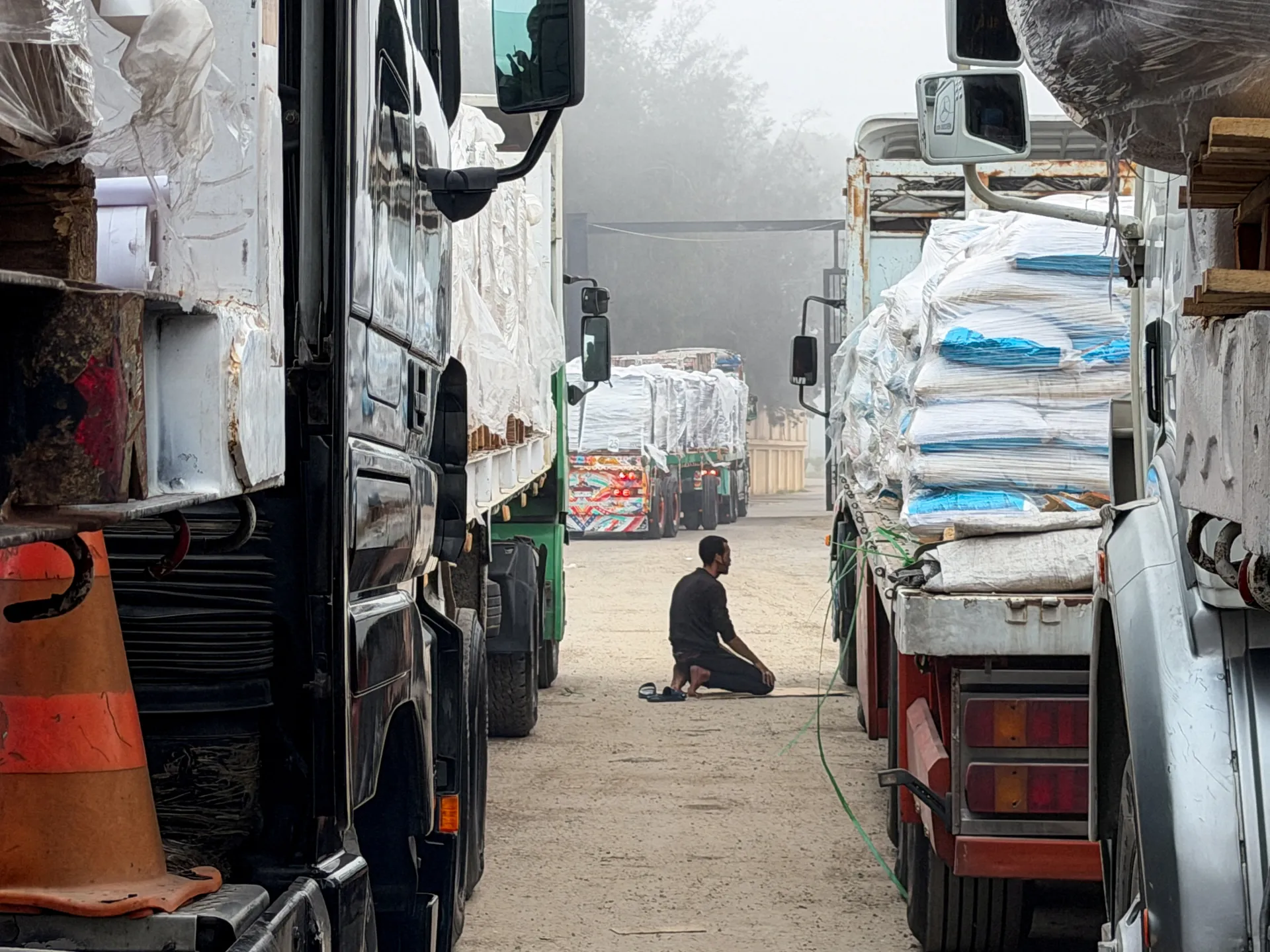
Under the shadow of the Iran war, Israel finds another way to punish Gaza | Israel-Palestine conflict
As Israel and the United States attacked Iran, Palestinians in the Gaza Strip began to panic. They remembered how crossings were closed in the past, causing famine, and rushed to markets to buy whatever they could. As a result, prices of food and basic necessities skyrocketed. Soon enough, the news came that the border crossings had been closed.
All of this happened just as the grace period set by Israel for 37 NGOs to withdraw from Gaza for not fulfilling registration requirements expired. Organisations like Doctors Without Borders (also known by its French acronym MSF), Medical Aid for Palestinians UK, Handicap International: Humanity & Inclusion, ActionAid, CARE, etc were supposed to stop operating in Gaza.
At the last moment, a ruling by the Israeli Supreme Court allowed them to continue working while it considers their appeal against the ban. But even with this court decision, these organisations cannot continue to function fully. That is because the Israeli occupation continues to prevent their supplies and foreign staff from entering Gaza.
According to these NGOs, together they are responsible for half of the food handouts in the Strip and 60 percent of services provided in field hospitals.
For many families in Gaza, this means hunger – because food parcels will not be distributed and livelihoods will be lost.
We know this is not about NGOs failing to meet new registration rules, just like the closure of the border crossings is not a matter of security. They are about exacting yet another form of collective punishment on the Palestinians.
Even if the Supreme Court miraculously rules against the NGO ban, the Israeli occupation would still find another way to push these foreign organisations out of Gaza. This was made clear this month when it was revealed that World Central Kitchen, which has been running dozens of soup kitchens across the Strip and which is not on the ban list, may be suspending its activities.
According to Gaza’s Government Media Office, this was because Israel blocked most of the organisation’s supply trucks from coming in. As a result, there are not enough supplies to continue cooking. World Central Kitchen previously said it serves 1 million meals daily.
So now, amid the war with Iran, which may last weeks or months, hundreds of thousands of families will not have adequate food once again.
All of this comes on top of Israel’s continuing war on UNRWA. Since its creation in late 1949, the United Nations agency has been the backbone of international support for Palestinian refugees. It has the largest capacity for emergency response and the widest spectrum of services on offer. And yet, Israel has banned its operations and has blocked its supplies from entering the Strip.
Through relentless lobbying, Israel has managed to achieve substantial cuts to UNRWA’s budget. As a result, last month 600 employees were fired. The salaries of the rest were reduced by 20 percent.
The NGO ban will likely result in thousands of people losing their jobs as well. And this is at a time when unemployment in Gaza has gone beyond 80 percent.
My family will also suffer. In the past, we have benefitted from food and basic supplies handouts from NGOs, and my brother has been able to find temporary work as a driver for one of them.
The possible closure of international organisations is a direct threat to the lives of hundreds of thousands of civilians who depend on their services and employment. The closure of the border crossings could mean another hunger crisis.
These are a form of collective punishment that yet again will not make the news. Israel is constantly thinking of new ways to make our lives that much more unbearable, that much more impossible in our devastated homeland.
Two and half years of the Israeli genocide has destroyed hospitals, schools, universities, roads, sewage and potable water systems, water treatment plants, the electricity grid, and countless generators and solar panels.
The vast majority of the population lives primitive lives in tents or makeshift shelters that cannot protect people from extreme heat or cold.
Water is contaminated, food is insufficient, land has been destroyed and poisoned.
Now we will be deprived of the little international support we have been receiving.
And what is the goal of all this? To push us ever closer to despair and the ultimate surrender, to make us desire to leave our homeland on our own. Ethnic cleansing by mutual agreement.
All of the organisations that Israel is seeking to ban are foreign. Most of them are based in Western countries. Yet there has been little to no condemnation from Western governments of Israel’s actions against their own organisations. There has been no outrage that the occupation is trying to destroy international humanitarian provision so it can fully control aid distribution.
Collective punishment is a violation of international law. States are obliged to go beyond verbal condemnations and take action by imposing sanctions. Until that happens, we in Gaza will continue to be subjected to ever more brutal acts of collective punishment by our occupiers.
The views expressed in this article are the author’s own and do not necessarily reflect Al Jazeera’s editorial stance.
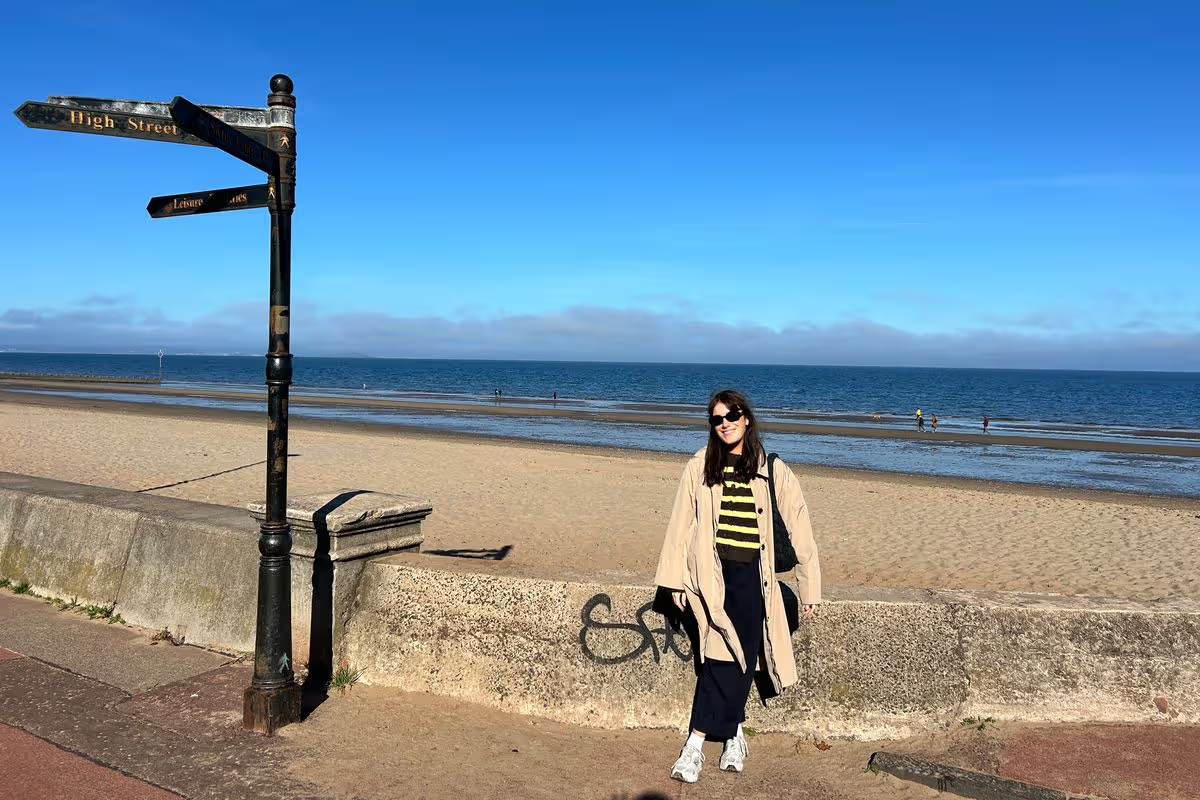
I visited UK seaside spot with spotless beach and the best chips I’ve ever had
With a two-mile long beach, a charming high street and great food, it’s the perfect spot for a day trip

Portobello, a seaside suburb in Edinburgh, is the perfect place for a day out(Image: Nicola Roy)
A coastal suburb located just 15 minutes from a major UK capital city deserves a spot on your spring getaway list right now. Although it’s not quite warm and sunny yet, a seaside trip is an excellent way to clear your head, and nothing quite compares to those stunning views across the water.
I visited Portobello near Edinburgh late last year, and I’m amazed I hadn’t made the journey earlier. With a high street packed with independent retailers, fantastic cuisine, and excellent transport connections, it’s truly an ideal destination if you’re looking to venture slightly off the tourist trail.
The bus journey from the city centre took just 15 minutes, dropping us directly in the town’s centre, and it was instantly apparent that this location was something special.
Unsurprisingly, our first port of call was heading straight to the waterfront for a leisurely stroll along the coast. The conditions were gloriously sunny and clear, albeit cold, but it was quite invigorating following the hour-long train journey from Glasgow.
Portobello’s shoreline stretches for two miles, boasting a Victorian-era promenade and panoramic views across the Firth of Forth. Given it was a bright Sunday morning, the area was reasonably busy, with numerous families out strolling and dogs bounding across the sand.
The first thing that struck me about the beach was its cleanliness. It’s evident that the locals of Portobello, or ‘Porty’ as it’s fondly referred to, take immense pride in their environment.
Ensure our latest lifestyle and travel headlines always appear at the top of your Google Search by making us a Preferred Source. Click here to activate or add us as Preferred Source in your Google search settings.
I regret not visiting during the summer months, as I can see this being a fantastic spot for sunbathing and perhaps even taking a dip in the sea. But it’s not long now until it’ll hopefully be warm enough to do just that.
In 2024, Portobello was named the second-best coastal town in the UK by JoJo Maman Bebe, and its beach has also been honoured with a Keep Scotland Beautiful award, proving its allure.
After a leisurely stroll along the beach and working up an appetite, we decided it was time to grab a bite to eat. The seafront at Portobello beach is lined with a huge array of dining options, from enormous pizza slices at Civerino’s to brunch and coffee at The Beach House.
Many of these places offer outdoor seating, allowing you to dine practically on the beach, and it was lovely to see so many people doing just that.
We chose to visit Shrimp Wreck, a seafood joint boasting a small yet appetising menu. This street food stall was featured on BBC’s My Million Pound Menu and is renowned for its fish finger sandwiches – even securing a finalist position in the Birds Eye Fish Finger Sandwich Awards in 2017.
Naturally, this is what I opted for, and I can see why it’s so popular. Battered flaky fish fillets, mushy peas and the best chips I’ve ever had, all served in a soft roll, was perhaps the messiest meal I could have chosen, but I wouldn’t change a thing.
Next, it was time to properly explore the high street where the bus had left us. It’s situated just behind the promenade, and whilst it wasn’t as bustling as the beach itself, there were still plenty of people milling about – and importantly, a good number of shops open for business.
One of the standout spots for me was The Portobello Bookshop, a delightful independent bookshop brimming with novels, cookbooks and much more. The space was light, cosy and inviting, the sort of place where you could easily spend hours browsing without getting bored.
They also host events, such as Q+A’s with authors, so it’s worth checking out their schedule if you’re planning a visit.
Cove is another must-see if you’re a fan of gift shops. This one was packed with every trinket imaginable, from Jellycat toys to candles and shampoo bars, not to mention lovely cards and tempting chocolate bars too.
Portobello’s high street might not be the largest, but it’s certainly one of the most charming I’ve seen. There are additional food and drink options here, as well as pubs and even an Aldi, so you’re unlikely to run out of options anytime soon.
One spot we didn’t manage to visit, which I’m eager to return for, is the swim centre. Here in Portobello, you’ll discover a genuine Victorian Turkish bath, one of only 11 in the UK, as well as a gym and fitness studio, so this is certainly on the list for our next trip.
If you’ve never been to Portobello, it truly is the ideal location for a weekend getaway – even in chillier weather. Its proximity to the lively city of Edinburgh makes it perfect if you’re looking to escape the city rush and spend some time dining, drinking and unwinding by the water.

‘I visited popular hiking spot that looks just like Mars and it’s in the UK’
This location offers breathtaking views which are out of this world (quite literally) and it’s not a long trip either as it’s located in the UK. So have you been here before?

An amazing colourful landscape in this old disused mine in Anglesey(Image: Getty Images)
Searching for your next adventure? While some days out demand preparation so are fully prepped, this travel destination requires little fuss and is perfect for a Sunday hiking trip.
Not only does this location boast stunning views, it’s also otherworldly (quite literally) as one hiker claimed it resembles “just like Mars”. Conor, an avid adventurer, recently ventured to Parys Mountain, situated in Anglesey, which depending on where you are in the UK, is a few hours away, especially if you’re craving a change of scenery. The Welsh island is renowned for its coastline and historic landmarks.
The content creator, known as Conor_Hikes, recently shared the spot with his 20,500 TikTok followers.
He stated: “A must do hike in the UK! This is Parys Mountain, located in Anglesey. It was once known as the Copper Kingdom, and it was once the world’s largest copper mines! This place really does look like Mars.”
How to get there:
If you’re travelling from London, it’s around 5 hours by car. Those from Bristol are looking at 4 hours in the car, while cities up north like Liverpool are just 2 hours away from the location.
Of course if you’re in Wales, it’s a lot more local for you. According to Conor, there’s complimentary parking if you enter the postcode LL68 9RE into your satnav.
What to do there:
Once you arrive at Parys Mountain, there’s a 4km circular trail available for hiking. The otherworldly terrain is ideal for rambling, photography and discovery.
Visitors can wander around the copper mine, soak up the views of Snowdonia and discover the nearby Copper Kingdom exhibition.
People could also venture through the “moon-like” landscape which Conor praised in his TikTok video. Routes vary from a 45-minute shortcut to a 90-minute main circuit.
The paths showcase spectacular, colourful rock formations in hues of orange, yellow, and purple.
For nature enthusiasts, the site is home to wildlife including skylarks, meadow pipits, and choughs.
Just bear in mind it’s advisable to wear pack walking boots due to the loose, rocky and uneven ground.
There’s no facilities or cafés on the mountain, but the nearby Copper Kingdom Centre in Amlwch offers historical background and amenities.
And if you want to maximise your visit, late summer is perfect for witnessing purple heather in blossom. However, the trails remain accessible throughout the year.
Ensure our latest headlines always appear at the top of your Google Search by making us a Preferred Source. Click here to activate or add us as your Preferred Source in your Google search settings.

New restaurants and pop-ups to try in Los Angeles in March 2026
February was a short but busy month, with holidays Lunar New Year, Mardi Gras, Iftar and Lent all overlapping this year.
It also marked Black History Month, offering an opportunity to celebrate the culinary contributions of Black communities near and far, including resilient restaurants in Pasadena and Altadena, a 250-acre ranch in Acton that represents the largest Black-owned farm in L.A. County, and the legacy of the ‘Dean of Southern cuisine’ chef Joe Randall, who died at 79 after spending a half-century of amplifying African American culinary traditions. In Inglewood, Serving Spoon won the America’s Classic in California award from the James Beard Foundation, and will receive a medal at the ceremony this June.
With summer temperatures and clear skies this weekend, it’s hard to believe that just weeks ago, the city was hit with a week of heavy rainstorms. Several restaurants across the region were forced to temporarily close due to flooding, resulting in revenue loss and expensive repairs.
March brings the start of spring, which means we’re already seeing seasonal produce such as asparagus, peas and apricots appear on our favorite menus. Keep reading for more dining ideas this month, including the return of a globe-trotting cafe, a community-minded food hub in South L.A. and an Argentinian bistro with a connection to Bad Bunny’s Super Bowl performance.
Iran forms interim council to oversee transition after Khamenei’s killing | Israel-Iran conflict News
Ayatollah Alireza Arafi, member of a constitutional watchdog, appointed to temporary council, along with Iranian president and chief justice.

Published On 1 Mar 2026
Iran has announced the formation of a three-member transitional council to handle the state duties following the killing of Supreme Leader Ayatollah Ali Khamenei.
Ayatollah Alireza Arafi, member of a powerful constitutional watchdog, was appointed on Sunday to the temporary council, whose other two members are President Masoud Pezeshkian and Supreme Court Chief Justice Gholam-Hossein Mohseni-Ejei.
Recommended Stories
list of 4 itemsend of list
The 67-year-old cleric, who is a member of the Guardian Council that must later choose a supreme leader, was confirmed to the council by the Expediency Council, a powerful arbitration body.
According to Article 111 of the Iranian Constitution, the transitional council will govern the country until an 88-member panel called the Assembly of Experts chooses a new supreme leader after almost 37 years of rule by Khamenei.
His killing on Saturday by the joint United States and Israeli forces has raised crucial questions about Iran’s future.
Although the leadership council will govern in the interim, the Assembly of Experts “must, as soon as possible,” pick a new supreme leader, according to the Iranian constitution.
The Islamic Revolutionary Guard Corps (IRGC) and Iran’s security chief Ali Larijani are also expected to play pivotal roles in the transitional council, but it remains to be seen where the balance of power lies.
The commander-in-chief of the IRGC was also killed in the US-Israeli attack on Saturday – the second such killing in less than a year – and the next leader of the elite military and economic force is yet to be announced.
IRGC-linked Telegram channels are citing deputy chief Ahmad Vahidi, who was appointed to the position by Khamenei two months ago, as a likely candidate.
Earlier on Sunday, Larijani accused the US and Israel of trying to plunder and break apart Iran and warned “secessionist groups” within Iran of a harsh response if they attempt action, state media said.
“The brave soldiers and the great nation of Iran will teach an unforgettable lesson to the international oppressors,” he said.
A former parliamentary speaker and senior policy adviser, Larijani was appointed to advise Khamenei on strategy in nuclear talks with US President Donald Trump’s administration.
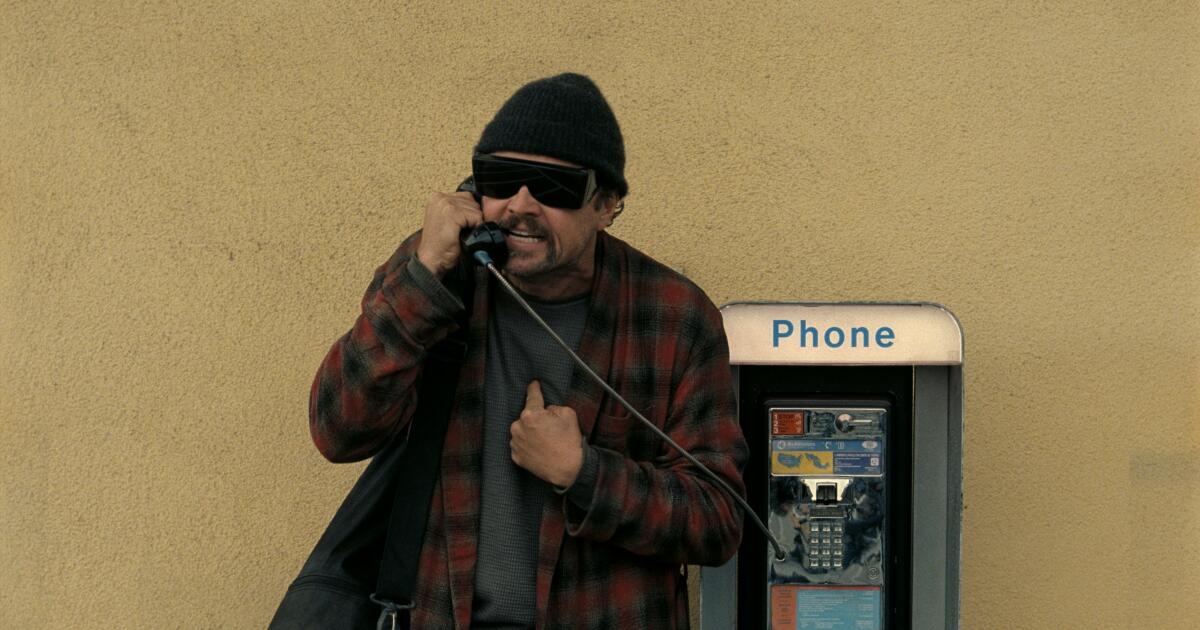
PGA Awards: ‘One Battle After Another’ wins best film
Paul Thomas Anderson’s darkly comedic action-thriller “One Battle After Another” won the top prize at the Producers Guild Awards on Saturday, continuing its dominating run through awards season.
The PGA honor, presented at a ceremony in Beverly Hills, cements Anderson’s celebrated film as the front-runner for the best picture Oscar. Since 2009, when both the Producers Guild and the motion picture academy expanded their best picture nominee slates from five to 10 and adopted a preferential ballot, the PGA winner has gone on to win best picture all but three times.
The last time the groups diverged came six years ago when PGA winner “1917” lost the Oscar to Bong Joon Ho’s “Parasite,” a film that surged in momentum in the weeks leading up to the 2020 Oscars.
No other movie this season has shown that kind of strength other than Ryan Coogler’s “Sinners,” which scored a record-breaking 16 Oscar nominations in January. However, “One Battle” has prevailed at the major ceremonies since then, winning best picture at the British Academy Film Awards last week and Anderson taking the top honor with the Directors Guild earlier this month.
“Sinners” has one more chance to reverse the tide. It will compete against “One Battle After Another” for the cast award at the Actor Awards on Sunday. That ensemble honor, the most prestigious prize handed out by SAG-AFTRA voters, isn’t as strong a precursor as the PGA’s best film. But “Parasite” did win it right before the 2020 Oscars.
Hope springs eternal. Oscar voting ends on Thursday.
Read the full list of 2026 Producers Guild Award winners below.
Darryl F. Zanuck Award (outstanding theatrical motion picture): “One Battle After Another”
Outstanding animated theatrical motion picture: “KPop Demon Hunters”
Norman Felton Award (outstanding episodic television — drama): “The Pitt”
Danny Thomas Award (outstanding episodic television — comedy): “The Studio”
David L. Wolper Award (outstanding limited or anthology series): “Adolescence”
Outstanding televised or streamed motion picture: “John Candy: I Like Me”
Outstanding nonfiction television: “Pee-wee as Himself”
Outstanding live entertainment, variety, sketch, standup and talk series: “The Late Show with Stephen Colbert”
Outstanding game and competition television: “The Traitors”
Outstanding documentary film: “My Mom Jayne”
Outstanding children’s program: “Sesame Street”
Outstanding sports program: “Formula 1: Drive to Survive”
Outstanding short form program: ” Adolescence: The Making of Adolescence”
PGA Innovation Award: “The Wizard of Oz at Sphere”
David O. Selznick Award: Amy Pascal
Milestone Award: Jason Blum
Norman Lear Award: Mara Brock Akil

Luka Doncic and Lakers dominate in win over Curry-less Warriors
SAN FRANCISCO — The Lakers seemingly lost their mojo after the All-Star break, with three consecutive losses leaving them in search of the “consistency” and “togetherness” they had earlier in the season.
Their 129-101 win over the Golden State Warriors on Saturday at Chase Center was a step in the right direction, even if the Warriors didn’t offer much of a challenge.
The Lakers (35-24) built a 17-point lead in the first quarter, stretched it to 24 in the second quarter and to 30 points in the third before leading by 32 in the fourth and coasting the rest of the way.
“It goes back to finding that consistent level of playing the right way on both ends, doing what we’re supposed to be doing, executing at a high level,” Lakers coach JJ Redick said. “You saw those trends. We haven’t had it for a sustained, like, full stretch of a game, really. It’s come in spurts in all four of our games that we played prior to this. It was definitely our most complete game post-All-Star break.”
Luka Doncic led the charge with 26 points, eight assists and six rebounds in just 29 minutes. LeBron James was strong with 22 points, nine assists and seven rebounds in 28 minutes. He also made the 1,000th three-pointer of his career. Austin Reaves had 18 points in 28 minutes.
Luke Kennard scored 16 points, his best with the Lakers so far, and Jake LaRavia had 15 points off the bench.
“We just needed to get a win … get back on the right front and I think we did that tonight,” James said.
He then added, “It’s been a while since we’ve had a 48-minute game where we was able to sustain the effort and I just thought we came out with the right mindset. Obviously dropping the last three, last two at home and then the Phoenix game was a tough one. So, we just came in with the right mindset and understanding the assignment and we took care of business.”
The Lakers got it done on offense, shooting 53% from the field and 46% from three-point range.

Lakers star LeBron James shoots a three-pointer over Golden State Warriors guard Pat Spencer in the first half Saturday.
(Godofredo A. Vásquez / Associated Press)
“We certainly made some threes,” Redick said. “LeBron made a couple of iso threes. Luka got hot to start the third quarter with some set plays and then the iso three, the second one in transition on the left wing. It wasn’t like all our threes were coming from that, but I just thought the ball was moving tonight.”
They faced a Warriors team (31-29) playing without Stephen Curry (right knee), Jimmy Butler (right anterior cruciate ligament surgery) and Kristaps Porzingis (illness). Still, a win was far from guaranteed since the Lakers lost to an injury-depleted Phoenix Suns team on Thursday.
The Lakers are 2-3 since the All-Star break. They face the Sacramento Kings at Crypto.com Arena on Sunday night, as they try to remain in the top six in the Western Conference.
“Like I said before the game, these guys want to do it right,” Redick said. “They are trying. I know our staff, myself, we’re always looking for answers and solutions. That’s what this is. We’re trying to find solutions, and I said before the game, I’m confident we are going to find that level that we want to get to.
“It’s been partially just because of the disruptions of lineups and different factors. We just haven’t had the continuity that I thought we were going to have coming into the year and it’s taken longer than I thought. But I’m confident that we are going to get there.”
Even with back-to-back defeats to Oklahoma City and San Antonio, the Lakers went 7-4 ahead of the All-Star break. The Lakers won their first game after the break against the Clippers before losing to Boston, Orlando and Phoenix.

That put the Lakers in the sixth spot in the West and struggling to find their groove again.
“At the end of the day, I just think our minds was right,” James said. “The numbers speak for itself. You can talk about the numbers, but I just think mentally we knew what we was against. We knew how we lost these last three games and it didn’t sit well with us obviously. We just came out and we just executed.”
Note: Lakers forward Rui Hachimura missed his second straight game because “he’s still under the weather,” Redick said.
Israel closes Gaza’s Rafah crossing amid attacks on Iran | Israel-Palestine conflict News
The crossing with Egypt is considered vital for the delivery of humanitarian aid and the evacuation of critically ill patients.

Published On 1 Mar 2026
Israel has closed Gaza’s Rafah border crossing with Egypt amid the joint Israeli-United States attacks on Iran.
“Several necessary security adjustments have been implemented, including the closure of the crossings into the Gaza Strip, among them the Rafah Crossing, until further notice,” Israel’s Coordinator of Government Activities in the Territories (COGAT) said in a statement.
Recommended Stories
list of 4 itemsend of list
The Rafah crossing, located on Gaza’s southern border, had reopened only last month, allowing a limited number of Palestinians to leave for the first time in months, including patients in urgent need of medical care.
The crossing is considered vital for the delivery of humanitarian aid and the evacuation of critically ill patients.
Virtually all of Gaza’s population of more than two million people was displaced during Israel’s genocidal war on the territory, and the enclave remains heavily dependent on humanitarian assistance.
In mid-February, the United Nations said it continued to face impediments in delivering lifesaving aid to Gaza.
In a February report, Human Rights Watch said Israeli restrictions had contributed to shortages of medicines, reconstruction materials, food and water inside the Strip.
COGAT claimed that sufficient food had entered Gaza since the start of the ceasefire to meet four times the nutritional needs of the population. However, it did not provide any evidence to back its claim.
“The substantial quantities of food that have entered since the beginning of the ceasefire amount to four times the nutritional needs of the population,” the Israeli defence body said. “Therefore, the existing stock is expected to suffice for an extended period.”
It added that “the closure of the crossings will have no impact on the humanitarian situation in the Gaza Strip”, saying it would remain in contact with the international community and provide updates on any developments.
COGAT is the Israeli military body responsible for overseeing civil affairs in the occupied Palestinian territory. Critics say it functions as an instrument of surveillance and control, particularly in enforcing movement restrictions and closures.
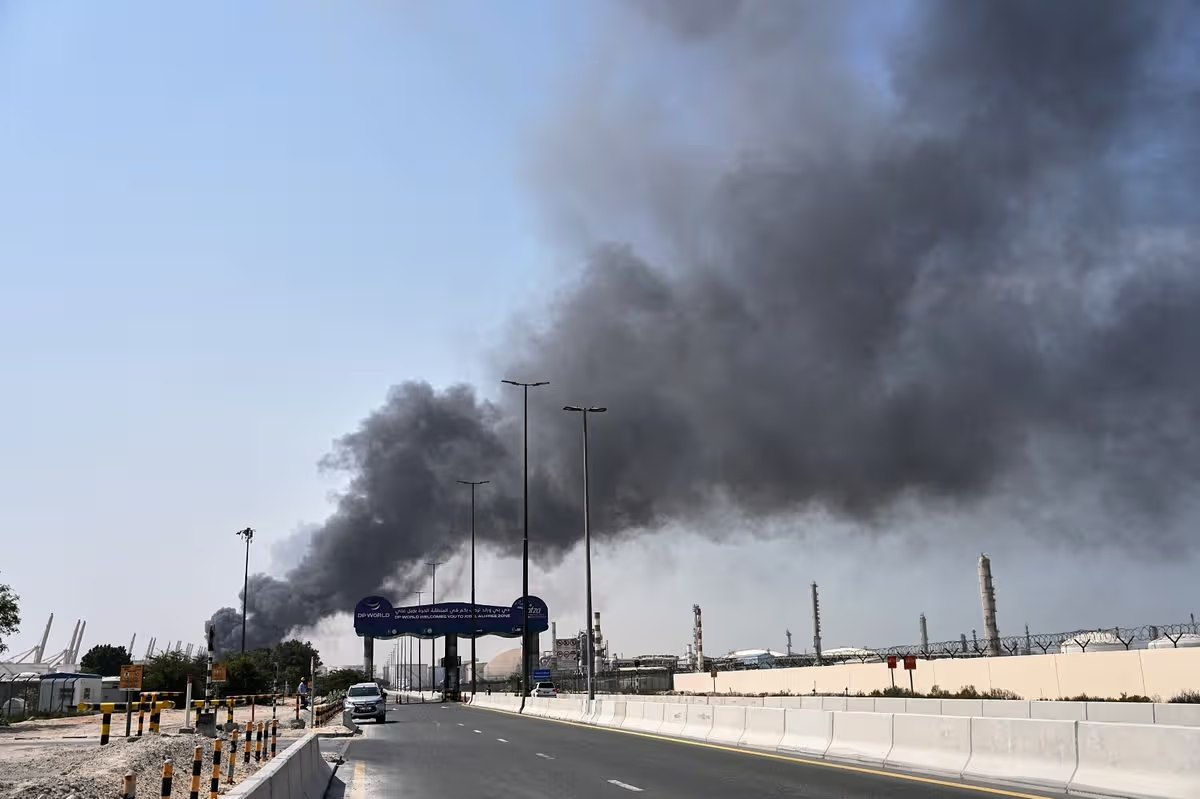
Travel expert Simon Calder issues three-word advice for Brits caught up in Iran attacks
Thousands of Brits are thought to be stranded in the Middle East after US and Israeli airstrikes on Iran

Thousands remain stranded after military strikes rocked the Middle East(Image: AP)
A travel expert has issued three words of crucial advice for people stranded in the Middle East following US and Israeli air strikes on Iran. Simon Calder made the remarks after hundreds of thousands of travellers found themselves stuck in destinations such as Qatar and Abu Dhabi in the wake of the attacks.
Numerous airlines, including British Airways, Emirates, and Qatar Airways, grounded flights following Iranian retaliatory strikes throughout the region. When flights will resume normal service remains unclear, with thousands of Britons believed to be stranded.
Speaking on Radio 5 Live, Mr Calder had three key words he urged travellers to follow: “At the moment, the best advice I have for anyone who is stuck in various parts of the world is: just be patient.”
The situation will be resolved – I hope, very much sooner rather than later,” he added. “What we have seen is the extraordinary sight of the big three of Middle Eastern hubs – Dubai International, Doha, and Abu Dhabi – all closing because of the retaliatory strikes from Iran. We have never seen that. The last thing of this scale we saw in this area like that here was the Covid pandemic.
READ MORE: Travel expert Simon Calder predicts when BA, Etihad and Emirates flights will resume after Iran attackREAD MORE: Nationwide customers’ three steps needed to qualify for free £100 payout
“Consider this. More than a quarter of a million passengers were due (on Saturday) to fly to and through Dubai International Airport alone. It is bigger than Heathrow Airport, handles more passengers, and everyone is desperate to get where they need to be.
“I have been speaking to people who were about to take off, they had the ‘boarding complete’ announcement, and suddenly the captain said, ‘Sorry, airspace closed, we are staying here’. It took them three hours to get off the aircraft because they all had to be processed through immigration, leaving them in a place where they really didn’t want to be. Many of them were just off a previous flight a few hours before and were waiting to travel on to their final destination of London Heathrow.”
It was subsequently confirmed that Iranian Supreme Leader Ayatollah Ali Khamenei was killed in the strikes, casting serious doubt over the future of the Islamic Republic. The death of Mr Khamenei, following decades in power, has triggered furious scenes across other parts of the Middle East and beyond, heightening the threat of potential regional instability.
Dubai International ranks as the world’s busiest airport, processing roughly 250,000 passengers daily. Doha Airport in Qatar handles approximately 150,000 travellers each day, meaning enormous travel chaos as both airports continue to be affected.
Doha holds particular significance for British passengers flying to and from the Middle East, Asia and the UK. Mr Calder went on to say: “Some people are in the difficult position of being stranded on the wrong side, and they are trying to get back to the UK but finding that air passenger rights rules – which are great when you are flying from Europe – don’t work the same way when you are flying to Europe on a non-UK or non-EU airline.
“They can basically just say, ‘well, good luck, we’ll try and get you there in a week or you can take a refund’. It’s really, really difficult Airlines like Emirates, Etihad, Qatar Airways, they are not legally obliged to find hotel accommodation for all these stranded passengers and get them back as soon as possible but hopefully they will do so.
“The other problem for people whose flights have been cancelled, when flights resume, they go to the back of the queue. If flights resume on Monday, anybody who has a flight booked on Monday will fly on Monday, and people whose flights were cancelled over the weekend – and we are talking hundreds of thousands now – they are going to be finding that they are at the back of the queue, scrabbling for whatever available seats there are.”

I explored the gothic English region where Wuthering Heights was filmed with cosy pubs and scenic train rides

EY up . . . Heathcliff is not the only mysterious, brooding beast in Yorkshire.
The scenery provides just as much drama as the Wuthering Heights character.
With the recent film adaptation of Emily Bronte’s novel — starring Margot Robbie and Jacob Elordi — the Yorkshire Dales is once again teeming with yearning Cathys and brooding young Heathcliffs.
And there I was too, like a budget Cathy, if she wore Gore-Tex and hiking boots rather than a generous bustle.
Largely shot on location in the Yorkshire Dales National Park — amid the landcapes of Swaledale and Arkengarthdale valleys and the peaceful village of Low Row — the movie shines a well-deserved spotlight on this glorious corner of England.
With its scarred limestone hills, scattered with rocks, and rolling green pastures, criss-crossed with drystone walls and peppered with honeyed-stone villages, this region is the picture of a period drama.


While the rain barely lets up in the movie, Yorkshire welcomes me with beautiful blue skies, sunshine and even a light dusting of snow on the hills.
I’m almost disappointed.
I’ve brought along my own Heathcliff, my partner Toby, and my dog, Miss Babs, who loves a good romp across the moors.
We’re staying in Settle, a cute little market town in the heart of Bronte Country near the southern entrance of the National Park.
After the long journey, we hunker down with the first of many pints of local Thwaites ale in The Golden Lion – a coaching inn in the centre of town and our base for the weekend.
Rooms are cosy and comfy with a modern country feel.
Settle is a popular base for walkers.
Nearby is Ribblesdale, probably the best known walking area in the Yorkshire Dales National Park, not least for those conquering the Yorkshire Three Peaks — Whernside, Ingleborough and Pen-y-ghent.
As keen but fair-weather walkers, we opt for an easy route along the River Ribble, which still offers some spectacular views across the Dales.
Unlike in the 18th century, there’s no need to ride a bumpy old stagecoach around these parts.
Settle is the starting point of England’s most scenic railway journey.
Celebrating its 150th anniversary this year, the Settle–Carlisle Railway soars over viaducts and through heather-filled moorlands.
There are numerous stops on the 72-mile route, including the magnificent Ribblehead Viaduct, which has 24 arches.
It’s a bargain at £4.60 for a single journey.
We stayed on until Dent, the highest railway station in England, and walked part of the Dales Way, which runs from Ilkley to Lake Windermere, stopping for a pint (OK, three) at the Sportsman Inn before wobbling back for the train.
Back at the The Golden Lion, it’s time for dinner.
Choices include fat steaks (from £18.50), beer-battered fish and chips (£18.50) and Settle pudding, a traditional suet pudding oozing with steak and ale, which Toby gazes at with the lustful look of Heathcliff.
On Sunday morning, the weather turns moody.
After a hearty Yorkshire breakfast, we drive five miles to Malham, a fine village with several easy-to-access walks.
We take a muddy trudge up to Malham Cove – a natural limestone amphitheatre – and then to Gordale Scar, a towering limestone gorge with a gushing waterfall, which featured in Netflix drama, The Witcher.
Dark, damp and deliciously Gothic, it’s a fitting end to our Wuthering Heights weekend.
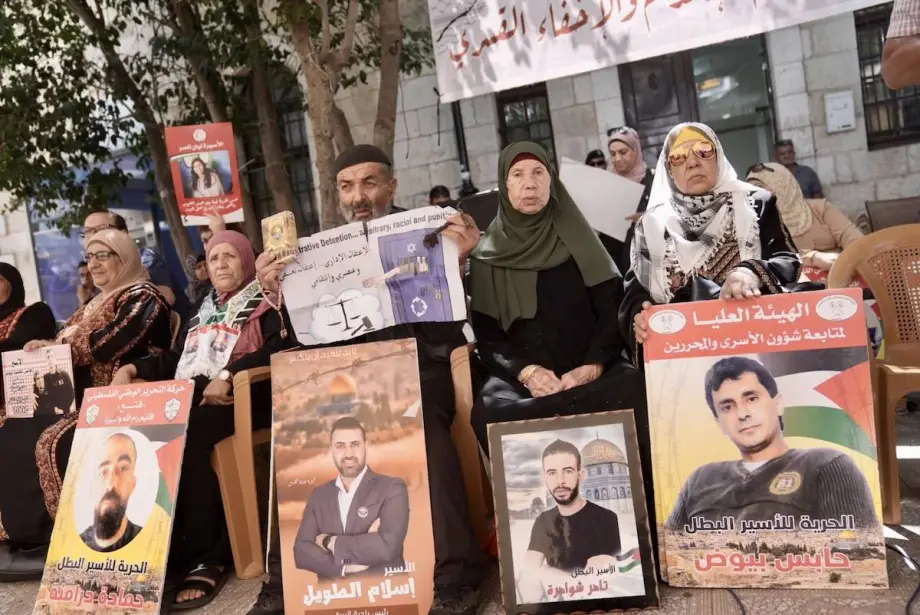
Palestinian prisoners in Israel’s Shatta Prison ‘medically neglected, maltreated’ – Middle East Monitor
The Palestinian prisoners in Israel’s Shatta Prison are medically neglected and enduring unprecedented maltreatment, the Palestinian Commission of Detainees’ and Ex-Detainees’ Affairs said on Thursday.
The Commission described the conditions of the Palestinian prisoners in Shatta as “horrifying,” reported the Palestinian Information Centre. “They are exposed constantly to brutal beatings and pepper spray attacks, and served raw and unsalted food.”
According to the Commission’s lawyer who visited the prisoners in Shatta recently, they are medically neglected and not provided with any treatment. The lawyer specifically mentioned Waleed Musallam, who suffers from severe psoriasis, and Fadi Raddad, who has been suffering from sharp pains in his back and right shoulder since Israeli jailers assaulted him.
The detainees appealed to rights groups to intervene with the Israel Prison Service to allow them to practice their religious rituals during the holy month of Ramadan without restrictions, to improve the quality of food, and to provide them with copies of the Holy Qur’an and clocks.
READ: Hundreds of Palestinians, including children and women, released from Israeli jails

Connor Storrie hosts ‘SNL’ with Olympians and Hudson Williams
In a rare case of “Saturday Night Live” bringing on a guest host at the exact right moment, Connor Storrie of the hit Canadian hockey romance “Heated Rivalry” brought sexy charisma to the show, even if a lot of the sketch material didn’t rise to occasion.
“SNL” parodied the show last month by mixing it with “Harry Potter,” but with Storrie, and all the attention hockey got with Team USA’s gold medal wins at the Winter Olympics, this hosting appearance felt especially well-planned. And that was even before members of the men’s and women’s teams dropped by, as did Storrie’s co-star on “Heated Rivalry” Hudson Williams, who showed up to a raucous audience reaction for a sketch, showing that a lot of people have caught up with the series since it debuted on HBO Max in November.
As for Storrie’s performance, it was perhaps the best thing on the show, which had a lot of weak sketches, from a fairly obvious cold open to an early piece that seemed like an excuse for Marcello Hernández to play a goofy teacher with an exaggerated accent.
Things got a little better with a pre-taped period piece about gentlemen giving glove slaps and Williams’ appearance in a sketch about a man’s marriage proposal going sideways because he keeps getting distracted by a group of happy men ice skating at Rockefeller Center. Storrie also played a cool teen trying to extend kindness to his extremely dorky tutor (Ben Marshall) and his equally dorky parents (Ashley Padilla and James Austin Johnson), a man who helped his friend out with his absurd leg-lengthening surgery, and an office worker who proposes a romantic office dance. Best of the night for Storrie, perhaps, was one in which he played a very injured stripper at a Las Vegas bachelorette party.
What was clear was that across a pretty broad range of character types, Storrie held his own and brought some smoldering looks and playfulness that the show, for the most part, didn’t know what to do with.
Musical guests Mumford & Sons, along with Aaron Dessner from the National, performed “Rubber Band Man” with Hozier and “Here” with Sierra Ferrell.

This week’s cold open tackled the very recent attack on Iran with President Trump (Johnson) addressing why he acted at 2 a.m. on a Saturday: “It’s after the stock market closes for the weekend and it’s to cause immeasurable fear, rage and chaos in the ‘SNL’ writers’ room,” he explained. Trump sang, “War! What is it good for? Distracting from the Epstein Files!” before introducing Secretary of Defense Pete Hegseth (Colin Jost), who chugged a non-alcoholic Four Loco and showed off his knuckle tattoos for “EPIC FURY.” After a brief aside for Trump and Hegseth to complement the underappreciated Nintendo GameCube console (on which Hegseth said he played the game “Prince of Persia: Sands of Time”), Hegseth said, “We took out a horrendous, horrible leader who was opposing his own people.” Trump cut in: “But don’t get any ideas!”

In his monologue, Storrie joked about the cultural appeal of “Heated Rivalry,” which he said, “taught a lot of people about hockey… and taught a lot of straight women that their sexuality is actually gay guy.” Storrie discussed growing up in Texas, working as a waiter before he was cast in the series, and how little time he had to prepare to play a Russian hockey player for the show. He was then joined by Jack and Quinn Hughes of the men’s Olympic hockey team. But the reaction to the Hughes brothers was topped considerably in audience reaction by women’s team players Hilary Knight and Megan Keller, who came on stage. “It was just gonna be us, but we thought we’d invite the guys, too,” Knight said. “We thought we’d give them a little moment to shine,” Keller added.
Best sketch of the night: How dare they save the best jokes for a video sketch!

At a posh London gathering in 1892, things get out of hand (literally) when two men (Mikey Day and Storrie) engage in a war of words that escalates to cries of “How dare you!” followed by slaps with a glove. Others get involved, but it really gets out of hand when one man violates the so-called “gentleman’s code” by using a fist. Soon, a dog and a baby are involved in the increasingly silly slapping. Storrie’s comedic timing is particularly good in this one and the sketch resists the “SNL” trope of going straight to hardcore violence and bloodshed that it’s been doing in a lot of video sketches of late.
Also good: Tipping is appreciated for dancing while hurt

At this point, “SNL” has probably done 100 bachelorette party sketches, but none of them had Storrie showing off his abs or getting his tearaway pants pulled off. Apart from the eye candy for those seeking it, the sketch offered some solid physical comedy with Storrie playing a stripper who shows up at a hotel suite severely injured after getting hit by a car. He pushes on to fulfill his job duties, but can barely stand. Storrie does a nice job flailing and flopping, throwing his bloodied-up body around the stage and around the bachelorettes (Padilla, Sarah Sherman, Veronika Slowikowska and Jane Wickline), who don’t know whether to be repulsed or turned on.
‘Weekend Update’ winner: Advice to future maids of honor — avoid headlines

Unfortunately, both “Weekend Update” character segments felt underbaked this week. Sherman played another oversexualized pop-culture meme in an elaborate costume — the negligent mother of Punch, the baby monkey — hitting on Jost in hopes of getting pregnant. A little better, but still rough, was Slowikowska as Katie, the maid of honor at a wedding who makes jokes about the proceedings that play off of major news headlines, like cartel violence in Mexico, the Epstein files or the ongoing war in Ukraine. This one feels like it probably sounded really funny and smart at the table read, but it landed with a thud for the audience because the premise was so muddled.

Mark Delgado and Son Heung-min lead LAFC to win over Houston
HOUSTON — Mark Delgado had a goal and an assist, Son Heung-min had two assists and Hugo Lloris posted a second straight clean sheet to help LAFC beat Houston 2-0 on Saturday night after the Dynamo lost two players to red cards.
Houston defender Antônio Carlos was tagged with a red card in the second minute of stoppage time in a scoreless first half, forcing the Dynamo to play a man down from there.
LAFC (2-0-0) took advantage in the 56th minute when Delgado used assists from Son and Denis Bouanga to score. Delgado scored for the 26th time in 345 career appearances. Bouanga’s second assist in as many matches gives him 22 in 103 career appearances. None of Bouanga’s 66 goals have come against Houston — the only team he has not scored on.
Stephen Eustáquio scored for the first time in his second league appearance to give LAFC an insurance goal in the 82nd minute — six minutes after Agustín Bouzat was hit with a red card that left Houston two men down. Son notched his third assist this season, giving him six in 12 career appearances. Delgado picked up his first assist this season and the 44th of his career.
Lloris totaled two saves in the shutout after LAFC opened with a 3-0 victory over defending MLS Cup champion Inter Miami at home.
Jonathan Bond stopped four shots for the Dynamo (1-1-0), who were coming off a season-opening 2-1 victory over the visiting Chicago Fire.
LAFC earns its first victory in Houston since July 12, 2019 and leads the all-time series 8-5-5. Coach Marc Dos Santos has the club off to a 4-0 start — over a 12-day span — in all competitions for the first time after posting a pair of CONCACAF Champions Cup victories over Real España by a combined score of 7-1 to reach the Round of 16.

Up next for LAFC: vs. FC Dallas at BMO Stadium on Saturday.
Iran’s Foreign Ministry defends retaliatory strikes, slams US betrayal | News
Spokesman Esmaeil Baghaei says Iran’s attacks on US targets across the region are legitimate defensive actions.
Published On 28 Feb 2026
Iran is entitled to defend itself from Israeli and US attacks, the spokesman for Iran’s Ministry of Foreign Affairs has stressed.
“We have every right in accordance with international law, with the UN Charter, to defend ourselves with all might”, Esmaeil Baghaei said in an interview with Al Jazeera on Saturday.
Recommended Stories
list of 3 itemsend of list
The US and Israel launched a wave of attacks across multiple Iranian cities, including Tehran, on Saturday, in what US President Donald Trump described as “major combat operations”.
At least 201 people have been killed, according to Iranian media, citing the Red Crescent.

Iran responded by firing missiles towards Israel and US military targets in multiple countries, including Bahrain, Iraq, Jordan, Kuwait, Saudi Arabia, Qatar and the United Arab Emirates.
Baghaei said the country’s armed forces “are defending national sovereignty and the territorial integrity of Iran against these barbaric acts of aggression”.
The US-Israeli attacks came after a third round of indirect negotiations on Iran’s nuclear programme between the US and Iran ended on Friday.
“We were supposed to meet on Monday to talk about technical aspects of any possible deal on [the] nuclear issue,” Baghaei said. “And the Americans themselves acknowledged that these negotiations went quite well. The mediator, [the] foreign minister of Oman, qualified this round of negotiations as being of significant progress.”
It was the second time in less than a year that diplomacy had been scuttled by an attack on Iran, Baghaei noted. Iran and the US had engaged in several rounds of negotiations last year, when Israel launched a 12-day war on Iran in June, which the US briefly joined, despite Trump saying he was committed to a diplomatic resolution.
Baghaei said the US “launching an act of aggression against another member of the United Nations” also threatened the international body, as its main pillar, “the UN Charter, is the provision of the use of force.”
“So, I think what is at stake is not only the security and peace of the region and that of Iran, but also the whole fabric of international law. And the normative system that has been created by the United Nations Charter,” he added.
Friends in the region
Baghaei defended Iran’s retaliatory attacks in several countries across the region.
“Under international law, any place, any location, any logistical support that are given to the aggressor [is a] legitimate target for the victim state,” he said. “So, we are not attacking any country in the region. We are friendly with all countries of the region. What we are doing is just taking defensive actions.”
“We have proven that we trust our friends in the region,” Baghaei said. “That’s why we try to get together with the countries of the region in furtherance of this diplomatic process. The problem is that the United States is conducting this war of aggression at the cost of everyone, including the countries of the region.”
Iran begins 40-day mourning after Khamenei killed in US-Israeli attack | Israel-Iran conflict News
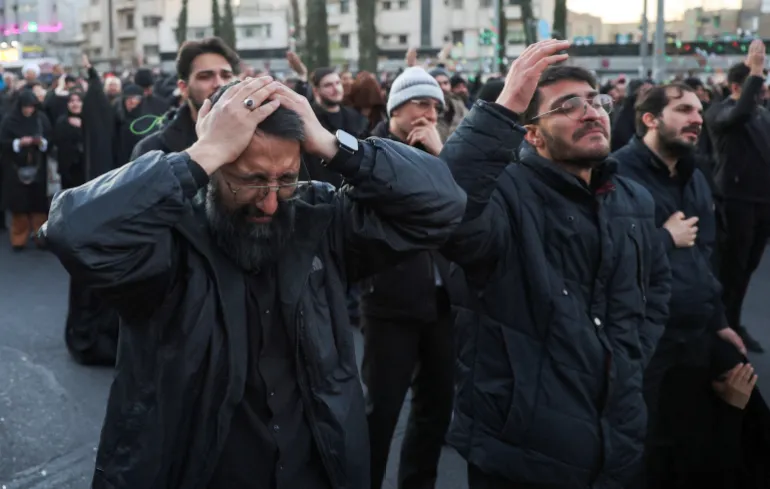
Iran has begun 40 days of mourning after Supreme Leader Ayatollah Ali Khamenei was killed in ongoing attacks by the United States and Israel, according to Iranian state media.
Top security officials were also killed in Saturday’s strikes, along with Khamenei’s daughter, son-in-law and grandson. The killings mark one of the most significant blows to Iran’s leadership since the 1979 Islamic revolution.
Recommended Stories
list of 4 itemsend of list
President Masoud Pezeshkian condemned the killing as “a great crime”, according to a statement from his office. He also declared seven days of public holidays in addition to the 40-day mourning period.
Reporting from Tehran, Al Jazeera’s Tohid Asadi said people were pouring into the streets of the capital following the news of Khamenei’s killing.
“There will be expected ceremonies,” he said, noting they would likely take place amid continuing bombardment across the country.

Protests denouncing Khamenei’s killing were also reported elsewhere, including Shiraz, Yasuj and Lorestan.
“There will be expected ceremonies,” he said, noting they would likely take place amid continuing bombardment across the country.
Footage aired by Iranian state media showed supporters mourning at the shrine of Imam Reza in Mashhad, with several people seen crying and collapsing in grief.
The killing also led to protests in neighbouring Iraq, which declared three days of public mourning. In Baghdad, protesters confronted security forces in the heavily fortified Green Zone, which houses Iraqi government buildings and foreign embassies.
Videos verified by Al Jazeera showed demonstrators waving flags and shouting slogans, with witnesses saying some were attempting to mobilise towards the US Embassy. Footage also showed protesters blocking vehicles at a roundabout near one of the entrances to the area.

There was also a protest in the Pakistani city of Karachi, where footage, verified by Al Jazeera, showed people setting fire to and smashing the windows of the US consulate.
However, there have also been reports of celebrations in Iran, with the Reuters news agency quoting witnesses as saying some people had taken to the streets in Tehran, the nearby city of Karaj and the central city of Isfahan.
Meanwhile, the official IRNA news agency reported that a three-person council, consisting of the country’s president, the chief of the judiciary, and one of the jurists of the Guardian Council, will temporarily assume all leadership duties in the country. The body will temporarily oversee the country until a new supreme leader is elected.
Khamenei assumed leadership of Iran in 1989 following the death of Ayatollah Ruhollah Khomeini, who had led the Islamic revolution a decade earlier.
While Khomeini was regarded as the ideological force behind the revolution that ended the Pahlavi monarchy, Khamenei went on to shape Iran’s military and paramilitary apparatus, strengthening both its domestic control and its regional influence.
Attacks across the region
Meanwhile, the Islamic Revolutionary Guard Corps (IRGC) pledged revenge and said it had launched strikes on 27 bases hosting US troops in the region, as well as Israeli military facilities in Tel Aviv.
Explosions have continued to be reported in Qatar and the United Arab Emirates, while security alerts are in place in several countries across the region.
US President Donald Trump, in a social media post on Sunday, warned Iran that it would be hit “with a force that has never been seen before” if it retaliated.
Iran’s retaliatory attacks since Saturday have targeted Israel and US assets across multiple Middle East countries, including Qatar, the UAE, Kuwait, Bahrain, Jordan, Saudi Arabia and Iraq.
Harlan Ullman, chairman of the strategic advisory firm Killowen Group and an adviser to the Atlantic Council in Washington, DC, said the US may have made a “big mistake” by killing Khamenei.
“Decapitation only works when you get all the leaders, and I don’t think that we got all the leaders,” Ullman said, adding that the US should not expect Iran’s leadership to enter negotiations in the immediate aftermath.
Iranian state media reported on Saturday at least 201 people have been killed in the joint US-Israeli attacks across 24 provinces, citing the Red Crescent. In southern Iran, at least 148 people were killed and 95 wounded in a strike on an elementary girls’ school in Minab on Saturday, with the toll continuing to rise, according to state media.