This shipping disaster has lived on through the decades, with remnants of the past still washing ashore now.

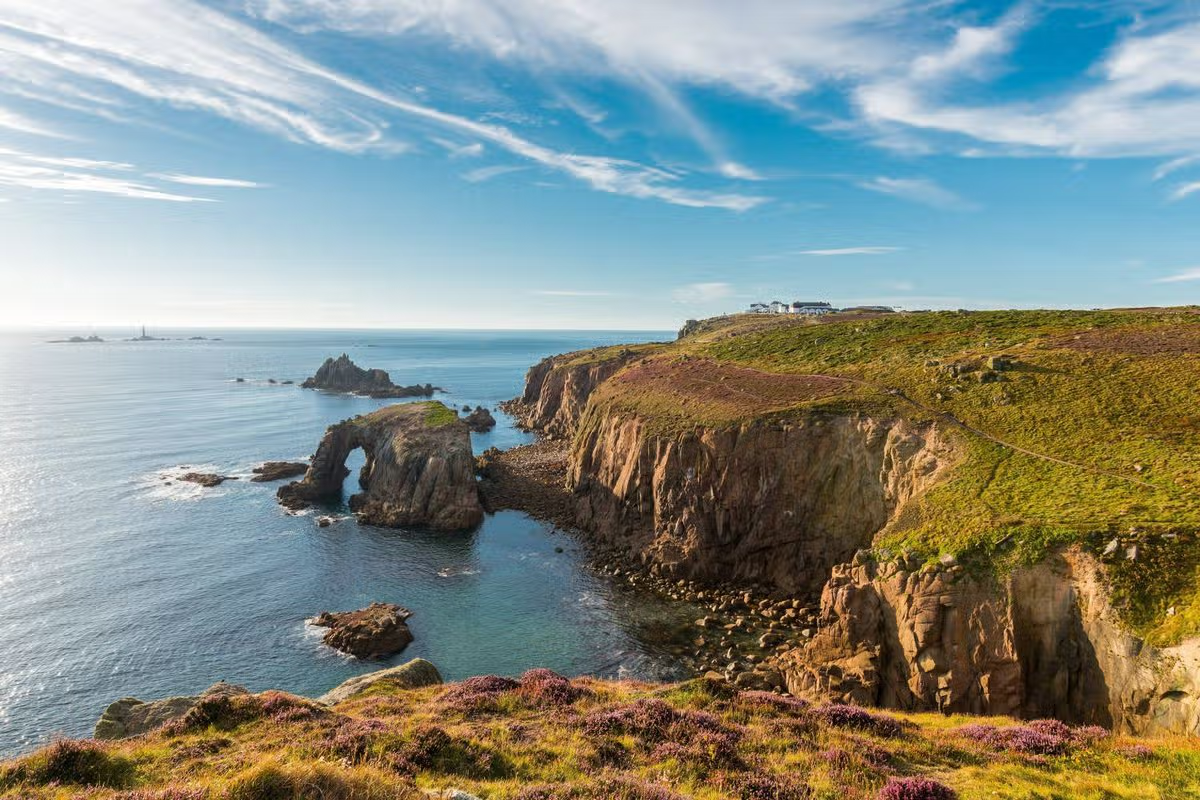
This corner of the UK has become a famous spot for treasure hunting(Image: Rob Maynard via Getty Images)
Along this stunning UK coastline, you will see crashing waves, white sand and towering cliffs. But if you are wandering along the beach and cast your eyes downward, you might spot something else.
Hidden in the sands of Cornwall’s coastline is a reminder of an ecological disaster that occurred 29 years ago. On February 13, 1997, a German container ship was sailing off the coast of Land’s End in Cornwall when it was hit by an enormous rogue wave.
The wave caused the vessel to lurch, and 62 containers plunged into the ocean.
One of these containers contained 4.8 million Lego pieces. Ironically, the majority of them had an ocean theme.
These scattered pieces then floated in ocean currents for years before eventually washing up on coastlines across the UK, Ireland and the Netherlands. Some even reached as far as Australia.
Environmental impact
Since the pieces are manufactured from the hardy acrylonitrile butadiene styrene (ABS) plastic, they resist degradation and chemical breakdown, and a 2020 study suggested the bricks could last in the ocean and on beaches for 1,300 years.
Even as they begin to degrade, they will shed microplastics which are consumed by sea life and marine birds.
In response to the spill, Lego company officials released a finders keepers statement telling people they were free to keep any pieces they discovered, though they should give them a thorough wash first.
The firm also set up a hotline so people could report where they collected them and the company could offer assistance with any clean-up efforts.
The Cornish coast is referred to as ‘Lego Beach’ by those familiar with it, and people devote hours to hunting for the miniature plastic toys.
What was on board?
The Lego pieces that washed overboard are now sought after by beachcombers, with enthusiasts on the hunt for the ultimate prize from the disaster — the octopus piece.
Other items such as flippers, scuba tanks and swords are spotted more frequently, but the octopuses are highly coveted given that only 4,200 of them were on board the stricken vessel, making them considerably harder to come across.
According to the BBC, there were several different kinds of Lego on board. These range from the most common through to ones that are so rare they have never been found on the beach.
Lego pieces you might find
- Flippers: one of the most common, with over 352,000 pairs in black, blue and red
- Life jackets: 26,000 bright yellow life jacket figurines were scattered
- Scuba tanks, flowers and brooms: also a common find
- Octopus: one of the hardest to find and most prized Lego figures — only 4,200 on board
- Green dragons: there were 33,427 black dragons inside the shipping container but only 514 green dragons
What figures have never been found?
- 97,000 magic wands
- 15,800 witches’ hats
- 18,200 frying pans