The Philippines has raised alarm after discovering cyanide on Chinese vessels operating near a disputed atoll in the South China Sea, intensifying tensions in an already volatile region.
Officials say laboratory tests confirmed the presence of the toxic substance in materials seized during naval operations at Second Thomas Shoal, known in the Philippines as Ayungin Shoal.
The area is a longstanding flashpoint between Philippines and China, with both sides asserting competing claims.
Why the Allegation Matters
Philippine authorities are framing the discovery as more than an environmental violation. According to security officials, the use of cyanide could damage marine ecosystems, kill fish stocks, and weaken the reef structure beneath a grounded Philippine naval vessel stationed at the shoal.
That ship plays a critical role in maintaining Manila’s territorial claim, meaning any environmental damage could also have strategic consequences.
Officials have gone as far as calling it an act of sabotage.
Rising Tensions at Sea
The accusation comes against a backdrop of repeated confrontations in the area. Manila has previously accused Beijing of interfering with resupply missions to its troops stationed on the grounded vessel, including a violent 2024 incident that injured a Filipino sailor.
China has consistently denied such allegations, instead accusing the Philippines of encroaching on its territory.
Despite recent diplomatic talks aimed at reducing friction, incidents at sea continue to test fragile understandings between the two sides.
The Bigger Dispute
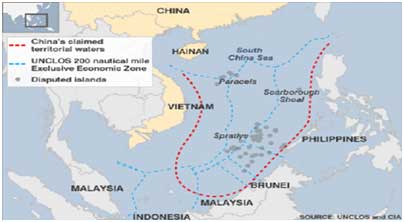
The South China Sea remains one of the world’s most contested regions. China claims nearly the entire waterway, overlapping with claims from several Southeast Asian nations.
A 2016 international tribunal ruling rejected Beijing’s sweeping claims under international law, but China does not recognize the decision.
With more than $3 trillion in global trade passing through these waters each year, even localized tensions carry global significance.
Implications: Environment Meets Geopolitics
This incident adds a new dimension to the dispute by linking environmental harm with strategic rivalry.
If proven, the use of cyanide could:
- Escalate diplomatic tensions between Manila and Beijing
- Draw wider international attention to environmental practices in contested waters
- Further complicate already fragile cooperation efforts in the region
It also underscores how control over maritime territory is not just about military presence, but also about sustaining the ecosystems that support it.
Analysis: A Dangerous New Phase
The allegation signals a shift in how disputes in the South China Sea are unfolding. Beyond naval standoffs and legal arguments, there is now a growing risk of indirect tactics that target resources and infrastructure.
Whether intentional or not, the incident deepens mistrust and makes de-escalation more difficult.
The cyanide discovery is more than an environmental concern. It is a geopolitical flashpoint that could further inflame one of the world’s most sensitive maritime disputes.
As tensions persist, even seemingly small incidents have the potential to ripple far beyond the waters where they occur.
With information from Reuters.