Stronger Food System Offers Cushion Against El Niño
Near-record food inventories, advances in agricultural technology and the emergence of major exporters such as Brazil and Russia have made the global food system more resilient to this year’s potentially powerful El Niño than during previous severe episodes.
Global agricultural production has generally outpaced consumption and population growth since the 1980s, according to the UN Food and Agriculture Organization (FAO) and analysts.
Higher-yielding crop varieties, increased fertiliser use, improved irrigation and better crop protection have significantly raised production of major staples including rice, wheat, corn and soybeans.
“Even during drought conditions, better irrigation management and crop science mean we can still produce marketable yields,” said Andrew Whitelaw of Australian agricultural consultancy Episode 3.
Stay ahead of the geopolitical week.
MD Briefing delivers expert analysis across five global fronts — the Indo-Pacific, energy, geoeconomics, European security, and the Middle East — every Monday morning. Free.
While El Niño can still disrupt global supplies and push prices higher, improved agricultural preparedness means the consequences could be less severe than during previous major events.
El Niño Gathers Strength
The effects are already being felt across major agricultural regions.
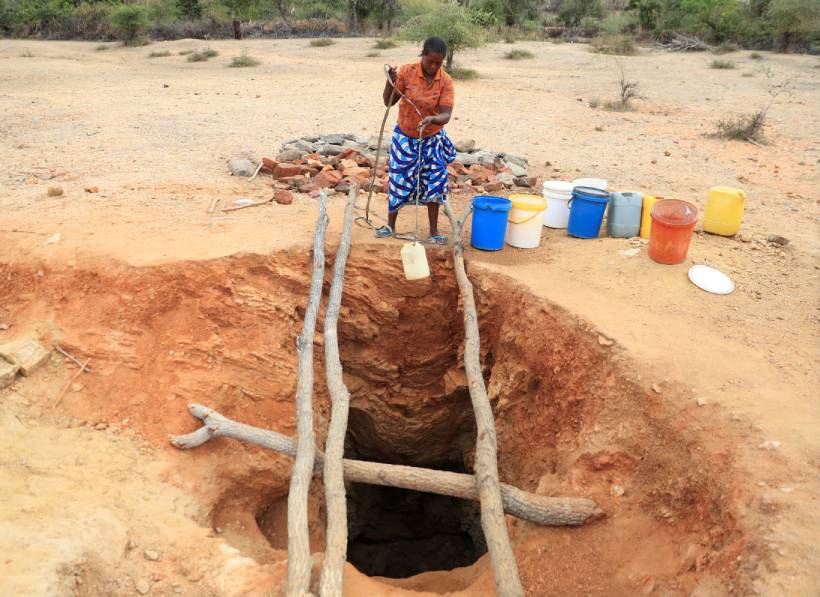
Drier conditions linked to El Niño have disrupted planting across parts of Asia, including India, Southeast Asia and Australia. At the same time, shortages of fertiliser and diesel caused by the Iran war have created additional risks for global agricultural production.
India is experiencing a deficient monsoon season, while Australia’s major wheat-producing regions face the prospect of drier conditions. Crops in Indonesia, Thailand and other parts of Southeast Asia are also suffering from insufficient moisture.
The situation could deteriorate further as El Niño is expected to intensify during the fourth quarter and early next year.
U.S.-based meteorologist Chris Hyde said the event could become one of the strongest on record, meaning the biggest impact from drought may still be ahead.
El Niño is associated with warmer ocean surface temperatures across the eastern and central Pacific. The weather pattern typically produces drier conditions across large parts of Asia while increasing rainfall across the Americas.
Previous major El Niño events in 1997-98 and 2015-16 caused substantial damage to crop production, contributing to food shortages, inflation and weaker economic growth.
Drought pushed up sugar and palm oil prices after damaging production in countries including Brazil, India, Indonesia, Malaysia and Thailand. Tight rice supplies also prompted some Southeast Asian producers to restrict exports.
Australia suffered lower wheat production and exports, while countries in southern Africa were forced to increase corn imports.
Record Inventories Provide a Buffer
One of the biggest differences between previous El Niño events and the current environment is the level of global food reserves.
Near-record grain inventories, drought-tolerant seeds, improved weather forecasting, precision agriculture and better irrigation could help absorb some of the production losses.
India’s crop sowing has broadly recovered from an initial delay, although rainfall during August and September will remain important for crop maturity and grain formation.
India also holds a particularly important position in the global rice market. The country accounts for around 40% of global rice exports and has accumulated such large reserves that storage capacity is being stretched.
China, meanwhile, holds nearly half of global wheat stocks. As the world’s largest wheat producer and consumer, its large reserves could reduce the need for imports if drought damages production in major suppliers such as Australia.
Global palm oil inventories are also near historic highs, although Indonesia’s expanding biodiesel programme is expected to reduce stocks in coming months.
Brazil and Russia Strengthen Global Supply
The emergence of major agricultural exporters that were far less important several decades ago has also increased the resilience of global food markets.
Brazil has become the world’s largest soybean exporter, with shipments increasing more than 13-fold since the 1997-98 El Niño period.
Russia has also emerged as a major wheat supplier, with exports reaching 48 million tons last year compared with roughly 1 million tons in 1997-98.
These additional sources of supply give global markets more alternatives if weather damages production in individual countries.
Agricultural science has also improved. Drought-tolerant corn hybrids have become widely used across Africa and the Americas, while heat- and drought-resistant wheat varieties have gained ground in India and Australia.
Short-duration rice varieties are increasingly being used across South and Southeast Asia, allowing farmers to reduce exposure to increasingly unpredictable monsoon conditions.
Technology Changes the Equation
Farmers today also have access to technologies that were largely unavailable during the 1997-98 El Niño.
Satellite crop monitoring, seasonal climate forecasts, detailed soil-moisture maps and GPS-guided fertiliser application allow farmers to make more precise decisions about planting, irrigation and inputs.
AI-powered agricultural platforms are also increasingly combining weather forecasts, soil information and crop data to advise farmers on planting schedules, irrigation, fertiliser use and pest management.
The result is a food system that can identify and respond to weather risks earlier.
FAO Chief Economist Maximo Torero said governments now have significantly better information and can prepare earlier because forecasting and market transparency have improved.
Wars Could Undermine the Resilience
Despite these improvements, the global food system remains exposed to risks beyond weather.
The wars in the Middle East and Black Sea region could undermine some of the protection provided by stronger inventories and agricultural technology.
The Iran war has disrupted fuel and fertiliser supplies, while higher fertiliser costs could reduce farmers’ ability to maintain production.
Torero warned that much will depend on how conditions develop during the second half of 2026, particularly because agricultural input use has been affected by the Strait of Hormuz crisis.
Before its blockade during the Iran war, the Strait carried around one-fifth of global crude oil and liquefied natural gas supplies. Disruptions to the waterway have therefore created additional pressure on fuel and fertiliser markets.
Analysis: Is the Global Food System Ready?
The biggest takeaway is that El Niño is no longer operating against the same fragile agricultural system that existed during previous major events.
Higher productivity, larger inventories, diversified exporters and better technology provide several layers of protection. If one major producing region suffers a drought, supplies from countries such as Brazil and Russia, combined with existing reserves, can help prevent a sudden global shortage.
However, resilience does not mean immunity.
The greatest risk comes from the interaction between climate shocks and geopolitical disruptions. A powerful El Niño could reduce production at the same time that wars restrict fuel, fertiliser and transport. That combination could rapidly turn a manageable agricultural disruption into a broader food-price problem.
For now, large inventories provide an important buffer. But if the El Niño intensifies as expected while geopolitical disruptions continue to constrain agricultural inputs, the real test will be whether those reserves and technological gains are sufficient to prevent another surge in global food inflation.
With information from Reuters.