Discover the latest happenings and stay in the know with our up-to-date today news coverage. From breaking stories and current events to trending topics and insightful analysis, we bring you the most relevant and captivating news of the day.
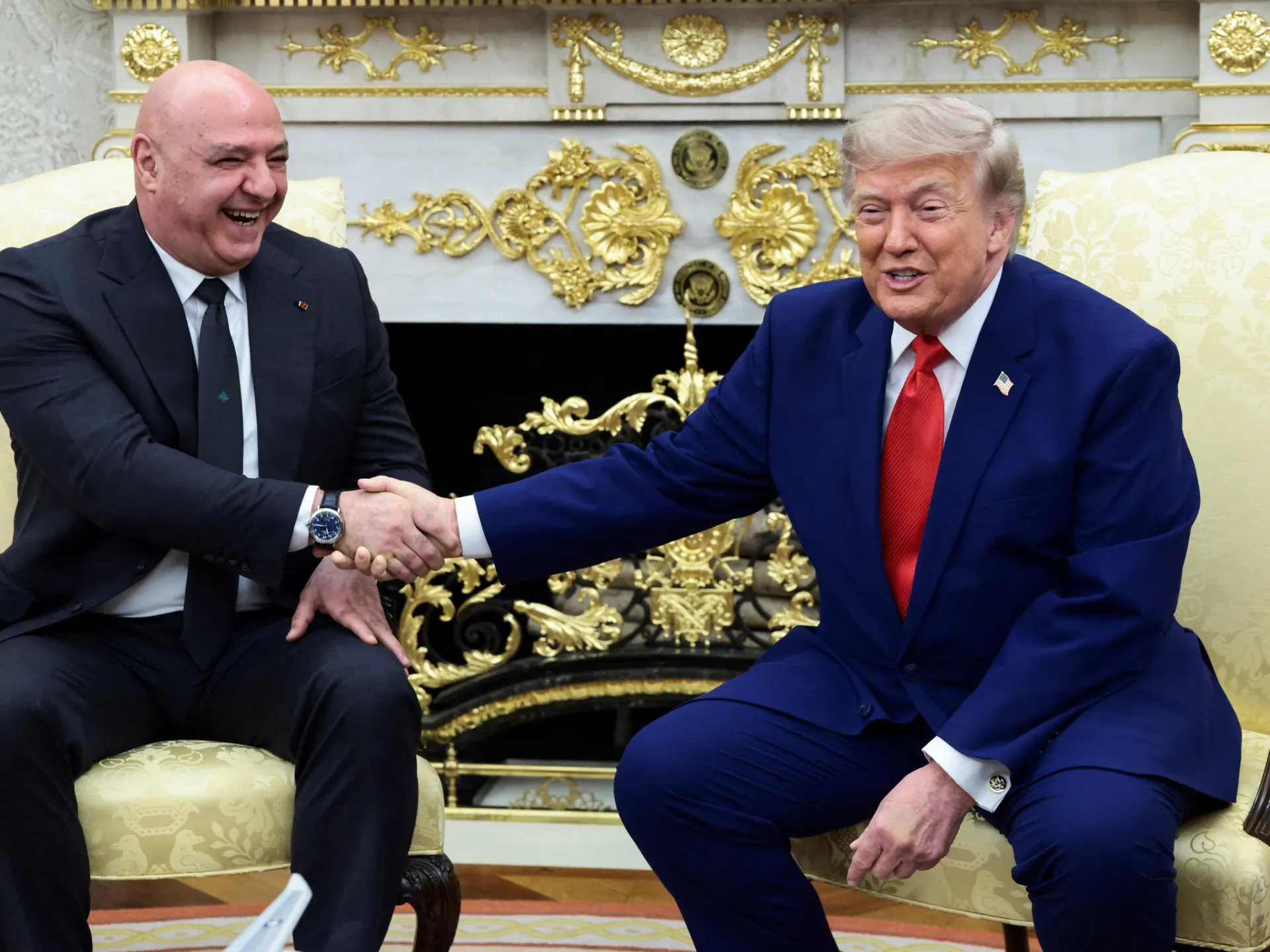
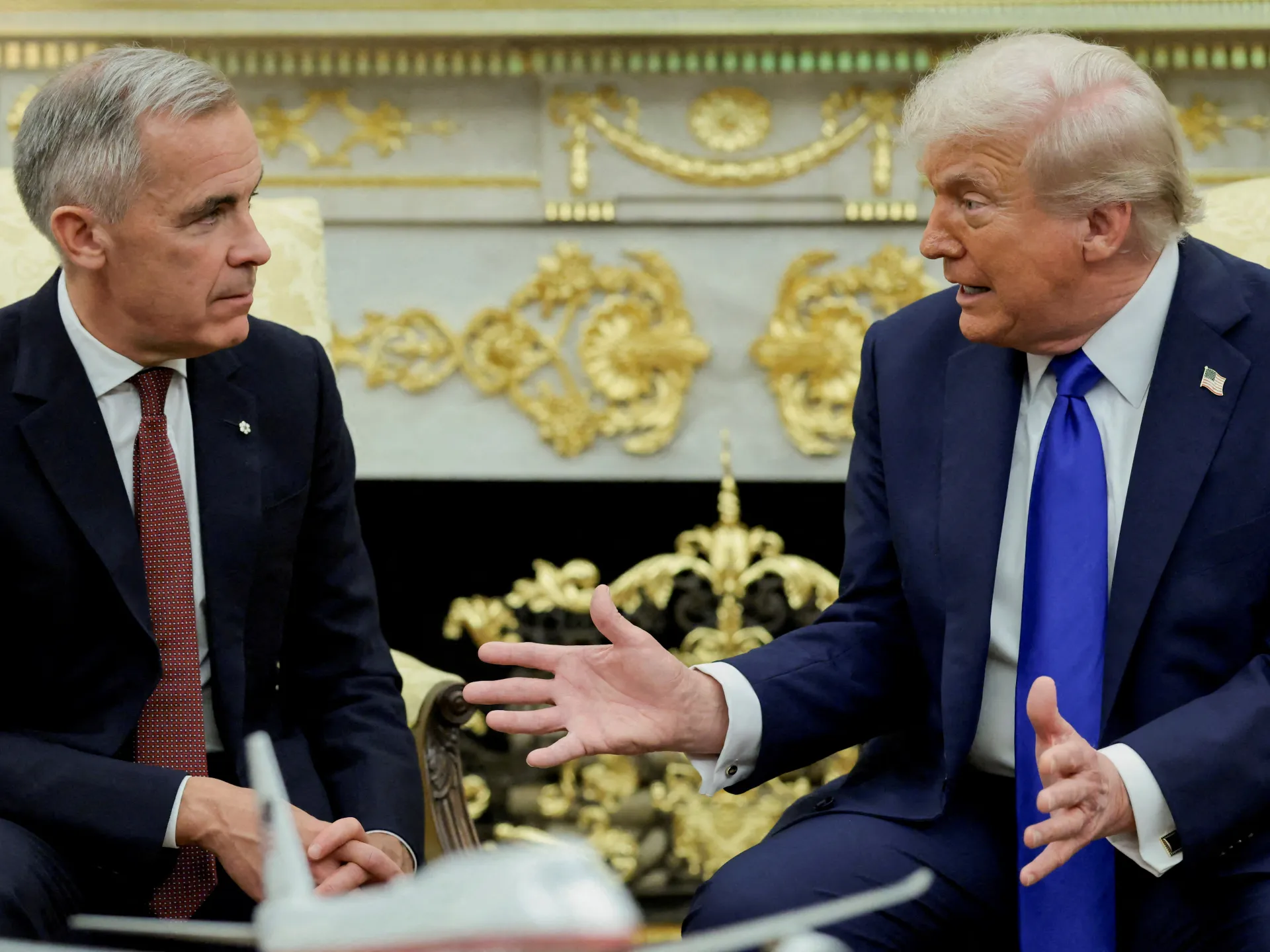
President Donald Trump has promised that the United States will “help” Lebanon as he met with his Lebanese counterpart Joseph Aoun amid continued occupation of the south of the country by Israeli forces.
The US president did not announce any concrete policies towards Lebanon as he spoke to reporters alongside Aoun at the White House on Tuesday.
Recommended Stories
list of 3 itemsend of list
Asked whether there will be a timeline for Israel’s withdrawal from the country, Trump said: “They’re in the process of doing that. They’re in the process of redeploying [to] other sections.”
In reality, Israel has not pulled back from any area it has occupied since March. On Monday, the US State Department announced the establishment of the first “pilot zone” under a Lebanon-Israel framework.
Such areas are supposed to see the Lebanese army deploy to previously occupied towns and ensure that there is no Hezbollah military presence, so reconstruction can begin and residents can return. But the three towns announced in the first pilot zone were not under Israeli control, so Israel did not withdraw from them.
Israel has been systemically razing entire villages in south Lebanon, with Israeli officials openly declaring the objective of erasing Lebanese border towns out of existence.
On Tuesday, Aoun did not mention Israeli abuses in his comments next to Trump. Instead, he heaped praise on the US leader and hailed the US-brokered framework agreement between Lebanon and Israel, which conditions Israeli withdrawal on disarming Hezbollah.
“I would like to thank President Trump, really, and his team for the historic visit and for the historic achievement that we did together by signing the framework with the ultimate objective of ending the state of hostility between Lebanon and Israel forever,” the Lebanese president said.
‘We’re going to help it a lot’
Israel has killed more than 4,000 people in Lebanon since the all-out regional war broke out earlier this year, targeting hundreds of medics and journalists as it invaded the country.
In his opening remarks, Trump said that Lebanon had been “badly treated” for decades without elaborating on the source of the mistreatment.
“We’re going to help it. We’re going to help it a lot,” the US president said. “So it’s an honour to have the president and your representatives here.”
Trump also renewed his suggestion that neighbouring Syria should intervene militarily in Lebanon to help disarm Hezbollah – a proposal that has been repeatedly rejected by Syrian authorities.
Hezbollah and the current government in Damascus – led by President Ahmed al-Sharaa – fought on opposite sides of the Syrian civil war.
The Lebanese group backed the government of President Bashar al-Assad, and al-Sharaa was a rebel commander who, early in the war, led the al-Qaeda branch in the country.
Trump took the opportunity on Tuesday to express his admiration of al-Sharaa once again.
“He’s pulled Syria together. He would like to come in and do something with Hezbollah. You know, they’ve been fighting. He’s been fighting Hezbollah for a long time. I think it’d be very effective. So it’s something I think about,” he said.
A Lebanese reporter asked Trump what concrete support he may offer Aoun during the visit. The US president said, “You’ll find out.”
‘I would speak to Hezbollah,’ Trump says
Trump also said he is open to speaking directly with Hezbollah.
“I would speak to Hezbollah. I speak to everybody,” he told reporters.
“I would say this: If the president wanted me to speak to Hezbollah – you know, he’s lived with Hezbollah for a long time – and if the president wanted me to speak to Hezbollah, I would,” Trump added, referring to Aoun, who previously served as Lebanon’s top general.
Aoun had called for assistance to the Lebanese Armed Forces (LAF), saying that the military remains the “backbone of security and stability”.
Hezbollah has been highly critical of Aoun’s decision to engage in direct talks with Israel, as well as the framework in which Lebanon agreed not to pursue accountability for Israeli abuses in international courts and at the United Nations.
For his part, Aoun has accused Hezbollah of dragging Lebanon to war on behalf of Iran, stressing that the Lebanese military must be the sole armed force in the country.
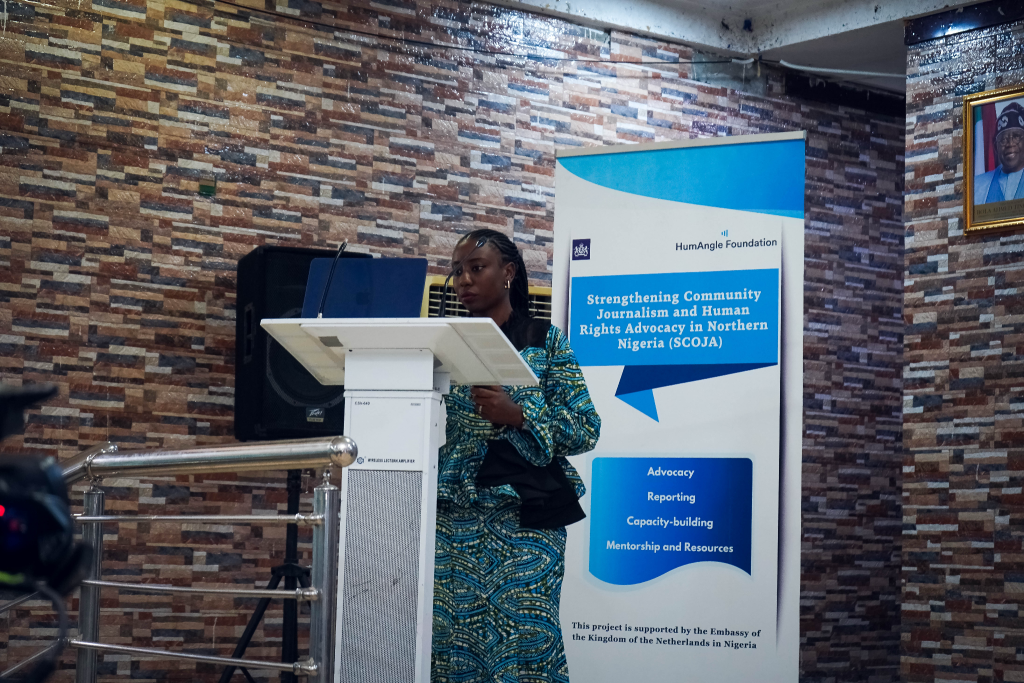
HumAngle Foundation, in collaboration with the Embassy of the Kingdom of the Netherlands, has launched a guide for community journalism, as part of the Strengthening Community Journalism and Human Rights Advocacy in Northern Nigeria (SCOJA) project. The project, which started in 2025, has trained 90 journalists and human rights advocates so far, and their work has recorded some impact in their communities.
The launch was held on Tuesday, July 21, at the University of Maiduguri in Borno State, northeastern Nigeria, and was hosted by the Faculty of Communication and Media Studies. Angela Umoru-David, HumAngle Foundation’s Programme Director, welcomed dignitaries, students, and speakers to the gathering. In her remarks, she noted that partnerships like these were instrumental in ensuring the reach of journalism resources to those who need them the most.
“We developed this manual to serve as a guide for community journalists in Nigeria,” she said.
Angela Umoru-David, Programme Director of HumAngle Foundation. Photo: Al’amin Umar/HumAngle.
HumAngle’s Founder/CEO, Ahmad Salkida, noted in his introduction to the manual that the role of community journalists was crucial to social cohesion. “Community journalists, often the first witnesses to crises and transformation, are the unsung custodians of enduring social realities,” he wrote. “Their proximity to the people and understanding of local realities make them indispensable to the national narrative… We hope that every journalist who engages with this manual will find in it a field companion, a guide, and an inspiration to tell deeper, more authentic stories, to stand firm in truth, and to amplify the voices that matter most.”
Cross-section of the audience. Photo: Al’amin Umar/HumAngle.
Jessica Odudu, Senior Policy Advisor on Human Rights and Public Diplomacy at the Embassy of the Kingdom of the Netherlands in Nigeria, reiterated this point in her welcome remarks.
“While information has become abundant, trust is increasingly scarce. In moments like these, the role of journalists becomes even more important. Community journalists are often the first to report conflict. They understand the realities in their communities in a way outsiders don’t. Yet, many do this work with very few resources. Over the past year, the Embassy of the Kingdom of the Netherlands has had the privilege of strengthening community journalists’ capacity to do their work,” she said.
During the keynote speech, Prof. Mu’azu Abubakar, Dean, Faculty of Communication and Media Studies, University of Maiduguri, emphasised the importance of viewing ‘community’ as an expansive and diverse concept. On his behalf, Mohammed Auwal Umar delivered a paper they co-authored, which sought to understand the fragile conditions in which community journalism must thrive.
Prof. Mu’azu Abubakar, Dean, Faculty of Communication and Media Studies, University of Maiduguri, delivers a keynote speech. Photo: Al’amin Umar/HumAngle.
“Community journalism curates content, generates it, and develops it in a way that is relevant to the community we are serving. It is not meant to serve a classical divide,” he said.
The event also featured a panel discussion with Dr Abdulmutallib Ado Abubakar, Head of the Department of Mass Communication, University of Maiduguri; Abdulhamid Al-Gazali, Editor-in-Chief, Yerwa Express; Hauwa Shaffii Nuhu, Managing Editor, HumAngle Media; and Hassana Danyerwa, Founder, FeelandHeal Initiative and SCOJA Fellowship alumna. The discussion, which focused on strengthening community journalism in Nigeria, was moderated by Abdussamad Ahmad Yusuf, HumAngle Foundation’s Human Security and Policy Analyst.
Speaking during the discussion, Abdulhamid said, “We have to understand that as a people, the most important aspect of our society is the kind of information our people consume. Communities must have media that understand their fundamental issues, curate relevant information, and take responsibility for disseminating the right information. If we do not take control of what we consume, it affects society.”
The panellists discuss strengthening community journalism in Nigeria. Photo: Al’amin Umar/HumAngle.
Hassana, while reflecting on the impact of the SCOJA Fellowship, said, “Although I am not a journalist and I joined the SCOJA Fellowship as an advocate, my experiences from the fellowship set me up for a global experience where I was the only Nigerian selected. The mentorship aspect of the fellowship helped me and opened a new professional pathway for me.”
Abdulkareem Haruna, NUJ President, Borno State chapter, offered some closing remarks at the end of the event. Photo: Al’amin Umar/HumAngle.
Other past SCOJA fellows, including Faiza Jibrin, Yahuza Bawage, and Nathaniel Ishaya, also shared their experiences with attendees.
As the guide was formally launched, Angela Umoru-David announced the donation of copies to the University of Maiduguri. The guide, available in both Hausa and English, can be downloaded here for free.
Global hunger declined for the third consecutive year in 2025, offering a rare piece of positive news for food security after years of setbacks caused by the COVID-19 pandemic, conflict and economic instability. Yet the United Nations warns that the gains remain fragile, with climate change, geopolitical tensions and disruptions to global trade threatening to reverse recent progress.
According to the latest State of Food Security and Nutrition in the World report, jointly produced by five U.N. agencies, approximately 645 million people or 7.8% of the global population experienced hunger last year. That marks an improvement from 8.1% in 2024 and 8.6% in 2022, continuing a gradual downward trend.
While the figures suggest the world is moving in the right direction, U.N. experts caution that achieving the goal of ending hunger by 2030 remains far from guaranteed.
Hunger Declines Across Every Continent
For the first time in several years, every continent recorded improvements in hunger levels, including Africa, where progress has historically been the slowest.
Stay ahead of the geopolitical week.
MD Briefing delivers expert analysis across five global fronts — the Indo-Pacific, energy, geoeconomics, European security, and the Middle East — every Monday morning. Free.
Asia accounted for much of the global improvement, led by significant gains in India, while Latin America and the Caribbean continued building on earlier successes. Several African nations—including Ethiopia, Tanzania, Zambia, Zimbabwe and Senegal—also reported improvements after years of deteriorating food security.
Despite these advances, Africa remains the world’s most food-insecure region. Around 309 million people, or roughly one in every five Africans, continue to suffer from chronic undernourishment.
U.N. officials described the continent’s improvement as encouraging but modest, emphasizing that much more investment will be needed to sustain progress.
India Emerges as a Key Driver
India played a central role in reducing global hunger statistics.
Home to nearly one-fifth of the world’s population, the country has lowered hunger levels to below 10%, driven by expanded welfare programs, increased agricultural productivity and improvements in food distribution.
The country’s progress demonstrates how targeted government policies combined with economic growth can substantially improve food security even in densely populated developing economies.
Elsewhere, the Dominican Republic also achieved sufficient progress to be removed from the global hunger map.
Climate and Geopolitical Risks Persist
Despite encouraging trends, the U.N. warns that several emerging risks could quickly undermine global food security.
One of the most immediate concerns is the disruption to shipping through the Strait of Hormuz, where escalating tensions in the Middle East have increased transportation costs and driven up prices for fuel and fertilizers—critical inputs for agricultural production worldwide.
Higher energy costs inevitably translate into more expensive food production and distribution, placing additional pressure on consumers already facing elevated food prices.
Meanwhile, forecasters are monitoring the possible emergence of a strong El Niño weather pattern, which could reduce crop yields across many vulnerable regions through droughts, floods and extreme temperatures.
Together, geopolitical instability and climate shocks threaten both food availability and affordability.
Hunger Is Falling, But Healthy Diets Remain Unaffordable
The report also highlights an important distinction between reducing hunger and improving nutrition.
Although fewer people are experiencing chronic hunger, 2.69 billion people still cannot afford a healthy diet.
The U.N. estimates that a nutritious daily diet costs an average of $4.28 per person when adjusted for purchasing power—well beyond the reach of many households in low-income countries.
The affordability gap is especially severe in Africa, where 66.1% of the population cannot afford healthy food, more than double the levels recorded across much of Asia and Latin America.
Poor transport infrastructure, inadequate cold-storage facilities and fragmented regional trade continue to make nutritious foods such as fruits, vegetables, dairy and meat significantly more expensive across the continent.
Nutrition Challenges Extend Beyond Hunger
The report also warns that improving calorie intake alone is not enough.
Child malnutrition remains widespread in many developing countries, while anemia among women continues to worsen. At the same time, adult obesity is increasing globally, illustrating the growing “double burden” of malnutrition in which undernutrition and unhealthy diets coexist.
This reflects broader structural problems within global food systems, where inexpensive calories are often more accessible than balanced nutrition.
What’s Next?
U.N. experts remain cautiously optimistic that global hunger can continue declining through 2030, provided governments maintain investments in agriculture, strengthen international trade and improve resilience against climate shocks.
However, the outlook depends heavily on geopolitical stability. Continued conflict in the Middle East, disruptions to major shipping routes, worsening climate events or prolonged trade barriers could rapidly increase food prices and slow or reverse recent gains.
Analysis: Progress Is Real, But Food Security Remains Fragile
The latest U.N. report demonstrates that coordinated public policies, agricultural investment and social protection programs can reduce hunger on a global scale. India’s progress, alongside improvements across Latin America and parts of Africa, shows that meaningful change is possible even amid economic uncertainty.
Yet the report also highlights a growing challenge: food security is increasingly shaped by forces beyond agriculture itself. Climate change, global shipping disruptions, energy prices and geopolitical conflicts now influence what people eat as much as farming does. While hunger is declining, access to affordable, nutritious food remains out of reach for billions. Sustaining progress will therefore require not only producing more food, but building more resilient supply chains, improving regional trade and adapting agricultural systems to an increasingly volatile global environment.
POTUS has just departed Turkey on the “Old Air Force” (VC-25A) Speculating if it will meet the new VC-25B Bridge in the UK for a fuel stopover and POTUS will return to Andrews on the VC-25B Bridge. pic.twitter.com/Xm4qOt52uq
“Mr. President, this plane does not have anti-missile defense systems on it. Why are you flying it?” S.V. Date, White House correspondent for HuffPost, asked Trump at a press gaggle at Andrews Air Force Base outside Washington, D.C., yesterday. The President had just returned from a trip to attend the FIFA World Cup final in New Jersey.
“Well, it has – it has a lot, and, you know, it has a lot of capability,” Trump said in response. “But as I understand it, in about a month or so, they’re going to send it to have it be maxed out. So they’re going to be sending it, and they’ll have it be maxed out. It’ll take about a month.”
Reporter: Mr. President, this plane does not have antimissile defense systems on it. Why are you flying it?
Trump: Well, it has — it has a lot, and uh, you know it has a lot of capability, but as I understand it, in about a month or so, they’re going to send it to have it be,… pic.twitter.com/wDimk6RiQm
Trump did not elaborate on what “maxed out” might mean for the Bridge aircraft.
“The new Air Force One is perfectly safe for the President’s travels, but will receive additional upgrades and enhancements in the fall which will take approximately one month to complete,” White House Press Secretary Karoline Leavitt said in a statement to TWZ. “During that time, the President will fly on the old Air Force One.”
We have also reached out to the U.S. Air Force and L3Harris for more information. L3Harris is the defense contractor that served as the lead integrator for the modifications to the former Qatari 747. You can read more about what is known about the conversion process, which took approximately 10 months, here.
The VC-25B Bridge aircraft, seen at Andrews Air Force Base at its official unveiling in June. USAF
“We knew there were some issues around security with the plane. We’ve known that from the very beginning,” Senator Jeanne Shaheen, a New Hampshire Democrat, said separately at a roundtable at the Farnborough International Airshow in the United Kingdom today, according to Breaking Defense. “Obviously, there was an effort to address that.”
“If there … was an examination and a problem apparently was determined to exist, the good news is that it’s apparently going to be addressed,” Senator Jerry Moran, a Kansas Republican, also said, per Breaking Defense. “And I think it’s important for all of us to determine what that problem is and to be supportive of corrective measures.”
Shaheen and Moran both serve on the Senate Appropriations Committee’s Subcommittee on Defense. Shaheen is also a member of the Senate Armed Services Committee.
As noted, there has been significant new scrutiny of the Bridge aircraft’s defensive and other capabilities since Trump’s trip to Turkey and the swap with the VC-25A on the way back. On July 9, The New York Times reported that the ex-Qatari jet “lacks the same defensive countermeasures that were security features of the old model, including its advanced antimissile capabilities,” citing unnamed officials.
A stock picture of one of the Air Force’s existing VC-25A Air Force One jets. USAF
The Times‘ story included a statement from White House Communications Director Steven Cheung, saying that “the new Air Force One is a state-of-the-art aircraft that has been fitted with high-level security protocols that ensure the safety of the president and his staff.”
Other outlets published similar stories about Air Force One’s capabilities, also citing anonymous sources. In a highly unusual development, the FBI subsequently subpoenaed four journalists at the Times as part of a leak investigation, which now appears to go beyond the more recent reporting on the Bridge aircraft.
The current array of defensive features found on the VC-25B Bridge aircraft is unknown. Details about the self-protection capabilities of the existing VC-25As — arguably the most well defended aircraft on the planet — are not usually openly discussed, but at least some of the countermeasures systems on those aircraft are plainly visible to the general public. This includes a version of the AN/AAQ-24 directional infrared countermeasures (DIRCM) system, also called Nemesis or the Large Aircraft Infrared Countermeasures (LAIRCM) system. There is the AN/ALQ-204 Matador infrared countermeasures (IRCM) system, as well. The AAQ-24 uses lasers to blind and confuse the seekers on infrared-homing missiles. These laser turrets are mounted all over the bottom of the aircraft. The older ALQ-204 system has a similar function, but sends out large fixed pulses of infrared energy rather than a steerable laser beam. The VC-25As also have visible missile launch warning sensors at various points around the aircraft to cue these and other defensive capabilities, and to just provide general alerts to incoming threats. There are certainly other capabilities that are not so plainly visible, as well. The planes are hardened against electromagnetic pulses (EMP), as well.
Large Aircraft Infrared Countermeasures (LAIRCM)
To date, there have been no visible signs of any of these obvious defensive features found on the VC-25As being present on the VC-25B Bridge aircraft. This is something we have noted since the official rollout of the new aircraft in June. The Air Force and L3Harris have previously pushed back on any operational security concerns surrounding the jet gifted by Qatar.
There are additional questions now about what modifications could reasonably be made to the Bridge aircraft during another month-long upgrade period. As we previously wrote after Trump’s swap back to the VC-25A on the way back from Turkey:
“Defensive countermeasures, in particular, take time and careful work to integrate onto any airframe, let alone a newer type for which there might not be pre-existing procedures. Rigorous testing has to be done after integration to ensure those systems work as intended and do not conflict with other features, physically or in the radiofrequency spectrum.”
That being said, there are countermeasures systems that have already been qualified on at least some 747 variants, such as the aforementioned capabilities known to be found on the VC-25As today. There are other self-protection options available on the open market today for 747s and other similarly large aircraft, such as the C-MUSIC DIRCM system from Elbit in Israel. Northrop Grumman also offers a podded DIRCM system called Guardian that utilizes some of the same components as NEMESIS/LAIRCM. Both of these examples are not for high-volume threats, though.
Elbit Systems / DIRCM Missile Defense
Any move to upgrade the Bridge aircraft’s defensive capabilities now can only prompt the question as to why this was not done already. This is a matter of ensuring the safety of the President of the United States, whoever that might be, and underpinning the credibility of America’s nuclear deterrent whenever they are onboard.
There was certainly a push to have the Bridge aircraft in service, at least to some degree, by July 4th. The plane was a centerpiece of flyovers above the nation’s capital to mark this year’s Independence Day. Trump had flown on the jet for the first time just before, on a trip to North Dakota to attend the opening of the Theodore Roosevelt Presidential Library and other celebrations marking the 250th anniversary of the United States.
The new VC-25B Bridge aircraft, at left, and one of the older VC-25As, at right, seen together at Andrews Air Force Base ahead of flyovers over Washington, D.C., on July 4, 2026. USAF
If the Bridge aircraft was rushed into service without certain defensive systems installed to be available for July 4th and other 250th anniversary celebrations, it could still have been sent back for additional upgrades afterward. However, there appears to have been no plans to get the Bridge aircraft any additional defensive or other capabilities before it was put into full service. This was proven when Trump and many other passengers headed overseas to Turkey aboard the new jet. Before the plane was delivered, TWZ had questioned whether the jet would ever fly abroad in the Air Force One role, and not be reserved for lower-risk domestic travel, due to these exact kind of security concerns.
There is an additional operational security layer to the equation here given that any aircraft serving in the Air Force One role inherently slots into America’s nuclear deterrent posture. Beyond their array of self-protection features, the VC-25As, in particular, have an extensive secure communications suite designed to ensure the President remains in contact with the National Command Authority at all times. The National Command Authority is the mechanism through which the President would order a nuclear strike, as you can read about in more detail here.
A report from CBS News earlier this month implied that the new Bridge aircraft lacks the same communications capabilities, as well as defensive features, found on the VC-25As. That story suggested both aspects here pushed the Secret Service to recommend Trump use the older aircraft on the return trip from Turkey, which came amid the start of the new campaign against Iran. The President had also just directed a new round of strikes on Iranian targets from the sidelines of the NATO summit. TWZ highlighted all of this at the time as potential contributing factors in the swap between Air Force One jets.
All of this raises further questions about what risks may have been accepted in allowing Trump to use the Bridge aircraft to travel to Turkey in the first place. There’s an additional question here of what would have happened had circumstances not prompted Trump to swap Air Force Ones, and had The New York Times and others not reported on the reasons behind that decision. Would it have ever gotten these extra defenses if those things didn’t happen?
The Boeing VC-25B Bridge, Air Force One, carrying President Donald J. Trump has landed in Ankara, Turkey, ahead of this week’s NATO Summit. pic.twitter.com/Qqea5RihiM
The Bridge aircraft has been the subject of criticism and controversy from the start. The circumstances under which the Qatari government gifted the plane to the United States in the first place were highly irregular.
The justification for needing the Bridge Air Force One at all remains a subject of debate, now fueled further by the clear continued relevance of the VC-25As. The Air Force’s efforts to acquire two fully equipped VC-25B Air Force One jets from Boeing have been repeatedly delayed, and the costs of that effort continue to rise. The first of those jets is now expected to be delivered in 2028, which is actually a slight improvement in the timeline. What will happen to the Bridge aircraft afterward is unclear.
The Air Force has separately acquired another 747-8i from German flag carrier Lufthansa, which is now being used as a trainer for aircrew and ground personnel. An additional ex-Lufthansa 747 will be cannibalized for spare parts, as well, in support of the burgeoning Air Force One fleet.
It is worth noting here that the VC-25As are also based on older 747-200 models, a type that has all but disappeared from service globally, even with commercial airlines. Those jets are becoming more complicated and costly to operate and maintain just as a result of diminishing supply chains.
With Trump’s comments yesterday, the VC-25B Bridge aircraft is now slated to get the defenses it should have had originally, or at least more than it has now, but the path to getting there is bizarre and raises real concerns, to say the least.
An Indonesian court has sentenced Lie Siu Luan to seven years in prison after finding her guilty of leading a 19-member baby trafficking ring operating between Indonesia and Singapore. Prosecutors had sought 10 years and are considering whether to appeal.
Leaders of the movement say they will continue campaigning but will not stage another march through New Delhi.
Published On 21 Jul 202621 Jul 2026
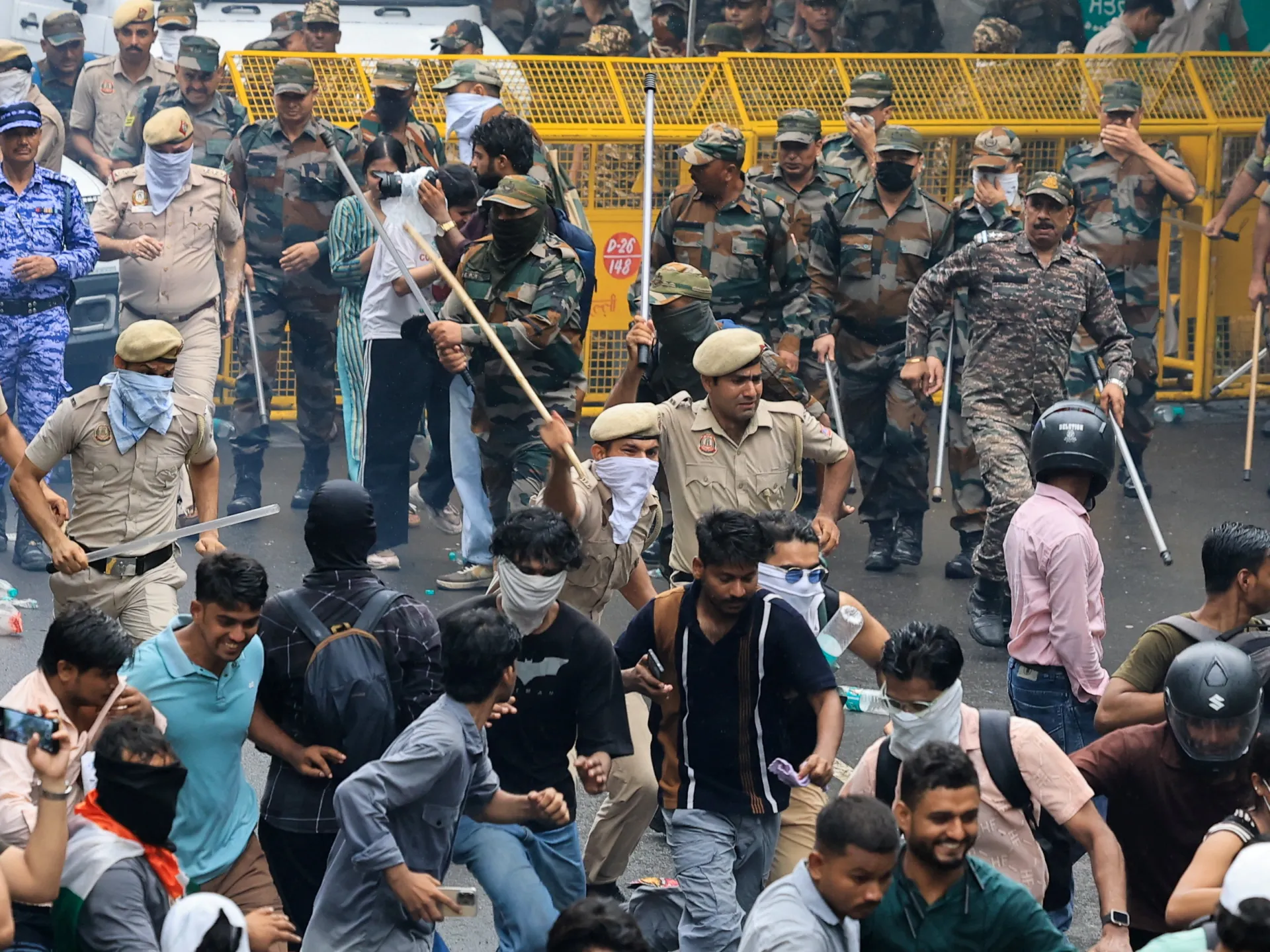
Leaders of India’s “cockroach movement” say they will continue to protest against the government but will refrain from further rallies through the streets of New Delhi because of concerns about the safety of their supporters after a violent police response when more than 10,000 people tried to march to parliament.
“We will not march again because the police will hurt the youth again,” Cockroach Janta Party (CJP) founder Abhijeet Dipke said at a news conference on Tuesday.
Recommended Stories
list of 4 itemsend of list
He said 150 protesters were wounded by police who fired tear gas and beat activists with canes and batons during Monday’s march.
The movement will continue to demand the resignation of Education Minister Dharmendra Pradhan, who it said must be held accountable for flaws in the education system.
The movement emerged after a leak of exam papers that forced 2.2 million aspiring doctors to retake their exams, reportedly contributing to at least 12 students dying by suicide. The CJP is calling for compensation of 10 million rupees ($104,000) for each family of the students who took their own lives after the leak.
“We won’t stop. Pradhan has to be sacked,” the CJP’s Ashutosh Ranka said.
Opposition leaders Rahul Gandhi and his sister Priyanka along with members of their Indian National Congress party, staged a protest outside Prime Minister Narendra Modi’s house, videos shared by the party showed on Tuesday.
“We have marched to PM Modi’s house to demand answers from him for the brutalities against young students yesterday,” Rahul Gandhi posted on X.
The rights group Amnesty International said in a statement late on Monday that the police action showed “how peaceful dissent is being suppressed in India.”
“They beat us black and blue, and they damaged our protest site,” Sahil Singh, a protester from the northern state of Uttar Pradesh, told the Reuters news agency. “We want accountability to be set with Pradhan’s resignation.”
The number of protesters who marched on Monday was larger than expected, partly due to widespread anger after veteran 59-year-old activist Sonam Wangchuk, who has been on hunger strike for three weeks in solidarity with the CJP, was seized by police and hospitalised against his will.
The Delhi High Court ruled on Tuesday that Wangchuk could be moved from a government hospital to a private healthcare facility after his wife petitioned the court, alleging he was being held in “illegal detention”, the legal news website Bar and Bench said.
About 200 protesters gathered at the CJP protest site at Jantar Mantar in central New Delhi on Tuesday morning, chanting slogans under a monsoon drizzle.
Paramilitary personnel continued to patrol central parts of India’s capital, and barricades were restricting traffic.
Cockroach Janta Party protesters try to neutralise a tear gas shell fired by police as they try to march towards India’s Parliament in New Delhi on July 20, 2026 [Prakash Singh/AP Photo]
Delhi police said nearly 180 people – 60 protesters and 118 security and police personnel – were injured in Monday’s clashes. Police also said 70 protesters were detained and legal action would be initiated against them.
Multiple videos of Monday’s clashes show police attacking protesters, but no footage has emerged of any violence by the marchers.
The CJP and its supporters remain hopeful that they may change the status quo. A representative said on Monday that a federal minister had promised the government would consider their demands.
On Tuesday, Parliamentary Affairs Minister Kiren Rijiju said: “I think when the talks are going on in a right direction, the atmosphere should not be vitiated.”
The CJP’s campaign initially began online with viral satirical memes mocking the government, and it quickly amassed millions of followers on social media. It has since morphed into a movement able to mobilise thousands on the streets, as Monday’s march demonstrated.
Arizona voters head to the polls on Tuesday to choose party nominees in races that could help determine who controls the US House of Representatives and whether Republicans can flip one of the country’s most competitive Democratic governorships.
Once considered reliably Republican, Arizona has swung between the two parties in recent election cycles. Democrat Joe Biden narrowly won the state in 2020, while Donald Trump reclaimed it in the 2024 presidential election.
Recommended Stories
list of 4 itemsend of list
The biggest contest is the Republican primary for governor, where four candidates are competing to challenge Democratic Governor Katie Hobbs in November. The results will also set up key congressional races in one of the country’s most closely watched battleground states.
Here’s what to know.
When will polls open and close?
Polls will open at 6am (13:00 GMT) and most will close at 7pm (02:00 GMT on Wednesday). Anyone in line by 7pm may vote.
Who can vote?
Registered Democrats and Republicans can vote only in their own party’s primary, while independent voters can choose whether to vote in either the Democratic or Republican contest.
There are about 4.3m registered voters in Arizona, including roughly 1.5m Republicans, 1.2m Democrats and 1.5m independents or voters not affiliated with either major party.
What races are on the ballot?
Arizona voters will choose party nominees for governor, congressional seats, state offices, including secretary of state, attorney general, treasurer and state superintendent of public instruction, and all 30 seats in the state Senate and all 60 seats in the state House of Representatives.
Who is running for governor?
One of the most anticipated races is the Republican primary for governor, where four candidates are competing to challenge Democratic Governor Katie Hobbs in November. Hobbs, who is running for her second term, is one of only two Democratic governors seeking re-election this year in states Trump carried in 2024.
While four Republicans are on the ballot, the race has largely become a showdown between Andy Biggs and David Schweikert, two longtime congressmen who represent competing visions for the future of Arizona’s Republican Party.
Biggs, a former chair of the conservative House Freedom Caucus, is closely aligned with Trump and has built his campaign around the president’s agenda. He was among the Republicans who sought to block Congress from certifying Biden’s 2020 election victory and has long been associated with the party’s most conservative wing. Trump endorsed Biggs after previously backing another Republican candidate who later dropped out of the race.
Schweikert has also supported many of Trump’s priorities in Congress, but has cast himself as a more pragmatic conservative. Representing one of Arizona’s most competitive congressional districts, he argues Republicans have lost ground in the state by nominating candidates seen by voters as too extreme.
What are the congressional races to watch?
The primary will also decide who will compete for Arizona’s open 1st Congressional District, a seat left open after Representative David Schweikert decided to run for governor. Covering Scottsdale and northeastern Phoenix, it is expected to be one of the state’s most competitive races in November and could play a role in deciding which party controls the House.
Republicans are choosing between state Representative Joseph Chaplik, former NFL kicker and sportscaster Jay Feely, who has Trump’s endorsement, and technology executive John Trobough.
On the Democratic side, doctor and former state Representative Amish Shah, who narrowly lost to Schweikert in 2024, is competing against former news anchor Marlene Galan-Woods. The registered Republican until 2018 is the widow of former Arizona Attorney General Grant Woods, a prominent Republican who later became a vocal Trump critic.
She is being backed by the national party, which backed Shah in 2024. Publisher Rick McCartney and entrepreneur Jonathan Treble are also on the ballot. Another closely watched House race is in Arizona’s 6th Congressional District, where Republican Representative Juan Ciscomani is seeking a third term against Democrat JoAnna Mendoza, a Marine Corps veteran. Both are unopposed in Tuesday’s primaries and will face each other in November in what’s expected to be one of the Democrats’ best opportunities to flip a Republican-held seat as they try to regain control of the House.
How are Israel and Gaza shaping the Arizona primaries?
The Democratic Party’s growing divisions over Israel’s war in Gaza are becoming apparent in some of Arizona’s congressional primaries, where candidates have clashed over US support for Israel and the direction of the party’s foreign policy. Two races in particular illustrate those tensions.
In Arizona’s 4th Congressional District, which is considered reliably blue, Representative Greg Stanton faces a primary challenge from progressive candidate Kai Newkirk. He has made US support for Israel a central issue in his campaign, arguing that Stanton has been too supportive.
Stanton, a staunch supporter of Israel who has been endorsed by AIPAC, recently voted against a proposal to restrict US military aid to Israel. According to Track AIPAC, an advocacy group that monitors pro-Israel political spending, Stanton has received about $322,000 in donations linked to AIPAC and other pro-Israel groups.
In the neighbouring 3rd Congressional District, Representative Yassamin Ansari has dramatically changed her position on Israel since first running for Congress, reflecting the changing dynamics within the broader Democratic Party.
Ansari received support from Democratic Majority for Israel in her closely fought 2024 primary, but has since become a sharp critic of Israel’s war in Gaza and said she will no longer accept backing from the group or AIPAC.
When will the results be announced?
Polls close at 7pm on Tuesday (02:00 GMT on Wednesday) across most of Arizona, although no results can be released until 8pm local time (03:00 GMT on Wednesday). Because Arizona conducts most voting by mail or through early voting, counties typically report a large share of ballots shortly after polls close.
More than 755,000 ballots had already been cast before election day.
Most races are expected to become clearer during the first few hours of counting, although close contests could take longer if additional mail ballots need to be processed.
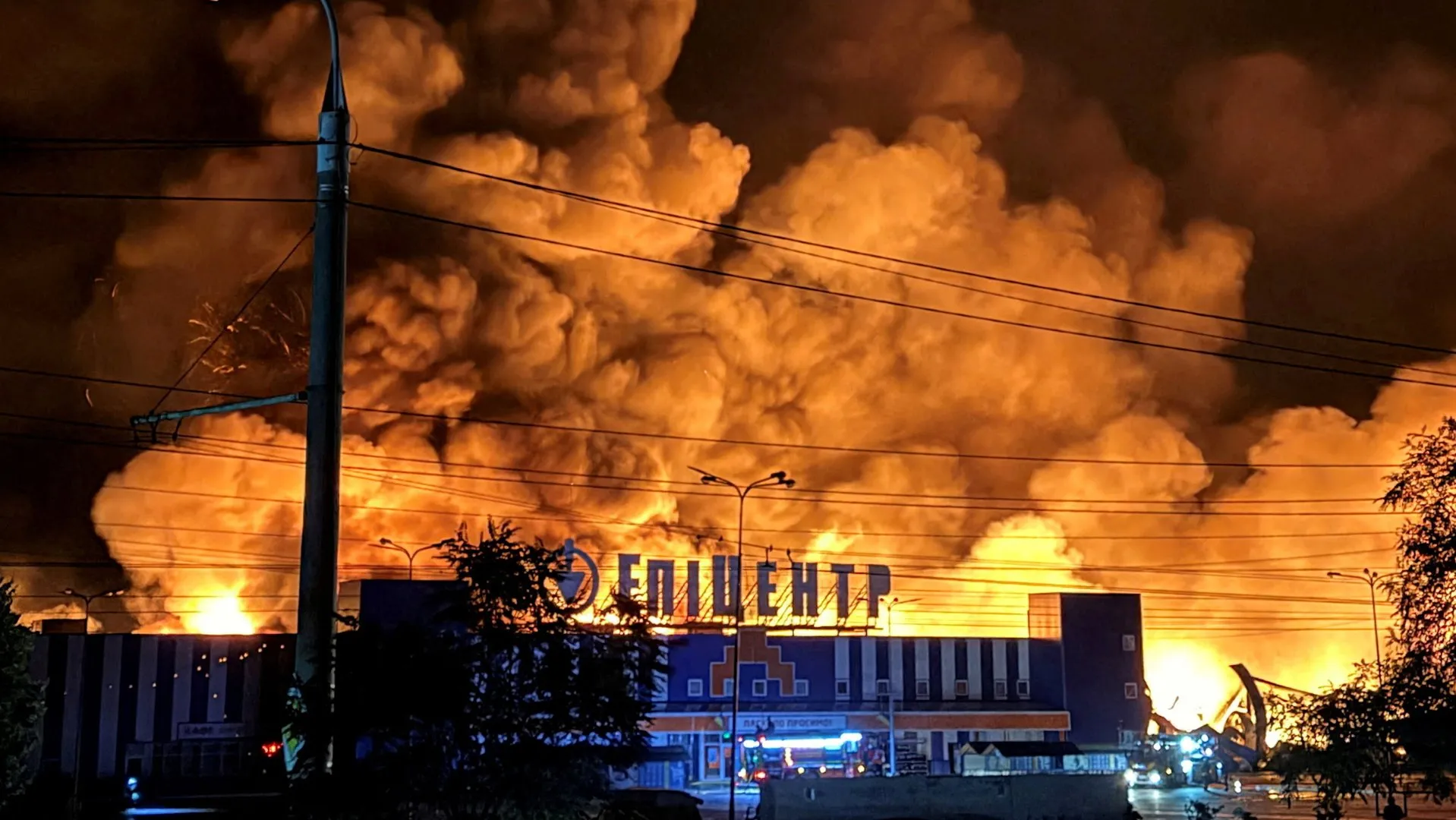
A fire engulfed a shopping centre in Ukraine’s Sumy after Russian drone strikes hit the building. Ukrainian authorities say emergency crews were forced to suspend their response because drones remained overhead, raising fears of further attacks.
Andy Burnham has officially begun his tenure as Britain’s prime minister with something few of his recent predecessors enjoyed: breathing room. After replacing Keir Starmer as Labour leader and becoming the United Kingdom’s seventh prime minister in just a decade, Burnham inherits an economy burdened by weak growth, strained public services and persistent cost-of-living pressures. Yet, unlike the turbulent starts experienced by previous leaders, financial markets have greeted his arrival with surprising calm.
That early confidence may prove one of Burnham’s greatest assets—or one of his greatest tests.
A Different Kind of Labour Leader
Burnham enters Downing Street with a political identity distinct from his predecessor. During his time as Mayor of Greater Manchester, he cultivated an image as a champion of regional development and public investment, earning the nickname “King of the North.”
Unlike Starmer’s cautious approach to fiscal management, Burnham has promised to “rewire Britain” through greater devolution, investment in public services, re-industrialisation and stronger local government.
Stay ahead of the geopolitical week.
MD Briefing delivers expert analysis across five global fronts — the Indo-Pacific, energy, geoeconomics, European security, and the Middle East — every Monday morning. Free.
Such promises normally raise concerns among investors wary of higher public spending. Yet markets have remained remarkably composed.
British government bond yields have stayed close to 5%, while sterling has strengthened against the euro since Burnham emerged as Labour’s preferred successor. Investors appear reassured by his commitment to maintaining Britain’s existing fiscal rules rather than pursuing aggressive borrowing.
Why Markets Are Staying Calm
Several factors explain why investors have not reacted negatively.
First, Burnham has avoided announcing sweeping fiscal changes during his first days in office. Instead, he has focused on politically popular issues such as healthcare, homelessness, defence and regional economic development.
Second, his appointment of former Defence Secretary John Healey as Chancellor suggests continuity rather than confrontation with financial markets.
More importantly, many economists believe economic policy will remain closely directed by Downing Street rather than being driven independently by the Treasury, reducing uncertainty over Britain’s fiscal direction.
This perception matters because markets today are extremely sensitive to fiscal credibility.
The Shadow of Liz Truss
Any discussion of British economic policy inevitably returns to September 2022.
Former Prime Minister Liz Truss’s unfunded tax-cutting budget triggered one of the worst government bond sell-offs in modern British history. Pension funds came under severe pressure, forcing the Bank of England to intervene to stabilise markets.
That episode fundamentally changed how investors assess UK fiscal policy.
The International Monetary Fund recently concluded that the crisis permanently increased the risk premium investors demand for holding British government debt. In other words, markets now react far more aggressively to any sign of fiscal irresponsibility.
Burnham understands this reality.
His repeated commitment to existing borrowing rules appears designed to reassure investors that Labour will not repeat past mistakes.
The Economic Tailwinds
Burnham also benefits from several favourable developments that could buy his government valuable time.
Inflation has moderated compared with previous years, reducing immediate pressure on the Bank of England to tighten monetary policy further.
Energy prices have also eased relative to their crisis peaks, while upcoming regulatory adjustments may further reduce household energy costs.
Another important advantage comes from the fiscal restraint maintained under former Chancellor Rachel Reeves.
Her adherence to strict borrowing limits has substantially reduced planned government debt issuance this year, giving Burnham more flexibility to adjust spending priorities without immediately alarming financial markets.
In effect, Burnham inherits a stronger fiscal starting position than many expected.
The Difficult Choices Ahead
Those advantages, however, are unlikely to last indefinitely.
Britain still faces sluggish productivity, weak investment, deteriorating public infrastructure and mounting demands for higher defence spending.
Burnham has also hinted at broader reforms that could eventually test investor confidence, including:
Greater public control over utilities.
Property tax reform.
Increased defence spending.
Adjustments to frozen income tax thresholds.
Possible changes to National Insurance contributions.
Expanded regional investment programmes.
Each proposal carries fiscal implications.
Delivering meaningful improvements in living standards while maintaining market confidence will require careful balancing.
The Reform UK Factor
Politics may ultimately shape economic policy more than economics itself.
Although Labour has changed leaders, Nigel Farage’s Reform UK continues to perform strongly in opinion polls.
If Burnham adopts an overly cautious approach that fails to improve public services or living standards, Reform could continue gaining political momentum.
That creates a dilemma.
Markets generally favour fiscal discipline, but voters increasingly demand visible economic change.
Burnham must therefore find a middle ground: ambitious enough to convince voters Labour can improve daily life, yet disciplined enough to convince investors Britain’s finances remain under control.
Why It Matters
Burnham’s premiership begins at a pivotal moment for Britain.
Economic growth remains weak, public confidence in government is fragile, and geopolitical uncertainty—from rising defence commitments to global trade disruptions—continues to weigh on the outlook.
Unlike many of his predecessors, Burnham enjoys a brief window of goodwill from financial markets. Whether he can convert that goodwill into lasting economic reform without unsettling investors may determine not only Labour’s electoral fortunes but also Britain’s broader economic trajectory.
Analysis
The first major test will come with Burnham’s autumn budget.
Investors will closely examine whether his government maintains fiscal discipline while introducing the reforms needed to revive growth and address Britain’s long-standing structural problems.
Markets will also monitor whether Labour can improve economic conditions quickly enough to halt the rise of Reform UK. If opinion polls continue shifting toward Nigel Farage’s party, investors may begin pricing in greater political uncertainty, reviving memories of the volatility seen during the Liz Truss government.
For now, Burnham has been handed two valuable gifts: investor patience and fiscal breathing space. Whether those advantages become the foundation of a successful premiership or simply a temporary reprieve will depend on the difficult choices his government makes over the coming months.
Weekly insights and analysis on the latest developments in military technology, strategy, and foreign policy.
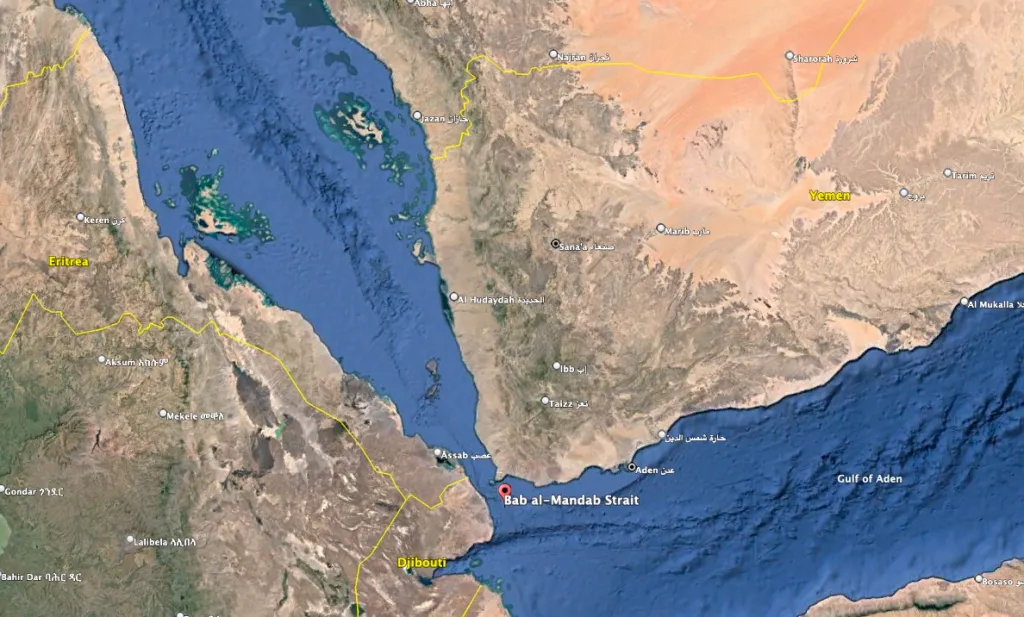
As renewed hostilities between Iran and the U.S. and its allies enter a 10th day, the Houthi rebels of Yemen say they are imposing an embargo on Saudi oil shipments passing through the Bab el-Mandeb (BAM) Strait. The move threatens to add further pressure on oil exports from the Middle East, already drastically affected by the Iranian closure of the Strait of Hormuz and the resumption of the U.S. blockade on Iranian ports. Saudi Arabia has diverted millions of barrels of oil per day through pipelines to its Yanbu port on the Red Sea in an effort to minimize the energy shortages due to the hostilities in the Persian Gulf. This also raises the specter of the U.S. having to get as involved as it did during the previous Houthi campaign against shipping that ended last September, which could pull resources away from Iranian-focused operations.
BREAKING: Houthis of Yemen announce a a “maritime embargo” against Saudi Arabia, “effective immediately.”
Saudi Arabia has until now exported ~4.5m b/d from Yanbu in the Red Sea, most of it heading South throughout the Bab al-Mandab Strait between Yemen and Djibouti-Eritrea pic.twitter.com/c96Apzh9As
On Monday, Kuwait said it came under Iranian fire again.
“Kuwaiti air defenses are currently engaging hostile missile and drone attacks following the heinous Iranian aggression,” the Kuwaiti Defense Ministry stated on X. “The General Staff of the Army notes that any sounds of explosions heard are a result of air defense systems intercepting hostile attacks. Everyone is urged to adhere to the security and safety instructions issued by the relevant authorities.”
Hours earlier, Bahrain said it too had come under a new wave of Iranian attacks.
“The General Command of the Bahrain Defense Force (BDF) announces that Iran is continuing its systematic hostility approach through its sinister attacks targeting civilians in the Kingdom of Bahrain,” BDF posted on X. “The General Command clarifies that, with strong will and high combat readiness, the air defense systems attacked, intercepted and destroyed a number of treacherous Iranian air strikes today, Monday, July 20, 2026.”
The extent of the damage in either Kuwait or Bahrain is unclear at the moment. These most recent attacks came after U.S. Central Command on Sunday night said it wrapped up a ninth straight day of strikes on Iranian assets, targeting “military command centers, air defense and coastal surveillance sites, maritime capabilities, missile and drone launch sites, and communications networks to further diminish Iran’s ability to attack commercial vessels and civilian mariners transiting the Strait of Hormuz,” the command stated on X.
Amid this kinetic activity, as we noted earlier in this story, the Iranian-backed Houthis say they will no longer permit Saudi Arabian ships passage through from the Red Sea into the Bab el-Mandeb Strait.
“The Yemeni Armed Forces declare a maritime embargo against the criminal Saudi enemy, based on the equation of an ‘eye for an eye,’ effective immediately upon the issuance of this statement,” the Houthis stated on Monday, according to the official Houthi SABA media outlet. The move follows increased tensions between the Houthis and Saudi Arabia as well as a request by Iran “to stand ready to close the Red Sea oil route if the United States strikes Iranian power infrastructure,” Reuters reported last week. “The idea has been discussed within the Islamic Republic’s leadership, and the message has been conveyed to Iran’s Houthi allies.”
⚡️BREAKING: Yemen’s Houthis have announced a Naval Blockade on Saudi Arabia from the Red Sea
This move essentially Cuts OFF Saudi oil exports through the Bab al-Mandeb Strait pic.twitter.com/gqV8E5hfq1
Houthi forces on Monday reportedly began issuing warnings on open maritime frequencies near Yemen that the BAM is closed to Saudi shipping and its vessels are subject to attack.
Houthi forces are reportedly issuing warnings on open maritime frequencies near Yemen that the Bab al-Mandab Strait is closed to Saudi shipping. pic.twitter.com/MD0KhmTmJ5
A Houthi shut down of the Bab el-Mandeb (BAM) Strait, a narrow stretch of water between Yemen and Djibouti, would choke off the flow of oil exports from Saudi Arabia, exacerbating the above-mentioned impingement on the flow of oil from the closed Strait of Hormuz.
Having both straits closed at once is something of a ‘sum of all fears’ scenario for the global energy marketplace.
“The full closure of the BAM would cut global oil supply by 7% as it would leave most Saudi oil exports unable to leave the region,” Reuters noted on Monday. “The disruption would add to the massive cut to global oil flows from the war in the Gulf, which has already reduced shipments by 10% of global supply.”
You can read more about the effects of both straits being closed at once in our story about that here.
The Bab el-Mandeb Strait is a strategic chokepoint where the Houthis declared they have imposed an embargo on Saudi shipping. (Google Earth) The Bab al-Mandab Strait between Yemen and Djibouti has become a dangerous chokepoint of Houthi attacks. (Google Earth image)
Beyond affecting the flow of oil, a Houthi blockade on the BAM threatens to open a new front in this conflict.
The Houthis carried out a campaign against shipping in November 2023 in solidarity with Palestinians over the latest war between Israel and Gaza. However, while it was ostensibly aimed at only Israeli connected ships, numerous commercial vessels with no clear Israeli ties were attacked as were several U.S. and allied warships. The campaign stretched into the summer of 2025, forcing some vessels to avoid the Suez Canal for a far longer route around Africa, boosting shipping costs by nearly $200 billion at the time.
The Houthi attacks also forced the U.S. and allies to deploy many warships, including the Eisenhower and Truman Carrier Strike Groups (CSG) to both defend against Houthi attacks and strike targets in Yemen. These operations resulted in a large expenditure of air defense and strike munitions.
You can see video of some of those encounters below.
WATCH: CENTCOM releases footage as US HAMMERS Iran
The possibility exists that a new wave of Houthi attacks — especially if non-Saudi ships are targeted — could drag in U.S. forces already in heavy use in the Persian Gulf region battling the Iranians. This sets up a major showdown as Saudi oil is a lifeline to Asian supplies hobbled by conflict in the Persian Gulf. We reached out to CENTCOM for comment and will update this story with any pertinent details shared.
Earlier on Monday, the head of the European-led task force providing maritime security in the Red Sea region told us the Houthis remain a threat to navigation despite not having attacked any merchant vessels since September 2025.
“The security situation in the Bab el-Mandeb remains fragile and is highly sensitive to regional escalation,” Rear Admiral Vasileios Gryparis, Commander of EUNAVFOR ASPIDES, told TWZ. “On the rhetorical level, the Houthis’ leadership reiterated several times their alignment with the broader Axis of Resistance.”
Gryparis’s comments, in response to a query from last week about Iran’s outreach to the Houthis, came before the Yemeni group’s embargo declaration.
“From an operational standpoint, we assess that the Houthis pose a threat and are capable of rapidly escalating,” the ASPIDES commander told us. “We maintain a frequent presence at sea, monitor the situation, and adjust our actions when needed. In the event of a resumption of Houthi attacks on merchant vessels, which remains a possibility, we are present and ready to implement our mandate, within our means and capabilities. ASPIDES remains ready, within its defensive mandate, to adapt to evolving operational requirements.”
A French destroyer operating under EUNAVFOR ASPIDES provided support to a commercial vessel transiting the Red Sea region. (ASPIDES)
Being drawn into defending against a new Houthi campaign on shipping in the Red Sea region would exacerbate the strain on U.S. forces already under tremendous pressure from Iran. In addition to defending against ongoing barrages, the U.S. has committed about 20 U.S. warships, along with hundreds of aircraft dispersed across various bases, vessels, and forward arming and refueling points in the Middle East, to maintaining the newly reimposed blockade on Iranian ports. Moving these assets to another prologned shooting match in the Red Sea would degrade those capabilities and the ability to support a war effort should it fully erupt. It’s a capacity issue.
Expanding the fight against Iran is already in discussion by the Trump administration.
“The U.S. is planning for a wider war,” a U.S. official familiar with internal administration discussions told The Washington Post.
But the official cautioned that “the expansion of U.S. operations will be limited by dwindling stockpiles of air defense and long-range munitions and constraints on the ability to surge more troops and aircraft into the area because of battle damage,” the newspaper continued.
“We do not have enough to safely sustain operations, and I don’t think the White House is aware of that,” the Post said the official added.
One notable detail from The Washington Post’s reporting: even as the Pentagon prepares for the possibility of a broader conflict with Iran, one U.S. official warned that the campaign could be constrained by dwindling stocks of air defense interceptors and long-range munitions,… https://t.co/Xo9A6yNFnppic.twitter.com/dKEN3IGNUr
All this comes as there are increasing signs of damage at U.S. facilities in the Middle East from Iranian barrages. Though largely spared in the initial phases of Epic Fury due to robust air defenses, the airfield at Muwaffaq Salti Air Base in Jordan has taken the brunt of recent attacks, while several other installations have been hit as well.
The air base has long been a major regional hub for U.S. operations, and is being very actively utilized in the current conflict. It hosts the greatest concentration of U.S. tactical aircraft in the region, and thus is an extremely important target, where, as we pointed out, even one ballistic missile landing on an apron could destroy multiple prized aircraft and take the lives of U.S. service members or cause injuries.
Satellite imagery has emerged on social media purporting to show the extent of the damage at MSAB. The following shows what is claimed to be before and after views of strikes on aircraft hangars and containerized housing units. The imagery is provided by Iran and, because U.S. satellite firms do not collect over American facilities, we cannot independently confirm what is being depicted.
Before-and-after imagery shows at least two dozen containerized living units housing U.S. troops completely destroyed by Iranian strikes at 31°49′57″N, 36°47′47″E.
Two U.S. service members were killed at this site, while a third remains missing. pic.twitter.com/sqPOxhGTLr
Beyond damage, the number of troops killed and injured in Iranian attacks is rising. On Monday, the Pentagon identified two soldiers killed in action.
“1st Lt. Tyler James Feehan, 25, of Ewa Beach, Hawaii, was killed in action on July 18, 2026, and Pvt. Isabella Gonzales, 19, of Carrollton, Texas, was killed in action on July 17, 2026, during an enemy attack on July 17, 2026, at Muwaffaq Salti Air Base, Jordan,” the Pentagon said in a statement. “The incident is under investigation.”
Both soldiers worked for air defense units. Feehan was assigned to 2nd Battalion, 55th Air Defense Artillery Regiment, 32nd Army Air Missile Defense Command, Fort Bragg, North Carolina. Gonzales was assigned to 1st Battalion, 57th Air Defense Artillery Regiment, 52nd Air Defense Artillery Brigade, 10th Army Air Missile Defense Command, Ansbach, Germany.
BREAKING: The Pentagon has identified the soldiers killed in action from Iranian attacks in Jordan as 19-year-old Pvt. Isabella Gonzales and 25-year-old 1st Lt. Tyler James Feehan.
1st Lt. Feehan was assigned to 2nd Battalion, 55th Air Defense Artillery Regiment, 32nd Army Air… pic.twitter.com/3PFpnMcOVZ
Today’s identifications came after CENTCOM on Saturday reported that two U.S. service members in Jordan were killed in action on July 17. Additionally, the command said one service member was currently missing, but later said unidentified remains were found.
CENTCOM also reported on Sunday that “a U.S. service member in northern Iraq was killed in action July 18 during a controlled detonation of unexploded ordnance from a downed Iranian one-way attack drone. A second service member was wounded and continues to receive medical treatment for a minor injury.”
We have asked CENTCOM and the Army to confirm that Feehan was the soldier killed in Iraq during the controlled detonation or if he was killed in another incident.
It should be noted that in announcing the identities of Feehan and Gonzales, the Pentagon said they died in support of Operation Inherent Resolve (OIR), which is the fight against ISIS in Iraq and Syria. We asked the Pentagon for clarity and they deferred us to CENTCOM, which has yet to respond.
“In the week leading up to the Iranian attack on Friday that killed two U.S. soldiers and left one service member missing in Jordan, Iran carried out three other strikes against U.S. forces in the country,” the paper explained. “Those attacks injured dozens of U.S. service members and damaged several helicopters, according to several U.S. officials, who spoke on the condition of anonymity to discuss operational matters. But the Pentagon did not disclose the earlier strikes, nor the casualties and damage they inflicted.”
The episode “is the latest example during the Iran conflict of the tension between what the Pentagon says is the need for operational security and the government’s obligation to inform the public about the conduct of the war,” the Times proffered.
The Pentagon pushed back on that claim, rejecting it as “baseless and malicious.”
The Department of War rejects these baseless and malicious accusations of hiding injury numbers as outright lies from partisan hacks at the New York Times who are desperate to smear America’s military and its leadership.
Still, despite the increasing violence, both the U.S. and Iran have suggested that further diplomacy to end the fighting is possible. This is even as both sides declared the ceasefire over and Iranians last week said they would no longer negotiate a Memorandum of Understanding on a possible peace deal.
“You can’t have an MOU that’s alive if they’re violating the terms,” U.S. Secretary of State Marco Rubio told reporters. “The U.S. always remains open to a diplomatic solution. We’ve tried multiple times with Iran and we’ll continue to try… but their behavior is what we’re responding to — and their behavior is they’re launching missiles and drones against ships.”
.@SecRubio: “You can’t have an MOU that’s alive if they’re violating the terms… The U.S. always remains open to a diplomatic solution. We’ve tried multiple times with Iran and we’ll continue to try… but their behavior is what we’re responding to — and their behavior is… https://t.co/SIYaJOeAHKpic.twitter.com/qv4THvFqRg
— Rapid Response 47 (@RapidResponse47) July 20, 2026
“Proposals were put forward by the mediators, we were informed of them, and we received them,” Iran’s Foreign Ministry spokesman Esmail Baghaei said during a press conference. “However, let me not go into details right now. The gist of the matter is that the diplomatic mission has been actively working these days, and some ideas from a number of mediators have reached us—yes, this is confirmed.”
FM Spox: Peace is not a luxury item stored away in the vault of int’l relations, waiting to be handed over. Rather, it is something that must be fought for. Peace comes at an exceptionally high price particularly in our region, where war is being normalized and forced upon us. pic.twitter.com/Ulpt2hPfl4
Still, Trump threatened to continue striking Iran should more U.S. forces be killed.
“Every time Iran kills an American Soldier they will pay for that killing many times over!” the president proclaimed on Truth Social. “This directive has been passed on to Secretary of War, Pete Hegseth, Chairman of the Joint Chiefs of Staff, Daniel Caine, and every Leader in the Military.”
There are no new peace talks scheduled and it remains unclear if they will be. Meanwhile, the new Houthi blockade could deeply complicate an already highly-precarious situation in the Middle East.
UPDATE: 4:50 PM EDT –
CENTCOM announced the start of the 10th consecutive day of strikes on Iranian targets.
“Today at 4 p.m. ET, U.S. forces began a new round of strikes against Iran at the Commander in Chief’s direction,” the command stated on X. “The strikes are designed to further degrade Iranian military capabilities used to attack commercial shipping in the Strait of Hormuz.”
Today at 4 p.m. ET, U.S. forces began a new round of strikes against Iran at the Commander in Chief’s direction. The strikes are designed to further degrade Iranian military capabilities used to attack commercial shipping in the Strait of Hormuz.
“U.S. forces struck Iranian military command centers, maritime capabilities, missile and drone launch sites, and air defense systems to degrade Iran’s ability to continue attacking commercial vessels flowing through the Strait of Hormuz,” the command stated on X. “Commercial vessel transits through the vital international maritime corridor continue. Since early May, CENTCOM forces have helped facilitate the transit of approximately 900 commercial vessels and 450 million barrels of crude oil.”
U.S. Central Command (CENTCOM) announced it concluded another round of strikes against Iran at 9:00 p.m. ET on July 20, targeting military command centers, maritime capabilities, missile and drone launch sites, and air defense systems for the tenth consecutive night intending to… https://t.co/e6VYmo3vt6pic.twitter.com/A6b0lMqn4B
Weekly insights and analysis on the latest developments in military technology, strategy, and foreign policy.
X-Bow Systems, a company that made its name making solid rocket motors and small space-launch vehicles, has unveiled a new low-cost drone interceptor, named Buckler. The interceptor promises high-speed and a unit cost of less than $100,000, a price point that has only been approached by drone-like systems, not modern supersonic missiles.
The Buckler — named after a small shield of the Medieval and Renaissance eras — is designed to defeat Group 3 drones. As we have explained before, under the U.S. military categorization system, Group 3 is a very broad middle tier of drones that covers designs that weigh anywhere from 56 to 1,320 pounds and can fly at up to 18,000 feet, at speeds of 250 knots or less.
Iran’s now-infamous Shahed-136 long-range one-way attack drone, variants and derivatives of which are now in service in Russia and with several Iranian-backed proxies, falls into the Group 3 category.
A view inside a Russian factory producing versions of the Shahed-136 kamikaze drone. Russian state media
While optimized for bringing down drones, the Buckler can also engage other aerial threats, including subsonic cruise missiles, under certain conditions. This is especially relevant as newer Shahed-derived designs, and many other long-range one-way attack munitions, increasingly blur the line between drones and low-end cruise missiles through the adoption of jet propulsion and higher-altitude flight profiles. Then there is the emerging group of low-cost cruise missiles being adopted in the United States and potential adversaries, as well as existing, more advanced types. Low-flying aircraft and helicopters would also likely be on the menu for this missile, even as a secondary capability.
The high speed of the missile also means that a single Buckler battery can engage targets more rapidly and respond faster over a given range. It also makes it possible for follow-up shots to be taken if an effector misses within a given timeframe.
The Buckler is one of the growing number of responses to the increasing threat of drone-and-missile barrages, which are exposing the limits of legacy air defense models. In conflicts in the Middle East and Ukraine, most notably, costly surface-to-air missile effectors are routinely expended, in significant quantities, against far cheaper incoming threats.
“This is our answer to the call from the U.S. and its allies: affordable capability at scale,” X-Bow Systems’ CEO Jason Hundley toldAxios.
“You can’t win a war of attrition trading million-dollar interceptors against thousand-dollar threats,” Hundley added.
The company is relying upon its own solid-rocket motor and propellant, allied with an airframe that’s also made in-house, which it says will bring down costs.
X-Bow Systems recently notched a successful flight test for the Buckler, the company says, demonstrating its propulsion system and flight characteristics after completing motor static-fire and igniter testing.
According to Axios, the Pentagon has also requested a briefing on the interceptor.
X-Bow is entering one of the fastest-growing segments of the defense industry. The company is already well established as a producer of solid rocket motors and, last year, secured a $105 million investment from Lockheed Martin to expand production and provide propulsion systems and related services.
The startup will now be hoping that the Buckler’s eye-catching price point of less than $100,000 per copy will set it apart among drone interceptors.
By way of comparison, the combat-proven RaytheonCoyote, in its Block 2 configuration, also primarily intended for the counter-drone mission, has a unit price of around $100,000, based on past reports. AeroVironment’s Freedom Eagle-1 (FE-1), which the U.S. Army picked last year to provide an additional layer of defense against longer-range one-way attack drones and other similarly sized uncrewed aerial systems (UAS), has a target unit cost of between $150,000 and $200,000. These are also notably slower and less responsive systems than the Buckler.
Freedom Eagle (FE-1) Next Gen C-UAS Missile
Toward the higher end of the scale, the cost of a Stinger short-range surface-to-air missile has historically been put at between $100,000 and $120,000, but reports in recent years have said that current-generation versions, including ones optimized for use against drones, can run up to $400,000.
As for the kinds of threats that these effectors are intended to destroy, Shahed-type drones are typically understood to have a unit cost range measured in tens of thousands of dollars.
The Buckler is also intended to bring benefits in terms of speed and scalability of production. This should ensure that production facilities are able to ramp up quickly and, in response to demand, be able to increase the output accordingly. Applying the vertical integration approach, the company says it can address the “industrial-base bottleneck defense leaders cite as the top constraint on scaling interceptors.”
As demand for advanced missile propulsion accelerates, traditional production can’t keep up. Discover how X-Bow is delivering scalable, rapid solutions for urgent national security needs. #TechThisOut with @waltmacpic.twitter.com/nzSbikCz7X
Whether Buckler can deliver on its promised combination of performance, affordability, and production scale remains to be seen. But with militaries around the world urgently seeking cheaper ways to counter drones and cruise missiles that are appearing in greater numbers, X-Bow is entering the market at a particularly opportune moment.
Weekly insights and analysis on the latest developments in military technology, strategy, and foreign policy.
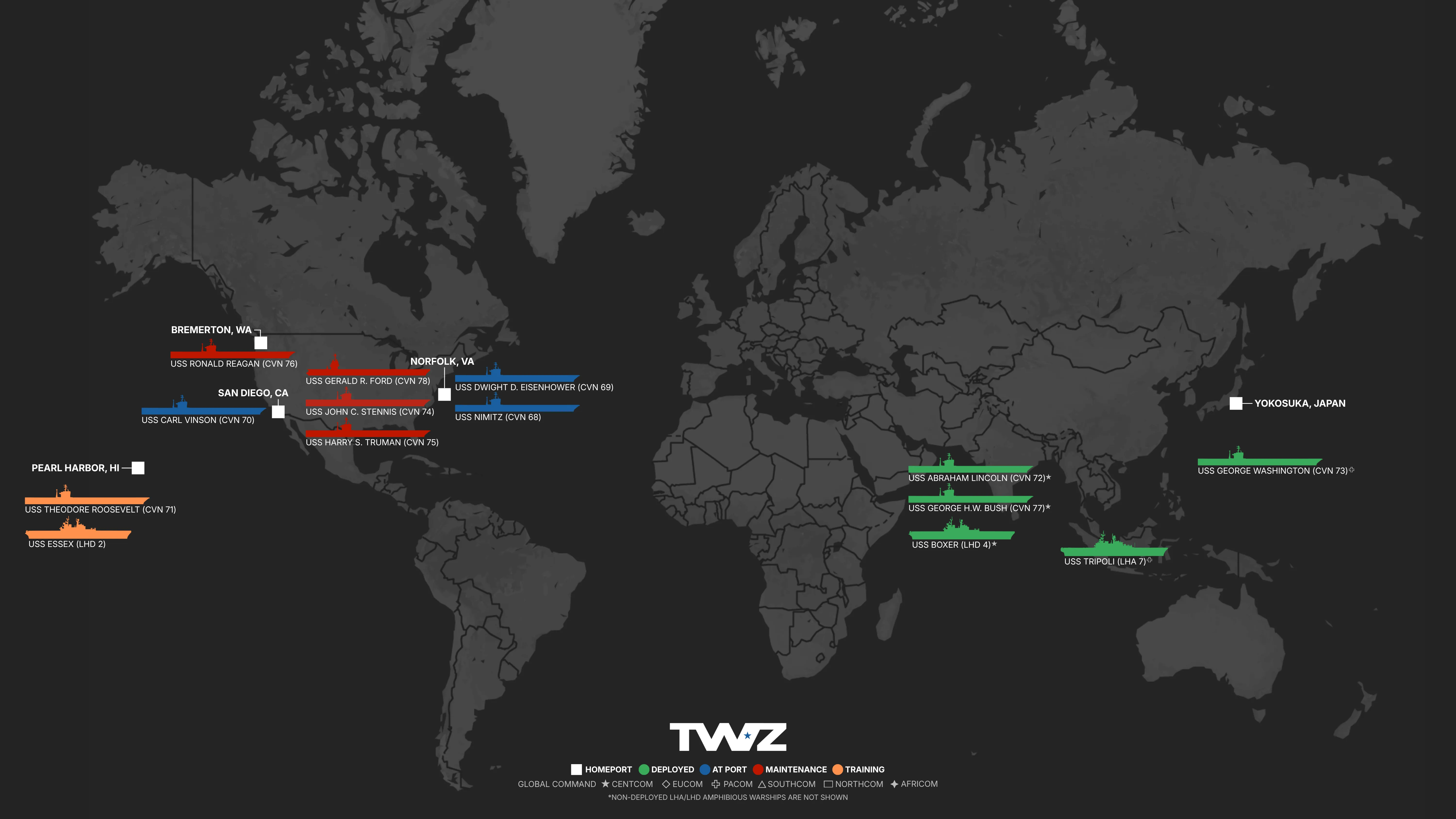
Here’s TWZ’s weekly carrier tracker monitoring America’s flattop fleet, including deployed Carrier Strike Groups (CSG) and Amphibious Ready Groups (ARG), using publicly available open-source information. Check out last week’s report here.
U.S. Central Command (CENTCOM) announced the end of a weekend wave of air strikes yesterday, the ninth consecutive night of precision strikes “further degrading Iranian military capabilities,” and the beginning of a new, tenth round today. As the blockade approaches the one-week mark, CENTCOM forces have redirected seven commercial vessels and disabled one kinetically, firing AGM-114 Hellfire missiles into the smokestack of an unladen oil tanker heading toward Kharg Island, since reinstating the blockade on July 14.
U.S. forces enforce naval blockade measures against Iran, July 15, by disabling an unladen oil tanker attempting to sail toward an Iranian port. U.S. Central Command
Over 20 U.S. Navy warships are operating in the Arabian Sea and broader Indian Ocean, which we covered extensively last week, and naval force posture has not changed since. Two CSGs, led by USS Abraham Lincoln and USS George H.W. Bush, plus an ARG, centered on USS Boxer, are the primary naval assets supporting Blockade 2.0 and the renewed strike campaign, alongside some 14 guided-missile destroyers and a mix of other surface ships. The video below released by CENTCOM shows F/A-18 Super Hornets armed with AIM-9X, GBU-31, and GBU-54 launching during the campaign.
U.S. forces launching aircraft and precision munitions against Iranian military targets. U.S. Central Command
Moving east, USS George Washington is operating in the Western Pacific. The flattop was spotted conducting a fueling-at-sea with USNS Earl Warren and a replenishment-at-sea with USNS Charles Drewlast week in the Philippine Sea. 1st Lt. Arren Halfacre, serving aboard Washington, said the complex operation with Warren, which involved three fuel lines simultaneously, was a “rarely done evolution” that included roughly 150 Sailors and Merchant Mariners.
USS George Washington (CVN 73) during a fueling-at-sea evolution in the Philippine Sea. U.S. Navy photo by Mass Communication Specialist 2nd Class Tyler Crowley Petty Officer 2nd Class Tyler Crowley
Also in the Pacific, USS Theodore Roosevelt is well into the sea phase of exercise Rim of the Pacific (RIMPAC) 2026 and underway in the Hawaiian Islands Operating Area. RIMPAC 2026 is the world’s largest international maritime exercise and the 30th iteration in a series that started in the early 1970s. Participating units have been operating over the past week south of Oahu, to the west of the Big Island, with AIS transponders broadcasting publicly. Roosevelt welcomed the acting Secretary of the Navy, Hung Cao, who observed flight operations, met with senior brass, and took photos with the crew on July 18.
USS Theodore Roosevelt (CVN 71) during Exercise Rim of the Pacific (RIMPAC). U.S. Navy photo by Seaman Apprentice Tyler Harstad
Back in the continental United States, USS Nimitz is at Naval Station Norfolk, her final homeport before a deactivation that was delayed until next year, moored at Pier 14N. A couple of piers down, USS Dwight D. Eisenhower is berthed at Pier 11S. And, further south along the Elizabeth River, USS Gerald R. Ford moved to Pier 5N at Norfolk Naval Shipyard in advance of her first Planned Incremental Availability. On the west coast, USS Carl Vinson, the only carrier currently in San Diego, moored at Kilo Pier on July 17 after a weeklong underway completing flight deck certifications and carrier qualifications with Carrier Air Wing (CVW) 2.
Nimitz-class aircraft carrier USS Nimitz (CVN 68) arrives to Naval Station Norfolk, July 9, 2026. U.S. Navy photo by Mass Communication Specialist 2nd Class Oscar Pichardo
Overall, three U.S. carriers are deployed, three are training or in port in various states of readiness, four are in maintenance, and one is being used primarily for training. Two amphibious ready groups are deployed, four are training or in port, and three are in maintenance.
Note: Positions are general approximations. Non-deployed LHA/LHD amphibious warships are not shown.
Contact the author: ian.ellis-jones@teamrecurrent.io
Argentina’s players were welcomed home by fans lining the streets as the team travelled from the airport to the Argentine Football Association headquarters. Lionel Messi was absent, and although the squad reportedly were not in the mood to celebrate, supporters still turned out in force.
Southern Lebanon – Dozens of displaced residents have begun to return to villages in southern Lebanon, as Israel, Lebanon, and the United States announced on Monday that the so-called “pilot zone” project had begun.
The pilot zone plan is part of a framework agreement between Lebanon and Israel, signed in Washington last month. It will see Israel withdraw from a small number of areas in southern Lebanon, even as it remains in others it has invaded since escalating its war on the country in March, killing more than 4,300 people.
Recommended Stories
list of 3 itemsend of list
Israel has been fighting the Lebanese group Hezbollah, which it insists must be disarmed before a full Israeli withdrawal.
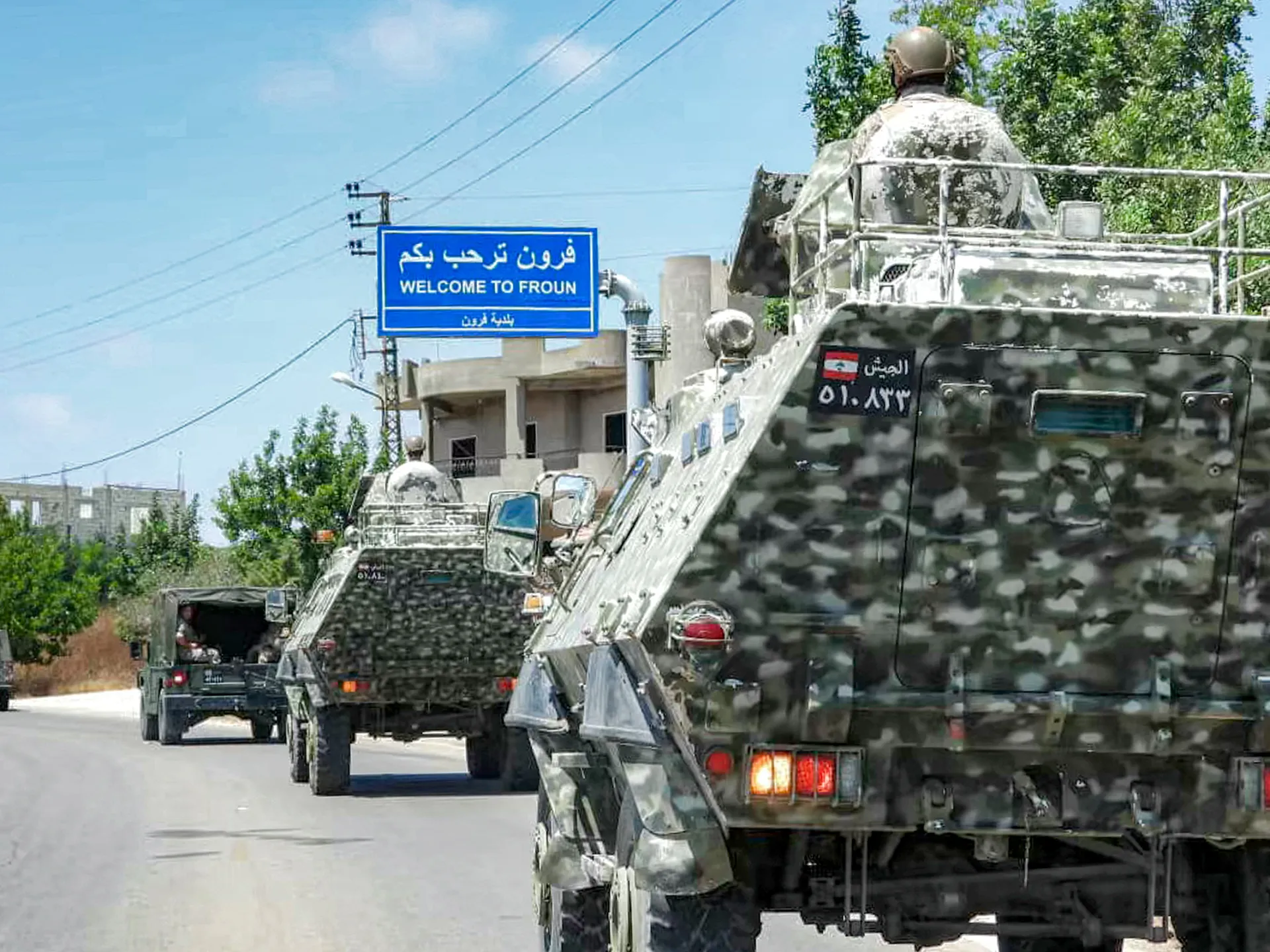
Al Jazeera spoke to people in Froun and Ghandouriyeh, neighbouring villages in southern Lebanon to which residents began returning on Monday after Israeli bombardment forced them to flee. The US said Froun was one of three villages that were part of the first phase of the pilot zone plan, while Ghandouriyeh is believed to be in the second phase.
However, some locals have questioned the villages’ inclusion in the plan, saying they were never occupied by Israeli forces. To them, the inclusion of their villages is evidence that Israel is in fact not giving anything up despite the framework agreement, and is instead able to remain in the areas it has occupied.
Lebanese security sources back up that narrative, telling Al Jazeera that the two villages had not been occupied by Israeli forces.
Perched on hills overlooking several Israeli-occupied towns in the Nabatieh and Marjayoun districts, the two villages face the town of Zawtar el-Gharbiya, which is also part of the plan’s first phase.
The road connecting Ghandouriyeh and Froun is fraught with danger: The stretches overlooking the Hujeir Valley continuously come under Israeli fire, and occupying Israeli forces stationed in Odaisseh al-Qusayr, Qantara, Alma ash-Shaab and elsewhere can monitor anyone passing through.
Still, many families have not waited for the outcome of the framework agreement and have begun gradually returning. They include the family of Abu Ali Miqdad, who owns heavy machinery that allowed them to start clearing the rubble of a building they own – containing residential apartments and storage warehouses at the entrance to Froun – in an effort to salvage whatever materials remain.
Abu Ali founded the family business decades ago, before his sons and grandsons joined him. After hours of work, they managed to pull tyres, oil drums and spare parts from the debris.
The grandfather shows little optimism about the current situation, but says he has grown weary of constant displacement. Watching his grandchildren haul an oil drum from the rubble, he says he will keep “clearing the rubble and rebuilding, even under bombardment”.
He says that the presence of the Lebanese army and UN peacekeeping patrols brings him some comfort despite the circumstances.
Anxious
Across from the demolished house, one home did survive the destruction. On its doorstep sits a woman in her 70s, dressed in traditional southern Lebanese attire, with her grandson beside her wearing a Spain national team football jersey.
Spanish troops had been patrolling the area opposite Froun as part of the United Nations peacekeeping force (UNIFIL) deployed south of the Litani River, though its mission is set to end by year’s end under a UN Security Council resolution.
Despite the destruction around her, Sumaya Haidar says she is relieved to be back home, sitting beside her grandson – even though there is no water, electricity or phone service.
Like everyone else in Froun, she is anxious about the town’s fate. Sumaya’s worry also stems from the continued displacement of her children’s families to different towns, leaving them unsettled.
“We put our trust in God,” Sumaya says. “We sit here, we’re not afraid, and we’ll stay. Look at these people – living in schools after losing their homes, and my children are scattered, too.”
State authority
Meanwhile, Lebanese army patrols have been visible for three days in the area of Ghandouriyeh, with soldiers from the Fifth Intervention Regiment standing at the village’s southern entrance.
Ghandouriyeh has suffered even more destruction than Froun: 250 of its 260 homes are fully or partially destroyed, according to municipal council head Mohammed Nader. Along with several council members, he has set up damaged chairs under the shade of a tree for their daily meetings.
Nader, who used to live in Paraguay but returned to serve his small hometown, grows visibly angry when asked whether the village might be included in the second phase of the pilot zones.
Pointing towards the Israeli position just a few kilometres away, he rejects the idea outright, saying Israel wants “to sell us and the state empty walnut shells, calling it a pilot zone, when they never even entered it in the first place”.
The army granted Al Jazeera permission to film its positions in Ghandouriyeh and Froun twice, to affirm its control over the area and its designation as a zone under military oversight. Army patrols were seen repeatedly moving along the line stretching from Kfar Dounine to Froun via Ghandouriyeh, and a checkpoint was observed where service members searched vehicles and checked residents’ identification.
“Extending state authority” is expected to top the agenda when Lebanese President Joseph Aoun meets with US President Donald Trump in Washington, DC, on Tuesday.
For the Lebanese government, its presence in Froun and Ghandouriyeh is evidence of that state authority, even if Hezbollah continues to insist that its weapons are necessary to confront Israel if the Lebanese army is not willing to do so.
The US military says it launched another round of strikes against Iran to “further degrade” its capabilities to attack ships in the Strait of Hormuz.
The strikes – the 10th consecutive night of attacks – come after US President Donald Trump vowed to punish Iran for the deaths of US soldiers.
Trump earlier said Iran had been hit “very hard” the previous night “in honour” of three US soldiers killed recently – two in Jordan and one in Iraq.
In response to the latest wave, Iran saidit struck two oil tankers in the waterway, as well as US military assets in Bahrain and Kuwait, state news agency IRNA reported. President Masoud Pezeshkian said Iran was now fighting a “full-scale war” with the US.
At the same time, Tehran said diplomatic messages were still being exchanged by both sides through intermediaries, despite a collapse of a ceasefire.
US Central Command (Centcom) said on X that the latest strikes had hit Iranian “military command centres, maritime capabilities, missile and drone launch sites, and air defense systems”.
Commercial vessels have continued to pass through the Strait of Hormuz, Centcom said.
Iran said rescue teams were removing the crews from the two oil tankers it had struck while attempting to transit through the vital waterway, according to the state news agency IRNA.
The United Kingdom Maritime Trade Operations agency (UKMTO) said a tanker in the Strait of Hormuz had reported being struck by an unknown projectile, forcing its crew to abandon the vessel and board a lifeboat.
It was not clear whether the tanker reported by UKMTO was among those cited by Iran.
On Tuesday night the Department of Defense confirmed the identities of two of the US soldiers – Pte Isabella Gonzales, 19, from Texas, and Lt Tyler James Feehan, 25, from Hawaii – who were killed in an Iranian strike on the Muwaffaq Salti base in Jordan over the weekend.
Centcom said earlier a third service member also went missing in action after the attack, and unidentified remains were later found in the area.
Elsewhere in the region, Jordan’s military said late on Monday it had shot down three Iranian missiles as sirens sounded across the country warning of incoming fire.
Earlier in the day, Kuwait’s armed forces said they had intercepted Iranian drones.
Bahrain said drones launched by Iran had targeted its air navigation systems – but traffic remained unaffected.
On the US strikes the previous night, Iran’s semi-official Tasnim news agency reported that several cities had been hit including Tabriz, Chabahar, Konarak, Bandar Mahshahr and Bandar Imam Khomeini.
Iranian state media reported that two oil tankers had exploded as the vessels tried to cross the strait.
Iran’s Islamic Revolutionary Guard Corps (IRGC) said the tankers were going through what it called an “unsafe and hazardous southern route” of the strait and “exploded and were brought to a halt”. Centcom disputed the claims.
Authorities detain ferry crew members after drug tests reveal violations in Guyana’s worst marine disaster in decades.
Published On 21 Jul 202621 Jul 2026
Authorities in Guyana say they have recovered 27 bodies from a ferry that capsized off the country’s coast with 179 people on board.
The MV Barima issued a distress call on Saturday night, having overturned while ferrying passengers from the capital, Georgetown, to Port Kaituma in Guyana’s northwest.
Recommended Stories
list of 3 itemsend of list
Officials said on Monday that 69 people had been rescued, while 83 remained missing. Minister of Public Works Juan Edghill described the sinking as the country’s worst marine disaster in decades.
Prime Minister Mark Phillips launched an investigation into potential negligence by the ferry’s crew in the lead-up to the accident.
Officials say that while the MV Barima was initially thought to have been carrying 116 passengers and 17 crew members, 32 people rescued from the disaster were not recorded in the ferry’s manifest, putting the number of potential victims much higher.
Police have also announced that the ferry’s captain and at least one other crew member were taken into custody after testing positive for marijuana.
“We have a zero tolerance for members of the crew drinking or smoking while at work. And for us to have positive tests from the captain, this is serious,” Edghill said.
Passengers had complained for years that officials at state-run ferry terminals were selling seats for cash without recording the true number of passengers in their manifest, which Edghill called “a criminal action”.
President Irfaan Ali visited survivors and their families in hospital.
“It was a deeply emotional experience. I listened to their stories, shared in their pain and anxiety, and assured them that every practical measure would be taken to provide the support and assistance they need,” he said.
In a list of most popular reasons for public holidays, celebrating the birthday of a ruler or the date when a country threw off the shackles of colonial rule are probably the most popular. Not far down the list is commemorating a battle or war that was crucial to the heritage and history of a nation. This is the case with Guam’s Liberation Day which commemorates the Battle of Guam in 1944 which returned the island to U.S. control.
Guam is the southernmost and largest of the Marianas Islands in the Pacific Ocean. It became a U.S. territory in December 1898 after the Spanish-American War. The U.S. sold the other Marianas Islands to Germany.
In December 1941, Japan entered the second world war when it launched a surprise attack on the U.S. Naval base at Pearl Harbour in Hawaii. With the intention to dominate the Pacific theatre, Japan invaded Guam a few days after the Pearl Harbour attack. This first Battle of Gaum lasted two days before the U.S. troops were overwhelmed by the Japanese.
Japan’s early advances in the war began to wane as the U.S. Pacific Fleet retaliated with a major victory at the Battle of Midway coming in June 1942.
It would two long years of hard-fought victories before the U.S. launched its assault to liberate Guam on July 21st 1944. The Second Battle of Guam raged until August 10th, with the Japanese troops fighting to the last man.
We said “last man”, but some Japanese soliders held out in the jungle and fought until December 1944, and famously one of the Japanese soldiers was discovered on the island in January 1972, having escaped the fighting and living in a cave for 28 years.
After the battle, Guam became an important base for the allied operations that would eventually end the war in 1945.
Tariffs apply to Canadian wine, hockey sticks, cement, and other products, sparking fears of escalating trade tensions.
Published On 21 Jul 202621 Jul 2026
US President Donald Trump will impose new 50 percent tariffs on many Canadian goods, claiming “discriminatory treatment” by Ottawa against US alcohol, automobile and dairy products.
The tariffs, ordered by Trump on Monday, will take effect in 30 days and cover a range of items, including wine, hockey sticks, and cement, according to a White House fact sheet.
Recommended Stories
list of 3 itemsend of list
Trump, who saw many of his tariffs struck down by the Supreme Court earlier this year, is using an untested legal provision for the new duties: Section 338 of the Tariff Act of 1930.
The latest duties will not apply to energy, potash, and goods already impacted by sector-specific tariffs, the White House said.
The tariff announcement quickly raised concerns of escalation among some businesses.
While Trump has slapped sweeping duties on US trading partners since returning to the presidency last year, the orders generally exempted goods entering his country under the North American free trade pact.
His latest actions threaten to further strain ties with the second-largest US trade partner and come just days after he threatened Canada with increased tariffs over a wave of wildfire smoke that descended on the US.
The White House, in announcing the new tariffs, said Canada was one of only two countries – along with China – to retaliate against Trump’s tariffs last year.
It also took aim at the fact that most Canadian provinces have stopped buying US alcohol, boycotting the products over Trump’s tariff threats and repeated calls for annexation of Canada as America’s “51st state”.
“Canada has taken US alcohol products off Canadian shelves, given better market access to dairy products from the European Union, and has put a cap on US vehicle exports to Canada from companies reshoring to the United States,” US Trade Representative Jamieson Greer charged in a statement.
The tariff announcement aims to “hold Canada accountable for its retaliation and discrimination”, he added.
Police say a possible political motive is under investigation in the killing of the ex-minister.
Published On 20 Jul 202620 Jul 2026
Prosecutors in the United Kingdom have charged a 28-year-old man with the murder of Ann Widdecombe, a former government minister and member of the far-right Reform UK party.
Joshua Kerry was charged on Monday and is due to appear at Westminster Magistrates Court in London on Tuesday, the Crown Prosecution Service said.
Recommended Stories
list of 3 itemsend of list
Widdecombe, 78, was found dead at her home near Dartmoor National Park in southwest England on July 9, a day after she missed a television interview. Police said she had been deliberately targeted but did not disclose how she died, citing only “serious injuries”.
Kerry, who is from Rotherham in northern England, was arrested on July 11. He was initially held on suspicion of murder until evidence uncovered while he was in custody led to his additional arrest on “terror” charges.
National Counterterrorism Policing head Laurence Taylor said that the exact motive was still being established.
“Given [Widdecombe’s] profile and the targeted nature of the attack, determining the motivation, including any possible political motivation, remains an active avenue of investigation,” Taylor said.
Widdecombe served as a Conservative member of parliament from 1987 until 2010 and was known for her right-wing political stances.
She later joined the Brexit Party, winning a seat in the European Parliament, and moved to Nigel Farage’s Reform UK party after the UK left the European Union.
The incident adds to mounting concerns over political violence in the UK. The past decade has seen the murders of two sitting members of parliament. Labour’s Jo Cox, shot and stabbed in 2016 by a far-right nationalist, and Conservative David Amess, stabbed to death in 2021 by a man inspired by ISIL (ISIS).
A video showing the final moments of Moroccan-born Abderrahim Fakir, who was struggling to breathe while being detained by police in Italy’s Bologna, has sparked protests demanding answers over his death.
Police used batons and tear gas to disperse protesters as tens of thousands of people joined the Cockroach Janta Party’s march on parliament in New Delhi. Protesters have been demanding the resignation of India’s Education Minister Dharmendra Pradhan following exam scandals that have triggered nationwide outrage.