Discover the latest happenings and stay in the know with our up-to-date today news coverage. From breaking stories and current events to trending topics and insightful analysis, we bring you the most relevant and captivating news of the day.
Andy Burnham has said he will review an early prisoner release policy, due to come into force this autumn, following anger that two killers of PC Andrew Harper could be freed early.
From September, thousands of offenders in England and Wales will be eligible to be released earlier under the Sentencing Act. Tens of thousands of inmates have been let out of prison to create more space in jails since 2024.
Burnham said: “I can’t say that I can change the policy completely, but I will look at it in detail before we go further forward.”
He acknowledged that there was “pressure on prisons places” and that a failure to invest in the prison system in the past had created “an unacceptable situation”.
Jessie Cole and Albert Bowers were sentenced to 13 years in custody for manslaughter but could be released early under the new Sentencing Act.
Henry Long was jailed for 16 years for PC Harper’s manslaughter but would not be eligible.
The overcrowding of the prison estate has been a problem for several years and successive governments have released prisoners early in a bid to free up space.
The Sentencing Act, which was passed by Sir Keir Starmer’s government earlier this year, was designed to ease pressure on prisons, and will see some offenders spend less time in prison before release.
Burnham said: “I want to assure myself that everything has been looked at before this policy proceeds, and I can give that assurance that every single part of this I will look into with the justice secretary.”
Concerning the case of PC Harper, he said: “I feel for the family it’s an appalling crime that was committed.”
He said the “main perpetrator” of his death would not be eligible for early release.
A PODCAST has quickly got down to the subject it is ostensibly about a mere 17 minutes into its runtime.
Treating the precious lives of its audience with the respect they deserve, the podcast whipped through its introductions and sponsorship adverts to get to its derivative contents in less time than it takes to listen to half of Fleetwood Mac’sRumours.
Listener Martin, not his real name, said: “I love this podcast, and I especially love getting through a good chunk of my workout listening to three people unenthusiastically droning on about NordVPN and plugging their upcoming Edinburgh shows.
“Even the staged chatter about what they’d been up to that week was mercifully brief, clocking in at a tight five minutes. They could have stretched it out, as they’d done nothing of interest, but best to leave the audience wanting more.
“Then it was simply a case of sitting through some terrible jingles, a needless recap of the format, and a couple more intrusive Spotify ads at deafening volume before getting right to it.
“Well worth it to hear up to 12 minutes of quizzing a celebrity guest previously unknown to me laughingly detailing their whole Greggs order. I would happily have spent twice the time building up to that hilarity thrillride.”
He added: “I’m thinking of signing up to their Patreon. Apparently you get uncut behind-the-scenes moments delivered direct to your inbox.”
Labaran Kaduna says his son, Desire, was unlucky in life. Two months after Desire’s white wedding in Rigange, a small Bachama community in the Lamurde local government area of Adamawa State, northeastern Nigeria, his newly built house was burnt to the ground when the Tshobo and Bachama tribes first clashed in July, 2025. A year later, Desire himself was killed in the same conflict that remains unresolved.
Desire had provided HumAngle with materials and information about the conflict last year, in an effort to bring awareness to the violence, as though he knew that it would one day claim his life too.
Labaran speaks about his late son with a sad smile on his face and pride etched in his voice: “He was a university graduate. Since he was yet to secure a white-collar job, he joined me in farming and soon had his own large farm.”
Desire was 36 years old.
“He had a bad leg which made it difficult for him to walk very fast or run, so when our community was attacked that night, people fled and left him behind,” said Labaran.
HumAngle gathered that a group of armed men stormed the Rigange community on the night of June 27 and opened fire on people. Labaran believes the men were members of an armed militia and that several of them had been storming the area to wreak havoc since the communal crisis began. That night, many fled, leaving Desire limping behind.
“His brother survived the attack, so he ran home to inform us. When we reached the spot, we realised that he had been shot dead, and after shooting him, they took all his belongings, like his phone and wallet. They even took his shoes,” the grieving father said.
A phone displaying the photo of the deceased Desire Labaran, captured on his wedding day in 2025. Photo: Saduwo Banyawa/HumAngle.
A lot can happen in a year
Desire is one of the many who have lost their lives in the Lamurde communal clash. HumAngle has been unable to obtain the total number of casualties, as efforts to reach Suleiman Nguroje, the Adamawa State Police Public Relations Officer, have failed. He has neither responded to phone calls nor replied to text messages sent to his phone.
In 2025, HumAngle extensively documented the violent land dispute that shattered daily life in Lamurde. The clash, which began in July 2025, forced many locals to flee the area, while those who remained lamented being trapped in their communities, unable to move freely. Access to healthcare and other social services became difficult, especially for Tshobo communities, which had long depended on clinics in Lamurde town, a Bachama stronghold. The most affected communities remain Rigange, Waduku, Wammi, Sabon Layi, and Sikori. A total of 53 houses were destroyed that year while 170 homes were partially damaged. Despite several peace talks and reconciliation efforts by the government and stakeholders, both tribes continue to clash.
“Desire was kind and hardworking. He had two little children. Last year, he married their mother in church, but unfortunately, he was not lucky to see them grow,” Labaran said.
The clash, which started in July 2025, caused many locals to flee the area and stay with relatives in other towns, while those who remained lamented being trapped within their communities, unable to move freely. Photo: Morison Napwatemi
Rosaline Danladi, a Tshobo woman from Anguwan Baki, one of the affected communities in Lamurde, bears the scars of the year-long conflict. Her husband, Danladi, was killed when the tribes clashed in December 2025. Danladi was a farmer who left behind his wife and seven children.
“We were in the room that night when we heard gunshots, so my husband stepped out while I ran with the children in another direction. We waited for his return, but he never came back,” Rosaline recalled.
Danladi’s remains were later found, and he was buried. Rosaline explained that she has been struggling to keep up with her children’s needs months after his demise because she was a full-time housewife who had always relied on her husband.
“I am just managing to take care of the children. Two were in a boarding school in Numan while the smaller ones were in a private school here, but they have all recently dropped out,” she said.
Rosaline said 2025 had been an unfortunate year for her and many in the Lamurde area. Sadly, the conflict has persisted into 2026, and new waves continue to rise.
Speaking to HumAngle, Jonah John, a security analyst in Adamawa, stressed that the impact of the crisis can not be overemphasised. Apart from deaths, property losses, and displacement, he noted that the closure of the famous Tingo market in the region has affected businesses, leading to a hike in the cost of foodstuffs across Adamawa.
Fallen classrooms
When both tribes started clashing in June 2025, schools, clinics, and other social services closed temporarily across the affected Lamurde communities. Even though clinics and administrative activities have now resumed, children in communities such as Tingno and Rigange remain out of school.
The Government Day Secondary School in Rigange was burnt down during the communal clash. Photo: Celestine Bafyau
HumAngle spoke to Celestine Bafyau, the principal of the Government Day Secondary School in Rigange. He said the school serves almost 300 students from both Bachama and Tshobo communities.
“We have students from Bashaka, Lamurde, and other Rigange areas,” he stated.
The school was burnt down during the July 2025 clash and has remained deserted to date. To ensure the children don’t miss out on learning, Celestine said, teachers utilised the nearby primary school, but with many students displaced and others who had completely fled town, it became hard to keep up.
According to the principal, students from JSS 3 and SS3 are currently using the primary school block to write their final examinations, and, due to the large number, some are writing theirs under a nearby tree. At the same time, those in JSS1, JSS2, SS1, and SS2 remain out of school.
“I have taken pictures of the school attached to a report and submitted it to the education board in Yola because we need help,” he stated.
The school was burnt down during the clash by armed youths in 2025 and has remained deserted to date. Photo: Celestine Bafyau
Celestine noted that teachers are eager to resume teaching. “Honestly, my staff are ready, and they are disturbed. We do go to school sometimes to check it, but most of the students have relocated to other communities. If there’s peace, we will call them so we can teach them,” he said.
When the crisis began in July, several people were killed, and many were displaced. In December, another bout of violence erupted between the two tribes and eight people were killed in Lamurde town. Despite three peace deals, a fresh wave of terror occurred in January when three women in the area were attacked and killed on their farm. On June 27, the attack that claimed Desire’s life happened.
According to the security analyst, Lamurde’s security architecture is very weak.
“The deployment of the security forces should be treated with a great sense of importance, looking at the fact that it’s the sole responsibility of the government to safeguard and to protect the lives and property of its citizens, but the government has failed totally. That is the only reason why things keep repeating themselves over and over again,” he stressed.
Three women were attacked and killed on their farms in January. Photo: Hyginus Mangu
Locals told HumAngle that security officers deployed to the area had since withdrawn. Youths and local vigilante groups now take turns to patrol the area.
Both parties have accused each other of using armed militias to fight. Jonah, the security analyst, explained that both parties illegally acquired rifles and other unlicensed weapons to intimidate each other.
“If they cannot stand the pressure or tension on the other hand, they will have to employ the service of militia,” he warned.
The cause of the Lamurde clash has been linked to land ownership, with both tribes claiming possession of the same land. HumAngle gathered that both parties were instructed by the state government and members of the peace committee to forfeit the land. Yet, the clashes continued.
There are claims across social media that the land both parties have been clashing over contains mineral resources. While some claim it is gold, others call it ‘mineral’. HumAngle learned that it is clay-like in nature.
“They brought it home as a sample for me to see. So, it’s like clay. Even if I see it, I can just pass. I wouldn’t even know that it’s important or something. So, they say the men have been packing them in large quantities. And then, actually, Tshobo has never been benefiting from it at all,” Hyginus Mangu, the Tshobo community leader, told HumAngle.
The controversial mine
Hyginus said the mine in question lies far away from the town and is in no way affiliated with the land in dispute. “For me, personally, I don’t know where the spot is, but I do know that there are some people who used to do some mining there, and the people are not Tshobo people. I don’t know how they get to that area to mine,” the Tshobo community leader said.
He added that the miners were from Gombe State and had been mining in the area before the crisis began.
Jacob Bawa, the Youth leader of Rigange, a Bachama community in Lamurde, corroborated Hyginus’s claim. According to him, the mine is far away from the main town and is not affiliated with the disputed land. Jacob also claimed that locals from the Bachama community do not benefit from the mine.
Jacob maintained that he had never been to the mine, as it was only recently publicly discovered, even though it had been operating illegally for years.
HumAngle could not access the mine or obtain pictures of the mineral, as access is highly restricted.
On June 30, Adamawa State Governor Ahmadu Fintiri banned illegal mining in Lamurde Local Government Area following speculations that the mining was fueling the crisis between the two tribes. Security agencies were directed to ensure strict compliance. The Governor assured locals of securing sustainable peace and addressing the root causes of the Lamurde conflict.
Jonah, the security analyst, emphasised that allegations that the mine is driving the recurring conflict in Lamurde should be taken seriously by the government and other relevant stakeholders. Although most miners come from Gombe State to extract the minerals, Jonah believes the illegal miners engage Lamurde residents as labourers, who end up clashing over land and resources. He called on locals to shun violence and desist from being used as puppets by the miners who are taking advantage of their home.
Even though access to farmlands and clinics has improved for the Tshobo people, Hyginus said they still don’t have access to administrative and business services in Lamurde town due to fear of being attacked.
In Rigange, Jacob Bawa, the youth leader, says life is hard for Bachama locals who stayed behind because they have nowhere else to go. “We are suffering because most of the people have run to neighbouring communities like Numan and Yola. Also, we don’t have mosquito nets or tents because most of the houses here were burnt down,” he said.
HumAngle gathered that the Lamurde main route is partly closed, and travellers can barely access the area.
According to Jonah, the use of social media by both parties to spread hate speech and misinformation also re-fuels the crisis.
“So if the government can put an order, just like the federal government did, any hate speech from each other should equally be dealt with,” he said.
What lies ahead?
The security analyst calls on the government and stakeholders to secure the people of Lamurde. He also advised the locals to embrace peace and live together as they’ve always done, especially with intermarriages that have occurred between them for centuries.
“All those people that are hiring all these militias or whatever, please, they should stop that. At the end of every crisis, only the women and the children suffer the most. So honestly, they should look at the future of their children, the future of their local government and the future of their tribes,” he said.
While Rosaline and Desire’s father continue to bear the burden of grief, they are uncertain of what lies ahead for other grieving families and displaced locals of Lamurde. Rosaline says she’s struggling to get by each day and is doing her best to make sure her children are provided for. However, she fears another night might come when the clashes will recur as the matter remains unsettled and with her husband gone, she’s not sure if she could cope with another attack.
Labaran (Desire’s father) has a large family. With four wives, 16 children and many grandchildren, he said the family had never been apart. They lived together in their large family home in Rigange. Now, he says, his family is scattered because some of his daughters-in-law had gone to their families for safety. While some of his sons remain in Rigange, guarding what’s left of their household, Labaran has moved with the others to Numan local government, where they are currently staying with a relative.
“My children built a big apartment, and it was all burnt to the ground. My son-in-law then built a new house for me, and it was burned too. Approximately 13 houses were burnt in my extended family,” the man said.
But none of those losses, he said, can be compared to the loss of his son, Desire.
“Just peace. I want peace. We are in a difficult situation at the moment,” he said.
A modelling scout linked to the late convicted sex offender Jeffrey Epstein has been found dead at his home.
Daniel Siad, 69, was discovered on Monday in Colombes, a north-west suburb of Paris, the Nanterre prosecutor’s office confirmed to the BBC.
“An investigation to determine the cause of death was opened on Monday evening following the discovery,” the office said, adding that an autopsy will be carried out.
Siad’s name appeared thousands of times in the Epstein files released by the US government. He had previously denied any knowledge of the threat that Epstein posed.
Epstein victim Anya – not her real name – previously told the BBC Siad had introduced her to Epstein.
Ahead of a BBC investigation published on 18 July, Siad’s lawyer had said he was not available for comment, but he had previously denied knowing that Epstein posed a threat.
The Trump administration has exerted significant influence over Venezuelan affairs in recent months. (Kevin Dietsch)
Mérida, July 21, 2026 (venezuelanalysis.com) – The Trump administration has vowed to play an active role in upcoming negotiations between the Venezuelan government and a US-backed opposition faction.
The government-aligned National Assembly and a group of opposition lawmakers from the 2015–2020 legislature recently announced a joint working agenda scheduled to begin August 1, with explicit support from the US State Department.
Secretary of State Marco Rubio addressed the initiative during a press briefing on July 19, calling it “a very powerful offer.”
“We’ll see where it goes, but we think that that agreement was broadly met in Venezuela as very good news, and obviously something we’re going to be very engaged in,” he told reporters.
Rubio emphasized that the upcoming talks are “a forum to begin the transition process, which is what the people of Venezuela need”. In the same way, the State Department, via a July 16 official statement, had pledged to back efforts “toward a peaceful and democratic electoral transition.”
Since the January 3 US military strikes and kidnapping of Venezuelan President Nicolás Maduro, Rubio and other Trump officials have insisted on a “three-phase plan” that ends with a political transition.
The latest dialogue initiative emerged following a June 18 meeting between National Assembly President Jorge Rodríguez and Dinorah Figuera, who leads an opposition-majority legislature whose term ran from 2015-2020.
The defunct parliament retained US recognition as the Caribbean nation’s legitimate authority after the conclusion of its term in 2021, and has retained control over Venezuelan state assets frozen abroad.
According to statements from both sides, the working agenda prioritizes strengthening democratic institutions, reforming the electoral system, and restoring guarantees for political participation.
Figuera welcomed Rubio’s latest comments and argued that “active participation” from the Trump administration will be “essential to generate concrete progress.”
“We will invite all democratic sectors to participate and bring proposals toward a peaceful and democratic electoral transition,” she wrote on X. For their part, government officials, including Acting President Delcy Rodríguez, have not offered further comment on the talks since last week’s announcement.
In recent days, Figuera addressed criticism of her role in the negotiations, rejecting accusations that she was acting outside the opposition’s institutional framework.
The former lawmaker has faced scrutiny from other opposition sectors, particularly following her June 18 return to Caracas with US backing. Her meetings with Rodríguez and subsequent travel to Washington occurred weeks after far-right leader María Corina Machado had announced at a Panama gathering her intention to head negotiations with the government over future electoral processes.
On July 16, Machado met with high-ranking opposition figures from the Democratic Unitary Platform (PUD) coalition to assess the new dialogue initiative. The meeting was reported as a venue to “gather information” regarding the announced negotiations and “define a public position.” However, neither Machado nor the PUD have taken a stance on the upcoming talks.
Rubio’s influence over Venezuela was highlighted in a recent New York Times article that detailed the Trump administration’s involvement in the country’s day-to-day affairs. The report highlighted that US officials have sought to engage with institutional actors they consider manageable, including the 2015 National Assembly faction, as part of a strategy to reduce volatility in bilateral relations.
However, according to the Times, the approach has generated tensions within the opposition camp given the recent protagonism assumed by far-right Machado.
Caracas and Washington fast-tracked a diplomatic rapprochement following the January 3 attacks, with embassies reopening in both capitals. The Trump administration has seized control of Venezuelan oil export revenues and exerted influence over recent pro-business energy and mining reforms.
The US has also undertaken a significant military deployment in the country following the June 24 double earthquake, with US forces running logistical operations out of the Simón Bolívar International Airport and La Guaira port.
The 23-year-old Rogers, established as one of the Premier League’s top attacking talents, has signed a contract with the London team until 2033.
Published On 22 Jul 202622 Jul 2026
The England World Cup forward Morgan Rogers has completed his British transfer record move from Aston Villa to Premier League rivals Chelsea.
No fee was officially disclosed, but media reports on Tuesday said it is worth 117 million pounds ($156.5m), which surpasses England teammate Elliot Anderson’s 116 million pounds ($155m) switch from Nottingham Forest to Manchester City earlier this month.
Recommended Stories
list of 3 itemsend of list
The all-time record Premier League transfer is still Sweden striker Alexander Isak’s 125 million pounds ($167m) move from Newcastle to Liverpool last year.
The 23-year-old Rogers, established as one of the Premier League’s top attacking talents, has signed a contract with the London team until 2033.
“I’m so excited,” he told the club’s website. “For me, Chelsea are the biggest club in London and a club I’ve always admired since I was a kid.
“I’m really excited about the project with the new manager, the players we’ve got and where the club is heading. That’s why I’m here, and I can’t wait to get started.”
Rogers is the third major off-season signing by new Chelsea manager Xabi Alonso, following wing backs Marco Palestra and Geovany Quenda.
Rogers was part of the England team that finished third, beating France, at the World Cup last week. They had lost to Argentina 2-1 in their semifinal.
He scored 21 goals in 85 Premier League appearances for Villa, and last season helped guide the club to a top-four finish and to the Europa League title.
Rogers joined Villa from Middlesbrough in February 2024 for a reported fee of 8 million pounds (about $10.5m).
He made his England debut in November 2024 and has now won 22 caps for his country.
Chelsea’s previous record signing was Ecuador midfielder Moises Caicedo, who joined from Brighton & Hove Albion for 115 million pounds (about $150m) in 2023.
Chelsea, who finished 10th in the Premier League last season, begin their league campaign away to Fulham on August 24.
Weekly insights and analysis on the latest developments in military technology, strategy, and foreign policy.
A spacecraft equipped with two robotic arms, developed by Northrop Grumman, is set to be launched today. The company plans to establish an entire fleet of these Mission Robotic Vehicles (MRVs), ostensibly to offer a commercial service to refuel and repair satellites in orbit. However, the question has been raised about whether the MRV could also be used to attack enemy assets in space. The U.S. Space Force has said publicly that it is pursuing offensive space-based capabilities, primarily to help protect friendly satellites from growing threats.
Whether the MRV, or a derivative thereof, could be employed in an offensive role explicitly came up during a quarterly Northrop Grumman earnings call this morning. The company does not appear to have ruled out the possibility.
“As part of our satellite servicing portfolio, we’ve developed the first commercial robotic spacecraft capable of repairing, relocating, and servicing satellites in geosynchronous orbit via two robotic arms,” Northrop Grumman CEO Kathy Warden had highlighted in her introductory remarks at the start of the call. “It can also install life extension jetpacks onto other satellites for government or commercial customers, prolonging their useful life for up to eight years.”
Next Generation of Satellite Servicing Products: Mission Robotic Vehicle and Mission Extension Pods
“The spacecraft is known as the Mission Robotic Vehicle, or MRV, and our first MRV is scheduled to launch later today, weather permitting,” she added.
“You probably can’t provide quantitative terms here, but just from a qualitative perspective, what’s the potential market for an offensive version of that spacecraft that could be used to disable adversary satellites?” Scott Mikus, Director for Aerospace, Defense and Space Research at Melius Research, asked later on during the call.
“So I appreciate the question. I will leave it up to the U.S. government to decide how that capability might fulfill mission objectives that they have in that regard,” CEO Warden said in response. “But certainly, it’s our objective to offer our clients options for technology deployment, and for them to determine policy for when and how they might deploy that technology.”
To take a step back, if all goes to plan, a SpaceX Falcon 9 space launch rocket carrying the MRV will blast off from Cape Canaveral sometime in a four-hour window starting at 5:15 PM ET today. The rocket will also carry three Mission Extension Pods (MEPs), which are the “life extension jetpacks” that Warden mentioned.
As noted, the MRV has two robotic arms that allow it to place the MEPs onto other satellites in orbit, as well as perform other tasks. The arms are part of what is formally called the Robotic Servicing of Geosynchronous Satellites (RSGS) payload. The RSGS system was developed through a program led by the U.S. Defense Advanced Research Projects Agency (DARPA), in cooperation with the U.S. Naval Research Laboratory (NRL). It is worth noting here that RSGS is the product of U.S. government work in this vein stretching back decades. There have also been other similar developments elsewhere globally, including in China and Russia, as we will come back to later on.
Robotic Servicing of Geosynchronous Satellites (RSGS) Concept Video
The MRV’s upcoming mission will include rendezvousing with satellites belonging to Australian firm Optus and SES in Luxembourg and attaching MEPs to them, according to a report from Spaceflight Now. Both of these companies are commercial telecommunications providers.
Northrop Grumman’s fact sheet on the MRV says the spacecraft is capable of performing an array of on-orbit inspection and servicing missions beyond refueling via the MEPs. The robotic vehicle can also be used to ‘tow’ satellites from one position to another and help clear debris. All of this requires the ability to maneuver very closely with other target objects in space. This, in turn, brings us to the question of the MRV potentially offering an offensive anti-satellite capability.
For years, TWZhas highlighted how robotic arms on spacecraft are an inherently dual-use capability that could be used to launch attacks in space. In general, arms like this could be used to damage or destroy key systems on adversary satellites, such as optics or solar panels, or to just pull them out of orbit. In the latter case, the target could be towed into a degrading orbit where, if control could not be reestablished, it would re-enter the Earth’s atmosphere and be destroyed.
The U.S. military itself has repeatedly pointed to adversary satellites with robotic arms as one of many potential threats to its own space-based capabilities.
“We’re basically responding to a warfighting domain where our adversaries have already put interceptors in space, and we want to make sure that we rebalance that in terms of deterrence,” Chief of Space Operations Gen. Chance Saltzman, the Space Force’s top officer, said at a roundtable at the Air & Space Forces Association’s (AFA) annual Warfare Symposium in February. Saltzman was responding to a direct question from our Howard Altman.
“Interceptors by definition refer to a handful of well-acknowledged capabilities that other countries have, like ground and air-launched anti-satellite missiles or capabilities like the SJ-21 [the Chinese Shi Jian 21 satellite], which has a grappling arm,” a Space Force spokesperson also told TWZ at that time when asked for clarification about the “interceptors in space” Saltzman had mentioned.
Long March-3B launches Shijian-21
‘Inspector satellites’ that could have dual-use purposes have been a hot topic of discussion for years now, with Russian developments drawing particular attention. A ‘killer satellite’ with close maneuvering capability could employ a variety of means beyond robotic arms to try to disable, damage, or even destroy a target in space. This could include electronic warfare jammers, directed energy weapons, chemical sprays, and small projectiles. The space-based inspector could itself be used as a kinetic kill vehicle and deliberately smashed into the target.
A U.S. Defense Intelligence Agency graphic highlighting some of the ways on-orbit attack can be carried out, including via robotic arms. DIA
A commercial image of Landsat 8 taken from another satellite, WorldView-3, in orbit. Maxar Technologies (now Vantor) via NASA
As underscored by DARPA and NRL’s work on RSGS payload, the U.S. military already has a clear interest in the MRV spacecraft’s core capabilities. On-orbit refueling, in particular, is seen as offering vital freedom of maneuver to help safeguard friendly satellites from attack. Right now, ‘running and hiding’ is the most immediate option available for responding to threats, but doing so requires satellites to burn precision fuel, eating into their operational lifespan.
“Protecting and defending satellites can’t simply be done by protect and defend. You can’t run away from a bully forever. Sometimes you got to turn around and punch,” Lt. Gen. Gregory Gagnon, head of U.S. Space Force Combat Forces Command (CFC), said at another roundtable at the AFA Warfare Symposium in February. “So protect and defend, although necessary, is insufficient to deliver space control. We also need, as part of our joint force, the ability to attack.”
Gagnon cited China’s massively expanding space-based capabilities as a key driver behind this viewpoint. He’s also mentioned plans for Space Delta 9, the formation tasked with orbital warfare, to begin exploring new offensive and defensive tactics using an experimental satellite.
“This prototype will be operated by my Orbital Warfare Delta. This is the only Orbital Warfare Delta in the United States government. Their job will be working on their maneuvers, which is one of the seven joint functions of warfighting, so that they can deliver offensive and defensive capabilities that are precise and not imprecise,” he explained. “They’re going to work on driving that spacecraft in a way that we couldn’t drive spacecraft before.”
As already noted, the U.S. military has a clear interest in the on-orbit refueling and servicing capabilities that Northrop Grumman’s MRV spacecraft is designed to provide now. This could also be key to protecting and sustaining elements of Golden Dome, as well as other critical new space-based sensor and other satellite constellations.
The scheduled launch of the first MRV spacecraft today is a very important milestone all around, and one that might open the door to a very different kind of ‘armed’ space-based capability.
Overhead hung the Pakistan Muslim League-Nawaz’s (PMLN) green tigers. Further down, Pakistan Peoples Party’s (PPP) red and black flags bearing the party’s arrow encircled the clock tower at Lal Chowk, a square near Muzaffarabad’s main market, built to honour the original Lal Chowk across the Line of Control in Indian-administered Kashmir’s Srinagar.
Recommended Stories
list of 4 itemsend of list
Muzaffarabad, the capital of Pakistan-administered Kashmir, does not look like a city in the grip of a crisis. It looks like a city preparing for an election.
Both are true.
Since early June, the territory has witnessed weeks of protests and sit-ins that have killed dozens. The protests are tied to elections for the region’s provincial legislature that were scheduled for July 27, but that on Monday were divided into voting now to be held on three separate days. Voting in the region’s Mirpur division will continue as planned on July 27. Elections in Poonch division, which has been the hotbed of protests, will now be held on August 10.
Voting in Muzaffarabad and for 12 other seats reserved for refugees from Indian-administered Kashmir who now live elsewhere in Pakistan will be held on August 2, the region’s Chief Election Commissioner Justice (retired) Ghulam Mustafa Mughal told Al Jazeera, citing security concerns arising from the unrest as the reason for the changed schedule.
It is those reserved seats for refugees that are at the heart of the agitation, with protesters demanding that they be scrapped, arguing that only those living in Pakistan-administered Kashmir should now be eligible to contest in elections to the regional legislature.
And it is in the backdrop of those tensions that the region is now readying to vote.
“I have never joined them, I never participated in their protest,” a 60-year-old driver, bespectacled and bearded, said of the Jammu Kashmir Joint Awami Action Committee (JKJAAC), commonly known as JAAC, the movement whose protests have dominated the politics of Pakistan-administered Kashmir, particularly Poonch division, in recent months.
“But my only reason to support them is that all the people in this movement are poor people, my sympathies are with them. They are the ones fighting and demanding for my rights,” the driver, who requested anonymity, told Al Jazeera, as he finished his lunch at a roadside hotel in Muzaffarabad on July 20.
When it came to the election, however, he was unequivocal: he would not vote.
“We should be part of the democratic process, but the person you want to vote for isn’t allowed on the ballot,” he said, referring to the JAAC, which was banned in June. “A vote is a responsibility, and it should only be given to those who deserve it. Right now the candidates on offer are all corrupt, and I will not be giving my vote.”
An election amid unrest
The Kashmir region, a scenic but disputed Himalayan territory, has been at the centre of multiple wars between Pakistan and India since both gained independence from British rule in 1947.
Government officers leave a polling station on Monday after early polls for government officials began [Abid Hussain/Al Jazeera]
While both countries claim the region in full, they administer separate parts of it.
Home to more than four million people, Pakistan-administered Kashmir, locally known as Azad Jammu and Kashmir (AJK), has a semi-autonomous government with its own president, prime minister and Supreme Court.
The election was always going to be shaped by the latest crisis, JAAC’s fifth major mobilisation since the movement was founded in September 2023.
But Mughal, AJK’s chief election commissioner, said Poonch was the only division where, he said, “we have a bit of security-related concern”.
He is not the only official insisting the electoral process remains on track.
In Muzaffarabad, Deputy Commissioner Munir Qureshi pointed to bustling markets, heavy traffic and an active campaign trail as evidence that daily life continues largely uninterrupted.
“It is not our job to tell people to go and vote,” he said. “If they decide, for whatever reason, not to show up, it is their democratic right.”
The city, he added, has five constituencies and 890 polling stations, with additional security personnel requested ahead of polling day.
What neither official addressed directly, however, is the absent party hanging over the election.
The banned JAAC is absent from the ballot in any form. Some of its members who attempted to contest as independents had their nomination papers rejected.
The movement’s sit-ins have entered their second month across Rawalakot, Sudhnoti and other parts of Poonch division, closer to the Indian border, while its leadership has openly urged the public to boycott the vote.
How the region votes – or not – will tell whether the election carries legitimacy in the eyes of the people of AJK.
A movement outside the ballot box
The protests that have shaped this election began more than two years ago over prices.
A large number of supporters present at the sit-in in Rawalakot in Poonch division last week [Courtesy Joint Awaami Action Committee]
JAAC was formed in 2023 around 10 demands, including subsidised wheat, cheaper electricity, and a government commitment to curb the perks and pensions enjoyed by AJK officials and elected representatives.
The Pakistani government intervened in May 2024, agreeing to provide subsidies, while a charter of demands signed by the AJK government in October that year was intended to resolve most of the movement’s concerns.
By this June, however, JAAC’s focus had shifted to the 12 assembly seats reserved for Kashmiri refugees settled in Pakistan, which it wants abolished.
The group argues the seats give outsiders influence over AJK’s governance and budget, while residents themselves have no say over who occupies them.
On June 5, the AJK government declared JAAC a proscribed organisation under anti-terrorism legislation ahead of a planned June 9 protest, just weeks before the election.
Within days, police had arrested dozens of JAAC members and supporters, including the movement’s leader and public face, Shaukat Nawaz Mir.
What followed was the deadliest period of unrest AJK has witnessed in years.
The death toll remains disputed by JAAC and the authorities, but even conservative estimates place it at nearly 30 people since early June, including protesters and law enforcement personnel.
Access to Pakistan-administered Kashmir was also restricted, with entry into Poonch division almost entirely blocked for weeks, disrupting supplies of flour and other essential goods to a region dependent on routes from Muzaffarabad and Mirpur.
Banks remained closed for two weeks, leaving residents without access to cash. Mobile and fibre internet services have also remained suspended across almost the entire territory, with exceptions only for banks and a handful of government offices, including district administrations and the Election Commission.
And the Election Commission itself has become an institution whose role faces questions from the JAAC.
Sardar Amanullah, a JAAC member from Sudhnoti district in Poonch division, more than 155km (96 miles) south of Muzaffarabad, said he had submitted nomination papers as an independent candidate, only for them to be rejected.
“I don’t think these are free and fair elections,” he said. “When you cannot let people’s representation out there, the government keeps finding ways to reject our papers,” he told Al Jazeera.
Chief Election Commissioner Mughal offered a different account.
“There were only two or three people who submitted their nomination papers, who claim to be affiliated with JAAC, and their papers were rejected by the returning officer since their names were mentioned in FIRs and the Fourth Schedule,” he said, referring to police reports and Pakistan’s anti-terrorism watchlist.
Abid Shaheen, a JAAC core committee member from Bagh district, was more blunt. With the group now proscribed, he described the vote as “a selection, not an election”.
A dozen seats, one dispute
Of the AJK Legislative Assembly’s 45 general seats, 12 are reserved for Kashmiri refugees who settled in Pakistan after 1947: six linked to Jammu and six to the Kashmir Valley.
PPP supporters were gathering near the Lal Chowk at night to prepare for a corner meeting [Abid Hussain/Al Jazeera]
The arrangement dates back to legislation introduced in the 1960s and was later entrenched in AJK’s 1974 Interim Constitution.
In June, the AJK Supreme Court, ruling on a presidential reference, held that the seats could only be abolished through a formal constitutional amendment passed by the assembly, not through public protest.
AJK’s electorate has grown from just over 3.2 million in 2021 to more than 3.8 million this year, according to Election Commission figures.
Within that, the 12 refugee constituencies alone have expanded from about 405,000 voters to nearly 439,000. JAAC argues that the increase has further amplified the influence of seats that were never intended to carry such political weight.
Since AJK adopted its current parliamentary system in 1975, all 10 general elections have produced governments aligned with the party in power in Islamabad.
Zulfiqar Ali, a Muzaffarabad-based political analyst, argued that the seats themselves have rarely determined who governs AJK.
“Across all the governments AJK has had, these 12 seats have played no significant role in actually making or breaking a government,” he said. “That role has always belonged to native AJK politicians, or whichever party holds federal power in Islamabad.”
Islamabad, meanwhile, has shown little interest in rethinking the refugee seats.
Defence Minister Khawaja Asif told the National Assembly last month that abolishing the seats under pressure from street protests would amount to “sabotaging the electoral process”.
The campaign that resumed late
For the parties actually on the ballot, the crisis all but wiped out campaigning in June.
“Frankly speaking, the campaigning was dead due to the protests all June,” said Iftikhar Gillani, a PMLN candidate contesting from Muzaffarabad.
“The campaign only picked up in the last few days,” Gillani told Al Jazeera after meeting supporters at a polling station on July 20, where government officials were casting advance ballots.
Dressed in a white shalwar kameez and repeatedly wiping his face with a tissue on a severely humid Monday afternoon, Gillani argued that many Kashmiris distinguish between supporting JAAC and participating in the election, even if some committed supporters may stay away from the polls.
“People here are cognisant of the importance of the election and understand that they don’t have to mix their support for JAAC with their responsibility to participate in the polls,” he said. “But there is obviously no denying that there is a chunk of the population which fully believes in JAAC, and they might not cast their votes.”
A 28-year-old PMLN activist, who requested anonymity to speak candidly, said the internet shutdown had forced campaign workers to abandon social media in favour of door-to-door canvassing and loudspeakers mounted on vehicles to publicise the party’s manifesto.
But, he added, the election had also exposed social divisions unlike any he had witnessed before, fuelled by the JAAC-led protests.
“Families are divided over this,” he said. “Those who don’t support JAAC are being called supporters of our oppressors.”
The PPP, which currently governs Pakistan-administered Kashmir, has maintained the more visible street presence.
Its flags dominate Lal Chowk, and a Saturday night corner meeting near the square drew a crowd of supporters waving the party’s arrow banner close to midnight.
But Sardar Mukhtar, a PPP candidate in Muzaffarabad, acknowledged the changed mood.
“The campaign environment is not like previously. I personally feel that turnout might not be as strong as in the past,” he told Al Jazeera from his camp office, where party workers crowded in to catch a glimpse of the candidate.
The party’s clearest position has come from its chairman.
In a letter to JAAC’s negotiating committee last week, Bilawal Bhutto Zardari proposed establishing a Truth and Reconciliation Commission to “examine the present situation, establish the relevant facts, consider the grievances and positions of all sides”.
He also urged JAAC to suspend its protest once such a commission was agreed, while calling on the state to halt further action pending its findings.
Bilawal is scheduled to address a public rally in Muzaffarabad on July 24.
AJK’s Prime Minister Faisal Mumtaz Rathore, the PPP’s most senior leader in the territory, has been more measured on the campaign trail, telling reporters after the revised election schedule was announced only that “the current environment is not suitable for the state” and that “problems can only be solved through dialogue”.
In the region’s legislature, he has previously said that the JAAC bears “the primary responsibility for this situation,” while conceding that “we have not absolved ourselves of responsibility as a government”.
What the election can’t fix
For Ali, the Muzaffarabad-based political analyst, the real issue lies not in the vote itself but in everything that has unfolded over the past few years.
Election campaign posters plastered outside the government office compound in Muzaffarabad [Abid Hussain/Al Jazeera]
He pointed to commitments the government made to JAAC in October 2024 that remain unfulfilled, including promises to devolve development budgets to local councillors and eliminate the perks and privileges enjoyed by politicians.
“However, people will vote,” he told Al Jazeera. “Because the entire system is designed in a certain way, tying government jobs and small favours to elected representatives. So turnout will be fine, but it will not resolve people’s fury and anger.”
Ershad Mahmud, a Canada-based researcher and author of Poonch: Identity, Politics and Resistance, sees the problem differently, arguing that the election is diminished by who is missing from the ballot.
“PTI did win last time, and they have significant following, as well as JAAC,” he said, referring to Imran Khan-founded Pakistan Tehreek-e-Insaf, which ruled Pakistan from 2018 to 2022 before being ousted through a vote of no confidence.
PTI also formed the AJK government after the 2021 election, but since 2023 the territory has had four prime ministers.
Mahmud argued that with two major democratic forces absent from the contest, many voters will stay away as well.
“I don’t think this election will be seen as legitimate. The distance from Muzaffarabad to Islamabad is more than 120km [75 miles]. But the mental distance is now 1,000km [621 miles],” he told Al Jazeera.
An uncertain verdict
However, not everyone has reached the same conclusion.
Muhammad Ramzan, a property dealer from Mirpur division in the south of the territory, supported JAAC when its demands centred on subsidised wheat and lower electricity prices.
His support cooled once the movement shifted its focus to abolishing the 12 refugee seats, a campaign he considers disconnected from the concerns of residents and his own livelihood.
“Even I am curious,” he said. “Earlier they asked for roads or electricity or school, but now that they have changed their focus to 12 seats, I am flabbergasted why would they do that.”
He intends to vote, although he expects turnout to fall, with much of the boycott driven by younger voters aged between 18 and 35 who remain committed to JAAC.
“There are a lot of people like me,” he said, describing his gradual drift away from the movement.
But he remains doubtful that the election will resolve the crisis.
“I fear that things will go bad,” he said quietly.
Chaibasa, India – As the world celebrates Spain winning its second FIFA World Cup and the “GOATS” of football who headlined the month-long tournament, a remote Indian village has also joined in – albeit with an indigenous touch.
To coincide with the FIFA event, residents of Tirilbasa village in Chaibasa, a tribal-dominated district in eastern India’s Jharkhand state, organised a football tournament from July 14 to July 17, featuring teams from 64 nearby villages.
Recommended Stories
list of 4 itemsend of list
But the star attraction at the Rangila Star Tirilbasa tournament (“rangila” means “colourful” in Hindi), besides relatively handsome prize money, was a herd of goats to be handed as trophies to the best-performing teams.
The finals were played on Friday, with NCS Maudi beating Kumbaram 1-0, a dramatic prediction of what happened between Spain and Argentina two days later in New York.
Competing teams play a football match at the Rangila Star Tirilbasa tournament in Chaibasa, Jharkhand, India [Shweta Desai/Al Jazeera]
NCS Maudi carried home prize money of 15,000 rupees ($156) and three male goats (locally known as “khassi” for their castration at a young age). Runners-up Kumbaram won 12,000 rupees ($125) and two khassis, while Kobra FC Nimdhi and Galubasa FC, the third and fourth rankers, won 9,000 rupees ($93) and one khassi each. There are also cash prizes for the man of the match, man of the series and the best goalkeeper, but they don’t get any khassi.
NCS Maudi’s captain Sachin Devam, whose team arrived on two-wheelers to play the game, told Al Jazeera he would have to arrange for an autorickshaw to carry the goats home, 10km (6 miles) away.
“It’s the first win for our team, and we are going to celebrate it with everyone in the village,” he said with a beaming smile. “It’s going to be a khassi picnic.”
‘Khassi important part of our culture’
This year was the fifth edition of the Rangila Star Tirilbasa tournament.
The organisers say they follow the FIFA rulebook and invite popular commentators and referees certified by the state football association to ensure compliance with the guidelines and “avoid fights as players can get aggressive on the field”.
But the rest of the setup is markedly different from the conventional game. Rather, it is adapted to the ancient tribal traditions of the Ho community, which is native to the Chaibasa region.
The Ho people, numbering a little more than a million across India, genetically belong to the Austroasiatic group and identify themselves as tribal (“aadivasi” in Hindi) people inhabiting the forests. The word “ho” in their language means “human” or “people” of the Kolhan region in Jharkhand, one of India’s poorest states despite being home to some of India’s biggest coal and mineral mines.
The Austroasiatic tribes such as Santhals, Ho and Munda organise their traditional, religious and sporting activities like a close-knit community. Football events are an opportunity to invite fellow tribal kin to celebrate their bond.
For the Ho people, no celebration is complete without the khassi. The animals are used for ceremonial sacrifices during religious events and rituals, and their meat is shared among the community members.
“Khassis are part of the prize as they are an important part of our culture. Their meat is tasty, and everyone loves good mutton. Most teams slaughter the goats, but some also keep them as livestock and trophy prize,” Manish Kudada, an 18-year-old player and one of the organisers of the tournament from Tirilbasa, told Al Jazeera.
Manish Kudada with his prized khassi at his home in Tirilbasa, India [Shweta Desai/Al Jazeera]
Kudada has preserved the black khassi he won in another football tournament in February, but his friends joke that the goat is being fattened up for a feast. The khassi goats are prized for their meat quality. In Chaibasa, the goats can be spotted everywhere, especially during the weekly Tuesday markets, where a baby goat costs up to 8,000 rupees ($83).
“Without khassi, our celebrations are half-hearted. At weddings, even if the hosts serve double the amount of chicken and no khassi meat, it will upset the villagers,” Raj Keshri, goalkeeper for the Tirilbasa team and one of the organisers of the tournament, told Al Jazeera.
“We therefore decided to offer cash and goats as the prize. Players get to keep their money, but with the khassis, they also get to celebrate the victory with the entire village.”
Raj Keshri with the goat his team won at the tournament [Shweta Desai/Al Jazeera]
The Ho practice what they call the Munda-Manki governance system, under which the hereditary head of a village upholds all social, legal and customary rights of the people. Their tribal codes and customs take precedence over the Indian government’s panchayat (village administration) and police systems.
The Rangila Star Tirilbasa tournament is conducted at the “ek munda” (“ek” means “one” in Hindi) level, which means that a team’s members must belong to the same village. Instead of 11 players, each team has nine, of which at least six must belong to the same village to qualify for the tournament. Organisers say the rule is strictly followed to reinforce a sense of unity among the players.
The rules of the game have also been modified. There is no offside, and players are free to score from anywhere on the field.
“This kind of match setup provides an opportunity for players like us from small villages who never get a chance to qualify in open tournaments which are dominated by seasoned players,” Sudarshan Tiu, who plays for Galubasa FC, told Al Jazeera.
Suvir Kumar Tanti, the commentator for the tournament, travels widely across the Kolhan region during the monsoon football season, when most male members return home for cultivation and agricultural festivals.
At the finals at Tirilbasa on Friday, his high-pitched, lyrical play-by-play commentary boomed through the loudspeaker, helping the spectators keep track of the fast-paced action on the football field.
“The Rangila Star tournament reflects the culture of the Ho community. And khassi goats as prizes make it even more unique. Very few tournaments in the region follow this and prefer to conduct events in a professional manner, with trophies and medals as rewards,” he told Al Jazeera.
Spectators enjoy a football game at the Rangila Star Tirilbasa tournament in Chaibasa [Shweta Desai/Al Jazeera]
The tournament offers entertainment for the villagers, who pour in and out of the grounds through the day, squatting by the sides of the field or finding a place on the trees.
Nearby, food stalls sell fried dough balls, potato chops, yellow peas, and hooch. Men sit in circles, taking a break in between the matches to drink “madia”, a fermented rice beer that locals say helps them stay cool in the hot and humid weather.
In the evenings after the matches, men also play a rooster-catching game, which spectators can bet their money on.
Keshri, goalkeeper for the Tirilbasa team, explains the spirit behind the tournament’s eccentric name: Rangila Star Tirilbasa.
“The name was chosen because it embodies the identity of our village. ‘Rangila’ [colourful] signifies our enthusiasm to do something unique while ‘Star’ represents talent. Through our football tournament, we hope Tirilbasa will become the ground for local talent.”
The tribal-dominated state of Jharkhand has been a sports powerhouse for decades. It has produced globally-awarded field hockey players and athletes, the most famous being India’s former cricket captain, Mahendra Singh Dhoni.
The state government helps local football and hockey clubs like Rangila Star with financial grants, resulting in the rise of some of football’s next generation of players. Many such clubs, including Rangila, also hold tournaments for female teams.
But until over a decade ago, Chaibasa was not on the sporting map.
Located among remote forests and hills, the district was cut off from mainland India due to the Maoist insurgency – a tribal-led armed revolt against the Indian state over large-scale felling of forests and selling of lands to private corporates for mining and related activities.
The government regained control of Chaibasa from Maoists only in 2011. Still, until last year, private vehicles avoided taking roads crossing the district at night. Commercial buses operated from 4am to 4pm, and the region remained on the government’s list of “sensitive areas”.
In March this year, India’s Home Minister Amit Shah declared the end of the armed Maoist rebellion after a series of top commanders were killed or arrested by the security forces in Jharkhand and the surrounding states, mainly Chhattisgarh.
A football match in progress at the tournament in Chaibasa [Shweta Desai/Al Jazeera]
As violence ebbed, Chaibasa turned into a busy town. Shops selling pizza, burgers and laptops, alongside offices and warehouses of mining companies extracting coal and iron ore, have come up. Christian missionary schools and colleges are dotted across the region, providing educational opportunities to tribal people.
Sporting activities are also thriving, with Chaibasa fast emerging as a football hot spot, producing players like female midfielder and forward Malati Munda.
Munda, who found national fame through local tournaments, ended up playing in league matches in Kolkata, the capital of neighbouring West Bengal state, where football is extremely popular.
“I had no coach to guide me or provide training. No one had even heard about me. After coming to Chaibasa town for higher studies, I met several brothers and sisters who taught me and improved my game,” Munda told Al Jazeera.
The weekly local tournaments gave Munda experience and skills to improve her game. They also brought rewards. “I have played at several such games where we won cash, and yes, khassi as well,” she said with a laugh.
Munda currently plays for the Home Guard paramilitary in Jharkhand’s capital city of Ranchi – a route many players from poorer families take to secure a government job in India.
Harish Hembram from Chaibasa began his career as a football content creator by covering local matches and uploading their videos on social media. His YouTube channel today has more than 211,000 subscribers, and livestreams key matches across Jharkhand.
“Football has always been popular in the villages, and many like me would attend matches at different venues. I started uploading the videos for fun for those fans who couldn’t attend. But soon the videos clocked high viewership, and I started my YouTube channel. Now organisers call me to cover their tournaments,” he told Al Jazeera.
Hembram said he earns about 20,000 rupees ($208) a month through his YouTube channel alone. He has moved to Ranchi, where he has also opened a sports shop selling football, jerseys, shoes and other accessories. Many players from Chaibasa visit his shop.
The grassroots football culture in Chaibasa defies the stereotype that India is not a football country.
Sandeep Menon, author of Sacred Grounds: A Journey Through People’s Football in India, says he has discovered and documented a football subculture across the country. He said while India does not figure prominently on the global football map, the love for the sport in the country is “unparalleled”.
“At the grassroots level, football is played with great interest across the country. And everyone has their own version of the game, to make it palatable and adaptable depending upon the availability of space, local geographical surroundings, weather and social conditions,” Menon told Al Jazeera.
Menon said hyper-local village tournaments like the Rangila Star Tirilbasa attract young players and provide them an opportunity for overnight fame. “There is a high emotional investment in playing for a village and representing it,” he said. “For some players, football becomes their identity and pride.”
New York City Mayor Zohran Mamdani releases a video statement calling for Israeli Prime Minister Benjamin Netanyahu to face trial for war crimes, citing the ICC’s arrest warrant. But, after days of speculation, Mamdani says New York does not have the power to arrest Netanyahu.
Weekly insights and analysis on the latest developments in military technology, strategy, and foreign policy.
As the U.S. continues to expend offensive and defensive munitions in the fight against Iran, the Pentagon’s top leaders are testifying before the Senate today about how to pay for the war, including to replace $21 billion in strike weapons and air defense interceptors already used. The appearance of War Secretary Pete Hegseth and Joint Chiefs Chairman Dan Caine comes as resumed hostilities have entered an 11th day and President Donald Trump renewed threats to attack Iran’s deeply buried Pickaxe Mountain facility.
Hegseth and Caine are appearing before the Senate Appropriations Committee to explain why the extra money is needed. It is included in a nearly $90 billion supplemental budget request made by the White House last month. Of that, the administration is seeking $67.1 billion to address “operational costs incurred by the Department of War (DoW) during OEF [Operation Epic Fury], including funding for military personnel and readiness expenses, operational costs to rebuild stocks expended by DOW, classified programs, and other key expenses,” the White House stated.
The Pentagon is seeking $21 billion in emergency funds to make up for the munitions, like Patriot air defense interceptors, expended in the war with Iran. (DoW) Department of Defense
An official told The Washington Post that “the expansion of U.S. operations will be limited by dwindling stockpiles of air defense and long-range munitions and constraints on the ability to surge more troops and aircraft into the area because of battle damage.
Meanwhile, the money being used to fund the conflict is having a cascading downstream effect on the U.S. military.
“The funding crunch is already leading the Pentagon to limit training and maintenance that help maintain military readiness,” The Washington Post reported, citing four current and former officials.
As Hegseth and Caine head to Congress, Iran is continuing to hit targets in Jordan, Kuwait and Bahrain, as well as ships transiting the Strait of Hormuz.
Jordanian air defense systems “intercepted and shot down three Iranian missiles targeting the Kingdom’s territories,” the Jordanian military stated on X. “The interception and downing operation resulted in no human injuries or material damage, and that Royal Engineering Corps teams handled the shrapnel impact sites, securing them in accordance with established procedures. The source indicated that the Jordanian Armed Forces – Arab Army continues to monitor the Kingdom’s airspace and maintains its readiness to address any threat to its security and sovereignty.”
بيان صادر عن القوات المسلحة الأردنية – الجيش العربي
صرّح مصدر عسكري مسؤول في القيادة العامة للقوات المسلحة الأردنية – الجيش العربي، بأن منظومات الدفاع الجوي اعترضت وأسقطت ظهر اليوم الثلاثاء، ثلاثة صواريخ إيرانية استهدفت أراضي المملكة.
— المركز الوطني للأمن وإدارة الأزمات (NCSCM) (@NCSCMJordan) July 21, 2026
Jordan’s Muwaffaq Salti Air Base (MSAB) has been particularly hard hit of late, including an attack that killed three U.S. troops and wounded many others. 1st Lt. Tyler James Feehan, 25, of Ewa Beach, Hawaii, and Pvt. Isabella Gonzales, 19, of Carrollton, Texas, were identified while officials are waiting to identify the remains of a third servicemember.
The Pentagon this morning also announced that Sgt. Michael Emmanuel Swinton, 30, of Fayetteville, North Carolina, was killed in action during a controlled detonation of a downed One-Way Unmanned Aerial System on July 19, 2026, at Erbil Air Base, Iraq. The incident is under investigation.
Speaking to reporters at the White House on Tuesday, Trump seemingly blamed Jordan for the casualties at MSAB.
“They did slip something through in Jordan and if we had other operators, you know, it would have — would not have happened, unfortunately,” Trump said during a press conference with Lebanese President Joseph Aoun. “But we, because we have the best equipment in the world, you know, we’ve stopped almost everything. But when you let other people do your job with the United States, we let other people do the job, and sometimes it doesn’t work out so well.”
JUST IN: President Trump acknowledges that Iranian forces “did slip something through in Jordan” before announcing he will travel to Dover Air Force Base to pay his respects to fallen U.S. service members killed by the regime’s recent attacks.
“Kuwaiti air defenses are currently confronting hostile missile and drone attacks, following the sinful Iranian aggression,” the Kuwaiti Army announced on X. “The General Staff of the Army notes that if explosion sounds are heard, they are the result of the air defense systems intercepting the hostile attacks.”
تتصدى حالياً الدفاعات الجوية الكويتية لهجمات صاروخية وطائرات مسيرة معادية ، إثر العدوان الإيراني الاثم.
تنوه رئاسة الأركان العامة للجيش أن أصوات الانفجارات إن سمعت فهي نتيجة اعتراض منظومات الدفاع الجوي للهجمات المعادية.
— KUWAIT ARMY – الجيش الكويتي (@KuwaitArmyGHQ) July 21, 2026
Kuwaiti officials say Iran had been specifically targeting the country’s water and power infrastructure for days.
“In light of the continued Iranian aggression against the State of Kuwait, several power and water desalination plants were attacked yesterday evening – for the fourth consecutive day – resulting in fires breaking out in a number of their facilities,” the Kuwaiti government announced on X Tuesday. “The Ministry’s emergency teams, in coordination with the General Fire Force and security authorities, immediately responded to the incidents and were able to control and extinguish the fires. The damage caused by the attacks has been assessed, and the teams are working on implementing plans to repair the damage and rehabilitate the facilities.”
As a result, “a number of generating units have been taken out of service in accordance with the precautionary operational procedures followed, and in order to ensure the safety of equipment and the stability of the electrical and water systems,” Kuwaiti officials explained.
Officials in Bahrain said that country also came under attack again on Tuesday.
“The siren has been sounded,” the Bahrain Interior Ministry announced on X. “Citizens and residents are urged to remain calm and head to the nearest safe place.”
The siren has been sounded,Citizens and residents are urged to remain calm and head to the nearest safe place.
The Islamic Revolutionary Guard Corps (IRGC) claimed that it struck an Amazon data center in Bahrain, according to the IRGC-connected Tasnim news agency post on X. TWZ cannot independently verify that claim.
In addition to attacks on land, Iran is continuing operations against vessels transiting the Strait of Hormuz.
July 20-21: Three tankers struck in Hormuz.
In two cases, the crew had to abandon ship.
The U.S. military cannot adequately protect tankers. Iran can continue to harass shipping indefinitely, because it is dirt cheap for them to do so.
Meanwhile, ships are reacting to the Houthis’ declaration of a blockade of the Bab al-Mandeb Strait (BAM). Lloyd’s List reported on X that a Cosco Shipping vehicle carrier heading toward the BAM turned around in the Gulf of Aden to avoid it.
A Cosco Shipping vehicle carrier has become the first vessel tracked making a U-turn in response to the Houthi blockade on Saudi Arabia, signalling that even China-linked ships may not be exempt from the Iran-backed group’s new maritime embargo pic.twitter.com/2Ubwzl19j2
Several other ships already in the Red Sea, including Saudi oil tankers, also opted to avoid crossing the Strait.
First Red Sea diversions emerge
According to #MarineTraffic data, the first operational response to heightened security risks in the Red Sea is now visible. Two laden crude tankers, the Singapore flagged XIN LONG YANG and the Liberia flagged RODOS, have altered their planned… pic.twitter.com/TDAnltqzek
As we reported yesterday, the Houthi blockade of the BAM threatens to add further pressure on oil exports from the Middle East, already drastically affected by the Iranian closure of the Strait of Hormuz and the resumption of the U.S. blockade on Iranian ports. Saudi Arabia has diverted millions of barrels of oil per day through pipelines to its Yanbu port on the Red Sea in an effort to minimize the energy shortages due to the hostilities in the Persian Gulf. This also raised the specter of the U.S. having to get as involved as it did during the previous Houthi campaign against shipping that ended last September, which could pull resources away from Iranian-focused operations.
On Tuesday, Trump addressed the issue of the Houthi blockade.
“I want to see what happens,” he told reporters. “So far, it hasn’t happened. Might happen, but we take care of things. If something like that happens, we take care of it. You know, we’ve done that with the Houthis before, and we haven’t heard from them in a while since we did what we did originally. That was about 45 days of very powerful action we took against the Houthis, and we’ve had no problem with the Houthis. They’ve had no problem with us for a long period of time, including during this conflict. I think that if there is something like that, we’ll just have to take care of it.”
“What is your level of concern of a blockade of the Red Sea by the Houthi rebels…?”@POTUS: “So far, it hasn’t happened—it might happen, but we take care of things. If something like that happens, we take care of it.” pic.twitter.com/bu9RvaiQCQ
— Rapid Response 47 (@RapidResponse47) July 21, 2026
Trump, as we noted earlier in this story, also repeated his threat to strike the very hardened Iranian facility known as Pickaxe Mountain.
“We follow the material,” the president added. “That’s where the action is, and we’ll be hitting that area very probably pretty soon. There’s not a thing they can do about it. You know, normally I wouldn’t say that. If I thought they could do something about it, I would never say that. But we’ll be hitting that area pretty soon, and very heavily.”
Reporter: Do you believe that Iran has moved nuclear centrifuges into Pickaxe Mountain?
Trump: We don’t have it on record. All we do is read the fake news, you know, we see the news is so wrong so many times. So, you know, maybe, maybe this one they have right. We’ll be hitting… pic.twitter.com/upQJkN7qgi
Meanwhile, there are still attempts to find an off-ramp.
An Iranian official “began meetings with mediators in Pakistan as diplomats seek to salvage the collapsed interim deal between Iran and the United States,” the Times of Israel reported on Tuesday. “The visit by Iran’s Interior Minister Eskandar Momeni comes as Pakistan has intensified diplomatic efforts in recent days to resuscitate the deal. However, it remains unclear just what new arrangement could be reached to end the fighting.”
Speaking to reporters at the White House, Hegseth said: “Iran’s been given every opportunity to negotiate, to show that they’re reasonable on the Strait of Hormuz—but if they’re going to shoot at commercial shipping, then we’re going to hit them, as the president said, 10 times harder. Every night, we’re degrading them further and further.”
.@SecWar: “Iran’s been given every opportunity to negotiate, to show that they’re reasonable on the Strait of Hormuz—but if they’re going to shoot at commercial shipping, then we’re going to hit them, as @POTUS said, 10x harder. Every night, we’re degrading them further and… pic.twitter.com/FNpUMnNZOx
— Rapid Response 47 (@RapidResponse47) July 21, 2026
As we have often pointed out, there is tremendous global and domestic pressure on Trump not to expand the war. The shutdown of the Strait of Hormuz, exacerbated now over concerns about the BAM, has increased energy prices around the world. Meanwhile, the U.S. midterm elections are rapidly approaching and this conflict is extremely unpopular among voters. How much these factors will come into play over the next days and weeks remains to be seen.
UPDATE: 4:29 PM EDT –
New British Prime Minister Andy Burnham “has approved the use of British military bases by the U.S. for what the U.K. calls defensive strikes against Iran,” Bloomberg News reported.
Senior ministers decided to continue the existing policy that “bases at Diego Garcia in the Indian Ocean and RAF Fairford in Gloucestershire, England could be used by U.S. planes flying missions aimed at countering the Iranian missile threat and sites used to target the Strait of Hormuz,” the outlet added.
As we noted in the past in a story about a previous debate over the use of these bases, they are important to any American plans to use long-range bombers against Iran.
Newly appointed UK Prime Minister Andy Burnham has approved the use of British military bases for select U.S. strikes against targets in Iran, according to Bloomberg News.
The Department of War announced “the believed to be death of an active-duty Soldier who was supporting overseas operations in Jordan.”
Rampersad was assigned to 1st Battalion, 57th Air Defense Artillery Regiment, 52nd Air Defense Artillery Brigade, 10th Army Air & Missile Defense Command, Ansbach, Germany.
CENTCOM announced on X that its forces “began striking military targets in Iran at 7 p.m. ET today for the 11th consecutive night. The strikes are designed to continue degrading Iran’s ability to threaten commercial shipping in the Strait of Hormuz.”
CENTCOM forces began striking military targets in Iran at 7 p.m. ET today for the 11th consecutive night. The strikes are designed to continue degrading Iran’s ability to threaten commercial shipping in the Strait of Hormuz.
CENTCOM announced that it completed its latest round of attacks on Iran at 8:15 PM ET.
Assets from the command “targeted Iranian military operations centers, maritime capabilities, aircraft hangars, drone storage facilities, and military logistics infrastructure to further degrade Iran’s ability to threaten commercial shipping in the Strait of Hormuz,” CENTCOM stated on X.
“Over the past three months, Iran has attacked more than 30 commercial vessels transiting the international waterway vital for regional and global trade,” the command added. “The unwarranted attacks have endangered hundreds of innocent mariners and undermined freedom of navigation.”
“Despite Iranian aggression, the Strait of Hormuz remains open for commercial vessel transit,” CENTCOM proffered. “Since early May, CENTCOM forces have helped facilitate the transit of approximately 900 commercial vessels and 450 million barrels of crude oil.”
Bamako, Mali – The ambush that killed at least 50 Malian soldiers and struck a joint convoy of the Malian Armed Forces (FAMa) and Russia’s Africa Corps near the northern town of Anefis on July 18 was more than another battlefield setback.
It underscored how Mali’s armed groups are becoming increasingly coordinated, exposing the limits of the military government’s security strategy, despite growing Russian military support.
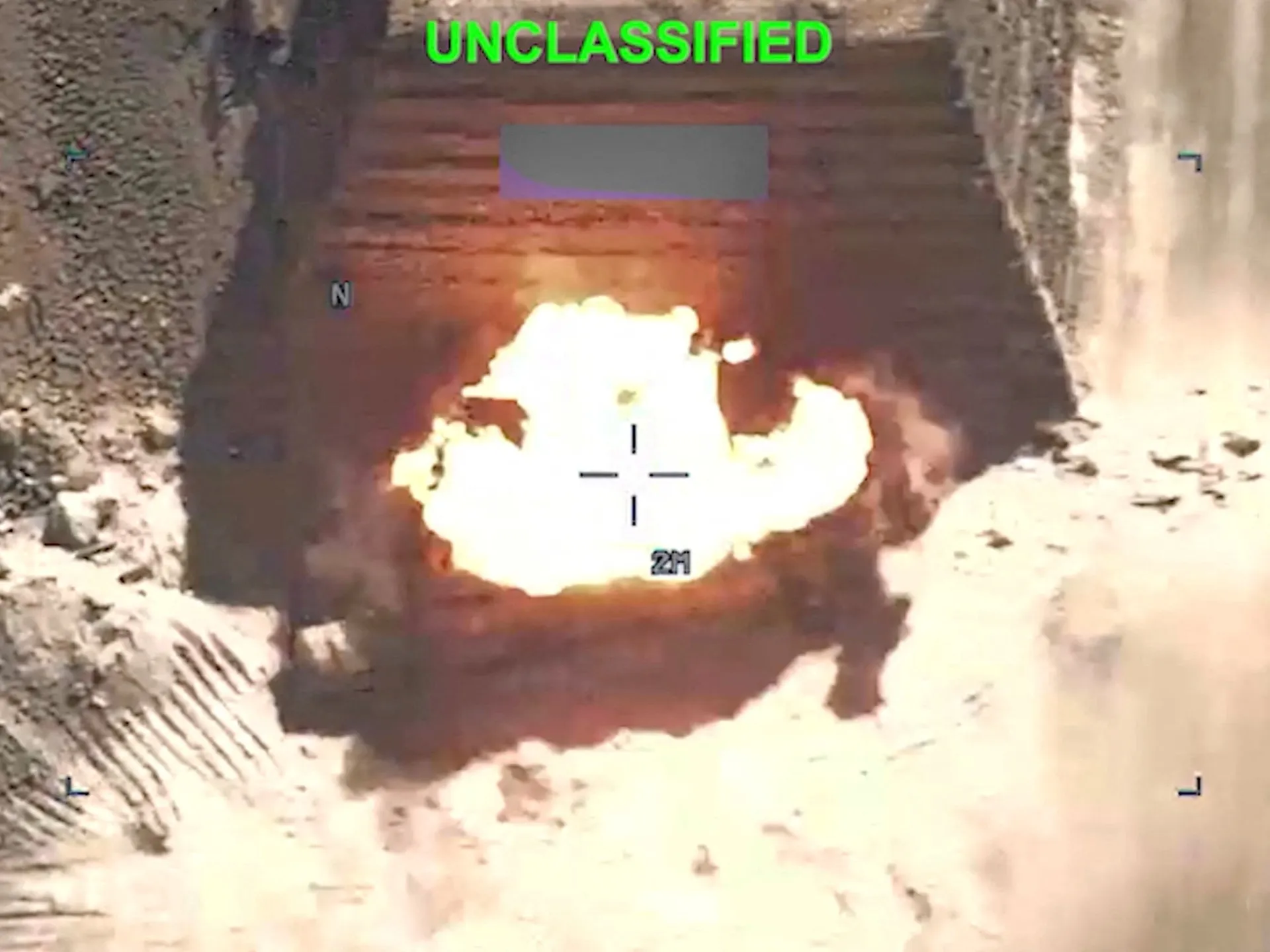
The Malian military confirmed the assault and said it had launched counter-operations, while Africa Corps later released footage it said showed drone strikes targeting fighters involved in the ambush.
The attack is the latest in a series of coordinated operations across northern Mali since April, raising questions about why armed groups are increasingly cooperating, whether Bamako’s security strategy is working, whether Russia’s military role has – and has not – changed, and what the conflict could mean for the wider Sahel.
Why are separatist and Islamic armed groups fighting together?
The July 18 ambush was jointly claimed by the Azawad Liberation Front (FLA), a coalition of predominantly Tuareg separatist groups, and Jama’at Nusrat al-Islam wal-Muslimin (JNIM), an al-Qaeda affiliate in the Sahel.
Until recently, such cooperation would have seemed unlikely as they have different longterm political aims. The FLA seeks greater autonomy or independence for northern Mali, while JNIM aims to establish governance based on its interpretation of Islamic law across the region.
For Héni Nsaibia, a senior West Africa analyst at the Armed Conflict Location & Event Data (ACLED) monitor, the answer lies in a shared battlefield enemy rather than a shared ideology.
“The Tuareg-led separatists and JNIM are currently fighting together because they share a common enemy in the Malian armed forces and their Russian partners from the Africa Corps,” Nsaibia told Al Jazeera.
“In doing so, they act as force multipliers for one another, allowing them to pool resources and mutualise their efforts to confront their adversaries more effectively. These groups also share kinship ties despite their ideological differences and regard one another as sons of the land, defending their ancestral territory against invading forces.”
For Mali’s military, that cooperation makes attacks harder to anticipate and more difficult to repel, allowing armed groups to combine local knowledge, manpower and operational experience while pursuing separate objectives.
The military government’s decision to abandon the 2015 Algiers Peace Agreement, request the withdrawal of the United Nations Multidimensional Integrated Stabilization Mission in Mali (MINUSMA), and deepen military cooperation with Russia reshaped the conflict. The collapse of the peace framework removed one of the few mechanisms managing relations between Bamako and northern armed groups, while the military’s increasingly confrontational approach encouraged former rivals to coordinate against a common adversary.
The shift became increasingly visible during coordinated attacks launched across several parts of the country in April, stretching Malian and Russian forces across multiple fronts. More recently, fighting around Anefis has shown that the alliance is capable not only of launching simultaneous operations but also of sustaining pressure on strategically important military positions.
With negotiations abandoned and military confrontation becoming the dominant strategy, armed groups that once competed with one another have found greater incentives to cooperate on the battlefield.
Has Russia changed the course of Mali’s war?
Since replacing the Wagner Group as Moscow’s principal military presence in Mali, Africa Corps has become an increasingly important partner for the Malian army.
Its personnel have provided combat support alongside Malian forces, while Russian drones and aircraft have expanded the military’s surveillance and strike capabilities. Those capabilities have strengthened the army’s ability to respond to attacks and defend key positions.
The wreckage of a vehicle in Mali, where years of fighting have taken a heavy toll on communities and security forces [Azaward Liberation Front via AP]
“Russia has helped strengthen Mali’s military, which was at risk of being overrun, and has given it more support on the battlefield,” Nimi Princewill, a regional analyst specialising in West Africa and the Sahel, told Al Jazeera.
“But this attack, as well as the earlier seizure of Kidal, suggests the Kremlin’s military support has not changed the overall picture. The conflict remains deeply rooted, with geographical and ideological dimensions that are proving difficult for the junta to tackle.” The army seized Kidal, a key town in the country’s north that the Tuareg rebels held for nearly a decade, in November 2023, but Tuareg and allied fighters retook the town in April this year.
Rather than transforming the conflict, Moscow’s military backing appears to have strengthened the army’s battlefield capabilities without addressing the political, governance and security conditions that continue to fuel the violence.
Recent operations reinforce that assessment. Convoys travelling through northern Mali continue to face frequent ambushes, particularly along routes linking Gao, Anefis and other military positions, exposing the continued vulnerability of military supply lines despite increased Russian support.
The shift away from Western security partners also changed the type of assistance available. While Africa Corps has strengthened Mali’s combat capabilities, the withdrawal of the United Nations Multidimensional Integrated Stabilization Mission in Mali (MINUSMA) ended an international presence that provided logistics, monitoring and intelligence support across much of northern Mali.
The result is a military that has become more effective in direct combat but continues to struggle to secure vast, remote territory against increasingly adaptable armed groups.
Has Bamako’s strategy paid off?
The limitations of Bamako’s security strategy raise broader questions about whether it is translating battlefield gains into lasting security.
Since seizing power in 2020, Mali’s military government has centred its strategy on military force, ending longstanding cooperation with Western partners while strengthening defence ties with Russia.
But the repeated ambushes around Anefis and along northern supply routes suggest the measurable gains of this approach on the battlefield have yet to translate into lasting strategic control.
More fundamentally, the growing cooperation between armed groups with different objectives suggests that Bamako’s strategy has not prevented them from adapting and reshaping the conflict.
What could this mean for the wider Sahel?
The implications of the Anefis ambush extend well beyond Mali.
JNIM, the al-Qaeda affiliate, already operates across Mali, Burkina Faso and Niger, while fighting continues to spread across the central Sahel.
The evolving battlefield also presents a challenge for the Alliance of Sahel States (AES), whose members all face persistent armed violence despite expanding military cooperation. The alliance was created to strengthen collective security, but increasingly coordinated attacks suggest that cooperation among governments is being matched by equally adaptable cooperation among armed groups.
At the same time, Mali’s withdrawal from the Economic Community of West African States (ECOWAS) has reduced opportunities for regional coordination with neighbouring countries confronting many of the same security threats.
If the FLA-JNIM partnership proves durable, it could encourage similar tactical cooperation elsewhere in the Sahel, further complicating efforts to contain armed groups whose operations already span national borders.
“The AES was supposed to mean that our security was finally our own business. But when Mali bleeds, Niger bleeds with it, because the armed groups attacking those convoys do not recognise the Alliance of Sahel States any more than they recognised ECOWAS. We traded one set of partners we did not trust for another, and the war is still coming south,” a Niger-based security expert, who requested anonymity because he feared potential repercussions, told Al Jazeera.
Whether the tactical partnership between the FLA and JNIM proves durable remains uncertain. But the Anefis ambush suggests that as Mali’s security strategy shifts, armed groups are adapting in response, with consequences that could extend far beyond Mali’s borders.
A former Biden official tells Al Jazeera that Lebanon’s pilot zones will only create an environment for Hezbollah to continue its armed resistance. Former State Department official, Jennifer Gavito, says she has a difficult time imagining Israel fully withdrawing from Lebanon.
Many Jews worldwide observe the religious holiday of Tisha B’Av by fasting, praying and reading Bible passages related to the destruction of the First Temple by the Babylonians under Nebuchadnezzar in 586 BC.
Religious Jews have kept Tisha B’Av for centuries as a day of communal mourning for the destruction of the First and Second Temples in Jerusalem.
The Second Temple was destroyed by the Romans under Titus, who burned it down in 70 AD.
For Jews, the ninth day of the month of Av also commemorates multiple tragedies in Jewish history, ranging from God decreeing that the Israelites would wander in the desert for 40 years to Jews being expelled by decree from England in 1290 and from Spain in 1492.
The Orthodox Jewish organization Chabad ranks Tisha B’Av as “the saddest day on the Jewish calendar,” even more sombre than Yom Kippur.
The Fast of Av begins at sunset the previous day and lasts for more than 24 hours.
Jewish law demands that during the three weeks preceding the day, Jews limit rejoicing: no weddings, no haircuts, no listening to music and swimming is prohibited. In the last nine days of the three weeks, no one is allowed to eat meat or drink wine except on Shabbat, or even wash clothes.
President Maduro and former minister Saab were among those targeted by the civil lawsuit. (AP)
Caracas, July 20, 2026 (venezuelanalysis.com) – A US federal judge has issued a default ruling against Venezuelan President Nicolás Maduro and several current and former state officials. US $314 million in damages was awarded to three US citizens who spent time imprisoned in Venezuela.
Venezuelan authorities have yet to comment on the case. Legal proceedings against Acting President Delcy Rodríguez continue. However, on Monday, the Trump administration sent a letter to the court arguing that, as a sitting head of state recognized by Washington, Rodríguez should be “entitled to immunity.”
Judge Darrin P. Gayles from the District Court for the Southern District of Florida published the verdict on July 14. US nationals Jerrel Kenemore, Jason Saad, and Edgar José Marval brought a civil lawsuit in August 2025 under Florida’s Anti-Terrorism Act (ATA) and the federal RICO statute against organized crime.
The three US citizens were released from Venezuela in December 2023 as part of a prisoner swap agreement with the Biden administration that saw former Venezuelan government envoy Alex Saab returned to the South American country.
The plaintiffs sought damages after claiming to have suffered “physical and psychological torture” while imprisoned in Venezuela and to have been used as part of “hostage diplomacy” to secure Saab’s release. The judge claimed that Maduro and other officials were a “criminal enterprise” that acted against US interests.
“The Maduro Criminal Enterprise committed myriad predicate offenses through its drug trafficking and kidnapping actions in and against the United States and its citizens,” he wrote in the verdict. The court estimated compensation for “kidnapping and torture” and “solatium, pain and suffering” under ATA that totaled $312.5 million and added $1.5 million in RICO damages.
Gayles entered the default ruling against Maduro after he failed to enter a defense or plea before the court. The court clerk entered similar defaults against Interior Minister Diosdado Cabello, former Defense and current Agriculture Minister Vladimir Padrino López, former Interior Minister Néstor Reverol, former Attorney General Tarek William Saab, former Supreme Court President Maikel Moreno, and former Industry Minister Alex Saab.
Maduro and First Lady Cilia Flores were kidnapped by US forces on January 3 and are facing charges including “narcoterrorism” and drug trafficking conspiracy. Both have pleaded not guilty, with the next hearing scheduled for July 22.
The Florida judge also included the so-called Cartel de los Soles, an alleged drug trafficking outfit run by high-ranking Venezuelan officials, as a defaulting defendant. Crime researchers have cast doubt on the existence of the cartel, while the US Justice Department dropped all references to it in the formal indictment against Maduro and Flores.
Similarly, Gayles claimed that “for at least twenty years, Maduro intentionally inundated the United States with tons of cocaine.” However, US officials have never presented evidence tying Maduro to narcotics activities, while reports from the DEA have consistently found that a very small percentage of US-bound drugs flow through Venezuela.
The US Justice Department has since 2020 introduced $25 million and $15 million bounties, respectively, for the arrest of Cabello and Padrino in connection with alleged “narcoterrorism.”
According to the Associated Press, Saab’s legal representatives declined to comment on the case. The acting Rodríguez government turned over the Colombian-born businessman, who served as industry minister after his 2023 release, to US authorities in May. He is being held at the Federal Detention Center in Miami while facing trial on renewed money laundering charges.
In contrast to Maduro, Cabello, and others, Acting President Rodríguez responded to the lawsuit in April, with lawyers contending that, as Venezuelan head of state, she should be immune from civil action. Rodríguez received the backing of the Trump administration via a July 20 letter “suggesting” to the court that the acting president should enjoy immunity,
“The United States respectfully submits to the Court that President Delcy Rodríguez is immune in this action and all claims against her should be dismissed without prejudice,” the letter concluded. The US State Department also intervened in June, requesting that the Justice Department communicate Rodríguez’s immunity to the Florida district court in order to secure a “prompt dismissal of the proceedings.”
Rodríguez’s brother, National Assembly President Jorge Rodríguez, filed a similar motion to set aside the lawsuit via a different legal team. The plaintiffs opposed the moves in another motion at the end of April.
The civil lawsuit likewise targeted state-owned companies Petróleos de Venezuela, SA (PDVSA) and Corporación Venezolana de Petróleo (CVP). The two firms have claimed immunity from civil litigation under the Foreign Sovereign Immunities Act.
The plaintiffs have not disclosed any strategy to collect the awarded damages. None of the defaulting defendants has any publicly known assets under US jurisdiction.
Edited by Lucas Koerner in Caracas.
[Updated on July 21 to include the Trump administration and State Department letters to the court endorsing immunity for Venezuelan Acting President Delcy Rodríguez.]
In the Musienene health zone in the Lubero territory of North Kivu, health authorities confirmed 15 new cases of the virus as of Friday, July 17. There have also been nine reported deaths linked to the epidemic.
A Musienene-based civil society organisation has corroborated these numbers after collecting samples for official verification in Beni, according to Kambale Maboko, the organisation’s president.
The new cases emerged across five health areas: 8 in Nduko, 3 in Vikindwe, 2 in Ivatama, and 1 each in Katolo and Kyambogho. Among the nine deaths reported, five occurred in Nduko, two in Vikindwe, one in Katolo, and one in Ivatama.
Kambale expressed concern over the limited government involvement in combating the Ebola outbreak in Lubero territory. He urged authorities to equip health facilities with necessary prevention kits and stressed the importance of the community adhering to safety measures as confirmed case numbers continue to escalate.
“In view of the high number of confirmed cases and the number of deaths which continue to rise each day, we call on the government to put in place a mechanism to counter this disease. If nothing is done, we risk facing the worst scenario,” Kambale said. “We find that the government seems to have forgotten about us. We also call on the population to counter this disease by applying barrier actions in all their forms in order to block the road to Ebola.”
He noted how communal resistance is fueled by misinformation, saying: “We must sensitise the populations for them to understand that the disease exists and that it kills. If we are not careful, we risk being decimated, and we would have nothing to gain. The population seems to believe that those who go to the Ebola treatment centre must die, whereas this is not the case. We call on the population to be vigilant.”
At the provincial level, the Ebola response coordination reported seven new confirmed cases on July 17, including five from the Katwa health zone and two from Butembo. As per the epidemiological update released on July 18, 2026, North Kivu province has recorded a total of 213 confirmed cases, with 142 fatalities, resulting in a lethality rate of 66.7 per cent. Additionally, there are 36 recovered individuals, 25 active cases, and 10 patients who are unaccounted for or have moved to different locations. On Saturday, July 18, four patients who were declared healed were released from the Katwa Ebola treatment centre in Butembo.
Katwa is the worst-affected health zone, reporting 93 confirmed cases and 62 deaths. Following it is Butembo with 46 cases and 31 deaths, and Beni with 36 cases and 27 deaths. Other affected areas include Musienene, Kyondo, Kalunguta, Masereka, Oicha, Goma, Vuhovi, and Mabalako. In total, 11 out of the 34 health zones in North Kivu are experiencing the epidemic. The Ebola response committee is currently monitoring 3,009 active contacts, with 2,618 monitored in the past 24 hours, achieving a follow-up rate of 87 per cent.
Weekly insights and analysis on the latest developments in military technology, strategy, and foreign policy.
BAE Systems is exploring how the Eurofighter Typhoon could control uncrewed collaborative combat aircraft (CCA) as part of a broader effort to introduce new capabilities for the jet. The company is currently pursuing concepts to integrate CCAs with the Typhoon to expand ‘combat mass’ and better address emerging threat environments. Ultimately, however, the experience gained here will be ported over to the future Tempest combat jet — designed to work closely with drones from the outset.
At this point, BAE Systems is working on concepting how Typhoon/CCA could work and is also investing as a company in CCAs and crewed-uncrewed teaming more generally. The work involving the Typhoon and CCAs has accelerated over the previous 12 months. Officials from BAE Systems outlined the work so far in a briefing at the Farnborough Air Show today, just a week after the U.K. Royal Air Force launched a new CCA program, named Storm Fighter, which you can read more about here. That program should lead to a CCA that can fly into combat with the Typhoon, F-35, and Tempest.
BAE Systems concept artwork of a Storm Fighter CCA. BAE Systems
Speaking at Farnborough, Chris Moon, Typhoon Future Capability Director, BAE Systems, explained:
“Unsurprisingly, what we’re finding is that in the enlarged battlespace of the future, we’re able have a Typhoon — some people use the phrase ‘quarterback,’ choose what you will — with its extensive radar capabilities at range, and speed and agility, processing, to be able to work alongside collaborative combat aircraft and increase the combat mass that is needed from our air forces into the future, and the persistence and the range at which they’re able to reach, and bring more missiles into the fight.”
The CCA capabilities are planned to be added to the Typhoon under a much wider effort known as the Long-Term Evolution (LTE) program. This is expected to roll out a number of other features that will ensure that the jet can get the most out of teaming with CCAs. These features include the large-area display (LAD) cockpit, European Common Radar System (ECRS) Mk 2, and the Striker II helmet-mounted display system.
A Royal Air Force Typhoon fighter lands at RAF Akrotiri following a mission in the Middle East. Crown Copyright
In terms of technology, the ECRS Mk 2 is especially interesting here. As well as the various advantages of an active electronically scanned array (AESA), it has a swashplate repositioner, an articulated mounting that means the antenna can be swung to face at far greater angles off the centerline. This allows a much wider field of regard, with a significant boost in angular (azimuth) coverage. It allows the Typhoon to retain missile guidance even when beaming and hiding in the Doppler notch of the enemy’s radar, which functions much like a blind spot.
A Typhoon fitted with ECRS Mk 2 radar inside an anechoic chamber. BAE Systems
In the past, Eurofighter has claimed that the repositionable array provides a field of regard that is “some 50 percent wider than traditional fixed-plate systems.”
Eurofighter
All of these components have been tested in a CCA environment in a specially equipped Typhoon simulator.
Moon highlighted one particular scenario, off the east coast of Scotland, in which a pair of Typhoons worked with a four-ship of CCAs to extend the range, coverage, and persistence of the crewed jets. The scenario can be expanded to include the entire east coast of the United Kingdom, adding more Typhoons and CCAs as well as F-35Bs.
More detail was provided by Andrew ‘Blyty’ Mallery-Blythe, Typhoon Operational Requirements Manager at BAE Systems.
A huge advantage here is the new LAD cockpit, replacing the Typhoon’s current three-multifunction display (MFD) configuration with a single unit.
The Typhoon Large Area Display in a simulator. BAE Systems
Using the LAD means that “everything is available,” Blyty said. “You can see everything at the top level. You have to do very little manipulation to the display. The LAD provides a literal big picture of the combat scenario, including friendly assets, among them the various CCAs, with their heading, height, speed, and what they’re carrying in terms of sensors or stores.
“What we’re trying to take advantage of is combat mass,” Blyty added. “Obviously, combat mass I don’t really need to explain in any great detail. We’ve got four CCAs and two Typhoons. Clearly there’s an improvement and an increase in combat mass without having to have those additional very expensive, complex aircraft. We can bring more weapons to the fight through the use of the CCAs.”
While still a Royal Air Force pilot, Andrew ‘Blyty’ Mallery-Blythe completed an F-16 exchange with the 79th Fighter Squadron at Shaw Air Force Base, South Carolina. U.S. Air Force photo/Staff Sgt. John Gordinier Staff Sgt. John Gordinier
In terms of attrition, the Typhoon is classed as a strategic asset in these concepts, while a CCA is more of a tactical asset.
“We certainly don’t want to put ourselves in a position where we’re going to lose one of those [CCAs], but it’s a tactical asset,” Blyty continued. “That means that we can position them far closer to the threat, potentially taking a little bit more risk with those assets. They’re also smaller, they have a lower observability, and that is also an advantage that our friendly Typhoons exploit.”
A simulator is used to test the Typhoon/CCA crewed-uncrewed teaming concept. BAE Systems
Having a better overview of the battlespace via the LAD cockpit, ECRS Mk 2 radar, Striker II helmet, and the CCAs themselves is only one part of the equation.
BAE Systems is also trying to minimize the workload on the pilots. This is especially important for the U.K. Royal Air Force, which has reduced the number of two-seat Typhoons in its fleet, scrapping all its Tranche 1 ‘T-birds.’ Other nations are meanwhile working on developing CCA concepts by relying heavily on two-seat combat aircraft, with the back-seater a ‘drone controller.’
Blyty: “We don’t want to be in a situation where the pilot is having to close-control each of those assets. There’d be far too much workload. So through our rapid prototyping, and the way that we’ve been doing this, we’ve been looking into how we minimize that workload and how we give simple commands through the extant HOTAS [‘hands on throttle and stick’ controls] to send those CCAs to carry out our task with the minimum workload that we can achieve.” It is meanwhile widely understood that drones require an advanced autonomy package to facilitate this level of ease of use by a single pilot.
A Typhoon during a low-level flying sortie in the Lake District, United Kingdom. Mark Wright/BAE Systems Mark Wright/BAE Systems
Blyty went on to run through an engagement scenario, again aided by the LAD’s ‘god’s eye view’ of the battlespace. A kill box was drawn on the LAD before the hostile aircraft entered that area.
“Once that was activated — we do that through a button on the screen which is just off the top — we effectively give the CCAs the authorization or the command that they can engage anything that enters that kill box.”
With that command, the CCAs start employing weapons, including very long-range Meteor air-to-air missiles, the ramjet-powered weapon that the Typhoon also carries.
The aspiration to have CCAs armed with Meteor is a significant one, due to the very particular set of capabilities that the missile brings. The Meteor is among the longest-ranged of any Western air-to-air missile, generally considered to be able to engage certain types of targets out to around 130 miles. Critically, while CCAs are already a forward extension of the fighter, a missile of this kind would provide a major increase in engagement range when combined with the uncrewed jet, allowing the Typhoon to stay outside the engagement range of the enemy.
The missile also uses a two-way datalink, which feeds it with in-flight updates as it flies out to its target and provides the pilot in the launch aircraft with information on the Meteor’s fuel, energy, and tracking state. Adding CCAs into the mix, provided they have their own sensors, would allow them to pass data to the Typhoon and to the Meteor, regardless of which platform launched the missile.
Meteor
Ultimately, of course, the CCAs might end up with different missiles entirely, including a successor to the Meteor that is now being developed. Regardless, air-to-air combat at extended ranges is very much part of the U.K.’s CCA thinking. Meanwhile, we are already seeing CCA-type aircraft firing beyond-visual-range missiles in tests in the United States and elsewhere.
In this particular scenario, Blyty said the Typhoons were at a distance of roughly 114 miles from the enemy.
“Let’s say that’s outside the range of Meteor,” Blyty continued, downplaying the likely true range of the missile, which is a closely guarded secret. “The CCAs, less than half that. Let’s say that’s within the range of Meteor. So, we’ve got a clear tactical advantage that those CCAs have over the Typhoons. They’re on a little bit more risk out there than the Typhoons are. But that’s entirely appropriate to how we manage those Typhoons with the ECRS Mk 2 as a more strategic asset, and we quarterback the CCAs as a more tactical asset.”
Blyty said that BAE Systems is working on a lot more features to minimize pilot workload, without providing more details.
Meanwhile, BAE Systems has been working alongside QinetiQ on crewed-uncrewed teaming in the air, with a synthetic trial in which a Typhoon, a swarm of QinetiQ Banshee drones, and a Malloy Aeronautics T-150 small heavy-lift uncrewed aerial system (UAS) were flown using current operational military datalinks including Link 16.
The Typhoon and drones involved in the synthetic trial with QinetiQ. BAE Systems
Clearly, concept demonstrations of how crewed combat aircraft could operate alongside CCAs, highlighting the role of crewed-uncrewed teaming in future air operations, are a high priority as the Typhoon continues to evolve. The United Kingdom has not exactly been quick to adopt the CAA concept, at least compared to the United States and China, but with uncrewed platforms very much at the forefront of the recent Defense Investment Plan, that looks like it is set to change.
The order prevents thousands from El Salvador, Sudan and Ukraine from losing work authorisation while lawsuit proceeds.
Published On 21 Jul 202621 Jul 2026
A United States federal judge has temporarily blocked the administration of US President Donald Trump from revoking work permits for tens of thousands of asylum seekers and immigrants with Temporary Protected Status (TPS), preventing a policy that was set to take effect as early as Wednesday.
On Tuesday, US District Judge Nathaniel Gorton sided with immigrant rights groups and labour unions challenging a series of new US Citizenship and Immigration Services (USCIS) policies that implement immigration restrictions passed by Congress last year.
Recommended Stories
list of 4 itemsend of list
In the five-page order, he wrote, “The consequences faced by plaintiffs are potentially severe.” The order will stay in place while he considers whether to issue a longer-term injunction, with a decision expected by August 5.
The lawsuit, filed earlier this month by a coalition of organisations represented by the legal group Democracy Forward, challenged a number of recent USCIS policy changes. Those include a new policy allowing the agency to reject pending asylum applications and revoke work permits if applicants don’t pay a newly created annual asylum fee, as well as its decision to scrap a decades-old rule requiring initial asylum work permit applications to be processed within 30 days. The lawsuit argued USCIS made the changes without public input, as required by law.
It also challenged the retroactive application of the new rules to people from El Salvador, Sudan and Ukraine, who are still protected by TPS, which allows people from countries affected by war, natural disasters or other major crises to live and work legally in the US until it is considered safe for them to return home.
“This decision protects thousands of asylum seekers and TPS holders from immediate and irreparable harm while this case moves forward,” said Democracy Forward president, Skye Perryman, in a statement. “Without this relief, families who have followed the law and relied on longstanding humanitarian protections faced the sudden loss of their employment authorisation and ability to support themselves through no fault of their own.”
The ruling means thousands of TPS holders from El Salvador, Sudan and Ukraine will be able to keep working while the legal challenge moves forward.
While the judge didn’t block the collection of the asylum fee on Tuesday, he did temporarily block the consequences of not paying it, including having an individual’s application rejected or work permit terminated.
The controversial provisions were introduced as part of Trump’s signature tax and spending law, the so-called One Big Beautiful Bill Act, passed by the Republican-controlled Congress in July 2025.
The Trump administration has made ending TPS protections a central part of its immigration agenda, moving to take the status away from people from more than a dozen countries. Last month, the US Supreme Court allowed the administration to end protections for thousands of Haitian and Syrian immigrants.
USCIS did not immediately respond to a request for comment from the Reuters news agency.
Rescuers in eastern Afghanistan are searching through mud and rubble after flash floods and a landslide tore through Nuristan province. At least 23 people have been killed and dozens are still missing as officials warn of more heavy rain and a rising death toll.
The Houthi declaration that they intend to block Saudi shipping and vessels bound for Saudi ports in the Red Sea is not another act of revolutionary theatre. It is Iran’s latest attempt to test Saudi Arabia’s strategic patience through one of its most capable regional proxies. That is a dangerous gamble because Riyadh has spent nearly a decade avoiding the wider regional war that Tehran increasingly appears determined to provoke.
Saudi restraint has never reflected military weakness. It has been a deliberate strategic choice intended to preserve regional stability while enabling the kingdom to focus on its historic economic transformation. Unable to compete with Saudi Arabia’s regional trajectory through conventional means, Iran has increasingly turned to proxy warfare, maritime coercion, and economic intimidation.
The Houthis have become the principal instrument of that strategy.
By threatening shipping in both the Strait of Hormuz and Bab al-Mandeb, Tehran seeks to pressure Saudi Arabia from its eastern and western maritime gateways while raising the cost of regional stability. The objective is not military victory but economic disruption: undermining investor confidence, threatening energy exports, and projecting instability onto the Middle East’s largest economy.
That strategy carries consequences far beyond the region. Saudi Arabia remains the world’s largest crude oil exporter, OPEC’s leading producer, and the only country with sufficient spare production capacity to stabilise global energy markets during periods of crisis – as it did during the first phase of the Iran war through its 7 million barrels per day East West Pipeline. Sustained disruption of Saudi exports would ripple through international shipping, insurance markets, inflation, and the global economy.
Iran tried to prepare for the present escalation by attempting to restore the Tehran-Sana’a air bridge. The flights were never simply about reconnecting two capitals. They would have provided a direct logistical corridor through which operational planning advisers, missile specialists, drone technicians, and intelligence officers could rotate into Houthi-controlled territory. Such an air corridor would have allowed Tehran to transfer not only equipment but also operational expertise and command capability.
This explains why the Royal Saudi Air Force (RSAF) strike on Sana’a International Airport carried significance beyond denying a specific aircraft permission to land. The objective was to prevent Iran from establishing a permanent logistical architecture capable of sustaining a more sophisticated proxy campaign against Saudi Arabia’s maritime and economic interests.
It is clear Tehran’s calculations increasingly rely on outdated assumptions about Saudi military capability. The Saudi-led Joint Forces Command (JFC) bears little resemblance to the force that first entered Yemen a decade ago. Years of hard learnt lessons from past mistakes and operational experience have transformed it into an integrated coalition built around persistent intelligence, fused command-and-control, precision strikes, air missile defence, and cyber operations.
Rather than functioning as separate military combatant commands, these capabilities now operate as a single decision-making architecture capable of compressing the time between intelligence collection and operational execution.
That transformation extends beyond the Saudi armed forces alone. The Saudi-led JFC now includes more than 650,000 personnel drawn from Saudi Arabia and allied Yemeni, Pakistani, Sudanese, and limited but symbolic GCC formations operating within a unified operational framework. Its principal advantage lies not simply in numbers but in its ability to synchronise military effects across multiple domains while maintaining operational tempo and centralised escalation control.
The JFC maturity became unmistakable during RSAF’s campaign that restored control over southern Yemen in less than a week in January. Built upon an advanced command and control (C2) fused architecture that supports persistent intelligence, electronic warfare, precision targeting, and synchronised manoeuvre, has demonstrated a level of operational sequencing and command integration unseen in earlier phases of the war.
The same C2 maturity was evident during Iran’s coordinated missile and drone attacks launched from Iranian territory and allied formations in Iraq, when RSAF executed synchronised precision strikes across multiple theatres while maintaining centralised escalation control.
The broader consequences extended beyond the battlefield. Saudi operational performance helped create the conditions under which Pakistan was able to broker an unofficial ceasefire between the Saudis and Iranians while reinforcing a new deterrence equation in which further direct Iranian military pressure carried significantly greater operational and political risk. Tehran’s subsequent caution reflected not diplomacy alone but recognition that the kingdom had entered a fundamentally different stage of military maturity.
None of this means the Houthis cannot impose costs. Their missiles, drones, maritime attacks, and psychological operations remain capable of generating disruption disproportionate to their size. But disruption is fundamentally different from sustaining a prolonged confrontation against an opponent possessing overwhelming advantages in intelligence, air power, maritime control, and operational endurance.
Every escalation therefore increases the likelihood of a comprehensive Saudi response. Such a campaign would not simply target missile launchers or drone facilities. It would seek to dismantle the command-and-control networks, logistics infrastructure, communications systems, intelligence apparatus, and operational support that enable Houthi military operations.
This is why the current trajectory is so dangerous.
Saudi Arabia has consistently demonstrated that it prefers stability to confrontation because its overriding strategic priority remains economic transformation and long-term national development. But no state can indefinitely tolerate an Iranian-backed proxy threatening its economy, energy infrastructure, and maritime lifelines.
Ultimately, the Houthis are not testing Saudi military capability. Years of operational adaptation have already answered that question. They are testing Saudi Arabia’s strategic patience.
History suggests that even the greatest strategic patience has limits. If Tehran continues using the Houthis as an instrument of coercion against the kingdom, Riyadh may conclude that the costs of restraint have exceeded the costs of decisive action. If that moment arrives, the campaign that follows will bear little resemblance to the Yemen war of a decade ago. It will reflect years of coalition integration through an elaborate C6ISR architecture to be strategically prepared for such a war. Iran, and the Houthis, may then regret testing the limits of Saudi Arabia’s strategic patience.
The views expressed in this article are the author’s own and do not necessarily reflect Al Jazeera’s editorial stance.
President Donald Trump has promised that the United States will “help” Lebanon as he met with his Lebanese counterpart Joseph Aoun amid continued occupation of the south of the country by Israeli forces.
The US president did not announce any concrete policies towards Lebanon as he spoke to reporters alongside Aoun at the White House on Tuesday.
Recommended Stories
list of 3 itemsend of list
Asked whether there will be a timeline for Israel’s withdrawal from the country, Trump said: “They’re in the process of doing that. They’re in the process of redeploying [to] other sections.”
In reality, Israel has not pulled back from any area it has occupied since March. On Monday, the US State Department announced the establishment of the first “pilot zone” under a Lebanon-Israel framework.
Such areas are supposed to see the Lebanese army deploy to previously occupied towns and ensure that there is no Hezbollah military presence, so reconstruction can begin and residents can return. But the three towns announced in the first pilot zone were not under Israeli control, so Israel did not withdraw from them.
Israel has been systemically razing entire villages in south Lebanon, with Israeli officials openly declaring the objective of erasing Lebanese border towns out of existence.
On Tuesday, Aoun did not mention Israeli abuses in his comments next to Trump. Instead, he heaped praise on the US leader and hailed the US-brokered framework agreement between Lebanon and Israel, which conditions Israeli withdrawal on disarming Hezbollah.
“I would like to thank President Trump, really, and his team for the historic visit and for the historic achievement that we did together by signing the framework with the ultimate objective of ending the state of hostility between Lebanon and Israel forever,” the Lebanese president said.
‘We’re going to help it a lot’
Israel has killed more than 4,000 people in Lebanon since the all-out regional war broke out earlier this year, targeting hundreds of medics and journalists as it invaded the country.
In his opening remarks, Trump said that Lebanon had been “badly treated” for decades without elaborating on the source of the mistreatment.
“We’re going to help it. We’re going to help it a lot,” the US president said. “So it’s an honour to have the president and your representatives here.”
Trump also renewed his suggestion that neighbouring Syria should intervene militarily in Lebanon to help disarm Hezbollah – a proposal that has been repeatedly rejected by Syrian authorities.
Hezbollah and the current government in Damascus – led by President Ahmed al-Sharaa – fought on opposite sides of the Syrian civil war.
The Lebanese group backed the government of President Bashar al-Assad, and al-Sharaa was a rebel commander who, early in the war, led the al-Qaeda branch in the country.
Trump took the opportunity on Tuesday to express his admiration of al-Sharaa once again.
“He’s pulled Syria together. He would like to come in and do something with Hezbollah. You know, they’ve been fighting. He’s been fighting Hezbollah for a long time. I think it’d be very effective. So it’s something I think about,” he said.
A Lebanese reporter asked Trump what concrete support he may offer Aoun during the visit. The US president said, “You’ll find out.”
‘I would speak to Hezbollah,’ Trump says
Trump also said he is open to speaking directly with Hezbollah.
“I would speak to Hezbollah. I speak to everybody,” he told reporters.
“I would say this: If the president wanted me to speak to Hezbollah – you know, he’s lived with Hezbollah for a long time – and if the president wanted me to speak to Hezbollah, I would,” Trump added, referring to Aoun, who previously served as Lebanon’s top general.
Aoun had called for assistance to the Lebanese Armed Forces (LAF), saying that the military remains the “backbone of security and stability”.
Hezbollah has been highly critical of Aoun’s decision to engage in direct talks with Israel, as well as the framework in which Lebanon agreed not to pursue accountability for Israeli abuses in international courts and at the United Nations.
For his part, Aoun has accused Hezbollah of dragging Lebanon to war on behalf of Iran, stressing that the Lebanese military must be the sole armed force in the country.





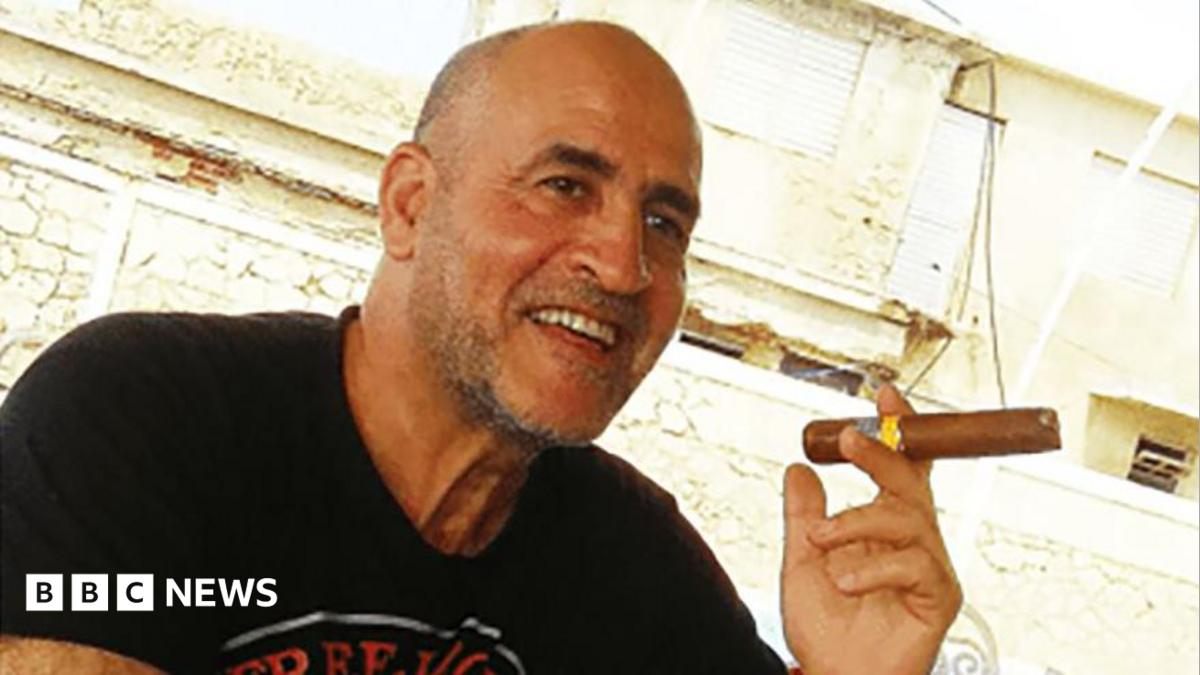
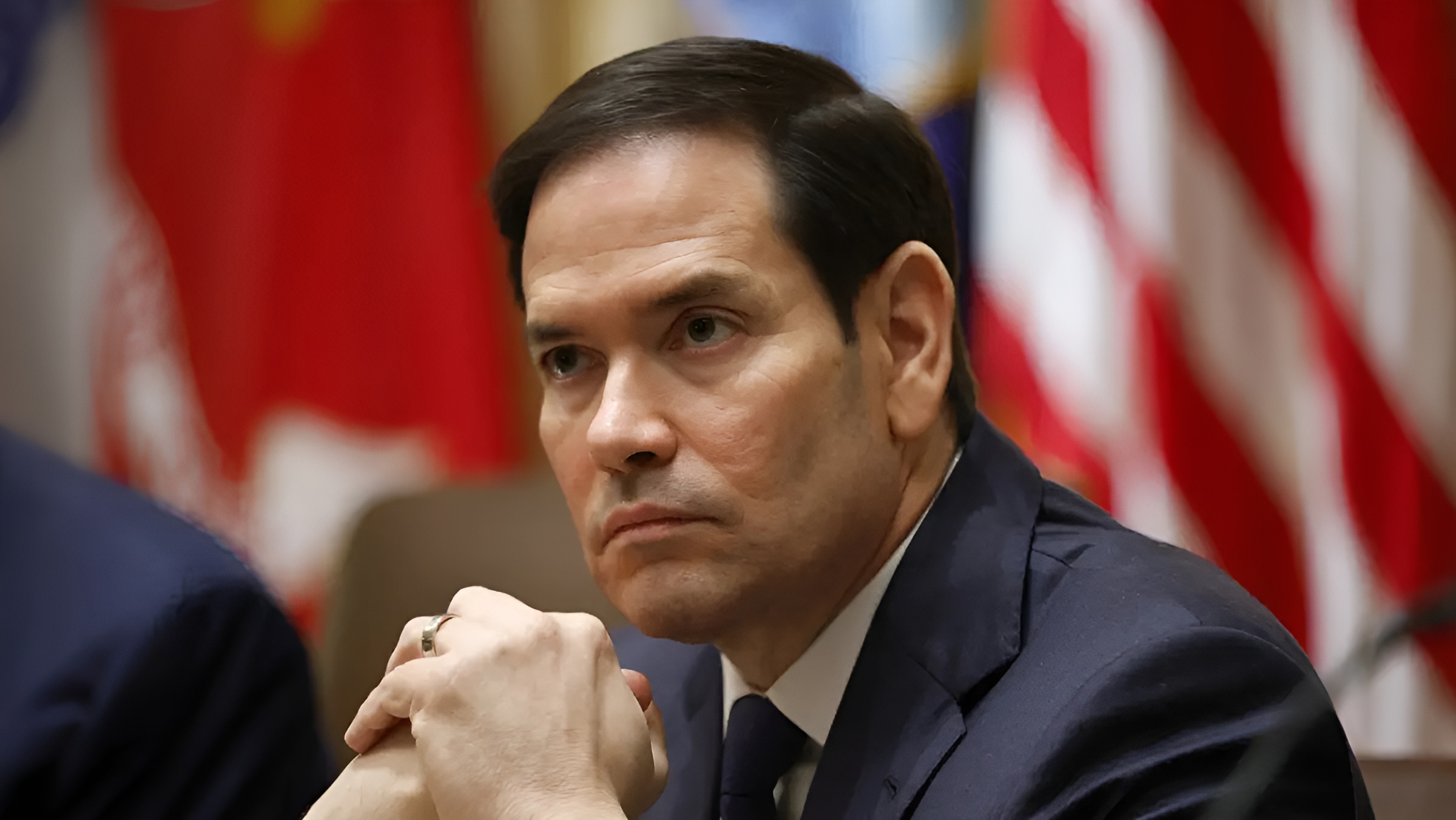






![A large number of supporters present at the sit-in in Rawalakot in Poonch division last week [Courtesy Joint Awaami Action Committee]](https://i0.wp.com/www.aljazeera.com/wp-content/uploads/2026/07/IMG-20260719-WA0032-1784679834.jpg?w=640&ssl=1)


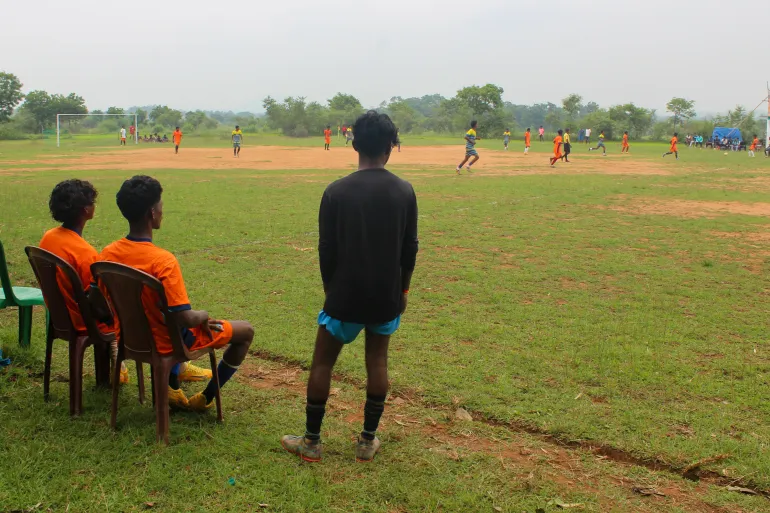



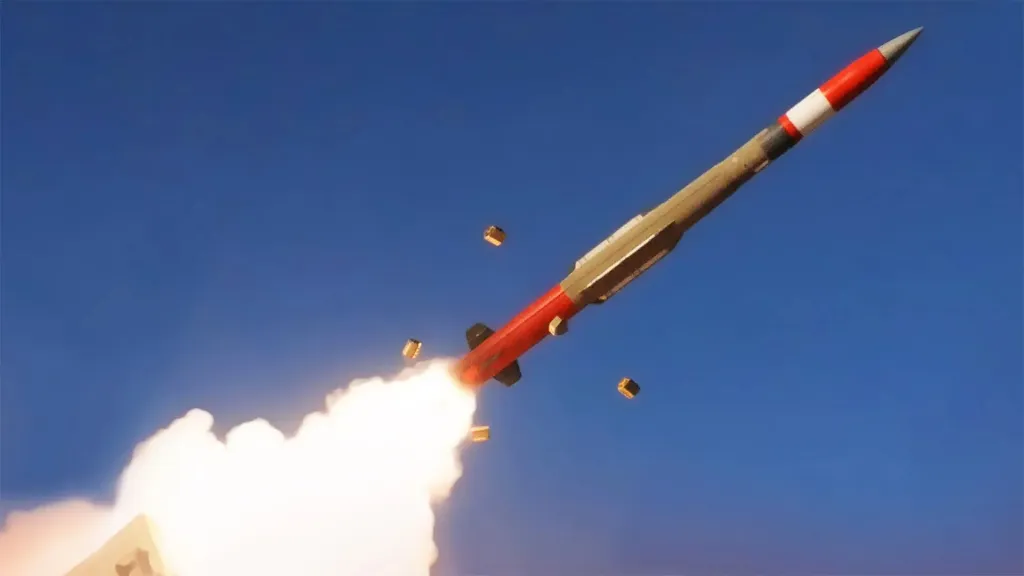

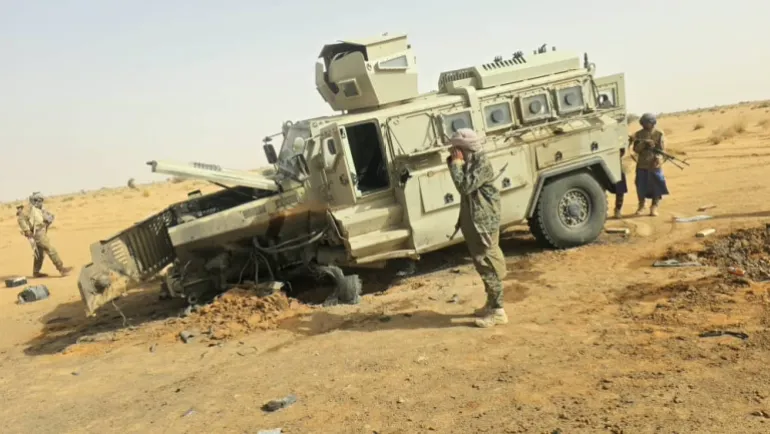
![The wreckage of a vehicle in Mali, where years of fighting have taken a heavy toll on communities and security forces [Azaward Liberation Front via AP]](https://i0.wp.com/www.aljazeera.com/wp-content/uploads/2026/07/AP26199686828320-1784634688.jpg?w=640&ssl=1)