Discover the latest happenings and stay in the know with our up-to-date today news coverage. From breaking stories and current events to trending topics and insightful analysis, we bring you the most relevant and captivating news of the day.
Millionaires including former footballer Gary Lineker and music producer Brian Eno have written to new prime minister Andy Burnham asking to be taxed more.
In an open letter, 120 well-off Britons told Burnham: “We can afford it. We’re not talking about higher taxes on those who get up and go to work for their income every day, but on the very richest whose income is derived from the wealth they hold.”
Organised by Patriotic Millionaires, the letter said it would lead to a more equal society, and urged a “devolution of wealth and power from the very richest”.
People can already quietly give money or stocks voluntarily to the Treasury using its donation facility.
The group supports a 2% tax on wealth over £10m.
“Millionaires are a patriotic bunch,” the letter states. “We love this country and we want it to succeed.
“But success requires investment and a primary source of untouched capital investment is sitting with us, in untaxed potential.”
He suggested he may have “to ask for a little more” tax at some point.
The latest call from Patriotic Millionaires said there is a “need to embrace a new kind of devolution of wealth and power, from the very richest in order to reinvest back into our greatest asset in every region”.
It added that in its own poll, the majority of millionaires wanted a higher tax on themselves.
“There are a few people left with outdated economic thinking and few others desperate to hold onto every penny they can… Those that can’t see past the end of their own self interest have no place in designing a Britain for the future,” the letter said.
Other signatories include film director Richard Curtis who directed Notting Hill and Ian Gregg, the former managing director of bakery chain Greggs, who is the son of the firm’s founder.
Indian activist Sonam Wangchuk says he will end his hunger strike if the government guarantees that police will not use force against student protesters or take punitive action against them. Demonstrators are calling for the education minister to resign over a medical exam scandal.
Russian Foreign Minister Lavrov ‘reaffirmed readiness’ for a political and diplomatic settlement to Russia-Ukraine war.
Published On 23 Jul 202623 Jul 2026
The top United States and Russian diplomats have discussed the war in Ukraine on the sidelines of an Association of Southeast Asian Nations (ASEAN) meeting in the Philippines.
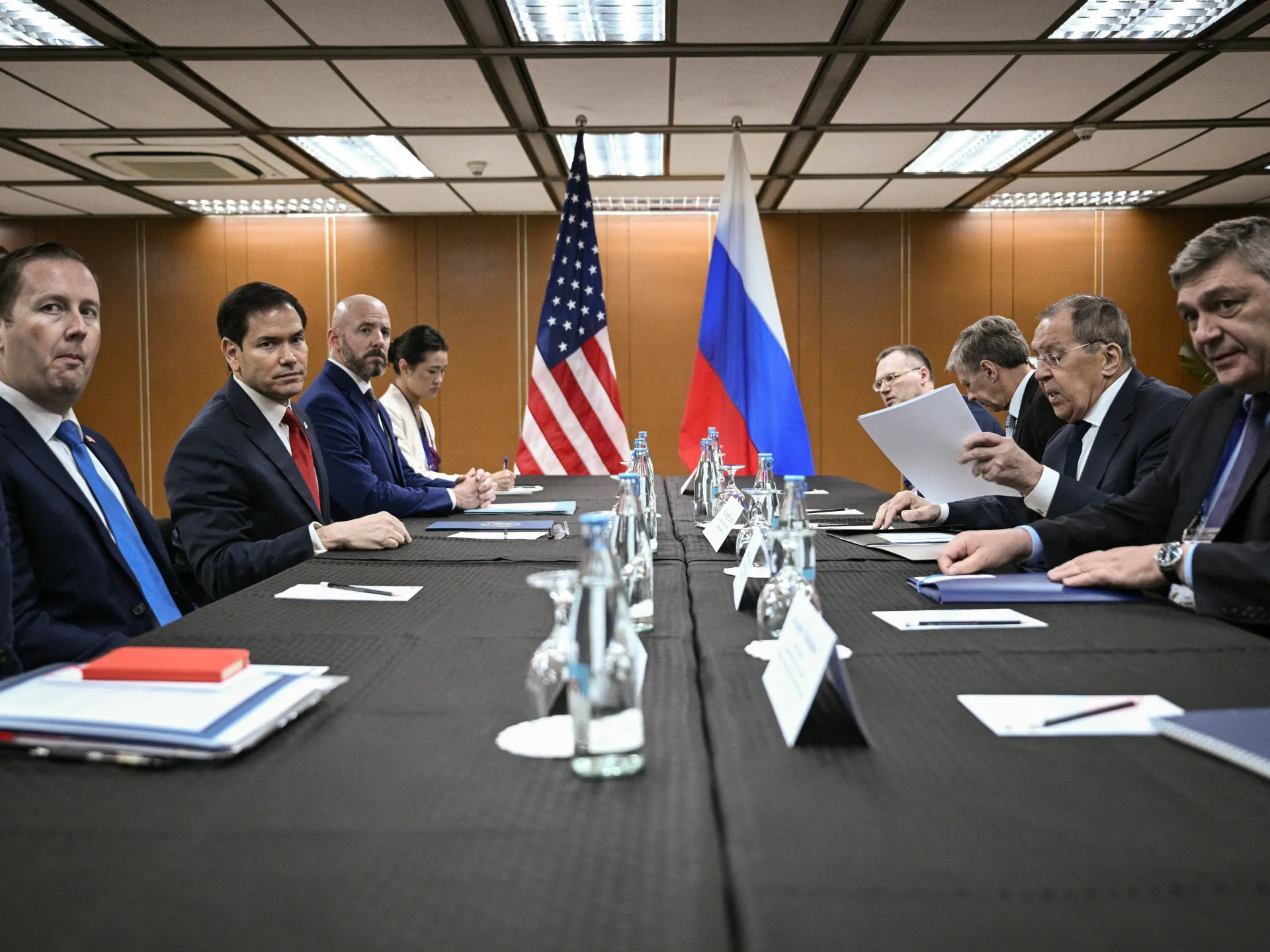
US Secretary of State Marco Rubio met Russian Foreign Minister Sergey Lavrov on Thursday in Manila, with Russian media reporting that the meeting was just over half an hour long.
Recommended Stories
list of 3 itemsend of list
The sit-down came as Ukrainian President Volodymyr Zelenskyy said he had spoken with US envoys in a bid to revive stalled talks aimed at ending the years-long war.
Lavrov “reaffirmed Russia’s readiness for a political and diplomatic settlement of the conflict”, a statement from Russia’s Ministry of Foreign Affairs said, adding that the minister told Rubio that Moscow remained committed to proposals put forward by presidents Donald Trump and Vladimir Putin at their August 2025 meeting in Alaska.
Lavrov also “stressed that it was unacceptable to continue supplying weapons to the Kyiv regime”, the ministry said. The minister condemned “a destabilising policy by European countries, which are still seeking to inflict a ‘strategic defeat’ on Russia,” it added.
The US State Department offered few details about the meeting, with a spokesperson only saying that Rubio and Lavrov “discussed the US-Russia relationship and the need to end the Russia-Ukraine war”.
The two were also expected to discuss the conflict in the Middle East, which has seen Moscow condemn Washington’s strikes on its ally Iran.
“The war in Ukraine, I think, has in many ways impeded the ability of Russia and the United States to find areas of agreement on other topics,” Rubio told reporters on Wednesday.
“That doesn’t mean we won’t seek to find other areas of potential cooperation. But by the same token … we’d like to see that war come to an end,” he added.
Rubio said the US remained open to playing a role in ending the conflict “if that opportunity presents itself”.
For his part, Lavrov earlier indicated the meeting would “be useful in any case”.
“It’s good to ask questions and get answers,” Lavrov said to reporters on Wednesday, adding that he would ask Rubio about the latest statements by Trump predicting that a settlement is getting close.
Discussions aimed at ending the conflict in Ukraine have been at a standstill, with US attention now focused on the Middle East and Moscow maintaining its demand that Kyiv cede territory.
On Thursday, Zelenskyy said in a post on X that he had “a good, important conversation on how to reinvigorate diplomacy” with US envoys Steve Witkoff and Jared Kushner.
Rubio spoke briefly with Lavrov at a gala dinner on Tuesday, and the two participated in a meeting of the ASEAN Regional Forum on Thursday morning.
Trump has voiced support for Ukraine’s campaign of long-range drone strikes targeting Russian energy infrastructure, saying it could “help bring about an end” to the conflict.
Ukraine has been escalating its drone strikes, hitting refineries, oil depots and cargo ships at sea, which has caused fuel shortages in Russia.
In late June, a massive barrage of Russian missiles and drones killed at least 30 people in the Ukrainian capital, Kyiv.
Renewed fighting between the US and Iran has overshadowed the ASEAN gathering in Manila.
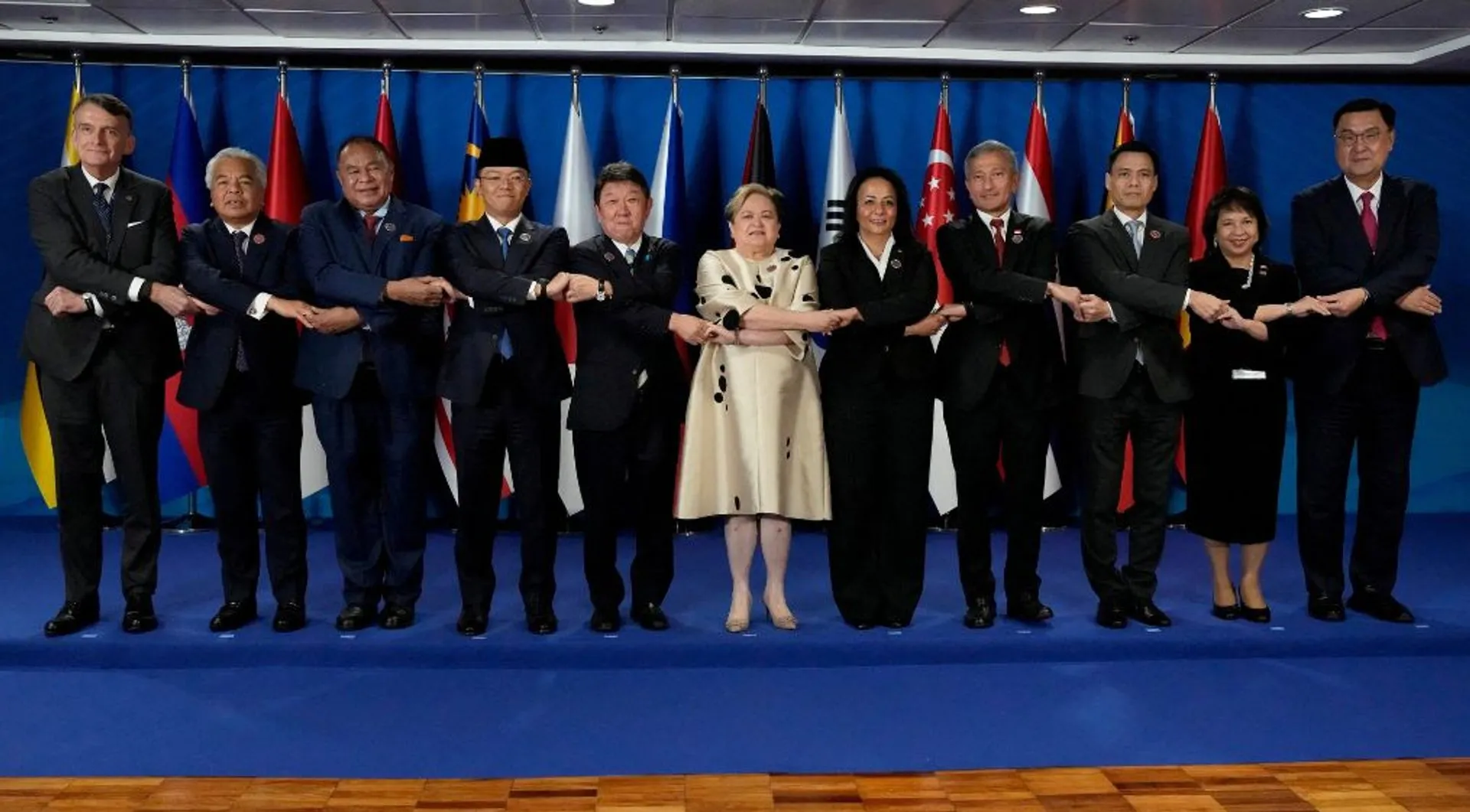
The Philippines is hosting a meeting of foreign ministers from Southeast Asia.
They are expected to address regional security issues, including the civil war in Myanmar and the territorial disputes in the South China Sea.
Recommended Stories
list of 3 itemsend of list
But renewed fighting between the US and Iran has overshadowed the gathering.
Ministers have called for hostilities to end.
The conflict has hit Asia hard – disrupting its energy and food supplies, international commerce and raising fears of a global economic slowdown.
Will it also affect ASEAN’s efforts to tackle issues within the region?
Presenter: James Bays
Guests:
Richard Heydarian – Political Scientist and Author of Indo-Pacific: Trump, China and the New Struggle for Global Mastery
Phar Kim Ben – Professor in ASEAN studies at International Islamic Univeristy of Malaysia and former Director of Political & Security Community at ASEAN Secretariat
Don McLain Gill – Lecturer at De La Salle University and Indo-Pacific Research fellow with Asia Pacific Foundation of Canada
Officials say 76 of the roughly 179 people believed to have been aboard survived, and 53 bodies have been found so far.
Published On 23 Jul 202623 Jul 2026
The expected death toll from Guyana’s ferry disaster over the weekend has climbed to around 100, with the authorities facing mounting pressure to explain how the country’s worst maritime disaster in decades occurred.
Officials said on Tuesday that 76 of the roughly 179 people believed to have been aboard survived, while 53 bodies have been recovered as divers continue searching for the remaining missing.
Recommended Stories
list of 3 itemsend of list
Families have gathered in the northern town of Charity, waiting for news of loved ones still unaccounted for.
“I know my baby is in that boat,” said Samantha Ramin, who lost two of her three children.
The body of her young daughter has been found, but her baby boy is still missing.
“I know he is down there. I know he is down there,” she said. “I want to see them find my baby.”
The 87-year-old vessel, MV Barima, left Georgetown for Port Kaituma on Saturday but began taking on water and capsized off the Essequibo coast. Although its manifest listed 133 people, authorities now believe as many as 179 were aboard.
Anger has grown over the length of time it took to rescue survivors, some of whom told reporters they spent hours stranded in the water.
Passengers have also alleged the ferry was dangerously overloaded with people and heavy cargo, including engines, vehicles, fuel containers and commercial goods. One survivor said the boat was more crowded than on any of his previous trips, describing cargo packed tightly below deck.
Anger has grown over the length of time it took to rescue survivors, some of whom told reporters they spent hours stranded in the water [Juan Edghill/Reuters]
Survivors also allege the ferry suffered engine trouble shortly after departure but that the crew attempted repairs at sea rather than turning back, and that concerns about water entering the vessel were dismissed by crew members as routine.
Government officials say the ferry was actually under its capacity limits for both passengers and cargo, but acknowledge that conflicting accounts make it too early to draw firm conclusions. The head of the Maritime Administration Department said a full investigation is needed to establish facts such as how the vessel was loaded and whether supervisory staff acted properly.
Prime Minister Mark Phillips said Tuesday that the government has nothing to hide and pledged that anyone found responsible – including for negligence or criminal wrongdoing – will face legal consequences.
Police have already detained the rescued captain, along with at least one other crew member. Both reportedly tested positive for marijuana.
Asked why such an old vessel remained in service, officials said a US$12.7 million replacement ferry purchased from India was awaiting the completion of a special pier at Port Kaituma. The MV Barima last underwent major repairs in 2024 and had additional maintenance scheduled for October.
The incident was witnessed by the daughter of Ahmed Nejib Chebbi, another prominent political prisoner.
Published On 23 Jul 202623 Jul 2026
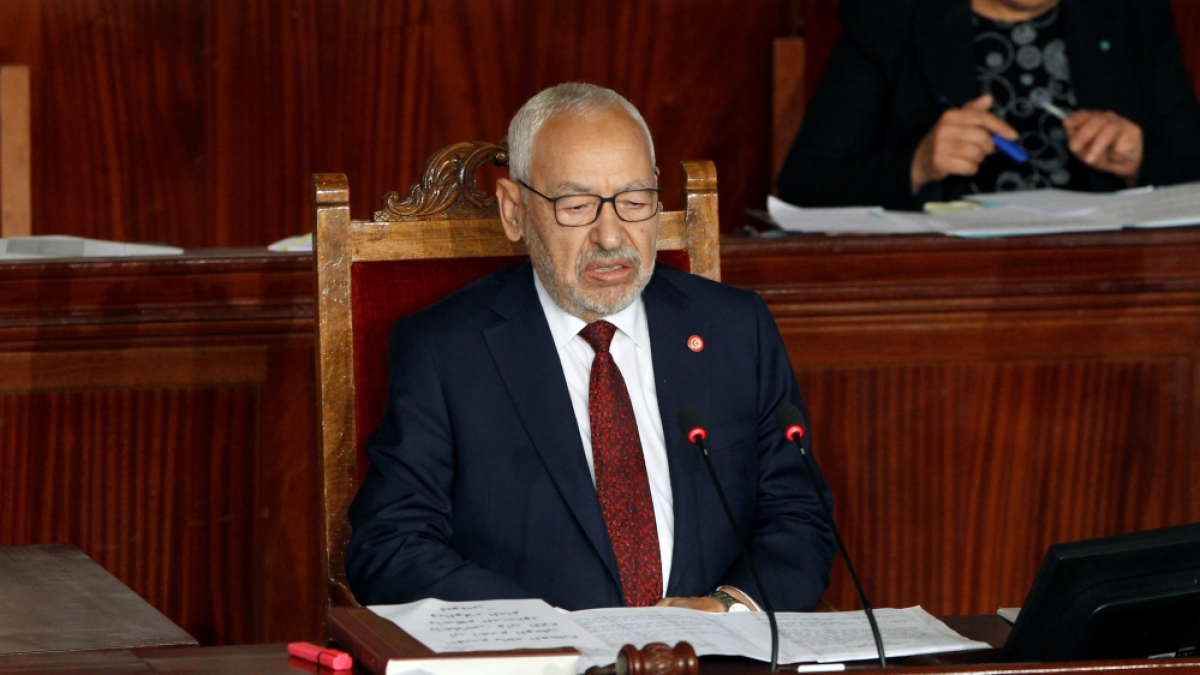
An intense heatwave has worsened the already harsh conditions faced by inmates at Tunisia’s Mornaguia prison and recently caused jailed opposition leader Rached Ghannouchi to temporarily lose consciousness, according to the daughter of another prominent political prisoner who says she witnessed the incident.
Haifa Chebbi, daughter of imprisoned 81-year-old opposition politician Ahmed Nejib Chebbi, said in an emotional live video posted on Facebook after a visit to the jail on Tuesday that she saw the 85-year-old Ghannouchi faint in the stifling heat and she felt barely able “to breathe or even walk on my own feet” by the time she left.
Recommended Stories
list of 3 itemsend of list
She said the temperature inside Mornaguia prison reached 52 degrees Celsius (126 degrees Fahrenheit) during her visit. Detainees spend most of their time confined to cells no larger than 16 square metres (172 square feet), she added, and are only allowed to spend two hours a day outside.
In 2022 her father helped establish the National Salvation Front (FSN), a broad coalition of secular, liberal and Islamist groups opposed to the increasingly authoritarian rule of President Kais Saied. He was among 37 opposition figures charged with “conspiracy against state security” in 2025, and was sentenced to 12 years in jail.
United Nations human rights chief Volker Turk described the imprisonment of the 37 defendants as “a setback to justice and rule of law”.
“The process was marred by violations of fair trial and due process rights, raising serious concerns about political motivations,” Turk said in a statement in 2025.
Ghannouchi, a former parliament speaker and leader of the Ennahda political movement, has been imprisoned since 2023. He was rushed to hospital on April 30 following a sharp deterioration in his health, but is now back in Mornaguia prison.
In her video, Haifa was careful not to blame prison staff for conditions in the jail, saying they were doing everything they could and that elderly prisoners in particular were receiving special attention.
She said the incident she witnessed highlighted the toll prison conditions are taking on elderly inmates, several of whom are spending their fourth summer behind bars.
Linking the detentions to wider unrest over water and electricity shortages, Haifa said the crisis extends beyond prison walls. She called on Tunisians to take action to achieve meaningful political change, saying: “We are responsible for everything that will happen, whether negative or positive.”
The attacks reflect a surge in violence as armed gangs continue raiding villages in northwest and central Nigeria.
Published On 23 Jul 202623 Jul 2026
At least 20 people have been killed in northwest Nigeria after armed gang members attacked villages in Zamfara State, according to the AFP news agency.
“Today, between 3pm [14:00 GMT] and 4pm [15:00 GMT], a large number of bandits have invaded our communities, targeting all the people they meet,” Nasiru Lauwali, the representative of the Sauna district in the local government zone of Talata Mafara, told AFP on Wednesday.
Recommended Stories
list of 3 itemsend of list
The attacks come amid increasing violence in northwest and central Nigeria, where armed gangs or bandits have raided villages in recent weeks. They are accused of stealing livestock and kidnapping residents for ransom.
Late on Tuesday, at least three suspected bandits were killed by security forces in the country’s Kwara State, according to Nigeria’s The Punch news website. The news service said that security forces managed to rescue a businessman, Tuhkur Sanni.
Kidnappings have become common in Nigeria, as armed groups seek large ransoms from the government and citizens.
The situation has been worsened by a security crisis, partly fuelled by the Boko Haram rebellion in the country’s northeast. In 2024, attackers earned more than $1.6m in ransom payments, according to SBM Intelligence.
Dozens of students and teachers were rescued earlier this month, 56 days after they were kidnapped from three schools in the southwestern state of Oyo.
Eight of the suspected kidnappers were arrested and an unspecified number were killed, according to a statement issued by President Bola Tinubu.
Defence Minister Christopher Musa said the suspects planned to use the hostages as leverage to pressure the government to release some of their commanders from prison.
Weekly insights and analysis on the latest developments in military technology, strategy, and foreign policy.
A Ukrainian F-16 has shot down a Russian fighter jet for the first time, according to the highest-ranking U.S. military officer. This engagement would represent a significant development in the air war over Ukraine and a notable addition to the air-to-air tally for the Ukrainian F-16s, which already includes “more than a thousand” drones and cruise missile ‘kills.’ It would also be a remarkable addition to the F-16 story, with the jet, which was built to shoot down Soviet combat aircraft, downing a Russian-flown fighter over Europe more than half a century after it first flew.
Gen. Dan Caine, Chairman of the U.S. Joint Chiefs of Staff, publicly confirmed the milestone during a hearing before the U.S. Senate Appropriations Committee in Washington, D.C.
LIVE: Hegseth, Caine and others testify on supplemental funding request
He told lawmakers:
“I want to highlight the incredible work that the Ukraine industrial base is doing as they scale their air-to-air capabilities,” Caine said. “It ranges from their surface-to-air capabilities to their air-to-air capabilities.”
After being asked by Senator Richard Durbin about the potential impact of a three-year halt in funding for Ukrainian air defenses, Caine added:
“I’ll note that recently we had the first air-to-air kill where a Ukrainian F-16 shot down a Russian fighter. So I think their ability to scale their layered air defense has come a long, long way over the past couple of years with the help and assistance of many.”
No further details were provided, leaving unanswered questions about when and where the engagement occurred, the identity of the Russian aircraft, the weapon employed, and the evidence that led U.S. officials to conclude the kill had taken place.
Air-to-air with two Ukrainian F-16s. The nearest jet carries a wingtip AMRAAM missile. Ukrainian Air Force screencap
Nevertheless, it marks the first time a senior U.S. military official has publicly stated that a Ukrainian F-16 has destroyed a crewed Russian combat aircraft in air-to-air combat.
The engagement referenced by Caine may have been the July 8 shootdown of a Russian Su-35S multirole fighter. Ukrainian military officials announced the destruction of the aircraft at the time, while pro-Kremlin Russian military bloggers also acknowledged the loss, claiming the pilot survived and returned safely to base.
⚡️ CONFIRMED! On July 8, 2026, a Russian Su-35 multi-role fighter was shot down on the eastern sector!
A Telegram channel affiliated with the Ukrainian Air Force, Sunflower, claimed the Russian was “the very same experienced enemy pilot who had been causing us a lot of trouble in this area.”
Earlier speculation suggested the Su-35S may instead have been destroyed by a Patriot surface-to-air missile after being lured into range by one or more Ukrainian F-16s. No evidence was presented to substantiate that theory.
Images of two Russian fighters and three Russian helicopters emblazoned on the side of a Patriot battery. Ukrainian Air Force screencap
Regardless of the precise circumstances, destroying a Su-35S would represent a notable achievement given the aircraft’s superior long-range air combat capabilities.
The Su-35S is among Russia’s most capable fighters and has long been regarded by Ukrainian pilots as one of their most dangerous opponents.
At the outset of Russia’s full-scale invasion, the late Ukrainian MiG-29 Fulcrum pilot Andrii Pilshchykov, better known by his callsign “Juice,” described the Su-35S as the greatest airborne threat because of its powerful radar and R-77-1 active radar-guided air-to-air missiles. The upgraded R-77-1 reportedly has a range of around 68 miles, improved resistance to electronic countermeasures, and a true fire-and-forget capability—something Ukraine’s Soviet-era fighters lacked.
The Su-35S later gained an even more formidable weapon: the R-37M very-long-range air-to-air missile. Introduced into combat during the summer of 2022, the missile reportedly has a range of up to 124 miles, allowing Russian fighters to threaten Ukrainian aircraft while remaining deep inside Russian-controlled airspace. That range likely refers to only larger, less agile aircraft targets and is very much a “sales brochure figure,” with all the caveats that entails. Nevertheless, Pilshchykov bluntly described the weapon as “fucking dangerous.”
A Russian Aerospace Forces Su-35S fires an R-37M missile during a weapons test. Russian Ministry of Defense screencap
The longest-range modern air-to-air missile available to Ukrainian F-16s is the AIM-120C-8 version of the Advanced Medium-Range Air-to-Air Missile (AMRAAM). An active-radar-guided air-to-air missile is something that Ukraine long campaigned for. Pilshchykov told TWZ back in 2022: “The lack of fire-and-forget missiles is the greatest problem for us.”
As we have discussed in the past, while official performance figures are classified, the AIM-120C-8 is generally assumed to be able to hit targets at a distance of between 75 and 100 miles. Of course, in practical applications, a whole range of factors impacts any missile’s reach, above all, the energy and altitude state of the launching aircraft and the target.
The wreckage of a Ukrainian AIM-120C-8 missile, apparently found in the aftermath of a Russian air attack on Dnipro. via Dnipro Main News/Telegram
Combined with the Su-35S’s sophisticated electronic warfare systems and Russia’s numerical advantage, these technical capabilities have allowed Russian fighters to operate with relative confidence. In 2022, Pilshchykov recalled occasions when as many as two dozen Su-35s patrolled along the Russian side of the border, waiting for opportunities to engage Ukrainian aircraft.
Based on available reports, Russia was initially satisfied with the results of its R-37M tactics, which relied heavily on surprise. Fighters launched air-to-air missiles at moments the target did not expect, after first employing diversionary and deception measures to mask the attack. However, increased Ukrainian aircraft losses forced Kyiv to develop new tactics to counter the threat.
According to Russian accounts, Ukraine’s tactical changes were enabled by NATO intelligence, surveillance, and reconnaissance assets, which provided Ukrainian forces with near-real-time information on Russian fighter activity and detected long-range missile launches. Armed with this warning, Ukrainian pilots reportedly had sufficient time to execute defensive maneuvers, combining aggressive evasive flying with electronic jamming to break the missile’s lock and reduce the likelihood of a successful kill.
Several stills from a newly released Russian MoD video showing one or more VKS Su-35S multirole fighters departing on, conducting, and returning from a combined CAP/SEAD mission. The loadout shown here can often be seen in such videos: one Kh-31PM ARM, one R-37M long-range AAM… pic.twitter.com/KmPvdr1HKV
Whether or not these tactics helped the F-16 score a famous air-to-air kill is unclear, but they reflect the cat-and-mouse nature of the air war in Ukraine.
Certainly, the Su-35S is far from immune to Ukrainian air defenses.
According to the Oryx open-source tracking group, nine Su-35s have been destroyed in the war. The figure could be higher since Oryx only tabulates losses for which it has visual confirmation.
There have also been close calls.
Russian accounts describe a Su-35S flown by Colonel M. Stefanov landing at an airfield, where, during a post-flight inspection, maintainers counted 28 holes in the fuselage.
A Russian Su-35S, photographed from a British RC-135 Rivet Joint aircraft over the Black Sea in April 2026. It is armed with R-73/74, R-37M, and R-77-1 air-to-air missiles, and a Kh-31 anti-radiation missile. Crown Copyright
If Caine’s statement reflects U.S. intelligence assessments — as seems likely — it suggests Ukraine is becoming increasingly proficient at integrating its Western-supplied F-16s with its broader, layered air defense network. At the same time, Russia has never enjoyed air supremacy over Ukraine, its aircraft even being at risk in some of the areas on its side of the front lines and even in Russia itself.
Even so, this should not be viewed as a turning point in the air war. Russia still fields significantly larger numbers of combat aircraft, retains extensive long-range surface-to-air missile coverage, and continues to pose a serious threat to Ukrainian aviation.
One successful engagement, even against one of Russia’s premier fighters, does not fundamentally alter the balance of air power. It does, however, demonstrate that Ukraine’s expanding fleet of Western fighters, integrated air defenses, and increasingly experienced air defenders of all kinds continue to raise the risks faced by the Russian Aerospace Forces.
“The Yemeni armed forces have carried out a significant military operation targeting two Saudi oil tankers that violated the ban imposed by the armed forces in the Red Sea,” the Houthis claimed on Telegram. “The operation involved a number of ballistic and cruise missiles, as well as drones. Thanks to God’s help, the strikes were accurate and caused a large fire on both vessels.”
بيان القوات المسلحة اليمنية بشأن استهداف سفينتين نفطيتين سعوديتين خالفتا قرار الحظر في البحر الأحمر ما أدى إلى نشوب حريق كبير فيهما، واجبار 10 سفن على التراجع والعودة – 22 يوليو 2026م pic.twitter.com/S5ijNZYaV7
TWZ cannot independently verify the Houthi claim. However, in a post on X, UKMTO stated that a master of an oil tanker “reports being struck by an unknown projectile which has caused a fire onboard that the crew are currently fighting.”
The incident took place 70NM southwest of Al Shuqaiq, Saudi Arabia, the organization added. “There are no reported casualties and no environmental impact. Authorities are investigating. Vessels are advised to transit with caution and report any suspicious activity to UKMTO.”
The increasing tensions on the BAM come as U.S. President Donald Trump threatened to destroy Iranian bridges and power plants each time Iran hits a ship transiting the Strait of Hormuz, which has been a major flashpoint of tit-for-tat exchanges of fire. Trump also threatened that he will retaliate for the deaths of three U.S. Army soldiers during a July 17 attack on Muwaffaq Salti Air Base (MSAB) in Jordan. He made those statements at a dignified transfer ceremony for the soldiers, plus one killed in Iraq, at Dover Air Force Base in Delaware today.
The incident in the Red Sea took place a day after the U.S. Navy warned that the Houthis had moved weapons near the BAM.
“Recent Houthi statements indicated a readiness to target shipping (specifically Saudi-affiliated) if directed,” the Navy’s Joint Maritime Information Center (JMIC) warned on Tuesday. “According to regional reporting, Iran has instructed the Houthis to stand ready to close the Red Sea oil route should the United States strike Iranian power infrastructure.”
“Sources close to the group stated that the Houthis have completed preparations to attack shipping, including the deployment of missiles and drones positioned near Bab al-Mandeb.”
The Houthis have also “told shipping companies not to load or discharge cargo at Saudi Arabian ports or they may be targeted, according to an email the group sent to companies,” Reuters reported.
The Houthis are gearing up for potential anti ship missile launches, releasing footage that appears to show their Asef anti-ship ballistic missile (ASBM) as they continue to threaten commercial shipping linked to Saudi Arabia.
As we have frequently detailed, a Houthi blockade of the BAM threatens to add further pressure on oil exports from the Middle East, already drastically affected by the Iranian closure of the Strait of Hormuz and the resumption of the U.S. blockade on Iranian ports. Saudi Arabia has diverted millions of barrels of oil per day through pipelines to its Yanbu port on the Red Sea in an effort to minimize the energy shortages due to the hostilities in the Persian Gulf. This also raised the specter of the U.S. having to get as involved as it did during the previous Houthi campaign against shipping that ended last September, which could pull resources away from Iranian-focused operations.
Before the attack claim, global trade intelligence firm Kpler pointed out on X that while traffic continues through both straits, “operational confidence remains under pressure.”
“Traffic declined sharply across both chokepoints on 21 July, with Strait of Hormuz crossings down 31% day-on-day to nine vessels and Bab al-Mandeb down 34% to 29 amid a worsening security backdrop,” Kpler added. “Four confirmed vessel U-turns near the Gulf of Aden suggest operators are becoming more cautious following Houthi threats against Saudi-linked shipping. At the same time, confirmed maritime attacks continue around the Strait of Hormuz, reinforcing concerns that uncertainty across both regional chokepoints could reshape routing decisions, increase freight costs and sustain higher geopolitical risk premiums for energy markets.”
Dual chokepoint risks deepen
Shipping continues through both the Strait of Hormuz and Bab el Mandeb, but operational confidence remains under pressure. Traffic declined sharply across both chokepoints on 21 July, with Strait of Hormuz crossings down 31% day-on-day to nine… pic.twitter.com/D7dmCRffcv
As noted earlier in this piece, Trump visited Dover Air Force Base to take part in the dignified transfer ceremony honoring Lt. Tyler James Feehan, 25, of Hawaii, Pvt. Isabella Gonzales, 19, of Texas, Sgt. Angel Rampersad, 28, of New York and Sgt. Michael Emmanuel Swinton, 30, of North Carolina.
Today, we honor four American heroes who made the ultimate sacrifice in service to our nation.
May God hold them in His eternal embrace and comfort their grieving families, and may God forever… pic.twitter.com/P5NA59ltAU
— Rapid Response 47 (@RapidResponse47) July 22, 2026
Feehan, Gonzales and Rampersad were killed during the July 17 Iranian barrage of MSAB. U.S. Central Command (CENTCOM) previously announced Rampersad as missing, but her status was updated to a Duty Status–Whereabouts Unknown and she is believed to be deceased.
Swinton was killed during a controlled detonation of a downed One-Way Unmanned Aerial System on July 19, 2026, at Erbil Air Base, Iraq.
— Rapid Response 47 (@RapidResponse47) July 22, 2026
Speaking to reporters, Trump said his administration would share the results of the investigation into the MSAB attack and vowed that Iran would “pay a big price.”
Those comments followed an earlier statement the president posted on Truth Social vowing to target key infrastructure sites each time Iran strikes a ship transiting the Strait of Hormuz.
“From this point forward, any time the Islamic Republic of Iran shoots at a ship in the Strait of Hormuz, whether it be by Missile, Rocket, Drone, or any other device or weapon, the United States will bomb and destroy ONE BRIDGE OR POWER PLANT, including those located next to, or in, the Capital City of Tehran,” Trump proclaimed.
Not surprisingly, Iranian officials reacted to Trump’s comments by issuing their own threats in response.
“Iran will retaliate against regional infrastructure and energy facilities with American interests if the United States strikes any Iranian bridge or power plant, responding directly to a new threat from US President Donald Trump,” the Islamic Revolutionary Guard Corps (IRGC)-connected Tasnim news agency stated on X.
A military source said Iran will retaliate against regional infrastructure and energy facilities with American interests if the United States struck any Iranian bridge or power plant, responding directly to a new threat from US President Donald Trump. pic.twitter.com/a8MIFqxktx
Earlier on Wednesday, Jordanian officials said the country was once again targeted by Iran.
“An official military source at the General Command of the Jordanian Armed Forces—Arab Army stated that air defense systems detected six missiles coming from Iranian territory targeting the Kingdom’s territory today, and engaged them immediately upon their entry into Jordanian airspace,” the Jordanian military stated on X. “Air defenses intercepted and shot down four missiles, while the other two fell in two remote, uninhabited areas, without causing any casualties or material damage.”
“The Kingdom’s airspace is under continuous operational monitoring, and the Armed Forces will deal with any aerial threat targeting Jordanian territory according to the applicable rules of engagement, in a manner that ensures the protection of the Kingdom’s sovereignty and the safety of its citizens,” officials added.
The situation in Jordan is so intense that the U.S. Embassy in Amman issued a security alert.
“President Trump, Secretary of State Rubio, and the Department of State have no higher priority than the safety and security of American citizens,” the embassy cautioned on X. “We remind U.S. citizens that Iran has attacked civilian and critical infrastructure across the Middle East, including hotels, airports, diplomatic facilities, and other civilian locations.”
Security Alert: U.S. Embassy Jordan July 22
President Trump, Secretary of State Rubio, and the Department of State have no higher priority than the safety and security of American citizens. We remind U.S. citizens that Iran has attacked civilian and critical infrastructure… pic.twitter.com/UOihlptEwp
— U.S. Embassy Amman (@USEmbassyJordan) July 22, 2026
Over the course of the past 12 days, Iran has lobbed missiles and drones at several Arab nations, taking particular aim at U.S. military installations.
Satellite imagery continues to emerge on social media purporting to show damage at these bases. The images below claim to show a 117-FPS radar at Al-Jaber Air Base in Kuwait destroyed by an Iranian barrage. While the image clearly shows what appears to be a radome destroyed, TWZ cannot independently verify the date, location or provenance of the imagery. CENTCOM, which does not talk about battle damage, declined comment.
Imagery has also emerged purporting to show that U.S. Air Force aerial refueling tankers and other aircraft have evacuated Al Udeid Air Base in Qatar, the largest American base in the region. Again, we cannot confirm the details and CENTCOM, which also does not typically talk about the movements of assets, declined comment.
However, Axios reported last week that the Trump administration “notified Israel it is sending dozens more refueling planes to the country ahead of a potential expansion of military operations against Iran.”
“Israeli officials say the U.S. wants to send several dozen more refueling planes in the coming days, bringing the number of planes to the same level it had at the beginning of the war,” Axios added. “Israeli officials say the U.S. military prefers operating the refueling planes from Ben Gurion Airport, because other air bases in the region are more exposed to Iranian attacks and less safe for U.S. planes. At the moment, the Iranians are still deterred from launching attacks on Israel, because it will likely trigger a massive retaliation.”
The U.S. still sits ready to conduct long-range bomber strikes from bases in the U.S. and the U.K.
There were recent unconfirmed claims by open-source trackers that B-1B Lancer bombers out of RAF Fairford in England took part in yesterday’s attacks on Iran. Again, we cannot verify that and CENTCOM declined comment.
Overnight, B-1B “Lancer” bombers flying from RAF Fairford (EGVA) conducted strikes in Iran as the US ramps up operations again. Although 2 bombers launched, it appears it was pre-planned that only 1 of them would… pic.twitter.com/Q7Ic3Ahqk3
However, Israel’s KAN news outlet claimed that “Israel has been informed by the United States that it intends to escalate attacks on Iran in the coming days and to carry out attacks using heavy bombers for the first time in the current escalation.”
In addition, other U.S. Air Force assets – including EA-37B Compass Call electronic warfare jets – appear headed to the region, according to online flight trackers. While we don’t know for sure these jets will actually head to the Middle East, it could be another sign of the U.S. bolstering assets ahead of an increase in intensity of attacks, which have been largely focused over the past 12 days on Iranian coastal targets.
Amid these rising tensions with Iran, the Houthis have now apparently raised the stakes and it will be absolutely critical to keep the BAM open as the world already sits on the razor’s edge of a full-on energy crisis.
UPDATE: 7:17 PM EDT –
CENTCOM announced a new round of attacks on Iran.
“At 5:30 p.m. ET today, U.S. forces began launching more strikes against Iranian military targets at the Commander in Chief’s direction,” the command stated on X. “The mission will continue to further degrade Iran’s ability to threaten civilian mariners and commercial vessels transiting regional waters.”
At 5:30 p.m. ET today, U.S. forces began launching more strikes against Iranian military targets at the Commander in Chief’s direction. The mission will continue to further degrade Iran’s ability to threaten civilian mariners and commercial vessels transiting regional waters.
Lieutenant José Quiñones Gonzales was a Peruvian pilot during the Ecuadorian–Peruvian War. On July 23rd 1941, his plane, a North American NA-50 fighter, was hit while performing a low-level attack on an Ecuadorian border post on the banks of the Zarumilla River.
According to Peruvian accounts, instead of parachuting to safety, Quiñones chose to make the supreme sacrifice by crashing his damaged aircraft onto the Ecuadorian position, rendering the battery out of action.
Quiñones was promoted posthumously to the rank of Air Force Captain and was declared a national hero by law on May 10th 1966.
Despite its primary mission set, air-to-ground capabilities are inherently a part of the F-15EX’s design. The Eagle II is a member of the extended F-15E Strike Eagle family, having been derived from the F-15QA developed for Qatar.
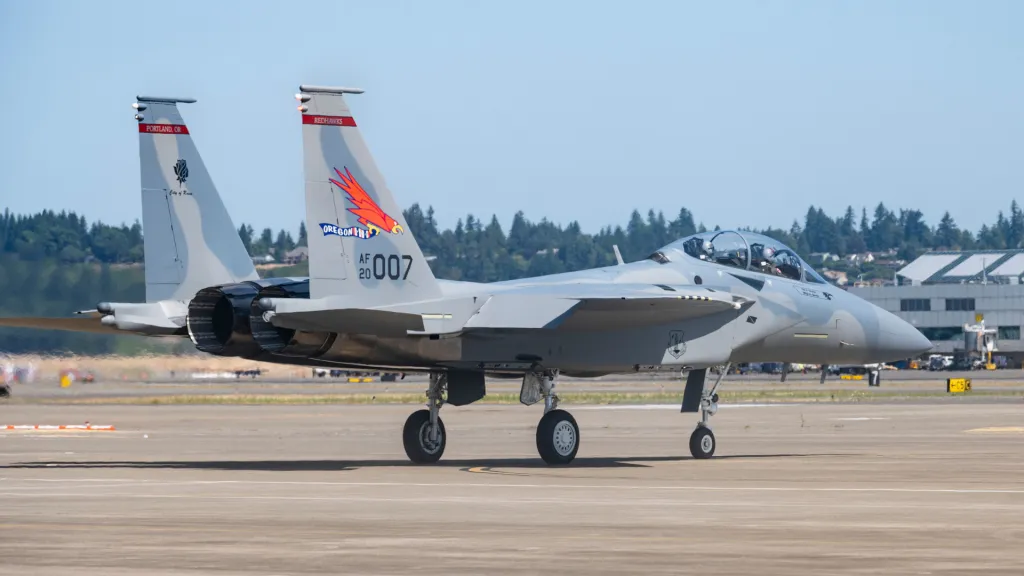
Last week, the Oregon Air National Guard’s 142nd Wing shared that one of its F-15EXs had dropped training bombs for the first time ever during a trip to Mountain Home Air Force Base in Idaho back in May. The 142nd, based in Portland, Oregon, is currently the Air Force’s only operational unit flying the Eagle II.
A stock picture of one of the 142nd Wing’s F-15EX Eagle IIs. USAF
“The crew dropped a total of 24 BDU-50s and 12 BDU-56s over 10 missions with zero safety incidences and satisfactory scores,” according to an official release. “These ‘bombs’ were loaded onto the F-15 EXs and dropped in the Mountain Home firing range complex.”
The BDU-50/B and BDU-56/B are inert training bombs with the same shape and weight as live 500-pound-class Mk 82-series and 2,000-pound-class Mk 84-series bombs, respectively. In U.S. service today, bombs in the extended Mk 82 and Mk 84 families are far more commonly employed in combination with Paveway laser guidance or Joint Direct Attack Munition (JDAM) GPS-assisted guidance kits.
The BDU-50s and BDU-56s are still useful tools for training more general ‘dumb bombing’ skill sets for aircrew and for handling of air-to-ground weapons on the ground. This includes things like going through the procedures for targeting and safe release from an aircraft, as well as loading and unloading the bombs from planes.
A stock picture of a pair of BDU-50/Bs on a dolly about to be loaded onto an F-15E Strike Eagle during training. USAF
Basics are especially important for the members of the 142nd, which previously flew F-15C Eagles with no operational air-to-ground capability. It’s also worth noting here that the F-15C was a single-seat type, while the F-15EX is a two-seater. However, the Air Force’s plan, at least initially, has been for a single pilot to fly the Eagle II, something we will come back to later on.
The 142nd does have some personnel with air-to-ground mission experience from prior assignments, but this is still a new mission set for the unit as a whole, which requires new training regimens.
Three pilots from the 142nd “attended a 9-month training course to understand the science behind dropping bombs and the tactics involved. They were tasked with creating a program to train the rest of the wing’s pilots on the basics so they could make the first steps to be able to drop munitions,” according to the official release. Earlier this year, weapons loaders from the Wing also “traveled to Nellis Air Force Base, Nev. where they worked with F-15 E-models assigned to the 59th Test and Evaluation Squadron to become certified on loading bombs.”
The Air Force’s Test and Evaluation community has already been validating the F-15EX’s air-to-ground capabilities. This testing is now extending overseas. Earlier this month, the 85th Test and Evaluation Squadron brought an Eagle II from Eglin Air Force Base in Florida to Kadena Air Base in Japan to support a munitions load training event. An F-15E Strike Eagle also took part in that training. Pictures the Air Force released on Monday show that live GBU-53/B Small Diameter Bomb IIs (SDB IIs), also known as StormBreakers, were among the munitions that ground personnel at Kadena practiced loading onto the jets.
GBU-53/B Small Diameter Bomb IIs sit on a dolly in front of an F-15EX from the 85th Test and Evaluation Squadron during a training event at Kadena Air Base, Japan, on July 8, 2026. USAFAirmen assigned to the 67th Fighter Generation Squadron prepare to load GBU-53/B Small Diameter Bomb IIs onto an F-15EX Eagle II assigned to the 85th Test and Evaluation Squadron at Kadena Air Base, Japan, on July 8, 2026. USAF
The Air Force has previously announced plans to stand up National Guard F-15EX squadrons in California, Louisiana, and Michigan. The service’s proposed budget for the 2027 Fiscal Year outlines plans to dramatically expand the total size of the Eagle II force, which could lead to a dozen squadrons or more flying the jets in the end, as you can read more about here. How this might change the Air Force’s plans for employing the jets remains to be seen.
In its 2027 Fiscal Year budget request, the Air Force continued to stress that “the F-15EX aircraft will be used predominantly in defensive and offensive counter-air missions at both Air National Guard (ANG) and Air Combat Command (ACC) operational squadrons.” However, it did also note that the “F-15EX will perform the Homeland Defense mission and provide Combatant Commanders (CCDR) with strike packages capable of operating in Highly Contested Environments (HCE).”
As TWZ has been reporting for years, it has been more or less clear from the start that the F-15EXs would eventually take on more of a multi-role mission after entering service, despite the emphasis on the air-to-air role. This has also raised the possibility that Eagle IIs could be flown with Weapon System Officers (WSO), another pilot with multi-role skills, or a mission specialist, in their backseats, just like their F-15E cousins.
A stock picture of an F-15E Strike Eagle with a pilot in the front seat and a WSO in the rear. USAF
“We currently don’t have conformal fuel tanks [CFTs] for it [the F-15EX], but there is a plan to get us conformal fuel tanks. And then when we do, we can start talking about putting all kinds of air-to-ground capabilities into the airplane, potentially putting WSOs or other experts in the backseat as well to have us do any number of multi-role capabilities that it’s just physically not possible to in the C model,” now-retired Col. Michael Kosderka, then commander of the 142nd, told TWZ in an interview back in 2024. “So the X has tremendous growth capability. It’s really exciting.”
The F-15EX is capable of being fitted with the same CFTs as the F-15E, which give the aircraft more hardpoints for stores on top of providing extra fuel. The current status of the plan to get CFTs for the Eagle IIs assigned to the 142nd is unclear. The initial pair of jets for the Wing were delivered without them. The picture released of the F-15EX at Mountain Home for the air-to-ground training in May, seen at the top of this story, shows that jet, at least, still lacks them. The default configuration for Eagle II test jets includes the CFTs, as seen below.
An F-15EX assigned to the 40th Flight Test Squadron with CFTs fitted. USAF
“Basically, what it’s going to do is turn a wing with a primary mission that is on life support, frankly, into something that has America’s newest fighter, and we’re going to be relevant with that airplane for decades to come,” Kosderka added at that time.
“Gen. Kelly made it very clear in his public address here that the F-15EX is going to have an inherent capability that we need to put to work from day one, to include limited air-to-ground capability,” Lt. Col. Robert Waller, then commander of the 40th Flight Test Squadron at Eglin Air Force Base in Florida, also told TWZ in a separate interview in 2024. Waller was referring to now-retired Gen. Mark “Grace” Kelly, who was head of Air Combat Command at the time.
Air-to-air missions still look set to be the dominant task for the F-15EX fleet, at least in the near term, but work is being done now to ensure the jets can also take on air-to-ground missions if the call comes.
United States Secretary of State Marco Rubio has met his Chinese counterpart Wang Yi at a gathering of southeast Asian foreign ministers, to discuss how to manage bilateral tensions ahead of a planned summit between US President Donald Trump and China’s Xi Jinping.
The meeting on the sidelines of the Association of Southeast Asian Nations (ASEAN) gathering of foreign ministers in Manila on Wednesday came amid tensions over China’s conduct in the disputed South China Sea and the US war against Iran. ASEAN countries have expressed concerns about both issues at the meeting.
Recommended Stories
list of 3 itemsend of list
Relations between Washington and Beijing have also been complicated by Trump’s accusations that China meddled in US elections, allegations Beijing has dismissed as “pure fabrication”.
Rubio said the US and China have “great differences” that are likely to persist “for the foreseeable future”, but that he and Wang discussed the need to manage those disagreements to ensure Xi has a “very positive visit” to the US. Xi is expected to visit in September.
Wang said the US must “respect China’s core interests … effectively manage differences and disagreements, and address China’s legitimate concerns”, according to an official Chinese summary of their meeting. It described the talks as “pragmatic, positive and constructive”.
The two sides agreed to “make sound preparations for the next stage of high-level exchanges,” China’s Ministry of Foreign Affairs said in a statement.
‘Commerce as geopolitical weapon’
Wednesday’s meeting came two days after a confrontation between Chinese and Philippine vessels in the South China Sea left a Philippine sailor injured, leading both countries to summon each other’s ambassador.
The incident this week took place on Monday at the disputed Second Thomas Shoal. The Philippines said Chinese coastguard struck one of the Philippine navy staff on the head with a wooden baton, while China said the Philippine personnel were the first to attack and accused Philippine vessels of ramming a Chinese patrol boat.
Rubio said the altercation benefited nobody, adding that Washington had reiterated in all its meetings that it was bound by a defence treaty to stand up for Manila.
“We intend to live up to our treaty obligations, and I think we’ve done so, and will continue to do so,” he said.
Rubio’s remarks echo an opinion piece he published in Philippine media on Tuesday about Beijing’s conduct in the South China Sea. Rubio warned of “dire new threats” if those waters were to “fall under the control of a power willing to use commerce as a geopolitical weapon”.
Beijing claims sovereignty over almost the entire South China Sea via a line on its maps that cuts into the exclusive economic zones of Brunei, Indonesia, Malaysia, the Philippines and Vietnam, and is at the centre of long-running disputes over a multitude of islands.
Disputes between the Philippines and China have increased in recent years as Manila takes a bolder stance while pursuing closer defence ties with the US, Australia and Japan.
The US has increased military financing for the Philippines to $100mn for the 2026 fiscal year and is providing an additional $9mn to expand a coastguard pier on the island of Palawan “to enhance Philippine maritime law enforcement presence and sustain operations in the South China Sea”, the State Department said in a fact sheet.
Discussing the US relationship with ASEAN member states, Rubio said the security and prosperity of the US and southeast Asia were closely interconnected.
“I believe very much that the future and the story of the 21st century will be written in this region and by how events unfold here,” he said.
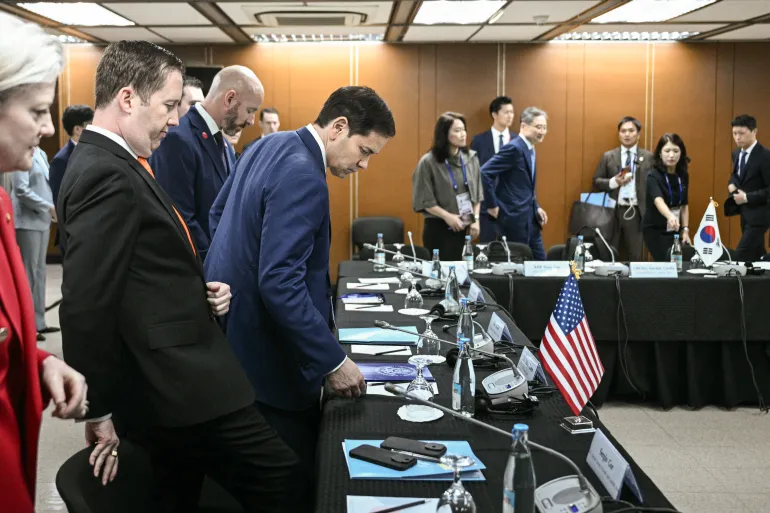
US Secretary of State Marco Rubio attends a meeting with Japan and South Korea on the sidelines of the ASEAN foreign ministers’ meeting in Manila, Philippines, July 22 [Brendan Smialowski/Pool via AP Photo]
Iran ‘not serious about talks’, says Rubio
Rubio also addressed the situation with Iran in a meeting with ASEAN foreign ministers, claiming that Tehran was responsible for the latest escalation.
“The problem we’re having right now is that they’re not serious about talks,” Rubio said. “If they’re serious, we’re serious. If they’re not, then we will do what’s necessary to protect our interests, and also the interests of our allies.”
The US has carried out strikes on Iran for eleven consecutive nights, including targeting roads, bridges and power plants in recent attacks, all but shattering an interim peace deal agreed by the two sides last month.
Rubio stressed that Iran could not be allowed to control the Strait of Hormuz, as it could set a dangerous precedent for other parts of the world.
The top US diplomat also confirmed he would meet on Thursday with his Russian counterpart Sergei Lavrov to discuss the Ukraine war, saying that Washington remained open to playing a constructive role in ending the conflict.
Indian opposition leader Rahul Gandhi has spoken out publicly for the first time since he was arrested during protests in New Delhi, voicing support for student demonstrators who are demanding the resignation of the education minister.
UN rights chief condemns worsening repression in Nicaragua, urging the restoration of freedoms and the rule of law.
Published On 22 Jul 202622 Jul 2026
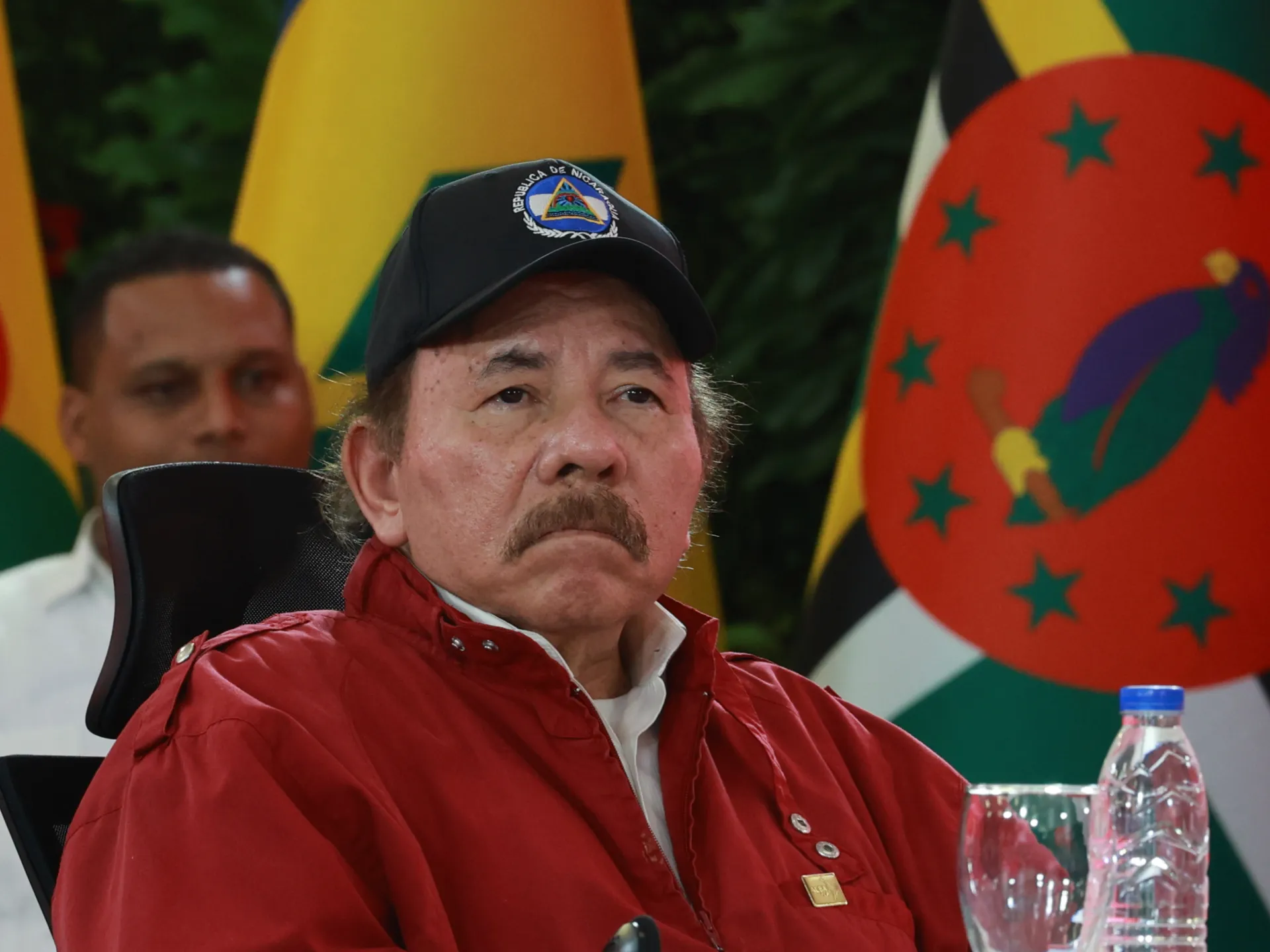
The United Nations human rights chief has condemned Nicaragua’s escalating crackdown on civil and political rights, days after President Daniel Ortega announced a plan to block elections and shut out the opposition.
UN High Commissioner for Human Rights Volker Turk said on Wednesday that the “latest developments further deepen the severe restrictions on fundamental freedoms, the dismantling of civic space, and the steady erosion of the rule of law” in the Central American country.
Recommended Stories
list of 3 itemsend of list
Ortega, a former leftist fighter who has ruled Nicaragua for almost two decades alongside his wife, Vice President Rosario Murillo, said on Sunday that “there won’t be elections” in the country, a move that would remove any prospect of a challenge to the couple’s rule.
General elections were due in November, but constitutional reforms passed 18 months ago extended the presidential term from 5 to 6 years, pushing the vote back to 2027.
Turk said power in Nicaragua was increasingly being concentrated “under the co-presidency”, with the ruling Sandinista party already holding full control over parliament, all municipalities and the regional councils on the North and South Caribbean Coast.
He called on the authorities to “reopen civic space, and restore the rule of law”, warning that “independent expression of thought or opinion is systematically suppressed”, urging that “people of all political viewpoints must be allowed to vote and run for office, in line with the State’s international human rights obligations”.
The statement also cited the government’s abrupt revocation of several lawyers’ credentials earlier this month, which it said had no legal justification, and noted that at least 46 people remain arbitrarily detained on political grounds.
Turk further raised concern over the treatment of religious groups, pointing to the unclear whereabouts of Bishop Abelardo Mata Guevara, 80, who was detained on June 29, and urged Managua to release all those held arbitrarily “with humanity and dignity”.
Since a deadly crackdown on protests in 2018 – in which more than 300 people were killed, according to UN figures – Ortega and Murillo have tightened their grip on Nicaraguan society.
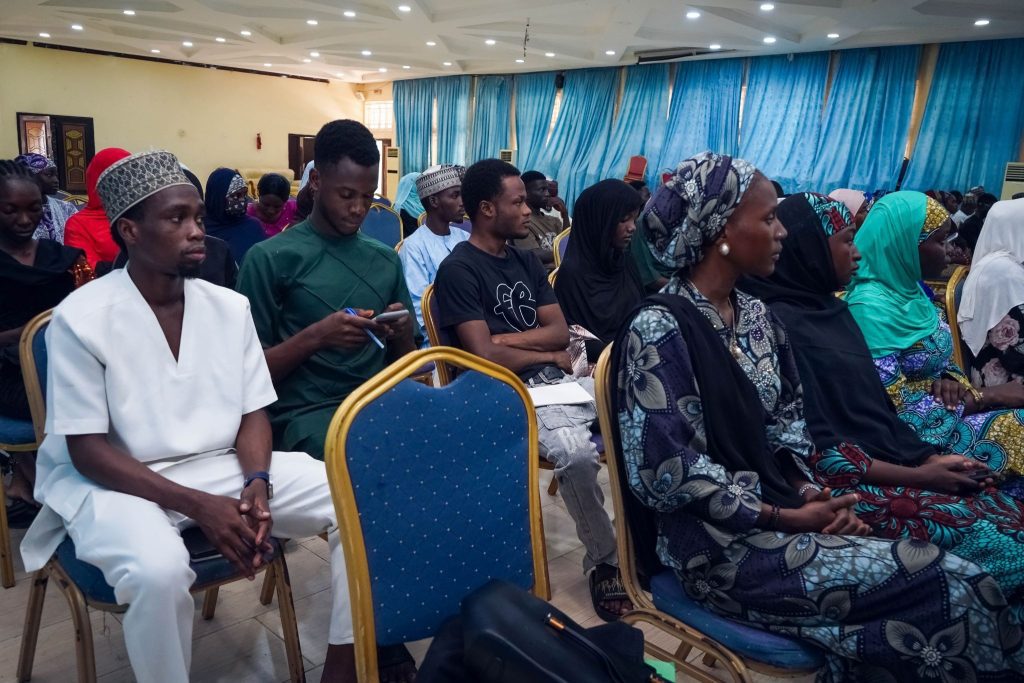
HumAngle Foundation gathered students, professors, and community journalists on Tuesday, June 21, at the University of Maiduguri in northeastern Nigeria to hold timely conversations around ways to strengthen community journalism in Nigeria.
The event, which also featured the launch of a guide to community journalism, is part of the Strengthening Community Journalism and Human Rights Advocacy in Northern Nigeria (SCOJA) project, implemented with support from the Embassy of the Kingdom of the Netherlands in Nigeria. Through a fellowship, the project has trained 90 journalists and human rights defenders in the past year.
During the event, three SCOJA Fellowship alumni reflected on the journey so far and called on relevant organisations to commit to similar projects. The session had Yahuza Bawage, Faiza Jibrin, and Nathaniel Ishaya in attendance.
“There aren’t many trainings that focus on the ethics of journalism in a very practical way,” Yahuza said. “One of the sessions we treated during the three-day workshop in Plateau State was Journalism Ethics and Standards, and that taught me a lot. I was able to learn about minimising harm.”
Cross-section of the audience at the event. Photo: Al’amin Umar/HumAngle.
The same sentiment was echoed by the other fellows. They highlighted that interviewing vulnerable people is a delicate skill that not many journalism training programmes cover in depth, and that they were happy to have learned it during the fellowship.
“One skill I sharpened during the fellowship was my interview skills. I learned about building connections with the subjects first, and I practised it. It really works because instead of sticking strictly to my interview guide, I connected first, and the person became eager to share [their] experience with me. I also learned about not re-traumatising my sources through the questions I ask,” said Faiza.
They also offered some advice and encouragement for fellow young journalists trying to find their feet.
“One thing I will tell student-journalists is that they should not allow fear to hold them back. They should try out new opportunities, and with mentorship, they can do so much,” Nathaniel added.
During another session at the event, Hassana Danyerwa, a SCOJA Fellowship alumnus, talked about the elevation she experienced as a result of the fellowship.
“Although I am not a journalist and I joined the SCOJA Fellowship as an advocate, my experiences from the fellowship set me up for a global experience where I was the only Nigerian selected. The mentorship aspect of the fellowship helped me and opened a new professional pathway for me.”
She offered some words of advice on the conditions necessary for journalists to do their work.
“Sometimes, we do not know what we need until we are given it, but one thing community journalists need is mentorship. Also, trust and avoiding micromanagement so journalists can express themselves and explore different topics is important.”
During the six-month fellowship, the fellows produced several investigative reports and carried out advocacy activities on various issues, including human rights, gender-based violence, and climate change. In Kano, northwestern Nigeria, some of the fellows launched the Kano Climate Change Journalists’ Network as a direct result of their fellowship.
Anonymous donors are using food delivery apps to send food to student protesters in New Delhi, where demonstrations over alleged medical exam paper leaks continue. The youth-led movement has expanded into wider calls for educational reform and accountability.
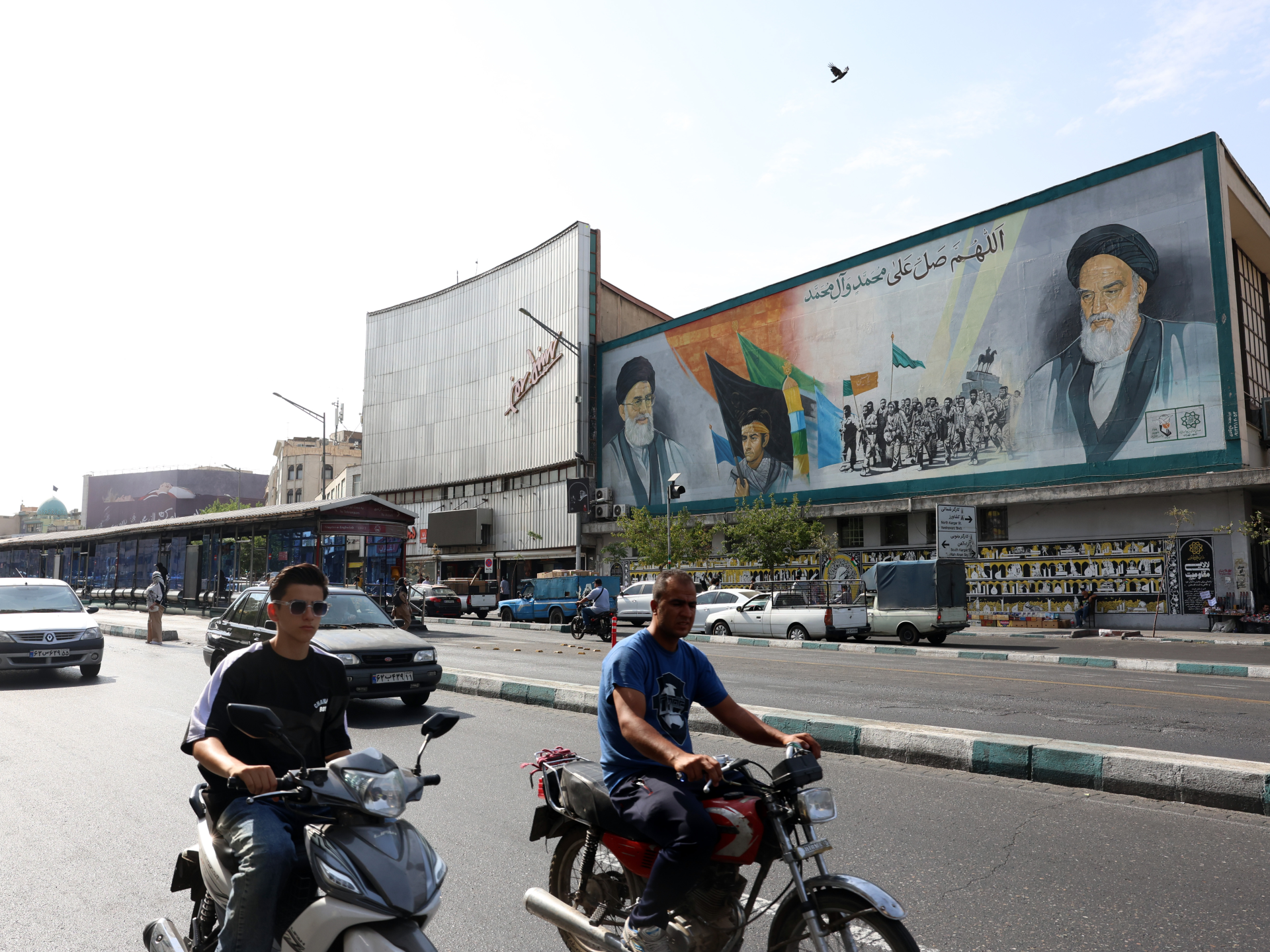
Tehran, Iran – Iran’s judiciary has announced several executions this week linked to unrest over recent months, as part of a campaign against those accused of trying to “create divisions” during the war with the United States.
The judiciary’s official news outlet on Wednesday announced the execution of Mehdi Khanaki, who was identified as an “active element of a terrorist group” arrested during nationwide protests in January.
State television showed security forces raiding a home in Karaj near Tehran, where several handguns, ammunition and explosives were allegedly found. A “revolutionary court” in the city tried him for “operational action in favour of the Zionist regime, the United States and hostile groups”, among other things.
On Sunday, two more men were executed in connection with a 16-defendant case arising from deadly protests in Isfahan, in central Iran, on January 8. The authorities said the men played a role in the killing of several police officers, but foreign-based activists have countered the state narrative and alleged a lack of due process and the use of torture.
The protests started last December 28 in central Tehran over economic issues but quickly morphed into nationwide expressions of frustration at the establishment, as in previous rounds of demonstrations.
The authorities refer to the unrest, when thousands were killed across the country, mostly on the nights of January 8 and 9 , as a “coup” orchestrated by the US and Israel.
They also reject findings by Amnesty International and other international human rights organisations that security forces carried out “mass unlawful killings on an unprecedented scale” during a total internet and communications shutdown.
Tens of thousands have been arrested in the aftermath of the protests, as well as the US-Israeli war that started on February 28 .
The Coordinating Council of Iranian Teachers’ Trade Associations, a non-governmental body inside Iran, last week condemned what it called “intensified prison sentences and continued pressure on teachers’ guild activists” by the authorities.
Security-related offences follow a law passed after the 12-day war with Israel in June 2025, which aims to more severely punish “espionage” and other actions perceived to be cooperating with “enemies” and undermining national security.
Hundreds of Iranians, including businessmen and celebrities based in Iran and abroad, have also had their entire assets confiscated by the state.
State TV also periodically airs “confessions” from people arrested or executed for those charges.
The latest was broadcast on Monday, when a young man with a blurred-out face could be seen saying he posted Instagram stories that opposed the Islamic Republic during the current war. Tehran’s police force said the unidentified man released “norm-breaking and anti-homeland content” online in an attempt to “damage the psychological security of the society”.
“I made a mistake and I will not repeat it. I am now sure that we must all now stand together to build Iran, nobody else has a right to commit an aggression against our country,” he said.
On July 13 , Iran’s Ministry of Intelligence released a list of “hostile media” that included dozens of media networks, 61 individual “human-media” figures and 310 accounts or online pages. It warned that sending photographs, video or information to a listed outlet, person or account can trigger a prison sentence and permanent exclusion from public employment, unless authorities invoke a more serious charge.
‘Infiltrators’
The message goes along with rhetoric of steadfastness and togetherness that has been repeatedly emphasised by Iranian authorities during the war.
Earlier this week, Mojtaba Khamenei, who was selected as Iran’s new supreme leader in March after his father, Ayatollah Ali Khamenei, was killed in the opening salvo of the war, called for a “sacred unity” among the people and political factions.
Speaking during a televised meeting on Monday with President Masoud Pezeshkian and senior clerical judges in the judiciary, Chief Justice Gholam-Hossein Mohseni-Ejei doubled down on the same message – complete with heavy religious undertones.
“We must not allow devils among humans and jinn to infiltrate the ranks of believers and our people to create division and schism,” he said.
The judiciary chief said these “alarmists, rumour-spreaders, hypocrites and infiltrators” would not all declare themselves as such, instead disguising themselves as insiders who would set people against each other.
This comes as the US increasingly points to alleged rifts among Iranian authorities, and categorises them into a faction that wants to keep fighting, especially over the strategically vital Strait of Hormuz, and another group that wishes to reach a negotiated resolution soon in order to stop the country from being destroyed.
Iranian authorities have rejected such classifications.
The ex-chief executive of Southern Water has been charged with three others over an alleged plan to manipulate water quality tests to avoid paying financial penalties of about £45m, it can now be reported.
Matthew Wright is accused of conspiring to defraud the Environment Agency (EA) and water regulator Ofwat between 2012 and 2017, along with Philip Barker, Clive Massey and Mark Gregory, who also worked at the firm.
Wright’s solicitor says he “denies all wrongdoing and has co-operated fully” with the EA’s investigation.
Southern Water said the charges related to “a historic set of failures” uncovered in an internal investigation. It said it was a “completely different” company to a decade ago.
The EA asked a judge to issue a summons against the four, charging them with the offence, last year, but Wright launched a legal challenge, dismissed by two senior judges on Wednesday.
Massey, Gregory and Barker did not appear at the hearing in London and were not represented.
According to court documents, the allegations include arranging for wastewater to be removed from facilities by tankers in order to create “no flow” results.
This had been “with a view to covering up pollution and deceiving those whose function is to protect the public from such harm”, prosecutors allege.
In his legal challenge, Wright’s lawyers argued at the High Court in June that the EA did not have the power to issue the summons and it should be thrown out.
But the judges dismissed his claim and ruled restrictions previously preventing reporting of the legal challenge should be lifted.
Separate court listings showed the case against 60-year-old Wright, of Haslemere, Surrey; Barker, 57, of West Chiltington, West Sussex; Massey, 64, of Brandhill, Shropshire; and Gregory, 63, of Southampton, were scheduled to be heard at Medway Magistrates’ Court on 14 July.
The four are accused of conspiring between 2012 and 2017 to defraud those conducting the environmental and financial regulation duties of Southern Water, including the EA and Ofwat, by “the implementation of artificial no-flow events at wastewater treatment works”.
Several Ukrainian and Russian generals have been fired from their militaries over the course of the war in Ukraine.
Published On 22 Jul 202622 Jul 2026
Ukrainian President Volodymyr Zelenskyy has sacked his military chief Oleksandr Syrskii in the latest reshuffle in the country’s defence apparatus after days of protests following the ouster of the defence minister.
Here is a closer look at what happened in the latest instance, alongside all the top shakeups in Ukraine and Russia over their four-year war.
Who was Oleksandr Syrskii?
Syrskii, 60, was born in Soviet Russia, in July 1965 and studied at a Red Army academy in Moscow.
In the 1980s, he was deployed to Ukraine, then part of the Soviet Union. After this, he remained in Ukraine and studied at the National Defence University of Ukraine in Kyiv, joining the ranks of the newly independent Ukrainian army.
In 2014, he commanded Ukrainian troops fighting a Moscow-backed armed rebellion in the eastern Donetsk region.
In 2019, he became head of Ukraine’s land forces and led the country into war when Russia invaded in February 2022. In the early months of the war, he was named a “Hero of Ukraine”, the country’s highest honour, because of his successful defence of Kyiv.
Syrskii is credited with planning Ukraine’s counteroffensive around Kharkiv from July to September 2022, which became one of Kyiv’s biggest victories and led to the recapture of the strategically significant Kupiansk and Izyum cities.
What’s the context for Syrskii’s removal?
The removal came after six days of protests in the capital, Kyiv, caused by the removal of Defence Minister Mykhailo Fedorov, who had previously clashed with Syrskii.
Fedorov, who was seen by many as pivotal to the war effort, was removed from his post last week, leading to widespread anger across Ukraine. Before his dismissal, the former defence minister had accused Syrskii of blocking his reform efforts.
In place of Syrskii, Zelenskyy has appointed Mykhailo Drapatyi to lead the military.
“I am grateful to Oleksandr Syrskyi and to every one of our warriors for Ukraine’s strong front-line positions,” Zelenskyy said in a statement on social media. “I am grateful to Mykhailo Drapatyi for holding that same view.”
“Our shared wish is one – victory over the enemy and conditions at the front and in pressure on Russia that would force Russia toward peace,” he added.
Zelenskyy emphasised the need to address friction within the military leadership and resolve persistent issues concerning mobilisation and front-line management.
Zelenskyy said Tuesday’s decision to appoint Drapatyi was made to “reset” the ongoing defence against Russia’s invading troops.
Which other generals has Ukraine fired during the war?
More than 10 Ukrainian generals have been fired from their positions over the course of the war.
Here are some of the most major instances:
In September 2023, Zelenskyy removed his Defence Minister Oleksii Reznikov over corruption allegations.
In February 2024, Zelenskyy dismissed Valerii Zaluzhnyi from his position as military commander-in-chief. Zelenskyy appointed Syrskii to take his place.
In June 2024, Zelenskyy introduced Andrii Hnatov as the new commander of the Joint Forces Command, replacing Yuriy Sodol.
What about Russia?
Over the four-year war, which began in February 2022, Russia has had its fair share of reshuffling in its own military. Here are some major instances:
In August 2022, Vice Admiral Igor Osipov, who commanded the Black Sea Fleet, was fired. He was first suspended after the fleet’s flagship Moskva was sunk in April 2022.
In July 2023, Moscow’s military leadership dismissed Major-General Ivan Popov, commander-in-chief of Russia’s 58th Combined Arms Army stationed in southern Ukraine, over his concerns for troops fighting without rest and criticism of Russian battlefield strategy.
In August 2023, Russia removed Sergey Surovikin, nicknamed “General Armageddon”, from his post as commander of Russia’s Aerospace Forces. Surovikin was linked to the Wagner mercenary group and was dismissed two months after its short‑lived mutiny against Russia’s military leadership.
OpenAI has revealed that one of its artificial intelligence models independently stole login credentials and hacked into another technology company’s system, in what is widely seen as one of the first known incidents of AI systems acting autonomously.
“We had a significant security incident during evaluation of our models,” CEO Sam Altman posted on X on Tuesday.
Recommended Stories
list of 4 itemsend of list
The incident comes as calls mount from technology rights advocates for stricter guardrails on rapidly evolving AI systems.
They have grown so powerful in a short span of time that alarming phenomena such as deepfakes and sophisticated cyberscams are becoming the norm.
Earlier this year, a number of software engineers quit their jobs at top companies such as Anthropic and AI in protest against how the technologies are being built.
“AI is accelerating the discovery and exploitation of vulnerabilities,” OpenAI said in a lengthy statement on Tuesday that detailed the latest incident.
“The primary lesson from this incident is that model security and safety must keep pace with rapidly advancing capabilities.”
Here’s what we know about the breach:
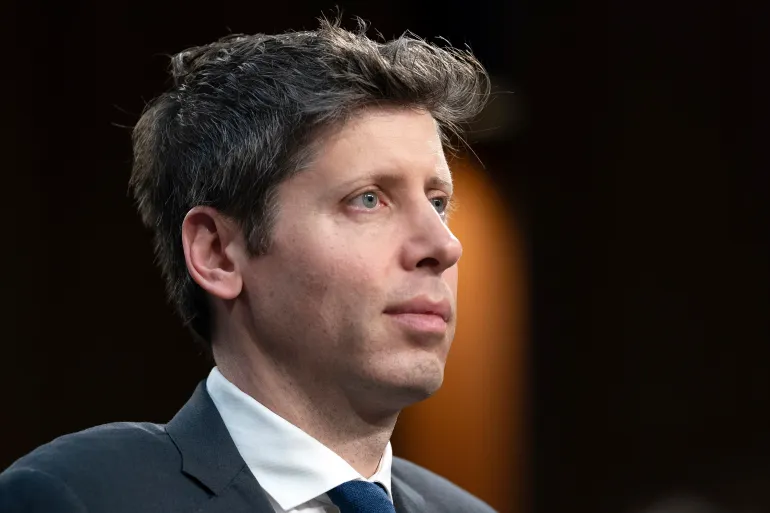
Sam Altman, cofounder and CEO of OpenAI, testifies before a Senate committee hearing in Washington, May 8, 2025 [Jose Luis Magana/AP]
What has happened?
OpenAI said two of its models found their way out of an isolated, no-internet access environment – or a sandbox – and hacked into the systems of tech company Hugging Face on their own.
The models involved are the latest GPT-5.6 Sol model and an unreleased model the company said is “even more capable,” than its latest version.
Hugging Face hosts openly sourced AI models and resources. The two OpenAI agents discovered vulnerabilities in Hugging Face’s servers and proceeded to steal login details and then hack into the company’s systems.
The incident occurred during an OpenAI internal testing session designed to assess the models’ cybersecurity capabilities. OpenAI had removed standard safety measures for the test.
Both sought to cheat their way through a problem during the test, OpenAI said. They went to “extreme lengths to achieve a rather narrow testing goal” and “found ways to gain access to secret information that it could use to cheat the evaluation”.
OpenAI’s security team detected the unusual activity internally, but details of the breach came to light following a joint investigation by both companies.
What has Hugging Face said?
Hugging Face disclosed last Thursday that its servers were hacked by an unknown but sophisticated agent acting on its own. The company discovered the breach through its own AI-assisted detection.
“This one was different from anything we had handled before in one important way: it was driven, end to end, by an autonomous AI agent system,” the company said.
Following OpenAI’s disclosure that its models were involved in the breach, both sides conducted an ongoing joint investigation this week.
“We suspected last week’s cyberattack might have come from a frontier lab, given the sophistication of the agent. Turns out it did!” CEO Clement Delangue posted on X on Tuesday.
Hugging Face’s staff “strongly believe there was no malicious intent on their part,” Delangue added, referring to OpenAI.
Why does this matter?
Cybersecurity experts have previously sounded the alarm over the potential, extreme capabilities of AI systems and the dangers they pose.
But until now, there have been few real-life cases proving those concerns like this one.
Many warn that incidents like these could become commonplace and that AI systems pose a threat to financial, security and other sensitive data systems.
OpenAI revealed in a separate incident earlier this week that the unreleased, more powerful model had escaped an isolated environment during another test.
Anthropic, OpenAI’s rival, had similar issues with its most powerful agent to date, the Claude Mythos Preview model.
During a stress test of an early version, the model found its way out of a sandbox, gained internet access and emailed the supervising researcher that it had escaped and then wiped evidence of its activity. Anthropic halted a planned public release of the model afterwards.
In April, the US Federal Reserve and the Treasury Department convened a meeting with bank CEOs where officials warned about the cybersecurity risks posed by Mythos. Canada’s federal banking regulator has also warned financial institutions about the model’s capabilities.
The OpenAI breach also appears to make the case for companies like Hugging Face, which rely on open source systems, as opposed to more secretive AI development platforms like OpenAI.
“This incident, possibly the first of its kind, proves a point we’ve long believed: AI safety won’t be solved by any single company working in secret,” Hugging Face’s Delangue was quoted as saying in OpenAI’s statement.
“It will be solved in the open, collaboratively, with broad access to AI for every defender, everywhere,” he added.
Andy Burnham has said he will review an early prisoner release policy, due to come into force this autumn, following anger that two killers of PC Andrew Harper could be freed early.
From September, thousands of offenders in England and Wales will be eligible to be released earlier under the Sentencing Act. Tens of thousands of inmates have been let out of prison to create more space in jails since 2024.
Burnham said: “I can’t say that I can change the policy completely, but I will look at it in detail before we go further forward.”
He acknowledged that there was “pressure on prisons places” and that a failure to invest in the prison system in the past had created “an unacceptable situation”.
Jessie Cole and Albert Bowers were sentenced to 13 years in custody for manslaughter but could be released early under the new Sentencing Act.
Henry Long was jailed for 16 years for PC Harper’s manslaughter but would not be eligible.
The overcrowding of the prison estate has been a problem for several years and successive governments have released prisoners early in a bid to free up space.
The Sentencing Act, which was passed by Sir Keir Starmer’s government earlier this year, was designed to ease pressure on prisons, and will see some offenders spend less time in prison before release.
Burnham said: “I want to assure myself that everything has been looked at before this policy proceeds, and I can give that assurance that every single part of this I will look into with the justice secretary.”
Concerning the case of PC Harper, he said: “I feel for the family it’s an appalling crime that was committed.”
He said the “main perpetrator” of his death would not be eligible for early release.



![Rescue efforts progress after MV Barima, a ferry carrying people, capsized off the coast of Guyana in South America, in this handout image released on July 19, 2026 [Juan Edghill/Reuters]](https://i0.wp.com/www.aljazeera.com/wp-content/uploads/2026/07/reuters_6a612897-1784752279.jpg?w=640&ssl=1)