‘Arbitrary measures’: Lula slams US ‘terror’ designation for Brazil gangs | Government News
The president of Brazil, left-wing leader Luiz Inacio Lula da Silva, has denounced a decision by the United States to designate two of the South American country’s criminal networks as “terrorists”, warning that the label could be a “setback” for local law enforcement efforts.
The condemnation came in a 435-word message posted to Lula’s social media platforms on Friday.
Recommended Stories
list of 3 itemsend of list
In it, Lula drew a line between criminal activities and international terrorism, which is often understood to use violence for political or social aims.
“The terror inflicted by these organisations upon communities seeks to generate profit through crime — specifically through drug and arms trafficking,” Lula wrote.
Those activities, however violent, “must not be conflated with the ideologically, politically, or religiously motivated actions characteristic of international terrorism”, he added.
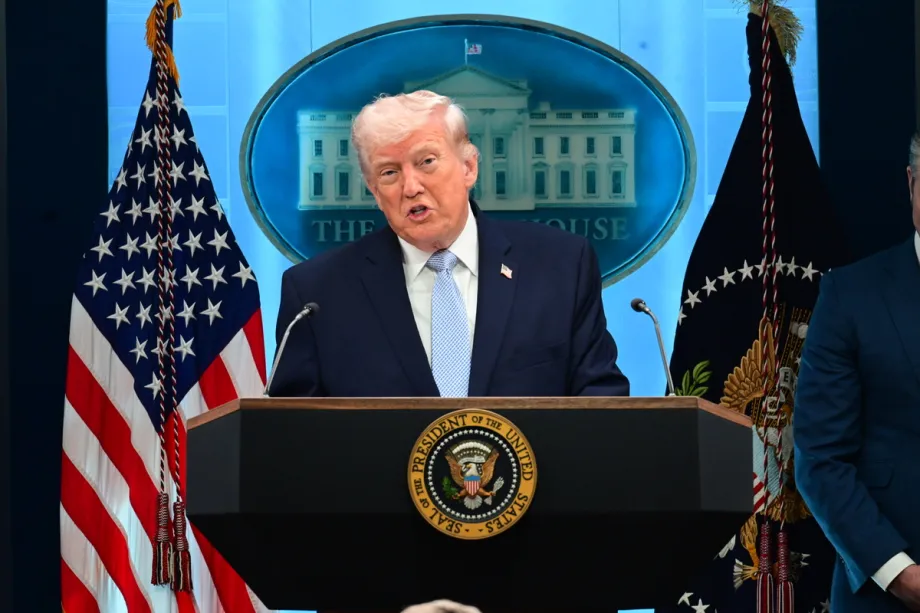
Lula’s statements came in response to an announcement a day earlier from the administration of US President Donald Trump.
Pushback against ‘terrorist’ label
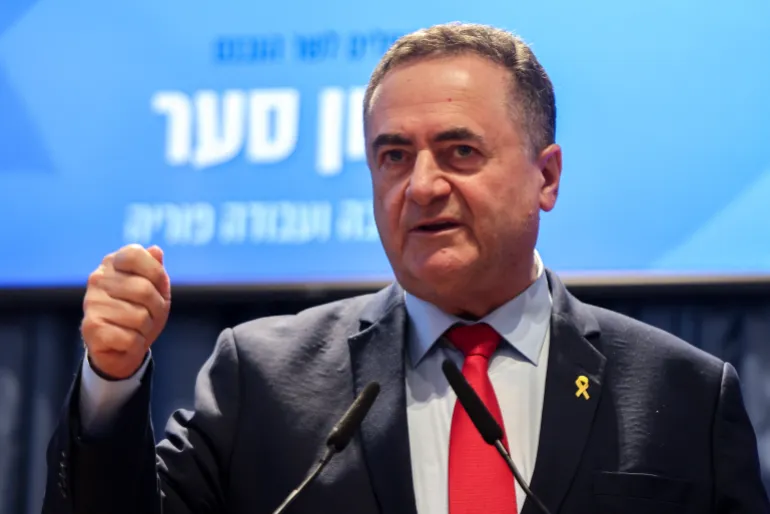
On Thursday, US Secretary of State Marco Rubio revealed that he had designated Brazil’s two largest criminal groups — the Primeiro Comando da Capital (PCC) and the Comando Vermelho (CV) — “specially designated global terrorists”.
He also outlined plans to add the two groups to the list of “foreign terrorist organisations”, effective June 5.
Rumours had swirled for months that the Trump administration would apply the “terrorist” label to the two groups. But Lula and his ministers had pushed back, calling on Trump to hold off.
“Terrorist” designations freeze all US-based assets connected to the targeted groups, but they can also be used to penalise anyone who offers “material support or resources” to them.
Experts warn that such restrictions could potentially affect financial institutions and even the victims of such groups, including businesses and individuals who might be forced to pay extortion.
Lula has also expressed concern that the “terrorist” label could pave the way for US military intervention, a fear he reiterated in Friday’s statement, though he never named Trump outright.
“We remain fully prepared to develop joint solutions that yield mutual benefits for all nations involved,” Lula wrote.
“However, we will not tolerate the imposition of arbitrary measures from abroad, nor will we accept their use as a pretext to undermine our sovereignty or our economy. Unilateral, non-negotiated measures can undermine the fight against criminals and trigger actions that endanger the lives of people who have absolutely no connection to crime.”
A tight election in Brazil
A prominent left-wing leader in Latin America, Lula is in the midst of a heated election season, as he seeks a fourth nonconsecutive term as Brazil’s president.
Previously, he served as president from 2003 to 2011, before being re-elected to a third term in 2022.
In that race, he defeated the right-wing incumbent, Jair Bolsonaro, who would later be convicted of attempting to overturn the results of the race. Bolsonaro is currently serving a 27-year prison sentence.
His eldest son, Senator Flavio Bolsonaro, is thought to have been instrumental in Trump’s decision to issue the “terrorist” designations. The senator is currently running against Lula in the 2026 presidential election, and the two have been locked in a tight race.
This week, as he visited the White House, Senator Bolsonaro confirmed to reporters that he intended to seek “terrorist” designations for both the Primeiro Comando da Capital and the Comando Vermelho.
Trump has close ties to the Bolsonaro family, and he has previously intervened in elections around the world on behalf of right-wing candidates.
In Friday’s post, Lula accused Senator Bolsonaro of leveraging his family connections to “petition foreign authorities” for favour.
“It is deplorable that, once again, members of the Bolsonaro family have travelled to the United States to advocate for foreign intervention in Brazil,” Lula wrote.
He pointed to alleged efforts to stop the criminal prosecution of Jair Bolsonaro. Currently, one of the ex-president’s sons, Eduardo Bolsonaro, is facing obstruction charges related to efforts to lobby Trump to intervene in the case.
Trump ultimately did impose steep sanctions against Brazilian products in August 2025, citing the Bolsonaro trial as a reason.
Concerns about sovereignty
Under Trump, the US has taken an increasingly expansionist view towards the Western Hemisphere, reviving the 19th-century Monroe Doctrine, which described the Americas as Washington’s sphere of influence.
Trump himself has used crime as justification for taking unilateral military action in the region. Since September, his administration has conducted 59 strikes against alleged drug-trafficking boats in the Caribbean Sea and eastern Pacific Ocean, killing at least 196 people.
And on January 3, he launched an early-morning military operation against Venezuela, culminating in the abduction and imprisonment of then-President Nicolas Maduro on drug-trafficking charges.
While the Bolsonaro family has courted Trump in recent months, Lula has criticised those military-led actions as unjustified.
But security is expected to be a dominant issue in October’s presidential race. This week’s “terrorist” designations are likely to put Lula in an awkward position, forcing him to condemn the label without downplaying the extent of the violence.
Lula has attempted to brush off right-wing criticism that he has been lax on crime, pointing to his government’s recent $11bn investment in the “Brazil Against Organized Crime” programme.
That follows a separate $2bn programme in March to bolster the country’s prisons, improve homicide investigations and disrupt arms trafficking and other financial transactions carried out by criminal groups.
Still, Lula and Bolsonaro remain neck and neck in the lead-up to October’s election.
On May 16, the polling firm Datafolha found that both candidates would receive 45 percent of voter support in a one-on-one race, with 9 percent of voters indicating they would cast a null vote.
Another 1 percent identified as undecided.