Discover the latest happenings and stay in the know with our up-to-date today news coverage. From breaking stories and current events to trending topics and insightful analysis, we bring you the most relevant and captivating news of the day.
Women in eastern Democratic Republic of the Congo are disproportionately impacted by Ebola as shortages of protective gear amid funding cuts accelerate the spread of disease. Al Jazeera’s Imogen Kimber reports how these caregivers to the living and the dead are most at risk.
Qatar’s Deputy Prime Minister Sheikh Saoud bin Abdulrahman bin Hassan bin Ali Al Thani has told the Shangri-La Dialogue that his country would oppose a permanent toll for passage through the Strait of Hormuz.
He added that Qatar would find a temporary fee negotiable, if it was to be used to help reopen the waterway, by removing sea mines, for example.
At least 22 people have been killed and 36 others injured when a truck carrying recently returned Afghan refugees overturned in eastern Afghanistan’s Laghman Province.
Officials say the driver lost control of the vehicle and authorities have launched an investigation.
A Palestinian doctor has been killed and three people injured in an Israeli attack in central Gaza, as Israeli settlers attacked Palestinian homes and property in northern and southern parts of the occupied West Bank.
The attacks across Palestine on Saturday, the fourth day of the Muslim holiday of Eid al-Adha, came amid continued Israeli violations of a United States-backed “ceasefire” implemented in October aimed at halting Israel’s genocidal war on Gaza.
Recommended Stories
list of 3 itemsend of list
Dr Jamal Abu Aboun, the head of anaesthesia at Al-Yafa Medical Hospital in central Gaza’s Deir al-Balah, was killed in an Israeli strike near the Al-Aqsa Martyrs Hospital, also in Deir al-Balah on Saturday.
“The body of Jamal Abu Aoun and three injured people, including a child, had arrived at the hospital following an Israeli drone strike that targeted a group of civilians near the hospital,” a medical source at Al-Aqsa hospital told the Anadolu news agency.
Earlier, Israeli artillery shelling targeted areas east and south of Khan Younis city in southern Gaza. Another artillery strike targeted al-Bureij refugee camp in central Gaza.
At least 922 Palestinians have been killed and 2,786 others injured in Israeli attacks since the October “ceasefire”, according to the Gaza Media Office.
Israel launched its genocidal war on Gaza in October 2023, killing at least 72,000 Palestinians and injuring over 172,000 others, according to Palestinian figures.
In testimonies to The Associated Press news agency, Israeli soldiers described a climate of dehumanisation, permissive rules of engagement and the routine killing of Palestinians during the “ceasefire”.
Reservists who served in Gaza between last October and January said Israeli troops frequently opened fire on Palestinians approaching or crossing the so-called “Yellow Line”, an often poorly marked boundary separating Israeli-occupied areas from the rest of the enclave.
One soldier said that fellow troops celebrated after a strike on a vehicle carrying Palestinians killed everyone inside. “It was a jungle,” the soldier told AP. “After the ceasefire, the order was: If someone crosses the line, you shoot them.”
Another reservist said commanders repeatedly emphasised holding territory at all costs. “There was a general feeling that human lives are not valuable,” he said.
Settler attacks in occupied West Bank
Elsewhere in occupied Palestine, Israeli settlers attacked several homes early on Saturday in the town of Beita, south of the city of Nablus in the northern West Bank, according to Palestinian news agency, Wafa.
They threw stones at houses and smashed several vehicles, Wafa reported.
State-run Voice of Palestine radio reported Israeli forces firing light bombs into the sky over the town.
In the southern West Bank, settlers attacked Palestinian farmland and damaged several trees in Khirbet el-Muraq in Masafer Yatta, activist Osama Makhamra, who follows Israeli violations south of Hebron, told reporters.
Israeli settlers carried out at least 540 attacks in April against Palestinians and their property in the occupied West Bank, including Jerusalem, according to a monthly report by the Palestinian state-run Wall and Settlement Resistance Commission.
The attacks ranged from “direct physical violence, uprooting trees, burning fields, preventing farmers from accessing their land, seizing property, as well as demolishing homes and agricultural structures”.
Israeli army raids, arrests and settler attacks have intensified across the West Bank since the start of the genocidal war in Gaza.
According to Palestinian figures, Israeli forces and settlers have killed 1,168 Palestinians, injured 12,666, displaced about 33,000, and detained nearly 23,000 in the West Bank since October 2023.
Videos show Indonesia’s Mount Merapi spewing a column of ash around 2 kilometres high in West Sumatra’s Tanh Datar District. Authorities have enforced an “exclusion zone” within a 3-kilometre radius around Mount Merapi since an eruption in 2023.
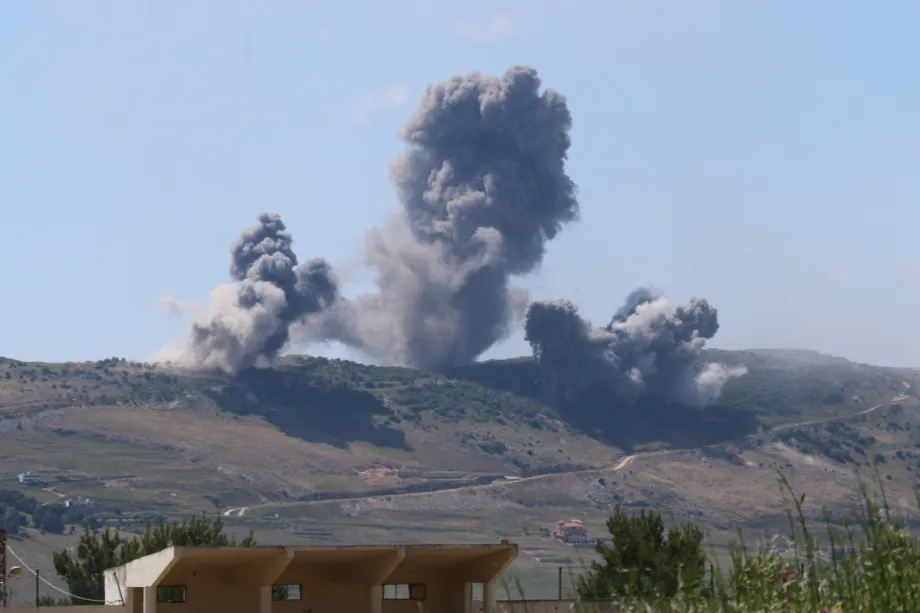
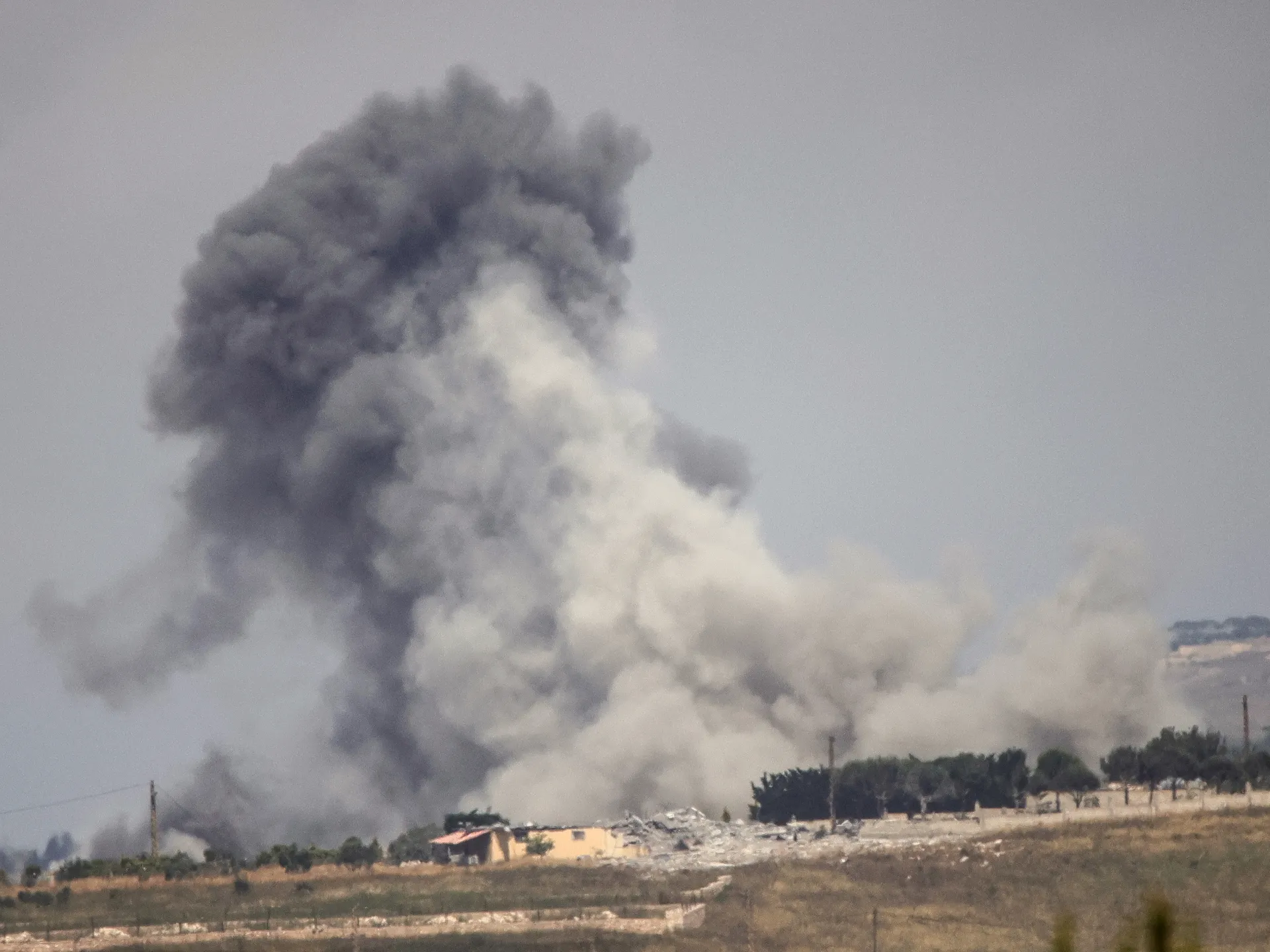
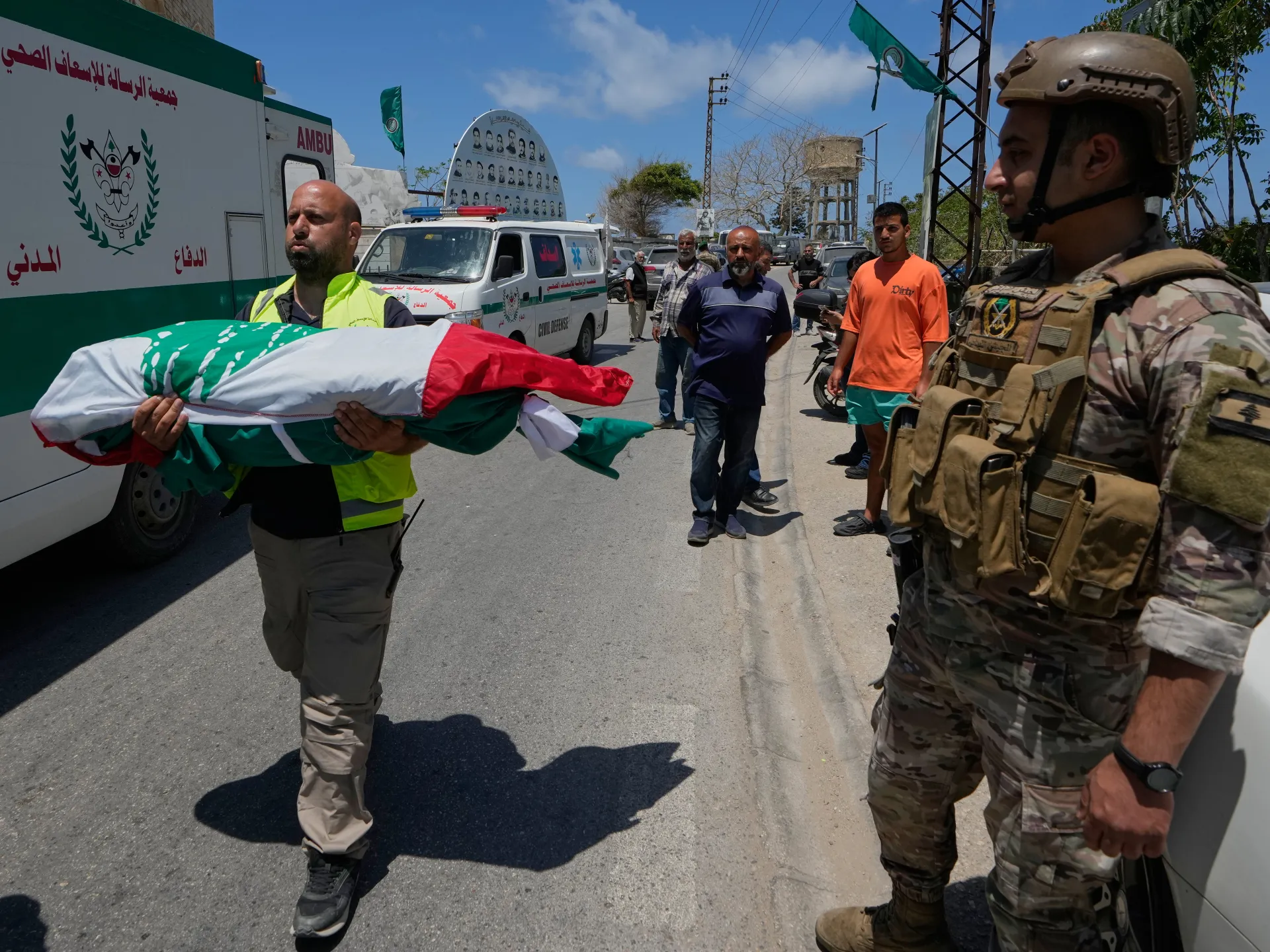
At least 14 people were killed and several others wounded in Israeli airstrikes in southern Lebanon on Sunday amid continued violations of an ongoing ceasefire, Anadolu reports.
The Lebanese Health Ministry said 11 people were killed and nine others injured in an Israeli strike on the town of Seir al-Gharbiyeh in Nabatieh province in southern Lebanon.
A fighter jet struck the town of Bazouriyeh in the Tyre district, killing one person and injuring two others, the state news agency NNA reported.
An Israeli drone strike also killed a young man in the town of Arabsalim in Nabatieh district, the outlet said.
A house was also hit in an Israeli strike in the town of Toura in Tyre, killing a woman and injuring two people.
The Israeli attacks came despite a US-mediated ceasefire that is supposed to remain in effect until early July.
More than 3,100 people have been killed, over 9,500 injured, and 1.6 million displaced by Israeli bombardment in Lebanon since March 2 amid cross-border attacks with Hezbollah, according to Lebanese officials.
Israel’s military has advanced beyond Lebanon’s Litani River for the first time since 2006.
Israel’s military has advanced beyond the Litani River in southern Lebanon for the first time since 2006 and appear poised to encircle the major city of Nabatieh.
Senior Lebanese military sources on Saturday told the Turkish state news agency Anadolu that Israeli forces had crossed the Litani River, which Israel has declared the perimeter of its unofficial buffer zone.
Recommended Stories
list of 3 itemsend of list
Israeli forces are now on the outskirts of Nabatieh, a city that is key to southern Lebanon’s economy and a cultural hub for the region. If the Shia-majority city were to fall, it would mark a significant development in the war on Lebanon, which began in October 2023 and subsequent official ceasefire.
Nabatieh is viewed by many Lebanese as a symbol of resistance due to its historic role on the frontline of Israeli assaults.
Reporting from the southern city of Tyre, Al Jazeera’s Obaida Hitto said Israel was expanding its air campaign in southern Lebanon and encircling Nabatieh in preparation for a potential assault on the city.
“It looks like Israel is trying to make this final push to encircle Nabatieh, breaking through the second and third lines of defence of Hezbollah and isolating the western Bekaa Valley from the south of the country,” Hitto said.
Israel has issued evacuation orders for at least 10 villages in southern Lebanon, as it expands its invasion, despite being engaged in ongoing peace talks with Lebanese officials.
The Israeli army’s Arabic spokesperson, Avichay Adraee, instructed residents in several Lebanese villages to evacuate immediately, warning they could be killed if they remained.
The order came the day after officials from both countries met in Washington to discuss a permanent end to the war. It began in early March when Iran-backed Hezbollah began attacking Israel following the assassination of Iran’s Supreme Leader, Ali Khamenei.
Hitto said people fleeing their homes have few options, with more than 20 percent of the population — around 1.2 million people — displaced by fighting.
“Those options are turning into basically people living with relatives if they have that option, or people living in makeshift camps in public parks and public spaces. I’ve seen many families living in their vehicles for long periods of time,” Hitto said.
“Some of these families have been continuously displaced since 2023,” Hitto added.
The latest forced displacement orders are a further test to the nominal “ceasefire” in place since mid-April and repeatedly violated by Israel. It justifies its actions by saying it is targeting Hezbollah as part of efforts to disarm the group.
On Friday, at least 14 people were killed in Israeli air raids in southern Lebanon.
Lebanese officials are working to disarm Hezbollah, but the task has proved extremely difficult.
Lebanese and Israeli officials are currently engaged in negotiations to end the war, marking the first time the two sides have spoken directly in decades.
The talks are being facilitated by the United States, and a new round is expected in Washington next week.
Lebanon’s President, Joseph Aoun, held talks with Prime Minister Nawaf Salam on Saturday to discuss the security situation and ongoing negotiations with Israel. According to the state-run National News Agency, they agreed to intensify efforts to end the war, which has triggered a humanitarian crisis.
Aoun also spoke by phone with US Secretary of State Marco Rubio and stressed the importance of Israel respecting the current ceasefire.
The US and Iran have agreed in principle to a deal that would reopen the Strait of Hormuz, in exchange for Tehran’s commitment to dispose of its highly enriched uranium, a US official said, according to a report by The New York Times on Sunday.
The official said that the agreement has not yet been signed and remains subject to final approval by US President Donald Trump and Iran’s Supreme Leader Mojtaba Khamenei, a process that could take several days, noting that the method for disposing of Iran’s highly enriched uranium is still being negotiated.
The proposed deal does not address Iran’s missile stockpile nor include a moratorium on uranium enrichment, the official said, adding that these issues are expected to be handled in future rounds of talks.
According to a Fox News report on Sunday, the official suggested that the US could consider “significant accommodations” on sanctions relief if Iran agrees to make similar concessions regarding its enriched uranium stockpile.
“Our plan is to deal with all of their stockpile of the enriched material,” the official said, adding that Washington sees Tehran making “serious accommodations” not previously seen in earlier negotiations, according to the report.
The official also rejected the idea of any “tolling” mechanism for the Strait of Hormuz, saying such an arrangement would not be acceptable and had not been proposed by either side, the report noted.
According to a separate CBS News report, the official said the administration views the emerging agreement as stronger than the 2015 nuclear deal reached under former US President Barack Obama, which allowed uranium enrichment up to certain levels.
As part of the agreement, the US would lift its blockade on vessels entering and leaving Iranian ports. The official said the US Central Command and Gulf partners would coordinate to ensure safe passage, stressing this should not be viewed as a toll system.
The official also said US Vice President JD Vance, Middle East Envoy Steve Witkoff, and Trump’s son-in-law Jared Kushner have been involved in the talks, adding that Washington is seeking to include all regional allies in the process, the report added.
IMAGES of attractive, stylish celebrities in the media are putting unreasonable pressure on men to make the effort to look half-decent.
Actors like Timothée Chalamet and Ryan Gosling who are both physically fit and well-groomed are being blamed for new patterns of dysfunctional behaviour in men, such as stopping to sniff the shirt they found on the floor before putting it on.
Style consultant Charlotte Phelps said: “In the past men have relied on wealth or the fleeting burst of confidence that accompanies binge drinking in order to snare a mate.
“But the increasing prevalence of men who look fit and clean is changing the rules and making normal males uncomfortable with their natural, healthy nose hair, shit haircuts and pallid, distended bellies. Albeit not quite uncomfortable enough to do anything about it.”
Man Ryan Whittaker said: “Yesterday I noticed that every single pair of boxer shorts I own has a faded but clearly visible skidmark and thought, ‘that’s not very appealing’. Clearly I need to see a psychiatrist urgently about this obsessive cleanliness disorder I’ve developed.
“I’ve also become obsessed with having abs like Paul Mescal. So I’ve sort of drawn some on, using a black marker pen I found down the back of the sofa while looking for crisps.
Weekly insights and analysis on the latest developments in military technology, strategy, and foreign policy.
The U.S. Space Force has awarded SpaceX a $4.16B deal to help accelerate work on what could be a game-changing space-based air moving-target indicator (AMTI) sensor network. The service says it now hopes to have an “early capability” in orbit by 2028, years ahead of the timelines officials have put forward in the past.
Aircraft like the E-7 Wedgetail seen here have historically been critical providers of AMTI capability. Australian Department of Defense
“The long-standing method of military airborne platforms to track moving targets faces continued challenges as adversaries develop increasingly sophisticated anti-access/area-denial (A2/AD) systems,” the Space Force said in its press release about the new deal with SpaceX today. “To compliment [sic; complement] traditional airborne sensing, the requirement for a layered, highly resilient tracking architecture is evident. SB-AMTI aims to enhance the Space Force’s capabilities to the Joint Force through the establishment of a persistent, global capability to sense and track airborne targets from space.”
The Space Force has described the $4.16 billion deal with SpaceX for the Space-Based Airborne Moving Target Indicator (SB-AMTI) program as a “competitive Other Transaction Authority (OTA) agreement,” rather than a traditional contract. The agreement came via the office of the Portfolio Acquisition Executive for Space-Based Sensing & Targeting (PAE SBST).
“This initial award is projected to field a constellation of satellites by 2028, providing the Joint Force with an early capability to eliminate operational blind spots,” according to the Space Force release.
DARPA
In the past, U.S. officials have generally talked about space-based AMTI becoming a reality sometime in the 2030s. Work is underway to push ground moving-target indicator (GMTI) tasks into orbit, as well.
Some degree of on-orbit prototype AMTI sensor testing has already been ongoing for at least a year, if not much longer, but this work has been heavily classified. In addition to the U.S. Air Force and Space Force, both of which fall under the Department of the Air Force, the National Reconnaissance Office (NRO). The NRO, the activities of which are shrouded in heavy secrecy, is a U.S. military organization that serves as America’s main remote sensing intelligence arm.
“The capabilities that are happening in space are far exceeding our expectations,” then-Air Force Maj. Gen. Christopher Niemi said at a hearing earlier this year as part of a response to a question about plans for the E-7. He declined to offer more details publicly. Niemi, who has since been promoted to lieutenant general, is currently Deputy Chief of Staff of the Air Force for Force Modernization, and the service’s Chief Modernization Officer
SpaceX has already reportedly been deeply involved in this work, too, as you can read about more in this past TWZ feature. This underscores the company’s ever-growing dominance globally in all aspects of the space industry, which we will come back to later on.
As mentioned, a functional, persistent, and distributed AMTI (and GMTI) sensor network in orbit has the potential to be game-changing. As TWZ wrote back in 2024, talking primarily about the future of space-based GMTI capabilities:
“A larger, distributed constellation would have the ability to monitor huge swathes of the Earth simultaneously, and depending on the size of the constellation, at least far more persistently to seamlessly. This could make it difficult, if not impossible, for an opponent to hide activities of interest. A very low revisit rate, or even eliminating revisit rate altogether, could even open up the possibility of continuous ‘streaming’ coverage of a location from low Earth orbit. This would also be essential for persistent GMTI coverage that tracks ground movements in real time that will actually be high enough in fidelity to guide weapons onto those tracks. It’s possible that aerial tracking could also be a function, as well, even to a more limited degree. The E-3 Sentry Airborne Warning and Control System (AWACS) will also be replaced at least partially by space-based capabilities, along with the E-7 Wedgetail.”
A US Air Force E-3 Sentry AWACS jet. USAF
“There is also a fair chance that this is another type of system, perhaps to execute broad area optical/infrared imaging with some exotic capabilities to provide tracking. We just don’t know.”
“Regardless, yes, we are talking about the possibility of panoptic or near panoptic targeting and surveillance from space.”
“Greater collaborative capabilities, especially ones enabled by the use of machine learning and artificial intelligence (AI) technologies, could help to find targets of interest and anomalies far faster than ever before. This could also open a door to more autonomous collection, tasking/retasking, and other capabilities, as well. Areas of interest that need seamless coverage could have extra satellites retasked to the necessary orbit in order to do so automatically, without the need for human deconfliction and even direct operator direction.”
It is not hard to imagine how the satellite constellation being described here would fundamentally change the U.S. military’s ability to not just spot and track targets globally, but also close the kill chains to engage them, even at very long ranges. This has massive implications for future net-centric warfare where all sorts of tangential capabilities will increasingly be networked together. It might impact how tactical aircraft are equipped in the future, including the need for their own radars. There could at least be a reduced need for them to use their own radars to guide missiles, even when no supporting sensor network within the Earth’s atmosphere has relevant data to provide.
Unlike having to rely on a single plane in a single surveillance place, a space-based sensor network made up of a very large number of individual satellites would also be highly resilient to attacks, as well as other attrition just due to technical breakdowns or other factors.
All this being said, U.S. officials have been open about potential challenges when it comes to making space-based AMTI capabilities a reality, even just compared to establishing GMTI networks in orbit.
L3Harris
“So GMTI [ground moving-target indicator capability] and AMTI [air moving-target indicator capability] sound like they’re really close, just because one little letter that is all you changed, [but it] turns out they’re pretty different,” Chief of Space Operations Gen. Chance Saltzman, U.S. Space Force’s top officer, said during a press briefing on the sidelines of a conference in December 2025, according to Breaking Defense. “What it takes to accomplish AMTI is different than what it takes to accomplish GMTI.”
“Things on the ground move slower than things on [sic] the air, so [they] require different levels of fidelity tracks,” he added.
“The [AMTI] data the Intelligence Community and warfighter need presents a multi-phenomenology challenge that requires automated orchestration of the NRO’s collectors, low-latency data transport, and rapid data fusion by the NRO’s unmatched space communications and ground architecture capabilities,” a spokesperson for NRO also told Breaking Defense earlier this year.
It’s worth noting here that satellites with sensors are only one component of the total equation. Robust, resilient, and secure communications networks will be vital to getting the data collected where it needs to go. This is a separate area where SpaceX is already playing an increasingly central role with its Starlink and Starshield networks, as you can read more about here. Laser-based communications relays are set to be another key supporting capability.
Watch SpaceX deploy Starlink satellites into space
In its announcement today, the Space Force did explicitly stress that SpaceX will not be the only company supporting the SB-AMTI effort going forward, and that it has established a larger “vendor pool.”
“By utilizing this multi-vendor framework, we are capitalizing on established industry capacity and continuously evaluating and onboarding the best tech to field this essential capability at speed and scale,” Space Force Col. Ryan Frazier, the acting PAE SBST, said in a statement. “We will not leverage any one single provider; instead, we are partnering with a highly diversified pool of traditional and non-traditional vendors, each bringing various capabilities to support the SB-AMTI architecture, ensuring the Joint Force has access to a strong, competitive industrial base well into the future.”
At the same time, as TWZ has noted in the past, SpaceX’s dominance in the market gives the company a clear advantage for securing further deals. This extends to the additional demands to put all this architecture in space. At least currently, no other company has the same capacity to provide the U.S. military with the kind of reliable access to space at the required cadence, and within budget constraints. SB-AMTI is already a major budget priority, with the Space Force asking for more than $7 billion in additional funds to procure additional elements of the system in its 2027 Fiscal Year budget request.
That being said, the new $4.16 billion agreement with SpaceX makes clear that the Space Force is pressing ahead with its plans for a space-based AMTI sensor network with hopes that at least an early operational capability could be in place within the next two years.
U. S. Defence Secretary Pete Hegseth called on Asian allies to increase military spending to counter China’s rising influence during his speech at the Shangri-La Dialogue in Singapore. He expressed concern over China’s military buildup and its potential to disrupt the regional balance of power. Hegseth emphasized the need for a robust network of allies that can deter aggression and maintain stability. The U. S. expects allies to raise defense spending to 3.5% of GDP, while the U. S. itself is investing $1.5 trillion in its military.
Hegseth addressed the need for action over discussions, suggesting that the region requires more military resources, such as ships and submarines, rather than just conferences. He underlined that partners want stability and that the U. S. must exhibit strength and disciplined leadership. He also noted improvements in U. S.-China relations, citing increased military communication to help manage tensions, while acknowledging that the relationship remains complicated.
Zhou Bo, a Chinese delegate, recognized a better tone in Hegseth’s remarks compared to the previous year, attributing this change to previous diplomatic engagements. He stated that both nations have communication channels open and that the situation might not be as severe as perceived. Hegseth reiterated President Trump’s call for allies to take more responsibility for their defense costs, proclaiming an end to U. S. defense subsidies for wealthy nations, emphasizing the need for allies to contribute actively.
Hegseth praised contributions from various allies and highlighted Japan’s efforts to enhance its defenses alongside the U. S. Regarding the Middle East, he stated the U. S. is prepared to resume strikes on Iran if diplomatic efforts fail and emphasized the ability to focus on both Asian and Middle Eastern interests simultaneously.
On the topic of arms sales to Taiwan, Hegseth avoided directly addressing concerns but affirmed that decisions about such sales are ultimately up to President Trump. The U. S. is reportedly considering a substantial arms package for Taiwan, which China views as its territory. Hegseth assured that there has been no change in U. S. policy towards Taiwan despite the ongoing dynamics in U. S.-China relations.
Mourinho was seen speaking with Vinicius after he walked off the pitch following the interaction with Prestianni.
But it was Mourinho’s post-match comments that were the most shocking.
While publicly backing his player Prestianni, Mourinho suggested Vinicius had incited tensions through his celebration in front of the home support.
“You score a goal from another world, why celebrate like that?” Mourinho said.
“The same thing always happens in so many stadiums. In how many states has this happened? In how many stadiums? How many? How many?
“He’s an out of this world player, I love him. Vinicius tells me one thing and Prestianni tells me another. I want to be balanced.”
The remarks sparked widespread criticism, with many accusing Mourinho of shifting attention away from the racism allegations and placing responsibility on the victim instead.
In addition to expressing his belief that Vinicius had been disrespectful with his goal celebration, he pointed to the club’s legendary striker Eusebio as proof that Benfica are not a racist club.
Asked if he felt Vinicius incited the crowd, Mourinho said: “Yes. I believe so.
“It should be the crazy moment of the game, an amazing goal. Unfortunately [he was] not just happy to score that astonishing goal. When you score a goal like that, you celebrate in a respectful way.”
He added: “When he was arguing about racism, I told him the biggest person in the history of this club [Eusebio] was black.
“This club, the last thing that it is, is racist. They [Vinicius and Prestianni] told me different things. But I don’t believe in one or another. I want to be an independent.”
Five Palestinians, including three members of the same family, were killed and five others injured in fresh Israeli attacks in the Gaza Strip on Sunday amid daily violations of an ongoing ceasefire, medical sources said.
One of the Palestinians was killed by Israeli gunfire in the center of Jabalia refugee camp in northern Gaza and his body was transferred to Al-Shifa Hospital in western Gaza City, the sources told Anadolu.
A couple and their child were also killed, and three others were wounded in an Israeli airstrike that targeted their home in the Nuseirat refugee camp in central Gaza, the sources added.
In a separate incident, the sources said a child died from injuries sustained in an Israeli strike that targeted a police headquarters in northwestern Gaza on Saturday.
In northern Gaza, a Palestinian fisherman was moderately injured after Israeli naval forces fired shells and machine-gun fire at fishing boats off the coast of Gaza City, according to the sources.
Another Palestinian was injured by shrapnel from a shell fired by Israeli forces on the beach in the Al-Sudaniya area, northwest of the enclave.
In a related development, the Israeli army carried out demolition operations targeting buildings and facilities in northern Gaza. Local sources reported hearing a large explosion resulting from the demolitions.
In Khan Younis in southern Gaza, Israeli forces also carried out similar demolition operations east of the city, accompanied by gunfire and artillery shelling near Bani Suheila roundabout, according to the local sources.
According to Gaza’s Health Ministry, over 880 people have been killed and more than 2,645 others injured in Israeli attacks since the ceasefire was announced on Oct. 10, 2025.
The agreement was meant to halt Israel’s two-year war that killed more than 72,000 people, most of them women and children, injured over 172,000 since October 2023, and caused massive destruction affecting 90% of civilian infrastructure.
Russian-made T-72B1V tanks in a Venezuelan military parade in 2011. (Archive)
Caracas, May 29, 2026 (venezuelanalysis.com) – The Russian government has urged Venezuelan authorities to “reject approaches” from the US and allies to transfer military equipment to Ukraine.
Russian Security Council Secretary Sergei Shoigu raised the concerns during a meeting with Venezuelan Major General José Ornelas Ferreira, secretary general of the Caribbean nation’s National Defense Council, on Wednesday in Moscow.
The Venezuelan official was a guest at the First International Security Forum, held from May 26-29 at the Russian capital with the presence of 140 top officials from over 120 countries worldwide.
“We are aware of the activity of Western emissaries who are attempting to involve Latin American countries in various arms supply schemes for the benefit of the Kyiv regime,” Shoigu said in a bilateral meeting with Ornelas. “We expect you to reject such approaches and inform us of any such Western attempts.”
Moscow and Caracas have maintained a longstanding military alliance through which Russia has provided Venezuela with a broad supply of weapons, equipment, and technical assistance for decades, forming the backbone of the Venezuelan arsenal. The cooperation dates back to the 2000s as Hugo Chávez sought to reverse the US dependence of the armed forces.
Though neither US nor Venezuelan officials have commented on weapons transfer proposals, Shoigu’s warning follows publicized efforts by Washington and allies to bolster the beleaguered Ukrainian forces in the war against Russia. Kiev’s backers procure Soviet-era equipment that could be easily integrated into the battlefield.
Apart from securing supplies from Eastern European NATO members, Washington has also turned to Latin America, offering to exchange Russian and Soviet-made hardware for newer US equipment. Brazilian and Colombian leaders rejected the proposal.
In February 2024, Ecuador canceled plans to send or exchange Soviet/Russian-origin weaponry with the US, which intended to reroute them Ukraine. Ecuadorian President Daniel Noboa backtracked following Russian threats to suspend banana imports from the Andean country.
According to military analysts, Venezuela’s battlefield equipment — including T-72B1V tanks, BMP-3 infantry vehicles, Mi-17 helicopters, and 152 mm artillery systems — would be valuable on the Ukrainian battlefield and help address chronic ammunition shortages.
The recent Moscow security summit also saw Shoigu condemn the US’ “brutal armed invasion” of Venezuela on January 3 that led to the kidnapping of President Nicolás Maduro and First Lady Cilia Flores.
“We strongly condemn Washington’s actions on January 3, during which the legitimate head of state, Nicolás Maduro, and his wife were captured, and dozens of Venezuelan and Cuban citizens were killed,” the former Russian defense minister stated.
Shoigu criticized the Trump administration for “violating all fundamental norms of international law” and breaking “the principles governing coexistence among nations and respect for state sovereignty.”
The Russian official went on to reaffirm the Vladimir Putin government’s “unwavering support” for Caracas and the desire to “strengthen cooperation” in order to avoid future acts of aggression.
Shoigu likewise commented on the Venezuelan government, led by Acting President Delcy Rodríguez, pursuing a “new modality of relations” with the US and expressed hope that it would protect the Caribbean country’s “sovereignty and national interests.”
Following the January 3 attacks, the Trump White House has exacted major concessions from the acting Rodríguez administration, including seizing control of Venezuelan oil revenues, auditing its Central Bank, pushing pro-business legislative reforms, and securing the handover of former government envoy Alex Saab to face money laundering charges in Florida.
The growing US influence in Venezuela saw the Southern Command hold “rapid response” military exercises on May 23, with Osprey MV-22B aircraft flying over Caracas and landing near the US embassy compound.
US officials have acknowledged a growing “collaboration” with Caracas. During a press conference on Wednesday, Secretary of War Pete Hegseth highlighted Washington’s self-declared anti-narcotics operations in the Western hemisphere and the joint work with local governments.
“Just think about the fact that our Southern Command commander landed by helicopter at the US Embassy in Caracas peacefully,” Hegseth said alongside Trump. “He was welcomed by the Venezuelans because we are now partnering with them, hopefully even in our counter-cartel missions.”
The Trump official referred to Venezuela as “fundamental to securing our energy future and defending the homeland.”
Iran is ready to reassure the international community that it is not pursuing nuclear weapons or instability in the region, President Masoud Pezeshkian said on Sunday, Anadolu reports.
“Prior to the martyrdom of Ayatollah (Ali) Khamenei, Iran’s late Leader, we declared — and we reiterate now — that we are ready to assure the world we do not seek nuclear weapons,” Pezeshkian said in remarks carried by state-run news agency IRNA.
“It is rather Tel Aviv that is driving regional instability,” he said, accusing Israel of pursuing a vision of “Greater Israel.”
Iranian negotiators will never compromise on the country’s “honor and dignity,” added Pezeshkian.
His remarks came a day after US President Donald Trump on Saturday said an agreement with Iran to end the war was “largely negotiated” and awaited finalization.
Regional tensions have escalated since the US and Israel launched strikes against Iran in February. Tehran retaliated with strikes targeting Israel as well as US allies in the Gulf, along with the closure of the Strait of Hormuz.
A ceasefire took effect on April 8 through Pakistani mediation and was later extended by Trump indefinitely.
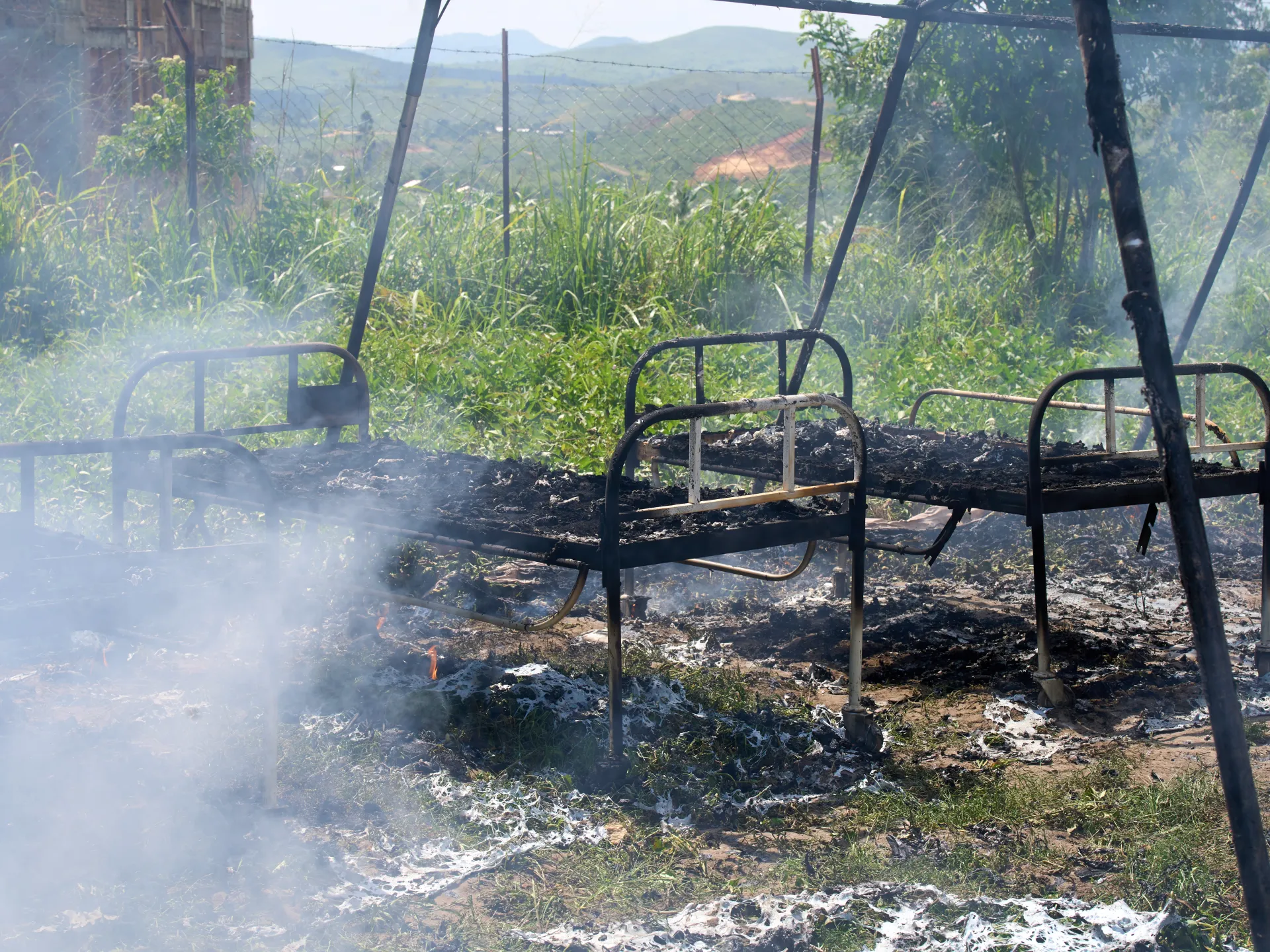
Workers in eastern DR Congo are rebuilding an Ebola treatment centre that was burned by protesters earlier this month, as health officials warn misinformation is driving families to hide sick relatives. The Congolese government confirmed over 1,000 suspected cases and at least 220 deaths since the outbreak was declared.
Louisiana lawmakers have passed a new map of congressional districts designed to help Republicans pick up a seat in the United States House of Representatives.
But to do so, the map eliminates one of the state’s two majority-Black districts, both of which are represented by Democrats.
Recommended Stories
list of 3 itemsend of list
Approval in Louisiana’s legislature came on Friday. It follows an April decision from the US Supreme Court striking down Louisiana’s current map as an illegal racial gerrymander because it was drawn to include two majority-Black districts.
That ruling, in the case Louisiana v Callais, weakened the landmark 1965 federal Voting Rights Act, meant to prevent discrimination against minorities at the ballot box.
It also intensified a national redistricting battle fuelled by President Donald Trump’s efforts to protect the Republicans’ slim House majority in the midterm elections. Louisiana is one of several Southern states now redrawing their maps to help Republicans.
Louisiana Republicans had considered drawing a map giving the party a shot at winning all six of the state’s US House seats. But that would have required adding more registered Democrats to Republican-held districts, which could have potentially backfired with Republican losses.
Republicans currently hold four of Louisiana’s six congressional seats, and they are slated to pick up a fifth with the newly passed map.
It was approved on Friday by the Louisiana state Senate in a 28-to-10 vote.
‘Vicious race to the bottom’
Republican Governor Jeff Landry is expected to sign the new map into law, even as threats of more litigation emerged Friday.
A half-hour Senate floor debate revolved around Democrats contending that the proposed map is racially gerrymandered to squeeze more Black voters, who tend to be registered Democrats, into a single district.
Democratic state Senator Royce Duplessis pointed out that some fellow Southern states, such as South Carolina, had refused to redraw their maps in the middle of an election year.
He warned that Louisiana is participating in a “vicious, vicious race to the bottom” by participating in the redistricting push.
The bill’s sponsor, Republican state Senator Jay Morris, repeatedly insisted that party affiliation, not race, drove the new district boundaries.
“I purposely put more Democrats into District 2 to make the remaining districts better performing for Republicans,” Morris said at one point.
Morris said he instructed the map demographers to avoid including any data on race or including those statistics in information shared with lawmakers before the vote.
Democratic state Senator Sam Jenkins told Morris, “I think it’s a racially gerrymandered district that’s going to get us into a lot of trouble here.”
“Agree to disagree,” Morris told Jenkins.
More litigation expected in Louisiana
Louisiana is currently using a map ordered by a lower court in 2024 to comply with the Voting Rights Act. It includes a second district with a majority-Black population.
That map, however, was challenged in court, and the Supreme Court responded on April 30 by striking it down as an illegal racial gerrymander.
Landry has postponed the state’s closed US House primary slated for May 16 to allow for the new congressional map to be implemented.
He later signed a law making the US primary open and shifted the date to November 3 to allow time for Republican lawmakers to draw and pass a new map. All candidates, regardless of party affiliation, will be on the ballot for voters in their district.
The proposed map redraws a district currently represented by Democratic Representative Cleo Fields, clustering it around predominantly white communities in the Baton Rouge area and southern Louisiana.
It also adds part of Baton Rouge to a heavily Democratic, majority-Black district based in New Orleans, represented by Democratic Representative Troy Carter.
More lawsuits are expected over the new map.
Democrats say the proposed map could draw a legal challenge over racial gerrymandering, and the American Civil Liberties Union (ACLU) of Louisiana suggested Friday that it could sue, calling the map a “racial gerrymander hiding behind the thin veneer of partisanship”.
“This fight is just beginning,” the ACLU branch added.
Meanwhile, the victorious plaintiffs in the US Supreme Court’s decision criticised the legislature’s map for leaving a majority-Black district in place.
Nationwide battle over district lines
In the weeks following the Supreme Court’s decision, other Republican-controlled Southern states have seized upon the weakened federal Voting Rights Act to redraw their own congressional districts.
So far, Republicans are winning the nationwide redistricting contest, passing more partisan maps to gain House seats than Democrats.
But that doesn’t necessarily mean they will win in the narrowly divided US House in November.
Republicans think they could gain as many as 15 seats from their redistricting efforts so far, while Democrats think they could gain six seats from new districts in California and Utah.
Meanwhile, a court decision in Wisconsin on Friday could give Democrats a new avenue to pick up seats in 2028.
The liberal-controlled Wisconsin Supreme Court said it would hear an appeal of a case filed by a bipartisan coalition of business executives that seeks to redraw the state’s Republican-friendly congressional districts. Republicans hold six of the state’s eight House seats, but only two are considered competitive.
A three-judge panel dismissed the case in April. Those who filed the lawsuit weren’t seeking a ruling in time for the 2026 election. Instead, they asked the state Supreme Court to send the case back to the lower court for a trial on their claims, which would likely not take place until 2027.
At only 16 miles (26km) long, Anguilla is the smallest of the five British Overseas Territories in the Caribbean. It was first colonized by English settlers from nearby St. Kitts in 1650. Despite some half-hearted attempts by the French to take control in the 17th and 18th centuries, the island was finally recognised as a colony by the British in 1825.
The 1830s saw a union of St. Kitts, Nevis and Anguilla on Britain’s recommendation, a move that was unpopular with the majority of Anguillans as it was thought that representation of the island was neglected.
In 1958, St. Kitts, Nevis and Anguilla became part of the Federation of the West Indies. The Federation collapsed in 1962, and St. Kitts -Nevis-Anguilla was made an associated statehood.
Resentment against this political decision grew, and on May 30th 1967, the people of Anguilla marched on the Police Headquarters and evicted the Royal St. Kitts Police Force from the island.
Britain intervened and a peacekeeping committee was established, with British authority being fully restored in July 1971. Although it took until December 19th 1980 before Anguilla fully seceded from the association, the events of May 30th are celebrated today as the most important step towards Anguilla’s autonomy.
Anguilla Day is celebrated by a colourful parade and a round-the-island boat race.
Weekly insights and analysis on the latest developments in military technology, strategy, and foreign policy.
Welcome to Bunker Talk. This is a weekend open discussion post for the best commenting crew on the net, in which we can chat about all the stuff that went on this week that we didn’t cover. We can also talk about the stuff we did or whatever else grabs your interest. In other words, it’s an off-topic thread.
This week’s caption reads:
U.S. Air Force Maj. Gen. Tom Wilcox II, center, Air Force Installation and Mission Support Center commander, talks with Airmen at the 423rd Security Forces Squadron bunker shoot house training location at Royal Air Force Molesworth, England, Sept. 29, 2021. The AFIMSC leadership visited the 501st Combat Support Wing and its mission partners at the U.S. European Command Joint Intelligence Operations Center Europe Analytic Center at RAF Molesworth, England. The AFIMSC provides base communications, civil engineering, security forces and logistics support that assist the 501st CSW in fulfilling its mission. (U.S. Air Force photos by Senior Airman Jennifer Zima)
Prime Directives:
If you want to talk politics, do so respectfully and know that there’s always somebody that isn’t going to agree with you.
If you have political differences, hash it out respectfully, stick to the facts, and no childish name-calling or personal attacks of any kind. If you can’t handle yourself in that manner, then please, discuss virtually anything else.
No drive-by garbage political memes. No conspiracy theory rants. Links to crackpot sites will be axed, too. Trolling and shitposting will not be tolerated. No obsessive behavior about other users. Just don’t interact with folks you don’t like.
Do not be a sucker and feed trolls! That’s as much on you as on them. Use the mute button if you don’t like what you see.
So unless you have something of quality to say, know how to treat people with respect, understand that everyone isn’t going to subscribe to your exact same worldview, and have come to terms with the reality that there is no perfect solution when it comes to moderation of a community like this, it’s probably best to just move on.
Finally, as always, report offenders, please. This doesn’t mean reporting people who don’t share your political views, but we really need your help in this regard.