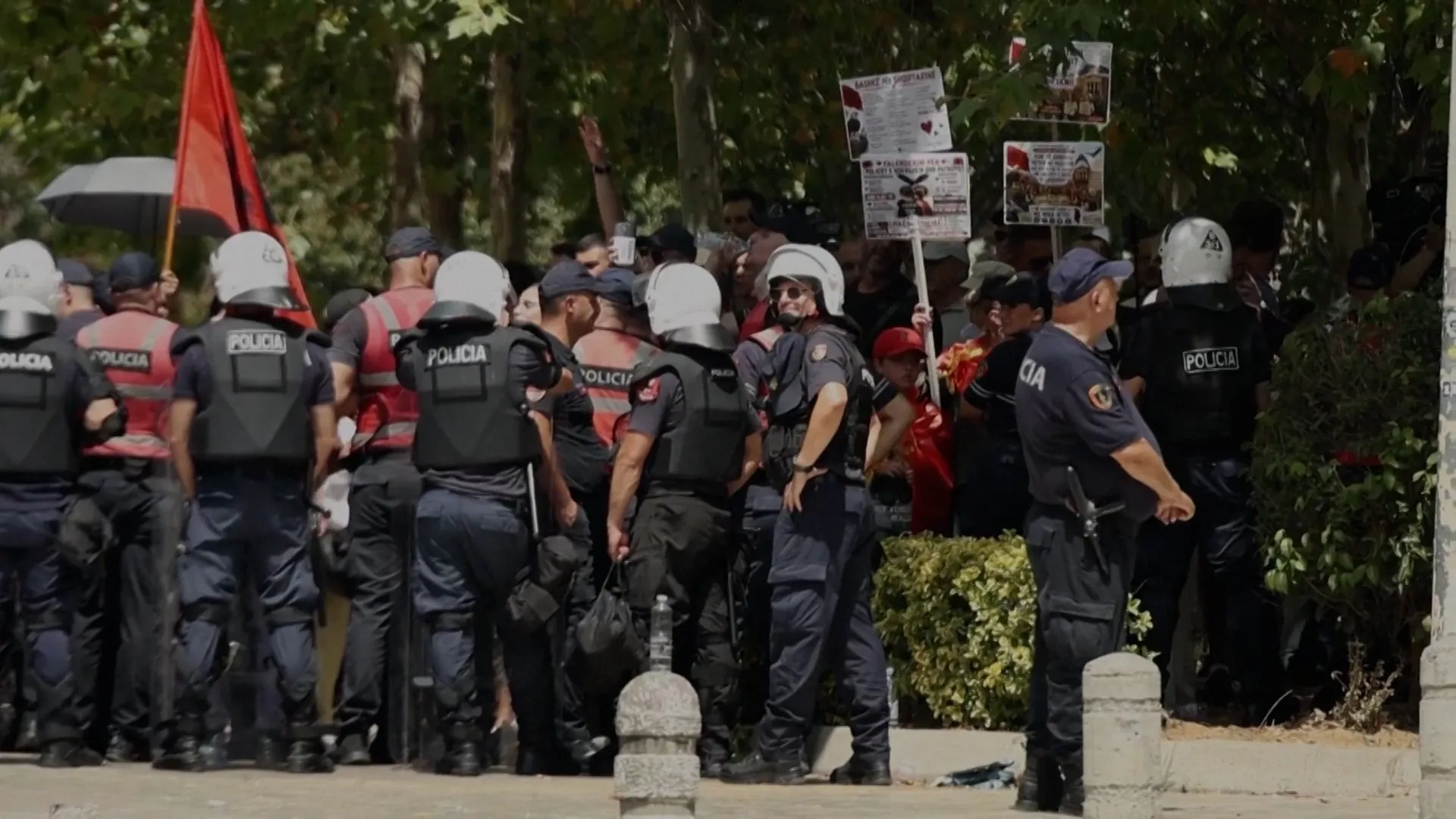
Albanian protesters pelt lawmakers’ cars over resort projects | Police
Protesters threw eggs at lawmakers’ vehicles outside Albania’s parliament, demanding changes to laws allowing tourist resorts in protected areas.
Published On 20 Jul 2026
Discover the latest happenings and stay in the know with our up-to-date today news coverage. From breaking stories and current events to trending topics and insightful analysis, we bring you the most relevant and captivating news of the day.
Protesters threw eggs at lawmakers’ vehicles outside Albania’s parliament, demanding changes to laws allowing tourist resorts in protected areas.
Published On 20 Jul 202620 Jul 2026
Share
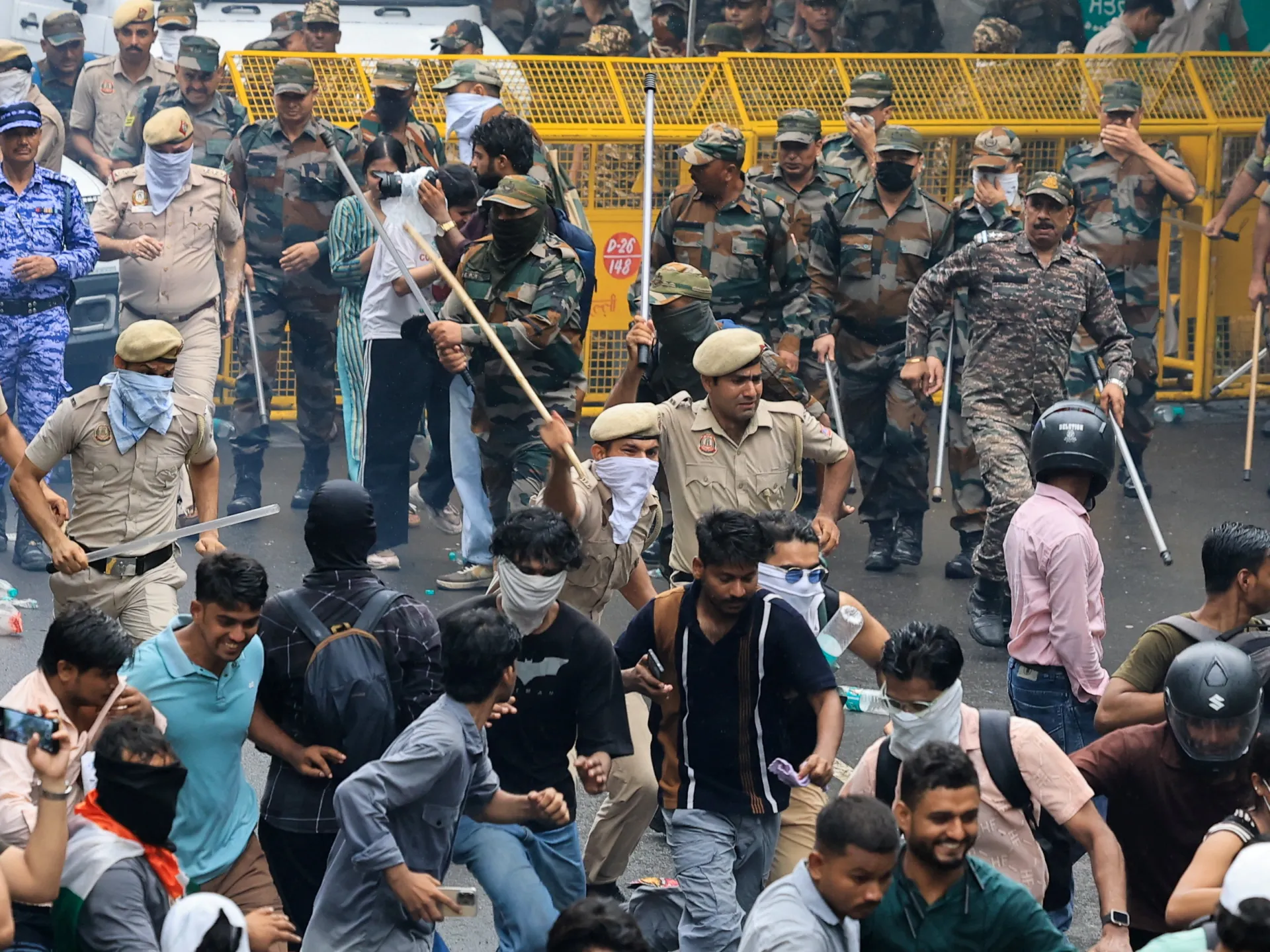
Police used batons and tear gas to disperse protesters as tens of thousands of people joined the Cockroach Janta Party’s march on parliament in New Delhi. Protesters have been demanding the resignation of India’s Education Minister Dharmendra Pradhan following exam scandals that have triggered nationwide outrage.
Published On 20 Jul 202620 Jul 2026
Share
The US intensifies air strikes on Iran, targeting critical sites after the deaths of American soldiers in the region.

Published On 20 Jul 202620 Jul 2026
US President Donald Trump says Iran will “pay” for killing United States soldiers after multiple service members were killed in action over the weekend.
“Every time Iran kills an American Soldier they will pay for that killing many times over!” Trump said on Monday on social media. “This directive has been passed on to Secretary of War, Pete Hegseth, Chairman of the Joint Chiefs of Staff, Daniel Caine, and every Leader in the Military. President DONALD J TRUMP.”
list of 3 itemsend of list
Trump’s warning came after the US earlier on Monday launched its ninth night of air strikes on Iran after announcing the death of a US service member, killed in Iraq during the “controlled detonation” of a downed Iranian drone.
The US military also identified two soldiers who were killed in Jordan on Friday while defending against Iranian ballistic missile and drone attacks. Seventeen US troops have been killed since the start of the five-month US-Israel war on Iran.
The renewed exchanges of fire, now in their second week, have seen the US target Iranian bridges and electrical facilities as the countries appear to inch closer to a return to full-scale war. Iran on Monday retaliated with attacks on US allies Kuwait and Bahrain, home of the US Navy’s 5th Fleet.
Roughly 430 US troops have been injured in the conflict so far.
The White House said Trump would attend dignified transfer ceremonies at Dover Air Force Base in Delaware for the service members killed.
It is unclear what specific “directive” Trump passed to the Pentagon. But a US official told Reuters that prior to the deadly attack in Jordan, the US had already started moving additional military aircraft, including fighter jets and refuelling tankers, to the Middle East.
In the past week, Trump has threatened to expand the targets being struck in Iran to include energy plants and bridges, sending ground forces to seize Iran’s Kharg Island oil hub and bombing a deep-underground nuclear-linked site known as Pickaxe Mountain.
Sources have told Reuters that recent waves of US strikes on Iran aimed at forcing open the Strait of Hormuz are also targeting Iranian military capabilities the US would want to destroy before executing more complex operations against the country.
The war, including its monetary cost, is set to dominate a US congressional hearing on Tuesday with Hegseth and Caine.
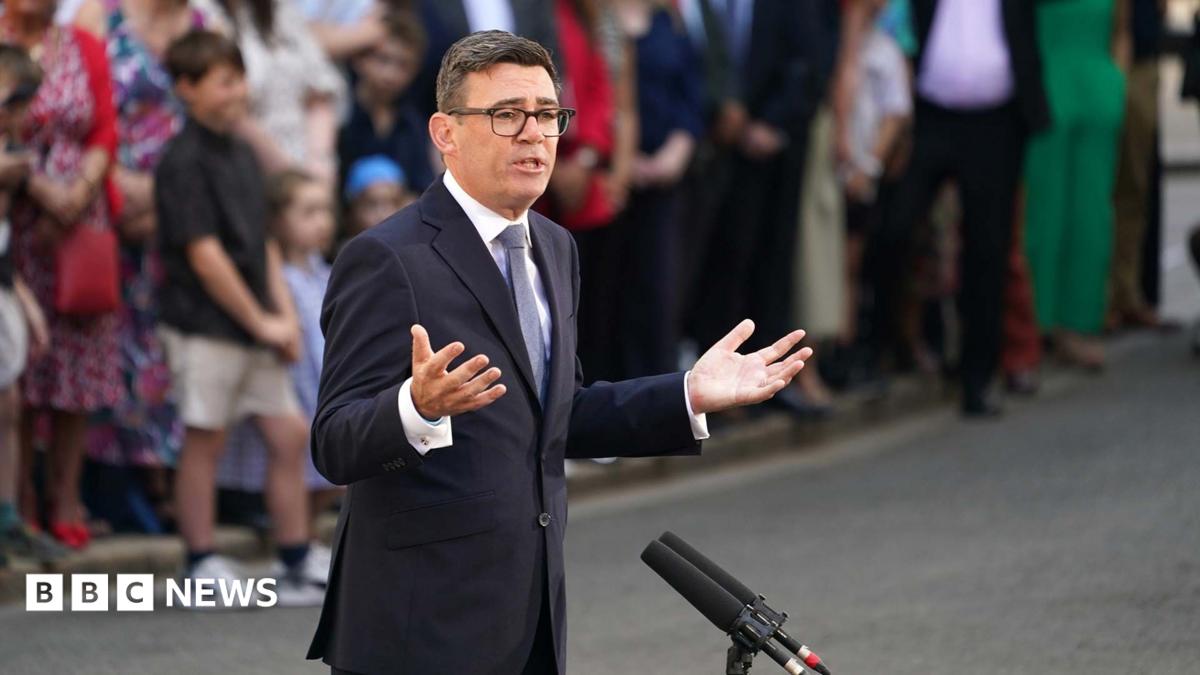
In his first speech in Downing Street, Burnham announced he would “end rough sleeping in our country”.
This was swiftly followed by a No 10 press release promising an extra £340m for the task over the next five years.
He also promised a new 10-year plan for Britain – to be unveiled later this year – and to build a new economy, putting “life’s essentials back under public control”.
But arguing that people also needed “breathing space now”, he said announcements on tackling the cost of living would start on Tuesday.
Other changes he promised included changing the education system to help young people into work, building more council homes, and honouring commitments to fund defence while sticking to the UK’s spending and debt rules.
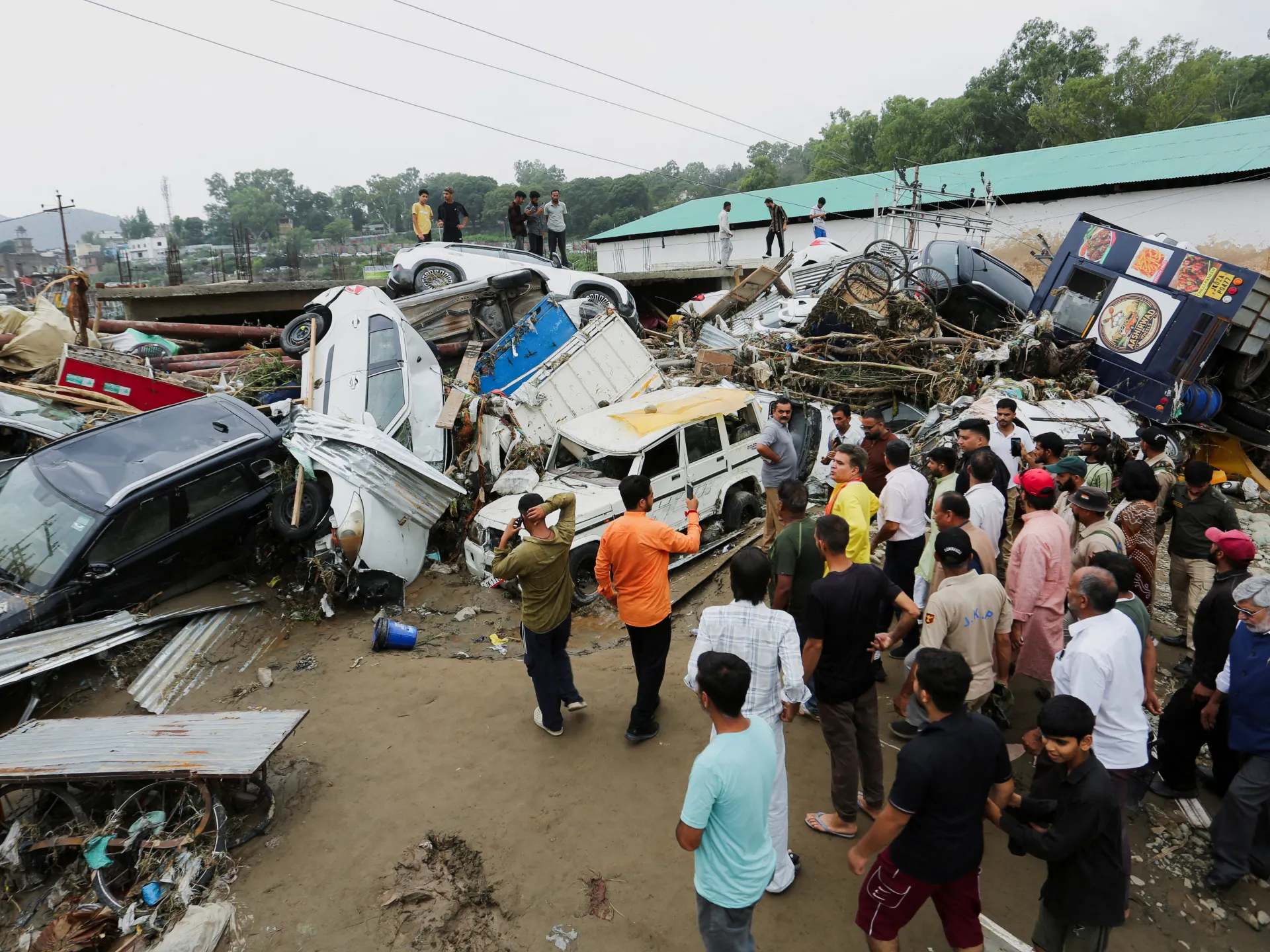
Monsoon rains devastate communities, with rescue and relief operations intensifying and the death toll rising.
Published On 20 Jul 202620 Jul 2026
At least 25 people have been killed as floods and landslides have hit across north and northeastern India, local officials reported.
Several incidents were reported over the weekend in Indian-administered Kashmir and the northeastern state of Nagaland, following days of torrential monsoon rain, officials said on Monday.
In Kashmir, rain-related incidents in the Poonch, Rajouri and Doda districts killed at least 15 people, with several others reported missing, a senior police official said. In Nagaland, multiple landslides triggered by persistent rains killed nine people.
“We have recovered four of the eight bodies, and rescue work is ongoing,” Wennyei Konyak, the magistrate of Nagaland’s Mon district, told the AFP news agency, adding that at least 15 others had been injured.
In Jammu, a flash flood in Rajouri caused extensive damage to public and private property and disrupted countless lives, according to a statement from the office of Jammu and Kashmir Chief Minister Omar Abdullah. Army personnel and state emergency responders rescued 11 people, including five children.
In the neighbouring state of Assam, one person died in flooding on Sunday, according to the state disaster management body, which said more than 57,000 people across seven districts had been affected.
India’s weather office warned of the potential for more extremely heavy rainfall in Jammu and Kashmir over the coming days, with active monsoon conditions likely to persist across the region for up to a week.
Authorities also announced the temporary suspension of the annual Amarnath pilgrimage, which drew more than 400,000 Hindus last year, and the Vaishno Devi pilgrimage in Jammu, citing the safety of devotees until routes are declared safe.
Floods and related accidents are an annual occurrence across India during the monsoon months, which follow the region’s long summers, with many parts of the country also facing severe water scarcity and drought.
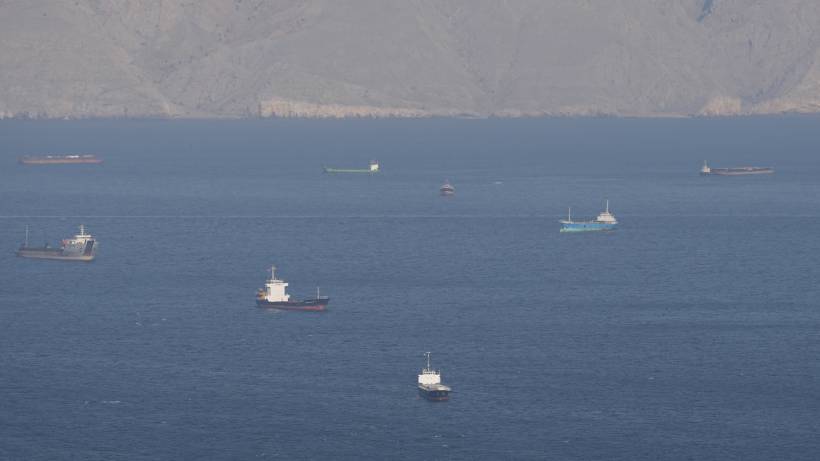
The conflict between the United States and Iran intensified on Monday, with both sides launching fresh military strikes that raised fears of a broader regional crisis threatening global energy supplies, maritime security and critical civilian infrastructure. While oil prices briefly climbed above $90 a barrel amid renewed disruption in the Strait of Hormuz, attacks on desalination facilities also highlighted a dangerous expansion of the conflict beyond military targets.
Despite the escalating violence, both Washington and Tehran signalled they remain open to diplomacy, suggesting that negotiations have not been completely abandoned even as the war enters a more volatile phase.
Iran’s Revolutionary Guards (IRGC) said they had launched missile attacks against U.S. military assets across the Middle East after another night of American bombardment targeting several Iranian cities.
According to Iran, ballistic missiles targeted U.S. military facilities at Jordan’s Aqaba Airport, Kuwait’s Al Adiri Camp and Ali Al Salem Air Base, as well as American positions in Syria. Bahrain also activated air raid sirens, while Kuwait reported intercepting hostile drones during the attacks.
Stay ahead of the geopolitical week.
MD Briefing delivers expert analysis across five global fronts — the Indo-Pacific, energy, geoeconomics, European security, and the Middle East — every Monday morning. Free.
Meanwhile, U.S. Central Command confirmed it had carried out a ninth consecutive night of strikes against Iran, saying the operations were intended to degrade Tehran’s capability to threaten commercial shipping through the Strait of Hormuz.
Iranian media reported explosions in several cities, including Tabriz, Chabahar, Konarak, Bandar Mahshahr and Bandar Imam Khomeini, with at least one person killed and several others wounded.
President Donald Trump defended the latest strikes, describing them as retaliation for the deaths of U.S. service members in recent Iranian attacks.
The Strait of Hormuz, through which roughly one fifth of global oil supplies normally pass, remains at the centre of the confrontation.
The IRGC claimed two oil tankers had exploded after attempting to navigate what it described as an unsafe route through the strategic waterway. Tehran did not provide details about the vessels or casualties, and the reports could not be independently verified.
Separately, the United Kingdom Maritime Trade Operations (UKMTO) agency reported that a commercial vessel off the coast of Oman had been struck by an unidentified projectile, leaving the ship adrift though its crew remained safe.
Shipping disruptions pushed Brent crude briefly above $90 per barrel as traders worried that prolonged instability in Hormuz could significantly reduce global oil exports.
The renewed uncertainty comes after vessel traffic through the strait had already fallen sharply in recent days, with many shipping companies delaying voyages or rerouting vessels due to security concerns.
Beyond energy markets, the conflict is increasingly threatening essential civilian infrastructure.
Kuwait confirmed that one of its desalination plants was attacked for a second consecutive day, causing a fire. Desalination facilities provide the majority of drinking water across Gulf countries, making them among the region’s most critical infrastructure assets.
Iran has accused the United States of previously striking one of its own desalination facilities and warned that any attacks on Iranian civilian infrastructure would trigger reciprocal action against similar installations across the Gulf.
The targeting of water infrastructure represents a significant escalation, raising humanitarian concerns alongside military and economic risks.
Despite intensifying military operations, officials from both countries suggested diplomacy has not been completely abandoned.
U.S. Secretary of State Marco Rubio said Washington would continue targeting Iranian capabilities as long as Tehran threatened international shipping but stressed that the United States remained open to a diplomatic solution.
Iran’s Foreign Ministry echoed that position, stating diplomacy remains one of the country’s instruments for pursuing national interests despite ongoing hostilities.
Tehran also confirmed that Iran’s interior minister would travel to Pakistan, which has served as an important intermediary between the two sides since the conflict began, although Iranian officials described the visit as focused primarily on bilateral relations.
The conflict is also creating growing domestic challenges for the White House.
U.S. gasoline prices climbed above $4 per gallon on Monday, reversing declines seen after the temporary ceasefire reached earlier this year. Rising fuel costs have historically carried significant political consequences for American administrations and could become a major issue ahead of November’s congressional midterm elections.
Trump defended the military campaign by arguing that Iran had suffered severe damage and insisted the United States had effectively secured control over the Strait of Hormuz, despite continued Iranian attacks across the region.
The latest escalation illustrates how the conflict is evolving beyond conventional military strikes into a broader campaign targeting global trade routes and critical infrastructure. While the Strait of Hormuz remains the world’s most important energy chokepoint, attacks on desalination plants introduce a new humanitarian dimension that could directly affect millions of civilians across the Gulf.
At the same time, continued disruptions to commercial shipping threaten global oil markets, supply chains and inflation at a time when many economies are already grappling with elevated energy costs.
The coming days will determine whether the conflict enters an even more dangerous phase. Iran appears determined to maintain pressure on U.S. forces and commercial shipping while signalling it could expand attacks against civilian infrastructure if American strikes continue.
Washington is likely to sustain military operations aimed at securing freedom of navigation through the Strait of Hormuz while attempting to deter further Iranian retaliation. However, any successful attack on major oil facilities, shipping lanes or water infrastructure could trigger a broader regional crisis involving additional Gulf states.
Although both sides continue to leave the door open for negotiations, the cycle of retaliation has significantly reduced the prospects for an immediate diplomatic breakthrough. Until meaningful talks resume, the Gulf is likely to remain one of the world’s most volatile flashpoints, with global energy markets and regional stability hanging in the balance.
With information from Reuters.
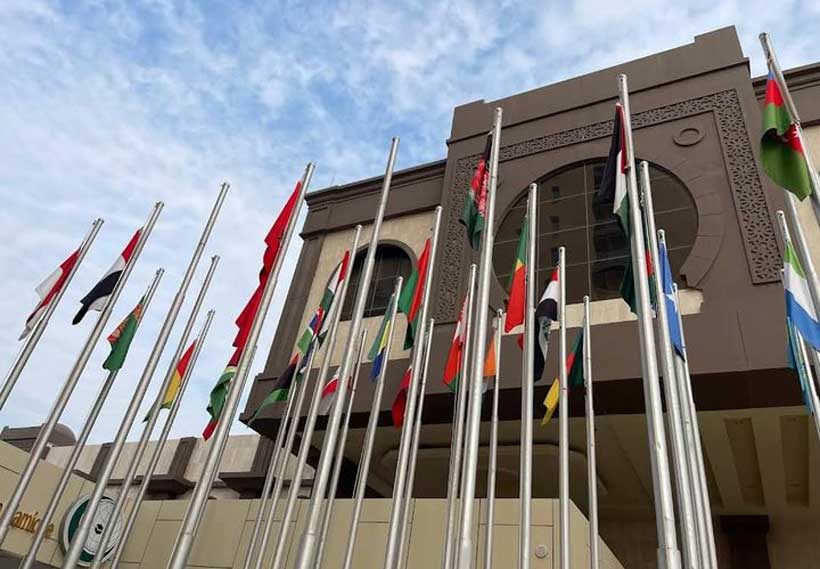
In the United Arab Emirates, women hold half of all parliamentary seats, a threshold reached by only six national legislatures on Earth. In Afghanistan, a fellow member of the same fifty seven nation bloc, girls are barred by law from any education beyond primary school, the only country where that is true. On July 12 and 13, 2026, delegates from all fifty seven states gathered in Islamabad to adopt a single shared declaration on women’s empowerment. The distance between those two realities is the actual subject the declaration had to confront, whether its authors framed it that way or not.
The Organisation of Islamic Cooperation represents fifty seven states and close to 1.9 billion people, a demographic scale matched by few multilateral bodies. What it conspicuously lacks is a shared starting point on gender equality, and the scale of that lack is easy to understate until the two ends of the distribution are placed side by side. The World Economic Forum’s Global Gender Gap Report 2025 ranks the United Arab Emirates 69th of 146 economies overall, with full parliamentary parity and women occupying nearly two thirds of federal leadership roles. It ranks Bangladesh 24th of 148, the strongest performer in South Asia for a second consecutive year, having closed 73 percent of its overall gender gap after decades of expanding a legislative quota from 7 percent of seats to 30. At the opposite pole, three of the only five economies anywhere in the world governed by an entirely male cabinet, Azerbaijan, Pakistan, and Saudi Arabia, are OIC members, and Oman remains the sole national parliament on the planet with no women seated in it at all. Afghanistan sits outside even that range. It is the only country on Earth barring girls from secondary and higher education by law, a policy that currently excludes close to 2.2 million girls from formal schooling altogether.
This is the span the Islamabad Declaration was written into, and it is worth pausing on what that span actually implies. A framework broad enough to be endorsed by both Abu Dhabi and Kabul’s immediate neighbors within the same bloc can, almost by construction, say very little about what any single government is actually required to do. Language capacious enough to cover a country with full parliamentary parity and a country that bars girls from secondary school is language calibrated for consensus, not for consequence. The more useful question, then, is not whether the declaration reads as ambitious, most instruments of this kind do, but whether the bloc has built, or shows any sign of building, a mechanism capable of moving its weakest performers rather than simply narrating the achievements of its strongest.
Where the record earns genuine credit
Stay ahead of the geopolitical week.
MD Briefing delivers expert analysis across five global fronts — the Indo-Pacific, energy, geoeconomics, European security, and the Middle East — every Monday morning. Free.
Some of what the OIC claims for itself withstands scrutiny, and is worth crediting on its own terms rather than dissolved into a general skepticism about summit diplomacy. Female enrollment in tertiary education has expanded meaningfully across member states, and the bloc’s own reporting places women at just over 39 percent of researchers across OIC countries, ahead of the roughly 34 percent global average. Maternal and child health outcomes have improved alongside it. But the most persuasive evidence for what actually moves the needle sits not in the declaration’s language but in the legislative record beneath it. Global data from the Inter Parliamentary Union shows that countries employing electoral quotas elected women at a rate of 31.2 percent in 2024, against 16.8 percent in countries without them, a gap of nearly two to one that survives across regions and income levels. Bangladesh’s own trajectory, from a 7 percent quota to 30, tracks that pattern almost precisely, and the United Arab Emirates reached full parliamentary parity through a comparable top down legal commitment rather than the slow accretion of social change. Where OIC member states have adopted binding, specific instruments, quotas above all others, the results are visible and replicable in the data. That is a genuine and transferable finding, and it rests on firmer ground than most of the rhetoric surrounding it.
The economic weakness the whole bloc shares, to varying degrees
Set the political headlines aside and the bloc’s collective vulnerability comes into sharper focus around economic participation. The OIC’s own assessment puts female labor force participation across member states at roughly 41 percent against 76 percent for men, and estimates some 106 million young people across the bloc as neither employed, in education, nor in training, with young women disproportionately represented among them. Southern Asia, the region anchoring several of the OIC’s most populous members, registers the weakest economic participation score of any region tracked in the Global Gender Gap Report, a full thirty five points separating its best and worst performing economies from one another. Even the UAE and Bangladesh, the bloc’s clearest political success stories, have not resolved this dimension with anything like the completeness they have brought to representation, which suggests economic inclusion answers to different levers than legislative quotas do, and that the declaration’s language on finance, entrepreneurship, and employment access is, whether by design or accident, aimed at the harder of the bloc’s two structural problems.
The test the declaration cannot argue its way around
Afghanistan is where the claim that voluntary declarations carry real weight meets its sharpest and least forgiving test. At the same Islamabad conference, delegates stated plainly that the Taliban’s restrictions on women harm the image of Islam and are inconsistent with Islamic teaching, echoing an OIC position from previous years that described the restrictions as contrary to the faith the bloc exists to represent. The Muslim World League, the largest Islamic non governmental organization in the world, has separately and repeatedly urged the Taliban to reverse the bans. The response from Kabul has been unambiguous. Spokesperson Zabihullah Mujahid has told international audiences that women’s rights are fully protected under the group’s interpretation of Sharia, and Taliban officials have characterized the education ban as an internal matter closed to outside comment, a position firm enough to have stalled unrelated talks over frozen central bank assets as recently as May 2026.
The stakes of this reach well beyond Afghanistan’s borders. If the bloc’s most unified and most theologically grounded criticism, the accusation that a member state’s policy is contrary to Islam itself, produces no observable change in that state’s conduct, it becomes a reasonable proxy for how much practical force softer, less unified language on labor force participation or quota adoption is likely to carry anywhere else in the bloc. The Islamabad Declaration has no enforcement mechanism for Afghanistan, and, tellingly, does not appear to need one in order to be adopted, since adoption requires only consensus on wording, not compliance with it.
Taking the structural counterargument seriously
There is a coherent case that expecting more than this from the OIC misreads what kind of institution it actually is. A consensus body spanning constitutional monarchies, parliamentary republics, and a Taliban administered emirate cannot plausibly issue binding standards on domestic labor law or family structure without member states either declining to sign or signing without any intention of compliance, an outcome arguably worse than the present voluntary model. Under this reading, the declaration’s proper function is to establish a shared reference point and let reputational pressure and peer example, the UAE and Bangladesh held up as internal proof of concept, do the work that binding law structurally cannot. The newly launched Islamabad Initiative on Women’s Digital Inclusion, a voluntary platform for digital literacy, entrepreneurship, and technology access, is built entirely on that theory of change: participation by choice rather than compliance by mandate. Judged against that more modest theory rather than against an enforcement standard it was never designed to meet, the declaration may be performing precisely as intended, and the fair critique is not that it fails at its stated purpose, but that its stated purpose may simply be too modest for the scale of the problem it describes.
Three paths from here
The most probable trajectory, roughly half of plausible outcomes by our estimate, is that the demonstration effect model continues largely undisturbed: the UAE and Bangladesh keep improving and are cited internally as proof the model works, the bloc’s lowest tier, Afghanistan most starkly, remains unmoved by rhetorical pressure however strongly it is worded, and the aggregate figures stay roughly flat because gains concentrated at the top fail to transmit downward through the distribution.
A second and less likely path, perhaps three in ten, sees middle tier member states, those possessing neither the UAE’s resources nor Afghanistan’s total exclusion, adopting elements of the proposed Gender Equality Dashboard or the digital inclusion platform in a genuine if partial way, narrowing the bloc’s middle even while its extremes remain fixed in place.
A third and least likely path, perhaps one in five, involves the range widening further still, driven by continuing instability among the bloc’s weakest performers, Afghanistan foremost among them but potentially compounded by conflict or governance stress elsewhere, at a pace that outstrips whatever gains the top and middle of the distribution manage to produce.
The indicator worth watching
The clearest available test is not whether the OIC issues further statements on Afghanistan, since it plainly will, but whether the Gender Equality Dashboard or the Digital Inclusion Initiative produces any actual, published, comparative country level data within the current reporting cycle. A voluntary framework that generates public comparison functions differently, in practice, from one that generates only communiques, since comparison is the mechanism from which reputational pressure, the model’s only real lever, actually derives. A second and narrower indicator is whether Afghanistan’s formal relationship with OIC gender programming registers any change whatsoever, even nominal engagement, as distinct from continued flat rejection, since that alone would be the first sign that unified religious framing carries weight the bloc’s other instruments do not.
What this means for institutional readers
For Western multilateral institutions and United Nations agencies, the OIC’s internal variance means that a single engagement strategy toward the bloc on gender issues is analytically weak on its face. The UAE and Bangladesh are credible technical partners on quota design and implementation, while engagement on Afghanistan specifically should continue to run primarily through humanitarian and human rights channels, given that the OIC’s own most unified criticism has already been tested there and found to carry no observable weight.
For investors and development finance institutions assessing exposure across OIC economies, a female labor force participation range running from roughly 22 percent to over 70 percent within a single fifty seven member bloc constitutes one of the more differentiated and independently checkable indicators available for human capital and productivity due diligence on any individual member state, and merits assessment country by country rather than reliance on the bloc’s aggregate language.
For rights focused organizations and donors, the quota evidence, 31.2 percent representation where legal quotas exist against 16.8 percent where they do not, is the single most defensible, causally grounded policy argument available to press within OIC forums, considerably more persuasive than the broader declaratory commitments on empowerment that lack a comparably rigorous evidentiary foundation.
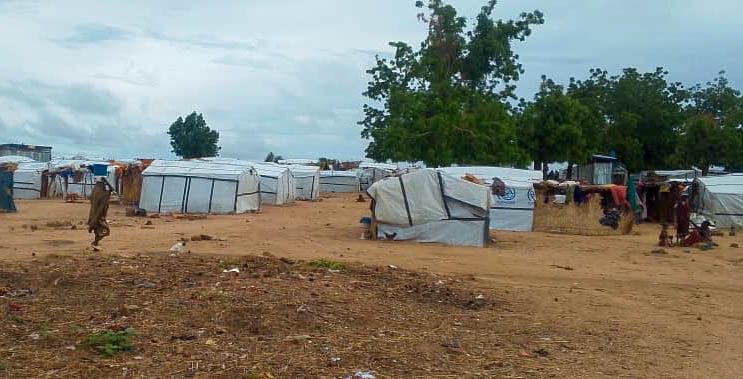
Chellu Masaram’s shelter stands on a patch of land in Goniri, a community a few kilometres from Bama town in northeastern Nigeria.
At 85, she does not have the strength to build a house. So when she and her grandchildren arrived after the closure of the Government Senior Science Secondary School (GSSS) camp in Bama, one of the largest displacement settlements in Borno State outside Maiduguri, they used the only materials they had.
“We still do not have a room,” Chellu told HumAngle. “We made a room out of the tarpaulin we brought from the camp. The room leaks when it rains.”
For more than a decade, displacement has shaped her life. She fled Sabsabwa, a town in Bama, in 2014 when Boko Haram terrorists attacked the community and killed her son. Since then, she has raised his three children alone: a year at the Bama General Hospital camp, then ten years at GSSS.
Now she is displaced again.
On June 25, Borno State announced the closure of the GSSS camp as part of its broader policy of ending camp-based displacement and resettling people to their communities of origin or nearby settlements. The announcement was made by Dauda Iliya, spokesperson to Governor Babagana Umara Zulum. The exercise was described as the relocation of about 3,000 households to settlements including Abbaram, Darajamal, Mainti, and Goniri, though the actual number of individuals moved remains unclear. Authorities also indicated that the displacement camp in Gwoza could be among the next to close.
The numbers associated with the GSSS camp have varied considerably over the years. In 2023, the camp’s own management estimated it was hosting more than 100,000 people, four times its designed capacity of 25,000. Government statements on the recent closure referenced approximately 3,000 households being relocated to surrounding communities. But that figure came with its own complications. During the closure announcement, Governor Zulum noted that a year earlier the camp had held no more than 400 households, and expressed surprise that the number had risen to 3,000 shortly before closure. “Most of them are residents living within the town,” he said, suggesting that a significant share of those counted at the end were not long-term displaced persons but local residents who had re-entered the camp, most likely to access aid distributions. If that is accurate, the 3,000 figure may overstate the number of people who were genuinely in need of resettlement support, while simultaneously obscuring how many actual long-term IDPs were moved and to where. Humanitarian and official figures detailing the exact number of individuals relocated have not been publicly released.
HumAngle wrote to the Borno State Emergency Management Agency (BOSEMA) seeking clarification on the number of households and individuals relocated, the preparedness of receiving communities, and plans for future camp closures. The agency had not responded by the time of publication.
What is emerging from Goniri and other receiving communities is a more complicated picture than the language of “camp closure” suggests. For some families, displacement may not have ended. It may simply have changed location.

Chellu and her grandchildren left the camp in the evening, a truck transporting their belongings. “We paid ₦7,000,” she said.
The move brought them to Goniri, one of the communities receiving former camp residents. The grandchildren she cares for are now 17, 15, and 12 years old. None attend formal school. The oldest studies at a Tsangaya school in Bama and returns there to sleep each night. The two girls remain with their grandmother.
The family survives through a combination of small trading and firewood collection. Chellu sells groundnuts when she can. The more demanding work falls to her granddaughters. “The girls go to the bush to gather firewood to sell,” she said. According to her, they spend up to three hours walking into surrounding bush areas before returning with wood that earns around ₦2,000 daily. “This is what we depend on majorly.”

The arrangement is not unusual. Across displacement settings in Borno and the wider North East, firewood collection has become one of the primary survival strategies available to women and girls. In 2020, HumAngle reported how this burden traps women in a cycle of poverty that limits access to education and economic opportunity while increasing exposure to violence.
For Chellu’s granddaughters, the hours in the bush are not a choice. They are an economic necessity shaped by the inadequacy of humanitarian support and the absence of alternative livelihoods. But in Borno, those hours carry a risk that goes beyond physical exhaustion.
Firewood collection in conflict-affected parts of the northeast has long been documented as a moment of acute danger for women and girls. A 2018 World Food Programme survey found that 85 per cent of women in four local government areas of Borno feared rape, murder, or abduction while collecting firewood. UNHCR protection monitoring reports have recorded incidents of rape during firewood collection, alongside the persistent threat of abduction by terrorists. In March 2024, more than 200 internally displaced women were abducted in Ngala, Gamboru Ngala LGA, while collecting firewood in the bush around Jillam and Wurga villages, approximately 15 kilometres from town. Older women and children under 10 were reportedly released; scores of others remained unaccounted for. In August 2023, at least 42 women were abducted by suspected Boko Haram terrorists while gathering firewood in Mafa. This often forces relatives in camps to crowdsource ransom.
In Goniri, Chellu’s granddaughters are navigating that same risk. They go anyway, because the family has to eat.

The broader consequences of this dependence extend beyond the households bearing it.
As hundreds of families like Chellu’s converge on Goniri and surrounding communities, demand for firewood is rising sharply in an environment already under significant ecological pressure. The Lake Chad Basin, of which Borno is a part, has experienced accelerating deforestation driven by displacement, conflict, and climate stress. A study examining the impact of internally displaced persons on forest cover in Jere LGA found that displaced populations destroyed approximately 12 square kilometres of forest and vegetation. Research on the Lake Chad Basin has found that competition between displaced populations and host communities for firewood is driving deforestation and natural resource degradation, reducing the resilience of both groups. Governor Babagana Zulum has acknowledged that displacement-linked deforestation in Borno is contributing to soil erosion, reduced water availability, and increased vulnerability to climate change.
“It was not like this at the camp,” Chellu said.
Food worries now dominate her thoughts. She said she recently cried because she did not know how she would provide enough. For water and medical care, she and the children walk to Bama, a journey she estimates at over an hour on foot. “As old as I am, I must trek with the children for at least an hour daily,” she said. The move has also introduced tensions with neighbours. A nearby resident has repeatedly told her family they are not welcome. “He said he does not want us beside him,” she said. She says the man has attempted to physically attack her and her granddaughters on multiple occasions, and that complaints to local leaders have produced no resolution.
“I wish the government would intervene.”
The uncertainty surrounding shelter, water, food, and social acceptance has left her wondering what exactly changed when the camp closed. For a woman who has spent 11 years moving between displacement sites, the answer is not obvious.
The Borno State government has long argued that prolonged camp life is not a sustainable solution. Camp closures form part of a broader strategy aimed at restoring communities, reducing dependency on humanitarian assistance, and facilitating recovery from years of insurgency. But interviews with former camp residents in Goniri suggest the transition has been uneven.
Abubakar Mohammed, 36, arrived in Goniri after years in displacement. He first fled Alagarno in Damboa Local Government Area when insurgent attacks devastated the community, spent three months at the Bama General Hospital camp, and then moved to the GSSS camp, where he remained for several years. Like many residents, he said the relocation came with little explanation. “We were asked to relocate two weeks ago,” he told HumAngle on July 7. “We were not given any reason.”

Before departure, he received a token card later exchanged for a document used during aid distribution. The government distributed ₦30,000 to each household that held a token, along with 25-kilogram bags of rice and maize flour. “Only those who had tokens got the money,” he said. Even so, the assistance did not resolve the housing challenge. “The government constructed some shelters before asking us to relocate,” he acknowledged. “But it is not sufficient.” He now lives in a makeshift tarpaulin shelter on land temporarily provided by community heads. “The Aja [District Head] said, ‘You may live here pending when you find your own place,’” he recalled. His wife and children share the structure with him; his mother and three sisters are staying elsewhere in Goniri with a friend. Many other households have improvised similar arrangements, renting accommodation or relying on relatives. Some remain more exposed. “Other people could not even afford to set up shelters,” he said. “They sleep in the open.”

The experience of Babagana Ali, 38, illustrates how unevenly the same process was administered.
His displacement history spans multiple locations. He first fled Warafaya in 2017 and settled in Kumshe, both in Bama; in 2022, violence displaced him again, eventually bringing him to Bama town and the GSSS camp. When officials announced the closure, residents received approximately one week’s notice. “They came on a Thursday and gave us a week’s notice,” he said. Unlike Abubakar, Babagana never received a ration card. He was working on his farm when distributions took place and as a result received none of the food items, zinc sheets, or money given to other households. Without money for a truck, he rented a pushcart for ₦1,500 and made two trips to move his belongings. Today, he shares a single tarpaulin shelter with two wives, six children, and four children belonging to his late brother. When it rains, water enters through the roof.
His experience points to a concern emerging across interviews: the closure of the camp may have reduced the visibility of displacement without resolving the housing deficit it created.
Earlier, humanitarian actors have made appeals for emergency shelter interventions in Goniri and Abbaram following the influx of relocated households. Those appeals suggest that aid agencies themselves recognised accommodation gaps after the movement began. This pattern is not new to Borno’s camp closure process. A 2022 Human Rights Watch report documenting earlier rounds of camp closures found that housing, water, healthcare, schools, and other infrastructure necessary to meet basic needs were lacking in many receiving communities, and that the closures had stripped over 200,000 displaced people of food and shelter without adequate alternatives.
Residents gave varying estimates of how many people have arrived in Goniri since the closure. Chellu believed there could be about 3,000 people in the settlement; Abubakar estimated as many as 6,000, with roughly half lacking adequate shelter. HumAngle could not independently verify these figures, but both accounts point to the same reality: Goniri’s population has grown rapidly, and the question is whether the community has the infrastructure to absorb it.
For government officials, the success of relocation will ultimately depend on what happens after families arrive. Housing is only one part of that equation. Access to livelihoods, water, healthcare, sanitation, education, and social acceptance all determine whether a relocation becomes sustainable. In Goniri, many of those systems remain under pressure.
Water emerged repeatedly during HumAngle’s reporting. Chellu, Abubakar, and Babagana all described the same daily routine: a walk to Bama that can take up to an hour. OCHA’s 2025 Humanitarian Needs and Response Plan identifies overcrowding in camps and receiving settlements, alongside lack of access to clean water and sanitation, as conditions that have worsened as a direct result of IDP movements linked to camp closures in Borno. Healthcare follows the same route as water. Abubakar estimated transportation costs at about ₦300 per trip, a burden that falls hardest on older residents, pregnant women, and households without steady income.
Sanitation presents another strain. Babagana said the communal latrines built for an earlier displaced population are now being shared by hundreds of newly arrived households. “There are insufficient toilets,” he said. “We have to queue. It is also dirty.” He estimated that only five fenced latrines serve the settlement.

Livelihoods present a different challenge. Before the closure, many residents relied on a combination of humanitarian support and informal income. Outside the camp, they face greater pressure to generate income independently. Abubakar is a farmer by training, but insecurity has limited access to agricultural land this season. “I now do menial jobs,” he said, earning around ₦3,000 on a good day. Babagana manages similarly. “Anything that my strength can do,” he said, with income averaging around ₦2,000 daily. Neither considers it sufficient for households of their size.
For children, the transition raises additional concerns. None of Chellu’s grandchildren attends formal school. Their days revolve around religious education and income-generating activities, the girls spending long hours collecting firewood that contributes directly to household survival. They are not alone in this. UNICEF estimates that 56 per cent of displaced children across Borno, Adamawa, and Yobe states do not attend school, with roughly two million children out of school across the three states. The situation in Goniri illustrates how economic hardship reshapes childhood after displacement, turning survival into a full-time occupation.
Social integration remains unresolved. While some host community members have provided land and accommodation, not all relationships appear harmonious. Abubakar said some residents blame the displaced for ongoing insecurity. “They say we caused the ongoing insecurity,” he said. Such perceptions breed friction in communities already stretched by scarce resources and years of conflict.
The debate over Bama is likely to intensify as the camp in Gwoza is expected to be the next major closure.
Many residents of Borno also want to leave camps behind. After years of displacement, the idea of living in a community rather than a crowded camp carries real emotional weight.
“I expected the government to wait for peace before asking us to relocate,” he said.
That concern reflects a broader uncertainty in Bama and surrounding areas. Several communities continue to experience insecurity, farming restrictions, and periodic displacement linked to insurgent activity and military operations. Earlier in 2024, OCHA conducted area-based assessments of both the GSSS camp in Bama and the camp in Gwoza, both of which document the fragility of receiving communities and the scale of unresolved displacement needs. Sabsabwa, from which Chellu was displaced in 2014, experienced renewed disruptions in late 2022 and 2025. Warafaya, where Babagana once lived, was emptied by violence years ago. Alagarno, Abubakar’s hometown, was devastated by insurgent attacks. For many families, displacement has not been a single event but a series of movements from one place to another.
Without clear data from BOSEMA, several questions remain unanswered. How many people were actually moved from the camp? How many houses were completed before the relocation? How many households are still living under tarpaulins or in the open? What support is planned for communities such as Goniri and Abbaram as their populations grow? Those questions matter not only for Bama but for every future camp closure in Borno.

As evening approaches in Goniri, Chellu’s grandson leaves for the Tsangaya school where he sleeps, her granddaughters prepare for another trip into the bush to gather firewood, and the tarpaulin roof remains patched against the next rain.
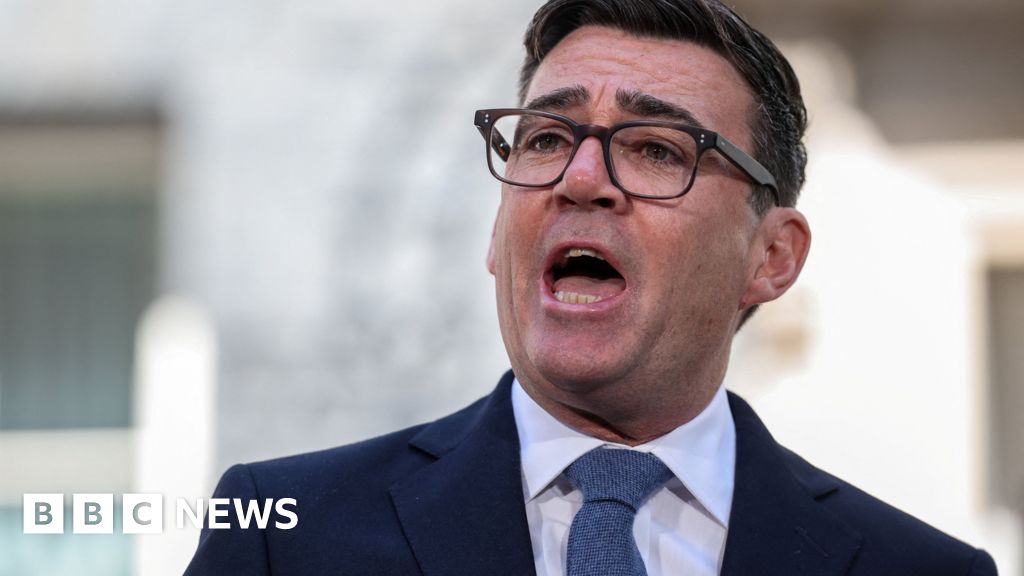
Former Mayor of Greater Manchester Andy Burnham gave his first speech as prime minister outside No 10 today, after he replaced Sir Keir Starmer as leader of the Labour party.
In his speech he promised to give the public “more breathing room”, and said he would set out a new 10-year plan for Britain by the end of this year.
He also announced that his first instruction as prime minister would be to end rough sleeping, which was met with cheers from his supporters who’d gathered outside Downing Street.
His predecessor Starmer gave a farewell speech in the same spot this morning, before formally offering his resignation to the King.

Castelldefels, Spain – Fans waving the red and gold Spanish flag filled the streets, shot fireworks into the night sky and hugged each other into the early hours of Monday morning after Spain beat Argentina 1-0 in the World Cup final.
The jubilation on the streets was echoed in towns and cities across Spain as La Roja won the title for the second time with a goal by Ferran Torres in extra-time.
list of 4 itemsend of list
Fans who had been watching giant screens chanted “Campeones! Campeones!” (Champions! Champions!).
However, in Castelldefels, a tourist town south of Barcelona, fans from both nationalities enjoyed the match thanks to the presence of a sizeable Argentinian emigre community.
Chief among them is – in spirit at least – one rather special former resident: Lionel Messi.
Messi spent his greatest years playing at Barcelona and his presence still looms large over the town. Many Argentina or neutral fans walked around during the match on Sunday sporting his famous 10 shirt.
And this being Catalonia, where support for independence from Spain may have faded in recent years but remains a potent force, many support other sides in the World Cup. Many support Argentina, precisely because of the influence of Messi.
The Argentina captain still owns a luxury complex in Castelldefels replete with its own football pitch which is reported to be worth $8m.
Bellamar nestles in the hills above this seaside town of 70,000 inhabitants just south of Barcelona, where he made his home with his family in his glory days at Barca.
Barca fans still cherish the thought of Messi returning to the city when he finally hangs up his boots. The rumour mill ran wild when the player recently bought the Unio Cornella, a team in the fifth tier of Spanish football.
He used to walk his children to school at the local British school in the town with passers by watching in awe.
Before he became too much of a global megastar, he would go for a quiet drink at seaside bars with his wife and sign autographs or pose for pictures without problem.
Everyone in this well-to-do-town on the shores of the Mediterranean has a story about when they met Messi. Some of them are true.
La Pampa is just one of the many Argentinian steak restaurants in the town which the Argentinian captain used to patronise when he lived here. Its owners quietly show off pictures of the player smiling for the camera.
For younger diners, the Ankara Burger is full of football shirts of Argentinian clubs like Boca Juniors, River Plate or Independiente.
Catalonia, the northeastern region of Spain whose capital is Barcelona, has the largest expat population of Argentinians in Spain, numbering 37,980.
Away from these Mediterranean shores, controversy has raged over Argentinian players’ display of a political banner supporting an Argentinian sovereignty claim over the Falklands Islands after their World Cup semifinal victory over England, a move that appeared to violate the FIFA stadium code of conduct and struck a nerve in the United Kingdom over political sovereignty.
Argentina President Javier Millei’s support for Israel has also prompted controversy in a country like Spain, where polls have found a majority backed the Palestinian cause.
However, in Castelldefels, the political rows raging thousands of miles away were not on fans’ minds last night.
The Spanish and Argentinian flags fly outside the apartment of Gio and Gema Gonzalez, demonstrating perfectly the cultural melting pot here.
Gio Gonzalez emigrated to Spain from Buenos Aires in 2000, following a well-worn path for many other Argentinians. He met his wife Gema in Barcelona and the couple later moved to Castelldefels in 2007.
Like thousands of others, the couple went to watch the match on a giant screen organised by the town council.
“I am a mad keen Argentina fan so I was dreaming that we would win again but it was not to be. It was a tough match but I am happy for my wife that Spain could win,” said Gonzalez, 54, a research scientist.
Gema Gonzalez, 46, a housewife, was beaming in the wake of Spain’s victory after a hard-fought game.
“I feel sorry for my husband – but only a bit!” she laughed. “I think Spain were the better side and we deserved to win. I know I would say this but, I think we were the best side in this tournament.”
Iranian strikes have targeted Kuwait’s power and water desalination plant. Al Jazeera’s Victoria Gatenby explains what that means for Kuwait and the rest of the Gulf Cooperation Council countries.
Published On 20 Jul 202620 Jul 2026
Share
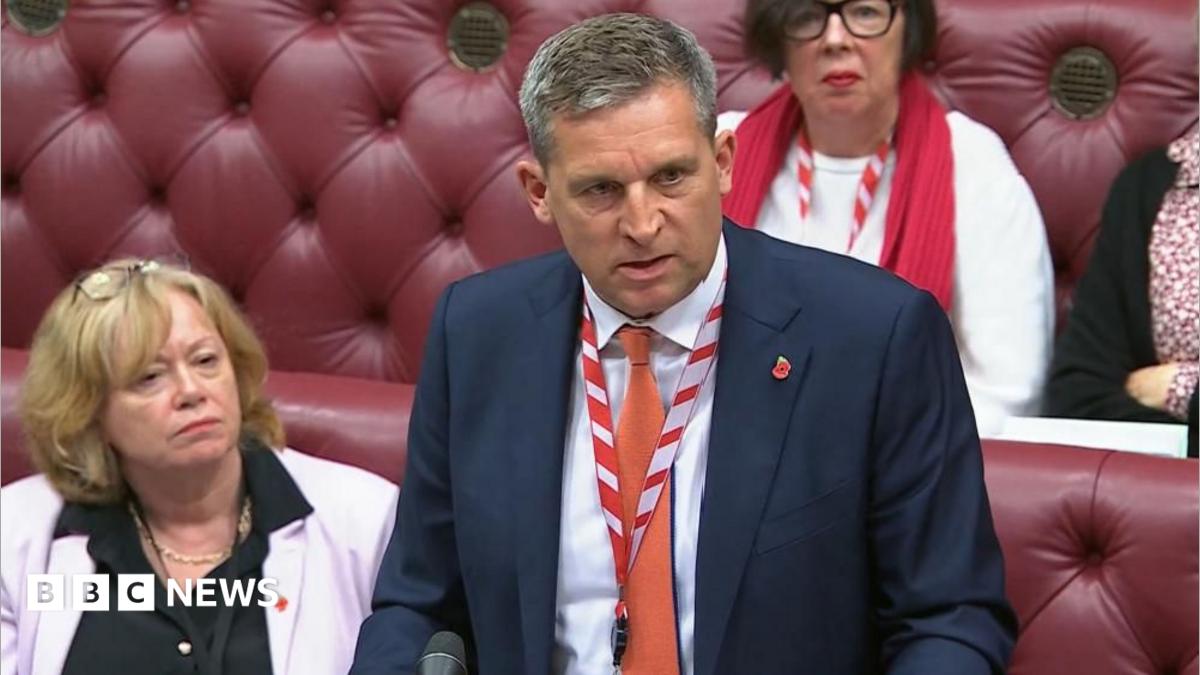
The prisons minister has resigned from the government, the BBC has been told.
Lord James Timpson was appointed to the role in July 2024 after leaving his job as CEO of the Timpson group, a business which provides key cutting and shoe repair services and employs hundreds of former prisoners.
His arrival in government was greeted with much fanfare by some in the Labour Party and described as “radical” and “innovative”.
But in a departing statement on Monday, seen exclusively by the BBC, Lord Timpson said he was stepping down and it was an “honour” to serve in the post.
His statement did not give a specific reason for resigning, but it is understood he feels he has done as much as he can in the role.
Prisons in England and Wales were at crisis point, reaching almost full capacity, when he first entered Sir Keir Starmer’s government.
He oversaw the controversial early release scheme which saw tens of thousands of inmates let out to create more space in jails.
His critics will argue prisons continue to be violent, drug infused and overcrowded, while probation officers still report being overworked and unable to cope.
But figures do show assaults against staff and self-harm in prisons are falling.
Lord Timpson said in his resignation statement that he had left “our prisons and probation service in a much healthier and happier state than two years ago”.
He added: “I’m proud to have become the longest-serving minister in this role for 15 years. I’m also proud that 75% of prisons and 90% of probation teams are now performing better than when I started.
“Self-harm, violence and assaults on staff are all down, and fewer people are leaving prison without a home to go to, a measure of dignity I care about deeply.”
He also pointed to the Women’s Justice Board he established, saying he “believe[s] most women should not be in prison at all” and “diverting them away from custody, helping them with often chaotic, damaged, and addicted lives, is one of the changes I’m proud to have achieved”.
His critics may question why he is leaving before the Sentencing Act 2026 is enacted in September, when more people are expected to be released early and further criminals will serve their sentences in the community.
A source in the Ministry of Justice told the BBC: “We’re gutted he’s going but the new person is going to have their work cut out to get their head round what’s round the corner.”
The United States has attacked Iran for a ninth consecutive night after the US military’s Central Command (CENTCOM) announced a US soldier had died in northern Iraq in a controlled detonation of unexploded ordnance from a downed Iranian drone.
Here is what happened over Sunday night and Monday morning and what officials on both sides have said:
CENTCOM announced in a statement on X that it completed the ninth wave of attacks against Iran at 02:00 GMT on Monday.
It said it “targeted Iranian military command centers, air defense and coastal surveillance sites, maritime capabilities, missile and drone launch sites, and communications networks to further diminish Iran’s ability to attack commercial vessels and civilian mariners transiting the Strait of Hormuz”.
The US military did not provide details about the actual sites hit in Iran.
Iran’s Islamic Revolutionary Guard Corps (IRGC) said two oil tankers “exploded” and were halted in the southern Strait of Hormuz late on Sunday, according to a report by the semiofficial Tasnim News Agency on Monday.
The IRGC stated the vessels were trying to transit through the strategic waterway under what it described as US coercion.
“This passage is unsafe for the transport of chemical fertiliser or even a single drop of oil and gas,” the group warned, adding that the corridor would remain unsafe as long as US military operations in the region continue.
An MQ-9 drone was intercepted and shot down over Eslamabad-e Gharb in western Iran’s Kermanshah province, according to the Mehr News Agency on Monday.
Mehr said the drone was targeted by an advanced air defence system operated by the IRGC aerospace force.
Iran’s semiofficial Tasnim News Agency reported on Monday that US strikes targeted an area in the town of Khormoj in southwestern Iran. It quoted a local official.
Jordan: The IRGC said on Monday that it launched ballistic missiles at US C-17 transport planes and P-8 aircraft at Aqaba airport, claiming several were heavily damaged. In a statement carried by the state-controlled IRIB broadcaster, the IRGC also said 20 hangars housing US forces in the Muwaffaq Salti Air Base in Azraq were destroyed.
Bahrain: The US embassy in Bahrain said it has information suggesting Iran may seek to target unspecified locations in central Manama. It urged Americans to remain vigilant, follow instructions from local authorities and immediately seek shelter if warning sirens sound or explosions are heard.
US soldier in Iraq: A US service member was killed in northern Iraq on Saturday during the controlled detonation of unexploded ordnance from an Iranian drone, CENTCOM said.
The United Kingdom Maritime Trade Operations (UKMTO) agency reported late on Sunday that a vessel about 8 nautical miles (15km) northwest of Kumzar, Oman, had caught fire.
It is unclear whether this happened due to an attack by Iran. The UKMTO said the cause of the fire had not been verified and advised vessels in the area to transit with caution and report any suspicious activity while authorities investigate.
US President Donald Trump said on Sunday that the US is hitting Iran to honour American service members who have been killed.
“We hit them very hard again tonight, and we did that in honour of the, probably three, it’s probably three great patriots,” Trump told reporters as he returned to Washington, DC, after the World Cup final in New Jersey. At least two US soldiers were killed in Jordan last week after Iranian missiles struck a US base there, and the third soldier Trump referred to was killed in Iraq during the detonation of the Iranian drone.
“We feel very badly,” he said when asked about the military fatalities, adding that those who died were fighting so “Iran cannot have a nuclear weapon.”
Iranian Foreign Minister Abbas Araghchi said in an interview with state media that Tehran would end the war with the US when it had “the upper hand in the field”, local news reported on Monday.
Talking with the IRNA news agency, Araghchi said the most critical decision in crisis management was identifying the precise moment to halt hostilities and begin negotiations.
“The end of the war is possible either through absolute military victory or through negotiations. The right time to negotiate is precisely when you have achieved a reliable field and strategic achievement on the military front,” Araghchi said.
“You cannot take risks with the lives of the people and the fate of the entire country. Decisions must be made based on accurate and complete calculations,” Araghchi said.
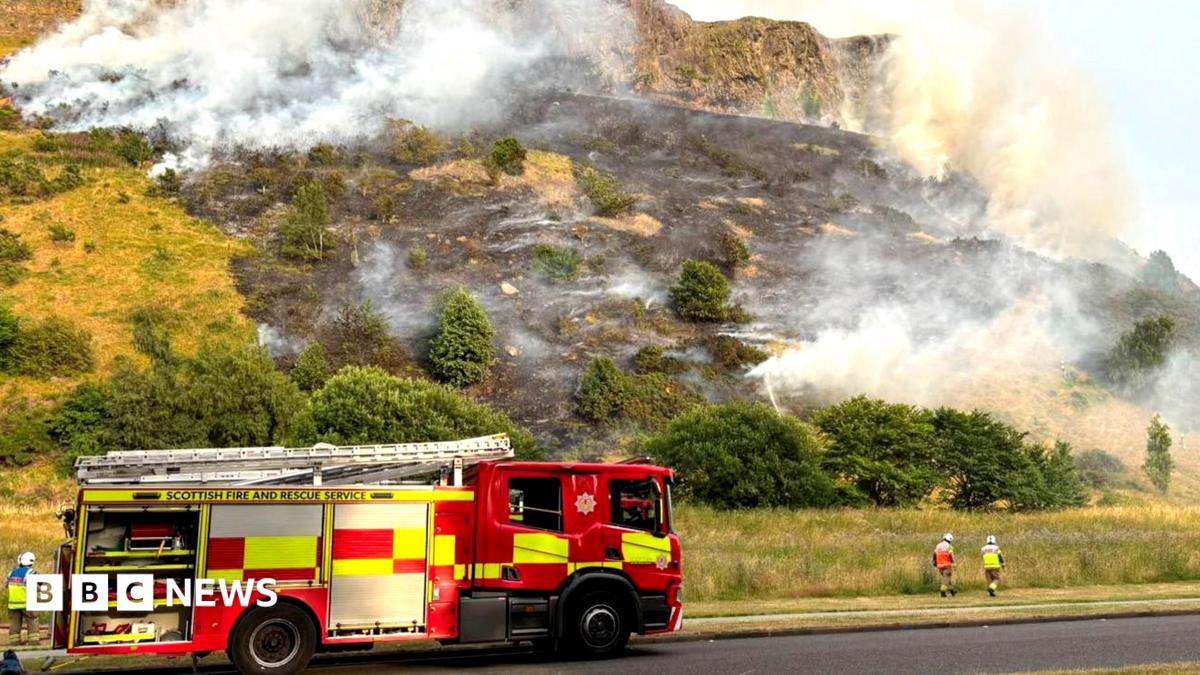
It is the latest wildfire call out for the Scottish fire service during the recent stretch of warm, dry weather.
Hundreds of firefighters, two helicopters and specialist resources were sent to the Cairngorms National Park where a blaze has been ongoing for four days.
Six square kilometres of land had been affected resulting in homes and businesses, including campsites and a ski resort in the Glenmore Forest Park area, being evacuated as a safety precaution.
A high volume pump has been used to draw water from Loch Morlich to support firefighting efforts.
On Sunday, fire crews said the fire was now “surrounded” and police began escorting residents and campers back to properties and campsites to collect personal belongings.
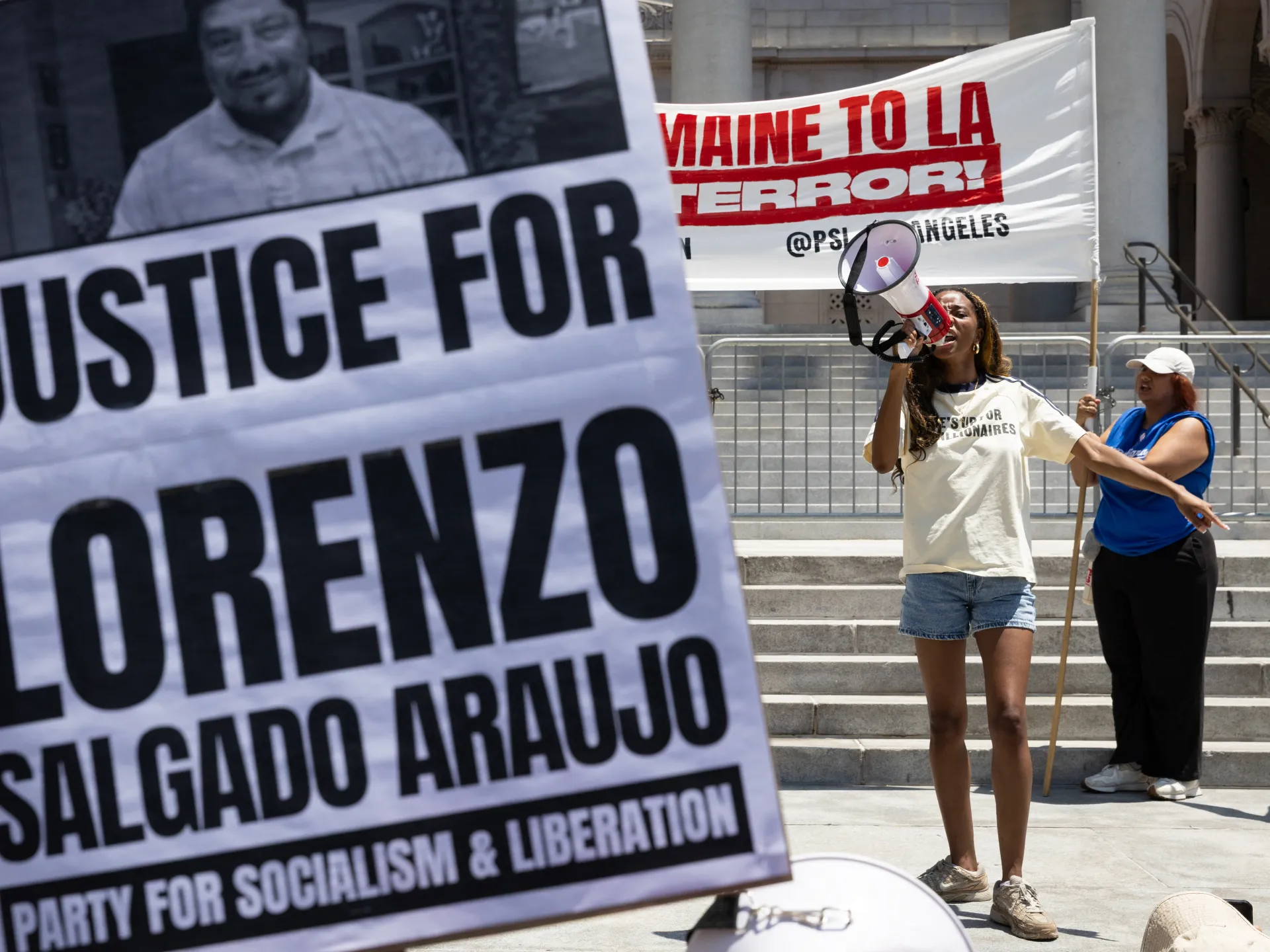
Hundreds of protesters have rallied in Houston in the US state of Texas to demand justice for Lorenzo Salgado Araujo, a Mexican man shot dead by an Immigration and Customs Enforcement (ICE) agent this month.
Protesters marched from Ervan Chew Park on Sunday and briefly shut down a bridge on Dunlavy Street, according to local media and videos posted online. They held banners that read, “Abolish ICE” and “Justice for Lorenzo”.
list of 3 itemsend of list
Salgado Araujo, a 52-year-old Mexican national, was fatally shot by an ICE agent on July 7 while he was driving his construction crew to a job site in Houston. The protests came amid mounting scrutiny of United States President Donald Trump’s aggressive immigration crackdown.
According to The Associated Press news agency, encounters with ICE and other immigration agents have resulted in at least 10 deaths since the start of Trump’s second term in January last year. Two of those happened in the days after Salgado Araujo’s killing in the states of Maine and Florida.
After the shooting in Houston, ICE claimed Salgado Araujo had used his vehicle to try to ram an agent who fired his weapon in self-defence. But witnesses contradicted ICE’s version of events, and a statement issued on Thursday by the US attorney for the Southern District of Texas made no mention of any collision between Salgado Araujo’s van and a law enforcement vehicle nor did it explicitly state that the officer feared for his life.
In a video posted online by the Party for Socialism and Liberation, a campaign group, an activist at Sunday’s march called for further protests to shut down the city.
“We need to show ICE, the Trump administration and the entire country that the city of Houston is not to be messed with,” the protester said.
“We cannot just sit here and let ICE hunt and murder more of our daughters, our brothers, our uncles. If we want justice, we have to demand it,” she said.
The activist said the “shutdown” of Houston, the fourth largest city in the US, will take place on Friday.
Sunday’s protest followed similar rallies held across the country on Saturday, including in Portland, Maine, where, on July 13, Joan Sebastian Duran Guerrero, a 26-year-old Colombian man, was fatally shot during a traffic stop in nearby Biddeford.
On Saturday, Duran Guerrero’s family paid tribute to the father of a three-year-old girl, telling the Telemundo news network that he still had “many dreams to fulfil”.
Democratic lawmakers, meanwhile, have demanded an investigation into ICE’s hiring practices after it was alleged that the officer responsible for Duran Guerrero’s killing had a history of mental health issues and had subjected his ex-wife to violent and threatening behaviour.
Bennie Thompson, a Mississippi congressman and the top Democrat on the Committee on Homeland Security in the US House of Representatives, told AP that the officer’s alleged violent history “directly call[s] into question the supposed vetting and training ICE does of its recruits”.
After the killings, the Trump administration’s top immigration enforcement official, Tom Homan, said the agency would start a “short pause” on traffic stops. And on Sunday, he announced ICE will now require at least one agent to wear a body camera during vehicle stops.
“I want the American people to see what the officers saw when they took that action,” he told the Fox & Friends Weekend programme on the Fox News network.
Trump, meanwhile, has urged the agency to continue traffic stops despite the killings.
“We must be strong, tough, and smart, and we CANNOT give up one of I.C.E.‘s most important and effective Crime Fighting tools, THE TRAFFIC STOP!” Trump wrote in a post on his Truth Social platform on Wednesday. “Once we do, we are playing right into the criminal’s hands.”
In addition to the deaths, at least 13 people have been wounded since Trump’s immigration crackdown began, according to The Trace’s Gun Violence Data Hub. At least 52 people have also died while in ICE detention, according to Human Rights Watch.
As of January 2026, ICE had deported more than 540,000 people from the US.
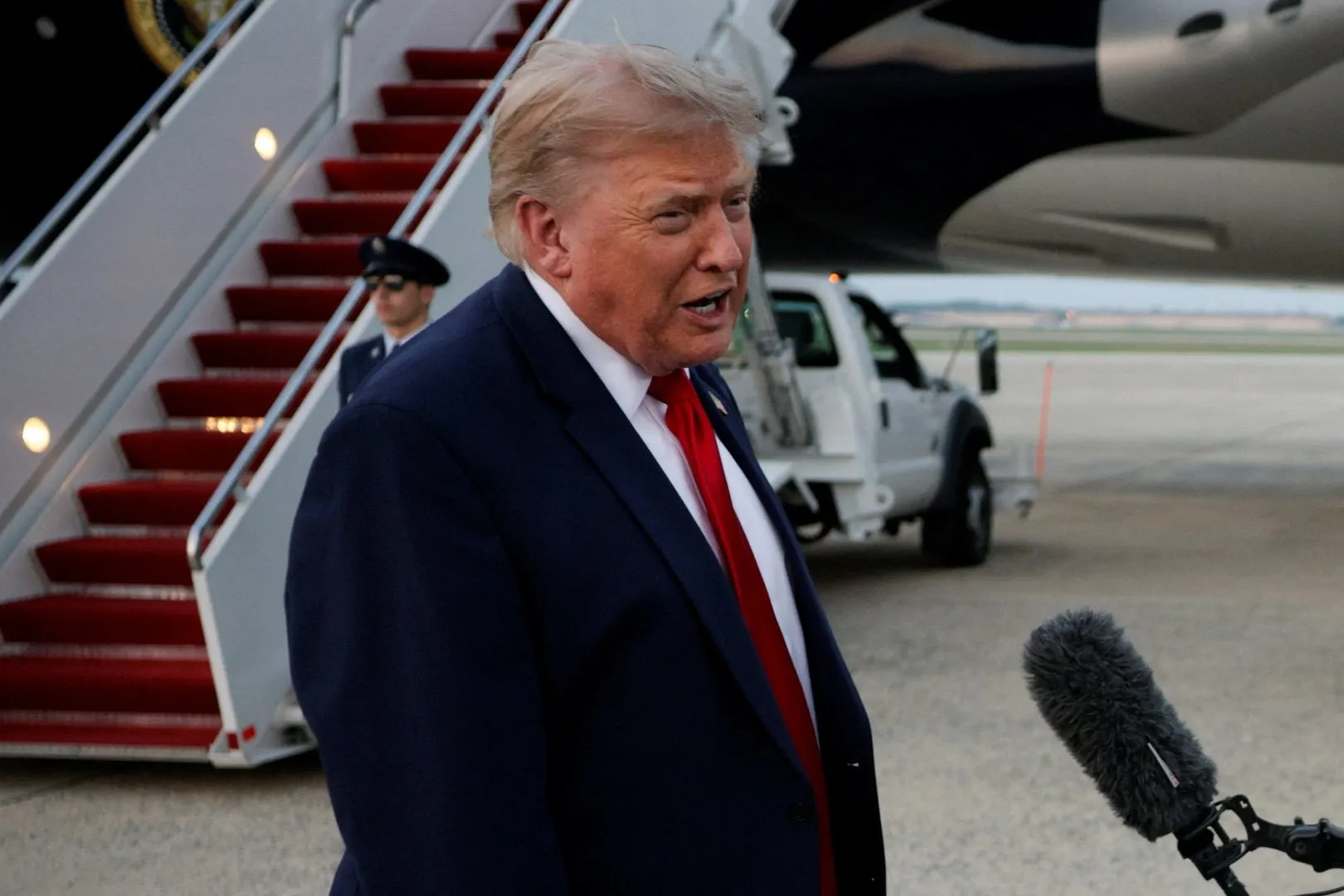
US President Donald Trump said the latest strikes on Iran, now in their ninth consecutive night, were carried out ‘in honour’ of American military personnel killed in Jordan and Iraq. The latest casualty figures bring the total number of US service members killed since the war began to 17, with more than 420 others wounded.
Published On 20 Jul 202620 Jul 2026
Share

Spanish fans spent the night partying in Madrid after their team defeated Argentina 1-0 in the final of the World Cup. Al Jazeera’s Natacha Butler reports from the heart of the celebrations in Madrid.
Published On 20 Jul 202620 Jul 2026
Share

Spain and Lamine Yamal have grown through the tournament to leave him with the world at his feet and football’s two greatest prizes in his pocket.
As well as having glorious natural gifts, he is also Spain’s lucky charm. They completed their domination of the international stage with Ferran Torres’ decisive 106th-minute strike in extra time.
Lamine Yamal has yet to lose for his country in the 28 competitive matches he has played. He has started 13 games at major tournaments and won all of them – the longest 100% win rate of any European player across major tournaments when starting.
He also became – along with 19-year-old Spain team-mate Pau Cubarsi – just the fourth and fifth teenagers to start a World Cup final and win, after Pele for Brazil in 1958, Italy defender Giuseppe Bergomi in 1982 and Kylian Mbappe with France in 2018.
Spain coach Luis de la Fuente spoke afterwards of his “sincere gratitude” to Lamine Yamal.
“He has played great football that will help him to mature and be even a greater footballer than he already is,” he said.
“He really sacrificed for the collective good. This is very important in my squad. In my opinion he played a great World Cup.”
And this is not simply a special talent, it is a special talent with a special temperament.
He shrugged off Argentina’s obvious attempts to intimidate him as he regularly came into close contact with Nicolas Tagliafico in particular.
Former England goalkeeper and BBC Sport pundit Joe Hart summed it up well.
“Not only did Lamine Yamal not react,” he said. “He stood up to it. He was not rattled and he did not back down. He had the entire team trying to smash him.
“He just stayed real cool. It was real standout performance from him.
“Lamine Yamal is 19 years old. What a beautiful day for him. He’s 19 and has completed football.”
With virtually his whole career in front of him, and taking in the experience and influence of Spain team-mates such as his captain and player of the tournament Rodri, there is every chance Lamine Yamal will add more successes like this before he is done.
Iranian media report blasts in cities in the far north and far south, including Tabriz and Chabahar.
Published On 20 Jul 202620 Jul 2026
The United States has launched strikes on Iran for a ninth consecutive night, with Iranian media reporting explosions in multiple cities, including Sirik, Jask, Tabriz and Chabahar.
The attacks on Monday came as the US military announced the death of a third soldier in recent days and as a month-old ceasefire agreement between Tehran and Washington unravelled amid a struggle for control of the Strait of Hormuz.
list of 4 itemsend of list
In a statement, the US military said the latest strikes were aimed at “degrading Iranian military capabilities used to attack commercial vessels and mariners transiting the Strait of Hormuz”.
Iran’s IRIB state broadcaster said several explosions were heard in the port cities of Mahshahr and Imam Khomeini, in the southwestern Khuzestan province. It reported further explosions near the cities of Sirik and Jask in the Hormozgan province on Iran’s southern coast, as well as near the city of Khvormuj in the Bushehr province.
Three explosions were also heard near the city of Tabriz in northwestern Iran, IRIB added, while air defences were activated in the southeastern cities of Konarak and Chabahar in the Sistan and Baluchestan province, according to the semi-official Fars news agency.
Al Jazeera’s Tohid Asadi, reporting from the Iranian capital, Tehran, said the latest US strikes had again targeted Iran’s southern coast. He added that the explosions in Tabriz, if confirmed, mark the first time the northwestern city has come under attack since the recent escalation began.
“We are having yet another night of exchange of fire,” he said. “The Iranian side is also talking about retaliatory strikes, with Iranian media reporting a new wave of missiles from the province of Lorestan targeting US military assets across the region.”
Earlier, Kuwait reported confronting “hostile drone threats”, while air raid sirens sounded in Bahrain for a second time on Sunday. Sirens also sounded in Jordan, where the military said it shot down three Iranian missiles. Kuwait’s government said a desalination plant had been attacked for the second day running on Sunday, causing a fire, in what it said was a direct strike on vital civilian infrastructure.
Both Iran and the US have also taken aim at shipping traffic, with Washington saying it is enforcing a naval blockade on Iranian ports, and Tehran saying it targets vessels violating its rules on navigating the Strait of Hormuz.
Iran’s Islamic Revolutionary Guard Corps (IRGC) said on Sunday that four vessels had attempted to transit the strait via an “unsafe route” with US backing after ignoring IRGC warnings. It said two had abandoned the attempt, while the other two were involved in an “accident”. It did not elaborate.
US Central Command (CENTCOM) said it has redirected six commercial vessels and disabled another ship to ensure “full compliance” with its blockade.
Earlier, CENTCOM also said that an American soldier was killed in northern Iraq on Saturday during a “controlled detonation of unexploded ordnance” from a downed Iranian drone. It added that “unidentified remains” had been found at the site of a deadly Iranian attack in Jordan on Friday and that “an examination process to verify the remains is ongoing”.
Two US soldiers died in Friday’s attack, while a third was reported missing in action.
The latest deaths bring the number of US service members killed since the war began to 17, while more than 420 have been wounded.
The conflict, which began when the US and Israel attacked Iran on February 28, has killed thousands of people, mostly in Iran and Lebanon, and led to major disruptions to energy supplies and fears over global inflation.
US forces attack Iran for the ninth consecutive night as one US soldier killed in northern Iraq.


Published On 20 Jul 202620 Jul 2026
Share

The Spanish first arrived in Colombia in 1499, founding the first permanent settlement in 1510. Under the reign of King Charles III (reigned 1759-1788), resentment in the colonies was growing as the Spanish insisted that the colonies could only trade with Spain, limiting their growth and also as the Spanish support for the Americans in the US war of independence increased taxation. This had led to small, ineffective rebellions.
Following the Napoleonic Wars and the turmoil in Europe, Criollos (natives born from Spanish descent) who wanted independence seized their chance.
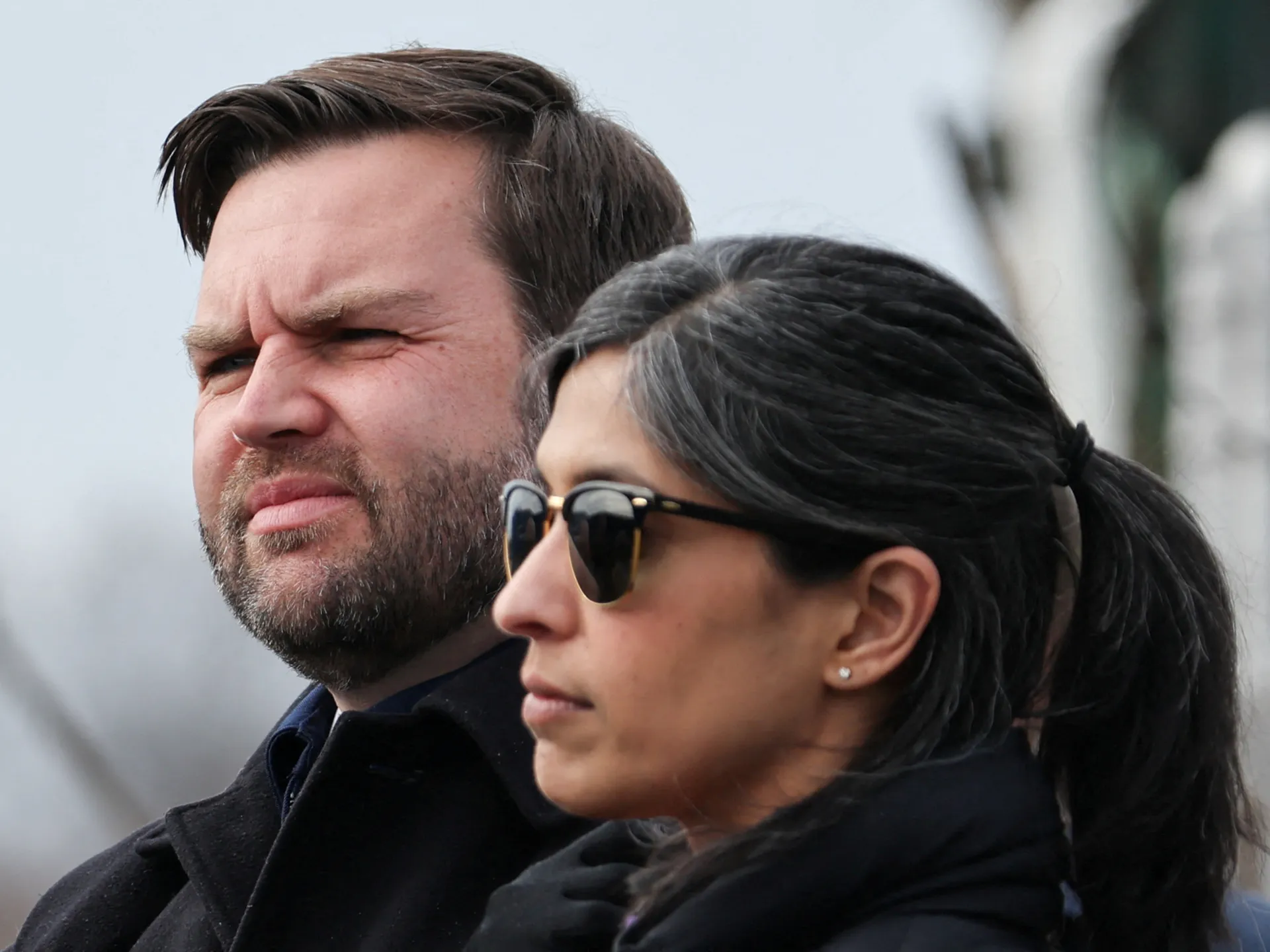
JD and Usha Vance welcome a baby boy, the first child born to a sitting vice president in more than 150 years.
Published On 19 Jul 202619 Jul 2026
United States Vice President JD Vance and his wife, Usha, have announced the birth of their fourth child.
In a statement, Vance and his wife said their son was born on Sunday at Walter Reed National Military Medical Center in Bethesda, Maryland.
list of 3 itemsend of list
“We are excited to announce that our baby boy, Alec Neel Vance, was born this morning,” the statement said.
“Usha and the baby are happy and healthy, and our kids are overjoyed to meet their little brother,” it added.
Vance, an Ohio native, and Usha, the daughter of Indian immigrants, met while attending Yale Law School, where they graduated in 2013.
Their first son, Ewan, was born in 2017, followed by another son, Vivek, in 2020. The couple’s daughter, Mirabel, was born in 2021.
Alec Neel Vance is the first child born to a vice president in more than 150 years.
The last time a sitting vice president became a new father was in the 1800s.
Schuyler Colfax and his second wife, Ellen Wade, had a son, Schuyler Colfax III, in 1870, when Colfax was serving as vice president, according to the White House Historical Association.
Vance, a former US Marine, is a passionate advocate for Americans to have more children. He repeatedly expressed alarm about declining birth rates in the US as he launched his political career in 2021 with a bid for a US Senate seat from Ohio.
As vice president, he said in Washington at the 2025 March for Life anti-abortion rally, “I want more babies in the United States of America.”
The newest addition to Vance’s family was part of a recent mini baby boom among top members of President Donald Trump’s administration.
White House deputy chief of staff Stephen Miller’s wife, Katie, recently gave birth to the couple’s fourth child, and White House Press Secretary Karoline Leavitt had her second child with her husband, Nicholas Riccio, in May.