It was at 11:21 a.m. on Sunday, June 21, that things started to fall apart. Aliyu Muhammad was in the Malali area, Kaduna, northwestern Nigeria, working underneath a car when he missed a call from his wife. When he called back, someone else answered and asked him if he knew the owner of the phone.
“He said whatever he would tell me are just unconfirmed suspicions,” he recounted. “Then, he told me some women saw my wife and suspected she was a child kidnapper. I told him that I left her at home and she was supposed to attend an event. He said that’s exactly what she told them, but the people, seeing a stranger with a hijab and niqab talking to some children while there is a high rate of kidnapping, were suspicious. He asked me to send a representative since I wasn’t around.”
The man who called introduced himself as the Mai Anguwa (community head). Aliyu sent his friend, Suleiman Isa, to fill in for him. Fortunately, the man knew the friend.
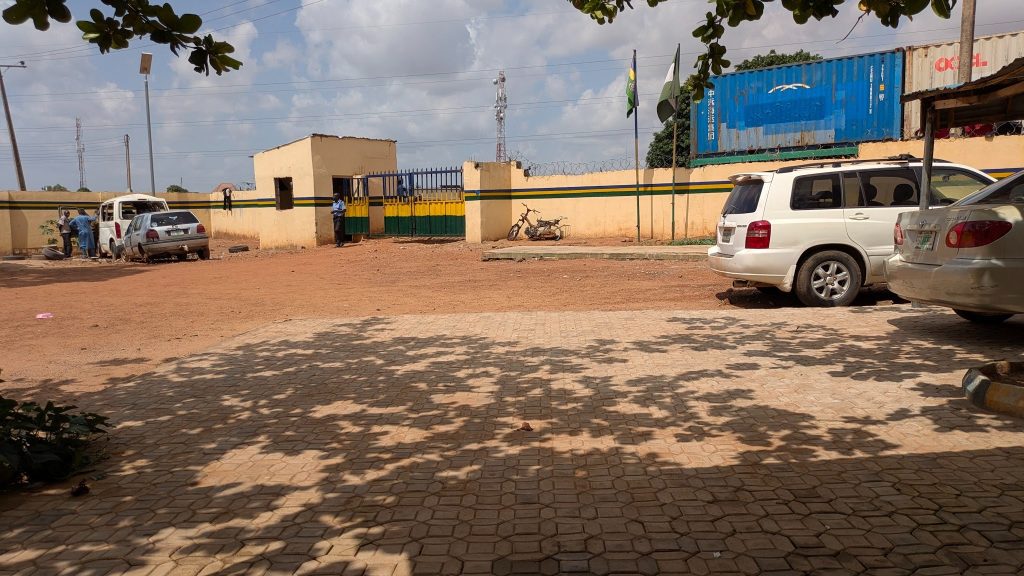
Ummulkhairi left her home in Sabon Gari Marraraban Jos, Kaduna, that morning to attend an Islamic lecture in Madrasat Tashiyhul Iman, an area she wasn’t familiar with. This led her to ask a group of children for directions. However, being a fully covered Muslim woman with a hijab and a face veil (niqab), some of the residents profiled her as dangerous. They mistook her for a child kidnapper. Within a short time, a mob gathered, and they eventually killed her, then set her body on fire, despite attempts to save her life.
The Kaduna State Police Command claimed that officers attempted to save her life, but the mob stormed the police station, overpowered them, and forcefully took Ummulkhairi out. However, eyewitness accounts tell a different story.
Zainab Musa, Ummulkhairi’s sister-in-law, who was at the scene, said it was the Divisional Police Officer (DPO), CSP Abdullahi S. Akai, who handed her over to the mob, and that she tried to pull Ummulkhairi away from him but to no avail. Other witnesses, including Ummulkhairi’s co-wife, Hussaina Sani, corroborated this account.
HumAngle visited the police station in Marrarraba Jos, where sources said the DPO “had been transferred to the Force Headquarters for investigation”. On the afternoon of Jul 16, we met DSP Mansir Hassan, the Kaduna Police spokesperson, who said he could not answer any questions because the case is under investigation and officers were not allowed to comment outside the earlier press statement.

After she was lynched, the DPO visited her house with some journalists, who interviewed him right in their compound at the centre of the family’s grief.
“[The DPO] lifted his trousers to show us the injury he sustained from the mob. He even told us that his car was damaged, and all I could think was how any of that concerns us,” said Aminatu Isa Abdullahi, Ummulkhairi’s mother-in-law.
On the day it happened
As Aliyu struggled to reach the scene after the phone call, each passing second deepened his fears. “It was hard to get a bike from where I was in Malali Low-cost, so I had to walk,” he recalled. “While I was walking, I was anxiously calling my friend [Suleiman], but his number wasn’t connecting. I rushed to get my brother-in-law in Kawo Park, and we flagged down a bike.” He also called Zainab, his sister, who in turn contacted Ummulkhairi’s colleagues, who were also supposed to attend the event.
The bike ride felt slow that day, and Aliyu’s anxiety worsened as he started receiving calls from people asking where he was as the crowd was becoming more erratic. When they reached the Marrarraban Jos Bridge, he saw cars and lorries parked on the road. The motorcyclist dropped them on the other side, and they continued on foot.
He saw smoke from a distance. Then, as if on cue, his second wife called.
“They have killed her,” she said.
Those words echoed in Aliyu’s head. He was struggling to hear what she was saying because she couldn’t stop crying, and when he started to ask questions, she couldn’t respond. Instead, she ended the call.
“When I arrived there, I saw her friend. They were all crying,” he said.
Eventually, he saw his sister and second wife returning with a piece of clothing he immediately recognised as his wife’s hijab. The lemon-green fabric was torn.

Aliyu had spent the previous night with Ummulkhairi. Every evening, even on the nights he stayed with his second wife, he would stop by to see her and the children. Every morning, before leaving for work, he did the same.
The evening before Ummulkhairi was killed was no different. She told him about her day, served him tuwo and vegetable soup, and they talked as they usually did.
“I will always remember this as the last meal I had from her,” he said.
The following morning, when he returned for his daily greetings, he found her seated at her favourite place, with her Qur’an open in front of her. “She reminded me to greet a sick neighbour who was her friend. I told her I would do so when I return,” he recalled.
It was then she informed him about the programme in Madrasat Tashiyhul Iman to which she was invited. He wished her well, and she asked the children to pray for him.
Neither of them knew they were saying the final goodbye, nor did he know that hours later he would be standing at the police station, where her remains were.
“I saw my wife’s body, burned and covered with a leaf,” Aliyu recounted.
That day, he granted some interviews to journalists before the police released Ummulkhairi’s body to the family. “We returned her home and buried her,” he said. It was only afterwards, he said, that another loss struck him. “The phone you saw me give my daughter earlier was her phone, and something that further triggered me was when it was returned to me, I realised that I didn’t even think where her things were. The Mai Anguwa sent someone to give it to me, but he returned her shoes to me himself.”
Witnesses to tears
When Suleiman Isa answered Aliyu’s call for help that morning, he didn’t know how the day would fracture his friend’s life. He arrived before the situation spiralled, helping to secure Ummulkhairi inside the police station. Believing she was safe, he stepped out to answer a phone call and meet a potential business customer. When he returned to the police station, he didn’t know she had already been dragged out and handed to the mob.
“I started asking people where she was, and they told me that she had already been killed. At that point, my head turned, and I just started crying,” Suleiman recounted.
He walked through the back entrance to the main gate, where Ummulkhairi’s body lay. “Some of us tried to stop the burning, after which we covered her body in leaves and put her on a stretcher,” he said. The family later took her home for burial.
Although Suleiman and Ummulkhairi were not particularly close, he said the events of that afternoon left him shaken.

Grief was the last reason Ummulkhairi visited Hussaina Sani, her co-wife. Now, it is the reason Hussaina spends her day in the family compound, where Ummulkhairi lived, helping to hold together the space she left behind.
Though the two women lived in different neighbourhoods and rarely saw one another, their relationship was warm whenever they met, Hussaina recounted.
She had rushed to the police station after their husband called to tell her what had happened. When she arrived, Ummulkhairi had already been placed in a separate room. Inside the station, Hussaina encountered two women accusing her co-wife of being a child kidnapper.
“They seemed angry, saying that they would not tolerate what happened. One of them got into a scuffle with the police officers,” she recounted. Unable to stay silent, Hussaina confronted one of the women herself. “I got upset and asked her if she saw her kidnapping any child. The woman said her child was kidnapped before. I asked her if it was Ummulkhairi who was responsible, and we kept going back and forth.”
Outside, the crowd grew increasingly restless. Police officers fired tear gas over the station walls in an attempt to disperse them, but it did little to calm the situation. Soon, stones began raining into the compound.
The officers moved the women into another room for safety and told them that reinforcements had been called. They also said Ummulkhairi would be transferred to Kaduna. Then the DPO arrived.
“The first thing he said was, ‘Where is the culprit?’ Our sister-in-law then said, ‘Do you mean to say the suspect?’ and pointed to the room she was kept in. However, he came out dragging her, and my sister-in-law demanded to know where he was taking her. When she couldn’t stop her, she helped Ummulkhairi remove her niqab, and the DPO reached for her hijab, but Ummulkhairi held onto it tighter.” Despite the sister-in-law’s attempt to pull her back, he still pulled her outside and handed her to the mob.
They heard her scream as the mob descended on her, but none of them could intervene because of the overwhelming crowd. Hussaina’s voice started rising as she recalled the events of the day.
She rejected the police’s account that the crowd had stormed the station.
“I have no idea how many people there were,” he voice cracked. “There were hundreds, including men, women, and even children. At one point, both roads were filled with people; how could she even fight them?”
Their sister-in-law, Zainab, ran into the streets pleading with the crowd to listen, explaining that Ummulkhairi was innocent. No one did. At one point, a police officer grabbed Zainab and warned that if she didn’t lay low, the mob might turn on her as well. Zainab was later taken out through a backdoor.
The ones left behind

On the morning of July 2, when HumAngle visited, Ummulkhairi’s home was thick with grief. In the midst of it, her children were playing about. Nearby, her mother-in-law, sister, and co-wife were moving around the hearth, trying to fill in the space her absence had left behind. The grief had thickened into the walls, but its weight was evident, even when they welcomed me with a warm smile.
If Ummulkhairi were there, she would have woken up for dawn prayers, swept the house, and ensured her children were bathed and fed. She would have thrown danwake (bean dumplings) into a pot over the fire, like she did the day she was killed, and sliced pieces of onions into the hot oil. She would have plated it on the colourful plates her sister was now washing.
Afterwards, she would have taken down her bag from the wall and revised what she would teach her students in her next class or left for school. If she did go to school, she would have returned around 2 p.m. Had I visited then, she would almost certainly have insisted on serving me a plate of food, even if it meant going without herself.
“Tell me about Ummulkhair,” I asked as I sat across from her younger sister, Ruqayyah Abbah, on the multicoloured mat in the sitting room. Ruqayyah had travelled from Gombi, Adamawa State, in northeastern Nigeria, after the news wrecked their home. She paused, as though weighing the question, before she started to speak.
“Ummulkhairi had always taken care of the people around her. Ever since I knew her, she had always been one to feed and take care of any child. I can confidently say she is the kindest among us all,” she started. “But in a span of a day, all that was taken away when she was wrongly accused. I know she is innocent because I have known her all my life, and even if she wasn’t my sister, I would have said the same.”
Ruqayyah recounted memories from when they were kids, how Ummulkhairi, who is fondly called Ummi by her family, always stayed away from fights, even when she was teased. As a child, she often preferred to play alone.

Ummi Abba Gambo was her maiden name. She attended Gombi Primary School and Government Girls Secondary School, Gombi, for her secondary school. After marrying and relocating to Kaduna State, she enrolled in an Islamic school. Upon graduating, she was retained as a teacher due to her diligence. She taught both the children and adult sections. She last visited her family home nine months ago for her father’s funeral.
“I would say she was the most easily terrified person I know. She always avoided things that would put her in scary or uncomfortable situations. After how she was attacked that day, even if they had left her alive, I don’t think she would have avoided being traumatised by the whole situation,” Ruqayyah said.
When the news of Ummulkhairi’s death reached Gombi, it landed first in Ruqayyah’s ear. That morning, she and their mother had been trying to reach Ummulkhairi to talk about her youngest daughter’s education.
“She hasn’t been put in school yet due to financial problems, and our mother wanted to send her the money. After Zuhr (midday) prayers, I tried her number to let her know, but I couldn’t reach her,” she recalled. “I informed my mother, and we decided to call her later in the day, not knowing that she had already been killed at that point. By the time he called me, they were either about to go bury her or were coming back from it.”
The details came in bits and pieces, because the grief hit before she could hear the rest of it. She learnt about the gut-wrenching details from their older sister, whom she called after she managed to stop crying.
Ruqayyah arrived at Marraraban Jos on Tuesday, June 23, two days after the incident, but the reality of her sister’s death did not fully settle until she reached the family home. The first sign of absence was the lack of phone calls from her sister, who often called en route to see how her journey was going and to ask what she wanted to eat when she arrived. That had been the routine every time she travelled to Kaduna in the past.
This time, the phone never rang, at least not from Ummulkhairi.

“To think she couldn’t find safety in the police station. What’s the point of authorities that can’t protect someone in that situation?” The anger found its root in her voice. It wasn’t just that her sister died; it was that the system designed to protect her failed to. Her voice softened as one of Ummulkhairi’s daughters walked into the room.
Seeing her nieces and nephews the day she arrived, she said, was the moment the reality of the loss finally overwhelmed her.
“I just hope the government gets us justice, so that these children and their father can get some peace. I feel so bad for the children. I know how much their mother loved them and how she could breathe for them if she could,” she added.
Ruqayyah reached for a lemon-green storage box filled with the things her sister treasured. Inside were photographs from her youth and with her family. In one, she was holding one of her children, her eyes looking straight into the camera. In another, she was with friends, her face glowing with the promise of youth.
As we looked through the pictures, three of her children gathered around, adding the little they knew to the history her sister was sharing. It was then that her second son, Usman Aliyu, brought me her favourite Qur’an, its battered pages, evidence of her love.

Ummulkhairi is not the only victim of mob violence in Nigeria. It has become a recurring feature of public life in Nigeria, fuelled by distrust of formal justice systems and the widespread belief that communities must protect themselves.
Suleiman Usman Yusuf, a security consultant and human rights advocate, said the roots of the problem lie not simply in public anger, but institutional failure.
“The biggest reason is institutional failure compounded by deliberate impunity. When citizens repeatedly watch genuine criminals walk free, whether because evidence disappears, witnesses are intimidated, prosecutors receive phone calls, or judges grant bail to [people] who return to terrorise the same communities, a dangerous conclusion takes root in the public mind: that the formal justice system is not for them,” he said.
He added that mob justice is not primarily a product of ignorance or barbarism. It is a deeply wrong response to a system that has consistently failed to deliver consequences.
“People do not burn suspects because they enjoy violence. They do it because they have been taught, through repeated experience, that violence is the only language that produces results,” he added. “The second layer is impunity for the mobs themselves. When a crowd kills someone, and nothing happens, that crowd becomes a template. The next community that is angry enough simply follows the same script.”

He pointed to a pattern stretching across more than a decade. “We saw it with the Aluu Four in 2012. We saw it with Major General Idris Alkali in 2018. We saw it with Deborah Samuel in 2022. We are seeing it now with Malama Ummulkhairi in 2026.”
Although the incidents occurred years apart and in different parts of the country, he said, they shared a common thread.
“Nobody was ever made to pay a price serious enough to deter the next mob,” he said.
Suleiman believes legislation remains necessary, but it must be matched by visible accountability. He argues that Nigeria needs at least one high-profile conviction that would send an unambiguous message across the country to stop the cycle. He has been advocating for the Prohibition and Protection of Persons from Lynching, Mob Action, and Extrajudicial Bill passed by the Senate in 2017 to be signed into law. He has written formal letters to the House of Representatives, the President of the Senate, and others.
Amnesty International recorded at least 555 victims of mob violence in Nigeria between 2012 and 2023, with 33 people burnt to death. The regions with the highest cases were the North West (100) and the South West (98), mostly as a result of being accused of witchcraft, theft, blasphemy, or taking part in rituals.
In Ummulkhairi’s family, however, mob violence is no longer a mere figure. It is a loved one, whose absence is felt every second. Her mother collapsed after hearing the news of her daughter’s death. Family members in Gombi said she remained in a state of deep distress, unable to eat or move normally after the incident. Due to pre-existing issues with hypertension and back pain, the journey was impossible for her to make down to Kaduna, but every time she remembered how her daughter died, the memories triggered another health crisis.

The last meal Ummulkhairi prepared for her family was danwake, but it was forgotten when the news reached the family. The next day, it was thrown into a basket as it had started to spoil. What happened next will haunt their paternal grandmother, Aminatu Isa Abdullahi, forever.
Twelve-year-old Usman, Ummulkhairi’s second son, attempted to eat the spoilt meal. “He looked at us and vowed that he must eat it even if it was spoiled,” Aminatu recounted. They watched him as he shoved handfuls into his mouth, an attempt to save his mother’s last meal, further breaking their hearts.
“One day I was sitting with her youngest daughter, and she said to me: ‘Will you stay with us until our mother comes back?’” That was another exchange that shattered Aminatu’s heart, and recalling the memory made her break down in tears. She promised her she would stay as long as she was needed, not having the heart to explain that her mother was never returning.
Aminatu called for justice. Her prayers echoed through the wall, her pain spreading through it. When she arrived at Marraraban Jos after she got the news, the town was in uproar. As they tried to get a bike to take them to the house, someone warned her to stop crying so hard in case people suspect they are Ummulkhairi’s relatives and try to attack them too.
“We couldn’t even do the funeral bath for her; we just had to sprinkle water on her burnt body,” Aminatu said. She had declined to see the body, afraid of what would stick in her memory. “They bought some security personnel with guns around the house, and all I could think was what they thought they were trying to protect when we had already lost her.”
Hamza Dantani, a human rights lawyer, has since submitted a petition calling for a thorough investigation into the circumstances of this case. The alleged negligence contravenes the Police Act 2020 and violates Sections 33 and 34 of the 1999 Nigerian Constitution, which protect the fundamental rights to life and dignity.
A history of violence
About seven years ago, Marraraban Jos started having security issues; before then, stories like that were tales coming from far-away places. Sometimes, others from neighbouring villages would call residents to ask if they saw kidnappers approaching their side. This earned the neighbourhood its nickname, Sambisa.
Things have eased up a little for the neighbourhood, as it was a lot worse three years ago. They hardly went a week without someone being kidnapped there. The men formed a night neighbourhood watch to protect what they could. The women at home live with anxiety every time their husbands and sons go out, not knowing how the night would end up for them. Aliyu was among the men who used to patrol the community.
Ummulkhairi’s family moved to the neighbourhood in 2020 and had lived in their current house for about two years. Right behind the house stretched acres of empty land, extending beyond what the eyes can see.
“The men usually go out around 11 p.m. to start their patrol. Sometimes, they come back with wounds as a result of hiding in the bushes. I sometimes hear gunshots from my room, especially when one of our neighbours was kidnapped. I started to sleep fully dressed; I would wear trousers and keep a hijab beside me just in case I get kidnapped,” said Habiba Muhammad, Ummulkhairi’s friend and neighbour.

Recently, residents said kidnapping rates had reduced, but cattle and animal rustling still happens often around that area. Still, they have never seen security personnel posted to their neighbourhood. Years of living with fear had made residents increasingly suspicious of strangers. There were times when people fled their homes simply because they feared an attack was coming.
“We can’t leave because we don’t have money to go elsewhere, and even if they kidnap us, they won’t get much. When we used to run, I would go to my grandmother’s place in Kaduna town. It disrupts our children’s education too; sometimes, they close up the schools when the kidnappings worsen. But now, I have accepted this fate; I don’t want to run anymore,” Habiba said.
This anxiety is shared with several other people HumAngle spoke to in the area. However, some unanimously agreed that even though kidnapping was common in their part of Marraraban Jos, child kidnapping on its own rarely happens.
“Sometimes when they can’t find the men, they will kidnap their wives, except in some circumstances where they would kidnap an entire family,” she said. Habiba recalled the experience of one neighbour whose family was attacked. “Because his wife was pregnant and couldn’t walk, they beat her up and abandoned her on the way. They also threw down one of her children when he peed on their body, and he even broke his arm.”

Retracing memory
Aliyu has a lot to say about Ummulkhairi; her loss is overwhelming.
“She was very kind to me, and there were many times I would be in distress, and she would offer warmth and support, even when we were going through hard times,” he recalled. “This place you are sitting in used to be her favourite place, and when she is not busy with other tasks, she prefers to sit there and study her books. Sometimes, other women from the neighbourhood come in so she can help them with theirs.”

As he dug into his memory to answer the questions, his second son lay down the mat as he slyly tried to take his father’s phone as he spoke. When he succeeded, his legs swung in an upward motion as he lay on his stomach, playing with the phone as we spoke about his mother, a contrast from the young child who shoved pieces of spoiled food in his mouth over a week ago.
“There are so many things I can tell you about Ummulkhairi, but I don’t even have the words. God knows I have suffered such a great loss; the only thing I can do now is pray for her,” he said.
Uba Sani, the Kaduna State Governor, has claimed that “about 41 persons have been charged with culpable homicide. And about 41 went through investigation also; that’s 82. Thirty suspects have also been charged with unlawful assembly”.
A June 24 report shows that 24 alleged suspects – 20 males and 4 females – have been arraigned on charges of criminal conspiracy, inciting public disturbance, mischief, mischief destruction of public and police property, and culpable homicide.
This news reached Aliyu and his family through social media. “They said they were taken to court, but I don’t know much about that. The video I saw showed some people lined up, but I couldn’t really see their faces clearly; I only recognised one face, an old man that I see around,” he explained.
The family, still waiting for answers about the circumstances surrounding Ummulkhairi’s death, felt excluded from the process meant to deliver justice. “No one briefed us; we have to depend on rumours for information. Her youngest son told me yesterday that if they get justice for what was done to their mother, he thinks he will be better, and I could only try not to cry,” Aliyu’s brother, Abubakar Muhammad, added.

The recorded videos of the lynching are also a huge wound to the family, and they couldn’t bring themselves to watch them. “I cannot watch these kinds of videos. I avoid social media for that reason. I usually only go in to respond to condolence messages,” Aliyu said. He wished people cared more about how things like this would affect them.
Abubakar said Aliyu often told him that he was worried about his wife during the past few months due to the loss of her father, as it seemed to be taking a toll on her. But even then, she had continued to live life as she always had.
“The most painful part was hearing what the oldest son was saying about taking vengeance for what was done to his mother. I tried to placate him. I even tried to close his mouth, but he pushed my hand away. Things like this can only be solved by justice; only that can give us relief. And if this keeps happening, no one is safe,” Abubakar said.
Ummulkhairi did not disappear with the smoke that burned her alive in broad daylight that day. She is present in the edges and corners of the house, on the walls where her bag lies, in the kit where she once kept everything that matters, and in the memories of her loved ones.