Justice

Supreme Court wary of barring police from phone searches to find crime suspects

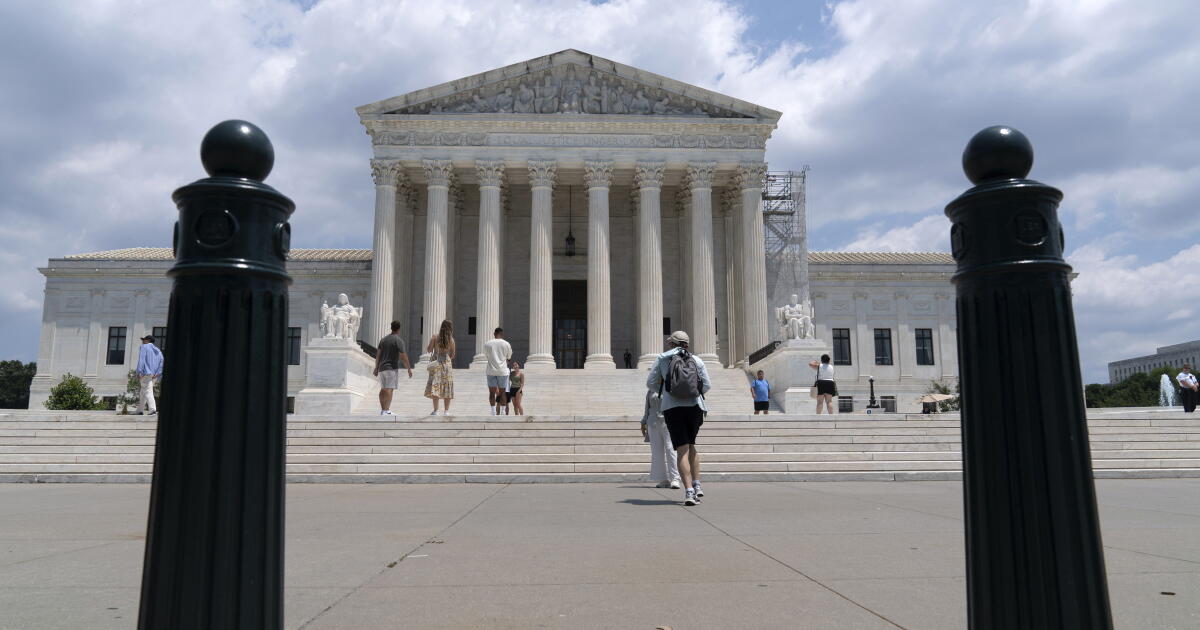
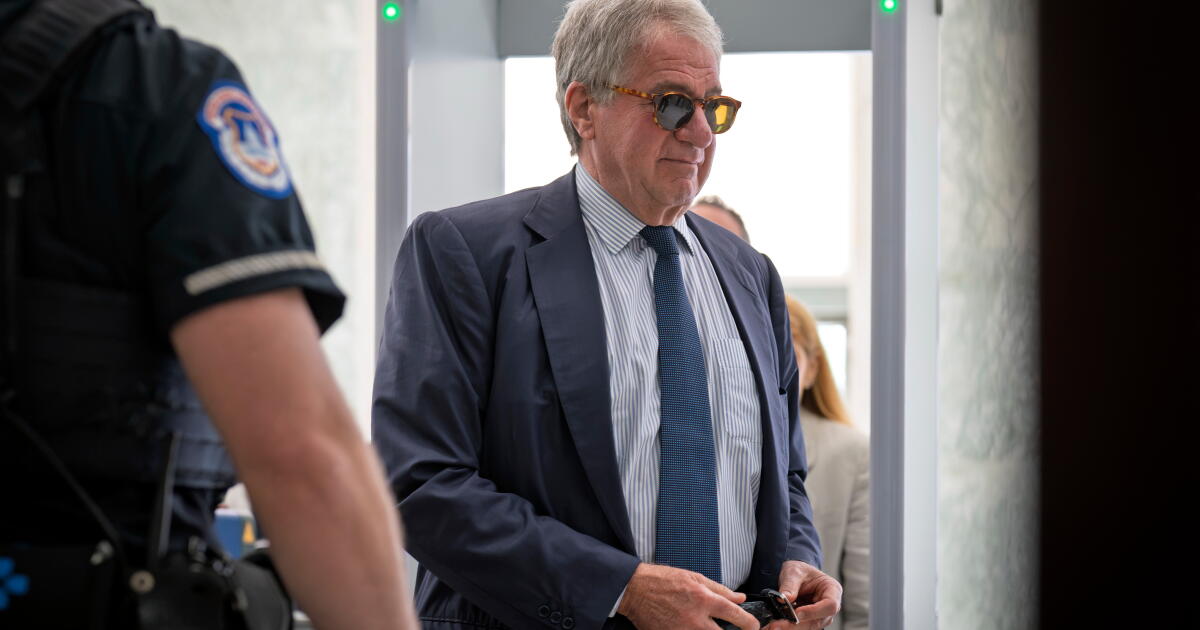
A divided Supreme Court heard arguments Monday on whether the police use of phone tracking data violates the Constitution’s protection against “unreasonable searches.”

Most of the justices sounded wary of barring investigators from obtaining precise location history from Google or cellphone providers if it helps find a murderer or a bank robber.

“I’m trying to figure out why this was bad police work,” Justice Brett M. Kavanaugh told an attorney representing the defendant, Odell Chatrie.

He said a police detective in Virginia was seeking clues to find a bank robber and sought a “geofence warrant” from a judge that told Google to turn over data from phones that were near the bank during the hour of the robbery.

“In the end, he got three names,” Kavanaugh said, including Chatrie, who pleaded guilty. He said these searches have proved to be practical for finding criminals.

But other justices said the court should not rule broadly to endorse digital searches of vast data bases held by private companies.

What about emails or Google photos, asked Justices Sonia Sotomayor, Neil M. Gorsuch and Amy Coney Barrett.

All three said this information deserves more privacy protection than location data.

In the past, the court has said the 4th Amendment protects against government searches that intrude upon a “reasonable expectation of privacy.” The two sides in this case differ on whether a digital search of location data violates privacy rights.

Gorsuch said he was generally skeptical of broad searches if the government had no particular suspect.

Is it OK to search “all the rooms in a hotel for a gun or all the storage units or all bank deposit boxes for the pearl necklace that has been stolen?” he asked.

Eric Feigin, a deputy solicitor general, said the government probably could not obtain a search warrant for all storage units or hotel rooms, but a Google search is different because it is a software filter.

Chief Justice John G. Roberts Jr. proposed a narrow ruling.

Perhaps unwittingly, Chatrie had agreed to have Google store his location history data. Roberts said he could have turned off the public location data, and for that reason, he may have lost his right to appeal.

“If you don’t want the government to have your location history, you just flip that off,” he said.

Justice Samuel A. Alito Jr. agreed. Chatrie “voluntarily disclosed to Google the information about where he was going to be,” he said.

Eight years ago, Roberts wrote an opinion for a 5-4 majority that said investigators needed a search warrant before they could obtain 127 days of cell tower records that helped convict a Michigan man of several store robberies.

Four of the court’s liberal justices joined that majority, but only two of them — Sotomayor and Elena Kagan — remain on the court.

Since then, Kavanaugh, Barrett and Justice Ketanji Brown Jackson have joined the court.

The National Assn. of Criminal Defense Lawyers and other civil liberties groups backed Chatrie’s challenge to the government’s use of geofence warrants.

Chatrie had “a reasonable expectation of privacy in his location history given both its sensitive and revealing nature and the fact that it was stored in his password-protected account,” Washington attorney Adam Unikowski told the court. “There was not probable cause to search the virtual private papers of every single person within the geofence merely because of their proximity to the crime.”

Feigin, the Justice Department attorney, said a ruling for Chatrie “would impede the investigation of kidnappings, robberies, shootings and other crimes.”

He agreed, however, that email should be protected because it involves personal communication.

The justices will hand down a ruling in Chatrie vs. U.S. by the end of June.

Source link

Will Trump’s reclassifying of medical marijuana have any effect on criminal justice reform?

The Trump administration’s historic move to reclassify state-licensed medical marijuana as a less-dangerous drug was cheered by some advocates but for others, it fell far short for the thousands still incarcerated on federal cannabis-related convictions.

The executive order, which acting Atty. Gen. Todd Blanche signed Thursday, does not address current penalties for possessing and selling marijuana or those jailed with yearslong sentences.

“While this is a victory, the fight is far from over,” said Jason Ortiz, director of strategic initiatives for the Last Prisoner Project, a nonprofit focused on cannabis criminal justice reform.

Proponents of legalizing marijuana as well as overhauling prison sentencing say this order, which does not completely decriminalize the drug, benefits only cannabis researchers, growers and others in Big Weed. Meanwhile, thousands — many of whom are people of color — are stuck serving harsh sentences for marijuana-related offenses. Or they have served their time but having a conviction on their record has made life difficult.

Now, advocates are calling on Congress and state lawmakers to take concrete steps to ensure those with marijuana-related convictions receive fair treatment or be forgiven altogether.

Prisoners and their families look for hope

Blanche’s order reclassifies state-licensed medical marijuana as a less-dangerous drug. The major policy shift, which both Presidents Obama and Joe Biden had considered, means cannabis won’t be grouped with drugs like heroin.

But it does not legalize marijuana for medical or recreational use. It shifts licensed medical marijuana from Schedule I — reserved for drugs without medical use and with high potential for abuse — to the less strictly regulated Schedule III. This will likely give licensed medical marijuana operators and cannabis researchers a major tax break and less stringent barriers to doing normal business.

Virtually no one imprisoned at the federal level is there solely for marijuana possession. But many are there for large-scale possession, trafficking offenses or both.

Hector Ruben McGurk, 66, has been serving life without the possibility of parole since 2007 for transporting thousands of pounds of marijuana and money laundering. He is currently imprisoned in Beaumont, Texas, over 800 miles from his son’s El Paso home. His incarceration has been hard on his son, said McGurk’s daughter-in-law, Ferna Anguiano. And the distance makes visits logistically difficult.

So it’s tempting to see this order as a glimmer of hope, given that the family believes McGurk’s punishment far outweighs his crimes. But Anguiano has no idea how to navigate lobbying for his release.

“His release date is death,” Anguiano said. “I mean, we see all this stuff on the news — bigger cases, fatal cases — and people are going in and out of prison and coming out to their families.”

They try to keep in touch through phone calls and a prison texting service. They’re concerned about McGurk’s health and his diabetes management. It would be a dream come true for him to come home.

“He deserves a second chance,” Anguiano said. “Yes, it was a poor decision he did in his lifetime. He was younger. But he is not a bad person. I think it’s fair to say he has served enough time for it.”

It’s not clear whether punishments would be different had marijuana always been scheduled differently, drug policy experts say.

“In addition to schedule-specific penalties, there are marijuana-specific penalties that have nothing to do with the schedule,” said Cat Packer, director of drug markets and legal regulation at the nonprofit Drug Policy Alliance. “Even if marijuana were to be moved to Schedule V, those criminal penalties would still exist and there are mandatory minimums for simple possession.”

Racial disparities exist in convictions and Big Weed

Destigmatizing marijuana has long been an issue for both political parties. Obama commuted the sentences of about 1,900 federal prisoners, almost all of whom were incarcerated for nonviolent drug crimes. Biden pardoned 6,500 people convicted of use and simple possession of marijuana on federal lands and in the District of Columbia. President Trump’s administration has taken far fewer drug clemency actions and does not have an overarching policy directing such actions.

“What many people on the right and the left would like is to move marijuana from this ‘just as bad as heroin’ category and to just sort of de-schedule it entirely,” said Marta Nelson, director of sentencing reform at the Vera Institute of Justice. “Regulate it like you do alcohol or tobacco.”

Studies show Black Americans are roughly 3.7 to 4 times more likely to be arrested for marijuana possession than white Americans, despite usage rates being roughly the same across racial groups. Federal-level marijuana cases are pretty small today, but those serving sentences for federal drug offenses are overwhelmingly Hispanic and Black, according to Justice Department and Bureau of Justice Statistics data.

The racial disparity with drug convictions is reminiscent of 2010 legislation Obama signed reducing the gap between mandatory sentences for crack cocaine versus powder cocaine. In 2018, Trump made it apply retroactively.

Because business owners with state medical marijuana licenses are predominantly white, the tax relief created by the rescheduling will also likely give a leg up to mostly white businesses, Packer said. A lot of equity programs won’t apply.

“This is going to, in my mind, widen the gap, the financial disparities, the business disparities that currently exist between Black and brown, Latino and white owners in the cannabis industry because licenses were not distributed equitably,” Packer said.

Possible next steps for marijuana convictions

In theory, Trump could issue a blanket pardon like he did for Jan. 6 rioters. But Nelson thinks that is highly doubtful.

“Having marijuana convictions on the record for things like mass immigration enforcement is helpful to the administration,” Nelson said.

An impactful next step would be for Congress to outline very comprehensive legislation addressing existing marijuana-related convictions, expungements and industry regulations, she added.

The Last Prisoner Project and other organizations are planning to renew a dialogue with federal lawmakers, including the Congressional Cannabis Caucus, which includes Democratic Rep. Ilhan Omar of Minnesota and Republican Rep. David Joyce of Ohio. They will also continue to lobby for Trump to conduct a large-scale act of commutation and clemency.

Advocates are also hoping Trump’s order will prompt every state to rethink their marijuana classification and penalties.

“It is imperative that every state review their situation, as a lot of their controlled substances at the state level are tied to the federal government,” Ortiz said. “We’re gonna see other states that are going to need a little help from the public to remind them what the right thing to do is.”

Tang writes for the Associated Press.

Source link

Justice Department to allow firing squads for executions in move to ramp up capital punishment

The Justice Department will adopt firing squads as a permitted method of execution as the Trump administration moves to ramp up and expedite capital punishment cases, officials said Friday.

The Justice Department is also reauthorizing the use of single-drug lethal injections with pentobarbital that were used to carry out 13 executions during the first Trump administration — more than under any president in modern history. The Biden administration had removed pentobarbital from the federal protocol over concerns about the potential for unnecessary pain and suffering.

The moves were announced as part of a broader push to step up federal executions after a moratorium under the Biden administration. Only three defendants remain on federal death row after Democratic President Biden converted 37 sentences to life in prison, though the Trump administration has so far authorized seeking death sentences against 44 defendants.

“The prior administration failed in its duty to protect the American people by refusing to pursue and carry out the ultimate punishment against the most dangerous criminals, including terrorists, child murderers, and cop killers,” Acting Atty. Gen. Todd Blanche said in a statement. “Under President Trump’s leadership, the Department of Justice is once again enforcing the law and standing with victims.”

The federal government has not previously included firing squad as a method of execution in its protocols, according to the Death Penalty Information Center. Five states currently allow executions by firing squad: Idaho, Mississippi, Oklahoma, South Carolina, and Utah.

The pentobarbital protocol was adopted by William Barr, attorney general during Trump’s first term, to replace a three-drug mix used in the 2000s, the last time federal executions were carried out before Trump’s first term in office.

Atty. Gen. Merrick Garland in the final days of the Biden administration withdrew the pentobarbital lethal injection policy after a government review of scientific and medical research found there remains “significant uncertainty” about whether its use causes unnecessary pain and suffering.”

In 2020, under Barr’s leadership, the Justice Department published a rule in the Federal Register to allow the federal government to conduct executions by lethal injection or use “any other manner prescribed by the law of the state in which the sentence was imposed.”

A number of states allow other methods of execution, including electrocution and inhalation of nitrogen gas.

The Trump administration, in a report released Friday, said the Biden administration “got the standard and the science wrong.” The Biden administration’s findings, among other things, “failed to address the overwhelming evidence” that a person injected with pentobarbital “quickly loses consciousness — rendering him unable to experience pain,” the report said.

Currently on death row are are Dylann Roof, who carried out the 2015 slayings of nine Black members of Mother Emanuel AME Church in Charleston, S.C.; 2013 Boston Marathon bomber Dzhokhar Tsarnaev; and Robert Bowers, who fatally shot 11 congregants at Pittsburgh’s Tree of Life synagogue in 2018, the deadliest antisemitic attack in U.S history.

Richer writes for the Associated Press.

Source link

US Justice Department drops criminal probe of Fed chair Jerome Powell | Business and Economy News

The announcement on Friday is expected to clear the path for the confirmation of his successor, Kevin Warsh.

The United States Department of Justice has ended its probe into US Federal Reserve chair Jerome Powell, clearing a major roadblock to the confirmation of his successor, Kevin Warsh.

US Attorney for the District of Columbia Jeannine Pirro said on X on Friday that her office was ending its probe into the Fed’s extensive building renovations because the Fed’s inspector general would scrutinise them instead.

Recommended Stories

list of 4 itemsend of list

Pirro, a Trump ally and the top federal prosecutor in Washington, DC, said she had instead asked the Fed’s internal watchdog, the Office of Inspector General, to examine cost overruns in renovations of the central bank’s Washington headquarters.

“The IG has the authority to hold the Federal Reserve accountable to American taxpayers,” Pirro said in a social media post. “I expect a comprehensive report in short order and am confident the outcome will assist in resolving, once and for all, the questions that led this office to issue subpoenas.”

The move could lead to a swift confirmation vote by the Senate for Warsh, a former top Fed official whom US President Donald Trump, a Republican, nominated in January to replace Powell. Powell’s term as chair ends May 15.

Senator Thom Tillis, a North Carolina Republican, had said he would oppose Warsh until the investigation was resolved, effectively blocking his confirmation.

The leadership transition at the world’s leading central bank could now proceed quickly.

Republicans praised Warsh during a Tuesday hearing even as Democrats questioned his independence from Trump, the lack of transparency around some of his financial holdings, and what they said was his flip-flopping on interest rates. Senator Elizabeth Warren of Massachusetts, the ranking Democrat on the committee, questioned if Warsh will be a “sock puppet“.

Still, Trump’s previous appointment to the Fed’s board of governors, Stephen Miran, was approved by the full Senate just 13 days after his nomination.

No evidence

The investigation was among several undertaken by the Department of Justice into Trump’s perceived adversaries. For months, it had failed to gain traction as prosecutors struggled to articulate a basis to suspect criminal conduct.

A prosecutor handling the case conceded at a closed-door court hearing in March that the government had not yet found any evidence of a crime, and a judge subsequently quashed subpoenas issued to the Federal Reserve.

The judge, James Boasberg, said prosecutors had produced “essentially zero evidence” to suspect Powell of a crime. Boasberg branded prosecutors’ justification for the subpoenas as “thin and unsubstantiated”.

More recently, prosecutors made an unannounced visit to a construction site at the Fed’s headquarters but were turned away, drawing a rebuke from a defence lawyer in the case who called the manoeuvre “not appropriate”.

Warsh said during the Senate hearing on Tuesday that he never promised the White House that he would cut interest rates, even as the president renewed his calls for the central bank to do so.

“The president never once asked me to commit to any particular interest rate decision, period,” Warsh said during the hearing. “Nor would I ever agree to do so if he had … I will be an independent actor if confirmed as chair of the Federal Reserve.”

Warsh’s comments came just hours after Trump, in an interview on CNBC, was asked if he would be disappointed if Warsh did not immediately cut rates and responded, “I would.”

The decision to abandon the investigation represents a rare pullback for a Department of Justice that over the last year has moved aggressively, albeit unsuccessfully, to prosecute public figures the president does not like.

Robert Hur, an lawyer for the Federal Reserve Board of Governors, did not immediately respond on Friday to an email seeking comment.

Source link

Justice Department drops criminal probe of Fed chair Powell, likely clearing way for Warsh

The Justice Department has ended its probe into Federal Reserve chair Jerome Powell, clearing a major roadblock to the confirmation of his successor, Kevin Warsh.

U.S. Attorney for the District of Columbia Jeannine Pirro said on X that her office was ending its probe into the Fed’s extensive building renovations because the Fed’s Inspector General would scrutinize them instead.

The decision ends an investigation, one of several undertaken by the Justice Department into President Trump’s perceived adversaries, that for months had failed to gain traction as prosecutors struggled to articulate a basis to suspect criminal conduct.

A prosecutor handling the case conceded at a closed-door court hearing in March that the government hadn’t yet found any evidence of a crime, and a judge subsequently quashed subpoenas issued to the Federal Reserve. The judge, James Boasberg, said prosecutors had produced “essentially zero evidence” to suspect Powell of a crime. Boasberg prosecutors’ justification for the subpoenas as “thin and unsubstantiated.”

More recently, prosecutors made an unannounced visit to a construction site at the Fed’s headquarters but were turned away, drawing a rebuke from a defense attorney in the case who called the maneuver “not appropriate.”

The move could lead to a swift confirmation vote by the Senate for Warsh, a former top Fed official whom Trump, a Republican, nominated in January to replace Powell, whose term as chair ends May 15. Sen. Thom Tillis, a North Carolina Republican, has said he would oppose Warsh until the investigation was resolved, effectively blocking his confirmation.

Warsh said Tuesday that he never promised the White House that he would cut interest rates, even as the president renewed his calls for the central bank to do so.

“The president never once asked me to commit to any particular interest rate decision, period,” Kevin Warsh, a former top Fed official, said under questioning by the Senate Banking Committee. “Nor would I ever agree to do so if he had. … I will be an independent actor if confirmed as chair of the Federal Reserve.”

Warsh’s comments came just hours after Trump, in an interview on CNBC, was asked if he would be disappointed if Warsh didn’t immediately cut rates and responded, “I would.”

Source link

Justice Department indicts Southern Poverty Law Center on financial fraud charges

April 22 (UPI) — Federal prosecutors Tuesday evening announced an 11-count indictment against the Southern Poverty Law Center, accusing the non-profit of defrauding donors by using their money to pay informants within hate groups they were monitoring.

Acting Attorney General Todd Blanche announced the indictment from a Montgomery, Ala., grand jury during a press conference, alleging that between 2014 and 2023, the SPLC paid more than $3 million to informants in hate groups the organization had vowed to dismantle.

“As the indictment described, the SPLC was not dismantling these groups, but it was instead manufacturing the extremism it purports to oppose by paying sources to stoke racial hatred,” he said, alongside FBI Director Kash Patel.

The indictment, which was returned by an Alabama grand jury just minutes before the press conference, details payments to informants in groups such as the neo-Nazi National Alliance and the Ku Klux Klan, but does not detail extensive evidence that the money was “used to fund the leaders and organizers of racist groups.”

Federal prosecutors allege that the SPLC obtained money via donations by making “‘materially false representations and omissions about” what the money would be used for and utilized bank accounts linked to “fictitious entities” to covertly pay their field sources.

One SPLC informant is described in the court document as a member of the online leadership chat group behind the 2017 Unite The Right protest in Charlottesville, Va., where one person was killed when a car rammed counterprotesters.

This informant was paid more than $270,000 between 2015 and 2023, according to the indictment, which alleges that they attended the Unite the Right event “at the direction of the SPLC,” made “racist postings under the supervision of the SPLC and helped coordinate transportation to the event for several attendees.

Another SPLC informant described by federal prosecutors as being affiliated with the neo-Nazi National Alliance organization stole 25 boxes of documents from the headquarters of a violent extremist group, copied the materials for the SPLC and returned the originals. The court document alleges that the SPLC paid the informant more than $1 million between 2014 and 2023.

Blanche told reporters during the press conference that the informants were paid via pre-paid cards with funds from donors that were moved from bank accounts that the SPLC created for five fictitious organizations in order to shield the source of the funds.

“They attempted to hide their criminal activity from our financial banking network,” Patel said.

“They set up shell companies and entities around America so that the financial system that we rely on as everyday Americans were deceived into believing that money is not coming from the Southern Poverty Law Center in the perpetration of this scheme and fraud but rather fictitious entities they stood up to perpetuate this ongoing fraud.”

The indictment charges the SPLC with six counts of wire fraud, four counts of bank fraud and one count of conspiracy to commit money laundering.

Ahead of the press conference, SPLC CEO Bryan Fair announced in a video statement that the organization and its employees were the target of a federal investigation focused on its use of informants, though they had yet to know all the details.

He defended the SPLC’s use of informants as necessary to protect themselves and the public after decades of being “engaged in unprecedented litigation to dismantle the Klan and other hate groups.”

Information the SPLC gained from the informants was frequently shared with local and federal law enforcement, including the FBI, he said, adding that they did not broadly share their use of informants to protect their identities.

“While we no longer work with paid informants, we continue to take their safety seriously. These individuals risked their lives to infiltrate and inform on the activities of our nation’s most radical and violent extremist groups,” he said, vowing to fight the allegations.

“We will not be intimidated into silence or contrition, and we will not abandon our mission or the communities we serve.”

The SPLC has long faced criticism from some Republicans and conservatives, who say the prominent anti-hate nonprofit has drifted from its mission of fighting extremism and White supremacy by labeling several right-wing organizations as hate groups.

In October, Patel announced that the FBI severed ties with the SPLC, accusing it of having “long abandoned civil rights work and turned into a partisan smear machine.”

Democrats, SPLC supporters and critics of the Trump administration lambasted the indictment as politically motivated, with the American Civil Liberties Union calling it “another example of the Trump administration’s extreme attempts to silence its critics.”

“Let’s be clear about what’s happening here. This administration is using the full weight of federal prosecution to target an organization whose mission is rooting out violent extremism,” Sen. Cory Booker, D-N.J., said online.

“This is part and parcel of Trump’s assault on free speech, on nonprofits and on anyone who dares to disagree with him.”

House Majority Leader Hakeem Jeffries, D-N.Y., called the indictment “baseless and illegitimate.”

“These partisan hacks who continue to weaponize the criminal justice system against perceived opponents will never intimidate us,” he said.

Source link

SPLC: Justice Department investigating the civil rights organization

April 21 (UPI) — The Southern Poverty Law Center announced via YouTube Tuesday that it is now the target of an investigation by the Department of Justice.

“Although we don’t know all the details, the focus appears to be on the SPLC’s prior use of paid confidential informants to gather credible intelligence on extremely violent groups,” said CEO Bryan Fair in the video. “This use of informants was necessary because we are no stranger to threats of violence. In 1983, our offices were firebombed, and in the years since, there have been countless credible threats against our staff.”

The Southern Poverty Law Center is a nonprofit advocacy and litigation organization that tracks White supremacist and other hate groups in the United States. Republicans have criticized the nonprofit for acting as a far-left entity that they say targets conservative organizations and people. It was founded in 1971 by Morris Dees, Joseph Levin Jr. and Julian Bond as a civil rights law firm in Montgomery, Ala.

The case is being led by the U.S. Attorney’s Office for the Middle District of Alabama, CBS News reported.

Fair said the probe is targeting the organization and its employees.

“For decades, we engaged in unprecedented litigation to dismantle the Klan and other hate groups. In light of that work, we sought to protect the safety of our staff and the public,” Fair said in the video. “We frequently shared what we learned from informants with local and federal law enforcement, including the FBI. We did not, however, share our use of informants broadly with anyone, to protect the identity and safety of the informants and their families.

“And while we no longer work with paid informants, we continue to take their safety seriously. These individuals risked their lives to infiltrate and inform on the activities of our nation’s most radical and violent extremist groups,” Fair said.

Fair said the organization will fight the allegations.

“We stood in the vanguard then, and we stand in the vanguard today,” he said. “We will not be intimidated into silence or contrition, and we will not abandon our mission or the communities we serve.”

Secretary of Health and Human Services Robert F. Kennedy, Jr. speaks during a House Appropriations Subcommittee on Labor, Health and Human Services, Education, and Related Agencies hearing on the budget for the Department of Health and Human Services in the Rayburn House Office Building near the U.S. Capitol on Thursday. Photo by Bonnie Cash/UPI | License Photo

Source link

Southern Poverty Law Center says it faces a Justice Department criminal probe over paid informants

The Southern Poverty Law Center says it’s the subject of a criminal investigation by the Justice Department and faces possible charges over its past use of paid informants to infiltrate extremist groups.

The civil rights group made the announcement on Tuesday, saying President Trump’s administration appears to be preparing legal action against it or some of its employees.

“Although we don’t know all the details, the focus appears to be on the SPLC’s prior use of paid confidential informants to gather credible intelligence on extremely violent groups,” CEO Bryan Fair said in a statement.

The Justice Department had no immediate comment.

The SPLC previously paid informants to infiltrate extremist groups and gather information on their activities, often sharing it with local and federal law enforcement, Fair said. It was used to monitor threats of violence, he said, adding that the program was kept quiet to protect the safety of informants.

“When we began working with informants, we were living in the shadow of the height of the Civil Rights Movement, which had seen bombings at churches, state-sponsored violence against demonstrators, and the murders of activists that went unanswered by the justice system,” Fair said. “There is no question that what we learned from informants saved lives.”

He said the organization “will vigorously defend ourselves, our staff, and our work.”

The SPLC, which is based in Montgomery, Alabama, was founded in 1971 and used civil litigation to fight white supremacist groups. The nonprofit has become a popular target among Republicans who see it as overly leftist and partisan.

The investigation could add to concerns that Trump’s Republican administration is using the Justice Department to go after conservative opponents and his critics. It follows a number of other investigations into Trump foes that have raised questions about whether the law enforcement agency has been turned into a political weapon.

The Southern Poverty Law Center has faced intense criticism from conservatives, who have accused it of unfairly maligning right-wing organizations as extremist groups because of their viewpoints. The SPLC regularly condemns Trump’s rhetoric and policies around voting rights, immigration and other issues.

The SPLC came under fresh scrutiny after the assassination last year of conservative activist Charlie Kirk brought renewed attention to its characterization of the group that Kirk founded and led. The SPLC included a section on that group, Turning Point USA, in a report titled “The Year in Hate and Extremism 2024” that described the group as “A Case Study of the Hard Right in 2024.”

FBI Director Kash Patel said last year that the agency was severing its relationship with the SPLC, which had long provided law enforcement with research on hate crime and domestic extremism. Patel said the SPLC had been turned into a “partisan smear machine,” and he accused it of defaming “mainstream Americans” with its “hate map” that documents alleged anti-government and hate groups inside the United States.

House Republicans hosted a hearing centered on the SPLC in December, saying it coordinated efforts with President Joe Biden’s Democratic administration “to target Christian and conservative Americans and deprive them of their constitutional rights to free speech and free association.”

Binkley and Richer write for the Associated Press.

Source link

US judge blocks Justice Department bid to seize voter data in Rhode Island | Donald Trump News

Ruling is latest loss for Trump administration, which has sought access to state voter data ahead of the US midterms.

A federal judge in the United States has dismissed a Department of Justice lawsuit seeking to access voter data from Rhode Island.

The decision on Friday was the latest loss for the administration of President Donald Trump, which has sought to access voter data in dozens of states across the country.

Recommended Stories

list of 3 itemsend of list

In the ruling, US District Court Judge Mary McElroy sided with election officials and civil rights groups, writing that the Justice Department does not have the authority “to conduct the kind of fishing expedition it seeks here”.

Rhode Island Secretary of State Gregg Amore praised the ruling in a statement afterwards.

“The executive branch seems to have no problem taking actions that are clear Constitutional overreaches, regularly meddling in responsibilities that are the rights of the states,” Amore wrote.

“But the power of our democratic republic, built on three, coequal branches of government, is clearer than ever before.”

The Justice Department has sued at least 30 states for their voter information, maintaining it needs the information to secure election security. State officials have said that turning over the data raises an array of privacy concerns.

Under the US Constitution, state officials administer elections. Only Congress can pass laws related to how states oversee voting.

But Trump has sought to transform election administration, claiming that voting has been marred by widespread fraud.

In particular, Trump has continued to maintain that the 2020 election, in which he lost to former President Joe Biden, was “stolen”.

No evidence has ever been put forward to support the claims.

Federal judges have rejected attempts in California, Massachusetts, Michigan and Oregon to force the states to hand over voter files to the federal government. At least 12 states, however, have willingly provided or pledged to provide voter information to the Trump administration.

The push for voter information is one of several actions that have raised concerns over how the Trump administration will approach the midterm elections in November, which will decide the makeup of the US Congress.

He is currently calling on Republicans to pass the so-called SAVE America Act, a bill that would create higher documentation standards for voters to prove their citizenship when registering to vote and casting ballots.

The majority of Republican lawmakers have embraced Trump’s claim that the law is needed to prevent non-citizens from registering to vote, despite studies showing that instances of voter fraud are glancingly rare.

Critics say the measure would risk disenfranchising millions of voters, particularly those who have legally changed their names, which is a common practice in US marriages.

Source link

Justice Department asks court to dismiss Jan. 6 convictions of Proud Boys, Oath Keepers members

1 of 3 | Stewart Rhodes, founder of the far-right extremist group the Oath Keepers, is among those Jan. 6, 2021-related convictions the Justice Department is seeking to dismiss. File Photo by Bonnie Cash/UPI | License Photo

April 14 (UPI) — The Justice Department on Tuesday asked a federal court to dismiss the convictions of Proud Boys and Oath Keepers members who were found guilty of leading and organizing the Jan. 6, 2021, riot and attack on the U.S. Capitol.

The request includes 12 former members of the groups, all of whom prosecutors said were ringleaders of the attack. After his return to office in 2025, President Donald Trump pardoned most of those who were convicted for their parts in the riot, a move affecting more than 1,000 people. However, the sentences of some, including these 12, were commuted to time served instead, freeing them from prison though the convictions remained.

The group involved in the Justice Department request on Tuesday includes Stewart Rhodes, a leader of the Oath Keepers who was sentenced to 18 years in prison for seditious conspiracy and other charges. Prosecutors said Rhodes and other Oath Keepers “began plotting to oppose by force the lawful transfer of presidential power” after the 2020 election, CBS News reported.

Others whose sentences were commuted are Proud Boys leaders Ethan Nordean, Zachary Rehl, Dominic Pezzola and Joseph Biggs, who were also convicted of seditious conspiracy for their role.

Appeals involving this group have continued, and the Justice Department requested Tuesday that federal appeals panels vacate the earlier convictions and drop the cases in whole.

“The United States has determined in its prosecutorial discretion that dismissal of this criminal case is in the interests of justice,” wrote Assistant U.S. Attorney Daniel Lenerz in the filing, Politico reported.

Greg Rosen, former chief of the Justice Department’s Capitol Siege Section, criticized the move, CBS News reported.

“It’s a reminder of what drove the pardons in the first place-the political violence is acceptable as long as your politics align,” he told CBS News. “And it’s a continuing and sad commentary on the current state of the department.”

Source link

Justice Department moves to toss seditious conspiracy convictions of Oath Keepers and Proud Boys

The Justice Department on Tuesday asked a federal appeals court to throw out the seditious conspiracy convictions of Proud Boys and Oath Keepers leaders who were sentenced to prison terms for leading members of the far-right extremist groups in attacking the U.S. Capitol to keep President Trump in the White House more than five years ago.

Trump commuted the prison sentences of several Proud Boys and Oath Keepers leaders in January 2025 in a sweeping act of clemency for all 1,500-plus defendants charged in the Jan. 6, 2021, attack.

The request by the Justice Department would go a step further and erase the convictions for the extremist group leaders, including Oath Keepers founder Stewart Rhodes.

In court filings, prosecutors asked the U.S. Court of Appeals for the District of Columbia Circuit to vacate the convictions so that the government can permanently dismiss the indictments.

“The government’s motion to vacate in this case is consistent with its practice of moving the Supreme Court to vacate convictions in cases where the government has decided in its prosecutorial discretion that dismissal of a criminal case is in the interests of justice — motions that the Supreme Court routinely grants,” prosecutors wrote in a court filing signed by U.S. Atty. Jeanine Pirro.

Juries in Washington convicted the Proud Boys and Oath Keepers leaders of orchestrating violent plots to stop the peaceful transfer of power after Trump’s 2020 election loss to Democratic President Biden.

Kunzelman and Richer write for the Associated Press.

Source link

Justice Department fires four prosecutors accused of bias against anti-abortion activists

The Trump administration fired four Justice Department prosecutors involved in cases against anti-abortion activists, accusing the Biden administration on Tuesday of abusing a law designed to protect abortion clinics from obstruction and threats.

The firings are the latest wave of terminations of employees involved in cases criticized by conservatives or because they were perceived as insufficiently loyal to President Trump’s agenda. The terminations came before the release of a report accusing the Biden administration of biased prosecutions under the Freedom of Access to Clinic Entrances Act or FACE Act.

“This Department will not tolerate a two-tiered system of justice,” Todd Blanche, the acting attorney general, said in a statement. “No Department should conduct selective prosecution based on beliefs. The weaponization that happened under the Biden Administration will not happen again, as we restore integrity to our prosecutorial system.”

The report is the first released from the Justice Department’s “Weaponization Working Group,” created by former Atty. Gen. Pam Bondi to scrutinize the federal prosecutions of Trump and other cases criticized by conservatives.

Biden’s attorney general, Merrick Garland, and Jack Smith, the special counsel who prosecuted Trump, have said they followed only the facts, the evidence and the law in their decisions. Critics of the Trump administration say Bondi — who was fired by Trump this month — and Blanche are the ones who politicized the agency, with the norm-breaking actions that have stirred concern that the institution is being used as a tool to advance Trump’s personal and political agenda.

The Biden administration brought cases against dozens of defendants under the FACE Act, which makes it illegal to physically obstruct or use the threat of force to intimidate or interfere with a person seeking reproductive health services, and prohibits damaging property at abortion clinics and other centers. It was signed into law in 1994, when clinic protests and blockades were on the rise along with violence against abortion providers such as Dr. David Gunn, who was murdered.

The Trump administration alleges in the report that prosecutors under Biden often “ignored and downplayed” attacks against pregnancy resource centers or houses of worship, which are also protected under the law. It also claims that the Biden administration pushed for harsher sentences against anti-abortion activists than it did in cases against abortion-rights defendants. Trump last year pardoned anti-abortion activists convicted of blockading abortion clinic entrances, calling them “peaceful pro-life protesters.”

Kristen Clarke, who led the Justice Department’s Civil Rights Division under Biden, defended the prosecutions, saying the attorneys “enforced the law even-handedly and put public safety at the center of this work.”

“The Civil Rights Division brought law enforcement leaders, crisis pregnancy center representatives, faith leaders, and reproductive health care staff together to address the real violence, threats of violence, and obstruction that too many people face in our country when it comes to reproductive health care,” Clarke said in an emailed statement on Tuesday.

The firings are part of a broader personnel purge that has shaken career Justice Department lawyers generally insulated from changes in administrations thanks to long-recognized civil service protections.

Justice Connection, a network of former department employees, said the agency leadership’s “cruelty and hypocrisy are on full display in this report.”

“They insist on zealous advocacy by career staff in advancing the President’s priorities, while shaming and firing those who did just that in the prior administration,” Stacey Young, a former department lawyer who founded Justice Connection, said in a statement. “They’ve put career employees on notice: if they do their jobs, they face potential termination if future political leadership disagrees with the policy goals of prior leadership.”

Richer writes for the Associated Press.

Source link

Trump administration’s volume of emergency docket appeals ‘unprecedented,’ Sotomayor says

President Trump has notched a string of wins on the Supreme Court ’s emergency docket, in part because the conservative justices believe that blocking executive policies is a blow that can’t be easily fixed, Justice Sonia Sotomayor said Thursday.

The increase in emergency appeals by the Trump administration is “unprecedented in the court’s history,” she said in a speech at the University of Alabama School of Law.

The high court sided with the Trump administration in about two dozen decisions last year, often lifting the orders of lower court judges who found their policies were likely illegal on topics as diverse as immigration and steep federal funding cuts.

While designed to be short-term, those orders have largely allowed Trump to move ahead for now with key parts of his sweeping agenda.

The emergency docket, which is made up of appeals seeking quick intervention from the justices in cases that are still playing out in lower courts, is itself a source of disagreement among the justices. That spilled into public view when two other justices, liberal Ketanji Brown Jackson and conservative Brett M. Kavanaugh, publicly sparred over the emergency docket in an unusual exchange last month.

Sotomayor has disagreed with many of the decisions in Trump’s favor, but the conservatives who form the court’s majority often reason that blocking those policies — or laws passed by Congress — causes legal harm that can’t be easily fixed, she said. It’s a bar that’s tough for the other side to overcome, even for plaintiffs like immigrants who could be newly exposed to deportation or states where schools are losing teacher-training funding.

“If you start with the presumption that there is irreparable harm to one side, then you’re going to have more grants of emergency relief. Because the other side is going to have a much harder time,” she said. “It has changed the paradigm on the court.”

Her comments provided a window into the Supreme Court decisions that are often released with little explanation. While many emergency docket orders have gone Trump’s way, the court also struck down his sweeping tariffs, a central plank of his economic platform, after a longer process of full briefing and oral arguments.

Whitehurst writes for the Associated Press.

Source link

A federal judge dismisses another Justice Department lawsuit seeking voter data, this time in Massachusetts

A federal judge on Thursday dismissed a lawsuit from the U.S. Department of Justice seeking Massachusetts’ state voter rolls, marking the latest setback in a wide-ranging effort by the Trump administration to collect detailed data on the nation’s voters.

The ruling from U.S. District Court Judge Leo Sorokin marks at least the fifth time a judge has rejected similar attempts by the Justice Department. Sorokin, an appointee of former President Barack Obama, said the U.S. attorney general’s office did not take the necessary steps required to access voter rolls, as outlined in federal law.

“Put simply, the statute requires a statement of why the Attorney General demands production of the requested records,” Sorokin wrote. That statement has to be factual, “not just a conceivable or possible basis.”

In an emailed response, the Justice Department said it “does not comment on ongoing litigation.”

It has said it’s seeking the voter data as part of an effort to ensure election security, but Democratic and Republican officials in several states have refused, saying the demand violates state and federal privacy laws. Some have raised concerns that federal officials will use the sensitive data for other purposes, such as searching for potential noncitizens.

During a hearing last month in Rhode Island, a Justice Department attorney told a federal judge that the department was seeking unredacted voter roll information so it could be shared with the Department of Homeland Security to check citizenship status. Homeland Security over the past year has beefed up the Systematic Alien Verification for Entitlements, or SAVE, program, for just this purpose.

“Our intention is to run this against the DHS SAVE database,” Department of Justice attorney Eric Neff told U.S. District Judge Mary McElroy during a March 26 hearing challenging the federal government’s authority to access the voter data.

The Justice Department has sued at least 30 states and the District of Columbia seeking to force release of the data, which includes dates of birth, addresses, driver’s license numbers and partial Social Security numbers.

At least 12 states have either provided or promised to provide their detailed voter registration lists to the department, according to the Brennan Center: Alaska, Arkansas, Indiana, Louisiana, Mississippi, Nebraska, Ohio, Oklahoma, South Dakota, Tennessee, Texas and Wyoming.

In the Massachusetts case, the the judge found that the Justice Department failed to follow the requirements for demanding the voter rolls set by a 1960 civil rights law.

That law, enacted as part of an effort to end racial discrimination in elections, says state voter records must be made available for inspection by the U.S. attorney general if the office includes a statement outlining why the information is being demanded and how it will be used.

The department’s letter demanding Massachusetts’ voter data made no reference to the Civil Rights Act and didn’t cite any concerns about the way Massachusetts complied with federal voting laws, the judge said. Most importantly, it didn’t include any factual basis for the demand, Sorokin wrote.

In court documents, the Justice Department said it was demanding the data to check for “Massachusetts’ possible lack of compliance” with federal voter registration list requirements. It also said the Civil Rights Act was designed to be an investigatory tool to identify federal election law violations and argued that the U.S. attorney general can’t be required to prove a violation before seeking evidence of one.

“These arguments miss the point,” Sorokin wrote.

Massachusetts Atty. Gen. Andrea Joy Campbell called the ruling a decisive win for voters and the rule of law.

“The privacy of our voters is not up for negotiation, and I will continue to defend the integrity and security of our elections from the Trump Administration’s cruel and harmful agenda,” she said in a news release.

Four federal judges in other states have dismissed similar lawsuits from the Department of Justice.

A federal judge in Michigan found the laws cited by the Justice Department do not require the disclosure of the voter records sought by the federal government. A federal judge in California said the administration “may not unilaterally usurp the authority over elections,” which the Constitution gives to the states and Congress. A federal judge in Oregon said the federal government was not entitled to unredacted voter registration lists containing sensitive data.

A federal judge in Georgia dismissed a Justice Department lawsuit because he found it had been filed in the wrong city. The federal government then refiled the lawsuit in the city specified by the judge; that case is ongoing.

The Justice Department has appealed the Oregon, California and Michigan dismissals.

Boone writes for the Associated Press. Boone reported from Boise, Idaho. AP writer Kimberlee Kruesi in Providence, R.I., contributed to this report.

Source link

Dept. of Justice sets sights on NFL’s media rights deals

The Dept. of Justice is investigating the NFL’s media deals with streaming companies as more of its games go behind subscription pay walls.

The investigation first reported by the Wall Street Journal centers on the financial impact of live sports streaming on consumers and whether the league’s traditional broadcast partners are getting fair treatment.

The Justice Dept. did not respond to a request for comment. A government official told NBC News the DOJ’s investigation into the NFL is “about affordability for consumers and creating an even playing field for providers.”

Early last month, Sen. Mike Lee, R-Utah requested the investigation in a letter to the DOJ, and issued a statement Thursday on X saying he was glad to see it move forward.

The Sports Broadcasting Act passed by Congress in 1961 allowed professional football teams to collectively license the TV rights of their games to national broadcast networks without running afoul of anti-trust laws. Lee noted that courts have recognized the act refers to broadcasts “financed through advertising and made available free to the public.”

Lee said sports packages that go behind subscription paywalls “no longer align” with the intention of the act which was passed when the public only had access to three TV networks.

The NFL has not received a letter from the DOJ saying it is under investigation, according to a person familiar with the matter who was not authorized to comment. But the league issued a statement asserting that fans can see every NFL game played by the teams in their markets for free on broadcast TV unlike every other major sport.

“The NFL’s media distribution model is the most fan and broadcaster-friendly in the entire sports and entertainment industry,” the league said. “The NFL has for decades put our fans front and center in how we distribute our content.”

The NFL said 87% its games can be watched on free TV. The other 13% on streaming and cable platforms are made available on the local TV stations of the teams involved in those contests.

The sports rights landscape has shifted dramatically in the last 10 years as deep pocketed tech companies such as Amazon, Google and Netflix have provided the NFL with significant leverage in its negotiations with its longtime TV partners NBC, CBS, Fox and ESPN.

While streaming companies initially eschewed live sports because of the high cost of rights fees, they have found them to be an effective way to bring a massive number of viewers to their platforms.

Amazon Prime Video is paying $1.5 billion a year for the rights to “Thursday Night Football,” a package that was a money loser when carried by the broadcast networks. Netflix has picked up the rights to games on Christmas Day, while Google’s YouTube became the home of the Sunday Ticket package that gives subscribers access to out-of-market games.

The pressure from the newer competitors comes at a time when companies with traditional TV networks depend on the NFL more than ever as it provides the highest rated programming by a wide margin. The NFL packages also give TV station groups with leverage in negotiating carriage deal fees with cable and satellite companies.

Tensions over the rising rights fees are growing as the NFL has the right to open up the deal with Paramount, because the company underwent an ownership change last year when acquired by Skydance Media. The league is reportedly looking for another $1 billion annually from Paramount which is already paying $2.1 billion a year for its package of games on CBS.

The league has also made it clear it plans to exercise its option in 2029 to open the current 10-year media rights contract that runs through the 2032-33 season.

Fox Corporation — home of the Trump-friendly Fox News Channel — heavily depends on the NFL for programming on its TV stations — has already raised concerns about the renegotiation.

Executive Chairman Lachlan Murdoch has said he believes the $2.5 billion a year Fox pays the NFL is “fair market value.” But he has also told Wall Street analysts the company may have to re-examine its other sports deals in preparation to pay more to the NFL going forward.

Last week, Fox and station group owner Sinclair Broadcasting filed a statement with the FCC asserting that the NFL’s antitrust exemption does not apply to streaming platforms that require paid subscriptions.

“Congress provided a valuable exemption from the antitrust laws for leagues that bargain collectively for sports broadcasting,” wrote Joseph Di Scipio, Fox Corp.’s senior VP, legal and FCC compliance. “But on its face, the statute does not exempt negotiations that the leagues may have with streaming services.”

Source link

With Iran attacks on hold, Netanyahu’s corruption trial restarts Sunday

Israeli Prime Minister Benjamin Netanyahu’s corruption trial will continue on Sunday, following the lifting of a state of emergency related to the ongoing conflict with Iran. Iran began striking Israel with missiles and drones after air strikes from Israel and former U. S. President Donald Trump on February 28 aimed at limiting Iran’s influence and nuclear ambitions. The emergency had led to the closure of schools and businesses but was lifted on Wednesday evening after a ceasefire was agreed, with no missile attacks reported since early morning.

Netanyahu is the first sitting prime minister in Israel to face criminal charges, including bribery, fraud, and breach of trust, stemming from investigations that began years ago. His trial, ongoing since 2020, has faced delays due to his official responsibilities, and no conclusion is in sight. Trump has urged Israeli President Isaac Herzog to consider a pardon for Netanyahu, though pardons during a trial are uncommon. The situation has negatively affected Netanyahu’s popularity as elections approach in October 2023.

With information from Reuters

Source link

Steve Bannon wins Supreme Court order likely to lead to dismissal of contempt of Congress conviction

Steve Bannon, a longtime ally of President Trump, on Monday won a Supreme Court order that is expected to lead to the dismissal of his criminal conviction for refusing to testify to Congress.

Prodded by the Trump administration, the justices threw out an appellate ruling upholding Bannon’s conviction for defying a subpoena from the House committee that investigated the Jan. 6, 2021, attack by a mob of Trump supporters on the U.S. Capitol.

The move frees a trial judge to act on the Republican administration’s pending request to dismiss Bannon’s conviction and indictment “in the interests of justice.”

The dismissal would be largely symbolic. Bannon served a four-month prison term after a jury convicted him of contempt of Congress in 2022. A federal appeals court in Washington had upheld the conviction.

The justices also issued a similar order in the case of former Cincinnati Councilman P.G. Sittenfeld, who was pardoned by Trump last year.

Sittenfeld had served 16 months in federal prison after a jury convicted him of bribery and attempted extortion in 2022. The high court order allows a lower court to consider dismissing his indictment.

The Justice Department brought the case against Bannon during Democrat Joe Biden’s presidency, but it changed course after Trump took office again last year.

Bannon had initially argued that his testimony was protected by Trump’s claim of executive privilege. But the House panel and the Justice Department contended such a claim was dubious because Trump had fired Bannon from the White House in 2017 and Bannon was thus a private citizen when he was consulting with the then-president in the run-up to the Capitol riot.

Bannon separately has pleaded guilty in a New York state court to defrauding donors to a private effort to build a wall on the U.S. southern border, as part of a plea deal that allowed him to avoid jail time. That conviction is unaffected by the Supreme Court action.

Sherman writes for the Associated Press.

Source link

Justice Alito fell ill at a March event and was treated for dehydration, Supreme Court says

Supreme Court Justice Samuel A. Alito Jr. fell ill at an event in Philadelphia last month and was treated for dehydration before returning home to suburban Washington, the court’s spokeswoman said Friday.

Alito’s illness did not require an overnight hospital stay and he was back on the bench the following Monday, spokeswoman Patricia McCabe said in a statement.

Alito was an active questioner during arguments that day in an important case about mailed ballots and participated in all the court’s hearings over the ensuing two weeks.

Alito, who turned 76 on Wednesday, is the second-oldest member of the court, after 77-year-old Justice Clarence Thomas.

The episode was first reported by CNN, which also said the treatment was administered at a Philadelphia hospital. The court did not say where Alito had been taken.

The incident is the latest example of the justices’ reticence to discuss their health, at least until the news somehow leaks.

In 2020, the court confirmed that Chief Justice John G. Roberts Jr. had spent a night in the hospital after a fall that required stitches in his forehead, only after the Washington Post reported it first.

Alito was driven by his security detail from Washington to what CNN said was a dinner following a Federalist Society panel that looked at his 20 years on the court.

When he didn’t feel well in the evening, “he agreed with his security detail’s recommendation to see a physician before the three-hour drive home” to northern Virginia, McCabe said. He was given fluids for dehydration, she said.

While the justice has not said anything about retirement, speculation has swirled that Alito might soon step down, which would give President Trump the chance to appoint a fourth justice, after the three who were confirmed during his first term.

While Alito is young by Supreme Court standards, he might not want to stay around and gamble on the possibility of Democrats flipping the Senate in the November elections and seeing a Democrat capture the White House two years later.

Retiring in the summer would allow Trump to name a similarly conservative but much younger replacement who would almost certainly win confirmation from the Republican-led Senate.

Sherman writes for the Associated Press.

Source link

Supreme Court Justice Samuel Alito hospitalized last month

Supreme Court Justice Samuel Alito and his wife, Martha Bomgardner, attend inauguration ceremonies in Washington, D.C., on Jan. 20, 2025. Pool photo by Chip Somodevilla/UPI | License Photo

April 3 (UPI) — Supreme Court Justice Samuel Alito was taken to a Philadelphia hospital after a Federalist Society dinner in his honor last month, the court confirmed Friday.

Alito “felt ill during an event in Philadelphia” on March 20, a Supreme Court spokesperson said in a statement to the media.

“Out of an abundance of caution, he agreed with his security detail’s recommendation to see a physician before the three-hour drive home,” spokeswoman Patricia McCabe said. “After that examination and the administration of fluids for dehydration, he returned home that night, as previously planned. Justice Alito was thoroughly checked by his own physician, and he returned to work the following Monday for oral argument.”

Alito, 76, is the court’s second-oldest justice. He was nominated by President George W. Bush in 2005.

Sources told ABC News that those who saw him at the event said he looked tired and was not as engaging as usual. They said he stayed seated when people came by to greet him during the dinner.

The dinner capped off a daylong symposium by the society titled, “An Examination of the Jurisprudence of Samuel Alito,” which featured several of his former law clerks, law professors and attorneys who practice before the court. It was at the University of Pennsylvania law school.

Alito was not there during the day, as he was driving from Washington. The court was in session to hand down opinions, but Alito was on the road.

President Donald Trump delivers a prime-time address to the nation from the Cross Hall in the White House on Wednesday. President Trump used the address to update the public on the month-long war in Iran. Pool photo by Alex Brandon/UPI | License Photo

Source link

State court ruling gives cop watchdogs more teeth in records subpoenas

A recent California appellate court ruling will give civilian oversight groups the authority to subpoena the law enforcement agencies they are tasked with monitoring, a decision hailed by local advocates as a step toward greater transparency by the Los Angeles County Sheriff’s Department.

In a unanimous opinion issued Thursday, justices from the state’s first appellate district found that an oversight body in Sonoma County is legally authorized to subpoena the county sheriff’s office while probing whistleblower inquiries. The justices also directed the law enforcement agency to comply with the watchdog’s requests for records.

The Independent Office of Law Enforcement Review and Outreach sued the Sonoma County Sheriff’s Office in 2024 over refusals to comply with a whistleblower complaint subpoena. A lower court initially ruled in favor of the Sheriff’s Office, but the appellate judges reversed that decision.

Hans Johnson, chair of the Los Angeles County Civilian Oversight Commission, called the ruling a “big win” for law enforcement transparency.

“This is one of the most significant court rulings in recent CA history about oversight,” he said in a message to The Times. “It strengthens the powers of Civilian Oversight boards and Inspectors General and upholds our subpoena authority while also showcasing the strong public interest in robust, effective oversight of sheriffs, their departments, and their operations.”

The L.A. County Sheriff’s Department said in a statement that it is “discussing with County Counsel to determine the appropriate path for implementing any lawful authority granted to the Civilian Oversight Commission.”

Angelenos who have long sought records related to alleged misconduct by sheriff’s deputies also cheered the court’s decision.

Vanessa Perez’s son Joseph was badly beaten by deputies in the San Gabriel Valley six years ago. She has been fighting ever since for more clarity about what happened.

Perez said she hopes Thursday’s ruling will result in “some type of justice, some type of fairness” for her son and others who have been stymied by the Sheriff’s Department in efforts to obtain information.

“Hopefully we’ll have effective oversight at the end of this, someone other than LASD looking at Joseph’s case,” Perez said in a phone interview Monday. “Not one deputy, not one sheriff, nobody has ever brought to light what they did to Joseph.”

She has been vocal in her criticism of the agency and the fact that it has only released redacted versions of its “use of force” report from the July 2020 incident involving her son.

Perez’s case is one of several in which the Civilian Oversight Commission has tried unsuccessfully to pry records out of the Sheriff’s Department. Two other cases involved Emmett Brock, a trans man beaten by a deputy in a convenience store parking lot in 2023, and Andres Guardado, an 18-year-old fatally shot in 2020.

The commission subpoenaed unredacted files in the cases in Feburary 2025, but the county counsel’s office has argued they should remain confidential.

“L.A. County voters overwhelmingly approved Measure R in March 2020 to grant the Commission subpoena powers,” the Civilian Oversight Commission wrote in a statement. “However, six years later, it is not yet fully in effect.”

The county counsel’s office said in a statement that it “does not question the Civilian Oversight Commission’s power to issue subpoenas.”

But, it said, court decisions, the county’s Employee Relations Commission and the law “require that the County … meet and confer with labor partners about the impacts before documents are shared. Those discussions are underway.”

Hilda Eke, executive director of the L.A.-based advocacy organization Dignity and Power Now, said in a statement that the ruling is a positive development in the ongoing battle for more transparency.

“It affirms what our communities have always known: You cannot investigate injustice without the power to uncover the truth,” Eke said.

Source link

Hundreds rally outside Supreme Court to defend birthright citizenship against Trump’s executive order

Inside the Supreme Court, as justices heard oral arguments in the case over birthright citizenship, President Trump became the first sitting president to attend such a proceeding.

Outside the court, the great-grandson of Wong Kim Ark — the San Francisco man whose landmark Supreme Court case affirmed birthright citizenship in 1898 — addressed a crowd of hundreds of people.

“Wong Kim Ark’s victory ensured that people like me and millions of others would be recognized as fully American, not outsiders in the country of our birth,” said Norman Wong. “This case transformed the 14th Amendment from words on paper into living promise. Today, that promise is still being tested.”

Surrounded by protesters in favor of birthright citizenship was a lone counter-protester. The woman, who wore a red baseball cap and a sweatshirt stating “Chicago flips red,” yelled into a megaphone as speakers addressed the crowd.

“Freedmen stand with Donald Trump,” she said as the Rev. William Barber II spoke. “America first. Americans first.”

The Rev. William Barber II speaks during a rally on protecting birthright citizenship outside the Supreme Court on Wednesday.

The Rev. William Barber II speaks during a rally on protecting birthright citizenship outside the Supreme Court on Wednesday.

(Al Drago / Getty Images)

Undaunted, Barber noted that the 14th Amendment, ratified in 1868, makes clear that anyone born in the U.S. is a citizen.

“The 14th Amendment protects babies from a caste system,” Barber said. “They didn’t allow evil in 1868, and we’re not going to allow evil in 2026.”

“Stop lying, pastor,” the woman taunted him.

After Barber finished his remarks, the woman was drowned out by Aretha Franklin’s “Respect” playing over the speakers.

Inside the building, justices heard arguments over a Trump executive order which aimed to end birthright citizenship. The administration has argued that children born of parents who are in the country illegally or temporary visas should be denied citizenship.

A man from Cameroon said he chose to speak out because he doesn’t want future generations to become stateless and feel what he has felt. The man said he had been authorized to work in the United States Temporary Protected Status until the Trump administration terminated it last year.

“I know what it feels like to have your sense of belonging taken from you overnight,” he said.

Nancy Jeannechild, 69, traveled from Baltimore with a handwritten sign asking the justices to “Do your job.” She said Trump has amassed too much power and that the Supreme Court hasn’t stood up to him enough.

“This is another opportunity for them to do the right thing, and I hope that they will,” she said. “Just because Trump doesn’t like it doesn’t mean it’s not what’s in the Constitution.”

Araceli Hernandez, 29, attended the rally with her 1-year-old son. She said she immigrated from Honduras five years ago and that her son being born here means he has better opportunities to study, access to healthcare and a safe environment to live in.

“We came to represent the children who are not yet born because they also have a right to have a better future in this country,” she said.

Sen. Alex Padilla (D-Calif.) said he was confident birthright citizenship would prevail because the Constitution is clear. The fight is personal, he said, as the a proud American and son of immigrants.

“The moment I was born on U.S. soil I was born a citizen, and I’ll be damned if Donald Trump tries to take that away from me,” he said. “What’s on the line isn’t just a question about citizenship — it is about upholding the Constitution, respecting the rule of law and keeping the promise that the 14th Amendment has held for more than 150 years.”

After the arguments wrapped up, Cecilia Wang, who led the defense of birthright citizenship for the American Civil Liberties Union, addressed the crowd. She said she was confident that the Trump administration would lose the case.

“Whether you’re an indigenous American, whether you are descended from African Americans who were enslaved and free, whether you are the descendant of someone who came on the Mayflower or someone who arrived just before your birth, we all are Americans alike,” she said. “That is the principle that we stood up for together, all of us, in the Supreme Court of the United States today.”

Source link

Trump arrives at Supreme Court to attend birthright citizenship arguments

President Trump on Wednesday became the first sitting president to attend oral arguments at the Supreme Court, inserting himself directly into a high-stakes legal battle over one of the most consequential orders of his administration.

Trump arrived at the court Wednesday morning by limousine for arguments over whether the president has the authority to effectively rewrite the Constitution by ending birthright citizenship for children born in the United States to parents who are in the country unlawfully or temporarily.

In the run-up to Wednesday’s arguments, Trump suggested that Supreme Court justices appointed by Republicans who have ruled against his agenda are “so stupid.”

“Some people would call it stupidity; some people will call it disloyal,” Trump told reporters in the Oval Office on Tuesday.

“Dumb Judges and Justices will not a great Country make!” the president wrote on Truth Social on Monday.

The unprecedented appearance highlights how high Trump believes the stakes are, according to Adam Winkler, a constitutional law professor at UCLA.

“It’s not clear why Trump is attending,” Winkler said. “Maybe he is just interested in the unusual drama of a Supreme Court argument. Or perhaps he is trying to intimidate the justices, like the scene in ‘The Godfather Part II’ where the mob boss shows up at a hearing to scare the witness into recanting his testimony.”

Regardless, Trump’s presence probably won’t change any minds on the bench, Winkler said.

The justices prize their independence, including many who share Trump’s judicial philosophy. Still, it will likely change the mood, Winkler said — most hearings are quiet and academic.

The birthright citizenship order, which Trump signed on the first day of his second term, is a keystone of his administration’s broad immigration crackdown.

Trump has framed the policy as a necessary step to curb what he describes as abuse of the immigration system.

“Birthright Citizenship is not about rich people from China, and the rest of the World, who want their children, and hundreds of thousands more, FOR PAY, to ridiculously become citizens of the United States of America. It is about the BABIES OF SLAVES!”

Every lower court that has considered the issue has found the order illegal and prevented it from taking effect. A definitive ruling by the nation’s highest court is expected by early summer.

This is a developing story and will be updated.

Source link