fire

L.A. mayoral debates serve up a few surprises

Good morning, and welcome to L.A. on the Record — our City Hall newsletter. It’s David Zahniser, with an assist from Noah Goldberg, offering up the latest on city and county government.

L.A. voters finally got a chance this week to see how the leading candidates for mayor behave onstage with each other, and they didn’t disappoint.

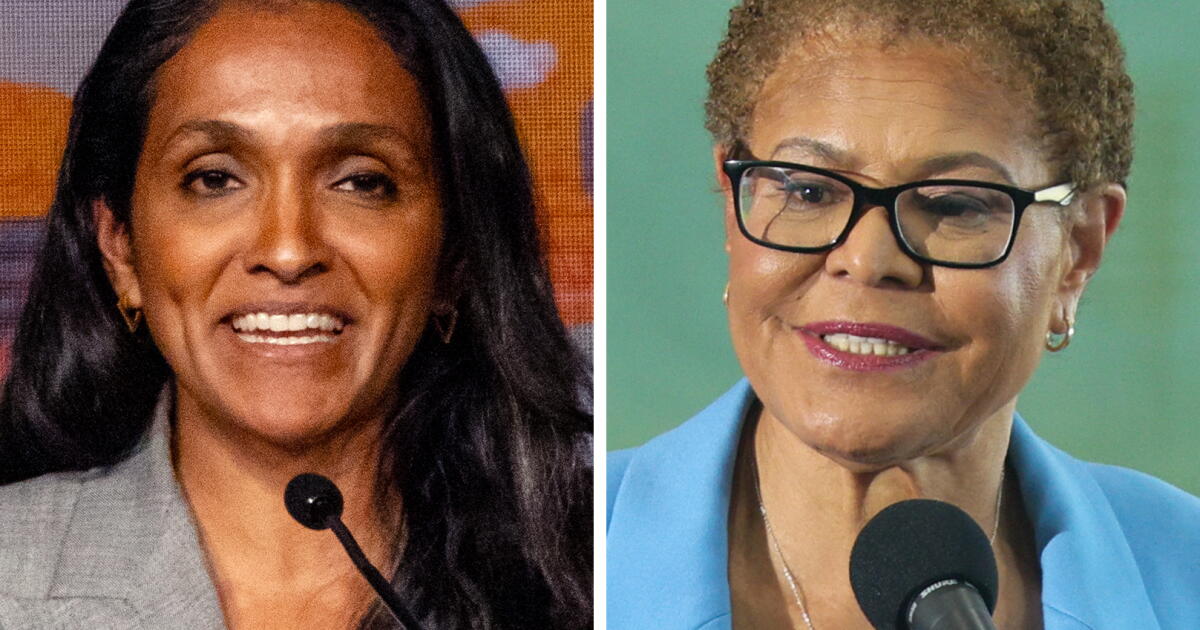
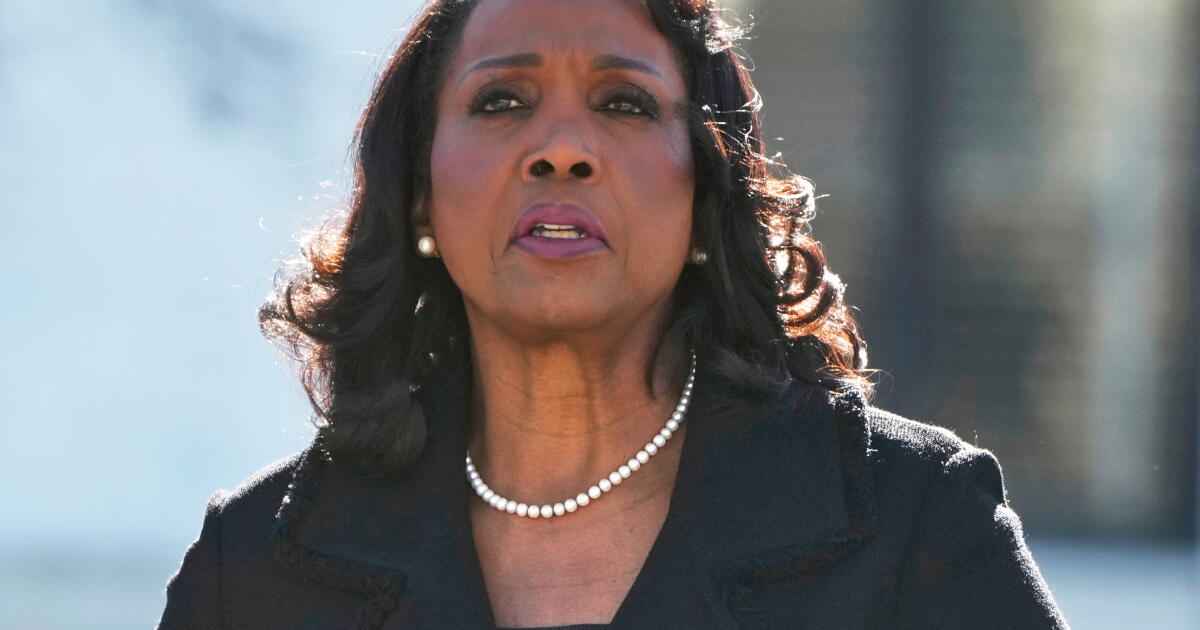
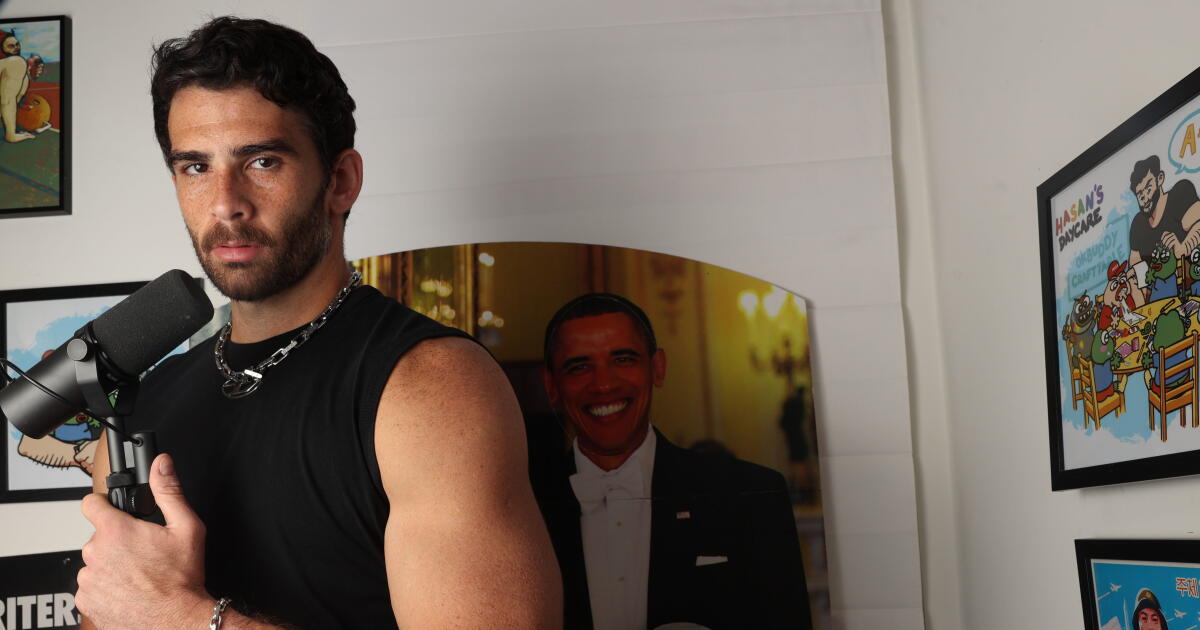
The back-to-back debates offered plenty of cutting moments as Mayor Karen Bass, Councilmember Nithya Raman and reality television star Spencer Pratt faced off against each other.

But the two showdowns also served up a few surprises. Here are three that were noteworthy:

Raman and a campaign pledge

Bass went mano-a-mano with Raman on Tuesday for 90 minutes in the drab settings of the Sherman Oaks Adult Center.

Technically it was Raman’s home turf, since the facility is located in her Hollywood Hills district. But the Sherman Oaks Homeowners Assn., the event’s host, wasn’t an especially friendly audience — in part because of their diverging views on real estate development.

You’re reading the L.A. on the Record newsletter

Sign up to make sense of the often unexplained world of L.A. politics.

Raman soldiered on, telling the audience about her big promise of the day: If elected, she would cut the number of homeless encampments across the city in half by the 2028 Olympic Games.

Then she went further, saying she would remove every encampment by the end of 2030, the conclusion of her hoped-for first term as mayor.

Raman has spent much of the campaign talking up her record on homelessness in her district, which stretches from Silver Lake to Reseda, pointing to a 54% reduction in the number of tents and encampments over three years. She’s been contrasting that work with Bass’ Inside Safe program, which secured a 17.5% reduction over two years citywide.

“I don’t think anybody in Los Angeles right now can say that we are satisfied with spending extraordinary amounts of money and getting only incremental progress,” Raman said the following night, at a debate sponsored by NBC4 and Telemundo 52 at the Skirball Cultural Center.

As part of her pitch, Raman unveiled a four-part strategy to get the city’s nearly 27,000 “unsheltered” homeless residents indoors.

Still, her pledge drew criticism from Councilmember Monica Rodriguez, who has emerged as a Bass supporter in recent days. Rodriguez said Raman has been in office since 2020, spending half that time in charge of the committee that oversees homelessness, and is only offering a comprehensive encampment strategy weeks before the election.

“What’s stopped her for the last six years?” Rodriguez asked in a text message.

Bass and needle exchange

On Wednesday, Bass and Raman joined Pratt for the one-hour televised debate at Skirball. Pratt spent much of the night promising to rid the streets of drug addicts, whom he regularly refers to as “zombies” on social media.

“When you get rid of all the drug addicts on the street, the police won’t be responding to the drug addicts all day long,” he said.

Echoing that theme, NBC4’s Colleen Williams told the three candidates that Norm Langer of Langer’s Delicatessen wants the city to end its needle “giveaway program.”

Williams asked the three candidates if they would do as Langer requested. Raman said no. Pratt said yes.

Bass, after a brief pause, also said yes. That was something of a surprise, since the city’s Department on Disability delivers those types of services as part of its HIV/AIDS prevention services, collecting dirty syringes and offering clean ones to drug users.

The mayor’s budget calls for nearly $1.2 million in the coming fiscal year for overdose prevention and syringe exchange services, City Administrative Officer Matt Szabo said in an email.

Bass spokesperson Paige Sterling said the mayor’s office is now “actively reviewing these programs.”

“Needle exchange programs like this are not designed to end people’s addictions, and we should be doing everything we can to end drug use in our parks — especially given the increased use of deadly drugs like Fentanyl,” she said in a text message.

Langer said needle giveaways should not be in or near “sensitive sites” like parks and schools, including MacArthur Park.

Officials in Los Angeles County’s Department of Public Health said so-called harm reduction programs, including the distribution of Narcan and syringes, help save lives and improve public health, reducing the number of overdose deaths and the transmission of HIV and viral hepatitis.

Pratt was in fact kinda chummy with Bass

He calls Bass trash on social media — at least in Spanish. He reposted an AI video that portrays her as the Joker. He blasted her as “an incredible liar” during Wednesday’s debate.

Yet the evidence is clear: Pratt, the former star of MTV’s “The Hills,” did get friendly with Bass for a few moments during his hour onstage with her.

At one point, Pratt praised Bass for working to fund the Los Angeles Police Department, saying her efforts were “important, actually.” At another point, he flagged for the moderators that Bass was trying to rebut some of Raman’s remarks.

“Mayor Bass would like to respond,” Pratt nudged them.

“Thank you,” Bass replied.

Team Raman has been trying to make the case that Bass has been going easy on Pratt, as part of a larger strategy to ensure that she faces him in the top-two Nov. 3 runoff. During the debate, Raman accused the two of teaming up to attack her, saying they were afraid of facing her in Round 2.

Pratt pushed back on the idea, saying he considers Bass to be the more formidable opponent. “You think it’s easier to run against the incumbent mayor with all the unions [endorsing her], or a random council member who’s been a failure for six years?” he said.

Halfway through the debate, Bass tried to reply to another Raman remark, and Pratt stepped in again to assist.

“See how nice they are being to each other?” Raman said.

State of play

— DOUBLE NO-SHOW: Bass won’t be returning to the debate stage next week, skipping a candidate forum scheduled for Wednesday on Fox11. Pratt also is not attending, according to organizers. That leaves City Councilmember Nithya Raman, tech entrepreneur Adam Miller and community organizer Rae Huang. Bass spokesperson Alex Stack said the mayor will be in Sacramento that day lobbying for state funding.

The main organizers of the event — the Pat Brown Institute for Public Affairs and the League of Women Voters of Greater Los Angeles — issued a statement calling Bass’ withdrawal from the debate “disappointing.” “Public forums such as this are a cornerstone of democratic accountability,” the groups said.

— TICKING TIMEBOMB: Szabo, the city administrative officer, issued a grim warning this week about the proposal heading to the November ballot that would repeal the city’s business tax, depriving the city of about $860 million per year. Szabo said the measure, backed by a coalition of business leaders, would lead to “an immediate and lasting contraction of public services” and “fundamentally undermine” the city’s ability to host the 2028 Olympic Games.

— THREE MORE STOPS: Metro’s D Line subway extension finally opened Friday, offering three additional stations along Wilshire Boulevard. The line’s westernmost point is now the La Cienega Boulevard station.

— MAD FOR MCKINNEY: L.A. County Dist. Atty. Nathan Hochman and the union that represents rank-and-file police officers endorsed prosecutor John McKinney, dealing a fresh setback to the reelection campaign of City Atty. Hydee Feldstein Soto. The police union withdrew its endorsement of Feldstein Soto last month, citing her handling of a data breach dealing in part with police lawsuits.

— AIRBNB’S BIG BUCKS: Meanwhile, a campaign committee sponsored by Airbnb just put $1.5 million in an independent expenditure committee backing McKinney, according to a new filing with the secretary of state. Michael Trujillo, political strategist for Feldstein Soto, responded on X:
“Hydee Feldstein Soto SUED AIRBNB for GOUGING LA FIRE SURVIVORS and now they are crying with this IE in support of their hand picked puppet.”

— ROOTING FOR RAMAN: She didn’t get Democratic Socialists of America to reopen its endorsement process for the mayoral primary election. But Raman got something else: a recommendation in DSA’s newly released voter guide.

The group’s L.A. chapter said a vote for Raman would ensure that “a left candidate with a proven track record of delivering for working class Angelenos” makes it into the top two against Bass. The DSA also issued a caveat, saying in boldface that its “recommendation” is “not an endorsement” — and therefore will not cause the group to expend any resources on her behalf.

— THEN THERE’S THIS: The centrist 501(c)4 nonprofit group Thrive LA took a sharply different approach, issuing a voter guide that — wait for it — endorses both Bass and Pratt in the primary. Why? The group doesn’t want Raman, arguing she would bring “higher taxes, more regulation, less housing production, and an ideological approach to governance.”

— STOPPING TRAFFIC STOPS: The City Council took a step toward imposing new restrictions on “pretextual” traffic stops this week, asking the Los Angeles Police Commission to adopt new guidelines similar to San Francisco, which bars officers from pulling drivers over for broken taillights and other minor equipment violations, unless there is a safety threat.

— NOHO TRAGEDY: A jury found Thursday that an LAPD officer was not liable for the death of a 14-year-old girl who was killed by a bullet fired by the officer as he pursued a suspect in a Burlington department store. The family of Valentina Orellana-Peralta filed a lawsuit contending that the officer should have slowed down and deferred to other officers at the scene who had already determined that the suspect wasn’t armed with a gun.

— MEA CULPA: We made a mistake in last week’s newsletter, incorrectly reporting that Councilmember Traci Park voted against L.A.’s “sanctuary city” ordinance. Although Park was highly critical of the ordinance after it passed, she was absent from the council’s vote.

— THEY’RE HERE: Our voters guides have arrived, giving you the rundown on who’s running for what in a whole bunch of races. Take a look!

QUICK HITS

  • Where is Inside Safe? The mayor’s signature program to address homelessness revisted a long list of spots that have been targeted by the program previously.
  • On the docket next week: As we mentioned earlier, the next televised forum is set for Wednesday, with the Pat Brown Institute for Public Affairs, the League of Women Voters of Greater Los Angeles and Fox11 hosting.

Stay in touch

That’s it for this week! Send your questions, comments and gossip to LAontheRecord@latimes.com. Did a friend forward you this email? Sign up here to get it in your inbox every Saturday morning.


Source link

Trump may fire FDA chief Marty Makary, reports say

May 8 (UPI) — President Donald Trump intends to fire Food and Drug Administration Commissioner Marty Makary because he is frustrated with the agency.

Trump signed off on the decision to replace Makary as he has clashed with Trump, officials in the Department of Health and Human Services and other officials in the administration, multiple reports said on Friday.

The reports — from NBC News, The New York Times, The Wall Street Journal and The Washington Post — all were attributed to Trump administration sources who requested anonymity because they were not authorized to comment on the issue.

Makary, a former surgeon at Johns Hopkins, was confirmed to run the FDA in March 2025 on a vote the included two Democratic members of the Senate voting yes.

His nomination carried some controversy because, like several other Trump cabinet members and nominees, is a former Fox News contributor who preferred that society develop natural immunity to the virus that causes COVID-19 instead of the CDC’s preferred method of using vaccine-induced immunity during the pandemic.

The reports suggest that Makary has struggled to run the FDA as long-time staff have left the agency and a range of healthcare, pharmaceutical and advocacy groups have been highly critical of its actions.

The Department of Health and Human Services and Makary have not commented on the reports, and sources for all four news organizations noted that the plan could change if Trump changes his mind.

President Donald Trump delivers remarks at an event he is hosting for a group that includes Gold Star Mothers and Angel Mothers in honor of Mother’s Day in the Rose Garden of the White House on Friday. Photo by Aaron Schwartz/UPI | License Photo

Source link

Israeli settlers set fire to homes and cars in violent West Bank raids | News

Dozens of Israeli settlers stormed various areas of the West Bank, set cars on fire and attacked Palestinians.

Israeli settlers have launched another wave of raids in the occupied West Bank, with houses and cars set on fire and a Palestinian child attacked.

The Palestinian Wafa news agency reported that a man and his child were attacked with “sharp instruments” in the village of Khirbet Shuweika, south of Hebron, on Friday.

Recommended Stories

list of 4 itemsend of list

The father and child were taken to hospital due to head injuries.

Israeli settlers torched a home in the village of al-Lubban Asharqiya, south of Nablus, after which members of the Palestinian Civil Defence arrived to extinguish the blaze.

In Abu Falah, northeast of Ramallah, Wafa cited security sources that the settlers “stormed the outskirts of the village, burned a citizen’s vehicle, and wrote racist slogans on the walls of houses”.

In the village of al-Asa’asa in Jenin, Israeli forces forced residents to exhume a newly buried body and take it elsewhere. They claimed the first site was too close to an illegal Israeli settlement.

Israeli settlers also attacked a Palestinian man in the town of Beit Fajjar, south of Bethlehem, and stole his mobile phone.

A group of Palestinians were picnicking in the Burak Sulayman (Solomon’s Pools) area, south of Bethlehem, but were forced to leave after Israeli forces fired stun grenades at them.

The Palestinian Red Crescent Society treated two people for tear gas inhalation and evacuated five others from the scene after the attack.

‘Tear gas and sound bombs’

In the town of Tuqu, southeast of Bethlehem, the mayor, Taysir Abu Mufreh, told Wafa that Israeli forces fired “tear gas and sound bombs” at a group of worshippers who were leaving a local mosque and locked a number of them inside.

On Friday, Israeli forces arrested four Palestinian men in the town of Battir, west of Bethlehem, while they were hiking near a railway line. The following day, three more Palestinians were arrested during a raid on the city of Nablus.

Settlers attacked the town of Silwad, northeast of Ramallah, leading to clashes when residents confronted them.

Human rights groups say Israeli authorities have allowed the settlers to operate with total impunity in their attacks against Palestinians.

In February, Israel approved a plan to claim large areas of the occupied West Bank as “state property”.

More than 700,000 Israelis live in illegal settlements in the occupied West Bank.

Source link

Russia, Ukraine trade fire, blame despite Victory Day ceasefire | Russia-Ukraine war News

Warring sides accuse each other of violations as attacks continue across front lines.

Russia and Ukraine have accused each other of breaching a short ceasefire announced by Moscow to coincide with Victory Day commemorations marking the Soviet Union’s defeat of Nazi Germany.

The Kremlin said its forces downed 264 Ukrainian drones early on Friday, with officials in Moscow reporting attempted attacks on the capital and in the Perm region in the Ural Mountains.

Recommended Stories

list of 3 itemsend of list

The truce, declared from May 8 to May 10, was intended to cover annual celebrations that include a military parade in Moscow.

Russia had warned that any disruption would trigger a large-scale missile response against Kyiv, urging foreign diplomats to leave the Ukrainian capital before potential escalation.

In a separate announcement, the Russian transport ministry said on Friday that 13 airports in Russia’s south halted operations due to drone attacks.

“Operations at the regional centre in Rostov-on-Don, which manages air traffic in southern Russia, have been temporarily suspended after Ukrainian drone struck the administrative building of the ‘Southern Russia Air Navigation’ branch,” the ministry said.

There were no casualties, it added.

Victory Day commemorations mark the Soviet Union’s loss of 27 million people in World War II, as it drove Nazi forces back to Berlin, where Adolf Hitler died, and the Red Army’s Soviet Victory Banner was raised over the Reichstag in May 1945.

‘We will defend our people’s lives’

Ukrainian President Volodymyr Zelenskyy said Russian forces continued to attack positions overnight, dismissing the ceasefire as ineffective.

He said Russia had carried out more than 140 attacks on front-line positions by early morning, alongside 10 assaults and more than 850 drone attacks.

“As we did over the past 24 hours, Ukraine will respond in kind today as well. We will defend our positions and people’s lives,” Zelenskyy said.

Ukraine also reported striking a Russian oil facility in Yaroslavl, deep inside Russian territory, in what Kyiv described as retaliation for attacks on its cities.

“Ukraine’s long-range sanctions continued in response to Russian strikes on our cities and villages,” Zelenskyy said.

Kyiv had proposed an open-ended ceasefire beginning on May 6, which it said Russia ignored. Moscow did not adopt that proposal, and neither side accepted the other’s terms.

In remarks before the truce, Zelenskyy criticised Russia’s approach to the commemorations, saying Moscow sought a pause “to hold their parade, to go out onto the square safely for an hour once a year, and then continue killing, killing our people and waging war”.

“The Russians are already talking about strikes after May 9. Strange and certainly inappropriate of the Russian leadership,” he added.

“Just as 81 years ago, so now America can help peace with a just and strong stance against the aggressor,” Zelenskyy said. “And it is important that the American people now view Russia precisely in this way – as an aggressor.”

Source link

Oil prices jump as US, Iran trade fire in Strait of Hormuz | Oil and Gas News

Brent crude rises amid clashes in critical waterway.

Oil prices have jumped after clashes between United States and Iran in the Strait of Hormuz pushed their tenuous ceasefire to the brink.

Futures for Brent crude rose as much as 7.5 percent during a volatile trading session on Thursday, before easing as Asia’s markets opened on Friday morning.

Recommended Stories

list of 4 itemsend of list

The international benchmark stood at $101.12 per barrel as of 03:00 GMT, down from the day’s high of $103.70.

The latest rise came after the US and Iran exchanged fire in the critical strait, a conduit for about one-fifth of global oil and natural gas supplies, despite the truce announced between the sides on April 7.

US Central Command (CENTCOM) said it launched strikes on Iran after three US Navy guided-missile destroyers came under attack from Iranian missiles, drones and small boats in the strait.

Iran’s Khatam al-Anbiya Central Headquarters earlier accused the US of violating the ceasefire by attacking an Iranian oil tanker and another vessel in the vicinity of the waterway.

The Iranian military headquarters also accused the US of targeting civilian areas, including Qeshm Island.

US President Donald Trump on Thursday appeared to downplay the clashes, saying the ceasefire remained in effect, while Iran’s state-run Press TV said the situation had gone “back to normal”.

Shipping in the strait has been at a near standstill since late February amid the threat of Iranian attacks on the massive oil tankers that usually transport much of the world’s energy supplies.

Brent prices are up about 40 percent compared with before the war amid an estimated shortfall in daily production of 14.5 million barrels.

Asian stock markets opened lower on Friday amid the heightened tensions, with Japan’s benchmark Nikkei 225, South Korea’s KOSPI and Hong Kong’s Hang Seng Index each falling more than 1 percent.

On Wall Street, the benchmark S&P 500 fell about 0.4 percent overnight after hitting an all-time high the previous day.

Source link

Dominican fashion journalist, mother killed in Manhattan fire

May 6 (UPI) — Dominican journalist Yolaine Díaz, a former fashion and beauty editor for People en Español magazine, and her mother died in a fire at a residential building in New York City that also left a third person dead, 14 injured and more than 100 displaced.

The fire began shortly after 12:30 a.m. Saturday in a six-story building on Dyckman Street near Broadway in the Inwood section of Manhattan, according to the Fire Department of New York and the New York City Police Department.

Díaz, 49, had emigrated from the Dominican Republic to New York City as a teenager and studied journalism at Lehman College in the Bronx. She joined People en Español as an intern and later worked as a fashion and beauty writer and digital editor. During her career, she interviewed celebrities including Eva Longoria, Shakira and Jennifer Lopez.

Former editor-in-chief Armando Correa remembered Díaz, who continued to contribute to the magazine, in a statement that read “Yolaine had a unique authenticity and intensity. I want to remember her always camera-ready, with her style and her smile.”

According to People en Español, Díaz and her mother, Ana Mirtha Lantigua, attempted to escape through the building’s interior stairwell, but smoke blocked the exit and both became trapped. The journalist’s stepfather managed to flee through the exterior fire escape.

Authorities said the flames started on the lower levels of the building and quickly spread through the interior stairwell to the roof. More than 200 firefighters were deployed to contain the blaze.

The fire left scenes of chaos among residents, many of them members of Latino families living in the mixed residential and commercial building, which was constructed in 1910.

“I was sleeping and what woke me up was the smell and the alarms,” resident Michael Jimenez told local media. “When I went to open the hallway door, everything was on fire. There wasn’t time to grab the extinguisher or anything.”

Another resident told WNYW-Ch. 5 she had to flee via the fire escape after a neighbor opened the hallway door and found “black smoke as far as the eye could see.”

Marty Mejia, of the New York Fire Foundation, said one of the main mistakes during the evacuation was leaving doors open, which allowed the fire and smoke to spread rapidly throughout the building, according to reports by NBC New York.

Firefighters said apartments whose doors remained closed sustained minimal damage, in line with public safety campaigns begun after another deadly fire in the Bronx days earlier.

The American Red Cross assisted evacuees with blankets and logistical support, while dozens of families remained at hospitals awaiting news about injured relatives, some suffering from burns.

The cause of the fire remains under investigation. According to The New York Times, the city’s housing department database listed more than 100 violations at the building.


Source link

S. Korea says likely to take days to analyze cause of fire on HMM-operated vessel in Strait of Hormuz

South Korea’s presidential office said Tuesday it would take several days to determine the cause of an explosion and fire aboard a carrier operated by South Korea’s HMM Co. in the Strait of Hormuz. In this photo, taken Tuesday, an employee enters an HMM office in Busan. Photo by Yonhap

The presidential office said Tuesday it will likely take several days to determine the cause of an explosion and fire aboard a Panama-flagged bulk carrier operated by South Korea’s HMM Co. in the Strait of Hormuz.

Presidential spokesperson Kang Yu-jung made the remarks in a written briefing after senior presidential officials, including presidential chief of staff Kang Hoon-sik, held a meeting to discuss the response to the fire.

“It is expected to take several days to analyze the cause,” the spokesperson said. “The government will brief the public transparently after swiftly and accurately determining the cause of the incident.”

The spokesperson said the vessel will be towed to a nearby port using a tugboat for investigation, with investigators from the Korea Maritime Safety Tribunal and the National Fire Agency to be dispatched.

The explosion occurred at about 8:40 p.m. Monday (Korean time), while the HMM Namu was anchored in waters off the United Arab Emirates (UAE), HMM said. The fire began in the engine room, and crew members used carbon dioxide to fight the blaze for about four hours. No injuries were reported, the company said Tuesday.

HMM said security camera footage showed the fire had been put out and said it would later inspect the engine room to assess the damage.

The freighter had 24 crew members on board — six South Koreans and 18 foreign nationals.

The cause of the explosion and fire, as well as the extent of the damage, is currently under investigation.

“It remains unclear whether the incident was caused by an external attack or an internal malfunction,” an HMM official said.

HMM said it plans to tow the freighter to Dubai, a process expected to take several days.

The spokesperson said South Korea is sharing relevant information with the United States, Iran and members of the Gulf Cooperation Council, including Saudi Arabia and the UAE.

She said the oceans ministry and the Cheonghae naval unit operating in the Gulf of Aden are in communication with the HMM Namu, adding the government is in daily contact with the 26 South Korean ships anchored in the strait.

In Washington, U.S. President Donald Trump said Monday that Iran has taken shots at a South Korean cargo ship and other targets as he called on Seoul to participate in a mission to reopen the crucial Strait of Hormuz.

The presidential office separately said it is reviewing Trump’s proposal by considering the readiness posture on the Korean Peninsula and domestic legal procedures.

“(We) are actively taking part in multiple international efforts for the swift stabilization, recovery and normalization of the global maritime logistics network.” it said. “In this context, (we) are paying attention to President Trump’s remarks.”

Industry officials said South Korean-operated ships in waters off the UAE were moving toward Qatar in line with government measures to steer clear of the Strait of Hormuz for safety.

The incident came after the U.S. launched an operation, called Project Freedom, this week to guide commercial vessels stranded by the U.S.-Israeli war against Iran out of the waterway.

HMM operates five vessels in the Strait of Hormuz, including one container ship and two oil tankers.

Copyright (c) Yonhap News Agency prohibits its content from being redistributed or reprinted without consent, and forbids the content from being learned and used by artificial intelligence systems.

Source link

Ethics Under Fire: When Survival Meets Storytelling in Nigeria’s Conflict Zones

In one of the world’s most deprived and volatile regions, HumAngle’s reporting and experience reveal that journalists in Nigeria are not just observing suffering but are pulled into it as they try to report it. Consequently, they say, they find themselves paying out of pocket to feed the people whose stories they are trying to tell.

In theory, the profession is expected to observe some emotional distance from its sources and the stories they tell. However, that model is inoperable in conflict-affected regions of northern Nigeria and the Sahel.

Journalism here is embedded in environments shaped by violence, poverty, and dense social networks. Since these variables affect people at random, the reporter is not an outsider; sometimes, the conflict directly affects them as well. Ethical decisions are then made under pressure, repeatedly, and often without the comfort of certainty.

HumAngle operates in this space. Its work across Lake Chad, Central Africa, Nigeria’s Middle Belt, the North West, the South East, and other conflict zones forces a confrontation with a difficult question: What does ethical journalism look like when the people you report on are not just sources, but individuals whose survival may intersect directly with your presence?

The limits of imported ethics

Global journalism standards discourage payment for information, and while exceptions exist, they do so under strict editorial oversight, a clear public-interest justification, and transparency. Journalism teachers say that, though these frameworks are expected to provide clarity, they don’t in conflict-affected Nigeria, where the assumed context doesn’t apply. The ideal context has clear distinctions between sources and service providers and functioning identity systems. This is hardly obtainable in conflict-affected environments.

Dr Kabiru Danladi, a Mass Communication scholar with the Ahmadu Bello University in northwestern Nigeria, says, “Our curriculum borrows heavily from Euro-American ethical frameworks – objectivity, detachment, neutrality – principles rooted in relatively stable societies. The failure becomes evident when our graduates are deployed to cover issues that weren’t directly taught in class, or they are sent to cover conflicts in places like Zamfara, Sokoto, Kebbi, Borno, Yobe or Benue, where journalism is not just a profession but a survival exercise.”

Dr Obiora Chukwumba, a researcher and media expert in Abuja, identifies the same problem in the moral obligation created by field contact. “There is no ethical barrier to a journalist intervening on grounds of goodwill to assist a source who is in a vulnerable position,” he said.

The reality of field reporting

A fixer in Zamfara, where terror groups continue to kill, abduct, and loot, is not simply an access broker but may also translate, assess risk, and act as a negotiator in certain environments. A driver in Borno, North East Nigeria, may carry more situational intelligence than any formal briefing. An intermediary in the southeast may navigate relationships across vigilante groups and separatist networks.

Barrister Joseph Danboyi, a senior lawyer in Jos, North Central Nigeria, says, “Payment to a fixer creates liability if the journalist knew his connection with criminals. Ordinary payment for information is insufficient. The journalist will be aiding and abetting when payment is purposefully linked to criminal conduct.”

He goes further to add, “The practical bottom line is that a journalist who unknowingly pays a criminal for information is generally not liable… liability requires knowledge… and intent to help or further it.”

Dr Obiora also treats fixers and access arrangements as part of newsroom operations, not automatically as ethical breaches. “Parts of the routine (investigative) costs tied to the operations of a newsroom include such services as engaging fixers, obtaining access to a reasonably considered newsmaker, and appreciation handouts,” he said. “They are all legitimate operational costs.”

There is no procedural checklist that eliminates these risks. What exists instead is a need for structured awareness and disciplined judgment in newsrooms.

The Knifar women: A case that reshapes the debate

HumAngle’s engagement with the Knifar movement brings these tensions into focus. The Knifar women are part of a grassroots movement shaped by prolonged suffering. Their husbands, sons, and brothers were detained during military operations, often for years, without trial. In many cases, these men were the primary providers, and so their absence triggered cascading consequences for these women, including food insecurity, poverty, and social fragmentation. The women organised into a pressure group to demand accountability for the detention of their male relatives.

HumAngle’s reporting amplified their efforts, influencing outcomes that ultimately led to the release of over a thousand men that the women were advocating for. 

Our work required prolonged engagement with the women, whose daily reality was defined by deprivation. In some instances, our journalists provided stipends. In other cases, some of these women became part of the reporting process as fixers and contributors with fixed incomes in our newsroom. We have even given some of them ‘additional reporting’ credit for their work. Since they are both sources and resource persons for our newsroom, we are often clear about what we are paying them for – their work, not their information. We have spoken publicly about the dynamics of our relationship with these women, including in a Pulitzer Centre-supported documentary.

Kunle Adebajo, a renowned award-winning investigative journalist, reflects on his own experience in being moved to provide money to vulnerable sources: “I’ve often had to pay vulnerable sources. This is because the majority of them live from hand to mouth and rely on wages from daily labour to get their sustenance, and so such interviews could be very disruptive and uncomfortable for them. Oftentimes, they also have to transport themselves to meet at the interview location. The sums given were trifling, and there was never an understanding that the interview itself was transactional. 

Dr Obiora agrees that the understanding must always be clear. “If the source or interviewee presents the personal need to overshadow the reason for the meeting with the journalist, then that could be a red flag,” he said, “pointing to potential compromised narrative or ‘adjusted facts’ from the source or interviewee.”

When observation is not enough

Journalists are trained not to pay sources because it could risk distortion and affect credibility, but what happens when the people you are interviewing live in destitute conditions?

“I met residents, elderly men and women who could not feed themselves, who could not afford basic healthcare. I met a father who lost his wife to a particular ailment, and whose two kids are still suffering from the same ailment. Yet, he could not help.”

The award-winning journalist said he felt compelled to help. “I offered to buy meals for some of them through my fixer. Yes, I offered them some cash to buy what they needed. When I got back to my hotel room that evening, I actually cried. I felt the depth of these people’s suffering.”

He is not unaware of the ethical grey spots in giving money to sources. “Ethically, I did not really care at that point whether offering them some cash would be seen as an inducement. I told myself that I had to act as a human being at the moment and drop the toga of ‘a journalist’ at that point.” 

Dr Danladi understands this and says that “Students must be taught that they are a journalist, yes – but they are also human beings. Refusing to help in the name of ‘objectivity’ can itself be an ethical failure.” He says that liability only becomes possible “where the journalist knows or is willfully blind to criminal activity… or where the payment itself is tied to illegal conduct.”

Another journalist from southwestern Nigeria, who declined to be named, described facing similar situations in which his sources were suffering. 

“They had had to eat rotten food sourced from the nearby markets, and sometimes they went days without eating anything because their husbands, who provided for them, had been killed. I saw that most of their children were malnourished and looked so skinny. It was such a touching situation, and I couldn’t help but give them some money that I had with me so that they could buy food and cook.”

The practice of support

Payment for content implies a transaction because it links money to information, but support that exists independently of reporting is different. It protects the integrity of the story while still acknowledging the reality of the environment.

Hauwa Shaffii Nuhu, an award-winning journalist and newsroom manager, said that though in her early days as a journalist, she could not resist the urge to help vulnerable sources, she has now learned to favour long-term external support. “Now, I connect them [the vulnerable subjects of her story] with NGOs… or make it possible for society to donate directly to them or through an independent third party like a fixer.”

“These steps will not protect you from state action if authorities choose to act,” a senior security official said. What they only do is to protect the integrity of your journalism, he implied. They help you draw a line between necessary support and inducement, between humanitarian assistance and conduct that could be interpreted as enabling someone directly or indirectly tied to the crime you are investigating.

The unresolved tension

Consider the fixer a journalist has worked with closely. Not a transactional contact, but someone embedded in the reporting process, with days, sometimes weeks, spent together. The journalist has covered his meals, made stops at his home during fieldwork, supported him beyond the assignment, helped with school fees, and contributed when his child was ill. Then, months or years later, the fixer is named in a crime. The record of the journalist’s relation with him exists: Transfers, messages, shared locations. A traceable history of proximity that can be turned into proof of complicity.

A different kind of responsibility

The Knifar women’s story forces a reconsideration of responsibility and demands a different approach to how journalism ethics is taught and judged. “We graduate students who know the code, but cannot survive in the field,” says Dr Danladi.

Dr Obiora returns the question to dignity. “A journalist whose interaction with a source contributes to lifting the source’s dignity has discharged his or her obligation professionally.”

In environments where silence sustains suffering, the act of telling a story, and the way that story is told, carries consequences beyond journalism.

Source link

In L.A.’s local elections, the big campaign money is pouring in

Good morning, and welcome to L.A. on the Record — our City Hall newsletter. It’s David Zahniser, giving you the latest on city and county government.

We’ve got a month left before the June 2 primary election, with mail-in ballots already heading to voters’ mailboxes.

As if on cue, the big campaign money is pouring in from an array of well-funded interests: business groups, labor unions, hotels, taxicab companies and even one candidate’s mother.

To get around the city’s strict fundraising limits, those donors are putting much larger sums into “independent expenditure” campaigns that operate separately from their favored candidates.

Let’s take a look at some of the outsized spending to emerge in recent weeks.

Police union targets Raman

Things had been pretty sleepy in the L.A. mayor’s race, even with Mayor Karen Bass facing challenges from Councilmember Nithya Raman, reality TV personality Spencer Pratt and 11 other opponents.

That all changed after the Los Angeles Police Protective League, the union representing rank-and-file officers, dropped more than $400,000 on ads targeting Raman, who was elected to the council twice with support from Democratic Socialists of America, which isn’t endorsing in the mayoral primary.

You’re reading the L.A. on the Record newsletter

Sign up to make sense of the often unexplained world of L.A. politics.

Bass has been aligned with the union on a number of issues, supporting the hiring of more cops, signing off on higher police salaries and vetoing a ballot proposal to let Police Chief Jim McDonnell fire officers.

Raman, on the other hand, has been campaigning on her opposition to a package of police pay increases, saying the decision by Bass and the council to approve them was “politically motivated.”

Bass and others said the increases were needed to keep police from leaving a department that has lost 14% of its officers since 2020.

The league tried and failed to unseat Raman two years ago. This time around, the union is texting voters a campaign video highlighting her opposition to a city law barring homeless people from setting up encampments within 500 feet of a school.

The ad, which appears on YouTube, Hulu and other platforms, cites Raman’s recent vote against a new “no-camping” zone in Venice, in an area plagued by assaults and other crimes.

“Raman has voted over 75 times to allow homeless camps next to schools, daycares, parks and other sensitive locations, undermining public safety,” the ad’s narrator says.

Raman responded with her own campaign video saying Bass gave the union “more money than the city could even afford,” forcing city leaders to cut other services “to the bone.”

“This is what happens when a city governs for powerful interests rather than working people,” she said.

The league is planning to spend more than $1 million opposing Raman, and it’s already gotten some help. For example, office building owner Kilroy Realty Group has given $100,000 to the anti-Raman campaign.

A mother of a campaign

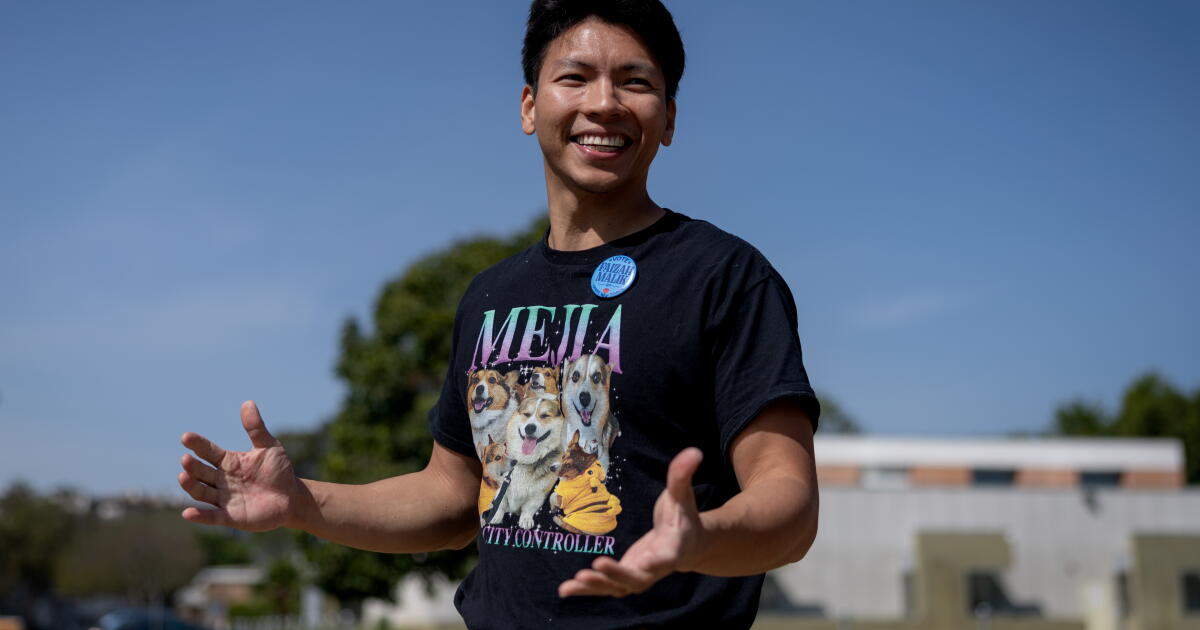
Real estate executive Zach Sokoloff has a not-so-secret weapon as he seeks to unseat City Controller Kenneth Mejia: his mom.

Sheryl Sokoloff is the spouse of Jonathan Sokoloff, managing partner of the Los Angeles-based private equity investment firm Leonard Green & Partners. She recently dropped $2.5 million into a committee promoting her son, which has produced digital ads accusing Mejia of performing too few audits.

“Zach Sokoloff will actually do the job as controller,” the ad’s narrator says in one 30-second spot.

Mejia, in an email, called the attacks “baseless” and accused Sokoloff’s family of “using their extraordinary wealth to try to buy the Controller’s position.”

“Unlike my opponent, I do not have any millionaire family members who can bankroll my campaign,” he said. “Just like last time we ran, we’re relying on small dollar donations from LA residents who are inspired by our record of providing unprecedented transparency and accountability on their tax dollars.”

Spending surge in the 11th

We already knew the race for the 11th District, which covers L.A.’s coastal neighborhoods, had gotten outrageously expensive.

Last week, Councilmember Traci Park reported raising nearly $1.3 million. Human rights attorney Faizah Malik, Park’s lone challenger, took in her own impressive haul of $454,000.

Turns out the independent expenditure campaigns in the race are nearly as costly.

Two city employee unions — the Police Protective League and United Firefighters of Los Angeles City Local 112 — have spent nearly $900,000 on efforts to get Park reelected. And they’re getting help.

The firefighters, a Park ally since her 2022 campaign, collected $150,000 for their pro-Park effort from Western States Regional Council of Carpenters, a construction trade union. The police union picked up $150,000 from restaurateur Jerry Greenberg and $200,000 from real estate company Douglas Emmett Properties, which gained notoriety for its push to evict tenants from West L.A.’s Barrington Plaza.

Malik, backed by Democratic Socialists of America, accused Park of doing the bidding of her donors at the expense of “everyday working Angelenos,” by supporting police raises and fighting stronger renter protections.

Hotel workers take aim at Park

Meanwhile, a different union is doing its own sizable spend.

Unite Here Local 11, which represents hotel workers, has put nearly $340,000 so far on efforts to promote Malik and tear down Park. The union’s leadership has been furious with Park, who voted against a hike in the minimum wage for tourism workers to $30 per hour.

Park said the wage hike would harm the city’s hospitality industry, costing hotel workers their jobs.

Like the police and the firefighters, Unite Here is not going it alone. The union picked up $50,000 from United Teachers Los Angeles and another $50,000 from Smart Justice California, a group focused on less punitive public safety strategies.

Unite Here has attempted to portray Park, a Democrat, as a Trump sympathizer, highlighting remarks she made to the president when he visited Pacific Palisades in the wake of the Palisades fire. The union also pointed out that she voted against making L.A. a sanctuary city for undocumented immigrants.

Park told news radio station KNX in 2024 that the state already has a sanctuary law, and that she considered the ordinance to be an act of “symbolic resistance” — one that would jeopardize federal funding.

On Thursday, Park accused Unite Here of using a picture of her with personnel from the Army Corps of Engineers to falsely imply that she was standing alongside ICE. The Army Corps removed debris from thousands of burned-out properties in the Palisades.

Park, in a statement, called the mail pieces “dishonest and disgusting.”

Unite Here didn’t directly address Park’s allegation, but told The Times that “Local 11 believes that our local elected officials should not collaborate with the Trump administration in any way.”

Speaking of the hotel wage

Unite Here isn’t the only player in the hotel wage fight to leap into this year’s council races.

Two L.A.-based hotels, working with the California Hotel and Lodging Assn., have put a combined $300,000 into a political action committee supporting Maria Lou Calanche, who is seeking to unseat Councilmember Eunisses Hernandez; political aide Jose Ugarte, who is running to replace Councilmember Curren Price; and Park in the 11th.

The group, which goes by the name Fix Los Angles PAC, doesn’t seem to be sweating all the details. Its phone script to voters, which was filed recently with the Ethics Commission, got Calanche’s name wrong, referring to her as Mary instead of Maria.

State of play

— EXPANDING THE VOTE: L.A. voters could be asked in November to take the first step toward giving noncitizens the right to vote in city and school board elections. City Councilmember Hugo Soto-Martínez, now running for reelection, wants voters to give the council the authority to let noncitizens vote in elections for mayor, council and other city offices, as well as the school board.

— HOME SHARING HOLDOUTS: Bass is looking to relax the city’s rules on home-sharing, by letting residents rent their second homes on a short-term basis through Airbnb and other platforms. Some council members were cool to the idea, saying this week that they fear such a move would shrink the city’s housing supply.

— EYE IN THE SKY: The LAPD deployed drones more than 3,000 times last year, using them mostly for emergency calls or officers’ requests for help, according to a report submitted to the Police Commission. The 3-foot-wide surveillance devices are being used by a department already known for its sizable fleet of helicopters.

— SEIZING CONTROL: Bass and Councilmembers Tim McOsker and Ysabel Jurado want the city of L.A. to obtain majority control over the embattled Los Angeles Homeless Services Authority, a city-county agency that delivers services to the region’s unhoused population. That proposal comes a year after the county’s Board of Supervisors voted to pull more than $300 million out of LAHSA.

— A GLOOMY OUTLOOK: L.A. voters lack confidence in the ability of city, county and state officials to make housing more affordable, according to a survey conducted by the Los Angeles Business Council.

— READY FOR OUR CLOSE-UP: L.A. plans to install 125 speed cameras by the end of July, in the hope of catching misbehaving drivers. But there are already some takeaways from San Francisco, where the technology is being credited with getting drivers to slow down.

QUICK HITS

  • Where is Inside Safe? The mayor’s signature program to combat homelessness returned to South Los Angeles, sending outreach workers to areas around 23rd and Broadway, Adams Boulevard at Main Street, and Washington Boulevard at Main Street.
  • On the docket next week: The major candidates for mayor are set to square off Wednesday at a forum sponsored by NBC4 and Telemundo 52, in partnership with Loyola Marymount University and the Skirball Cultural Center.

Stay in touch

That’s it for this week! Send your questions, comments and gossip to LAontheRecord@latimes.com. Did a friend forward you this email? Sign up here to get it in your inbox every Saturday morning.

Source link

With Kimmel under fire, FCC moves to review ABC’s TV station licenses

The Federal Communications Commission is considering an early review of the Walt Disney Co.’s broadcast TV licenses amid criticism of ABC late-night host Jimmy Kimmel’s provocative jokes ahead of the White House Correspondents’ Assn. dinner.

The order could come as soon as Tuesday, according to Semafor, which first reported that the review is expected. The licenses for ABC’s stations — which include KABC in Los Angeles — were not scheduled for renewal until 2028.

Disney has not commented on the possibility of a review.

The move was likely in the works before the latest kerfuffle over Kimmel, who is under fire for a comedic bit that satirized the annual Washington gala that Trump attended for the first time. FCC Chairman Brendan Carr, who has targeted the political content on the ABC daytime talk show “The View,” told The Times on Saturday that an action related to ABC programming was coming this week.

Carr has suggested “The View” should not be exempt from the FCC’s equal time rule that requires broadcasters to bring on a politician’s rival to provide balanced coverage and multiple viewpoints.

Carr, who was at the Saturday dinner, made the remark just hours before the event was shut down after a Torrance man breached security at the Washington Hilton while armed with a shotgun, handgun and several knives. The suspect, Cole Tomas Allen, was arrested and faces three criminal charges, including attempting to assassinate President Trump.

Right-wing commentators have gone into heavy rotation with the claim that a routine by Kimmel inspired Allen to act.

During the bit that aired Thursday, a tuxedo-clad Kimmel called First Lady Melania Trump “beautiful,” saying she had “the glow of an expectant widow.” The comic explained Monday that the gag was a reference to the age difference between Trump and his wife.

“It was a very light roast joke about the fact that he’s almost 80 and she’s younger than I am,” Kimmel said. “It was not, by any stretch of the definition, a call to assassination. And they know that.”

Since becoming FCC chairman last year, Carr has repeatedly threatened to use the levers of power he has to punish TV and radio stations that irritate Trump. His behavior has alarmed free speech advocates, including the FCC’s lone Democratic appointee Anna Gomez, who noted that early station renewal reviews are exceedingly rare and largely futile.

“This is unprecedented, unlawful, and going nowhere,” Gomez said in a statement. “It is a political stunt and it won’t stick. Companies should challenge it head-on. The 1st Amendment is on their side.”

Other White House administrations have threatened to pull TV station licenses in response to negative news coverage. At the height of the Watergate scandal in the 1970s, Richard Nixon’s allies unsuccessfully attempted to challenge the TV licenses for three stations owned at the time by the Washington Post.

RKO General, a unit of the General Tire and Rubber Co., was the last company to lose broadcast TV station licenses in 1987, including Los Angeles outlet KHJ. The case was related to corporate malfeasance and not broadcast content on the stations.

The process to revoke the RKO licenses took seven years from the moment the FCC voted in favor of the move.

Source link

Their homes burned in the Eaton fire. Why Edison has kept information about the fire under wraps

After last year’s disastrous Eaton fire, Southern California Edison executives vowed to be transparent about what caused the inferno that killed at least 19 people and left thousands of families homeless in Altadena.

“As we better understand exactly what happened on Jan. 7, we do so with a commitment to remain transparent,” Pedro Pizarro, chief executive of Edison International, the utility’s parent company, said in a published statement after the fire.

In court, however, Edison is keeping crucial documents of the cause of the Eaton fire secret, a legal strategy it has used to shield what happened in at least seven earlier wildfires it was blamed for igniting, according to a Times review.

Edison’s stance has caused mounting frustration with attorneys representing fire victims who are seeking compensation for their losses.

“The Eaton Fire cases should be decided on their merits, not on what information that SCE has been able to withhold,” lawyers for the victims wrote in a recent court filing.

State regulators have repeatedly criticized Edison for its secrecy in previous fires, saying it violated safety regulations and stopped officials from learning the root cause so that similar disasters could be prevented.

For more than a year, Edison employees have been gathering detailed information about what ignited the fire in an investigation the company is required to perform under state utility regulations.

But most of that information is being withheld by Edison’s claim of attorney-client privilege, as well as a protective order that it asked a judge to approve soon after the fire.

Protective orders are commonly used in civil lawsuits, but most cases do not have the broad ramifications to the public as the Eaton fire.

Pedro Pizarro, chief executive of Edison International, at the Semafor World Economy Summit.

Pedro Pizarro, chief executive of Edison International, at the Semafor World Economy Summit in Washington on April 14.

(Aaron Schwartz / Bloomberg)

Because of the secrecy, it’s not possible to know just what Edison has found, attorneys for Eaton fire victims said in a filing.

In past fires, regulators have requested from the company — and been denied — photographs, notes, text messages and other records generated by the Edison crew that was first to arrive at the site where the blaze ignited. The company has argued its attorney directed the crew, making the evidence privileged.

The victims’ lawyers say Edison shouldn’t be able to withhold from them most evidence from its investigation into the blaze by claiming that the findings and related documents are covered by attorney-client privilege and therefore confidential.

Sealed Eaton fire documents

Lawyers for victims say that documents sealed by a protective order show evidence of where Southern California Edison’s safety measures fell short before the deadly fire.

  • Poor inspection and repair of the idle transmission line suspected of igniting the fire
  • Tower holding the idle line was “virtually unattended for decades”
  • Dried vegetation removed under electrified wires but not beneath the idle line
  • Problems with contractors inspecting the line

In a recent interview with The Times, Pizarro disagreed that the company was keeping information on the cause of the Eaton fire secret.

“We believe we’ve been transparent,” Pizarro said. “Facts are not privileged, and so we provided facts as we have known them.”

He said the company’s investigation was continuing. “We still, to this day, don’t fully understand what happened,” he said.

Pizarro said the protective order was needed to keep many things confidential, including some not related to the fire’s cause. For example, he said, it protects maps of the electrical system, which can’t be revealed because of terrorism concerns.

Signs blaming Southern California Edison for the Eaton fire are seen near cleared lots.

Signs blaming Southern California Edison for the Eaton fire are seen near cleared lots in the Altadena area of Los Angeles County on Jan. 5.

(Josh Edelson / AFP via Getty Images)

He pointed to several company disclosures, including two letters it sent to regulators soon after the Eaton fire that said it was evaluating whether a century-old transmission line, which hadn’t carried power since 1971, “could have become energized” and helped lead to the fire.

Pizarro said last year that the possible reenergization of that old line is a leading theory of the fire’s cause.

The company has said little else about the fire’s cause, other than it safely maintained and inspected the idle line, just like it did its energized lines.

Edison faces thousands of lawsuits from victims of the fire, which burned 14,021 acres and leveled a wide swath of Altadena. The lawsuits allege, in part, that the company was negligent for failing to safely maintain its transmission lines and for leaving the idle line in place when it knew it could become energized. Edison denies the claims of the lawsuits, which have been consolidated in L.A. County Superior Court.

Some documents that Edison says are not privileged and agreed to provide to the victims’ lawyers are sealed by a protective order that the company and the plaintiffs’ lawyers requested.

Plaintiffs’ attorneys often agree to such protective orders on the theory that doing so would allow the utility to more freely share information that could help their case.

Power lines hang from towers carrying power from the Southern California Edison Gould Station.

Power lines hang from towers carrying power from the Southern California Edison Gould Station.

(Carlin Stiehl / For The Times)

Two months after the fire, Los Angeles County Superior Court Judge Laura Seigle signed the protective order — which covers documents that both sides provide in discovery — including business information deemed proprietary and personal customer data.

According to the protective order, if the case is settled, the lawyers will decide whether the sealed documents should be returned to Edison or destroyed.

If the case proceeds to trial, some of the evidence could become public.

Yet even with the protective order in place, plantiffs’ attorneys say Edison has refused to provide them with evidence from its investigation into the fire, saying it’s protected by attorney-client privilege.

The state-required investigations “are not private inquiries undertaken for SCE’s benefit and legal protection,” the plaintiffs’ lawyers wrote in a filing last year. “Those investigations are regulated activities that exist to protect the public and enhance public safety by preventing future fires.”

To begin those investigations, Edison’s crews often get to the ignition site before government officials. In the 2019 Saddleridge fire in Sylmar, an investigator from the Los Angeles Fire Department found the yellow police tape at the road leading to where the blaze started on the ground and an Edison truck leaving the site, according to his report.

California utility regulators have said the earliest observations at the scene are critical in determining what happened.

L.A. Fire Justice attorney Mikal Watts presents findings on the cause of the Eaton fire.

L.A. Fire Justice attorney Mikal Watts presents findings on the cause of the Eaton fire at transmission tower 3 at a January 2025 news conference in Pasadena.

(Robert Gauthier / Los Angeles Times)

Loretta Lynch, former president of the California Public Utilities Commission, which regulates the electric companies, said she believed Edison was wrongly using attorney-client privilege and protective orders “as a sword to prevent justice.”

Lynch said the confidentiality could keep evidence of Edison’s possible negligence from being used at a future state hearing that will look at whether the company acted safely and prudently before the Eaton fire.

In that hearing, if the commission finds the company acted prudently, all damage costs will be covered by a state wildfire fund and Edison customers. The company and its shareholders would pay nothing.

“It’s time to stop this game of allowing utilities to be negligent and then walk away with their customers paying for it,” Lynch said.

Kathleen Dunleavy, an Edison spokeswoman, said the company’s “assertions of privilege in civil court have nothing to do” with the future state hearing on whether the company acted prudently.

Dunleavy added that the company has been cooperating with government fire investigators and the plaintiff lawyers, responding to their requests for data.

The government’s investigation into the cause of the fire has not yet been released.

Asked about the company’s withholding of documents in court, Pizarro pointed to a 2024 California Appeals Court decision that found that Edison’s assertion of attorney-client privilege to keep evidence sealed in litigation over the 2017 Creek fire was appropriate under the law. The court said that protecting the documents generated in the internal investigation from public disclosure allowed the company’s attorneys “to investigate not only the favorable but the unfavorable aspects” of their client’s situation.

Lawyers for victims of the Creek fire, which destroyed more than 100 homes and structures near Sylmar, say Edison failed to provide evidence that showed its line was a likely cause of the blaze, leading government investigators to initially wrongly blame electrical equipment owned by the L.A. Department of Water and Power. Edison continues to deny it caused the fire.

A fire truck makes its way past a portion of the Creek fire.

A fire truck makes its way past a portion of the Creek fire along Wheatland Avenue in Sylmar on Dec. 5, 2017.

(Genaro Molina / Los Angeles Times)

In the Eaton fire case, a few details of what’s in the confidential documents have been revealed in court, showing they could be significant when the first trial begins next year.

In February, plaintiff lawyers filed 13 sealed exhibits for only the judge to review, saying they showed how Edison had neglected inspections, maintenance and repair of the idle line. The records are subject to the protective order, shielding them from public view.

“There is ample evidence in this case that SCE performed more frequent and higher quality inspections and maintenance on its live equipment than it did on its inactive facilities,” they wrote.

“From all indications, SCE left Tower 208 virtually unattended for decades,” they added, referring to the pylon that held the idle line and was found to be the location of the fire’s first flames.

The plaintiff lawyers also said the protective order prevents them from disclosing photos to the public that show Edison left vegetation growing under the idle line while removing it from beneath the live wires running parallel to it, according to the court filing. Utility regulations require vegetation to be removed from under and around electric lines to reduce the risk of fire.

The lawyers added that the sealed documents showed that Edison was having problems with an outside contractor it had hired to inspect its transmission lines.

Asked about the filing, Pizarro said the claims were assertions by the plaintiff attorneys that would be debated in court.

Some legal experts have criticized the use of protective orders for keeping the public in the dark about dangerous corporate actions or products.

Lynch said protective orders and confidential settlements in wildfire litigation are preventing the public from learning information that could stop future deadly fires. She said California should consider legislation to ban the use of the secrecy tactics in wildfire lawsuits.

Firefighters work to contain a fire.

Firefighters work to contain the Saddleridge fire on Oct. 10, 2019, in the Sylmar neighborhood of Los Angeles.

(Patrick T. Fallon / For The Times)

The Times found protective orders in lawsuits against Edison for the 2017 Thomas fire and mudslides, which killed 23; the 2018 Woolsey fire, which killed three; the 2019 Saddleridge fire, which killed one; and the 2022 Fairview fire, which killed two. Those fires together caused billions of dollars in damages and destroyed thousands of homes.

Lawyers for the Eaton fire victims told the judge in February that the protective order, as well as similar secrecy orders in lawsuits over other fires, had kept them from speaking publicly about certain subjects in the courtroom, including what they knew about Edison’s line inspections.

“This is a significant case, against one of the world’s largest providers of electricity, which has, through the use of Confidentiality Protective Orders in other cases, impaired the Plaintiffs’ ability to fully inform the Court,” they wrote.

Late last month, Judge Seigle ordered Edison to give the victims’ lawyers more of the documents they had requested. The protective order limits the public’s access to them.

Source link

10 minutes backstage with Bailey Zimmerman at Stagecoach

Bailey Zimmerman performed Friday night at Stagecoach, where his set mixed post-grunge country hits like “Religiously” and “Where It Ends” with a cover of Miley Cyrus’ “The Climb” and an appearance by BigXthaPlug on their duet “All the Way.” Before Zimmerman’s set, I met with the 26-year-old singer inside a denim-bedecked pop-up presented by American Eagle, for whom Zimmerman serves as an official spokesbro.

Did you only agree to become an American Eagle ambassador because you thought you might be able to meet Sydney Sweeney?
I would understand why you would think that. But honestly, no — it was a full circle moment in my life. Before my American Eagle deal, I had all the American Eagle underwear. They couldn’t send me new ones — I had ’em all.

Do you get free jeans?
They give me everything for free.

Could you get me some free jeans?
Maybe? I could do one of those things where I’m like, “Oh, it’s for me,” but it’s really for you.

By my count, this is your fourth Stagecoach in a row.
Yep.

  • Share via

You never miss this, bro.
It’s my favorite time of the year — it’s sick. I come out here the whole weekend. The first year, I brought my best friends, and we’ve done it every year since — all my friends and their fiancees now because we’re getting older and they’re getting married. So it’s just a big party all weekend. It’s something I look forward to.

Speaking of getting married, last year you you told me you were looking for a wife. Any progress?
Well, you know, honestly, I’m still just kind of doing my thing. I’m on God’s timing, truly —I’m just letting it roll.

You’re a Justin Bieber guy.
Beliebe it.

“Swag” or “Swag II”?
I was hesitant to want to listen to “Swag II” because I love “Swag I” so much. But then once you get into “Swag II,” it’s like, Dude, this is so fire, bro. Both albums are so fire — I’ll listen to either one.

Did you watch Bieberchella?
Yes!

What did you think of the YouTube of it all?
I thought it was really cool. I loved it — it was just something way different. I’ve never seen that done like that. Iconic — I would call it iconic. That’ll go down in history.

Bailey Zimmerman on Stagecoach's main stage.

Bailey Zimmerman on Stagecoach’s main stage.

(Allen J. Schaben / Los Angeles Times)

You have a current radio hit, “Chevy Silverado.” What was your first truck?
A 2005 white Chevy Silverado. That’s what the song’s about.

Yes, of course. But I didn’t know it was true to life — I thought you were using writerly inspiration.
No, true to life, man. My grandpa had a 2005 crew-cab short-bed Chevy Silverado, and I bought it off of him. I had to borrow money from my bank in my hometown, and I bought it of him because times weren’t good at the time. When the used car dealership was going good, maybe he would’ve given it to me, but at that time, it wasn’t going good, so I had to borrow money and have a payment at the bank. Adult things.

You know where that truck is now?
I still have it. Honestly, I didn’t think anybody would resonate with the song — I didn’t think anybody would listen to it just because it was so personal to me. Every single line is a real life story from my life, so to see it resonating with everybody and seeing it do what it’s doing — it’s so cool, man.

Source link

Molly-Mae Hague reveals terrifying fire at £5m home as she prepares to welcome second child

MOLLY-MAE Hague just revealed that a fire broke out at her £5million mansion ahead of her giving birth to her second child.

The influencer and TV personality, 26, shared the scary ordeal over on her YouTube channel.

Molly-Mae Hague revealed that a fire broke out at her £5million mansion Credit: YouTube / MollyMae
It comes as the star is preparing to welcome her second child Credit: Instagram
Molly-Mae already shares daughter Bambi with her partner Tommy Fury Credit: Instagram

In a vlog posted to her page yesterday, Molly-Mae talked all things preparing for her baby shower.

However, the sweet anecdotes suddenly took a terrifying turn when she recounted her home security team contacting her about a fire at her property.

She shared: “The security company is calling me and are like, ‘Just to ask you a question, is the fire in your skip on purpose, is there meant to be a fire in your skip?’

“I’m like, ‘Give me a second’, run to my builder Glen and I’m like, ‘Glen, there’s a fire!’

Read more Molly-Mae Hague

MAE-DAY

Molly-Mae Hague admits she’s battling ‘debilitating’ anxiety during 2nd pregnancy


CRACKED IT

Molly-Mae Hague fans work out her ‘exact’ baby name after two clues

“He was like, ‘Yep, we’ve got it under control’. Basically, the full skip set it on fire.

“Like, what? What the hell is going on this morning.

“All I’m trying to do is have a shower and find an outfit for this baby brunch tomorrow and instead I’m Fireman Sam over here.”

The fire news comes shortly after Molly-Mae revealed the latest renovations in her stunning home.

Earlier this month Molly-Mae showed off the gorgeous new bedroom the mansion, sharing a series of snaps to her dedicated home remodelling Instagram account.

Gone were the warm cream and brown tones, in favour for a more cool grey aesthetic.

Bambi was born in 2023 Credit: Instagram

Molly-Mae replaced the wooden four-poster bed with a standard double bed and giant leather headboard, behind which sat a wall-to-wall mirror.

She also replaced the shell inspired circular ceiling fixture with a more sleek metallic and glass version.

At the other end of the room, Molly-Mae removed the inset arched shelves and cabinets for two floor-to-ceiling mirrors which sat on either side of the new, darker fireplace.

Molly-Mae also removed the TV from above the cream and black veined marble fireplace and replaced it with a stunning piece of artwork.

Two grey chaise lounges sat on either side of the room, replacing the cream one-seater armchairs that were there before.

Even the old bedroom was gorgeous, Molly explained why she felt the need to overhaul it completely.

“There was absolutely nothing wrong with the space before but because we’re planning to be here for a long time, we really wanted to make it feel completely like us… you all know how much I love my neutral, calming spaces,” she wrote.

“I honestly couldn’t be happier with how it’s turned out… I’m so excited to keep making more special updates to our new home.”

Molly-Mae and her partner Tommy Fury purchased the luxurious mansion back in 2024.

It’s a Victorian-style building located in Cheshire which reportedly features six bedrooms.

Molly-Mae has been posting about her pregnancy journey online Credit: Instagram

Source link

These mayoral candidates aren’t up for debate

A much-anticipated debate featuring leading candidates in the Los Angeles mayor’s race is set for Cinco de Mayo before the Sherman Oaks Homeowners Assn. But it won’t include all the leading candidates.

The influential homeowners group has invited just incumbent Karen Bass and City Councilmember Nithya Raman, and not the three other top contenders Spencer Pratt, Adam Miller and Rae Huang.

The group explained its decision by saying that big, crowded debates can often feel chaotic.

“Rather than hosting a stage filled with a long list of candidates, we have chosen to invite these two leaders specifically because they represent Sherman Oaks on two critical — and complementary — levels of government. This format allows for a deeper, more meaningful discussion about the issues that directly impact our neighborhood and our city,” the group wrote in its description of the debate.

Some of the other top candidates took issue with being excluded.

“If the SOHA wanted a real debate on topics like public housing, a public bank, free and fast transit, and the things that matter to Angelenos all over the city, they should call off their gate-keeping process that keeps the system and the establishment protected,” Huang spokesman Emel Shaikh said in a statement.

From the Miller camp, spokesperson Jaime Sarachit called it “a missed opportunity for these voters not to hear directly from a candidate offering a different approach to solving L.A.’s biggest issues, especially on housing, homelessness and public safety.”

Pratt didn’t respond to a request for comment.

Angelenos could have a chance to see more of the major candidates the next day, May 6, for a televised debate featuring Colleen Williams and Conan Nolan of NBC4 and Enrique Chiabra of Telemundo 52. KNBC hasn’t yet confirmed the lineup, but the station said to participate candidates must have received at least 5% support in two reliable 2026 polls.

You’re reading the L.A. on the Record newsletter

Sign up to make sense of the often unexplained world of L.A. politics.

Homeless camp skirmish

Raman scouted out a Harbor Freeway overpass in South L.A. last month after parents at nearby 61st Street Elementary voiced concerns about a homeless camp that students had to pass on their way to school. Raman documented her visit with a post on Instagram, saying “these parents have tried again and again to get someone to listen to their needs — and again and again their concerns have fallen on deaf ears.”

But when City Councilmember Curren Price on Tuesday proposed making the area an anti-encampment zone under the city’s municipal code 41.18, Raman voted against the motion, which passed anyway.

Raman routinely votes against 41.18 zones, saying that reducing homelessness requires connecting people to housing.

“This provision at best shifts encampments around a neighborhood.” Raman said in a statement. “Our working protocols are dependent on that. However, enforcement alone does not drive reductions in homelessness. What works is connecting people to shelter and housing.”

That explanation didn’t stop Bass and Curren, who represents the area in question, from throwing shade Raman’s way.

“It is frustrating when efforts to move forward are met with opposition from those who are not fielding these calls, not hearing from parents, and not seeing these conditions firsthand,” said Price spokesperson Angelina Valencia-Dumarot.

Bass campaign spokesman Alex Stack chimed in: “Raman went to this very school to make an Instagram post about how nobody was helping them, and then turned around three weeks later and voted to allow the encampments to return.”

It’s Miller Time!

Adam Miller has scooped up a couple of names from Bass’ past.

Bill Burton, Miller’s senior advisor, who was a deputy press secretary under then-President Barack Obama — also moonlighted for Bass’ 2022 mayoral campaign as a stand-in for Rick Caruso during Bass’ debate prep, though he didn’t work for the campaign in a formal role.

Burton said during that campaign that the race between Bass and Caruso was “essentially a Democrat versus a Republican.”

Now, Burton is running the campaign for Miller, who voted for Caruso in 2022, though he describes himself as a lifelong Democrat.

Separately, Sarah Sheehan, who worked as Bass’ communications director on her 2022 campaign, is working as a consultant for the Miller campaign.

Sheehan said in a statement that the city needs an outsider.

“That is why I decided to work with Adam Miller,” she said.

Lauren Perez-Rangel, who also worked on Bass’ 2022 campaign as a spokesperson, is also working for Miller.

State of play

— BUDGET: Mayor Bass released her $14.9-billion spending plan Monday, which included a proposal to hire 510 police officers — roughly enough to cover retirements and resignations. The budget must be approved by the City Council, and will be the subject of weeks of hearings.

— COVER UP: The Department of Water & Power has drained the Santa Ynez Reservoir in Pacific Palisades to replace the damaged floating cover, frustrating residents who fear there won’t be water to fight potential wildfires.

— EYE OF THE STORMWATER: Los Angeles officials announced a $40-million project at MacArthur Park this week that’s aimed at turning rainstorm runoff into lake water — and maybe improving the park’s tarnished reputation as well. The project will also include new landscaping, walking paths and other features to enhance the location’s appeal as a park.

— LAHSA LAYOFFS: The Los Angeles Homeless Services Authority announced Monday it plans to lay off nearly 300 employees, citing the county’s decision to withdraw funding and set up its own homeless services department.

— INTO THE BREACH: After the massive leak of LAPD files due to a data breach in the L.A. city attorney’s office, officials are seeking explanations from the city’s top lawyer. City Councilmember Ysabel Jurado said she expected City Atty. Hydee Feldstein Soto to appear before a council committee this week about the data leak. “When did the city attorney’s office become aware, what actions were taken, and why were city officials not notified promptly?” Jurado said. “Right now, we’re still left to question and trying to assemble the information.”

— CULTURE OF FEAR: In the LAFD, firefighters rarely question orders because doing so could invite retribution from bosses. That culture was evident in firefighters’ testimony about the Lachman fire, which reignited into the Palisades fire days later.

QUICK HITS

  • Where is Inside Safe? The mayor’s signature program was in Echo Park and Venice this week, bringing inside more than 40 Angelenos and clearing eight RVs and trailers off the streets.
  • On the docket next week: The City Council will continue to meet to speak about Bass’ proposed budget.

Stay in touch

That’s it for this week! Send your questions, comments and gossip to LAontheRecord@latimes.com. Did a friend forward you this email? Sign up here to get it in your inbox every Saturday morning.



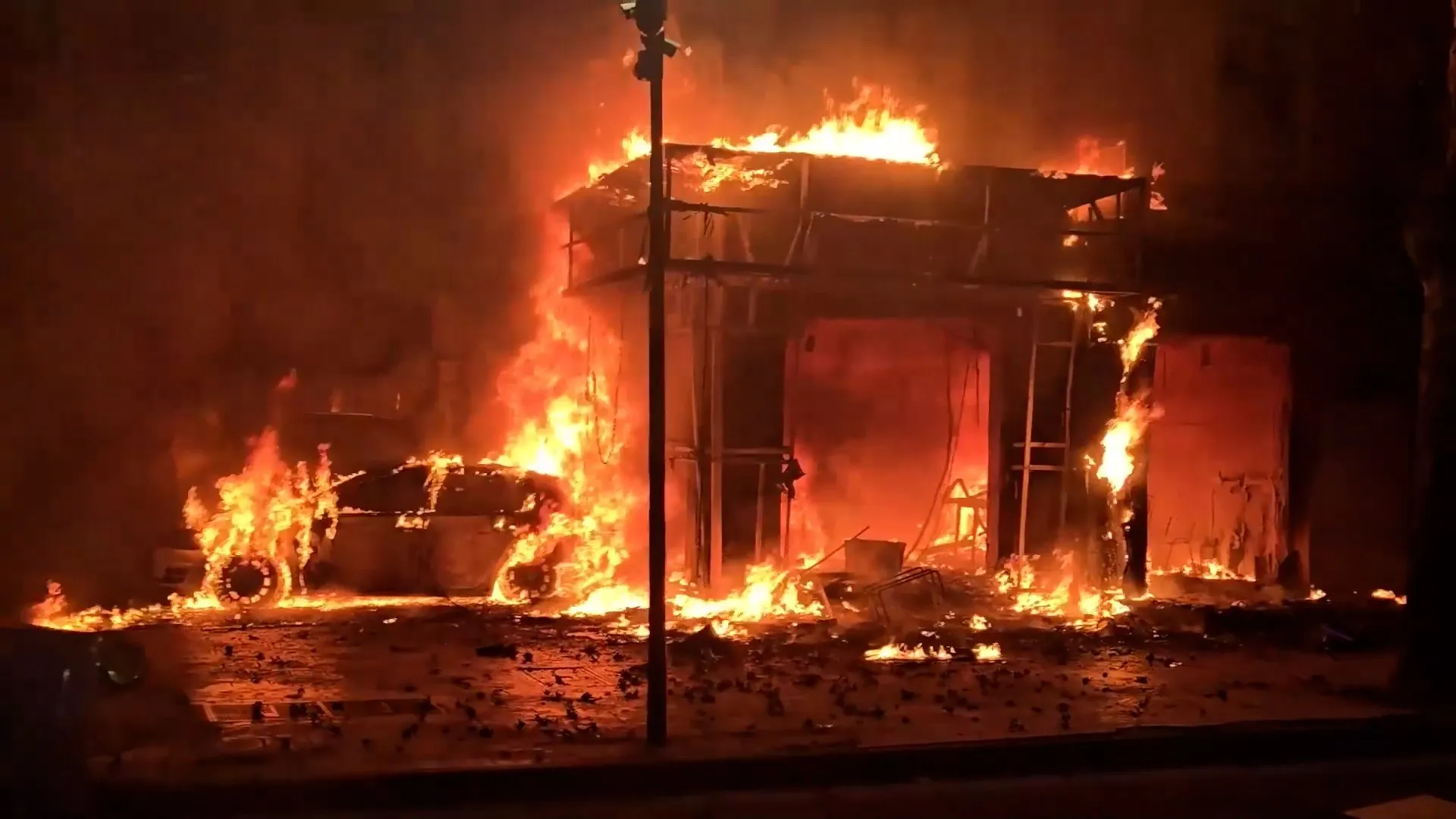
Source link

Pennsylvania treasurer refuses to fund security upgrades at Shapiro home

Pennsylvania’s treasurer refused Thursday to approve payments for more than $1 million in security systems and other upgrades to the private home of Gov. Josh Shapiro, changes that were made after an intruder set fire to the state-owned governor’s residence last year in an attempt to kill the Democrat.

The treasurer, Republican Stacy Garrity, said there is no legal authorization to use taxpayer dollars to reimburse contractors for the security upgrades on private property, even the private home of a governor.

The Pennsylvania State Police submitted the reimbursement requests to the Treasury Department but “appear to have simply ignored the statutory limits and restrictions on spending and procurement,” Garrity said during a news conference in her offices.

The state police agency has other options to get taxpayer dollars to underwrite the work, which has already been done. The agency could ask lawmakers to explicitly authorize the payments or enter the state’s settlement process for disputes between contractors and state agencies, Garrity said.

Shapiro, who is considered a potential top-tier contender for the White House in the 2028 presidential election, is running for reelection this year for a second term as governor. After last year’s attack, he emerged as a prominent voice in condemning political violence.

Garrity is expected to be Shapiro’s main opponent in the fall election. She is both endorsed by the state GOP and uncontested for the GOP nomination in Pennsylvania’s May 19 primary election.

The treasurer said the decision wasn’t political and that “I don’t play these kind of political games.”

But Shapiro’s office blasted Garrity’s decision as a “shameful political action without legal basis” and said the state police was exploring options to ensure it protects its authority and that the contractors get paid.

“The Treasurer should put partisanship aside, follow the law, and show some humanity for a family that has experienced real trauma, the state troopers who protect them every day, and the vendors and workers who the treasurer has now refused to pay,” the governor’s office said in a written statement.

Garrity said the security and well-being of public officials and their families is of the “utmost importance” to her and that “an attack on the governor is an attack on all of us.”

Still, she said, her department does not have the legal authority to issue the payments.

The security upgrades at Shapiro’s home were something of a secret until his administration informed lawmakers about them in a letter last fall. In it, the Cabinet official in charge of state property told lawmakers that “the threat to a high-profile elected official like Governor Shapiro does not end when he leaves the Governor’s Residence.”

State officials haven’t detailed those upgrades, citing safety reasons. Shapiro, his wife and two of his four children still live in the private residence, in Abington, a Philadelphia suburb.

However, plans for a security fence there spawned dueling lawsuits between the Shapiros and a neighbor over who rightfully owns a sliver of land abutting the two properties.

So far, the Treasury Department said Thursday it has paid more than $26 million in security upgrades and remediations at the governor’s state-owned residence in Harrisburg, where the Shapiros often stay. Those renovations included an “anti-climb” iron fence that is much higher than the one scaled by the intruder, Cody Balmer.

Balmer last year pleaded guilty to the attempted murder of Shapiro. Under a plea deal, Balmer was sentenced to 25 to 50 years in prison, far less than he could have faced if the case had gone to trial.

He climbed over a 7-foot iron security fence in the middle of the night, eluded two state troopers stationed at the residence and used beer bottles filled with gasoline to set fire to the residence, just hours after Shapiro had hosted a Passover Seder to celebrate the first night of the Jewish holiday.

The fire forced Shapiro, his wife, children and members of his extended family to flee, as firefighters battled the blaze. The residence, built in the 1960s along the Susquehanna River about 2 miles north of the state Capitol, was badly damaged but has since been renovated.

Levy writes for the Associated Press.

Source link

Bass, Barger meets with Trump to push for L.A. fire recovery funds

Los Angeles Mayor Karen Bass and L.A. County Supervisor Kathryn Barger met privately with President Trump and administration officials Wednesday to press for federal support and yet-unpaid wildfire recovery funding as the region continues to rebuild from the 2025 fires.

“This afternoon we met with President Trump and Administration officials to advocate for families who lost everything,” Bass and Barger said in a statement. “We had a very positive discussion about FEMA and other rebuilding funds as well as the support of the President to continue joining us in pressuring the insurance companies to pay what they owe — and for the big banks to step up to ease the financial pressure on L.A. families.”

Barger said the two leaders had a “high-level discussion” with the president in the Oval Office, sharing stories about what fire survivors are experiencing day to day. She added that “we left details behind with the President,” but did not specify whether Trump made any funding or policy promises during the meeting.

“First and foremost, today’s meeting was to thank the President for his initial support of infusing federal resources to expedite debris removal, as well as his recent tweet about insurance companies, which have already proven fruitful,” she said in a statement provided to The Times.

Bass was similarly reserved about the discussions, telling reporters that “we will follow up with the details,” but signaled progress is being made on federal support.

“I think what’s important is that we certainly got the president’s support in terms of, you know, what is needed, and then the appropriate people were in the room for us to follow up. And that was Russ Vought, who is the head of the Office of Management and budget,” Bass told KNX on Wednesday.

The meeting comes on the heels of a yearlong standoff between California leaders and the Trump administration over wildfire recovery funding, disaster response and whether the federal government should have a say in local rebuilding permitting.

California leaders, led by Gov. Gavin Newsom, have accused the Trump administration of withholding billions in critical wildfire aid, prompting a lawsuit over stalled recovery funds. Officials allege political bias in the delay of billions of dollars from the Federal Emergency Management Agency.

Newsom visited Washington in December. When he made his rounds on Capitol Hill, he met with five lawmakers, including three who serve on the Senate and House appropriations committees, to renew calls for $33.9 billion in federal aid for Los Angeles County fire recovery.

But the governor said he was denied a meeting with FEMA and would not say whether he had attempted to meet with Trump to discuss the issue.

Bass, meanwhile, appears to have found a path to the president on a subject that has been paramount for her community.

The fruitful meeting comes after Trump lobbed insults at the mayor at a news conference earlier this year, where he called her “incompetent” for how she handled last year’s wildfire recovery efforts. He alleged that under Bass’ leadership, the city’s delay in issuing local building permits will take years when it should have taken “two or three days.”

California officials, including Newsom, have urged the Trump administration to send Congress a formal request for the $33.9 billion in recovery aid needed to rebuild homes, schools, utilities and other critical infrastructure destroyed or damaged when the fires tore through neighborhoods more than 15 months ago.

What Bass and Barger’s meeting with the president ultimately produces remains to be seen.

The billions in recovery aid have not yet materialized, but the meeting could potentially give those discussions new momentum.

The White House did not immediately respond to a request seeking comment about the meeting.

Earlier this month, Trump criticized insurance provider State Farm on Truth Social for its handling of the devastating Los Angeles County wildfires. He accused the insurance giant of abandoning its policyholders when tragedy struck.

“It was brought to my attention that the Insurance Companies, in particular, State Farm, have been absolutely horrible to people that have been paying them large Premiums for years, only to find that when tragedy struck, these horrendous Companies were not there to help!” Trump wrote.

But the rebuke didn’t come out of the blue. It stemmed from a controversial February visit to Los Angeles by Trump administration officials.

Trump tapped Environmental Protection Agency Administrator Lee Zeldin in an effort to strip California state and local governments of their authority to permit the rebuilding of homes destroyed in the Eaton and Palisades fires.

Within the week, Zeldin was in Los Angeles, bashing Newsom and Los Angeles officials at a roundtable with fire victims and reporters, saying that residents were suffering from “bureaucratic, red tape delays and incompetency” and that leadership was “denying them … the ability to rebuild their lives”.

During the trip, officials heard direct complaints from local leaders and fire victims about insurers being slow, restrictive and insufficient with their claim payouts.

After these meetings, Trump directed Zeldin to investigate the insurers’ responses. State Farm, facing roughly $7 billion in fire-related claims, is also under formal investigation by California’s insurance commissioner over its handling of the crisis.

Despite tensions with the administration, Bass and Barger appeared confident that progress was being made on the insurance and funding issues.

“Our job is to fight for our communities,” their joint statement concluded. “When it comes to this recovery, our federal partners are essential, and we are grateful for the support of the President.”

Source link