Lawrence McCutcheon, a five-time Pro Bowl running back for the Rams who went on to have a long career in the team’s front office, died Friday. He was 76.
McCutcheon’s family announced his death through the Rams. In a statement, the family said McCutcheon had “a long, courageous battle with Parkinson’s disease.”
McCutcheon played his first eight NFL seasons for the Rams, who drafted him out of Colorado State in 1972. The native of Plainview, Texas, quickly emerged as one of the most dynamic running backs of the 1970s, earning a Pro Bowl selection and leading the Rams in rushing each year from 1973 to 1977 in coach Chuck Knox’s productive offense.
McCutcheon, nicknamed “Clutch,” was a second-team AP All-Pro selection in 1974.
Rams running back Lawrence McCutcheon carries the ball against the St. Louis Cardinals in a divisional round playoff game at the Coliseum in December 1975.
(Associated Press)
He appeared in 11 postseason games for the Rams. In the Super Bowl in January 1980, he even threw a touchdown pass to Ron Smith to put Los Angeles ahead before the Pittsburgh Steelers rallied to win.
McCutcheon was the Rams’ career rushing leader when he left in 1980. After he finished his playing career with stops in Denver, Seattle and Buffalo over two seasons, McCutcheon became an executive for the Rams, eventually spending more than three decades in their front office.
McCutcheon rose to become the St. Louis Rams’ director of player personnel from 2003 until his retirement in 2016, shortly before the team moved back to Los Angeles.
“Through a decade-long playing career and another 32 years in the Rams’ front office, Clutch earned the respect and admiration of teammates, opposing players, colleagues and fans alike,” McCutcheon’s family said in its statement. “Clutch will be missed and remembered forever.”
McCutcheon’s son, Daylon, was a cornerback for the Cleveland Browns from 1999 to 2006. Lawrence McCutcheon’s grandson, Dyson, is a defensive back at Middle Tennessee.
Ron Duguay, a longtime New York Rangers star who finished his NHL career with the Kings, has died of cancer. He was 69.
The Rangers announced the loss of “one of the most popular players in franchise history” on Thursday morning after being informed by Duguay’s family.
“Ron’s signature skating style — with his hair flowing as he moved down the ice — captivated The Garden Faithful, and his skill, tenacity, and charisma earned him the admiration of all New Yorkers,” the team said in a statement. “We join the hockey community in sending our condolences to Ron’s friends, family, and loved ones during this difficult time.”
Former Alaska governor and 2008 Republican U.S. vice presidential nominee Sarah Palin, who dated Duguay over the last several years, posted on social media that the one-time NHL All-Star “passed away peacefully” Thursday “after a hard-fought battle with cancer.”
“It’s with a shattered heart, but also deep peace knowing Ron is with Jesus now,” Palin wrote. “He fought so hard. Love never ends.”
On Sunday, Palin posted photos that appeared to show her holding Duguay’s hand while he was in a hospital bed. “Prayers for Ron Duguay are felt & appreciated,” she wrote.
Born in Sudbury, Ontario, Duguay was selected by the Rangers at No. 13 overall in the 1977 draft. Known for his long, curly hair and flashy lifestyle — “why, he even danced with Cher at one of Manhattan’s best-known discos,” the New York Times wrote in 1983 — Duguay became a star during the six seasons of his initial stint in New York. He helped the Rangers make the 1979 Stanley Cup Final and earned his only All-Star nod in 1982.
Ron Duguay, front left, blocks out New York Rangers’ Carey Wilson as Kings teammate Marty McSorley winds up to shoot Feb. 27, 1989, at Madison Square Garden.
(Ron Frehm / Associated Press)
Duguay was traded to the Detroit Red Wings in the summer of 1983 and had the two best seasons of his career, including career highs of 89 points on 38 goals and 51 assists during the 1984-1985 season. He also played for the Pittsburgh Penguins and a second time for the Rangers before wrapping up his career with the Kings from 1988 to 1989.
Overall, Duguay had 673 points (305 goals, 368 assists) in the NHL regular season and playoffs. He went on to play in the minor leagues, including two seasons with the IHL’s San Diego Gulls, and spent 12 years calling Rangers games as an MSG Network analyst.
“Ron greeted each day with the biggest smile, an incredible zest for life, and a positive outlook that shone through everything he saw, everything he did, and every life he touched,” the NHL Alumni Assn. wrote on X. “He will be remembered not only for the player he was, but for the extraordinary person he was. His warmth, his laughter, his kindness, and his beautiful spirit will forever remain in the hearts of his family, friends, teammates, and the entire NHL Alumni community.”
The Kings reposted the alumni association’s statement and added: “Our hearts are with Ron’s family & loved ones and we join them in mourning his passing.”
In 2024, Duguay was diagnosed with Stage 4 cancer, which had started in his colon before spreading to his liver and other parts of his body, according to a post on the GoFundMe page set up by his three adult children to help pay for his medical and travel costs. He lived in Florida but had to make regular trips to Orange County for treatment.
“Early this morning, our beloved father took his final breath after fighting a long and courageous battle. He fought with everything he had, right until the very end,” daughter Shay Thomas wrote on Thursday in a separate GoFundMe post. “Our hearts are shattered, and the world feels a little less bright without him in it. He will be missed by so many, but we find peace in knowing that he is finally free from pain and suffering.
“He fought the good fight until his very last breath, and today, Heaven gained a truly special angel.”
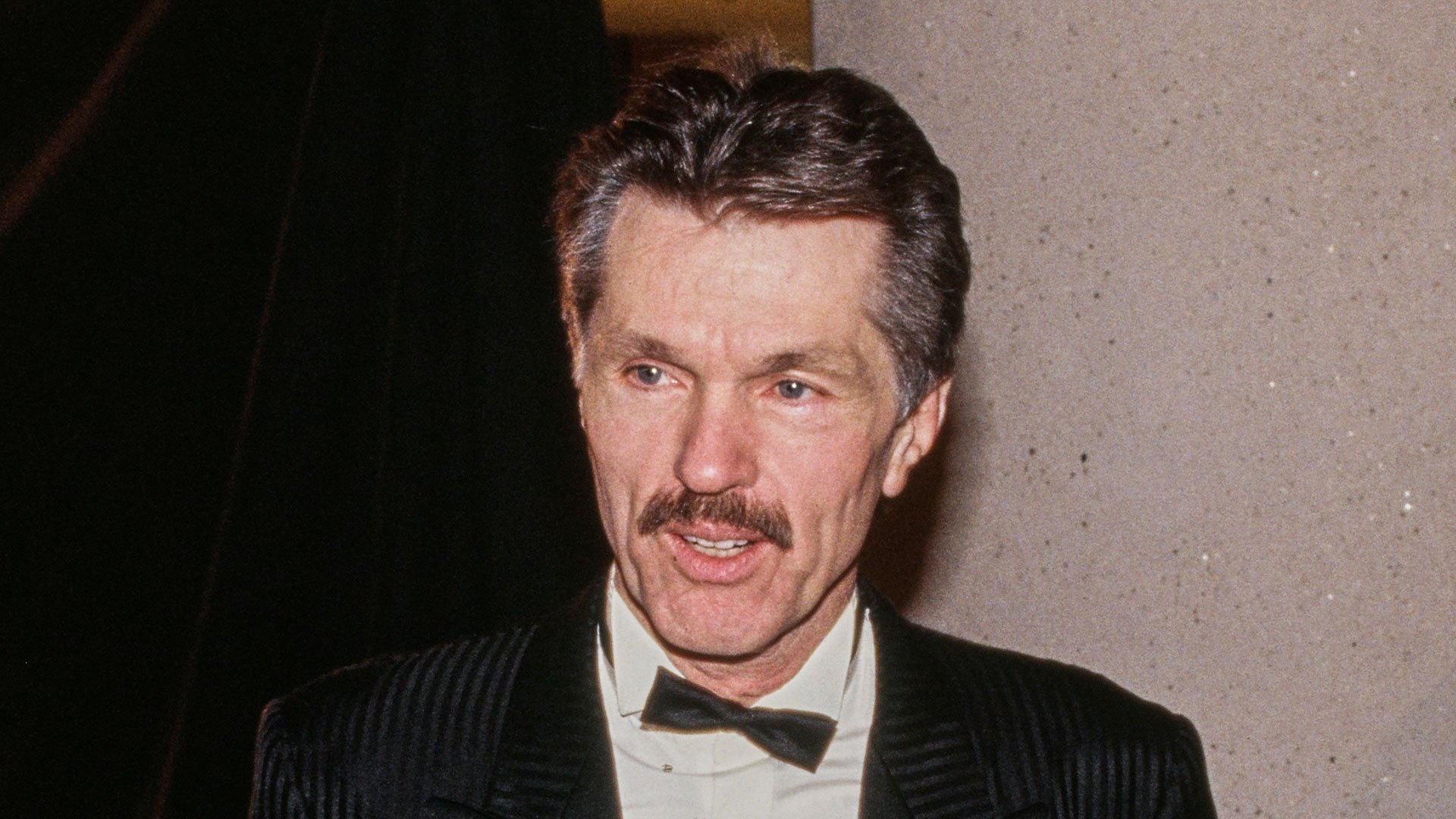
HOLLYWOOD legend Tom Skerritt has died at the age of 93 after a six-decade career.
Tom is best known for his roles in Top Gun, Alien, and Picket Fences.
Legendary actor Tom Skerritt has died at 93Credit: AlamyTom is best known for playing Tom Cruise’s instructor, Viper, in the 1986 film Top GunCredit: Alamy
The veteran actor died on Wednesday from natural causes, his family confirmed to TMZ.
“We are heartbroken by his loss,” Tom’s family told the outlet.
Sign up for the Showbiz newsletter
Thank you!
The Detroit native’s acting credits span six decades, starting with his breakout role in the 1970 war series, M*A*S*H.
He later played Captain Dallas in the 1979 sci-fi Alien, before landing the part of Tom Cruise’s instructor, Viper, in the 1986 film Top Gun.
Tom is also remembered as Sheriff Jimmy Brock in Picket Fences, which earned him an Emmy Award for Outstanding Lead Actor in a Drama Series in 1993.
Some of his other notable credits include A River Runs Through It (1992), Steel Magnolias (1989), and a six-episode stint on Cheers (1987-1988).
Tom’s final on-screen role was playing Cliff in the 2025 contemporary Western drama Broke, with Dennis Quad and Wyatt Russell.
Tom also had prominent roles in Aliens and Picket FencesCredit: GettySome of his other notable credits include A River Runs Through It (1992), Steel Magnolias (1989), and a six-episode stint on Cheers (1987-1988)Credit: Reuters
Years before his Hollywood fame took off, Tom served in the U.S. Air Force.
He later became an advocate for veterans as co-founder of The Red Badge Project.
Tom maintained close friendships with many of the people he met in the industry over the years.
He shared photos from a reunion with Academy Award winner Jeff Bridges in one of his final Instagram posts in April.
The TV star shared his support for Jeff, who is opening an art gallery in Santa Barbara, as the pair hugged and linked arms.
“Got to see my talented friend Jeff Bridges’ photography while in Santa Barbara. Truly inspiring work, and even better catching up with the best people,” Tom wrote in his caption.
Tom also posted a heartfelt tribute last September to his “dear friend” Robert Redford following the actor’s passing.
“We grew up in this industry together – his art and friendship over these many years has profoundly changed my life. The world simply won’t be the same without him,” his post read.
The duo worked together as co-stars of the Korean War drama, War Hunt in 1962, and when Robert directed Tom in A River Runs Through It.
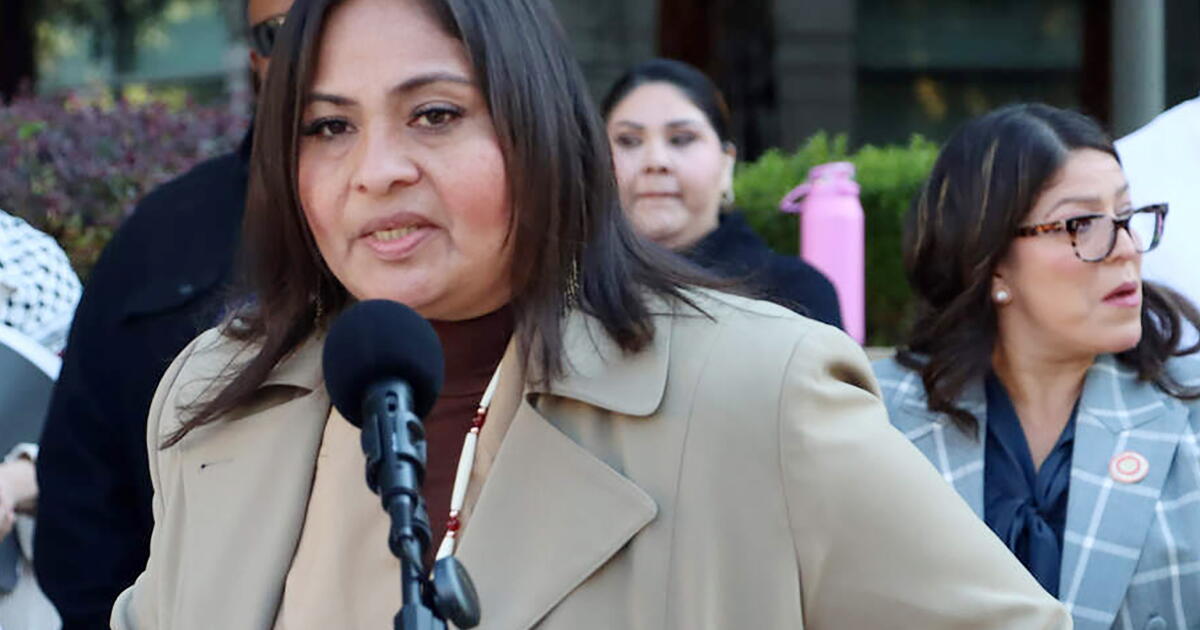
The mayor of the small Central Valley farm town of Kerman pulled up to a bakery, her cellphone camera recording, and confronted federal immigration agents conducting an early-morning operation in which multiple people were detained.
“You’re not welcome in my city,” Maria Pacheco told the masked agents, identifying herself as the mayor. “You’ve taken enough people yesterday. We don’t want you here. You need to leave.”
As the men wearing U.S. Immigration and Customs Enforcement vests drove away, she shouted: “How can you make a living kidnapping people? How can you sleep at night doing what you’re doing? … You are a sorry piece of sh—!”
Pacheco, who is running for a seat on the Fresno County Board of Supervisors, posted video of the Oct. 8 confrontation in Kerman — a mostly Latino city of 17,000 west of Fresno — on social media, labeling it: “Mayor Maria Pacheco Stands Up to ICE.”
The footage went viral. TikTok commentators praised her bravery. Comedian and actor George Lopez posted about it on Facebook — writing, “We need more politicians like Maria Pacheco!” — and she shared her campaign fundraising link in the comments.
A few days later, Pacheco allegedly drove through Fresno, closely following a vehicle driven by a man she assumed was an ICE agent.
Except, he wasn’t one.
Eric Bridges, a Fresno hairdresser, has accused Pacheco of closely trailing him in an orange Nissan Altima for more than 20 minutes on Oct. 14 and taking photos of his vehicles as she followed him to his sister’s house.
“I’m looking for ICE, and you look like ICE,” Pacheco told him, according to a signed statement submitted to the Fresno County District Attorney’s Office this week in which Bridges wrote that he wanted “to press charges to the fullest extent of the law.”
Bridges’ attorney, Roger Bonakdar, told The Times that Pacheco used his client “as a political trampoline so she could create social media clickbait” to benefit her political campaign.
“There are real concerns as to whether or not she is acting as some sort of vigilante law enforcement person, that she’s wrongfully abusing her position as an elected official,” Bonakdar said.
Bonakdar added that he filed complaints about the incident with the Fresno Police Department and county prosecutor.
Taylor Long, a spokesperson for the district attorney’s office, said in an email that the information provided by Bonakdar had been referred to its Public Integrity Unit, which investigates public officials for potential crimes related to their office, but that “the receipt and review of information” does not mean a crime had occurred or that charges were warranted.
No charges had been filed by the district attorney’s office in connection with the incident as of Wednesday, Long wrote.
In an email to The Times, Pacheco wrote: “Regarding recent allegations, my only comment is this: If he wants to go to court, we will go to court.”
“Meanwhile, the Kerman Food Bank and other local organizations are experiencing food shortages as families face fear and uncertainty caused by recent immigration enforcement actions,” Pacheco wrote. “Parents are afraid to go to work or leave home, even to buy groceries, leaving more families struggling to put food on the table. … That is where our attention belongs, and where my time, energy and heart will remain.”
The encounter comes at a tense time in the Central Valley, where a surge this month in federal immigration operations and detentions has rattled agricultural communities, causing workers to stop showing up to farm fields and construction sites and families to keep their children home from school.
The Department of Homeland Security did not immediately respond to requests for information about the Oct. 8 operation outside La Princesa Real Bakery in Kerman, where Pacheco filmed her interaction with agents. Pacheco told the Fresno Bee that four of the bakery’s customers had been detained and that one was eventually released because he had lawful immigration status.
In his signed statement, Bridges wrote that he was driving near Kearney Park just west of Fresno on the afternoon of Oct. 14 when he noticed an orange car “pull behind me quickly and follow me into the park.” Bridges said he stopped his vehicle and was on the phone with his sister, telling her that he was being followed and that the driver was taking photos of him.
As he sat in the parking lot, he wrote, the car circled him for five minutes, and he could overhear the driver on the phone through her vehicle’s speaker system.
He then drove to his sister’s neighborhood, where the car tailed him into a cul-de-sac and stopped beside his white Mercedes sport utility vehicle — an encounter recorded by a home security camera.
When the female driver rolled down her car window, Bridges wrote, she asked who he was and he did the same. According to Bridges’ statement, the driver told him he was “in [her] ‘hood driving an unmarked car.”
Bridges wrote that he had a California Department of Motor Vehicles print-out affixed to the back of his vehicle and asked if she was a police officer or DMV employee.
She replied, “Don’t worry about who I am; I’m someone important” then accused him of being an ICE agent, Bridges wrote. Outraged, he began filming her.
In the home security footage, Bridges can be heard from a distance saying, “I didn’t know you owned the neighborhood,” and shouting in apparent surprise: “I look like I’m ICE?” after the woman speaks to him.
A close-up video that Bridges recorded shows a woman in sunglasses smiling as she drives away, with him saying, “Don’t you ever in your … life follow me, you weird-ass b—.”
Bridges wrote that she flipped him off as she left and that he learned she was the mayor of Kerman after reviewing the video footage.
Bonakdar, his attorney, said Bridges is a grandfather and hair stylist who has never worked for ICE or the Department of Homeland Security. When the driver of the orange vehicle saw him, Bonakdar said, Bridges was not wearing a face covering, as immigration agents often do, or a badge or tactical vest.
Pacheco “claims to be an advocate for minority groups, or to somehow have an interest in helping those people,” Bonakdar said. “I mean, she just victimized somebody who is a member of two minority groups. [Bridges] is a thin-framed, middle-aged Black gay man.”
Bonakdar said Bridges had received threats from people accusing him of being an undercover ICE agent and that some had told him he was not welcome in certain places.
On Oct. 15, the day after the alleged encounter with Bridges, Pacheco wrote a Facebook post about a street corner near agricultural fields just west of Fresno city limits: “I have spotted ICE on Shaw and Dickenson. White SUV. No plates. Driver is masked and hooded.”
Two days later, she took to Facebook again, writing: “I never imagined we’d live in a time when communities would fear masked men in unmarked vehicles. It’s exhausting living on constant high alert, watching for out-of-state or missing license plates, never knowing who’s next.”
She had an intimate bash attended by her loved ones – but Kendall was missingCredit: Instagram/kimkardashianKendall was also missing earlier this week when she snubbed sister Kylie’s VS Fashion Show debutCredit: Getty
“Kendall must be fighting with Kylie and everyone, first she skips the VS show and now this,” noted one person in the comments.
“I think she just didn’t wanna do the pap walk,” said a second.
“With a family of this size it has to be someone’s birthday every month…can’t make every event every time I assume,” added a third.
This isn’t the first glimmer of a feud between the famous family that we’ve had in recent days.
Most read in Entertainment
Kylie strutted down the runway at the annual VS show on Sunday night wearing a $50 million bra, and Kendall was nowhere to be seen.
Kylie is the first non-Angel to wear the coveted Fantasy Bra, which she paired with a white thong, a sheer miniskirt, and massive white angel wings.
But her sister Kendall, who had walked in the show in the past, didn’t participate this year.
Kendall wasn’t even in the audience supporting her baby sister, alongside their mother, Kris Jenner, and Kylie’s boyfriend, Timothee Chalamet.
The supermodel also didn’t shout out Kylie’s monumental moment on social media, despite their sisters Kim and Khloe Kardashian doing so on their Instagram pages.
“There is no way Kendall is not seething at Kylie being in the show,” one person suspected in a popular Kardashian family Reddit forum at the time.
But Kendall did acknowledge her younger sister’s fashion show stint.
She reposted of Kylie strutting her stuff down the runway, writing: “My perfect baby sister.”
A statement was then shared with Page Six.
“Kendall thought Kylie absolutely killed it,” a source told the outlet.
“Even though Kylie has some runway experience, she still asked Kendall for a few tips ahead of the Victoria’s Secret Fashion Show.”
John Anderson, a country western star known for his traditional tunes and twangy voice, has died.
A representative for Anderson confirmed to The Times that the storied singer-songwriter died in his sleep at his home in Smithville, Tenn., on Wednesday. He was 71.
“It is with the heaviest of hearts that we share the passing of our beloved husband, father, grandfather, and best friend,” a statement from Anderson’s family read. “To the world, he was a gifted country music singer whose voice and songs touched countless lives. To us, he was so much more. He was the heart of our family, the one who made us laugh, loved us fiercely, and made every ordinary moment feel special. We are completely heartbroken. His music will live on, but for us, his greatest legacy will always be the love he gave his family and the memories we will carry with us forever. Please keep our family in your thoughts and prayers as we grieve this unimaginable loss.”
Born in Apopka, Fla., on Dec. 13, 1954, Anderson got his first guitar when he was 7 years old and played in garage bands as a teen. When he finished high school, Anderson packed his bags for Music City. He gigged at Nashville nightclubs until he landed his first record contract with the support of music publisher Al Gallico; he signed with Warner Bros. Records in 1976.
Over his storied career, Anderson earned 20 top 10 country hits, including five No. 1s. Through the 1980s and ’90s, Anderson was a leader in the explosion of neotraditional country tunes, and honky-tonks were filled with couples two-stepping to hits including “Swingin’,” “Seminole Wind,” “Straight Tequila Night,” “Wild and Blue” and “Black Sheep.”
In 1993, Anderson received the Academy of Country Music career achievement award. Introducing the award, Reba McEntire said Anderson was an early new traditionalist who “combined a sweet and pure country sound with great energy and emotion.” Billy Dean gave remarks, too, saying, “Back in the early ’80s, John’s sound and material struck the exact right chord with country record buyers and inspired a whole bunch of up-and-coming artists just like myself.”
In 2014, Anderson was inducted into the Nashville Songwriters Hall of Fame, and in 2024, Anderson he was inducted into the Country Music Hall of Fame alongside Toby Keith and James Burton.
“This is an institution that preserves greatness,” Anderson said of the honor. “That I get the chance to be amongst this kind of greatness, words can’t explain.”
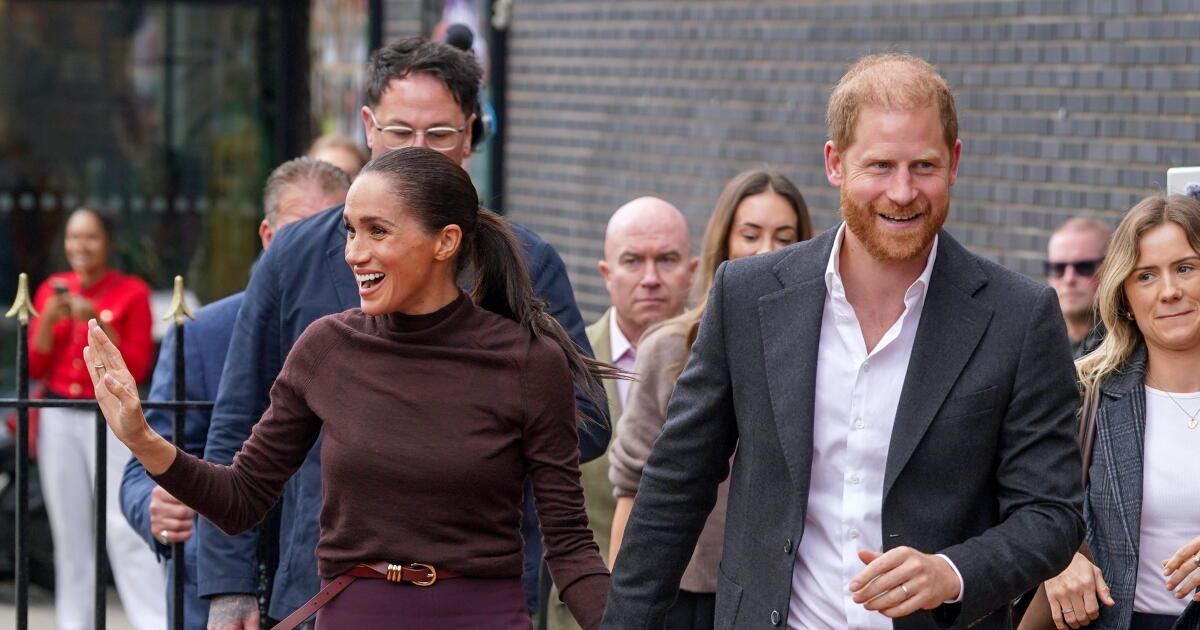
Prince Harry is opening up about his and wife Meghan Markle’s unexpected decision earlier this year to move back to the United Kingdom years after their dramatic fallout with the British royal family.
The Duke of Sussex spoke about the move in an interview with GQ’s Zach Baron, explaining that he and the duchess of Sussex returned to Britain for “opportunities for the family.” Prince Harry — promoting his session on grief with neuroscientist Dr. Mary-Frances O’Connor for the MasterClass online platform — said the ability to put his and Meghan’s two children “in a British school has meant a lot to me” as was being “back closer to my family.”
“To be back on U.K. soil for longer than a few days or a week here or there,” he continued, “it’s nice to be back.”
Reports of Harry and Meghan’s return to the United Kingdom surfaced in August after the spouses made clear in 2020 that their departure was due to several factors, including severe scrutiny by the British media and alleged racism and bullying by the royal family. During the GQ interview, published Tuesday, Harry said he felt more confident and “optimistic” about returning to the U.K. and its tabloid scene, saying, “I can respect them if they respect me and our position.”
After Harry and Meghan separated themselves from the British family, they settled in California in the affluent neighborhood of Montecito. While in the United States, the pair took on a variety of media ventures — including a podcast, a television series and documentaries — under their multimedia company Archewell Productions. Memorably, Harry also penned his memoir, “Spare,” in 2023, providing readers a look at his family and his scathing view of the paparazzi. Subject to media scrutiny for nearly the entirety of his life, Harry told GQ, “I prefer me to be putting things out there rather than the machine creating stuff.”
“Why not try to be in control of your own story?” he added. “Because if they can’t be responsible enough to tell your story, then you have to tell your own story.”
Prince Harry also said in the interview he felt the stars aligned for his and Meghan’s return and that their two children, Prince Archie and Princess Lilibet, had been “loving” their time attending British school. “It’s just giving them a whole different experience.”
As for his other family members, brother Prince William and father King Charles III, Prince Harry said, “I want it to work out.”
“Of course I do. Again, with everything else that’s going on in the world, the most important thing is to reconcile,” he said. “That’s the key point.”
At the federal courthouse in downtown Los Angeles late Monday, several green card holders arrested in a crackdown on alleged California voter fraud expressed confusion over the charges — with some saying they had no recollection of registering to vote, as Trump administration officials accuse them of doing.
Among them was Ana Domínguez, 60, a native of El Salvador living in Long Beach as a lawful permanent resident. Federal authorities accused her Monday of fraudulently registering to vote in July 2006 and then lying about it in her naturalization paperwork in March 2026.
Domínguez said she did not have any memory of registering to vote.
Another man accused of the same crimes as Domínguez said the same: He wasn’t aware of ever registering to vote, as federal prosecutors claimed he had.
Both were among the 28 people charged with federal election-related crimes Monday, including fraudulent voter registration and making false statements in a naturalization application. Federal prosecutors and high-ranking Justice Department officials had touted the arrests during a news conference hours before as proof that California elections are corrupted by noncitizen voters — as President Trump has long alleged.
State officials said the isolated instances of noncitizens voting, if accurate, are not evidence of widespread voter fraud. They also raised questions as to whether the charges could be trusted to be accurate — citing similar accusations being disproved elsewhere in the country.
Election experts have said many instances of noncitizens registering to vote are a result of administrative error or confusion on the part of the immigrant — not intentional criminality.
“We know from past experience that sometimes people register to vote accidentally, as when there is a mistake at the DMV,” Rick Hasen, director of the Safeguarding Democracy Project at UCLA School of Law, wrote Monday in a blog post. “There is only a crime if the government can prove willful violations of federal law.”
Four of the defendants charged Monday had initial court appearances later that afternoon. Beforehand, more than a dozen of their loved ones milled around the federal courthouse in downtown L.A., antsy and clearly worried.
One woman, her baby and young daughter in tow, struggled to find the right courtroom. Another woman — Domínguez’s daughter — cried in the hallway as she waited for her mother’s case to get called up. When Domínguez moved to stand before the judge, she blew a kiss to her husband and daughter in the second row. She wore a black back brace and her legs were cuffed.
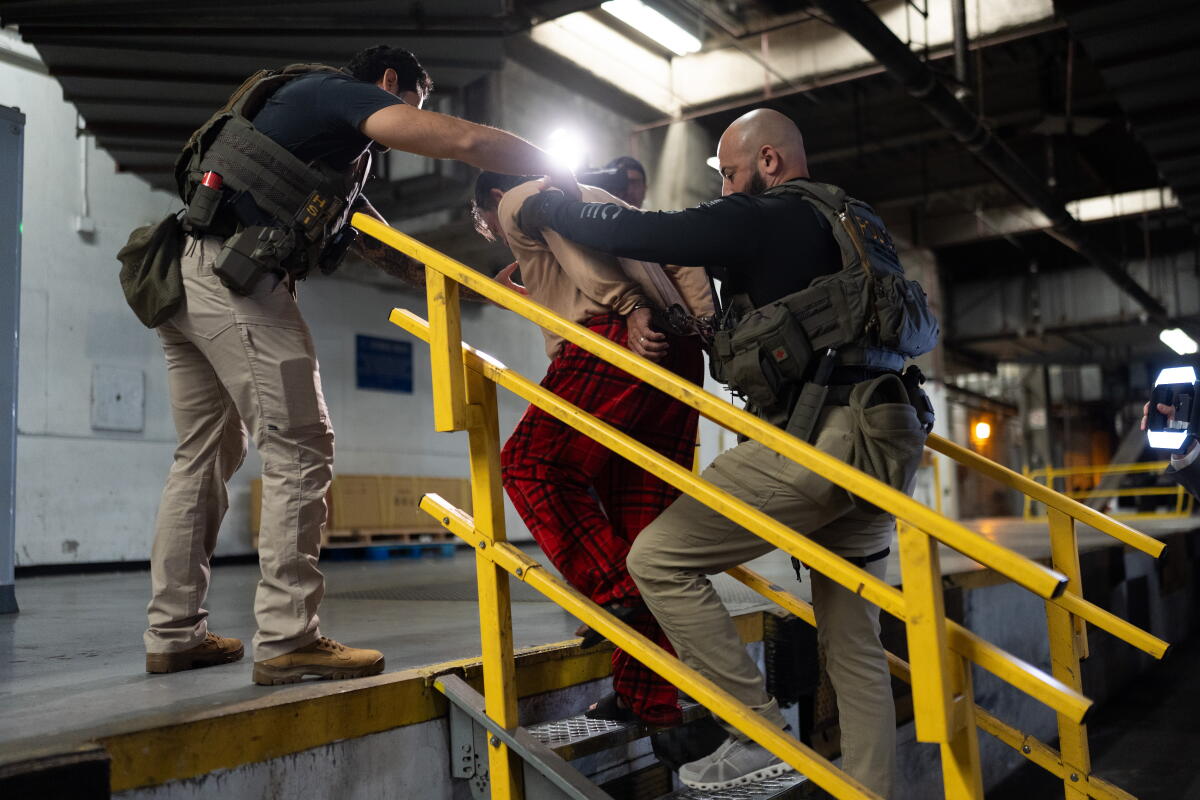
A third defendant — Omar Muñoz, 72, a lawful permanent resident from Belize whose arrest at his home in Commerce was captured by photographers in images transmitted around the world — shuffled into a court room shackled at the waist, his feet cuffed, still wearing the red and black pajama pants he’d been arrested in.
Homeland Security Investigations task force officers escort a suspect accused of illegally registering to vote to a processing facility at Federal Building in Los Angeles on Monday.
(Jae C. Hong/AP Photo)
Muñoz was charged with fraudulently registering to vote in September 2019, and then voting in 2020, twice in 2022 and again in 2024. He is also accused of lying on his application to become a naturalized U.S. citizen, when he claimed to have never falsely claimed to be a U.S. citizen in the past.
In the court room, Muñoz held a hand over his heart as he waved to his family in the first row of the gallery.
Hasen, the UCLA expert, wrote that the government’s blasting out images of Muñoz being arrested was clearly “meant to convey that the problem of noncitizen voting in California is both pervasive and serious, crimes that are undetected by willfully ignorant California election officials.”
But the reality, he wrote, “is likely far different,” with voter fraud limited to isolated cases, some with less nefarious intent.
First Assistant U.S. Atty. Bill Essayli, the top federal prosecutor in Los Angeles, said Monday that the cases represent strong federal work to ensure that noncitizens aren’t negating the votes of eligible U.S. voters — a problem he said California officials have refused to recognize despite federal authorities providing the proof.
Essayli dismissed the idea that those charged may have been unaware of what they were doing. “You have to go out of your way to register to vote, it’s not something that just happens to you,” Essayli said.
José Antonio Bañuelos-Díaz, 42, a Mexican national and West Adams resident, appeared in court wearing a reflective vest with the name of a landscaping company, blue jeans and boots with the American flag on them. He’d been on his way to work when he was arrested.
During the hearings, the defendants only spoke to acknowledge that they reviewed and understood the charges against them. In every case, the federal prosecutor said the government was not seeking detention.
The magistrate judge ordered the four released on personal recognizance and said they were not required to be under supervision. They are all set to appear in court for a preliminary hearing on November 9. Their deputy federal public defenders did not respond to a request for comment.
Lliani Orantes, Muñoz’s daughter and a nurse who was born in the U.S., said her father had been hauled out of the family home by federal authorities after they swarmed and cordoned off the block. She said the family was rushing to figure out what happened, including whether Muñoz could have been confused with younger relatives of the same name, including a U.S.-born son who is a registered voter.
Orantes also expressed frustration with the handling of her father’s arrest — to which federal authorities had clearly alerted some media, who were brought along for the raid.
She said her father is recovering from cervical surgery, rotator cuff repair on a shoulder and a double knee replacement, and that he was pulled out of the family’s home “like he was a dog” as part of what she described as a “political ploy, an example used for the operation” — which federal authorities dubbed “Operation Protect the Vote.”
“They’re trying to instill fear in society,” she said.
“We have so much more in the world to be dealing with, do we really need to focus on these little things that could be taken care of in a different fashion? In a different way? Like, hey, somebody from immigration visit the home,” she said.
Acting United States Deputy Atty. Gen. Trent McCotter speaks at a news conference Monday to announce charges against 28 people in California accused of illegally registering to vote as noncitizens.
(David Butow/For The Times)
California Atty. Gen. Rob Bonta — who is defending the state and top election officials for the state and Los Angeles County against a lawsuit from the Justice Department alleging they are not treating alleged voter fraud by noncitizens seriously enough — said Monday that voting illegally is wrong and “one off, isolated incidents” of it should be prosecuted.
But Bonta denied that there is widespread voter fraud in the state, called 28 cases brought out of the 23 million registered voters in California a “drop in the bucket,” and said he’d be watching how those cases play out in court.
“We’ll see what the facts show, and whether they’ll have to drop charges or whether they’ll be able to prosecute,” he said.
About 3 p.m. Monday, the four defendants at the downtown courthouse were released and exited the court room, some to family members waiting in the hallway to hug them.
Domínguez wiped away tears as she recounted her arrest, showing bruises on her wrists from the handcuffs.
“They were accusing me of voter fraud since 2006,” she said. Domínguez said the accusations don’t even make sense considering she has never voted.
“If I would have committed all those frauds about voting registration and whatever they’re saying, since 2006, wouldn’t you imagine that I would have been voting all these other years?” she asked.
In a visual presentation at their news conference, federal authorities alleged that 21 of the 28 people charged had actually voted. Domínguez was not one of them.
Domínguez said she’s been a lawful permanent resident since the late 1980s, and that she applied for U.S. citizenship earlier this year. As part of the application process, she said she told an immigration agent that the only people registered to vote in her household were her husband, who previously became a U.S. citizen, and her daughter, who was born in the country.
Since then, Domínguez said she has just been waiting on the citizenship ceremony, “but it never came through.”
Instead, she was arrested Monday when she was about to leave for work as an administrative assistant.
“I never, ever in my entire life … thought this would ever happen to me,” she said.
Acting U.S. Deputy Atty. Gen. Trent McCotter stands next to a display showing photos of people charged with illegally registering to vote during a news conference on Monday.
(Jae C. Hong/AP Photo/Jae C. Hong)
Muñoz and his family gathered outside the courthouse. Muñoz, who declined to comment on the charges against him, said he’d been up to have coffee early that morning when he heard the commotion outside. Agents said if he didn’t open the door, they’d break it down.
He described seeing helicopters, at least eight cars and several agents from different agencies descending on his home, and recalled thinking, “What movie am I in?”
“That’s a lot of money. Taxpayers paying for that,” he said. “They could have sent me a letter saying report to the court.”
Muñoz — who said he came to the U.S. legally in 1975 and has “paid all my taxes” since — said he explained to the arresting agents that he’d had six surgeries recently and they “didn’t care.” He said he didn’t learn about the charges against him until four hours later.
Muñoz’s son, Omar Muñoz Jr., questioned why federal agents didn’t take his father’s age and ailments into consideration.
“We understand that there’s a procedure that has to be addressed at court. But 5 in the morning, handcuffed? It’s just the way everything was done, and what my mom had to go through. It’s not just an impact on my father’s health, but also on my mom,” he said. “There is a law, we understand that. But innocent until proven guilty.”
Muñoz’s wife, Esmeralda, echoed her son’s questions about why so many agents were deployed to their home.
“Seriously? All these people just to come for an elderly person,” she said she told a federal agent. “It’s unbelievable.”
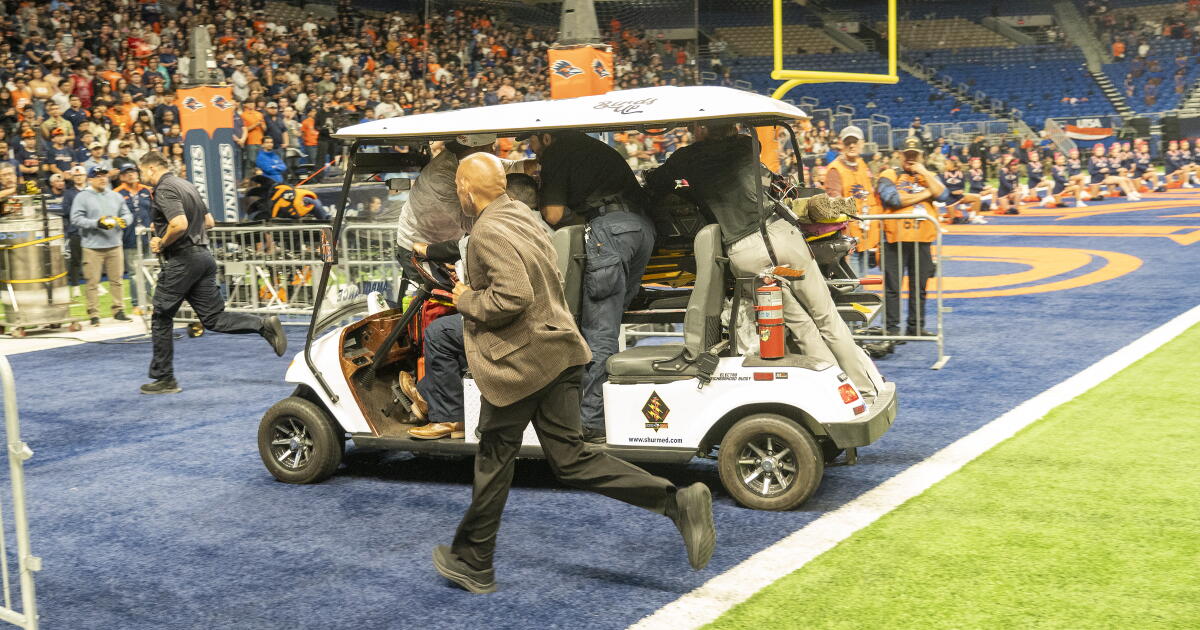
A decorated Air Force service member of 15 years died after a rappelling accident that took place during a salute to the military Saturday before the Navy-University of Texas at San Antonio game at the Alamodome.
U.S. Air Force Tech. Sgt. Ian Patterson was a Tactical Air Control Party instructor assigned to the 6th Combat Training Squadron, Detachment 2, Joint Base San Antonio, according to a news release by Nellis Air Force Base Public Affairs.
“This tragedy is felt deeply across the 57th Wing,” U.S. Air Force Brig. Gen. Scott C. Mills, 57th Wing commander, said in the release.
“Tech. Sgt. Patterson and his service mattered immensely to our wing, and to the family, friends, and teammates who had the privilege of knowing and serving alongside him. Our team is now focused on standing beside Ian’s family, loved ones, and fellow Airmen as we navigate this profound loss together.”
Patterson received several medals for his service and achievements, according to the Nellis Air Force Base Public Affairs, including the Air and Space Commendation Medal with three oak leaf clusters. In 2022, he was named the Air Force Special Warfare Enlisted Instructor of the Year at the Headquarters Air Force level.
Details surrounding the accident are under investigation, according to the news release.
Video on social media appears to show Patterson rappelling from the arena’s rafters on a rope, and plummeting fast to the ground. He was treated on the field for several minutes and then taken away on a gurney.
Patterson later died at a local hospital, according to Nellis Air Force Base Public Affairs.
The football game between the two American Conference teams proceeded after a brief delay. The decision to play was made after a meeting that included conference commissioner Tim Pernetti, representatives from Navy and UTSA, Alamodome management and local authorities, according to a statement released by the American Conference.
“At the time of those discussions, Nellis Air Force Base Public Affairs had not publicly confirmed the service member’s condition,” the statement reads. “… In accordance with conference bylaws and with the support of both participating member institutions, the conference made the decision to continue the game. Respect for the family’s privacy and adherence to the military’s notification process guided the decision to mitigate speculation about the service member’s medical status and avoid additional distress for his family.”
The conference added that it extends “our deepest condolences to his family, friends, teammates and members of the 57th Wing who had the privilege of serving with him. We honor his service and join the military community in mourning his loss.”
UTSA president Taylor Eighmy also released a statement expressing “profound sadness.”
“In moments like these, words can offer only so much comfort,” Eighmy wrote. “But I hope the service member’s family, his fellow airmen and all those grieving know that they are in our thoughts and prayers. We stand together in sadness, united by our compassion for one another and our heartfelt support for all those whose lives have been touched by this tragedy.”
The UTSA vice president for intercollegiate athletics, Lisa Campos, said in a statement: “Moments like these remind us that we are all part of something much greater than a game. They remind us of the importance of standing together, supporting one another and finding strength in the bonds that unite us, especially in times of profound sadness. Today, our hearts are with this service member’s family, his fellow airmen and everyone impacted by this heartbreaking tragedy.”
CHRISTMAS will soon be upon us, so it’s time to get those festive dates lined up in your calendar.
You don’t need to shell out a fortune for lifetime memories though – we’ve rounded up plenty of activities full of festive cheer that won’t break the bank. From free ice skating to festive illuminations – here are the top memory-making days out for you and your family…
Hyde Park Winter Wonderland – the UK’s largest open-air ice rink is built around Hyde Park’s Victoria bandstandCredit: Alamy
Ice skating
Nothing says winter and Christmas quite like a festive ice skating rink.
Blackpool has a synthetic ice rink that stretches 20m long and is FREE to use, including free skate hire – all you have to do is show up and hand over your shoes for some boots.
Meanwhile, Caerphilly On Ice at Caerphilly Castle is selling early bird skate tickets from just £9.
Hyde Park Winter Wonderland – the UK’s largest open-air ice rink is built around Hyde Park’s Victoria bandstand and has tickets from £9.35 for kids and £12.95 for adults, off-peak.
Stockeld Park in North Yorkshire has a festive ice rink set within its adventure park from November to February, with tickets from £14.
Boxpark Liverpool is bringing back its popular ice rink, with adult tickets from £10 and kids tickets from £8.
Dalkeith Country park has a Winterfest Skating Rink, with £11 tickets for adults and £9 tickets for children.
Aviemore Ice Rink at Macdonald Highland Resort has adult ice skating tickets for £14 and kids tickets for £12.
Ice Skate Birmingham at Centenary Square has early bird adult tickets from £9.50 and kids from £8.50, rising to £14 for adults in peak times and £12 for kids.
Bath on Ice has tickets from £16.50 for adults and £14 for kids, with an outdoor rink beneath the Christmas lights in Royal Victoria Park.
Yorkshire’s Winter Wonderland – York’s original and largest open-air ice rink – returns for its 21st year, with adults tickets from £18.09 and kids from £16.99.
Skate Manchester in the city’s Cathedral Gardens has adult tickets from £16.80 and kids tickets from £15.40.
Winter lights festival in Canary Wharf London England, Christmas lights and New year celebrationCredit: Alamy
Light trails
Light trails such as RHS Glow Light Trails at Wisley cost as little as £7.50 per adult and £6 per child when booked for an off peak session in advance.
RHS Bridgewater’s celebration of light in Salford runs from 26 November to 30 December new Super Off Peak tickets starting at £9.25 for adults or £6 for RHS members, and £5.50 for kids.
Gulliver’s Theme Parks has their annual Land Of Lights running from October 24 to January 30, with early bird tickets from £12.50 for both adults and kids.
The Bay of Lights Illumination Trail returns from 28 November 2026 to 3 January 2027, with its biggest and brightest trail yet, on Torquay’s seafront.
The Winter light Trail through Trentham Gardens at Trentham Estate near Stoke On Trent is very affordable, with adult tickets from £17 and kids tickets from £12.50.
Lightwaves Salford is running from 23 November to 13 December 2026 and is free to enter, with illuminated artworks along a 2km trail around MediaCity and Salford Quays.
Alnwick Garden light trail in Northumberland runs from 20 November to 3 January and has off-peak tickets from £18.15 for adults and £11 for kids.
For a rainproof option, try Noel – a Christmas light show at Liverpool Cathedral from 27 November to 5 December, priced from £10.50 for adults and £8.50 for kids.
The Bristol Light Festival will return for its seventh edition from 18 February to 27 February 2027. It is free to attend, with no booking or ticket required.
The ‘Burning the Clocks’ parade of lanterns moves through Brighton in East Sussex as part of celebration of the Winter Solstice.Credit: Alamy
Lantern parades
For the ultimate wholesome activity, why not take part in a local lantern trail with the kids.
For example, Burning the Clocks in Brighton will return this year with thousands of people making paper lanterns and carrying them through the city before burning them on the beach.
This years theme will be ‘Magicada’ which represents a symbolic rest followed by a noisy awakening – though a date for when it will take place is yet to be revealed.
In Devon, Totnes launches its late night Christmas shopping nights on December 8 with a free Carnival Lantern Parade through the town.
There will be handcrafted lanterns with live music and street performers alongside 70 stalls and 125 independent shops remaining open into the night.
In South London, a light procession takes place through Maritime Greenwich on November 18, ahead of the annual Christmas lights switch-on that evening.
Winchester Cathedral Lantern Parade takes place on 23 November, with participants carrying recycled or homemade lanterns through the city streets – the theme this year is ‘Angel’s Message.’
Leamington Lantern Parade in Leamington Spa takes place on December 6, with participants carrying homemade lanterns to a backdrop of stilt walkers and carol singers.
Corn Exchange’s Festival of Light in Newbury town centre takes place on December 13, with lantern-making workshops available to the public in the run-up.
People eating and drinking at Birmingham’s German MarketCredit: Alamy
Christmas markets
The UK is home to some fabulous Christmas markets and most are free to visit.
Most towns have their own, and here are some of the biggest, oldest and quirkiest around the country.
Manchester’s Christmas Marketsfeature 200 wooden chalets across ten city centre locations, with a fairground and a huge Ferris wheel, craft stalls, a pop-up pub and an undercover ice skating rink.
Edinburgh’s Christmas market in Princes Street Gardens are easily some of the prettiest, with wooden chalets, fairground rides and a Ferris Wheel alongside a background of Edinburgh Castle.
York’s St Nicholas Fair looks like something from a Hallmark Christmas movie, with plenty of local traders selling local produce and crafts in wooden chalets.
Birmingham’s Frankfurt Christmas Market was named one of the best in Europe in 2024 – is the largest authentic German Christmas market outside of Austria and Germany, with traditional arts and crafts plus German food and drink.
Oxford Victorian Christmas Market takes place from November 12 – 15, with costumed traders and Victorian-style street performers, alongside 50 stalls selling decorations, food and drink.
Portmeirion Welsh Christmas Market runs from 4-6 December in Portmeirion Village, Gwynedd, North Wales, featuring 120 stalls and live performances around along the village’s unique streets.
Winter Wonderland in Hyde Park has a load of tickets for just £1 this yearCredit: Getty
The attraction returns to London’s Hyde Park on November 19 and will run until January 3, 2027.
Yes, there are plenty of activities and food stands that cost a fortune, but there are also ways to keep costs down and have a fantastic day out.
This year there are tonnes of £1 entry tickets, which are typically for weekday sessions.
Free activities once you’re inside include:
Visiting Santa’s Grotto in Santa Land is free and comes with a small gift.
Free live music at the Market Square and the Explorer’s Rest.
There’s a free Elves’ Workshop too, with interactive experiences and games for little visitors to enjoy.
Christmas day out at the National Railway Museum
In York, you can visit the National Railway Museum for free and its upcoming Christmas event is also free.
Free Christmas activities include writing a letter to Father Christmas, exploring winter science activities and designing a 2027 calendar.
You can upgrade your experience to meet Father Christmas aboard the Guard’s compartment on a train for £15 per child.
The event runs from December 2 to 23 and each child will get a small gift as well as a hot chocolate.
From your traditional Santa Grottos to storytelling sessions with Mrs Claus check out the National Trust sites nearest to you to find out what’s onCredit: Getty
National Trust Santa Visits
The National Trust is an excellent location for the annual family festive day out.
The buildings are already beautiful and look great spruced up with some decorations, they often have winter trails through the large gardens and many of them feature their own Santa’s grotto.
When booking an activity, you actually get a lot of festive fun for the price of your ticket.
For example, Father Christmas at the Farm, at Tatton Park in Cheshire, features a nativity scene, live music, festive entertainers, a grotto, make-your-own reindeer food and a Christmas pop-up cafe. Adult tickets are £12.50 and kids tickets are £14. Runs from November 21 to December 24.
Father Christmas at Sunnycroft in Telford, Shropshire lets visitors step into the world of The Wind in the Willows with a 20-minute journey through the homes of Mole, Ratty, Badger and Mr Toad, that ends with a visit to Father Christmas.
One child and one accompanying adult costs £25. Runs from December 4-13.
Storytelling with Santa at Kingston Lacy in Wimborne Minster, Dorset, lets kids enjoy a story read by by Father Christmas, plus a gift and a photo opportunity. Tickets cost £15.50 per child and includes one accompanying adult. November 28 – December 23.
Visit Father Christmas at Gibside Stables in Gateshead lets visitors join playful forest elf Happy Holly Berry and Father Christmas for a festive story, then receive a small gift and a photo opportunity. Kids tickets tickets cost £18 and the adult is included in the price. Runs from November 29 to December 23.
Find out more about the National Trust Santa visits here.
It is also worth keeping your eye out for the Coca-Cola Christmas truck datesCredit: Coca-Cola
Coca-Cola Christmas Truck
The Coca-Cola Christmas Truck tours each festive season, offering free drinks, festive photo opportunities and interactive games.
Admission is free and you don’t need to buy tickets or book in advance.
Coca-Cola usually reveals the tour schedule around mid-November, featuring around 15 stops across the UK.
The stops usually run from around midday to 8pm, between late November and Christmas.
Day Out With The Kids has their own trucktracker, which they’ll update when the 2026 dates come through.
Christmas light switch-ons and parades
Across the UK there are also a number of Christmas light switch-ons and parades that don’t cost a penny to watch.
For example, you could head to Carnaby Street’s Christmas lights switch-on in central London, which will take place on November 4, with the theme ‘Press Play on Christmas’ and neon lights inspired by 1990s nostalgia.
Neighbouring Covent Garden has its Christmas lights switch-on on November 12, featuring more than 300,000 lights and free festive entertainment around the piazza.
Also in the area is Regent Street’s Festive Spirits switch-on on November 5, with a traffic-free event, family entertainment and in-store experiences.
Darlington Town Centre Christmas switch-on takes place on November 15, hosted by radio DJs and starring pantomime characters, plus a fireworks display after the switch-on.
Rochdale Town Hall hosts Ignite Fire Festival – with a magical trail of fire, lights and sound from November 20-22 that ends with the town’s Christmas light switch-on.
Preston’s Christmas Lights Switch-On returns to the Flag Market on November 21, with East 17 headlining an evening of live music, entertainment, magic, football, pantomime and plenty of festive fun.
The Blackpool Illuminations Switch-On took place on September 4 and the lights will run nightly until january 3 – six miles of illuminations along the Promenade from Starr Gate to Red Bank Road.
They bought a one-way ticket to Sri Lanka and have been travelling ever since
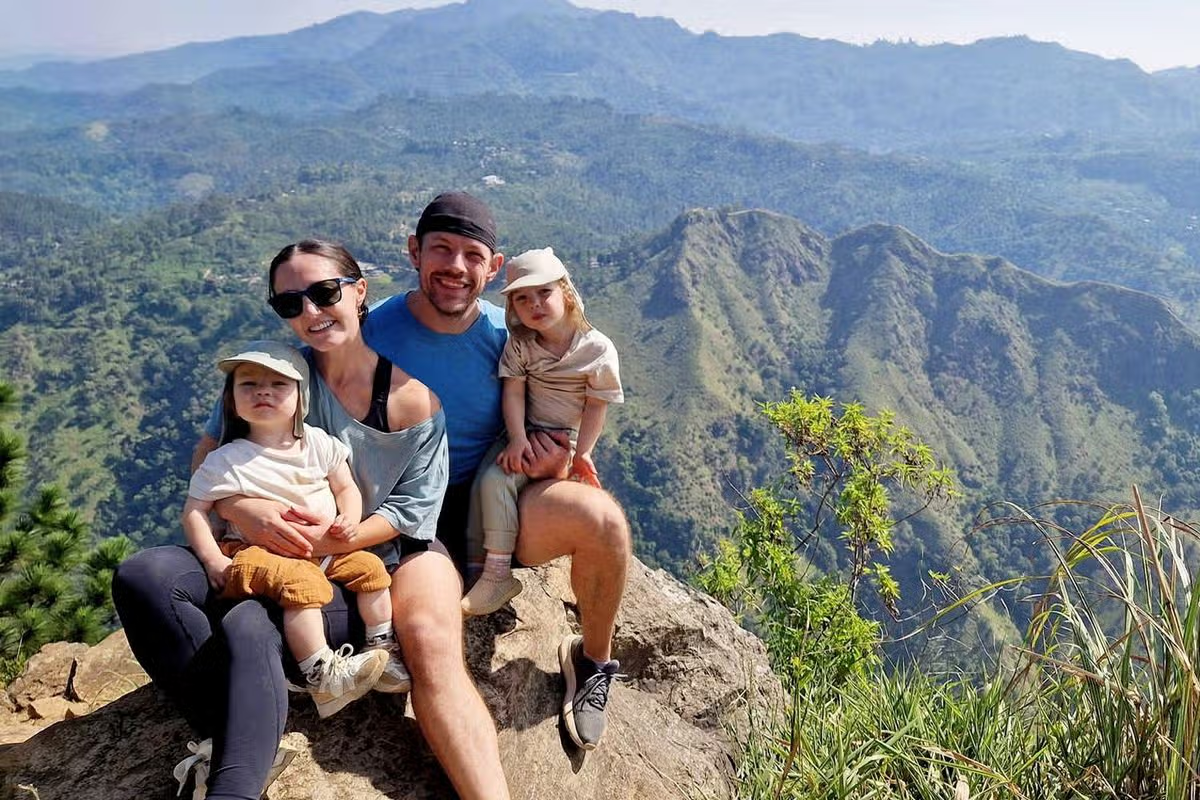
They decided to embark upon their adventure after wanting more time with their two children before they started full-time nursery(Image: Ruth Rowe/SWNS)
A couple say they have saved around £36,000 by ditching the UK to travel the world with their children while living out of two suitcases on a budget of just £30 a day.
Ruth and Steven Rowe “sold everything” they owned and bought a one-way ticket to Sri Lanka back in 2023 and have been travelling ever since. They decided to embark upon their globe-trotting adventure after wanting more time with their two children before they started nursery and school.
Ruth was also not a fan of the cold and wet British weather, so the pair are now world-schooling their kids, Aurora, four, and Atlas, three, in exotic locations instead. The family have already been to 17 different countries, ticking off bucket-list destinations such as Costa Rica, Guatemala, Ecuador, and Indonesia.
Saving thousands of pounds a year
They stay four weeks at a time in Airbnbs and have visited the likes of Thailand, Malaysia, Cyprus, USA, Colombia and Peru – all while saving around £12,000 a year. They have spent the last five months living and travelling around India and next year they plan to tour 10 more countries across Europe in a campervan.
Ruth, 34, and Steven, 35, had been renting a barn conversion in the village of Eardisley, Herefordshire, and had both children during the Covid-19 pandemic. But they had always thought about travelling full-time, so they sold “pretty much everything” on Facebook Marketplace or via car boot sales and set off with a couple of suitcases of clothes and a few toys.
They currently have no plans to return full-time and want to continue world schooling – while spending around £2,000 a month, compared to £3,000 back in the UK.
Ruth said: “We had travelled before and for us it got to the stage where we were going to put the kids into nursery and it just didn’t feel like the right time. We wanted more time with them as we know those early years are precious, so we thought, why not just do it? So we did.
“We sold pretty much everything we owned, which was an exhilarating experience – we mainly sold it through Facebook Marketplace and car boot sales. So our car, our furniture, everything but a couple of memory boxes with some of the children’s things inside and a few clothes.
“We set off at the start with two big suitcases – a medium and a small one – and a stroller. And since then we’ve downsized to just two suitcases – it is really surprising how little you really need.
“Possessions don’t make you happy, life experiences do. We bought a one-way ticket to Sri Lanka not knowing if or when we were coming back and we haven’t stopped since.
“We’ve been travelling full-time ever since, slow-exploring the world as a family, while my husband runs his coaching business remotely and we embrace world schooling on the road. It’s been beautiful, chaotic, challenging and incredibly freeing.”
Children educated along the way
The couple say their children are now educated through “life experiences” – whether that be picking up Spanish in Latin America or learning about volcanoes while hiking in Peru. They say giving the kids no screen time whatsoever on their travels has helped them to become more patient and creative.
Ruth added: “They are also learning counting through things like paying a tuk-tuk driver in different currencies and the first time Aurora ever wrote her name was in sand on a beach with a stick. We give them no screen time at all, which I think has taught them patience on their travels and to be more creative when they are bored sitting on a bus.
“They thought the TV back home was a radio, as we’d only use it for Spotify, and we think that’s allowed their imagination to flourish. I have just seen their confidence grow so much and of course there’s no way of really telling how they would have been at home, but they are just so open and talk to anyone – young and old.
“I will sit down and teach them some reading and phonics and writing, but we’re not rigid with it and it’s still very much about learning through playing. It wasn’t a case of we hated the UK – we just love the world. But I was never a fan of the cold and rain, so that is something I don’t miss. The only thing I miss is friends and family and also British chocolate.”
How they support themselves on travels
The couple also support themselves financially via Steven’s online coaching business, which he can still run wherever they are in the world.
Steven said: “These positive environments have brought such positive developments so far in our children. Atlas was swimming independently at two.
“This way, they get one-to-one without being part of the larger school system, which we have no issue with, we just see the benefits from doing it this way. We make sure the children are at the centre of what we do, we always research kids’ clubs and activities wherever we stay.
“They are loving learning about all the wildlife too – we had iguanas and sloths outside our doors in Costa Rica. Aurora had surf lessons in Bali and will be sandboarding in the Peruvian desert, it’s magical for them. We use Airbnbs mainly, but I’ve been working out of little cupboards in some places – it has been challenging at times, but we’re in a fortunate position.”
Amanda Cannon was taken ill while on holiday with her daughter
08:10, 19 Oct 2026Updated 08:16, 19 Oct 2026
Amanda Cannon is fighting for her life in Turkey(Image: Marisa White/SWNS)
A British nan is fighting for her life in Turkey after suffering a heart attack while on holiday as her family faces a £25,000 hospital bill.
Amanda Cannon, 58, was rushed to intensive care after collapsing during a trip with her daughter Marisa White on October 10. The grandmother-of-nine from Redhill, Surrey, reportedly went without oxygen for 10 minutes after suffering what doctors believe was an epileptic seizure and cardiac arrest.
She is currently on life support in a private hospital in Antalya, Turkey. Relatives say her treatment is costing around €3,500 (£3,000) a day, with the bill already reaching €30,000 (£25,000).
Hannah Cooper, the mum of Amanda’s grandchildren, flew to Turkey with her five-year-old daughter after receiving a distressing call from Marisa. She said Amanda suddenly “jolted backwards”, turned blue and stopped breathing. Marisa immediately began CPR before paramedics arrived and took over.
No travel insurance
But because she has no travel insurance, her former daughter-in-law Hannah said Turkish medics would not stop treatment for religious reasons. They fear the mounting costs could run into hundreds of thousands of pounds if her condition does not improve.
Hannah, 33, from Shoreham-by-Sea, Sussex, told Talk to the Press: “She’s now in a deep coma. She’s got kidney failure, liver failure. They said there’s a 20 per cent chance that she’ll wake up and if she does, she’ll be in a vegetative state.”
She added: “I got a phone call from her daughter saying that she just suddenly jolted backwards, went grey, purple, blue, started foaming from the mouth and stopped breathing. Her daughter gave her CPR. Then when the ambulance got there, they took over. She went without oxygen for about 10 minutes.”
Doctors later told the family Amanda had suffered what appeared to be a seizure as well as a heart attack. She was placed on life support and remains in coma.
Amanda travelled to Turkey with daughter Marisa, who Hannah said suffered from many severe physical and mental health conditions. Concerned she would struggle to deal with the crisis alone, Hannah booked flights and travelled out to support her.
She said: “She doesn’t have the mental capacity to cope with what’s going on. The language barrier is so hard. We have to keep going on Google Translate to speak to the doctor because he doesn’t understand us and we don’t understand him.”
Medical costs stacking up
As the family tried to come to terms with Amanda’s condition, they were shocked to learn of the mounting medical costs. Hannah said she received a phone call asking for £5,000 shortly after Amanda was admitted.
She said: “I said to them that I don’t have £5,000, but I’d be flying over to Turkey. Since then, I’ve had several emails asking for payment.”
Hannah later discovered Amanda’s stay in the private intensive care unit was costing around €3,500 every day. She also revealed that the hospital wouldn’t release her to a public one until they cleared half of the bill.
Hannah said: “I’ve asked for a transfer to a state hospital where it would still cost money, but not like this.”
The family launched a GoFundMe appeal with an initial target of £15,000, but now fear the total bill could be far higher. Despite no longer being with Amanda’s son, Hannah said the 58-year-old has remained a huge part of her life.
She said: “She’s been like a second mum to me for 17 years. She’s always been my biggest supporter.”
Toll on family
The ordeal has also taken a toll on Amanda’s grandchildren.
Hannah said: “My eldest is asking a lot of questions and is upset. My little girl just keeps saying she wants to see her nan.”
She said doctors would either wait until Amanda was biologically dead or keep her alive. Hannah and her daughter are set to return to the UK on Sunday, October 18, while Marisa plans to fly back to Turkey after collecting medication.
Hannah concluded: “We’re upset, shocked and confused. We just don’t know what’s going to happen next.”
Whenever a teammate needs a pep talk McKennah Iamaleava is quick to give it — a skill one learns growing up in a family full of accomplished athletes.
“Growing up my parents [Nic and Marlienna] would tell us family is No. 1 and whenever you’re in a hole or whatever the situation you can always come back to them,” Iamaleava said. “So, whether it be about sports or school we always have someone to go to.”
A 5-foot-9 senior outside hitter on the Long Beach Poly High girls’ volleyball team, McKennah is continuing the legacy of success of her four older siblings while simultaneously passing it on to her three younger ones.
“I’m one of eight so volleyball runs in the family,” the reigning Moore League player of the year said. “I started playing when I was 6 or 7.”
However, volleyball is not the only sport McKennah played as a child.
“I dabbled in basketball some too,” she confessed. “My aunt Janitah played at Carson High and the University of Oregon.”
Sisters McKennah, left, and Ellie Iamaleava are two of eight siblings who have played volleyball.
(Steve Galluzzo / For The Times)
McKennah is committed to UC Irvine and, not surprisingly, its proximity was a major factor in her choosing to join the Anteaters’ program.
“First of all, it’s close to home and secondly I love the coaching staff,” she said. “All of the girls are super nice, the campus is beautiful and competing in the Big West is going to be exciting.”
Her oldest brother Matt played volleyball at Long Beach State, her older sister Nicaylah played at Cypress College and her two closest brothers, Nico and Madden, also grew up playing the sport while excelling in football and both are now quarterbacks at nationally ranked UCLA.
“We see them [Nico and Madden] a few times a week,” McKennah said. “We have dinners together. Of course we go to all of their home games.
“We don’t talk for long right after, we’ll keep it short and then next day is usually the recap.”
Nico suffered a knee injury in the second quarter of UCLA’s 17-15 win at Oregon on Oct. 10 and is out indefinitely. McKennah was among the first people to offer him encouragement.
Long Beach Poly High senior McKennah Iamaleava celebrates after winning a point against Redondo Union.
(Steve Galluzzo / For The Times)
“I wasn’t there but I was watching,” she said. “It was a hard shot to take but Nico’s tough and he’ll come back strong. I was texting him right after the game and also in our group texts. I hope Madden gets some playing time. It would be good for him as well.”
Having such a strong support system makes McKennah well-equipped to handle the ups and downs of volleyball and life.
“I probably talk to Matt the most,” McKennah said. “He’s already gone to college and graduated and I went to a few of his matches, which was so fun. Nicaylah is the libero of our family. … I watched her passing and she would teach me a lot. I’m glad I have her.”
McKennah’s two youngest sisters, Mallory (15) and Nori (12), also play volleyball but her tightest bond is with her closest sibling Ellie, a junior opposite hitter at Poly.
Long Beach Poly High junior Ellie Iamaleava celebrates winning a point during a recent match.
(Steve Galluzzo / For The Times)
“Ellie and I are close,” McKennah added. “Our rooms are right next to each other so every time I want to annoy her I just go to her room. My sister is encouraging to me because she’s very hard on herself. She’ll get a great kill but won’t be satisfied, which motivates me even more to be better as a person and a player.”
“McKennah and I are always with each other,” Ellie agreed. “Her being an older sister kind of plays into that. She really pushes me. She helps me through all my hardships as a new player and I look up to her a lot.
“She’s always on top of everything and the game’s real natural to her. I want to play in college too — anywhere close to home.”
Poly (25-7) wrapped up its fourth straight league title last week under head coach Gerald Aquiningoc, who guided the Jackrabbits to theSouthern Section Division 3 championship in 2024 and the Division 2 semifinals last season.
Along with Madden (then a senior), McKennah (a sophomore) and Ellie (a freshman) transferred to Poly from Warren High in September 2024.
“Amazing family,” Aquiningoc said of the Iamaleavas. “McKennah and Ellie are super coachable and huge pieces of our program. When they transferred in even though they couldn’t play that whole first year they were still super involved. They helped us practice and to prepare for our matches. They were our best scout team.”
Aquiningoc cited McKennah’s leadership as a big reason the program has been on the rise.
“I think I lead more by example — I’m just always thinking,” McKennah said. “If I don’t say it I’m usually thinking it, no matter how it comes out and I have a close relationship with our setter [Mina Orbiso]. I’m super confident that I can put the ball away and I tell her.”
Iamaleava, who plays club for SC Rockstar, appreciates the trust that Aquiningoc has in her.
“Coach G gives me the space to grow as a person and a player,” she said. “I’m thankful because I know that on the court I can pick what I want and how I’m feeling and it means a lot to me. The confidence he has in his players is amazing.”
The Jackrabbits are seeded second in the Division 2 playoffs and host Gold Coast League champion Campbell Hall in the first round Tuesday night.
“I’d say this our best team, yes,” McKennah said. “We have so much talent at every position. It’s kind of fun because you can throw anyone out there and they’ll perform.”
What Iamaleava lacks in height she makes up for with her intelligence, placement and angles that keep opponents guessing whether she will hit it down the line or crosscourt. She is adept at receiving serve and what she does in the back row is as valuable as what she does in the front row.
“Being a short hitter you have to use the hand, hit off the block and find different kinds of shots,” she said. ”There’s a lot to think about.”
McKennah’s stats from Poly’s regular-season finale at Redondo Union on Wednesday reflect how complete a player she is. She had 22 kills, 14 digs, six blocks and did not miss a single serve in the Jackrabbits’ five-set victory.
Iamaleava is planning to major in business and is happy to the see the sport grow so much since she started playing.
“Women’s volleyball is getting so much attention and I love it because it encourages all of the younger players to keep doing it,” she said. “What do I want to do long-term? Something with a sport but I’m still deciding if I want to keep playing volleyball or just stay around it.”
In the short term, Iamaleava wants to conclude her high school career with a medal around her neck and make her family proud.
“That pressure turns into a motivation to keep pushing ourselves,” she said. “For Ellie and I there’s a really high ceiling with our older siblings and we try to live up to that.”
Kelvin and Liz returned with a new episode of Fletchers’ Family Farm, as they worked to rebuild their home after a fire.
Kelvin and Liz were ‘devastated’ after a fire swept through their home (Image: ITV)
Kelvin Fletcher’s wife Liz was left admitting ‘it’s quite emotional’.
The couple were looking back on the remains of their home in the Peak District after a devastating fire. Last year, Kelvin, Liz and their four children were on holiday when a fire broke out. They’re now rebuilding it all, but had to start with going through what had been left behind.
In an ITV episode of Fletchers’ Family Farm airing on Sunday, 18 October, Liz made an emotional admission as she worked through the job with Kelvin that had been on their list “for a long time”.
The couple were going through their own home, taking out what could be salvaged from the remains. “Look how much it has just burnt straight through the wood, that’s crazy,” she said, as she held up a wooden frame that was covered in burn marks.
Kelvin narrated: “We may be living back at the farm, but we’re still months away from living in the farmhouse following the fire last year.”
As their children had grown over the last year, Liz was left throwing out old nappy bags, baby carriers, and wellington boots that no longer fit.
Kelvin went on: “A year and a half since the fire, and we have to throw out everything that has been damaged by the smoke.”
Picking up one of their children’s baby jackets, when the couple were planning to move to LA before buying the farm, Kelvin commented: “Funny how things turn out, can’t throw that!”
Going through more jackets, Liz went on: “This is just all the stuff that when the fire brigade had to break in, stuff that was blasted by the door. It’s sad because you realise how little the twins were and how this stuff doesn’t fit them anymore.”
She added: “It’s one of those things, you mentally have to prepare yourself for, it’s been so long and we’ve just not been able to do anything because surveys and checks have been done as part of the insurance process. And now we can finally start clearing it out and building it back together.”
**Ensure our latest TV stories always appear at the top of your Google Search by making us a Preferred Source.Click here to activateor add us as Preferred Source in your Google search settings**
Kelvin narrated: “Five years on from leaving Oldham, and so much has changed. This farm has given us a new life. And rebuilding the farm house is about building the heart of it back, along with a few old memories that we’re rediscovering.”
At one point, Liz said: “It’s quite emotional actually. It just shows how much time continues no matter what you’re going through, things keep going, you’ve just got to keep yourself.”
She added: “The exciting part is, although this now feels really sombre and quite depressing, but, like my dad always says, you’ve got to crack a few eggs to make an omelette, and it feels like we’re at that stage at the moment.”
Fletchers’ Family Farm is available to watch on ITVX.
Nathan Fielder would rather you not read this article. At least not until you’ve seen his new movie.
He has a point.
Now in theaters, “You Can See Everything,” the nearly three-hour documentary Fielder co-directed with filmmaker Lance Oppenheim about convicted Theranos founder Elizabeth Holmes, is full of head-spinning twists and turns best left unspoiled, and the filmmakers have gone to extreme lengths to keep them that way. At its secret premiere at the Telluride Film Festival last month, audience members were required to lock their phones in pouches and warned that security guards with night-vision goggles would be watching for anyone trying to record the screening. Afterward, Fielder pleaded with the crowd to keep the film’s biggest surprises to themselves.
Holmes was convicted in 2022 of defrauding investors in her failed blood-testing company and sentenced to more than 11 years in federal prison. Fielder and Oppenheim began filming her and longtime partner Billy Evans, an MIT graduate and heir to a family-owned San Diego hotel business, shortly before she reported to prison in 2023, gaining extraordinary access to the couple and their two young children.
Holmes and Evans welcomed the cameras, hoping they would help vindicate her. But the closer Fielder and Oppenheim got to the couple, the harder it became to distinguish candor from calculated performance. Fielder, whose series “Nathan for You” and “The Rehearsal” put real people through elaborate, often uncomfortable experiments, began to wonder whether the tables had been turned.
“I really am struggling to this day to understand exactly what I experienced in this,” Fielder admitted during a post-screening Q&A at Telluride. “I don’t quite know what I went through.” He said he hoped audiences might help him make sense of the “glitchy feeling” it left in his head.
Having seen the film twice, we’re not entirely sure we can help him.
In deference to Fielder’s wishes, this is your last chance to turn back: Major spoilers follow. For those still with us, here are 10 of the film’s strangest moments — by no means the only ones — along with a few clues from Fielder himself about how they came to be.
Evans takes ’radical transparency’ too far
Evans has a theory about why the world sees his partner as a monster: Nobody really knows her. “In the absence of knowing somebody, it’s really easy to make them feel other and scary,” he tells the filmmakers. His proposed solution is “radical transparency” — a familiar Silicon Valley mantra with an ironic resonance given Theranos’ notorious culture of secrecy. The filmmakers are allowed virtually unlimited access to the family’s life, with Fielder even invited to move into their rented house in Del Mar, near San Diego. In one scene, Evans stands completely naked in the shower, brushing his teeth with the bathroom door wide open and the cameras rolling, as Fielder stands awkwardly nearby. At Telluride, Fielder, who had initially planned to stay behind the scenes, admitted he was still perplexed by the couple’s openness. “I’m a weird guy — why do they want me there?” he said. “That messed with my head a little bit.”
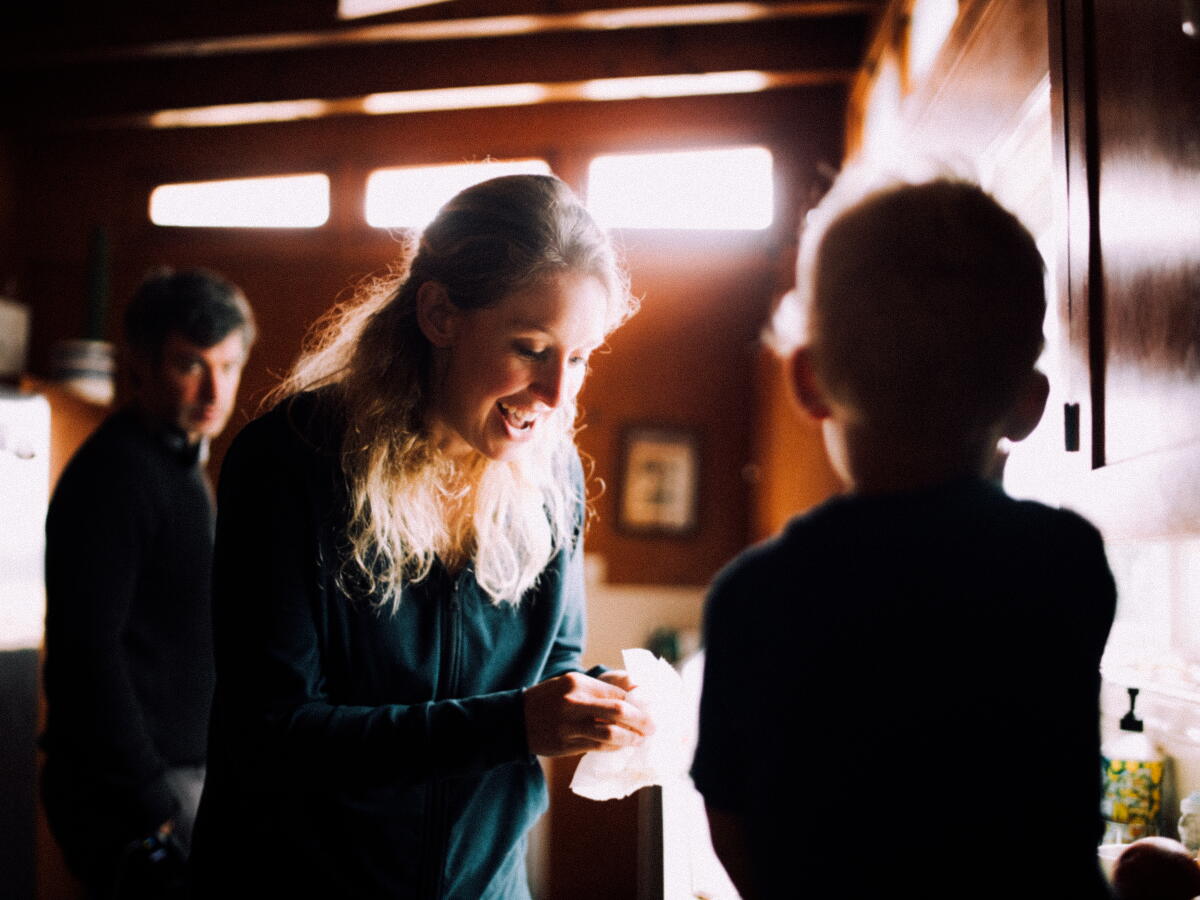
Fielder observes Holmes and her family in a scene from the documentary “You Can See Everything”
(A24)
Theranos, the sequel
A federal fraud conviction apparently hasn’t ended Holmes’ ambitions to revolutionize medical testing. Before heading to prison, she and Evans begin laying plans for a new venture involving lasers and artificial intelligence that Evans describes as “2.0” — a chance, he says, “to put the band back together and do it all again.” Holmes declares, “From wherever I am, I’m going to continue to work inventing, even if it’s inventing from a cage.”
Holmes claims she’s never told a lie
For someone convicted of defrauding investors, Holmes has a remarkably uncomplicated view of her own honesty. Asked by Fielder whether she’s ever told a lie in her life, she replies, “I don’t think so.” Pressed — surely she’s pretended to be sick to get out of a party? — she concedes she has, explaining that she thought he meant the criminal case against her. In a scene that became the centerpiece of the film’s teaser trailer, Holmes fixes Fielder with an unwavering stare. “Why would I deceive you?” she asks. “There’s no reason for me to do that.” When Fielder asks whether she’s being real with him, she doesn’t miss a beat: “I’m always being real.”
The Theranos device gets a second look
Holmes hauls out of storage the infamous Theranos device, the machine that helped bring down her company. “So this is the famous scam device,” Fielder says. “It is not a scam device,” Holmes replies. When she insists the machine can perform any medical test, Fielder finds himself drawn into an absurd debate over the meaning of the word “can.” Did she mean it could actually perform those tests, or that it theoretically would once the necessary chemistry had been developed? The man who has made a career out of baffling other people seems genuinely baffled himself, reduced to explaining the word “can” to the founder of Theranos.
Holmes and Evans enter federal court in 2022.
(Nic Coury / Associated Press)
Elizabeth Holmes meets Abbott and Costello
Still trying to make his point, Fielder turns to Abbott and Costello. He plays Holmes the classic “Who’s on First?” comedy routine — two people hopelessly talking past each other. Holmes watches politely and says she finds it funny. But she seems to have missed the central joke: The first baseman’s name is actually Who. “I didn’t pick it up,” she admits. Fielder’s attempts to explain the joke and why he showed it to her get him nowhere. Evans, watching the exchange, regards his wife’s difficulty following the joke as further evidence that her mind simply works differently from everyone else’s.
Fielder gives Holmes an escape kit
On the morning Holmes is due to report to prison, Fielder arrives with a parting gag gift: hair dye and glasses, in case she’d prefer to disguise herself and flee the country. Fielder is famous for excruciatingly awkward deadpan comedy, but Holmes’ parents are there, the family is preparing for an emotional goodbye and he seems to realize almost immediately that he has misjudged the situation. “I didn’t know your parents would be here,” he says, assuring everyone that it’s “just kind of like a joke.” The more he tries to explain himself, the more uncomfortable things become. “Maybe not appropriate for the moment,” he concedes.
Amanda Seyfried becomes a surprise co-star
Seyfried won an Emmy for playing Holmes in Hulu’s “The Dropout,” which Holmes had avoided watching for fear it would be too emotionally disturbing. Fielder persuades Holmes to watch it for the first time, on a laptop in the couple’s bed. She soon breaks down in tears and asks him to turn it off. Later, Fielder visits Seyfried at her apartment and shows her footage of Holmes watching her performance. So we watch Seyfried watch Holmes watch Seyfried playing Holmes as Fielder watches her. And things only get weirder from there.
At Telluride, Fielder said the filmmakers initially doubted Seyfried would want to participate. But after a brief phone call, she invited them over and agreed to be filmed. Neither side knew where things would lead. “It just actually evolved in that organic way, which was really exciting,” Fielder said.
Seyfried as Holmes in a scene from Hulu’s “The Dropout.”
( Beth Dubber / Hulu)
Seyfried plays detective
Seyfried soon finds herself reenacting Holmes’ conversations with Fielder as he tries to make sense of their encounters. She becomes so invested that she joins Fielder on a visit to Evans’ home, hoping she might get him to open up in ways Fielder can’t. “I feel like an undercover cop right now,” she says, clearly getting a rush. There, after meeting the couple’s children, she unexpectedly winds up on a prison phone call with Holmes herself. With only two minutes for the family to talk, Seyfried suddenly seems mortified to be intruding. “I’m so sorry — I don’t want to ruin your two minutes with your beautiful family,” she says. Fielder, naturally, has a camera running.
Evans takes control of the narrative
With Holmes behind bars, Evans seems determined to manage her public image himself. Armed with power of attorney, he takes over her verified X account, posting messages in her name, some of which sound nothing like the carefully controlled Holmes, including one telling another user to “f— off.” “There’s just so much trust that most things I don’t really consult her on,” Evans says at one point. “I know what she’d want.”
Evans’ attempts to steer the documentary itself begin even before Holmes reports to prison. In a meeting later reenacted in the film, after Holmes leaves the room, he raises the subject of money with Fielder, Oppenheim and executives from A24, the studio behind the film, demanding a share of the profits. Fielder says A24 reluctantly agreed, leaving him worried that the integrity of the project may have been compromised. When Holmes later insists she has no financial interest in the film, Fielder is taken aback. Either she’s “fully sincere,” he tells Seyfried, or “she honestly might be the most manipulative person that’s ever lived.” (The film notes at the end that Evans later changed his mind and decided not to accept payment.)
On Oct. 5, Holmes’ X account promoted the documentary with a tantalizing warning: “I really don’t think you are ready for this doc.” Whether that was Holmes speaking or Evans speaking for her is anyone’s guess.
Seyfried confronts Evans
Things turn ugly during that same visit to Evans’ home. A conversation about conjugal visits and Evans’ sex life gives way to a heated argument over his use of Holmes’ X account. Evans brings up the social media backlash Seyfried faced for criticizing Charlie Kirk after his shooting death, then attacks her portrayal of his partner in “The Dropout.” Soon he’s threatening vengeance against people he believes have wronged Holmes. “I’m going to ruin their lives,” he declares. Asked whose lives he means, Evans replies, “F—ing everyone. I’ve got vengeance in my heart.”
Later, away from Evans, Seyfried offers her own assessment: “He is bat— crazy.”
Lawyers for Janie and Joey Buss, two of the co-trustees of the Buss Family Trust that owns part of the Lakers, filed a response to Jeanie Buss’ petition Friday with intention to move forward with the proposed sale of the family’s remaining shares of the team.
While Jeanie is trying to block her five siblings from selling the team, the new response filed in L.A. Superior Court states that Janie and Joey, the two other co-trustees of the family trust, were authorized and required to implement the vote after a majority of the living siblings opted to terminate the trust in August. The vote of five siblings to sell the shares triggered the termination clause in the trust, and the filing argues that the trust doesn’t grant trustees discretion to disregard a valid vote to terminate.
Jeanie argued that her siblings could not terminate the family trust and sell the remaining 17.82% of the team without her approval, citing a 2017 court order that instructed trustees to “take reasonably available steps” to support Jeanie’s annual election as Lakers controlling governor. The court order, obtained after Jeanie’s older brothers Jimmy and Johnny Buss tried to oust her from the organization, installed Janie and Joey as co-trustees.
But the court order did not prohibit a sale or termination of the trust, lawyers for Janie and Joey argue. While the order named “voting the trust’s shares” as a reasonable action, it did not require the trust to hold a 15% stake in the team to reach the NBA’s eligibility threshold for minority owners to serve on the league’s board of governors, the filing states.
Jeanie was selected by her father Jerry Buss to serve as the team’s controlling governor after his death in 2013.
Using a tag-along provision secured during the sale to Walter, the five Buss siblings hope to maximize value for all six beneficiaries, including Jeanie, the new filing reports. Selling the 17.82% stake in the team would be worth about $2.2 billion.
A hearing is scheduled for Dec. 8. The Lakers open the regular season on Oct. 21 against the Golden State Warriors at Crypto.com Arena. Jeanie was seen at the Lakers’ home preseason opener on Oct. 8, sitting courtside on the baseline.
EVERY parent knows that taking a toddler on holiday often feels less relaxing getaway and more like a parenting shift in a different location.
Don’t worry – we’ve found the ultimate cheap holiday for parents with under 5’s where everything’s taken care of for you – plus the kids even eat for free.
Parkdean Resorts offer four-night Tots Breaks where children under 5 eat for freeCredit: Alamy
Book a four-night Tots Break from £6.19pp per night (save £70)
Parkdean Resorts are running Tots Breaks packages, four-night stays starting from £99.
If you’re visiting as a family of four, that works out to a tiny £6.19pp per night.
Sign up for the Travel newsletter
Thank you!
These action-packed breaks are bursting with free activities and entertainment that’s sure to keep the little ones smiling.
However, the best part may just be the food. On a Tots Break, kids eat completely free for the entire duration of your stay.
That means hot breakfasts, lunches, and dinners are totally sorted, saving a family up to £70 on their holiday dining.
Fussy eaters are well-catered for with the Starland Krew Menu, with kid-friendly classics like tomato pasta, beef burgers, and chicken strips with chips.
You won’t need to constantly dip into your wallet to keep them entertained, either. These breaks are packed with free activities tailored specifically to young children.
Kids can burn off energy at the Tots Adventure Playground, get stuck into messy play, or enjoy the musical Tots & Tunes sessions.
Plus there’s even adorable ‘Mini Olympics’, mini archery, and mini fencing classes.
And if your kids are completely obsessed with their favourite TV characters, you’re in luck.
There are plenty of activities for under 5’s across Parkdean Resorts’ holiday parksCredit: Parkdean Holidays
Book a four-night Tots Break from £6.19pp per night (save £70)
Parkdean Resorts host Milkshake! Mornings packed with stories and singing, plus the chance to meet PAW Patrol legends like Chase and Marshall in the flesh (well, in the fur).
The fun is perfectly timed for early bedtimes, too. Early evening entertainment includes toddler discos, ‘kideoke’ sing-alongs, and even a fun ‘Sparkle Like a Princess’ event.
When it’s finally time to crash, the accommodation is set up for families.
The standard Bronze caravans are spacious, featuring stylish cream-coloured interiors, fully equipped modern kitchens, and TVs for a chilled movie once the kids are asleep.
Tots Breaks are available across dozens of Parkdean Resorts locations nationwide throughout the year.
Participating parks include Sandford in Dorset, a peaceful woodland park close to Poole and Bournemouth, and Trecco Bay in Wales, which is one of Europe’s largest holiday parks.
If you have older children, they may enjoy a Parkdean Resorts’ Nickelodeon Weekender instead.
These breaks start at £163 for three nights, working out to £13.58pp per night for a family of four.
Nickelodeon-themed entertainment includes ‘Mighty Missions’ set by PAW Patrol’s Ryder, learning the Pup Pup Boogie dance, and meeting the Teenage Mutant Ninja Turtles.
Families can even enjoy a ‘Movie with the Stars’, where you’ll sit down to a movie night alongside the actual characters from the film.
Kids under 5 can enjoy three meals a day as part of the Tots Break packageCredit: Parkdean Holidays
Book a four-night Tots Break from £6.19pp per night (save £70)
When it comes to City Section sports royalty, the Johnson family at Crenshaw High is in a class by itself.
Marques Johnson started the legacy in 1971, igniting the rise of Crenshaw basketball before moving on to UCLA and the NBA. He’s a City Section Hall of Famer. His son, Kris, was a City Section player of the year and led Crenshaw to consecutive state titles.
Now the last of the Johnsons for at least awhile — 6-foot-1 Shiloh Johnson — has transferred to Crenshaw from Windward. She’s the daughter of Marques and is a top junior girls’ basketball player.
Marques has been a strong supporter of the Crenshaw community and authored the book, “Crenshaw Chronicles.”
Just seeing him in the Crenshaw gym this winter with all the City and state championship banners on the walls will be something to enjoy. And look for Shiloh’s siblings and cousins to drop by, too.
“It’s always a great feeling,” Marques said.
Shiloh is now walking through the halls where her grandfather was a teacher, her aunt was a counselor and four of her five siblings went to school.
This is a daily look at the positive happenings in high school sports. To submit any news, please email eric.sondheimer@latimes.com.
The family of a man who was killed by a tiger after he entered its enclosure at a wildlife park have paid tribute, describing him as “bright, warm and engaging”.
William Chapman, who was in his mid-20s, visited Yorkshire Wildlife Park near Doncaster on Saturday and was attacked after going into the animal’s pen. He was pronounced dead at the scene.
In a statement, his family said that he had suffered from “significant mental illness” over a number of years and had been prescribed “strong medication”.
City of Doncaster Council has launched a health and safety investigation into Chapman’s death and the park remains closed.
This breaking news story is being updated and more details will be published shortly. Please refresh the page for the fullest version.
On Tuesday, October 13 Matt Baker made a return to the famous sofa to talk about his latest project. The Countryfile presenter caught up with his former co-star Alex Jones alongside Roman Kemp to chat about his new series for More 4, Matt Baker: Our Barn in the Dales.
Viewers will see how Matt and his wife Nicola are turning part of his family’s farm into a stunning new home. On Instagram, Matt explained: “We’re deep in an epic adventure which will be spanned across 2 series. The first starting in a couple of weeks is all the building and conversion stuff and another series next year will be the interior bits and bobs.”
Matt made a permanent move to the farm following his mum Janice’s tragic accident back in 2021, and he has made a number of changes since in order to make his family’s life easier.
During his appearance on The One Show, Matt explained why now was the right time to embark on the ambitious barn renovation. He said: “Work and life gets in the way and things get put on hold and last year Nicola and I were like ‘right, it’s time’ Our children are at the age now where they’re off to university and theyre going to go off and fly into their lives.”
He continued: “We knew it was going to be so full on, it’s such a beautiful place and yet it’s so dramatic some of the stuff that we’re doing but it feels so right. And it’s home for me and I feel so happy with what we are doing.”
Matt shared his plans for the barn which has sweeping countryside views and Alex told him “you’ve made the right decision” when he said that he’s decided the new hexagonal extension would house the kitchen rather than his living room.
“The trials and tribulations of what we’re doing,” he laughed as he opened up on the plans and running the farm at the same time. “Well it’s just what you do on farms,” he explained when Roman asked how he managed his time. “You’re just constantly busy. That’s why I love that life. I’m always on the go Roman. I never stop. This is life, this is what I’ve grown up with. It’s where I feel at home.”
Matt and Nicola’s farm is a 100-acre organic sheep farm in the Durham Hills, part of the wider Durham Dales in County Durham. Back in 2015, Matt wrote an article for the Countryfile website about what he loves most about the area, sharing: “You never ever know how good something like this is until you leave it.
“Now this area is like a magnet for me. I come up here with my wife and kids and to stay with Mum and Dad whenever I can. I feel at my happiest here; it’s where I’m meant to be.” The article was written before his mum’s incident, which prompted his permanent move to the farm.
During his appearance on The One Show Matt also discussed his lifelong love of dogs which has inspired his new book, My Dogs & Me. Matt also revealed that he has another string to his bow away from TV presenting and farming – he’s a professional dog trainer.
He fondly spoke of all the dogs he’s had in his life including his first dog, Cromwell, and Meg, the pet who was by his side during his Blue Peter years.
The One Show is on BBC One weekdays at 7pm and on BBC iPlayer
BROOKLYN Beckham and his wife Nicola Peltz puckered up in Paris after the Beckham’s family feud clouded over Paris Fashion Week.
The loved-up duo were over in France enjoying the much-anticipated fashion event, but also appeared to be making the most out of their trip.
Brooklyn Beckham and Nicola Peltz looked super loved up kissing by the Eiffel TowerCredit: brooklynpeltzbeckham/ InstagramThe couple were in Paris for Paris Fashion WeekCredit: brooklynpeltzbeckham/ Instagram
In a series of snaps posted to Brooklyn’sInstagram page, he and Nicola are sharing an incredibly romantic smooch.
Nicola’s arms are wrapped around Brooklyn’s neck as she leans in for the kiss.
Sign up for the Showbiz newsletter
Thank you!
All the while, the Eiffel Tower cinematically glitters behind them in the dark.
Other snaps show Brooklyn feasting on an enormous pain au chocolat, delving in a plate of escargot, and Nicola flashing her huge wedding ring.
Brooklyn shared a carousel of snaps from the trip, including one of Nicola showing off her wedding ringCredit: brooklynpeltzbeckham/ InstagramIt comes as the Beckham family feud continues to rumble onCredit: Instagram
One word and a little kiss fill the post’s caption, simply reading: “paris x”.
The photo dump follows the Beckham’s family feud rumbling again during Paris Fashion Week.
Brooklyn sensationally cut contact with his family after dropping a bombshell statement back in January.
The statement called his family “performative” and he forbade them from posting about him or interacting with him on social media.
Brooklyn’s father David Beckham appears to have been trying to extend olive branches by “liking” his posts from PFW.
He appeared to clap back at his dad by walking out wearing a short with the words “it’s not clocking to you” on it from Justin Bieber‘s clothing label Skylrk.
It’s another way saying “you’re not understanding”, in reference to the breached social media contact rule.
Meanwhile Brooklyn hasn’t been liking any posts back, and swerved seeing his mother Victoria Beckham while she was in France to showcase some of her new clothing at a PFW event.
DISNEY Cruise Line has just unveiled its newest ship – and it’s the company’s glitziest yet.
With themed dressing-up parties, glam stage shows and immersive dining experiences featuring much-loved characters, kids will love everything about Disney Believe.
The splash zone on P&O Cruises’ ArviaEnjoy basketball on board Disney BelieveCredit: Disney Believe
But it’s not just the House of Mouse putting little ones at the forefront.
Many cruise lines are introducing activities, meals and entertainment options to keep youngsters happy – which means more downtime for Mum and Dad.
Sign up for the Travel newsletter
Thank you!
Here, Sophie Swietochowski shares her pick of the most child-friendly cruise ships for 2027.
DISNEY CRUISE LINE
Have some meet and greet fun with Frozen’s ElsaCredit: Disney BelieveGoofy on board Disney BelieveCredit: Disney Believe
LITTLE ones can just Let It Go on board Disney Believe, which is home to a sparkling Frozen-themed dining venue.
Oaken’s Table: A Frozen Family Feast is more than just a restaurant.
Here, youngsters are surrounded by characters Oaken, Anna and Kristoff as they tuck into dinner with live singalongs and performances throughout.
The kids’ clubs here take things to new heights, and children will love checking out the first ever Encanto musical, too.
But parents are not forgotten about.
While teens are soaring on the ship’s water coaster AquaMouse, unleashing their inner Spider-Man at the Hero Zone or paddling in the Toy Story-themed splash zone, adults can knock back cocktails at Sea Notes — the Little Mermaid-inspired piano bar.
GO: The ship makes its debut in December next year. More info, including cruise packages, will be released on Monday next week. See disneycruise.com or call 0800 171 2317.
ROYAL CARIBBEAN CRUISES
Splashaway Bay on Freedom of the SeasCredit: Supplied
ROYAL CARIBBEAN is renowned for its family-friendly offering, and has enough high-energy activities to keep rugrats happy for at least two weeks on the trot.
Freedom of the Seas, in particular, ranks highly for its adrenaline-pumping fun.
While tiny tots play with cannons and drench buckets in Splashaway Bay, teens can race each other on the Perfect Storm waterslides or unlock new surf skills on the FlowRider surf simulator.
On top of some excellent kids’ clubs, there’s laser tag, rock climbing, mini golf, an arcade and even an ice rink.
Pizzas, tacos and burgers will ensure they never go hungry, although the ice cream counter is sure to be the biggest hit — and it’s free for all cruisers.
GO: A five-night Northern Europe sailing is from £579.50pp for a family of four, departing from Southampton on August 17 next year. The cruise calls at Hamburg and Zeebrugge (for Bruges). Check out seascanner.co.uk.
This ship has a properly immersive escape room that takes you well below sea on a fictional submarine.
Families will rely on interactive consoles, motion simulators and high-tech controls to succeed in their mission and retreat from the submarine safely.
Kids can reward themselves with a sundae from the gelateria afterwards but most of the time they’ll be itching to get to the youth club.
There is also the Altitude Zone with a high-ropes course, mini-golf and splash zone.
Families can also benefit from a Children’s Tea at the buffet.
It’s at 5pm daily so parents can get little ones fed before dropping them at the night nursery.
GO: A 14-night Spain and France sailing is from £1,049pp, based on a family of four sharing and departing Southampton on July 18 next year. Ships calls at Vigo, Malaga, Alicante, Toulon, Barcelona and Cadiz. See pocruises.com.
NORWEGIAN CRUISE LINE
Let’s play on the Norwegian AuraCredit: NCL
AURA is the newest ship to grace Norwegian Cruise Lines’s fleet and definitely one for action-seekers.
Its thrill zone, Ocean Heights, is spread across three decks and features so many spine-tingling activities you won’t know where to start.
Along with rock climbing, a high-ropes course and funfair, there are three waterslides and a main pool deck with sea-view hot tubs.
Best of all, grown-ups with their eyes on the speciality dining can bag free meals for kids under the age of 12.
GO: A seven-night Eastern Caribbean sailing is from £907pp departing Miami on August 7 next year. Calls at Puerto Plata, St. Thomas, Tortola and Great Stirrup Cay, NCL’s private island. See iglucruise.com or call 020 3733 5557.
MSC CRUISES
Have fun on the slide on MSC World EuropaCredit: MSC Rights
THE highlight for children on MSC’s World Europa is the dry slide that drops 11 decks, making it the longest slide at sea and sending riders spinning down 240ft in a matter of seconds.
With Lego on board as official sponsor, children will have their fill of building-block games at the kids’ clubs, while teens can get stuck into video games.
The waterslides integrate virtual reality and project animations while riders whizz to the bottom.
The high-tech fun does not end there, either.
The ship also has a Formula 1 simulator, 5D interactive cinema and virtual reality arcades.
GO: A seven-night Western Mediterranean sailing is from £574pp based on a family of four sharing and departing from Civitavecchia in Italy on May 1, 2027. It calls at Palma de Mallorca, Barcelona, Marseille, Genoa and La Spezia. See msccruises.co.uk.