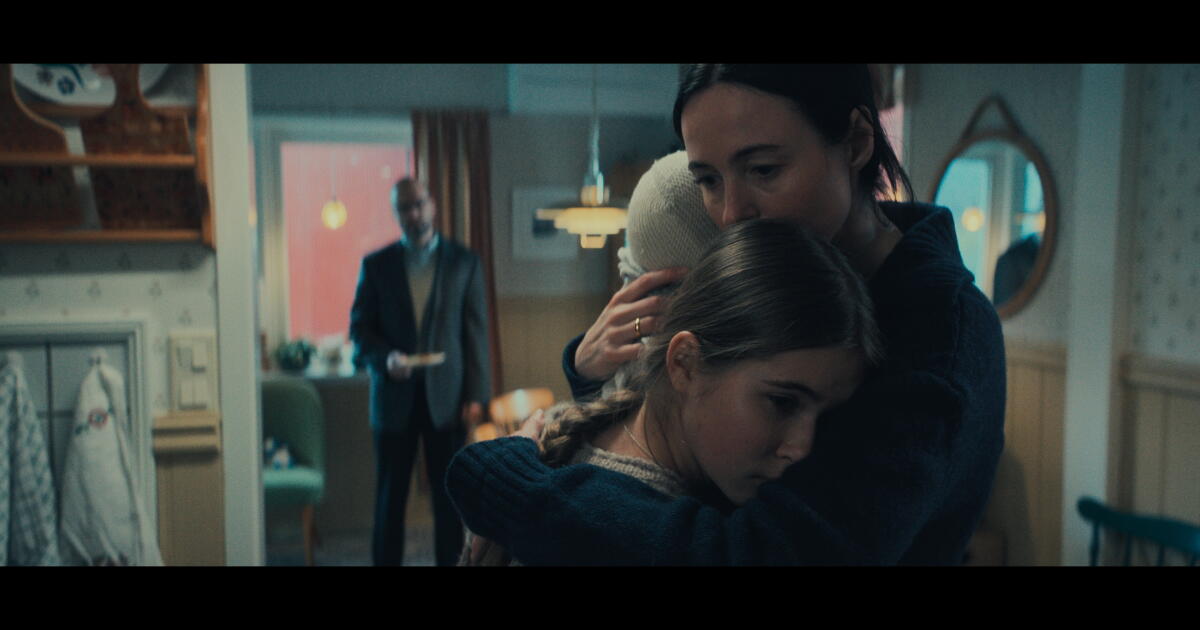
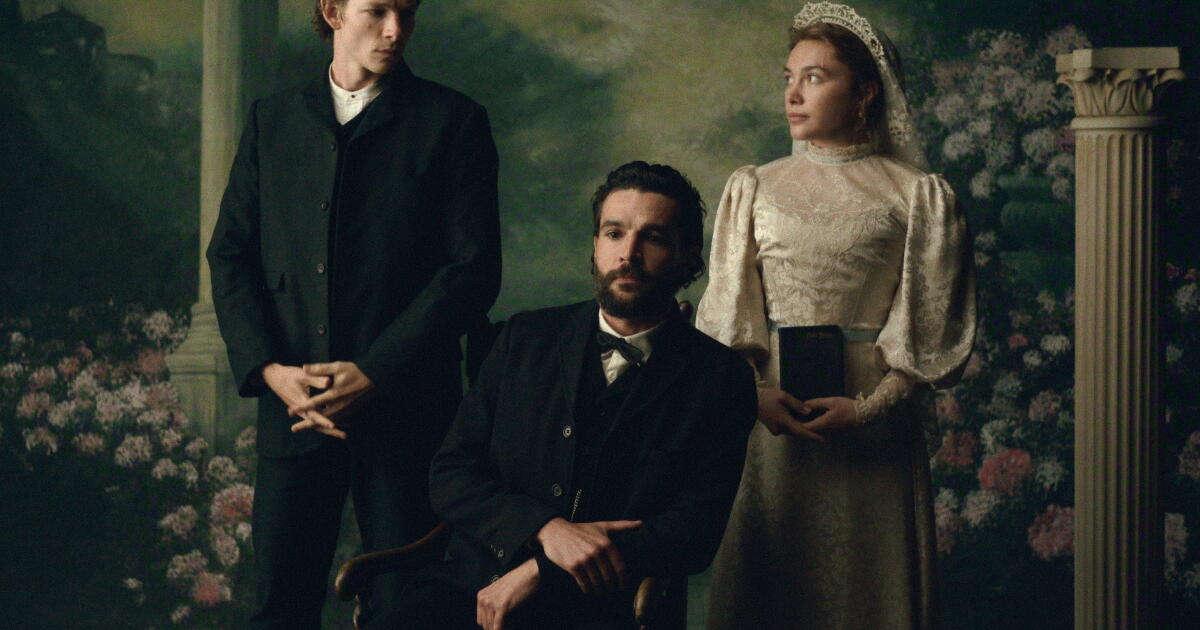
“We’re all hiding a little bit of our personality inside,” says director Cristian Mungiu of the characters in “Fjord,” a searing drama inspired by real Norwegian child welfare cases. “The film speaks about a limit of intimacy, after which you will need to make a choice not knowing precisely what happens. This is why I wanted the film to start at the end of a conversation in which you don’t really know what kind of punishments exist in this family.” Lighting and shallow focus deepen the uncertainty of a mother (Renate Reinsve) comforting her daughter (Vanessa Ceban) and a father (Sebastian Stan) waiting to have his say: “You need to admit when you’re wrong.” “You see the role of a mother who tries to play this more empathic part, while the father is the one playing the role of the educator who imposes his rules,” Mungiu says. “This shot speaks about our way of storytelling and designing everything to be ambiguous enough about their relationship. At the same time, this also speaks about a theme in the film: this idea that there isn’t anything like right and wrong and the truth. And we all believe that the truth belongs to us. And this is the problem.”
They said the hotel was dirty and food on the all-inclusive trip was undercooked. They also claimed to see faeces in the swimming pool on more than one occaision
12:02, 12 Oct 2026Updated 12:06, 12 Oct 2026
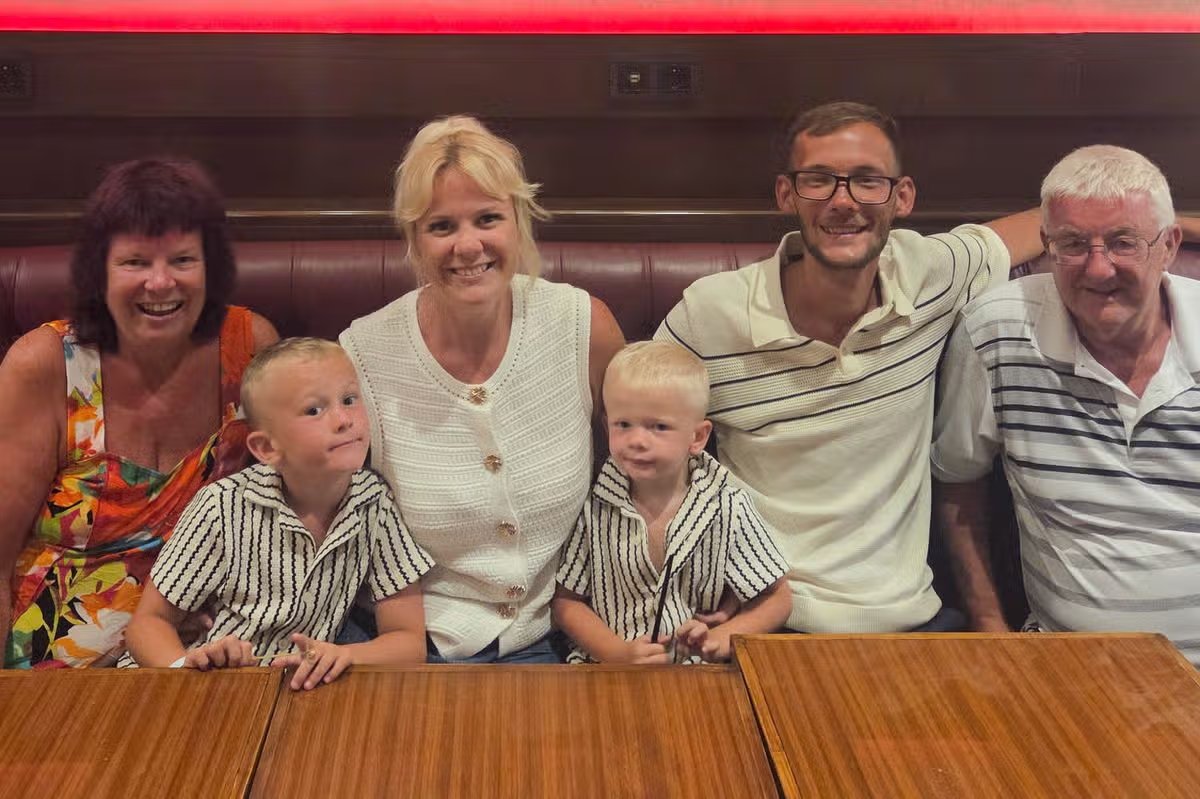
Samantha Smithson with husband Dion Hart, their two children and Samantha’s parents(Image: SWNS)
A family say their £4,000 holiday was ruined by a “filthy” hotel which left their five-year-old on antibiotics. Samantha Smithson, 34, and husband Dion Hart, 31, took their two children – aged two and five- and Samantha’s parents away to Tunisia in August.
But when they arrived at their hotel on August 10, they were apparently put in a room that had just a double, which Samantha shared with the children, and a single bed, which Dion took. The couple also claim they found exposed cabling, wobbly balcony railings, a smashed light, and a shower tray that did not drain inside the room.
They said the hotel was dirty and food on the all-inclusive trip was undercooked, so they shelled out around £500 extra buying food from outside the hotel. They claimed to notice faeces in the swimming pool twice and alerted staff. Booking provider On The Beach has offered the family a partial refund of £496.
Samantha, an operations manager, from Canterbury, Kent, said: “It was the most horrendous experience. Our room wasn’t safe and I spent the whole week feeling anxious about the kids. I was in tears all the time, it was awful. We just couldn’t wait to get home.
“I do not believe that £496 fairly reflects what our family experienced or the significant difference between the holiday we paid for and the holiday we actually received.”
The family said rubbish was left out, and their towels were dirty. Samantha said the hotel had no air-con in the 40-degree heat. Playground equipment was broken, and the advertised spa and gym were not open, Samantha said.
Their five-year-old has been given antibiotics for 40-degree temperatures and gunky eyes since coming home, and doctors said it was likely caused by dirty water, Samantha said. Samantha and builder Dion booked the holiday, in the Abou Sofiane Sousse hotel and aqua park, through online-travel-agent On The Beach.
Samantha made a complaint on August 17 and on August 25, and was offered a partial refund 28 days later. Samantha, who shared the story on Talk to the Press, said: “It’s just unacceptable to book in more people than they have capacity for, and to take bookings for rooms they don’t have.
“I’m really disappointed that On The Beach didn’t help us at all. We trusted them with our money and have been completely let down. We spent the whole time trying to contact them, but you can’t speak to anyone.
“It was filthy everywhere; it was horrible. Our kids were hungry the whole time because the hotel food we had paid for was so bad, and dangerous.”
A spokesperson for On the Beach said: “We’re sorry that Ms Smithson was disappointed with her hotel stay and we have been in contact directly in an effort to resolve her complaint.
“A partial refund of the hotel cost has been offered and has not yet been accepted.”
Abou Sofiane Sousse Hotel and Aqua Park were contacted for comment.
Movie stars are an endangered species. They still exist, sure. Their beautiful faces still fill 50-foot screens, beaming down on us. Yet, there is a shortage of, say, Michael Douglas. A man who, over the span of decades, played an American president, a troubled detective, and a Wall Street tycoon so convincingly that the FBI recruited the actor to do a PSA for investment bankers about the perils of financial fraud.
On the Shelf
One Helluva Ride
By Michael Douglas Grand Central Publishing: 496 pages, $35
If you buy books linked on our site, The Times may earn a commission from Bookshop.org, whose fees support independent bookstores.
The night before I meet Michael Douglas on Zoom, I have a hard time sleeping. I want to be well-rested before I meet the leading man — perhaps one of the last leading men from an era in Hollywood that felt limitless. What do I mean by that? He’ll tell you. His new memoir details his movie-making career as a prolific producer and actor, along with his affair with his “Romancing the Stone” co-star Kathleen Turner, mudslides in Mexico, snorting cocaine with O.J. Simpson, encounters with Princess Diana and screaming matches with Paul Verhoeven that end in blood. In short: the life of a movie star.
“People say to me: Michael Douglas. When I see your name, I don’t know what I’m going to get, but I know it’s going to be good,” Michael Douglas says.
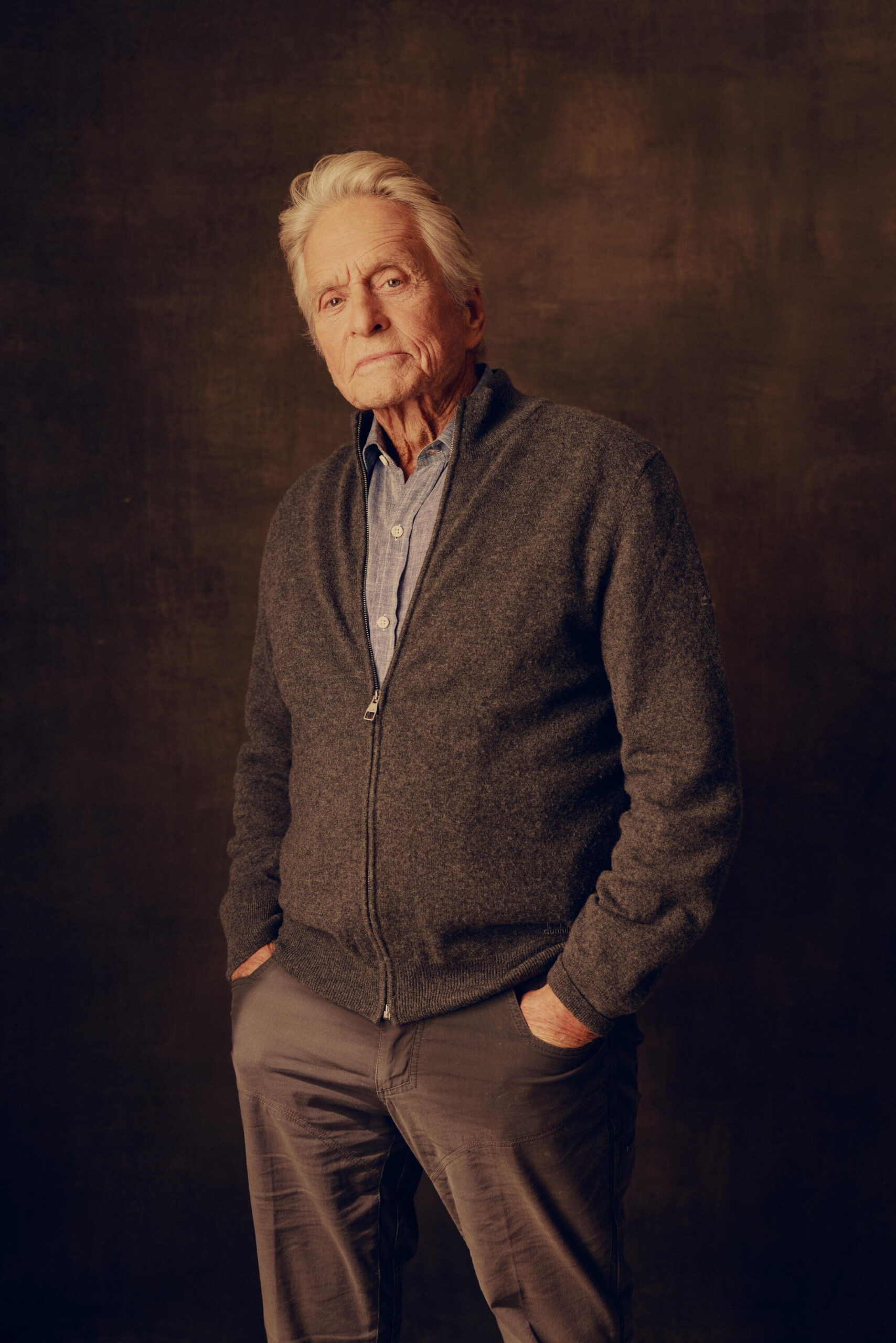
(David Urbanke / For The Times)
Halfway through our conversation, something unanticipated happens: Douglas reveals that he doesn’t quite see himself as a movie star. After gentle pushback, he elaborates. Instead, Douglas sees himself as a chameleon.
“People say to me: Michael Douglas. When I see your name, I don’t know what I’m going to get, but I know it’s going to be good,” he says.
He’s speaking from his home in New York. Behind him is a moody 18th-century Orientalist painting, its scene too indistinct for me to make out. His smiling face — which, like most American moviegoers, I had watched 50 feet tall in the dark — glows with warmth even on my laptop screen. It seems abnormal even to witness him in miniature.
To be clear: Michael Douglas is a movie star, whether or not he wants to cop to it over Zoom. It’s in his blood. His father, Kirk Douglas — born Issur Danielovitch to Russian Jewish immigrant parents — was a legendary actor whose shadow Douglas struggled to escape, as he details in the early chapters of his memoir. He spent his childhood on movie sets, watching his father spar with iconic directors like Stanley Kubrick. Michael Douglas was subject to violent and angry outbursts as well. “Dad’s volatility kept us on edge,” he writes. He felt suffocated by his father’s legacy, often hoping to shake the title of “Kirk Douglas’ son.”
Early in his career, Douglas left his starring role on TV’s “The Streets of San Francisco” after producing his first film, “One Flew Over the Cuckoo’s Nest,” which became a breakout success. On that film, he had to deliver the shattering news to his father that he was too old to play the lead — essentially, firing his father from his dream role. It was a betrayal. Instead, the role went to Jack Nicholson, who would later win an Academy Award for his humanizing portrayal of Randle McMurphy. The film won multiple Academy Awards, launching Douglas’ career as a heavyweight producer and later an actor. Escaping the shadow of being Kirk Douglas’ son has been a lifelong battle for the actor.
(Grand Central Publishing)
Occasionally, inheritance can be a burden. In his own life, Douglas details how he was a distracted father and husband who lost sight of his son, Cameron Douglas. During Cameron’s childhood, Douglas was elsewhere — on location in the Mexican jungle in “Romancing the Stone,” then a disastrous film production in Morocco for “Jewel of the Nile” that included a fatal plane crash that resulted in three crew members’ deaths. To cope with the breakneck pace of show business, Douglas sought refuge in women, cocaine and work.
Cameron’s troubled youth reached a crescendo when he was sentenced to five years in federal prison for drug smuggling, with an additional sentence for drug possession in prison — serving seven years in the end. It was enormously painful for Douglas, who also struggled with addiction, and had sought out treatment to provide an example to his son.
In a late chapter, he recalls confiding in Rob Reiner, who also had a son who struggled with addiction issues. In the memoir, Douglas addresses the killing of Rob and Michelle Reiner in December 2025; their son Nick has been charged with murder. “We both had sons with serious drug issues and we both, at times, had been at the end of our rope,” Douglas writes. “It was a heartbreaking confessional for us, but I know we gave each other some measure of comfort during the hard times.”
Why trudge through movie history, turning over every stone and every wound, in a nearly 500-page memoir? Because, according to Douglas, it’s time.
“Your 80s may be a good time to share,” the actor says, who recently turned 82. “People interested in movies, we give them a certain insight into the process, and maybe they could learn something. For others, it’s just gossip.” His battle with Stage 4 oral cancer brought the contours of his life into stark relief, sharpened by seven weeks of radiation and chemotherapy. His official diagnosis was tongue cancer, but he told the public he had throat cancer, hoping to stall speculation in the press about the possibility of disfigurement — and, more specifically, the prospect of losing his tongue. It was isolating, and Shane Salerno — the memoir’s co-author — stayed by Douglas’ side.
Michael Douglas.
(David Urbanke / For The Times)
As much as Douglas’ memoir, “One Helluva Ride,” is a revealing and delightful account of a life in show business, it is also a love letter to California — a place where Douglas spent much of his adult life, beginning at UC Santa Barbara. The college travel brochure read: campus by the sea. “I remember the cover of it was a guy walking down the beach with a surfboard, two girls in two-piece bathing suits. In 1963, I never saw a two-piece bathing suit back east.” He was sold.
The California years made an impression. Douglas is still, at heart, a hippie. Raised in stiff East Coast prep culture, he was reborn in the California sunshine. “I transferred into becoming a hippie, influenced by the Maharishi Mahesh Yogi, hallucinatory drugs, and the world that existed in the early ‘60s in San Francisco.”
Strangely, Douglas argued that some of the utopic sentiments of the 1960s are returning. “People are beginning to look back at that time, and realize how important family is — cooperation, sharing,” he says. “Socialism is not a four-letter word or something that’s terrible. There are other things to pursue in life other than just making money.”
“Your 80s may be a good time to share,” Michael Douglas says.
(David Urbanke / For The Times)
Like the characters he portrayed, Douglas is far from perfect. He admits that he struggled — in his first marriage, and later as a father. After marrying Diandra Luker, Douglas was unfaithful, having relationships with co-stars, most notably Turner on the set of “Romancing the Stone” in the Mexican jungle. The two denied the relationship for years. Now, with Turner’s blessing, Douglas writes about their involvement in his memoir.
Before Turner, there was Diane Thomas, the film’s waitress-turned-screenwriter, with whom Douglas had an affair. Thomas’ life was tragically cut short in a car accident involving a Porsche that Douglas had gifted her.
Then there were the rumors. On the set of “Basic Instinct,” some speculated that Douglas and Sharon Stone were having an affair. They weren’t, he explains. Douglas was instead locked in a power struggle with director Verhoeven, who, during one particularly heated argument with the actor, suffered a burst artery in his nose, turning the confrontation into a bloody scene. Douglas, meanwhile, was involved with another co-star, Jeanne Tripplehorn. “They were so focused on a possible relationship between Sharon and me, they missed the real relationship happening between me and Jeanne,” he writes.
When he and his current wife, actor Catherine Zeta-Jones, made it official, Douglas went to the other room to make breakup calls to five other women. (By this point in the memoir, Douglas has enough goodwill to pass this off as charming.) “From the moment I met Catherine, and we formed our family, I was a new man,” he writes.
The memoir enshrines Douglas’ petty show-business grievances too: a repaired grudge against David Letterman, a TV co-star who stole his longtime girlfriend, and a bouquet sent to Julia Roberts to apologize for his drunken buffoonery. In Douglas’ words: “There’s two or three people that I share my hostilities with.” He clashed with Brian De Palma, who was originally attached to direct “Fatal Attraction” and tried to have Douglas fired. De Palma underestimated Douglas and was replaced by Adrian Lyne. Years later, De Palma apologized, but Douglas rejected it.
It is impossible to tell the story of Douglas’ career without the women he encountered. The films he championed helped establish a new type of female lead — in all their powerful, morally ambiguous and deranged glory. “An actress was not allowed to play a villain,” he says. In “One Flew Over the Cuckoo’s Nest,” the actor struggled to cast Nurse Ratched. “A whole number of leading actresses turned that part down until we found Louise Fletcher, who went on to win an Oscar.”
For Glenn Close, Sharon Stone and Kathleen Turner, acting opposite Michael Douglas was transformative. After her role as a murderous, sex-crazed bisexual in “Basic Instinct,” Stone became one of the biggest stars of the 1990s and earned an Oscar nomination for Martin Scorsese’s “Casino.” Close‘s portrayal of the mistress-turned-lovesick psychopath in “Fatal Attraction” earned the actor her first lead Oscar nomination after three supporting nods. Turner went from being primarily known as the sexy femme fatale of “Body Heat” to a Golden Globe-winning star with box-office clout after her collaboration with Douglas. Sure, she sued him, too, but their friendship survived.
However, it wasn’t until his role as Gordon Gekko, the fast-talking, impulsive tycoon in 1987’s “Wall Street,” that Douglas was in full force, winning an Academy Award for lead actor. Directed by Vietnam veteran Oliver Stone, Douglas delivered an unforgettable performance about the dangers of unchecked capitalism and greed. At an early New York screening, Douglas recalls Wall Street traders being stunned by the film’s stinging accuracy. “A lot of the Wall Street characters were there, very cocky at the time; they all were shocked because we caught them.”
To his surprise, Wall Street financiers approached him on the street to praise Gekko — anointing him as their hero. “I said, ‘I was the villain.’ ‘No, no, no,’” he said. “So it showed me a lot.”
It speaks to Douglas’ gifts as an actor that he could transcend the caricature of white male entitlement he portrayed with such precision. In “Falling Down,” filmed during the 1992 uprising triggered by the Rodney King verdict, Douglas plays an unemployed defense worker, a man so consumed by disillusionment and blinded by his own sense of victimhood that he cannot recognize the harm he inflicts on others. The character would prove eerily prescient, anticipating an archetype that would take shape in the decades to come. An entire generation mistaking the actor’s brilliance as an invitation.
Perhaps that is the strange thing about being a movie star: Audiences decide who you are, and what you mean to them. For a chameleon, an actor who spent a lifetime resisting other people’s definitions of him, that might be the ultimate paradox.
As our conversation winds down, I remind him of his immense contributions to filmmaking, through producing and acting. It seems redundant, but I say it anyway. His response is polite.
“Quirky,” he said. “‘Falling Down,’ ‘The War of the Roses’ — I love those quirky films.”
“I’m proud of my movies,” he says. “I’m very proud of my movies.”
Connors is a culture journalist in L.A. She covers books, food, entertainment and offbeat Los Angeles. She’s currently at work on a book of essays about tourism in all its forms.
Scarlett Moffatt has shared some adorable photos of her two sons meeting for the first timeCredit: Instagram/@scarlettmoffattThe star beamed in her hospital bed with her partner ScottCredit: Instagram/@scarlettmoffatt
In the new photos, Scarlett is sitting up in her hospital bed surrounded by her expanded little family.
Clark is laying on one of Scarlett’s legs wearing a small cream coloured baby suit, while Jude is sitting between Scarlett’s legs.
Sign up for the Showbiz newsletter
Thank you!
Jude smiles widely at his little brother, who is partly resting on his lap.
Proud dad Scott is beaming by the bedside while the sweet moment unfolds, taking it all in.
Jude appeared happy to be a big brotherCredit: Instagram/@scarlettmoffattScarlett welcomed her little one earlier this weekCredit: Instagram/Scarlett Moffatt
Scarlett gushed in the post’s caption on Instagram: “The moment Jude met Clark.
“Watching the boy who first made me a mammy become a big brother is a moment I’ll treasure forever.
“And judging by the last slide, Clark did very well with his choice of Transformer toy for his big brother.”
Announcing news of the birth on October 9, Scarlett shared online: “Our beautiful boy is here! Clark Xander Dobinson.
“Arriving a little earlier than expected and not quite as straightforward as planned, our little family of four was made complete on Monday.
“Our hearts have never been so full, and I’d do it all again for you, Clark.”
A PICTURE tells a thousand words. But how about a thousand pictures?
If the camera roll from our trip to Butlin’s is anything to go by, it tells of a jam-packed, non-stop, rip-roaring, grin-inducing, memory-filled festive-as-anything time of it.
The whole family can enjoy the magic at Butlin’sCredit: suppliedTop Red Coat Father ChristmasCredit: Supplied
My two pre-teen daughters, husband and I hadn’t been to Butlin’s before but we were keen to hurl ourselves stocking-first into the resort’s Christmas spirit.
We decided that whatever the weather (pouring rain was forecast all weekend) we were going to have as much sparkly, festive Santa-filled fun as one still-believing family could in a single weekend.
Sign up for the Travel newsletter
Thank you!
And boy, did we meet our match at Butlin’s Bognor Regis. Arriving on a Friday after a long day, our Christmas spirits were a little on the low side.
But after the all-inclusive buffet, the magical call of the Bingo Bango hosts at the Reds venue (and a welcome glass of wine) I could feel my shoulders loosening and a smile spreading across my face.
And once the Silent Disco got going — with a choice of hard house or Christmas hits — I couldn’t stop beaming.
And judging by the hols snaps, it stayed there the whole time.
We quickly discovered you could almost divide the resort into two.
There were the non-Christmassy activities — an incredible VR arcade, escape rooms of various types and the excitement of Laser Quest where we all shot each other repeatedly.
And then everything else.
Christmas arts and crafts? Tick. Puppet Castle’s Christmouse Wonderland? Shockingly blue panto Snow White And Her Magnificent Friends? A skyline ‘snowstorm’ involving singing reindeer? Tick, tick, tick.
And when you’ve raised a couple of true believers — expectations at Christmas events tend to be high.
But Father Christmas’ Express Delivery didn’t disappoint.
The world’s most famous Redcoat was ready to meet and greet our two in a grotto that could’ve been in a high-end department store.
There was a naughty or nice wheel, children’s letters to Santa whirring round the ceiling and elves busily spreading Christmas cheer.
Once the girls’ handwritten letters to Santa had been delivered through suction tubes, we were whizzed up in a lift through the snow to meet the big man himself — who had twinkly eyes and decent bants.
After more festive fun in the North Pool (the huge indoor swimming pool), it was a short walk back to our home, Butlin’s Ocean Hotel. Our family room was a decent size with a balcony. It was clean, comfortable and had a good bed.
Enjoy Silent Disco — with a choice of hard house or Christmas hitsCredit: SuppliedThere is no end of attractions at Butlin’sCredit: supplied
We’d opted for the hotel dining plan, giving us breakfast and dinner in the Kaleidoscope restaurant.
It goes without saying my girls were delighted by the beige buffet — hoovering up pizzas, hot dogs and chips.
There were pastas, curries, a roast and themed nights — and a salad bar for something lighter.
For lunch, you’ll find more high street faves from Burger King and Papa Johns to SOHO Coffee.
And there was just as much variety when it came to entertainment.
From gameshow bonanzas to tribute acts and singalongs, it never stopped.
And if you need some fresh air, the fairground stays open with bumper cars, an old fashioned helter skelter, waltzer and a chair-o-plane.
The best part? The fairground is all free. And our take home after the festive weekend?
We went into Butlin’s blind, but now we have seen the twinkling, tinselly light.
GO: BUTLINS
GETTING/STAYING THERE: A four-night Christmas Festive Wonderland break is from £41.
Four nights at Ocean Hotel start at £77, from Nov 23.
OCTOBER half-term is fast approaching, and keeping the kids entertained without spending loads can feel scarier than Halloween itself.
Luckily, you don’t need to spend a small fortune to keep the half term action-packed, with brilliant cheap and free events popping up across the UK.
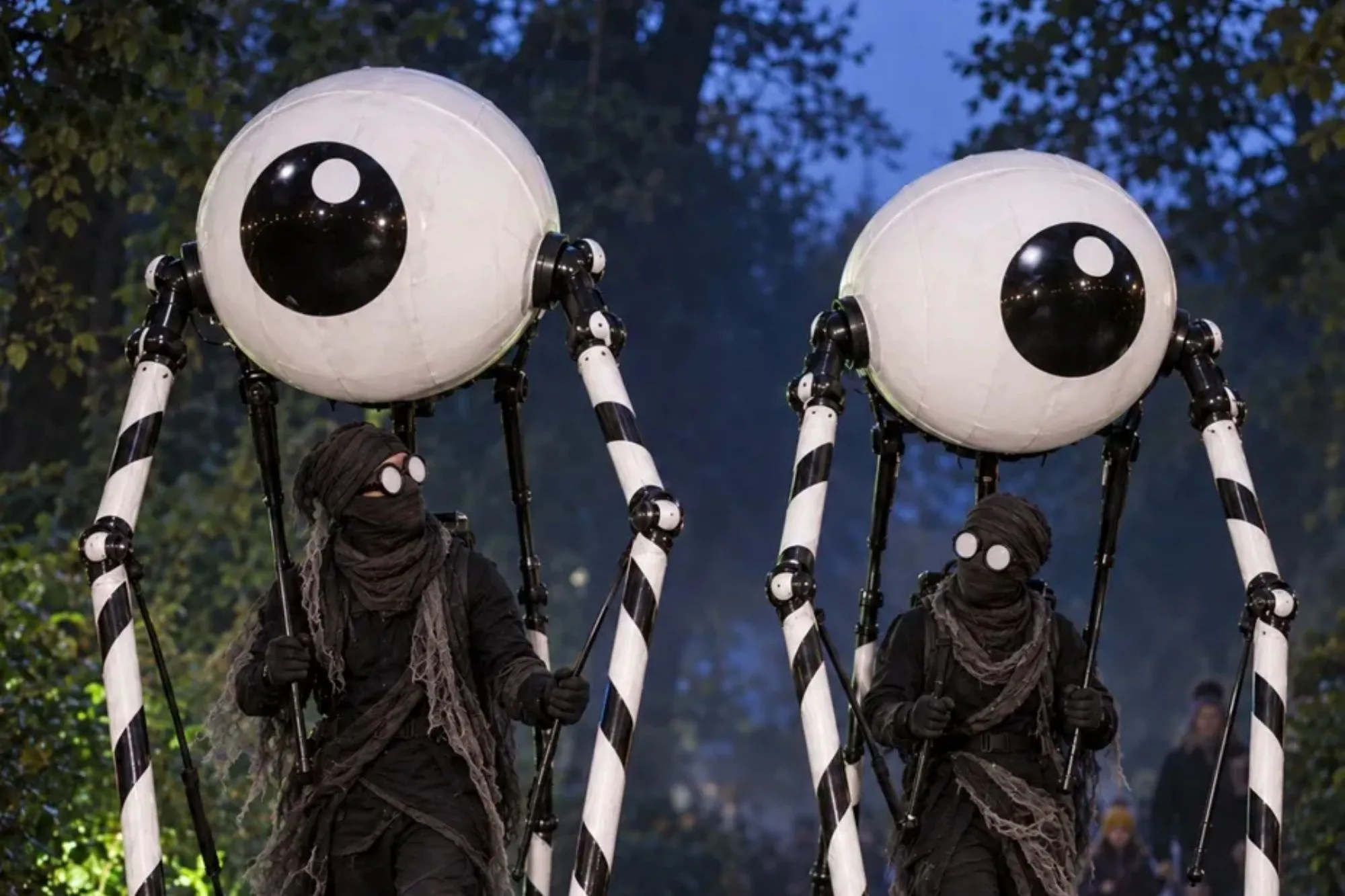
Meet a whole host of strange and wonderful characters at Playful Park of Peculiar in LondonCredit: High Street Kensington
From giant inflatable monster takeovers, to ‘Wizard Schools’ and Hey Duggee-themed trails, there are options for families of all ages.
Here’s our pick of the best free and cheap family days out for October half-term.
Free
Spooky Season at the National Railway Museum, York
Visit the National Railway Museum between 24 October – 1 November follow a spooky storytelling trail through spectacular vintage trains.
Drop into free daily storytelling sessions, creepy craft workshops and more, while getting to see everything from steam locomotives to the Japanese shinkansen.
For even more hands-on action, grab tickets to the Wonderlab gallery, where the interactive science exhibits have been given a thrilling seasonal twist.
Tickets are free, just make sure to book online in advance.
The Playful Park of Peculiar & Halloween Trail, London
Head to High Street Kensington for a family-friendly Halloween trail that will lead you in and out of shops along one of London’s prettiest streets.
The free trail takes place from October 23 – 31, but if you visit on Halloween, you’ll also get to visit Big Kensington Vintage Flea market which will be specially stocked with Gothic furniture and florals.
Plus, from 4:30pm – 7.30pm that night, Holland Park transform into the Playful Park of Peculiar.
This is a free trail complete with decorations, illuminations and even live characters and performances to meet along the way.
Pendle Hill, Lancashire
For a proper scare this Halloween, head to Lancashire’s Pendle Hill, which is widely known as one of the UK’s most haunted spots.
The area is famous for hosting witch trials in 1612, and there are plenty of ghostly and historical walking tours that delve deep into its past.
Brave a guided ghost walk for £10pp and explore the very villages where the accused witches once lived.
After working up a fright in the dark, you can calm your nerves and warm up with a well-earned pint by a roaring fire in one of the area’s cosy local pubs.
Halloween trails, murder mystery and more on the English Riviera
Brave the hair-raising ‘Abbey After Dark’ scare trail at Torre Abbey, hunt for mini monsters at the illuminated Babbacombe Model Village, or explore ancient underground caves on a creepy ghost walk at Kents Cavern.
If you need a break from the scares, take a brisk walk along the stunning South West Coast path before warming up with a cosy pub lunch.
Derry Halloween Festival
Derry is home to the largest Halloween Festival in EuropeCredit: AlamyVisit Lightpool Festival in Blackpool to see impressive illumination displays for freeCredit: Alamy
Visit the home of Halloween this October half-term, as Derry celebrates the 40th anniversary of Europe’s largest Halloween festival.
Families can tackle the ‘Awakening the Walled City’ trail, where the streets come alive with giant illuminated statues, creepy roaming characters, and thrilling fire shows.
Down in the city centre, the streets are packed with free entertainment and live shows to keep the kids entertained, with acrobatics, circus performers and spooky street theatre.
The fun wraps up on Halloween night with a costume carnival parade through the city and a dazzling fireworks finale over the River Foyle.
Halloween in the City, Manchester
From October 24 – 31, Manchester city centre will be taken over by giant inflatable ghosts and aliens as the popular MCR Monsters return to the city to celebrate their 10th birthday.
Families can join in the completely free monster birthday bash, featuring a Rave Yard disco, live storytelling and a brilliantly bizarre Monster Bake-Off.
Kids are also encouraged to don their best fancy dress alongside creepy creatures in the Walk the Plank monster procession.
To top it all off, little trick-or-treaters can tackle the Kids’ Halloween Hunt on New Cathedral Street to bag themselves a party bag stuffed with free sweets.
Lightpool Festival, Blackpool
Blackpool‘s Lightpool Festival is back with a bang this October half-term, celebrating its 10th anniversary with another completely free program of illuminated entertainment.
Running from October 21 – 31, the seaside town‘s landmarks will be transformed by mesmerising 3D projection shows and interactive artworks including neon jellyfish and giant glowing sculptures.
Make sure to visit the famous Tower Ballroom to catch the ‘Carnival Magic’ show, an explosive performance packed with puppets, fire-breathers, and dancers.
With zero cost to explore all the indoor and outdoor displays, it’s the perfect family evening out to brighten up the dark autumn nights.
£5 and under
Dressing up is encouraged for the Creepy Circus trail and Zombie Apocalypse Party in WeymouthCredit: GettyGlide through Scarecastle Tunnel in StaffordshireCredit: Canal & River Trust
The Creepy Circus, Zombie Apocalypse party & more, Weymouth – £2.75pp
Head on a haunted trail through Weymouth this October, and meet the cast of theCreepy Circus (made up of live actors) along the way…
Beginning in the city centre, you will explore the seaside town as a team, stopping to collect clues from witches and mystery circus characters.
The trail takes place from October 25 – November 1, from 10am – 6pm daily and costs £2.75pp.
Plus if you’re in Weymouth on Halloween night, there’s a Zombie Apocalypse party at The Donkey Social with totally free entry. Fancy dress is encouraged, and there’s prizes up for grabs, too.
Wizard School & more in Southampton – from £4
There’s plenty of spooky happenings in Southampton this October, with options for families of all ages.
Tudor House will offer free admission on October 30 on a Halloween-themed open day. The site is Southampton’s oldest museum, and was built in the late 15th century.
There will also be additional themed crafts, face painting and more from £4.
Families visiting on October 26 or 27 can take part in ‘Wizard School’ sessions, and even create their own wand to take home (£8 per child).
Scarecastle, Staffordshire- £5
Brave the dark depths of a two-mile long underground canal tunnel on a spooky ‘Scarecastle’ boat trip this October.
The tunnel opened in 1777, and helped to connect the Midlands canal network to Stoke-on-Trent and beyond.
Running daily from October 25 to 31, this historic tunnel is transformed into a floating Halloween tour packed with surprises.
Tickets cost £5 each. Pre-book your spot in advance online.
£10 and under
Take on the Enchanted Forest and Woodland Witches trail at Stockeld ParkCredit: Alamy
Southampton Ghost Tour – £10pp
The Southampton Ghost tour winds through underground medieval vaults and includes visits to haunted historic buildings such as the Merchants Hall, Tudor House and The Red Lion pub (which boasts an impressive 21 ghosts)
It starts at 6pm on Halloween night, but if you can’t make this one there are more options with various dates hosted by the likes of Dark Encounters and Get Your Guide.
Halloween at Stockeld Park, Yorkshire – from £9pp
At Yorkshire’s Stockeld Park, families can explore an Enchanted Forest on a Woodland Witches trail, tackle interactive challenges and even take on a giant Mummy Maze.
Beyond the witchy fun, there are tractor rides to pumpkin patches and even a Zombie Laser Tag arena.
For a special after-dark treat, you can grab tickets to the brand new Pumpkin Nights to watch spectacular fire-eating shows under the stars.
The events run every weekend throughout October, with event tickets priced individually. The cheapest event costs £9pp.
£15 and under
Explore the autumn colorus of the great outdoors this October with walking trailsCredit: AlamyCastle Howard Arboretum has 120 acres of woodland and rare red squirrels to seeCredit: PA
Illuminated Halloween trail, Moors Valley Country Park and Forest, Dorset – £14 per adult, £8 per child
As darkness falls, Moors Valley begins to glow with a spectacular illuminated Halloween trail packed with eerie encounters.
Wander beneath towering giant skeletons, dodge creepy characters like manic barbers, and tip-toe through a creepy carnivorous garden.
The route also features a brilliant food village where you can stop to sip a hot chocolate or toast some marshmallows.
The event takes place from October 23 – November 1. Pre-book timed entry tickets online, costing £15.75 for adults and £13 for children.
Kew Gardens is teaming up with Hey Duggee for an autumnal outdoor adventure trail for little ones this October half-term.
Kids can grab a map and explore the famous gardens while taking on interactive challenges, stopping to collect Squirrel Club badge stamps along the way.
After earning their final badge and grabbing a quick photo with a Duggee sculpture, there’s plenty more to explore such as the Children’s Garden.
Running daily from October 17 – November 1, the trail is completely free with standard garden entry. You can bag £10 entry tickets if you visit on a Tuesday throughout autumn.
Castle Howard Arboretum, North Yorkshire – from £12.75 per adult, £8.50 per child
Visit Castle Howard Arboretum this October half-term for a spectacular display of autumn colours across 120 acres of beautiful woodland.
After exploring hidden glades and tranquil lakes, you can sit down for a family meal in the cosy on-site cafe.
Make sure to look out for the resident red squirrels, named David Attenborough and Cinnamon.
Enjoy getting out in the fresh air this half term, with adult tickets from £12.75 and kids from £8.50.
Welsh School of Witchcraft and Wizardry, Carmarthenshire – £10pp
Pack your broomsticks, as the British Bird of Prey Centre is transforming into the Welsh School of Witchcraft and Wizardry this October half term.
Trainee wizards can get stuck into a timetable of spooky activities, including crafting their own wands and brewing potions.
You can also upgrade for £10 to a masterclass where you’ll learn how to fly an owl and more.
The event runs from October 26 – November 1, with all standard classes and bird shows included in your regular centre admission ticket (£14 per adult, £8.50 per child).
IF the average holiday home isn’t quite cutting it with the kids, you’ll love these ones.
With whole role-play villages, ziplines and even ballpit rooms, these are the five best family-friendly Airbnbs in the UK.
Imagine at High Parks
Imagine at High Parks sleeps up to six and has a huge play village for kids insideCredit: Air BNBImaginations can run wild at the village shop, tearoom and stables with a rocking horseCredit: Air BNB
This pretty farmhouse might look like your average Airbnb – but inside, it has a secret wing that’s dedicated to children’s play.
It’s a paradise and will definitely inspire play as inside you’ll find a tearoom with an oven, cups and mugs and even a stable with a rocking horse.
The village shop has a real-life counter with a cash machine and around the corner is a cinema.
There’s also a hotel that is actually where the children’s rooms are and each is kitted out with single beds and made to feel cosy.
Outside there’s even more for kids to enjoy as there’s a huge wooden climbing frame with a basket swing, see-saw, toddler swing and slide.
The climbing fort is set amongst a huge garden so there’s plenty of room to run around too.
One visitor wrote: “I stayed with my two children aged 8 and 5, they were so excited when we arrived and said it was the best holiday house ever.”
As for the rest of the property, it can sleep up to six guests.
It has a light and airy living room with high ceilings, and wooden beams across the ceiling.
There’s also a modern kitchen with a dining area, the master bedroom is on a mezzanine level.
Three of the bedrooms have a single bed, two of which have views across the garden, and bedroom five has a cot.
Surrounding the house is a patio area, a great spot to sit and enjoy the views in the summertime.
Inside this farmhouse is a huge play room with a climbing frame and foosballCredit: AirbnbThere’s even a heated indoor swimming pool and outdoor playpark tooCredit: Airbnb
Tredethick Farm Cottages is in the top 10 per cent of homes on Airbnb and is a particular hit with families.
Inside, kids and teenagers will enjoy playing in the games barn which has a pool table, table tennis table, indoor slide and sand pit – the home even has an heated indoor swimming pool.
When the weather plays ball, children can enjoy the outdoor playpark and balance bike track.
As it’s on a working farm, there are morning animal feeding sessions held at least three times per week with the goats, pigs, chickens and guinea pigs.
In the summertime, guests can book pony experiences.
There’s also a heated indoor swimming pool for splashing about and a private garden for playing in.
Meanwhile, adults can take advantage of the hot tub and relaxing in front of the fireplace in the living area.
The home sleeps up to four guests in its two bedrooms, one with a king- size bed, the other with two singles.
A four-night stay in April 2027 for a family of four starts from £1,000 – or £62.50pppn.
Fun City Stay, Essex
You’d never expect this Airbnb in Essex to be a fun houseCredit: AlamyKids will love the soft play room that has its own ballpitCredit: Air BNB
Just outside of Colchester in Essex is this beautiful Grade-II home which looks like it should be a cosy retreat, and it is – but there are lots of surprises inside too.
Along with its open kitchen-diner, large living room and Disney-themed bedrooms is a play room called Narnia.
Not only is it a soft play, but it has a huge ball pit that children will love.
One visitor wrote in their review: “The soft play was a huge hit with the children and kept them entertained for hours!”
Another added: “We had a fantastic stay here for a family getaway! Everything was perfect. The soft play room was amazing for the children.”
In the kitchen is a seven-foot table that can transform into a pool and table tennis table.
In total, the home can sleep up to nine guests across its four bedrooms inspired by Disney’s Madagascar, Pirates of the Caribbean, The Jungle Book and Aladdin.
The Narnia room is available to book at an additional cost, as is the hot tub.
Country cottage and treehouse, Salisbury
The pretty cottage outside of Salisbury has its own hot tub and treehouseCredit: Air BNBFrom the treehouse, the whole family can check out the 100-foot zip lineCredit: AirBNB
This beautiful countryside cottage is tucked away in a private 80-acre woodland near Salisbury.
Next to the pretty Airbnb is where the kids are likely to spend most of their time – up in the treehouse.
Once up there the whole family can take it in turns zooming through the woodland on the 100-foot zipline.
It’s definitely a hit with previous visitors, one said: “So much space for the children to run around in, an incredible tree house with zip wire (just as much fun for the adults).”
Another added: “The kids were in their element with the zip line, treehouse, and lake-endless adventures right on the doorstep.
“It felt like a little paradise for them, and gave us all such a chance to properly switch off and enjoy time together.”
The home is nestled in a private 80-acre woodland near a secluded lake. Enjoy tranquil trekking trails, or relax by the secluded lake.
The country cottage has a kitchen, living room, bedroom and bathroom downstairs – the further two bedrooms are upstairs.
While the kids are enjoying the activities, parents can soak in the wood-fired Dutch tub.
On arrival there’s complimentary tea, coffee, sugar, 1 litre of organic milk, locally produced apple juice, cornflakes, oats and cereal from the hosts.
The home can sleep up to six guests across its three bedrooms.
The base price is based on a two person occupancy – it then increases by £40pppn (there is no charge for infants).
There’s an offer of 20 per cent off on weekly stays and 40 per cent off on monthly stays.
Halula’s House of Fun has its own ballpit room with a slideCredit: Air BNBOutside it has a climbing frame and trampolineCredit: Airbnb
For the ultimate family and friends holiday, the Halula’s House of Fun has it all.
It can sleep up to 21 guests – it also has a swimming pool, swim up bar, hot tub, indoor slide and ballpit and children’s play area.
The whole house will be like a play park for the kids thanks to its bright decor and plenty to do. One of the rooms has a rainbow slide that goes straight into the ballpit.
Kids will also love the huge movie room with snug sofas and projector screen.
Outside, there’s a climbing frame, playhouse, trampoline and play cars.
Between April and October, the outdoor swimming pool is open for business too.
All six bedrooms have their own theme – and there’s even a cosy book nook for bedtime stories.
It’s not just kids that will love this house, it’s possible parents might enjoy it even more, it has a pool house, bar and hot tub.
The home sleeps up to 21 guests across seven bedrooms
SYDNEY Sweeney has discovered she is related to fellow blonde bombshell Marilyn Monroe.
The Housemaid and Euphoria actress’s family tree reveals she is a ninth cousin once removed of the Hollywood icon.
Sydney Sweeney has discovered she is a ninth cousin once removed of Hollywood icon Marilyn Monroe after tracing her family treeCredit: GettyBombshell Marilyn Monroe had huge hits with movies such as Some Like It Hot, Gentlemen Prefer Blondes and The Seven Year ItchCredit: Corbis
Researchers found the stars’ fathers were both descendants of a Massachusetts settler called Ezra Perry who died in 1689.
Sydney, 29 — who starred in a controversial advert for American Eagle with the tagline Sydney Sweeney has great jeans — has often been compared to Marilyn, born Norma Jeane Mortenson.
Sign up for the Showbiz newsletter
Thank you!
She had huge hits with movies such as Some Like It Hot, Gentlemen Prefer Blondes and The Seven Year Itch.
Sara Baeur, a chocolatier from Montana, USA, booked a place to stay in Northern Morocco for next year’s total solar eclipse, only to be contacted by the host who had an unwelcome message for her
Sara Bauer booked a place in Morocco for August next year(Image: Supplied)
A family was told they’d be locked out of a rental home if they turned up, despite paying £3,400 for the property.
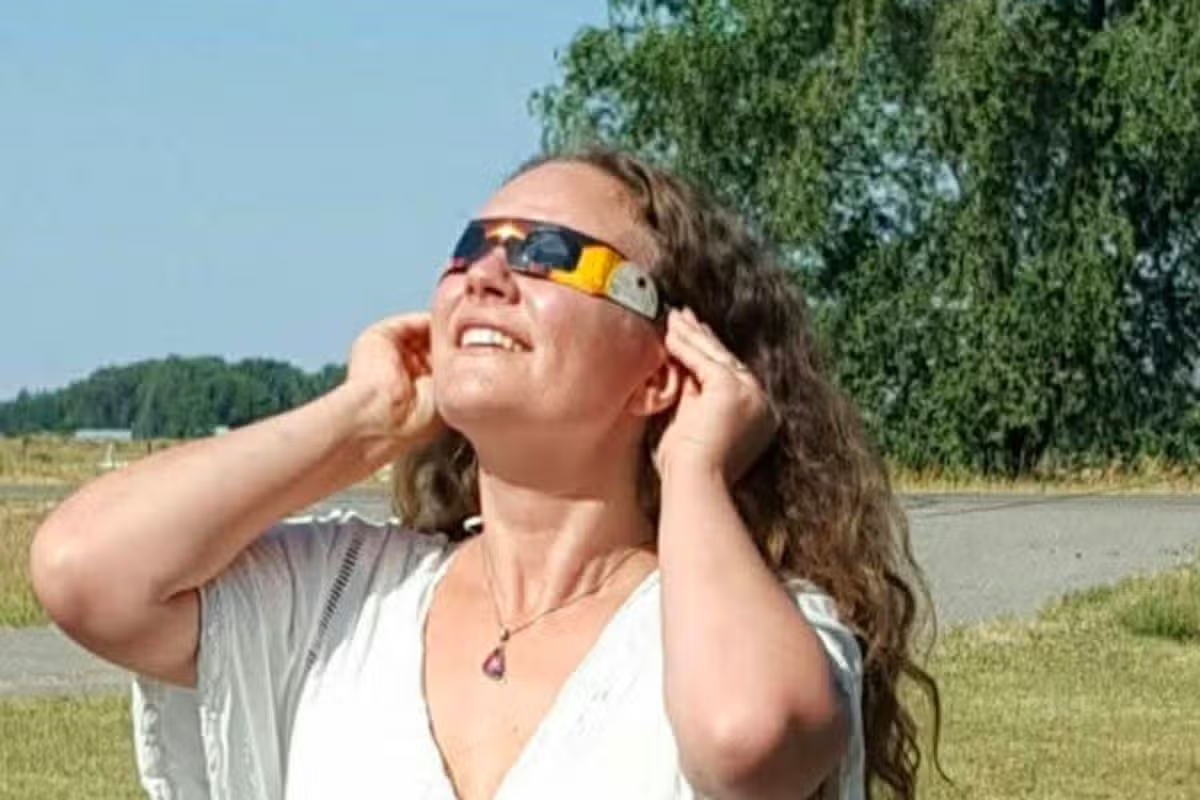
Solar eclipse enthusiast Sara Bauer booked a place to stay in the Moroccan resort of Marwan for the first week of August 2027, desperate to see the astrological phenomenon from the best possible spot. The northern seaside town is a perfect place to catch the eclipse, which includes an incredible eight minutes of totality – about three times longer than this summer’s.
The Montana woman booked the beachfront property and started looking forward to what’s been dubbed ‘the eclipse of the century’. However, she claims she became alarmed after receiving a message from the host, demanding that she cancel the booking. If she didn’t, she was told her family would be locked out of the home, she alleges.
After Sara gave in and cancelled the booking, she saw the same property relisted for six times the price, she claims.
Do you have a story to share? Email webtravel@reachplc.com
After she was first contacted by the host, the chocolatier, who runs Chocolate Eclipse, told the Mirror: “The host of my Airbnb in Morocco is demanding that I cancel my reservation. He says he will be penalised badly if he cancels it. He said he’s selling the place before next year and didn’t realise at first that I had booked so far out. He says he will be penalised if he does the cancellation, but will if I refuse to cancel.”
Sara added: “He had said I wouldn’t have access even if I didn’t cancel.”
Concerned that she’d fly all the way to Morocco to find a locked house, Sara “caved” and accepted the cancellation request. The host told her that the property was being removed from the rental market for renovations. However, Sara later found the same property listed for the same week for £20,400 – six times more than she paid.
After being contacted by the Mirror, Airbnb deactivated the listing and penalised the host. An Airbnb spokesperson said: “Issues of this nature are rare, and where we determine misuse of our cancellation policy, hosts not only lose the income from the booking, but face consequences we apply, including fees of up to 50% of the booking cost, a block on rebooking their listing for the same dates, impact on search ranking and where warranted, suspension or deactivation of the account. Our initial handling of this report fell short of the standards we expect, and feedback will be provided to the agents. We have deactivated the listing, and have applied the relevant penalties in line with our policies on host cancellation. The guest has been offered rebooking support and a coupon as a gesture of goodwill, which has been positively received.”
Hosts who cancel Airbnb stays without a legitimate reason face a 50% fee on the reservation cost, calendar blocks that prevent them from accepting reservations during the affected dates, and potential consequences for their Superhost status and listing search ranking. Airbnb says cancellation rates have dropped 30% year over year since more deterrents were introduced in July 2023.
The huge demand for places to stay along the path of totality during next year’s solar eclipse has driven prices up sharply. Some property owners have resorted to canceling reservations in a bid to make hay while the sun shines.
As new research reveals young people could spend 42% more time on their phones during the school holidays, mum of two Hannah Britt took matters into her own hands on a DIY digital detox
Mum of two Hannah Britt booked her extended family into a remote farmhouse in France for a DIY digital detox to reap the rewards of going screen-free
With half term approaching, screen time may be about to soar. In fact, young people could spend 42% more time on their phones during the summer holidays compared to term time, according to research by Vodafone. But it doesn’t have to be this way. Mum of two Hannah Britt booked her family into a remote farmhouse in France for a DIY digital detox to reap the rewards of going screen-free…
I’m not going to lie, I’m completely addicted to my phone. As is my partner John. We spend our evenings scrolling social media, sending endless Reels back and forth. We work on small screens during the day, take breaks and look at our tiny screens… then watch the big screen in the living room to unwind.
Thankfully our two young children don’t have a phone, but they do both own a Kindle and are quite partial to a Peppa Pig marathon. Like many, during school holidays their screen time soars. And this is something I’m determined to change. When I read the research that young people could spend 42% more time on screens on school holidays, it gave me an idea.
Leaving the Kindles at home, I booked a remote French farmhouse on Airbnb and packed us off for a DIY digital detox. And I’m so glad I did. The stone farmhouse, in Saint-Sauveur-de-Cruzieres provided the perfect backdrop for old fashioned family fun – not a telly or smartphone in sight.
Parenting expert Kirsty Ketley explains. “School provides children with structure and built-in limits on screen use, and of course, once home, there are less hours in the day for screens, but once the holidays arrive, that structure disappears,” she says.
“Parents are often juggling work, childcare, and the cost of keeping kids entertained, so screens naturally become a convenient option. On top of that, digital entertainment is designed to be engaging and hard to switch off from, so it’s no surprise children gravitate towards it when they have long stretches of free time.”
So what’s the issue? “It’s not that screens are inherently ‘bad’,” says Kirsty. “In fact, they can be educational, social, and even calming at times. However, when screen time dominates, it can crowd out other important activities like active play, real-world socialising, outdoor time, and rest.
High levels of screen use are also linked to disrupted sleep, reduced concentration, and higher stress levels in both children and adults. The key issue isn’t the screen itself, but what’s being displaced when usage creeps up too high. It’s why having consistent boundaries around screen time is important, so that kids strike a healthy balance.”
But back to the Airbnb farmhouse. It was a Guest Favourite (easy to recognise as they have a special logo on the properties, and a collection of the most-loved homes on Airbnb, according to guests), and soon became a home from home.
On arrival, John and I placed our phones in a drawer, along with the children’s Kindles. Finding the TV remote, we hid it on the top shelf of a bookcase. The DIY digital detox had begun!
And soon we found there was plenty to do that didn’t involve a device. The pool, of course, provided hours of entertainment, as did the swings, hammock and garden games. With no phone to check, I found myself truly engaged the whole time, present and in-the-moment. The girls were the same.
Peppa Pig was replaced with a performance of the Backstreet Boys in the outdoor dining area, and Instagram was shunned in favour of a nature walk in the grounds. We saw a rabbit, hundreds of crickets and the back end of a badger for our troubles.
The farmhouse’s long indoor table was close to the aircon, and provided a place to draw and read when the weather outside reached boiling point. And we spread blankets out on the parched grass to lounge upon and play tea parties.
We did use a satnav (technically a screen) when exploring the local area, but car games provided entertainment on journeys to Barjac for its antique market, and and phones were stashed in bags when out and about, only taken out to pay for fridge magnets and snacks.
As the days wore on, the kids stopped asking for their Kindles, or to watch TV, and I missed my phone less and less. I felt more relaxed than I had in ages, more present and calm. By the time our week at the farmhouse was up I was almost sad to take my device from its drawer, something totally unexpected. And I can’t wait to go screen free again.
Exploring Saint-Sauveur-de-Cruzières and beyond
Barjac: Stroll through the shady, cobbled streets of this neighbouring Renaissance village (about 7.4 km away), known for its stone architecture, local artisan shops, and vibrant markets.
Saint-Montan: Wander around a beautifully restored medieval village clinging to the rocks near the Sainte-Beaume gorges.
Local Markets: Visit nearby regional open-air markets, such as Barjac on Fridays or Saint-Ambroix on Tuesdays, to sample local goat’s cheese, honey, and charcuterie.
Gorges de l’Ardèche & Pont d’Arc: See the famous natural stone arch of Le Pont d’Arc (about 16 km away) and enjoy canoeing, swimming, or lounging on the river beaches.
Bois de Païolive: Hike through a magical, labyrinth-like stone forest filled with bizarrely shaped limestone rocks and ancient oak trees.
Plan fun offline activities
Cook and bake together: Involve children in prepping meals, measuring ingredients, or baking treats to build teamwork and practical skills.
Head outdoors: Go for family bike rides, visit a local park, or kick a football around to boost physical health and burn energy.
Play together: Break out board games, card games, puzzles, or building blocks like Lego for low-stress, interactive group play.
Create easy access to crafts: Keep colouring books, crafting supplies, and building kits in a visible, reachable spot so family members can grab them out of boredom instead of reaching for a screen
BOOKING a budget-friendly family getaway has never been easier.
If you want to keep the whole family entertained on holiday without breaking the bank, one of the UK’s top holiday park operators is rolling out some seriously unmissable deals.
Go all inclusive on your next UK family holiday at a Parkdean Resorts holiday parkCredit: TripAdvisor
Parkdean Resorts is offering action-packed family hols including all inclusive getaways, Nickelodeon Weekenders for Paw Patrol fans, and Tots Breaks where kids eat completely free.
Better yet, these breaks start from an unbelievably cheap £6.19 per person, per night. Here’s our favourite Parkdean offers on right now.
Sign up for the Travel newsletter
Thank you!
All inclusive breaks
45 of Parkdean Resorts’ holiday parks offer an all inclusive optionCredit: Parkdean Holidays
Forget the faff of cooking and supermarket runs on your next caravan holiday, as 45 Parkdean Resorts across the UK offer all-inclusive meal packages.
The deal is available at popular parks including Camber Sands, Highfield Grange, and mega resort Trecco Bay, which is the one of the largest holiday parks in Europe.
The all inclusive offer bundles in three hot, sit-down meals a day in the site’s main restaurant alongside unlimited soft drinks and hot drinks.
This means you can start every morning with a cooked breakfast, enjoy crowd-pleasing lunch options like burgers and curries, and sip on bottomless Costa Coffees.
The all inclusive option works as an add-on to the cost of your stay and starts from £80 per adult and £30 per child (under 12) for a four-night break.
That works out to a bargain £20 per night for grown-ups and £7.50 per child.
The all inclusive offer is available for four night breaks with Monday arrivals, excluding the school holidays.
However 14 of the parks are offering three-night weekend options, too. Click here to browse which ones.
Tots Breaks
Parkdean Resorts Tots Breaks are designed for families with under fivesCredit: TripAdvisor
Keeping toddlers entertained and well-fed on holiday can be exhausting and expensive, but Parkdean Resorts has come up with the ultimate solution.
Their brilliant ‘Tots Breaks‘ are tailor-made for families with under-fives, with four-night stays starting from £99.
That works out to £6.19 per person, per night for a family of four.
Best of all, kids eat completely free for the entire holiday.
Little ones get complimentary breakfasts, lunches, and dinners from the Starland Krew Menu, with hits like beef burgers, tomato pasta, and chicken strips, saving families up to £70 on their food bill.
There are plenty of activities designed for young children, too.
Under-fives can dive into messy play, soft play, sing-a-long Tots & Tunes music sessions, or even tackle an adorable obstacle course, the ‘Mini Olympics’.
The entertainment line-up is just as impressive, with Milkshake! Mornings across 40 UK sites, plus exciting meet-and-greets with PAW Patrol characters like Chase and Marshall.
Nickelodeon Weekender
Meet and greet classic cartoon characters like the Ninja Turtles on a Nickelodeon weekenderCredit: Parkdean Resorts
If your kids are obsessed with PAW Patrol, Ninja Turtles or SpongeBob SquarePants, we’ve got good news. Parkdean Resorts have put together the perfect weekend break for Nickelodeon fans.
You can bag a Nickelodeon Weekender family break from £163 for three nights, working out to £13.58 per person, per night for a family of four.
From morning to night, there is plenty of free Nickelodeon-themed entertainment for all ages.
Little ones can complete ‘Mighty Missions’ set by PAW Patrol’s Ryder and learn the Pup Pup Boogie, or head down to the Showbar to learn martial arts from the Teenage Mutant Ninja Turtles and earn their very own ninja mask.
The fun does not stop when the sun goes down, with a lineup of evening events including interactive family game shows, dance parties and live shows packed with prizes.
When you’re ready to chill out, families can settle down for a special ‘Movie with the Stars’ screening alongside the actual characters from the film.
She was part of a generation whose parents were from the rancho of El Cargadero, Zacatecas, and started families in el Norte while waiting out the Mexican Revolution in the 1910s and the Cristero Revolt in the 1920s. Many returned to their home village when things calmed down.
After growing up in Mexico, my grandmother moved to California with my grandfather and their children in the 1960s. Only the American government considered her a native-born U.S. citizen, while society dismissed her as a Mexican. We grandchildren always considered our Mama Chela a doña — a grand Mexican dame who never wore pants and frequently covered her hair with a veil out of modesty. All she remembered from her early childhood in Arizona were snippets of the nursery rhymes “Did You Ever See a Lassie?” and “The Bear Went Over the Mountain.”
The El Cargadero diaspora, which mostly settled in Anaheim, saw our forebears’ American birth as a stroke of provenance allowing them to legally enter the U.S. and give their progeny a head start that other Mexicans could only dream of. It’s a story I’ve repeatedly told over my decades-long journalism career, and no one has yet challenged my description of my grandmother as an immigrant.
If they did, I’d think they had too much time on their hands, or maybe that they were a wackjob contrarian.
Cue Steve Hilton.
The Republican candidate for California governor is trying to make a scandal out of his Democratic opponent, Xavier Becerra, portraying himself as the son of Mexican immigrants. Twice last week during their CNN debate, Becerra said his parents came to California “with $12.” In previous interviews during his decades in the political spotlight, Becerra has shared that his father, Manuel, was born in Sacramento in 1928 and moved to Mexico as a child during the Great Depression, eventually returning to the land of his birth.
Hilton, who has been endorsed by President Trump, has as much a chance of becoming the Golden State’s next governor as Stephen Miller. But he and his supporters have latched on to Becerra’s statement like it was the borderlands version of stolen valor. Critics combed through Becerra’s family genealogy like Indiana Jones searching for the Holy Grail, then posted their findings online — Becerra’s dad grew up in Tijuana before coming back to California, then married in Guadalajara before returning in the 1950s to Sacramento, where Xavier was born — to claim that Becerra is one giant, pandering fraudster.
“Unlike Xavier Becerra, I am an immigrant,” the British-born son of Hungarian refugees harrumphed on social media. He followed up by declaring that Becerra is “LYING” about his family’s American experience “in order to score identity points.”
What more proof do California voters need that Hilton is laughably out of touch with how we live? Many Mexican Americans, including my cousins and me, consider family members raised in Mexico to be immigrants, even if they were born in the U.S. Growing up down south forever shapes your language, work ethic, appreciation for how hard life can be and so much more. When they return to the U.S., such people often find themselves ostracized as paisa — country — and must learn the mores of American life, just like those born abroad.
To argue that calling them immigrants is technically wrong is like getting angry at people who don’t pronounce Los Feliz the Spanish way. For Becerra’s critics to claim he’s stretching his immigrant roots to appeal to Latino voters is an insult to Latinos. We know a cultural faker when we see one, and the Becerra family story isn’t an anomaly; it’s our lives.
Gubernatorial candidate Steve Hilton addresses patrons at Victorio’s Ristorante in North Hollywood in September.
(Jason Armond / Los Angeles Times)
“It’s a weird gotcha,” said Cal State Fullerton Chicano studies professor Alexandro José Gradilla, whose wife’s grandmother was born in California and raised in Mexico, then bounced between the two countries for the rest of her life. “What’s the dis? Where’s the dunk? It’s so normative, especially of that generation. We cannot have the 2026 definition of immigration, the border and policy apply to a completely different landscape.”
Becerra’s critics subscribe to “this very American bias that an immigrant only moves once to the U.S., the land of opportunity, of hope — all that mythology,” Gradilla continued. During the Ellis Island era, he noted, European immigrants returned to their home countries with their U.S.-born children, and then those children faced many of the same hardships as first-time arrivals when they came back to the U.S. as adults.
“‘We don’t call those people expats or returnees — ‘immigrant’ is the only intelligible label we understand,” the profe concluded. “Until we come up with a better label, Becerra’s dad is an immigrant.”
There are many legitimate reasons to bash Becerra, from his refusal to participate in more debates to his paltry number of public rallies to a platform that sounds like more of what created California’s current woes. His family history isn’t it.
Hilton’s fixation on Becerra’s immigrant bona fides shows how desperate he is to gain some traction, any traction, with Latino voters. He at least has picked up on Latinos’ regard for immigrant success stories. But after bragging about being the candidate of legal immigrants, for Hilton to hold being born here against someone who went back and forth between the U.S. and Mexico is a weak salsa pendejada.
Hilton would have been better off with his conservative base if he had labeled Becerra the son of an anchor baby.
At a press conference with elected officials to oppose Proposition 39, which would mandate voter identification, my colleague Nicole Nixon asked Becerra about Hilton’s attacks on his dad. Becerra finally unlocked the inner cholo so many of us have been waiting to see, instead of the Chicano Ned Flanders he’s been projecting for decades.
“So this is what happens when people who don’t understand immigration start to pontificate,” he responded, summarizing his family story once again and pointing out the discrimination his father faced as someone of Mexican heritage, birthright citizenship be damned.
“Steve Hilton may not know that [Mexican American history] because he’s not from the U.S.,” Becerra said. “Steve Hilton may not know that because even though he’s an immigrant, he hasn’t taken the time to research.”
Wow, the brown Democratic candidate calling the white Republican candidate a dumb immigrant — California politics sure have changed!
But Becerra’s smackdown had a point. Conservatives deeply misunderstand what it is to be Mexican American. We’ve never fit into the American assimilation story and so have created our own narrative, one that people like Hilton refuse to accept at their own peril.
Hilton needs to take a Chicano studies class, where discussions about the fluidity of Mexican identity inevitably come up.
And, wouldn’t you know it, Gradilla planned to bring up that very subject with his students this week — he didn’t even know about Hilton’s attacks against Becerra until I told him.
“For Hilton, anyone of Mexican heritage in this country needs to be grateful, you need to be loyal, and you need to be here,” Gradilla said. “Who would ever want to leave the U.S.? Well, some people have to.”
After a concertgoer died in the audience at a Carson music festival on Saturday, an artist is outraged the show continued while the deceased was still on-site.
On Saturday, at Carson’s Anderson Memorial Park, Shari Sanders of Altadena was found unconscious in the VIP section of the city’s annual jazz festival.
Dr. Dionne Leslie, a festival attendee, told KTLA that she performed CPR on Sanders before paramedics arrived. “[I was] just trying to breathe air into that woman and for her to look up in that moment, I just thought that she was going to make it,” Leslie told KTLA.
Sanders was later pronounced dead after what her family described as a heat-related illness. The cause of death is still under investigation.
Representatives for the city of Carson and the Los Angeles County Sheriff’s Carson station did not immediately return requests for information or comment.
Now Sheila E., a legendary percussionist and frontwoman who headlined the festival, has criticized promoters, she said, for allowing the show to continue before Sanders’ body was removed around 5 p.m.
“I would have never, never gotten onstage if I would have known that her body was still sitting there with her family surrounding her,” Sheila E. said in video statement after the festival. “Production, whoever, the city, the mayor was there. All of you guys should have stopped the festival. I’m sorry. You should have stopped the festival.”
The drummer said she was distressed by the paucity of water stations available, and feared the triple-digit heat was a risk for fans.
“We heard that … there was only one water station, which was unfortunate because there was just not enough water for everyone,” she said. “Carson, you guys have to do better. This was horrible. Horrible. And I’m so sorry that I played because I would not have gotten onstage knowing that she was still there.”
Mum of two Hannah Britt shares her top tips for family road trip success, from choosing the right sized rental car to arming yourself with equipment-free games. Bon voyage!
A family road trip needn’t be stressful with a little bit of prep beforehand(Image: Getty)
Planning a successful road trip with children requires smart packing, strategic timing, and easy entertainment to keep everyone happy. And as a mum of two young children, I’ve got it down to a fine art. This summer we hired a car with Sixt and drove through the south of France, often for long periods at a time. But armed with a bit of knowhow, it was child’s play for all the family. Here’s how it’s done…
Pack the essentials
Mess-free snacks: Pack dry foods like crackers or popcorn in separate plastic containers or use silicone cupcake liners for easy, spill-proof portions.
Plenty of wipes: Bring an abundance of antibacterial wipes and tissues for sticky fingers and unexpected juice spills.
Comfortable clothes: Dress children in soft, loose, and easy-to-wash clothes or let them travel in pyjamas if you leave early or late.
First-aid and emergency gear: Keep sickness bags, a small first-aid kit with child-friendly medicine like Calpol, and bin bags for daily rubbish within easy reach.
Keep kids entertained
Activity bags: Give each child a small bag filled with rotating toys, colouring books, or magnetic games, and allow them to explore each one at a time.
Audio and music: Create a shared family playlist or queue up engaging audiobooks and children’s podcasts to pass the hours.
Screens with headphones: Download movies or games onto tablets ahead of time and pack backup chargers and headphones for each child.
Manage the journey
Time drives with sleep: Depart right before nap times or early in the evening so young children sleep through a major portion of the drive.
Plan active stops: Stop every two to three hours at parks, playgrounds, or open fields so kids can run around and burn off extra energy.
Pre-emptive breaks: Pull over for a toilet break whenever you approach a service station, even if nobody asks yet.
Game time
20 Questions: One person thinks of a secret person, place, or thing. Everyone else takes turns asking up to 20 yes-or-no questions to guess the answer.
I Spy: One player says, “I spy with my little eye something beginning with…” and names a letter of an object seen inside or outside the car. The others guess the object.
The Animal Name Game: The first player names an animal. The next player names a new animal that starts with the last letter of the previous animal (for example: lion ends in N, so the next player says newt).
I’m Going on a Picnic: The leader states an item they are bringing on a picnic based on a secret rule (like starting with the letters of the alphabet in order, or items that spell their name). Other players guess items to figure out the rule.
Rainbow Cars: Players look out the windows and spot cars matching the colours of the rainbow in order—from red and orange through pink.
The Alphabet Game: Passengers look at roadside signs, billboards, and license plates to find every letter of the alphabet in order from A to Z.
License Plate Game: Work together or compete to spot license plates from different regions, states, or countries.
Choose the right car for the family
Choosing the right hire car depends on matching vehicle categories to your passenger count, luggage volume, and driving environment. Because rental companies assign vehicle classes rather than exact makes or models, focus on size segments and practical constraints. For our road trip through France, I chose a BMW X5, which was roomy enough for all of us – plus a mountain of luggage. And snacks.
Small and economy cars
Best for: Solo travellers or couples on city breaks with light luggage.
Capacity: 1–2 adults, 1 small cabin bag.
Pros: Highly fuel-efficient and simple to park on narrow streets.
Cons: Very limited boot space and minimal highway power.
Compact and intermediate (hatchbacks etc)
Best for: Small families or longer road trips balancing comfort and versatility.
Capacity: 2–4 adults, 2–3 medium bags.
Pros: Better highway stability and easier fuel economy than large vehicles.
Cons: Tight rear seating for three adults on extended journeys.
SUVs & full-size estates
Best for: Rural touring, mountainous terrain, or bulky gear.
Capacity: 4–5 adults, robust luggage capacity.
Pros: Elevated driving position and generous cargo room.
Cons: Difficult navigation and parking in tight historic European garages.
People carriers & MPVs
Best for: Large families or groups travelling together.
Capacity: 6–9 passengers.
Pros: Maximum seating flexibility and vast interior volume.
Cons: Height restrictions in underground parking and high fuel consumption; note that using all seats in a 7-seater often eliminates boot space.
STRICTLY star Aston Merrygold has shared an emotional tribute following the death of his beloved mother-in-law Carole.
The JLS singer, 38, thanked wife Sarah’s mum for welcoming him into her family and being a devoted grandmother to their three children.
Aston Merrygold has paid an emotional tribute to his beloved mother-in-law CaroleCredit: SplashCarole with daughter Sarah on her wedding day to Aston MerrygoldCredit: sarahloumerrygold/Instagram
Sharing his heartbreak on Instagram, Aston wrote: “I still can’t believe this but thank you.”
He remembered meeting Carole for the first time, thanking her “for accepting me into your family with open arms and an amazing smile”.
Sign up for the Showbiz newsletter
Thank you!
Aston also praised her “for being the most loving thoughtful and HAPPY nanny to Grayson Macaulay & Riley”.
In the moving post, the singer recalled Carole telling him how much she wanted him to marry her daughter.
Aston praised Carole for being a loving grandmother to his three childrenCredit: sarahloumerrygold/InstagramThe singer shares Grayson, Macaulay and Riley with wife SarahCredit: Getty
He wrote: “You telling me at Sarah’s 30th after a few Tia Marias you can’t wait for me to marry your daughter (I did sh*t myself abit)”.
Aston also remembered her helping him organise a move with now wife, dancer Sarah Lou, and giving him her blessing ahead of their marriage.
Among his most treasured memories was a cuddle with Carole shortly before eldest son Grayson was born.
The sweet post also paid tribute to the bond she shared with her grandchildren, saying: “We all absolutely adore you and we always will”.
The heartbroken star said journeys to see the family would now feel different without her.
“It wont ever be the same going over that bridge but every time i do i’ll be looking out for the little rainbow and also give a wave to Nanny’s house,” he wrote.
He ended his tribute: “Until we get to have Nanny’s biscuits and a tea again..
“The mother of my bride, Our super Nanny, we love you and will always miss you.. Thank you Razzle”.
Family has long been at the heart of Aston’s life, with the singer sharing sons Grayson, eight, and Macaulay, six, and daughter Riley, two, with Sarah Lou.
And eldest son Grayson is already showing signs of following in his famous dad’s footsteps.
The proud singer danced alongside his son before lifting him onto his shoulders, later commenting on a clip: “My star boy.”
Aston previously described his sons as “mini showmen”, revealing they had picked up their love of performing from watching their parents sing and dance at home.
Speaking to PA, he previously said: “We haven’t pushed them in any way to do it.”
LEGENDARY R&B singer Freddie Jackson has died at 70 as family and friends mourn the icon’s passing online.
The singer, known for his hit song Rock Me Tonight (For Old Times Sake), passed away on Monday, just days after his milestone birthday.
R&B legend Freddie Jackson has died, days after his 70th birthdayCredit: Getty ImagesFreddie is known for his hit songs Rock Me Tonight (For Old Times Sake) and You Are My LadyCredit: Getty Images
Freddie’s family announced the sad news on his Instagram on Tuesday.
“It is with profound sadness and heavy hearts that we share the passing of our beloved Freddie Jackson, who went home to rest last night,” the post read alongside a photo of the iconic vocalist.
Sign up for the Showbiz newsletter
Thank you!
“Freddie was more than a legendary voice. He was a kind, generous soul who loved his fans, his family, his friends, and his music with everything he had.
“For decades he gave us the songs that became the soundtrack to our love stories, our celebrations, and our most treasured memories. That gift will live on forever,” the caption continued.
“To everyone who ever sang along, danced, or felt something when Freddie took the stage: thank you. You were family to him, and he carried your love with him always.
“Please keep his family, friends, and loved ones in your prayers during this difficult time. Details regarding arrangements and how to honor his legacy will be shared in the coming days.”
The family concluded the post, writing, “Rest in peace, Freddie. Your legacy and your voice will live on forever.”
They did not reveal the artist’s cause of death.
Most read in Entertainment
Fans shared their grief and condolences to Freddie’s loved ones in the comments.
“Another Legend Gone…Another Legacy left behind. This sucks! Grateful for the gift he shared with an unforgiving world,” professional wrestler Elijah Burke (Da Pope), wrote.
“Oh man Freddie one of. The true greats!!!! I had the pleasure of working on a song duet with him and Natalie Cole! Superb!” singer Narada Michael Walden added.
“Three days after his birthday. Rest well and Thank you for all the wonderful songs throughout the years here with us on earth,” a fan said.
The singer’s cause of death was not disclosedCredit: GettyThe vocalist released his newest album, My First Love, in May 2023Credit: Getty
“Awww man. Such a cool brother. So talented too ! One of the Greats,” chimed in a fourth.
“Heartbreaking news!!! Rest in Paradise Freddie,” a fifth echoed.
Freddie’s music career took off in the 1980s, with his chart-topping hits, You Are My Lady, Have You Ever Loved Somebody, and Jam Tonight.
The New York native kept performing until his death, singing his old hits and songs from his newest album, My First Love, released in May 2023.
He hit the stage in June for a performance at a winery in Philadelphia and was among the headliners at an 80s Night Concert in Fort Worth, Texas, in April, per his recent Instagram posts.
In one of Freddie’s latest posts, he thanked fans “for all the love” on his birthday and shared a photo of himself in a white suit.
On the set of CBS’ legacy soap opera “The Bold and the Beautiful” at the Sunset Las Palmas Studios in Hollywood, two actors were caught in a fiery exchange.
“Do you want to know where Jack was last night?” actor Skyla Lynne asked with a sly grin. “He was with me.”
From behind a monitor displaying a vertically oriented feed, the director interjected: “Could you pause a bit more in between those lines? We might want to do an episode break there.”
The scene wasn’t for an episode of the famous soap opera. It was part of the 40-episode second season of “Hollywood Starlet,” a new microdrama series from “The Bold and the Beautiful” head writer Bradley Bell and his son Oliver.
“I’ve been doing soap operas my whole life, and it felt like there’s been a buzz about microdramas, and it really felt like a natural extension to the stories that we do,” Bradley Bell said. “[On soap operas] we build two cliffhangers usually on Fridays to keep the viewers over the weekend. Here, you do it every couple of minutes. It’s like speeding up the dance routine, but it’s really right in our lane of soap operas.”
Microdramas are the scrollable, cliffhanger-heavy stories built for phone screens. They are giving audiences a new way into the kind of stories that once belonged to traditional soap operas and telenovelas. The so-called vertical format originated in China a few years ago and has drawn a growing global audience thanks to its short, addictive nature. Hollywood names, including Issa Rae and Kevin Hart, are joining in.
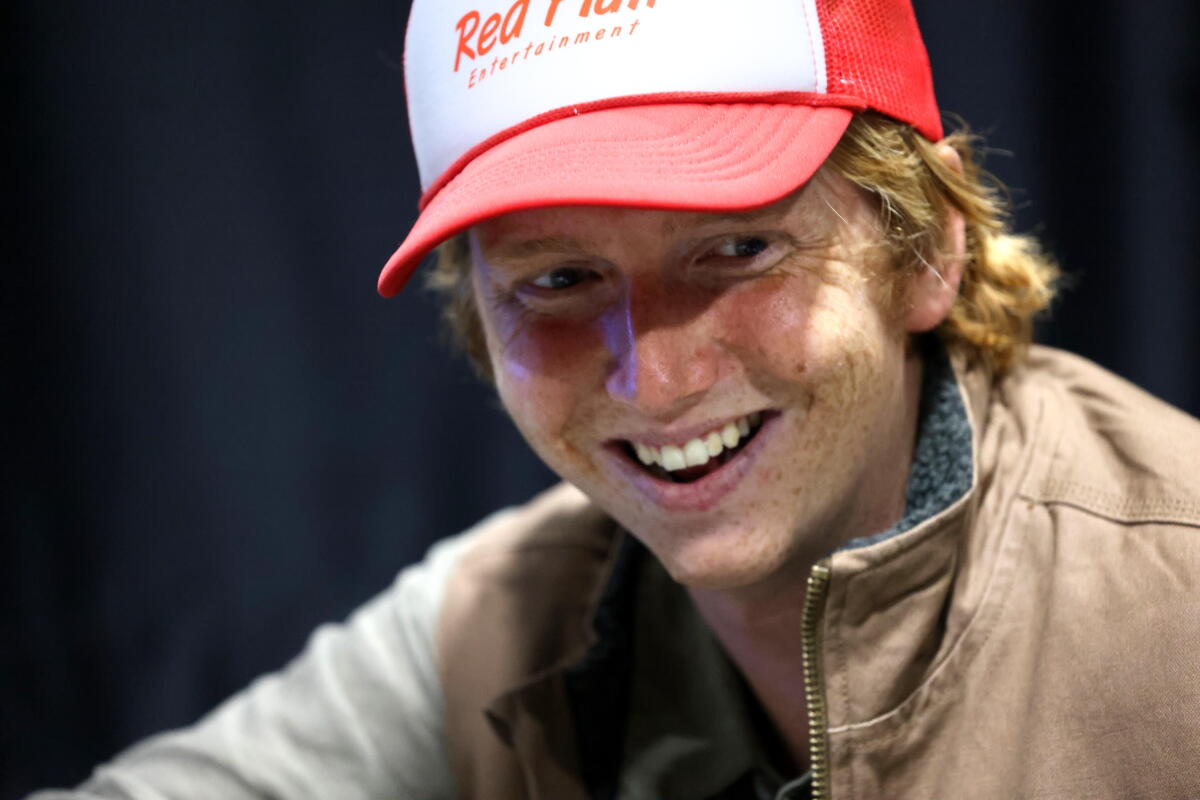
Now, Bell is moving into the space. The 16-time Emmy winner and his son Oliver recently launched a production company called Red Flair Entertainment to capitalize on the format.
“Hollywood Starlet,” their first production, premiered Sept. 3 on aTwist, a new vertical series app founded by industry veterans Jana Winograde, former president of Showtime; Susan Rovner, former president of Warner Bros. Television; and Lloyd Braun, former chairman of WME.
Oliver Bell, founder of Red Flair Entertainment, is producing the micro series, “Hollywood Starlet,” being filmed at Sunset Las Palmas Studios in Los Angeles.
(Genaro Molina/Los Angeles Times)
Bradley Bell says it was Oliver who hatched the idea.
“I saw this unique format and was fascinated by it,” Oliver Bell said. “I noticed some areas that we could quite easily improve on.”
Microdramas first came across Oliver’s social media feed around a year and a half ago when he was still in college. The 24-year-old said he quickly “fell down a rabbit hole” and became so obsessed with the format that he wrote his dissertation at the University of St Andrews in Scotland on soap operas and microdramas.
After he graduated in December, he and his father founded Red Flair Entertainment and started to develop “Hollywood Starlet,” with Oliver serving as an executive producer and his father as a producer.
The series — which costs about $175,000 to $220,000 a season to produce — is being financed by aTwist. Red Flair has a backend deal, allowing it to share in subscription revenue the show generates for the platform.
After filming two seasons of “Hollywood Starlet,” Red Flair plans several more vertical series across many different genres, like horror and romance, the Bells said.
Oliver grew up visiting sets and eavesdropping on writing meetings from under his father’s desk. The family’s storytelling line runs back to his grandparents, William Bell and Lee Phillip Bell, who created “The Young and the Restless” and “The Bold and the Beautiful.” Oliver says he’s carrying on that legacy in a very Gen Z way.
“In a way, microdramas are just the natural evolution of the soap opera,” Oliver Bell said. “You could kind of trace the legacy through that and the modernization of serialized TV.”
His father, who was working on episode 9,911 of “The Bold and the Beautiful” while speaking with The Times, said the short-form stories can reach younger viewers who might be daunted by the soap’s decades of history.
“It’s like cracking open a book, and it’s hard for people to get into it to learn the history,” he said. “So having smaller, bite-sized pieces is appealing to us.”
“The Bold and the Beautiful” has aired continuously for 39 years, but it’s now one of American TV’s last soap operas. Until the 1980s, 10 to 12 soaps typically aired at once, said Elana Levine, a media professor at the University of Wisconsin-Milwaukee who studies the genre. Today, five remain: four on broadcast TV and one, “Days of Our Lives,” is on streaming only.
“It makes sense to take this storytelling form that has been super popular and enduring in the U.S. and find a way to translate that into the mobile devices that we carry around us all of the time,” Levine said.
While soap operas historically targeted a mostly female audience, microdramas reach a much broader audience, said Michael Berry, director of UCLA’s Center for Chinese Studies, who has studied the rise of vertical series.
“It gives us essentially the main beats that we would get from a soap opera format, but it’s happening in a much more compact and addictive way,” he added.
Cameramen prepare for a scene on the set of the micro series, “Hollywood Starlet,” being filmed at Sunset Las Palmas Studios in Los Angeles.
(Genaro Molina/Los Angeles Times)
Lou Trabbie, the soap’s production designer, had never heard of a microdrama before working on “Hollywood Starlet.”
“It’s all going in a different direction. You just adapt and move forward, and that’s what we see here,” Trabbie, who’s worked in the industry for 38 years, explained. “It’s really great to see how these are done with smaller crews. I feel like this is where the business is going.”
“Hollywood Starlet” shoots on the same Sunset Las Palmas soundstage as “The Bold and the Beautiful,” filming during the soap’s monthly dark week.
The first season, 45 short episodes, was shot in six days at the start of summer with a non-union cast and crew of 45. Less than a week after its release, much of the same crew was back to start working on season two.
Oliver Bell said the series used non-union crew due to “budgetary restrictions.”
Excluding China, vertical video is expected to generate $150 billion globally in revenue this year, according to consulting firm Owl & Co. Most of that comes from TikTok, YouTube Shorts and Instagram Reels.
Sunset Las Palmas Studios, where “La La Land” and the first two seasons of “I Love Lucy” were filmed, dedicated an entire sound stage in June to standing sets for vertical series. The sets include a courtroom, a bar/restaurant, an apartment, an office and a hospital.
Paxton Fuller, left, executive producer of “Hollywood Starlet,” walks with Sean Griffin, Vice President of Sales and Business Development, for Las Palmas Studios, through a courtroom set on the stage meant specifically for microdramas.
(Genaro Molina/Los Angeles Times)
Still, the Bells don’t think microdramas will replace soap operas. The two formats, they argue, can “coexist.”
“Coming into someone’s living room or bedroom, soap operas were almost like an extension of their family that they can count on for years and decades with the same actors. The same families that have watched since day one,” Bradley Bell said. “It’s a different type of viewer for microdramas.”
Oliver Bell added: “We’re trying to grab the scroller’s attention, not necessarily ‘The Bold and the Beautiful’ viewer … Microdramas are unavoidable through social media. [It’s] conditioning our brains and how we process media.”
David Ellison emerged with his prized Hollywood juggernaut Tuesday as the merger of Paramount Skydance and Warner Bros. Discovery officially closed.
The $111-billion transaction culminated a year-long battle by the 43-year-old tech scion to add Warner Bros. Discovery to his family’s growing portfolio.
The Ellison family now controls one of the largest traditional media companies ever formed, with HBO, CNN, CBS, Comedy Central, TBS, Food Network, two traditional Hollywood studios and two major streaming services.
Shares of the new company began trading under the ticker SKYD, a switch from last week when the company went by PSKY for Paramount Skydance. Ellison has called the merged company, Skydance, the name he selected two decades ago when he began building his Hollywood studio.
For My Sister Nicole: Love Shouldn’t Hurt — What to Know About Domestic Violence
By Denise Brown Blackstone Publishing: 240 pages, $30
If you buy books linked on our site, The Times may earn a commission from Bookshop.org, whose fees support independent bookstores.
Nicole Brown Simpson wore a long-sleeved cover-up by the beach, despite the warm weather. “We kept telling her, ‘C’mon, get in the water.’ She wouldn’t,” Denise Brown recalls of a Hawaiian vacation with her sister, Nicole, and the rest of her family, including her brother-in-law, O.J. Simpson. “We didn’t know it then, but he’d beaten the [hell] out of her the night before in the hotel room. We found out later, after she was killed, when we were reading her diaries.”
The incident is one of many chronicled in Brown’s new memoir, “For My Sister Nicole: Love Shouldn’t Hurt.” The book chronicles who Nicole was — from her happy SoCal childhood to meeting beloved celebrity and football star Simpson at the age of 18 (he was 30) to the physical and mental abuse she suffered over seven years of marriage. Brown also reveals the troubling incidents she witnessed behind the scenes, and pairs them with the knowledge she has now of what could have been done to help her sister.
(Blackstone Publishing, Inc.)
Nicole and her friend Ronald L. Goldman were murdered outside her Los Angeles home in Brentwood in June 1994. The brutal homicides set off a media frenzy, and overnight, Brown became the voice for her slain sister.
Images of an angry and sobbing Brown became the media’s hallmark of grief during the criminal trial, particularly when Simpson was acquitted in 1995. He was found guilty in a subsequent civil trial, yet still awarded custody of the divorced couple’s two children.
Now, 69, with sleek silver hair and a voice raspy from the many speaking engagements tied to her advocacy work, Brown has devoted her life to raising awareness about domestic violence. “It’s too late for Nicole,” says the former model who moved from her native Southern California to Florida decades ago. “I want this book to help others avoid what happened to her.”
This interview has been edited for length and clarity.
We’re meeting today in downtown L.A., very close to the courtroom where the trial happened, and to the former LAPD headquarters Parker Center where Simpson was booked after Nicole’s death. Is it difficult being here? Should we have done this somewhere else?
No. This is where it all happened, so it’s OK for me to be here to talk about [the book]. It should start here. And I’m glad it’s with the L.A. Times because Nicole was here in Los Angeles, as was all the chaos. Everything started here.
Denise Brown.
(Ronaldo Bolaños / Los Angeles Times)
It’s been 32 years since your sister’s murder, yet this is the first book you’ve written about what happened.
I had a [previous] book deal, but I wasn’t ready.
It was really hard going back because you think about all the things that should have been, that could have been, that she missed out on, especially with her kids. And everything was so public. It was so out in the open, with everybody looking at you. If you were too happy and laughing, it was, “Oh God, she doesn’t even know how to grieve.” If you’re crying, it’s, “My God, can’t she just get over it?”
I understand why people make these kinds of comments now, because if you’ve never been through something so horrific, you don’t know how to act. You don’t know how you’d respond.
Aside from raising awareness about domestic abuse issues, you haven’t spoken much about your sister’s life or murder until the 2024 Lifetime docuseries, “The Life & Murder of Nicole Brown Simpson.” It was the first production that included interviews and involvement from you and your sisters, which is stunning because there have been so many docs and dramas about the case.
I know. And without asking Nicole’s family, can you really make a good documentary?
A girlfriend of mine who is a producer wanted to [make a documentary] at the 10-year mark, and I just wasn’t ready. Then she asked me at the 20-year mark. I said, “No, this doesn’t feel right yet.” Then on the 30th, I asked my sisters [Tanya, Dominique and Wendy], “Do you guys want to do this?” And it was “Yes, let’s humanize Nicole. Let’s bring her back because she was lost in all of this.” Ron and Nicole were both lost. The trial has been done and saturated. Let’s humanize her, get videos of when we were kids. Stuff like that. So that’s what we did.
In the book you write that the docuseries provided new revelations about Simpson.
What I found out all these decades later shocked me. I learned after Simpson moved down to Florida with the kids, there were 17 calls to 911. There was an FBI raid. I don’t know what it was for, but the police came to the house 17 times?! I was friggin’ livid when I heard that. Where were the advocates? Where were the people protecting those children out there? They would have been protected by my mother and father, by all of us. Coming off that, I thought that it’s time to write a book.
We know so much more about recognizing the signs of domestic violence now than we did in the 1990s. The progress is of course welcome, but it also has to be hard applying that knowledge in hindsight to your sister’s case.
Back then I saw. I was privy to. I was there. I was involved. But I didn’t know it was domestic violence, and that’s what I want people to understand. Don’t read this book like it’s something that I knew about all along because I didn’t. I thought [the fights] were isolated incidents because they didn’t happen every single time I saw Nicole. They were years apart. I learned about domestic violence patterns after the murder.
Can you talk about what was in the diary you found in her home after she was gone?
A couple of months after her murder, my dad was reading her diaries, and I saw him lying on the bed, just broken. He said take a look at these, and it was Nicole’s writing and about the things that were happening. And I sat there like, “Oh my God. We were there.” We were there when this happened, like on a vacation in Hawaii. But we were not in the room with them.
Nicole wrote in her journal of that trip that once they were in their hotel room alone, he beat her and threatened to hang her off the balcony. But the diarywasn’t admissible in court. And maybe it wouldn’t have even made a difference given the lack of awareness about domestic abuse patterns.
Domestic violence, the jurors didn’t really understand it. They thought if you’re not dead after he’s finished strangling you, it’s not domestic violence. Jurors even said, “This is not a domestic violence trial. This is a murder trial.” Well, lo and behold, the ultimate form of domestic violence is murder.
Your passionate statement to a reporter during pretrial hearings marked the first time a member of your family publicly expressed doubt regarding Simpson’s innocence. From then on the press made a point of painting you as the furious, avenging sister.
Why wouldn’t I be angry? My sister was slaughtered, for God’s sake. I became the spokesperson for our family after I went upstairs to the press room [during the hearing] and said to a reporter: “If O.J. so innocent, why is he trying to suppress all the evidence?!” I couldn’t sit there and watch the so-called Dream Team [Simpson’s defense] constantly berating Nicole and belittling her and turning her into something that she wasn’t.
Before testifying in criminal court, you testified before Congress in 1994, urging lawmakers to fully fund programs and shelters supported by the Violence Against Women Act.
It was a bipartisan act from Orrin Hatch and Joe Biden, who were both senators at the time. Bill Clinton signed it into law after Nicole’s murder. I went to Washington and spoke before Congress because the funding was all [tied up ] in state appropriations. I was the first one to speak. I thought I was going to die. But it all worked out [laughs].
How did you deal with such an immense loss in private?
I ran every day for like an hour and a half until I collapsed because there was so much anger in me. My mom said, “Denise, I’m really worried about you because you’re just so angry,” and I said, “Why wouldn’t I be?!” She said, “I know, but you need to be able to deal with it.” So she invited our pastor over to the house who was a friend of the family. He said to me, “Denise, this is not God’s doing. This is the evil of man.” And as soon as he said that, there was something that just came off my shoulders. I could breathe again. You’re right. This is the evil of man. So I was the one who kept saying from the very beginning that I knew who did it: Simpson.
Nicole emerges as a whole person in this book, which after all these years feels long overdue.
Nicole was a wonderful person. Even when he gave her a Ferrari for her birthday, she didn’t give a s— if there was French fries in the gear shelf. Her kids, her friends, her people meant everything to her, and that was taken away from her by a f—ing monster. She was the best wife. All she wanted was her two kids, a white picket fence. The American family. So for her to put up with everything that she went through, it just breaks my heart because she was such a good person. Stubborn as all hell, but that’s OK. You don’t get murdered because you’re stubborn.
And people ask, “Why didn’t you just grab her by the hair and take her out [of that marriage]?” Well, because she was an 18-year-old girl who knew what she wanted, and she wanted him. She was totally in love with him, and she was not going to listen to her sister.
Your sister did eventually leave. She had been divorced for two years before she was killed. During that time, she wrote in her diaries that Simpson stalked her at the gas station, the supermarket, when she ate out, and your family witnessed it.
She did get away — for two years, and he couldn’t handle it. His ego could not handle it. His narcissistic behavior couldn’t handle it.
He was there for every move she made. She’s with a boyfriend having dinner, and he’s there, plopping his ass down at the table and having dinner with them. And at the supermarket?! C’mon, he doesn’t shop.
People [like him], they’re just so obsessed with control. And they’re narcissists. I don’t believe she could have ever gotten out of her situation because [of all the support he had]. He was so loved.
Why do you think she kept the abuse from you?
I asked [a family friend] why they think she hid the abuse. They said she was trying to protect her family and her friends, and to me that made all the sense in the world because that’s exactly what a victim does. The abuser will threaten the family. That’s their MO. I’m going to kill you. Your family. The dog. Our kids. Something you love will get hurt, and you’re the only one that knows about it. You’re the only one who knows how bad and how mean he can actually be.
I don’t have to look over my shoulder. Actually, the funny thing is, I was never afraid. There was never a fear of running into him. But is there a relief that he’s gone? I didn’t even know he was sick, and I hope he suffered the way Nicole did. I wish it would have been longer. You can quote me on that.
Is there ever any closure for you?
You try to move on. You never forget. It’s always there. So to go back, it just ripped my heart out. In 32 years I’ve not told my sister I love her, like we did every single phone call, every single time we left each other. It was always, “I love you. I’ll see you later.” But it was never goodbye. We never said goodbye to each other because that’s so final. It was always, “I’ll see you later.”
What impact do you hope this book has on readers?
I just really want your readers to know, if it can happen to Nicole, it can happen to you. It can happen to anybody: rich, poor, Black, white, gay, Democrat or Republican.
At the end of the book, I say that I think Nicole was put on this earth to be the person that shines the light on domestic violence. The 24-hour national domestic violence hotline didn’t exist before Nicole. The Violence Against Women Act didn’t exist before Nicole. There weren’t a lot of shelters. There wasn’t a lot of education. There weren’t PSAs. She changed that.
Sir David liked Brooklyn’s video he postedCredit: BackGridDavid likes Brooklyn’s video – sparking speculation he might be offering an olive branch to his sonCredit: BackGrid
Fans spotted ex-England footie star Becks had liked a video of the couple posted on Friday after the Messika Womenswear show in Paris.
Brooklyn and Nicola previously told his parents to stop reaching out to them on social media.
Nicola wore a simple black crop top and flashed her abs for the Messika bash.
The event was held two miles from where designer Victoria later unveiled her own collection in the French capital.
Brooklyn, 27, and Nicola, 31, have been estranged from the Beckhams for almost two yearsCredit: GettyBrookly’s shirt efers to pop star Justin Bieber’s 2025 paparazzi meltdown, when he complained: ‘It’s not clocking to you I’m standing on business’Credit: Getty
Brooklyn, 27, and Nicola, 31, have been estranged from the Beckhams for almost two years.
He claimed his family treated him as a commodity and said: “I do not want to reconcile.”
Sass Jordan, the Canadian rock star known for hits such as “Make You a Believer” and “Tell Somebody” who served as a judge on all six season of “Canadian Idol,” has died. She was 65.
Jordan died Friday surrounded by her family, according to an announcement posted to Instagram Saturday. No cause of death was provided, but she had reportedly canceled a number of performances in Ontario, Canada, in September “due to a serious medical condition.”
“She remains in our hearts, an inimitable force of nature,” her family wrote in the statement accompanying a photo of Jordan cuddling a cat. “An irreplaceable being of light and joy!”
Jordan made her solo debut with her 1988 album, “Tell Somebody,” which led to her winning the Juno Award — the Canadian equivalent of a Grammy — for most promising female vocalist the following year. She moved to Los Angeles in 1990 before releasing her follow-up album, “Racine,” in 1992.
“Racine” remained one of Jordan’s biggest solo albums, with tracks including “Make You a Believer,” “I Want to Believe,” “You Don’t Have to Remind Me” and “Goin’ Back Again.” She also recorded a duet with Joe Cocker, “Trust in Me,” for the 1992 film “The Bodyguard” that year.
“I always think of music as medicine and as healing for myself and for anyone else who wants to join in,” Jordan said in a 2023 interview with the CBC about audiences still responding to her earlier hits when she performed. “[S]o it’s an extremely uplifting thing. … It’s amazing and it’s incredible to see that. It’s incredible to see people responding to something that is genuinely, like you said, 20 years old.”
Born on Dec. 23, 1960, in Birmingham, England, Sarah “Sass” Jordan moved from France to Montreal with her family at age 3 when her father, a French literature professor, took a job at Concordia University, according to a statement shared by her publicist Eric Alper after her death. Seeing David Bowie in concert as a young teenager inspired Jordan to dream of a career in music. She began singing and playing guitar with friends in Westmount Park and by age 16 she was performing with bands in downtown Montreal nightclubs.
“I’m an expert on rebellion,” Jordan told The Times in 1992, reflecting on why she ran away from home at 14. “I didn’t want that clean, wholesome life … It felt so fake. I identified with real people, oppressed people who were outside that life. I wanted to taste real life — street life.”
Throughout her career, Jordan would tour alongside acts including Aerosmith, the Rolling Stones, AC/DC and Van Halen. Her touring band in 1994 included Taylor Hawkins, who would go on to become the drummer for the Foo Fighters. Jordan’s most recent release is the live album from that tour, titled “Live in New York Ninety-Four.” Hawkins died in 2022 at age 50.
For six seasons, Jordan served as one of the judges on the reality competition series “Canadian Idol.” The show aired from 2003 to 2008 and mirrored the format of shows like “Pop Idol” and “American Idol.”
“Over four decades, she gave Canadian rock one of its most recognizable voices, carved out space for women in a genre long dominated by men, and opened doors for the young musicians who came through her band,” Alper said in his statement. “Sass Jordan leaves a catalogue that shaped Canadian rock through the late ’80s and ’90s, a blues renaissance in which her voice grew richer with each record, and a generation of artists, from Idol hopefuls to a future Foo Fighter, who learned from her what it means to give a song everything.”
Jordan is survived by her husband Derek Sharp, daughter Stella Jordan-Sharp, stepdaughter Brianne Sharp and brother Daniel Jordan.
When Zoe Kazan learned she was going to adapt “East of Eden,” she knew it meant she’d be destroying a copy of John Steinbeck’s 1952 novel with scribbled notes in different colors, highlights and earmarked edges. So she ordered a used one from Powell’s Books — it has somebody else’s last name written on it, she points out.
“It’s a treasure to me,” she said during a recent video call from London.
Steinbeck’s Cain and Abel-inspired novel follows two families across decades as a way to explore good and evil, legacy, free will and what makes a person. Driving many of the biblical parallels are two sets of siblings — half-brothers, Charles and Adam Trask, and later, Adam’s fraternal twin sons Cal and Aron — each competing for their father’s attention and love. Disrupting their lives is an enigmatic woman named Cathy Ames, who Adam marries and who gives birth to Cal and Aron.
The book-to-screen adaptation has been Kazan’s passion project. And for a tale of familial legacy, she had her own to confront — in 1955, her grandfather Elia Kazan directed a film version that starred James Dean and covered the last third of the book, which focused on Cal and Aron. Zoe Kazan’s interest in the story took shape decades later when, as a teenager, she discovered the book.
She found herself drawn to Cathy, its famous antagonist.
“I felt repelled by her, attracted by her, curious about her. I felt empathy. I felt hared. I felt love. I felt all these things,” Kazan said. “I had never read anybody like her. I just remember, every few pages, wanting to stop and read aloud to someone the things that she was doing or [the things] that someone was saying about her.”
She also felt the pull of the story’s examination of intergenerational cycles and familial legacy.
“It feels a little bit like a chicken-and-egg situation. Which came first: Was I drawn to this book because of its intergenerational aspects or did this book teach me to think about intergenerational aspects?”
Now streaming on Netflix, the seven-part adaptation Kazan shepherded — alongside co-showrunner Jeb Stuart — covers more ground of the multigenerational saga than her grandfather’s film. This new version also centers Cathy.