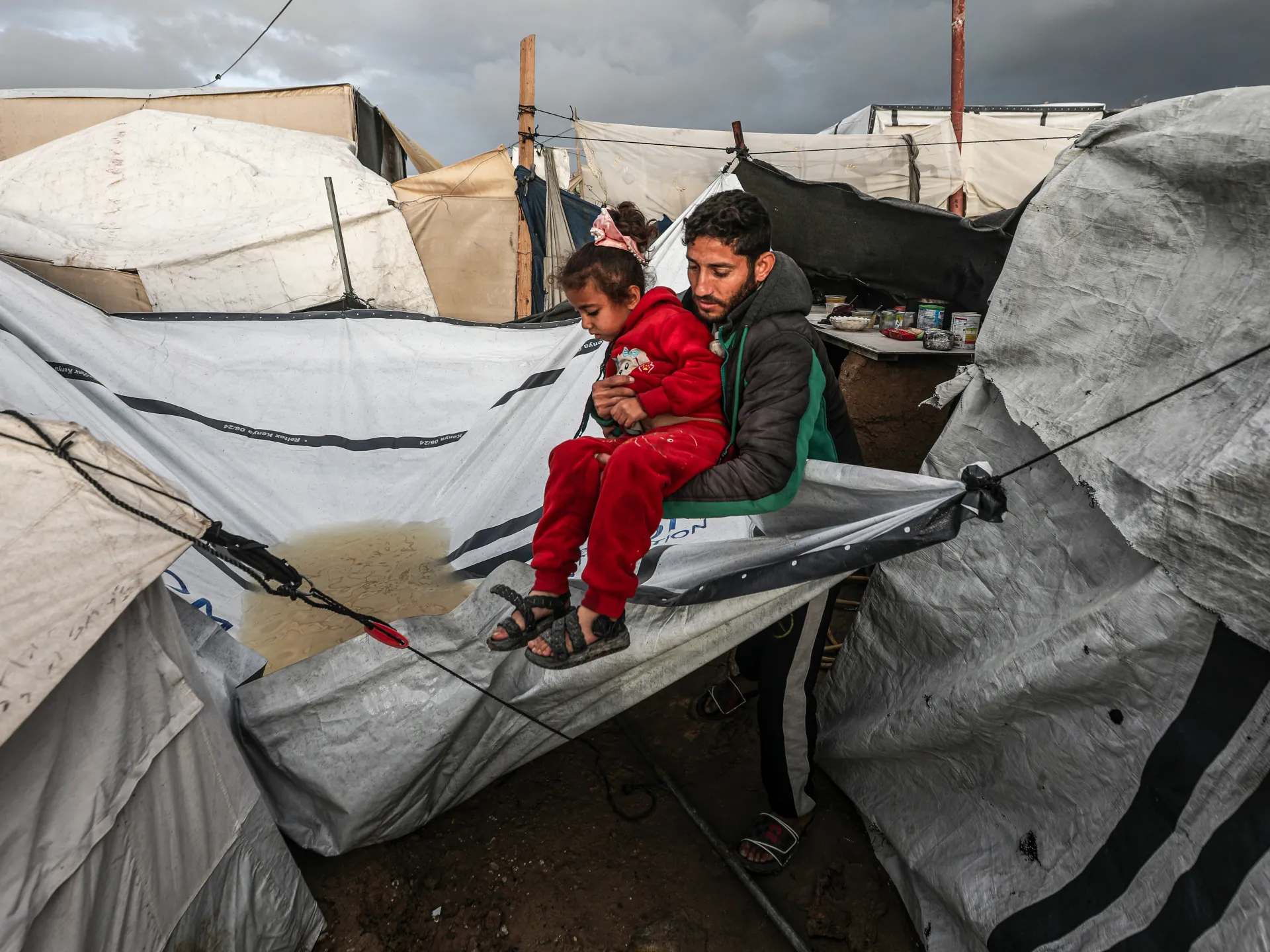
Civil Defence warns of catastrophic repercussions from the storm for Palestinians, who lack adequate shelter, as Israel continues to block aid, critical supplies in violation of truce.
Eight Palestinians have died in war-ravaged Gaza as a new storm has brought cold temperatures, piled on further misery to tens of thousands of displaced people surviving in flimsy shelters and caused strong winds that have toppled buildings damaged by Israeli attacks in its genocidal war on the enclave.
Israel continues to block desperately needed humanitarian aid and critical supplies for shelters from entering the besieged Gaza Strip in violation of a ceasefire that began on October 10.
Recommended Stories
list of 4 itemsend of list
A spokesperson for Gaza’s Civil Defence told Al Jazeera on Tuesday that four deaths have been recorded due to cold temperatures caused by a severe weather depression that has brought torrential rain and freezing winds to the coastal enclave.
A source at Al-Aqsa Martyrs Hospital in central Gaza’s Deir el-Balah said one of the victims was a one-year-old who died in a tent before being brought to the facility.
Four other Palestinians were killed when war-damaged buildings toppled during the storm, the Civil Defence and officials at al-Shifa Hospital in Gaza City’s Remal neighbourhood said.
Three people, including a 15-year-old girl, were killed when one building collapsed in Gaza City while a fourth was killed in a separate building collapse in the city.
Civil Defence spokesperson Mahmoud Basal warned of catastrophic repercussions from the storm for Gaza’s population, the majority of whom have been left without adequate shelter as a result of Israel’s war and its ongoing restrictions on goods entering the territory.
In a statement, Hamas said it was regrettable that the international community was failing to provide relief to Gaza, saying the rising death toll and spread of illness showed the territory was “experiencing the most horrific form of genocide”.
Surge of hospital patients
A Civil Defence spokesperson said hospitals across the territory were observing an influx of patients, particularly children, with cold-related illnesses and the organisation had received hundreds of calls for support due to extreme cold.
He said shelters had been damaged by the storm and were no longer fit for use while other tents were being blown away completely by strong winds in western Gaza City.
Amjad Shawa, director of the Palestinian NGO Network in Gaza, told Al Jazeera that the situation was the worst it had been since the winter storms began.
He said about 10,000 families on Gaza’s coast were exposed to danger and further displacement as a result of the storm.
Shawa said Israel’s restrictions on goods entering the Strip were preventing access to much-needed shelter and medical supplies and hampering the work of aid organisations, endangering Gaza’s hard-hit population.
Gaza City Mayor Yahya al-Sarraj told Al Jazeera that Palestinians in the Strip were trapped in “tragic” circumstances, sheltering in inadequate tents and shelters, many of which were at risk of collapse, with insufficient supplies of medicine to treat those who are ill or wounded.
He called on the international community to pressure Israel to allow aid into the territory so Palestinians would be able to rebuild their homes.
The low-pressure system is expected to bring cold temperatures to Gaza until at least Tuesday evening, forecasters said.
‘Man-made humanitarian catastrophe’
At a briefing on Tuesday, a spokesperson for the Qatari Ministry of Foreign Affairs condemned the “man-made humanitarian catastrophe” in Gaza and said Israel should allow aid into the enclave.
The spokesperson said Qatar was working with mediators to advance to the second phase of the Gaza ceasefire.
As the death toll from the storm rose in Gaza, UNICEF said dozens of children have been killed since the start of the ceasefire three months ago.
“More than 100 children have been killed in Gaza since the ceasefire of early October. That’s roughly a girl or a boy killed here every day during a ceasefire,” James Elder, spokesman for the UN children’s agency, told reporters.
He said the children had been killed in air strikes, drone strikes, tank shelling and by live ammunition.