storm

Aida Rodriguez talks new movie ‘Hurricane Seasons’ and Puerto Rico — beyond the storm

As Puerto Rico continues to grapple with the long aftermath of Hurricane Maria — from an unreliable electrical grid to ongoing water shortages — the need for stories that see the island as more than a backdrop feels especially urgent.

That’s part of what makes “Hurricane Seasons,” an intimate new independent film about a Puerto Rican family returning home, feel so timely. The film, which screens Sunday at the Newport Beach Film Festival, stars comedian Aida Rodriguez as Glori, a Brooklyn-based artist and community-center worker. She returns to Puerto Rico to help her sister (Justina Machado) care for their terminally ill mother (Priscilla Lopez).

When their matriarch convinces the family to embark on a bucket-list road trip around the island, old family secrets surface as the 2019 protests following Hurricane Maria unfold around them. Directed by Nicole Gomez Fisher and written by Xavier Ortiz — with Rodriguez also serving as a producer — the film is both a story of a multigenerational family and a love letter to Puerto Rico.

For Rodriguez, who is best known as a stand-up comedian, “Hurricane Seasons” also marked a return to a part of her artistic identity that existed long before comedy — her love of acting. But she admits that stepping back into acting, especially as the film’s protagonist, wasn’t an easy transition.

Filming of Hurricane Seasons directed by Nicole Gomez-Fisher.

Aida Rodriguez, left, and Priscilla Lopez in a scene from “Hurricane Seasons,” directed by Nicole Gomez-Fisher.

(Laura T Magruder)

“It was terrifying. It was very scary because as a stand-up comedian, I work very hard at trying to obtain my most authentic self so that I can share it with everybody — to be my truest self, my truest Aida,” she says. “And when you loan yourself to a character and the art form of acting, you’re loaning yourself to that character and bringing yourself to that character, of course, because that is why they choose you. But you are telling a story from the perspective of another person.”

Rodriguez had pursued acting before going into stand-up comedy. Upon moving to Los Angeles, she quickly booked acting work, signed with an agency and began taking classes.

But comedy eventually taught her to do almost the opposite of what acting required.

“When I started doing standup, the direction and the notes were always like: ‘Release any character you have in mind and just access yourself,’” she says. “So it was a battle for me. Coming back to becoming an actor and giving the character Glori what Glori deserved — and allowing Glori to live, and Aida to sit in the back — became something important for me to do.”

She adds that it took a lot of work with coaches and classes for her to relax into acting again, allowing Aida the comedian to rest while focusing on what this role required of her.

The film’s protagonist, Glori, is a Brooklyn-born-and-raised Puerto Rican woman whose connection to the island runs deep, despite her living stateside. This is something Rodriguez, who is half Puerto Rican and half Dominican, born and raised in the States, also personally relates to.

That tension — between where you live, where your family comes from, and who gets to decide whether you are “Puerto Rican enough” — is one of the film’s central themes and one reason the script resonated with Rodriguez.

“My testimony through my art has always been finding unity, solidarity, power and connection with other people,” she says. “I think that the story of growing up in the States and connecting to the island is a universal story that most people, regardless of where they come from, experience. [There’s this] idea that you’re never American enough nor whatever you are — in this case Puerto Rican enough — because there’s always a judge and jury on both sides.”

Rodriguez sees those tensions as a consequence of a much larger and complex history. She believes so much of the judgment on both sides is a lingering effect of colonization.

“For me, that was one of the most attractive things about the script — [it] was being able to engage in a conversation about what being Puerto Rican really is,” she says. “Is it based on colonial standards? Or is it based on maintaining our cultural richness and our legacy, that is handed down to us regardless of where we are?”

That question takes on even more weight today as Puerto Rico sits in the aftermath of Hurricane Maria, which Rodriguez believes shifted the relationship between Puerto Ricans on the island and those living stateside.

“There was a shift, because there are wounds from both places,” she says. “There are wounds from the people on the island that stayed and stuck it out. [They want to ask] the ones who left, ‘why do you get to claim this, if you’re not here sticking it out with us?’ Then the people who leave feel like, ‘we had to do this, so that we can not only survive, but send money back to the island.”

Rodriguez explains that, in many ways, the aftermath of the hurricane sparked arguments on both sides that were necessary to begin healing the tension. She believes it highlighted issues that Puerto Ricans, as part of a diaspora, could no longer ignore; it also highlighted an island and a community that Americans outside of the Latine community paid little to no attention to.

“It took a hurricane for people to know what Puerto Ricans were,” she says. “I think there was a cultural shift and there was a conversation that needed to be had, about what happens on the island. And what that means to those of us who are not there.”

That conversation serves as the meat and bones of “Hurricane Seasons,” in which Puerto Rico isn’t simply a location. It’s an integral presence in the story. Rodriguez, Ortiz and Gomez Fisher all agreed that filming most of the movie on the island was essential, not only creatively but also economically and culturally.

“The other thing that was very important about taking the movie back to Puerto Rico was to invest in Puerto Rico and to stimulate some sort of revenues for the island and that the crew was a Puerto Rican crew,” she says. “The DP [director of photography] was a Puerto Rican DP — all people that live on the island.”

It was important to them that if they were going to tell a story about Puerto Rico that was also shot in Puerto Rico, that Puerto Ricans on the island actually benefited from the production.

“It’s not cool to go to Puerto Rico and shoot a movie and bring in your own people from the States, and the people in Puerto Rico have to be inconvenienced with their roads being blocked and things shut down and an influx of Americans that come there to be disrespectful and them not making anything out of it,” Rodriguez says.

This commitment shows in the protest scenes. Rather than using background actors, the film features real Puerto Rican residents, including a local activist and singer.

“It didn’t feel rehearsed. It didn’t feel fake,” she says. “I just think that the feelings and the passion and the rage and the sense of urgency is still there.”

Ortiz’s commitment to specificity extended to the family casting, intentionally matching the actors to the real-life relatives they are based on.

Filming of Hurricane Seasons directed by Nicole Gomez-Fisher.

“It wasn’t performative. It was actually real because that’s what all of our families look like,” she says. “Puerto Ricans, Dominicans, we just have that diversity because of all the stuff that’s happened in the past.”

Glori’s character also represents a refreshing departure from the way Latina women are often portrayed onscreen. She is a mother, a daughter, a community center worker, an artist — and a woman with a complicated romantic and family history. She is beautiful and desirable, but her sexuality isn’t the defining characteristic of her existence — something we don’t see enough when it comes to Latina roles.

“For me, I didn’t have to step outside of myself for the role, which was really refreshing because every audition that I ever get, I do have to step out of myself because when people write Latinas in Hollywood, they tend to write them one way,” says Rodriguez. “They look a certain way, they talk a certain way, and that’s not the reality of what being Latino, especially in America, is like.”

Rodriguez could freely inhabit a Latina character without feeling as though she had to perform her Puerto Rican-ness for the audience.

“I didn’t feel like I had to perform my Latinidad. I could just exist in it,” she says.

Rodriguez adds she’s ready for a Hollywood that wants Latina actors to have the same range of characterization that white actors have long been afforded. She’s open to seeing Latinas being everything in TV and film, where can they exist in a world in which they can just be people who just happen to be Latinas.

“I really do look for a day when we can just be people and not just be the funny, spicy friend,” she adds. “Some Latinas are not spicy. Some Latinas are nerds, and some Latinas are quirky, and some of them are goofy and some of them are clumsy. And just like everybody gets to see the spectrum of whiteness with all the different kinds of characters, I would love to see that for our people. For all people of color, actually. I think it’s important to see us all as full human beings, and that means that we can be anything.”

The film’s multigenerational story touches on the cultural inheritance passed between mothers, daughters and grandmothers — whether through old traditions or ordinary rituals. It’s something audiences, regardless of background, can likely relate to.

“The most important message that I’ve kept from my [foremothers] was never to lose my sense of Puerto Rico; that, even if I don’t live in Puerto Rico, Puerto Rico lives in me,” she says. So much of that inheritance lives in the little things she remembers about her Puerto Rican grandmother, she says, from the té de tilo she’d make for an upset stomach; the recao that grew on her grandmother’s balcony because she didn’t have a backyard; or the azabache she still wears to this day for spiritual protection. They are the same small traditions she has passed on to her kids.

“My daughter makes better arroz con gandules than all of us,” Rodriguez says. “And her recipe is true to what my grandmother’s recipe was. That will continue to live on, until we are able to go back to our island and live in peace.”

That freedom is one reason Rodriguez believes independent film is so important for stories like “Hurricane Seasons.” Without a studio machine making decisions based primarily on commercial expectations, filmmakers have more room to tell a story on their own terms.

“Once the studio gets involved, they start thinking about dollars, which they got to make money, but they prioritize the dollars,” Rodriguez says. “And I think that’s why a lot of these big projects that they spend a lot of money on have failed because they don’t honor the storytelling. They don’t honor the authenticity of the world, the authenticity of the stories.”

Her hope is that “Hurricane Seasons” encourages more people to tell their own stories — especially Puerto Ricans.

“Puerto Ricans are not a joke; we’re not a punchline. You don’t get to tell us we don’t speak correct Spanish and make fun of our songs. Then, years later, appropriate our culture and become big time doing what we do, using our terms and our colloquialisms because it brings you capital,” she says. “We are people. We’ve been doing this for a very long time, and our grandmothers and our tias and tios matter, and they’re not [a] costume that you can just put on [to] make money off of it.”

Before we wrapped up the call, Rodriguez paused for a moment when I asked her what Puerto Rico means to her. Then her eyes lit up, and her voice softened as she described why the island means so much to her — and why so many people, even outside of the diaspora, find themselves drawn to it.

“Puerto Rico is a very special place, which is why so many people want to kick us out, so they can move [in],” she says. “But they’ll never have the magic, because the magic is us.”
Source link

Two deaths reported as Hurricane Simon, storm Rachel batter Mexico’s coast | Weather News

Simon caps a Pacific season of record-breaking intensity, as deadly storms wreak havoc from Hawaii to Mexico.

At least two people have died in Mexico after Hurricane Simon and former tropical storm Rachel brought torrential rain and catastrophic flooding to Pacific coast communities.

At a Monday news briefing, Guerrero Governor Evelyn Salgado confirmed that a 71-year-old man had died during Hurricane Simon after a retaining wall collapsed under the weight of intense precipitation.

Recommended Stories

list of 3 itemsend of list

According to the Guerrero-based news agency IRZA, the man, identified by his family as Albino Moreno Jimenez, had been feeding his animals on the western outskirts of Chilpancingo when a wall came crashing down on him.

A second death was announced later in the day in the state of Baja California along Mexico’s western coast. There, Governor Marina del Pilar said that a young girl had died from the effects of what was once Hurricane Rachel, which peaked in early October as a Category 3 storm.

At least 10 more people remain missing in Baja California, according to the governor. Eight were reported missing in the city of Ensenada, on the Pacific coast, and two in the fishing town of San Felipe on the Gulf of California.

The figures remain preliminary, with local newspaper La Jornada reporting a higher death toll of two in Baja California and 11 missing.

Death toll expected to rise

Rachel made landfall in the Mexican state as a post-tropical cyclone, and its remnants have travelled north through southern California in the southwestern United States.

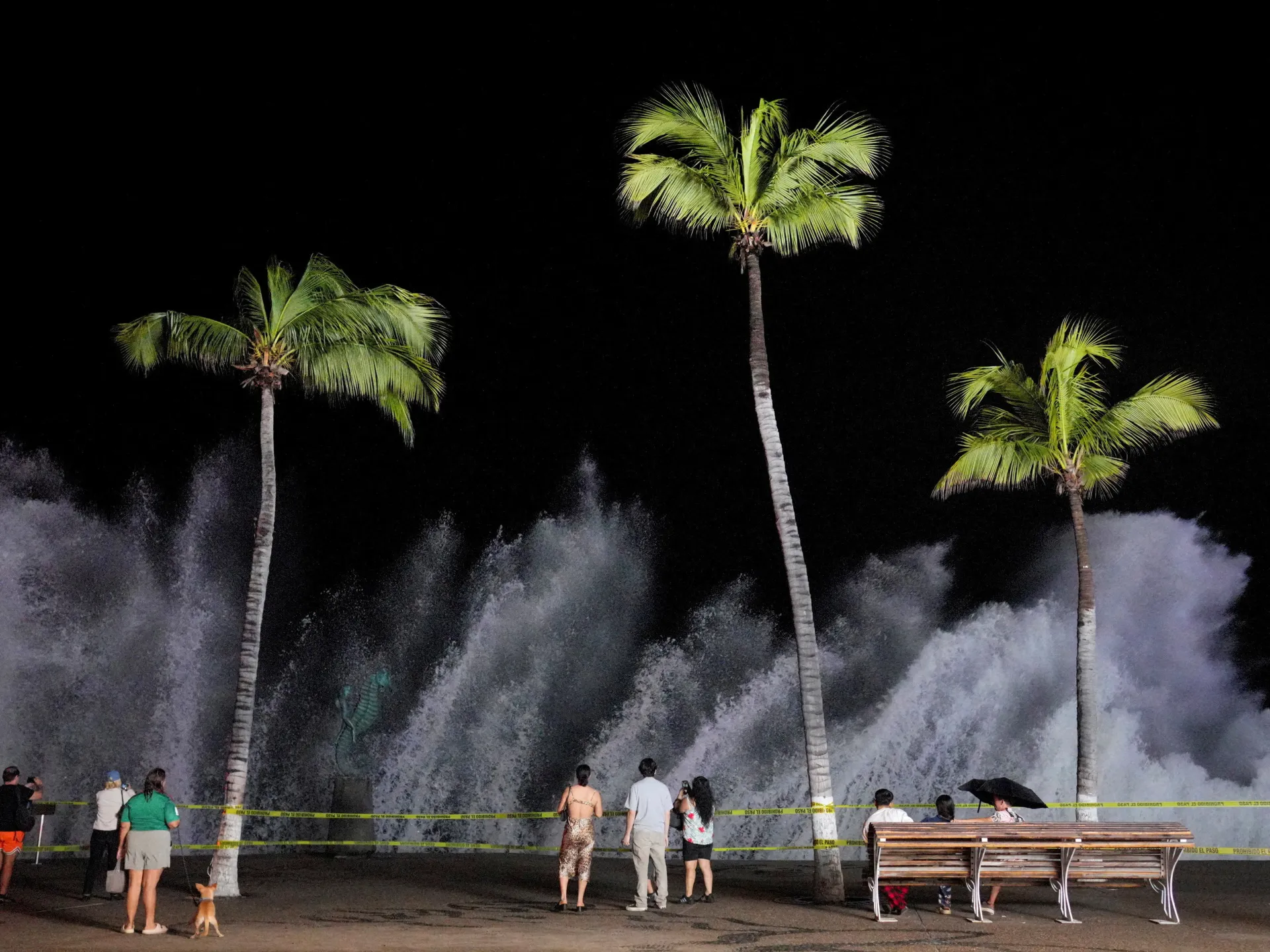
Hurricane Simon, meanwhile, has churned off the coast of Mexico since the weekend. By late Monday morning, it had weakened from a powerful Category 4 storm to a Category 2.

Its maximum sustained winds had slowed slightly to around 155km/h (100mph), according to the US National Hurricane Center. Its centre was about 115km west-southwest of Cabo Corrientes, a cape in the state of Jalisco, drifting west at 3km/h.

Forecasters predict Simon could make landfall on Thursday or Friday. Hurricane warnings remain in effect for western Mexico, which is vulnerable to landslides and deadly surf conditions as a result of the storm.

Experts warn the death toll from both storms could rise, and officials have called on residents to exercise caution amid the devastation wrought by downed trees, high winds and floodwaters.

The Spanish newspaper El Pais reported the death of a cliff diver, Juan Patines, who was killed in Mazatlan, the northwestern state of Sinaloa, after jumping into the sea on Saturday night.

According to Mexican media, the heavy surf hampered his efforts to return to shore amid dangerous coastal conditions associated with Hurricane Simon. Local authorities later halted cliff-diving at the site due to hazardous sea conditions.

Officials have yet to confirm whether his death was directly linked to Hurricane Simon.

A record Pacific storm season

Rachel and Simon have battered Mexico’s western coast as part of an extraordinary stretch of hurricane activity across the Pacific.

The northeastern and central Pacific Ocean has experienced a record storm season this year, fuelled in part by the El Nino weather phenomenon, which results in warming waters in parts of the region. Twenty-one named storms have been recorded in the Pacific so far.

On Sunday, Simon tipped the region to a historic high for accumulated cyclone energy (ACE), a metric of the combined strength and longevity of tropical storms. This year has already surpassed the previous high set in 2018.

The US island chain of Hawaii has been among the hardest-hit places. In August, Hurricane Lala unleashed ruinous flooding on Hawaii’s Big Island as a Category 1 storm, killing a 93-year-old woman and destroying some 100 homes, according to state officials.

A few weeks later, Hurricane Lowell, a Category 4 hurricane at its peak, struck the Hawaiian islands of Kauai and Niihau, where powerful winds, storm surge and flooding overwhelmed towns and roads.

Roughly 90 percent of Kauai’s power customers were plunged into darkness as a result of electricity outages. At least two deaths were linked to Lowell.

In late September, Hurricane Nolo brought another round of flooding and landslides to the Hawaiian islands, though it did not make landfall.

Source link

Contributor: Arts hubs like the Kennedy Center sustain the nation

Marc Bamuthi JosephGuest contributor 

Like any other building from 1971, or a democracy created in 1776, the Kennedy Center could use some attention and possibly some structural repair. But I was a vice president at that arts center in Washington, and I can tell you that maintenance is almost certainly not why it closed its doors last month.

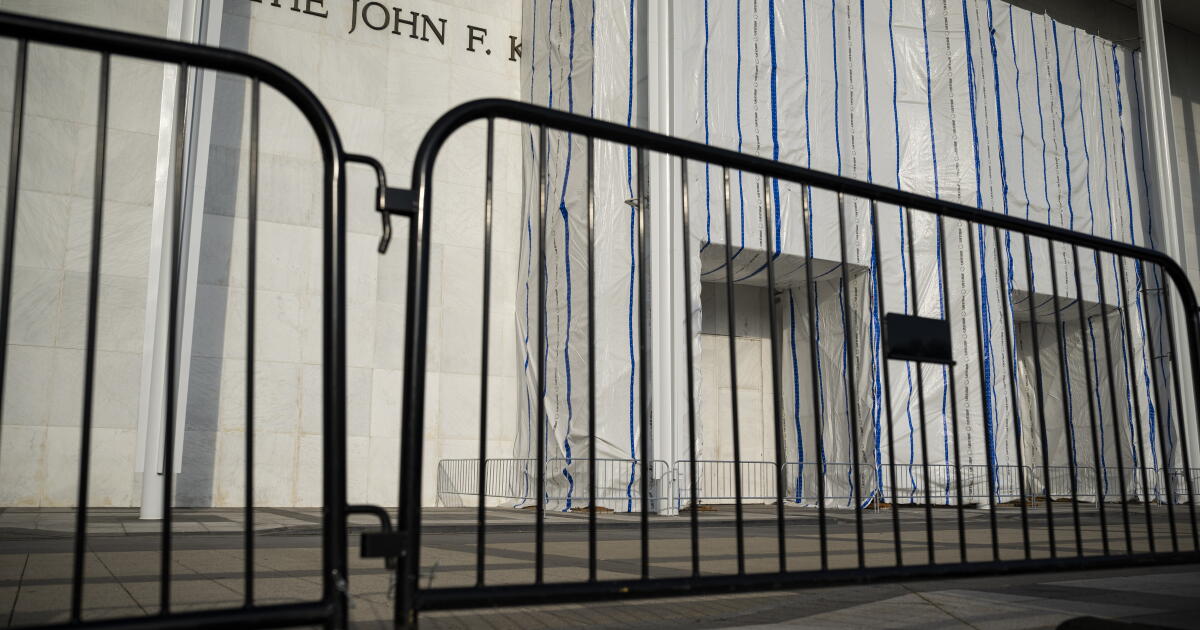
Officially, it’s closed because a section of the Grand Foyer ceiling gave way in a storm, plaster crashing to the floor, and the building needed to be shut down for safety. The Justice Department itself has argued in court filings that there is no real emergency requiring the closure. The board, meanwhile, has approved a quarter-billion-dollar renovation plan, put together without competitive bidding, while the president muses openly about tearing the building down altogether if his own name isn’t affixed to it. This administration is effectively bulldozing arts infrastructure in an attempt to abolish an infrastructure of the imagination.

I watch all of this from the outside now. When the new “leadership” took over last year, my team and I were among the first let go. My department worked on free public programming, on creative equity, on cross-sector community development and on measuring the social impact of art. That we were among the first out the door probably tells you everything you need to know about who was put in charge of the place.

As an American, as an artist and as a former member of its labor force, I understand that the Kennedy Center is more than a building. It is a living memorial to a president who was taken from us too soon, a man who had the audacity to aim for the moon before the science existed to get us there. To honor that kind of visionary, this country built a center for the creative impossible, and gave it his name.

And true to that name, my job at the Kennedy Center was to investigate the correlation between the arts economy and the economy of civic aspiration. As a team, we believed that inspiration erodes apathy and yields empathy. The building is a container of federal infrastructure, but the arts that imbue the Kennedy Center make the argument that inspiration itself is part of the infrastructure of our democracy. An arts center is built to ask: “What are the conditions necessary to dream together in public?”

Who, if not artists, are the authors of the public imagination? When a baby is born, or your daughter gets married, do you read a piece of legislation to commemorate the occasion or do you quote a poem, or dedicate a song? Who, if not artists, might light the path to a post-fear economy?

So why invade an arts center? What could possibly be gained by shuttering a national citadel for creative excellence? How perverse that a president whose policies have underfunded education and the arts would gut a national sanctuary for curiosity, and then demand that his name be emblazoned on the shell of what was. This president has used executive orders to intimidate artists, banned writers and journalists, sabotaged arts education, created oppressive red lines within the National Endowment for the Arts and threatened philanthropic organizations that fund arts and culture, and then he turns around and wants his name on our national cultural center.

When I worked there, the Kennedy Center wasn’t perfect. No institution is. But the business was viable, the staff was talented and reliable, and the work we made together would, often enough, touch something close to the sublime. Our job, like those of so many arts workers across the country, was to activate creative magic in service of social cohesion and well-being.

This is what gets lost in the noise of storms and lawsuits and renovation budgets: Entertainment is everywhere, but inspiration is rare. Sometimes you are sitting in a dark theater with strangers and the right note gets struck, and you hear it with your ears but you feel it somewhere else entirely. In the gut and heart. And the person next to you, a stranger, feels it too, at the exact same moment. You can practically feel the room change. All that magic can happen in one theater, and the Kennedy Center has nine of them. If a solar panel uses the energy of the sun to power a building, an intentionally run theater can use the energy of its inspired audiences to power a city.

Art holds memory. It also holds the horizon, the sense of what a country could still become. Patriotism as enacted by the creative community takes the American experiment seriously enough to question, examine, remember what we’ve forgotten and catalyze collective American dreaming. That is what the Kennedy Center was named for: a president who dreamed of a country unafraid of beauty, unafraid of grace.

Thankfully, America’s creative labor force tirelessly stewards that sense of creative provocation and patriotic inquiry. It is alive everywhere, including in the work of individual artists such as Carrie Mae Weems or in the work of collectives such as For Freedoms and their “America, the Beautiful” initiative.

We, the chronically underwhelmed citizenry of the United States, can’t afford one less pillar of creativity. We should be fighting to reconstitute any and all artistic institutions with an eye toward an inspired future.

Marc Bamuthi Joseph, a spoken-word artist and actor, was vice president for social impact at the Kennedy Center.

Source link

Hundreds of Israelis storm Al-Aqsa Mosque compound | Al-Aqsa Mosque News

Israeli raids at Al-Aqsa Mosque compound have intensified during the Jewish holiday season.

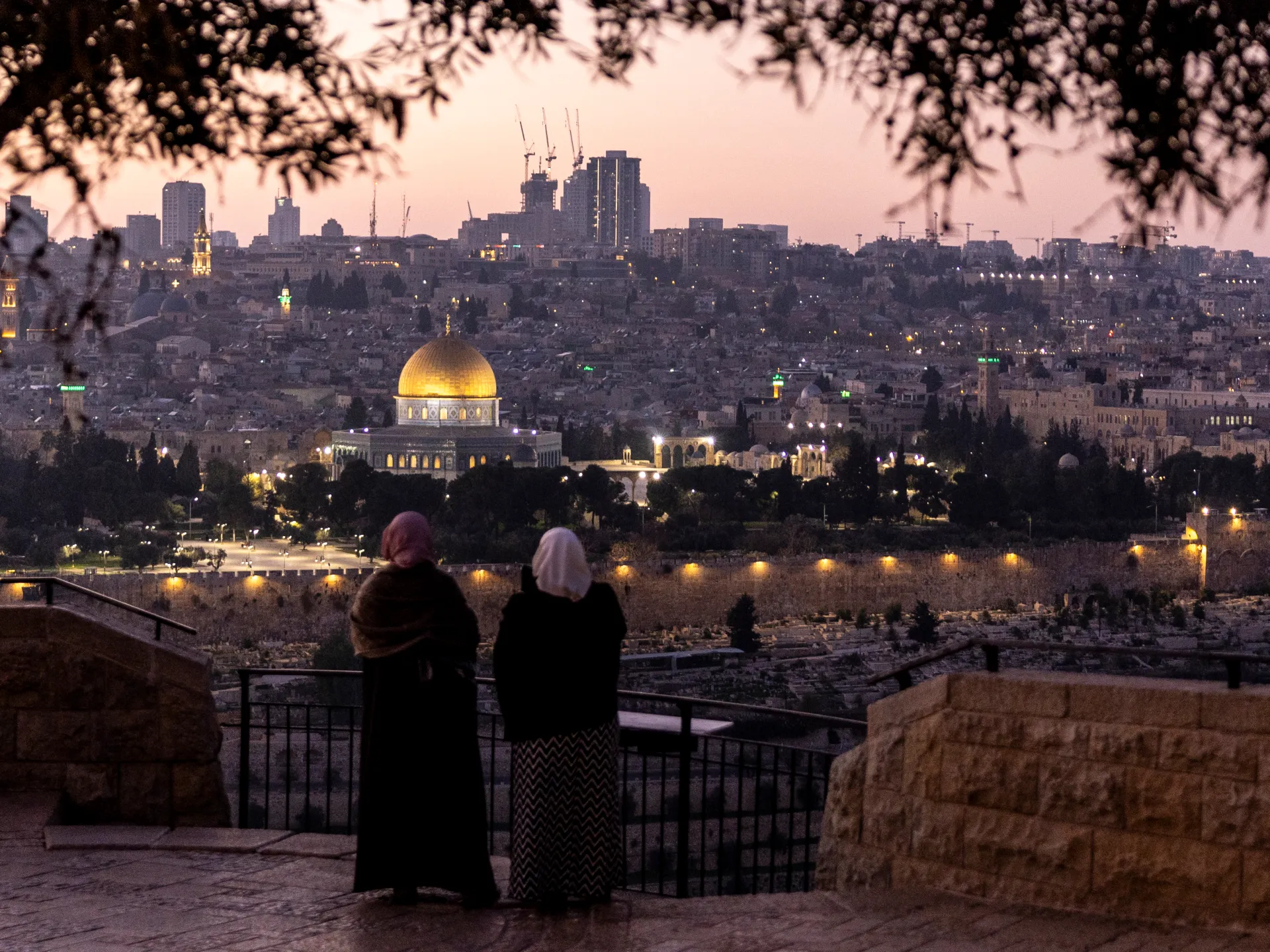
Hundreds of Israelis have stormed the Al-Aqsa Mosque compound in occupied East Jerusalem on the fifth day of Sukkot, a Jewish holiday.

While Israelis performed Jewish religious rituals and sang in violation of the status quo at the compound on Wednesday, Israeli restrictions on the entry of Palestinian Muslims continued, Palestine’s Wafa news agency reported, citing the Jerusalem governorate.

Recommended Stories

list of 3 itemsend of list

Jerusalem’s Islamic Waqf Department reported that about 700 Israelis, including former lawmaker Moshe Feiglin, stormed the compound under the protection of Israeli police.

The historical status quo stipulates that the waqf department has exclusive responsibility for administering the compound, also known as al-Haram al-Sharif, or the Noble Sanctuary, by Muslims, and as the Temple Mount by Jews, as a place of worship exclusively for Muslims.

The Jerusalem governorate said Israeli authorities closed the road leading to the Lions’ Gate area, as well as the entrance to al-Turba Road leading to the town of Silwan, to ease Israelis’ access to the Western Wall.

Israelis have stormed the Al-Aqsa compound regularly since the start of the Jewish holidays earlier this month. On Tuesday, 966 Israelis entered the compound through the Moroccan Gate alongside Israeli police, performing Talmudic rituals and singing together in the mosque’s courtyards.

The holidays began with the Jewish New Year on September 12 and 13, followed by Yom Kippur, or the Day of Atonement, on the 21st and the 22nd. Sukkot runs from September 26 to October 2, after which Simchat Torah, marking the conclusion of the annual cycle of public Torah readings, will be celebrated on October 3.

Source link

Ben-Gvir joins hundreds of Israelis to storm Al-Aqsa Mosque compound | Israel-Palestine conflict News

Israel’s national security minister declares ‘we are the owners of the place in Al-Aqsa’ during heavily guarded incursion.

Hundreds of Israelis led by far-right National Security Minister Itamar Ben-Gvir have stormed the Al-Aqsa Mosque compound under police protection.

The Jerusalem governorate on Monday said Israeli forces closed intersections and streets surrounding the Old City that lead to the Al-Aqsa Mosque compound, which Jews refer to as the Temple Mount, in occupied East Jerusalem on the third day of the Jewish holiday of Sukkot.

Recommended Stories

list of 4 itemsend of list

It said the Israelis danced in circles and sang inside the courtyards of Al-Aqsa Mosque during the raid, noting that 900 people entered the compound in the morning.

“We are the owners of the place in Al-Aqsa and in the prisons, and we have turned the lives of terrorist prisoners into hell,” Ben-Gvir said.

“The people of Israel are on the path to absolute victory, and today we pray in Al-Aqsa, which is the most important place for the Jewish people.”

Monday’s intrusion came as Israeli authorities forced dozens of Palestinian shopkeepers to close their businesses and residents to remain inside their homes in areas near the mosque to allow Jewish prayers during Sukkot.

“Dozens of Palestinian owners of shops, cafes and restaurants in the Cotton Merchants Market in Jerusalem’s Old City were forced to close them during the Jewish Sukkot holiday to make way for Jewish prayers in the market,” the Association for Civil Rights in Israel said in a statement.

‘Playing with fire’

Palestinian presidential spokesman Nabil Abu Rudeineh described the incursion as “playing with fire and a dangerous provocation to the feelings of Muslims around the world”.

He also warned that Israel was seeking to ignite a “religious war” in the region.

Since 2003, Israeli police have allowed groups of Israelis to make daily incursions into the Al-Aqsa Mosque compound, except on Fridays and Saturdays.

Israel often imposes restrictions on Palestinian worshippers. It prevented Eid al-Fitr prayers at Al-Aqsa this year, allowing only 10,000 Palestinians from the occupied West Bank, home to 3.3 million people, into one of Islam’s holiest sites for the first Friday prayers of Ramadan.

Source link

One dead as nor’easter storm pummels New York and New Jersey

The man has been identified as 56-year-old Leighton Brown, an employee of the New York City Housing Authority.

According to local news, he was walking through east Brooklyn neighbourhood working an extra shift when the deadly incident occurred.

“We mourn deeply for the loss of Leighton Brown, a NYCHA employee who faithfully served Brooklyn residents and who was known for his warm personality,” the Office of the NYC Public Advocate wrote on social media.

The nor’easter has caused widespread power cuts. More than 160,000 households, nearly all in the north-eastern US, have lost electricity, according to tracker PowerOutage.

More than 2,400 flights were delayed and another 1,199 grounded on Saturday, according to FlightAware.

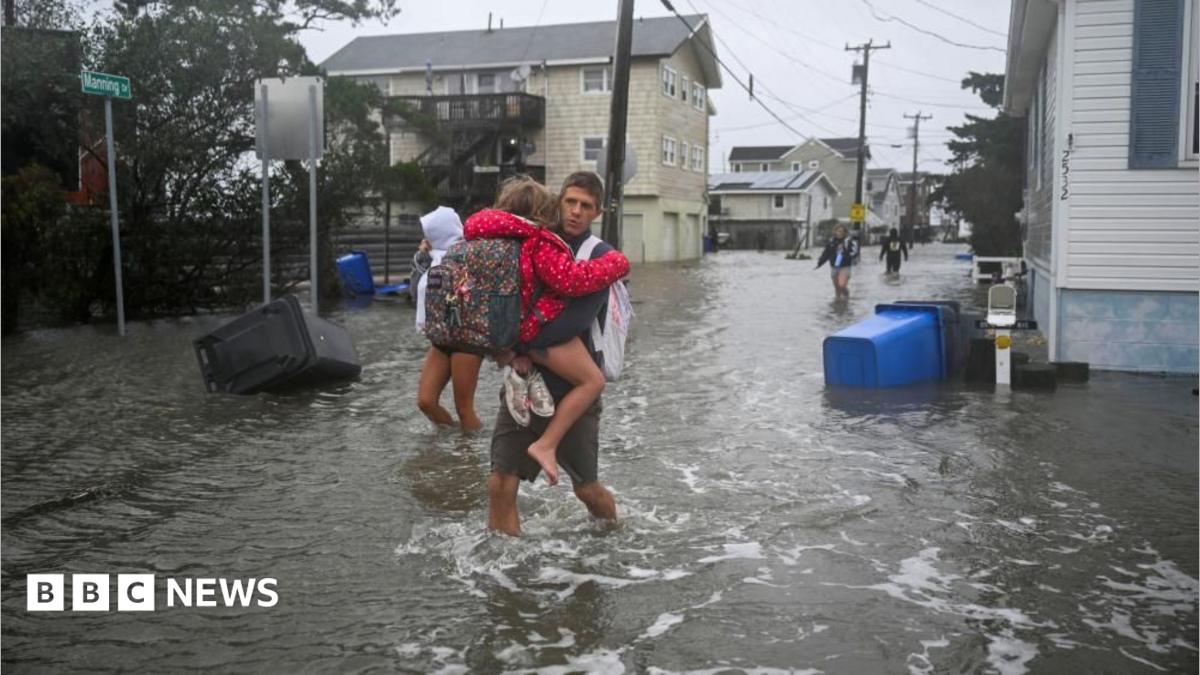
A full moon was projected to worsen coastal flooding. Streets and homes were inundated with floodwater in the coastal New Jersey communities of Surf City and Manasquan on Saturday.

Source link

Powerful storm floods US Northeast, causes power outages | Climate News

The nor’easter causes another round of flooding in low-lying areas in New Jersey and New York City and knocks out power to tens of thousands of homes into New England.

A powerful storm is pummelling the shoreline in the northeastern United States for a second day, causing another round of flooding in low-lying areas and knocking out power to tens of thousands of homes.

Tidal surges swamped low-lying neighbourhoods in New Jersey on Sunday, while wind gusts toppled trees on New York’s Long Island, damaging homes and bringing down utility poles.

Recommended Stories

list of 3 itemsend of list

In New York City, streets in the Howard Beach neighbourhood of Queens were inundated.

The slow-moving storm, which killed a New York City housing authority worker when a tree fell on Saturday, was expected to linger through Sunday, with heavy rain, strong winds and dangerous surf all the way to New England.

Extreme amounts of rain – more than 10cm (4 inches) since Friday in some spots in New Jersey – combined with a surging ocean led to flooding amounts not seen for close to a decade in places used to dealing with high water, residents said.

The storm, known as a nor’easter, triggered memories of Hurricane Sandy, which left behind more than $60bn in damage across the eastern US in 2012. While this storm’s impact has been nowhere near that, it could be the first of several along the East Coast this fall because of an El Nino climate pattern disrupting this year’s weather.

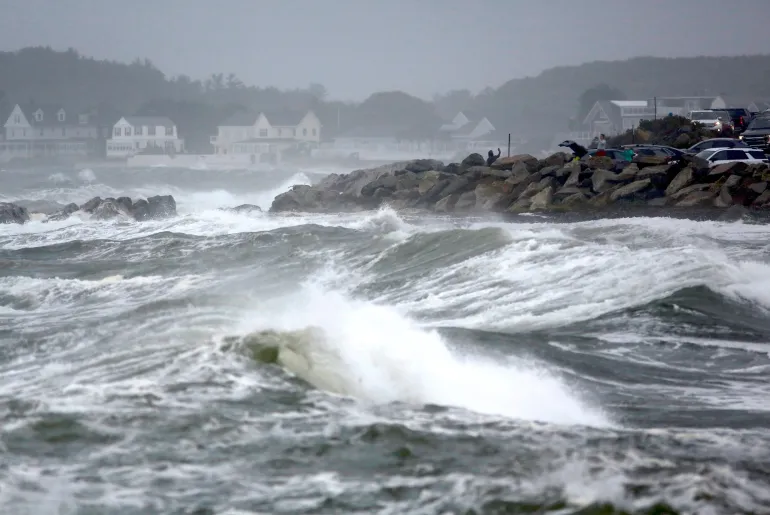
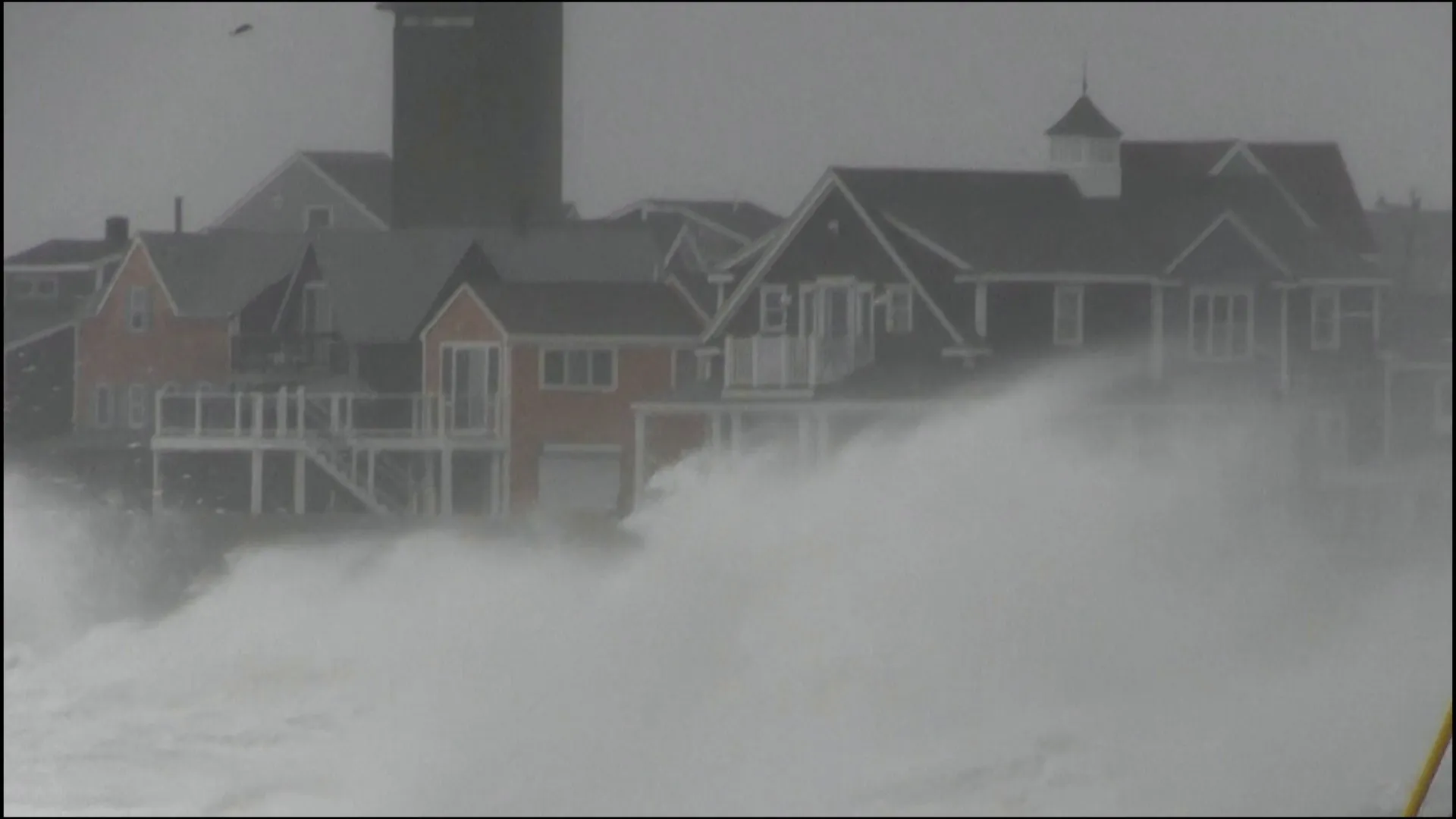
Images of waves crashing into sea walls and onto beaches raised concerns about coastal erosion.

More than 100,000 customers were without power across the Northeast and mid-Atlantic at times on Sunday, according to PowerOutage.us. The most widespread outages were in counties along the coast from New Jersey to Connecticut.

Numerous flights were cancelled or delayed up and down the coast. More than 250 flights had been cancelled at Boston Logan International airport by late Sunday morning as wind gusts reached 64km/hour (40 mph), according to the Massachusetts Port Authority.

The worst of the remaining rainfall was expected on Sunday from northern New Jersey into southern New England.

While the storm was gradually weakening, tidal flooding would stay through high-tide cycles Sunday night, said Bob Oravec, a lead forecaster with the National Weather Service in College Park, Maryland.

People watch the ocean as a nor'easter storm hits Rye, New Hampshire, US on Sunday, September 27, 2026 [Caleb Jones/AP Photo]
People watch the ocean as a nor’easter storm hits Rye, New Hampshire, US, on September 27, 2026 [Caleb Jones/AP Photo]

Source link

Powerful storm batters US Northeast disrupting power and travel | Newsfeed

Powerful winds and towering waves are battering the US Northeast, causing flight chaos and blackouts. Flooding has already hit areas like Atlantic City and the Jersey Shore, with officials warning of more rain to come.

Source link

Powerful storm brings flooding, power outages to northeastern United States | Weather News

Authorities warn residents that extreme conditions could pose risks and urge people to stay away from flooded areas.

Residents of the northeastern United States are facing a powerful storm known as a nor’easter that has knocked out power and caused flooding across the region.

The storm has led to the cancellation of more than 400 flights and power outages affecting more than 88,000 homes and businesses as of Saturday afternoon local time. That figure is down from a high of 119,000 earlier in the day.

Recommended Stories

list of 3 itemsend of list

Bob Oravec, lead forecaster with the National Weather Service in College Park, Maryland, said that the storm is likely to persist, with “a lot of high winds, a lot of high tides and heavy rain possibility over the next few days for the northeastern US”.

The governors of New York and New Jersey declared states of emergency in counties expected to see the worst of the storm, including New York City, on Friday.

NEW YORK CITY - SEPTEMBER 26: Large puddles and debris line a walkway in the Dumbo neighborhood in Brooklyn as a Nor'easter storm moves through the area on September 26, 2026 in New York City. New York and much of the Northeast expect a weekend of high winds, rain, and possible flooding in coastal communities as the storm passes through. Spencer Platt/Getty Images/AFP (Photo by SPENCER PLATT / GETTY IMAGES NORTH AMERICA / Getty Images via AFP)
Large puddles and debris line a walkway in the Dumbo neighbourhood in Brooklyn as a nor’easter moves through the area on September 26, 2026 in New York [Spencer Platt/Getty Images via AFP]

Authorities have also warned residents about the risks of flooding and high tides, cautioning people to stay away from the beach and areas inundated with water.

“Anyone who goes in or near the water this weekend is literally gambling with their life,” New York Governor Kathy Hochul said.

Despite the warnings, people have been seen kayaking down flooded streets in Long Island, New York, while others took advantage of large swells in Hampton, New Hampshire.

“In all the canals, the water is up really high and coming into people’s back yards,” Jay Boyd, a resident of Ocean City, Maryland, told The Associated Press news agency.

Oravec said that nor’easters are not unusual as the region of New England enters the autumn season, but that “this might be a little earlier than average for a big storm”.

A surfer catches a wave as a nor'easter batters the US northeast coast, in Rockaway, New Jersey, US, September 26, 2026. REUTERS/Caitlin Ochs
A surfer catches a wave as a nor’easter batters the US northeast coast, in Rockaway, New Jersey, on September 26, 2026 [Caitlin Ochs/Reuters]

About 425 flights have been cancelled and 1,338 delayed so far on Saturday, according to data from the flight tracker FlightAware.

Concerts and sporting events have also been cancelled, including musician Ed Sheeran’s scheduled shows in the state of Massachusetts on Friday and Saturday.

Source link

Israeli settlers storm Al-Aqsa in latest targeting of East Jerusalem sites | Al-Aqsa Mosque News

Israeli settlers have stormed the Al-Aqsa Mosque compound in occupied East Jerusalem again and performed Jewish prayers in the courtyard.

The weekend witnessed a series of provocative acts by Israeli politicians and settlers in the build-up to Yom Kippur, the holiest day in the Jewish calendar, and next month’s Israeli election.

Recommended Stories

list of 4 itemsend of list

On Thursday, National Security Minister Itamar Ben-Gvir and others again stormed the Al-Aqsa Mosque compound for Yom Kippur. Israeli Prime Minister Benjamin Netanyahu also visited a labyrinth of tunnels below occupied East Jerusalem on Saturday.

Early on Sunday morning, Netanyahu released videos and photographs on his official Instagram account documenting his participation in Jewish “Selichot” prayers at the Western Wall, known as the al-Buraq Wall to Muslims.

The tunnels lie underneath occupied East Jerusalem’s bustling Old City and the Al-Aqsa Mosque compound, making the incursions particularly sensitive for the occupied territory’s Palestinian population.

Translation: Happy New Year and a good final signature to all Israelis from the Western Wall.

Under the protection of security forces, Netanyahu, accompanied by several government ministers and thousands of Israeli settlers, made his way onto the plaza of the wall in occupied East Jerusalem on Saturday evening, ahead of Yom Kippur.

Footage shared by the prime minister showed him performing the rituals from behind bulletproof glass. In another video, Netanyahu and his wife, Sara, passed through one of the excavation tunnels running beneath the Western Wall while Jewish prayers took place.

“Well, we are in the tunnels at the al-Buraq Wall. It is moving to touch the rock of our existence. We are here very close to the Holy of Holies. We are here, and we will always remain here,” Netanyahu stated in the video.

Translation: Prime Minister Benjamin Netanyahu and his wife in prayer for the safety of Israeli soldiers tonight at the Western Wall.

Yom Kippur incursions

The prime minister’s subterranean visit unfolded alongside a wave of settler incursions into the holy site above ground.

On its official Facebook page, the Palestinian Jerusalem governorate reported that about 570 settlers had stormed the courtyards of the Al-Aqsa Mosque by 10am local time on Sunday. According to the governorate, the settlers performed Talmudic rituals and “epic prostrations” to mark Yom Kippur.

The Palestinian group Hamas strongly condemned the incursions in a press statement published on its official Telegram channel.

“The storming by Benjamin Netanyahu, against whom an arrest warrant has been issued by the International Criminal Court, of the tunnels and excavations beneath the blessed Al-Aqsa Mosque and the al-Buraq Wall, and the provocative statements and false claims accompanying it about the so-called Holy of Holies, represents a blatant attack on the identity of the Al-Aqsa Mosque and its status, and a provocation to the feelings of our Palestinian people and the Arab and Islamic nations,” the statement in Arabic said.

The group emphasised Al-Aqsa’s exclusively Islamic heritage and rejected Israel’s ongoing excavations under the holy site.

Religious or political?

Israel has been digging beneath occupied East Jerusalem for years, a move that has been condemned by archaeologists and the United Nations. The works are believed to be intended to find proof of the rampart wall of the Second Temple, but experts say there is no proof of this claim. Others view these measures as an attempt by Israel to cement its rule over occupied Palestinian land.

In 2022, Netanyahu led a cabinet meeting in the labyrinth, describing Israel as the “landlords of Jerusalem”. East Jerusalem has been earmarked as the capital of a future Palestinian state by Palestinians.

The timing of Saturday’s visit not only comes on the eve of Yom Kippur but also at a time of huge political significance for the Israeli leader, who trails in the polls against his rival Gadi Eisenkot, leader of the Yashar party.

Ahmed al-Hila, a political analyst specialising in Middle East affairs and the Arab-Israeli conflict, told Al Jazeera that Netanyahu is using religious symbolism to try to secure his political survival ahead of October’s general election.

“Benjamin Netanyahu wanted, through this visit … creating this symbolism for himself as a leader spearheading the right wing to consolidate the Israeli political and religious narrative in the Al-Aqsa Mosque, to attempt to gather the largest possible number of votes to serve as an electoral lever for him,” said al-Hila.

“As for the intense security mobilisation and Benjamin Netanyahu’s appearance behind a bulletproof glass shield [during a speech above ground], this is a direct indication that this city has not, up to this moment, submitted to Israeli security control, despite the repeated and frequent talk that Jerusalem is ‘the capital of the State of Israel’.”

The visit could also be a message to the wider world, amid global criticism of the controversial illegal settlement project E1, which the Israeli government has issued tenders for, and which appears designed to sever East Jerusalem from the occupied West Bank.

“What further confirms this conclusion is that initiating the settlement project called E1 does not only isolate the northern West Bank from its south … but this settlement project completes the isolation of the city of Jerusalem from its Palestinian surroundings,” Al-Hila said. “Therefore, this visit with its political symbolism confirms the idea of Israeli sovereignty over the city of Jerusalem.”

Source link