As Uber slashes corporate headcount, the cuts hint at how companies could finance an automated future.
When a highly profitable, fast-growing company decides to cut a tenth of its workforce, you must look beyond its formal statements. Uber Technologies’ recent move to run through three rounds of layoffs—cutting 10% of its global corporate team, or about 3,300 people—isn’t standard, defensive cost-cutting.
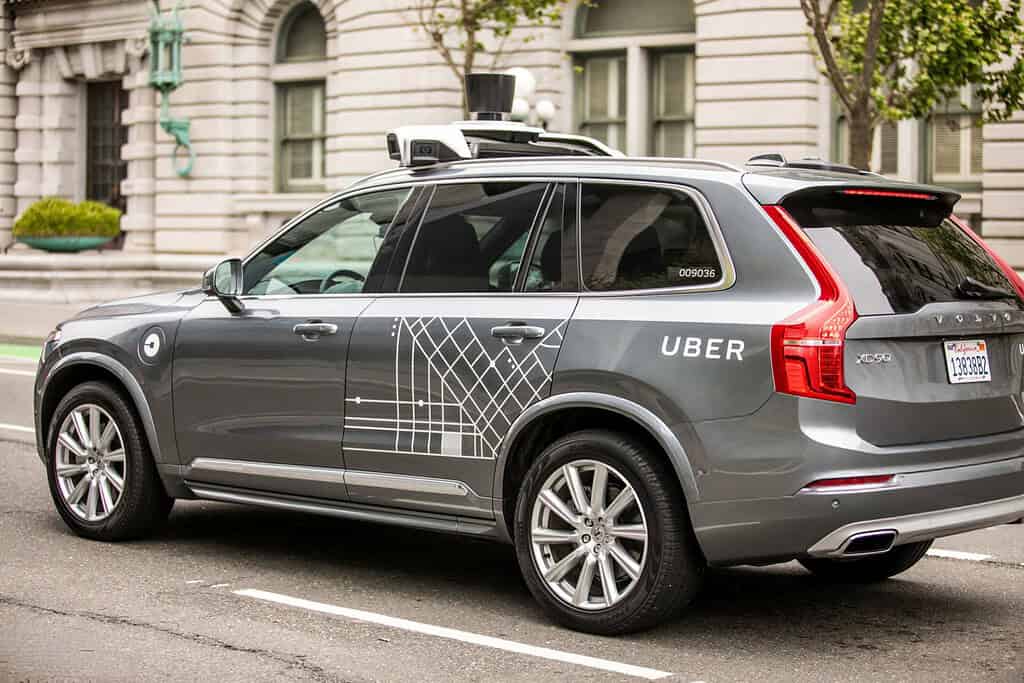
Instead, it offers a fascinating look at where big corporate money is moving. At the same time these office desks are being cleared, Uber is gearing up to pour up to $10 billion over the next few years in self-driving cars and autonomous vehicle networks. CEO Dara Khosrowshahi said the goal is to make the company “simpler and faster,” but that points to a much bigger trend in boardrooms everywhere: corporate layoffs are starting to look like a funding mechanism for an automated future.
Pinning down a direct link between artificial intelligence and job cuts requires reading between the lines of carefully crafted corporate PR. In its official announcements, Uber has been quiet on this front, explicitly linking only an early 10 percent cut in its customer service department to the embrace of AI. Later rounds in HR, recruiting, and middle management were described as strategic flattening and the removal of organizational layers. Yet broader data shows a trend moving much faster than company memos suggest. According to data from outplacement firm Challenger, Gray & Christmas, AI was cited as a reason for over 100,000 announced layoffs in the US during just the first half of the year—a massive jump compared to previous years.
This tension between streamlining operations and pivoting to new technology highlights a deep shift in how companies are built. Danielle LaFleur, an enterprise automation strategist and partner at TextBernie.me, believes we should view Uber’s layoffs as a sign of things to come for operations-heavy industries, rather than a one-off event. “Uber’s 10% reduction is a leading indicator, not an anomaly,” LaFleur said. “A profitable company does not cut a tenth of its workforce during a growth period to save money. It does so to reallocate resources: shifting investment from a labor model built on human drivers to one built on autonomous infrastructure.”
Reallocating for Autonomy
Moving capital away from old, labor-intensive setups marks a fundamental shift in how technology interacts with business. “Most corporate AI adoption to date has been additive,” LaFleur said. “Firms kept their organizational structures intact and layered AI tools on top. Uber represents the next phase, in which AI alters the firm’s structure itself. Operations-heavy industries should expect similar restructurings as autonomous systems mature.”
But the human side of this shift shows that the impact goes far beyond a smaller headcount. As independent coach Nataliia Rastehaieva pointed out: “AI may not simply remove jobs. It may change roles, responsibilities and expectations much faster than before. That creates uncertainty for the people who leave, but also for those who stay. They need to understand what is changing and what their place in the company will be. I would not treat Uber as proof of what AI will do to every company. But it may be an early example of how technology and management decisions together are reshaping work.”

Serhii Nikolaichuk, a former Uber driver and founder of The Capital Index, offers a closer look at the corporate layers being targeted. “Uber’s cut of about 3,300 jobs, roughly 10% of its workforce, isn’t aimed at drivers,” Nikolaichuk said. “It’s aimed at management: about a fifth of its managers, teams of one or two, and reporting chains more than seven levels deep. Technically, that makes sense. Most coordination work is routing: collect status, compress it into a report, and pass decisions down. That’s exactly what language models and workflow agents now do in seconds.
“The memo (of the company) doesn’t blame AI, but the money tells the story: more than $10 billion committed to autonomous vehicles. Uber already runs robotaxi rides in four U.S. cities, including Austin, [Texas] and has about 20 autonomous-vehicle partners. It even pays some drivers, between rides, to complete data tasks for its AI unit, whose clients include self-driving companies. The workforce is helping train the machines that will compete with it.”
A Leaner Future of Work
This leaves a big question for the rest of corporate America: what does this playbook mean for everyone else? Kyle Elliott, founder of Tech Career Coach and CaffeinatedKyle.com, sees it clearly: “Fewer managers and fewer layers between frontline employees and senior leaders. Companies will look for leaders who can manage larger teams without relying on several levels of management beneath them. AI does often play a supporting role in layoffs. Tools that speed up performance reviews, internal communications, and reporting let one manager oversee more people, which, in theory, makes some management layers easier to cut.”
At the end of the day, Uber’s latest moves carry significant weight for companies of all sizes and across sectors. As AI shifts from tech experiments to everyday infrastructure, the classic corporate setups designed to manage massive human networks will continue to shrink. The layoffs and reshuffling we’re seeing now aren’t just temporary speed bumps—they are early signs that tech and leadership decisions are completely changing the way we work.
Andrea Fiano is editor-at-large at Global Finance Magazine. Contact him at afiano@gfmag.com.