Instead of running for office themselves, student-led assemblies at the country’s university faculties have chosen 250 candidates to stand in the parliamentary election, with Ilija Srdanović, professor at Novi Sad University, heading the list.
The Student List of candidates for parliament also includes doctors, actors, academics and sports personalities
“These are people that don’t know each other, you have no idea what their political beliefs are, and we now expect them to create a functioning government. So it’s anybody’s guess what happens after they win,” Korać says.
“On the other hand, if Vučić declares victory this evening, probably late in the evening, I don’t think the students will accept that.”
Korać suggests that many former Vučić loyalists in high office could change sides at the last moment, if the students win. A close result, however, with both sides claiming victory, could result in weeks or months of political instability.
The electorate is 6.45 million in a population of 6.53 million, raising concerns about the reliability of the electoral register. Serbs from Kosovo, and dual Serbian citizens from neighbouring Bosnia also have the right to vote.
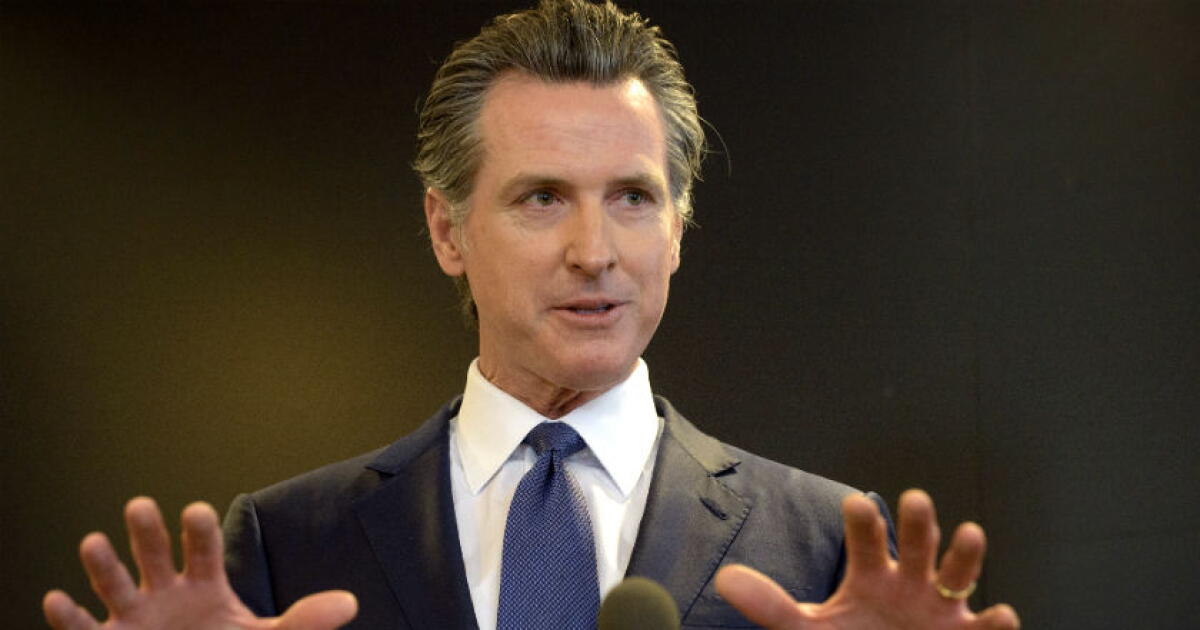
Foes of Gov. Gavin Newsom, who is widely viewed as a likely 2028 presidential candidate, are launching television and digital ads this weekend in early primary states that criticize the governor’s opposition to the proposed billionaire tax on California’s November ballot.
The ad, funded by backers of the wealth tax, castigates Newsom for opposing Proposition 40, the ballot measure that would impose a 5% tax on California billionaires’ assets to offset federal healthcare funding cuts approved by congressional Republicans and signed by President Trump last year.
“We’re all struggling with the high cost of healthcare. In California, Democrats are championing a one-time tax on billionaires that would save coverage for millions,” a narrator says in the 30-second ad. “So why [has] presidential hopeful Gavin Newsom betrayed his own supporters by trying to sabotage the billionaire tax? Maybe it’s because the same billionaires who oppose Prop. 40 also gave millions of dollars to Newsom. Gavin Newsom turned his back on working Californians. Will he do the same to you?”
The ad specifically calls out billionaires Stewart Resnick, who owns several businesses including Pom Wonderful, Fiji Water and Justin Wines; crypto executive Chris Larsen; former Google leader Eric Schmidt; and venture capitalist Michael Moritz, all of whom have backed Newsom’s political ambitions.
Newsom has argued that, although he supports wealth taxes, they ought to be enacted at the national level, rather than a state-by-state patchwork that could drive the rich to leave California, a state with a volatile budget heavily dependent on the state’s wealthiest residents.
The primary funders of the ad are the Service Employees International Union – United Healthcare Workers West, which crafted Proposition 40; Saikat Chakrabarti, a climate change warrior and political advisor who made his wealth in part as a founding engineer at Stripe; and Ross Boucher, an early engineer at Stripe.
The ad buy is six figures but could grow, according to its backers. Among the states where the ad is expected to air are South Carolina, Nevada, New Mexico, Virginia and New Hampshire.
The ad launch comes amid a contentious, expensive battle over the proposed wealth tax, which has divided Democrats and their allies. Although Newsom is among Democrats who oppose it, the ballot measure was endorsed by the state Democratic Party and Sen. Bernie Sanders (I-Vt.). Voters are closely divided about the measure.
ONE UK theme park has announced it will close early today as Storm Austen hits the country with winds up to 80mph.
Paultons Park which has been hosting late-night Halloween evenings will close early tonight.
Paultons Park will close early today due to bad weatherCredit: AlamyStorm Austen has hit the UK with predicted 80mphCredit: Splash
On its website, it said: “Because of the forecast conditions from Storm Austen, we’ve cancelled tonight’s late night opening. The park will close at 4:30pm today.
“The safety of our guests and team always comes first, and we’re sorry for any disappointment.”
Sign up for the Travel newsletter
Thank you!
For those visiting today, tickets will be revalidated so you can come back another day.
Anyone who is booking to attend today but wants to change the day can do so free of charge.
Anyone on a short break will receive a return ticket and those with an annual pass can attend until 4.30pm.
At the Halloween Spooktacular visitors can go on the rides after dark, head to The Little Monsters Ball and go to the Spirit Squad Ghoul School.
For those who still want to go, the late-night events will still run on October 24, 27, 28 and 29.
Camel Creek Family Adventure Park in Wadebridge which is popular with younger families has also announced its closure due to “forecast of strong winds and heavy rain.”
The park will be in touch with those who have already booked a visit.
It hasn’t guaranteed that it will reopen on Saturday so has advised families to watch for updates on its social media and website for updates.
Camel Creek Adventure Park has announced it has closed for the dayCredit: Google maps/Camel Creek Family Adventure Park
Meanwhile, Thorpe Park is open as is Alton Towers.
At Chessington World of Adventure, the Zufari appears closed on the app and there’s a temporary delay of the opening of Jungle Rangers.
A spokesperson for all three theme parks said that they are open and operating ‘in line with standard weather safety procedures’.
They added that ride availability can vary throughout the ‘day depending on operational and weather conditions, and any temporary closures are assessed by our expert technical teams on a case-by-case basis’.
Marwell Zoo has closed its doors for the day, it said: “The zoo will be closed due to strong winds and heavy rain forecast. We aim to reopen on Saturday 24th Oct as normal.”
Chester Zoo also announced its closure in order to keep “visitors, animals and staff as safe.” Dartmoor Zoo is also closed.
Storm Austen which has hit the UK today has resulted in schools closed and flights cancelled with the Met Officeissuing amber and yellow weather warnings.
Paultons Park is expected to reopen tomorrowCredit: Supplied by PR
As Uber slashes corporate headcount, the cuts hint at how companies could finance an automated future.
When a highly profitable, fast-growing company decides to cut a tenth of its workforce, you must look beyond its formal statements. Uber Technologies’ recent move to run through three rounds of layoffs—cutting 10% of its global corporate team, or about 3,300 people—isn’t standard, defensive cost-cutting.
Instead, it offers a fascinating look at where big corporate money is moving. At the same time these office desks are being cleared, Uber is gearing up to pour up to $10 billion over the next few years in self-driving cars and autonomous vehicle networks. CEO Dara Khosrowshahi said the goal is to make the company “simpler and faster,” but that points to a much bigger trend in boardrooms everywhere: corporate layoffs are starting to look like a funding mechanism for an automated future.
Pinning down a direct link between artificial intelligence and job cuts requires reading between the lines of carefully crafted corporate PR. In its official announcements, Uber has been quiet on this front, explicitly linking only an early 10% cut in its customer service department to the embrace of AI. Later rounds in HR, recruiting, and middle management were described as strategic flattening and the removal of organizational layers. Yet broader data shows a trend moving much faster than company memos suggest. According to data from outplacement firm Challenger, Gray & Christmas, AI was cited as a reason for over 100,000 announced layoffs in the US during just the first half of the year—a massive jump compared to previous years.
This tension between streamlining operations and pivoting to new technology highlights a deep shift in how companies are built. Danielle LaFleur, an enterprise automation strategist and partner at TextBernie.me, believes we should view Uber’s layoffs as a sign of things to come for operations-heavy industries, rather than a one-off event. “Uber’s 10% reduction is a leading indicator, not an anomaly,” LaFleur said. “A profitable company does not cut a tenth of its workforce during a growth period to save money. It does so to reallocate resources: shifting investment from a labor model built on human drivers to one built on autonomous infrastructure.”
Reallocating for Autonomy
Moving capital away from old, labor-intensive setups marks a fundamental shift in how technology interacts with business. “Most corporate AI adoption to date has been additive,” LaFleur said. “Firms kept their organizational structures intact and layered AI tools on top. Uber represents the next phase, in which AI alters the firm’s structure itself. Operations-heavy industries should expect similar restructurings as autonomous systems mature.”
But the human side of this shift shows that the impact goes far beyond a smaller headcount. As independent coach Nataliia Rastehaieva pointed out: “AI may not simply remove jobs. It may change roles, responsibilities and expectations much faster than before. That creates uncertainty for the people who leave, but also for those who stay. They need to understand what is changing and what their place in the company will be. I would not treat Uber as proof of what AI will do to every company. But it may be an early example of how technology and management decisions together are reshaping work.”
An Uber self-driving car in San Francisco.
Serhii Nikolaichuk, a former Uber driver and founder of The Capital Index, offers a closer look at the corporate layers being targeted. “Uber’s cut of about 3,300 jobs, roughly 10% of its workforce, isn’t aimed at drivers,” Nikolaichuk said. “It’s aimed at management: about a fifth of its managers, teams of one or two, and reporting chains more than seven levels deep. Technically, that makes sense. Most coordination work is routing: collect status, compress it into a report, and pass decisions down. That’s exactly what language models and workflow agents now do in seconds.
“The memo (of the company) doesn’t blame AI, but the money tells the story: more than $10 billion committed to autonomous vehicles. Uber already runs robotaxi rides in four U.S. cities, including Austin, [Texas] and has about 20 autonomous-vehicle partners. It even pays some drivers, between rides, to complete data tasks for its AI unit, whose clients include self-driving companies. The workforce is helping train the machines that will compete with it.”
A Leaner Future of Work
This leaves a big question for the rest of corporate America: what does this playbook mean for everyone else? Kyle Elliott, founder of Tech Career Coach and CaffeinatedKyle.com, sees it clearly: “Fewer managers and fewer layers between frontline employees and senior leaders. Companies will look for leaders who can manage larger teams without relying on several levels of management beneath them. AI does often play a supporting role in layoffs. Tools that speed up performance reviews, internal communications, and reporting let one manager oversee more people, which, in theory, makes some management layers easier to cut.”
At the end of the day, Uber’s latest moves carry significant weight for companies of all sizes and across sectors. As AI shifts from tech experiments to everyday infrastructure, the classic corporate setups designed to manage massive human networks will continue to shrink. The layoffs and reshuffling we’re seeing now aren’t just temporary speed bumps—they are early signs that tech and leadership decisions are completely changing the way we work.
Andrea Fiano is editor-at-large at Global Finance Magazine. Contact him at afiano@gfmag.com.
As Uber slashes corporate headcount, the cuts hint at how companies could finance an automated future.
When a highly profitable, fast-growing company decides to cut a tenth of its workforce, you must look beyond its formal statements. Uber Technologies’ recent move to run through three rounds of layoffs—cutting 10% of its global corporate team, or about 3,300 people—isn’t standard, defensive cost-cutting.
Instead, it offers a fascinating look at where big corporate money is moving. At the same time these office desks are being cleared, Uber is gearing up to pour up to $10 billion over the next few years in self-driving cars and autonomous vehicle networks. CEO Dara Khosrowshahi said the goal is to make the company “simpler and faster,” but that points to a much bigger trend in boardrooms everywhere: corporate layoffs are starting to look like a funding mechanism for an automated future.
Pinning down a direct link between artificial intelligence and job cuts requires reading between the lines of carefully crafted corporate PR. In its official announcements, Uber has been quiet on this front, explicitly linking only an early 10 percent cut in its customer service department to the embrace of AI. Later rounds in HR, recruiting, and middle management were described as strategic flattening and the removal of organizational layers. Yet broader data shows a trend moving much faster than company memos suggest. According to data from outplacement firm Challenger, Gray & Christmas, AI was cited as a reason for over 100,000 announced layoffs in the US during just the first half of the year—a massive jump compared to previous years.
This tension between streamlining operations and pivoting to new technology highlights a deep shift in how companies are built. Danielle LaFleur, an enterprise automation strategist and partner at TextBernie.me, believes we should view Uber’s layoffs as a sign of things to come for operations-heavy industries, rather than a one-off event. “Uber’s 10% reduction is a leading indicator, not an anomaly,” LaFleur said. “A profitable company does not cut a tenth of its workforce during a growth period to save money. It does so to reallocate resources: shifting investment from a labor model built on human drivers to one built on autonomous infrastructure.”
Reallocating for Autonomy
Moving capital away from old, labor-intensive setups marks a fundamental shift in how technology interacts with business. “Most corporate AI adoption to date has been additive,” LaFleur said. “Firms kept their organizational structures intact and layered AI tools on top. Uber represents the next phase, in which AI alters the firm’s structure itself. Operations-heavy industries should expect similar restructurings as autonomous systems mature.”
But the human side of this shift shows that the impact goes far beyond a smaller headcount. As independent coach Nataliia Rastehaieva pointed out: “AI may not simply remove jobs. It may change roles, responsibilities and expectations much faster than before. That creates uncertainty for the people who leave, but also for those who stay. They need to understand what is changing and what their place in the company will be. I would not treat Uber as proof of what AI will do to every company. But it may be an early example of how technology and management decisions together are reshaping work.”
An Uber self-driving car in San Francisco.
Serhii Nikolaichuk, a former Uber driver and founder of The Capital Index, offers a closer look at the corporate layers being targeted. “Uber’s cut of about 3,300 jobs, roughly 10% of its workforce, isn’t aimed at drivers,” Nikolaichuk said. “It’s aimed at management: about a fifth of its managers, teams of one or two, and reporting chains more than seven levels deep. Technically, that makes sense. Most coordination work is routing: collect status, compress it into a report, and pass decisions down. That’s exactly what language models and workflow agents now do in seconds.
“The memo (of the company) doesn’t blame AI, but the money tells the story: more than $10 billion committed to autonomous vehicles. Uber already runs robotaxi rides in four U.S. cities, including Austin, [Texas] and has about 20 autonomous-vehicle partners. It even pays some drivers, between rides, to complete data tasks for its AI unit, whose clients include self-driving companies. The workforce is helping train the machines that will compete with it.”
A Leaner Future of Work
This leaves a big question for the rest of corporate America: what does this playbook mean for everyone else? Kyle Elliott, founder of Tech Career Coach and CaffeinatedKyle.com, sees it clearly: “Fewer managers and fewer layers between frontline employees and senior leaders. Companies will look for leaders who can manage larger teams without relying on several levels of management beneath them. AI does often play a supporting role in layoffs. Tools that speed up performance reviews, internal communications, and reporting let one manager oversee more people, which, in theory, makes some management layers easier to cut.”
At the end of the day, Uber’s latest moves carry significant weight for companies of all sizes and across sectors. As AI shifts from tech experiments to everyday infrastructure, the classic corporate setups designed to manage massive human networks will continue to shrink. The layoffs and reshuffling we’re seeing now aren’t just temporary speed bumps—they are early signs that tech and leadership decisions are completely changing the way we work.
Andrea Fiano is editor-at-large at Global Finance Magazine. Contact him at afiano@gfmag.com.
With more than one million votes counted, about 76 percent supported remaining in Canada.
Published On 20 Oct 202620 Oct 2026
Alberta residents have voted to remain part of Canada in the province’s first-ever referendum on separation, in a much-needed win for Prime Minister Mark Carney as he attempts to unify the country amid an ongoing trade war with the United States.
With more than one million votes counted, about 77 percent supported remaining in Canada, compared with 23 percent who backed beginning a process that could lead to separation, early results showed on Tuesday.
Recommended Stories
list of 3 itemsend of list
The vote was not a direct referendum on independence but would have set oil-rich Alberta on a path towards a future vote on separation from Canada.
Carney welcomed the result and said Albertans had made a “clear choice” in favour of unity.
“They chose unity, to build together, and to take care of each other,” he said in a statement on X.
Jeffrey Rath, a top leader of the secessionist Alberta Prosperity Project, told reporters his push for an independent Alberta will “absolutely” continue, despite the result from Monday’s vote.
“We’ve learned a lot of lessons from this fight,” he said.
Alberta Premier Danielle Smith, a conservative, said she voted against independence but called the referendum to settle an issue that has divided the province.
She has said a win for the federalists would close the secession question.
Alberta has the world’s fourth-largest proven oil reserves, and much of the secessionist momentum has been driven by anger over oil industry management.
Smith has blamed Carney’s predecessor Justin Trudeau for igniting the secessionist fire, accusing him of trying to crush oil production to advance his pro-climate agenda.
Alberta’s independence push has also drawn sustained interest from the allies of US President Donald Trump, including Treasury Secretary Scott Bessent, who called Alberta Washington’s “natural partner”. Elon Musk, the world’s richest person and eminent Trump supporter, also posted on X that Alberta “should separate”.
Carney, who grew up in Alberta, has worked to improve relations between the province and Ottawa since taking office last year. He has partnered with Smith on advancing a new pipeline to export more Alberta bitumen overseas, a project considered a nonstarter during Trudeau’s tenure.
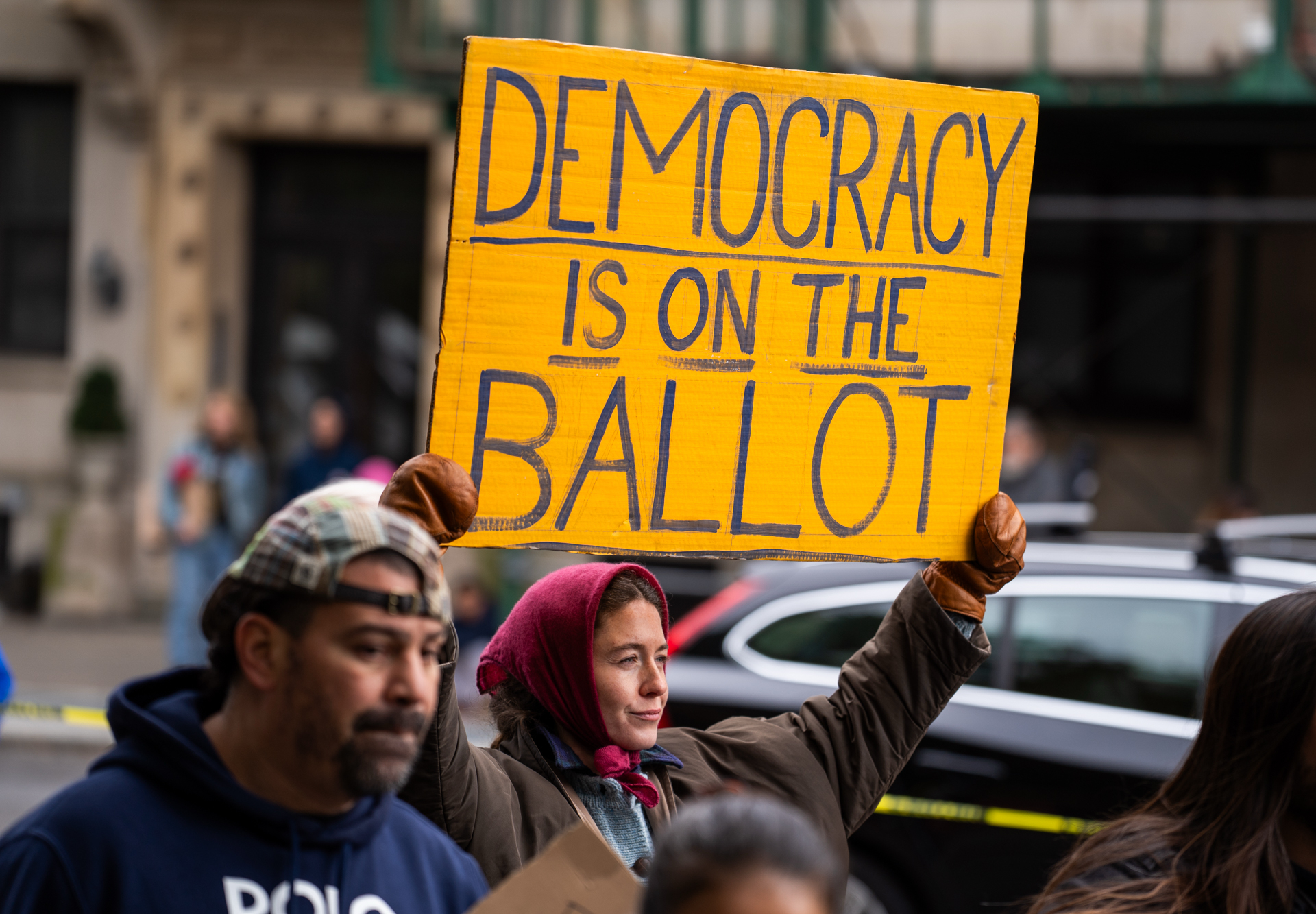
Rallies organised by the No Kings network opposed to United States President Donald Trump were held Saturday in cities and communities across the US, with an aim of getting people out to vote early in the midterm elections.
No Kings has more than 3,000 events planned across the US. The planned events, this time dubbed “No Kings: Vote Early”, were billed as nonpartisan, though they sought to build on nearly two years’ worth of No Kings marches and demonstrations by people upset with Trump’s presidency.
“It’s a day of nonpartisan voter participation: we are bringing our community together to make a plan to vote early and ensuring every eligible voter understands their options for how to vote and has the opportunity to make their voice heard,” organisers said in a statement.
By advocating for voting early, the “No Kings” organisers hope to cut off the potential for any malfeasance once election day rolls around.
A band entertained what appeared to be a few hundred people in caps and coats at the Lincoln Memorial in Washington, DC. Despite the chilly weather, many in the crowd danced to the tunes. “VOTE EARLY” and “HANDS OFF MY VOTE!” were among the many signs held aloft.
At an Atlanta rally, City Councilman Michael Julian Bond told the crowd to urge others to vote ahead of the November 3 general election.
“The Constitution gives you one power, right? That is the power to vote. Are you gonna use that power?” he said.
“You don’t see Superman giving up his power,” Bond continued. “You don’t see Black Panther giving up his power. You don’t see Wonder Woman giving up her magic lasso. So why would you give up your right, your power, your obligation to vote? Be a superhero, use your power. Go to the polls and vote.”
Trump has long been suspicious of mail voting and has claimed without evidence that voting fraud cost him the 2020 presidential election.
His administration sued California election officials Thursday, asking a judge to bar the state from counting mail-in ballots for the midterm elections from people whom the federal government has identified as “likely” noncitizens until their immigration status can be confirmed.
On Friday, the Department of Justice warned that local officials who process and tabulate ballots submitted by suspected noncitizen voters are putting themselves at risk of criminal investigation and potential prosecution.
Earlier that day, Democratic Senators Alex Padilla of California, Sheldon Whitehouse of Rhode Island and Dick Durbin of Illinois wrote to Attorney General Todd Blanche, demanding that the Justice Department commit to not seizing ballots or other election materials before the midterm elections are certified.
Ryanair services daily direct flights on the route for just £15 but from April next year, layovers will now be required for those wanting to fly to fly from the UK to this city
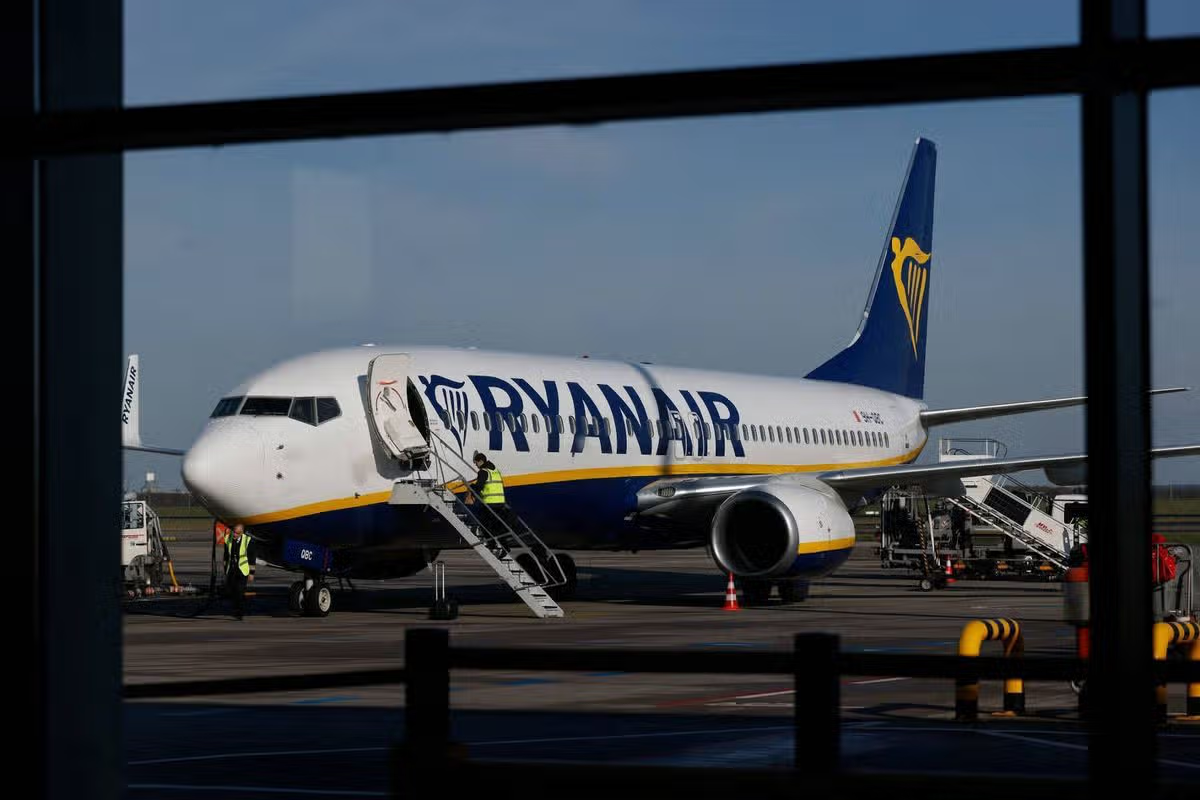
Ryanair plans to cut all flights to a European airport next year(Image: Getty Images/Stock Image)
Ryanair plans to cut all flights to a European airport next year. From April 2027, Europe’s biggest budget airline will no longer fly to Bremen in Germany.
This will axe around 500,000 seats. At present, Ryanair services daily flights on the route from London Stansted to Bremen for just £15. The airline’s website appears to have tickets for the final flights to Bremen scheduled for March 27, 2027.
Ryanair previously announced it would be cancelling 24 routes to and from Germany, cutting 800,000 seats in total. Nine airports will be affected by the decision, affecting major cities and popular with tourist spots:
Berlin
Hamburg
Memmingen
Baden-Württemberg
Cologne
Frankfurt-Hahn
Dortmund
Dresden
Leipzig
Earlier this year Ryanair said it will be reducing its flight schedule to and from Berlin by 50 per cent.
CEO Eddie Wilson subsequently said that Germany’s aviation market is “broken”. He also said it “needs an urgent fix.”
“As a result of these high government taxes/fees (the highest in Europe), and Lufthansa’s high-fare monopoly, German citizens/visitors now pay the highest air fares in Europe,” Mr Wilson said.
People can expect to see the change roll out at dozens of major UK airports
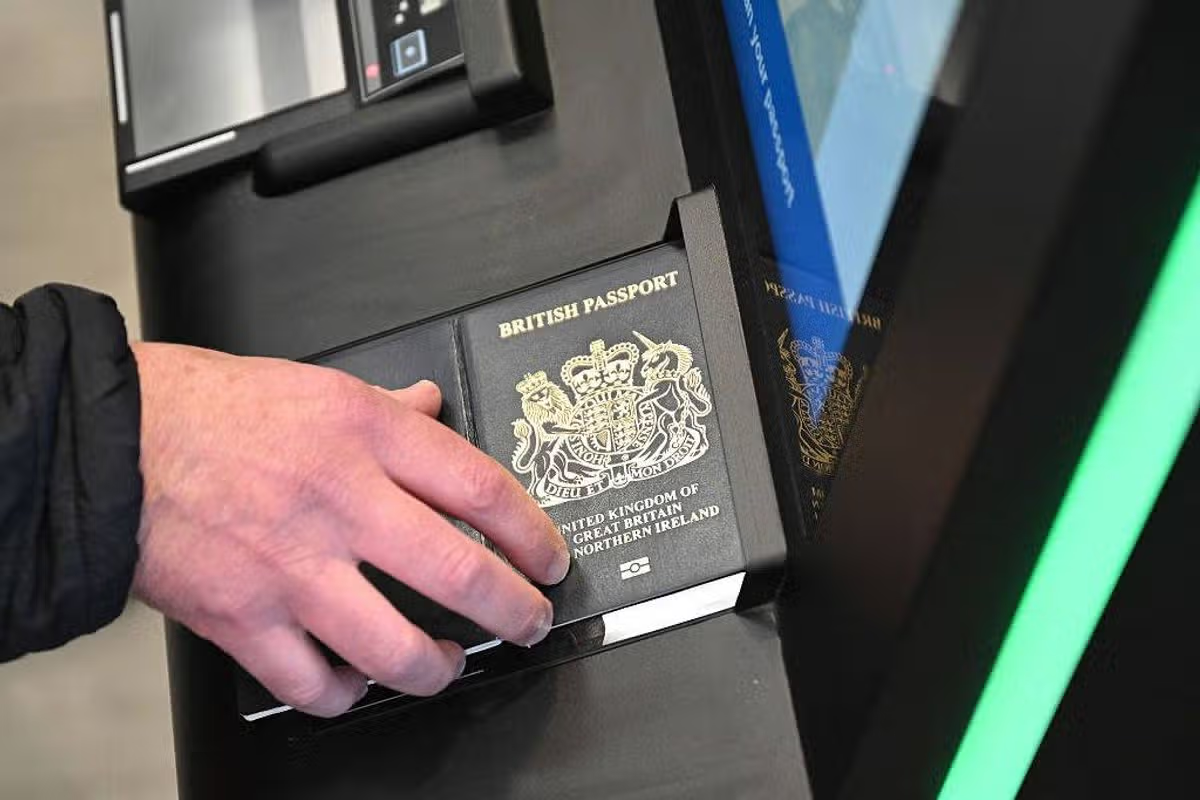
A major change to part of the airport security process is being made at some UK airports ‘by early 2027’(Image: Getty)
One part of airport security is about to get quicker for travellers at certain UK airports. The Government is set to roll out a “state-of-the-art” scheme regarding passports. People heading off on autumn and winter breaks might see this new system in place as airports gradually upgrade.
BBC Morning Live recently discussed a Home Office announcement claiming that a new “contactless system” for checking passports on arrival in the UK could be up and running by early next year at many major British airports. Consumer affairs expert Harry Kind claims that, although passengers won’t be able to leave their passports at home, this process change should make part of the return process “smoother and faster”.
The discussion stems from a BBC headline claiming the “passport-free” system was coming into effect. In an official update from the UK Government, it claims that passengers arriving in the UK will soon pass through airport checkpoints securely without showing their passports. The system uses facial recognition technology to allow arriving passengers to clear immigration without physically scanning their passports.
This is not a “passport-less” journey. Border Force explicitly states that passengers must keep their physical passports with them at all times. If the facial recognition scan hits a snag or requires additional vetting, you will be prompted to scan your physical passport or be directed to a Border Force officer.
Content cannot be displayed without consent
The technology, described as a “cutting-edge contactless system”, will begin rolling out this month and gradually replace every airport eGate “by early 2027”. Here’s how it works:
Passengers approach an eGate and have their photo taken
The system checks this live image against verified immigration, travel and passport information
The eGate opens automatically once these checks are complete
A statement reads: “The system uses state-of-the-art facial comparison technology to verify a passenger’s identity before the UK’s robust border security checks are carried out in full. Legitimate travellers can then simply walk through, without needing to place their passport on the eGate reader.
“If further checks are needed, passengers will need to place their passport on the reader or may be directed to a Border Force officer, as happens today. Border Force officers will continue to monitor all eGates offering assistance, and passengers should keep their passports with them at all times.”
The phased rollout starts at East Midlands Airport, initially for British citizens. The aim, by early 2027, is to expand this to more airports and other nationalities already eligible for eGates over the coming months.
The national rollout began on October 6, 2026. The government plans to have all UK airport eGates switched over to this contactless tech by early 2027. East Midlands Airport is the first UK airport to officially switch on the live contactless technology.
Standard eGates are currently functioning across 13 major UK airports (including Heathrow, Gatwick, Manchester, Edinburgh, and Stansted), all of which will transition gradually during this phased rollout. Phil Douglas, Director General of Border Force, claims that this is “a win for travellers coming to our brilliant country”.
He said: “By using state-of-the-art technology, we are making journeys smoother and faster, all while fully maintaining the UK’s robust border security. Our digital transformation also builds on our work this summer to extend eGates to children aged eight and above, making life a little easier for families.”
Steve Griffiths, managing director of East Midlands Airport, said: “As an airport committed to providing an effortless travel experience, we welcome any technological innovation that can help to safely make our customers’ journeys smoother, swifter and simpler. This complements changes that we carried out to our immigration hall recently to help improve the flow of arriving passengers through the area.”
U.S. Customs and Border Protection (CBP) has retired the last of its P-3 Airborne Early Warning (AEW) aircraft. The AEW version is instantly recognizable from the saucer-like radar dome on top, as seen on other AEW types like the E-2 Hawkeye and the E-3 Sentry. CBP was the only operator of this variant of the P-3 Orion and is said to have been the only law enforcement agency to fly any kind of dedicated AEW plane. The retirement of these aircraft comes at a time when American AEW assets, in general, are under heavy strain by demands globally.
CBP officially retired its final P-3 AEW on September 30, 2026, after a final flight from National Air Security Operations Center Jacksonville (NASOC Jacksonville), in Jacksonville, Florida. CBP has also flown Long Range Tracker (LRT) variants of the P-3, configured for more traditional maritime surveillance missions. The current plans for the LRT aircraft, and whether their sunset may also be on the horizon, are not immediately clear, and TWZ has reached out for more information. Orions of all types have been steadily disappearing from service with the U.S. military and elsewhere across the U.S. government as the aging aircraft become more difficult to operate and maintain.
End of the Road: AMO’s Iconic P-3 Dome Takes Its Final Flight!
On September 30, 2026, the distinct silhouette of a four-engine turboprop carrying its massive rotating radar dome touched down for the final time at the National Air Security Operations Center in Jacksonville.
“Our Jacksonville-based P-3 AEW fleet has served as a cornerstone of America’s outer-layer border security,” according to a brief announcement from CBP about the retirement on social media. “Its crews flew far beyond our borders, providing wide-area surveillance across the Caribbean, Gulf of America [Gulf of Mexico], and the transit zones of Central and South America, helping detect and track threats before they could reach the United States.”
By all indications, including official CBP sources, the P-3 AEW fleet consisted of eight aircraft at its peak. There is a confusingly worded 2014 CBP press release that mentions an “11th and final Lockheed Martin P-3 Airborne Early Warning (AEW) aircraft overhaul,” but that figure looks to also include three of the six LRT versions. The same release says that CBP only had 14 P-3s of all types at that time.
What was then known as the U.S. Customs Service (USCS) first began operating the P-3 AEW version in the late 1980s. The aircraft were converted from second-hand maritime patrol variants of the Orion. The first example had started life as a P-3B for the Royal Australian Air Force (RAAF). Ex-U.S. Navy P-3s were also converted.
A picture of a P-3 AEW in USCS service circa the late 1980s. CBP
The initial three P-3 AEWs were equipped with the AN/APS-138 radar. The same radar was used on early E-2C Hawkeye airborne early warning and control aircraft operated by the U.S. Navy, as well as several other armed forces internationally.
“The Customs Service had previously borrowed U.S. Navy E-2Cs to meet its antinarcotics surveillance requirements, but required an aircraft with longer range and on-station time,” according to a 2006 report from Forecast International. “In June 1989, the U.S. General Accounting Office issued a report on the drug interdiction P-3B AEW aircraft. The findings indicated that the radar performance was as specified, but the P-3B (when compared to the E-2C) was less costly to operate per square mile of area covered because of the higher cruising speed and longer endurance. The P-3B had at least twice the in-flight endurance of the E-2C.”
Starting in the 1990s, USCS began the process of acquiring additional P-3 AEWs with newer AN/APS-145 radars, as also used on later model E-2Cs. The original AEW Orions were eventually refitted with APS-145s, as well. It’s worth noting here that the U.S. Coast Guard separately moved to acquire an AEW version of the C-130H, designated the EC-130V, in the 1990s, which used the AN/APS-125 radar, also used on older E-2s. Budget cuts led to the end of that program. The EC-130V that had been built was redesignated as an NC-130H and subsequently used for test purposes.
A US Navy E-2C Hawkeye. USNThe NC-130H test aircraft with its radar dome still on top. US Military
The P-3 AEWs were also equipped with a sensor turret containing electro-optical and infrared (EO/IR) video cameras, allowing the aircraft to more closely investigate targets spotted on radar. CBP regularly conducted P-3 operations that paired AEWs with LRT variants to provide an even broader array of sensor capabilities on missions. The LRTs have EO/IR sensor turrets, as well as AN/APG-66 and SeaVue radars. The pulse-doppler AN/APG-66 is primarily designed for spotting and tracking aerial targets, and was originally used on early variants of the F-16 fighter. SeaVue is a multi-function type with surface search and synthetic aperture radar (SAR) imagery modes. Images produced via SAR are highly detailed maps of the surface below, and can be captured day or night, and regardless of any cloud cover, smoke, or dust.
Beyond radars and other sensors, the P-3 AEWs also had a robust communications suite consisting of VHF and UHF radios, as well as satellite communications links by the end of their career. CBP’s entire P-3 fleet, including the AEWs and LRTs, has received various updates over the years, including new ‘glass cockpits’ starting in the early 2000s.
CBP Air and Marine Operations: Extended Border Operations
Though primarily employed in support of counter-narcotics interdiction operations, the airborne radar and command and control capabilities were also applied to other missions, including disaster relief and humanitarian assistance efforts at home and abroad. As an example, CBP’s P-3 AEWs helped with air traffic coordination, as well as provided other support, during relief efforts in Texas in the wake of Hurricane Harvey in 2017.
At the same time, CBP’s entire P-3 fleet, including both the AEW and LRT versions, has only been getting increasingly older and difficult to sustain. The P-3B variant first entered U.S. Navy service in the 1960s. CBP did put its P-3s through a Service Life Extension Program overhaul in the 2010s, which included “new wings and tail for each aircraft and completely strips down the aircraft to its bare metal for an inspection,” according to a 2014 press release.
A P-3 AEW seen during a test flight as part of the SLEP overhaul. The aircraft notably lacks its radar dome. CBP
A key question now is how CBP will fill any gaps left by the retirement of the final AEW version. The agency does continue to operate a mix of other crewed fixed-wing aircraft with mixtures of radars and other sensors, as well as MQ-9 drones, but none of these platforms are equipped with a sensor like the AN/APS-145. CBP also has a network of tethered aerostats with radars at fixed sites around the Caribbean. As an aside, General Atomics, together with Saab, is now working on an AEW configuration for the MQ-9B drone, but there are no known U.S. orders for that capability at the time of writing. That platform will not offer the same level of flexibility and look-down capability as modern crewed AEW aircraft, either. Look-down AEW capability is only growing in importance today amid expanding and evolving drone threats, including to the U.S. homeland.
Another look at one of CBP’s now-retired P-3 AEWs. CBP
The Air Force, in particular, is also aiming to eventually push most, if not all, air moving-target indicator (AMTI) tasks currently performed by aircraft like the E-3 and E-7 into space. The service is heavily investing to accelerate the fielding of those capabilities, which could eventually offer revolutionary constant, persistent coverage globally. The first of those satellites are still not expected to reach an early operational state until 2028. It is possible that CBP could get access to a tailored data feed from this system when it does become operational. It still does not obviate the need to have crewed or uncrewed aircraft capable of more closely investigating tracks of interest using EO/IR cameras and other sensors.
Whatever the future might now hold, CBP’s unique time as the operator of the P-3 AEW aircraft has come to an end.
Walt Disney Co. laid off nearly 300 workers this week, the latest wave in an industry-wide consolidation that continues to reverberate throughout Southern California.
Several people close to the Burbank entertainment giant confirmed this week’s cuts, which came as Disney separately offered early retirement packages for older workers. The voluntary separation program is underway, and the number of executives who will exit later this year has not been determined, one of the knowledgeable sources said Friday.
D’Amaro took the reins from former CEO Bob Iger in March, and the former parks chief has begun to organize the company around a “One Disney” approach to break down corporate silos that sprouted with each large acquisition, including Disney’s 2019 takeover of much of 21st Century Fox.
Disney also has been working for the past year to make Disney+ the company’s central streaming hub. As part of that effort, executives have begun to diminish the Hulu service and brand, which sprung to life nearly 20 years ago.
Disney employees are bracing for further cuts. Many expect a significant television division restructuring early next year, which could result in hundreds of layoffs, according to the Wall Street Journal.
Disney’s legal government affairs department also will be downsized, according to a recent internal memo Disney Chief Legal Officer Horacio Gutierrez.
A Disney spokesperson declined to comment.
Disney President Dana Walden, during a Thursday appearance at Bloomberg News’ Screentime media conference in Hollywood, acknowledged the industry turmoil.
Traditional studios and TV networks have shed tens of thousands workers in recent years after the streaming bubble burst and twin labor strikes paused projects.
Production workers in Los Angeles have felt a double-whammy as other states and countries have offered generous tax subsidies that have pulled productions from L.A.
Separately, Warner Bros. Discovery workers are anxious that David Ellison’s planned takeover of their company next week will ultimately result in hundreds of layoffs as the tech scion and his team hunt for $6 billion in cost cuts that they promised investors and prospective debt holders.
The merger will leave the combined company, which will go by the name Skydance, with more than $80 billion in debt.
Walden suggested her company’s cuts would be more modest. She said restructurings were necessary as companies adapt to changing consumption patterns, which have eroded the more lucrative TV economics of yesteryear.
“There is a need to constantly evaluate how you’re structured,” Walden said. “It is extremely painful. We’ve exited colleagues who I’ve worked with for most of my career and it is, in many ways, a harsh reality.”
She described Disney’s voluntary retirement program as a “generous” program to give “long-tenured executives agency and the opportunity to make their own decisions around whether the timing was right to leave.”
“This evolution, it will never stop,” Walden added. “Technology set their sights on our business, and we must survive, and thrive and grow. And that’s what we’re going to do.”
SYDNEY Sweeney fans have been left lost for words after realising that she has also appeared in a late 2000s teen drama.
The actress, 29, is arguably best known for her roles in Euphoria and White Lotus.
The actress, 29, is arguably best known for her roles in Euphoria and White LotusCredit: Shutterstock EditorialThe actress starred in 90201 in the 2000sCredit: Paramount+
But in 2010 she appeared on our screens during the sixth episode of the third season of 90201.
Although it was only a small part, in the scene, her character can be seen approaching a shirtless Liam (Matt Latner) and asks him for help.
Sign up for the Showbiz newsletter
Thank you!
Her character tells him: “We’d like to look at those jeans but they are too high up for us to reach.”
As he reaches for the trousers, her character cheekily touches his bum and she starts giggling to her friends.
The star appeared in a scene with Matt LatnerCredit: Paramount+Sydney has played Cassie Howard in Euphoria since 2019Credit: HBOSydney has appeared in various other TV shows and films since thenCredit: GettyShe owns her own lingerie brandCredit: Instagram/Syrn
The episode is called How Much Is That Liam in the Window.
One fan shared the scene on TikTok and said: “Sydney Sweeney before she was Sydney Sweeney.”
Many rushed to the comments section to share their shock over the fact they never noticed her before on the show.
One said: “I had no idea!”
Another confessed: “I didn’t recognise her so much she’s dressed.”
A third chimed in: “Omg I just watched this episode and didn’t even recognise her.”
90210 aired on The CT between 2008 and 2013.
It starred the likes of Rob Estes, Shenae Grimes, Jessica Stroup, Lori Loughlin, Michael Steger, Jessica Lowndes, Matt Lanter, Trevor Donovan, Gillian Zinser, Tristan Wilds, Tristan Wilds, Dustin Milligan and Ryan Eggold.
Sydney has appeared in a number of films over the years including Anyone but You, Spiders 3D, Clementine, Along Came the Devil, Eden and The Housemaid.
Meanwhile she’s landed telly roles including Grey’s Anatomy, Pretty Little Liars, Robot Chicken, Family Guy, Kickin’ It and Criminal Minds.
Despite his expressions giving the game away at all times, he still fancies being a traitor and says he has ‘no qualms’ when it comes to killing his friends
Rob reckons his expressive face will give the game away for him very quickly(Image: CREDIT LINE:BBC/Studio Lambert/Cody Burridge/BBC Creative)
Rob Beckett has confessed he is facing an uphill struggle when it comes to The Celebrity Traitors – because he is unable to hide his true feelings.
The comedian, who fronts a TV series with fellow player Romesh Ranganathan, is aiming to emulate the comedy deflection tactic used to perfection last year by winner Alan Carr.
“I think I’ll be good at deflecting with humour naturally because that’s what I’ve been trained to do,” he said. “My problem is that you know what I’m thinking by looking at my face. I think I’m in trouble, because I tell everyone everything with my expressions alone.”
Speaking before the series was filmed in May, Rob said his strategy was to make decisions in real time as the game unfolds. “Do trust your gut in the moment because you can overthink and over prepare, and then what I’ve got is panicked rehearsed lines – and that’s not just in this game. In life, the best things I’ve ever said have never been planned.”
The comic, from south London, says for him and some of the other players, the show is a full-circle moment. “I think I’ll just find the whole scenario hilarious because it’s so surreal to be around that group of people.
“Romesh, obviously everyone knows we’re such good friends, but Joe Lycett and James Acaster, I did gigs with them nearly 20 years ago, in pubs in Soho in front of eight people, and now all of a sudden we’re in this situation. So, it’s quite a reflective moment to consider this journey we’ve all gone on to now be on the biggest show on TV.
“Everyone wants to be on it, and we’re very lucky to be here, and to be here with friends and people that I’ve come through the ranks with and been able to confide in over the years. It’s quite nice to see all of us here as grown-ups.”
Dad-of-two Rob, 40, reckons he’d make a good Traitor, but is happy to leave the decision to presenter Claudia Winkleman. “I’d happily be either. Claudia and the producers are the experts in this, not me, but I’m very happy to do both, and I’ve got no qualms about killing people off.”
If he does end up as a Traitor, however, he does worry about giving him away immediately. “I could be the fastest Traitor out in history. I’ll probably just get a tap of the shoulder and get up and go: ‘You’ll never guess what just happened to me!’ and off I go. You’ll never know until you get in there.”
Rob’s hoping that his many years as a stand-up will help him to survive. “Being on stage is like being at the Round Table. You’re performing to an audience. And you’re having to say things to get them to behave in a certain way.”
Fellow player Joanne McNally reckons the six comedians who’ve signed up for this year’s show would “absolutely kill each other off” if necessary.
To see more of the stories you love from The Mirror and to find them easily in Google then make us your preferred source. Free and easy-to-do, just click on the link here to find more from The Mirror at the top of your feed.
Arguing that the group will happily double-cross each other for entertainment, she insisted they hadn’t spoken beforehand. “We haven’t been in cahoots at all,” Joanne insisted. “There’s been no chatting because we know that we’re more than willing to throw each other under the bus. It’s not like we’re making fake allegiances. They are professional entertainers, and they will absolutely kill each other off for the craic.”
The other comedians taking part are James Acaster, Joe Lycett, Miranda Hart, Rob Beckett and Romesh Ranganathan.
Asked about signing up for the series Joanne, 43, quipped that she wanted to improve her social circle, laughing: “It’s all about the celebrity WhatsApp group. And what an eclectic cast we have. Like, you couldn’t predict it. It’s like lining up all my ex-boyfriends. There’s no consistency to it at all. I love it. It’s so frantic. It kind of has a bit of everything.”
Aiming to be chosen as a Traitor, “quietly competitive” Joanne insisted she had the necessary skills. “I’m great at spotting lies. I can read body language, and I’ve dealt with a lot of snakes,” she said.
She prepared by having a makeover. “I got six packs of hair extensions put in. I have some skills but hair and makeup is not one of them.” Joanne now believes she could have what it takes to go all the way to the end. “I have this feeling I’ll either be out within seven minutes, or I’ll end up going the distance.”
Heartstopper actor Sebastian Croft, 24, is hoping to fly under the radar. “To be with a bunch of my heroes in a castle with Claudia is wonderful,” he declared. “I’m very much hoping that the fact that most of the cast don’t know me will work to my advantage.”
He has prepared by asking the universe for advice. “I went to see a lady who read my tarot, my astrology, crystals, the lot! I couldn’t possibly tell you any of it, it would ruin what’s going to happen.”
Sebastian is hoping to become a Traitor – ideally alongside actor pal Bella Ramsay. “I love Bella! Imagine us in the turret together. That would be the dream.”
YouTuber and boxer King Kenny, 29, is on a mission for justice after his pal Niko Omilana was the first to be banished in last year’s show. “I’ll be honest, after Niko went out last year, I stopped watching,” he said. “But when I heard I was going to play this year I got determined to do this for Niko and avenge him.”
The first season of The Celebrity Traitors aired on the BBC last autumn and was watched by 15million people across the series, the biggest TV audience of 2025.
– The Celebrity Traitors starts on October 1 at 8pm on BBC One and BBC iPlayer.
ONE in five early holiday bookers have been left out of pocket after seeing prices for their trip plummet as the departure date approaches.
Researchers explored whether travellers are more likely to identify with a traditional, take-charge Type A personality (54 per cent), or a laid-back Type B approach (31 per cent), when booking and enjoying a holiday.
Millions of travellers admit to cramming their holiday preparation into just a few daysCredit: SWNSPrices for a trip plummet close to departure timeCredit: Tom Maddick / SWNS
Type A travellers prefer to meticulously plan every detail of their trip well before setting off, while Type Bs would rather go with the flow and embrace the unexpected when away.
However, the study of 2,000 adults who have travelled abroad in the last three years found 20 per cent of Type As later spotted the exact flight or hotel they had spent weeks researching available for significantly less.
Sign up for the Travel newsletter
Thank you!
Another 10 per cent of these travellers have lost money trying to amend or cancel rigid bookings when their plans changed.
Yet 73 per cent of Type As believe booking a holiday just a week before departure feels too risky.
Beachgoers at Magaluf relax on the shoreCredit: SWNSSunseekers take a stroll in MallorcaCredit: SWNS
But 36 per cent of their Type B counterparts feel confident there is little risk of missing out on their dream destination, even without planning months in advance.
The research was commissioned by lastminute.com to mark the launch of its ‘Travel Bgents’ platform, a hub that rewards Type B bookers with extra discounts.
Zoë Fidler, from the holiday firm, said: “There’s a common misconception that Type B travellers are just unstructured non-planners who leave things to chance. In reality, they are the savviest bookers in the game.
“Type B travellers have simply realised that holding off on pressing ‘book’ is the smartest move you can make, knowing they can get what they want and at a great price.”
Yet a quarter (25 per cent) admitted they wish they could embrace this more spontaneous approach and have the confidence to book a trip without overthinking.
With 30 per cent of Type B travellers assured that they could change plans on a whim when leaving it late to lock in their trip.
It’s not just saving money and planning time as 42 per cent of Type B travellers agreed that spontaneous adventures while on holiday create lasting memories, whereas this was true for just 20 per cent of Type A travellers.
With Type B travellers revealed to be more likely to stumble across hidden gems (36 per cent v 28 per cent) or enjoy unexpected moments (42 per cent v 20 per cent).
Zoe Fidler, from lastminute.com, added: “By holding out for the right moment, Type B’s unlock premium trips at a fraction of the cost, without the over-planning.
“Leaving it to the last minute isn’t about compromising or settling for leftovers; it’s an intentional, high-reward strategy.”
One in five holidaymakers who book trips well in advance later discover the same flight or hotel has dropped in price as the departure date nears, according to new research.
Booking too early has its downsides (Image: Getty Images)
Researchers explored whether travellers are more likely to identify with a traditional, take-charge Type A personality (54%) or a more laid-back Type B approach (31%) when booking and enjoying a holiday.
Type A travellers prefer to meticulously plan every detail of their trip well before setting off, while Type Bs are more likely to go with the flow and embrace the unexpected when they’re away.
But the study of 2,000 adults who have travelled abroad in the last three years found 20% of Type A travellers later spotted the exact flight or hotel they had spent weeks researching available for significantly less .
Another 10% said they had lost money trying to amend or cancel rigid bookings when their plans changed. Despite that, almost three quarters (73%) of Type As said booking a holiday just a week before departure feels too risky .
However, 36% of Type B travellers said they feel confident there is little risk of missing out on their dream destination, even without planning months in advance.
The research was commissioned bylastminute.com to mark the launch of its ‘Travel Bgents’ platform, a hub that rewards Type B bookers with extra discounts.
Zoë Fidler, from the holiday firm, said: “There’s a common misconception that Type B travellers are just unstructured non-planners who leave things to chance. In reality, they are the savviest bookers in the game.
“Type B travellers have simply realised that holding off on pressing ‘book’ is the smartest move you can make, knowing they can get what they want and at a great price.”
Even so, a quarter (25%) admitted they wish they could embrace a more spontaneous approach and have the confidence to book a trip without overthinking.
Around 30% of Type B travellers said they feel reassured they could change plans on a whim when leaving it late to lock in their trip.
And it’s not just about saving money and planning time. Some 42% of Type B travellers said spontaneous adventures while on holiday create lasting memories — compared with 20% of Type A travellers .
Type B travellers were also more likely to say they stumble across hidden gems (36% vs 28%) or enjoy unexpected moments (42% vs 20%).
Zoe Fidler added: “By holding out for the right moment, Type B’s unlock premium trips at a fraction of the cost, without the over-planning.
“Leaving it to the last minute isn’t about compromising or settling for leftovers; it’s an intentional, high-reward strategy.”