
SANTIAGO, Chile, March 18 (UPI) — The United States is continuing efforts to secure supplies of critical minerals deemed vital to national security. Alongside copper, lithium and silver, one lesser-known metal is drawing increased attention: rhenium.
Used primarily in the aerospace, energy and petrochemical industries, rhenium plays a key role in high-performance applications. Experts say it also holds potential in the global energy transition because it can act as a catalyst in producing green hydrogen.
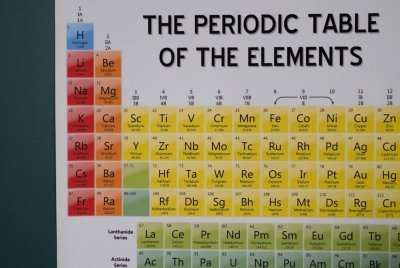
Chile is the world’s largest rhenium producer, accounting for about 50% of global output. The metal is atomic No. 75 on the Periodic Table of Elements.
Since Friday, Chilean officials have held consultations on critical minerals and rare earth elements with the administration of President Donald Trump, seeking a bilateral agreement to strengthen supply chains and promote strategic investment.
“Chile controls nearly half of a mineral that the United States and China cannot produce in sufficient quantities. Washington reinstated rhenium to its critical minerals list in 2025 and explicitly included it in the bilateral mining agreement with Chile. That makes it a genuine geopolitical asset, not just a mining one,” mining market specialist Víctor Pérez, an engineering professor at Adolfo Ibáñez University, told UPI.
Manuel Reyes, a mining engineering professor at Andrés Bello University, said the United States considers rhenium a national security priority because of its critical role and a lack of substitutes in aerospace and defense.
“Although rhenium does not carry the financial weight of copper or lithium, it functions as a reputational asset that keeps Chile on global strategic radars. More as a necessary logistics partner than as a decision-making power,” he said.
Pérez said Chile’s rhenium exports are expected to range between $100 million and $200 million this year, compared with an estimated $60 billion in copper exports. Still, he said its strategic importance is unique “because it has no real substitute in aerospace and defense applications.”
Chile holds the world’s largest reserves at 1,300 metric tons, followed by the United States with 400 metric tons, Russia with 310 metric tons and Kazakhstan with 190 metric tons, according to Reyes.
Rhenium trades at about $2,000 per kilogram, though prices have climbed in 2026 to roughly $6,000 per kilogram, he said.
About 70% to 80% of global rhenium is used in superalloys for aviation and defense turbines. “It is the metal that allows aircraft engines and military turbines to withstand extreme temperatures without deforming,” Pérez said.
Rhenium is known as a by-product mineral because it is not found alone, but rather extracted from copper-related ores, which makes production complex. Chile’s large-scale copper mining operations enable its recovery, as processing captures gases released during molybdenum concentrate roasting and chemically extracts the metal.
Reyes said Chile remains highly dependent on external demand.
“Reserve management and supply continuity depend on the technical and national security requirements of powers such as the United States, which ultimately drive demand,” he said.