supply

How does targeting water supply during war worsen the scarcity crisis? | Politics

We explore why water infrastructure is increasingly being targeted in the midst of war and conflict.

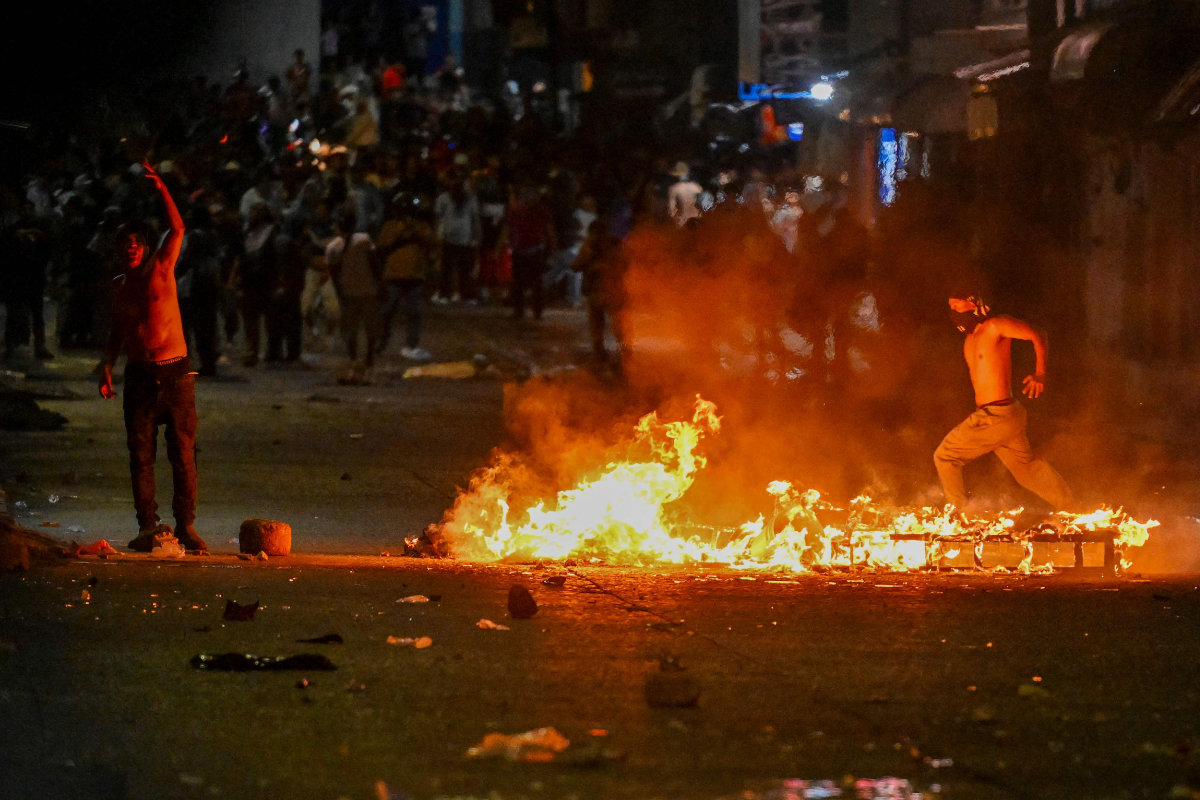
Water sustains life, but what happens when it is weaponised? In the ongoing US-Israel war on Iran, desalination plants supplying millions in the Gulf have become targets. This reflects a growing pattern: water infrastructure is increasingly vulnerable as global scarcity intensifies. The United Nations warns of looming “water bankruptcy” driven by climate change and rising global demands, including AI data centres.

Presenter: Stefanie Dekker

Guests:

Kaveh Madani – Director, UNU Institute for Water, Environment & Health

Zeina Moneer – Environmental policy and climate programmes expert

Source link

South Korea, Vietnam discuss nuclear, supply chain cooperation

President of Vietnam and General Secretary of the Communist Party To Lam (2-R) and his wife Ngo Phuong Ly (R), South Korean President Lee Jae Myung (2-L) and his wife Kim Hea Kyung (L) pose for a group photo at the Presidential Palace in Hanoi, Vietnam, 22 April 2026. President Lee is on a state visit to Vietnam from 21 to 24 April 2026. Photo by LUONG THAI LINH / EPA

April 22 (Asia Today) — South Korean President Lee Jae-myung held summit talks with Vietnam’s top leader on Tuesday to strengthen cooperation in nuclear energy, infrastructure and supply chains, as both countries seek to navigate rising global uncertainties.

Lee met with To Lam in Hanoi during a state visit, where the two sides discussed expanding strategic cooperation across key sectors, including energy security and critical minerals.

The talks come as prolonged conflict in the Middle East heightens concerns over global energy supply disruptions, prompting both countries to pursue more resilient and diversified supply chains.

South Korea and Vietnam, each among the other’s top three trading partners, agreed to deepen cooperation not only in trade and investment but also in nuclear power, infrastructure, defense and other strategic industries.

The two countries have set a goal of increasing bilateral trade from $94.6 billion in 2025 to $150 billion by 2030.

Lee is expected to express support for South Korean companies seeking to participate in major Vietnamese infrastructure projects, including a new urban development project valued at about 1.1 trillion won ($740 million) and a new airport project estimated at 102.7 billion won ($69 million).

The leaders are also expected to discuss expanding cooperation in science and technology, climate response, artificial intelligence semiconductors and cultural industries, as well as boosting people-to-people exchanges such as tourism.

Ahead of the summit, Lee said relations between the two countries had reached a “comprehensive strategic partnership” following the 30th anniversary of diplomatic ties in 2022.

“Through this visit, we aim to further develop our highest-level cooperation into a more future-oriented and strategic partnership,” Lee said during a meeting with Korean residents in Vietnam.

Lee also paid tribute at the mausoleum of Ho Chi Minh before the summit and is scheduled to attend a state banquet hosted by the Vietnamese leadership.

On Wednesday, Lee is expected to meet Vietnam’s prime minister and National Assembly chair, and attend a business forum with executives from major South Korean conglomerates, including Lee Jae-yong, Chey Tae-won and Koo Kwang-mo.

— Reported by Asia Today; translated by UPI

© Asia Today. Unauthorized reproduction or redistribution prohibited.

Original Korean report: https://www.asiatoday.co.kr/kn/view.php?key=20260422010007161

Source link

Lee holds summit with Indian PM Modi on economic ties, supply chains

South Korean President Lee Jae Myung (R) and Indian Prime Minister Narendra Modi enter a room for their summit held at the Hyderabad House in New Delhi on Monday. Photo by Yonhap

President Lee Jae Myung held summit talks with Indian Prime Minister Narendra Modi on Monday, focusing on deepening economic ties and strengthening the countries’ strategic partnership amid the war in the Middle East.

The two leaders were earlier expected to discuss ways to bolster cooperation in artificial intelligence, defense, and the shipping and shipbuilding industries, while expanding the scope of bilateral manufacturing cooperation beyond electronics and vehicles.

They also likely discussed enhancing coordination on global supply chains and energy security as their countries, both heavily reliant on imported energy, grapple with the fallout from the war between the United States and Iran.

In an interview with The Times of India published earlier in the day, Lee stressed the need for South Korea and India to work together to ensure safe passage through the Strait of Hormuz, a critical route for oil and natural gas, and make joint efforts to stabilize global supply chains.

It marked their third in-person meeting since Lee took office in June 2025.

Ahead of the summit, Lee paid tribute at Raj Ghat, a memorial dedicated to Mahatma Gandhi, and planted a commemorative tree with Modi at Hyderabad House.

Copyright (c) Yonhap News Agency prohibits its content from being redistributed or reprinted without consent, and forbids the content from being learned and used by artificial intelligence systems.

Source link

Can global supply chains recover from the Iran war? | US-Israel war on Iran

Conflict upends flow of critical raw materials for manufacturing, aviation and technology.

The United States and Iran may have agreed to a ceasefire for now, but the world’s supply chains will continue to feel the effects.

Beyond oil and gas, Iran’s near closure of the Strait of Hormuz has blocked shipments of critical raw materials from the Gulf.

Petrochemicals, helium and aluminium are just some of the products that have not been able to reach manufacturing hubs around the world.

Many everyday items are affected, from plastic packaging to the advanced semiconductors in our smartphones.

How will our supply chains recover, and can they become more resilient to global shocks?

Source link

Trump threatens 50% tariffs on countries that supply Iran with weapons | Donald Trump News

It’s not clear under what legal authority Trump can tack on this tariff, and analysts called it an ’empty threat’.

United States President Donald Trump has said imports from countries supplying Iran with military weapons will face immediate 50 percent tariffs with no exemptions, announcing the threatened duty in a social media post just hours after agreeing to a two-week ceasefire with Tehran.

Trump’s Truth Social post on Wednesday did not specify which legal authority he would invoke to impose such tariffs, as the Supreme Court in February struck down his use of the International Emergency Economic Powers Act [IEEPA] to impose broad global tariffs, prompting a lower court to order refunds of some $166bn collected over the course of a year.

Recommended Stories

list of 4 itemsend of list

The 1977 IEEPA law has been used extensively for decades to back financial sanctions against Iran, Russia and North Korea, but the court ruled that Trump overstepped his authority in using it to impose trade tariffs.

“A Country supplying Military Weapons to Iran will be immediately tariffed, on any and all goods sold to the United States of America, 50%, effective immediately. There will be no exclusions or exemptions! President DJT,” Trump wrote.

However, “it’s a lot more complicated to do that after IEEPA was struck down”, Rachel Ziemba, adjunct senior fellow at the Center for a New American Security, told Al Jazeera. “There’s no immediate policy lever and authorisation that is available for the US to do that. So they need either an act of Congress or need to adapt some other trade tool, and there isn’t really a national security-oriented trade tool.”

Trump did not name any countries that could face punitive tariffs. China and Russia have helped Iran build military capacity to counter US and Israeli pressure, supplying missiles, air defence systems and technology intended to bolster deterrence.

But that support appeared capped during the US-Israeli attacks on Iran. Both Beijing and Moscow have denied supplying any weapons recently, although allegations against Moscow have persisted.

The Reuters news agency has previously reported that Tehran was considering a purchase of supersonic antiship cruise missiles from China. In March, Reuters reported that China’s top semiconductor maker, SMIC, has sent chipmaking tools to Iran’s military, according to two senior Trump administration officials.

“This is a China-related threat, the way I read it. And China will read it that way,” said Josh Lipsky, vice president and chair of international economics at the Atlantic Council.

Although drone and missile parts routinely flow from Chinese entities to Iran, evading US sanctions, Lipsky said Trump was unlikely to follow through with new tariffs in the near term because that would derail his planned trip to Beijing to meet with Chinese President Xi Jinping in mid-May.

“US tariffs on Chinese products have gone down a lot since the court ruling,” said Ziemba, “and slapping on 50 percent tariffs now would be very expensive, especially for US importers and consumers.”

Moreover, with the Trump-Xi meeting looming, “this is kind of an empty threat, but shows that when push comes to shove, Trump comes back to tariffs”, Ziemba said.

Trump does have active “Section 301” unfair trade practices tariffs on Chinese goods from his first term, to which he may be able to add duties and similar pending cases related to excess industrial capacity and China’s compliance with a 2020 trade deal. But these would require a public notice period before they could take effect.

Trump also may be able to invoke Section 232 of the Cold War-era Trade Expansion Act of 1962, which allows sector-specific tariffs to protect strategic domestic industries on national security grounds, but using this law would require a new months-long investigation and public comments.

Russia has been another source of arms technology for Iran, but US imports of Russian goods have fallen sharply since the invasion of Ukraine in 2022 and the wave of financial sanctions imposed on Moscow as a result.

US imports from Russia, one of the only countries not subject to Trump’s now-cancelled “reciprocal” tariffs, jumped 26.1 percent to $3.8bn in 2025. These are dominated by palladium used in automotive catalytic converters, fertilisers and their ingredients, and enriched uranium for nuclear reactors. The US Department of Commerce is already moving to impose punitive tariffs on Russian palladium after an anti-dumping investigation.

Source link

Iran’s strike on Qatar gas facility will reduce supply for 3 to 5 years | International Trade

NewsFeed

Iran’s strike on Qatar’s Ras Laffan gas facility will cut an estimated 17% of the country’s Liquefied Natural Gas export capacity for up to five years, officials say. The damage is a major blow to the global energy market, which could disrupt supplies to Europe, Asia and beyond.

Source link

U.S. eases Venezuela oil sanctions as Trump seeks to boost world oil supply during Iran war

U.S. companies will be allowed to do business with Venezuela’s state-owned oil and gas company after the Treasury Department eased sanctions, with some limitations, on Wednesday as the Trump administration looks for ways to boost world oil supplies during the Iran war.

The Treasury issued a broad authorization allowing Petróleos de Venezuela S.A, or PDVSA, to directly sell Venezuelan oil to U.S. companies and on global markets, a massive shift after Washington for years had largely blocked dealings with Venezuela’s government and its oil sector.

Separately, the White House said President Trump would waive, for 60 days, Jones Act requirements for goods shipped between U.S. ports to be moved on U.S.-flagged vessels. The 1920s law, designed to protect the American shipbuilding sector, is often blamed for making gas more expensive.

The moves highlight the increased pressure that the Republican administration is under to ease soaring oil prices as the United States, along with Israel, wages a war with Iran without a foreseeable end date. Global oil prices have since spiked as Iran halted traffic through the narrow Strait of Hormuz, where one-fifth of the world’s oil typically passes through from the Persian Gulf to customers worldwide.

The Treasury’s license is designed to incentivize new investment in Venezuela’s energy sector and is intended to benefit both the U.S and Venezuela, while increasing the global oil supply, a Treasury official told the Associated Press. The official was not authorized to discuss the matter publicly and spoke on condition of anonymity.

Since the ouster and arrest of Nicolás Maduro as Venezuela’s president during a U.S. military operation in January, Trump has said the U.S. would effectively “run” Venezuela and sell its oil.

The U.S. license provides targeted relief from sanctions, but does not lift the penalties altogether. The license allows companies that existed before Jan. 29, 2025, to buy Venezuelan oil and engage in transactions that would normally be banned under American sanctions, reopening trade for a major oil producer to global markets.

There are some limits.

Payments cannot go directly to sanctioned Venezuelan entities such as PDVSA, but must be sent instead to a special U.S.-controlled account. In other words, the U.S. will allow the oil trade but will control the cash flow.

Additionally, deals involving Russia, Iran, North Korea, Cuba and some Chinese entities will not be allowed. Transactions involving Venezuelan debt or bonds will not be allowed.

The license is expected to give a massive boost to Venezuela’s oil-dependent economy and help encourage companies that have been apprehensive to invest. The decision is part of the Trump administration’s phased-in plan to turn around Venezuela. But critics of the acting Venezuelan government argue that the move rewards Venezuela’s leadership — all loyal to Maduro and the ruling party — while repression, corruption and human rights abuses continue.

Many public sector workers survive on roughly $160 per month, while the average private sector employee earned about $237 last year, when the annual inflation rate soared to 475%, according to Venezuela’s central bank, and sent the cost of food beyond what many can afford.

Venezuela sits atop the world’s largest oil reserves and used them to power what was once Latin America’s strongest economy. But corruption, mismanagement and U.S. economic sanctions saw production steadily decline from the 3.5 million barrels per day pumped in 1999, when Maduro’s mentor, Hugo Chávez, took power, to less than 400,000 barrels per day in 2020.

A year earlier, the Treasury Department under the first Trump administration locked Venezuela out of world oil markets when it sanctioned PDVSA as part of a policy punishing Maduro’s government for corrupt, anti-democratic and criminal activities. That forced the government to sell its remaining oil output at a discount — about 40% below market prices — to buyers such as China and in other Asian markets. Venezuela even started accepting payments in Russian rubles, bartered goods or cryptocurrency.

The new license does not allow payments in gold or cryptocurrency, including the petro, which was a crypto token issued by the Venezuelan government in 2018.

Meantime, White House press secretary Karoline Leavitt said the Jones Act waiver would help “mitigate the short-term disruptions to the oil market” during the Iran war and would “allow vital resources like oil, natural gas, fertilizer, and coal to flow freely to U.S. ports.”

Hussein and Cano write for the Associated Press. Cano reported from Caracas, Venezuela. AP writer Seung Min Kim contributed to this report.

Source link

U.S. eyes Chile’s dominant global rhenium supply

SANTIAGO, Chile, March 18 (UPI) — The United States is continuing efforts to secure supplies of critical minerals deemed vital to national security. Alongside copper, lithium and silver, one lesser-known metal is drawing increased attention: rhenium.

Used primarily in the aerospace, energy and petrochemical industries, rhenium plays a key role in high-performance applications. Experts say it also holds potential in the global energy transition because it can act as a catalyst in producing green hydrogen.

Chile is the world’s largest rhenium producer, accounting for about 50% of global output. The metal is atomic No. 75 on the Periodic Table of Elements.

Since Friday, Chilean officials have held consultations on critical minerals and rare earth elements with the administration of President Donald Trump, seeking a bilateral agreement to strengthen supply chains and promote strategic investment.

“Chile controls nearly half of a mineral that the United States and China cannot produce in sufficient quantities. Washington reinstated rhenium to its critical minerals list in 2025 and explicitly included it in the bilateral mining agreement with Chile. That makes it a genuine geopolitical asset, not just a mining one,” mining market specialist Víctor Pérez, an engineering professor at Adolfo Ibáñez University, told UPI.

Manuel Reyes, a mining engineering professor at Andrés Bello University, said the United States considers rhenium a national security priority because of its critical role and a lack of substitutes in aerospace and defense.

“Although rhenium does not carry the financial weight of copper or lithium, it functions as a reputational asset that keeps Chile on global strategic radars. More as a necessary logistics partner than as a decision-making power,” he said.

Pérez said Chile’s rhenium exports are expected to range between $100 million and $200 million this year, compared with an estimated $60 billion in copper exports. Still, he said its strategic importance is unique “because it has no real substitute in aerospace and defense applications.”

Chile holds the world’s largest reserves at 1,300 metric tons, followed by the United States with 400 metric tons, Russia with 310 metric tons and Kazakhstan with 190 metric tons, according to Reyes.

Rhenium trades at about $2,000 per kilogram, though prices have climbed in 2026 to roughly $6,000 per kilogram, he said.

About 70% to 80% of global rhenium is used in superalloys for aviation and defense turbines. “It is the metal that allows aircraft engines and military turbines to withstand extreme temperatures without deforming,” Pérez said.

Rhenium is known as a by-product mineral because it is not found alone, but rather extracted from copper-related ores, which makes production complex. Chile’s large-scale copper mining operations enable its recovery, as processing captures gases released during molybdenum concentrate roasting and chemically extracts the metal.

Reyes said Chile remains highly dependent on external demand.

“Reserve management and supply continuity depend on the technical and national security requirements of powers such as the United States, which ultimately drive demand,” he said.

Source link