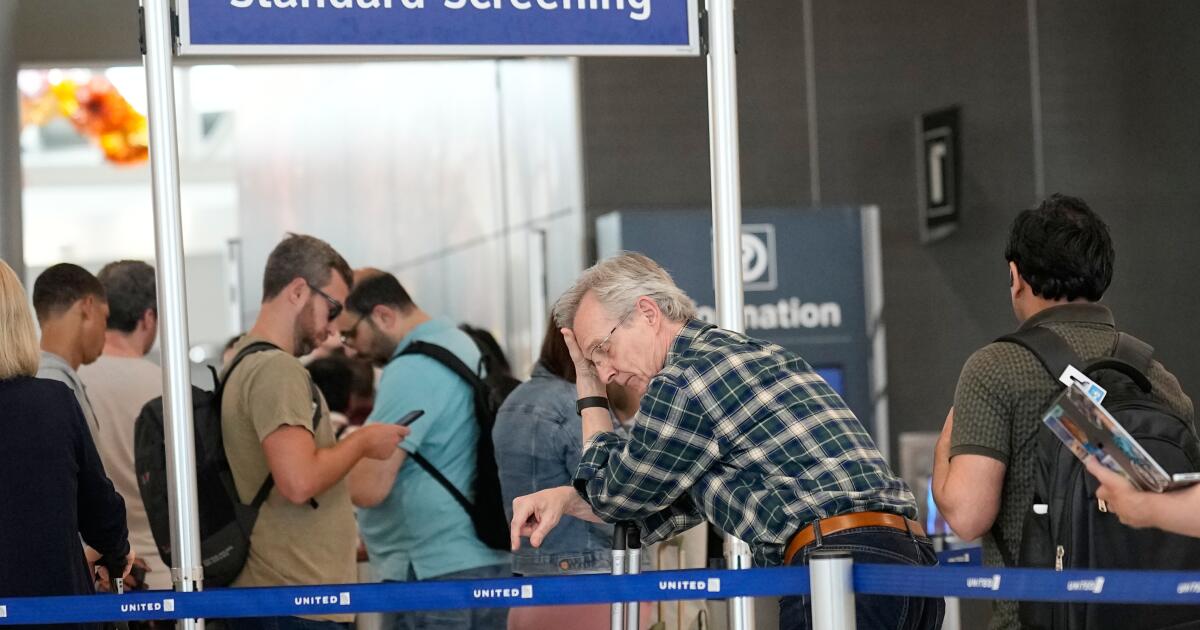
With spring break in full swing, airline passengers continued to wait it out at major U.S. airports after President Trump signed an executive order to pay Transportation Security Administration officers aimed at alleviating long security lines.
Trump’s executive order Friday instructed the Department of Homeland Security to pay TSA officers immediately, although it’s unclear when the impact of that move will start to be felt at airports.
The signing came at a busy travel time of the year, with spring breaks at school districts and colleges and the upcoming Passover and Easter holidays.
Betty Mitchell arrived at Philadelphia International Airport at 12:30 a.m. Saturday for a 5 a.m. flight to visit family, but she said the airline desk did not open until 3 a.m. Once it did, there was a sudden influx of passengers to squeeze into the TSA screening lines.
“All at once it became a madhouse,” Mitchell said.
She waited nearly three hours to get through TSA screening but missed her flight. She was able to board the next available one.
“It was crazy long lines,” she said. “Never have I seen it that long. If the airlines work with TSA in these [troubled] times, maybe it would help the public.”
What’s the current situation on the ground?
Some passengers with very early flights Saturday were luckier than Mitchell, reporting they had little problem getting through airport security lines. But that may have been an anomaly. Others at some of the busiest airports wrote on social media that security lines were growing exponentially longer by the hour.
“We have not previously experienced checkpoint wait times similar to what we are seeing this morning,” Baltimore/Washington International Thurgood Marshall Airport said in a post Saturday on X. Officials at the airport recommended travelers arrive four hours before their scheduled departure time.
When will TSA employees be paid?
Homeland Security Secretary Markwayne Mullin said TSA personnel could get paid as soon as Monday, a relief for workers who have gone without pay since Feb. 14.
While that is welcome news to many, it remains to be seen whether that promise materializes on schedule and if it brings an immediate end to snaking lines at airports.
Caleb Harmon-Marshall, a former TSA officer who runs a travel newsletter called Gate Access, said the staffing crisis won’t improve significantly until officers are confident they won’t be subjected to more skipped paychecks.
“If it’s only for a pay period, that’s not enough to bring them back,” Harmon-Marshall said. “It has to be an extended pay for them to come back or want to stay there.”
He estimates longer lines could linger for another week or two.
How soon will this help with airport delays?
It’s hard to tell. Airports that had passengers standing in screening lines that clogged check-in areas or showing up far too early for their flights will need to decide whether to reopen checkpoints or expedite service lanes they closed or consolidated due to inadequate staffing.
A few airports experienced daily TSA officer callout rates of 40%. Nationwide Thursday, more than 11.8% of the TSA employees on the schedule missed work, the most so far, the Department of Homeland Security said Friday.
Nearly 500 of the agency’s approximately 50,000 officers have quit since the partial shutdown started, the department said.
How do I monitor wait times before my flight?
Check airport conditions early and often, including official websites and social media accounts where airports share timely updates and guidance, according to experts.
Many airports Saturday urged passengers to allow at least four hours for both domestic and international screenings.
“Wait times can change quickly based on passenger volume and TSA staffing,” according to an advisory posted Saturday morning on the website of John F. Kennedy International Airport in New York.
Wait times listed on the MyTSA mobile app may not be accurate because TSA hasn’t been actively managing its sites during the shutdown. On third-party websites that track TSA lines, estimated wait times could be outdated during the shutdown if they rely on publicly available data, experts say.
Raby and Sedensky write for the Associated Press.