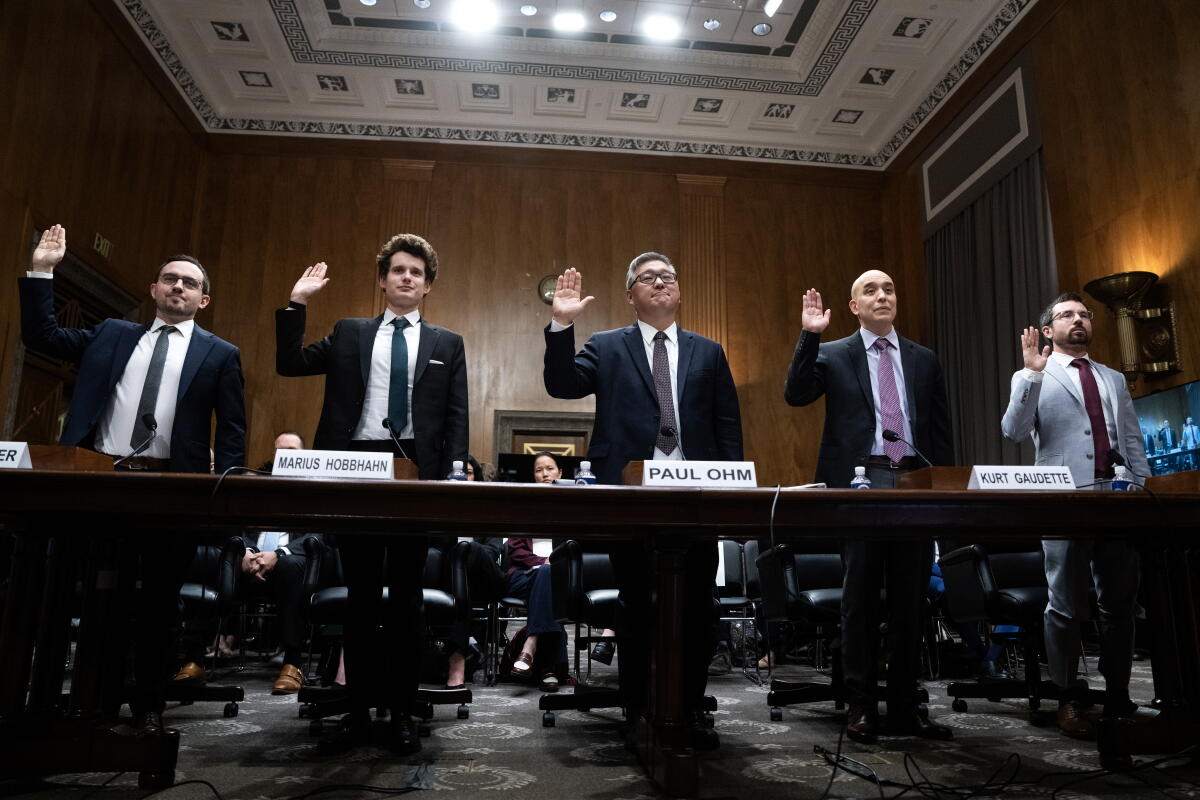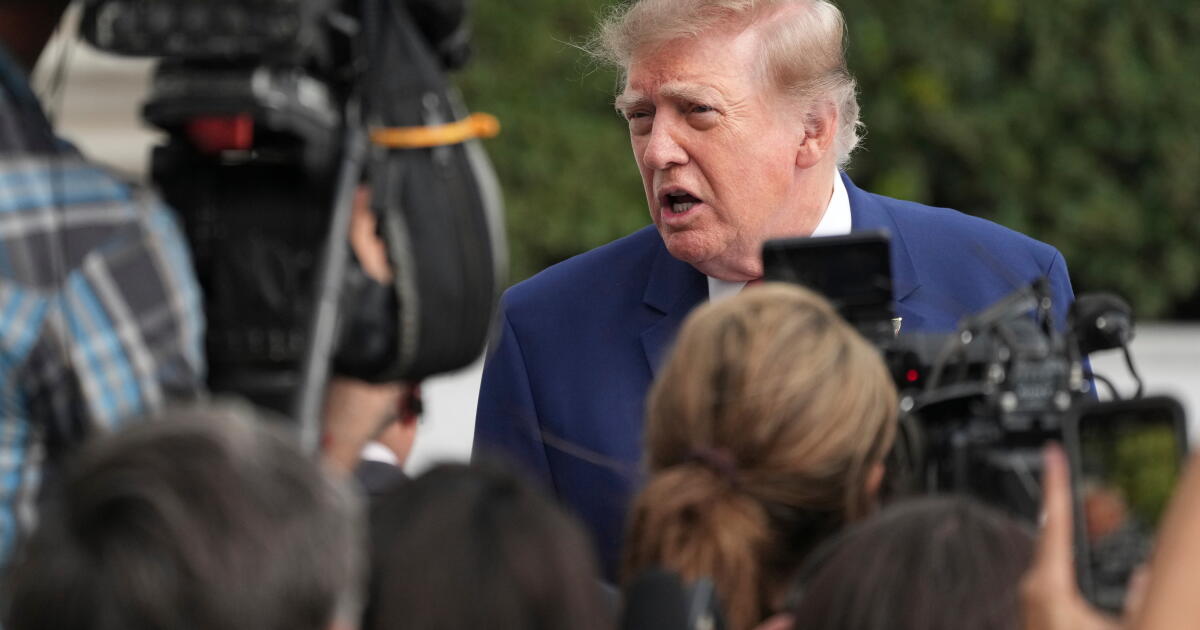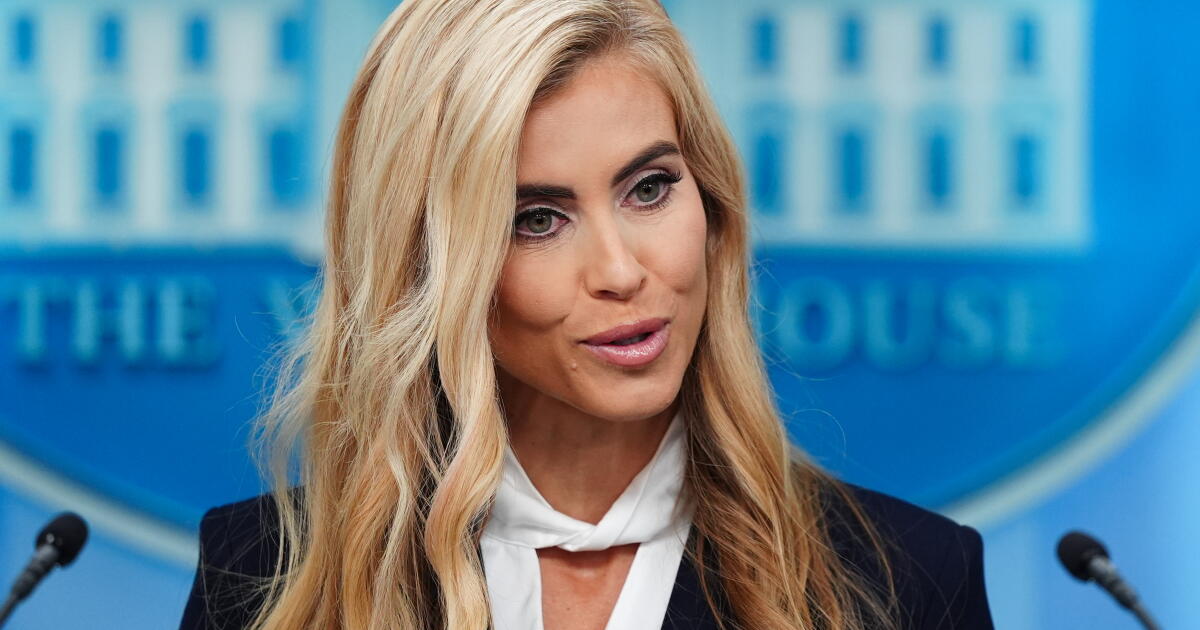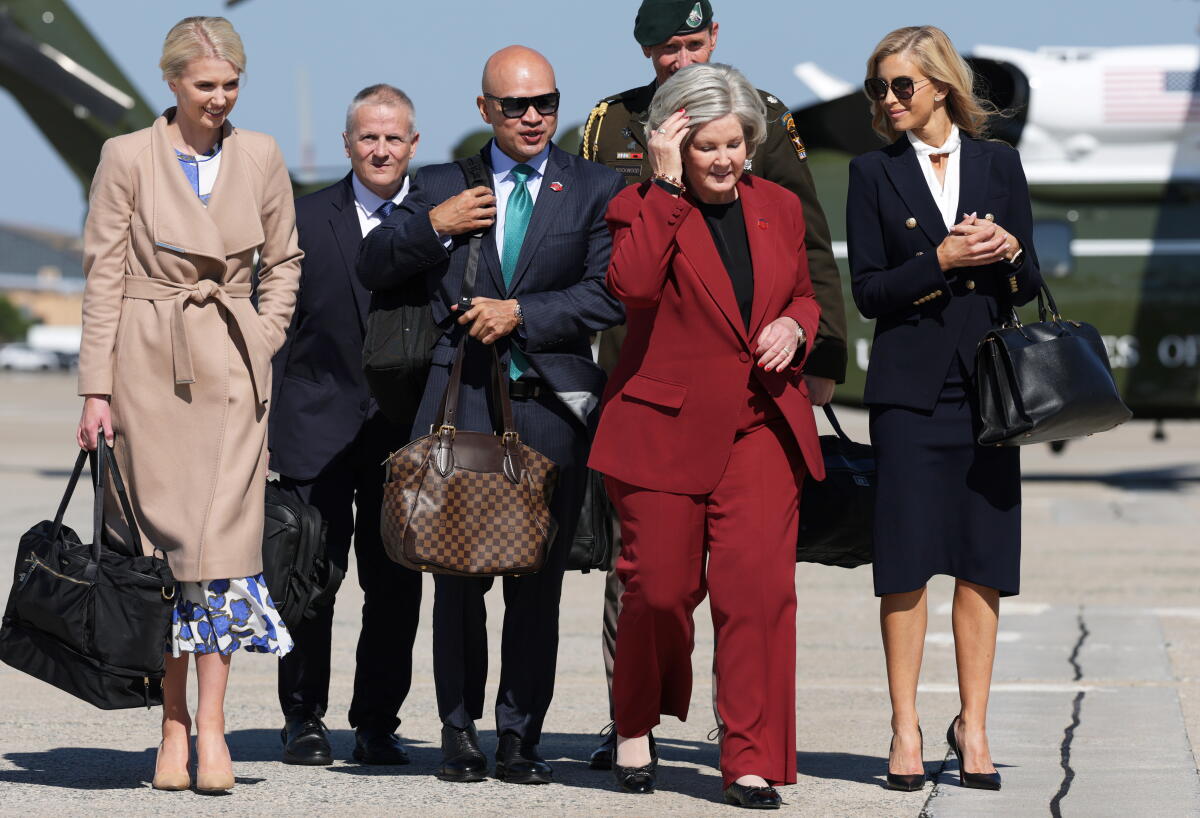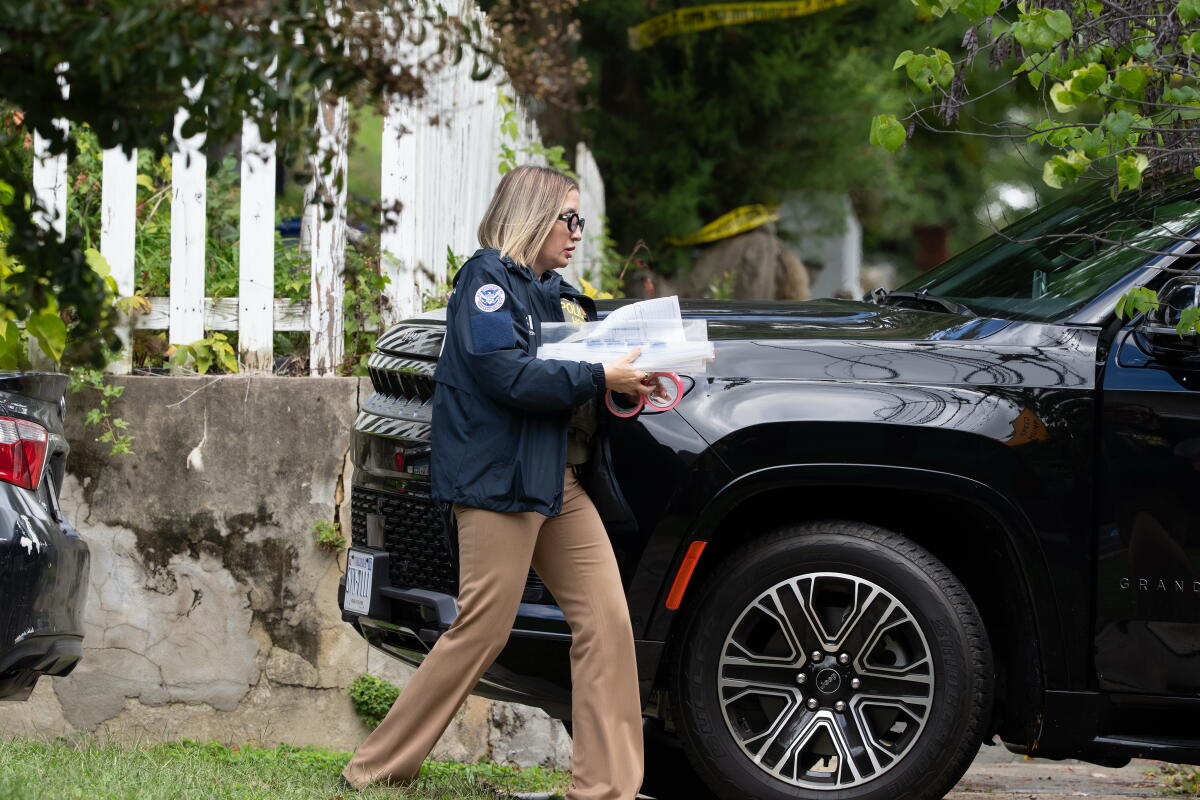
The shooting of a Secret Service agent at the White House Correspondents’ Association dinner on Saturday night has raised concerns about the safety of political leaders amid rising political violence. Despite hundreds of agents from various law enforcement agencies being assigned to secure the event, a suspect armed with a shotgun and other weapons was able to approach just one floor above where prominent figures, including President Donald Trump, Vice President JD Vance, and several cabinet members, were dining.
The alleged gunman, who carried a shotgun, a handgun, and knives, was reportedly staying at the Washington Hilton hotel, where the dinner took place. Trump’s remarks following the incident highlighted the dangers of his role, noting the hotel is “not particularly a secure building. ” This vulnerability is concerning given recent assassination attempts against him during the 2024 presidential campaign.
Attendees had to pass through metal detectors at the ballroom, but only needed tickets to access the hotel, which was open to other guests. Many attendees faced demonstrators protesting the Trump administration’s policies. Video footage showed the gunman rushing past a security checkpoint before shooting the agent, after which he was tackled and arrested by officials.
Inside the ballroom, guests were dining when gunshots were heard. Secret Service agents quickly acted to protect Trump and Vance, while security responses varied for other officials, with some agents forming shields and others reacting differently. The timing for evacuating protectees differed, with some leaving almost immediately and others remaining longer. Trump, who has faced close calls with violence in the past, later acknowledged that carrying on with the event was not feasible after the attack.
The Trump administration’s historic move to reclassify state-licensed medical marijuana as a less-dangerous drug was cheered by some advocates but for others, it fell far short for the thousands still incarcerated on federal cannabis-related convictions.
The executive order, which acting Atty. Gen. Todd Blanche signed Thursday, does not address current penalties for possessing and selling marijuana or those jailed with yearslong sentences.
“While this is a victory, the fight is far from over,” said Jason Ortiz, director of strategic initiatives for the Last Prisoner Project, a nonprofit focused on cannabis criminal justice reform.
Proponents of legalizing marijuana as well as overhauling prison sentencing say this order, which does not completely decriminalize the drug, benefits only cannabis researchers, growers and others in Big Weed. Meanwhile, thousands — many of whom are people of color — are stuck serving harsh sentences for marijuana-related offenses. Or they have served their time but having a conviction on their record has made life difficult.
Now, advocates are calling on Congress and state lawmakers to take concrete steps to ensure those with marijuana-related convictions receive fair treatment or be forgiven altogether.
Prisoners and their families look for hope
Blanche’s order reclassifies state-licensed medical marijuana as a less-dangerous drug. The major policy shift, which both Presidents Obama and Joe Biden had considered, means cannabis won’t be grouped with drugs like heroin.
But it does not legalize marijuana for medical or recreational use. It shifts licensed medical marijuana from Schedule I — reserved for drugs without medical use and with high potential for abuse — to the less strictly regulated Schedule III. This will likely give licensed medical marijuana operators and cannabis researchers a major tax break and less stringent barriers to doing normal business.
Virtually no one imprisoned at the federal level is there solely for marijuana possession. But many are there for large-scale possession, trafficking offenses or both.
Hector Ruben McGurk, 66, has been serving life without the possibility of parole since 2007 for transporting thousands of pounds of marijuana and money laundering. He is currently imprisoned in Beaumont, Texas, over 800 miles from his son’s El Paso home. His incarceration has been hard on his son, said McGurk’s daughter-in-law, Ferna Anguiano. And the distance makes visits logistically difficult.
So it’s tempting to see this order as a glimmer of hope, given that the family believes McGurk’s punishment far outweighs his crimes. But Anguiano has no idea how to navigate lobbying for his release.
“His release date is death,” Anguiano said. “I mean, we see all this stuff on the news — bigger cases, fatal cases — and people are going in and out of prison and coming out to their families.”
They try to keep in touch through phone calls and a prison texting service. They’re concerned about McGurk’s health and his diabetes management. It would be a dream come true for him to come home.
“He deserves a second chance,” Anguiano said. “Yes, it was a poor decision he did in his lifetime. He was younger. But he is not a bad person. I think it’s fair to say he has served enough time for it.”
It’s not clear whether punishments would be different had marijuana always been scheduled differently, drug policy experts say.
“In addition to schedule-specific penalties, there are marijuana-specific penalties that have nothing to do with the schedule,” said Cat Packer, director of drug markets and legal regulation at the nonprofit Drug Policy Alliance. “Even if marijuana were to be moved to Schedule V, those criminal penalties would still exist and there are mandatory minimums for simple possession.”
Racial disparities exist in convictions and Big Weed
Destigmatizing marijuana has long been an issue for both political parties. Obama commuted the sentences of about 1,900 federal prisoners, almost all of whom were incarcerated for nonviolent drug crimes. Biden pardoned 6,500 people convicted of use and simple possession of marijuana on federal lands and in the District of Columbia. President Trump’s administration has taken far fewer drug clemency actions and does not have an overarching policy directing such actions.
“What many people on the right and the left would like is to move marijuana from this ‘just as bad as heroin’ category and to just sort of de-schedule it entirely,” said Marta Nelson, director of sentencing reform at the Vera Institute of Justice. “Regulate it like you do alcohol or tobacco.”
Studies show Black Americans are roughly 3.7 to 4 times more likely to be arrested for marijuana possession than white Americans, despite usage rates being roughly the same across racial groups. Federal-level marijuana cases are pretty small today, but those serving sentences for federal drug offenses are overwhelmingly Hispanic and Black, according to Justice Department and Bureau of Justice Statistics data.
The racial disparity with drug convictions is reminiscent of 2010 legislation Obama signed reducing the gap between mandatory sentences for crack cocaine versus powder cocaine. In 2018, Trump made it apply retroactively.
Because business owners with state medical marijuana licenses are predominantly white, the tax relief created by the rescheduling will also likely give a leg up to mostly white businesses, Packer said. A lot of equity programs won’t apply.
“This is going to, in my mind, widen the gap, the financial disparities, the business disparities that currently exist between Black and brown, Latino and white owners in the cannabis industry because licenses were not distributed equitably,” Packer said.
Possible next steps for marijuana convictions
In theory, Trump could issue a blanket pardon like he did for Jan. 6 rioters. But Nelson thinks that is highly doubtful.
“Having marijuana convictions on the record for things like mass immigration enforcement is helpful to the administration,” Nelson said.
An impactful next step would be for Congress to outline very comprehensive legislation addressing existing marijuana-related convictions, expungements and industry regulations, she added.
The Last Prisoner Project and other organizations are planning to renew a dialogue with federal lawmakers, including the Congressional Cannabis Caucus, which includes Democratic Rep. Ilhan Omar of Minnesota and Republican Rep. David Joyce of Ohio. They will also continue to lobby for Trump to conduct a large-scale act of commutation and clemency.
Advocates are also hoping Trump’s order will prompt every state to rethink their marijuana classification and penalties.
“It is imperative that every state review their situation, as a lot of their controlled substances at the state level are tied to the federal government,” Ortiz said. “We’re gonna see other states that are going to need a little help from the public to remind them what the right thing to do is.”
WASHINGTON — An appeals court on Friday blocked President Trump’s executive order suspending asylum access, a key pillar of the Republican president’s plan to crack down on migration at the southern border of the U.S.
A three-judge panel from the U.S. Court of Appeals for the District of Columbia Circuit found that immigration laws give people the right to apply for asylum at the border, and the president can’t circumvent that.
The panel concluded that the Immigration and Nationality Act doesn’t authorize the president to remove the plaintiffs under “procedures of his own making,” allow him to suspend plaintiffs’ right to apply for asylum or curtail procedures for adjudicating their anti-torture claims.
“The power by proclamation to temporarily suspend the entry of specified foreign individuals into the United States does not contain implicit authority to override the INA’s mandatory process to summarily remove foreign individuals,” wrote Judge J. Michelle Childs, who was nominated to the bench by Democratic President Biden.
The White House didn’t immediately respond to a request for comment.
ACLU attorney Lee Gelernt said in a statement that the appellate ruling is “essential for those fleeing danger who have been denied even a hearing to present asylum claims under the Trump administration’s unlawful and inhumane executive order.”
Judge Justin Walker, a Trump nominee, wrote a partial dissent. He said the law gives immigrants protections against removal to countries where they would be persecuted, but the administration can issue broad denials of asylum applications.
Walker, however, agreed with the majority that the president cannot deport migrants to countries where they will be persecuted or strip them of mandatory procedures that protect against their removal.
Judge Cornelia Pillard, who was nominated by Democratic President Obama, also heard the case.
Judges say Trump’s order for swift removal at the border ‘cast aside federal laws affording’ right to seek asylum.
Published On 24 Apr 202624 Apr 2026
An appeals court has ruled that President Donald Trump’s ban on asylum applications in the United States is unlawful, dealing a setback to the administration’s immigration crackdown.
In a decision released on Friday, a three-judge panel from the US Court of Appeals in Washington, DC, found that existing laws — namely the Immigration and Nationality Act (INA) — give people the right to apply for asylum at the border.
Recommended Stories
list of 3 itemsend of list
Trump had issued the asylum ban in a proclamation on January 20, 2025, on the first day of his second term.
But the appeals court questioned whether suspending asylum unilaterally was within the president’s power.
“Congress did not intend to grant the Executive the expansive removal authority it asserts,” the ruling said.
“The Proclamation and Guidance are thus unlawful to the extent that they circumvent the INA’s removal procedures and cast aside federal laws affording individuals the right to apply and be considered for asylum or withholding of removal protections.”
The decision validated a ruling by a lower court. While the judges blocked Trump’s order, it is unclear what its immediate impact will be. Already, the White House has signalled it plans to appeal.
Trump made immigration a major pillar of his 2024 re-election campaign, pledging to repel what he describes as an “invasion” of migrants by shutting down the southern border of the US.
Asylum in the US can be granted to people facing “persecution based on race, religion, nationality, political opinion, or membership in a particular social group”. Such protections have been recognised as a fundamental human right under international law.
But unauthorised border crossings reached record levels during the administration of President Joe Biden, which had itself imposed asylum restrictions.
Millions of migrants — many suffering from gang violence and political persecution in Central and South America — have claimed asylum upon reaching the US.
Nearly 945,000 filed for asylum in 2023, according to the Department of Homeland Security.
In his January 2025 decree, Trump suspended “the physical entry of aliens involved in an invasion into the United States across the southern border”.
The proclamation was quickly challenged in court, as other measures in Trump’s immigration crackdown have been.
But the appeals court panel concluded that the INA does not authorise the president to remove the plaintiffs under “procedures of his own making”.
Nor does it allow him to suspend the plaintiffs’ right to apply for asylum or curtail procedures for adjudicating claims of torture and persecution.
“The power by proclamation to temporarily suspend the entry of specified foreign individuals into the United States does not contain implicit authority to override the INA’s mandatory process to summarily remove foreign individuals,” wrote Judge J Michelle Childs, a Biden appointee.
The Trump administration will likely appeal the ruling to the full appellate court and subsequently to the Supreme Court.
The White House stressed after the court’s decision that banning asylum is part of Trump’s constitutional powers as commander-in-chief.
“We have liberal judges across the country who are acting against this president for political purposes. They are not acting as true litigators of the law. They are looking at these cases from a political lens,” White House spokesperson Karoline Leavitt told reporters.
Several Iranian officials have stressed that their country is united, rejecting United States President Donald Trump’s claims of a rift in the leadership in Tehran.
Iran’s President Masoud Pezeshkian, Foreign Minister Abbas Araghchi and Parliament Speaker Mohammad Bagher Ghalibaf all issued statements rejecting the United States president’s assertion.
Recommended Stories
list of 3 itemsend of list
Pezeshkian and Ghalibaf joined the Supreme National Security Council in posting the same message on X.
“In Iran, there are no radicals or moderates,” it said.
“We are all ‘Iranian’ and ‘revolutionary’, and with the iron unity of the nation and government, with complete obedience to the Supreme Leader of the Revolution, we will make the aggressor criminal regret his actions.”
Mohammad Reza Aref, Iran’s first vice president, also shared the statement, adding another note in English.
“Iran is not a land of rifts, but a stronghold of unity,” Aref said. “Our political diversity is our democracy, yet in times of peril, we are a ‘Single Hand’ under one flag. To protect our soil and dignity, we transcend all labels. We are one soul, one nation.”
Iranian Supreme Leader Mojtaba Khamenei has not made a public appearance since replacing his father, Ali Khamenei, who was killed by US-Israeli strikes on February 28.
US officials have said that the younger Khamenei was wounded and “disfigured” in the strike that killed his father.
The New York Times reported on Thursday, citing unidentified Iranian officials, that Khamenei is gravely wounded but remains “mentally sharp”.
Trump and his aides have been reiterating daily over the past week that there are major disagreements among Iranian leaders.
The US president claimed that Iranians are “having a very hard time figuring out who their leader is”, alleging that there is “crazy” infighting between “moderates” and “hardliners” in Tehran.
Citing the supposed rift by Trump could serve to justify the extension of the ceasefire while also putting the blame on Iran for the stalled diplomacy.
Tehran, however, has stressed over the past days that the talks – previously scheduled to take place in Pakistan – are not happening due to the US blockade on its country’s ports.
On Thursday, Araghchi dismissed allegations that the Iranian military is at odds with the political leadership.
“The failure of Israel’s terrorist killings is reflected in how Iran’s state institutions continue to act with unity, purpose, and discipline,” he wrote on X.
“The battlefield and diplomacy are fully coordinated fronts in the same war. Iranians are all united, more than ever before.”
diplomatic impasse with the US, with Trump suggesting that he is comfortable with the status quo of blockading Iran’s ports to inflict economic pain on the country without resuming the war or rushing towards a conclusive deal.
“Iran’s Navy is lying at the bottom of the Sea, their Air Force is demolished, their Anti-Aircraft and Radar Weaponry is gone, their leaders are no longer with us, the Blockade is airtight and strong and, from there, it only gets worse — Time is not on their side!” Trump said on social media on Thursday.
“A Deal will only be made when it’s appropriate and good for the United States of America, our Allies and, in fact, the rest of the World.”
But the truce under the status quo remains tenuous. Air defences were activated over Tehran earlier on Thursday, but there has been no official confirmation of an attack against the country.
Earlier on Thursday, Trump said the US military will “shoot and kill” Iranian laying mines in the Strait of Hormuz, which could spark a response
And oil prices are once again rising due to the uncertainty and the double blockade in the Gulf – Iran closing down Hormuz and the US naval siege on Iranian ports.
Israel also appears ready to rejoin the war. Defence Minister Israel Katz said on Thursday his country is awaiting the green light from Trump to return Iran to the “age of darkness”.
“Israel is prepared to renew the war against Iran. The [Israeli military] is ready in defence and offence, and the targets are marked,” Katz said, according to the Times of Israel newspaper.
From protests to quiet resistance, dissent is rising inside the United States military over the US-Israel war on Iran.
As the US expands its war with Iran, opposition is growing – not just among the public, but inside the military itself. Some service members are questioning orders, exploring conscientious objection, and speaking out. What’s driving this shift, and how far could it go?
In this episode:
Mike Prysner (@MikePrysner), Executive Director of the Center on Conscience & War
Episode credits:
This episode was produced by Marcos Bartolomé, Tamara Khandaker, and Sarí El-Khalili with Spencer Cline, Tuleen Barakat, and our host, Malika Bilal. It was edited by Tamara Khandaker and Noor Wazwaz.
Our sound designer is Alex Roldan. Our video editors are Hisham Abu Salah and Mohannad al-Melhem. Alexandra Locke is The Take’s executive producer.
Kevin Warsh, United States President Donald Trump’s pick to lead the Federal Reserve, has addressed concerns about his independence pending his appointment to the bank amid fears that Trump could sway his decisions on monetary policy.
On Tuesday, Warsh — who served on the central bank’s Board of Governors from 2006 to 2011 — faced waves of criticism during a confirmation hearing of the Senate Banking Committee where Democrats voiced concerns about the Fed’s independence should he be appointed to lead the organisation.
Recommended Stories
list of 4 itemsend of list
Senator Elizabeth Warren of Massachusetts, the ranking Democrat on the committee, questioned Warsh’s independence, alleging that he would be a “sock puppet” for Trump, concerns he pushed back against and addressed in his opening testimony.
“I do not believe the operational independence of monetary policy is particularly threatened when elected officials — presidents, senators, or members of the House — state their views on interest rates,” Warsh said.
“Monetary policy independence is essential. Monetary policymakers must act in the nation’s interest . . . their decisions the product of analytic rigour, meaningful deliberation, and unclouded decision-making.”
Warsh, 56, also called for “regime change” at the US central bank, including a new approach for controlling inflation and a communications overhaul that may discourage his colleagues from saying too much about the direction of monetary policy.
Warsh blamed the central bank for an inflation surge after it slashed interest rates to nearly zero in the wake of the COVID-19 pandemic, a move that continues to hurt US households.
Concerned by the implications of artificial intelligence for jobs – expected to increase productivity – and prices, he said he would move quickly to see if new data tools could provide better insight on inflation, and would also discourage policymakers from saying too much about where interest rates might be heading.
“What the Fed needs are reforms to its frameworks and reforms to its communications,” the former Fed governor said. “Too many Fed officials opine about where interest rates should be … That is quite unhelpful.”
Warsh has also long been an advocate for shrinking the Fed’s $6.7 trillion balance sheet. In the Tuesday hearing, he said any such plans would take time and must be publicly discussed well in advance.
Jai Kedia, a research fellow at the Center for Monetary and Financial Alternatives at the libertarian Cato Institute, told Al Jazeera that there were many “encouraging” signs in Warsh’s candidacy.
“Warsh is presenting himself as a regime change candidate at a time when the Fed needs serious reform,” Kedia noted. “Particularly encouraging was his understanding of the negative effects of QE and his focus on reducing the balance sheet. He also correctly criticised mission creep and acknowledged that the Fed did better when it kept its focus on the dual mandate [of keeping inflation at 2 percent and increasing employment].”
Quantitative easing or QE is an unconventional monetary policy under which a central bank lowers interest rates, among other measures, to boost the economy, a step taken by central banks in several developed countries during the pandemic.
Warsh’s private investments, at well over $100m, are also under scrutiny. Among them are two holdings in the Juggernaut Fund LP, apparently part of his work advising for the Duquesne Family Office, the private investment firm of Stanley Druckenmiller.
Warsh’s nearly 70-page financial disclosure also showed that his other holdings include investments in Elon Musk’s SpaceX and the prediction trading platform Polymarket.
“I agreed to divest virtually all of my financial assets, the large majority of which will be divested” before taking office, Warsh said without giving any details.
Warsh noted that selling his holdings comes with challenges. He said that when that process is completed, he would have “virtually no financial assets” and “we’ll be sitting in something like cash”.
Warren, however, questioned him about the divestment plan. “Do we have any way to verify that, in fact, these sales will occur if we have no idea what’s in them?” she asked.
Political hurdles
The hearing quickly turned contentious, and the pace of Warsh’s confirmation process through the Senate remained in doubt.
He would not directly say that Trump lost the 2020 election – a statement of fact that Senator Warren said was a litmus test of Warsh’s independence from the Republican president who nominated him for the top Fed job.
Yet even amidst the focus on independence, Warsh needs 13 votes to clear the 24-member Senate Banking Committee.
North Carolina Senator Thom Tillis said he would vote against Trump’s nominee and join Democrats, which would create a 12–12 split. The committee has 13 Republican members and 11 Democrats.
Tillis said he would not vote for any Trump nominee until an investigation into current Fed Governor Jerome Powell, whose term ends May 15, is either concluded or called off. Last month, federal prosecutors said they found no evidence of wrongdoing. But Jeanine Pirro, the US Attorney for the District of Columbia, has not indicated that the investigation will be dropped.
Tillis said on Tuesday that he would support Warsh’s nomination once the probe into Powell is dropped.
“Today’s confirmation hearing underscored that Warsh is aiming for independence with guardrails,” noted Selma Hepp, chief Economist of Cotality, a market analytics company. “He rejected being a political ‘sock puppet’ and argued the Fed protects its autonomy by ‘staying in its lane.’ He offered no pre-commitment on rates, while emphasising inflation discipline, a large balance sheet, and a desire for clearer Fed communication.”
Noel Dixon, senior macro strategist at State Street, said that with Warsh, the US would have a “dovish-leaning Fed”.
“When a senator asked him if he would lower rates to 1 percent – I guess Trump had indicated that he would like to have rates below 2 percent – Warsh didn’t really say no to that,” Dixon noted. “He didn’t say that it would increase prices. He kind of leaned on it and said there would be a lagged effect, and he was just very noncommittal to that. So it’s almost like – just reading between the lines – he’s giving himself space to maintain possible justification for rate cuts by the end of the year.”
On Tuesday, he said he would be “disappointed” if the Fed did not lower interest rates.
Tuesday’s remarks follow comments in December, when the US president said he would not appoint anyone to lead the central bank unless they agreed with him.
“The public needs to know whether Mr. Warsh will have the courage of his convictions or if he’s willing to compromise his independence and accommodate more Wall Street deregulation,” Graham Steele, an academic fellow at the Rock Center for Corporate Governance at Stanford University, told Al Jazeera in an email.
Warsh has praised the administration for its push for increased bank deregulation. In a November 2025 op-ed for the Wall Street Journal, Warsh claimed that Trump’s “deregulatory agenda” is “the most significant since President Ronald Reagan’s”.
A Cuban Foreign Ministry official said the exchange with Washington was ‘respectful and professional’ and devoid of threats.
Published On 21 Apr 202621 Apr 2026
The Cuban government has confirmed that it held recent talks in Havana with officials from the United States, as tensions remain high between the two countries over Washington’s energy blockade of the Caribbean country.
Alejandro Garcia del Toro, deputy director general in charge of US affairs at the Cuban Ministry of Foreign Affairs, said on Monday that the US delegation included assistant secretaries of state, and the Cuban delegation included representatives at the level of deputy foreign minister.
Recommended Stories
list of 4 itemsend of list
Garcia de Toro said that the US delegation did not issue any threats or deadlines as had been reported by some US media outlets.
“The entire exchange was conducted with respect and professionalism,” he said.
In comments reported by Cuba’s Communist Party newspaper Granma, Garcia del Toro emphasised that ending the three-month-old US oil blockade was “a top priority” for the Cuban government in the talks, and accused Washington of “blackmail” for threatening countries that export oil to Cuba with tariffs.
“This act of economic coercion is an unjustified punishment for the entire Cuban population,” he said.
“It is also a form of global blackmail against sovereign states, which have every right to export fuel to Cuba, in accordance with the principles of free trade,” he added.
US news outlet Axios reported on Friday that officials from US President Donald Trump’s administration held multiple meetings in Havana on April 10, including with Raul Guillermo Rodriguez Castro, grandson of former President Raul Castro. The meetings marked the first time that American diplomats had flown into Cuba since 2016 in a new diplomatic push.
According to reports, US officials laid out several conditions for negotiations with Cuba to continue, including the release of prominent political prisoners, an end to political repression, and liberalising the island’s ailing economy.
The Reuters news agency said that US proposals for Cuba also include allowing Elon Musk’s Starlink internet terminals into the country and providing compensation for Americans and US corporations for assets confiscated by Cuba after the 1959 revolution. Washington is also concerned about the influence of foreign powers on the island, a US official told the news agency.
Trump has hinted at military intervention in Cuba and warned of tariffs on any country that sells or supplies oil to Cuba. The fuel blockade has aggravated Cuba’s economic and energy crisis, leading to warnings of a humanitarian disaster.
Cubans have also braced for a possible attack following Trump’s repeated warnings that the country will be “next” after his war on Iran and the US military’s abduction of Venezuela’s President Nicolas Maduro in January.
Last week, Cuban President Miguel Diaz-Canel said that his country was prepared to fight if the US carried through on its threats.
The leaders of Mexico, Spain and Brazil on Saturday voiced concern over the “dramatic situation” in Cuba and urged “sincere and respectful dialogue”.
German Chancellor Friedrich Merz said on Monday there was no evident justification for the US to attack Cuba.
“The ability to defend oneself does not mean the right to intervene militarily in other states when their political systems do not match what others might have in mind,” he said.
Chavez-DeRemer is the third high-profile female official to leave the Trump administration after recent departures of Kristi Noem and Pam Bondi.
Published On 21 Apr 202621 Apr 2026
US Secretary of Labour Lori Chavez-DeRemer will be leaving her post in the administration of President Donald Trump, the White House has said.
Chavez-DeRemer is the third woman to leave the Trump administration since March, when the president fired Homeland Security Secretary Kristi Noem in the wake of federal immigration raids in Minnesota that led to the deaths of two protesters. Trump also ousted Attorney General Pam Bondi earlier this month.
Recommended Stories
list of 4 itemsend of list
Chavez-DeRemer has done a “phenomenal job” protecting American workers and is set to “take a position in the private sector”, White House Director of Communications Steven Cheung said in a post on X late on Monday, announcing the labour secretary’s departure.
“Keith Sonderling will take on the role of Acting Secretary of Labor,” Cheung added, referring to the current deputy labour secretary.
While Cheung did not give a reason for Chavez-DeRemer’s departure, the New York Post reported in January that she was under investigation for “pursuing an ‘inappropriate’ relationship with a subordinate” and drinking in her office during the work day.
Al Jazeera was unable to independently verify the allegations.
From the beginning of her tenure, Chavez-DeRemer had some notable differences with other members of Trump’s inner circle.
She had voiced support for the pro-union Protecting the Right to Organize Act (PRO Act), earning support for her nomination from some Democrats.
Her appointment was also seen as favoured by Sean O’Brien, the president of the International Brotherhood of Teamsters, who notably spoke in support of Trump’s re-election campaign at the Republican National Convention in July 2024.
However, as the labour secretary, Chavez-DeRemer’s positions have more closely aligned with the Trump administration’s overall anti-regulatory policies, according to US media outlets. During her tenure as secretary, the Labor Department stalled on responding to calls for limits on silica exposure from Appalachian coal miners suffering from the occupational black lung disease.
Chavez-DeRemer is not the first top official to leave the Labor Department during Trump’s second term.
In August 2025, Trump fired the director of the Bureau of Labor Statistics (BLS), Erika McEntarfer, who was appointed by previous President Joe Biden, after a report showed that hiring had slowed in July and was worse in May and June than had previously been reported.
Chavez-DeRemer had supported the president’s move at the time.
“I support the President’s decision to replace Biden’s Commissioner and ensure the American People can trust the important and influential data coming from BLS,” Chavez-DeRemer said in a post on X following McEntarfer’s removal.
WASHINGTON — Labor Secretary Lori Chavez-DeRemer is out of President Trump’s Cabinet, the White House said Monday, after multiple allegations of abusing her position’s power, including having an affair with a subordinate and drinking alcohol on the job.
Chavez-DeRemer is the third Trump Cabinet member to leave her post after Trump fired his embattled Homeland Security Secretary Kristi Noem in March and ousted Atty. Gen. Pam Bondi earlier this month.
Unlike other recent Cabinet departures, Chavez-DeRemer’s exit was announced by a White House aide, not by the president on his social media account.
“Labor Secretary Lori Chavez-DeRemer will be leaving the Administration to take a position in the private sector,” White House communications director Steven Cheung said on the social media site X. “She has done a phenomenal job in her role by protecting American workers, enacting fair labor practices, and helping Americans gain additional skills to improve their lives.”
He said Keith Sonderling, the current deputy labor secretary, would become acting labor secretary in her place. The news outlet NOTUS was the first to report Chavez-DeRemer’s resignation.
Labor chief, family members faced multiple allegations
Chavez-DeRamer’s departure follows reports that began surfacing in January that she was under a series of investigations.
A New York Times report last Wednesday revealed that the Labor Department’s inspector general was reviewing material showing Chavez-DeRemer and her top aides and family members routinely sent personal messages and requests to young staff members.
Chavez-DeRemer’s husband and father exchanged text messages with young female staff members, according to the newspaper. Some of the staffers were instructed by the secretary and her former deputy chief of staff to “pay attention” to her family, people familiar with the investigation told the Times.
Those messages were uncovered as part of a broader investigation of Chavez-DeRamer’s leadership that began after the New York Post reported in January that a complaint filed with the Labor Department’s inspector general accused Chavez-DeRemer of a relationship with the subordinate.
She also faced allegations that she drank alcohol on the job, and that she tasked aides to plan official trips for primarily personal reasons.
Both the White House and the Labor Department initially said the reports of wrongdoing were baseless. But the official denials became less full-throated as more allegations emerged — and when Chavez-DeRemer might be out of a job became something of an open question in Washington.
At least four Labor Department officials have already been forced from their jobs as the investigation progressed, including Chavez-DeRemer’s former chief of staff and deputy chief of staff, as well as a member of her security detail, with whom she was accused of having the affair, the New York Times reported.
She enjoyed union support — rare for a Republican
Confirmed to Trump’s Cabinet in a 67-32 vote in March 2025, Chavez-DeRemer is a former House GOP lawmaker who had represented a swing district in Oregon. She enjoyed unusual support from unions as a Republican but lost reelection in November 2024.
In her single term in Congress, Chavez-DeRemer backed legislation that would make it easier to unionize on a federal level, as well as a separate bill aimed at protecting Social Security benefits for public-sector employees.
Some prominent labor unions, including the International Brotherhood of Teamsters, backed Chavez-DeRemer, who is a daughter of a Teamster, for Labor secretary. Trump’s decision to pick her was viewed by some political observers as a way to appeal to voters who are members of or affiliated with labor organizations.
But other powerful labor leaders were skeptical when she was tapped for the job, unconvinced that Chavez-DeRemer would pursue a union-friendly agenda as a part of the incoming GOP administration. In her Senate confirmation hearing, some senators questioned whether she would be able to uphold that reputation in an administration that fired thousands of federal employees.
She was a key figure in Trump’s deregulatory push
Aside from reports of wrongdoing in recent months, Chavez-DeRemer had been one of Trump’s more lower-profile Cabinet picks but took key steps to advance the administration’s deregulatory agenda during her tenure.
For instance, the Labor Department last year moved to rewrite or repeal more than 60 workplace regulations it saw as obsolete. The rollbacks included minimum wage requirements for home healthcare workers and people with disabilities, and rules governing exposure to harmful substances and safety procedures at mines. The effort drew condemnation from union leaders and workplace safety experts.
The proposed changes also included eliminating a requirement that employers provide adequate lighting for construction sites and seat belts for agriculture workers in most employer-provided transportation.
During Chavez-DeRemer’s tenure, the Trump administration canceled millions of dollars in international grants that a Labor Department division administered to combat child labor and slave labor around the world, ending their work that had helped reduce the number of child laborers worldwide by 78 million over the last two decades.
The Labor Department has a broad mandate as it relates to the U.S. workforce, including reporting the U.S. unemployment rate, regulating workplace health and safety standards, investigating minimum wage, child labor and overtime pay disputes, and applying laws on union organizing and unlawful terminations.
Kim writes for the Associated Press. AP writers Cathy Bussewitz in New York and Will Weissert in Washington contributed to this report.
Bombs are in and art is out as the Trump administration’s proposed 2027 budget requests $1.5 trillion in defense spending (up 44% from last year), while again attempting to snuff out the National Endowment for the Arts and the National Endowment for the Humanities, as well as the Institute of Museum and Library Services.
The budget proposal released earlier this month calls for just enough money to permanently wind down the operations of each agency: $29 million for the NEA (down from $207 million); $38 million for the NEH (down from $207 million); and $6 million for the IMLS (down from $291.8 million).
Congress has the final say about whether or not these cuts actually get made, and Sept. 30 is the deadline to pass next year’s budget. (Failure to do so could result in yet another government shutdown.) It’s worth remembering that Trump tried to defund these organizations last year and was thwarted by Congress. But the administration did successfully choke off funding for the Corporation for Public Broadcasting, which ceased operations in January.
It’s hard to know how this renewed threat to agencies that collectively support thousands of arts programs and initiatives across all 50 states, Puerto Rico and Washington, D.C., will play out, especially because the only constant in this administration is its mercurial temperament. Plus, Congress doesn’t have a great track record of keeping Trump in check (see Venezuela, Iran, the White House East Wing, the Kennedy Center, etc.). The ongoing war in Iran, which pundits warn could last until the midterms, may also impact how Congress decides to vote.
In times of conflict and chaos, we need the arts — a sentiment so obvious it normally goes without saying. But this moment somehow feels different. There were many alarming moves that Trump wanted to make during his first term that the so-called adults in the room allegedly kept him from achieving. Those adults are gone and he is now surrounded with enablers. This means the unthinkable is now possible — as we have seen time and again over the past 15 months.
In a country without the NEA, NEH and IMLS, hundreds of small local arts groups would likely cease to exist entirely — and with them, the community, education and enlightenment that underpin our increasingly fragile, fractured society. We can close our eyes until it happens, or we can start urgently ringing the alarm bells. I vote for the latter. Here’s a link to get you started.
I’m Arts editor Jessica Gelt banging a gong. This is your arts and culture news for the week.
Dispatch: mots take on AI at Flux Festival
A participant experiences “The Pledge,” part of artist duo mots’ acclaimed “AI & Me” series, on view April 25 at Blum Gallery, Culver City, as part of Flux Festival.
(mots / Daniela Nedovescu and Octavian Mot)
Artist duo mots is staging one of its exploratory AI-centered exhibits — “The Pledge” — at the upcoming Flux Festival at Bloom Gallery in Culver City (April 24 and 25). Last year, mots received quite a bit of attention for its U.S. premiere of “AI & Me,” part of Tribeca Festival’s Immersive Program. That piece, according to mots website, “dives into the weird dynamics between humans and artificial intelligence,” by placing people in a confessional style booth while AI tells them exactly what it thinks of them.
“The Pledge” takes that concept further by inviting participants to stand on a stage while AI-generates a statement about them— one that is solely based on appearance. The person then must decide whether to read the AI feedback aloud into a microphone or leave. If you decide to share, you become part of the permanent video installation.
In this moment of deep AI anxiety, the mots’ work is tapping into more than just a playful back and forth between man and machine.
“On one hand, we’re thrilled to see people lining up to interact with the pieces we build; on the other, we’re trying to gather the courage to destroy them and stop this madness before it’s too late,” the mots write on their website.
— Jessica Gelt
Dispatch: Monster Party
The adult-centric interactive melodrama “Monster Party,” at Rita House through April 25.
(Clint Keller)
“Monster Party” starts with a moment of ecstasy. Then the adult-centric interactive play gets demented — a bit demonic, even. We meet characters shrouded in mystery. Guests at a cocktail party, there’s a writer working on a book about supernatural creatures, a vacuum salesman with a closely guarded secret, a repressed religious fanatic and more. None of them can remember how or why they ended up at this soiree, hosted by the confidently cryptic Baroness, a character who clearly delights in creating sin and madness. We’ll soon find out this isn’t an event for the lucky.
But that’s not just what makes “Monster Party” special. Remounted after a short theatrical run in 2024, the work from immersive creator Matt Dorado intermixes the personal and political. Lurid, humorous and sexy, “Monster Party” is also a scathing critique of how political systems can drive one mad.
Set during the Lavender Scare, the anti-communist purge of LGBTQ+ people from the U.S. government in the 1950s, “Monster Party” opens with camp and then descends into very real horrors of life in the United States. You’ll drink, play parlor games and gradually uncover one dark skeleton after another.
The intimate production is limited to 50 guests per showing, and cocktails are included in the $159.45 ticket. Come ready to socialize.
8 p.m. Thursdays and Friday; 3 and 8 p.m. Saturdays, through April 26. Rita House, 5971 W. 3rd Street monsterpartyshow.com
— Todd Martens
You’re reading Essential Arts
Our critics and reporters guide you through events and happenings of L.A.
By continuing, you agree to our Terms of Service, which include arbitration and a class action waiver. You agree that we and our third-party vendors may collect and use your information, including through cookies, pixels and similar technologies, for the purposes set forth in our Privacy Policy such as personalizing your experience and ads.
The week ahead: A curated calendar
FRIDAY Chaya Czernowin Monday Evening Concerts presents the U.S. premiere of the Harvard-based Israeli composer’s “Poetica,” which she describes as “a journey of one into themselves,” performed by percussionist Steven Schick and the percussion ensemble Red Fish Blue Fish. 8 p.m. Zipper Hall at the Colburn School, 200 S. Grand Ave., downtown L.A. mondayeveningconcerts.org
The Last Days of Judas Iscariot O.C. theater companies the Wayward Artist and Larking House team up for Stephen Adly Guirgis’ bold, darkly comedic courtroom drama set in Purgatory. Directed by Lizzy McCabe. 7:30 p.m. Friday and Saturday and April 23-35. Irvine United Congregational Church, 4915 Alton Pkwy., Irvine. thewaywardartist.org
Harry Fonseca “Portrait of the Artist as a Young Coyote,” an exhibition of more than 30 paintings, prints and works on paper, follows the path of the late Native artist’s alter-ego, the Trickster Coyote, an exploration of his own identity and a means of challenging existing narratives. Also being exhibited is “Sedej Tuulémisé (Blood Relations),” featuring paintings by emerging artist Deerstine Suehead. Noon-5 p.m. Tuesday-Saturday, through July 3. PDC Design Galleries, 750 N San Vicente, West Hollywood. pacificdesigncenter.com
Ryan Bancroft will conduct the L.A. Phil this weekend at Walt Disney Concert Hall.
(Carlin Stiehl/For The Times)
Shostakovich & Sibelius Ryan Bancroft conducts the Los Angeles Philharmonic with cellist Alisa Weilerstein playing one of her specialties, Shostakovich’s “Second Cello Concerto.” 8 p.m. Friday; 2 p.m. Saturday and Sunday. Walt Disney Concert Hall, 111 S. Grand Ave., downtown L.A. laphil.com
Liu Xiaodong For the work presented in the exhibition “Host,” the figurative painter trained his eye on a Detroit tattoo artist with a penchant for medieval battle recreations. 10 a.m.-6 p.m. Tuesdays-Saturday, through June 13. Lisson, 1037 N. Sycamore Ave., L.A. lissongallery.com
SATURDAY Back to Oz MUSE/IQUE salutes a truly American fairy tale through music with pieces from “The Wonderful Wizard,” “The Wiz,” and “Wicked,” performed by Carmen Cusack, LaVance Colley, Nathan Granner, DC6 Singers Collective and the MUSE/IQUE Orchestra. 5 p.m. Saturday and Sunday; 7:30 p.m. Thursday and April 24; 2:30 and 7:30 p.m. April 25; and 2:30 p.m. April 26. Mark Taper Forum, 135 N. Grand Ave., downtown L.A. muse-ique.com
Colored People’s Time: A History Play From Civil War to civil rights, Leslie Lee’s drama, directed by Ben Guillory, examines the lives of Black Americans through a century of struggle. 8 p.m. Thursday-Saturdays; 3 p.m. Sundays, through May 17. Los Angeles Theatre Center, Theatre Four, 514 S. Spring St., downtown L.A. therobeytheatrecompany.org
The Expanding Field: MOCA’s Collection from the 1940s to 1970s Works by Mark Rothko, Luchita Hurtado, Piet Mondrian, On Kawara, Robert Rauschenberg, Betye Saar, Anne Truitt and others illustrate the breadth of the museum’s holdings. Saturday through Sept. 20. Museum of Contemporary Art, 250 S. Grand Ave., downtown L.A. moca.org
Falstaff Craig Colclough stars in LA Opera’s production of the energetic Verdi comedy about two wives turning the tables on an unwanted suitor in merry olde England. 7:30 p.m. Saturday; 2 p.m. April 26; 7:30 p.m. April 30, May 2 and 6; 2 p.m. May 10. Dorothy Chandler Pavilion, 135 N. Grand Ave., downtown L.A. laopera.org
Steven Culp and Joey Stromberg in “For Want of a Horse” at the Echo Theater Company.
(Cooper Bates)
For Want of a Horse Olivia Dufault’s comedy about an unusual love triangle involving a horse opens Echo Theater Company’s 2026 season. Directed by Elana Luo. Opening night, 8 p.m. Saturday; 8 p.m. Fridays and Saturdays; 4 p.m. Sundays; 8 p.m. Mondays, through May 25. Echo Theater Company, Atwater Village Theatre, 3269 Casitas Ave. echotheatercompany.com
Hear Now Music Festival A chamber concert doubleheader (separate admissions): The matinee features Lyris Quartet, Brightwork Ensemble and HEX performing Hugh Levick’s “No Pasaran” for brass quintet; Ania Vu’s “Small Tenderness” for vocal ensemble and string quartet; Liviu Marinescu’s “String Quartet No. 1”; Bryan Chiu’s “Anthology” for piano and horn; and Tom Flaherty’s, “Recess” for string quartet. Lyris Quartet and Brightwork Ensemble return for the evening show with mezzo-soprano Peabody Southwell, and the music of Peter Knell, “Canciones de Agua” for mezzo-soprano and violin; Sean Heim, “there is no such thing as time” for mixed ensemble; Vera Ivanova’s “The Firebird’s Feather,” for flute solo; and Jordan Nelson’s “Join” for string quartet. Chamber Concert 1, 3 p.m. (2 p.m. preview); Chamber Concert 2, 8 p.m. (7 p.m. preview). First Lutheran Church of Venice, 815 Venice Blvd. hearnowmusicfestival.com
Claudia Keep In the exhibition “Water, Water, Everywhere,” the painter finds fascinating details in the life-giving liquid and all its forms, including rivers, ocean waves, clouds and afternoon coffee. Opening reception, 4-6 p.m. Saturday; the exhibition runs through May 30. Parker Gallery, 6700 Melrose Ave., L.A. parkergallery.com
Kinship & Community: Selections from the Texas African American Photography Archive The exhibition, a collaboration between Art + Practice and the California African American Museum, shares the work of Black photographers who documented life in the urban neighborhoods and rural villages of eastern Texas from 1944 to 1984. Saturday evening, exhibition curator and NYU professor Nicole R. Fleetwood and Getty Research Institute curator LeRonn P. Brooks will discuss the exhibition and the volatile time of great change that it captures. The exhibition opening is 11 a.m.-5 p.m. Saturday and runs through Sept. 5. Art + Practice exhibitions space, 3401 W. 43rd Pl. L.A. Conversation, 6-7:30 p.m. Saturday. Art + Practice programs space, 4334 Degnan Blvd., L.A. artandpractice.org
Majestic Tango Directed and produced by Miriam Larici and Leonardo Barrionuevo, this program features 13 dancers and six musicians using music, movement and storytelling to convey the passionate energy of Buenos Aires. 8 p.m. Irvine Barclay Theatre, 4242 Campus Dr. thebarclay.org
Richard Mayhew, “West Bay,” 2004 Oil on canvas 36” x 48’.
Richard Mayhew “Understory” surveys the artist’s work created between 1960 and 2023, when he saw his expressive landscapes as “an artistic reclamation of the land stolen from his Black, Shinnecock, and Cherokee-Lumbee ancestors.” Opening reception, 6-8 p.m. Saturday; exhibition runs through May 30. Karma, 7351 Santa Monica Blvd., L.A. karmakarma.org
Natural HERstory Drag performance meets real science in this 30-minute STEAM musical, developed by Drag Arts Lab and the Natural History Museum of Los Angeles County, and designed to engage elementary-aged learners. 11 a.m. Annenberg Community Beachhouse, 415 Pacific Coast Hwy., Santa Monica. eventbrite.com
Parsons Dance David Parsons’ New York City-based troupe marks its 40th anniversary with a program set to the music of Milton Nascimento; Giancarlo De Trizio; Champion, Four Set & Skrillex (featuring Naisha); Miles Davis; Sheila Chandra; and Yusuf/Cat Stevens 7:30 p.m. Saturday; 2 p.m. Sunday. BroadStage, Santa Monica College Performing Arts Center, 1310 11th St. broadstage.org
The Storyteller of East LA The Latino Theater Co. has the world premiere of Evelina Fernández’s magical realist drama about a 90-year-old woman with dementia and the challenges faced by her family and caregivers. Directed by Jose Luis Valenzuela. 8 p.m. Thursdays-Saturdays; 2 p.m. Sundays, through May 17. Los Angeles Theatre Center, 514 S Spring St., downtown L.A. latinotheaterco.org
Verdi in España The Verdi Chorus performs sequences from the composer’s operas “Don Carlo,” “Il Trovatore,” “La Traviata” and “Ernani,” alongside Bizet’s “Carmen” and selections from Spanish composers Catán, Granados, Giménez, Torroba and De Falla. 7:30 p.m. Saturday; 4 p.m. Sunday. First Presbyterian Church, 1220 2nd St., Santa Monica. verdichorus.org
SUNDAY Mozart’s Requiem Grant Gershon conducts the Los Angeles Master Chorale in Mozart’s final masterpiece, plus the West Coast premiere of Fanny Mendelssohn’s “Oratorio on Scenes from the Bible.” 7 p.m. Walt Disney Concert Hall, 111 S. Grand Ave., downtown L.A. lamasterchorale.org
TUESDAY Yuja Wang and Mahler Chamber Orchestra The celebrated pianist continues her long-standing collaboration with MCO for a program featuring works by Segei Prokofiev and Alexander Tzfasman. 8 p.m. Tuesday. McCallum Theatre, 73000 Fred Waring Dr., Palm Desert; 8 p.m. Wednesday. Segerstrom Center for the Arts, 600 Town Center Drive, Costa Mesa; 7 p.m. Thursday. Granada Theatre, 1214 State St, Santa Barbara; 8 p.m. April 25. The Saroya, 18111 Nordhoff Street, Northridge. mahlerchamber.com
WEDNESDAY Khorus Harmonia Katey Sagal and Kurt Sutter are producing ten performances of this choral concert to benefit the Coalition for Humane Immigrant Rights and The Wounded Warrior Project. 8 p.m. Wednesdays-Saturdays; 4 p.m. Sundays, through May 2. Hudson Backstage Theatre, 6539 Santa Monica Blvd. onstage411.com
This Ends Badly The theater collective Frank’s presents an evening of short plays by Frank Demma, Marlane Meyer, John Pellech, John Pollono, Benjamin Weissman and Sharon Yablon. 8 p.m. Wednesdays, through May 13. Echo Theater Company, Atwater Village Theatre, 3269 Casitas Ave. echotheatercompany.ludus.com
Arts anywhere
New and recent releases of arts-related media.
The British Museum in London.
(Kin Cheung / Associated Press)
British Museum As excitement builds for the opening of the new Geffen Galleries at LACMA on Sunday (for priority members; May 4 for the general public), one’s appetite may be whetted to visit other museums. Why not start in London with the British Museum? The sprightly 273-year-old institution boasts a collection of eight million works and draws more than six million visitors each year. But there’s no need for a plane ticket or a Tardis to see it. Google Arts & Culture offers virtual tours that allow you to wander the halls and grounds for free (and it won’t rain!). artsandculture.google.com
Philip Glass
Two opportunities to see the work of one of the finest American composers will soon be available with the click of a button or a tap of a screen. First up is “The Complete Philip Glass Piano Etudes featuring 10 Pianists” (which was performed at Walt Disney Concert Hall in 2024) streaming live from the 3,500-seat Hill Auditorium on the campus of the University of Michigan in Ann Arbor. 4:30 p.m. Saturday and on demand through April 28. youtube.com
Six days later, the Paris Opera offers its current, sold-out production of “Satyagraha,” Glass’ revelatory, triptych portrait of Gandhi. Directed by choreographers Bobbi Jean Smith and Or Schraiber, with a cast including Anthony Roth Costanzo and Davóne Tines — all four members of AMOC*, American Modern Opera Company — the show will be presented live on the Paris Opera Play streaming platform (for $14) at 10:30 a.m. April 24. POP’s live broadcasts are typically available on demand for 30 days following transmission. play.operadeparis.fr
— Kevin Crust
Culture news and the SoCal scene
Pooya Mohseni, from left, Ava Lalezarzadeh, Tala Ashe and Marjan Neshat in “English” by Sanaz Toossi at the Wallis Annenberg Center for the Performing Arts.
(Joan Marcus)
With the U.S. at war with Iran, “This is an important moment to experience ‘English,’ Sanaz Toossi’s Pulitzer Prize-winning drama, set in an English-language classroom outside of Tehran in 2008,” writes Times theater critic Charles McNulty. “The play, now having its L.A. premiere at the Wallis Annenberg Center for the Performing Arts, reminds us of the lives — the hopes, the dreams, the sorrows — on the other side of the headlines.”
It’s been an anxious journey for Bob Baker Marionette Theater since 2019 when it was forced out of its downtown home of 55 years. After a lengthy search, the nonprofit signed a 10-year lease for a former cinema-turned-Korean Church in Highland Park. With that, however, came the accompanying stress of being renters in L.A. But good news has arrived: the beloved theater “has entered into an agreement to purchase its [current] home at the corner of York Boulevard and North Avenue 50,” reports Times features columnist Todd Martens.
The Samuel Oschin Air and Space Center is a major expansion of the California Science Center.
(Myung J. Chun/Los Angeles Times)
California Science Center has completed construction on its new $450-million Samuel Oschin Air & Space Center, which houses the Endeavor shuttle. Staff writer Malia Mendez headed onsite to get the scoop on the, “sleek 20-story, 200,000-square-foot new building rising over Exposition Park,” nearly doubling the museum’s exhibition space.
Architecture writer Sam Lubell put together a fascinating Q&A with Peter Zumthor in which the Geffen Galleries’ architect addresses a number of ongoing criticisms about his creation, including its loss of square-footage.
In case you missed it: Pop singer Pink has will host the 79th Tony Awards. “The award ceremony returns to New York City’s Radio City Music Hall on June 7, with nominations announced May 5,” writes Times reporting fellow Iris Kwok.
Enjoying this newsletter? Consider subscribing to the Los Angeles Times
It’s been a decade since the Mike Kelley Foundation for the Arts began awarding Infinite Expansion Grants to local contemporary arts organizations. The money has always mattered, but means even more during a time of great uncertainly about federal support for the arts (as I wrote in my newsletter intro). This year’s round of grantees was just announced, with nine L.A. contemporary arts groups sharing $400,000 in support. These groups, a news release says, “exemplify risk-taking, critical inquiry, and community engagement,” and include Art in the Park Community Cultural Programs; Color Compton; Cal State University, Northridge Foundation on behalf of CSUN Art Galleries; Barnsdall Art Park Foundation on behalf of Los Angeles Municipal Art Gallery (LAMAG); Los Angeles Performance Practice; Monday Evening Concerts; Clockshop; Institute of Contemporary Art, Los Angeles (ICA LA); and the Vincent Price Art Museum Foundation.
Big change is coming to the Soraya and California State University, Northridge. Artistic and Executive Director Thor Steingraber, is leaving his position after 12 years to become president and chief executive at Vivo Performing Arts in Boston. The Soraya has also announced Steingraber‘s replacement: Chad Hilligus. Hilligus arrives at CSUN from the Gallo Center for the Arts in Modesto where he served as chief executive and curated more than 100 multidisciplinary live performances.
And another leadership shakeup has come to the Los Angeles Master Chorale, which announced that its current president and chief executive, Scott Altman, will step down on June 5 to become executive director of Miami City Ballet. Master Chorale board member William Tully will serve as interim president while the group launches a national search for a replacement.
WASHINGTON — Lawyers for President Trump are engaged in talks with the IRS to resolve a $10-billion lawsuit the president filed against his own tax collection agency over the leak of his tax information to news outlets between 2018 and 2020.
In a federal court filing Friday, Trump asks a judge to pause the case for 90 days while the two sides work to reach a settlement or resolution.
“This limited pause will neither prejudice the parties nor delay ultimate resolution,” the filing says. “Rather, the extension will promote judicial economy and allow the Parties to explore avenues that could narrow or resolve the issues efficiently.”
Tax and ethics experts say the lawsuit raises a plethora of legal and ethical questions, including the propriety of the leader of the executive branch pursuing scorched-earth litigation against the very government he oversees.
Earlier this year, Trump filed a lawsuit in a Florida federal court, alleging that a previous leak of his and the Trump Organization’s confidential tax records caused “reputational and financial harm, public embarrassment, unfairly tarnished their business reputations, portrayed them in a false light, and negatively affected President Trump, and the other Plaintiffs’ public standing.”
The president’s sons, Donald Trump Jr. and Eric Trump, are also plaintiffs in the suit.
In 2024, former IRS contractor Charles Edward Littlejohn, of Washington — who worked for Booz Allen Hamilton, a defense and national security tech firm — was sentenced to five years in prison after pleading guilty to leaking tax information about President Trump and others to two news outlets between 2018 and 2020.
The outlets were not named in the charging documents, but the description and time frame align with stories about Trump’s tax returns in the New York Times and reporting about wealthy Americans’ taxes in the nonprofit investigative journalism organization ProPublica. The 2020 New York Times report found Trump paid $750 in federal income tax the year he first entered the White House, and no income tax at all some years, thanks to reported colossal losses.
When asked in February how he would handle any potential damages from the case, Trump said, “I think what we’ll do is do something for charity.”
“We could make it a substantial amount,” he said at the time. “Nobody would care because it’s going to go to numerous very good charities.”
Several ethics watchdog groups have filed friend-of-the-court briefs challenging the president’s lawsuit.
The watchdog group Democracy Forward’s February filing states that the case is “extraordinary because the President controls both sides of the litigation, which raises the prospect of collusive litigation tactics,” and “the conflicts of interest make it uncertain whether the Department of Justice will zealously defend the public fisc in the same way that it has against other plaintiffs claiming damages for related events.”
Until recently, President Trump always found a way to fail forward, through a combination of spin, threats, payoffs and bluster.
OK, that’s the simplistic interpretation. The fine print tells a less-glamorous story: a man born on third base who spent decades insisting he’d hit a triple.
Still, it’s hard to argue with success. When Trump entered politics, he redefined the rules of the game. Rivals who tried to outflank him on policy detail, ideological consistency and institutional norms found themselves either vanquished or assimilated by the Borg.
By my lights, only once during Trump’s admittedly chaotic first term did he run into something that his playbook couldn’t at least mitigate or parry: the COVID-19 pandemic. For the final year of his presidency, reality refused to negotiate, and political gravity reasserted itself. It turns out, viruses aren’t susceptible to the Art of The Deal.
But then, miraculously, Trump wriggled through legal jeopardy, bulldozed his way past more conventional Republicans and Democrats, and re-emerged victorious in 2024.
If anything, that comeback reinforced the idea that Trump could survive anything by virtue of his playbook.
By the start of his second term, he’d made impressive headway in co-opting not only individuals but also major institutions within big tech, the media and academia.
Even in foreign affairs, Trump’s sense that any problem could be solved via force, intimidation or money was confirmed when he captured Venezuelan President Nicolás Maduro and installed Maduro’s vice president, Delcy Rodríguez, as a sort of puppet leader. Everyone has a price, right?
Unfortunately for Trump, no. Not everyone does.
Lately, the president has encountered a different kind of resistance — adversaries motivated by something bigger and more transcendent than money, power or the avoidance of pain.
In dealing with Iran, for instance, Trump has confronted people operating under a wholly different set of incentives. It’s a regime guided by a mix of ideology, radical religious doctrine and long-term strategic interests that don’t always align with short-term material gain.
(Now perhaps, having punished Trump enough already, Iran will finally come to the negotiating table. But even if that happens, it will have occurred after exacting a steep price — so steep, in fact, that it may already be too late for Trump to plausibly claim a win.)
It turns out, you can’t easily intimidate or pay off a true believer who isn’t afraid to die and believes they have God on their side.
A similar (though obviously not morally equivalent) dynamic is now also on display in the form of Trump’s skirmish with Pope Leo XIV, a man who commands moral authority. He opposes the war in Iran (“Blessed are the peacemakers”) and has demonstrated a stubborn refusal to back down to Trump’s attempts at bullying.
“Woe to those who manipulate religion and the very name of God for their own military, economic and political gain, dragging that which is sacred into darkness and filth,” Leo said during a tour of Africa. It’s a remark that the American pope seemed to implicitly be aiming at the American president.
Here’s what Trump doesn’t understand: There are still pockets of the world where concepts like faith and national identity outweigh tangible incentives. Where sacrifice and suffering are an accepted part of the plan.
When facing these sorts of foes, Trump’s usual operating system starts to look less like a cheat code and more like a category error.
But he can’t see this because Trump is always prone to a sort of cynical projection — of assuming everyone views the world in the same base, carnal, corrupt way he sees it.
Whether it was his incredulity that Denmark wouldn’t sell Greenland, rhetoric that seemed to discount the motivations of those who serve and sacrifice in the military, or his affinity for nakedly transactional gulf states, the pattern is familiar: a tendency to view decisions through a cost-benefit lens that not everyone shares.
To be fair, that lens has often served him well. In arenas where power, money and leverage dominate, Trump’s approach is eerily effective.
But after years of taming secular, “rational” opponents, he is fighting a two-front war against people who see their struggles as moral and spiritual.
They aren’t stronger in a conventional sense. But they are, in a very real sense, less susceptible to Trump’s methods.
For perhaps the first time in his life, Donald Trump finds himself facing adversaries who aren’t just immune to his usual Trumpian playbook but are playing a different game altogether.
The testimony from Russell Vought jump-starts the White House’s push to increase defense spending to nearly $1.5 trillion in the next budget year, up from nearly $1 trillion this year, while cutting health research, heating assistance and scores of other domestic programs by about 10% overall. Such cuts do not cover mandatory spending, which includes such programs as Social Security and Medicare.
The debate over Trump’s proposal underscored the sharp divide that will shape some of the most significant policy debates going into a midterm election that will give voters the ultimate say on the direction of the country.
“For the industrial base to double or triple and build more facilities, not just add shifts, it requires multiyear agreements to purchase into the future,” Vought told lawmakers. “That cost has to be booked in this first year.”
The White House is calling for about $1.1 trillion for defense through the regular appropriations process, which typically requires support from both parties for approval. An additional $350 billion would come through a separate bill that Republicans can accomplish on their own, through party-line majority votes.
Rep. Brendan Boyle of Pennsylvania, the ranking Democratic member of the committee, said he believes in a strong national defense. But he said the idea of increasing defense by more than 40% while cutting programs that people need shows that the Republican administration’s priorities are “out of whack.”
The committee chairman, Rep. Jodey Arrington (R-Texas), predicted the hearing would be more “amped up” than usual, and that proved to be true, beginning with his opening statement focused on criticizing Democrat Joe Biden’s presidency. Arrington said he did not know of any president in his lifetime who “inherited such a complete and utter mess as President Trump did in January of last year.”
Since then, Arrington said, Trump has secured the border, cut taxes and constrained nondefense spending.
It was the beginning of several back-and-forths at the hearing.
“You know how bad this economy is when we hear Joe Biden being invoked, we hear trans people being invoked. I was waiting for Jimmy Carter to be blamed next,” Boyle said in response to Arrington’s opening remarks.
Boyle said consumer confidence is plummeting under Trump and noted a gas station he passed in Philadelphia recently was selling gas at $4.11 a gallon versus less than $3 a gallon some six weeks ago because of Trump’s “war of choice in Iran.”
Rep. Becca Balint (D-Vt.) called the proposed defense spending increase shocking.
“We’ve never in the history of this country seen spending like this, paid for by slashing healthcare, education and housing,” Balint said. “Mr. Vought, yes or no, is $350 billion for the war in Iran lowering costs for Americans?”
“It is certainly not defunding child care. We fully fund child care in this budget,” Vought said, not directly answering the question.
Balint went on to incorporate Trump’s “America first” mantra in her questioning.
She said that $350 billion could pay for an enhanced health insurance tax credit for 10 years and that her constituents are asking how the country can continue to spend money on wars and not find a solution to helping people afford healthcare.
Vought said the president has made clear he was not going to let Iran have nuclear weapons, missiles and a navy that affect U.S. national security.
“He is doing what is necessary to keep us safe, while at the same time trying to pursue diplomacy so that we can get out of wars and lower those costs over time,” Vought said.
Vought said it was unclear how much the administration would seek to fund the war during the current budget year, which ends Sept. 30. That money would be part of an emergency supplemental spending bill and would be on top of the funds the White House is seeking to boost defense spending next year.
“Would it be more than $50 billion?” asked Rep. Veronica Escobar (D-Texas).
“We’re still working on it,” Vought said. “I don’t have a ballpark for you.”
The proposed 76-metre arch would tower over other iconic landmarks in Washington, DC, and has attracted scrutiny.
Published On 16 Apr 202616 Apr 2026
United States President Donald Trump’s goal of erecting a colossal arch in Washington, DC, has taken another step forward, with a key agency approving his proposed design for the monument.
The US Commission of Fine Arts, whose members were appointed by Trump, gave its go-ahead to the president’s design for a lofty 76-metre-high (250-foot) arch.
Recommended Stories
list of 3 itemsend of list
If given final approval, the arch would be built on Memorial Circle, between the Arlington National Cemetery and the Lincoln Memorial. It would tower above other landmarks in the national capital.
White House spokesperson Davis Ingle hailed the commission’s approval as a “step in accomplishing President Trump’s promise to the American people from the campaign trail — to Make America Safe and Beautiful Again”.
But the arch has faced criticism, including for potentially obscuring views of the national cemetery, a resting place for war veterans.
Public Citizen Litigation Group is representing some Vietnam War veterans in a lawsuit against the proposed construction, which they argue needs congressional approval.
Even the vice chair of the Commission of Fine Arts, James McCrery II, suggested that Trump’s proposed “Triumphal Arch” ditch the winged statue and eagles on its top. He also opposed the lions at its base, pointing out that African animals are “not a beast natural to the North American continent”.
The enormous arch is another effort by the US president to leave his mark on the physical landscape of Washington, DC.
In January, he told reporters he wants the arch to be the “biggest one of all”. The commission still needs to vote on final approval for the proposal after reviewing updated designs.
Current plans show the arch would be significantly larger than the Lincoln Memorial, which is 99 feet (30 metres) tall, and about twice as tall as the famous Arc de Triomphe in Paris, which the design resembles.
The phrases “One Nation Under God” and “Liberty and Justice for All” would be written in gold lettering atop either side of the monument.
About three out of every four people who delivered public comments about the project expressed opposition, many of them citing its enormous size.
But the arch is one of several Trump projects that have received public pushback.
Trump has sought to paint the granite of the Eisenhower Executive Office Building white, and his allies plan to close the Kennedy Center for the Performing Arts, a national theatre complex, for two years of renovations, after adding Trump’s name to the exterior.
One of the most permanent changes so far has been the abrupt demolition of the White House’s East Wing, in order to make room for an enormous ballroom, long one of Trump’s priorities.
But that project is likewise entangled in legal battles, with critics arguing that congressional approval is required.
On Wednesday, Judge Richard Leon clarified that construction on underground structures at the ballroom site could continue, as part of an exemption he previously allowed for national security concerns.
But he maintained his short-term injunction against construction on the ballroom itself, batting down Trump’s position that the whole project should proceed.
“Defendants argue that the entire ballroom construction project, from tip to tail, falls within the safety-and-security exception and therefore may proceed unabated,” Leon wrote in Thursday’s ruling.
“That is neither a reasonable nor a correct reading of my Order!”
The president responded on social media by calling Leon an “out of control Trump hating” judge. Leon was appointed in 2002 under Republican President George W Bush.
WASHINGTON — President Trump’s design for the Triumphal Arch he wants built at an entrance to the nation’s capital moved a step forward Thursday after a key agency reviewed the proposal for the first time. One commissioner suggested changes, including losing the Lady Liberty-like statue and pair of eagles that would sit on top of the arch and add to its height.
The arch is one of several projects that the Republican president is pursuing alongside a White House ballroom to leave his lasting imprint on Washington.
The U.S. Commission of Fine Arts voted to approve the concept design for the arch. The seven commissioners, all appointed by Trump, will review an updated version of the design before taking a final vote at a future meeting.
Trump said last week on social media that the arch “will be the GREATEST and MOST BEAUTIFUL Triumphal Arch, anywhere in the World” and a “wonderful addition to the Washington D.C. area for all Americans to enjoy for many decades to come!”
Also on the agenda for the commission’s monthly meeting was his plan to paint the gray granite exterior of the Eisenhower Executive Office Building, which is next to the White House, white.
A third White House-related project, construction of an underground center to conduct security screenings of tourists and other guests, was also up for consideration.
Triumphal Arch
The arch would stand 250 feet tall from its base to a torch held aloft by a Lady Liberty-like figure atop the structure. That figure would be flanked up top by two eagles and guarded at the base by four lions — all gilded. The phrases “One Nation Under God” and “Liberty and Justice for All” would be inscribed in gold lettering atop either side of the monument.
The commission’s vice chairman, architect James McCrery II, said he preferred the arch without the figure and eagles on top. McCrery also objected to the lions on the base.
The arch would be built on a human-made island managed by the National Park Service on the Virginia side of the Potomac River at the end of Memorial Bridge from the Lincoln Memorial in Washington. The arch would dwarf the Lincoln Memorial, which is 99 feet tall, and be close to half the height of the Washington Monument, an obelisk that is about 555 feet tall.
White House press secretary Karoline Leavitt said Wednesday that the arch’s 250-foot height will honor America’s 250 years of existence.
A group of veterans and a historian has sued in federal court to block construction on the grounds that the arch would disrupt the sightline between the Lincoln Memorial and Arlington House at Arlington National Cemetery, among other reasons.
Underground screening center for White House visitors
The U.S. Secret Service, Interior Department, National Park Service, and the Executive Office of the President want to start construction in August on a 33,000-square-foot (3,066-square-meter) center to screen tourists and other visitors to the White House.
It would be built beneath Sherman Park, federal land southwest of the White House, to provide a more secure place to screen those going on White House tours or attending events. The new facility would have seven lanes to ease processing and reduce wait times.
Officials want it operating by July 2028, six months before Trump’s term ends.
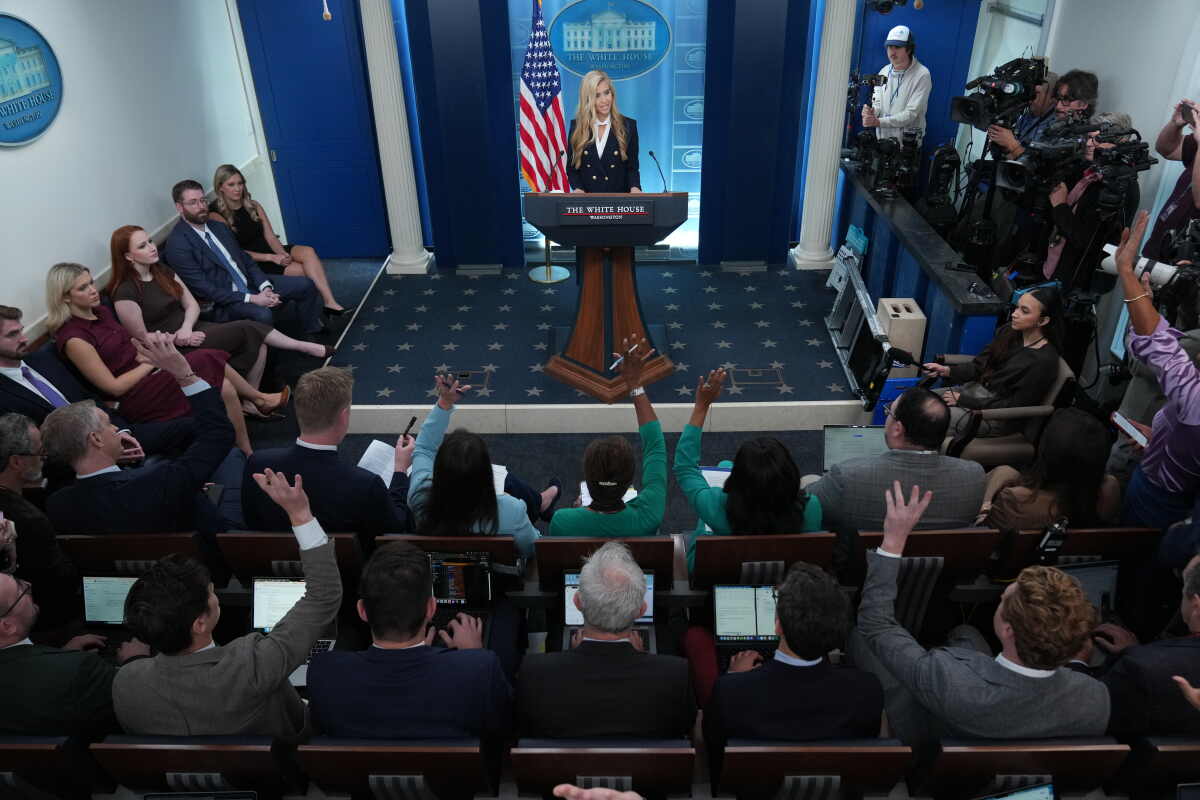
Eisenhower Executive Office Building paint job
Trump said the Executive Office Building is beautiful, but he does not like its gray exterior.
“It’s one of the most beautiful buildings anywhere in Washington,” Trump said in August. “I think it’s just incredible, but you have to get past the color because the stone they used was a really bad color.”
Two proposals were given to the commission: Cover the entire building in bright white or paint most of it white while leaving untouched the granite on the exposed basement and subbasement.
In written materials, the White House said the building has been largely neglected since its construction. It said the building’s color, design and massing do not “align visually with the surrounding architecture” and lack ”any symbolic cohesion with the White House.”
The paint job is also the subject of litigation in federal court.
The building sits across a driveway from the West Wing. It was completed in 1888 after 17 years of construction, and its granite, slate, and cast iron exterior makes it one of America’s best examples of the French Second Empire style of architecture.
It originally housed the departments of State, War and Navy. It currently houses offices for the vice president and the National Security Council, among others.
The building is a National Historic Landmark and is also listed on the National Register of Historic Places.
ATHENS, Georgia — Fresh from a marathon trip to Pakistan that failed to reach a deal for ending the war with Iran, Vice President JD Vance jetted to this Georgia college town for a campus tour organized by the conservative powerhouse Turning Point USA.
But instead of showcasing the youthful energy that the organization harnessed to return President Trump to the White House less than two years ago, there was a mostly empty arena, awkward questions and unusually sharp criticism.
The event affirmed Trump’s difficulty selling the war and how much he’s complicated his own political fortunes by assailing Pope Leo XIV and posting a social media meme that depicted himself as Jesus.
“I did vote for Trump. I am not a Trump supporter anymore,” said Joseph Bercher, a Catholic who said he was glad that Leo has expressed opposition to the war with Iran.
Bercher said the Jesus meme, which the president took down Monday after a rare conservative backlash, was a “red flag” indicating Trump’s true character.
“He sees himself as like a demagogue or someone to be worshipped,” Bercher said.
C.J. Santini, a recent graduate of Liberty University, an evangelical school in Virginia, said he didn’t have an opinion on whether Iran was truly close to manufacturing a nuclear weapon and thus needed to be attacked. But he laughed and shook his head when asked about Trump attacking Leo.
“It’s just stupid. Stupid,” he said, calling it a “distraction” from Trump’s agenda in Iran and at home.
Mostly empty arena contrasts with 2024 rallies
Many of the college-age attendees donned Turning Point attire, Trump hats and red-white-and-blue paraphernalia for the event. Yet they were outnumbered more than 2-to-1 by empty seats in what is not even the largest arena on this sprawling campus that sits about a 90-minute drive from downtown Atlanta.
A Marine veteran who served in Iraq, Vance acknowledged that not all young conservatives are enamored with another U.S. war in the Middle East.
“I’m not saying you have to agree with me on every issue,” Vance told the young crowd. “What I’m saying,” he added, “is don’t get disengaged.”
The vice president took questions from Turning Point executive Andrew Kolvet instead of Erika Kirk, who began leading the organization after the assassination of her husband Charlie Kirk. Kolvet said Erika Kirk canceled her plans to be on stage because of unspecified threats she had received.
Vance, whose presence ensured significant Secret Service and other law enforcement protection around the venue, said he’d been worried that the event would be canceled altogether.
Kolvet asked Vance directly about the war and Trump’s back-and-forth with Leo. Audience questions were more aggressive. Vance jousted with at least one heckler over the war in Gaza, and he was pressed by another person over the administration’s handling of the Jeffrey Epstein case files.
In the audience, even some of Vance’s sympathetic listeners offered caveats and critiques.
“The pope needs to stay out of politics,” said Jessie Williams, a Methodist. But he noted his mother is Catholic, and he said he understands why Catholics recoil at Trump calling the pope “weak” and suggesting that the first U.S.-born pontiff was chosen only as a counter to Trump.
Williams called Trump’s meme distasteful.
“I don’t like it, but it’s — what can we do?” Williams said. “He’s a grown man, he’s gonna do what he wants.”
Blake McCluggage, a Baptist, said he did not approve of the meme or Trump’s profane Easter Sunday message that threatened widespread destruction of Iran’s civilian infrastructure.
The threat, plus Trump’s follow up message that a “whole civilization” would die, prompted escalating criticism from Leo, with the pope calling the president’s comments “truly unacceptable.”
However, McCluggage said, “you can still be a Republican” despite disagreeing with Trump.
A day before coming to Georgia, Vance tried to laugh off the meme as a joke that “a lot of people weren’t understanding.” The vice president also seemed to echo Trump’s assertion that Leo should concentrate less on global affairs.
“It would be best for the Vatican to stick to matters of morality, to stick to matters of what’s going on in the Catholic church and let the president of the United States stick to dictating American public policy,” Vance said in a Fox News interview.
On stage in Athens, he shifted his arguments, saying he welcomes Leo’s comments even if he disagrees with them.
“At the very least, it invites conversation,” said Vance, who converted to Catholicism as an adult.
Still, Vance questioned Leo anew, pushing back specifically at the pope’s Palm Sunday assertion that God does not hear the prayers of those who make war. Leo was quoting scripture from the Old Testament book of Isaiah. Vance asked whether God was on the side of Allied forces in World War II as they liberated Jewish survivors of Nazi extermination camps.
“I certainly think the answer is yes,” Vance said. When Leo mixes global affairs and complex theology, Vance said, “it’s very important for the pope to be careful.”
Barrow and Megnien write for the Associated Press.
For the second time in two weeks, President Trump used that phrase in a post about the Israel-U.S. war against Iran.
Crowing about the alleged destruction of Iran’s planes, ships and bases in a Truth Social post Saturday, he emphasized his greatest victory in the monthlong campaign: “Most importantly, their longtime ‘Leaders’ are no longer with us, praise be to Allah!”
Making sense of anything Trump says in the heat of posting is a fool’s errand, but it’s also entirely necessary. Sane wash his words we must, because no matter how unhinged or infantile, the world’s safety, fortunes and future are inextricably tied to America’s next move, and therefore to his next move.
So what is Trump trying to communicate, or provoke, by using the Arabic word for God, as Muslims do? Let’s translate.
The first and most likely explanation: “Praise be to Allah” was meant to disparage his adversaries in the Islamic Republic of Iran. They are Muslim, they refer to God as “Allah,” therefore, he will turn their phrasing against them. Word bombs to accompany the deadly ones falling in Iran and Lebanon.
All leaders deploy tough talk in times of war, but Trump’s posts read more like the feverish ramblings of mad Col. Kurtz (Marlon Brando) in “Apocalypse Now” — “You’re an errand boy sent by grocery clerks to collect a bill” — than Winston Churchill’s galvanizing call to arms against the Nazis, “We shall fight on the beaches…”
Unlike the fictional Kurtz or the real Churchill, Trump has no military experience. He avoided the Vietnam War draft with four student deferments and one medical deferment for bone spurs. An area where he is experienced? Baiting foes. Antagonizing enemies, genuine or imagined, is a Trump specialty, be it from the Oval Office, on the campaign trail, or in the before times, as a reality TV personality.
Painting Muslims as the Other is nothing new for Trump, (unless they come bearing luxury airliners as gifts — then they’re friends). The same goes for others in his party. Since the U.S. and Israel attacked Iran on Feb. 28, Rep. Andy Ogles (R-Tenn.) posted that Muslims don’t belong in American society. Rep. Randy Fine (R-Fla.) wrote, “We need more Islamophobia, not less. Fear of Islam is rational.” And Sen. Tommy Tuberville (R-Ala.) reposted an image of the Twin Towers burning side by side with an image of New York City Mayor Zohran Mamdani, with his own caption: “The enemy is inside the gates.”
The president’s first usage of “Praise be to Allah” as a middle finger to Iran landed on a Christian holy day, Easter Sunday. He posted a demand that Iran open the Strait of Hormuz: “Open the F— Strait, you crazy b—, or you’ll be living in Hell – JUST WATCH! Praise be to Allah.” Hardly messaging that brings to mind Easter egg hunts on the White House lawn.
If the idea was to humiliate Iran into submission, it’s not working. Iran doesn’t appear to be backing down, even after Trump’s week-ago threat that a “whole civilization will die tonight” if it failed to meet his deadline to reopen the strait. The critical global shipping route is still closed. Trump didn’t appear all that interested in the art of the deal, either, even as Vice President JD Vance tried and failed to negotiate with Iranian leaders in Pakistan on Saturday. The president told reporters that he didn’t “care” what happens with Iran negotiations because “regardless what happens, we win.” He also said, “Whether we make a deal or not makes no difference to me.” He was seen later in Miami at an Ultimate Fighting Championship cage match with Secretary of State Marco Rubio.
Making the Allah references all the stranger were Trump’s other religious-themed posts this past weekend. One was a lengthy screed against Pope Leo XIV, whom Trump described as too liberal and “weak on crime.” It’s worth noting that more than half of American Catholics voted for Trump in the last election, and that his vice president is Catholic, as is the secretary of State and the first lady.
The other was a stand-alone, AI-generated image of himself as a Christ-like figure. It showed the 79-year-old clad in a white robe and papal-red cape, a divine light emanating from the palm of one hand while the other hand was placed on an ailing man. The post was deleted Monday morning after a sizable backlash.
“I did post it, and I thought it was me as a doctor, and had to do with Red Cross, as a Red Cross worker there, which we support,” Trump said, responding to a reporter Monday during a presser at the White House as DoorDash delivered an order from McDonald’s to promote the president’s “no tax on tips” policy.
There was no mention of Allah during that particular event.
What does Donald Trump’s naval blockade of Iranian ports look like and can it achieve what the US president wants? It is hard to know when the planning appears to have been done on the fly, according to war studies lecturer Samir Puri.
Miami-based US District Judge Darrin Gayles said on Monday that Trump did not meet the “actual malice” standard that public figures must clear in defamation cases.
Recommended Stories
list of 3 itemsend of list
That means public figures must prove not only that a public statement about them was false, but also that the media outlet or person who made the statement acted with reckless disregard for the truth or should have known that it was false.
“This complaint comes nowhere close to this standard,” Gayles wrote. “Quite the opposite.”
The judge noted that reporters from the Wall Street Journal (WSJ) reached out to Trump for comment beforehand and printed his denial. That allowed readers to decide for themselves what to conclude, cutting against Trump’s assertion that the newspaper acted with actual malice, the judge said.
Gayles said Trump could file an amended version of the lawsuit by April 27.
In his lawsuit, Trump called a birthday greeting that he allegedly sent to Epstein, a convicted sex offender, a “fake”. The US president sought $10bn for what he called damage to his reputation. News Corp’s Dow Jones & Company, the WSJ’s parent company, defended the accuracy of its July 17, 2025 article.
Trump filed the lawsuit after promising to sue the paper almost immediately after it put a new spotlight on his well-documented relationship with Epstein by publishing an article that described a sexually suggestive letter that the newspaper said bore Trump’s signature and was included in a 2003 album compiled for Epstein’s 50th birthday.
A birthday letter that US President Donald Trump allegedly wrote to sex offender Jeffrey Epstein more than 20 years ago is seen as presented by Democrats in the US House of Representatives on their X account on September 8, 2025 [Handout via Reuters]
The letter was subsequently released publicly by the US Congress, which subpoenaed the records from Epstein’s estate.
The ruling marks yet another blow in the Trump administration’s efforts to manage fallout over its release of the Epstein files and the president’s attempts to use the legal system to curb reporting that he finds critical of him.
The White House didn’t immediately respond to a request by AP for comment.
WASHINGTON — President Trump responded to the collapse of high-stakes negotiations with Iran by escalating the conflict on Sunday, ordering a full blockade of shipping through the Strait of Hormuz — a risky move that could drive global oil prices higher and provoke confrontation with a far more formidable adversary.
No country relies more heavily on the strait than China, which receives nearly half of its oil imports through the international waterway. In recent days, Beijing has warned that access to its shipping lanes “must be guaranteed.”
Trump administration officials believe the blockade could compel China to pressure Tehran into making further concessions, following Beijing’s crucial role earlier this month in convincing Iran to accept an initial ceasefire.
But the decision by U.S. diplomats to tie negotiations over the status of the strait to those over the fate of Iran’s nuclear program — a matter of torturous diplomacy for the last quarter-century — could make it harder to secure a breakthrough.
In the meantime, a full blockade of the strait could force China to become more directly involved in a conflict that is already heightening tensions with Washington.
On Saturday, reports that Beijing could be preparing to send advanced missile and air defense systems to Iran prompted anger from the White House.
It is a high-stakes moment in the world’s most important bilateral relationship, ahead of a closely watched summit between Trump and Chinese President Xi Jinping in Beijing next month that both sides had hoped would help stabilize relations.
The United States and Iran agreed to a two-week ceasefire in the war on Tuesday — on the condition that Iran would allow full freedom of navigation through the strait, a vital commercial artery that was treated for decades as an open, international waterway.
Marathon negotiations in Islamabad, Pakistan, over the weekend between senior U.S. and Iranian officials failed to secure a long-term agreement.
Vice President JD Vance said the central sticking point was Iran’s insistence on maintaining its nuclear program. But Tehran also signaled that shipping through the strait would not return to prewar conditions, pledging to control traffic and impose transit tolls — a scenario that could result in permanently higher global oil prices, a political nightmare for the Trump administration entering the midterm elections.
Trump’s threat to completely shut down traffic through the strait on Sunday may also lead to a temporary spike in oil prices, with experts warning the market could experience barrels costing $150 or more if a blockade persists.
Describing his plans to Fox News on Sunday, Trump said there would be no exceptions to the U.S. blockade for Tehran’s “friends.” Throughout the war, Chinese-bound vessels were granted special passage by Iranian authorities.
“We’re putting on a complete blockade. We’re not going to let Iran make money on selling oil to people that they like and not people that they don’t like, or whatever,” Trump said.
“It won’t be a percentage,” he added. “It won’t be a friend of yours, like a country that’s an ally or a country that’s your friend. It’s all or nothing.”
Trump also wrote on social media that he had ordered the Navy to “seek and interdict every vessel in International Waters that has paid a toll to Iran” — and to “blow to hell” any Iranian assets that open fire on ships.
Beijing did not immediately respond to the proposal. But it has walked a fine line over six weeks of war in the region, describing open waters in the strait as of global interest, while avoiding any condemnation of Iran’s assertion of control.
China’s main energy trading partners in the gulf — Saudi Arabia, the United Arab Emirates and Kuwait — have all advocated for a return to the status quo ante for the passage, pressing allies to reject Iranian control as the new normal.
“Keeping the area safe and stable and ensuring unimpeded passage serves the common interest of the international community,” a Chinese official said last week.
“We hope that all sides can work together,” the official added, “for the early resumption of normal traffic at the strait.”
WASHINGTON — President Trump’s plans for a new triumphal arch in the capital, unveiled on Friday, include a towering winged figure with a Lady Liberty-like torch and crown, flanked by two eagles and guarded by four lions — all gilded.
The 12-page plan released by the U.S. Commission on Fine Arts shows the arch will stand 250 feet tall from its base to the tip of the winged figure’s torch, with “One Nation Under God” and “Liberty and Justice for All” inscribed in gold atop either side of the monument.
The plan indicates the structure would stand between the Lincoln Memorial in the east and Arlington National Cemetery toward the west and within a traffic circle connecting Washington with northern Virginia. The arch would dwarf the Lincoln Memorial, which stands at 99 feet tall.
Trump has said he wants to build the arch near the Lincoln Memorial and argued that the nation’s capital first sought such a monument 200 years ago.
“It was interrupted by a thing called the Civil War, and so it never got built,” Trump said in February. “Then, they almost built something in 1902, but it never happened.”
Trump has said that major cities around the world have such monuments, and Washington is the only one without one.
The arch is one of several architectural changes Trump is making in his second term. In addition to building a large ballroom at the White House, he’s also made changes to the Oval Office and converted the Rose Garden into a stone-covered patio.
The arch goes beyond the White House, giving Trump a chance to leave another lasting monument in a city known for them. It would expand on his earlier talk of sprucing up the city by replacing its “tired” grasses, and broken signage and street medians.