The EU also announced that it officially added almost 1,600 new sanctions on Russia’s military industrial complex.
Published On 12 Oct 202612 Oct 2026
Ukraine’s Volodymyr Zelenskyy has accused Russia of violating the “energy ceasefire” that United States President Donald Trump unilaterally announced at the weekend and promised to respond if the attacks continue.
Speaking at the Warsaw Security Forum via videolink on Monday, the Ukrainian president urged the US to step in to ensure that Moscow abided by the truce, noting that there have already been “Russian violations of the energy ceasefire announced by President Trump.”
Recommended Stories
list of 4 itemsend of list
“We are waiting for the details of the conditions between the Americans and Russians, and we are waiting to see what specific steps the Americans are ready to take,” said Zelenskyy, who expressed surprise at the ceasefire deal.
“This energy ceasefire, it can work, and it can become a major step toward ending the war if the Americans truly step in now and make sure Russians respect it … If Russia does not agree to an energy ceasefire, we will respond,” Zelenskyy told the Warsaw Security Forum.
Trump’s announcement on Sunday that the two countries had agreed to an “energy ceasefire” caused confusion. It came two days after Trump declared a temporary easing of US sanctions on Russian diesel, prompting outrage from European allies and Kyiv, who said it would only embolden Russian President Vladimir Putin.
Both Ukraine and Russia have been launching mutual attacks on each other’s energy infrastructure for months, adding to upward pressure on global energy prices that have risen amid the US-Israeli war on Iran.
Trump has previously taken to his Truth Social account to announce truces or other arrangements before either Kyiv or Moscow confirmed them.
“An energy ceasefire and other steps to reduce escalation and guarantee security are truly needed here in reality, not just on Truth Social,” Zelenskyy added.
European leaders expressed encouragement at the proposed ceasefire, but agreed with Zelenskyy that it had not taken effect.
“I have not noted, over the last 48 hours, any energy ceasefire coming from the Russian side,” French President Emmanuel Macron told reporters at a Paris autoshow.
At the Warsaw Security Forum, Polish Prime Minister Donald Tusk said that “Russia is not interested in a ceasefire, de-escalation, or peace … that is why I will go to Brussels to urge all European partners to consider increasing sanctions.”
In Brussels, the European Union announced that it has officially added almost 1,600 new sanctions on Russia’s military industrial complex, including individuals and entities involved in its four-and-a-half-year war, in a bid to maintain pressure on Moscow.
“This is the single largest expansion of our sanctions list since Russia started its war,” EU foreign policy chief Kaja Kallas wrote online. “Europe is again showing a united front … We are making it significantly harder, slower and more expensive for Russia to produce the weapons it uses to kill Ukrainians,” she added.
Meanwhile, Russia attacked Ukrainian gas production facilities belonging to its state oil and gas company Naftogaz in the Kharkiv region overnight, which caused a fire, the company said on Monday.
“The attack damaged critical equipment. Our employees are doing everything possible to repair the damage as quickly as possible and prevent risks to the stable operation of the energy system,” Naftogaz acting CEO Sergii Fedorenko wrote on Telegram.
A day earlier, Zelenskyy had said that Ukraine was ready to halt attacks on Russian oil refineries if Moscow ceased its own attacks on Ukrainian energy infrastructure.
Duffy scored both goals in Derry’s win at Eamonn Deacy Park to send his side into the final and was understandably emotional at the final whistle, aware that ” it was so importnat we got to the final this year”.
“It’s been a tough year all round,” he continued.
“Now we can get a real buzz around the town this month, build it up and get that good feeling back between us all. We’ve a brilliant day to look for ward to.”
Derry City’s form has imporved since Connolly’s appointment in August as they have removed any fears of relegation while reaching the cup final.
Duffy praised the impact of the former defender who he feels has liberated the team to express themselves on the pitch.
“He’s letting us play free-flowing football, encouraging all the defenders to try and play football as we’re all good players,” Duffy said.
“He wants us to take risks and we’re constantly doing that every day in training. Before matches he’s saying that if we lose the ball, that’s on him.
“He’s enclouraging us so much and it’s so enjoyable to play in. I think you can see that in these last few weeks were we are dominant and playing some nice football, but the main thing is players are digging in massively.
“You can see on the pitch it means everything to every player.”
WASHINGTON — The Arlington County Board in Virginia filed a lawsuit Thursday opposing the construction of the Triumphal Arch, becoming the first governmental body to take legal action against President Trump’s planned monument.
The lawsuit, filed in the Eastern District of Virginia, criticized the speed at which the project slated for Memorial Circle has moved without going through the full review process.
“The National Park Service, the agency responsible for projects on national park land such as Memorial Circle, is proceeding full-speed toward ground-disturbing construction,” the lawsuit said. “Although the agency has claimed that a final decision to construct the Arch has not yet been made and purports to be engaged in a routine decisional process, that rushed process appears to be a pretext designed to shore up justifications for building the Arch in accordance with the President’s repeated marching orders.”
The lawsuit asks that “the agency’s feverish pace toward construction of the arch” be halted to ensure that the requirements of the National Environmental Policy Act be followed and proper analysis and testing be done.
“The Arlington County Board has filed this lawsuit because our community has the most to lose from this egregious and unlawful proposed project,” Arlington County Board Chair Matt de Ferranti said in a statement. He added that the county has acted in good faith in the review process, pointing out the “severe, unique, and wide-ranging negative impacts” the project will have on the county and its residents, only to see them ignored.
Memorial Circle sits on federal parkland west of the Potomac River across the Memorial Bridge and immediately adjacent to Arlington County.
The county is being represented in the lawsuit by legal advocacy group Democracy Forward.
White House spokesman Davis Ingle said the Trump administration and White House have been “fastidiously compliant with all procedural and legal requirements and are certain this meritless and dilatory lawsuit will be dismissed.”
The arch will become one of the world’s most iconic landmarks, he added. “It will enhance the visitor experience at Arlington National Cemetery for veterans, the families of the fallen, and all Americans alike.”
The lawsuit came a day after the Association of Flight Attendants-CWA President Sara Nelson expressed concerns that the 250-foot arch compounds multiple safety issues that she said have gone unaddressed since a deadly January 2025, crash over the Potomac River that killed 67 people. Nelson also criticized Trump’s plan to turn the arch into “a top grade military complex” able to host drones and snipers while storing ammunition.
Though the arch has received early approval from the U.S. Commission of Fine Arts, whose members were all tapped by Trump, a group of three veterans and an architectural historian sued in federal court in Washington, D.C., saying the project needs to be approved by Congress. The judge in that lawsuit said the administration must give the court 48 hours before undertaking any activities related to or in preparation for construction of the arch.
The arch is one of several projects around Washington that Trump has undertaken as he remakes the city, from renovating one of its storied public golf courses to threatening to demolish the John F. Kennedy Center for the Performing Arts.
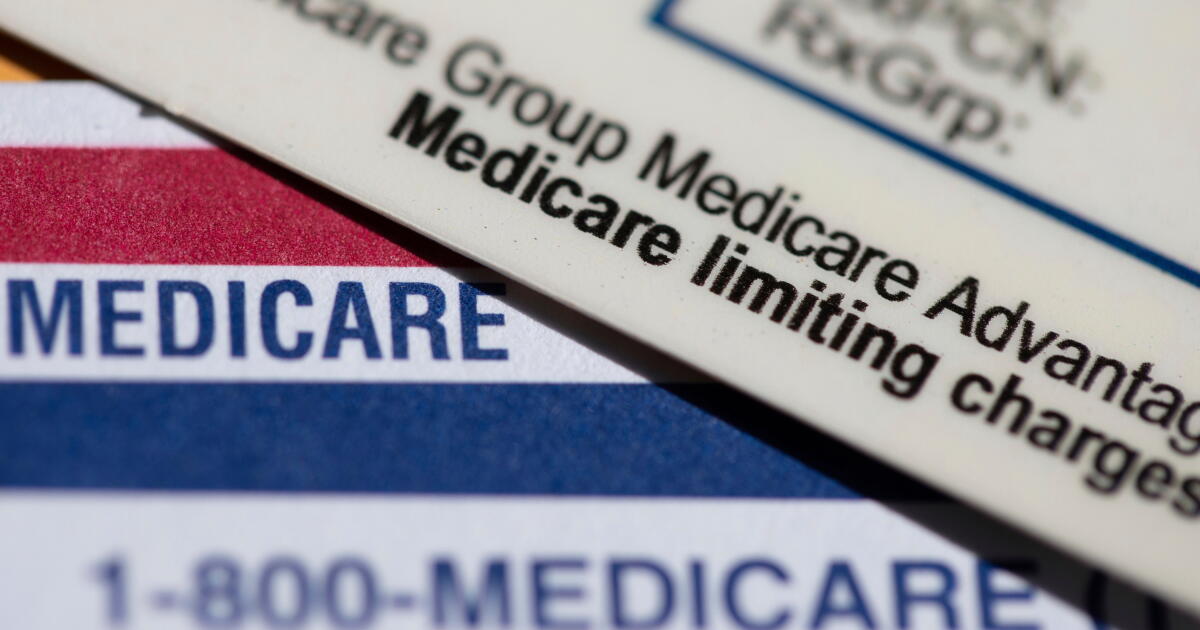
WASHINGTON — President Trump says his administration will make one-time payments of $90 per person to help more than 20 million Medicare enrollees pay for their Part B premiums. It will cost about $2 billion.
Less than one-third of all Medicare recipients are eligible for the payments, which are expected to be sent out this week. Not eligible are roughly 35 million Medicare Advantage enrollees, millions of people with disabilities who get premium assistance and low-income Medicare recipients.
The election-year promise that the Republican president made over the weekend comes as the Nov. 3 midterms are fast approaching, with the cost of living and healthcare expenses among the top issues for voters.
Some questions and answers about the payouts:
Who will benefit?
Some 20.8 million people in the original Medicare Part B who are living in the United States, not receiving premium assistance from Medicaid or not paying an income-related monthly adjusted amount.
Medicare Advantage enrollees, who make up more than half of the eligible 64.2 million Medicare beneficiaries, will not receive a payment, according to KFF, a healthcare research nonprofit. Nor will 12 million low-income older adults and people with disabilities who get premium assistance.
The Part B program covers expenses such as doctor’s visits, ambulance services and lab tests. Total monthly costs generally start at about $200 and vary with income.
Allison Schuster, a White House spokeswoman, said in a statement that the administration “is enabling Americans to take control of their health by putting money directly back in the hands of Medicare patients.”
When will the payments go out and how will they be disbursed?
According to the Centers for Medicare & Medicaid Services website, eligible beneficiaries will receive one $90 rebate this month, with most getting a direct deposit on or around Friday. Others will receive a paper check from the Treasury Department later in October.
Juliette Cubanski, director of KFF’s program on Medicare policy, said the payment will be automatic.
“As far as a benefit goes, people don’t have to call or sign up — it’s just money they receive directly, but not everybody on Medicare will receive this money.”
A White House fact sheet says people can call (800) MEDICARE ([800] 633-4227) to check their eligibility for the premium rebate. To check on payment status, people should call the Social Security Administration at (800) 772-1213.
What is the source of the money?
Payments will come out of the Medicare Improvement Fund created by Congress in 2008 and intended to make improvements to the Medicare fee-for-service program.
The fund was created to improve program management and conduct oversight of contracts and contractors, according to the Congressional Budget Office, but its purpose has expanded after various legislative changes.
This is not the first time the fund has been used.
President Obama’s administration, along with Congress, redirected $20 billion to expand healthcare coverage through the Affordable Care Act.
But under Trump, it is the first time that the fund has been used to directly pay recipients.
What are critics of the plan saying?
Critics of Trump’s promise characterize the $90 payments as a preelection stunt designed to sway voters rather than address structural problems in healthcare costs and administration.
The top Democrat on the Senate Finance Committee, Oregon Sen. Ron Wyden, said in a statement that “this is another desperate attempt by a failed president to escape Americans’ revulsion with his failed agenda, amounting to one tank of Trump-inflated gas.”
Trump recently promised $500 rebate checks to an estimated 1 million Obamacare enrollees across 30 states whom the White House alleged were overcharged by the Biden administration for some fees.
Cubanski said the Medicare rebate payments were being doled out when Americans were feeling the bite of higher food, energy and gas prices. Surging healthcare costs are only compounding those pressure, she said.
“This might be helpful for people but it might not go very far.”
Members of the Republican Party have joined Democrats in questioning remarks made by United States President Donald Trump about the California cities of Los Angeles and San Diego.
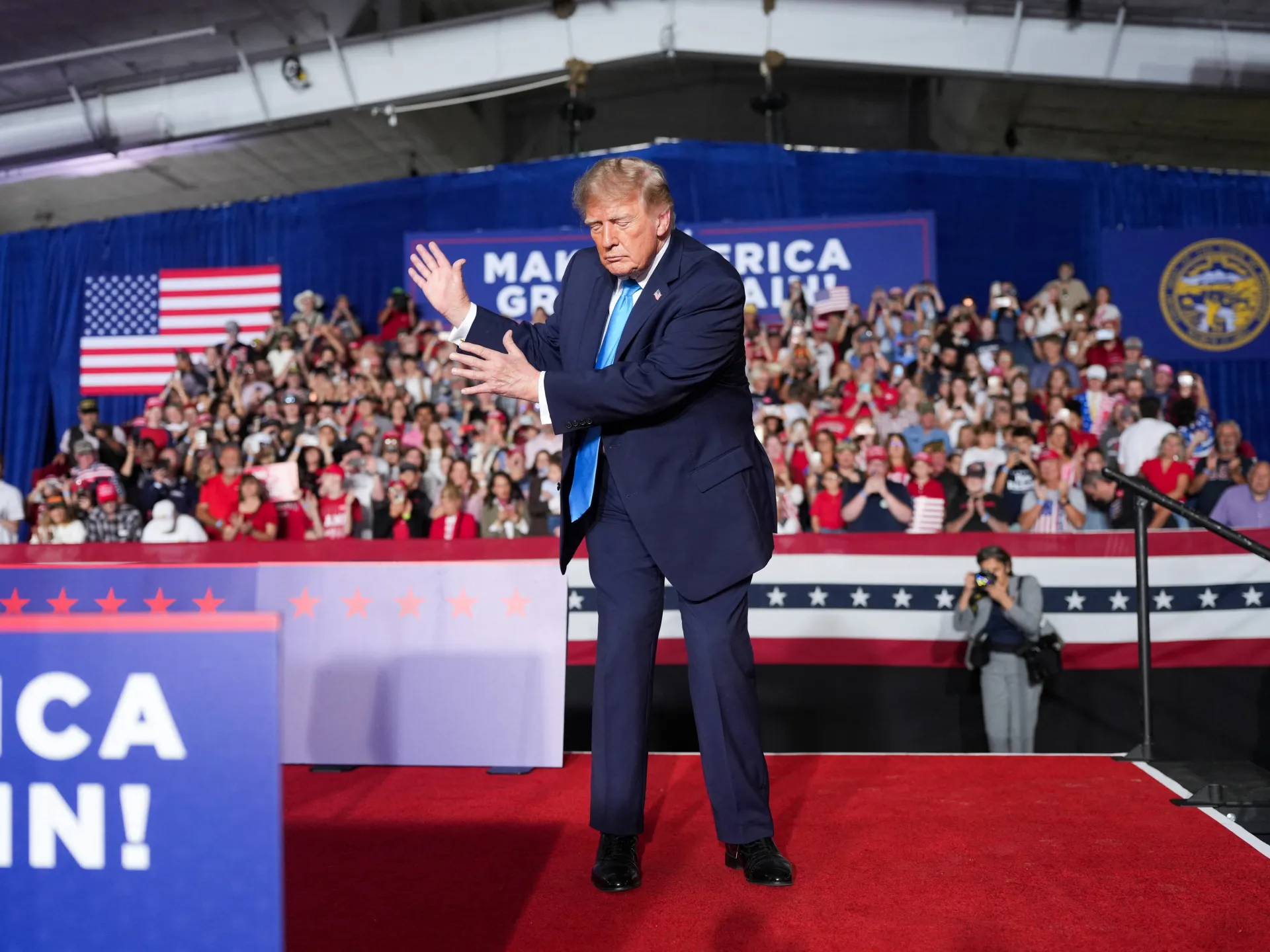
Much of the backlash came on Tuesday, a day after Trump told a midterm rally in Nebraska that Americans should be willing to make sacrifices to gain victory in the US-Israeli war against Iran.
Recommended Stories
list of 3 itemsend of list
Those sacrifices, he implied, could include the destruction of American cities, in case of an Iranian attack.
“It’s a small price to pay for keeping the world safe, keeping our country safe,” Trump said, seemingly in reference to the knock-on effects of the war, including rising fuel and fertiliser prices.
“They can take out a city. Let them take out Los Angeles. Let them take out San Diego. This is a very small price to pay, and it’s going to be over with very soon.”
Trump has downplayed the impact of the war – now in its eighth month – despite polling that shows the conflict is widely unpopular in the US. He has also repeatedly promised the war would end soon, though no lasting ceasefire has been reached so far.
The fallout from his Nebraska remarks was swift. Gavin Newsom, an outspoken critic of Trump and the Democratic governor of California, said the president was “deranged”.
“This is not only madness. This is dangerous,” Newsom said in a video on the social media platform X, in which he called for Congress to rein in Trump’s behaviour.
Newsom, a possible contender in the 2028 presidential race, has clashed repeatedly with Trump.
Last year, the two faced off over Trump’s decision to deploy federal troops to California, as part of an effort to support a crackdown on undocumented immigration in the Los Angeles area.
In December, a federal judge ruled that the deployment had been illegal and ordered its end. Newsom, who opposed the deployment, cited that conflict in his remarks about Trump’s Nebraska rally.
“The president of the United States – the same one who sent in the National Guard into Los Angeles, sent 700 active duty Marines to the second largest city in the United States of America – just invited Iran to take out Los Angeles and San Diego,” Newsom said.
He added that Trump’s remarks should convince those who “didn’t think the November election mattered” to vote in the upcoming midterms.
Some from Trump’s own party have also expressed shock at his remarks.
Jim Desmond, a Republican running in a competitive race for the House of Representatives near San Diego, was among those who distanced themselves from Trump’s statement.
“I vehemently disagree with President Trump’s comments. America must stand up to Iran and defend our interests, but the first responsibility of our Commander in Chief is to protect the American people and our homeland,” Desmond wrote on X.
“No American city is expendable, and no American family should ever be treated as collateral damage.”
US Representative Kevin Kiley, an independent who caucuses with Republicans and is running for re-election in northern California, also called Trump’s comments “unhelpful”.
But the White House has dismissed criticism of the remarks, calling it part of a “media freakout” that “is not rooted in reality”.
“He was clearly stating U.S. cities would have been threatened if a nuclear Iran hadn’t been stopped,” White House Director of Communications Steven Cheung wrote on social media.
“America is safer because of the President. Iran has no nuclear, no navy, no air force, and no money.”
California has the largest population and economy of any state in the US. Because of its population, it also has the most seats in the House of Representatives, at 52.
All 435 seats in the House of Representatives are up for grabs in November’s midterms, along with a third of the Senate. Also on the ballot are key state and local races.
With Republicans’ control of Congress on the line, the results of the midterms are expected to weigh heavily on the final two years of Trump’s second term.
Hispanic voters are twice as likely to favour Democratic Party over Trump’s Republican Party in the November elections.
Published On 5 Oct 20265 Oct 2026
A new poll from the news agency Reuters and the research firm Ipsos has found that United States President Donald Trump’s approval rating remains at a record low as the midterm elections approach in November.
The six-day survey, completed on Monday, found that just 32 percent of US voters approve of the job Trump is doing as president.
Recommended Stories
list of 3 itemsend of list
While that low rate has held steady since September, the latest Reuters-Ipsos poll suggests his support among Latino voters is continuing to slide.
Trump’s approval rating shrunk this month to 24 percent among Hispanic voters, its lowest point in either of his two terms in office.
The Republican leader had previously made substantial inroads with that constituency.
The Pew Research Center estimated that Trump and his Democratic rival, Kamala Harris, were within three percentage points of each other in the 2024 presidential race, earning 48 percent and 51 percent of the Hispanic vote, respectively.
That rate marked a significant jump for Trump over the 2020 election, when he only earned 36 percent of the Hispanic vote.
Experts have credited the boost in Hispanic support with helping Trump win the 2024 race. His 2020 bid, by contrast, ended in defeat to Democrat Joe Biden.
The Monday poll found that Trump’s gains among Hispanics have largely evaporated.
About 52 percent plan to vote for the Democrats in the November midterms, compared to 26 percent for Republicans.
The upcoming midterm is largely viewed as a referendum on Trump’s second term and will decide whether the Republicans maintain their majorities in the US House of Representatives and the Senate.
Democrats have seized on Trump’s low approval ratings, hoping to translate frustration with the president into voter momentum for their party.
A Democratic majority in one or both houses of Congress would place substantial constraints on Trump’s agenda for the remainder of his time in office.
But Trump has also faced rumblings from within his Republican Party as the November 3 midterms approach.
One Republican incumbent, Representative Maria Elvira Salazar of Florida, released a campaign advertisement last month that addressed Trump directly, saying, “The same Hispanics who helped you get to the White House in 2024 feel betrayed today.”
She cited Trump’s hardline immigration crackdown as a source of tension. “Some of your immigration enforcement efforts have gone too far,” she said, pointing to the detention and deportation of immigrants with no criminal record.
Experts have also warned that the president’s shrinking popularity, driven in part by concerns about the cost of living and his decision to launch a war on Iran, could weigh down Republican candidates in key races across the country.
Still, Trump has continued to express confidence about the prospects of his Republican Party in the upcoming midterms.
He has also defended his decision to place himself at the centre of the Republican election campaign strategy. Trump recently launched a 32-day blitz of cross-country rallies ahead of the November 3 midterms.
“Just so you understand, they all want me to go,” Trump said, denying that some Republicans would prefer he keep his distance. “They all want me to go campaign.”
Days later, the United States speedily sent B-1 bombers stationed there, which were used to strike Iran in its ongoing war, back home. About a dozen had been stationed at the air base.
The foiled incident resulted in no charges and the release of five suspects, and subsequently a separate British-Iranian suspect. But the US cited concerns about more potential attacks for its decision to withdraw its fleet. Tehran has denied any link to the alleged plot to target the base.
RAF Fairford was a pit stop for US bombers during the war – but more importantly, it allowed Washington to rapidly unleash intensive strikes on Iran, say analysts.
They added that their withdrawal reduces Washington’s ability to rapidly generate and sustain bombing missions, but it will not prevent the US from continuing to strike Iran.
“The United States has lost a convenient launchpad, not its underlying strike capability,” Dania Thafer, executive director of the Gulf International Forum and a lecturer at Georgetown University, told Al Jazeera.
Long bombing campaigns made more demanding
The analysts were in agreement that the British base gave the US a faster and more efficient way to sustain strikes on Iran.
The bombers at the Fairford base were officially stationed there for defensive strikes – at the behest of the UK government – and likely had a modest targeting list, said Christoph Bergs, an analyst at the world’s oldest defence and security thinktank, the Royal United Services Institute.
“Their withdrawal reduces the capacity to quickly surge sorties against Iran, reducing the threat level somewhat,” Bergs told Al Jazeera.
Thafer explained that while the loss of the bombers does not remove the US’s ability to strike or escalate, “depending on where other assets are positioned, it could make a prolonged bombing campaign more demanding”.
The removal of B-1 bombers imposes a number of tactical costs, says Arun Dawson. He is a PhD candidate at King’s College London’s Freeman Air and Space Institute and a researcher with the UK Nuclear Deterrence Network.
Unlike the more modern B-2 stealth bomber designed to make enemy tracking difficult – which has also previously been stationed at RAF Fairford – “the B-1’s principal advantage is its conventional weapons payload – the largest of any aircraft in the US military”, Dawson told Al Jazeera. The B-1 carries at least 34 tonnes of ordnance, he said.
“This makes the B-1 particularly effective at delivering large volumes of precision-guided weapons against multiple targets during a prolonged air campaign,” said Dawson.
“In the Iran war, those targets may include air-defence infrastructure, ballistic missile sites and IRGC facilities,” he added, referring to the Islamic Revolutionary Guards Corps.
With the B-1s withdrawing, the US may now have to rely more heavily on longer-range missions from the US or other distant bases, increasing flight times, crew fatigue and the need for aerial refuelling, he explained.
Still, the US may have made the withdrawal decision based on an examination of risks, said Dawson.
“Their abrupt departure suggests that specific threats may have been directed at the aircraft, their crews or the base itself,” he said.
Washington may have also calculated that temporarily withdrawing the bombers could protect it for future operations, especially if the US does not expect the Iran war to intensify any time soon, said Dawson.
For David Des Roches, a professor at the Thayer Marshall Institute and a former Pentagon official, the B-1 withdrawal suggests that the risks outweighed the benefits of keeping the jets at the UK airbase.
The security incident last week “exposed a vulnerability” as the aircraft were “out in the open” and only about 300 yards (275 metres) from where the public could see them.
“So they were very vulnerable to, say, drone attacks or other kind[s] of mortar attacks,” he told Al Jazeera.
“Just a small drone or any kind of a drone with explosives on board could conceivably cause significant damage,” said Des Roches.
The former Pentagon official acknowledged that the deployment of the US bombers means “you lose a little bit of operational ability,” but said that given the threat seen at Fairford, “we should have had overhead cover for all of our aircraft, globally, years ago”.
Can the bombers go elsewhere?
The US has two potential options if the bombers are to be redeployed: to Diego Garcia, the remote coral atoll in the central Indian Ocean hosting both a US and UK military base; or to its many US bases in the Gulf.
Thafer pointed out that Diego Garcia offers greater protection from potential Iranian attacks, but requires longer flight distances.
Rerouting the bombers to Diego Garcia will also depend on how quickly additional aircraft can be folded into the local basing infrastructure, pointed out Bergs.
Stationing them in the Gulf closer to Iran would give them the advantage of shortened transit times, reduced tanker requirements and the ability to generate sorties more rapidly, said Dawson.
But basing in the Gulf region, the analysts agreed, will require more deliberate negotiations around risk mitigation, given that these countries have taken the brunt of Iranian counterstrikes throughout the war. They also want to avoid being seen as direct participants in a US campaign against Iran.
Fairford had therefore offered a “useful” middle ground between the two options, said Thafer.
But with Fairford no longer an option, Diego Garcia would be the more obvious choice, Dawson said, offering not only greater distance from Iran but also a more secure operating environment. It has infrastructure designed to support large-scale US air operations, he said.
US capabilities in the war ahead
For now, the withdrawal appears to blunt rather than eliminate US bombing capacity against Iran.
However, the practical impact on US military options will depend largely on whether the administration sees a need for such strikes now, or whether the threat posed by similar aircraft stationed at Diego Garcia is sufficient for the time being, said Bergs.
The expected arrival of the Theodore Roosevelt carrier strike group and the Makin Island Marine Expeditionary Force to the Middle East by November, meanwhile, will add significant US carrier-based air power in the region, said Dawson.
“Aircraft for aircraft, carrier fighters cannot substitute for the B-1’s enormous payload, but there are many more of them, giving commanders additional options for shorter-range strikes,” he said.
What this episode highlights, said the researcher, is the importance – and the vulnerability – of the US’ alliances and overseas basing.
Washington has long enjoyed access to a global network of military facilities – which has been key for its ability to project power rapidly and at scale, he said.
But if those bases face attacks or political restrictions – the implications would extend beyond the Iran war, warned Dawson.
They would affect “how the US military structures its forces, distributes its assets, generates combat power and sustains operations overseas”.
SEATTLE — A judge on Thursday overturned President Trump’s decision to fire the court-appointed top U.S. prosecutor in Seattle, the latest development in a legal tug-of-war over the administration’s efforts to control who occupies the powerful Justice Department posts.
The 17 active and senior judges in the Western District of Washington unanimously named Roger Rogoff, a former judge and veteran prosecutor, U.S. attorney in July, after Trump failed to fill the post with a nominee confirmed by the U.S. Senate.
The president fired Rogoff less than an hour later. Rogoff sued, and in a ruling Thursday, U.S. District Judge Stanley Bastian found the termination unlawful and reinstated him.
Bastian noted that when presidents fail to fill a U.S. attorney post with a nominee confirmed by the Senate, federal law authorizes the judges of that district to appoint someone “until the vacancy is filled.”
“It does not say ‘until the president fires the person selected,’” Bastian said.
He concluded: “Mr. Roger Rogoff is the United States attorney for the Western District of Washington and has been the rightful holder of that office since July 15, 2026, when he took the oath of office.”
The Justice Department said in a written statement it disagreed with the decision and would appeal.
Rogoff is the latest in a series of judicially appointed U.S. attorneys to be ousted by the Trump administration, and he is believed to be the first to sue over the removal, setting up a direct legal battle over the issue.
Presidents normally appoint U.S. attorneys, the top federal prosecutor in each judicial district. The positions require Senate confirmation, except in temporary appointments, which can last up to 120 days. When temporary appointments expire before a nominee is confirmed, the judges in a judicial district can name a U.S. attorney.
But under Trump, the Justice Department has sought to leave unconfirmed prosecutors in their positions indefinitely, often through novel personnel maneuvers. Trump named Charles Neil Floyd, who previously served as an immigration judge, interim U.S. attorney in Seattle in October 2025 but never forwarded his nomination to the Senate.
When Floyd’s time as interim U.S. attorney expired, Trump simply shifted his title, a tactic the administration has also tried in other federal judicial districts: It named him first assistant U.S. attorney, while leaving the top post empty.
Trump last month nominated Pete Serrano, the first assistant U.S. attorney in eastern Washington, to be the U.S. attorney in Seattle. But Serrano has not been confirmed, and his nomination is opposed by Washington’s senior Democratic senator, Patty Murray.
“Today’s ruling is an important victory for the rule of law and the people in Western Washington who deserve a U.S. attorney that answers to the law, not Donald Trump,” Murray said in a written statement Thursday.
Bastian is the chief judge in eastern Washington. He heard the case because the judges in western Washington were recused.
In December, Alina Habbaresigned as the top federal prosecutor for New Jersey after an appeals court said she had been serving in the post unlawfully.
Lindsey Halligan, who pursued indictments against a pair of Trump’s adversaries, left her position as an acting U.S. attorney in Virginia after a judge concluded her appointment was unlawful and that indictments she brought against James and former FBI Director James Comey must be dismissed.
The judges there named James Hundley, who had handled criminal and civil cases for more than 30 years, but the administration fired him. It also fired a court-appointed U.S. attorney in northern New York.
SACRAMENTO — In recent weeks, the Trump administration has been using taxpayer dollars — your money and mine — to pay for a series of cringy, self-glorifying advertisements that feature, you guessed it, President Trump himself.
In one particularly needy spot, the lyrics “love me, love me” are repeated continuously over fast-cut clips of Trump. The White House claims it’s a call to love America, but if someone I knew posted this, I’d be asking if they were OK. Like, teenage-style, “Are you OK?”
But I’d be missing the point if I went down that path of laughing off these regrettable commercials as just more Trump self-adulation.
Taken with two other recent developments — the banning of certain press from the White House and a further purge of military leadership — some experts on authoritarianism told me what we’re really watching is a further collapse of democracy into an authoritarian cult of personality in which Trump is the state and the state is Trump.
“In authoritarian countries, all leaders, they try to completely blur the line between themselves and the state function,” said Konstantin Sonin, an expert in authoritarianism and a professor at the University of Chicago. “So basically, being ‘anti-me’ is being anti-state. In this Trump advertisement, there is this authoritarian scent.”
State propaganda
Jason Stanley, a former Yale professor who moved to the University of Toronto in part over concerns about the far-right political shift in the U.S., put it even more succinctly.
“Trump is trying to tell you, you live in an authoritarian society now, and that he is the state,” Stanley said. “This is pure, pure state propaganda.”
State propaganda matters because it serves not just as a message, but also a warning, said Federico Finchelstein, a history professor at the New School for Social Research and author of “The Wannabe Fascists,” about dudes who try to destroy democracy from the inside. It tells citizens that being against Trump is being against America, he said — a chilling prospect for those who would oppose him.
Finchelstein points out that painting opponents as communists or socialists — an incessant refrain from Trump and the core of the commercials — is a common practice in non-democracies, turning enemies of the dictator into enemies of the state, and perhaps even criminalizing them.
“This should not be seen as just another outburst or just another ridiculed dimension of a kind of ‘original personality,’” he said of the ads. “This is more of a structural pattern of authoritarianism.”
The press ban
Finchelstein points to the recent White House press ban as another part of that pattern, and another way Trump is removing that line between himself and the state.
Recently, CNN, MS NOW and Politico were denied access to the White House on Trump’s orders. The outlets sued, a judge issued a restraining order, and as of now, it mostly has blown over — though it shouldn’t.
For days, Trump made it clear that the ban was because he didn’t like coverage that made him look bad — and if it made him look bad, it was bad for America.
“Virtually every story about me, or anything having to do with me, is negative, wrong and, in many cases, DANGEROUS for our Country! No matter how GREAT my Achievements, they trivialize and demean,” Trump ranted on social media.
Then Atty. Gen. Todd Blanche, who has made loyalty to Trump his brand, took that a step further, arguing that “after years and years and years of one-sided media coverage of the president from certain outlets, the president finally said it’s not fair to the American people,” and constituted a national security risk.
Trump “tries to blur this line about negative stories about [himself] and negative stories about America,” a classic authoritarian tactic, said Sonin, the University of Chicago professor.
Finchelstein said that that kind of crackdown on dissent comes most often in moments of crisis for the person in power — such as when, say, his approval ratings are at an all-time low, gas prices are soaring because of an unpopular war and an election is looming.
The military concern
But what happens if propaganda and intimidation aren’t enough?
Stanley said that faced with plummeting popularity, Trump seems to have stopped trying to win our approval — instead focusing on consolidating power while he still has time.
“Trump is in a race to be a dictator,” Stanley said. “That’s why he doesn’t try to persuade you anymore. He’s not in the business of persuading. He’s in the business of hard propaganda, of just expressing his power. He’s saying public opinion doesn’t matter anymore.”
Finchelstein, Stanley and others warn that the most dangerous moment for democracies can be when a wanna-be dictator loses momentum.
“We’re in a situation where it matters whether the military will violate the Constitution,” Stanley said.
Make of this what you will, but this week, U.S. Defense Secretary Pete Hegseth continued his purge of seasoned military leaders by confirming the department is firing 20% of top officers.
“The ideological clowns are out. The patriotic cowboys are in,” Hegseth said of the unprecedented hollowing of experienced leadership.
Hegseth also announced that billionaire right-wingers Elon Musk and Palmer Luckey are going to help guide the future of the military, which doesn’t sound terrifying at all. I mean, DOGE went so well.
Sonin, the University of Chicago professor, said despite all this, he has hope — because Trump is “old and unpopular” and support of him may have found a “floor.”
Or as Stanley puts it, Trump can conflate himself with the state all he wants, but it works only if we believe him — and even his supporters seem tired of the lies.
The case is the latest dispute over US President Donald Trump’s sweeping immigration crackdown.
Published On 1 Oct 20261 Oct 2026
The United States Supreme Court has agreed to hear a case focused on the Trump administration’s policy requiring millions of undocumented immigrants to remain in detention while they fight deportation.
The case, accepted on Thursday by the justices, is the latest dispute over US President Donald Trump’s sweeping immigration crackdown to reach the nation’s highest court.
Recommended Stories
list of 3 itemsend of list
At issue is whether migrants already living in the US have a legal right to a hearing where a judge can decide whether they should be released on bond from Immigration and Customs Enforcement (ICE) detention while their deportation cases are pending.
In July 2025, the administration introduced new guidance directing federal immigration authorities to detain undocumented immigrants without a bond hearing for the duration of their deportation proceedings, which can last for years.
The new policy, which has divided lower courts, reverses a decades-old interpretation that allowed some immigrants in the US to be released while their cases were pending in immigration court, according to Reuters news agency.
Most US federal appeals courts have ruled that immigrants cannot be detained without a bond hearing. But the 5th and 8th US Circuit Courts of Appeals have found that immigrants accused of illegally entering and remaining in the country must remain detained while their deportation cases proceed.
Trump administration attorneys told the Associated Press the split is “disrupting the orderly administration of immigration law”.
“The result is an unworkable patchwork of inconsistent immigration enforcement, where aliens present without admission are subject to mandatory detention in some circuits but are entitled to bond hearings and often released in others,” the lawyers wrote.
Millions could be affected
The Supreme Court case stems from a 2nd US Circuit Court of Appeals ruling involving Ricardo Aparecido Barbosa da Cunha, a Brazilian national who entered the US around 2004 or 2005.
Immigration officers arrested him in September 2025 while he was driving to work in the US state of Massachusetts. He was initially denied a bond hearing under the administration’s policy but was later released on bond, according to court documents cited by Reuters.
The American Civil Liberties Union (ACLU), which is representing the plaintiffs, told the Associated Press the Trump administration is trying to deny bond hearings for immigrants apprehended within the US rather than limiting the restriction to noncitizens stopped at the border.
“Millions of noncitizens could be affected by the government’s new interpretation,” ACLU attorneys wrote.
The Supreme Court is expected to hear arguments on Monday, when its new term starts.
The Trump administration has warned France and Germany to release emergency diesel reserves to help lower global fuel prices or risk facing a potential US ban on diesel exports, according to people familiar with the discussions.
The warning represents a sharp escalation in Washington’s pressure on European allies as President Donald Trump looks for ways to increase fuel supplies and bring down prices ahead of the November midterm elections.
US officials have become increasingly frustrated with France and Germany, which Washington believes have not fully acted on earlier commitments to release emergency oil and petroleum reserves as global fuel markets face mounting disruptions.
“It is in Europe’s best interest to work with the United States as we pursue multiple pathways to boost the supply of refined products and lower costs for consumers,” a US official told Reuters.
Stay ahead of the geopolitical week.
MD Briefing delivers expert analysis across five global fronts — the Indo-Pacific, energy, geoeconomics, European security, and the Middle East — every Monday morning. Free.
A second source familiar with the discussions said the United States had asked the European Union to release 120 million barrels of diesel over the next six months.
The demand highlights the growing importance of Europe’s fuel reserves at a time when disruptions to major energy-producing regions are tightening global supplies.
Washington Raises Pressure on Europe
The US administration’s warning comes as Trump considers restricting US diesel exports as part of a broader effort to increase domestic supplies and reduce fuel prices for American consumers.
The approach creates a difficult balance for Washington. Limiting exports could increase the amount of diesel available inside the United States, potentially putting downward pressure on domestic prices. But it could simultaneously reduce supplies available to international markets, particularly Europe, which has become increasingly dependent on imported refined fuels.
US Energy Secretary Chris Wright said on Wednesday that the administration expected European countries to announce additional diesel supplies soon.
“We’ve lost some diesel exports from the Middle East, although we’re restoring those, and we’ve lost diesel exports from China,” Wright told reporters.
The disruptions have exposed the vulnerability of global refined fuel markets to geopolitical conflicts and changes in trade flows.
Germany’s economy ministry did not immediately respond to a request for comment, while France’s energy ministry declined to comment.
The White House’s pressure also appears to have become a broader diplomatic issue among Western allies.
An official at the French presidency said Trump and French President Emmanuel Macron did not discuss the issue when they met on the sidelines of the UN General Assembly in New York last week.
Macron, however, plans to convene a video conference of G7 leaders to address rising fuel prices and the availability of refined petroleum products.
The discussions are expected to include coordination over the release of emergency reserves in cooperation with the International Energy Agency.
Why Europe Matters to the Fuel Market
Europe’s position in the global fuel market has changed substantially since Russia’s invasion of Ukraine.
European countries previously relied heavily on Russian crude oil and refined petroleum products. The subsequent sanctions and restrictions on Russian energy imports forced European governments and companies to find alternative suppliers.
The result has been greater dependence on imports from countries including the United States and suppliers in the Middle East and Asia.
That dependence has become more significant as the conflict involving the United States, Israel and Iran has disrupted energy flows from the Middle East.
The loss or reduction of refined fuel exports from major suppliers can quickly affect diesel markets because refining capacity cannot always be shifted between regions immediately.
Diesel is particularly important because it powers much of Europe’s commercial transport, heavy industry, agriculture and logistics sectors. Sustained shortages can therefore affect the broader economy rather than simply increasing prices at fuel stations.
The US Faces Its Own Fuel Dilemma
For Trump, the issue also has a strong domestic political dimension.
Fuel prices are highly visible to American consumers, making gasoline and diesel costs politically sensitive ahead of the November midterm elections.
The administration is therefore examining multiple ways to increase available supplies and reduce costs.
But a potential US diesel export ban could have consequences beyond America’s borders.
The United States has become an important supplier of refined petroleum products to international markets. Restricting those exports could tighten supplies elsewhere, potentially pushing international prices higher even if American prices fall.
That creates a difficult policy tradeoff for Washington.
The administration wants to protect US consumers from high fuel costs while maintaining sufficient supply in global markets. European governments, meanwhile, face pressure to use their own emergency reserves even as they seek to maintain energy security following the loss of Russian supplies.
Europe Seeks a Coordinated Response
France appears to be pursuing a broader G7 response rather than treating the issue as a bilateral dispute with Washington.
Macron’s planned meeting would allow the world’s major industrial economies to discuss the availability of refined products and potentially coordinate emergency stock releases through the International Energy Agency.
Such coordination could help prevent individual countries from taking measures that unintentionally worsen shortages elsewhere.
But disagreements over how much fuel should be released, when reserves should be used and who should bear the cost could complicate the process.
Emergency reserves are designed primarily to protect countries against severe supply disruptions. Releasing large quantities can provide temporary relief, but it also reduces the buffer available if another disruption occurs.
That makes Europe’s response particularly consequential at a time when energy markets remain exposed to geopolitical shocks.
A New Test for Transatlantic Energy Relations
The dispute illustrates how the global energy system has become increasingly intertwined with broader geopolitical and trade relationships.
Europe needs reliable fuel supplies after cutting its dependence on Russian energy, while the United States is attempting to use its position as a major energy producer and exporter to address domestic price pressures.
Trump’s warning to France and Germany adds another layer to that relationship by linking European reserve policy to continued access to US diesel exports.
Whether Europe ultimately releases the amount of diesel Washington has requested will depend on national assessments of market conditions, domestic energy security and the risks of further supply disruptions.
For now, the dispute signals that the energy consequences of conflicts in the Middle East are reaching far beyond the region itself.
As the United States and its European allies try to contain fuel prices, they face a common problem but increasingly different pressures over how the burden of stabilising global energy markets should be shared.
Trump retaliated against Canada’s counter-tariffs on $20bn worth of US imports by banning $1bn of Canadian goods.
Published On 29 Sep 202629 Sep 2026
The United States is implementing a ban on nearly $1bn in imports from Canada, including alcoholic beverages, dairy products and motorcycles.
The ban took effect early Tuesday and is likely to further strain already-tense relations between the two neighbours.
Recommended Stories
list of 4 itemsend of list
Ottawa and Washington DC have long been allies and trade partners, with approximately $880bn worth of annual two-way trade. That relationship has been upended during US President Donald Trump’s second term as he unleashed tariffs on most trading partners, including Canada, and referred to the northern neighbour as the 51st state of the US.
Most recently, the US slapped 50 percent levies on Canadian goods worth $20bn, including dairy and motorcycles, on August 22 after trade negotiations failed. Canadian Prime Minister Mark Carney retaliated, saying Ottawa will match US tariffs “dollar for dollar in order to protect Canadian workers, farmers, families and businesses”. Canada levied tariffs of 15 percent, 25 percent and 50 percent on US exports of a similar value.
Tuesday’s ban was Trump’s punishment for Canada’s retaliatory tariffs.
“The impact of such a ban will be minor, it is only $1bn while we trade hundreds of billions with Canada,” Professor Gary Shields at Wayne State University’s School of Business told Al Jazeera. “It is, however, rather astonishing how President Trump treats our allies in Canada and Europe, while rolling out the red carpet for China’s dictator when he visited the US last week”.
“It is a tit-for-tat. It will not reduce people’s taxes and won’t put money in their pockets. It is kind of personal and a way of showing off toughness,” Shields added.
Canada’s economy grew by an estimated 0.2 percent in August after remaining unchanged in July, according to Statistics Canada. But the new US-Canada tariffs, tighter financial conditions and a shrinking population should further weaken growth in late 2026 and early 2027, Michael Davenport, senior Canada economist at Oxford Economics, said in a note provided to Al Jazeera.
Gov. Gavin Newsom signed a raft of bills designed to push back on the Trump administration’s immigration enforcement in California, including bans on electric shock gloves and a revamped ban on law enforcement face coverings after a previous law was blocked by a federal judge.
The more than 20 bills approved by the governor Tuesday were crafted to thwart tactics used by Immigration and Customs Enforcement agents, including the use of facial coverings and making arrests outside immigration hearings. Other bills are meant to boost state oversight of federal detention centers in the state.
“Trump has put his political interests above the health, safety and livelihood of American families. California is taking action to strengthen transparency, accountability, and oversight around immigration enforcement in our state,” Newsom said in a statement. “This is about stepping up where the federal government has failed our communities. We will continue protecting our people, upholding the rule of law, and making clear that if the federal government operates in California, we will hold them accountable.”
The governor signed legislation to ban the use of electric shock gloves by any law enforcement in the state, which was hastily written and passed after reports that the Department of Homeland Security planned to spend $20 million to outfit agents with the gloves.
One bill, dubbed the “No Kings Act,” makes it easier for residents to sue federal agents for alleged civil rights violations, such as racial profiling, unlawful searches or interfering with the right to free speech.
Its author, Sen. Scott Wiener (D-San Francisco) said the law already applies to state and local officials and that his bill, SB 747, closes a loophole that exempts federal officials.
Newsom signed another bill by Wiener that bans ICE agents and other law enforcement from wearing face coverings or masks while on duty. After a federal judge blocked his prior bill, which applied to federal agents but not state police, Wiener passed legislation that applies to both.
Many of the bills Newsom signed Tuesday aim to improve state oversight at immigration detention centers within the state and slowroll the development of new facilities.
Among them is AB 1801, which requires municipalities to wait at least 180 days and hold public hearings before approving any plans to build or convert facilities into immigration detention centers.
Newsom signed a 25% tax on companies that operate immigration detention centers in the state. Most of the detention centers in California are run by the private prison companies GEO Group and CoreCivic, under contracts with the federal government. AB 1633 by Assemblymember Matt Haney (D-San Francisco) would raise an estimated $177 million, according to a fiscal analysis of the bill.
Another new law requires local agencies to disclose 911 calls made from immigration detention centers. It stems from a CalMatters investigation which found alleged sexual assaults at Otay Mesa, a detention center in San Diego, were being investigated by CoreCivic, the company that operates the facility, rather than local law enforcement.
“Our communities deserve safety, and no person in detention should have to resort to throwing notes over the walls of a detention facility to have their needs met and their voice heard,” Sen. Lena Gonzalez (D-Long Beach), chair of the Legislative Latino Caucus and the bill’s author, said in a statement after lawmakers passed her legislation.
Activists and Democratic lawmakers have raised alarms about the rising number of in-custody deaths and poor conditions inside ICE detention facilities. The federal government has reported 57 in-custody deaths during Trump’s second term, up from the 26 deaths reported during the previous four years.
During reviews of detention centers around the state last year, Atty. Gen. Rob Bonta’s office found substandard conditions including overcrowding, delays in medical care and poor quality food and drinking water. At one center, detainees were not given clothing warm enough to protect against extremely low temperatures in the facility, Justice Department staff reported.
Newsom signed legislation indefinitely extending the attorney general’s duty to review private detention centers, which had been set to expire next year.
WASHINGTON — Former Justice Department special counsel Jack Smith, who brought two federal indictments against President Trump, told lawmakers on Tuesday that he “will not be silenced by continued threats of prosecution” from the Trump administration and that he believes the rule of law is being threatened like never before.
Smith also told the Senate Judiciary Committee that he stands behind the criminal cases he brought against Trump, a Republican, and that he and his team acted without regard to politics.
“I made those decisions without regard to President Trump’s political association, activities, beliefs or candidacy in the 2024 presidential election,” Smith said. “Our investigation developed proof beyond a reasonable doubt that President Trump engaged in serious crimes against our nation. If asked whether to prosecute a former president today based on the same facts, I would do so regardless of whether that president was a Republican or a Democrat.”
Republicans sought to cast the prosecution as a political fishing expedition, accusing Smith of bending ordinary procedures in an overzealous pursuit of the president.
“The Smith election case ultimately wasn’t just about Trump,” said Republican Sen. Chuck Grassley of Iowa, the chairman of the committee. “It was about partisan agents and prosecutors mapping out the Republican apparatus.”
Sen. Dick Durbin of Illinois, the top Democrat on the committee, accused Republicans of spreading “baseless conspiracy theories” about Smith’s investigations as part of an effort to “whitewash” the history of Trump’s 2020 election loss and the Jan. 6, 2021, attack by a mob of Trump’s supporters on the U.S. Capitol.
“President Trump demonstrated a wanton disdain for the laws of the United States, the will of the people and our national security,” Durbin said. “The aspersions cast on Mr. Smith, nonstop, are petty, personal and political. They are nothing but a smoke screen to distract from the president’s own clear, unlawful conduct.”
The hearing is expected to focus on subpoenas for phone records
Even as Smith defends his investigations, he is expected to be pressed anew by Republican senators about his team’s access to the phone records of GOP lawmakers as prosecutors investigated Trump’s efforts to overturn his loss to Democrat Joe Biden.
In previous testimony, Smith has stood behind subpoenas that prosecutors issued for the phone records of Republican members of Congress who were in touch with Trump when violent supporters of the president rioted inside the U.S. Capitol on Jan. 6, 2021. He has said that such subpoenas are a “common practice” in investigations and were necessary in this instance to understand the “scope of the conspiracy” between Trump and his Republican allies.
Nonetheless, the revelation that Smith’s team secretly obtained the phone records during his investigation has animated some Republican lawmakers, who point to it as proof of overreach by the Biden administration Justice Department and a hard-charging prosecutor.
In July, the Republican chairman of the House Judiciary Committee, Rep. Jim Jordan of Ohio, referred Smith to the Justice Department for potential prosecution on allegations that he lied at a previous hearing about his collection of the records — something Smith’s attorneys have vigorously disputed.
“I stand by my testimony before the House of Representatives,” Smith said. “I will not be silenced by the continued threats of prosecution from the president or others.”
Grassley, the Senate committee chairman, first disclosed last year that Smith’s prosecutors had obtained what’s known as “toll records” — data that reveals the date, length and time of phone calls between two parties but not the content of the communications.
Smith has repeatedly justified the move as necessary to document any contact that Trump or surrogates may have had with lawmakers on Jan. 6, 2021, as the president beseeched his supporters to halt the certification of the election results.
“My office didn’t spy on anyone,” Smith said during a hearing in January.
Smith is the subject of a criminal referral from Republicans
Smith was appointed in 2022 by then-Atty. Gen. Merrick Garland to take over investigations into Trump’s efforts to reverse his election loss and Trump’s retention of classified documents at his Mar-a-Lago estate in Palm Beach, Florida. Both investigations resulted in felony indictments, but Smith abandoned the cases after Trump won back the White House in 2024, citing longstanding Justice Department opinions that say sitting presidents cannot be federally indicted.
Smith has remained a top target of retribution for Trump and his administration, which last year announced that it would revoke the security clearances of the lawyers representing the former special counsel. The Office of Special Counsel, an independent watchdog agency responsible for enforcing a law against partisan political activity by federal employees, also announced last year an investigation into Smith.
Jordan’s referral to the Justice Department centers on a December 2025 exchange in which Smith was asked about subpoenas that prosecutors had issued for the toll records.
Smith said the records he requested did not include the content of the communications. But Jordan maintains that answer was misleading in light of records released by Grassley showing that Smith had obtained the contents of 44 lawmakers’ text messages in a separate subpoena to the National Archives and Records Administration that sought the communications of various Trump advisers and aides.
In response, Smith’s lawyers called his answers “unimpeachably truthful” and noted that he was responding to questions explicitly about toll records, which did not include the contents of any text messages.
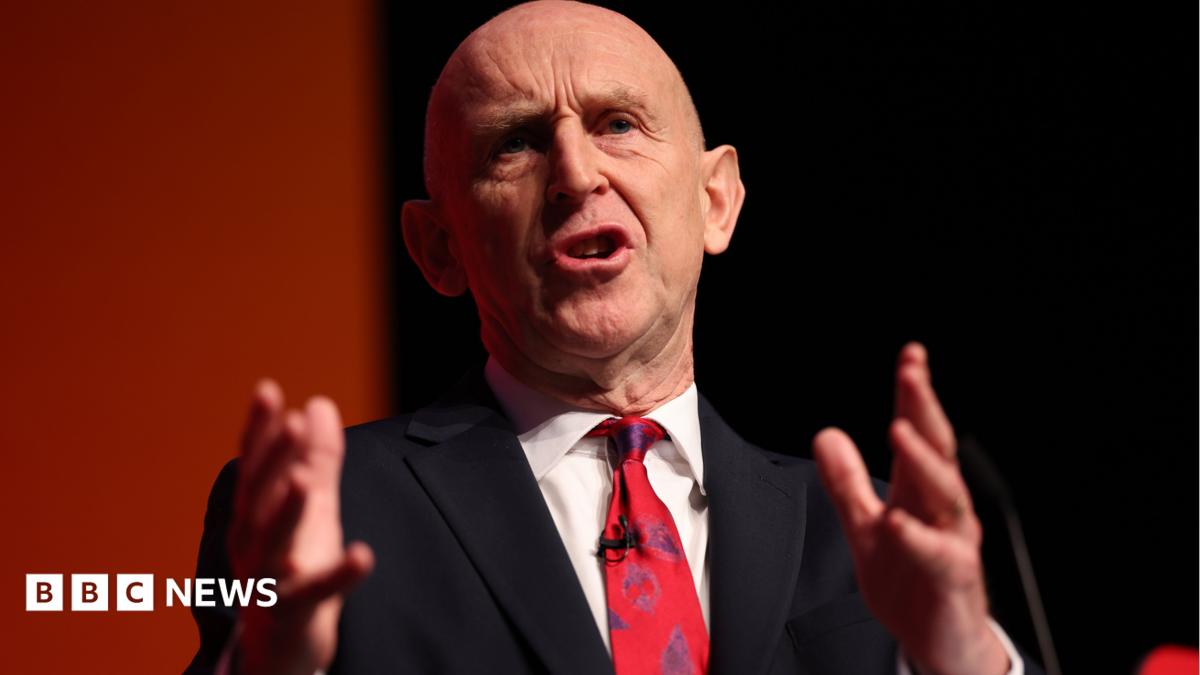
The UK is in talks with US authorities over a potential stoppage of diesel exports and has started preparing for a ban, Chancellor John Healey has told BBC News.
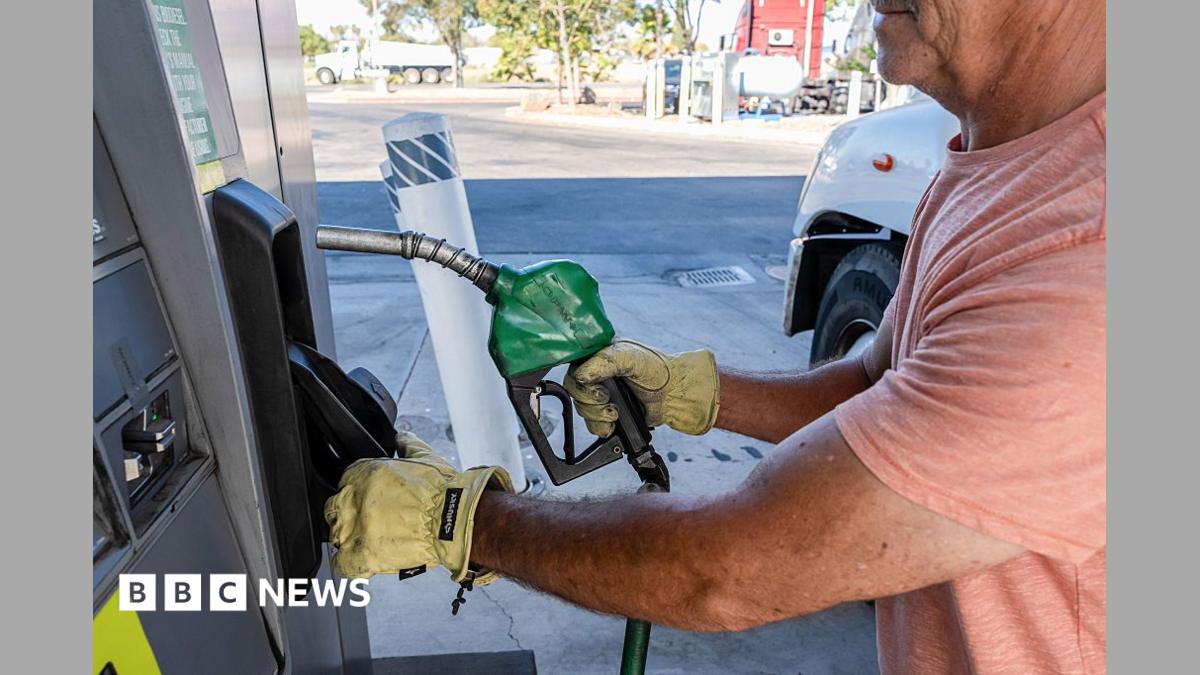
Diesel prices in the UK reached a new high on Monday due to supply pressures springing from the US-Israel conflict with Iran and Russia’s war with Ukraine.
Fuel prices are rising globally and US President Donald Trump has threatened to ban diesel exports, stating at the weekend: “We’re thinking about it very seriously.”
Healey, who admitted that UK diesel prices are “extreme”, said the government was in discussions with the US, adding: “We’re also making the provision that we may need to and we have our own stocks in the UK.”
Speaking on the sidelines of the annual Labour Party Conference in Liverpool, Healey said: “We work very closely with the Americans.
“In the end, we’re also working with the Americans where we can try and put in place what will solve this, or at least significantly ease it, which would be a diplomatic settlement [and] an end to the fighting with Iran.”
The UK depends on the US for around a third of its diesel imports and a ban would send prices even higher.
US sources suggest that Trump is considering a ban to attempt to bring down prices for domestic consumers ahead of the critical midterm elections.
The BBC has contacted the White House for comment.
In the UK, the average price for a litre of diesel reached 199.33p on Monday, according to the RAC motoring organisation, surpassing a previous high of 199.09p in June 2022 after Russia launched its full-scale invasion of Ukraine.
Petrol prices are also still rising, with a litre currently costing 174.23p.
Over the past seven months, the Iran war has severely disrupted the production and transportation of wholesale oil across the region, causing the price of fuels made from oil to surge.
The RAC said diesel prices had entered “uncharted territory” and served as a reminder of “just how exposed the UK is to events occurring far away”.
Healey said he was “very aware” of these cost of living pressures as he prepared what he called a “breathing space” Budget on 28 October.
A freeze on fuel duty, first implemented by the Conservative government in 2022, is due to expire at the end of the year. Duty is scheduled to increase by 3p in January and a further 2p in March.
Healey said: “Fundamentally, what we need is a settlement in the Middle East. We need an easing of the pressure of costs on business, the costs on households and on ordinary families that we see at the pumps in the most extreme level today for diesel.”
For the US economy, a ban could deliver short-term relief at the pump by flooding the domestic market with excess supply.
However, energy analysts warn it could backfire.
David Fyfe, chief economist at Argus Media, notes that cutting off American supply would likely cause international prices to skyrocket.
That would push up global freight, food, and industrial costs, ultimately “feeding inflation back into the global economy”.
“At a stroke, the US’s reputation as a reliable supplier of energy to the world would be shot,” Fyfe added.
Removing more than a million barrels of daily American supply would trigger a fierce bidding war among importing nations in Latin America and Europe.
Sarah Raffoul, analytics manager at Argus Media, noted that while higher international prices would eventually curb demand, the immediate gap would severely strain trade relationships and accelerate global inflation.
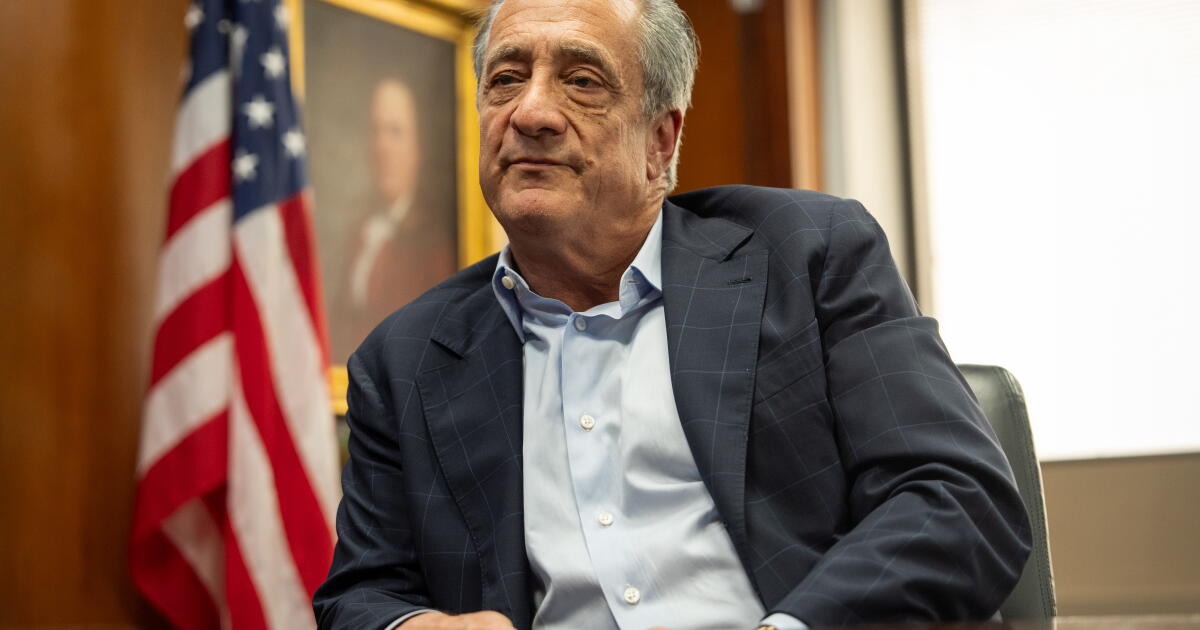
WASHINGTON — Long before he was the top official at the U.S. Postal Service, David Steiner was a corporate executive surfing mid-oughts television when he came across Donald Trump on “The Apprentice.”
He was unimpressed.
“If that is leadership, if that’s what we’re telling people that our culture and our media portrays as leadership, we’re screwed,” Steiner, then the CEO of Waste Management, said during a 2007 speech at the University of Arkansas Clinton School of Public Service. “If that’s leadership, count me out.”
“And for God’s sake,” he added to laughter, “if I have to get my hair to look like that, if I have to do that to be a leader, you can definitely count me out.”
Nearly two decades later, Trump has migrated from reality television to the presidency. And onetime detractors — Vice President JD Vance, Secretary of State Marco Rubio and Sen. Ted Cruz of Texas, for example — now loyally execute his agenda.
Trump’s effort to use the Postal Service as a tool to reshape American elections is testing whether Steiner will follow a similar path.
Independent or a Trump ‘pawn’?
When Trump signed an executive order restricting mail ballots this year, Steiner moved quickly to finalize a rule implementing the measure, arguing he had little choice. But after the U.S. Supreme Court rejected the effort, Steiner told The Associated Press that work had stopped on one of the plan’s most controversial elements, a government portal for voter rolls.
He refused to endorse the Republican president’s order as sound policy, saying he was focused on implementation and letting the courts ultimately decide the matter.
“I don’t get to decide what rules that are put on us that I decide to accept or not accept,” he said. “We are an independent agency of the executive branch.”
The episode prompted fierce criticism of Steiner for allowing Trump to deploy an agency designed to be shielded from politics.
Jena Griswold, Colorado’s Democratic secretary of state, called him a “Trump lackey.” Nevada Secretary of State Cisco Aguilar, a Democrat, recently asked Congress to deploy observers to ensure postal workers can scan envelopes holding mail ballots without disruption, saying the Trump administration “has attempted to weaponize federal agencies to interfere in our elections, and the leadership at USPS is going along with it.”
Sen. Elissa Slotkin, D-Mich., accused Steiner of being a Trump “pawn” during a congressional hearing this summer. Dozens of congressional Democrats have pressed Steiner to reveal his interactions with the White House during the development of the mail ballot rule.
Some Republicans have joined in the criticism. Sen. Josh Hawley of Missouri, incensed by abandoned mail, called for Steiner’s resignation and introduced legislation to block him from receiving a bonus.
During a lengthy interview, Steiner seemed surprised at points by his reception in Washington. He insisted he wasn’t a “political person” and said he had no intention of stepping down despite the criticism. He dismissed heated congressional appearances as “theater” at odds with more substantive private interactions on Capitol Hill.
Steiner was chagrined, however, at the mention of his 2007 remarks on Trump, delivered well before he launched a political career. Steiner recalled speaking at the university but said he didn’t remember his comments, acknowledging a tendency to be “flippant.”
“That’s funny,” he said. “I don’t recall it.”
The White House didn’t respond to a request for comment on Steiner’s remarks or his stewardship of the Postal Service.
Steiner didn’t follow the traditional path to power in Trump’s Washington
The Postal Service dates to Benjamin Franklin, the first postmaster general, whose portrait and bust are displayed in Steiner’s office overlooking the Washington Wharf. The agency has more than 630,000 employees, dwarfing many Cabinet departments.
While the quickest way to top jobs in Trump’s Washington is often by writing big checks, the 66-year-old Steiner doesn’t appear to have followed that course. He has largely donated to Republicans but also gave to John Kerry’s Democratic presidential campaign in 2004. Unlike his predecessor as postmaster general, Louis DeJoy, Steiner was not a major GOP donor or Trump backer.
Born in Oakland, California, as one of eight children to a father who spent his career at Chevron, Steiner worked in corporate and securities law before moving to Waste Management in 2000. He became CEO in 2004 and ran the company for 12 years. He was also a longtime director at FedEx, where board chairman Brad Martin recalled him as “outcome oriented” and rarely political.
“He’s going to follow the rules. He’s going to follow the law,” Martin said. “I don’t recall us ever talking politics.”
By the time a headhunter contacted Steiner about the postmaster general job, he was largely removed from daily corporate life and initially demurred.
“I talked to my wife, and we both agreed I was happily retired,” he said.
He changed his mind, he said, during a visit to the beaches of Normandy, feeling a sense of civic duty.
Now at the Postal Service, he earns about $346,000 in annual salary along with a relocation bonus that amounts to half his salary, far less than the $17 million in compensation he earned during his final year at Waste Management. His current role is designed to exist one layer removed from the political process, reporting to a board of governors that is selected by the president and confirmed by the Senate.
He was hired in 2025 by a board that was made up of five members, three of whom were Democrats. All but one were appointed by President Joe Biden. That makeup could change as four Trump nominees — all Republicans — await Senate confirmation. Steiner can be fired only by the board.
Steiner said he first met Trump along with Commerce Secretary Howard Lutnick at the board’s urging after he was already selected as postmaster general. Since then, he described a minimal relationship with the White House.
“We don’t fly on the radar,” he said.
That is, until Trump revived his effort in March to crack down on mail voting. Steiner said he “wasn’t in on the development piece” of the order and first saw it about a month before it was signed.
“They gave it to us to say, ‘Have your lawyers look at it, and how do you operationalize it?’” Steiner said.
The portal spurred a massive development effort inside the Postal Service while some states criticized it as federal overreach. A whistleblower report released by Sen. Richard Blumenthal, D-Conn., argued the system was hastily built and riddled with errors, though Steiner said he was confident it could have been unveiled around Sept. 15.
“The heavy lifting was clearly, clearly the IT work,” Steiner said.
Challenges ahead for the Postal Service
Though the Supreme Court dispensed with the rule, the dynamics for the Postal Service don’t get easier.
The agency posted a $9 billion net loss last year, and Steiner has warned it could soon run out of cash unless Congress lifts a $15 billion borrowing cap. Political hurdles have prevented potential cost savings from cutting service or closing some post offices.
And while Trump’s executive order won’t take effect, the Postal Service will still play a critical role in this year’s elections. There are mounting concerns that mail ballots could be rejected for late postmarks. Steiner encouraged voters to get their ballots in a week before the election to avoid problems.
The Postal Service is a rare corner of government still viewed favorably with more than half of Americans, 56%, saying it was doing an “excellent” or “good” job in a Gallup poll conducted last year. That could change if the agency is seen as increasingly political.
Steiner, however, said Americans will judge the Postal Service by their experience of it.
“What they care about is when they get that wedding invitation after the wedding or when they send a package and it disappears,” he said. “If we want to have the trust of the American public, let’s be the best service provider. Everything else is noise.”
Donald Trump has rejected Iran’s latest proposal to end the war and reopen the Strait of Hormuz as experts say the United States president believes Washington has more to gain by waiting than by accepting Tehran’s terms at this moment.
“I reject their proposal,” Trump told reporters on Saturday, arguing that Iran wants an agreement because it is “losing so badly”.
Recommended Stories
list of 3 itemsend of list
“They want to make a deal, and I think that’s fine,” Trump said. “I’d like to make a deal too. But that deal would not be acceptable.”
On Sunday, Iranian Foreign Minister Abbas Araghchi said Tehran had seen the initial reaction from Trump to its proposal but had yet to receive a response through mediators. In the latest diplomatic efforts, Qatar has played a role in mediating talks between Iran and the US on the sidelines of the United Nations General Assembly meeting in New York.
Iran’s seven-day proposal included Washington lifting its naval blockade of Iranian ports, waiving sanctions on Iranian oil sales, releasing an estimated $12bn in frozen Iranian assets and observing a wider regional ceasefire, including in Lebanon and Yemen.
Iran would then reopen the Strait of Hormuz and begin negotiations with Washington on a final agreement.
The latest proposals are similar to the June memorandum of understanding (MoU) the two countries signed. But the MoU collapsed last month due to differences on the terms of the deal, which resulted in an escalation in attacks, particularly in and around the Strait of Hormuz, which essentially remains under Iranian blockade.
According to experts, Trump’s rejection suggested that while both sides continue to publicly leave the door open for diplomacy, they remain far apart over who should make the first concessions.
“Trump’s calculation looks fairly straightforward. He believes the combination of the naval blockade and economic isolation is finally squeezing Iran hard enough that Tehran’s latest proposal is evidence of weakness rather than an offer Washington needs to seize,” Andreas Krieg, associate professor at King’s College London, told Al Jazeera.
His public argument that Iran is “losing badly” is important because it suggests he thinks time is improving the US bargaining position, Krieg said.
(Al Jazeera)
Why does Trump think he can wait?
A key part of Trump’s calculation appears to be a belief that the economic pressure on Iran has not yet run its course.
The Trump administration has escalated economic pressure on Tehran, tightening its naval blockade while imposing sanctions targeting Iranian oil revenues and threatening secondary sanctions against countries doing business with Tehran.
Last week, the US imposed aviation sanctions on Iran, disrupting flights. This came weeks after US Treasury Secretary Scott Bessent announced an economic pressure campaign against Iran, promising to target Tehran’s financial interests across the world.
Richard Weitz, a senior nonresident associate fellow at the NATO Defence College, told Al Jazeera that the White House may believe it can “wait a bit and get better terms”.
There is also concern in Washington about Iran’s proposed sequencing, he said.
Therefore, Weitz said Washington may be calculating that “economic pressure over time will induce the Iranian government to make more concessions”.
“This is what occurred arguably a decade ago, leading to the 2015 Iran nuclear deal as the Iranian government decided it [the US] needed to end the economic sanctions in return for making concessions on its nuclear programme,” he added.
It is, therefore, possible that “we could see the same kind of trade-off in the coming months”.
Iran could make Trump ‘pay’
However, waiting for a deal also carries considerable political risk for the US president, experts said, because his Republican Party could lose November’s midterm elections.
A late August Reuters/Ipsos poll suggested 63 percent of Americans opposed the US-Israel war on Iran while 31 percent supported it. Rising fuel and transportation costs could also feed into broader cost-of-living concerns before the elections.
The problem for Trump is that time does not only increase pressure on Iran, Krieg said. “The gamble is that time cuts both ways,” he noted.
With the midterms approaching, Trump does not want to appear to lift the blockade, waive oil sanctions and release Iranian assets simply to regain access to a waterway that Iran itself disrupted, Krieg said.
“But every additional week also means elevated energy prices, continued military exposure and mounting pressure on Gulf partners.”
The essential closure of the Strait of Hormuz has disrupted oil and gas flows from the Gulf nations, which depend on energy exports to finance their budgets.
Mohamad Elmasry, a professor at the Doha Institute for Graduate Studies, told Al Jazeera that Iran’s proposal could be viewed as “kind of throwing a bone to Trump” by offering a potential route towards lower oil and gas prices before the vote.
However, Iran may decide “to make Trump pay for declining the proposal and the increased economic pressure the country is under”, he told Al Jazeera.
“They may decide that this is the time to escalate … just as the midterms are approaching.”
The Republican Party is not doing well in the polls, and a number of its candidates are “distancing themselves” from Trump, he noted. Polls indicated that Republicans could lose their slim majorities in the US Congress.
It’s not just the Iranians under severe economic pressure because of the US naval blockade and ongoing sanctions, “it’s also the Trump administration,” Elmasry said.
Trump’s wait for more Iranian concessions could ‘backfire’
Trump “wants Tehran to reopen Hormuz without Washington paying the full economic and political price Iran is currently demanding”, Krieg said.
“The danger is that he is confusing Iranian pain with Iranian willingness to capitulate. Those are not the same thing.”
Iran is undoubtedly under pressure. Krieg said the sanctions and blockade are “biting”, which is precisely why Tehran needs an agreement.
But additional pressure does not necessarily produce additional concessions.
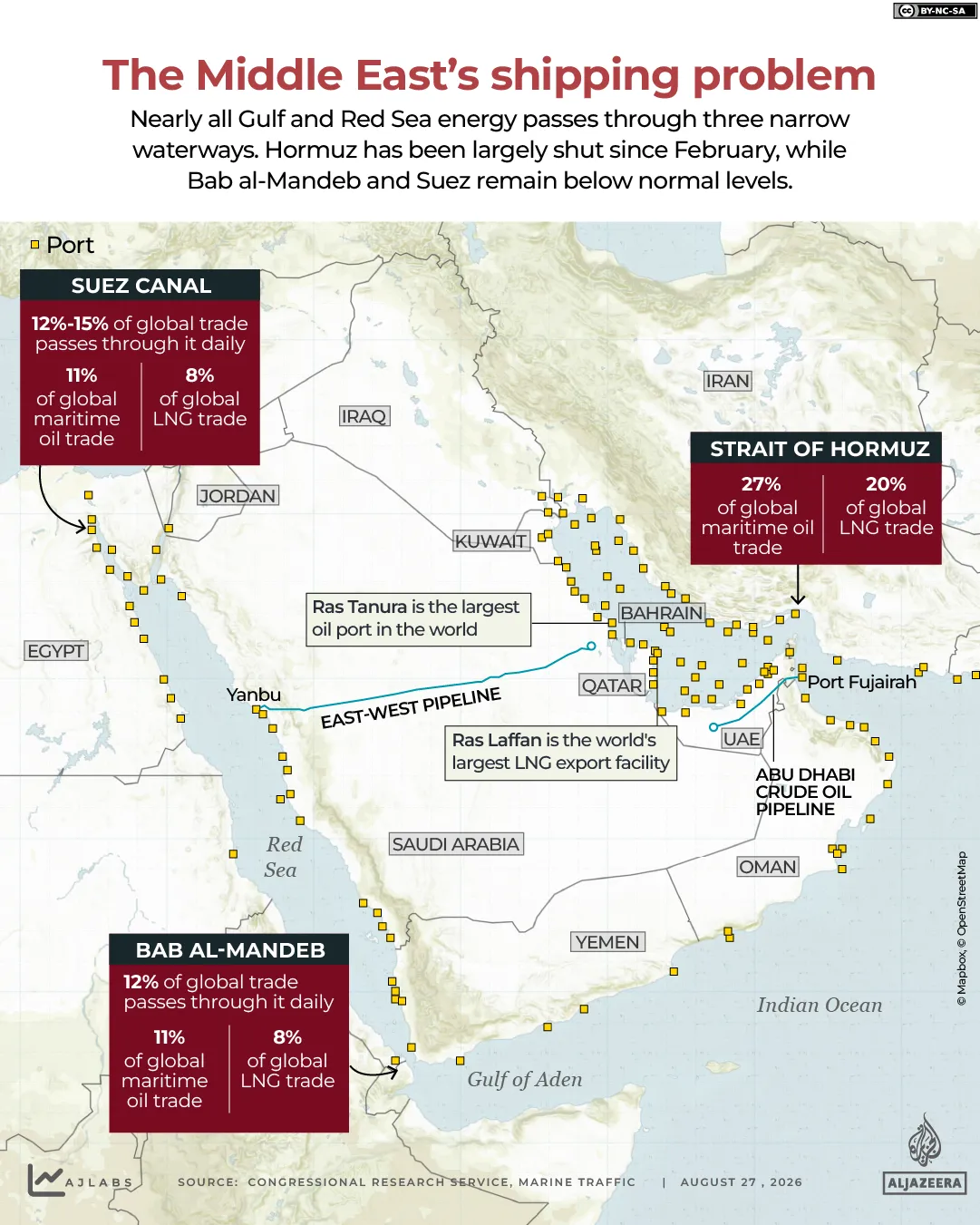
Iran could instead increase the costs of the conflict for its adversaries, Krieg said, including through the Strait of Hormuz, regional infrastructure and potentially Bab al-Mandeb, another strait between Yemen and the Horn of Africa.
In recent weeks, the strategic weight of Bab al-Mandeb has increased dramatically after the Iran-aligned Houthis expanded their control of Yemen’s Red Sea coastline.
This advance in effect has handed the Houthis unrestricted access to the narrow waterway, a worrying development for global shipping given the group’s track record of targeting vessels, including Israeli-linked ships, in solidarity with Palestinians in Gaza.
The Houthis have already declared a naval blockade on Saudi ships in the Red Sea, which Riyadh began to use as an alternative shipping route to Hormuz for its oil exports.
“So this can backfire,” Krieg warned. “Trump thinks Iran’s clock is running faster than America’s. Tehran thinks the opposite: that Qatar, Saudi Arabia, the UAE, global energy markets and ultimately Trump himself have a lower tolerance for prolonged disruption than Iran has for economic punishment.”
Ross Harrison, a senior fellow at the Middle East Institute, similarly told Al Jazeera that Tehran may now be “less worried about overplaying their hand than they are underplaying their hand”.
According to Harrison, Tehran now sees the risk of escalation as less costly than agreeing to something prematurely or appearing willing to compromise, particularly after Washington’s response to the proposal.
In an interview with Al Jazeera that aired on Saturday, Iranian President Masoud Pezeshkian said his country no longer trusts negotiations with Washington after attacks occurred during previous rounds of talks and were followed by sanctions.
“We have no trust in the American side and do not know on what basis an understanding can be reached with it,” Pezeshkian said.
Tehran betting ‘heavily’ on time
US-based analyst Harrison noted that Tehran was probably “not surprised at all” by Trump’s rejection and viewed the offer partly as a way to demonstrate to Iranians and the American public that it remained willing to negotiate.
Experts said Tehran understands the US president wants an exit he can present as a victory.
“Iran is betting heavily on time. … Its strategy is to keep the pressure high enough that he eventually comes back to negotiations while making that exit progressively more expensive,” Krieg said.
“The Iranian calculation is essentially: Do not give Trump the deal cheaply when he may need it more badly several weeks or months from now.”
Harrison said the Iranian offer was a “show of goodwill” intended to demonstrate Iran’s willingness to negotiate to both its domestic audience and the American public.
According to Krieg, “protraction” of the conflict was the “most likely outcome”.
“Both sides need a deal, but both currently think waiting will improve the deal they eventually get,” he added.
“America will never be a communist country,” states the 30-second television ad.
Never mind that socialism is a more probable scenario given the rise of New York Mayor Zohran Mamdani and Nithya Raman’s healthy lead in the Los Angeles mayoral race. This commercial is not about semantics, political systems or the health of the nation.
It’s about touting the alleged achievements of President Donald Trump, from “reigniting American manufacturing” to “defend[ing] law and order” and giving Americans the “largest tax cuts in history.”
One can argue the legitimacy of such claims if they still have the energy to do so after 10 years of relentless MAGA puffery, but the real issue here is that this particular piece of bluster is produced and funded by the U.S. government.
Laws prohibit taxpayer funds from being used for “publicity or propaganda,” even if the White House is referring to its new ad campaign as a PSA.
“This is the sort of government propaganda one might expect in North Korea, not the United States of America, and it is an egregious and utterly illegal misuse of Americans’ hard-earned tax dollars,” wrote Democratic House and Senate Appropriations Committee members in a letter sent Friday to Trump’s Chief of Staff Susie Wiles.
They demanded that the ad be immediately taken off the air and that “Federal employees who knowingly violated Federal law in working on and paying for this advertisement” be disciplined. “The law is not complicated,” they wrote. “You cannot use taxpayer dollars for political advertisements.”
The spot, which first aired Wednesday on conservative media outlets Fox News and Newsmax, cost $14,000, according to the firm AdImpact, which tracks media spending. By Friday, that number had jumped to $430,000 as the ad hit multiple markets across the country.
And it isn’t the only instance of American tax dollars at work — for Trump. A second ad paid for by you aired Thursday night on CBS.
The minute-long commercial featured footage of the president speaking against the backdrop of Mount Rushmore in an audacious display that might have turned George Washington, Thomas Jefferson, Abraham Lincoln, and Theodore Roosevelt to stone if they weren’t already immortalized in granite.
It included clips from the U.S. military’s Jan. 3 capture of Venezuelan President Nicolás Maduro and his wife, snippets from Trump’s Independence Day weekend speech, a voiceover from UFC CEO Dana White praising the president as “the toughest, most resilient person” he’s ever met, and a montage of images featuring Trump, Trump and more Trump. It ends with the star of the show proclaiming, “This is only the beginning of the golden age of America,” then comes the written disclosure: “Paid for by the U.S. Government.”
Anyone who has lived in or traveled to countries with state-run media will recognize the similarities between Trump’s ads and those of, say, former Iraqi dictator Saddam Hussein or current strongmen like North Korea’s Kim Jong Un: the intense leader-like gaze, the baseless claims, substandard production quality and music that suggests the subject of the ad should be worshipped. (Trump’s choice for the first ad was “Love Me” by R&B singer JMSN, who opposed the use with an emphatic “I would never…”)
But on U.S. television, the ad feels more desperate than dictatorial. The whiff of desperation coming from the ad blitz may have something to do with the president’s dismal polling numbers headed into November’s midterms.
The administration has argued its ads are “educational and unapologetically patriotic” public service announcements. The White House said in a statement, “These public service announcements are about reminding Americans to love their country and understand what makes it worth defending, at home, at our borders, and abroad.”
A White House official reportedly said that the PSAs “are clearly not political” and noted that “the President is not on the ballot and the ads don’t have a call to action.”
Trump has repeatedly told his base to vote like he was on the ballot.
With propaganda like this coming out of the White House, communism is hardly the biggest threat facing the country.
The White House signaled Friday night that CNN would be left off Air Force One for President Trump’s Saturday trip, the latest media restriction from the administration in an ongoing dispute with 1st Amendment implications.
The news organization was replaced by Real America’s Voice News, a conservative outlet.
The news came just after journalists from three news outlets that Trump banned last week from the White House grounds — CNN, MS NOW and Politico — returned to the executive complex with TV cameras, laptops and microphones in hand.
A judge temporarily struck down the ban in an overnight ruling early Thursday, but his decision didn’t directly address White House pool reporters. The networks continued to refrain from covering Trump as part of the pool, even as reporters from all three outlets were allowed back in the White House.
The temporary order from the judge mentioned only the White House grounds and said nothing directly about Air Force One.
Theodore Boutrous Jr., the news outlets’ attorney, did not immediately respond to an email and phone call requesting comment Friday night.
For a while during the day, the U.S. network video pool for the White House was back in operation for the first time since Trump banned the three news outlets in an extraordinary showdown over media access.
At noon on CNN, viewers could see Trump and Chinese President Xi Jinping touring the National Archives Museum along with their wives, Melania Trump and Peng Liyuan. The banner along the bottom of the screen read: “Trump and China’s Xi Visit National Archives.” It was a routine report from a state visit — but for the fact that CNN had not aired live video of Trump in several days.
“As of now, all systems are go,” said a person familiar with the pool, speaking on condition of anonymity because of the fluidity of the situation.
The pool consists of five major U.S. broadcast outlets that take turns shooting and sharing video. When the White House banned CNN — which belongs to the pool — from White House grounds, along with MS NOW and Politico, the other four pool providers declined to participate in a show of solidarity.
CNN was not commenting directly earlier Friday, referring instead to its editorial coverage. But Brian Stelter, the network’s media analyst, posted on X that CNN had a pool assignment at the National Archives event and that the White House had approved the network’s credentials.
At first glance, it looks like a typical Republican campaign advertisement. As images of President Trump flash across the screen, the 30-second spot says, “America will never be a communist country” and boasts about the “largest tax cuts in history.”
But there’s something different near the end — a bit of text at the bottom that says “paid for by the U.S. government.”
According to AdImpact, which tracks media spending, the advertisement cost $14,000 and it ran during conservative shows on Fox News and Newsmax.
The White House said in a statement the ad is “educational and unapologetically patriotic.”
“These public service announcements are about reminding Americans to love their country and understand what makes it worth defending, at home, at our borders, and abroad,” the White House statement said.
Fox News and Newsmax did not immediately return a request for comment.
The White House did not say what agency paid for the spot, which includes background music with singers crooning “love me” over and over.
The advertisement does not say who voters should support in the midterms, but it meshes with campaign messaging from Trump and other Republicans, particularly during the party’s unusual convention in Dallas earlier this month.
Democratic Rep. Jamie Raskin of Maryland, who is in line to chair the House Judiciary Committee if his party wins the majority in November, said in a social media post that it’s a violation of the Hatch Act for government employees to work on such a video.
“It is blatantly unethical under numerous federal ethics provisions proscribing the use of government resources for political campaigns,” Raskin wrote.
Republicans also criticized the ad.
North Carolina Sen. Thom Tillis, who is not running for reelection, referenced the former right-wing Hungarian prime minister to critique the advertisement.
“It’s inappropriate. It’s not like they need a GoFundMe page to have the dollars to do that sort of ad and they could do it. But using taxpayer dollars, it feels like Viktor Orban,” he said.
Louisiana Republican Sen. John Kennedy said he hadn’t seen the ad but questioned whether it was legal.
“I don’t generally like to see politicians use public money to pay for their own campaign ads,” he said.
Catalini writes for the Associated Press. AP writers Joey Cappelletti and Steven Sloan in Washington contributed to this report.