Under an existing state appropriations restraint, also known as the Gann Limit, lawmakers cannot spend more in the state budget than an amount determined by a formula that takes annual tax proceeds, changes to the population and cost of living into consideration.
Tax revenue above the limit must be divided between schools and refunds to taxpayers. More recent carve-outs in the law also allow leaders to direct excess funds to infrastructure and local government.
The limit applies to most other appropriations of tax revenue, including money that lawmakers tuck away into the “rainy day” fund and other reserves.
California voters also have capped the amount of money lawmakers can set aside in the rainy day fund at 10% of general fund proceeds in a given year.
The proposed changes would exempt deposits into the rainy day fund and a short-term reserve, called the Projected Surplus Temporary Holding Account, from the state appropriations limit. The cap on the rainy day fund would grow from 10% of general fund tax revenue to 20%.
In effect, the measure would allow the governor and the Legislature to put more money into budget reserves, creating another option to avoid triggering rebates.
For example, if the spending limit is $400 billion for the year, and revenue hits $410 billion, the measure would give lawmakers the option to deposit the $10 billion above the spending limit into the rainy day fund, direct the money to infrastructure or give it to local governments, instead of returning the funding to taxpayers and increasing funding for schools.
WASHINGTON — Federal immigration officers opened fire on a Dominican man in New York because he drove his car into officers’ vehicles and they believed their lives were in danger, a senior Immigration and Customs Enforcement official said Friday.
The 28-year-old man, whom New York City police identified as Oscar Belgal, was shot “superficially” in the neck as ICE officers attempted to arrest him, said Marcos Charles, head of ICE’s Enforcement and Removal Operations. Authorities have not released details of Belgal’s condition.
Officers used their vehicles to block the man as he attempted to drive away, but he accelerated toward them, Charles said during a news conference with U.S. Homeland Security Secretary Markwayne Mullin in Washington. The Department of Homeland Security said the news conference was about the “dangerous consequences of sanctuary city policies.”
“Our officers, using their training and believing that their life and the life of the partners and the general public were in danger, used their training and fired weapons,” Charles said.
Belgal had his 5-year-old son in the car with him when the shooting happened, officials said.
Mullin said ICE agents didn’t know the child was in the car, but that Belgal “was aware” and chose to put the boy at risk by trying to evade officers.
ICE previously tried to detain Belgal, Charles says
Belgal was associated with a robbery crew that used mopeds and weapons, and was convicted of grand larceny last year and sentenced to five years of probation, Charles said, adding that he evaded officers in September when ICE tried to arrest him for deportation.
The Legal Aid Society, which was representing Belgal in an ongoing drug case, called Friday for a “full and transparent” investigation of the shooting, the officers involved to be held accountable and an end to “ICE’s escalating presence in New York City.”
Federal agents walk near the scene where a man was shot by an ICE officer during an operation in the Bronx borough of New York on Oct. 8, according to local media and police.
(Charly Triballeau / AFP via Getty Images)
Belgal has pleaded not guilty to narcotics-sale charges in the drug case. The Legal Aid Society did not comment further.
New York City Mayor Zohran Mamdani and New York Gov. Kathy Hochul, both Democrats, said late Thursday that they had pressed Mullin and Republican President Trump to release Belgal, but to no avail. They also urged the administration to immediately release ICE officers’ body camera footage of the shooting and to halt immigration enforcement operations in the city.
Mullin said Belgal was being held in a “highly secured” detention facility outside New York City but declined to say where.
Attorneys representing Belgal filed an emergency petition Thursday night calling for his release. A hearing is scheduled for Friday afternoon.
He also confirmed ICE officers were wearing body cameras that were activated, but didn’t say when any of that footage would be released. Under agency policy, bodycam video can be released within 72 hours if “determined that it is in the best interests of the agency.”
On Friday, New York City police released footage from its officers as they arrived at the scene following the shooting. The department previously said its officers were not involved in the arrest and not at the scene when the shooting happened.
The video shows a city officer responding to a chaotic scene where Belgal — sitting on the ground with his hands behind his back and head drooping to one side — was surrounded by several officials. The video shows officers lifting Belgal and placing him in a black SUV. Police said he was taken to a hospital.
“Yo put pressure. Put pressure,” an officer can be heard saying as the SUV reverses down the block.
New York City Police Commissioner Jessica Tisch said Belgal was pulling into a parking space when a federal officer in plainclothes approached with his gun drawn, followed by another federal officer who also wasn’t in uniform. Belgal started to pull the car forward, and at least one of the officers fired seven rounds, hitting the man below his left ear.
Protesters and local officials decried the shooting as an example of the dangers of the Trump administration’s immigration crackdown.
New York City Mayor Zohran Mamdani arrives to speak to the media about the ICE shooting in the Bronx borough of New York on Oct. 8. Mamdani said he would ask President Trump to remove federal immigration agents from the city as tensions flared over the latest shooting involving ICE.
(Charly Triballeau / AFP via Getty Images)
Homeland Security Secretary Markwayne Mullin takes questions from reporters during a news conference at U.S. Immigration and Customs Enforcement headquarters on Friday in Washington, DC. Mullin, joined by ICE officials, addressed Thursday’s shooting of a man in New York City by a federal immigration agent as he spoke out against sanctuary city policies.
(Kevin Dietsch / Getty Images)
“There is no justification for what we have seen today,” Mamdani said late Thursday at the scene of the shooting.
Federal officers who surrounded the vehicle wore construction vests and masks, making it difficult to identify them as immigration officers, he said.
Mullin criticizes NYC’s immigration policies
Mullin devoted much of Friday’s news conference to criticizing Mamdani and New York City’s limits on cooperation with ICE. The Democrat, who took office in January, has restricted local cooperation with immigration enforcement operations and repeatedly called for the abolition of ICE.
“Sanctuary politicians, they create an environment for criminal activity to thrive, not for the American citizens to be safe,” Mullin said.
Homeland Security Secretary Markwayne Mullin takes questions from reporters during a news conference at U.S. Immigration and Customs Enforcement headquarters on Friday in Washington, DC. Mullin, joined by ICE officials, addressed Thursday’s shooting of a man in New York City by a federal immigration agent as he spoke out against sanctuary city policies.
(Kevin Dietsch / Getty Images)
ICE has asked local officials in New York to hold onto more than 14,000 people for federal officers to collect and place in immigration detention, he said.
“Silence. Absolute silence is what we have gotten back,” the secretary said. “Why would they release these individuals back onto the streets?”
“We’re enforcing our nation’s laws. We’re not picking and choosing,” Mullin continued. “Why is that controversial? We should all want law and order on our streets.”
ICE has justified other shootings with perceived threats to officers
During Trump’s second term, Homeland Security has often accused suspects of attempting to ram officers with vehicles or otherwise pose a threat and using that as justification for opening fire. But evidence from other shootings involving immigration enforcement officers has sometimes called into question that rationale.
In the Jan. 7 shooting death of Renee Good in Minneapolis, Homeland Security officials initially claimed an ICE officer opened fire in self-defense after Good attempted to run him over with her vehicle. Videos filmed from multiple angles challenged the administration’s narrative.
On July 10, ICE officers fatally shot Lorenzo Salgado Araujo in Houston as the Mexican national was driving his construction crew to a job site. DHS maintained Salgado Araujo rammed an ICE vehicle, but the three men inside his vehicle disputed the narrative.
Last year in a Chicago suburb, immigration officers fatally shot Silverio Villegas González after they say the Mexican national drove at them and dragged one with his car, causing “serious injuries.” But body camera videos from local police showed the agent who shot Villegas González walking around afterward and dismissing his own injuries as “nothing major.”
Santana and Marcelo write for the Associated Press. Marcelo reported from New York. AP reporters Anthony Izaguirre and Jennifer Peltz in New York City and Ryan Foley in Iowa City, Iowa, contributed to this report.
The shooting prompted protests in New York City as officials defended ICE and Mayor Zohran Mamdani condemned the incident.
Published On 9 Oct 20269 Oct 2026
The United States Department of Homeland Security has defended Immigration and Customs Enforcement’s (ICE) shooting of a man in New York City while his child was present. Federal officials used the incident to criticise sanctuary-city policies that limit cooperation with federal immigration authorities.
New York officials have condemned the shooting and have called for ICE to end its operations in the city.
Recommended Stories
list of 3 itemsend of list
The shooting took place on Thursday afternoon when ICE officers attempted to arrest a man identified by New York City police as Oscar Belgal.
Homeland Security officials gave their account of the incident on Friday during a news conference, saying that Belgal refused to exit his car when approached by officers and then accelerated, striking two ICE vehicles.
They said officers then opened fire, grazing Belgal’s neck while his five-year-old child was in the back seat.
According to Homeland Security officials, Belgal received first aid and was taken to hospital before being transferred to a secure detention facility outside New York state. They did not disclose where Belgal is being held.
Department of Homeland Security (DHS) Secretary Markwayne Mullin said that the agents did not know the child was inside the vehicle when they fired.
ICE senior official Marcos Charles said agents had attempted to arrest Belgal as part of an investigation into suspected gang involvement in an earlier shooting of a US Customs and Border Protection officer.
According to US officials, Belgal is an undocumented migrant from the Dominican Republic who had previously evaded arrest and received a five-year sentence for grand larceny in April 2025.
“[Belgal] was a thug,” Mullin said at the Friday news conference. “The absolute worst of the worst.”
Mullin confirmed that officers were wearing body cameras but the footage has not been made public. New York City police released bodycam footage on Friday of police officers on the scene who had responded to a 911 call about the incident.
In other violent incidents involving federal immigration officers, video evidence has contradicted initial accounts from ICE and Homeland Security officials, including in Minneapolis, where footage of the fatal shootings of Alex Pretti and Renee Good challenged federal officials’ descriptions of the encounters.
The latest shooting prompted protests on Thursday night in the Bronx, where the shooting took place, with demonstrators condemning ICE and calling for the agency to be abolished. Tensions rose after NYPD officers clashed with some of the protesters.
New York City Mayor Zohran Mamdani condemned the shooting and said he had called US President Donald Trump to demand an end to ICE enforcement in the city.
Speaking to reporters late on Thursday at the scene of the shooting, Mamdani said he had tried unsuccessfully to secure Belgal’s release in phone calls with Trump and Mullin.
“These actions are making the city less safe,” Mamdani said. “ICE is rotten to its core.”
Mullin accused Mamdani of prioritising politics over public safety and said Trump had offered to transfer Belgal to New York police custody if they pursued charges. Mullin said Mamdani refused this offer.
New York City mayor Zohran Mamdani gives an update about the Immigration and Customs Enforcement (ICE) shooting in the Bronx borough of New York, October 8, 2026 [AFP]
Business groups such as the California Chamber of Commerce, the California Teachers Assn. and Planned Parenthood Affiliates of California oppose the proposal.
Gov. Gavin Newsom and Democrat Xavier Becerra and Republican Steve Hilton, who are running to replace Newsom, also have spoken out against it.
Opponents describe the wealth tax as a “flawed experiment” that will harm California’s economy because companies and rich people will flee the state.
“If they leave, it will create a huge hole in our budget, threatening core services like education, healthcare and public safety,” arguments against the proposition say.
Opponents of the measure say the proposal is an ineffective attempt to address the long-term effects of the healthcare cuts and would harm California’s economy and budget.
The state budget in California already is largely dependent on income taxes paid by its highest earners. Because of that, revenues are prone to volatility, hinging on capital gains from investments, bonuses to executives and windfalls from new stock offerings, and are notoriously difficult for the state to predict.
Billionaires such as Palmer Luckey, the co-founder of defense tech startup Anduril Industries, and entrepreneur Mark Cuban have pushed back against the proposal on social media. Some tech executives have been relocating or moving their assets to try to avoid the potential tax. Google co-founder Sergey Brin has been cutting ties to California, relocating to Nevada while funding groups such as Building a Better California that are backing ballot measures that could nullify the billionaire tax.
More than $187 million has been spent opposing the proposition, with the bulk coming from Building a Better California, cryptocurrency company Ripple Labs and its co-founder Chris Larsen, data from the secretary of state show.
Proposition 39 is opposed by leading state Democrats, major civil rights organizations including the American Civil Liberties Union and major labor unions in the state, who say the measure would disenfranchise eligible voters and expose voters to identity theft by forcing them to write personal ID numbers on mail ballot envelopes.
According to campaign finance reports, the ACLU of Northern California has contributed hundreds of thousands of dollars to defeating the measure. Quinn Delaney, a major Democratic donor and fundraiser for former President Obama, and Patty Quillin, a major philanthropist and wife of Netflix co-founder Reed Hastings, both have given $1.5 million.
The Service Employees International Union Local 2015, which represents long-term caregivers, provided $1 million, the SEIU California State Council for Working People gave $500,000, and the California Teachers Assn., through its independent expenditure committee, gave another $500,000.
Arnulfo De La Cruz, president of SEIU California and SEIU Local 2015, said in a statement that the group’s members “know our nation is stronger when working people make their voices heard and have their ballots counted,” and that strict voter ID laws “are part of Trump and MAGA extremists’ agenda to rig the election system so they can cling onto their own power and get richer from corporate corruption.”
Sen. Alex Padilla (D-Calif.) recently convened a news conference where a slate of Democratic leaders — including state Senate President Pro Tempore Monique Limón (D-Goleta) and Assembly Speaker Robert Rivas (D-Hollister) — called on Californians to vote no on Proposition 39.
The Democrats called the measure a “dirty trick” from “Trump acolytes” akin to historic poll taxes designed to disenfranchise Black voters, and a power grab that would seriously harm millions of eligible voters, especially in Black and Latino communities.
“Proposition 39 is a direct assault on everything California stands for. Our people, our values and our fundamental belief that every eligible voter here in California deserves to have their voice heard and deserves to have their vote counted,” Rivas said.
Proposition 42 would prohibit new taxes on “retirement holdings, individually-owned assets, and other forms of personal savings” that take effect after Jan. 1, 2026. That includes financial assets, investment accounts, intellectual property, personal belongings and other assets used for retirement or financial planning.
It also would bar retroactive taxes on past earnings unless the state is using revenue from the tax to respond to emergencies such as a fire or a flood.
Proposition 42 could nullify Proposition 40, the proposed billionaire tax, because the two measures conflict with one another. If voters approve both, the one with the most “yes” votes generally would become law, according to the Legislative Analyst’s Office.
Proposition 42 could reduce state tax revenue but it’s unclear by how much, according to the office’s analysis. Currently, the state does tax certain personal property such as vehicles. It doesn’t tax people for owning financial assets like stocks and investment accounts but does tax income from them.
California Professional Firefighters, the California Federation of Teachers, the Nurse Alliance of SEIU California and the California School Employees Assn. all oppose the measure. They argue that it will make it harder to pass tax hikes to pay for police and fire departments, fix and repair local roads, staff local schools or backfill federal healthcare cuts.
They also argue that Proposition 43 skirts the California Supreme Court’s opinion on the threshold.
Gubnatorial candidate Xavier Becerra opposes Proposition 43. In a statement, he called corporations “special interests” that want the proposition to pass in order to block new taxes.
“Prop. 43 would hand special interests the power to block the resources our communities count on most: fire protection, safe roads, good schools,” Becerrra said.
Assemblymember Buffy Wicks (D-Oakland), who authored the legislation that became Proposition 43 — ACA 22 — opposes the measure and has urged Californians to vote against it. She said the only reason she crafted the bill was because it was a necessary bargaining chip to torpedo another ballot measure backed by the Jarvis taxpayers group that would have devastated revenues for local governments and retroactively rescinded some local tax increases.
The California Taxpayers Assn., the California Society of Certified Public Accountants, the CalAsian Chamber of Commerce and others back the proposition. They say it would result in the government spending taxpayer dollars more wisely while improving transparency.
The bulk of the contributions to support the proposition have come from Building a Better California, data from the California secretary of state’s website show. Top contributors to Building a Better California include Sergey Brin, Google’s co-founder; John Doerr, chairman of venture capital firm Kleiner Perkins; and Eric Schmidt, the former chief executive of Google.
Proposition 41 “requires more accountability, transparency and trackable progress of programs funded by our taxes, so that we stop funding failure and start funding successful outcomes,” a website for the proposition states.
As a candidate in 2022, Cohen said she’d conduct audits of homeless spending, the Department of Motor Vehicles and Employment Development Department if elected. However, her office didn’t do audits of homeless spending, a spokesperson said.
Cohen said her office sought funding from the governor and the state to conduct homeless audits but was denied. Her office clarified the request was for money for high-risk audit investments but didn’t specifically mention homelessness.
Cohen also acknowledged that she didn’t conduct reviews of the DMV and EDD, because, she said, other agencies were doing those audits and she didn’t want to duplicate their efforts.
After Cohen’s election, her office found itself in a public dispute over the state’s annual comprehensive financial report, a summary of California’s spending.
The report, published each year by the controller’s office, is used by credit agencies to monitor the state’s fiscal health and for years has been published months after it is due. Cohen blames other departments’ delays in turning over data as part of the reason for its chronic lateness.
The state auditor, a separate agency that reports to the state Legislature, launched its own audit about the timeliness of the report. In a 2025 letter, the auditor accused the controller’s office of spending more than a year “resisting an independent review” of the delayed report, which almost led to a legal showdown between the agencies.
Cohen, in an interview this year, said she succeeded in getting the report published closer to its due date. Her office also disputes the state auditor’s version of events.
Also this year, Cohen’s press officer secretly was recorded by a woman who pretended to be on a date with him. In the recording, the officer is heard saying that the office’s auditing team was cut by the state and that the office doesn’t have the resources to proactively perform audits. The recording was procured by conservative activist group O’Keefe Media.
Cohen called the recording illegal and declined to comment. The officer didn’t respond to The Times’ request for comment.
Organizations publicly opposing Proposition 44 include the California Medical Assn., the California Hospital Assn., which represents hospitals and health systems, the Assn. of California Healthcare Districts, which represents the state’s 76 public healthcare districts, the California Teachers Assn., the state’s Planned Parenthood affiliate, the state Democratic Party, the state Chamber of Commerce and Reform California, a conservative advocacy group.
Opponents say the proposition’s vague wording could result in vital services being excluded from the list of program expenses permitted in the 90% of revenues, prompting clinics to cut programs to avoid financial penalties. A study commissioned by the California Primary Care Assn. found that clinics could face up to $1.7 billion in collective penalties in the first year of the measure’s implementation alone, an additional expense that could leave up to 88% of clinics operating in the red.
Opponents also say the measure adds an expensive layer of bureaucracy to the state’s budget and grants elected officials — in this case, the attorney general — authority to determine which services clinics can offer.
McOsker, who represents the Harbor Area and parts of South L.A., said he’d like to spend less time on the 110 Freeway getting downtown and more time serving his community directly. He called the frequent council meetings the “most nonproductive part of my week.”
Many cities, including Long Beach, San Diego and Sacramento, have councils that meet just once a week, McOsker noted, adding that the council still could meet more frequently if needed.
Fewer meetings also would make it more likely for the council to settle issues at one meeting, he said — a benefit to constituents who show up at meetings only to see a vote on their issue deferred to another day.
Fewer meetings also may encourage people to instead attend council committee hearings, McOsker said, which often discuss measures in more detail and allow for robust public comment.
Rob Quan, an organizer with the watchdog group Unrig LA, opposes the amendment but said he would support fewer meetings if the council made other changes to improve public access to city government, including releasing meeting agendas further in advance and scheduling committee meetings in the evenings when more people can attend.
But Quan expressed skepticism the council would make those changes.
Rodriguez noted that Measure EE also includes a measure to raise fines for city ethics violations, which she described as a cynical attempt to shift the focus away from the reduced requirement for meetings.
“My big problem with EE is that it’s a ruse of reform,” she said.
Referendum signatures increase
Amendment EE also would make it harder for voters to overturn City Council actions through the use of ballot referendums.
To qualify a referendum for the ballot, petitioners must collect a number of signatures equal to 10% of the votes cast in the last mayoral election. Amendment EE would increase this threshold to 15% of ballots cast.
For example, 929,000 votes were cast in the 2022 mayoral general election — meaning referendums need about 93,000 signatures to qualify for the ballot. With a 15% threshold, nearly 140,000 signatures would be needed.
McOsker said the change makes the number of signatures needed for referendums and voter initiatives consistent in the city charter. Both methods should have enough support from the public to make it to the ballot, he said.
“Measure EE seeks to make the ballot box powers equal to either overturn or to adopt legislation,” he said.
Quan took issue with that, noting that with ballot initiatives, organizers have four months to collect the required signatures. With a referendum, they have just 30 days.
“It is going to be functionally useless. There is going to be nobody that has the money to pull this off in 30 days,” he said.
The city’s most recent referendum effort came last year, when business groups sought to repeal the $30 minimum wage for tourism workers. The effort fell about 9,000 signatures short despite backing from Delta Air Lines, United Airlines, the American Hotel and Lodging Assn. and others.
More power to police and fire watchdogs
The L.A. Police Department inspector general and Fire Department independent assessor provide civilian oversight over their respective departments. Amendment EE would remove the ability for the police and fire commissions to stop an audit by their independent inspectors.
“As an independent entity, it is important for them to be able to proceed with the work that they deem appropriate,” McOsker said.
Quan said the reform is potentially helpful but said he knows of no instances in which commissions blocked an audit. Quan speculated that this was included — at the very top of the ballot measure — as a sweetener to help sell the less palatable provision to reduce the number of required council meetings. “It’s a really marginal reform,” he said.
Ethics commission changes
Amendment EE would increase civil fines — those imposed by a judge through the court system — to the same level as administrative fines levied by the ethics commission.
McOsker said the higher penalty should lead to fewer violations.
Quan said this was another marginal change, noting that under Charter Amendment ER, approved by voters in 2024, the ethics commission can impose fines of up to $15,000. Under EE, private citizens or others filing ethics suits in civil courts could seek fines of the same amount.
In addition, Amendment EE would ban ethics commissioners or the executive director from running for City Council or the LAUSD Board of Education for five years after they leave office.
McOsker acknowledged that there hasn’t been a precedent, but said “we need to anticipate the potential that someone could get on the commission and take a look at the seat they want and use their position to improve their chance of getting that office.”
A final change proposed by the amendment would clarify the definition of a “stakeholder” in the charter as it relates to who can sit on a neighborhood council, which makes recommendations to the City Council but lacks formal legislative power.
Stakeholders currently are defined as anyone who lives, works or owns real property within the neighborhood boundaries, or community organizations like chambers of commerce or nonprofits.
Kay Hartman, president of the Palms Neighborhood Council and chair of the L.A. Neighborhood Council Coalition’s subcommission on charter reform, said there was “no substantive change” to neighborhood councils in the amendment.
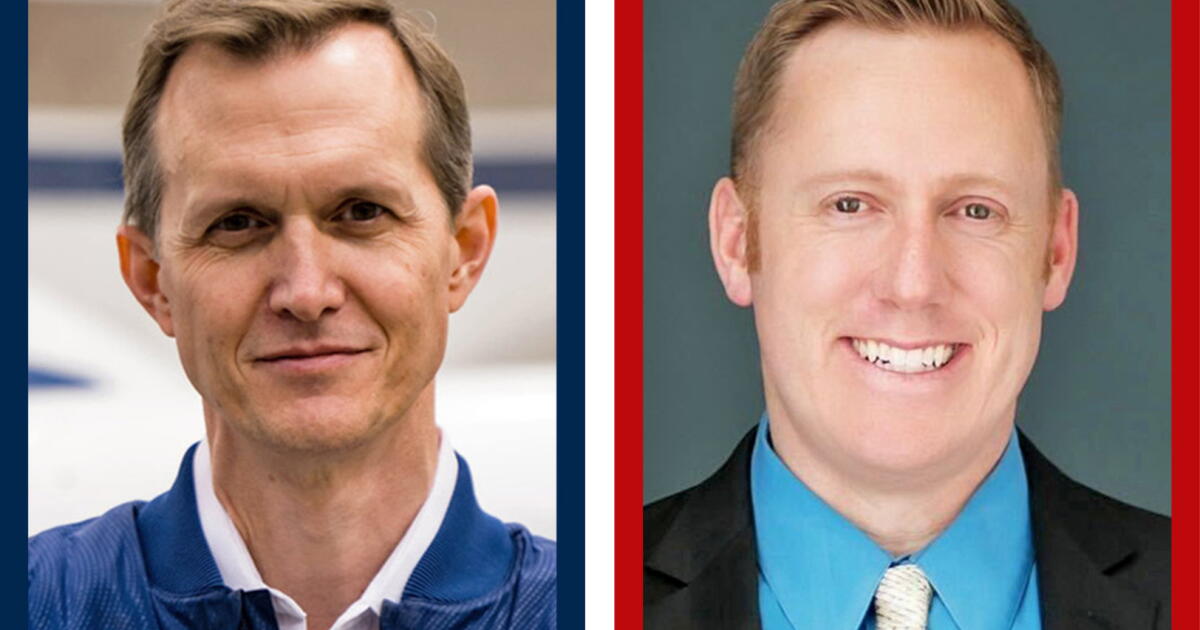
Whitesides was the first chief executive of Virgin Galactic, which employed hundreds of people in Antelope Valley. Previously, he worked on President Obama’s 2008 transition team and was chief of staff for NASA in the Obama administration. Whitesides co-founded nonprofit organization Megafire Action to advocate for policy solutions to prevent massive wildfires and served as a member of the Antelope Valley Economic Development and Growth Enterprise board of directors.
He was elected to Congress in 2024 and is running for reelection to continue creating jobs and expanding opportunity in California’s 27th District.
Gibbs was elected to Santa Clarita City Council in 2020 and chosen by his fellow council members to serve as mayor in 2023. He earned his bachelor’s and master’s degrees in mechanical engineering from Cal Poly and, according to his campaign website, worked on the the Delta II, Delta IV and Atlas V rocket launch systems in the local aerospace industry. Gibbs has served on the board of the Boys and Girls Club, the Valley Industry Assn. and the Salvation Army, according to his website.
He is running for Congress because he feels Washington is broken and believes in “common sense, accountability, and putting our community ahead of politics,” he says on his website.
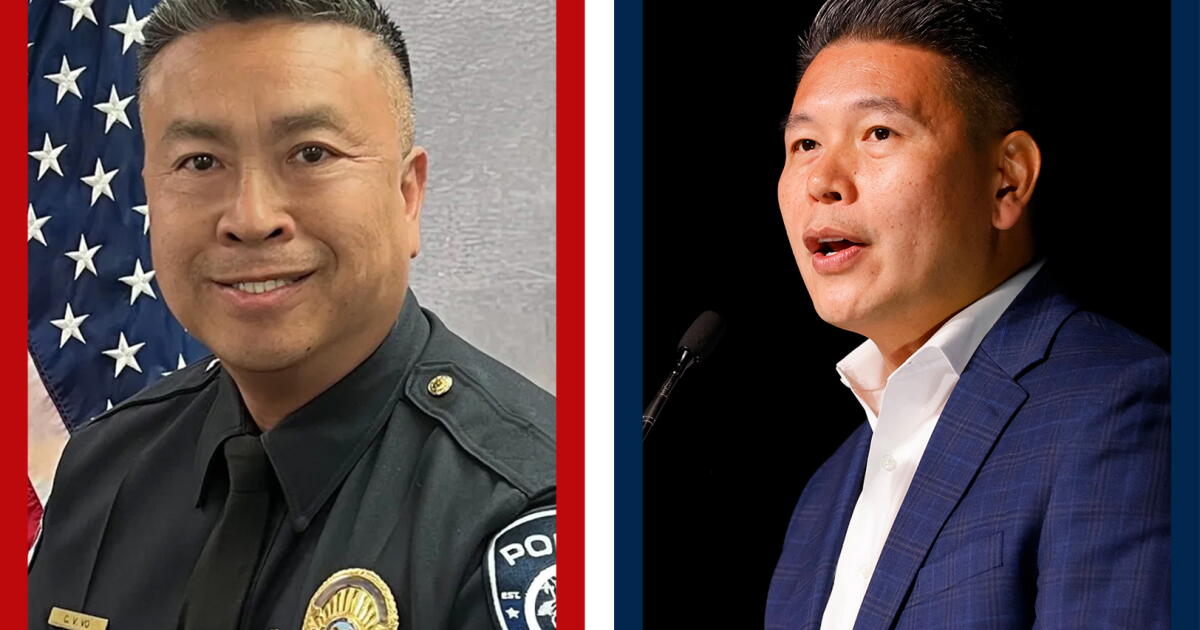
Tran, 45, is an attorney and U.S. Army veteran who served in the U.S. Operations Noble Eagle and Enduring Freedom. He runs a pharmacy with his wife, Michelle. He is the son of refugees who fled communist Vietnam and grew up in the San Gabriel Valley, graduating from Rosemead High School.
Tran is endorsed by the unions for Orange and Los Angeles counties’ deputy sheriffs, the International Assn. of Fire Fighters, the California Federation of Labor Unions and the Planned Parenthood Action Fund.
Vo, who fled Vietnam as a child, served as the mayor of Cerritos while a member of the city council from 2020 to 2025. Vo, 50, recently retired after working as an officer for the Torrance Police Department since 1999.
On the city council, Vo touted some of Cerritos’ success, including the creation of the city’s annual Moon Festival, the extension of a Kia automotive dealership extension until 2045 and the redesign of the city’s website.
He differentiates himself from Tran by saying he is “not a career politician promising to fix D.C. from the inside.”
“I’ve spent my life doing the work on the ground and serving our community,” he said.
Vo is endorsed by the California Republican Party, Los Angeles County Lincoln Clubs, Orange County Supervisors Janet Nguyen and Don Wagner and a slew of city mayors from Fountain Valley to Garden Grove and Norwalk.
Kounalakis is well known in state politics. She is serving her final term as lieutenant governor, a largely ceremonial role that includes seats on various higher-education boards including the University of California Board of Regents and the California State University Board of Trustees.
A major Democratic donor, Kounalakis in 2023 launched a campaign to become California’s next governor before dropping out of the race and announcing in August 2025 she would run for state treasurer.
Kounalakis holds a master’s in business administration from UC Berkeley and is the daughter of Sacramento real estate magnate Angelo Tsakopolous. She spent 18 years working for AKT Development, the business her father founded, eventually becoming its president. In 2009, she was appointed to the U.S. ambassador post in Hungary by President Obama.
“I have been using my international experience serving the state as our representative for international trade and investment, which has a very heavy economic development piece to it,” she said this year.
Hawks is a retired businesswoman and a Republican activist. She has served as president of Palo Alto Republican Women Federated, been involved with the California Federation of Republican Women and has gathered signatures for the GOP-led voter ID measure, Proposition 39.
Hawks spent two decades working as an executive assistant at the Sacred Hearts School, a private Catholic school in the tony Silicon Valley town of Atherton, before her retirement in 2021. Before that, she worked in various human resources and office manager roles.
“I am a people person,” Hawks said on Assemblymember Carl DeMaio’s (R-San Diego) Reform California podcast. “I’ll get to know [the] rank-and-file in there, and I will garner their trust.”
Experience: Buelna serves on the board. He also is an attorney and teaches history and political science at Cal State Northridge. He previously led Plaza Community Services, a nonprofit that provides education, health and other services to children and families.
“I bring an unusual combination of personal, professional and governing experience,” he said. “I understand higher education from several perspectives — as an educator, a policymaker and someone who has spent much of his career working with families facing economic and social barriers.”
District challenges: “Our biggest challenge is not simply getting students through the door. It is making sure they can afford to remain enrolled, complete their education and translate that education into economic opportunity.” Among the barriers Buelna cited were the high cost of housing, food insecurity and child care.
Buelna said the board also must conduct strong fiscal oversight of the billions in voter-approved bond funds. “The board has a responsibility to ensure those resources are spent transparently, responsibly and in ways that produce measurable benefits for students,” he said.
Priorities: Buelna said his priorities include addressing student affordability, better connecting education to economic opportunity and “removing barriers to access and completion.”
He said the district needs to “move aggressively to implement” its commitment of up to $500 million for affordable student and staff housing and “strengthening food assistance, mental-health services and other basic-needs programs.” Buelna said the district also needs to expand career technical education and paid internships, while “strengthening transfer pathways for students seeking four-year degrees.”
In addition, he wants to expand multilingual education and support for working adults and students with families while “protecting immigrant and undocumented students.”
Budget: Buelna would continue to advocate for state and federal funds as well as community partnerships that bring additional resources to the colleges. He said the district also must scrutinize its own spending, including ensuring “major construction and capital projects are completed responsibly.”
“LACCD must be both an advocate for greater investment in community colleges and a responsible steward of the resources taxpayers have already provided,” he said.
Student enrollment and success: “We need to design our colleges around the students we actually serve rather than expecting students to adapt to unnecessary institutional barriers,” he said.
“LACCD students include recent high school graduates, working adults, immigrants, parents, first-generation college students and people returning to school for new skills. Their barriers are different, so our solutions must be flexible.”
Tonia Arey is running for the Los Angeles Community College Board of Trustees Seat 6.
Experience: In June, Arey ran unsuccessfully to represent District 3 on the Los Angeles County Board of Supervisors, a campaign that allowed her to travel throughout the district to hear the concerns of constituents. “My experience in real estate, public advocacy and community engagement has taught me how to listen, solve problems, manage complex transactions, and hold people accountable,” she said. As a realtor, she said she handles contracts, budgets, negotiations, legal requirements and competing interests — helpful skills in a trustee role.
District challenges: “The biggest challenges facing the Los Angeles Community College District are campus safety, student success and career readiness, and accountability to students, employees, and taxpayers,” she said.
Arey would work to implement campus safety plans, support additional academic advising and career education and more “closely examine spending, contracts, program outcomes and administrative costs to ensure resources reach classrooms and directly support students.”
“Although LACCD is a four-year term, there are no term limits and current trustees can no longer be trusted,” she said.
Priorities: She cited campus safety, student success and career readiness, accountability and respect for employees.
Budget: Arey would review the district’s budget to “identify waste, duplication and spending that does not directly improve student outcomes” and said “cost reductions should begin with unnecessary administrative expenses, not classroom instruction, campus safety, counseling or essential student services.”
She‘d work to strengthen the competitive bidding process for contracts and work to ensure the district’s construction bond program is effectively managed. On the revenue side, she’d work to pursue government grants, raise money from donors and “explore responsible uses of underutilized district property.” She‘d also look at ways to boost enrollment, since state funding is tied to the number of students served.
Student enrollment and success: Arey would work to make “enrollment simpler, faster, and easier to navigate” and do more to help students who enter the classroom.
That includes flexible class offerings, basic needs assistance, robust counseling and the use of data to understand where students are falling through the cracks.
Randall Winston is running for Los Angeles Community College Board of Trustees Seat 6.
Experience: Winston, a licensed architect and attorney, serves as Los Angeles’ deputy mayor of infrastructure and climate resilience under Mayor Karen Bass. This fall he is teaching a class in public sector leadership skills at West Los Angeles College and said he’s also lectured at UCLA and mentored graduate students.
Under former Gov. Jerry Brown, Winston ran the California Strategic Growth Council, which helps fund sustainable development.
District challenges: Winston listed enrollment and the inability of students to afford basic needs as major challenges. Citing the district’s $5.3-billion bond-funded construction program he said: “Every dollar lost to delays, litigation or fraud is a dollar not reaching students and the faculty and staff who serve them.”
Priorities: Winston’s priorities for the district include ensuring colleges are a pathway to opportunity and good jobs, students can afford basic needs and people historically shut out of higher education are let in.
All colleges should partner with labor and employers to offer apprenticeships and “family-sustaining union careers,” he said, and the district should expand dual enrollment to allow more high school students to earn college credit. He also cited a need to provide more support to groups like veterans and first-generation students.
Budget: Winston said boosting enrollment to increase state funding is the “most direct” way to increase revenue. He‘d also pursue other government funding as well as employer and philanthropic partnerships. There also needs to be “rigorous” oversight of the district’s construction program, he said.
“What I won’t do is balance budgets on instruction or on the people who deliver it,” he said. “Classrooms, faculty and staff come first.”
Student enrollment and success: Winston said most barriers to enrollment and student success are “logistical, not academic.” He‘d push to “invest in simplified onboarding, proactive advising and better counselor ratios.”
“Students who connect with a counselor early are far more likely to finish, and our counselors are stretched too thin to reach everyone who needs them,” he said.
Name: Roberto David LaCarra
Occupation that appears on the ballot: community college professor
Occupation that appears on the ballot: environmentalist/anthropologist/educator
Experience: Pearlman says she served on the board of trustees from 2001 to 2017 and taught part-time at all nine colleges before and after her time on the board.
“I know the needs of part-time faculty, I know what staff wants, and I know what students want and need because I have been involved with the LACCD since I attended City College in 1968,” she said.
District challenges: Pearlman said low enrollment is the biggest challenge, followed by ensuring students are given the necessary support and resources to succeed. She also cited the need make sure faculty receive equal pay and that the district’s construction program remains environmentally sustainable and within budget.
Priorities: Her priorities would be addressing the challenges the district faces and “keeping the chancellor and presidents accountable and working for the community college district mission,” which she described as the main responsibility of the board.
Budget: “Excess spending must be stopped with analysis of how much administration makes versus faculty and staff,” she said. Pearlman supports campus efforts to create foundations for scholarships and lobbying Sacramento and Washington to keep funding, including student aid, at necessary levels.
Student success: Faculty members need to communicate with their students to determine what the student needs to pass their classes, whether it is additional tutoring, “advising them how to be a better student” or giving them textbooks, “which I did from my own pocket when they couldn’t afford them,” she said.
Darryn Harris is running for the Los Angeles Community College Board of Trustees Seat 4.
Occupation that appears on the ballot: community college educator.
Experience: Harris works as a government and community affairs officer for St. John’s Community Health and recently started teaching a class on student skills at Santa Monica College, which is not an LACCD campus. He also worked at UCLA and in the halls of Congress as an aide to U.S. Rep. Sydney Kamlager-Dove (D-Los Angeles) and Los Angeles Mayor Karen Bass, when she served in the House of Representatives.
“I’ve spent most of my career in public service,” Harris said. “I know how government works, how budgets and policy decisions get made, and how to bring people together when they don’t always agree.”
He wants to hear from students, faculty and staff before big decisions get made — not after. “One of the biggest things I’ve learned is to listen to the people closest to the work,” he said.
District challenges: The high cost of living in L.A. County makes it hard for students to stay in school and more needs to be done to “help more students finish and make sure their education leads somewhere,” he said.
Priorities: Harris wants to tackle the affordability crisis blocking student achievement by building more low-cost housing on district land and making it “easier for students to get help with food, transportation, child care, and other basic needs.” Harris also wants to boost student success through better counseling, transfer support and career training, including partnerships with employers and labor.
Budget: The district needs to “be aggressive” in securing additional partnerships and government funds that “can bring more resources into our colleges,” he said. Prior to cutting classes and student services, he would want to look for savings in “administrative costs, consultants, outside contracts, open positions, and construction spending.”
“We have to look at both sides,” he said. “I want to know what we are spending, why we are spending it, and whether students are actually benefiting from it.”
Student success: Harris would push to make the enrollment process easier and do more to help students finish, including through better counseling and basic needs support. “Then we need to pay attention when someone starts struggling … Reach out early with counseling, tutoring, mentoring, or whatever support they need,” he said.
Adam Bruno is running for the Los Angeles Community College Board of Trustees Seat 4.
(Adam Bruno)
Name: Adam Bruno
Age: 42
Occupation that appears on the ballot: No listing
Experience: Bruno said he attended community college and as a therapist has counseled children, adults and families. This experience gives him “valuable insight” to understand student needs.
“I know what it’s like to feel neglected by an overburdened system, and I know how difficult transitioning to adult life and seeking higher education can be,” he said. Often high school graduates with learning needs can “feel too intimidated and overwhelmed to apply for college” and others, including adults, “may be unaware that community college is even an option.”
District challenges: The primary challenge is overcoming low enrollment, which Bruno said stems from financial challenges facing students. “It is very hard to focus on school when you’re just trying to survive from one day to the next,” he said.
Priorities: “My top three priorities: increase enrollment, increase accessibility to education for students and help educators feel appropriately supported and compensated.” Bruno said he’d explore student stipends as a way to enable more people to attend community college successfully.
Budget: Bruno would look for additional funding sources through donations and other measures and attempt to use the extra revenue to address financial needs of students.
Student enrollment and success: Both can be improved through additional outreach, counseling and efforts to make college more affordable, he said, so that students can “focus on education rather than being overwhelmed with day-to-day survival.”
Elaine Alaniz is running for the Los Angeles Community College Board of Trustees Seat 4.
Occupation that appears on the ballot: healthcare workforce specialist
Experience: Alaniz has worked in a number of fields, including healthcare, workforce development, disaster recovery, public administration and film production. She said she received associates’ degrees in film production and fire technology from Los Angeles City College and Los Angeles Valley College and currently serves as a public affairs specialist with the U.S. Small Business Administration’s Office of Disaster Recovery and Resilience.
“Rather than following one narrow professional track, transferable skills have allowed me to adapt across industries and remain employable as circumstances and opportunities changed,” Alaniz said. “That is what I want our students to have.” She recalled that her college professors “who taught me technical and academic skills helped make my own career possible.”
District challenges: Alaniz cited the need to ensure classroom instruction “keeps pace with a rapidly changing workforce” in the age of artificial intelligence and other technologies. She said the district needs to teach those technologies and also give students “the technical, occupational, communication and human skills employers will continue to need.”
“I would expand programs that combine academics with industry-recognized credentials, apprenticeships and hands-on training in healthcare, skilled trades, technology, public safety, logistics, advanced manufacturing, media and other growing sectors … LACCD has an opportunity to become an even stronger bridge between education and employment.”
Priorities: Alaniz wants the district to do more to ensure students are ready for the workforce. Other priorities would be more flexible class schedules and online courses for working adults and parents, and “expanding digital access to required course materials and coursework at little or no additional cost to students wherever feasible.”
“Students who prefer physical textbooks should absolutely retain the option to purchase them, but students who cannot afford a printed book should have another way to access the materials they need to succeed,” she said.
Budget: Alaniz would examine district spending, including on administration and programs with weak enrollment, to identify what works and what does not. “Before asking students or taxpayers for more money, the district should demonstrate that existing resources are producing measurable results,” she said. At the same time, Alaniz said, “LACCD should aggressively pursue appropriate state and federal grants.”
Student enrollment and success: To help students, Alaniz said it’s important to recognize that LACCD serves a diversity of students, including recent high school grads, parents and people changing careers. “I do not believe students should always have to reorganize their entire lives around the institution,” she said. “Sometimes the institution needs to become more responsive to the student.”
The enrollment process needs to be examined, she said, to ensure students are not “being lost between application, financial aid, counseling, registration and their first day of class.”
Name: Isidro J. Armenta Occupation that appears on the ballot: Fire Department employee
Did not reply. .
Priscilla Umana is running for the Los Angeles Community College Board of Trustees Seat 4.
(Priscilla Umana)
Name: Priscilla Umana
Age: 43
Occupation that appears on the ballot: American Sign Language educational interpreter
Experience: Umana said her work as an “ASL interpreter in diverse educational environments has given me a firsthand understanding of how different circumstances affect students, faculty, and staff. Through this work, I have developed a deep passion for quality education and for the future of our students.”
District challenges: “One of the biggest challenges facing our community college district is the high percentage of students experiencing housing insecurity, homelessness, and food insecurity. These challenges not only affect students’ quality of life, but also their ability to succeed academically and complete their programs.”
Priorities: Umana said her top three priorities would be affordability, accessibility and community. She would work with the district to expand affordable housing, work-study opportunities and food aid and seek to remove language and disability barriers to make college more accessible. “Education cannot be separated from the basic needs that allow students to participate in it,” she said. “To help students enroll, persist, and graduate, we must provide the stability and support they need.”
She also wants to “build stronger connections between students, faculty and staff” and learn from them how to better foster community. “My goal is to help create community colleges where every student feels supported, included, and empowered to succeed,” she said.
Budget: Umana would review the district’s budget to identify “opportunities to reduce waste while improving services.” This would include examining courses with low enrollment and deciding whether participation can be increased or if money should be redirected to where it’s more needed. She’d also work to raise additional revenue by “partnering with local businesses, nonprofits and entertainment organizations to host campus events, build community partnerships and share proceeds.”
Student enrollment and success: She would work to prioritize “basic needs, accessibility, and clear educational pathways.” She’d do so in part by advocating for expanded financial aid and proactive check-ins with students. “Our goal should be simple: make success easier to navigate and support every step of the way,” she said.
Darryn Harris is running for the Los Angeles Community College Board of Trustees Seat 4.
Occupation that appears on the ballot: Business owner/journalist
Experience: Aula said he has worked as a political campaign consultant and has “nearly 10 years experience as a businessman in technology and small share ownerships” in tech firms that use mobile apps for deliveries and transportation, experience that “has given me an understanding of the world today that few have.” Aula also said he has worked with LACCD labor unions “through business” but did not elaborate.
District challenges: Aula alleged one of the biggest issues facing the district is “financial fraud,” and in his answers referenced cases in which fraudsters posed as community college students to steal financial aid. He proposed a moratorium on noncitizens attending LACCD.
Priorities: Aula wanted to address the basic needs of students “in the interests of U.S.A citizens.” He would “increase the diversity of curriculum” to “authentically represent the United States of America citizens and interests.” He would include “protecting athletics funding, football in particular, making new partnerships with Navy to serve the district’s needs, and growing the partnership with law enforcement.”
He also said he wants to “confront pandemic learning loss.”
Budget: Aula said he would make financial deals only “that are in the interests or benefits of U.S.A. citizens.”
Editor’s note: The Times declined to publish much of Aula’s written questionnaire responses, which contained comments, proposals and unsubstantiated accusations dealing with suspected terrorists, the Chinese Communist Party, the Palestinian militant group Hamas and cannibalism.
The ballot initiative was spearheaded by the United Firefighters of Los Angeles City Local 112, the union representing rank-and-file firefighters, which has long argued that the department is underfunded.
The president of the union has said that the tax would be the most important thing for the LAFD “really ever.”
“The most important thing for the citizens of L.A. is our response times; this ballot measure would help us get more firefighters, more paramedics, more fire stations and more apparatus, which would let us respond faster to citizens of L.A.,” said Doug Coates, the president of UFLAC.
“In the Palisades, this measure would have let us respond quicker, knock it down faster, protect more homes … We would have saved more homes if we had had more firefighters, period,” he said.
The sales tax would represent the biggest investment in the city’s fire department since 2000, when voters approved Proposition F, a ballot measure that authorized the issuance of a $532-million bond — more than half of which was allocated to build 19 neighborhood fire stations and a helicopter maintenance facility.
The initiative also has received support from Mayor Karen Bass as well as Councilmember Traci Park, who represents Pacific Palisades.
Los Angeles Mayor Karen Bass is in the fight of her political life, facing a vigorous challenge from City Councilmember Nithya Raman, a savvy campaigner who was until recently a close ally.
Raman publicly endorsed Bass at the start of the year, then launched her own mayoral bid weeks later, saying the city “can’t seem to manage the basics.” She came in second behind Bass in the June 2 primary election, edging out the flashier and more attention-grabbing Spencer Pratt, a onetime reality television star.
Now, Raman and Bass — both Democrats — are heading toward a generational showdown.
Bass, 72, is a veteran lawmaker who served in Sacramento and Washington D.C., before coming to City Hall. She’s drawn support from more traditional corners of the city’s political establishment, including Los Angeles County’s Democratic Party and its Federation of Labor, which represents hundreds of thousands of workers.
Raman, 45, arrived in L.A. in 2013 and launched a City Council bid six years later. She’s been endorsed by the Democratic Socialists of America and other groups that are newer to city politics, including Streets For All, which seeks to expand the city’s bus and bike lane network.
Bass has been dogged by high unfavorable ratings since the Palisades fire, which broke out in January 2025 while she was out of the country, destroying thousands of homes and leaving 12 dead. She has faced criticism over her handling of the wildfire response and recovery work.
Since the primary, the mayor’s political challenges have intensified.
The Lineage cold-storage warehouse fire broke out in June, causing communities on L.A.’s Eastside to cope with the stench of rotting meat for two months. The latest homeless count showed an increase in the number of people living on the street, dealing a setback to a mayor who staked her reputation on the issue.
Raman contends that Bass is simply a bad manager, pointing to those crises and other problems facing the city.
“I respect very much her long career of public service,” Raman said. “But the election has to be about results.”
The mayor isn’t backing down.
She says Raman has little to show for her three years running the council’s powerful housing and homeless committee. She contends that Raman is on the wrong side of the issues — particularly public safety — and does not work well with others.
“It says something that you do not have strong working relationships with any of your colleagues. Not one,” Bass said. “Each council member had a story to tell about how difficult she was to work with.”
The Times submitted surveys to the candidates. Unedited excerpts from the surveys, in which candidates lay out detailed goals and policy analysis, can be found at the links below.
Shaw, 44, is the president of the Chino Valley Unified Board of Education, overseeing a relatively large school system of 26,000 students in San Bernardino County.
Barrera, 59, is the president of the San Diego Unified Board of Education, which governs the state’s second-largest school system with about 113,000 students. Barrera also serves as a senior adviser to state Supt. Thurmond, whom Shaw has sharply criticized.
Both are parents. Barrera’s children are grown; Shaw’s still are in school.
Shaw broadly characterizes the public education system as failing because of liberal Democratic policies, although she praises the quality of the public school system over which she presides. On the culture-war front, she supports flag bans at schools — which were conceived to target gay pride flags — and book restrictions that target content deemed as sexually obscene.
She became politically activated by the pandemic’s prolonged school closures, COVID vaccine mandates and mask mandates — all of which she opposed.
Despite a consistent policy alignment with the Trump administration, Shaw, a longtime religious conservative and a small business owner, objects to any implication that she is falling into line behind Trump or that she is subservient to his policies.
“I don’t put loyalty behind a person,” Shaw said. “I put my my effort and my love and my everyday sacrifice behind protecting kids, whether it’s this president, the next president or whatever. If they’re on the right side of protecting kids, then, of course, when it comes to the issues, I’m all in. I really honestly hate the division. In my heart, if we just speak on our issues, it’ll bring people together. We could see more eye to eye. We can actually have decent conversations, right?”
At times, Shaw presents a sharp rhetorical style, as when she characterized a September court ruling that placed limits on when school officials would have to notify parents about their child’s gender issues. Shaw believes such notifications should be mandatory. Her first emphatic comment, in an interview and a social media post after the hearing, which she attended, was: “Kangaroo courts. Dishonorable judges.”
Shaw sidesteps discussions about Trump’s immigration enforcement. “Districts should follow the law, communicate clearly with families and keep their attention on the classroom … That’s where our energy belongs,” she said.
Barrera, in contrast, calls Trump’s immigration raids harmful.
“This assault on our immigrant families by the Trump administration absolutely is a real issue that affects students and affects educators,” he said. “And I’m going to stand up to those assaults, and Californians will continue to stand up to those assaults.”
Barrera defends the quality of public schools and advocates for increased funding and expanding what works from successful campuses to those with poorer academic results.
Barrera sees the superintendent as a convener and organizer to advance initiatives that benefit students — with or without state funding or direction from the governor and Legislature.
As an example, he cited the education department’s effort to promote affordable workforce housing projects on school district property. He also cited efforts to reduce chronic absenteeism, for which the department gathered a working group that has produced guidance for schools.
Barrera has a long career in community and labor organizing and worked as a senior official in two unions. That background, combined with his 18 years on the San Diego school board, where he has been a union ally, made him an ideological fit with CTA. Neither Barrera nor CTA had to compromise values or shift positions to join forces for this campaign.
“I have absolute respect and … a long demonstrated partnership with the unions that represent our educators,” Barrera said, “and believe strongly that unions are democratically elected, governed institutions where the educator voice comes out most powerfully, and so for me, the unions are a partner and will always be a core voice in influencing the way that I make decisions.”
Measure G, propelled by Horvath, will result in expanding the Board of Supervisors from five to nine members in 2032 and create a new county chief executive position, with an election in 2028. It passed narrowly, with 51.6%.
It also called for creating a county ethics commission and an ethics compliance office. Other branches of government already have this, including the city of Los Angeles, where the commission’s duties include overseeing campaign finance, such as the matching funds program for political candidates. The commission also regulates lobbying and can issue penalties for fundraising and other infractions.
The Measure G governance reform task force is setting everything up, but officials realized that for true independence, the seven-member commission and the compliance office must be permanently enshrined in the county charter. That requires the approval of voters.
Establishing the commission and the compliance office, Horvath said in a statement in May, “delivers on the will of the voters and marks a monumental step toward greater transparency and accountability in County government.”
Gaspar founded Gaspar Insurance in 2008 and sold it in 2021 after he built it into one of the largest independent insurance companies in the Valley, and worked with several nonprofit and community groups: Discovery Cube Los Angeles, YMCA of Metropolitan Los Angeles, Viewpoint School‘s board of trustees and the West Valley/Warner Center Chamber of Commerce.
He would bring a pro-business perspective to City Council and help it make decisions that support business owners and residents alike.
Gaspar came in first during the primary election with 46.1% of the vote. He is running with support from groups including the Valley Industry & Commerce Assn. and the Los Angeles Police Protective League, a union representing LAPD officers. He’s also been endorsed by Blumenfield, L.A. County Supervisor Kathryn Barger, real estate developer Rick Caruso and former Democratic state Assemblymember Bob Hertzberg, Worth Girvan’s former boss.
Worth Girvan meets voters during a neighborhood event in Canoga Park’s Lanark Park.
(Gina Ferazzi/Los Angeles Times)
Worth Girvan is a longtime city and county employee, with nearly 20 years working in public service. Prior to running, she was L.A. County Supervisor Lindsey Horvath’s district director for three years, handling constituent services on the Westside and in the Valley.
Before that, she spent eight years as an aide to Hertzberg, who failed to take Horvath’s seat in 2022.
Worth Girvan secured 42.5% of the vote in the primary, only 4% shy of her opponent.
Worth Girvan said her two decades of experience at the city and county levels have helped her build relationships and gain deep knowledge of the communities she works with.
“It allows me to be able to make a phone call and to be able to know how to bring about the change that we need,” she said.
She’s been endorsed by the L.A. County Democratic Party and labor unions including the local chapters of the International Brotherhood of Electrical Workers and the Service Employees International Union. She’s also been endorsed by Horvath and former L.A. Mayor Antonio Villaraigosa.
The amendment aims to clarify campaign finance rules for candidates running for a seat on the board of education, which overseas LAUSD and its approximately 350,000 students.
Repetitive language in the Los Angeles City Charter would be deleted and would make clear the same campaign finance rules apply to both mayoral candidates and board of education candidates, except in certain instances, the measure says.
Among those requirements are rules governing campaign contribution limits, filing deadlines, public disclosures and fundraising windows.